









How to enjoy our new magazine:
Just scroll!
Click or tap the table of contents icon in the menu bar to find any article.
Read any article by clicking or tapping the read full article button below each article intro.
Jump back to your previous browsing spot from any article using the menu bar or back to issue button.







to see what R3 can do for you.



-
Is Your Facility Disaster Ready?Page 12
-
Why Independent Operators Are Feeling New PressurePage 14
-
Building Brand Authority In Local SearchPage 18
-
How To Respond To Customer ComplaintsPage 20
-
When Silence Costs More Than WordsPage 24




Experience
Local Expertise

Not Just a Builder


-
Page 34
-
Sun Belt Cools, Coastal Markets Absorb SupplyPage 36
-
Five Data Types Critical To Self-Storage DevelopmentPage 40
-
Commercial Property Price Index Increases AgainPage 42

-
Self-Storage’s New Era Of Consolidation, Discipline, And RecoveryPage 68
-
Yardi Matrix’s June 2026 Self-Storage National ReportPage 74
-
Early GC Involvement Impacts Entitlement SuccessPage 82
-
Space Shop Self Storage in Woodstock, Ga.Page 84

-
A Guide To CTV Advertising And MeasurementPage 86
-
Making Untapped Markets Work For YouPage 88
-
Finding Investments Within Secondary And Tertiary MarketsPage 92
-
Sowing Strategies For Lifecycle RisksPage 96
- Chief Executive Opinion by Travis Morrow6
- Publisher’s Letter by Poppy Behrens9
- Meet The Team10
- Women In Self-Storage: Taucha Hogue by Alejandra Zilak25
- Who’s Who In Self-Storage: Brad Relford by Brad Hadfield29
- Innovation Spotlight: QC Capital by Brad Hadfield100
- Self Storage Association Update 103
- The Last Word by Jessica Lamoureux104
For the latest industry news, visit our comprehensive website, ModernStorageMedia.com.






CEO of MSM and Storelocal Corporation,
President of National Self Storage
s the guy leading a team who’s been grinding to bring THE Show to life, I’ll be straight with you: I’ve been obsessing over one simple idea. In an industry packed with good conferences, the real difference-maker isn’t just putting another expert on stage. It’s the total experience we build for you—the owners and operators who show up ready to level up.
We all know how it goes. You’ve sat through plenty of solid sessions from sharp people in this business. But after years of the same recycled talks, crowded floors, and networking that feels more like small talk than real connection, a lot of you started skipping the big events. You weren’t coming home fired up. You weren’t seeing new possibilities for your facilities.
That’s exactly what we’re fixing at THE Show.
We’re delivering 45-plus sessions across the Four Pillars (operations, data, development, and investment), plus keynotes you won’t want to miss: Scott Jennings cutting through the noise on policy and the economy, Chipper Jones sharing real talk on resilience and perseverance, and a lineup of other industry voices we’ve challenged to do something different.
I’ve been personally pushing every speaker to think bigger. Give us what we haven’t heard before. No more dusty 2023 playbooks. We want the fresh insights, the bold experiments, the uncomfortable truths, and the forward-looking strategies that will actually change how you run your business. The kind of actionable ideas you can take home and start using next week.
The whole event is designed around your experience. You’ll move easily from a strong keynote straight onto a trade show floor built for real engagement—no dead zones, no sessions stealing the crowd. You’ll connect with fellow operators in meaningful ways. And you’ll end your days with moments you’ll actually remember: an incredible underwater welcome reception at the Georgia Aquarium with Wolfgang Puck catering and the red-carpet energy of the MSM Awards Gala.
This is where self-storage owners and operators come to get re-energized and reconnected. If you’re ready for an event that feels built for you, join us Nov. 4 to 6 at the Georgia World Congress Center in Atlanta.
Let’s make history together.

-
PUBLISHER
Poppy Behrens
-
Director Of Sales & Marketing
Lauri Longstrom-Henderson
(800) 824-6864 -
Creative Director
Carlos Padilla
(800) 352-4636 -
Editor
Erica Shatzer
-
Lead Writer / Web Manager
Brad Hadfield
-
Storelocal® Media Corporation
Travis M. Morrow, CEO
-
Websites
-
Visit Messenger Online!
Visit our Self-Storage Resource Center online at
www.ModernStorageMedia.com,
where you can browse our paid publications, research archived articles, sign up for a magazine subscription, submit a change of address, and more. 
- All correspondence and inquiries should be addressed to:
MSM
PO Box 608
Wittmann, AZ 85361-9997
Phone: (800) 352-4636

Invest with confidence in a family-owned and operated self-storage brand backed by 40 years of proven experience. Built on trust, stability, and hands-on management, our company has thrived across market cycles while delivering consistent value.
Join a legacy of smart growth and reliable returns in an essential, resilient industry.

210-405-6695
theparhamgroup.com

















very year, as conference season approaches, I hear the same thing: “I’ve been to plenty of trade shows.” And every year, I smile, but this year, that assumption could cause you to miss something truly special.
THE Show was built with one goal in mind: to rethink what an industry event can be.
If you’ve been waiting to register, now is the time. We’ve assembled an incredible lineup of speakers from across the self-storage industry and beyond, and we’ve challenged each to bring something fresh to the stage—no recycled presentations, no tired talking points, no “I’ve seen this before” moments. Our team has worked closely with presenters to ensure their sessions are timely, relevant, and packed with ideas you can take home and put to work immediately.
One of the biggest frustrations attendees have shared over the years is being forced to choose between attending an educational session and visiting exhibitors. At THE Show, you won’t have to make that choice. There will be no live educational sessions while the trade show floor is open, giving you uninterrupted time to meet with vendors, explore new products, and have meaningful conversations without feeling rushed.
The trade show floor has also been reimagined to encourage interaction, discovery, and relationship-building. We want you to leave with more than a bag full of brochures—we want you to leave with ideas, partnerships, and inspiration.
Whether you’re an owner, operator, investor, developer, manager, or supplier, this event was designed with you in mind. Our industry is changing rapidly, and the conversations in Atlanta this November will help shape what comes next.
So, here’s my question: Have you registered yet?
If not, don’t wait! Join us, bring your questions, challenge your assumptions, and be part of an event intentionally designed to break the mold. I believe you’ll leave energized, informed, and excited about the future of self-storage.
I can’t wait to see you in Atlanta.

Publisher

very year, as conference season approaches, I hear the same thing: “I’ve been to plenty of trade shows.” And every year, I smile, but this year, that assumption could cause you to miss something truly special.
THE Show was built with one goal in mind: to rethink what an industry event can be.
If you’ve been waiting to register, now is the time. We’ve assembled an incredible lineup of speakers from across the self-storage industry and beyond, and we’ve challenged each to bring something fresh to the stage—no recycled presentations, no tired talking points, no “I’ve seen this before” moments. Our team has worked closely with presenters to ensure their sessions are timely, relevant, and packed with ideas you can take home and put to work immediately.
One of the biggest frustrations attendees have shared over the years is being forced to choose between attending an educational session and visiting exhibitors. At THE Show, you won’t have to make that choice. There will be no live educational sessions while the trade show floor is open, giving you uninterrupted time to meet with vendors, explore new products, and have meaningful conversations without feeling rushed.
Whether you’re an owner, operator, investor, developer, manager, or supplier, this event was designed with you in mind. Our industry is changing rapidly, and the conversations in Atlanta this November will help shape what comes next.
So, here’s my question: Have you registered yet?
If not, don’t wait! Join us, bring your questions, challenge your assumptions, and be part of an event intentionally designed to break the mold. I believe you’ll leave energized, informed, and excited about the future of self-storage.
I can’t wait to see you in Atlanta.
Publisher

MSM’s THE Show lands in Atlanta, Ga., on Nov. 4 to 6, 2026, packing the Georgia World Congress Center with more industry speakers and keynotes than ever before, plus special guests, exciting breakout sessions, an acquisitions corner, and a trade show floor designed for engagement and visibility.
After hours, unforgettable events await, with our Deep Blue Welcome Dinner inside the underwater banquet hall of the Georgia Aquarium, catered by Wolfgang Puck, and our Red Carpet Awards Gala, honoring the very best in self-storage.
If you’ve been waiting for something different … Welcome to THE Show.










Unlock the Power of
Innovation & Technology with

Best Tenant Protection…8 years and Running

Why Owner/Operators Choose TPP





usiness involves a lot of planning: strategic, financial, operational. But in self-storage, where you not only have to protect your own interests but the personal property of thousands of customers, disaster response planning becomes all the more crucial.
Here’s a primer on steps to take before and after a disaster to minimize stress for your tenants while limiting your own legal, financial, and operational exposure.
What does that process look like?
Seeking legal guidance is a good way to start. Self-storage attorneys represent owners and operators and are equipped with a much greater understanding of the industry than general practice lawyers. They can review your insurance policies and leases to ensure that they’re worded for your maximum protection.
Here, J. Ashley Oblinger, an attorney in the law firm of Weissmann Zucker Euster Morochnik & Garber P.C. in Atlanta, Ga., identifies characteristics of a well-crafted lease and highlights noteworthy exceptions. The definition of a “disaster” is broader than you may assume, encompassing both natural and manmade threats beyond severe weather or fire.
“Any decent rental agreement will release the operator from liability for things like theft or rodents, vermin, insects, and floods,” Oblinger says. “The operator is not in control of the property, so they shouldn’t be liable for things that happen to it.”
But, as he clarifies, that doesn’t put you in the clear for every water-related issue. “If you know about something wrong with the roof, you have to fix it. Even though the rental agreement might release you from liability for water damage, a lot of times the court’s not going to agree with that contract language. Make sure that you’re keeping up the maintenance at your facility.”
Most self-storage facilities are protected from claims that are due to natural factors beyond human control, such as severe weather phenomenon. These “Acts of God” may include damage caused by wind, water, lightning, hail, mudslides, and earthquakes.
However, even if an Act of God caused the damage, a tenant still might take you to court. Their counsel can try to show negligence on your part, for example, if the damage was due to poor maintenance. Although they may face steep odds, it’s a good idea for you to choose coverage such as customer goods legal liability insurance to help cover your legal costs.
Lawyers aren’t your only allies in disaster response planning. Some consulting companies within the self-storage industry offer training, often as a part of their larger package of services. Their guidance can contribute to greater disaster preparedness.
Carol Mixon, founder and president of SkilCheck Services, Inc., shares an example from her procedure manual. “I have a whole section on what to do, from top to bottom, when there’s an emergency. Who are the first people you should call? The first call’s 911, right? Then after that, it’s the property owner, and so on.”
While planning seems like a reasonable approach, Oblinger finds that many self-storage operators wait until after a disaster to seek advice, magnifying their response burden.
“If you already have a plan in place, that can significantly reduce the stress because you have a checklist to follow,” Oblinger says. “You have people’s property that might be damaged beyond repair. You’re fielding calls from tenants. They’re going to want to visit the facility, which might not be allowed. All this is going to create more stress on the facility and their employees.”
Your disaster response checklist will at least create some clarity and direction in moments when both may understandably be scarce.
“We had a major fire at one of the properties we managed,” says Barnholdt. “And it put every system policy and relationship that we had to the test really quickly. It was a super stressful, very fast-moving situation.”
But the outcome could’ve been much worse. “I think we had about a 90 percent tenant insurance penetration at this property when it happened,” Barnholdt adds. “That’s something that we worked really hard to achieve. So, the majority of our customers had a clear path to recovery.”
Insured tenants may receive at least some compensation for their losses and are less likely to seek that from you.
There are some ways to minimize such risks. As Oblinger explains, “A good rental agreement will address this at the start by including a use provision that prohibits the storage of hazardous and flammable materials.”
Some self-storage operators require tenants to list the basic contents of their unit at move-in as part of the lease. It also helps for property managers to maintain a visible on-site presence, especially during move-ins and move-outs, to stay aware of what’s being stored. “It’s not surveillance, it’s just good management,” says Barnholdt.
However, these measures rely on tenants being honest in their disclosure and strictly adhering to rental agreements. While tenant compliance isn’t guaranteed, taking these steps can reduce the likelihood of stored property causing damage to your facility.
Tenants are responsible for insuring their own property against damage caused by other tenants in incidents like the one Mixon experienced. Oblinger recommends including an indemnification clause requiring tenants to “defend and hold the operator harmless for actions brought by others for the tenant’s conduct” to make this expectation clear from the start.
“I think the biggest mistake an operator can make in a disaster situation is to not notify the tenant and try to hide something,” Oblinger says. “It’s better to be transparent on the front end, especially when you’re dealing with hurricanes, earthquakes, fires. It’s not going to really affect your legal liability, because what happened, happened. I wouldn’t recommend anybody admit fault.”
While no one likes delivering bad news, it’s your responsibility as an owner or operator to let your tenants know when a disaster impacts your property. What’s the best approach? Since some disasters may limit tenants’ access to power and communication services, you’ll want to cover the bases. Make information available through multiple means, including an answering machine recording at your company’s main phone number, a company website message, text messages, and signs posted at the facility.
When notifying tenants, always clarify whether they can immediately access the facility. Public safety officials may prohibit local travel or access to a specific property due to safety concerns. Your rental agreements should specify that tenants can be temporarily denied access in emergencies.
Of course, you won’t focus all your disaster aftermath efforts on tenants. You’ll be thinking about the impact of the disaster on your business. “Start to create a plan with your insurance company,” Oblinger says. “And if you sell insurance to tenants or have a protection plan for their property, bring those companies in too, because there’s probably going to be tenant claims.”
Oblinger also strongly advises that you find out what your insurance company will and won’t cover and if they’ll defend you against tenant claims. If not, alternative counsel may be necessary.
or a long time, self-storage rewarded common sense. Find a well-located site, keep it clean, manage expenses, and treat customers well, and the business worked.
That hasn’t changed. What has changed is the level of competition around it. Today, doing the basics well is no longer enough to maintain performance, because the rules of the game have shifted.
Over the past decade, institutional capital has flooded the industry, portfolios have consolidated, and technology platforms have moved from optional to expected. The largest operators now manage hundreds, in some cases thousands, of stores under centralized systems built to extract efficiency at scale. Digital advertising has grown more expensive and more complex. Consumer expectations have shifted toward fully frictionless online experiences.
Independent operators are feeling pressure, not because they’re running bad businesses—most aren’t. They’re feeling pressure because the rules of competition have changed around them, and the game now rewards leverage as much as it rewards competence.
Large operators spread fixed costs across dozens or hundreds of locations. Their analytics platforms, call centers, revenue management teams, and marketing specialists are expensive to build but cheap to replicate across a portfolio. The per-store cost of those resources shrinks as the portfolio grows. The independent operator pays full price for the same tools or goes without them.
That’s the leverage gap. And it’s worth naming clearly, because the solution isn’t to feel outmatched. It’s to understand where the gap is real and where it isn’t. Because the leverage advantage doesn’t run in one direction.
A centralized pricing algorithm sees aggregated data. A local manager sees the new competitor that just opened two miles away, the apartment complex that broke ground last month, and the seasonal patterns that have played out the same way for 15 years. That street-level knowledge doesn’t always show up in a dataset, but it shows up in performance.
Independent operators can price nimbly, adjust quickly, and respond to local conditions without waiting for a centralized team to catch up. That’s not a consolation prize. When paired with disciplined practices, it’s a genuine competitive advantage—one that scale can actually undermine.
But there’s an important distinction between adopting technology and accumulating it.
Independent operators don’t have the margin for redundant platforms or tools that don’t earn their keep. The right question isn’t which tools do larger operators use, it is which tools measurably improve my outcomes in my market? A targeted, well-integrated tech stack that your team actually uses will outperform a bloated system that no one fully understands.
Set performance expectations for every platform you pay for. Audit subscriptions annually. Cut what isn’t working. Technology should simplify your operation. If it’s adding complexity, it’s not doing its job.
Total spend isn’t the only metric that matters—efficiency is.
Independent operators who track cost-per-lead, lead-to-rental conversion rates, and the true origination source of every new rental gain something larger competitors often lose in the noise of scale: clarity. When you know exactly which channel is producing rentals and what each one costs, you can concentrate your spending where it performs and eliminate what doesn’t. You don’t need to outspend a REIT. You need to outperform your own last quarter.
Economic occupancy does. It measures the percentage of your gross potential rent that you’re actually collecting, relative to current street rates. And the gap between the two is where the margin quietly disappears.
Consider a simple example: A 300-unit facility at 92 percent physical occupancy looks healthy, but if 40 percent of those tenants are on rates set two or three years ago, and street rates have moved up since then, the gap between what you’re collecting and what you could be collecting may be significant, compounding month after month without ever triggering an alarm.
Unchecked discounting, legacy contracts that never get reviewed, rate increases are deferred out of habit or discomfort—these aren’t dramatic failures. They’re incremental leaks. A monthly economic occupancy review, a structured weekly rate cadence, and a clear policy on legacy pricing can arrest those leaks before they become meaningful losses.
- Review economic occupancy monthly. Compare gross potential revenue to actual collected revenue. Know where your rate gaps live and how large they are.
- Set a structured rate review cadence. Weekly or daily pricing assessments grounded in local competitive intelligence create upward momentum without volatility. Don’t wait for occupancy to dip before you act on rates.
- Audit your technology stack annually. Eliminate redundancy. Confirm that every platform you’re paying for is producing a measurable return. Avoid accumulating tools you don’t use.
- Track digital marketing at the conversion level. Know what each rental actually costs you to acquire, by channel. Shift spend toward what performs.
- Invest in your people and protect their local judgment. A well-trained manager who understands your market and is empowered to make informed pricing decisions is one of the most valuable competitive assets an independent operator has. Don’t let that go underutilized.
For some, the appeal is access to more structured systems without giving up ownership. For others, it may not be necessary if they already have strong internal processes in place.
Like any operating decision, the question comes down to economics: What would it cost to build these capabilities independently, and how does that compare to the potential performance lift?
Independent operators bring things to this business that scale cannot manufacture: real relationships with tenants, deep knowledge of local markets, and the ability to make decisions without a committee. Those aren’t soft advantages. In the right hands, they’re durable ones.
The competitive environment has grown more sophisticated. That’s not a reason for alarm. It’s a reason for intention in pricing, technology, marketing, and how you develop your team.
The operators who will struggle are those who assume the old formula is still sufficient. The ones who will win are those who pair the strengths they’ve always had with the discipline the current environment demands.
Refinement rewards discipline. It always has.



or decades, the self-storage industry has relied on a simple formula for online success: Show up on the map and have the most content on your website. If you wrote enough blog posts about how to pack a box or chose the right lock, you were told you were building topical authority. Furthermore, your content was indexed in the search engines. The trick was to cover every keyword so Google would see you as the go-to place for storage.
But the era of the “content megaphone” is ending. Today, AI has changed how your customers find you. Whether they are using ChatGPT, Perplexity, Gemini, or the new “Ask Maps” feature in Google Maps, they aren’t looking for a list of 25 websites to click through; they are looking for a recommendation.
In this new AI-driven world, brand authority (being the trusted, recognized leader in your local area) beats topical authority every time. For self-storage facility owners, this means shifting focus from writing more to being more helpful and getting recommended.
- Topical Authority – An SEO consultant might tell them to write articles on the “History of the Taco” or “Best Toppings for Tacos.” This is just “keyword slush”—filling a website with information no one actually asked to read. This is the old way.
- Brand Authority – This happens when local food critics, Reddit customers, and newspaper articles all mention that a restaurant has the best-rated tacos in town. You become a known entity. This is the new way.
In self-storage, having 100 articles on your site about moving tips doesn’t make you an authority if those articles just repeat what everyone else says. AI systems are now smart enough to dismiss thin, superficial content. Real authority is created when others cite you as a source.
In the past, a user searched “self-storage near me,” and Google showed a list. Now, as queries become more complex, AI interprets the user’s needs. For example, if a customer asks, “I’m moving my grandmother’s antique furniture, and I’m worried about humidity; who can I trust?” the AI doesn’t just show the closest facility. It looks for businesses that are structured around qualities like honesty, climate control, and protection.
Research shows that for these “trust-oriented” queries, AI narrows the field significantly, often recommending only three to five businesses. To be one of those few, your brand needs to be associated with specific solutions in the AI’s “knowledge graph.”
This means your website is no longer a megaphone to broadcast your message. It is an authoritative source—a warehouse of information that AI bots can source to answer a customer’s question. If an AI agent extracts one paragraph from your site to tell a customer about your climate-controlled units, does that paragraph stand on its own? Or does it collapse without the pretty photos and design around it? To win in 2026, your information must be “extractable” and structured so that machines can easily parse your intent and relay it accurately.
Focus on Helpful, Deep Content
Stop trying to hit a word count target. Instead, answer the questions your customers actually ask when they call you. Moreover, shorter is better now!
- The Who, What, How Rule – Structure your content to clearly state who you are (the local storage expert), what you do (provide high-security vehicle storage), and how you help (with 24/7 gated access and on-site managers).
- Depth Over Breadth – One definitive guide on “Storing Classic Cars in Your City” is worth more than 10 generic posts about “car tips.”
- Avoid “fluffy” marketing language. Answer questions, solve problems, and get to the point. Keep your answers short and sweet.
Master the Language of Reviews
In the AI era, the words inside your reviews matter more than your star rating. AI uses review language to “frame” your business.
- If your reviews frequently mention “no hidden fees” or “cleanest units in town,” AI will use those themes to recommend you when a user asks for an “honest” or “well-maintained” facility.
- Encourage customers to be specific about the job you did for them. Instead of “great service,” a review that says, “helped me find the right size unit for my three-bedroom house on short notice” provides the evidence AI needs to recommend you.
- Adding pictures to reviews also helps them stand out in local search. For instance, a customer can take a picture of their unit and exclaim, “We fit a whole three-bedroom house in this unit!”
Optimize Your GBP
Your Google Business Profile (GBP) is the foundation for AI local search.
- Keep your categories and service descriptions specific. If you offer wine storage, RV, or boat parking, ensure those are clearly listed.
- Treat profile updates like news. Use photos to reinforce the specific types of jobs you want to be known for, like commercial inventory storage.
- Train your managers and staff to ask customers to take pictures. Obviously, be sensitive if it’s during a crisis.
Be Citable
AI doesn’t discover new brands. It selects from known entities. This means your brand needs to be mentioned across the web on local news sites, in community forums like Reddit, on social media, and in local business directories.
- When a local journalist writes about “Moving Trends in the City,” you want them to cite your data or your expertise. This “human citation” is the strongest signal to an AI that you are a brand of authority.
- Get super active in the community. Here are three examples:
- Help out if there’s a nearby natural disaster or if people are displaced by fire.
- Sponsor a local youth sports team.
- Tell stories of how you helped someone solve a storage problem.
Luckily, these AI bots work fast. If you start publishing articles and promoting them on social media daily with videos and graphics, they will find you quickly. Nevertheless, you have a lot of work to do!

ustomer complaints are common in self-storage, but industry experts note that clearer communication, better training, and a more personal approach can reduce many issues. Operators report that frustrations often start before move-in, including access problems and confusion about pricing or lease terms. Many renters are also experiencing significant life changes, such as moving, downsizing, or dealing with family stress, which can increase their sensitivity to problems.
Several self-storage professionals recently shared the complaints they see most often, what causes them, and what operators can do to improve the customer experience.
Another major issue occurs during move-in, when customers do not fully understand the terms of their rental. “If the manager doesn’t know how to use the system features during move-in, customers may leave without clear information on lease terms, fees, or promotions,” says DeFazio. When explanations around late fees, discounts, or lease rules are not clearly communicated, confusion is likely to follow. Per DeFazio, ongoing follow-up after move-in is one of the simplest ways to reduce repeat complaints.
Diane Gibson, president and CEO of Cox Armored Mini Storage, says customer stress also plays a significant role in how complaints surface. “A lot of people in storage are already in turmoil—moving out back home, death in the family, selling a house.”
Because of that, the way staff interact with customers matters just as much as the policies themselves. “It’s in your presentation,” she says. “It’s how you handle people.”
Rent increases remain one of the most common sources of frustration, according to Jessica Johnson, director of marketing for The Storage Group. “The biggest complaint is rate increases,” she says, explaining that many customers are enrolled in autopay or simply miss notices that are sent through multiple channels. “By that point, they’re frustrated because maybe it’s gone a month or two without them seeing the increase.”
Jen Conlon, director of marketing for StoragePRO Management, states that surprise pricing changes are a consistent issue across the industry. “Nobody likes to be surprised,” she says, adding that unclear expectations often lead to dissatisfaction. StoragePRO has experimented with “rate lock” programs at some locations to create more pricing stability. Conlon cites “the unknown and lack of communication” as key drivers of complaints.
Sue Haviland, owner of Haviland Storage Services, says inadequate training often leads to avoidable customer frustration, noting that common complaints include price increases, gate access hours, and late fees. “I think it usually happens when you haven’t trained managers really well to handle the type of things that cause objections.”
Haviland emphasizes the importance of clear policies and follow-through when handling customer issues. “If you educate them, follow up and explain it,” she says, pointing out that delays in decision-making can make situations worse. “One of the biggest complaints is when people don’t follow up on things they say they will.”
Giving managers more authority to resolve small issues on the spot can significantly improve customer satisfaction. “We allow them to waive a fee to get good customer service,” Haviland says.
Director of Marketing at StoragePRO Management
DeFazio adds that documenting every interaction is essential. “Every interaction with a customer should go in the notes section of your software.”
At the same time, DeFazio notes that newer tools, such as smart locks, can improve convenience. “Smart locks come in handy,” she says. These systems can allow tenants to manage access digitally, reducing the need for physical keys and improving flexibility.
StoragePRO uses data and AI tools to better understand customer concerns. “We use Birdeye for reputation management,” says Conlon. “That’s a really easy way to see trending topics.”
Conlon also points to AI chat systems as a way to identify recurring questions. “We also use an AI chatbot called swivl.”
Johnson adds that AI is helping operators improve efficiency, saying “AI is helping with speed and scalability.”
However, Gibson cautions that technology should not replace human interaction. “Having that customer face to face interaction is important,” she says. “That person-to-person connection is important.”
Haviland agrees, noting that over-reliance on automation can weaken service quality. “With automated systems, customer service gets lost.”
Unresolved pricing concerns, especially related to rate increases, can quickly turn into negative reviews. Because of this, companies are more proactive about monitoring feedback. “We monitor our Google reviews every single day,” Johnson says, adding that teams often contact customers directly to resolve concerns.
StoragePRO responds quickly when negative reviews appear. “When a one-star review comes in, someone on the marketing team here reaches out to the store and also the district manager,” says Conlon, who explains that the goal is to ensure customers feel heard and supported. “We just want the customer to feel heard and seen.”
DeFazio reminds operators that complaints should not always be viewed negatively. “You need to look at it as an opportunity to grow and an opportunity to fix something,” she says, adding that familiarity with daily operations can sometimes make staff overlook small but important issues that customers notice immediately.
“Customer service is still critically important,” Johnson says, because many customers are dealing with stressful life transitions, which makes empathy essential. “We are a service business.”
Conlon encourages operators to regularly evaluate the customer experience firsthand. “Put yourself into the shoes of the customer and walk through the customer journey yourself,” she says. This includes every step, from online booking to gate access and facility navigation.
DeFazio also recommends “secret shopping” as a way to identify gaps in service. “Have a friend go secret shop your facility online, in person, or on the phone,” she says, noting that outside perspectives often reveal issues internal teams miss.
For Gibson, the message is simple. “Pricing is important, but it’s how you treat people,” she says.
As the industry continues to evolve, communication, training, and customer-first service will remain the foundation of long-term success. Even as facilities adopt more automation and digital tools, customers still expect clarity, responsiveness, and human support when problems arise.
“Transparency cures all,” Johnson says. “As long as you’re being upfront and transparent and communicative, it’s a good thing for all operators to be doing.”

- 24/7 Virtual Doctors
- 5,000+ Free Prescriptions
- Virtual Counseling & Mental Wellness
- No Insurance Required
- No Deductibles or Co-Pays
- Emergency Alert Button
- Live GPS Location Sharing
- Guardian & Family Support Network
- Trip Monitoring & Safety Alerts
- Automatic Place & Geofence Notifications
Your managers invest in your business every day. Invest in them.

Say Something!
o many insurance losses begin the exact same way: Someone saw something but said nothing.
This claim story involves a catastrophic explosion caused by a tenant illegally storing fireworks inside a storage unit. What started as “probably nothing” ended in a massive fireball, destroyed property, national headlines, investigations, and lawsuits—a loss no one involved will ever forget.
The most alarming part is there were warning signs well before the explosion. For self-storage operators, this scenario is painfully familiar. Every day, you trust tenants to store things safely behind closed doors. While most do, it only takes one tenant storing hazardous materials, one employee ignoring their instincts, and one manager choosing not to push the issue for an entire property and neighboring businesses to be at risk.
- Hazardous materials are stored improperly.
- Rule violations are ignored because confrontation felt uncomfortable.
- Shortcuts gradually become standard operating procedure.
- Staff assumes “someone else already handled it.”
There are moments that always exists before disaster strikes: An employee notices unusual activity around a unit. A new tenant detects a strange smell. Video footage shows suspicious materials being moved at odd hours. And yet, no one says anything. Everyone senses something is off, but nobody wants to confront it.
It happens when unsafe behavior exists long enough that people stop reacting to it. Potentially dangerous activities slowly become part of the routine until the most dangerous phrase in business takes hold: “Why say anything? Nothing bad has happened yet.”
But surviving risky behavior does not make the behavior safe. It only means you’ve been lucky. Luck is not a safety program.
Here’s what a strong safety culture looks like in practice:
- A manager escalates a tenant complaint rather than dismissing it.
- An employee shares a concern immediately after noticing something unusual.
- A supervisor alerts ownership with full details.
- Ownership takes concerns seriously and acts immediately.
These steps can make the difference between an operation drifting toward catastrophe and one that identifies risk and shuts it down.
For self-storage operators, this is why facility culture matters just as much as locks, gates, cameras, and lease agreements. Your team must understand that speaking up is part of the job.
- Employees must know how to report suspicious activity.
- Managers must investigate concerns rather than dismiss them.
- Ownership must treat safety complaints as operational intelligence, not inconvenience.
- Teams must stop confusing familiarity with safety, as a hazard that has existed for months is still a hazard.
The terrifying truth about catastrophic claims is that almost all of them look obvious in hindsight. The goal is not to be the company that figures it out after the fact. The goal is to be the company where someone sees the warning signs, says something, and prevents the loss entirely.
That’s the power of a true “See Something, Say Something” culture—and it’s exactly why Universal Insurance Programs (UIP) believes in the CARE culture: collaboration, accountability, relentlessly loyal, and enthusiasm. With that, we wish you the best!

he self-storage industry boasts individuals from all walks of life; no matter where they come from, they tend to bring with them extensive admirable traits.
Taucha Hogue is no exception. Her career trajectory reflects a combination of strategic vision, industry expertise, and a commitment to leadership that has earned her recognition across both commercial real estate and self-storage. Today, she serves as executive managing director at Newmark, where she is a key member of the firm’s Capital Markets Self-Storage Team.
Her entire professional life has been marked by a series of high achievements. Over the past several years, she has been recognized as a Connect Media Next Generation Winner for Texas, a RedNews Emerging Leader of the Year finalist, a Connect CRE Women in Real Estate honoree, and most recently, one of GlobeSt. Real Estate Forum’s Aspiring Leaders of 2025.
While these accolades reflect a commitment to leadership, they only tell part of her story. Behind the awards is a professional whose ultimate goal is to always create value for her clients, and who’s cognizant of the fact that who we surround ourselves with is often as important as the choices we make. In the words of author Porter Gale, your network is your net worth, and her story showcases that adage.
“I developed an early appreciation for discipline and teamwork through those years of competitive dance,” says Hogue. After graduating, she attended the University of Houston, where she lived a quintessential all-American college life. “I worked part time outside of school and was also on the UH dance team, Cougar Dolls, performing at football and basketball and some baseball and volleyball games.” This time around, she learned to balance her high standard for academics along with her dance team commitments and a part time job—a juggling act she credits for building the foundation for leadership that has become so instrumental in her career.
“I originally pursued an electrical engineering degree but ultimately transitioned to supply chain and logistics once I became aware of how businesses can benefit greatly from this strategic component.”
“Opportunities come from the people you know, the reputation you build, and the expertise you develop over time. Be willing to learn every aspect of the business and understand what drives the industry’s success.”
It was during this period that she discovered commercial real estate and became part of one of the first MBA classes to earn the university’s real estate certificate.

While at Shell, she started as a program manager for the real estate business line, which managed the progression of more than 250 projects across the Americas.
Her performance quickly led to increased responsibilities and a promotion to portfolio manager. “In that role, I oversaw surplus land and asset dispositions, leasing initiatives, construction projects, and easement management across the United States and Latin America.” The position provided broad exposure to complex real estate transactions and international business operations, allowing her to work across multiple countries, including Brazil, Argentina, Columbia, Puerto Rico, and Canada. The experience also sharpened her understanding of portfolio management, strategic asset planning, and large-scale real estate execution—skills that would later become central to her success in capital markets.
Her time at Shell Oil was enriching, and she enjoyed it thoroughly, but she eventually started thinking about the next step in her professional life. Thanks to her network, she ended up in the right place at the right time.
More than a decade later, that decision has proven transformative. As executive managing director at Newmark, Hogue has played a significant role in transactions and advisory assignments exceeding $9 billion in aggregate value. Her experience includes participation in some of the industry’s most notable transactions, including the $2.2 billion sale of the Simply Self-Storage platform, a Blackstone company, in 2023, as well as the previous $1.225 billion transaction involving the same portfolio in 2020.
Years later, she continues to find motivation in the complexity and strategic nature of the work. “Whether I’m advising on a single asset or a large portfolio, our team approaches every assignment from the ground up,” says Hogue. “We evaluate each property individually, understanding market-specific dynamics, identifying operational opportunities, and helping clients develop strategies that maximize value.”
In addition to transaction execution, Hogue contributes to Newmark’s thought leadership efforts through the firm’s quarterly industry reports and annual conference, which brings together more than 100 operators, investors, REITs, private equity firms, and institutional capital sources from across the country.

Her advice to professionals entering the sector is straightforward: Immerse yourself in the business, build genuine relationships, and develop a deep understanding of the fundamentals that drive performance. “Opportunities come from the people you know, the reputation you build, and the expertise you develop over time,” she says. “Be willing to learn every aspect of the business and understand what drives the industry’s success.”
That philosophy has not only shaped her own career but has also positioned her as a respected emerging leader in the industry—someone known not only for transaction success but also for her commitment to advancing the broader real estate and self-storage communities.
Attending sporting events with her brother, Matt, who lives nearby, is another activity she favors. “We try to go as much as possible to Rockets’ playoffs, Astros games—hopefully another World Series soon—and an occasional Texans game.”
Hogue also loves to spend time with her rescue greyhound-lab mix named Raven. “She was originally my daughter’s, but since she’s off at college, Raven is now my No. 1 sidekick!”
Last but not least, she always makes time for a good glass of wine and traveling. “As a recent empty nester, my goal is to do more of both,” she says. “This summer, my daughter and I are planning to travel to London, Germany, Prague, and Spain. Japan and Australia are next on my list.”

THE POWER OF TOGETHER.
SHAPING THE INDUSTRY.
EXPLORE THE LATEST INSIGHTS, INNOVATIONS, AND
DEVELOPMENTS FROM THE TBS FAMILY OF COMPANIES.



rad Relford’s career didn’t start in self-storage. It began in what could be described as underground storage. For 18 years, he worked for a casket company.
“Not gaskets,” he’s quick to point out. “Caskets.”
Offering that clarification eventually became second nature to Relford. “These days, I have to laugh when someone calls self-storage a niche industry. I can always one-up them with my background.”
At Batesville, Relford changed roles several times, moving between sales, marketing, and logistics. One of those roles took him to Louisiana, where he spent six years. He fell in love with New Orleans, but it wasn’t for the wild nights. “Of course it’s a party city, but by that time I was married, had a young daughter, and was focused on work and earning my MBA.”
Relford earned his master’s degree from the University of New Orleans while enjoying a side of the city that many don’t think about. “There’s the well-known adult side of New Orleans, but there’s also a family side, particularly during Mardi Gras. The city offers different options depending on where you are in life. Mostly, we just enjoyed the food, the people, and the culture.”
The fact that the company is 100 percent employee owned means a lot to Relford. “There’s a higher level of ownership and accountability,” says Relford. “Everyone understands that how we perform directly impacts the value of the company and, ultimately, their retirement wealth. Customers also get more attentive service because everyone is vested in their success.”
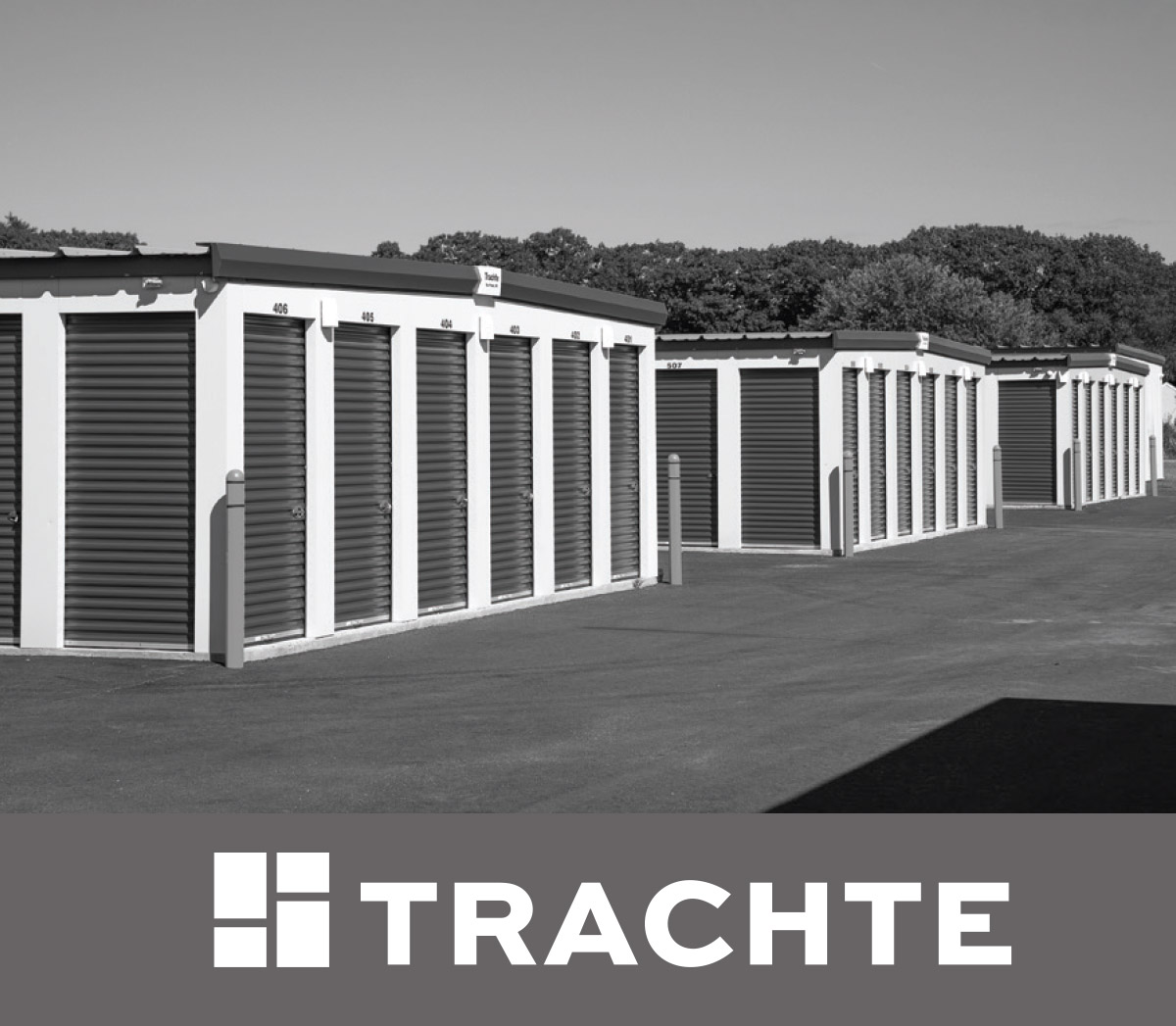
Since those early days, Trachte has grown into a diversified organization with close to 400 employees, four locations, and a portfolio of brands serving the self-storage industry and beyond. This includes Trac-Rite, MakoRabco, and Fire Facilities. The latter is a division that’s lesser known to the self-storage community. “We design and manufacture live-fire training towers for firefighters and build spaces for law enforcement to practice tactical training scenarios.”
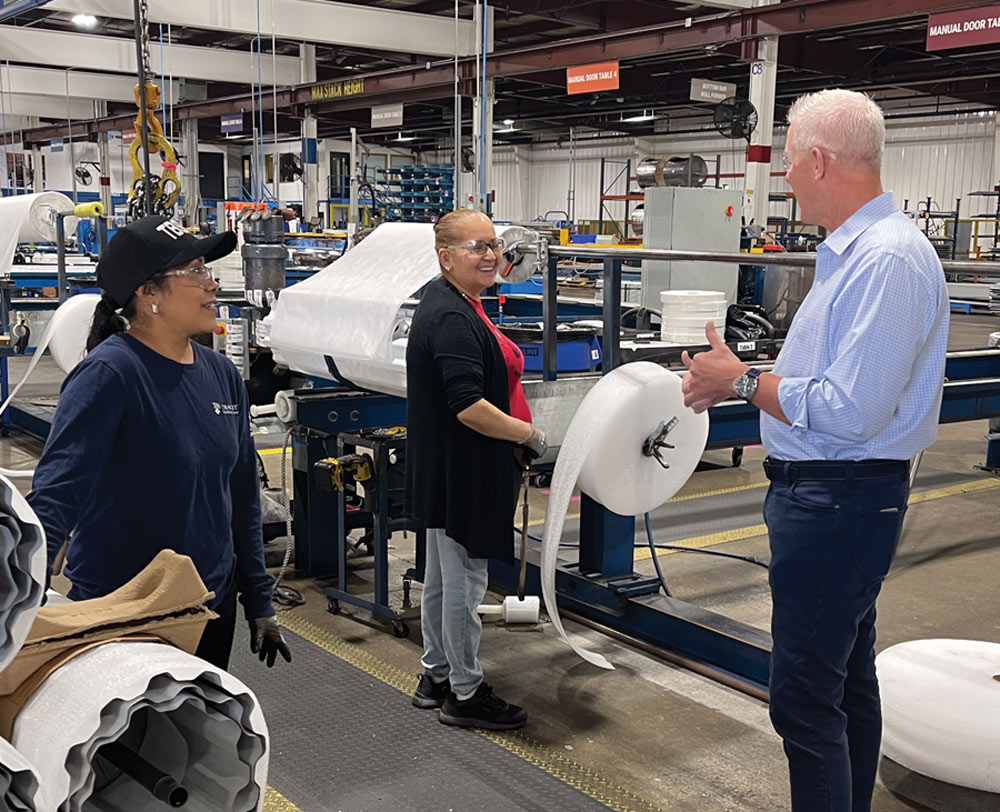

For Relford, the rebrand wasn’t about creating something new so much as clarifying what the company had already become, with each brand maintaining the ability to play to its strengths. Trachte focuses on designing and manufacturing complete building packages, Trac-Rite specializes in doors and hallway systems, MakoRabco brings high-end design and construction expertise, and Fire Facilities assists in the training of first responders.
“When we acquired MakoRabco last year, we never intended to force the brands together,” says Relford. “Each has its own value proposition and customer base. There’s real value in maintaining those distinctions.”
Touching on market dynamics, Relford says, “One thing that’s important to remember is that self-storage remains a very local business. A facility serves customers within a relatively small radius, so new markets will continue to develop, and some existing markets will recover much faster than others.”
And despite the slowdown, TBS is doing well. “As an organization, we’ve got a lot of positive things happening. In the future, there could be opportunities to add additional businesses under the TBS umbrella, but as it stands right now, our primary focus is optimizing our existing businesses.”
He explains that the building package, including doors and hallway systems, represents a significant portion of any self-storage project. “TBS brings together three trusted brands with a comprehensive product and service portfolio, backed by decades of experience. That combination gives owners, developers, and general contractors a partner that can help them build stronger, more efficiently, and with greater confidence.”

“I wouldn’t say it’s changing so much as evolving,” says Relford. “There are just newer categories.” He zeroes in on flex space. “That can be an extremely broad application. You have facilities that may simply be used for luxury vehicles or sports car collections—I like to call them a Garage Mahal. And then you have more operationally oriented facilities serving small businesses, contractors, and other commercial users.”
The operating model changes dramatically with flex space. “Traditional self-storage has always been a great business model because it’s relatively efficient to operate,” he says. “Flex space moves much closer toward the complexity of something like commercial warehousing. If you’re serving business owners and helping support their operations, there are more moving parts.”
Although flex space development is still just a small percentage of the company’s business, interest is growing. “We’re hearing from a lot of customers who are looking to diversify beyond traditional self-storage while still staying within a familiar type of real estate.”
Outside of developing flex space properties, TBS is expanding into pre-engineered metal buildings as well. “There are certain engineering limitations with light-gauge steel,” says Relford. “When projects become greater or require wider spans, pre-engineered metal buildings become a very attractive solution.”
Culturally, it’s just a very different environment from those he’s worked in before and he relishes that. “Being 100 percent employee owned allows everyone to focus on the business and the customers without a lot of red tape. We can also play the long game without placing too much focus on quarterly earnings expectations. Instead, we’re asking ‘What’s the right thing to do for the business?’ That’s something I really value.”
Looking ahead, Relford expects the company to continue evolving alongside the self-storage industry itself. “Whatever comes next, we will be part of it.”

Brad Relford has no intention of retiring anytime soon, but when he does, he expects it will be from TBS. “I want this to be my last and my best stop professionally. I’ve still got time to make certain that’s the case.”
When he ultimately does step away, travel will become a priority; in fact, it already is. “For years our family has prioritized experiences,” he says. “Instead of exchanging gifts during the holidays, we’ll take a trip together. Travel is important because it opens your eyes and exposes you to different cultures. That’s something that’s always been important to me and my wife. And it’s something we’ve passed on to our daughter.”
Travel isn’t the only thing in his plans, however. “When I finally hang it up, I’m going to spend a lot more time with my golf clubs.”
Data Storage Stats




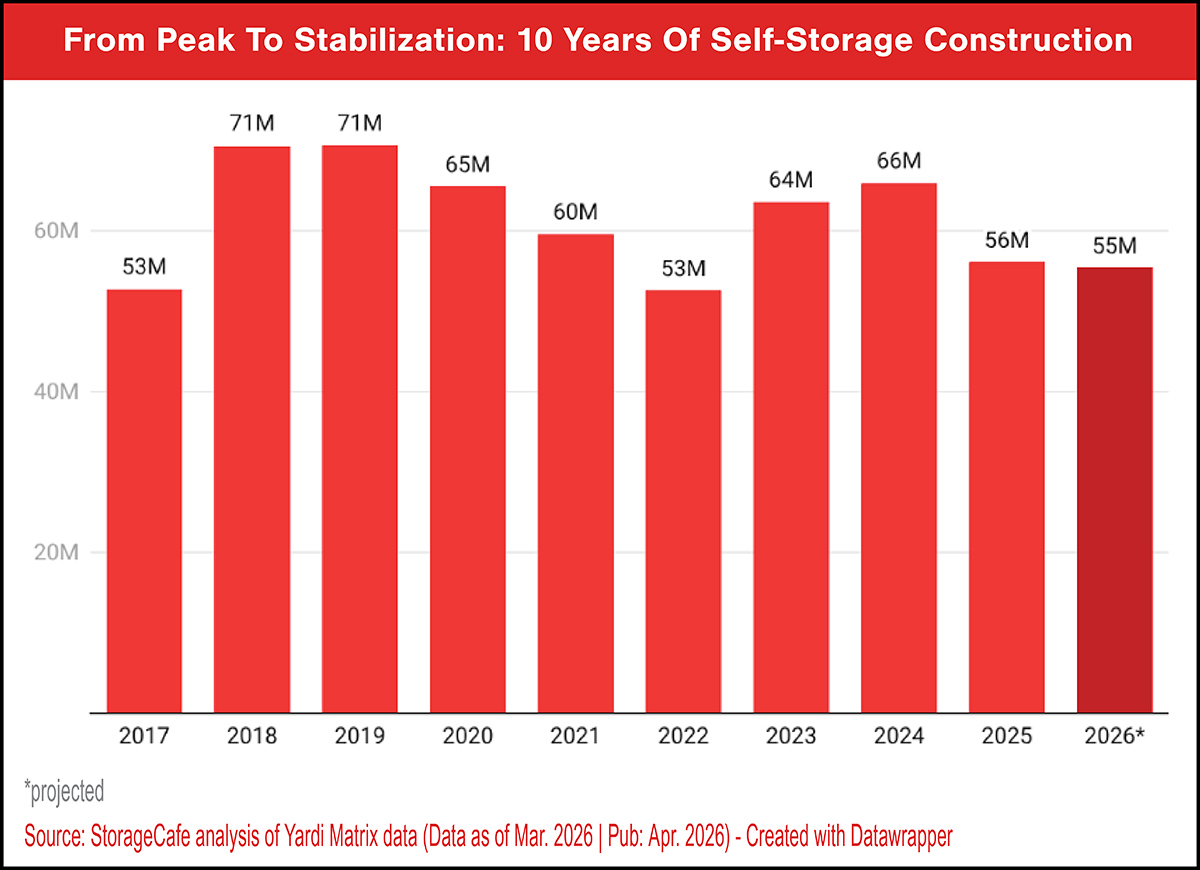
or most of the past decade, the self-storage industry ran hot. Construction crews raced to meet seemingly insatiable demand, annual deliveries surpassed 70 million square feet in both 2018 and 2019, and developers who hesitated watched their competitors capture markets first. That era of sprint or fall behind is over. What has replaced it is something more interesting, and ultimately more durable: a market that has learned to grow with discipline.
According to StorageCafe’s analysis of self-storage supply deliveries projected for 2026, approximately 55.4 million square feet of new self-storage space is projected to come online this year, a figure that closely mirrors 2025 and represents roughly 2.6 percent of the nation’s existing inventory. By the frantic standards of the late 2010s, that is a deceleration. By any other standard, it is a healthy, sustained expansion from an industry that has matured without stagnation.
See From Peak To Stabilization: 10 Years Of Self-Storage Construction chart.
See New Self-Storage Supply In 2026: The Best And Worst States For New Deliveries map.
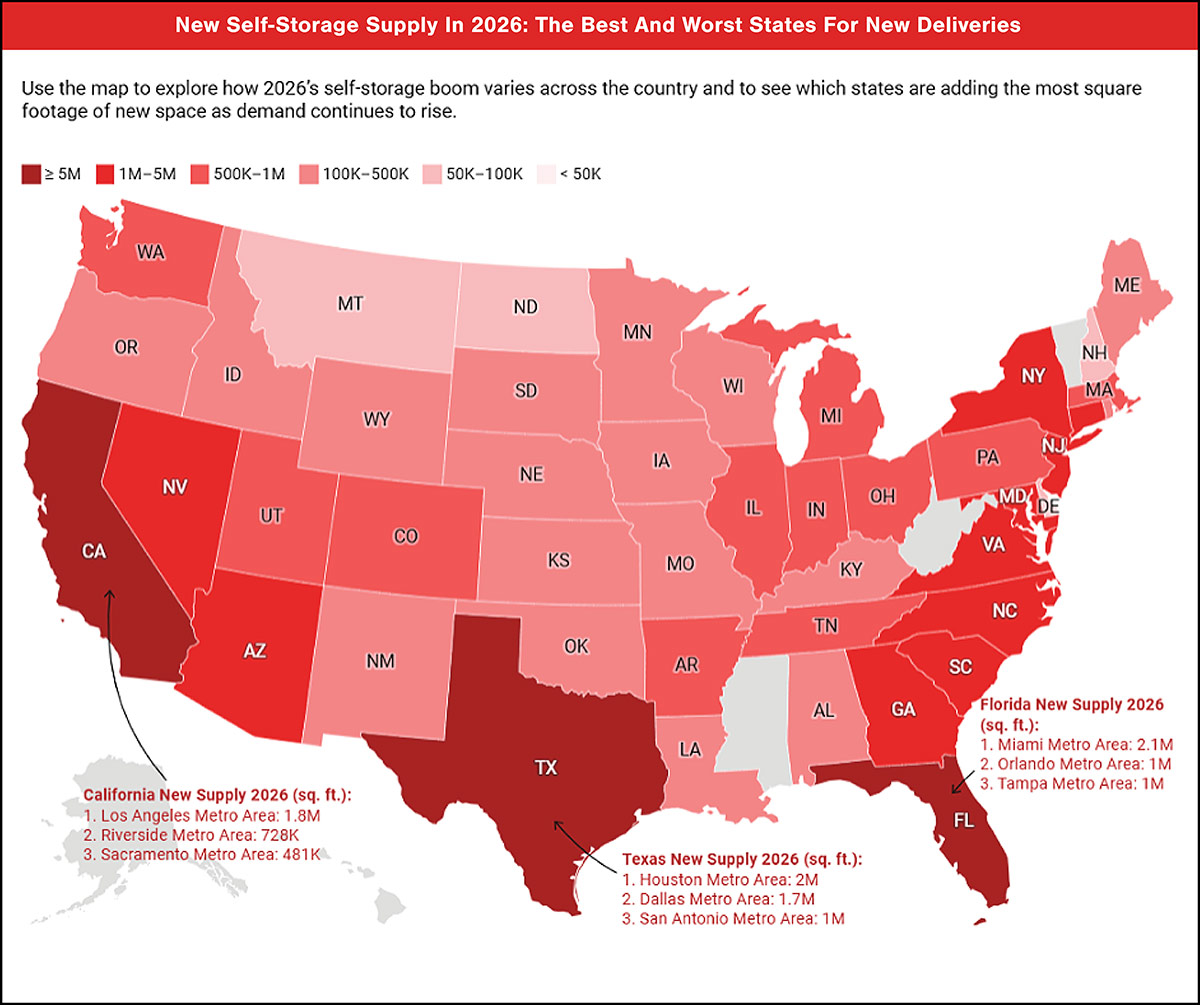
Net in-migration continues to underpin demand, though at more moderate levels than during the pandemic peak years. The state’s large retiree population, seasonal residents, and a housing market characterized by frequent turnover all contribute to durable storage usage. Statewide rents have declined 2.8 percent year over year, and several Gulf Coast markets face the steepest rent corrections in the country.
Meanwhile, Texas added 6.9 million square feet in 2026, a meaningful volume but spread across a state with one of the largest inventory bases in the country. Houston and Dallas-Ft. Worth each hold inventory bases that exceed 80 million square feet, which gives both metros the absorption capacity to accommodate new deliveries without the same proportional pressure Florida faces. Texas rents declined only 1.7 percent year over year, roughly half of Florida’s correction.
The New York metro alone has 3.2 million square feet scheduled for delivery this year, which places it first nationally in absolute volume. And yet, despite that lead, the metro remains the most undersupplied market among the top 20 for deliveries. Thanks to its high self-storage demand and low per-capita inventory, New York is the only metro in the top 10 where street rents are still on the rise, modestly at 0.6 percent year over year, but upward nonetheless. Meanwhile, New Jersey also has low per-capita availability, persistent demand, and new facilities that enter a market that has historically outpaced available space.
Connecticut has 1.1 million square feet of projected 2026 deliveries, which represents a 6 percent inventory expansion, a number that would be unremarkable in Florida but is genuinely notable in a dense, historically constrained Northeastern market.
The contrast with supply-constrained coastal cities is sharp. New York at 4.05 square feet per capita, Boston at 5.05, and Los Angeles at 5.1 all absorb new inventory as fast as it arrives, which leaves rents flat or on an upward path. These markets have spent years, in some cases decades, with demand that has consistently outrun supply.
These numbers reflect a broader structural shift: Self-storage demand has spread well beyond dense urban cores. What began as a product closely tied to small-apartment urban life has moved decisively into feeder markets, suburban corridors, and smaller regional hubs. Population growth, household formation, and lifestyle changes create genuine storage needs. Lumberton’s expansion serves not only local residents but a broader area of southeastern North Carolina, where recent manufacturing and health care investments have produced a positive outlook for household formation.
Farther south, Savannah, Ga., is seeing 17.5 percent inventory growth projected in 2026. Savannah attracts operator interest because of port activity, an industrial base on the rise, and a population profile that blends long-term residents with seasonal and transient layers. That combination of stable core demand plus variable auxiliary demand is the kind of demand structure that sophisticated storage operators actively seek.
See Big Swings In Small Markets: Where Inventory Is Jumping Most table.

In most major metros, new supply adds 2 percent to 5 percent to existing inventory. That is growth, but it is measured growth. The markets where proportional expansion runs higher (Phoenix at 7 percent, Cape Coral at 12 percent, parts of Florida’s secondary markets in the 10 percent to 14 percent range) are the same markets where price pressure is most visible. That is exactly the signal a well-functioning market should send.
Self-storage spent the better part of a decade set to grow as fast as capital and labor would allow. In 2026, it grows as fast as demand requires. That is a sign of maturity.




here are five data types critical to self-storage development. These should be used to prequalify parcels long before a shovel hits the ground.
Physical Land Data
Zoning Data
Competition Data
Self-Storage Data
Fake Data
The newest fake data is fake rental rates. Many REITs, larger operators, and even some small operators have gone crazy with teaser rates. They offer unbelievably low rates, only to double them in two months and then double again in eight more months. It sounds unethical, therefore hard to believe, but it is true. I have experienced this firsthand, more than a couple of times. I rented a 10-by-10 climate-controlled unit for $65. I asked how long the rate was good for, and she said she did not know. Fifteen days after moving in, I got a letter stating that my rent was going up by $135 starting month three. At 10 months, my rent was increased to over $200 per month.
We sold a couple of facilities to REITs, where we watched online rents drop between 100 to 150 percent and more.
The problem with this fake data is threefold:
- Since they are not letting customers know about the monumental rate hikes, it makes the industry look bad, and it appears this is going to lead to more regulatory oversight and new statutes for the industry.
- It is very difficult to determine the current “effective rate” for the life of a customer, so it takes more effort and expertise to prepare a feasibility or P&L with the real “effective rates.”
- It was a monumental step forward when Radius+ and others provided facility pipeline data. It saved a lot of time, but more importantly, pipeline facilities could be taken into consideration when analyzing a location. Now, given the economy and the realization that you can’t build a successful self-storage anywhere, some pipeline facilities are never going to be built are now fake data.
We recently reviewed a site with six pipeline facilities and personally checked each one. One had a coming soon sign for another use, and one was under construction for another use. Again, online data is a savings grace, but it must be checked in the field. The removal of one pipeline facility can change a location from a D or C site to a B or an A site.
P.S. If you’re looking for a property in a given area, you may find a gem by calling all the pipeline facilities.
roperty prices have been creeping higher due to NOI growth and, in a few sectors, lower cap rates. Looking forward, the increase in Treasury yields over the past three months is a headwind. Pricing is likely to drift sideways for a bit.
The Green Street Commercial Property Price Index® increased 1.6 percent in May. Over the past 12 months, the all-property index has increased 4.1 percent.
See Green Street Commercial Property Price Index chart.
See Change In Commercial Property Values chart.
See Sector-Level Indexes table.
See Cumulative Change In Commercial Property Price Index: Past Seven Years chart.
Green Street’s Commercial Property Price Index® is a time series of unleveraged U.S. commercial property values that captures the prices at which commercial real estate transactions are currently being negotiated and contracted. Features that differentiate this index are its timeliness, its emphasis on high-quality properties, and its ability to capture changes in the aggregate value of the commercial property sector.


- Institutional Quality – The index is based on Green Street’s frequently updated estimates of price appreciation of the property portfolios owned by the REITs in its U.S. coverage universe. It is driven by the NAV models maintained by the research team, which, in turn, are driven primarily by changes in market cap rates and NOI growth. Since REITs own high-quality properties, the index measures the value of institutional-quality commercial real estate.
- Timeliness – Other indexes, based on either closed transactions or formal appraisals, reflect market prices from several months earlier. Also, the Green Street index value for a given month is released within days of month-end, whereas other indexes have a sizable lag.
- Gauge of Aggregate Values – Akin to familiar stock price indexes (e.g., S&P 500), asset value weighting provides a gauge of aggregate (as opposed to average) values. Equal-weighted indexes, by contrast, put the same emphasis on a small suburban strip center as they do a Manhattan office building.


iming is everything. Few people understand that better than Mike Schofield. Throughout a career spanning 40 years in insurance and more than 25 years in the self-storage industry, it has shaped nearly every major milestone—from helping build one of the nation’s largest self-storage insurance programs to launching Schofield Insurance Group.
But long before executive titles, underwriting strategies, and meetings at Lloyd’s of London, timing revolved around waking up before sunrise and getting to work on the family ranch.
“There was always something to do in the cattle business,” recalls Schofield, “from vaccinations and spraying to feeding, fencing, and hay production. I was the oldest of my brothers, so a lot of that responsibility fell on me early. That’s definitely where I developed the work ethic that I carry with me today.”
The schedule rarely changed. There were chores before school, chores after school, and chores on weekends. Schofield laughs now when recalling that he barely understood the concept of an allowance because money was always tied directly to work. “I tell people that a dollar was never exchanged between my father’s hand and my hand without a job attached to it.”
Schofield did find time to participate all four years of high school in football, basketball, golf, and many school plays. Leadership roles as class president, student council president, and president of Future Farmers of America were all instrumental in his early leadership development. Boy Scouts and his weekly church activities were also critical in establishing his core values and strengthening his faith.
Although Schofield grew up during a time when attending college was far less common in rural Texas than it is today, his early coaches and mentors were always discussing and promoting the value of higher education.

“I was blessed to work with leaders in that city job who believed in education,” says Schofield. “They supported it, inspired me, and pushed me to finish.”
From there, Schofield was recruited and established a contractual agency relationship with a subsidiary insurance operation tied to a major food wholesaler serving supermarkets across Texas, Louisiana, and New Mexico. Eventually, his role expanded into the program manager for a nationwide supermarket program.
From 1986 through the late 1990s, Schofield focused heavily on supermarket property and casualty insurance programs. “Insurance for supermarkets could be interesting,” Schofield says with a laugh. “I remember discussing surveillance footage with a supermarket owner of a woman breaking an egg on the floor and then lying down on top of it claiming she slipped and injured herself. She didn’t even bother putting egg on her shoes.”
The position also exposed him to the constant restructuring common throughout the insurance industry. Companies sold divisions, programs changed ownership, and responsibilities evolved. Schofield recognized in his early career experiences that change is disruptive, but there are always new opportunities awaiting.
His move into self-storage came at a pivotal moment. The industry was entering one of the most aggressive growth periods in its history, transforming from a fragmented real estate niche into one of the fastest-growing commercial property sectors in the United States. Thousands of facilities were being developed nationwide, yet only a handful of insurance providers specialized in the class.
It didn’t take long to realize otherwise. “I quickly learned these aren’t just buildings. You can have 100,000 square feet of roof and have no idea what’s being stored underneath it. That’s one of the most unique underwriting challenges in self-storage.”
Facilities faced not only traditional commercial property exposures such as fire, wind, hail, hurricanes, and flooding, but also unknown tenant contents ranging from household goods to hazardous materials.
Over the years, Schofield encountered more than a few unusual claims. One of the most memorable involved anthrax contamination traced to imported untreated goat hides being stored inside a rental unit in New York for drum-making purposes. “It was one of the most unique claims we ever handled,” he says. “There were significant cleanup and disposal costs, along with sanitization of neighboring units.”
For Schofield, the incident reinforced an important lesson: Self-storage insurance is never quite as simple as it appears.
“Specialized coverages developed specifically for self-storage operators address exposures unique to the industry,” he says, “including potential liability associated with customer stored goods, lien-sale issues, and other risks that traditional policies often don’t contemplate.”
Schofield adds that one of the greatest challenges of serving a specialized industry such as self-storage is ensuring the long-term sustainability of the insurance programs that operators depend upon. “The objective was always to make sure there was a viable insurance solution available for self-storage owners and operators,” says Schofield. “If you lose carrier support, you lose the ability to serve the industry.”
He points to one carrier relationship that exemplifies that commitment. One of the insurance carriers supporting MiniCo’s self-storage program during his tenure began underwriting the business in 1996 and remains the company’s leading self-storage carrier today.
“Maintaining a carrier relationship for that length of time is unusual in the insurance industry,” Schofield notes. “It requires disciplined underwriting, consistent profitability, and a constant actuarial review of the data to ensure rates remain adequate for the risks being insured.”

Schofield believes that underwriting discipline has been one of the key factors behind the longevity of several self-storage insurance programs and has helped provide stability to facility owners through changing market conditions, catastrophic weather events, and insurance market cycles. “Insurance programs don’t survive for decades by accident,” he says. “They survive because of disciplined underwriting, sound data, actuarial analysis, and strong partnerships between the program administrator and the carrier.”
To spread that message, Schofield became a fixture at insurance and self-storage industry conferences and trade shows. What began as attending a single annual event eventually evolved into a nationwide travel schedule that included as many as 20 trade shows each year.
“It was fun in the early days—setting up booths, shaking hands, enjoying great food and meeting people from across the country,” he says. “Some of our strongest relationships and lifelong friendships were developed at trade shows, but the travel does take a toll on you eventually.”
One favorite story involves former MiniCo colleague Lauri Longstrom-Henderson, now sales and marketing director for MSM. While assembling a trade-show booth, Schofield sliced his finger open and asked Longstrom-Henderson to find some bandages.
Minutes passed. Eventually, Schofield heard her voice behind the booth curtain. “She was deep in conversation with another attendee, beer in one hand and the Band-Aids in the other,” Schofield says through laughter. “I’m standing there saying, ‘Lauri, would you mind giving me those Band-Aids? I’m bleeding out here.’”
The story evolved into a running joke with some exaggerated details, and Band-Aids continue to be exchanged through the mail and trade shows today. Moments like those reinforced what Schofield believes separates self-storage from many other industries. “It comes down to people and relationships,” he says. “This industry is unlike any other.”
One of the defining moments of his career occurred in 2016, when MiniCo became a Lloyd’s Coverholder. The achievement allowed MiniCo to access global underwriting capacity and create a specialized self-storage insurance solution backed by one of the world’s most respected insurance marketplaces. The resulting program mirrored MiniCo’s admitted market offering and remains active today.
Walking through the halls of Lloyd’s of London, conducting business with brokers and syndicates, and meeting in historic rooms lined with portraits of figures such as Winston Churchill left a lasting impression. “It was one of the greatest experiences of my insurance career.”
At the same time, Schofield became increasingly interested in leadership and organizational development. “Scaling organizations successfully requires more than increasing revenue—it demands a positive culture.”
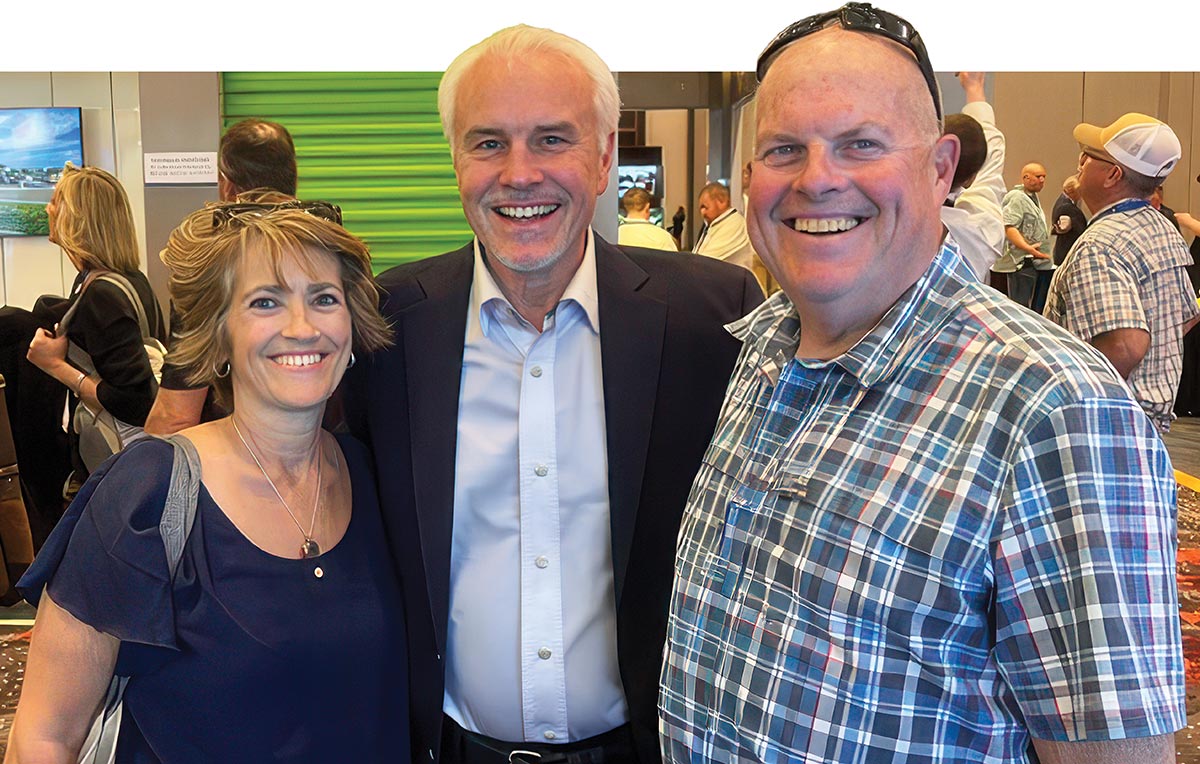


Instead, he believes true leadership should share the vision, hire the right people, place them in the right roles, and trust them to do their job.

Few people had a front-row seat to Mike Schofield’s start in self-storage quite like Hardy Good, who brought Schofield to MiniCo and introduced him to the industry more than 25 years ago. As a longtime friend and former colleague, Good shared his thoughts on the qualities that have defined Schofield’s success.
“Mike is just a wonderful guy,” says Good. “He’s also a smart businessman. I wouldn’t say he was a knuckle buster in the boardroom, but he could be a very tough negotiator when working with insurance companies. It was pretty hard to rattle that guy.”
Good recalls one example of Schofield’s steady demeanor. After a mint-condition vintage pickup truck, a family heirloom, was stolen from his property, Schofield simply accepted the loss and moved forward. “He’s always been pretty unflappable.”
Good estimates that nearly a dozen executives left MiniCo over the years to start their own businesses. “I used to say MiniCo was full of intrapreneurs,” he says. “People with an entrepreneurial spirit working within the organization. Mike was very successful at MiniCo, but I’m not surprised to see him forge his own path too. He truly knows insurance inside and out.”
Even MiniCo was making strategic changes at that time, and that’s when Schofield saw an opportunity to make a change of his own. He launched Schofield Insurance Group, a retail insurance agency focused on specialized insurance programs with self-storage as its core focus. The move was motivated by more than business opportunity. “Building something that can outlive you is different than building a career,” says Schofield. “I spent years helping grow other organizations. This chapter is about creating something my family can continue for generations if they choose to.”

Many of the lessons learned during his tenure at MiniCo Schofield brought to his new business. “As for organizational structure, the preference will be to remain lean and nimble,” he says. “I like the idea that you can have a meeting at 10 a.m. discussing a new initiative and be executing it by 3 p.m. that same day. In most larger organizations, you might still be discussing the topic six months later.”

While many professionals approaching four decades in an industry begin seriously considering retirement, Schofield says he is not ready. Instead, he remains energized by the opportunity to continue building Schofield Insurance Group, mentoring others, and strengthening relationships throughout both the insurance and self-storage industries.
He also credits the support system that made much of his career possible, particularly his wife of more than 42 years. “She’s been incredibly supportive throughout my career,” he says. “She was the one at home taking care of the kids and the dogs while I was traveling to trade shows, visiting London, and doing what I needed to do to help build the business.”
He pauses briefly before returning once again to the phrase that seems to define nearly every chapter of his story. “So, retirement—that’ll come eventually, but not yet. Remember, timing is everything.”








MAXIMIZE REVENUE AND OPERATIONAL EFFICIENCY.
Management
Built for
Performance.
hoenix has a way of pulling people back. The heat, the sprawl, the sense that the city is always mid-sentence—it tends to hold onto the people who grew up there. And so, it probably shouldn’t be a surprise that three men named David, who each left and returned, and left and returned again, ended up in the same industry, working through the same set of questions: What does it mean to run a storage facility well? Is the answer always the same, or does it depend on the asset?
What is surprising is how they found each other. Or more precisely, how Dave King found both of them.
“He was a lot like he is now,” King says, with his grin detectable in the telling. “Kind of a rascal. I recall him actually getting in trouble. We won’t get into that story.”
They separated for grade school, came back together briefly at Brophy Preparatory in high school, and then split off to college. The geography of growing up in Phoenix—big enough to get lost in but small enough to keep running into people—kept them loosely orbiting each other for decades. French became known among their social circle as the connector, the one who organized the golf outings, the birthday happy hours, the check-ins that kept a network of Phoenix guys aware of what the others were doing.
“He’s probably the best networking guy I know,” King says. “Even before this whole thing came about, he was always good at making sure we got together.”
His boss was the bartender. His boss was Dave King.
“We became buddies,” Brown says. “I didn’t really have that many friends when I moved up from Tucson, so we started having some fun outside of work.”
They would finish a shift at 10 or 10:30, head down to 16th Street Bar and Grill, get beers, hang out.
“There’s this picture of Dave King on his TV,” Brown says. “And it turns out my father-in-law had been in self-storage for a long time, and King had gotten into self-storage too.”
Brown’s father-in-law was Kent Greenwald, a longtime figure in the Arizona self-storage world. King had been working with him on the Arizona Self-Storage Association board. Phoenix, it turns out, is a big city that keeps running small.
“It’s fate,” Brown says simply.
His attraction to the industry was partly nostalgic. He grew up with a storage unit. He remembered the dark and dingy hallways, the galvalume doors, the pull-chain light bulbs swinging in the dimness—what he describes, generously, as feeling like a horror movie. He was always vaguely fascinated that people paid money to keep their things in such a place. His family was always there, trying to downsize from a 10-by-10 to a 5-by-5, getting rid of stuff they couldn’t fit in the carport of their house.
“The stats are, back then it was probably one out of 20 families had a storage unit,” King says. “Now it’s like one out of five.”
French came to storage later and from a different angle of opportunistic real estate, looking for asset classes worth exploring. He bought a couple of properties, called King, who was by then at Westport Properties, within their management arm, and used King’s team to run the facilities. They started talking about the industry the way they had always talked about everything else: honestly, frequently, without much professional distance between them.
Brown followed King to Wentworth Property Company in 2015, brought in specifically because he understood development, the kind of ground-up, design-from-scratch work that King, who focused on acquisitions, didn’t want to manage. King describes Brown as the first person he thought of when the role needed filling.
Together, the three of them represent something the self-storage industry doesn’t produce all that often: operators who got in early, stayed genuinely curious, and kept thinking about the business from multiple angles simultaneously, such as development, investment, and management all at once.
“Everyone in storage wishes they found it 10 years before they found it,” French says. “Guys from the 80s wish they found it in the 70s. That’s just how this business is. Luckily, we found it earlier than some.”



The content was pretty straightforward: selfies at airport bars on the way home from shows, pictures from grand openings and property developments—the kind of stuff that two guys in the same industry, who had started as a bartender and a barback and were now both managing directors at a real estate investment firm, accumulate without really planning to.
The question that has occupied all three of them more recently isn’t whether REITs work. It’s when they work and when a different approach might work better.
“It’s not a one-size-fits-all game anymore,” King says. “There are still definitely sites that make a lot of sense to run with a large national operator. And we’ve got a lot of sites that make a lot of sense to run the STORE way. That’s OK. There’s business out there for everybody.”
What changed, in King’s telling, was the market itself. When a big merger consolidated two major publicly traded REITs and the competitive environment tightened, Wentworth started asking harder questions about differentiation. Filling a facility to 90 percent occupancy is one thing. Filling it at the right rate, with the right tenant mix, in a way that holds up when the market softens, that’s something else.
King remembers an early lesson. One of Wentworth’s first deals was a Class-A facility in the Summerlin area of Las Vegas. They were able to raise rates on 50 percent of the existing tenant base by 40 percent right after acquisition. Occupancy dropped from 94 percent to 92 percent. They hit the second half with the same increase. It dropped to 89 percent. Three months later, it was back at 92 percent, with rents at the level the asset actually warranted.
The point isn’t that large operators can’t execute a rent strategy. They can, and they do—at scale. The point is that a portfolio-level strategy and an asset-level strategy are different things, and they don’t always produce the same result for a specific facility in a specific market.
A climate-controlled urban facility serving a dense residential neighborhood requires a different playbook than a drive-up suburban property in a tertiary market. A facility near a university has different peak seasons, different tenant needs, and different competitive dynamics than one serving a suburban neighborhood 10 miles away. Brown, who thinks about this from the design phase forward, tries to build with the eventual management approach in mind—elevator placement, loading bay access, the small decisions that compound over time into the experience a tenant either appreciates or never thinks about.
“People really don’t want to be at a self-storage facility longer than they have to be,” Brown says, “so how do you make it easy for them to come in and rent a unit? How do you make it easy for them to get to load their stuff in and out?”
French doesn’t argue that the technology is bad. He argues that deploying it the same way across every asset type, regardless of what the tenant population actually wants, is where the logic breaks down.
“What we’ve felt has happened is that the people element—the personal element of storage—has been put on the chopping block,” he says. “And I understand why, but we think there’s a cost to that too—one that doesn’t always show up on the expense report.”
What STORE is trying to build is a management platform that doesn’t abstract away the individual asset. That keeps real people in the right facilities, like managers who know the tenants, who can answer questions, and who provide the kind of low-stakes human contact that certain tenant populations genuinely value. Not every facility needs this. But some do, and treating the ones that do like the ones that don’t is, in French’s view, leaving something on the table.
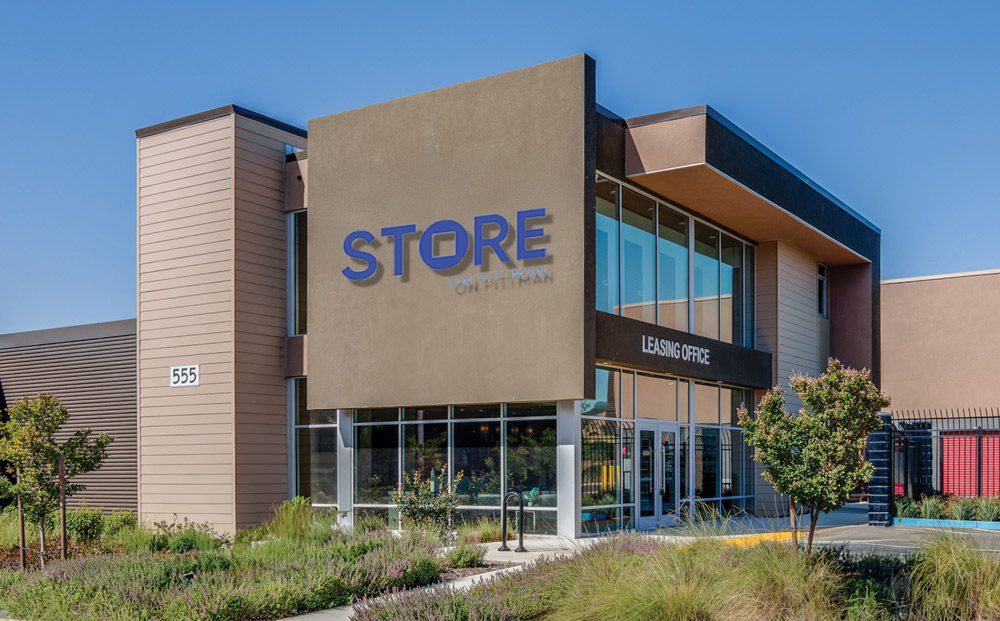
“I’d rather pay for service when it actually exists,” he says. “And I think a lot of people feel the same way.”
That said, he is quick to acknowledge the other side. There are generations of renters who would genuinely prefer never to interact with a human being at a storage facility. They want an app, a code, and a door that opens. For those tenants, at those facilities, the fully automated model isn’t a compromise; it’s exactly what they asked for.
“We’ve got 600 to 800 different tenants at a given property, all wanting different things,” King says. “I don’t think anyone hates the option of good customer service. But we’ve got to acknowledge that not everyone is looking for it, either.”

“You actually know the manager,” French says. “If you forgot your gate code, they can let you in. There’s a friendly face. It feels safe.”
That may sound like a low bar. French would argue it isn’t, but across the industry, that bar has been quietly lowered for years, and that the tenants who notice are the ones you most want to keep. His bet is that as the storage market matures, and competition for tenants tightens, the facilities that feel cared for will outperform the ones that don’t—not because of sentiment but because of retention, reputation, and the compounding effect of a tenant who never thinks about leaving.
“We still need people to be involved,” he says. “Technology enhances that. It doesn’t replace it.”

“It’s a resistance to recessions and pandemics. It’s not a proof,” King says. “We’re not recession-proof or pandemic-proof.”
The early months of the COVID-19 pandemic are instructive here. Storage facilities had to fight to be classified as essential businesses. Until that designation came through, they were shut down like everyone else. Once they reopened, demand accelerated in ways nobody had fully anticipated, such as people working from home needing to reclaim space. The general disruption of the pandemic created movement, and storage turned out to be a surprisingly affordable solution to a lot of suddenly urgent problems.
But the industry’s good fortune during those years was situational, not structural. Storage follows the same rules as every other real estate asset class. If you overbuild, everyone suffers. If you undercut pricing, everyone suffers. The fact that storage tends to hold up better than some other asset types in a downturn doesn’t mean it’s immune; it means it’s resilient, which is a different and more honest thing to say.
Brown sees the overbuilding issue up close. He watches projects go up in markets that don’t need them, built by out-of-state groups attracted to Phoenix’s growth numbers without understanding what the local market can absorb.
“If a piece of dirt is still available in Maricopa County, there’s probably a reason,” he says. “We looked at it 10 years ago and didn’t want to buy it, so why does it make sense now at a higher price?”
The result, when those projects come online, is more supply competing for the same pool of tenants. Everyone drops prices. The economics that justified the development begin to erode, not just for the new build but for every facility nearby. The winners, in that environment, are the ones with better operations, stronger tenant relationships, and lower churn, which brings the conversation back, always, to management.

It sounds farfetched. French knows it. He also remembers when people said that about Airbnb and Uber and ordering groceries on your phone.
“When I hear people say that’ll never happen, it begs a little of: Who would ever drive around in a car without a driver? Who would ever rent somebody’s guest house?” he says.
The thing stopping valet storage right now is transportation costs. Getting the right box from a warehouse to your door in a reasonable time window is expensive and logistically complicated. But French has been watching the Waymo cars multiply on Phoenix streets. He is not ready to write off the timeline.
He is also quick to point out what valet storage can’t easily replace. When his wife says they need the Easter baskets, and they’re in storage, French doesn’t want to wait for an app to dispatch someone. He wants to go get them. The ability to pop over and grab something on a Saturday morning is part of what storage sells. And the growing share of small businesses using storage as a quasi-warehouse adds another layer of immediacy that a valet model struggles to accommodate.

He is probably not unique in that, but he is the kind of person who has been thinking about the storage business long enough to know which assumptions are worth questioning. The industry has been comfortable for a while. The operators asking uncomfortable questions tend to be the ones worth watching.
Three Daves from Phoenix: One of them met another in kindergarten, while one of them poured beer for the third before either of them knew what self-storage was. An Apple TV install in a father-in-law’s living room pulled two of them back together after years apart.
The collaboration they’ve built between Wentworth’s investment and development platform and STORE Management’s approach isn’t a rejection of how the industry has operated. It’s an addition to it—a belief that the market has matured enough to support different models running in parallel: institutional scale, where it makes sense, and a more attentive approach, where the asset calls for it.
Whether that belief turns out to be right will take time to know. The proof is still accumulating. But the three Daves have been paying attention to this industry longer than most, and they tend to see things a little before the rest of the room does.
The dark storage hallways of King’s childhood are long gone. What fills the space now depends on who’s running the building.




t’s the kind of incident that shakes self-storage owners and their employees to the core. In early February, a man walked into a self-storage facility in Philadelphia, Pa., and demanded money. The office manager complied and handed over the cash, but it didn’t matter. After taking the money, the suspect opened fire, striking the manager in the shoulder and chest before fleeing the facility. The manager survived, but the incident served as a sobering reminder that self-storage employees, like workers in any customer-facing industry, can suddenly find themselves in dangerous and unpredictable situations. MSM reached out to the facility for comment, but the operator declined.
“Not surprising,” Kristi Adams, chief revenue officer and president of international at OpenTech Alliance, Inc., says of their decision. She feels the industry often struggles to publicly discuss crime trends because operators are understandably protective of facility reputations. “They don’t want to talk about it because they don’t want it to become a public relations issue, but when a crime occurs at a self-storage facility, it’s going to make the news anyhow, so it’s best to get ahead of it and talk about how you’re going to improve safety in the future.”
Another high-profile incident was the tragic 2025 shooting of facility manager Patricia Villa by a disgruntled tenant. Following her death, Harry Sleighel, founder of Tenant Property Protection and partner with SAFEhugg, says conversations around employee safety really began ramping up. “Talking about safety isn’t what creates concern for the industry, avoiding the conversation is,” Sleighel says, echoing Adams’ thoughts. “Our duty as an industry is to make sure they feel supported, connected, and protected.”
Diane Gibson, president at Cox’s Armored Mini Storage Management, Inc., says her facilities are equipped with cameras and managers are provided mace; however, she believes one of the most important safety tools remains instinct. “If an employee has a feeling that something isn’t right, they have the ability to say, ‘I can’t leave my office right now.’ And if they’re not comfortable, we make sure they always have another way to retreat from the situation rather than going around the person causing the stress. Multiple exits are key.”
“Most people committing a crime aren’t calm and collected,” says Justin Insalaco, a retired police officer and board member with Crime Stoppers. “Managers should look for signs: anxiousness, sweating, darting eyes. As a police officer, I’ve spoken with many victims following an incident, and they often would say that in hindsight they should’ve known something was off, but they didn’t follow their gut.”
Insalaco is not opposed to individual operators and workers possessing a firearm if they are properly trained and legally permitted to carry. Gibson, on the other hand, doesn’t support firearms in the workplace. But they both agree that, regardless of whether someone carries a firearm, situational awareness and de-escalation tactics remain the first line of defense. In fact, Insalaco recommends hiring a private security company to train personnel in these areas. “Some of their suggestions may be simple, but a lot of times people don’t think about them,” he says. “For example, if an employee is escorting someone to a unit, they should walk behind the person and direct them rather than leading them. Having them behind you puts you in a much more vulnerable position.”
Another area where managers can better protect themselves is by avoiding unnecessary confrontation. Gibson recalls situations where employees aggressively approached tenants over late payments, rule enforcement, or suspicious activity. “I encourage calm, non-confrontational interactions. Sometimes it’s better to just act like you’re doing your rounds and have a spur-of-the-moment conversation rather than specifically going after them. It’s all in the presentation.”
For operators, the balance between customer service and employee safety can be difficult. Some employees are hesitant to tell a customer “no” for fear of retaliation—in the form of bad reviews.
The risks become even more apparent when employees escort customers around a property. In June, police arrested a suspect accused of assaulting a self-storage manager at a facility in Miami when she took him to see a unit.
Modern access control systems can help eliminate situations like this while still helping the customer find what they’re seeking. Farmer explains that some platforms allow customers to complete transactions remotely and then use mobile credentials, wayfinding technology, or illuminated pathways to navigate directly to their unit without requiring an employee escort. “This actually improves convenience while reducing unnecessary face time,” he says. “The less physical interaction, the lower exposure to risk.”

One of the biggest obstacles to improving facility security is convincing owners to invest in updated technology, says Farmer, who frequently encounters operators relying on decades-old access systems because they still perform their basic function of opening gates and controlling entry. “You can’t rely on a single tool,” he says, noting that older generation facilities may put up a perimeter fence or install a keypad and call it a day. “Security needs to be like an onion, with multiple layers.”
Continues Farmer, “Another aspect of security that gives some operators pause is recurring subscription fees or upgrade costs, but the investment is relatively small compared to the benefits.” Cloud-based access-control platforms, including PTI’s StorLogix, not only offer increased automation and an uplift in tenant experience but also enhance the facility’s overall security. “Operators can easily review site activity and access areas while monitoring zones and alarms from one dashboard, often at a cost of pennies when licensing is scaled across all units within a facility over the duration of the year,” he says. “By making the upgrade, you can lower operating expenses and heighten security. That’s a win-win.”
Adams agrees that at first it may seem demanding or expensive for legacy facilities, of which the U.S. has many. “Our country certainly led the way in self-storage, but that’s left us with lots of outdated properties. Many international markets are ahead technologically because their facilities were built more recently and are less burdened by aging infrastructure, so it’s time to modernize. Even an inexpensive smart sensor can let you know immediately if a gate doesn’t close on Friday night rather than discovering it on Monday morning.”
One challenge with protecting self-storage employees is that they’re very mobile, so a traditional panic button, for example, doesn’t suit them. However, there are alternatives. “There are discreet wearable panic buttons,” says Insalaco. “That way, whether behind the counter or out on the property, an employee can always be connected. With phone-based solutions, the screen may be locked or you’re fumbling with the keypad trying to find the app, and by then it’s too late.”
Sleighel understands the importance of giving employees a simple way to get help when they may not be able to physically access their phone. That’s why SAFEhugg uses discreet voice activation technology. “If a manager is walking the property and finds themselves in an uncomfortable or potentially dangerous situation, they can simply say their chosen safe word to activate SAFEhugg,” Sleighel says. “The phone screen stays dark while the app works in the background, notifying emergency contacts and sharing the user’s location. It also begins recording live video and audio that may assist responders and provide valuable documentation after an incident.”
Extra Space Storage has hosted public safety fairs in the past, for example, and Midgard Self Storage has donated storage units and even got a shout-out from their local police department.
In the end, the Philadelphia manager recovered and went home. Now, the goal of every operator should be to help ensure the next employee does too.
Amanda Torbert is the marketing manager with Universal Storage Group, but she was the boots on the ground at a USG-managed property for seven years. During that time, she had to call the police twice: once when she walked into the vacant manager’s apartment and realized someone was hiding in the attic (insulation on the floor below the access door was the giveaway) and again when a homeless man began cutting his face outside the office with a large pair of scissors.
Two incidents in seven years isn’t a bad track record, but she’s also experienced her share of awkward situations that had the potential to go south quickly. She recalls a customer who came in to rent a unit and immediately gave her a bad feeling. “I’m the daughter of a police officer, and a true crime aficionado,” she says, “so I’ve got a pretty good read on people.”
The customer insisted Torbert show him the unit, not her male co-worker Greg White. “She stays in the office, I show the units,” said White. The man continued to push back, stating he’d rather Torbert show the unit, but White remained firm and finally the man agreed.
After he’d moved in, Torbert and White’s curiosity got the best of them, and they peeked through the chicken wire roofing of the unit. Inside? A single lamp. “It was super suspicious,” says Torbert.
Days later, the man returned, asking Torbert to help him with his lock. Unbeknownst to the tenant, White was working in the adjoining manager’s apartment. She texted him the company safe word and he emerged from the side door. Torbert could practically see the blood drain from the guy’s face. “I’ll just come back another time,” he said. Soon after, the unit was empty; he’d taken his lamp and left. “There was nothing to report, because he didn’t technically do anything wrong,” says Torbert, “but it didn’t feel right, and that’s why you’ve always got to be on high alert.”
Would Torbert have shown that unit had White not been there? “Probably, because that was my job.” However, she had a process for situations like this. “I’d tell people to meet me at the gate, and then I’d call someone and keep them on the line. At the gate, I’d say I need a photo of their driver’s license on the webcam to document who I take into the facility. That’s a big deterrent if someone is planning something nefarious.”
Another protocol she followed was tucking away the golf cart at night so anyone wanting to see a unit would have to follow her in their car. Some could argue that the potential criminal now has a getaway vehicle and quick access to a trunk, but Torbert insists that the distance is critical. “This helped maintain personal space. Plus, that facility required a code to get in and out, so unless they plowed through the gate, they’d be stuck.”
Surprisingly, Torbert would not keep the door locked after dark, even though it would allow her to gauge a person’s demeanor before they entered. “If I was at the door, I could easily be pulled out or pushed in and attacked. I preferred to be behind my desk with my phone and hornet spray.” Torbert contends it works as well as mace but has a longer range; plus, no one thinks twice about a can of hornet spray being on a counter, which gave her immediate access to it.
“Some facilities have buttons that can disengage the lock from behind the counter. I think those are a great solution, but ultimately, it’s up to you to be smarter than the bad actors,” she says. “Be situationally aware. Take some self-defense classes. And don’t worry about making somebody feel bad if you don’t feel good about them.”
As the daughter of a police officer and someone who’s made friends at the local precinct (she was known to drop off coffee and donuts and let the officers use the facility for K-9 training), Torbert feels a sense of camaraderie with law enforcement. And while she’s in no way comparing self-storage management to the work they do, she says there is a shared goal. “At the end of the day, we all want to get home safely.”

At PTI Security Systems, our commitment to quality and passion for innovation drives the development of advanced security solutions to help operators scale with confidence. From smart technology to fully integrated systems, our solutions provide greater security, insights, and control across any facility.

don’t keep up with the competition;
they lead the pack.



MOBILE APP
SMART KEYPAD
SMART LATCH
MOBILE APP
SMART KEYPAD
SMART LATCH

Quarterly Download
he transition into 2026 appears to be trending towards a fundamental maturation of the self-storage sector, shifting away from pandemic-driven anomalies toward a more disciplined, structural rebalancing. The industry is finally showing signs of a perceived breakdown in the “lock-in effect” that previously froze residential mobility. As life events begin to outweigh the financial inertia of low-interest mortgages, there appears to be a steady thaw is restoring the traditional flow of demand. Based on this shift, the market appears to be trending towards a new operational baseline where success is defined by recalibrating strategies for a consistent interest rate environment rather than waiting for a return to historical peaks.
Simultaneously, the industry is showing signs of institutional consolidation, where massive, tech-enabled platforms are redefining competitive advantage. The recent surge in mega-mergers and strategic joint ventures suggests that self-storage has graduated to a core institutional staple, dominated by operators who leverage sophisticated data analytics to optimize performance. This structural evolution is supported by an aggressive contraction in the supply pipeline, which often acts as a strategic reset. By stemming the flow of new deliveries, the self-storage sector shows signs that it is allowing existing inventory to be absorbed, clearing the path for renewed pricing power and long-term yield stability in a more consolidated landscape.
Public Storage converged their web and in-store rates into a single price point. By eliminating the traditional “teaser” discount, this likely signaled an all-out push for volume during the slowest leasing months of the year. It’s a calculated bet: lower the barrier to entry in winter in order to capture necessity-driven renters; then, hope for longer stays and higher lifetime value.
See The Gap Widens Between Achieved Rates And In-Storage Asking Price chart.
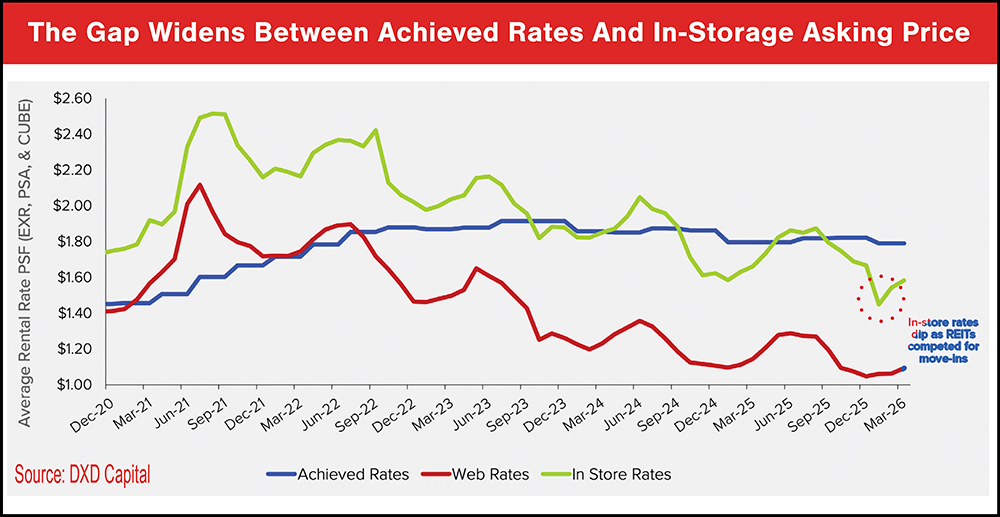
The tactical push to buy occupancy through lower entry rates has not been enough to offset persistent demand weakness in the housing market. Without meaningful home transaction volume, the relocation-driven demand that typically keeps the sector buoyant is simply absent. As we head into the spring leasing season, it seems the question is no longer when occupancy returns to the mid-90s—the question now likely whether 91.5 percent marks the cyclical trough or the beginning of a longer stay in the low 90s.
See Occupancy Rates Fall In The Last Quarter chart.

See Decline In Deliveries Expected chart.
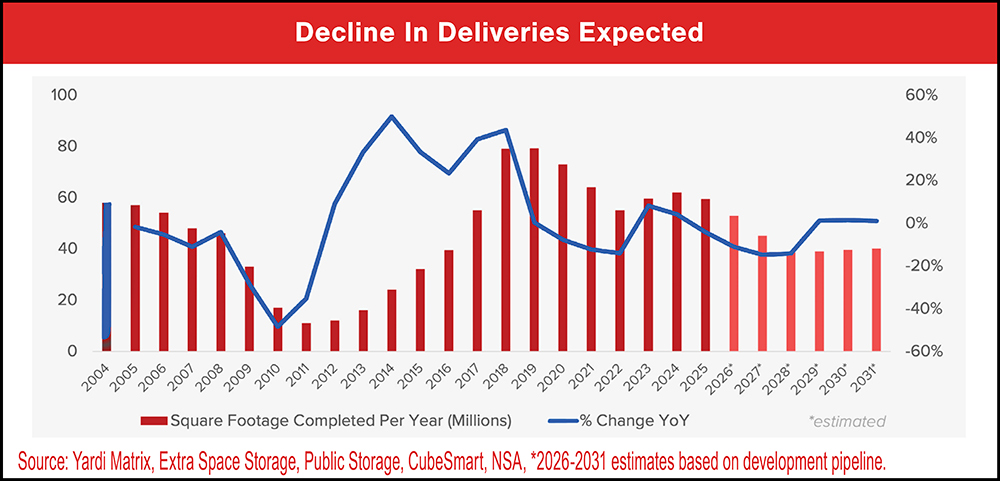
Despite the cyclical reset of early 2026, Extra Space has maintained resilient fundamentals, helping to support the sector, even as weighted occupancy fell to a new low of 91.5 percent. The company’s continued investment in scaling its third-party management platform, combined with a disciplined acquisition approach, reinforces its position as one of the sector’s primary growth engines and a benchmark for institutional-quality operational execution in self-storage.
See Total Return chart and REIT infographics.

See Self-Storage REIT Returns Hold Strong chart.

See Distressed Rates By Property Type chart.

The problem is the gap between the number of buyers and sellers. With roughly 470,000 more sellers than buyers, transaction volume has not reached the critical mass needed to break the current occupancy stalemate. Until active listings convert into closed deals and actual moves, weighted occupancy is likely to remain anchored near 91.5 percent.
See Estimated Number Of U.S. Homebuyers And Sellers Actively In The Market chart.


See Net Rentable Square Feet Under Management chart.

See Stabilized Storage Sales and Lease-Up Storage Sales tables.




Trained on self-storage so every response is relevant.

From reservations to payments, Alita gets things done.

Enterprise-grade security and 24/7 availability your customers can trust.


elf-storage rate pressure is easing, but supply remains a drag. Tyson Huebner, Yardi Matrix’s director of research, recently presented at the Texas SSA Executive Retreat in Grapevine, Texas. The presentation, available upon request, covered supply and demand trends, operating performance, and investment market conditions, with a focus on Texas. Home to the nation’s two largest self-storage markets, Texas serves as a useful case study for broader industry trends. Strong migration and home sales during 2021 and 2022 fueled record self-storage performance, particularly in Austin, Dallas, and San Antonio. Developers responded by building aggressively in high-growth areas, such as the northern suburbs of Dallas and western San Antonio, while elevated property values accelerated consolidation as large operators, investors, and REITs acquired smaller owners. Conditions have since shifted dramatically. Home sales have fallen to multi-decade lows, leaving many migration-dependent submarkets facing excess supply and weaker demand. Increased competition for fewer tenants has pressured rents and returns, challenging the underwriting assumptions that supported acquisitions and development during the recent boom. In Texas, advertised rates were down 2.5 percent year over year in May 2026, 13.3 percent below their 2022 peak and 3.1 percent below May 2020. Although performance is beginning to stabilize as new supply moderates, recovery remains uneven and could take years in some markets.
Year-over-year rate pressure eases but remains broad-based. Advertised rates continued to face year-over-year pressure in May, though the pace of decline moderated compared to prior months. Nationally, advertised rates decreased 1.8 percent in May, a minor improvement from -1.9 percent in April and -2.0 percent in March. Same-store advertised rates for non-climate-controlled (NCC) units increased in only two of the top 30 metros. Similarly, rates for climate-controlled (CC) units increased in two of the top metros year over year.
Nationally, Yardi Matrix tracks a total of 2,513 self-storage properties in various stages of development, including 612 under construction, 1,603 planned, and 298 prospective properties. The share of projects (net rentable square feet) under construction nationwide was equivalent to 2.2 percent of existing stock through the end of May, unchanged month over month.
Yardi Matrix also maintains operational profiles for 33,008 completed self-storage facilities in the U.S., bringing the total dataset to 35,521.
Self-storage REITs posted stronger month-over-month asking-rate growth than the broader market, as REIT operators typically increase rates more aggressively during the spring and summer leasing seasons. However, REIT rents remain negative year over year, declining 3.1 percent nationally, indicating that recent gains are more reflective of seasonal catch-up than a full demand-driven recovery.
See May 2026 Year-Over-Year Rent Change For Main Unit Sizes table.
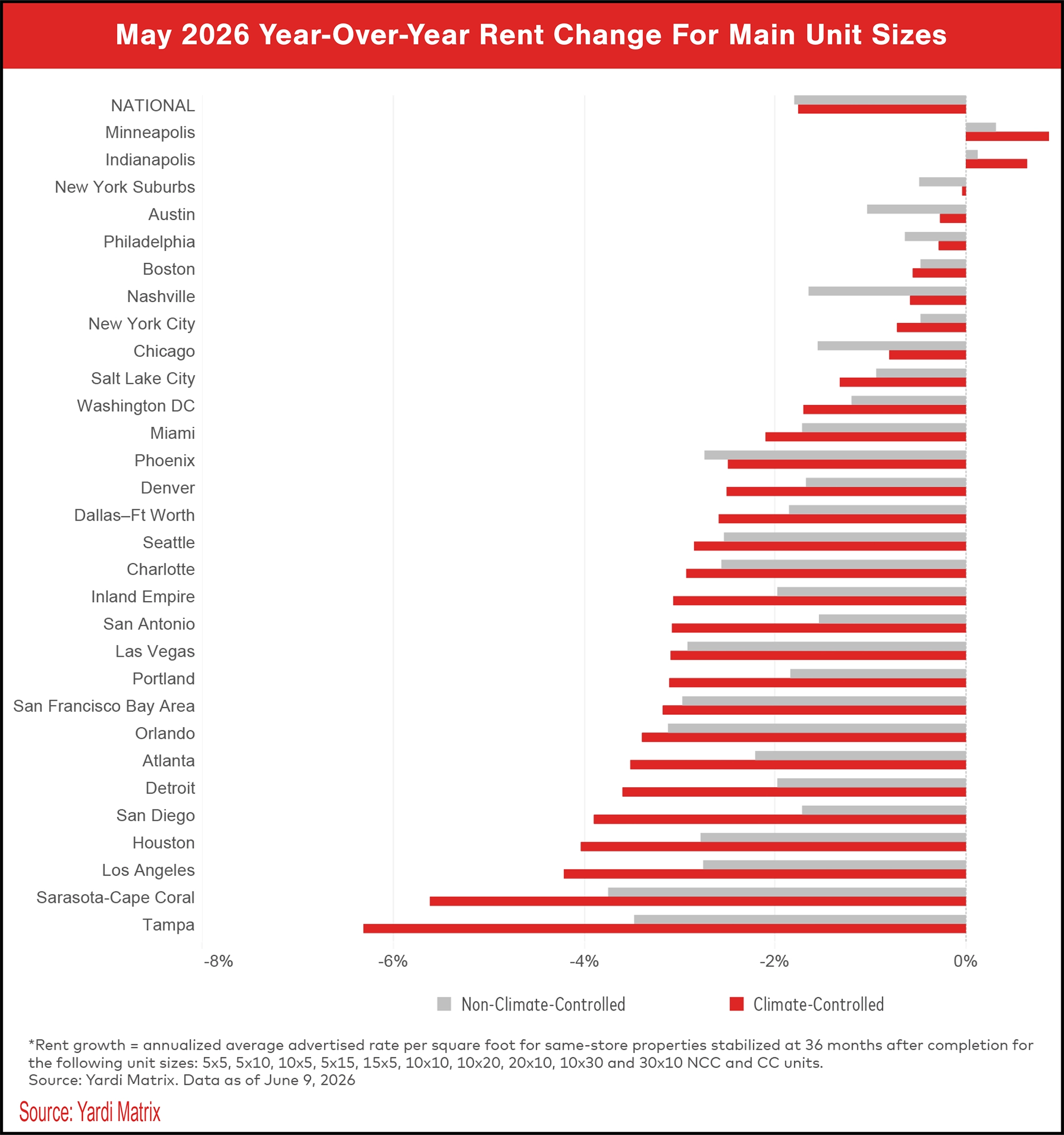
Sequential rate growth was broad-based, with 26 of the top 30 metros reporting month-over-month gains.
Many of the strongest month-over-month performers were markets with more pronounced seasonal patterns, including those with colder winter climates. Markets such as Boston, Washington, D.C., Indianapolis, and other winter-weather metros typically experience more seasonal demand.
See National Average Street Rates PSF For Main Unit Types chart and Monthly Average Street Rates By Metro table.

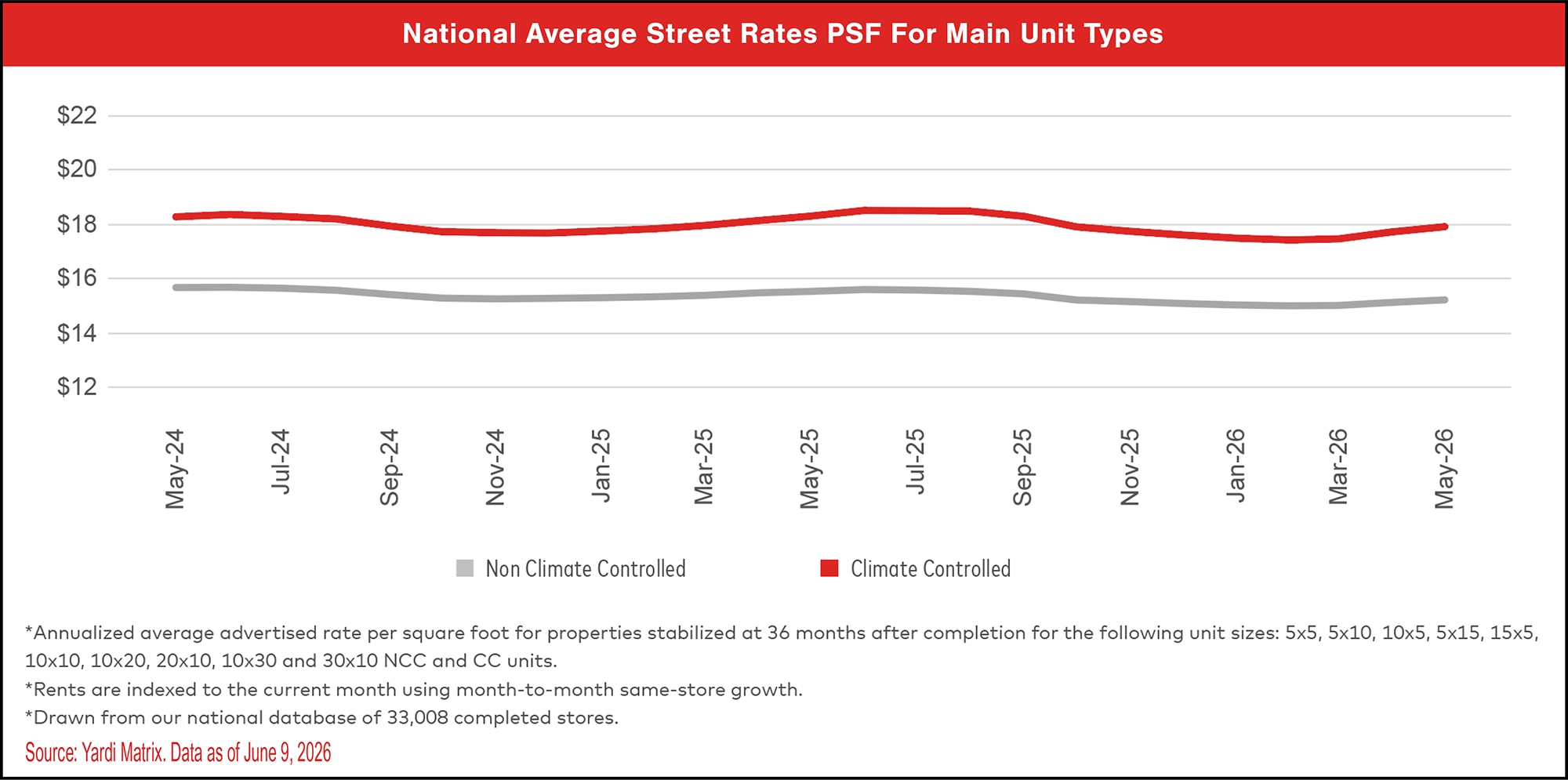
Elevated new supply continues to limit rate growth in several metros, particularly where newly delivered properties are still in lease-up. This pressure remains most visible in high-supply Sun Belt and Florida markets, including Tampa, Sarasota–Cape Coral, Orlando, and Las Vegas.
However, supply does not tell the full story. Some metros with moderate new supply, including Houston and Los Angeles, still have trade areas with concentrated new deliveries, creating localized pricing pressure that can weigh on broader metro-rate performance. Both metros may also face demand pressure, given their recent reliance on international migration for demand growth.
See Self-Storage Major Metro Summary chart.
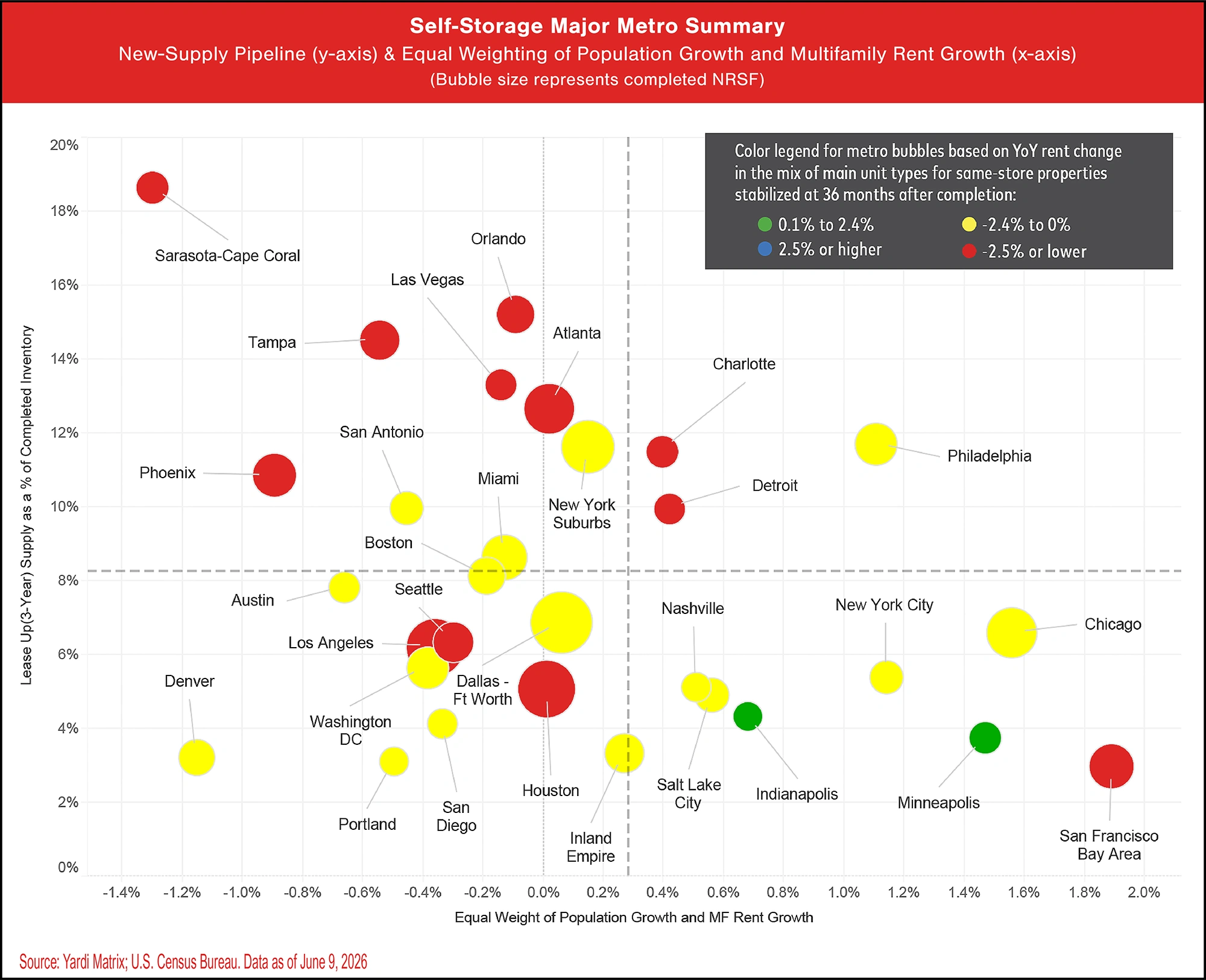
Florida markets stand out among those with elevated recent supply, with Sarasota–Cape Coral, Orlando, and Tampa ranking among the most supply-heavy metros. All three metros are still in lease-up.
have more trailing one-year and three-year supply than a year ago; as a result, they have seen some of the largest decelerations in advertised rate growth. In metros such as Orlando and Tampa, recent deliveries appear broadly distributed across the market; in other metros, new supply is more concentrated in specific trade areas. Sarasota–Cape Coral, also known as Southwest Florida, has seen notable recent supply in areas such as Fort Myers, which may be contributing to softer rate conditions in the broader area.
See NRSF Delivered Over The Past 36 And 12 Trailing Months table and chart.
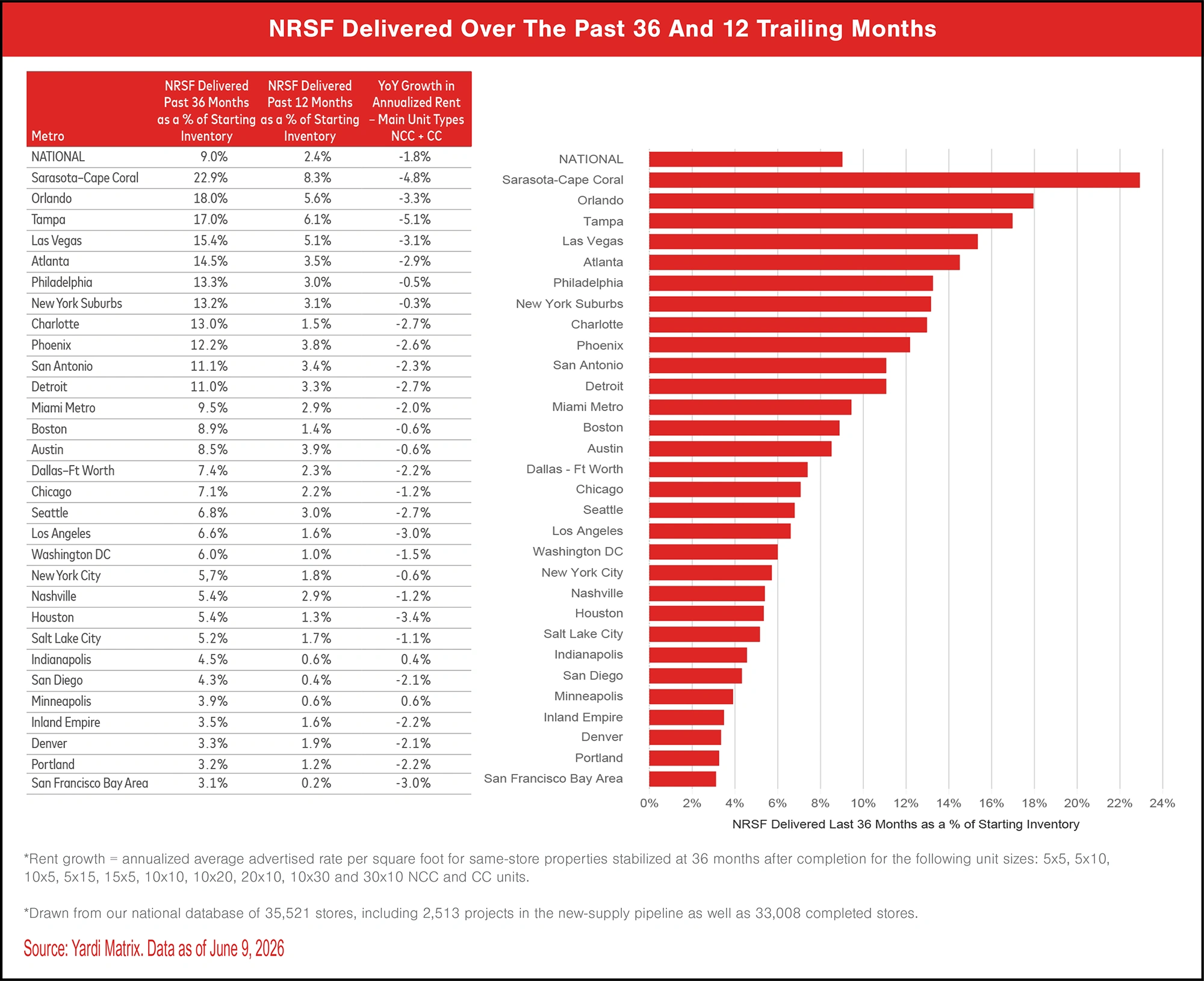
Phoenix remained one of the most notable markets for active development, ranking near the top for under-construction supply for the second consecutive month. The market’s pipeline is now meaningfully ahead of most other top metros, indicating that operators will face ongoing supply-side pressure, especially as recently delivered projects continue to lease up.
See Under-Construction Supply By Percentage Of Existing Inventory table and chart.
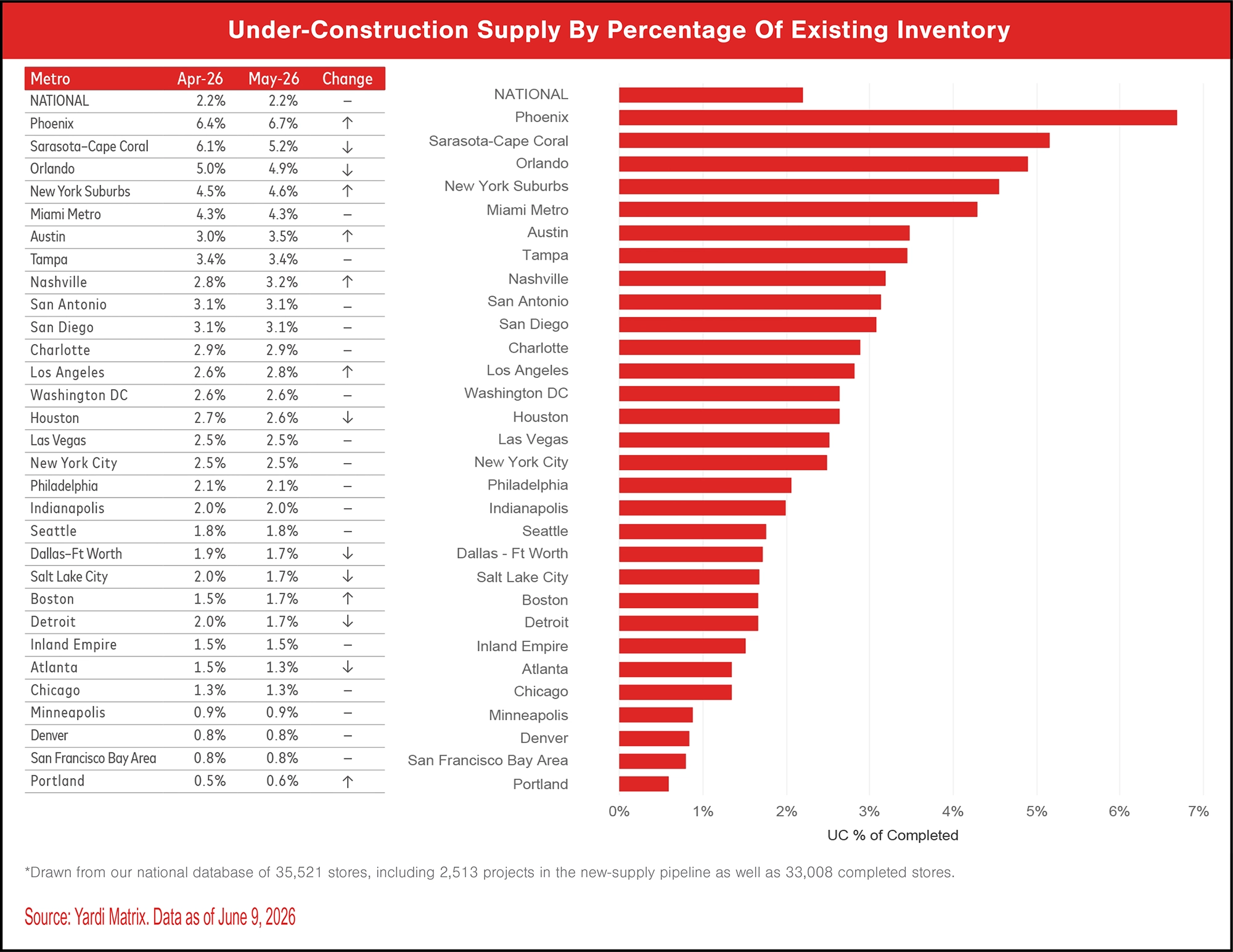
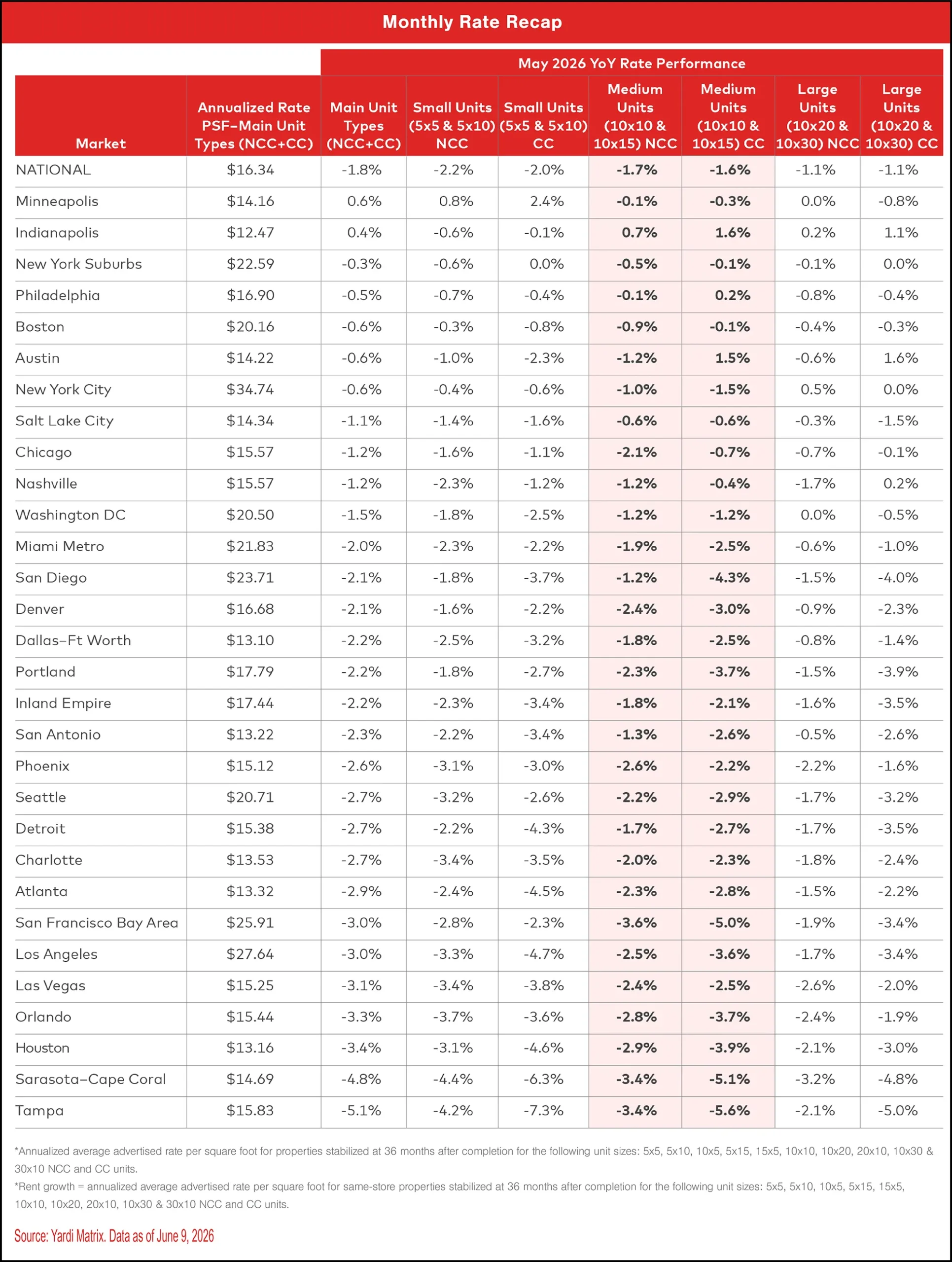












Mission
Completion
Entitlement Success

ntitlements have become one of the most influential variables in self-storage development outcomes. In the current development climate, where capital is more selective, sites are inherently more constrained, and municipalities are enforcing stricter project requirements, even projects with healthy fundamentals may still fail to move forward due to budget and speed-to-market impacts that arise during entitlements. Across recent self-storage work, a consistent pattern emerges: Projects that involve a construction partner early in the entitlement process are more likely to move from concept to completion with predictable results.
- Zoning and land use interpretation;
- Structural feasibility on smaller, irregular sites;
- Fire, access, traffic, and parking requirements;
- Stormwater, utilities, and offsite improvements; and
- Neighborhood and local political considerations.
These issues are tightly linked to how the building will ultimately be constructed, not just how it appears on a site plan. When a construction partner is brought in only after major entitlement decisions have been made, owners may find that key assumptions about massing, access, site design, or end operations are impaired and they have left potential terminal asset value on the table. All of the sudden, that “approval on paper” does not guarantee a viable project.
Treating entitlement as a construction-shaping phase, and involving a construction partner accordingly, keeps what the various authorities having jurisdiction will accept aligned with solutions that are not only buildable but make sense financially.
Risk Transfer Happens Earlier And With Clearer Lines.
The Owner’s Workload Is Reduced.
Constraints Inform Design Instead Of Forcing Redesign.
Cost And Entitlements Stay Linked, Improving Underwriting Confidence.
- Projects where a construction partner is engaged from day one, helping identify, price, and manage entitlement-related risk, are more likely to clear internal and external muster and reach completion.
- Projects where a construction partner is added only after approvals are stamped are more likely to encounter redesign cycles, budget pressure, and schedule slippage, and are at greater risk of stalling out or never breaking ground at all.
For owners and developers aiming to be early movers in the next growth cycle without taking on outsized risk, the implication is straightforward: Treat entitlement as a team sport and bring a construction partner into the fold from the outset of the opportunity.
Doing so does not eliminate all risk, but it eliminates some and makes other risks clearer and generally more manageable long before shovels hit the ground.
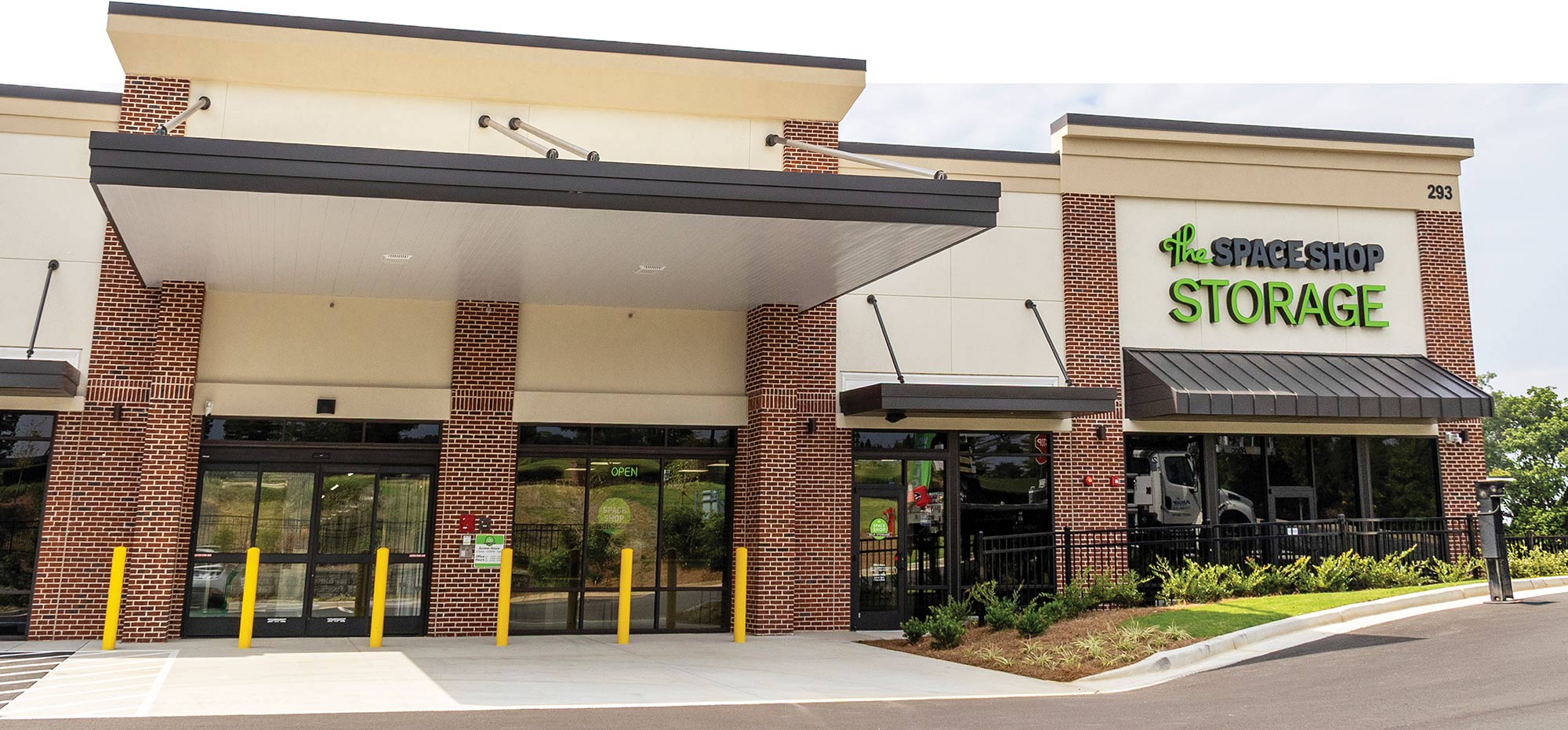
oodstock, Ga., may not be home to the iconic 1969 music festival, but the city has carved out its own identity as a growing, family-friendly community. With a mix of suburban living, proximity to Lake Allatoona, and a thriving retail and dining scene, it continues to attract new residents and businesses alike.
Meeting that demand is Space Shop Self Storage, which opened less than a year ago. Serving as general contractor, Shamrock Construction built the three-story facility with 77,050 net rentable square feet and more than 700 climate-controlled units.
The building, branded in Space Shop’s signature colors, incorporates a mix of brick veneer and EIFS panels, complemented by metal awnings and modern storefront glazing. Inside, customers are welcomed with complimentary coffee and cookies, along with convenient access to elevators, moving supplies, and carts—all leading to meticulously clean units and restrooms.
The property also emphasizes security, with 24/7 surveillance powered by PTI and secure keypad entry. The statement “Our eyes are on the job 24/7” is even mounted in raised lettering above the front desk, where video monitoring is on full display.
With strong early leasing activity and continued occupancy growth, it’s clear the facility is already striking a chord with Woodstock residents.
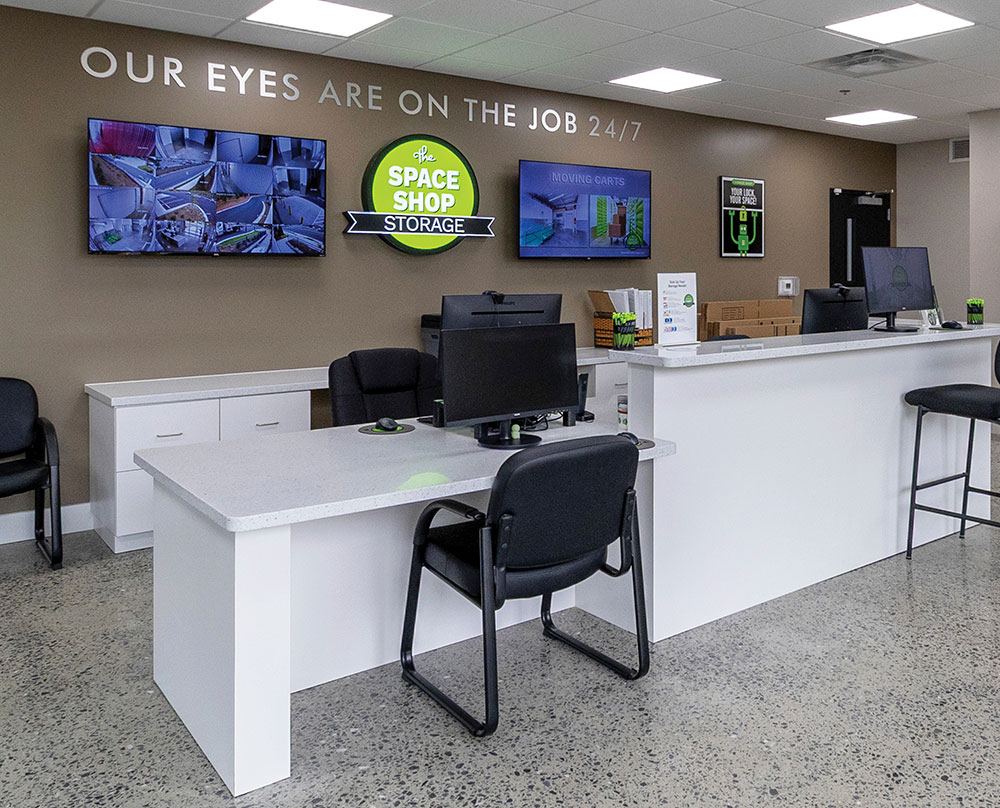
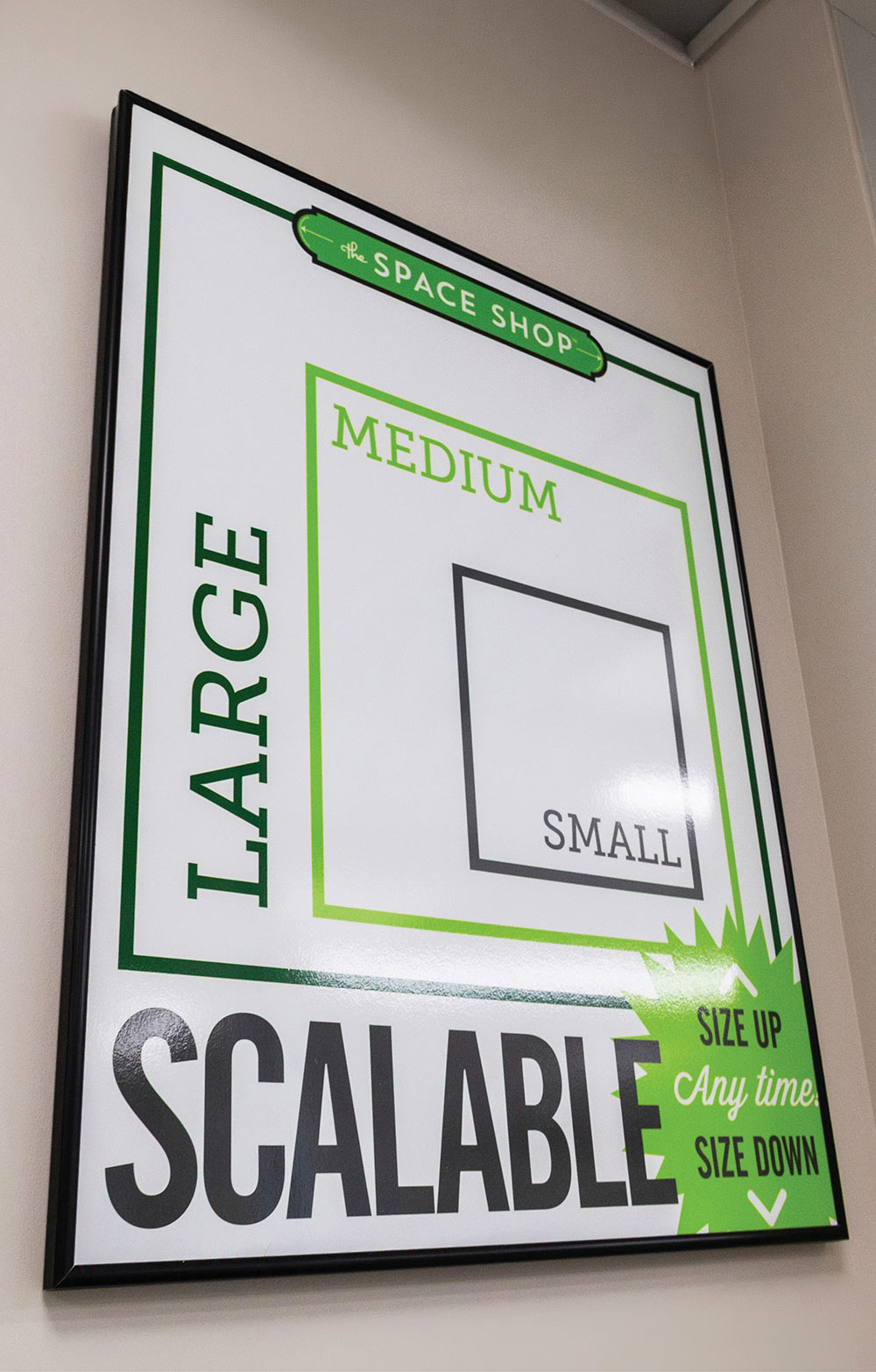

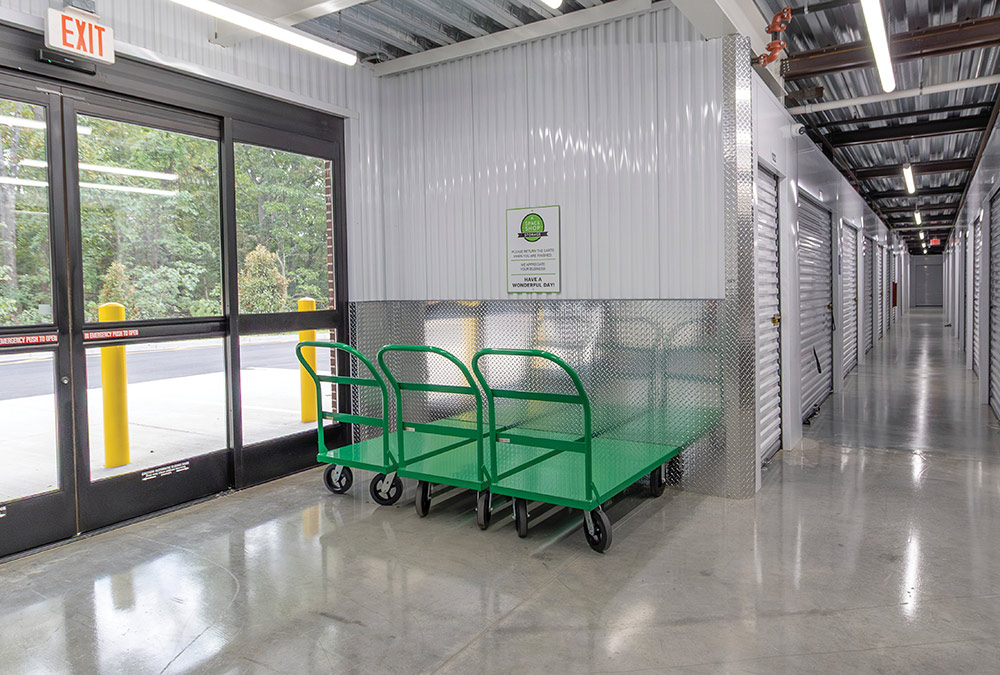
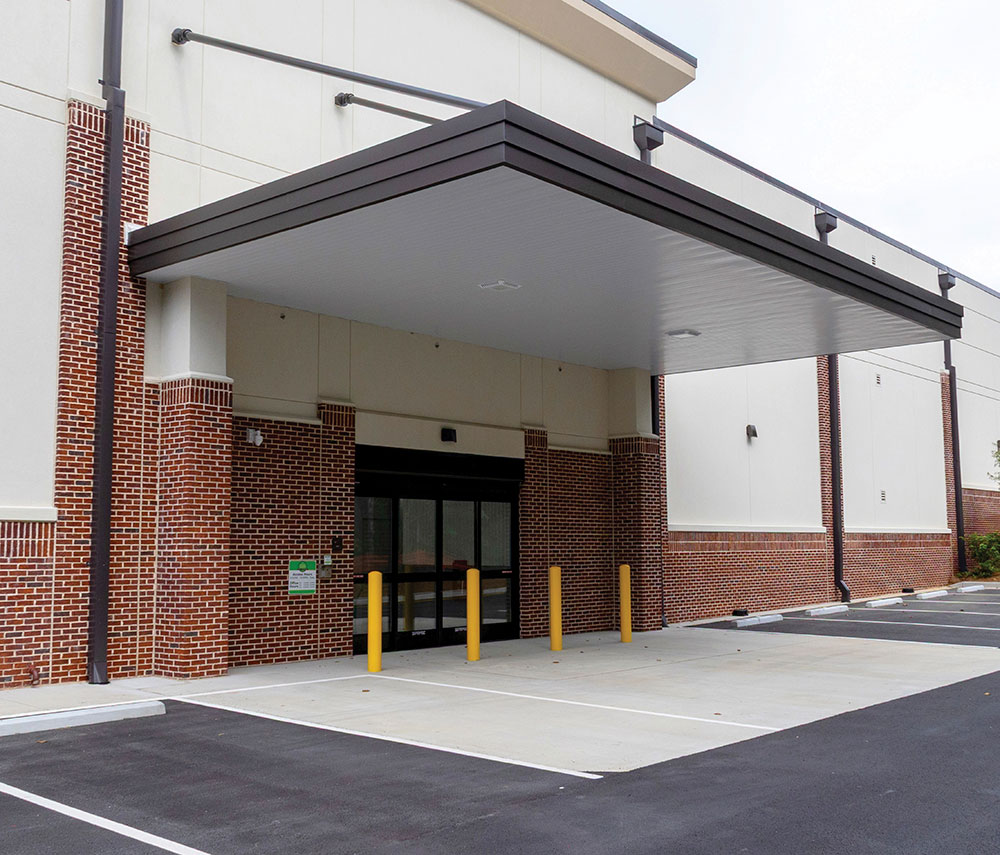

elf-storage runs on local demand—Someone is moving, downsizing, clearing out a property, or managing a business that’s run out of room. That need is specific, time-sensitive, and tied to a defined geography. The channels that have historically served the category well (Google Search, local SEO, roadside signage, and listing platforms that intercept renters already in the market) reflect all of that—effective, shared by every competitor in the same market, fighting for position in the same places.
TV advertising offered a way to break out of that, but production costs and broadcast commitments kept it out of reach for most operators. AI-powered production tools and streaming’s expansion into ad-supported inventory have changed that. Getting a professional spot in front of targeted local audiences no longer requires an agency or a significant upfront commitment.
What it does still require is a clear measurement framework; CTV generates plenty of data, but not the kind that paid search or listing platforms trained most operators to expect, and without the right signals in place, results are easy to misread.
That’s what makes CTV targeting different from traditional broadcast. Instead of buying time on a local channel and reaching everyone in a designated market area, operators can target households within a specific geographic radius or ZIP code cluster that matches their actual drive-time catchment area. A facility in a suburban market can reach households within five miles without paying to reach viewers across the rest of the city.
Geography is the baseline. CTV platforms can layer in behavioral signals tied to life-stage triggers on top of it: recent mortgage activity, rental searches, engagement with moving-related content. These signals help surface viewers already in the decision window, not just in the vicinity. For a single-location operator, that combination of geographic and behavioral precision is what makes the channel worth the investment.
Timing is the third variable. Storage demand follows predictable seasonal patterns, with spring and summer driving the bulk of move-related activity in most markets. A practical approach is to run concentrated flights of four to six weeks during peak periods rather than spreading budget thinly across the year. Operators who front-load spend into March through July, when household transitions are highest, and layer in behavioral targeting on top of geographic fencing, are working the channel the way it’s designed to be worked.
What works is directness. The strongest storage spots open on the problem, establish the facility’s location and accessibility within the first few seconds, and close on a single action: call this number, visit this site, reserve online today. Visuals that communicate cleanliness, security, and ease of access do more work than anything aspirational. A viewer three weeks from a move doesn’t need to be inspired. They just need to know where you are and that you can be trusted with their belongings.
The most common failure mode is assuming prior interest. An ad that leads with a promotional price before giving the viewer any reason to trust the facility tends to underperform one that establishes credibility first and offers the incentive second. Similarly, a concept built around the abstract idea of space and freedom will lose a viewer who is mentally calculating how many boxes fit in a 10-by-10 unit.
AI-assisted production changes what’s possible on the creative side: Operators can test multiple versions without reshooting. Running a cut that opens on a move-in special alongside one that leads with the facility’s proximity to a specific neighborhood or its climate-controlled units, then tracking which version drives more branded search and inbound calls is a test that simply wasn’t viable at traditional production costs. Creative that gets refined across a campaign, informed by actual performance data, consistently outperforms creative that gets treated as finished on day one.
The clearest early indicator is branded search volume. When a CTV campaign is running, direct site visits and searches for the facility by name tend to increase. Pulling a baseline for both metrics in the four weeks before a campaign launches makes any movement during the flight visible and attributable. For operators already running Google Search, a lift in branded query volume during a TV flight is one of the more concrete signals that the ad is registering with viewers.
Occupancy is the measure that settles the question. Net new rentals over the campaign window, compared against the same period in prior years or against comparable facilities in the same market not running TV, is the closest available read on whether the channel is driving business. It requires a longer evaluation window than digital metrics, but it’s also the number that connects directly to revenue rather than upstream activity.
The lag calibration matters here. Storage decisions don’t close on the same timeline as a paid search click. Someone who sees an ad in April may not sign a lease until mid-May, once the move date is confirmed and the need becomes concrete. Attribution windows that mirror standard digital cycles will cut off before a meaningful portion of conversions have occurred. Extending the measurement window to four to six weeks after a flight ends gives a substantially more accurate read on what the campaign generated.
Some CTV platforms now provide household-level attribution that connects ad exposure to downstream web visits, tightening the loop between impression and action. Where that capability is available, it makes the indirect signal picture sharper. Where it isn’t, consistent movement across branded search, call volume, and occupancy over an appropriately long window is enough to build confidence in what the channel is producing.
That window won’t stay open indefinitely. CTV adoption is growing across local advertising categories, and the differentiation available to early movers will compress as more operators enter the channel. The competency that matters, running targeted flights during peak demand periods, building creative that fits the category, and tracking the right signals across the right window, takes time to develop. Operators who build it now will have a head start on those who wait until the channel is crowded.
Recession-Proof?
uring the last recession, self-storage was considered a shining beacon of opportunity for both owners and investors alike—an asset class that was touted as “recession-proof” due to a promise of steady, stable growth. The scramble by REITs and institutional investors to get in on a piece of that action has impacted an industry once dominated by small-business, mom-and-pop owners.
Today, approximately 40 percent of self-storage facilities are owned by institutional investors, compared to 10 percent to 20 percent just 10 years ago, leaving just 60 percent owned by small, private entities. The result is a tighter, more challenging market cycle for self-storage assets. Further, high interest rates and elevated (and climbing) material costs continue to hamper the construction industry, constricting housing starts and limiting self-storage new construction–primarily due to an overbuilt landscape with flat occupancy rates as fewer consumers are changing ZIP codes.
However, many of the attributes that initially enticed investors to self-storage continue to moderate the asset class today. What still holds true is that in large part the stability of self-storage is not as tied to job growth or income growth as is the case with other commercial asset classes. In fact, self-storage operating incomes tend to repeatedly outperform office, multifamily, retail, and other commercial types–regardless of the economic climate.
So, what’s in store for 2026? Pundits are predicting that while a full-fledged recession may not be on the horizon this year, economic growth is likely to be slowed primarily due to continue elevated inflation equipping only the wealthiest Americans (not the primary target audience for self-storage) with the confidence to spend with minimal hesitation.
If 2025 was a reset for the self-storage industry, 2026 is likely to prove that the asset class, while not necessarily recession-proof, certainly has the potential to be recession-resistant and particularly profitable for savvy and well-informed investors with capital. Opportunities, or hidden gems, still exist to invest in self-storage with profitable returns.
Oversaturation is common in primary markets, as well as regions where residential growth boomed five to 10 years ago, many stalling due to the COVID-19 pandemic followed by labor shortages and increased construction costs. At the time, self-storage operators were quick to enter these markets, readying for a residential surge. As the housing market constricted, these facilities were already open and operating with limited demand, creating an oversaturated market.
Oversaturated markets challenge the growth of operating incomes and, subsequently, profits of self-storage facilities. Why? Oversaturation makes increasing occupancy rates quite challenging for new or existing facilities, consequently limiting property values. With rental rates compressed, new players entering oversaturated or mature markets will find it difficult to gain a toehold amongst well-established competitors. These market leaders have more flexibility to keep rental rates low or offer new-tenant promotions that cut into profits.
When considering new market entry, research existing self-storage operations to determine current rates along with offered discounts and promotions. If rates are low and concessions are high, it’s a market with more self-storage facilities than it can support—an oversaturated market.
The bottom line: Evaluate primary and high-growth secondary markets with a keen investment eye, as most are oversaturated with self-storage facilities and, therefore, offer limited lucrative investment opportunities.
Take Atlanta: High-profile communities such as Buckhead or Midtown Atlanta present high barriers to entry. More involved municipalities, stringent zoning codes, and higher land costs create an onerous environment for a self-storage developer to obtain the necessary construction permits, let alone pencil a viable proforma. However, suburban markets northeast of the city or tertiary markets experiencing new growth and development are typically more amenable to a self-storage build.
Also, beyond the Capital of the South, development opportunities exist in markets such as Chattanooga, Tenn; Knoxville, Tenn.; and their surrounding submarkets, as well as zones outside the Sun Belt, including Tampa and Orlando, Fla. Municipalities in markets experiencing new commercial and residential growth such as these are eager to invite businesses in an effort to build their infrastructures.
The bottom line: The more established a market is, the more stringent municipalities are about future self-storage growth. Seek emerging markets more amenable to establishing infrastructures, but do it quickly before too many investors ascend.
Secondary markets with close proximity to a major metropolitan area and a population of two million to five million are prime candidates for oversaturation, especially if self-storage development is already underway. However, tertiary markets an hour or more from a major city with populations less than two million, feature less population density and fewer, if any, institutional players.
A lower self-storage square footage per capita means less competition for self-storage renters. And those existing self-storage facilities are likely locally owned, “old-school” operations, creating an immediate need for (and attraction to) shiny new facility with state-of-the-art technology. Likewise, residents of these communities also benefit from a lower cost of living and are flush with more disposable income to fulfill a storage need.
The lack of oversupply and competition allows self-storage operators to set peak rental rates as high as the market will bear. Self-storage operations in these markets offer stable, steady revenue with lower operating costs due to less demand for modern features and amenities. However, these markets contend with lower household incomes and less job security, driving less opportunity for rent growth and value appreciation. Ultimately, at the time of sale, those assets contend with a limited buyer pool of individuals or mom-and-pop operators instead of institutional capital or private equity.
The secondary markets that offer promising self-storage investment opportunities are currently not in the top 25 or even 50 MSAs. For instance, markets such as Raleigh, N.C.; Wilmington, N.C.; Asheville, N.C.; Chattanooga, Tenn.; Knoxville, Tenn.; and Greenville, S.C., are contenders for the next wave of self-storage development. For promising tertiary markets, rural areas or exurbs with steady employment hubs, such as large manufacturers or data centers, are also high-potential targets.
The bottom line: Secondary and tertiary markets are better options than primary markets for new self-storage facilities.
These properties are often independently-owned–often times by absentee owners–and under the same dated or stale ownership and management for many years. Typically, these assets benefit from a stable tenant base that drives steady revenue, resulting in owners lacking motivation for upgrades or improvements. Many times, rental rates are intentionally stalled below market rate in order to maintain higher occupancy levels.
In these cases, acquiring under-managed or under-optimized properties with a strategic plan for capital improvements is an opportunity for increased profitability and value-build. How do you spot a neglected property?
- Outdated or nonexistent digital presence (i.e. website, social media channels, etc.)
- Rents below market value, even with minimal competition
- Absence of (or dysfunctional) technology
- Lack of security (i.e. cameras, gated access, etc.)
- Unanswered telephones
- Poor maintenance and lack of curb appeal
However, defining a capital improvements plan prior to acquiring the self-storage asset ensures value-add success. Consider maintenance and upgrade projects both large and small, such as expansion or an automated digital entry system or fresh paint or upgraded lighting. Think beyond existing self-storage walls to identify new revenue streams, like renter insurance or moving services. Payroll costs can also be reduced with automation, such as online applications, video surveillance, and a remote call center.
With a plan in-hand, due diligence is key. Will the capital improvement costs be offset by expected revenue? Will the market bare the increased rental rates reflective of an improved facility? Will competitive headwinds thwart efforts to increase rates?
The bottom line: Comprehensive knowledge not only of the asset but also of the market and potential economic shifts and influencers are key to investing success.
Gone are those glory days, yet profitability is still possible—eventually. The most realistic investment scenario is based on a capital raise with a seven-year horizon, particularly for new development. Although some high-growth markets could support a five-year exit, most new facilities require a longer timeframe to stabilize in order to meet proforma. For value-add acquisitions, seven years allows sufficient time to deploy upgrades and improvements that attract new tenants and renewals at higher rental rates.
Also, seven years allows investors time to weather the current economic climate. For properties purchased or built in 2026, a realistic divesting timeline extends to 2033 when (optimistically) a more stable market will exist.
The bottom line: A realistic investment horizon is seven years to allow time for stabilization, value appreciation, and a healthy return on investment.
Today, a buyers’ market exists for most self-storage assets. However, with a smaller buyer pool than in recent history, deals are traded based on current conditions rather than on opportunistic, value-add projections—with no shifts expected soon. Until a decline in interest rates and inflation spur movement in home buying and selling, operating income is expected to remain static—ultimately compressing property values in the short term.
It remains to be seen whether self-storage will ever return to its “recession-proof” classification. However, investors that identify well-defined and well-vetted opportunities ensure that the self-storage asset class remains resilient and profitable—and “recession-resistant.”









riginally viewed as something less desirable than retail or commercial high rises in midtown Manhattan, self-storage eventually became known as a sound investment with excellent returns. However, after years of notable success in major MSAs across the country, as well as shifts in supply and demand, many investors are now moving into secondary and tertiary markets to increase their portfolios.
What’s driving them? Some experts point out that even though there’s an increase in interest in these smaller markets, this activity is not so new. “Investor appetite for these markets has always been strong,” says Kenneth Cox, vice chairman at Newmark Capital Markets, “but it became especially aggressive during the COVID years, when pricing in major metropolitan statistical areas (MSAs) became extremely aggressive, which encouraged institutional groups to look at smaller markets, even though cap rates were sometimes very close to primary markets.”
Today, investors are still finding opportunities to acquire mom-and-pop or under-managed assets and implement institutional best practices around revenue management, marketing, operations, and expense controls, especially since these types of markets tend to offer better relative yields, less competition, and a more attractive basis compared to many primary markets.
Capranos cautions to have a long-term strategy too. “We also overlay job diversification, because the durability of a market depends on whether the demand drivers will still be there at the end of a long hold.”
President and CIO of Highline Storage Partners
Breaking it down further, Capranos says, “On demand, population growth gets most of the attention, but household formation, housing turnover, and the underlying demographics are doing the real work in predicting storage usage. On supply, you can’t evaluate it on its own—it has to be weighed against demand, and the trajectory matters as much as the level. A market at the national average with a heavy pipeline coming can be challenging, and a market above average where development has slowed can be attractive.”
The third bucket is the operating economics, particularly what the typical customer in that trade area can actually afford. “You can have a strong supply-demand picture and still miss if the underlying demographics don’t support the rent levels your model needs,” says Capranos. “The metric we care most about is trade area absorption capacity over a long horizon, filtered through what the customer base can realistically pay.”
Vice Chairman at Newmark Capital Markets
Levy recommends being as thorough as possible with this type of research. “I map out all the competitors, drive by them, shop at a few of them, look at new housing developments and multifamily projects. I check if there are new grocery stores or shopping anchor centers, looking for new supply coming into the market that I otherwise may not have been aware of.”
When conducting due diligence, Cox warns that what may make an investment attractive to one investor may also make it easier for extra competition to pop up. “It may be easier to develop competing facilities due to lower land costs, less restrictive zoning, or a simpler entitlement process,” he says. “Because of that, investors are spending a significant amount of time evaluating barriers to entry and the likelihood of future competitive supply.”
Capranos mentions challenges he’s seen come up consistently. “The first one is labor. In smaller markets, the bench of experienced operators and vendors is thinner, which is one of the reasons we’ve invested heavily in technology and remote operations. It allows you to deliver a consistent customer experience at scale without relying on a traditional staffing model,” Cox says, bringing up competitive dynamics. “With fewer competitors, pricing moves carry more weight. This makes real revenue management capability more important. Marketing also looks different. Demand in smaller markets comes through a mix of channels, so the playbook from primary markets don’t always translate directly.”
Levy agrees. “Given the current pressures on rates and financing costs, developments and conversions are extremely difficult, so the highest probability of success is through acquisitions. I’m sure it’s possible to do it through new developments, but it’s becoming more difficult.”
Capranos adds that conversions can work in the right situation, but they require a specific alignment of building, location, and demand that isn’t always available. “Acquisitions are attractive because there’s a large universe of well-located facilities owned by long-time operators who never invested in an institutional-quality operating platform. With the right team, technology, and platform, you can meaningfully improve these assets’ performance.”
The challenge remains sourcing and execution, and that’s where long-term relationships matter, whether with owners, brokers, or other key partners. “We leverage our data to identify the best investment opportunities and then work with our market relationships we’ve built over the years, where there’s trust on both sides of the table,” says Capranos.
For him, the biggest takeaway is that this is increasingly a platform business. “The asset class has still been one of the best performing over the long run, arguably one of the best when compared to other investment asset classes,” Capranos says. “Over the last few years, it’s been a more difficult operating environment, but we’re starting to see the fundamentals build, and we think we’re in the early innings of a much more favorable operating environment going forward. The fundamentals are one of the core drivers of long-term value creation, but execution is what separates outcomes. The macro landscape isn’t always as well understood as it applies to specific asset classes, but understanding who your sponsor/operator is and what sets them apart is just as important. The technology, data, and operating capabilities of a specific operator are what will define the next decade of returns.”
Challenges aside, Levy is steadfast in his belief that investing in self-storage remains a good idea, regardless of the market. “I continue to be long-term bullish on the industry. Compared to many other sectors within commercial real estate, the industry tends to be far more relationship-driven with a noticeably less cut-throat competitive dynamic. This applies to REITs, all the way down to the small operators. Everyone plays nice in the sandbox, which is one of the reasons why I’ve been in the industry for 20 years, and why I continue to enjoy it.”


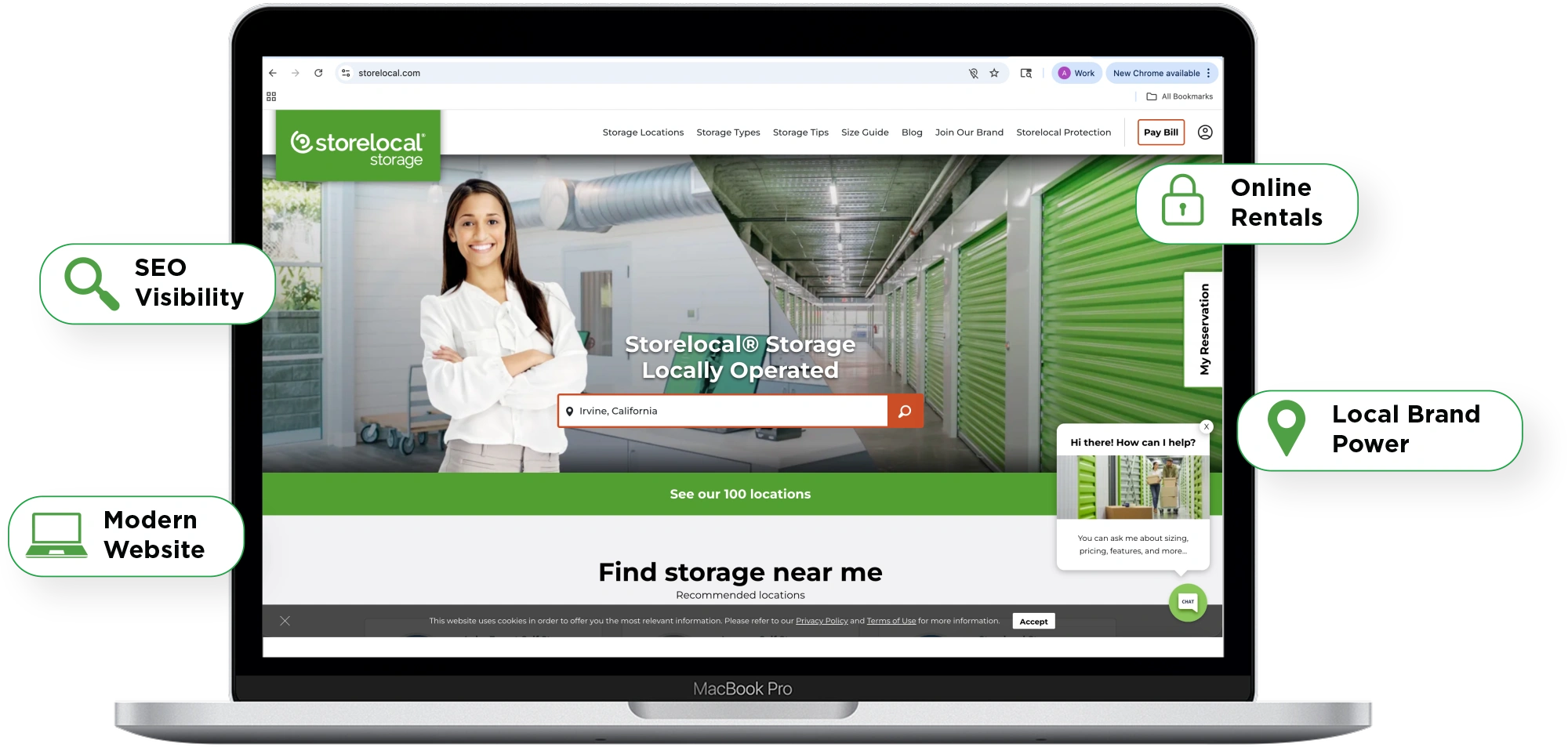

elf-storage and boat/RV properties are growing investments, with the global self-storage market projected to reach $104.7 billion by 2034 at a 6 percent CAGR. But risks evolve across the asset’s lifecycle (acquisition, management, improvement, and sale).
- Financial – Overly optimistic revenue or expense assumptions
- Operational – Lease-up delays, delinquent tenants, and management errors
- Compliance – Zoning, lien law, and environmental liabilities
- Market – Competition and shifts in local demand
- Disposition – Poor records or market timing reducing sale value
Effective risk management (stress-testing assumptions, maintaining reserves, ensuring compliance) protects returns. Firms like Oakside provide tailored guidance for navigating these challenges.
See Key Risk Categories table.
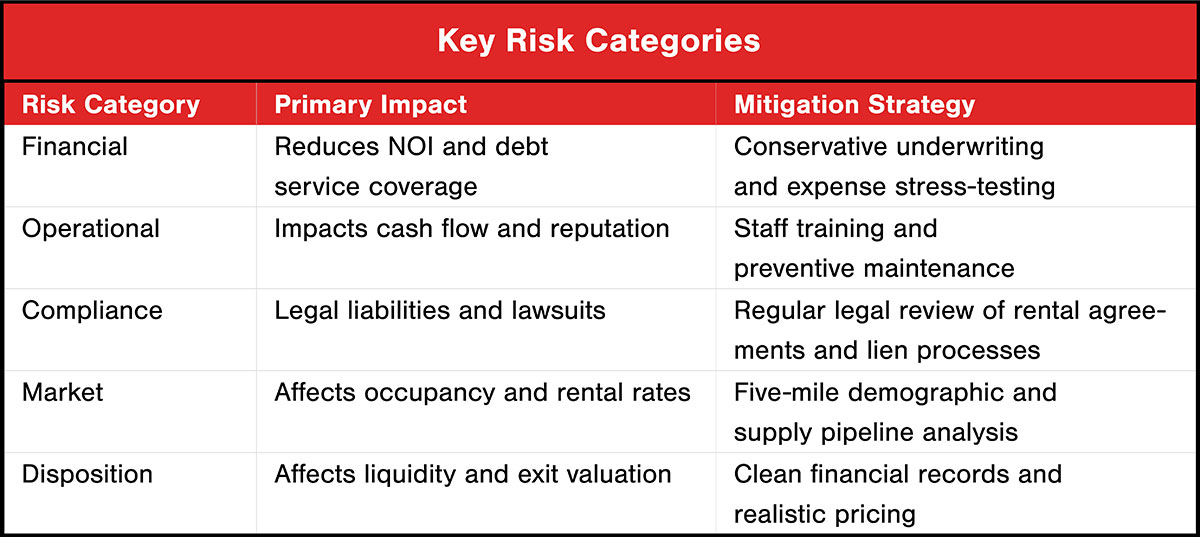
On the expense side, actual operating costs typically run 30 percent to 45 percent of effective gross income (EGI) once tax reassessments and insurance are factored in—insurance premiums alone have surged 40 percent to 80 percent in catastrophe-prone markets over three years—and soft costs can consume 15 percent to 20 percent of hard costs. Closing these gaps means secret-shopping competitors within five miles, cross-referencing the rent roll against bank deposits, and obtaining binding insurance quotes during diligence. Firms like Oakside specialize in stress-testing these assumptions before capital is committed.
Allocate roughly 2 percent of gross revenue to a CapEx reserve, rising to 4 percent to 5 percent for high-risk properties with complex HVAC, flood exposure, or heavy snow loads—otherwise a $75,000 roof replacement or $20,000 gate repair catches owners off guard. Requiring tenants to carry their own insurance further reduces liability, especially in boat and RV storage.
Buyer type shapes pricing. Public REITs like Public Storage, which announced a $10.5 billion all-stock merger with National Storage Affiliates in March 2026, target 50,000-plus square foot properties in major markets, while private equity and 1031 exchange buyers pursue smaller facilities at higher cap rates. A well-organized data room is essential, and facilities on modern platforms like storEDGE or SiteLink price better because reliable data reduces perceived risk. Don’t overlook property taxes; a $50,000 annual bill can jump to $140,000 after a sale-triggered reassessment, compressing the NOI buyers will pay for. Oakside helps sellers identify and address these value leaks before going to market.







or years, self-storage operators looking to grow had a handful of options: acquire existing facilities, build new ones, or expand existing properties. But as higher interest rates, rising construction costs, and increased competition slowed activity across the industry, many investors began looking beyond traditional self-storage for their next opportunity. One asset class attracting growing attention is small bay flex space.
While the concept itself isn’t new, awareness has been growing. The first conference dedicated entirely to small bay flex investors was held in 2025; the second was this year, attracting many more attendees. “The word is spreading,” says Kris Bennett, COO of QC Capital’s Flex Space Division. “Newsletters, LinkedIn, podcasts, and online communities have made people aware of opportunities that have existed for years but weren’t widely discussed.”

The deeper he dug, the more similarities he saw between flex space today and self-storage a decade ago. “I feel like it is what self-storage was 10 years ago.”
Over the years, Bennett participated in more than $130 million in self-storage acquisitions and expansion projects, gaining firsthand experience in underwriting, operations, and portfolio growth. But he saw that the marketplace was getting crowded. “It’s like when your gym gets popular,” Bennett says with a laugh. “You used to walk in and get right on the equipment you wanted. Then one day it’s packed and you can’t. That’s when you start wondering if there’s another gym out there. Small bay flex became my new gym.”
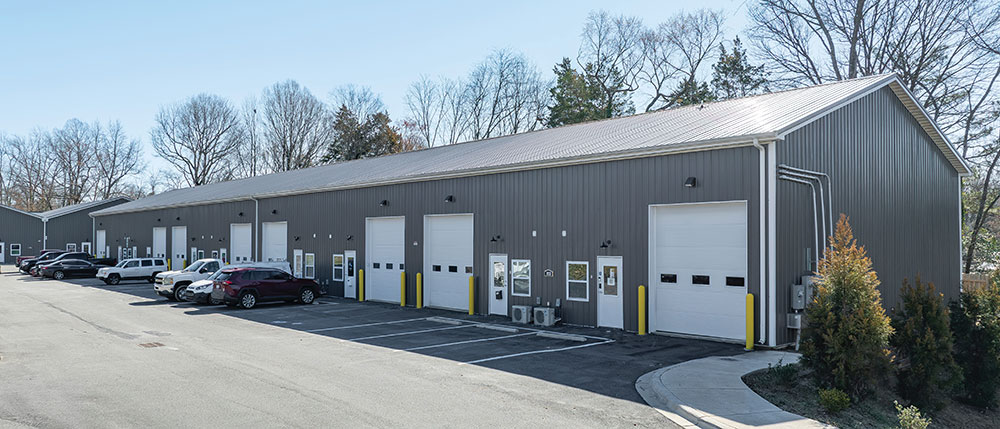

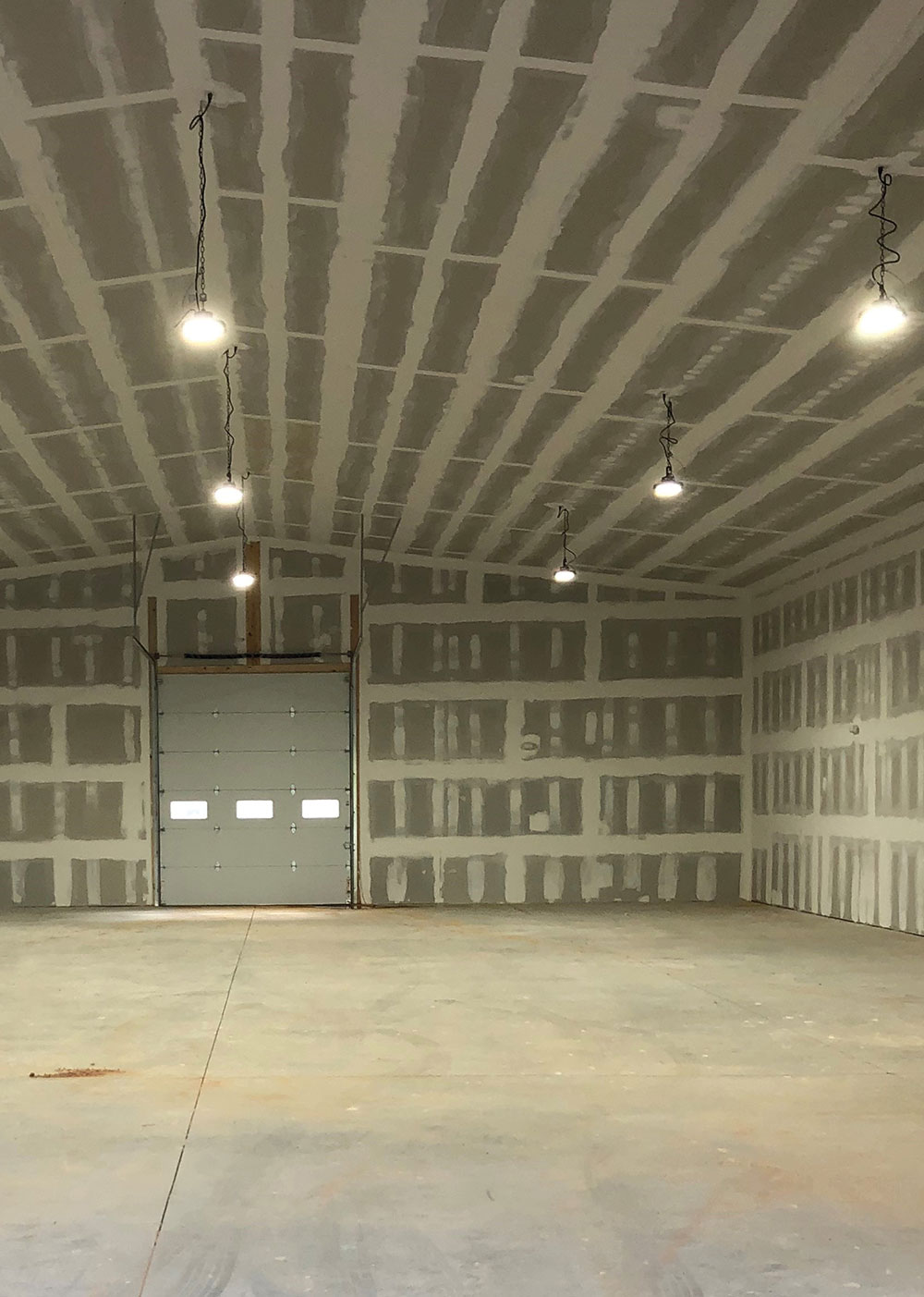
“It’s a very practical product,” Bennett says. “These businesses need a place to operate, store inventory, park vehicles, and serve customers. And unlike self-storage tenants, who typically rent month to month, flex space users often sign multi-year leases, creating greater income stability.”
The management style is also different. “Everything is spelled out in the lease,” Bennett says. “The responsibilities are very clear, and in many cases, the tenants take more ownership of their space because it’s their place of business.”
That structure is one reason Bennett believes many self-storage operators are drawn to the sector. While flex space requires a different approach, he doesn’t see the transition as particularly daunting. “I think anybody who’s in storage can do it,” he says. “You just have to learn how it’s different. In some cases, developers are even incorporating flex units into new self-storage projects, creating a diversified income stream within a single property.”
That doesn’t mean there isn’t a learning curve. “I had to figure it out,” says Bennett, “and there were challenges, but none of this is rocket science. When you’ve spent years looking at self-storage deals, somebody can hand you a few numbers and you can do the math in your head. When you pivot to something new, you just have to build those connections again.”
That was the main reason Bennett began organizing informal chats with other investors interested in the space. “We all wanted to share experiences, compare notes, and help others better understand this emerging sector,” Bennett says. “Today, there is a lot of curiosity. Owners and developers are seeing what we see at QC Capital.”
“Some companies have been doing this for 20 years,” Bennett says. “Most people just didn’t know about it. I still feel like it’s early, but there’s so much opportunity. I’m excited for what’s ahead.”

he SSA’s legislative agenda over the last two years has shifted more toward stopping bills that will harm the industry. Stay tuned for next month’s annual legislative issue of SSA Magazine to learn more about the many and varied threats from which the SSA is protecting your business.
Alongside that defensive agenda, the SSA continues to pursue a robust set of offensive targets. I want to share some of the highlights with you here. Many thanks to my colleague Daniel Bryant (SSA’s legal and legislative counsel) for his persistent advocacy on these issues, especially in Maryland and Oklahoma.
As a reminder, in 2024, the SSA revamped its primary offensive targets to include establishing a process for handling non-monetary defaults and towing, recognizing the enforceability of unsigned rental agreements and ensuring the validity of electronically signed rental agreements.
These targets stand alongside the traditionally nettlesome target of eliminating newspaper advertising. Much to my chagrin, and despite nearly 40 states allowing for alternatives to newspaper advertising or not requiring advertising at all, the newspaper lobby continues to act as if we live in the 20th century (or maybe the 19th century) when everyone in town read the newspaper.
On July 1, updates to the self-storage laws in Indiana, Iowa, Maryland, and Virginia took effect. Indiana now allows for towing for non-monetary defaults; we strongly recommend that operators define such defaults, for example, the renter’s failure to maintain insurance or to keep the vehicle in an operable condition, in the rental agreement.
Iowa’s law provides a process for handling non-monetary defaults and recognizes the enforceability of unsigned rental agreements. Maryland also provides a process for handling non-monetary defaults and allows agreements to be delivered and executed electronically. Virginia has similarly established a non-monetary default process while also allowing operators to require occupants to follow the rental agreement when updating their last known address.
On Aug. 1, Louisiana’s new and improved self-storage law will take effect. Thanks to Senator Mark Abraham (who will be featured in next month’s issue), operators Jim White and Lana Griffin, and lobbyist Katherine Smith, the Louisiana legislation will eliminate the requirement to notify defaulted lessees using two email addresses and text messaging. Instead, the law will require notice by verified mail and a single email address.
The updated law will also establish a process for handling non-monetary defaults and non-renewals, expand the types of websites that may be used for advertising lien sales, allow towing for non-monetary defaults, recognize electronically delivered and executed rental agreements, and allow operators to control the method that the lessee must use when updating their last known address.
On Nov. 1, updates to the Oklahoma self-storage act become law. These updates will establish a process for addressing non-monetary defaults, recognize the enforceability of unsigned rental agreements, permit towing for non-monetary defaults, and allow rental agreements to be delivered and executed electronically.
To ensure full compliance, be sure to read carefully the changes in every state where you operate and purchase updated annotated lien law manuals from the SSA’s website for additional guidance.
Additionally, bills remain pending in three states: Massachusetts, Michigan, and Ohio. If you operate in any of these states, especially Ohio, we could use your help asking legislators to prioritize our bills. Please email me at jdoherty@selfstorage.org to learn what you can do.
Finally, the SSA will soon start to develop its offensive agenda for next year’s legislative sessions. We are here to serve you and welcome your feedback on the states and issues that we should consider addressing in 2027.

he self-storage industry has long been built on entrepreneurship and strong relationships. As the industry continues to evolve, women are playing an increasingly important role in shaping its future. From facility operations and customer service to executive leadership, development, finance, and risk management, women bring valuable perspectives, skills, and experiences that strengthen businesses and drive industry success.
While women have always been contributors to the self-storage industry, there is tremendous value in creating opportunities for them to connect, learn, and grow together. That is where organizations such as the SSA Women’s Council make a meaningful impact.
The Women’s Council provides a dedicated space for women across all areas of the industry to build relationships, share experiences, and support one another’s professional development. Whether someone is new to self-storage or a seasoned executive, the council offers opportunities to expand networks, gain insight from industry leaders, and develop skills that can help advance their careers.
One of the greatest benefits of joining the Women’s Council is the opportunity to connect with peers who understand the unique challenges and opportunities within the self-storage industry. Through networking events, educational programs, and mentorship opportunities, members gain access to valuable knowledge and resources that can help them navigate their professional journeys with confidence.
The impact extends far beyond individual career growth. When women are empowered to lead, contribute, and share their expertise, the entire industry benefits. Diverse perspectives encourage innovation, improve decision-making, and foster stronger organizational cultures. Companies that support the advancement of women often experience greater collaboration, enhanced employee engagement, and a broader range of ideas that drive business success.
Equally important, the Women’s Council helps create a sense of community. The relationships formed through the council often become trusted professional networks and lasting friendships. These connections provide encouragement, inspiration, and support during both challenges and milestones.
As the self-storage industry continues to grow, it is essential to ensure that women have opportunities to develop their talents, expand their influence, and contribute at every level. Joining the Women’s Council is an investment not only in personal and professional growth but also in the future of the industry itself.
By supporting women, encouraging leadership, and fostering meaningful connections, the Women’s Council helps build a stronger, more inclusive self-storage industry—one that is well-positioned for continued success for generations to come.
As someone who has been involved in the self-storage industry for many years, I can personally say that the Women’s Council events are among the highlights of every national Self Storage Association conference. I always look forward to the opportunity to connect with other women in the industry, share ideas, learn from different perspectives, and build relationships that extend well beyond the conference itself. The conversations, encouragement, and sense of community found within the Women’s Council are truly special and continue to inspire both my personal and professional growth.


Learn how and request a quote at bajacarports.com/carport-experts.
Proven platform yielding results for owners since 1998, driving revenue and maximizing NOI.
- 265+ stores across Canada – a household name in Storage with scale.
- Highly trained and motivated team delivering results for your store.
- Resources and an infrastructure that respond immediately with boots on the ground.
- A Canadian company that understands the Canadian market and deliver results for you!



