


hoenix has a way of pulling people back. The heat, the sprawl, the sense that the city is always mid-sentence—it tends to hold onto the people who grew up there. And so, it probably shouldn’t be a surprise that three men named David, who each left and returned, and left and returned again, ended up in the same industry, working through the same set of questions: What does it mean to run a storage facility well? Is the answer always the same, or does it depend on the asset?
What is surprising is how they found each other. Or more precisely, how Dave King found both of them.
“He was a lot like he is now,” King says, with his grin detectable in the telling. “Kind of a rascal. I recall him actually getting in trouble. We won’t get into that story.”
They separated for grade school, came back together briefly at Brophy Preparatory in high school, and then split off to college. The geography of growing up in Phoenix—big enough to get lost in but small enough to keep running into people—kept them loosely orbiting each other for decades. French became known among their social circle as the connector, the one who organized the golf outings, the birthday happy hours, the check-ins that kept a network of Phoenix guys aware of what the others were doing.
“He’s probably the best networking guy I know,” King says. “Even before this whole thing came about, he was always good at making sure we got together.”
His boss was the bartender. His boss was Dave King.
“We became buddies,” Brown says. “I didn’t really have that many friends when I moved up from Tucson, so we started having some fun outside of work.”
They would finish a shift at 10 or 10:30, head down to 16th Street Bar and Grill, get beers, hang out.
“There’s this picture of Dave King on his TV,” Brown says. “And it turns out my father-in-law had been in self-storage for a long time, and King had gotten into self-storage too.”
Brown’s father-in-law was Kent Greenwald, a longtime figure in the Arizona self-storage world. King had been working with him on the Arizona Self-Storage Association board. Phoenix, it turns out, is a big city that keeps running small.
“It’s fate,” Brown says simply.
His attraction to the industry was partly nostalgic. He grew up with a storage unit. He remembered the dark and dingy hallways, the galvalume doors, the pull-chain light bulbs swinging in the dimness—what he describes, generously, as feeling like a horror movie. He was always vaguely fascinated that people paid money to keep their things in such a place. His family was always there, trying to downsize from a 10-by-10 to a 5-by-5, getting rid of stuff they couldn’t fit in the carport of their house.
“The stats are, back then it was probably one out of 20 families had a storage unit,” King says. “Now it’s like one out of five.”
French came to storage later and from a different angle of opportunistic real estate, looking for asset classes worth exploring. He bought a couple of properties, called King, who was by then at Westport Properties, within their management arm, and used King’s team to run the facilities. They started talking about the industry the way they had always talked about everything else: honestly, frequently, without much professional distance between them.
Brown followed King to Wentworth Property Company in 2015, brought in specifically because he understood development, the kind of ground-up, design-from-scratch work that King, who focused on acquisitions, didn’t want to manage. King describes Brown as the first person he thought of when the role needed filling.
Together, the three of them represent something the self-storage industry doesn’t produce all that often: operators who got in early, stayed genuinely curious, and kept thinking about the business from multiple angles simultaneously, such as development, investment, and management all at once.
“Everyone in storage wishes they found it 10 years before they found it,” French says. “Guys from the 80s wish they found it in the 70s. That’s just how this business is. Luckily, we found it earlier than some.”



The content was pretty straightforward: selfies at airport bars on the way home from shows, pictures from grand openings and property developments—the kind of stuff that two guys in the same industry, who had started as a bartender and a barback and were now both managing directors at a real estate investment firm, accumulate without really planning to.
The question that has occupied all three of them more recently isn’t whether REITs work. It’s when they work and when a different approach might work better.
“It’s not a one-size-fits-all game anymore,” King says. “There are still definitely sites that make a lot of sense to run with a large national operator. And we’ve got a lot of sites that make a lot of sense to run the STORE way. That’s OK. There’s business out there for everybody.”
What changed, in King’s telling, was the market itself. When a big merger consolidated two major publicly traded REITs and the competitive environment tightened, Wentworth started asking harder questions about differentiation. Filling a facility to 90 percent occupancy is one thing. Filling it at the right rate, with the right tenant mix, in a way that holds up when the market softens, that’s something else.
King remembers an early lesson. One of Wentworth’s first deals was a Class-A facility in the Summerlin area of Las Vegas. They were able to raise rates on 50 percent of the existing tenant base by 40 percent right after acquisition. Occupancy dropped from 94 percent to 92 percent. They hit the second half with the same increase. It dropped to 89 percent. Three months later, it was back at 92 percent, with rents at the level the asset actually warranted.
The point isn’t that large operators can’t execute a rent strategy. They can, and they do—at scale. The point is that a portfolio-level strategy and an asset-level strategy are different things, and they don’t always produce the same result for a specific facility in a specific market.
A climate-controlled urban facility serving a dense residential neighborhood requires a different playbook than a drive-up suburban property in a tertiary market. A facility near a university has different peak seasons, different tenant needs, and different competitive dynamics than one serving a suburban neighborhood 10 miles away. Brown, who thinks about this from the design phase forward, tries to build with the eventual management approach in mind—elevator placement, loading bay access, the small decisions that compound over time into the experience a tenant either appreciates or never thinks about.
“People really don’t want to be at a self-storage facility longer than they have to be,” Brown says, “so how do you make it easy for them to come in and rent a unit? How do you make it easy for them to get to load their stuff in and out?”
French doesn’t argue that the technology is bad. He argues that deploying it the same way across every asset type, regardless of what the tenant population actually wants, is where the logic breaks down.
“What we’ve felt has happened is that the people element—the personal element of storage—has been put on the chopping block,” he says. “And I understand why, but we think there’s a cost to that too—one that doesn’t always show up on the expense report.”
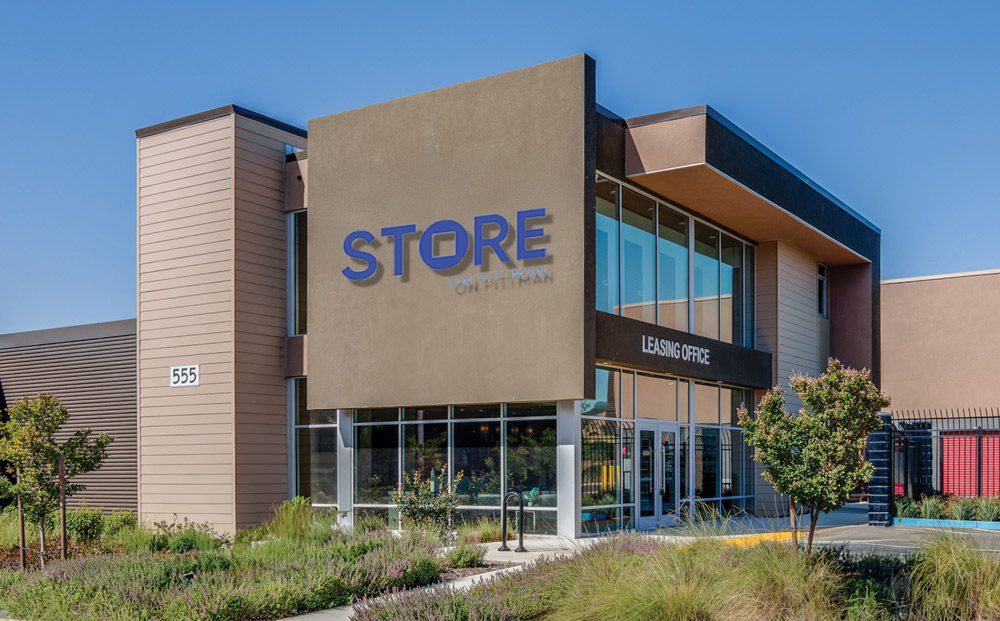
What STORE is trying to build is a management platform that doesn’t abstract away the individual asset. That keeps real people in the right facilities, like managers who know the tenants, who can answer questions, and who provide the kind of low-stakes human contact that certain tenant populations genuinely value. Not every facility needs this. But some do, and treating the ones that do like the ones that don’t is, in French’s view, leaving something on the table.
“I’d rather pay for service when it actually exists,” he says. “And I think a lot of people feel the same way.”
That said, he is quick to acknowledge the other side. There are generations of renters who would genuinely prefer never to interact with a human being at a storage facility. They want an app, a code, and a door that opens. For those tenants, at those facilities, the fully automated model isn’t a compromise; it’s exactly what they asked for.
“We’ve got 600 to 800 different tenants at a given property, all wanting different things,” King says. “I don’t think anyone hates the option of good customer service. But we’ve got to acknowledge that not everyone is looking for it, either.”

“You actually know the manager,” French says. “If you forgot your gate code, they can let you in. There’s a friendly face. It feels safe.”
That may sound like a low bar. French would argue it isn’t, but across the industry, that bar has been quietly lowered for years, and that the tenants who notice are the ones you most want to keep. His bet is that as the storage market matures, and competition for tenants tightens, the facilities that feel cared for will outperform the ones that don’t—not because of sentiment but because of retention, reputation, and the compounding effect of a tenant who never thinks about leaving.
“We still need people to be involved,” he says. “Technology enhances that. It doesn’t replace it.”

“It’s a resistance to recessions and pandemics. It’s not a proof,” King says. “We’re not recession-proof or pandemic-proof.”
The early months of the COVID-19 pandemic are instructive here. Storage facilities had to fight to be classified as essential businesses. Until that designation came through, they were shut down like everyone else. Once they reopened, demand accelerated in ways nobody had fully anticipated, such as people working from home needing to reclaim space. The general disruption of the pandemic created movement, and storage turned out to be a surprisingly affordable solution to a lot of suddenly urgent problems.
But the industry’s good fortune during those years was situational, not structural. Storage follows the same rules as every other real estate asset class. If you overbuild, everyone suffers. If you undercut pricing, everyone suffers. The fact that storage tends to hold up better than some other asset types in a downturn doesn’t mean it’s immune; it means it’s resilient, which is a different and more honest thing to say.
Brown sees the overbuilding issue up close. He watches projects go up in markets that don’t need them, built by out-of-state groups attracted to Phoenix’s growth numbers without understanding what the local market can absorb.
“If a piece of dirt is still available in Maricopa County, there’s probably a reason,” he says. “We looked at it 10 years ago and didn’t want to buy it, so why does it make sense now at a higher price?”
The result, when those projects come online, is more supply competing for the same pool of tenants. Everyone drops prices. The economics that justified the development begin to erode, not just for the new build but for every facility nearby. The winners, in that environment, are the ones with better operations, stronger tenant relationships, and lower churn, which brings the conversation back, always, to management.
It sounds farfetched. French knows it. He also remembers when people said that about Airbnb and Uber and ordering groceries on your phone.
“When I hear people say that’ll never happen, it begs a little of: Who would ever drive around in a car without a driver? Who would ever rent somebody’s guest house?” he says.
The thing stopping valet storage right now is transportation costs. Getting the right box from a warehouse to your door in a reasonable time window is expensive and logistically complicated. But French has been watching the Waymo cars multiply on Phoenix streets. He is not ready to write off the timeline.
He is also quick to point out what valet storage can’t easily replace. When his wife says they need the Easter baskets, and they’re in storage, French doesn’t want to wait for an app to dispatch someone. He wants to go get them. The ability to pop over and grab something on a Saturday morning is part of what storage sells. And the growing share of small businesses using storage as a quasi-warehouse adds another layer of immediacy that a valet model struggles to accommodate.

He is probably not unique in that, but he is the kind of person who has been thinking about the storage business long enough to know which assumptions are worth questioning. The industry has been comfortable for a while. The operators asking uncomfortable questions tend to be the ones worth watching.
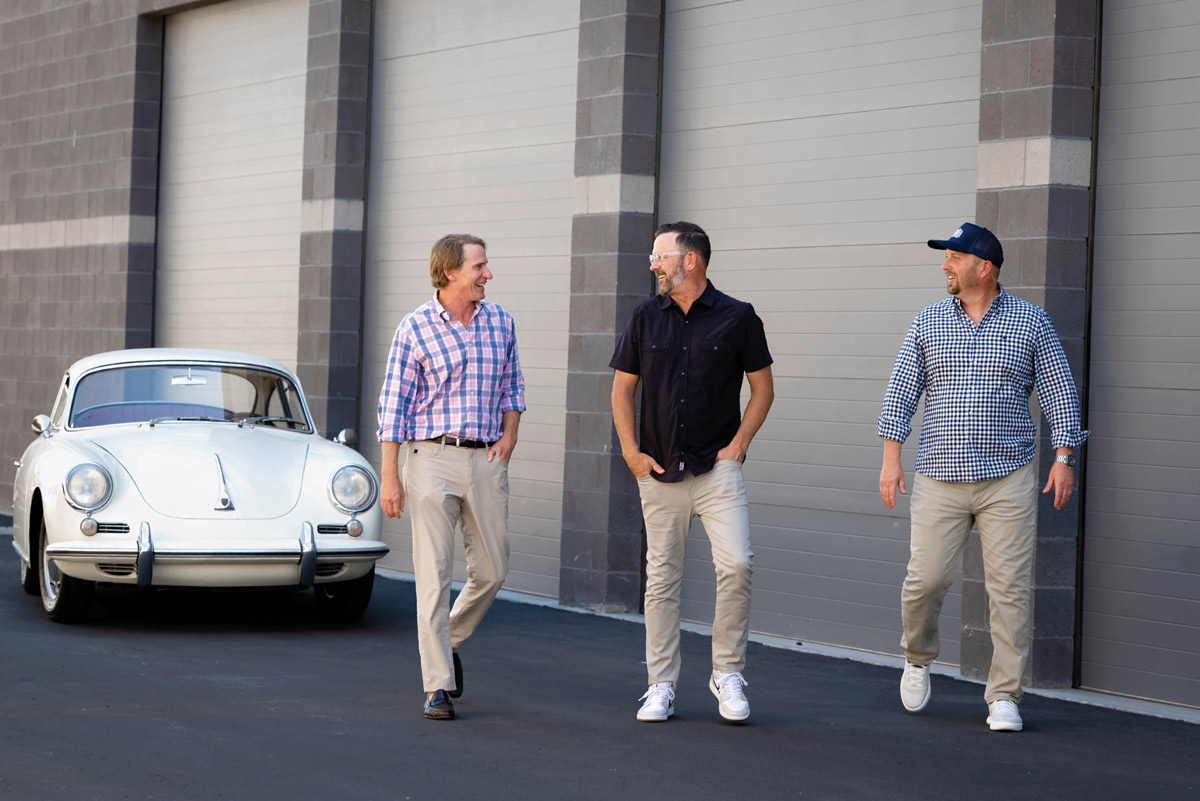
Three Daves from Phoenix: One of them met another in kindergarten, while one of them poured beer for the third before either of them knew what self-storage was. An Apple TV install in a father-in-law’s living room pulled two of them back together after years apart.
The collaboration they’ve built between Wentworth’s investment and development platform and STORE Management’s approach isn’t a rejection of how the industry has operated. It’s an addition to it—a belief that the market has matured enough to support different models running in parallel: institutional scale, where it makes sense, and a more attentive approach, where the asset calls for it.
Whether that belief turns out to be right will take time to know. The proof is still accumulating. But the three Daves have been paying attention to this industry longer than most, and they tend to see things a little before the rest of the room does.
The dark storage hallways of King’s childhood are long gone. What fills the space now depends on who’s running the building.