


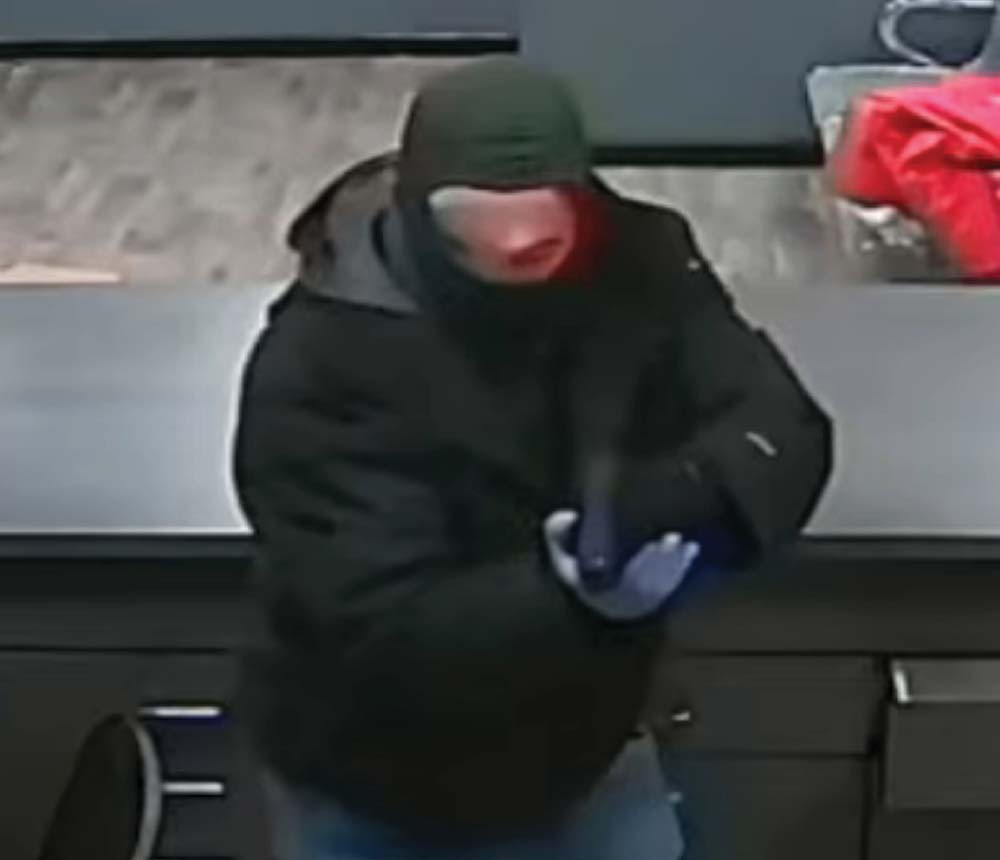
t’s the kind of incident that shakes self-storage owners and their employees to the core. In early February, a man walked into a self-storage facility in Philadelphia, Pa., and demanded money. The office manager complied and handed over the cash, but it didn’t matter. After taking the money, the suspect opened fire, striking the manager in the shoulder and chest before fleeing the facility. The manager survived, but the incident served as a sobering reminder that self-storage employees, like workers in any customer-facing industry, can suddenly find themselves in dangerous and unpredictable situations. MSM reached out to the facility for comment, but the operator declined.
“Not surprising,” Kristi Adams, chief revenue officer and president of international at OpenTech Alliance, Inc., says of their decision. She feels the industry often struggles to publicly discuss crime trends because operators are understandably protective of facility reputations. “They don’t want to talk about it because they don’t want it to become a public relations issue, but when a crime occurs at a self-storage facility, it’s going to make the news anyhow, so it’s best to get ahead of it and talk about how you’re going to improve safety in the future.”
Another high-profile incident was the tragic 2025 shooting of facility manager Patricia Villa by a disgruntled tenant. Following her death, Harry Sleighel, founder of Tenant Property Protection and partner with SAFEhugg, says conversations around employee safety really began ramping up. “Talking about safety isn’t what creates concern for the industry, avoiding the conversation is,” Sleighel says, echoing Adams’ thoughts. “Our duty as an industry is to make sure they feel supported, connected, and protected.”
Diane Gibson, president at Cox’s Armored Mini Storage Management, Inc., says her facilities are equipped with cameras and managers are provided mace; however, she believes one of the most important safety tools remains instinct. “If an employee has a feeling that something isn’t right, they have the ability to say, ‘I can’t leave my office right now.’ And if they’re not comfortable, we make sure they always have another way to retreat from the situation rather than going around the person causing the stress. Multiple exits are key.”
“Most people committing a crime aren’t calm and collected,” says Justin Insalaco, a retired police officer and board member with Crime Stoppers. “Managers should look for signs: anxiousness, sweating, darting eyes. As a police officer, I’ve spoken with many victims following an incident, and they often would say that in hindsight they should’ve known something was off, but they didn’t follow their gut.”
Insalaco is not opposed to individual operators and workers possessing a firearm if they are properly trained and legally permitted to carry. Gibson, on the other hand, doesn’t support firearms in the workplace. But they both agree that, regardless of whether someone carries a firearm, situational awareness and de-escalation tactics remain the first line of defense. In fact, Insalaco recommends hiring a private security company to train personnel in these areas. “Some of their suggestions may be simple, but a lot of times people don’t think about them,” he says. “For example, if an employee is escorting someone to a unit, they should walk behind the person and direct them rather than leading them. Having them behind you puts you in a much more vulnerable position.”
Another area where managers can better protect themselves is by avoiding unnecessary confrontation. Gibson recalls situations where employees aggressively approached tenants over late payments, rule enforcement, or suspicious activity. “I encourage calm, non-confrontational interactions. Sometimes it’s better to just act like you’re doing your rounds and have a spur-of-the-moment conversation rather than specifically going after them. It’s all in the presentation.”
For operators, the balance between customer service and employee safety can be difficult. Some employees are hesitant to tell a customer “no” for fear of retaliation—in the form of bad reviews.
The risks become even more apparent when employees escort customers around a property. In June, police arrested a suspect accused of assaulting a self-storage manager at a facility in Miami when she took him to see a unit.
Modern access control systems can help eliminate situations like this while still helping the customer find what they’re seeking. Farmer explains that some platforms allow customers to complete transactions remotely and then use mobile credentials, wayfinding technology, or illuminated pathways to navigate directly to their unit without requiring an employee escort. “This actually improves convenience while reducing unnecessary face time,” he says. “The less physical interaction, the lower exposure to risk.”
One of the biggest obstacles to improving facility security is convincing owners to invest in updated technology, says Farmer, who frequently encounters operators relying on decades-old access systems because they still perform their basic function of opening gates and controlling entry. “You can’t rely on a single tool,” he says, noting that older generation facilities may put up a perimeter fence or install a keypad and call it a day. “Security needs to be like an onion, with multiple layers.”
Continues Farmer, “Another aspect of security that gives some operators pause is recurring subscription fees or upgrade costs, but the investment is relatively small compared to the benefits.” Cloud-based access-control platforms, including PTI’s StorLogix, not only offer increased automation and an uplift in tenant experience but also enhance the facility’s overall security. “Operators can easily review site activity and access areas while monitoring zones and alarms from one dashboard, often at a cost of pennies when licensing is scaled across all units within a facility over the duration of the year,” he says. “By making the upgrade, you can lower operating expenses and heighten security. That’s a win-win.”
Adams agrees that at first it may seem demanding or expensive for legacy facilities, of which the U.S. has many. “Our country certainly led the way in self-storage, but that’s left us with lots of outdated properties. Many international markets are ahead technologically because their facilities were built more recently and are less burdened by aging infrastructure, so it’s time to modernize. Even an inexpensive smart sensor can let you know immediately if a gate doesn’t close on Friday night rather than discovering it on Monday morning.”
One challenge with protecting self-storage employees is that they’re very mobile, so a traditional panic button, for example, doesn’t suit them. However, there are alternatives. “There are discreet wearable panic buttons,” says Insalaco. “That way, whether behind the counter or out on the property, an employee can always be connected. With phone-based solutions, the screen may be locked or you’re fumbling with the keypad trying to find the app, and by then it’s too late.”
Sleighel understands the importance of giving employees a simple way to get help when they may not be able to physically access their phone. That’s why SAFEhugg uses discreet voice activation technology. “If a manager is walking the property and finds themselves in an uncomfortable or potentially dangerous situation, they can simply say their chosen safe word to activate SAFEhugg,” Sleighel says. “The phone screen stays dark while the app works in the background, notifying emergency contacts and sharing the user’s location. It also begins recording live video and audio that may assist responders and provide valuable documentation after an incident.”
Extra Space Storage has hosted public safety fairs in the past, for example, and Midgard Self Storage has donated storage units and even got a shout-out from their local police department.
In the end, the Philadelphia manager recovered and went home. Now, the goal of every operator should be to help ensure the next employee does too.
Amanda Torbert is the marketing manager with Universal Storage Group, but she was the boots on the ground at a USG-managed property for seven years. During that time, she had to call the police twice: once when she walked into the vacant manager’s apartment and realized someone was hiding in the attic (insulation on the floor below the access door was the giveaway) and again when a homeless man began cutting his face outside the office with a large pair of scissors.
Two incidents in seven years isn’t a bad track record, but she’s also experienced her share of awkward situations that had the potential to go south quickly. She recalls a customer who came in to rent a unit and immediately gave her a bad feeling. “I’m the daughter of a police officer, and a true crime aficionado,” she says, “so I’ve got a pretty good read on people.”
The customer insisted Torbert show him the unit, not her male co-worker Greg White. “She stays in the office, I show the units,” said White. The man continued to push back, stating he’d rather Torbert show the unit, but White remained firm and finally the man agreed.
After he’d moved in, Torbert and White’s curiosity got the best of them, and they peeked through the chicken wire roofing of the unit. Inside? A single lamp. “It was super suspicious,” says Torbert.
Days later, the man returned, asking Torbert to help him with his lock. Unbeknownst to the tenant, White was working in the adjoining manager’s apartment. She texted him the company safe word and he emerged from the side door. Torbert could practically see the blood drain from the guy’s face. “I’ll just come back another time,” he said. Soon after, the unit was empty; he’d taken his lamp and left. “There was nothing to report, because he didn’t technically do anything wrong,” says Torbert, “but it didn’t feel right, and that’s why you’ve always got to be on high alert.”
Would Torbert have shown that unit had White not been there? “Probably, because that was my job.” However, she had a process for situations like this. “I’d tell people to meet me at the gate, and then I’d call someone and keep them on the line. At the gate, I’d say I need a photo of their driver’s license on the webcam to document who I take into the facility. That’s a big deterrent if someone is planning something nefarious.”
Another protocol she followed was tucking away the golf cart at night so anyone wanting to see a unit would have to follow her in their car. Some could argue that the potential criminal now has a getaway vehicle and quick access to a trunk, but Torbert insists that the distance is critical. “This helped maintain personal space. Plus, that facility required a code to get in and out, so unless they plowed through the gate, they’d be stuck.”
Surprisingly, Torbert would not keep the door locked after dark, even though it would allow her to gauge a person’s demeanor before they entered. “If I was at the door, I could easily be pulled out or pushed in and attacked. I preferred to be behind my desk with my phone and hornet spray.” Torbert contends it works as well as mace but has a longer range; plus, no one thinks twice about a can of hornet spray being on a counter, which gave her immediate access to it.
“Some facilities have buttons that can disengage the lock from behind the counter. I think those are a great solution, but ultimately, it’s up to you to be smarter than the bad actors,” she says. “Be situationally aware. Take some self-defense classes. And don’t worry about making somebody feel bad if you don’t feel good about them.”
As the daughter of a police officer and someone who’s made friends at the local precinct (she was known to drop off coffee and donuts and let the officers use the facility for K-9 training), Torbert feels a sense of camaraderie with law enforcement. And while she’s in no way comparing self-storage management to the work they do, she says there is a shared goal. “At the end of the day, we all want to get home safely.”