



elf-storage and boat/RV properties are growing investments, with the global self-storage market projected to reach $104.7 billion by 2034 at a 6 percent CAGR. But risks evolve across the asset’s lifecycle (acquisition, management, improvement, and sale).
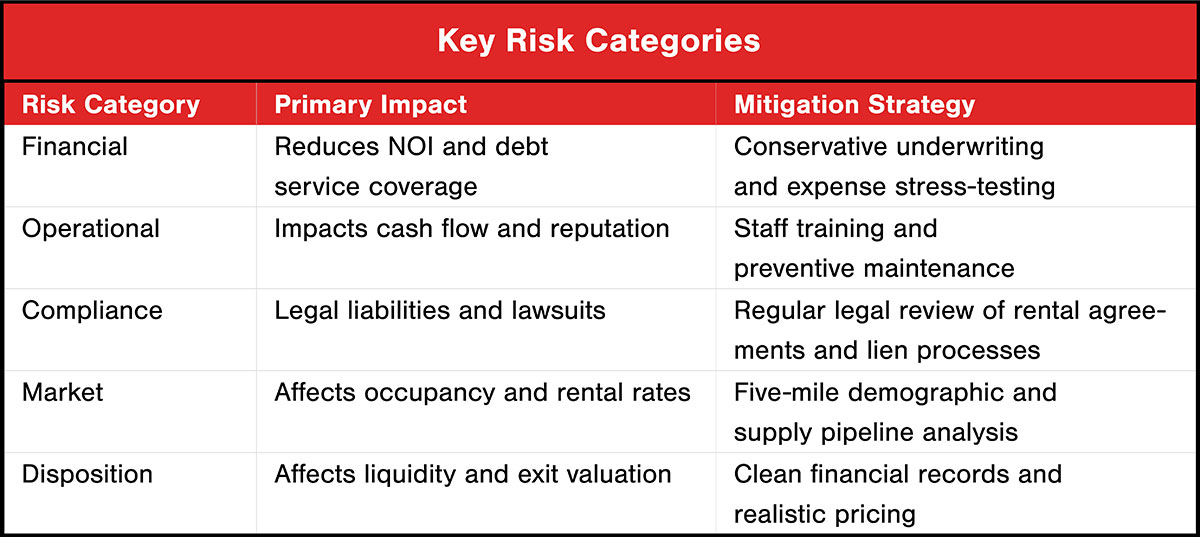
- Financial – Overly optimistic revenue or expense assumptions
- Operational – Lease-up delays, delinquent tenants, and management errors
- Compliance – Zoning, lien law, and environmental liabilities
- Market – Competition and shifts in local demand
- Disposition – Poor records or market timing reducing sale value
Effective risk management (stress-testing assumptions, maintaining reserves, ensuring compliance) protects returns. Firms like Oakside provide tailored guidance for navigating these challenges.
See Key Risk Categories table.
On the expense side, actual operating costs typically run 30 percent to 45 percent of effective gross income (EGI) once tax reassessments and insurance are factored in—insurance premiums alone have surged 40 percent to 80 percent in catastrophe-prone markets over three years—and soft costs can consume 15 percent to 20 percent of hard costs. Closing these gaps means secret-shopping competitors within five miles, cross-referencing the rent roll against bank deposits, and obtaining binding insurance quotes during diligence. Firms like Oakside specialize in stress-testing these assumptions before capital is committed.
Allocate roughly 2 percent of gross revenue to a CapEx reserve, rising to 4 percent to 5 percent for high-risk properties with complex HVAC, flood exposure, or heavy snow loads—otherwise a $75,000 roof replacement or $20,000 gate repair catches owners off guard. Requiring tenants to carry their own insurance further reduces liability, especially in boat and RV storage.
Buyer type shapes pricing. Public REITs like Public Storage, which announced a $10.5 billion all-stock merger with National Storage Affiliates in March 2026, target 50,000-plus square foot properties in major markets, while private equity and 1031 exchange buyers pursue smaller facilities at higher cap rates. A well-organized data room is essential, and facilities on modern platforms like storEDGE or SiteLink price better because reliable data reduces perceived risk. Don’t overlook property taxes; a $50,000 annual bill can jump to $140,000 after a sale-triggered reassessment, compressing the NOI buyers will pay for. Oakside helps sellers identify and address these value leaks before going to market.