



or years, self-storage operators looking to grow had a handful of options: acquire existing facilities, build new ones, or expand existing properties. But as higher interest rates, rising construction costs, and increased competition slowed activity across the industry, many investors began looking beyond traditional self-storage for their next opportunity. One asset class attracting growing attention is small bay flex space.
While the concept itself isn’t new, awareness has been growing. The first conference dedicated entirely to small bay flex investors was held in 2025; the second was this year, attracting many more attendees. “The word is spreading,” says Kris Bennett, COO of QC Capital’s Flex Space Division. “Newsletters, LinkedIn, podcasts, and online communities have made people aware of opportunities that have existed for years but weren’t widely discussed.”

The deeper he dug, the more similarities he saw between flex space today and self-storage a decade ago. “I feel like it is what self-storage was 10 years ago.”
Over the years, Bennett participated in more than $130 million in self-storage acquisitions and expansion projects, gaining firsthand experience in underwriting, operations, and portfolio growth. But he saw that the marketplace was getting crowded. “It’s like when your gym gets popular,” Bennett says with a laugh. “You used to walk in and get right on the equipment you wanted. Then one day it’s packed and you can’t. That’s when you start wondering if there’s another gym out there. Small bay flex became my new gym.”
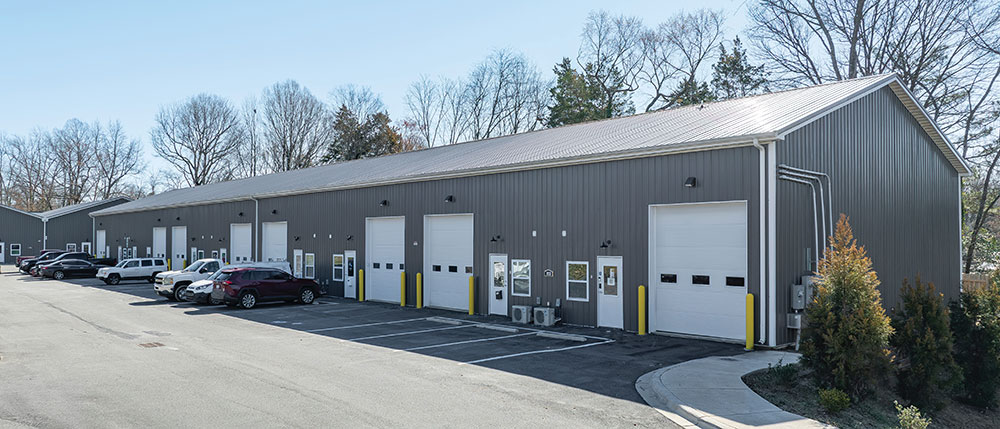


“It’s a very practical product,” Bennett says. “These businesses need a place to operate, store inventory, park vehicles, and serve customers. And unlike self-storage tenants, who typically rent month to month, flex space users often sign multi-year leases, creating greater income stability.”
The management style is also different. “Everything is spelled out in the lease,” Bennett says. “The responsibilities are very clear, and in many cases, the tenants take more ownership of their space because it’s their place of business.”
That structure is one reason Bennett believes many self-storage operators are drawn to the sector. While flex space requires a different approach, he doesn’t see the transition as particularly daunting. “I think anybody who’s in storage can do it,” he says. “You just have to learn how it’s different. In some cases, developers are even incorporating flex units into new self-storage projects, creating a diversified income stream within a single property.”
That doesn’t mean there isn’t a learning curve. “I had to figure it out,” says Bennett, “and there were challenges, but none of this is rocket science. When you’ve spent years looking at self-storage deals, somebody can hand you a few numbers and you can do the math in your head. When you pivot to something new, you just have to build those connections again.”
That was the main reason Bennett began organizing informal chats with other investors interested in the space. “We all wanted to share experiences, compare notes, and help others better understand this emerging sector,” Bennett says. “Today, there is a lot of curiosity. Owners and developers are seeing what we see at QC Capital.”
“Some companies have been doing this for 20 years,” Bennett says. “Most people just didn’t know about it. I still feel like it’s early, but there’s so much opportunity. I’m excited for what’s ahead.”