









How to enjoy our new magazine:
Just scroll!
Click or tap the table of contents icon in the menu bar to find any article.
Read any article by clicking or tapping the read full article button below each article intro.
Jump back to your previous browsing spot from any article using the menu bar or back to issue button.






to explore the expanded R3 program.



-
Six Secrets To 100 Rentals In Your First MonthPage 12
-
Marketing To Win In AI SearchPage 14
-
Who Should You Call For A Metal Roof Leak?Page 18
-
The Future Of Self-Storage Still Depends On PeoplePage 22

-
Page 34
-
Economic Uncertainty Increases And Investment Rates FollowPage 36
-
Self-Storage Supply And Rent RecapPage 38
-
The Cancellation Graveyard And The Inactive PipelinePage 48




Experience

Local Expertise

Not Just a Builder


-
Converting Urban Big-Box Properties Into Self-StoragePage 72
-
An Equity Injection Playbook For Self-StoragePage 74
-
Building On America’s Most Challenging IslandsPage 76
-
New Braunfels Executive Storage in New Braunfels, TexasPage 66

-
How To Legally Minimize Your Tax BurdenPage 84
-
The Real Cost Of Going Man-LessPage 88
-
Key Considerations For Heating Self-Storage FacilitiesPage 90
-
The New Profit Engine For A Packed PlanetPage 92
- Chief Executive Opinion by Travis Morrow6
- Publisher’s Letter by Poppy Behrens9
- Meet The Team10
- Women In Self-Storage: Kim Hoelting by Alejandra Zilak25
- Who’s Who In Self-Storage: Christopher Taylor by Brad Hadfield29
- Innovation Spotlight: Corner Unit Consulting by Brad Hadfield96
- Self Storage Association Update 99
- The Last Word by Lauri Longstrom-Henderson100
For the latest industry news, visit our comprehensive website, ModernStorageMedia.com.







CEO of MSM and Storelocal Corporation,
President of National Self Storage
hat’s the question I’ve been hearing more and more at every conference this spring. And the answer is a resounding YES.
If you own or operate self-storage facilities, THE Show (Nov. 4 to 6, 2026, Georgia World Congress Center, Atlanta) is where you need to be. We’ve just crossed a major milestone: over 75 confirmed speakers delivering more than 60 hours of pure self-storage content across MSM’s Four Pillars (operations, data, development, and investment). This is the deepest, most practical educational lineup our industry has ever seen.
A huge thank you to Poppy Behrens and her team for leading this charge. She has pulled together a true all-star roster of operators, vendors, and thought leaders who are delivering actionable takeaways you can actually use the Monday you return home.
It’s more content than any one person can consume. That’s why we created the “Four Pillar Pack”—bring three members of your team and the fourth attends for free. Load up your entire leadership group so you don’t miss a thing.
We’re also stacking the keynotes. On Wednesday morning, we’re adding two sitting U.S. Congressmen who are also active self-storage operators: Jefferson Shreve (Storage Express) and Troy Downing (AC Self Storage Solutions). They’ll join CNN’s Scott Jennings and Atlanta Braves Hall of Famer Chipper Jones for what will be the strongest opening keynote in self-storage history—real operators talking real policy, economics, legislation, and resilience.
Beyond the education, THE Show delivers what others don’t: dedicated tradeshow hours with no session overlap, a zoned exhibit floor with activations and a central Clubhouse for real conversations, the Georgia Aquarium welcome reception with Wolfgang Puck, and the MSM Red Carpet Awards Gala.
One thousand operators. The only national event east of the Mississippi in 2026. A Q4 momentum builder that launches your 2027 strong.
Are you going to Atlanta? The answer should be yes.
Early Bird pricing has ended, but you can still save $100 off operator and manager registration. Simply reach out to one of our affiliate partners for their unique discount code and register at msmtheshow.com.
See you in Atlanta.

-
PUBLISHER
Poppy Behrens
-
Director Of Sales & Marketing
Lauri Longstrom-Henderson
(800) 824-6864 -
Creative Director
Carlos Padilla
(800) 352-4636 -
Editor
Erica Shatzer
-
Lead Writer / Web Manager
Brad Hadfield
-
Storelocal® Media Corporation
Travis M. Morrow, CEO
-
Websites
-
Visit Messenger Online!
Visit our Self-Storage Resource Center online at
www.ModernStorageMedia.com,
where you can browse our paid publications, research archived articles, sign up for a magazine subscription, submit a change of address, and more. 
- All correspondence and inquiries should be addressed to:
MSM
PO Box 608
Wittmann, AZ 85361-9997
Phone: (800) 352-4636

Invest with confidence in a family-owned and operated self-storage brand backed by 40 years of proven experience. Built on trust, stability, and hands-on management, our company has thrived across market cycles while delivering consistent value.
Join a legacy of smart growth and reliable returns in an essential, resilient industry.

210-405-6695
theparhamgroup.com
















here are moments in every industry when tradition deserves more than mere recognition. It deserves a special spotlight.
For decades, Modern Storage Media’s Facility of the Year and Manager of the Year competitions have honored the properties and individuals that represent the very best of self-storage. These prestigious awards recognize excellence in leadership, operations, customer service, innovation, and design while celebrating the people and facilities helping to shape the future of the industry.
This year, however, those honors are stepping onto a much bigger stage at THE Show, presented by MSM and Janus International. For the first time ever, the winners of these respected awards will be revealed live on stage during an extravagant red-carpet gala event on Thursday evening in Atlanta. Presented in a high-energy format, this year’s awards ceremony will celebrate excellence in a way self-storage has never experienced before.
And honestly, it’s about time.
Indeed, the anticipation, energy, and celebration surrounding the live winner announcements promise to make this one of the most talked-about events of this show. The live gala format also reflects the larger vision behind THE Show itself. From the beginning, our goal has been to create an event experience that feels elevated, exciting, and entirely different from the traditional conference model.
With that said, participants should note that entry deadlines for both programs will be earlier this year to allow additional time for judging, finalist selection, and live production preparation. If you are considering entering a standout facility or nominating an exceptional manager, now is the time to begin preparing your submission. Please see page 32 for additional information, or you may contact me at poppy@modernstoragemedia.com.
The competition will be fierce, the atmosphere electric, and the recognition unforgettable!

Publisher

here are moments in every industry when tradition deserves more than mere recognition. It deserves a special spotlight.
For decades, Modern Storage Media’s Facility of the Year and Manager of the Year competitions have honored the properties and individuals that represent the very best of self-storage. These prestigious awards recognize excellence in leadership, operations, customer service, innovation, and design while celebrating the people and facilities helping to shape the future of the industry.
This year, however, those honors are stepping onto a much bigger stage at THE Show, presented by MSM and Janus International. For the first time ever, the winners of these respected awards will be revealed live on stage during an extravagant red-carpet gala event on Thursday evening in Atlanta. Presented in a high-energy format, this year’s awards ceremony will celebrate excellence in a way self-storage has never experienced before.
And honestly, it’s about time.
With that said, participants should note that entry deadlines for both programs will be earlier this year to allow additional time for judging, finalist selection, and live production preparation. If you are considering entering a standout facility or nominating an exceptional manager, now is the time to begin preparing your submission. Please see page 32 for additional information, or you may contact me at poppy@modernstoragemedia.com.
The competition will be fierce, the atmosphere electric, and the recognition unforgettable!
Publisher

MSM’s THE Show lands in Atlanta, Ga., on Nov. 4 to 6, 2026, packing the Georgia World Congress Center with more industry speakers and keynotes than ever before, plus special guests, exciting breakout sessions, an acquisitions corner, and a trade show floor designed for engagement and visibility.
After hours, unforgettable events await, with our Deep Blue Welcome Dinner inside the underwater banquet hall of the Georgia Aquarium, catered by Wolfgang Puck, and our Red Carpet Awards Gala, honoring the very best in self-storage.
If you’ve been waiting for something different … Welcome to THE Show.










Unlock the Power of
Innovation & Technology with

Best Tenant Protection…8 years and Running

Why Owner/Operators Choose TPP

Don’t wait, contact us today to sign up for the best Tenant Property Protection program!



In Your First Month

eaching 100 rentals in your first month open isn’t luck; it’s the result of intention, preparation, and a clear strategy that gets your facility’s name in front of every prospect multiple times before you ever open your doors. When you launch with visibility, a customer-first design, and with hospitality as your customer service and marketing mindset, your community already knows who you are and is ready to rent with confidence.
Here’s the blueprint Storage Authority uses to help new franchise facilities start fast and lease up even faster.
Build a facility that sells itself.
High-impact features don’t happen by accident! We love to make design choices that wow, especially in high-visibility areas of the facility. Large comfortable office spaces that are warm and inviting are excellent places to feature high-end finishes and materials that provide customers a feeling of luxury while they enjoy a fresh cup of coffee at the coffee bar or examine the convenient in-office show unit.
Beautiful curb appeal really grabs attention when you have nice, easy-to-read signage and great lighting. Coupled with the convenience of a kiosk in a well-lit temperature-controlled vestibule, hands-free gate access, and a free car vacuum station, customers will be surprised and delighted at every turn.
When your building and grounds stand out, your marketing becomes easier and your pre-opening buzz becomes stronger. A 20-foot flagpole is nice. A 50-foot flagpole is a statement that is seen and remembered; it becomes a landmark in your community.
When we say design matters, what we’re really saying is you have to go beyond the industry standard and elevate your design features to be premium, premier, elite, or luxury. Simply put: You cannot afford to be average.
Build momentum before opening day.
Plan specific, scheduled tasks and set goals, such as creating a newsletter contact list with 1,000 local email addresses. Consistent social media activity will help your web presence and SEO. When customers see your name repeatedly (at least six to 12 times) in their inbox, on their feed, and around town, trust is built before you even cut the ribbon. Without a plan, it will not happen.
Spread the word everywhere.
Signage is the silent sales force.
Great signage turns daily drive-by traffic into future customers. My favorite signs—the ones that pay for themselves—are the “Refer a Friend” signs displayed in the office and on the gate. Referrals are essential to get those extra rentals! We love to offer $50 for every referral!
Make your facility impossible to ignore.
A strong grand opening event creates buzz, foot traffic, and community partnerships. Bounce house, clowns, a food truck—make it big! Get a massive banner to advertise your event. Visibility creates familiarity. Familiarity creates trust. Trust creates rentals, fast.
Hire and train a manager months before you open.
A hospitality mindset is critical and starts with opening the door for every customer, if possible, and at a minimum, greeting the customers in front of the counter, never behind. A unique greeting is memorable. I love to use “Welcome to Storage Authority! How can I make your day better?” Make customers smile and be different. Scripts are one of the most powerful marketing tools in your arsenal. When used consistently, scripts ensure professional, on-brand, and effective delivery of essential information to customers. Scripts build customer trust.
Execute this plan with discipline and your first month becomes more than a launch; it becomes a statement of who you are and how your facility doesn’t just stand apart but stands far above your competition.

ack in the day of pre-Google marketing, marketing students learned the four Ps: product, price, place, and promotion. The internet and Google search changed that. Search engine optimization (SEO) redirected the focus to ranking and showing up on the first page of Google when someone searched for what you had to offer. That was the new “place.”
Initially the Yellow Pages, printed directory books moved online. It used to be, “If you’re not in the Yellow Pages, you don’t exist.” Then it became, “If you’re not online, you don’t exist.” It later expanded to, “If you’re not on social media, you don’t exist.” Now it’s, “If you don’t get cited in the AI Answer Engines, you don’t exist.”
The AI Answer Agents have shifted marketing from search back to persuasion. Marketers, whether in self-storage facilities, commercial real estate, investment firms, or suppliers, need to get back to basics. I’m talking about going back to the “Mad Men” era of advertising and marketing—the age of persuasion.
In the 1950s and 60s, “Mad Men” referred to the advertising agencies of Madison Avenue in New York City. In those days, they grew brands via persuasion, positioning, and earning trust. We only had a few TV channels, print newspapers, magazines, and radio stations. If you wanted exposure, you had to buy it or have such an outstanding product or service that it got free publicity.
I’m sure you’ve noticed when using an AI Answer Tool like ChatGPT, Gemini, or Perplexity, that it will nudge you to dig further into your query. It wants to keep helping you. For instance, if you search for a travel destination, it may ask you, “Would you like me to compare hotels in that city?” or “Would you like me to create a travel itinerary for you?” or “Would you like me to find the best airline deals?” Most people take advantage of the offer and type “sure” or “yes, thank you!” AI is anticipating your next logical move.
According to a Search Engine Land article (https://searchengineland.com/llm-nudges-ai-driven-journeys-474062), 45 percent of mentions are budget or deal related. Those are what consumers want to see the most.
The next biggest recommendation is product comparisons. For example, “Would you like me to compare ABC Storage to 123 Storage?” This suggestion would be based on the competition at the given location. The results would initially come from Google Reviews, Reddit, and Facebook recommendations. Other considerations are awards and listicles (articles featuring lists), like being included in “the best of [city].”
Here’s how you need to structure your content for each stage of their self-storage journey:
- Awareness – Buyers at this stage are looking for a solution to their problem. They have a question and need an answer; they are seeking a provider to help. Here’s where your location-based content will come in for local searches, as well as your branding efforts. Additionally, those frequently asked questions (FAQs) on your website help both local, national, and global entities.
- Familiarity – At this point, the buyer knows the general solution to their problem, but there is still uncertainty. Here’s where comparisons come in. The potential customer will want to compare one self-storage facility to another by reading reviews. If they’re looking to invest, they’ll look at the credibility of the realtor or advisor. You get the idea. They’ll study the “About Pages” to see who’s behind the company. They may check social media profiles for topical authority and credibility. They want to become more familiar with you to give them the assurance they need to go to the next step.
- Consideration – By this stage, potential customers are contemplating their options. They are almost ready to buy, but they need a little more persuasion. They’ll watch explainer videos on YouTube, download white papers, and compare deals, amenities, and benefits. They’re looking for social proof on sites like Reddit. They want to be convinced.
- Purchase – At this stage, the consumer is ready to buy. Make it easy, convenient, and smooth for them to do so. Have those calls-to-action (CTAs) everywhere on your website and social platforms. Don’t make them hunt for what you want them to do! A bad user experience (UX) on a website will cost you sales! Put those CTAs at the end of every blog and social media post, reel, and YouTube video. You have their attention, so tell them what to do next.
- Experience – Here’s where customer service comes in. Whether they’re moving into a storage unit, making an appointment, or ordering products, a good experience will result in a loyal, satisfied customer. A great customer experience is central to your marketing success.
- Loyalty – Finally, encourage those happy-camper customers at the post-purchase stage to write a review, recommend you to their friends and colleagues, and/or become a returning customer.
Product/Service
Clearly promoting what you have to offer hasn’t changed a bit. You still only have a few seconds to catch a potential customer’s attention. And naturally, first impressions matter. Are your current processes optimized for conversions?
Positioning
Here’s where you can get strategic by understanding your target, your perfect customer, and their buying experience. Prioritize the comparison part of the familiarity stage. How do you stand up next to your closest competitors? Create product/service (A vs. B) comparisons to help people decide which unit they need or which financial investor to work with.
Price
Everyone is looking for a deal. Everyone wants to save money. Pricing and discounts are the No. 1 driver of AI nudges (48 percent of all triggers). Maintain structured, real-time deal data to ensure your site is the preferred destination for AI commerce referrals.
Proof
Lastly, take advantage of any “support” or “customer service” gaps that your competitor may not be covering. Focus on the post-purchase troubleshooting, support, how-to assistance, etc. Encourage reviews on Google, Yelp, and Facebook. Put links to your profiles on receipt/thank you emails to make it easy for your customer to leave you a review. Check out my article in the September 2025 issue of Messenger on the power of reviews.
- Bad websites – Websites that are not set up correctly will block the AI and Google search bots from accessing, indexing, and citing the content. Similarly, a glitchy user experience or user interface will cost you sales. Likewise, a slow-loading site or one that doesn’t render properly on a mobile device scares away not only the AI bot but the potential customer. They’ll go elsewhere.
- Missed calls – Nothing is more frustrating than calling a business and getting voicemail or, worse yet, no response.
- Slow responses – People want fast responses. Even if you have to automate replies to emails or website inquiries, make sure to personalize them and be honest with the follow-up time.
- Difficulty purchasing – Have you ever stopped in the middle of filling out a form because it was just too long? Streamline your onboarding, purchasing, and/or booking process. In other words, reducing friction and increasing speed equals conversions!
The AI evolution is not going away. Success means adapting and adopting. If you need help, don’t hesitate to visit my website and book a free consultation.






f you own a metal-roofed building and discover a leak, your first instinct is usually to call a roofer. Unfortunately, that can be the wrong move if you want to protect your investment.
Every year, we supply retrofit framing systems that allow a new metal roof to be installed over an existing one. Too often, the original roof is being replaced not because it reached the end of its life, but because it was ruined by improper repairs. These “repairs” often involve tar, caulk, silicone, or “premium” roof coatings sprayed, rolled, or smeared onto metal panels with the promise of a long-term fix that delivers the opposite.
Metal roofs are among the longest-lasting, lowest-maintenance roof systems available. But like any roof, they can eventually leak. What makes metal roofs different is that they require specialized knowledge, and roofing contractors unfamiliar with metal systems frequently make incorrect—or even harmful—repairs. Worse, most modern metal roofs carry 20- to 40-year finish warranties that can be voided by improper repairs.
So, who should you call? Start with someone who specializes in metal roofing.
If the building is older or unmarked, contact a local metal building contractor or erector. Another excellent resource is the Metal Building Contractors and Erectors Association (MBCEA) at https://www.mbcea.org/.
If your metal roof is leaking, where do you start?
Identify the leak location.
Know what type of metal roof you have.
- Screw-down (through-fastened) roofs – These are the most common and may have 8,000 to 10,000 fasteners on a 10,000 square foot roof. Older fasteners and washers deteriorate over time and are a frequent source of leaks. Replacement should always be with oversized, long-life fasteners, not covered with caulk.
- Standing seam roofs – These panels are attached with concealed clips, have very few exposed fasteners, and are generally more leak-resistant. When leaks occur, they are often at panel end laps.

Failed fasteners

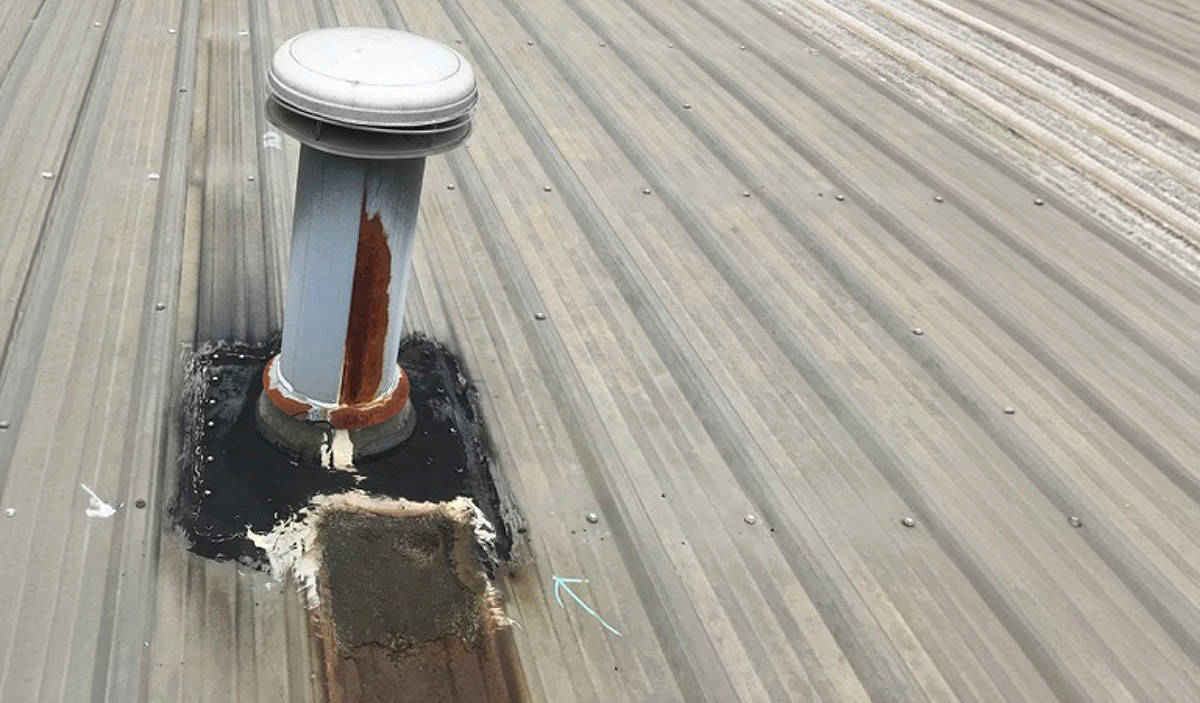
Improper vent penetration
Work with qualified metal building specialists.
But your roofer friend says he can handle it, right? Maybe. But it’s best to follow these steps.
- Demand clarity before any repair. A proper metal roof repair is not caulk, tar, silicone, or coating smeared over panels.
- Require photos of the problem and a clear explanation of the proposed fix. If a fastener has failed, it should be replaced, not coated. If a panel lap is leaking, it should be properly disassembled and corrected, not sealed over. Coating or caulking fasteners, side laps, or end laps is not a repair—it will shorten the life of your roof.
- Control who penetrates your roof. Metal roofs move constantly, and they require specialized accessories for penetrations, equipment mounts, and snow retention. Never allow plumbers, electricians, HVAC contractors, or other trades to cut into your metal roof. They are not trained for it, and they can cause serious damage, including damage from improper foot traffic.



- A metal roof is a premium roof system. When repairs are needed, use a contractor who specializes in metal roofing. Ask questions and request photos of the proposed repair.
- Avoid surface caulking or coating over problems. These shortcuts create new issues, void warranties, and reduce roof life.
- Use proper accessories for modifications. Metal roofs require components designed for movement and long-term sealing. Conventional roofing products are not compatible with metal roofs.
- If the roof has truly reached the end of its life, retrofit it with a metal over metal system. Use a fully engineered retrofit system that meets current wind and snow load codes. This improves insurability, resale value, and has the lowest long-term cost.
- Explore tax incentives. Section 179 of the IRS tax code may allow up to $1 million in deductions, making a retrofit far more affordable.
Dale Nelson is a founding partner and the current president of Roof Hugger, LLC. He is also a member of LSI Group in Logansport, Indiana. He holds a Class-A Florida Contractor’s License and a Florida Real Estate Broker’s License. He is a past chairman of the Metal Construction Association (MCA) and has received both the Patrick R. Bush and Larry A. Swaney awards from the MCA. A 25-year member of the International Institute of Building Enclosure Consultants (IIBEC) and a two-time recipient of the Metal Building Manufacturers Association (MBMA) Innovation Award, he has also been inducted into the Metal Construction Hall of Fame and serves on the board of directors of the Sertoma Speech and Hearing Foundation of Florida, Inc.





he self-storage industry has spent the last decade chasing efficiency through remote management, centralized call centers, and automation. However, in the process, many operators have quietly drifted away from the one thing that has always driven performance in this business: people. Self-storage is not just square footage and street rates; it’s a service business built on trust. Customers are storing their lives—transitions, memories, uncertainty—and they choose where to do that based on how they feel about your property. Ultimately, that experience comes down to one person more than anything else: your on-site manager.
If you want managers to act like owners, you must treat them accordingly—invest in them, train them to understand KPIs and the levers that drive performance, and empower them to make informed decisions. Too many companies operate from a place of control, which leads to hesitation, slow decision-making, and, at best, a generic customer experience. At STORE Management, we’ve taken the opposite approach. We believe the on-site manager should be one of the most empowered people on the property, not the most restricted. That means giving them the authority to solve problems in real time, the confidence and skill set to make judgment calls, and clear expectations that they are responsible for the asset—not just the tasks.
This philosophy begins with a fundamental shift in how care is defined. Care isn’t a checklist—it’s a standard that can’t be automated or reduced to a script. Pride in a property, attention to detail, and genuine concern for an asset’s condition all come from the person who walks it every day. The difference becomes clear quickly: A disengaged manager notices a problem and logs it, while an engaged manager takes action to fix it or finds a way to do so. That gap is where asset quality is either preserved or gradually eroded over time. At STORE Management, managers aren’t just expected to maintain properties—they are expected to own the standard through cleanliness, safety, presentation, and customer interaction, not because it’s written in a manual but because it defines the level of care required.
To support that level of ownership, training must go beyond systems and procedures. Training that truly changes behavior focuses on developing how managers think. Empowerment without proper training creates risk, yet too often in this industry, training emphasizes processes instead of decision-making. A more effective approach is to teach managers how to make sound judgments. This includes understanding why customers rent and what they may be experiencing, recognizing how their actions influence length of stay, knowing when to hold firm and when to be flexible, and seeing the direct connection between customer experience and revenue. When managers understand the “why,” the need to micromanage the “how” disappears.
At the same time, technology must be positioned correctly within this model. Technology should support judgment, not replace it. While the industry offers no shortage of tools—CRMs, pricing software, access systems, and dashboards—their value is often diminished when they are used as substitutes for people rather than as resources to enhance them. At STORE Management, technology is used to strengthen on-site decision-making, not eliminate it. Managers are equipped with real-time performance data, customer history, and pricing context, and they are trusted to apply that information thoughtfully. Ultimately, the best decisions are not made by algorithms in the background but by the person standing in front of the customer.
This becomes especially important when evaluating extended customer rate increases (ECRIs). While many operators treat ECRIs as a pricing strategy, they are, in reality, a reflection of customer tolerance—and that tolerance is built on experience. If a tenant only associates your property with rising costs, they are likely to leave. But if they associate it with strong management, fairness, and care, they are far more likely to stay and absorb increases. At STORE Management, we see this consistently: When on-site managers are empowered, well-trained, and supported, length of stay increases and ECRI performance follows, not because we push harder but because customers are more willing to stay.
Despite this, the industry continues to move toward reducing on-site staffing, creating what appears to be a more efficient operating model. On paper, it works—lower payroll, higher margins. In reality, it’s a false economy. What is lost is accountability on the property, consistency in the customer experience, early detection of issues, and relationship-driven retention. These losses don’t show up immediately on a P&L, but they emerge over time through increased churn, declining asset condition, and missed revenue opportunities.
In many ways, none of this is new. If you look back at the fundamentals of the industry, strong operators have always focused on the customer, taken pride in their properties, and invested in their people. What has changed is the growing temptation to replace these fundamentals with systems. But systems alone do not create great experiences—people do.
Ultimately, the competitive edge in this industry remains human. Today, nearly every operator has access to the same tools, the same pricing software, and the same marketing channels. Differentiation no longer comes from technology alone—it comes from execution at the property level.
At STORE Management, we’ve made a clear decision: We are betting on people. We empower our on-site teams, train them to think rather than simply execute, and give them both the tools and the trust to succeed. When that foundation is in place, everything else follows—longer stays, better asset care, stronger customer relationships, and more effective revenue strategies. In the end, the highest-performing assets are not defined by the systems behind them but by the people leading them.





hen you think about self-storage, you likely have many images that come to your mind. While they may vary greatly depending on the kind of products you offer or the markets that you serve, one thing is for certain: It usually isn’t talked about in the same conversation as personal care products and high-end designers. But that’s the beauty of the industry; it’s a mosaic of people from all walks of life who somehow all ended up in one of the best-kept secrets of uber successful professionals.
This month’s installment in the “Women in Self-Storage” series is about Kim Hoelting, vice president of marketing and training at Universal Storage Group (USG). Family-centered and Ivy League educated, Hoelting has an impressive resume spanning marketing and business development for privately held companies and Fortune 500 enterprises.
“My two grandmothers were very influential in my life,” she says. “My paternal grandmother was a librarian in every sense you could imagine—brainy, serious, and an introvert. I get my right-brain skills from her.” Her maternal grandmother was also someone she grew up admiring greatly. “She was an incredible artist and cook, funny, outgoing, and creative; and I get my left-brained skills from her.”
All the skills she inherited from her grandmothers have served her well.
“Strategy is as much about what you choose not to do as it is about what you choose to do … There are a million activities one could engage in that we will never have enough time or money to pursue, so we have to focus wisely on the things that really matter.”
V.P. of Marketing and Training at Universal Storage Group
After graduating from Yale, she went on to receive her Master of Business Administration from the Amos Tuck School of Business at Dartmouth College. “Dartmouth really cemented my love of marketing and of strategy,” she says. “That knowledge has really helped me succeed in my professional life. One of my strategy professors used to preach that strategy is as much about what you choose not to do as it is about what you choose to do. I think about that almost every day, especially now that I’m relatively new to the storage industry. There are a million activities one could engage in that we will never have enough time or money to pursue, so we have to focus wisely on the things that really matter.”


Although she certainly gained invaluable skills and led significant growth with each position—to the tune of multiple nine-figure-dollar deals—the experiences taught her that working at large entities isn’t necessarily always better. “My early career was primarily with very large corporations, where brands and strategies have been in place for a very long time and change felt like it took forever.” This excessive amount of red tape and redundant processes resulted in her preference for smaller, privately held roles, like the one she currently has at Universal Storage Group (USG). “I very much appreciate that positive change and growth can happen more quickly.”
While working at Newell Rubbermaid, Hoelting’s boss and mentor was A.J. Ross, who now serves as CEO at USG. As someone who was well acquainted with her strong work ethic and indisputable results, he recruited her to join USG, where she started working in October of 2024. “He really has been an incredible role model,” she says. “We’ve known each other for almost 20 years now, and I have so much respect for him. He works tirelessly to do the right thing for all of his constituents—clients, customers, and employees—and he has that same ‘right-thing’ attitude in his personal and family life.”
Even though she joined the industry relatively recently, she has already noticed one of the main aspects of working in storage. “I love the people in this space. It feels like a collaborative family industry and not a sea of faceless corporations.” It’s a response that’s often recited among storage professionals, and one that keeps genuinely good people in the industry for decades.
V.P. of Marketing and Training at Universal Storage Group
Hoelting also points out that the biggest lessons often come from mistakes. “That usually happens when I haven’t listened to my intuition or my inner voice and have led with what pleased other people, or what I thought I should do, or what was convenient.”


She’s happy to note that her sister also lives with her family in Atlanta, where she works as a family lawyer. Their parents live in town, too; they often share Sunday dinners. Having so many loved ones around has been instrumental in her cultivation of a fulfilling personal life.
Besides spending time with family, her hobbies are many. “I love the visual arts, museums, painting, and interior design. I also play tennis frequently, but not all that well,” she says with a laugh. Hoelting enjoys playing Words With Friends, admires Dolly Parton, and likes to travel to exotic or relaxing destinations. “My favorite trip was many years ago, when I got to visit Namibia, which is such a beautiful and fascinating place. It has everything: desert, ocean, safari animals, and wonderful people. I would love to go back.”
Her story is a testament of a life well lived. It’s also an important reminder that while being a high achiever is wonderful and should always be acknowledged and celebrated, what matters most are the people who make all those accomplishments that much sweeter: family, friends, advisors, and colleagues. Kim Hoelting certainly checks every box—and then some.

o matter how tech savvy you may think you are, it’s easy to feel like you’re living in the stone age while speaking with Christopher Taylor, 10 Federal’s chief AI officer and the first person in the industry to hold the title. He’s worked for some of the most cutting-edge companies in the world; now he’s come to self-storage, an industry not typically recognized for its sophistication.
In time, Taylor decided he’d rather be a software consultant and got to work at a small firm in Southern California called Fishbowl Digital. “I was able to work on all sorts of projects there. I built a thermal sniper scope for Sig Sauer, worked on cancer screening devices for Medtronic, and designed software stacks for turbine generators, oil rigs, hospitals, and the Ronald Reagan Library.”
If none of these endeavors ring a bell, you’ll understand the impact Taylor had on all our lives with his next statement. “I was also involved with thermography projects, writing code that powered heat cameras to scan people’s temperatures as they walked into buildings. That was used all over the country during COVID.”
Chief AI Officer at 10 Federal
Taylor landed at Nvidia, one of the most influential technology companies in the world, where he joined the autonomous vehicles team, a role that would prove pivotal in shaping him into the engineer he is today. “On my third day, I was handed a project: port a real-time operating system to a new safety chip running inside one of Nvidia’s most advanced processors. Myself and another engineer worked on it for 18 months—three man-years of work. That sounds like a long time, but in automotive that’s fast. However, I thought it could be done quicker.”
Quicker meant AI. That realization hit Taylor when the same project had to be redone on Nvidia’s next-generation automotive chip. “With AI, I completely rebuilt it myself—better, faster, more efficient, and better documented and tested in just three weeks.”


When he told his colleagues he was leaving Nvidia for self-storage, he received a lot of reactions. “Senior engineers asked, ‘Are we talking NAND, SSD, M.2? What kind of storage?’” With a few words, Taylor would have them raise their eyebrows. “No, garage space storage.”
They began to understand when he explained that he saw an opportunity to move into an industry behind in technology and help lead that transformation.
Of course, it’s a big pivot from major tech companies to an industry where AI is still finding its footing. But for Taylor, that’s exactly the point.
“The opportunity here is massive,” says Taylor. “We’re building the foundation of 10 Federal’s future. Using AI, we can simultaneously grow revenue, reduce operating expenses, and ensure that every decision being made has the full picture behind it—operations, finance, infrastructure, everything. AI becomes the connective tissue across the entire company, surfacing insights and ideas that leadership can evaluate and act on. That’s not just efficiency; that’s a competitive advantage that compounds over time.”
Others worry less about hallucinations and more about losing their jobs. “People thought blue-collar jobs would be impacted first, but programmers were among the first affected; we built the systems that can now do our work,” he says. “But we didn’t lose our jobs—we evolved. We became architects instead of just coders.”
AI is not meant to replace anyone, says Taylor, but rather to help them focus on the meaningful parts of their job. “If 75 percent of your work is repetitive, AI can handle that so you can focus on the 25 percent you enjoy. And at a company level, it enables scaling without adding proportional headcount.”
Negative feelings around AI persist, but Taylor says those who are dismissive of the technology should embrace it. “The people who use it best will be the most effective. The only real barrier left is interpersonal communication. That’s still uniquely human, at least for now.”

At some point, spoken language may not even be necessary, and humans may have neural interfaces and communicate differently. “That might not happen in my lifetime, but it’s coming,” says Taylor. “All you have to do is look at the progress made in just the last couple of years. AI can analyze thousands of data points in milliseconds—work that would take entire teams hours. It’s the smartest person in the room on every subject and it’s almost immediate. That kind of capability doesn’t have a ceiling—it can be applied to anything.”
Does that mean humans will eventually be working for AI?
“It depends on your perspective,” says Taylor. “I lean toward the viewpoint of Elon Musk—that AI will create abundance. Labor becomes cheaper, and eventually you could see something like universal basic income because production becomes so efficient.”
It sounds great in theory, but some people really enjoy working; it’s why retirees go back to pick up a few bucks at McDonald’s. “AI doesn’t mean you have to stop working, it’ll just mean you have the option,” says Taylor. “You could keep doing what you enjoy.”
Chief AI Officer at 10 Federal
His passion translates to education. “For the past seven and a half years, I’ve been the head instructional associate at Georgia Institute of Technology for a master’s course in information security. I manage a team of about 28 instructional assistants and oversee cohorts of 800 to 1,000 students.” For Taylor, it’s about staying ahead of the curve and giving others the opportunity to round the corner as well.

Moving from tech to self-storage was an unexpected transition, but one thing has stood out to Taylor more than anything else: the level of collaboration in self-storage.
“There’s competition, of course, but overall people are open to sharing ideas and working together in this industry,” he says. “That’s very different from the tech industry, which can be much more competitive.”
Though he’s only been to a handful of self-storage conferences so far, he says everyone he’s spoken with, from operators to vendors, are willing to have conversations, exchange ideas, and learn from each other. “That’s been refreshing. I’m genuinely curious and always looking to learn—whether it’s about tools, workflows, or strategies—and apply that knowledge to improve 10 Federal and the industry as a whole.”














Data Storage Stats

Economic Uncertainty Increases And Investment Rates Follow
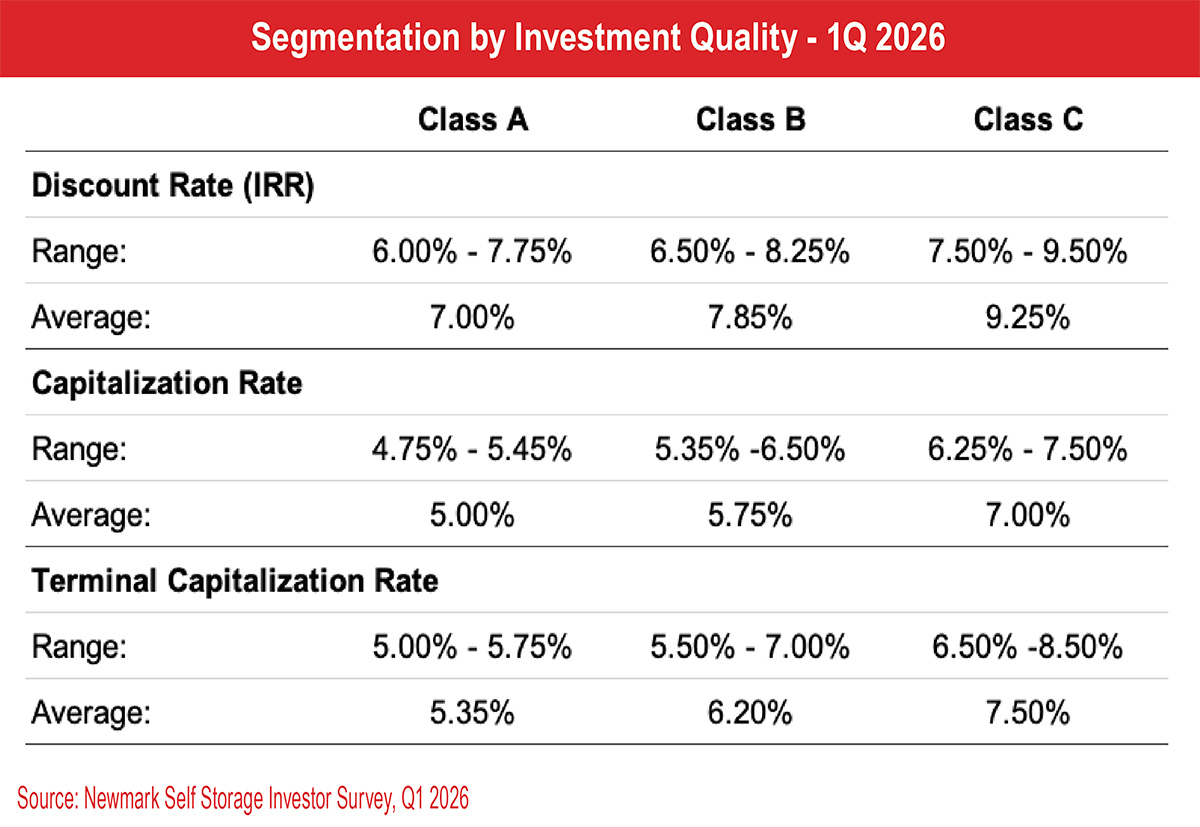
he 1Q 2026 Investor Survey shows an increase in investment rates with an average overall capitalization rate of 5.66 percent. This reflects one of the largest quarter increases of 14 bps but remains near the average of the last three years. Similarly, exit or terminal cap rates increased to 6.07 percent and the internal rate of return or discount rate increased to 7.74 percent.
The self-storage team at Newmark Valuation & Advisory surveyed over 50 market participants about a wide variety of data points, including the usual cap rate, terminal cap rate, and yield rates. Key performance indicators are shown in the Segmentation by Investment Quality – 1Q 2026 table.
See Segmentation by Investment Quality – 1Q 2026 table.
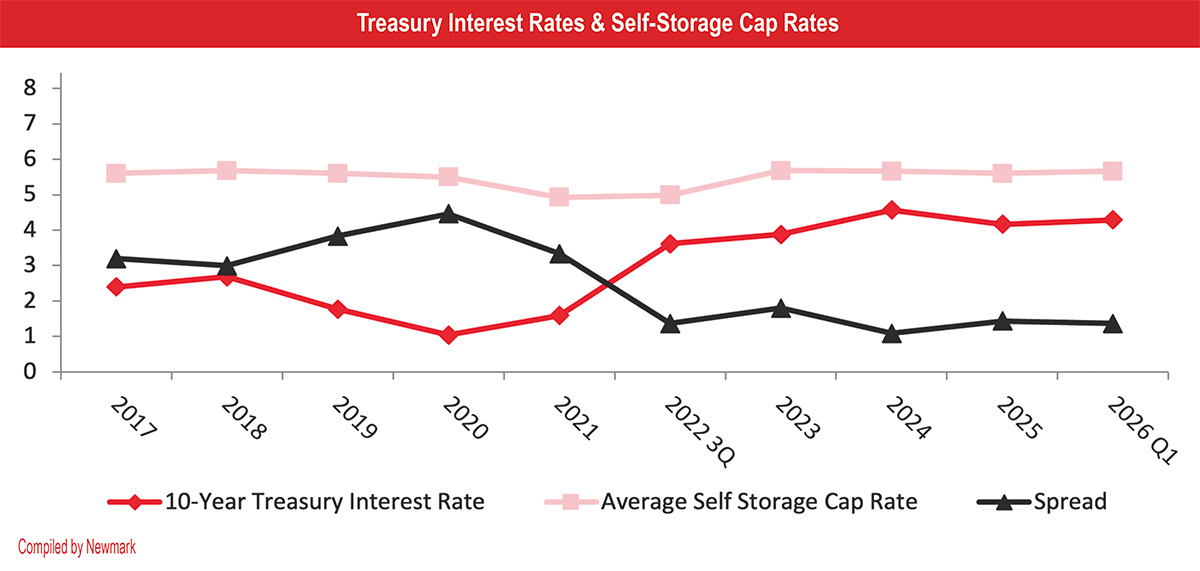
As an example, the current cap rate spread to 10-year Treasuries is 137 bps (but varies daily) and averaged 150 bps over the last eight quarters, but a wider range as a function of dynamic Fed movement and slower market reactions. Overall, the Treasury spreads have been at record lows in the last eight quarters compared to the 20-year time trend.
See Treasury Interest Rates & Self-Storage Cap Rates chart.


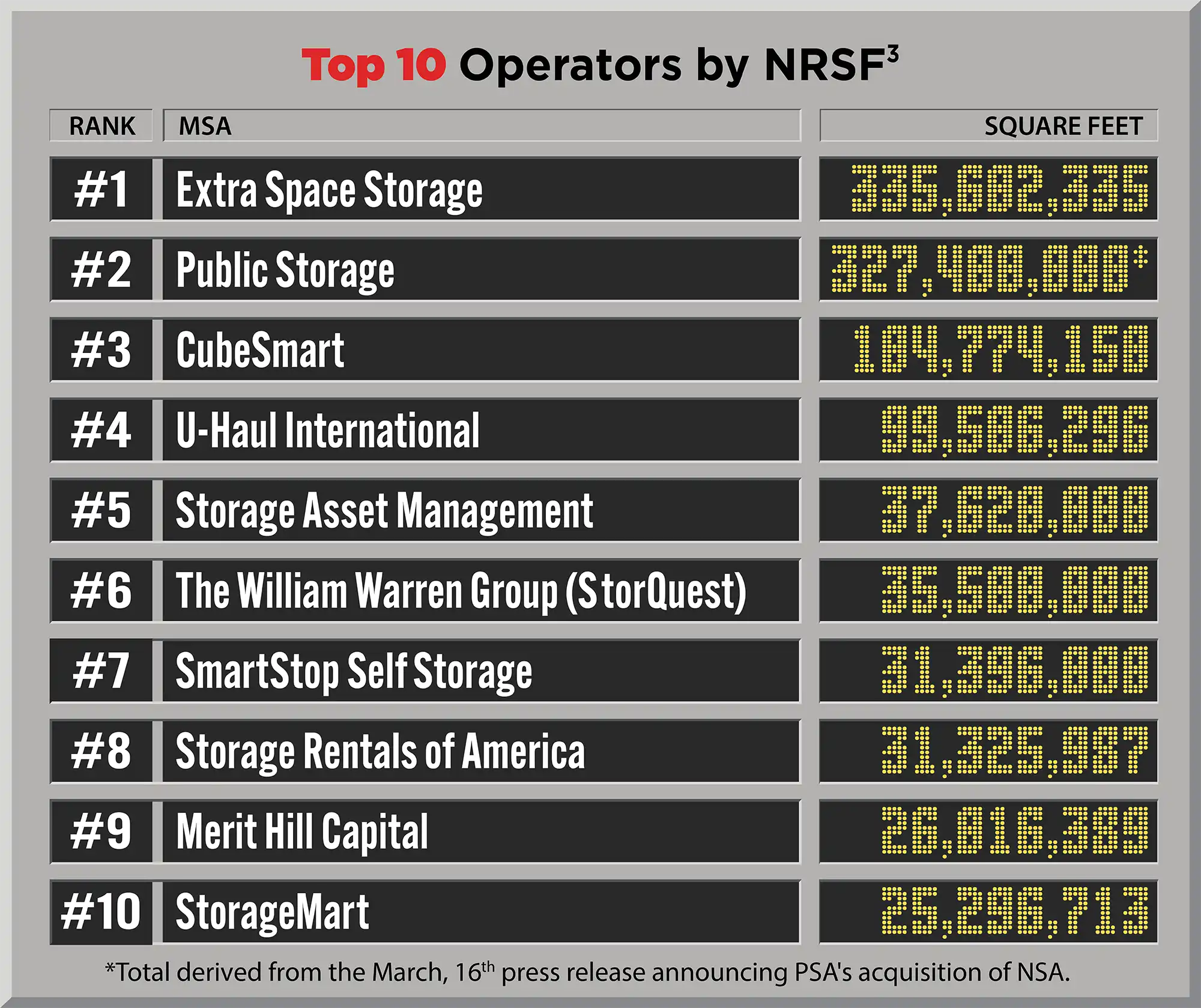
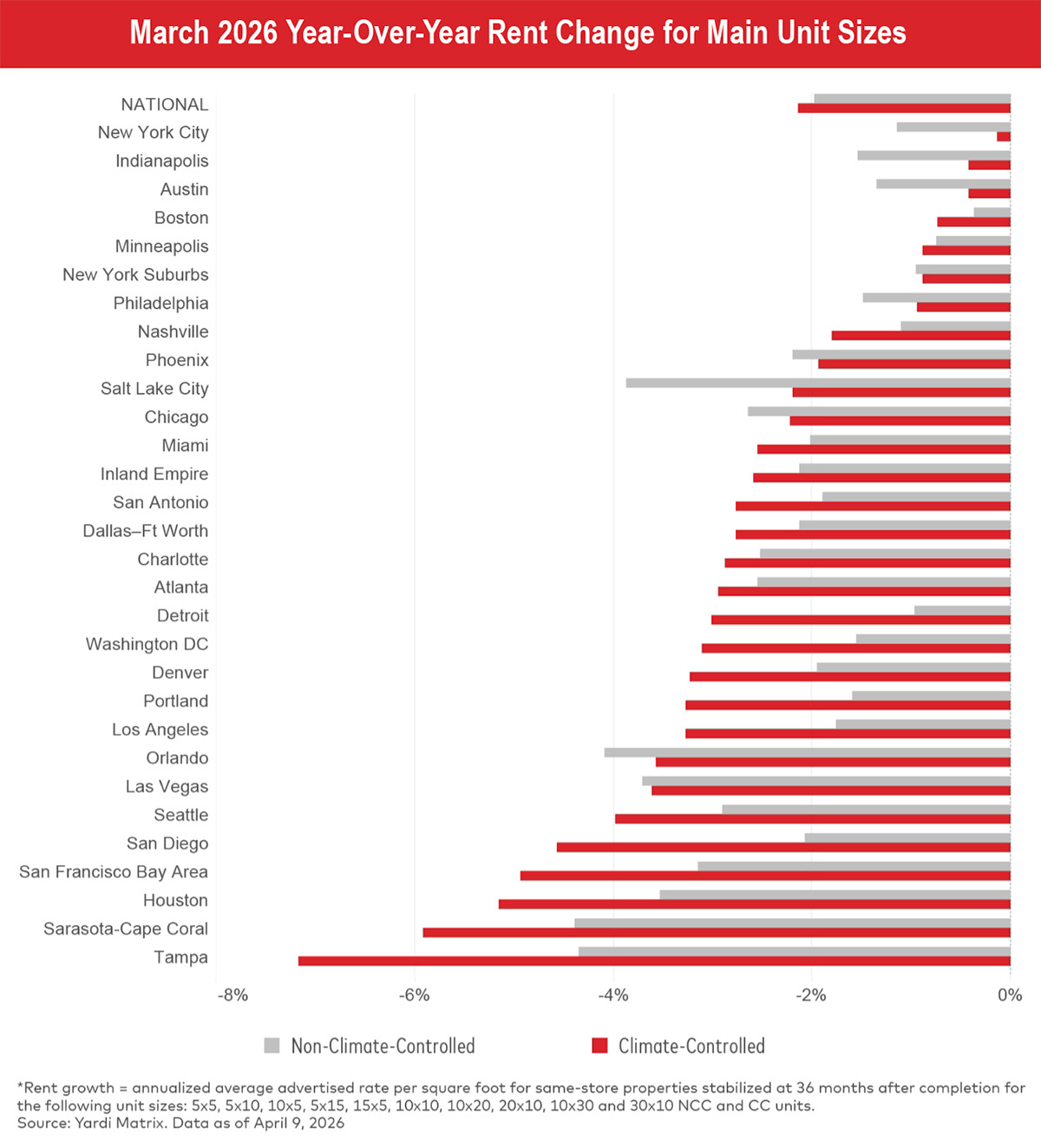
egative annual rate growth spreads across all top metros. A Yardi team recently attended the SSA Spring Conference in San Antonio and ISS World Expo in Las Vegas. The tone was more subdued than in recent years, reflecting muted performance to start the year. Few near-term catalysts for a meaningful turnaround in demand are evident, as a historically weak housing market and ongoing development continue to pressure rental rates, especially in Sun Belt markets already struggling to absorb excess supply. One bright spot is increased investment activity, with a wave of portfolio deals in recent months culminating in Public Storage’s $10.7 billion acquisition of National Storage Affiliates. Yardi Matrix analysis of the 1,000-plus property portfolio indicates the deal will raise Public Storage’s management share to 16 percent of net rentable square footage nationally, expanding its footprint in existing markets and adding exposure to 20 smaller MSAs. The transaction also underscores continued sector consolidation and the growing importance of scale.
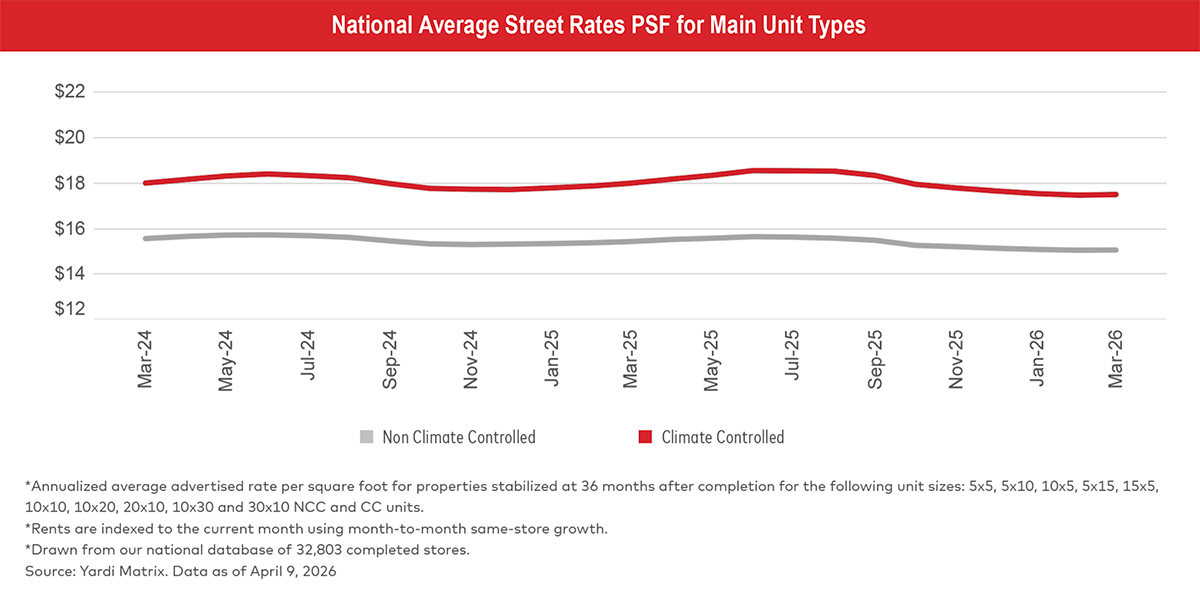
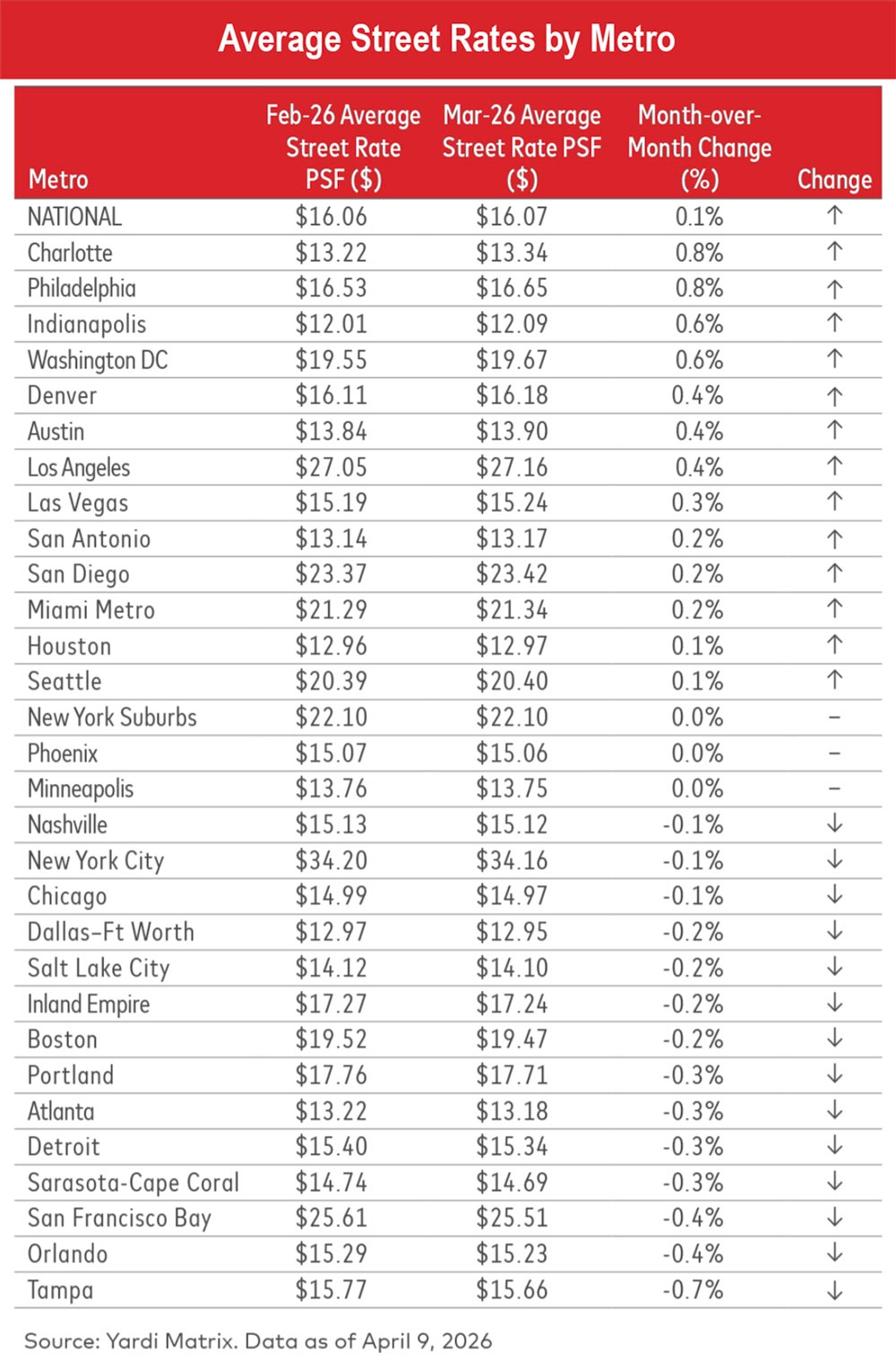
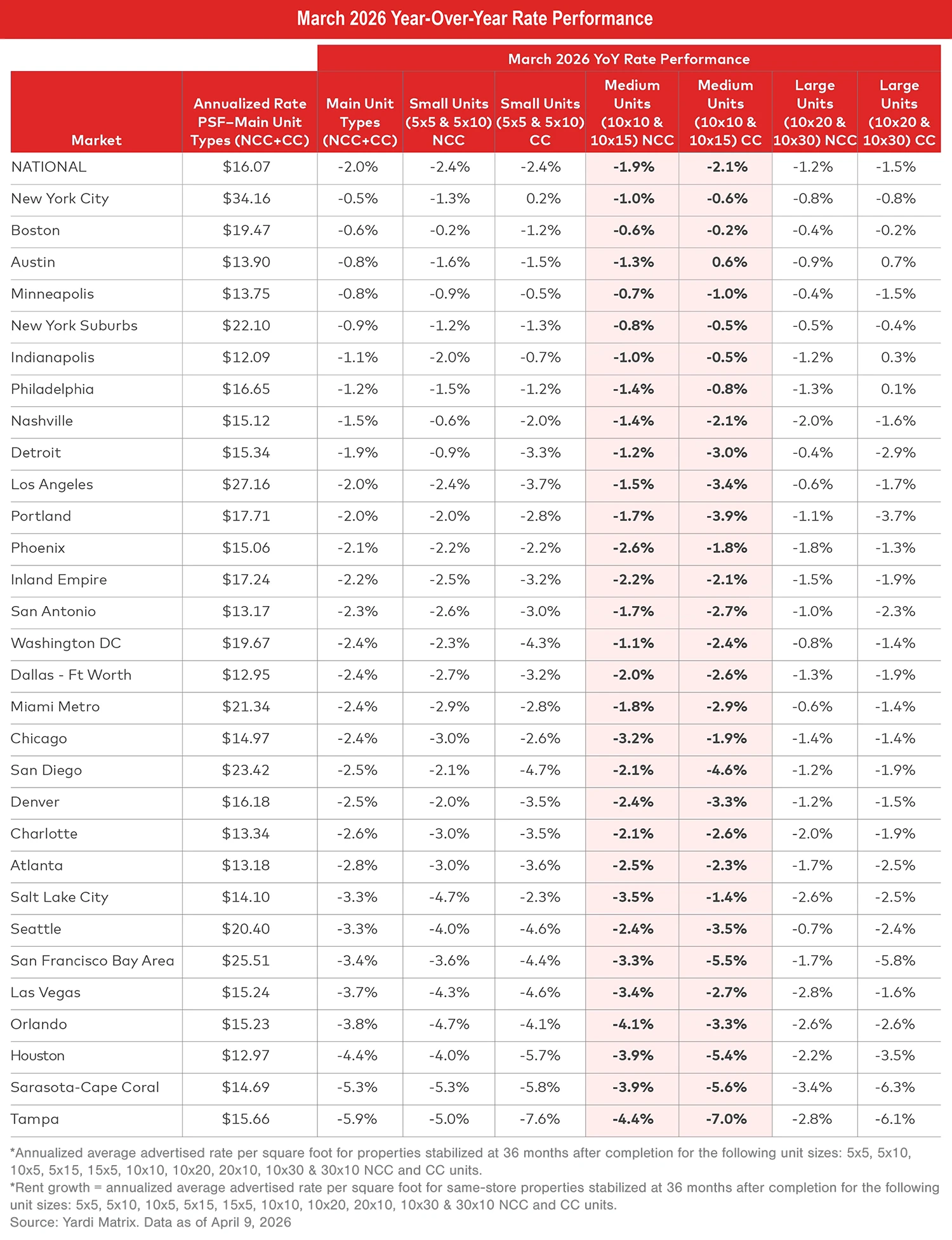
Advertised rates decline further as annual growth continues to slow. Annual growth for advertised rates decelerated further in March. Nationally, advertised rates decreased 2.0 percent in March, down from -1.2 percent in February and -0.4 percent in January. The national average rate for March was $16.07 per square foot across all unit sizes and types. Nearly all of Yardi Matrix’s top 30 metros had lower year-over-year rate growth in March compared to February, with all top metros experiencing negative annual growth. Same-store advertised rates for both non-climate-controlled (NCC) and climate-controlled (CC) units across all 30 top markets decreased compared to last year.
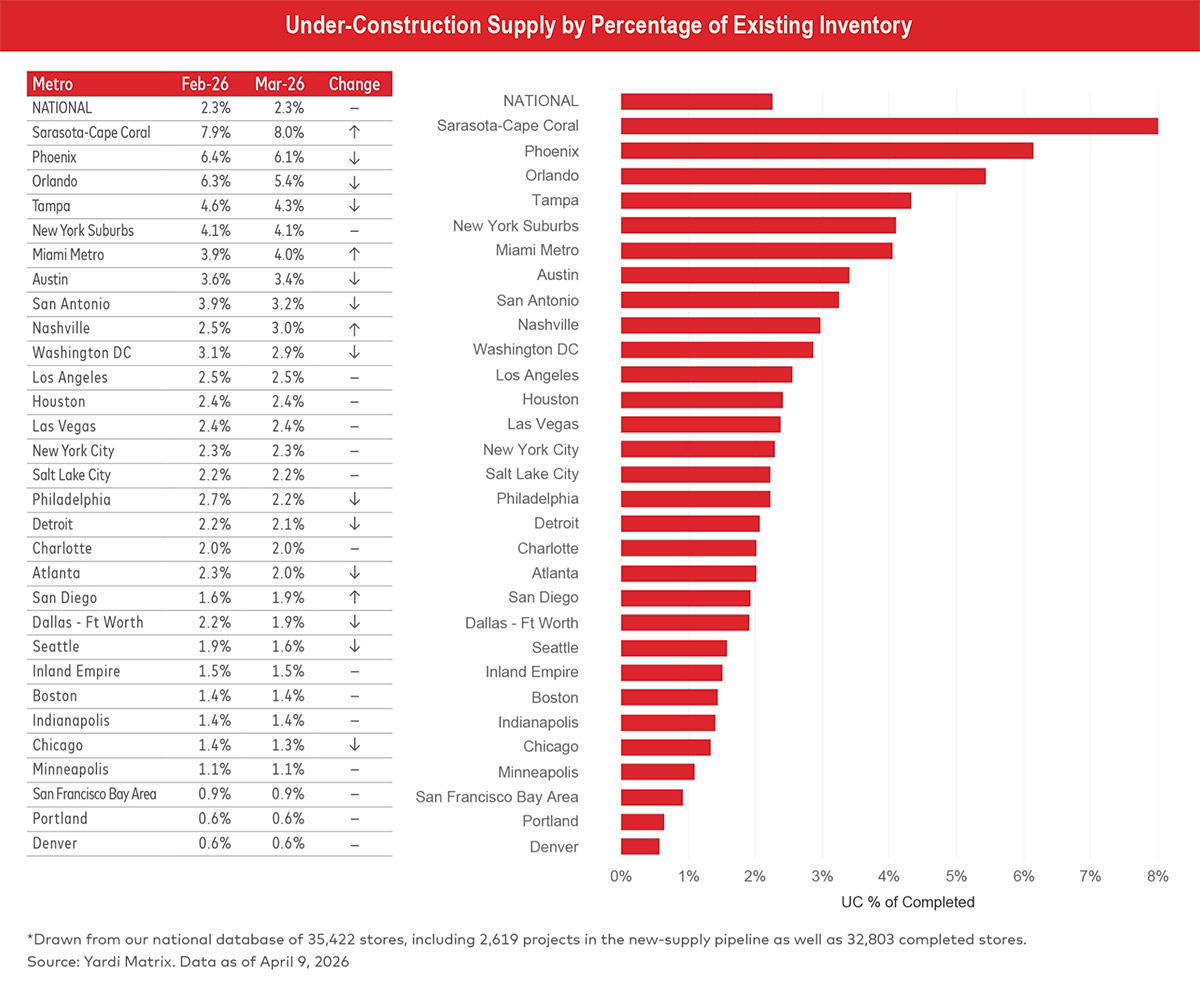
Nationally, Yardi Matrix tracks a total of 2,619 self-storage properties in various stages of development, including 622 under construction, 1,704 planned, and 293 prospective properties. The share of projects (net rentable square feet) under construction nationwide was equivalent to 2.3 percent of existing stock through the end of March, unchanged month over month.
Yardi Matrix also maintains operational profiles for 32,803 completed self-storage facilities in the U.S., bringing the total dataset to 35,422. We are pleased to announce the release of our new Terre Haute, Ind., and Redding, Calif., storage markets, now available to Yardi Matrix customers on the subscriber portal.
Self-storage REITs saw a sharp deceleration in March, with advertised rents declining 4.0 percent year over year, down from -2.2 percent in February. The REITs’ revenue management models seem to be most reactive to demand shifts, and weak move-in volume in Q3 and Q4 2025 could be causing a drag on rates now. They also started pushing rates up in March 2025, leading to more difficult comparison year over year.
See March 2026 Year-Over-Year Rent Change for Main Unit Sizes chart.
At a metro level, advertised rates rose month over month in 13 of the top 30 markets. However, slightly more saw a slowdown, with rates decreasing sequentially in 14 of the top metros.
Tampa’s performance weakened notably in March, posting the largest month-over-month decline in asking rates at -0.7 percent, down from -0.1 percent in February, as the market continues to absorb a significant wave of new supply, forcing operators to offer more aggressive discounts to maintain occupancy and putting sustained downward pressure on rates.
See National Average Street Rates PSF for Main Unit Types chart and Average Street Rates by Metro table.
Street Rates And New Supply
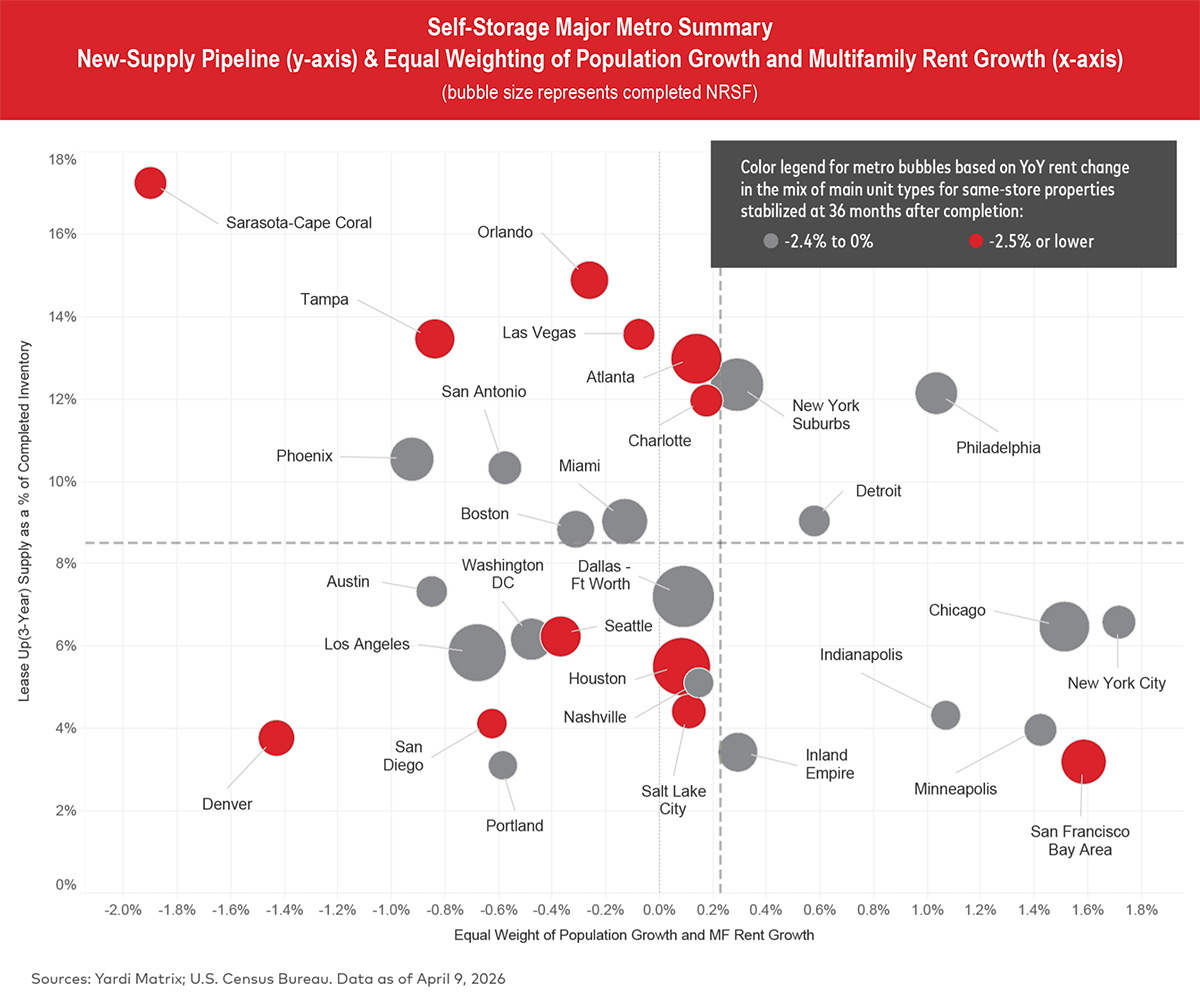
The San Francisco Bay Area stands out in the bubble chart for its relatively favorable supply-demand positioning, with low lease-up supply and stronger underlying demand indicators, yet the metro continues to experience weak advertised rate growth. This disconnect suggests that local factors, such as mass layoffs in the tech sector, may be dampening demand and limiting operators’ ability to push rates despite constrained supply.
See Self-Storage Major Metro Summary chart.
Lease-Up Supply
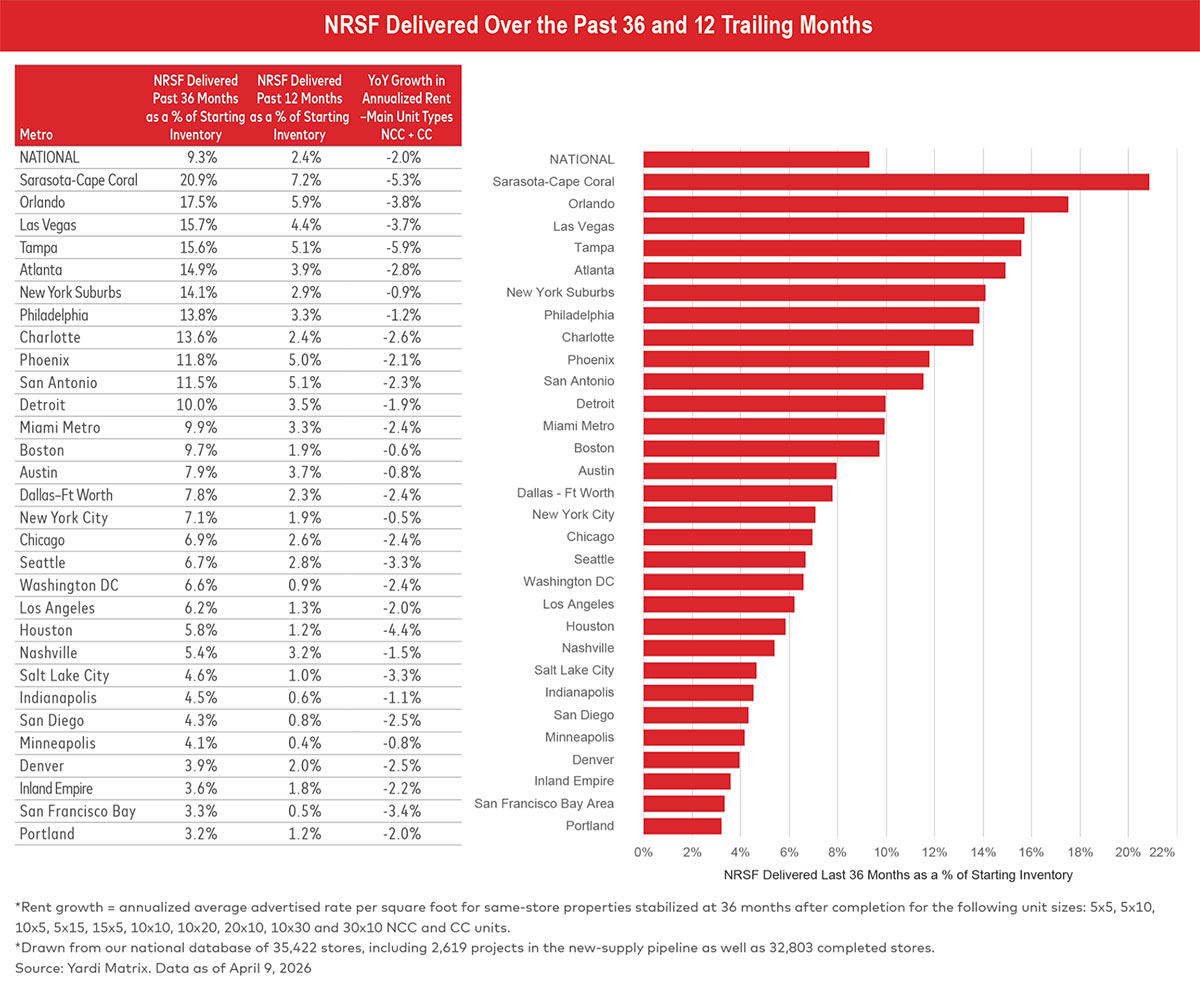
Although both New York City and the New York suburbs are still managing elevated levels of new lease-up supply, the past year has brought notable declines. In the New York suburbs, the three-year supply rate fell to 14.1 percent, a 350-basis-point decrease from March 2025. Similarly, New York City saw its three-year supply drop to 7.1 percent, down 230 basis points year over year. New York City and its suburbs remain among the strongest-performing markets, supported by relatively solid demand and constrained new supply, which has helped limit rent declines compared to other regions.
See NRSF Delivered Over the Past 36 and 12 Trailing Months table and chart.
Sarasota–Cape Coral leads all top metros in under-construction supply, with projects totaling 8.0 percent of existing inventory as of March. Although this share has declined from 9.7 percent a year ago, the drop reflects project completions rather than a slowdown in new starts. Lease-up supply remains elevated, continuing to place downward pressure on asking rates in the metro.
Las Vegas reported no change in under-construction supply month over month but recorded the largest year-over-year decline, down 2.5 percent. Although this has coincided with an increase in lease-up supply, the pullback in construction signals a more favorable outlook for future rate performance.
See Under-Construction Supply by Percentage of Existing Inventory table and chart.

For decades, Trac-Rite has helped self-storage facilities protect what matters most.
800-448-8979

BEHIND YOUR SUCCESS
- Single Story
- Multi-Story
- Hallway Systems
- Climate Control
- Superwide
- Conversions
- Boat/RV
- Canopies
- Portables




he self-storage industry has spent the better part of the last two years talking about a development slowdown. It makes sense when cost of construction is up, rates are down, and getting projects approved is harder than ever.
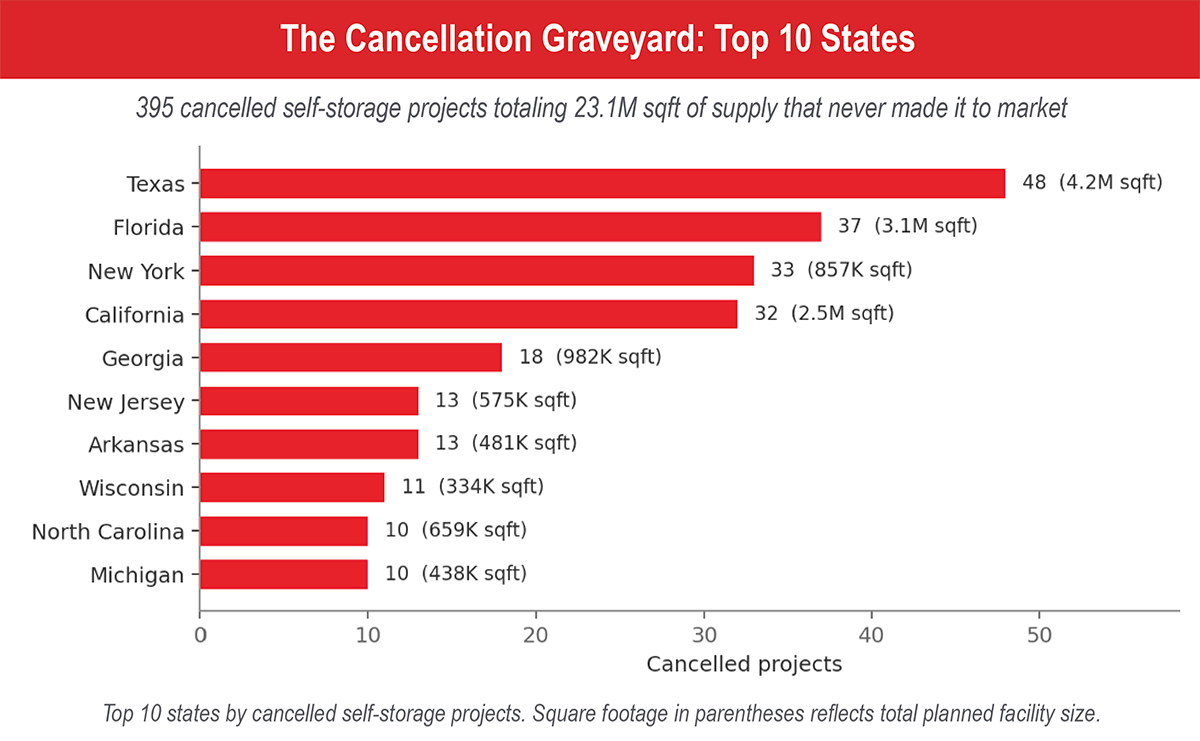
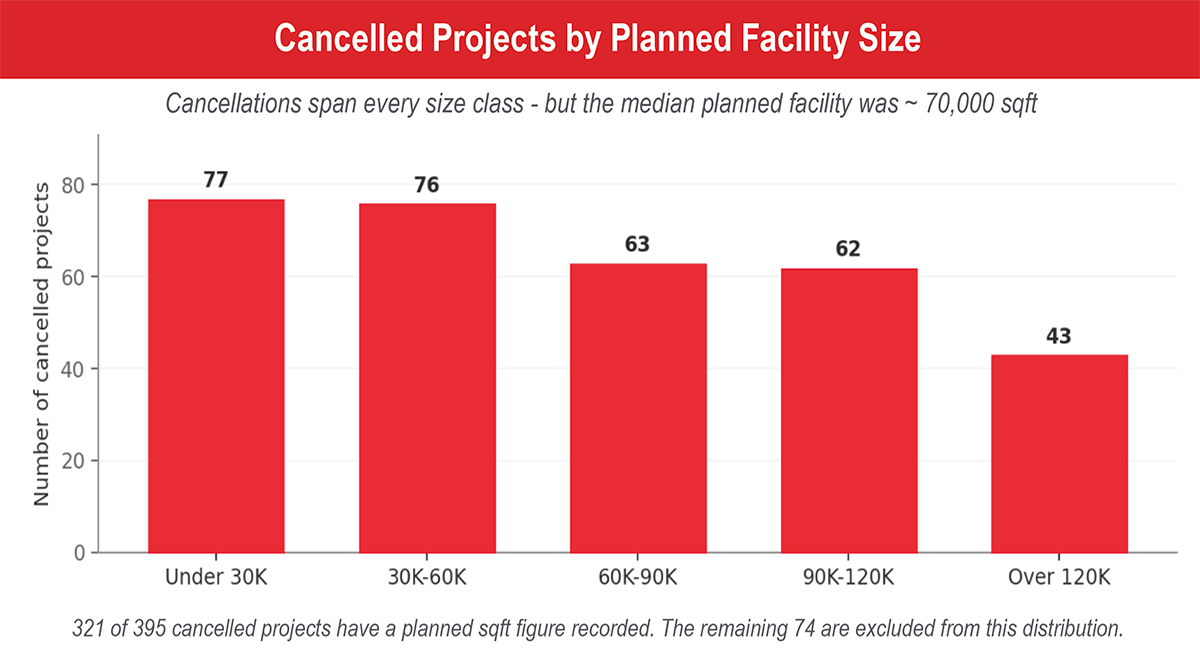
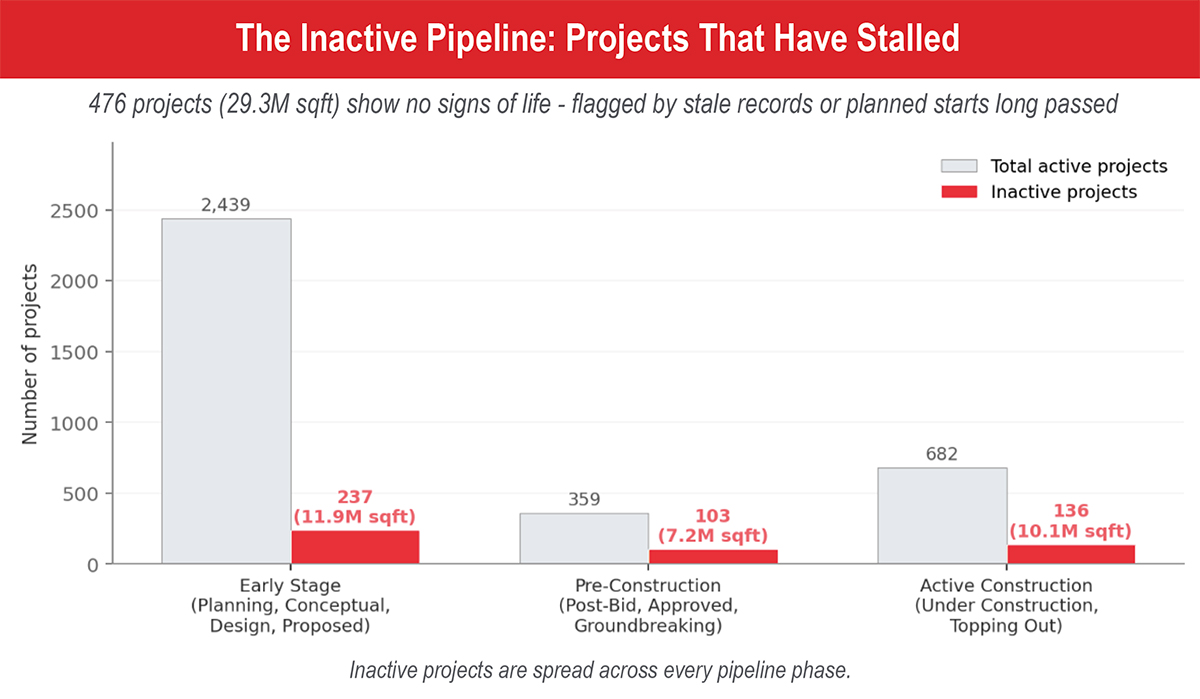
TractIQ currently tracks 395 self-storage projects with an official “Cancelled” status, representing roughly 23.1 million square feet of supply that was announced but never built. Sitting alongside that graveyard is a second larger population: 476 projects we’d call “inactive.” These projects are still listed as active in the pipeline yet show every sign of being abandoned.
See The Cancellation Graveyard: Top 10 States chart.
See Canceled Projects by Planned Facility Size chart.
If the cancellation graveyard captures projects that have formally been pulled, the inactive pipeline captures something messier: projects that are technically still in the pipeline but show no measurable signs of life. We flagged a project as inactive if either its TractIQ record hasn’t been touched in 18-plus months, or its planned start date passed more than a year ago without progression. By that definition, 476 active-pipeline projects qualify. This equals 29.3 million square feet, which is actually larger than the cancellation graveyard.
See The Inactive Pipeline: Projects That Have Stalled chart.
See Top 10 States Ranked by Canceled Projects table.
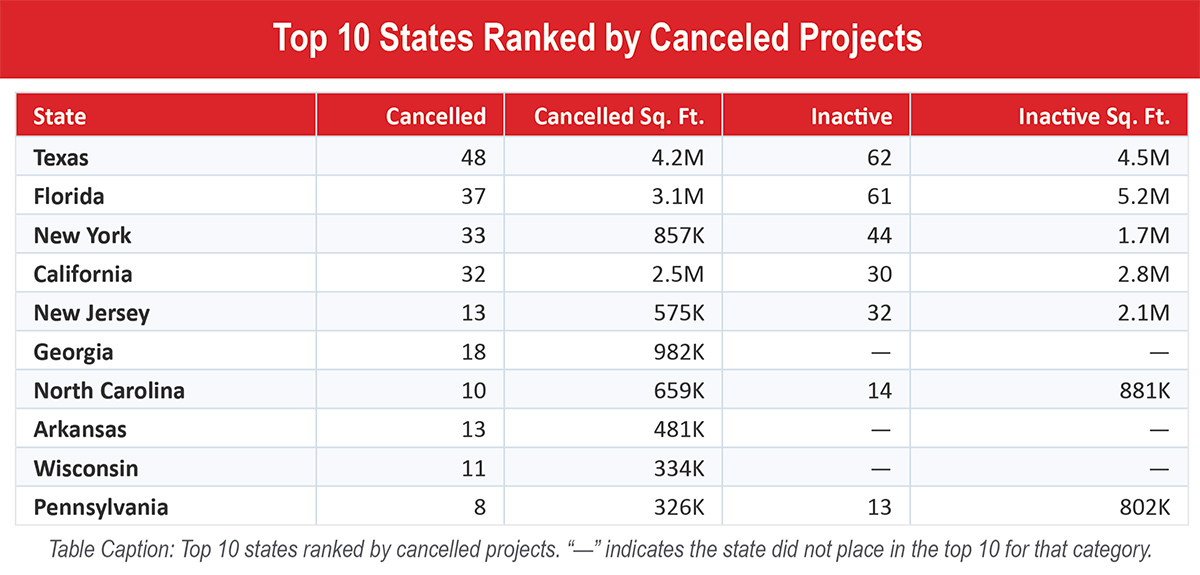
Data & methodology: All figures sourced from TractIQ’s self-storage pipeline database, queried May 2026. “Cancelled” projects are those explicitly marked with project status = “Cancelled.” “Inactive” projects are active-pipeline projects (excluding Cancelled) flagged by one of two signals: (1) record not updated in 18-plus months, or (2) a planned start date that has passed by more than 12 months.
Noah Starr is the CEO of TractIQ.


or two decades, Andrew Hess’ job was showing up on somebody’s worst day. He’d built a career as a fireman and paramedic, operating in high-pressure environments where hesitation could make a situation even more challenging. The job was structured, disciplined, and deeply rooted in teamwork—he loved it.
Then, in an instant, it was gone. “I got hurt on the job and wasn’t able to go back,” he says, “so that became the pivoting point where I went into self-storage and residential lending.”
For Hess, it wouldn’t just be a career change but a reshaping of everything he already knew.
Seeing the devastation and loss of life, along with the first responders who ran bravely into the destruction, Hess decided he wanted to take a different path. “That’s when I knew I wanted to join the fire service. I wanted to give back.”
Co-founder of Alpine West Group
“It’s usually not glamorous like it’s portrayed on ‘Chicago Fire’ or ‘9-1-1,’ where you’re scaling skyscrapers and jumping out of helicopters every day,” he says. “One of the stranger calls was a 2 a.m. dispatch to remove a cow that someone hit in the middle of an urban five-lane highway. I say, ‘What are we supposed to do with it?’ and law enforcement suggests just dragging it away. I was like, ‘No, you’re going to need a forklift for this job.’”
After his injury, the decision to get into the self-storage industry wasn’t immediate. For a while, he refused to accept that he wouldn’t return to the fire service. “I didn’t want to believe it, but as things developed, it became apparent that returning wasn’t in the cards,” recalls Hess. “That was a real blow to me.”
It was a period of more than just figuring out a new career path; it meant letting go of the one he had built his identity around. Accepting that it wasn’t going to happen didn’t come all at once. “There’s a point where you realize it’s not temporary anymore,” he says. “That’s when it shifts from, ‘When do I get back?’ to ‘What do I do now?’”

With three kids to take care of, Hess and his wife began plotting the next move that would set them up financially. “We looked at a number of things, but self-storage had the most appeal. There’s a smaller number of variables and lower expenses than other asset classes.”
Hess explains that this was important to him; as a firefighter, his job was to minimize unpredictability and risk. That’s exactly what self-storage offers him: control and simplicity. “Of course, anything can happen with any asset class, but this felt safer. That’s why we got fully onboard with it.”
When making the move to storage and co-founding Alpine West Group, Hess was able to take many of the frameworks of the fire service and apply them to business. He was also grateful to have obtained a degree before donning the turnout gear, which remains on the back of his office chair. “Yeah, that was a good decision,” he says with a smile. “It’s coming in handy 20 years later.”
Hess needed to find partners and get some guidance. “Having a coach, someone you’re accountable to, really helped our ability to execute on that first property,” he says.

Co-founder of Alpine West Group
Once the first deal was closed, they had something critical: proof of concept. However, for Hess and another frequent collaborator, Cameron Barsanti, that means one to two properties per year. “We want to be deliberate about growth. It’s about sticking to our metrics and not getting caught up trying to make the deal work,” he says.
That discipline comes straight from the fire service. “If you go into a situation and you’re not calm, you’re going to make the problem worse,” says Hess. “You take the facts, look at the situation, and make a decision.”
The same strategy applies to acquisitions. Beyond numbers, his focus is on something less tangible: relationships. “Everyone you talk to has a story,” he says. “Storage owners are no different.”




Two properties are located outside of Hess’ home state of California, in Florida and Washington State. At first, the idea of owning property out of state didn’t sit well, especially coming from such a hands-on background. “I was skeptical of it; it felt like too much distance from the asset.”

“Communication is crucial, and that’s something I inherently learned with the fire service. You’re literally putting people’s lives, including your own teammates’ lives, in jeopardy if you’re not communicating, so I’ve made it a point to bring that into my business deals.”
It also applies to the broader industry. “Storage is unique. There’s a tremendous amount of knowledge, and most people are willing to share it—to communicate their successes and failures.”
That openness helped him get started, and now that shapes how he helps others.
Hess shares how the pension system is changing, forcing people to work longer. In California, that means 57 years old. “Firefighters are some of the hardest-working, most dedicated people out there,” he says. “They’re there on Christmas, New Year’s, birthdays—all the time—so keeping them active until 57 doesn’t sit right with me.”
Unfortunately, Hess says they’re working so hard that they’re often not thinking about a long-term financial strategy. “Their mindset is giving back to the community. That’s what’s on their radar.”
So, he introduces something different, not as a pitch but as an option. “I have conversations with them, especially those starting out. I say, ‘You’re a firefighter and that’s great; I love what you’re doing, but here’s an opportunity to set yourself up later in life. What do you think?’”
Through residential lending and real estate conversations, he shows how existing assets like home equity can be used to build something more. “You have something here you can work with already,” he says.
It’s not about replacing their careers, says Hess, but expanding their options. “I’m not telling them to quit, but rather [to] invest so you’re able to retire comfortably when you want, not at 57 after work has taken a toll on your body.”
Of course, he also talks to them about self-storage—when they’re not asking about it themselves. “They may razz me a little, but that’s how the conversations start. Even helping a few people is enough. That’s a tremendous win.”
Would Hess ever partner with one of his old colleagues, or even one of those younger recruits he’s been talking to? “Absolutely. These are salt-of-the-earth people that you can trust.”

“You don’t get those days again,” he says. “And when you start stacking those weeks and years together, it hits you. My oldest is 12, and it feels like yesterday she was the size of my five-year-old, so this new path has allowed me more freedom. It’s allowed me to spend more time with the kids and pour more into my marriage too.”
Hess makes it clear he’s not looking to build a self-storage empire, as that would take away some of the time he’s regained. “I’m not looking to buy every single property on the face of the planet. What I’m looking for is the right opportunities and the right people. And I want to continue to give back.”
While the shift from fireman to businessman may seem drastic, Hess is still doing the same thing—just without the uniform. He’s assessing risk, working with a team, and making outcomes better for the people counting on him. It’s how he earned trust as a firefighter and how he’s building a reputation in self-storage.

With their maze of corridors, contained spaces, and people storing who knows what in their units, self-storage fires happen. When they do, firefighters will contain them—just not gently. “We’re going to mitigate the problem,” Hess says, “but we’re going to make a mess. We can’t have it rekindle, so we’re going to be hosing down more than just the source of the fire.”
That said, Hess does have some advice on how to make a fire less destructive. “It’s all about prevention and preparation,” he says.
Access is critical.
Being able to get into the facility is critical. “If a firefighting apparatus can’t access the property easily, it makes it that much harder. That’s going to slow the crew down and we’ll likely cause gate damage.”
For new construction, Hess recommends making sure the drive aisles are wide and contacting the local fire department to give them the gate access code. “They can attach the code to your address in dispatch log notes, so if a call to your facility comes in, the firefighters will have the code.”
He also recommends a Knox Box. This is a secure, high-security, fire-department-accessible safe mounted on commercial or residential buildings to hold entry keys or access cards. “Either way, or both ways, it allows firefighters to roll up knowing the gate code or grab an access card. It saves time and prevents forced entry damage during emergencies.”
Construction matters.
Older facilities with wood partitions present greater risk than block construction. “Those walls are much more combustible,” he says. “If you have the opportunity to upgrade the facility, you may want to consider doing that—or you may want to rethink acquiring an older property.”
Keep an eye on tenants.
Hess understands it’s impossible to know what everyone is storing in their units, but there are little things you can do, such as making sure they don’t have access to an electrical source.
Hess explains that you also don’t want to allow people to do certain work out of a unit either. “Just the other day we had someone ask if they could sand, stain, and resell furniture from one of our units, even offered to pay more since they’d be making a mess. The answer has to be no. You’re going to have paints, oils, dust—that’s just asking for problems.”
Build relationships with your local fire department.
“Know where the closest station is and pay them a visit. Shake a couple hands, give them details about your facility … when there’s a relationship, there’s a more vested interest in the property.”


Quality Relationships.






he front door of many self-storage facilities is now a virtual one. As more operators move their business online, accessibility is no longer limited to physical spaces. Under the Americans with Disabilities Act (ADA), self-storage websites must be accessible to all users, including those with visual, auditory, or motor impairments. From screen-reader compatibility to navigable design, digital accessibility helps operators serve every customer while reducing the risk of costly legal challenges.
There were more than 5,000 digital accessibility lawsuits in 2025—a 20 percent jump from 2024—and approximately 1,500 of the companies named in one had already been sued before. “These plaintiffs are actively looking for non-compliant sites, not just stumbling onto them,” says Tommy Nguyen, co-founder and COO of StoragePug. “Self-storage is particularly exposed here because so much of the rental and payment process has moved online. Additionally, AI has made it very easy for these individuals to draft and file complaints without an attorney.”
Some speculate that the rise of AI tools could be contributing to that 20 percent uptick in filings and making an even clearer case for the need to build an ADA-compliant website.
CEO of StoragePug
An ADA-compliant website is not just about looks, explains Nguyen; it’s about how the underlying code is structured, how screen readers interpret it, whether every interactive element can be operated by keyboard, and a whole host of other technical details most people don’t even know exist.
Nguyen says that approximately 96 percent of websites don’t meet Web Content Accessibility Guidelines (WCAG). These are the international, World Wide Web Consortium (W3C) technical standards for making digital content, websites, and apps accessible to people with disabilities. The standards are organized around four principles known as POUR: perceivable, operable, understandable, and robust. “That figure includes sites built by professional developers who weren’t specifically thinking about accessibility, so a DIY site builder almost never gets it right out of the box.”
There must be a tool that can check if your DIY site is accessible though, right? “Here’s the kicker,” says Nguyen, “even the best automated accessibility scanning tools can only catch about 30 percent of WCAG issues. The rest require manual testing with screen readers, keyboard navigation checks, and human judgment.”
Even when a site is compliant, there may still be those who try to squeeze money out of small business owners who cannot afford an attorney or are afraid of repercussions. Their hope is that the owner will settle, typically for what is claimed as the plaintiff’s attorneys’ fees.
StoragePug has helped numerous clients fight these types of compliance complaints by providing evidence that their website was abiding by the law. Most recently, the StoragePug team helped a client defeat a lawsuit simply by creating a video demonstrating how clearly the menus and buttons were labeled, how everything could be navigated and clicked with a keyboard, and how rental and payment tools were available to the screen reader. “We simply used the Mac’s built-in screen reader, VoiceOver,” says Anthony. “This was a case of show, don’t tell, and it worked beautifully.”
Other clients come to StoragePug for help after they’ve received a demand letter. “We’re happy to get their site compliant or build them a new one from scratch,” says Anthony. “What’s scary, though, is that beyond filed lawsuits, unreported demand letters are quietly increasing, especially in states like Pennsylvania and California. Some estimates suggest demand letters outnumber actual lawsuits by seven to 10 times. So, for every case you hear about, there are many more happening behind the scenes.”
- Missing or inaccurate alt text on images – Screen readers need descriptions to convey information to users. If a screen reader encounters an image with no alt text, it has nothing to say to a visually impaired user. Alternatively, if the alt text is inaccurate or unrelated to the broader story, this can lead to confusion.
- Poor color contrast – It’s important to achieve the right contrast between text and background colors. Low contrast between the two makes content difficult or impossible to read for users with low vision or color blindness.
- Inaccessible forms – Forms need to be properly labeled so a screen reader can announce each field’s intent. Forms that lack proper accessibility features like this can be a real problem for self-storage, as many sites now allow users to complete rental applications and make payments online. “It’s also worth noting that if a payment processor’s embedded form isn’t accessible, from a legal standpoint, that’s on the operator, not the processing company,” adds Anthony.
- No keyboard navigation – Websites must allow someone to tab through the site and interact with every element without the use of a mouse. For payment systems specifically, it’s critical that the entire checkout flow is keyboard accessible and that any third-party payment integrations also meet WCAG standards.
- Broken or confusing navigation – Menus should be clearly mapped out with no broken links, or else users will face accessibility hurdles. For self-storage, tabs should be in a logical order so users can move through the rental flow step by step, and error messages need to be clearly announced so users understand why they’re not progressing to the next step. Accessible Rich Internet Applications (ARIA) labels, which provide the text for a button, navigation landmark, or other interactive element, are also important (think unit size selectors or date pickers). Lastly, buttons should be descriptive, e.g. “Rent Unit” not just “Click Here.”
There is one final barrier that comes up in lawsuits frequently, and it’s one that surprises a lot of people: “accessibility overlay widgets,” says Nguyen.
Head of Growth at StoragePug
Lastly, many lawsuits are filed by firms that scan websites automatically for accessibility problems. An overlay widget is easy to identify in the code, which is an immediate red flag, giving someone reason to check out the site. “Plugins that promise instant accessibility often make operators more of a target, not less,” says Nguyen. That’s because if the widget isn’t helping or perhaps making things worse, a plaintiff’s attorney may interpret it as “This company knew about accessibility but relied on a quick fix.” This makes the case even more compelling.
Nguyen compares it to maintaining your physical facility. “You don’t just pass one ADA inspection and never think about it again,” he says. “You keep your ramps clear, your signage updated, and your accessible units maintained. Your website is the same way. Implementing accessibility testing as part of your ongoing development process prevents new compliance issues from emerging as you update or expand your website.”
There’s also an SEO benefit. WCAG-compliant websites naturally align with search engine optimization best practices, which can boost visibility in search results. “This means you’re not just reducing legal risk; you’re making a better site that ranks higher and converts more visitors into tenants,” Anthony says.
Moreover, it’s imperative that the website company does regular re-audits. These are essential because the guidelines themselves evolve, and courts continue to redefine what they consider compliant. “I’d recommend finding a company that uses a combination of automated scanning tools and manual audits. The automated tools are great for catching the basics [missing alt text, contrast issues, broken ARIA labels], but even the best ones can only detect around 30 percent of WCAG issues,” Anthony says. “The rest requires manual testing with actual screen readers and keyboard-only navigation. Incidentally, these are all things StoragePug does.”

BY SCOTT ZUCKER
A significant element of any ADA compliant website should involve a notice to the user who has accessibility needs, including a direct contact for a reference person to assist the user (you may want to review the DOJ’s Accessibility Statement for inspiration). Here is how you may choose to compose your notice:
[COMPANY NAME] is committed to making our information and communication technology (ICT), including our websites, accessible to individuals with disabilities by meeting the requirements of WCAG 2.1 Level AA.
If you use assistive technology (such as a braille reader, a screen reader, or TTY) and the format of any material on this website interferes with your ability to access information, please contact [NAME] at [PHONE] or [EMAIL].
Users who need accessibility assistance can also contact us by phone through the Federal Information Relay Service by dialing 7-1-1.
Finally, individuals having complaints or concerns regarding the accessibility of this website should contact [NAME] at [PHONE] or [EMAIL].
As technology changes, the laws relating to the use of technology will continue to evolve as well. The purpose and intent of the Americans with Disabilities Act has moved from the physical to the virtual. In both cases, the outcome is to seek the removal of any obstacles that may interfere with the unfettered access and use of a public business.




Development
he self-storage industry has never stood still—and it isn’t about to start now. From its earliest days as a practical solution for excess household goods, to the rise of institutional ownership and the expansion into multistory urban facilities, self-storage has consistently evolved alongside shifts in how people live, work, and use space.
Today, the industry stands at another inflection point.
This moment is not simply about building larger facilities or entering new markets. It reflects a broader shift in how storage is being conceived, designed, and integrated into the built environment. The opportunity ahead is less about optimizing a single asset type and more about understanding how space can work harder, support multiple functions, and evolve alongside changing patterns of demand.
What is emerging is a development approach that can best be described as Convergent Storage Development.
In broader commercial real estate and economic development, this concept aligns with what is often referred to as agglomeration (the clustering of complementary uses in a way that creates more value collectively than they would independently). As noted by CBRE’s Spencer Levy in recent discussions on the evolution of self-storage, the growing appeal of the asset class is increasingly tied to its ability to integrate with adjacent uses and participate in a broader ecosystem of demand.
Convergent Storage Development is essentially a specialized application of that principle, where multiple storage-related and adjacent uses are intentionally designed to function together within a single site.
In practice, a convergent development may include multistory climate-controlled self-storage, flex space designed for small businesses and trades, boat and RV storage in both canopy and enclosed formats, portable storage solutions, and light industrial or last-mile distribution components.
Historically, these uses were often developed independently, separated by different ownership groups, investment strategies, or operational models. Today, that separation is beginning to break down as developers ask a more forward-looking question: What happens when these uses are intentionally designed together from the start?
In many urban and high-growth suburban markets, rising land costs are forcing developers to think more strategically about how sites perform financially. Single-use developments can be increasingly difficult to justify when land pricing demands stronger and more diversified returns. In many ways, this reflects a shift toward site-level agglomeration, where value is no longer created by a single use alone but by how multiple uses interact within the same footprint.
At the same time, many of the most experienced operators in the self-storage industry are entering a new phase. These are developers who have successfully built and operated traditional storage assets for years. They understand the development process, they understand operations, and they have seen firsthand how technology has reshaped the customer experience. Many are now approaching the market with more discipline, recognizing that in some regions self-storage has become increasingly competitive and, in certain cases, oversupplied.
Founder of FlexSpace Nation
What is changing is not the relevance of self-storage itself but the context surrounding it.
Storage remains the foundation—the stable and proven use anchoring the property. However, the people using that storage are operating differently than they were even five or 10 years ago. More individuals are running businesses from home, managing inventory across multiple channels, or generating income through side ventures that require flexibility, mobility, and operational space. The line between personal use and business use is becoming increasingly blurred, creating demand for environments capable of supporting multiple needs within a single location.
Developers who recognize this shift are not replacing self-storage. They are strengthening it by positioning it within a more dynamic and interconnected operating environment.
Flex space has emerged as one of the most important adjacent asset types in this transition. When integrated with self-storage, it introduces longer tenant duration, higher revenue potential, and increased daily activity across the site.
James Reid, founder of FlexSpace Nation, captures this advancement well, saying, “The next evolution of storage isn’t about separating uses—it’s about bringing them together with intention. The most successful developments will be the ones that recognize how people actually use space today, where storage, businesses, and movement are all part of the same equation.”
Traditional self-storage planning has long focused on optimizing unit mix, maximizing rentable square footage, and creating efficient circulation patterns. While those principles still matter, convergent developments require a far broader and more integrated approach.
A convergent property must accommodate users with very different operational needs and access patterns. Daily flex-space tenants require consistent and efficient entry points, while traditional storage customers may visit less frequently but still expect ease of navigation. Delivery vehicles associated with light industrial or last-mile distribution components introduce an entirely different layer of operational complexity. These movements and interactions must be considered early in the design process.
President of Self-Storage Lending at Live Oak Bank
Vertical integration is also evolving. Developers are beginning to explore configurations where flex space exists at ground level with storage above, or where enclosed RV storage is integrated into larger structural systems. These layouts require thoughtful coordination of structure, access, visibility, and long-term functionality.
Before design even begins, one of the most impactful decisions in convergent development is site selection. While undeveloped land may appear attractive, sites that have already undergone some level of entitlement review or infrastructure development can offer significant advantages. Existing access, utilities, zoning groundwork, or environmental review can reduce uncertainty and allow developers to focus more directly on how the site will ultimately function.
For convergent developments, where multiple uses must work together cohesively, that head start can become strategically valuable.
Consider a small contractor operating in a growing suburban market. They may initially lease a flex space unit to serve as a base of operations. As their workload increases, they add a traditional storage unit for additional materials and equipment. Over time, vehicle storage becomes part of the equation as they begin parking work trucks or trailers on site.What began as a single lease evolves into a much broader relationship with the property.
This is agglomeration in practice. The value is not created by any one component alone but by the way each use strengthens the others. The property begins to function less like a collection of isolated revenue streams and more like an integrated ecosystem—one capable of increasing customer lifetime value, improving retention, and creating a more resilient operating model.
Unlike traditional storage facilities, which can often feel static, convergent developments tend to experience more consistent daily activity driven by active users across multiple business types. This can positively influence visibility, engagement, and the overall perception of the property.
From a financial perspective, diversified uses also create a level of resilience that single-use properties may lack. A property that is not dependent on a single revenue stream is generally better positioned to adapt to changing market conditions. Take, for example, a three-acre site. A traditional single-story exterior-access layout at 60 percent coverage may produce approximately 680 to 700 average-size rentable units once typical efficiency adjustments are applied. However, when that same site is intentionally reconfigured to incorporate boat and RV canopy storage alongside a row of flex units, the overall unit count naturally declines.
What emerges instead is a more nuanced performance profile, where higher-rent uses and longer-stay tenants begin reshaping the economics of the land itself. In that environment, the measure of success shifts. The focus is no longer simply on how many units fit on the site but on how effectively the property performs as an integrated, revenue-generating ecosystem.
Traditional self-storage has long been attractive because it is relatively straightforward to model. Inputs are familiar, operating assumptions are well established, and performance benchmarks are widely understood. Convergent developments, however, require a more nuanced underwriting approach because they combine multiple product types with different lease structures, ramp timelines, and operational rhythms.
Bishesh Shrestha, senior vice president of self-storage lending at Live Oak Bank, sees this evolution as a natural progression for the industry. “The self-storage industry has had synergies with complementary commercial uses that was done in the past because the appeal for storage was not as high as it has been in the past decades. As a result, we still encounter vintage assets that include these ancillary businesses as part of the sale. From a lender’s perspective, some of these businesses were fundamentally different from self-storage operations, like car washes, laundromats, and gas stations, which lead to some underwriting challenges depending on the revenue and expense contributions generated by these ancillary/secondary businesses. However, the addition of flex space or commercial storage to traditional self-storage facilities, is a particularly natural evolution of the asset class, much like the addition of (fully enclosed or canopied) boat and RV storage or open parking. We are seeing increased borrower interest in flex and commercial storage as small businesses and contractors seek space for inventory, machinery, equipment, and operational overflow. From a banking standpoint, the diversification of services and revenue streams enhances the overall appeal of a self-storage project. Multiple income sources can help strengthen cash flow stability and reduce reliance on a single tenant profile or demand driver. In addition, the lease-up dynamics for flex space/commercial storage and boat and RV storage often differ from traditional self-storage units, which can create operational balance and support occupancy growth across the broader facility. As the industry continues to evolve, lenders are increasingly recognizing the value of well-executed mixed-use storage facilities that can adapt to changing consumer and business needs while providing diversified and resilient income performance.”
For lenders and equity partners, the conversation increasingly shifts from uniformity to segmentation. Different uses stabilize at different points in time and contribute to overall performance in different ways. Flex space may behave more like light industrial, while traditional storage continues to operate on a shorter-term, rate-driven model.
A well-designed convergent project allows capital partners to see not simply one income stream but a layered operating environment capable of creating both stability and long-term growth.
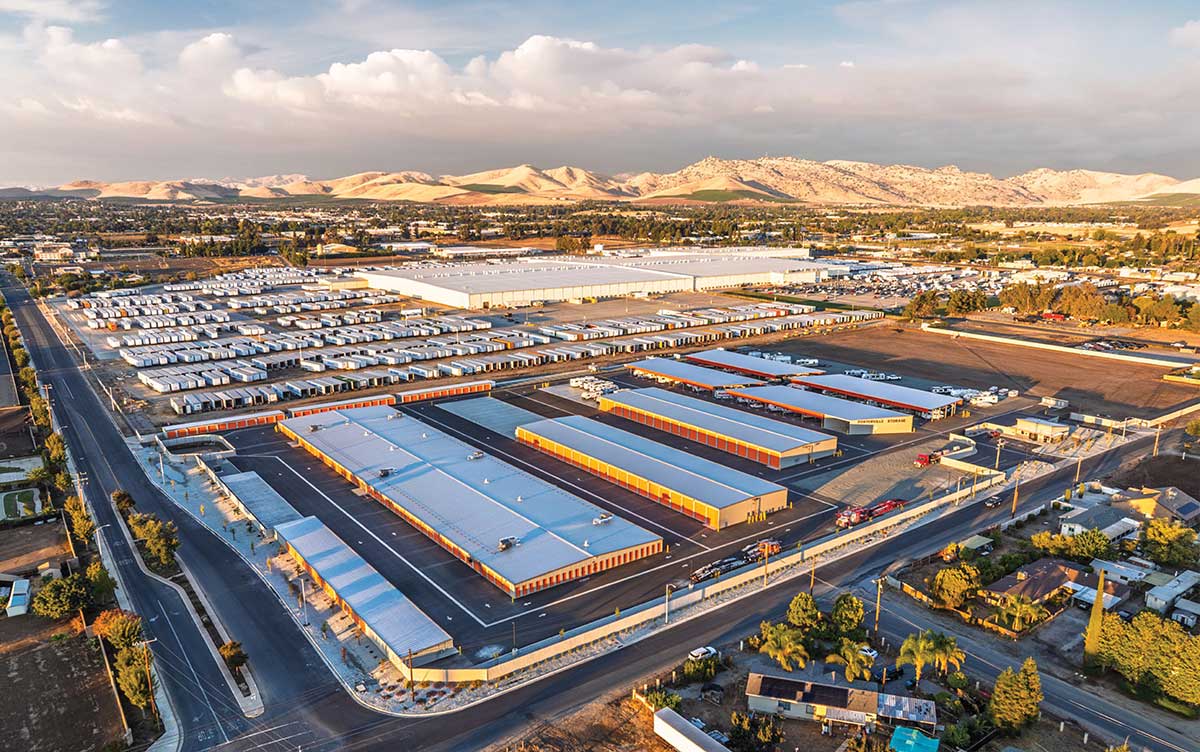
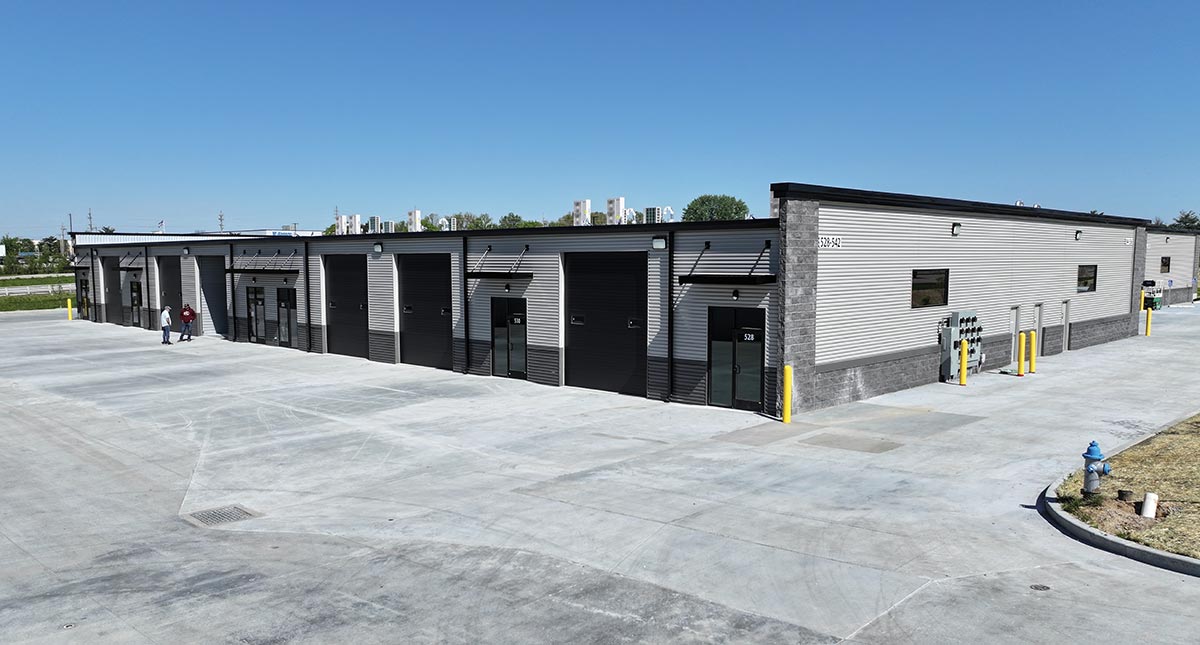
As Brad Relford, president and CEO of TBS Companies, explains, “In most cases, divergent customer needs and innovation ultimately lead to the best market-driven solutions. Convergent storage development is clearly following that path. As a building package and door provider, it is important to offer the full array of products, design, fabrication, and construction services to meet the needs of a very dynamic market opportunity.”
Developers are asking more of their projects, and builders are responding with more integrated and adaptable solutions that extend beyond traditional self-storage formats while maintaining the efficiencies that made the asset class successful
With the right technology in place, convergence becomes not only possible but scalable.
This evolution is also beginning to reshape how developers think about demand itself.
For years, many commercial real estate markets prioritized what were considered “higher and better” uses, often pushing industrial outdoor storage and operationally driven space further out of the development conversation. In some markets, that transition made sense. In others, it unintentionally removed critical-use space that businesses still relied upon. As a result, developers are now seeing renewed demand for functional outdoor storage, contractor space, equipment parking, and operational overflow areas that have become increasingly difficult to find.
Lance Watkins of Tenant Inc. notes that the industry is beginning to recognize that not every “self-storage” site should follow the standardized unit mix models that have remained relatively unchanged for decades. That means rethinking long-held assumptions around land use and operational functionality; for the first time, the industry now has the tools to validate those decisions with real operational insight.
Today’s modern operating platforms are generating a level of behavioral and performance data that allows owners to make more informed decisions about how a site should function. Questions such as the lifetime value of a 10-by-40 unit, how different tenant types interact across a property, or which uses create the strongest retention and revenue patterns are now becoming measurable in ways they were not before.
This represents a significant shift for the industry. Developers are beginning to move beyond instinct alone and toward what could best be described as “data-informed intuition,” where operational data, customer behavior, and market demand work together to shape development strategy.
The technology itself is also evolving alongside convergence. Platforms originally designed around traditional storage categories are increasingly being asked to support multiple space types, blended customer journeys, and more operationally diverse environments within a single ecosystem.
Watkins adds, “For a long time, operators relied on instinct because the industry simply didn’t have access to this level of information. Today, technology allows us to understand not just occupancy but behavior, retention, customer movement, and lifetime value across different space types. That changes the conversation entirely. The future platform isn’t just a storage platform anymore—it becomes an operational intelligence platform capable of supporting convergent assets within a single environment.”
As convergent developments continue to emerge, the role of technology will likely extend far beyond operations management. It will increasingly influence how sites are planned, how demand is interpreted, and ultimately how future storage environments are designed.
The next generation of storage will likely be defined less by a single building type and more by how intelligently different uses are brought together, how effectively they function as a system, and how well they adapt to changing patterns of demand.
The question is no longer simply what type of storage to build. The more important question is how a property should work. Because the future of self-storage is not just about space. It is about designing environments capable of evolving, adapting, and continuing to perform in a market that is changing around them.
And the future of self-storage will belong to those willing to design for what comes next.
s self-storage demand continues to grow in urban and infill markets, developers are increasingly encountering a familiar constraint: limited land availability paired with rising costs and extended development timelines. In many dense cities, traditional ground-up construction is no longer the most efficient—or even a feasible—path forward. As a result, attention is shifting toward existing commercial assets as potential platforms for new self-storage development.
Among these opportunities, large-format retail buildings have emerged as particularly compelling candidates for adaptive reuse. Former big-box properties offer scale, visibility, and infrastructure that align well with self-storage fundamentals. When approached strategically, retail-to-storage conversions can unlock significant value while reducing exposure to many of the risks associated with new construction.
Rather than highlight a single example, this explores the broader strategy behind converting large retail structures into modern self-storage facilities and outlines what it takes to execute a project of this scope successfully, particularly within constrained urban environments.
From a development perspective, existing retail buildings offer several inherent advantages. Core infrastructure is already in place, including utilities, access roads, parking fields, and stormwater systems. Zoning use may already support commercial operations, reducing entitlement risk compared to undeveloped land. Most importantly, the building footprint itself is fixed, providing immediate clarity around density and site constraints.
In tight urban markets, these factors can significantly shorten development timelines and accelerate a project’s path to revenue. However, these advantages only materialize when conversion projects are carefully evaluated and thoughtfully designed.
Key considerations typically include:
- Column spacing and its impact on unit layout efficiency,
- Slab thickness and load-bearing capacity,
- Clear heights and the potential for vertical expansion,
- Condition of the building envelope, and
- Compatibility with surrounding uses and community expectations.
In many urban settings, vertical expansion becomes a defining strategy. Adding additional levels within an existing footprint allows developers to dramatically increase rentable square footage without expanding the site, an essential advantage where land is constrained and acquisition costs are high. However, vertical builds demand rigorous engineering analysis and close coordination among design partners from the earliest stages.
Successful conversion designs account for these constraints while prioritizing:
- Logical circulation patterns and clear wayfinding,
- Clean alignment of hallway systems and doors,
- A flexible mix of unit sizes to serve diverse demand, and
- Efficient vertical transitions in multi-level layouts.
In dense urban environments, where facilities are often multistory, usability becomes a critical differentiator. Poor sightlines, confusing layouts, or tight corridors can negatively affect customer satisfaction and long-term occupancy. Thoughtful interior planning ensures the increased density achieved through conversion does not come at the expense of day-to-day functionality.
In urban settings where aesthetics influence entitlement, leasing, and long-term market perception, exterior design becomes as strategic as interior functionality.
Developers who approach conversion projects with a systems mindset, rather than treating individual components as standalone decisions, reduce downstream risk. Early collaboration among engineers, architects, contractors, and product manufacturers helps ensure:
- Structural realities are reflected in design assumptions,
- Interior systems align with installation constraints, and
- Consistency is maintained across floors and phases.
This level of coordination is especially critical in multi-level conversions, where misalignment at one stage can have cascading impacts later in the project lifecycle.
Key principles that consistently support successful conversions include:
- Rigorous upfront feasibility analysis,
- Vertical density strategies tailored to site constraints,
- Intentional interior design that prioritizes usability,
- Thoughtful exterior integration within existing communities, and
- Early and ongoing collaboration across all project partners.
Ultimately, converting retail to self-storage is less about reuse alone and more about strategic repositioning. With the right planning, coordination, and long-term perspective, underperforming retail assets can be transformed into durable, high-performing self-storage facilities built to succeed in the most constrained urban markets.

or self-storage business owners and acquisitions-minded entrepreneurs, the path to a Certificate of Occupancy or a successful closing often hinges on one critical hurdle: the equity injection. Whether you are building a multistory climate-controlled facility or buying a rural drive-up site, lenders want to see your “skin in the game.”
To help you navigate these requirements, this guide breaks down the specific rules for self-storage financing, acceptable capital sources, and post-close liquidity requirements unique to the storage industry.
- Land Equity – If the land is already owned by the borrower, its purchase price or appraised value can count toward the equity injection, less any existing debt. Whether the purchase price or appraised value is used to determine equity depends on how long the land has been owned and which loan product is being used.
- Spent Project Costs – For many construction projects, spent project costs, such as architect or engineering fees, can count toward the borrower’s equity injection. Your lender will verify the spent project costs via paid invoices and other forms of proof of payment.
- Cash – Often, the down payment is sent via wire at closing to the title company. However, not all that money needs to come from the borrower alone. Equity partners can contribute a portion of the equity injection in exchange for ownership in the borrowing entity. Just make sure you understand if the lender will require personal guarantees based on ownership percentages. SBA loans, for example, require anyone with 20 percent or more ownership in the borrowing entity to guarantee the loan. Someone who wishes to be a limited partner may want to keep their ownership below that threshold. Even with investors, your lender may want the key principals to have personal funds invested as well, to show they have “skin in the game.”
- Funds from Checking, Savings, or Brokerage Accounts – Typically, lenders will trace the funds for 60 to 90 days, so be prepared to explain any large deposits during that period.
- Documented Gifts – Common in first-time storage developments, gifts are acceptable but require a certified gift letter. The lender must be 100 percent certain this isn’t a “shadow loan” that you secretly intend to pay back once the facility starts cash-flowing.
- Borrowed Funds – You can use borrowed funds to contribute to an equity injection, although you will have to meet some additional criteria. HELOCs and personal loans are both options for obtaining additional funds for an equity injection. For SBA loans, you must show an outside income source (like a day job or other rental properties) that can comfortably service the HELOC or personal loan payment without relying on the self-storage facility’s yet-to-be-earned profits.
- Seller Notes – In rare circumstances, a seller note may be able to count toward the required equity injection. Your lender will need to review the structure and terms of the note to determine if it can be equity.
Even acquisitions may need some working capital included in loan proceeds to help make minor improvements, tackle deferred maintenance, or simply bridge the gap until the facility is self-sufficient on its debt.
- Document everything. In the “Know Your Customer” (KYC) era, you must maintain a clear paper trail showing where your cash has been for the last 60 to 90 days.
- Budget for overruns. For new construction, lenders often require a 10 percent contingency fund within your budget. Ensure your equity injection covers your share of this cushion.
- Experience matters. If you are a first-time operator, lenders may require a higher injection to offset the perceived operational risk.
By coming to the table with a clean, well-documented equity stack and ample liquidity for the lease-up phase, you position your self-storage venture as a low-risk, high-reward opportunity for the bank. To learn more or connect with a member of our team, visit liveoak.bank/self-storage.
Miles
Apart
Most Challenging Islands
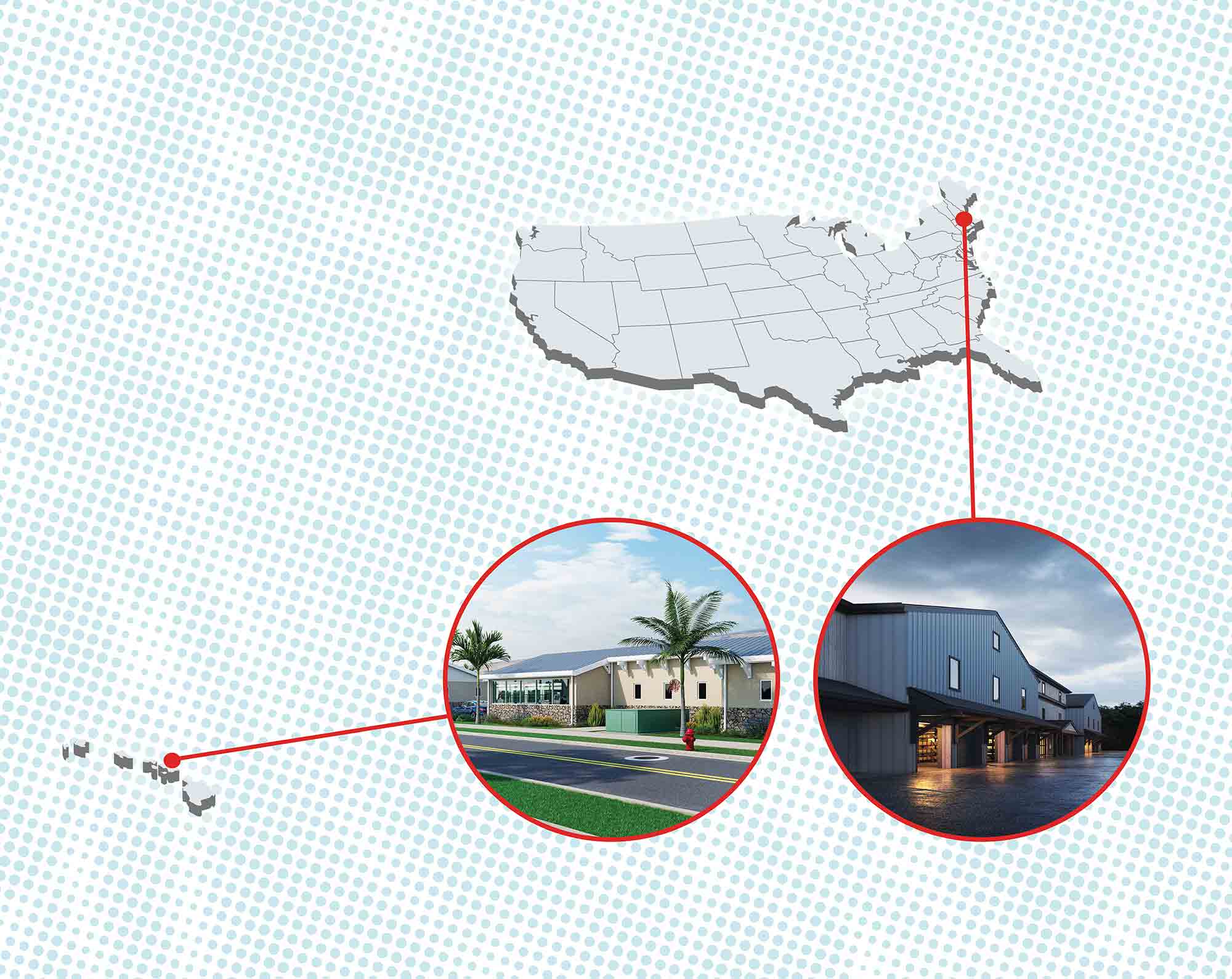
hen DXD Capital broke ground on two self-storage projects in 2024, the optics were striking: one site in Kihei, on the Hawaiian island of Maui, and another on the island of Nantucket in Massachusetts—two islands on opposite sides of the country in the same year and two entirely different logistical universes, thousands of miles apart.
And yet, beneath the surface, these projects had more in common than one might guess. What united them was not just their island setting but the discipline, deep subcontractor relationships, and creative problem-solving that island development demands at every turn.
Nantucket, by contrast, is a small island of nearly 50 square miles sitting 30 miles off the coast of Cape Cod. For most of the year, it’s home to a quiet, year-round population of just 14,500 residents. From May to October, however, that number explodes. The population quadruples, reaching more than 65,000 on peak summer days, as a flood of seasonal residents and visitors transform the isolated island into a bustling, high-density destination.
Both islands are engines of seasonal tourism. Both are geographically isolated. Both require every nail, beam, and roll of insulation to be transported across open water. This logistical constraint is not just a footnote; it is the defining challenge of construction.

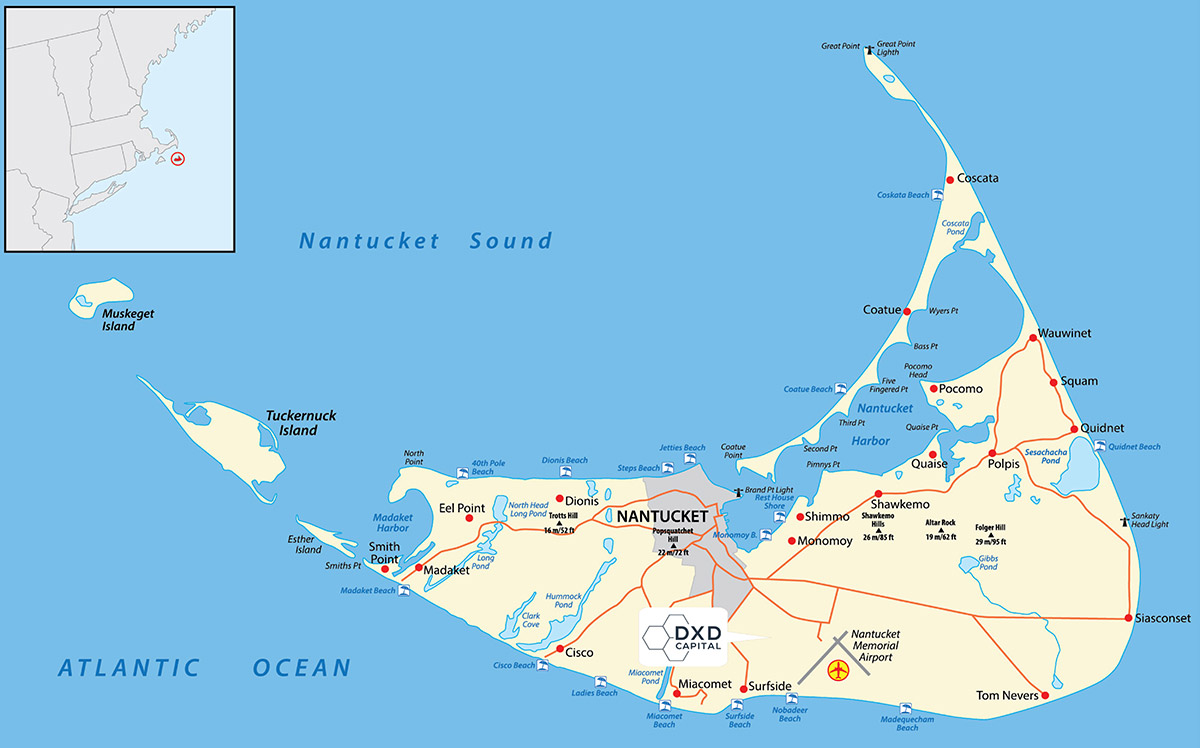
During our initial due diligence, we made it a priority to walk the communities and meet with local contractors. Our primary focus was to understand the rhythms of each island. This meant understanding not only the seasonal ebb and flow of the population but also the deep-seated cultural currents that shape daily life and commerce. That time we spent on the ground, before a single dollar was committed, proved to be one of the most valuable investments we made. The relationships we developed with locally embedded contractors, vendors, and neighbors became foundational to the success of both projects.
Island contractors don’t just build. They manage logistics, anticipate delays, navigate local politics, and serve as the institutional knowledge for a market that can be opaque to outsiders. Finding those partners early and investing in those relationships genuinely set the tone for everything that followed.
Nantucket was the mirror opposite. Due to the astronomical cost of living, where new home builds start at $1,500 per square foot, most of the island’s workforce commutes daily by ferry from Cape Cod. The workday begins with 500 workers boarding a 6:10 a.m. ferry, arriving after 7 a.m., and navigating congested streets to their job sites. With the ferry home departing at 4:35 p.m., the effective workday is 75 percent to 80 percent of a mainland equivalent.
The weather is also a constant factor. Nicknamed the “Grey Lady” for its frequent fog, Nantucket required us to budget over 40 weather days to account for rain, wind, and the rough seas that cancel ferries for days at a time. The system is so challenging that one major off-island contractor found it more efficient and cost-effective to buy two turboprop airplanes and employ full-time pilots to fly his crews in and out each day rather than rely on the ferry service.

If Kihei was a long-distance challenge, Nantucket was an intricate puzzle of history, regulation, and culture. Nantucket’s regulations forbid cargo ships, making the island’s sole lifeline the Steamship Authority’s fleet of 200-foot-long ferries, which make the two-hour journey carrying a mix of passengers, cars, and a limited number of tractor-trailers. This constraint transforms logistics into a high-stakes reservation game when ferry reservations open in late January each year. Every truckload of steel and every pallet of materials had to compete for a slot alongside tourists and residents. It’s a world away from the ports of Hawaii, where a single cargo ship can deliver 10,000 containers or more in a single trip. For Nantucket, our entire project had to arrive one truckload at a time.
For a personal trip this summer, I logged on at the moment that the year’s ferry reservations opened to the public on January 27th at 8 a.m. sharp and was placed 18,000th in the virtual queue. For a family, that’s an inconvenience. For a construction project, it’s a crisis.
In 2022, UPS famously failed to secure its priority ferry reservations for the summer, nearly crippling the island’s merchants. The message was clear: The ferry is not a convenience; it is the only supply chain.
All our construction freight was routed to their staging facility in Wareham, Mass. When we needed a trailer, we gave them 24- to 48-hours’ notice, and the material arrived at our job site reliably and efficiently. This arrangement wasn’t just a convenience; it was a vital function that made the project’s economics work.
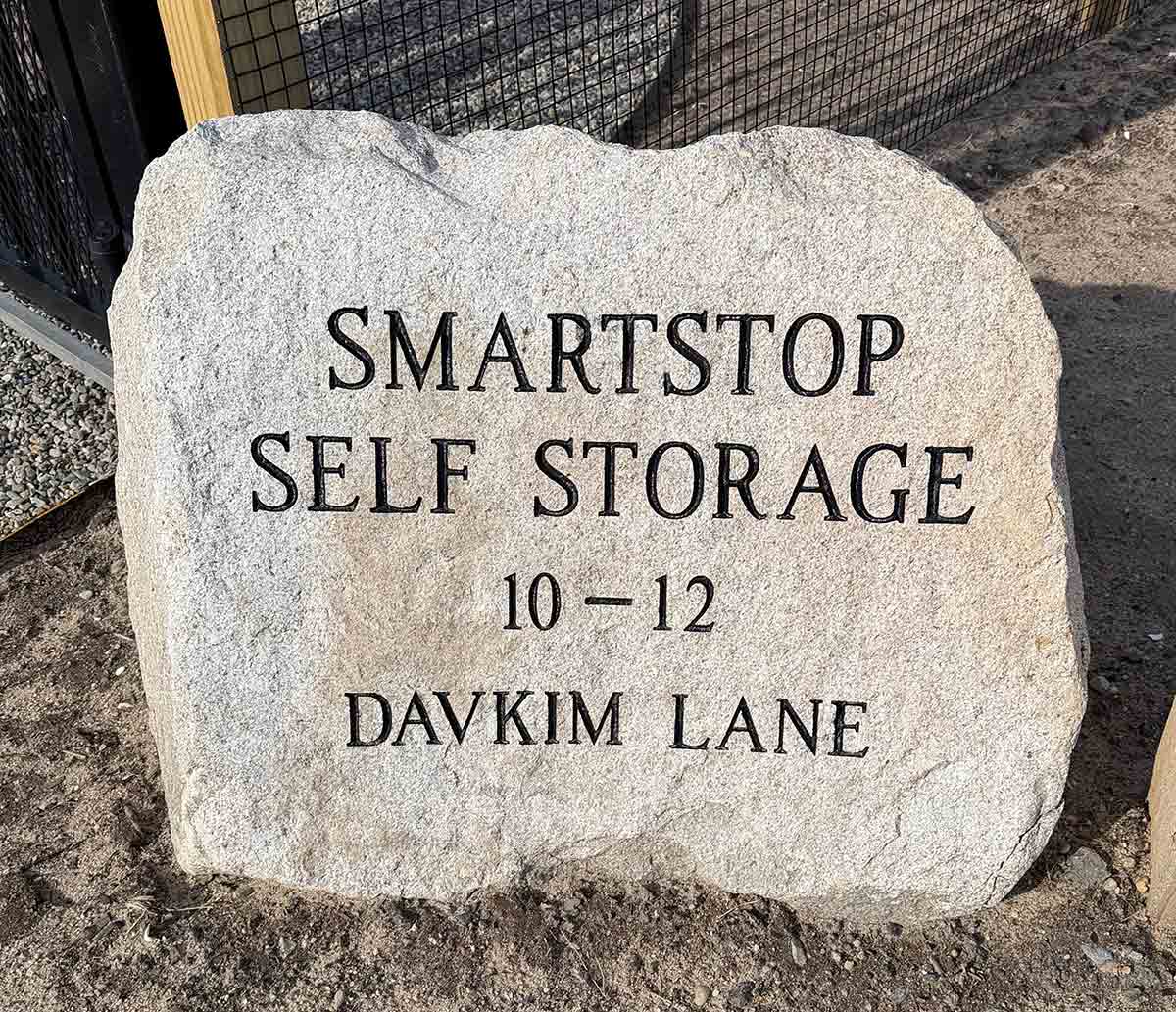
The result is a self-storage facility unlike any other in the country. The building features white cedar shingles, grooved red cedar siding, standing seam metal roofs, and multiple cupolas. It’s a piece of architecture that happens to store things, including a two-story deep basement. This contrasts sharply with the Kihei project, which is pragmatic and grounded, a well-executed, locally appropriate building that does its job without pretense.


- Both required us to understand markets that do not behave like the mainland.
- Both required us to build relationships before we built anything else.
- Both rewarded patience, local knowledge, and humility about what we did not know.
- Both reminded us that the most valuable assets a developer can bring to a difficult market are not capital or construction expertise; they are trust and relationships with the people who already belong to that place.
At DXD Capital, we expect our projects to reflect the markets in which they are built. That philosophy is more than aesthetic. It is operational. It is the reason we walked Nantucket’s cobblestones and Kihei’s shoreline before we ever opened a spreadsheet. The islands told us what they needed. We listened.




- Finding The Right Site
- Site Layout & Unit Mix
- Construction Financing
- Facility Automations
- Doorway & Hallway Systems
- Climate Control Options
- Security For New Builds
- Insuring Your Investment
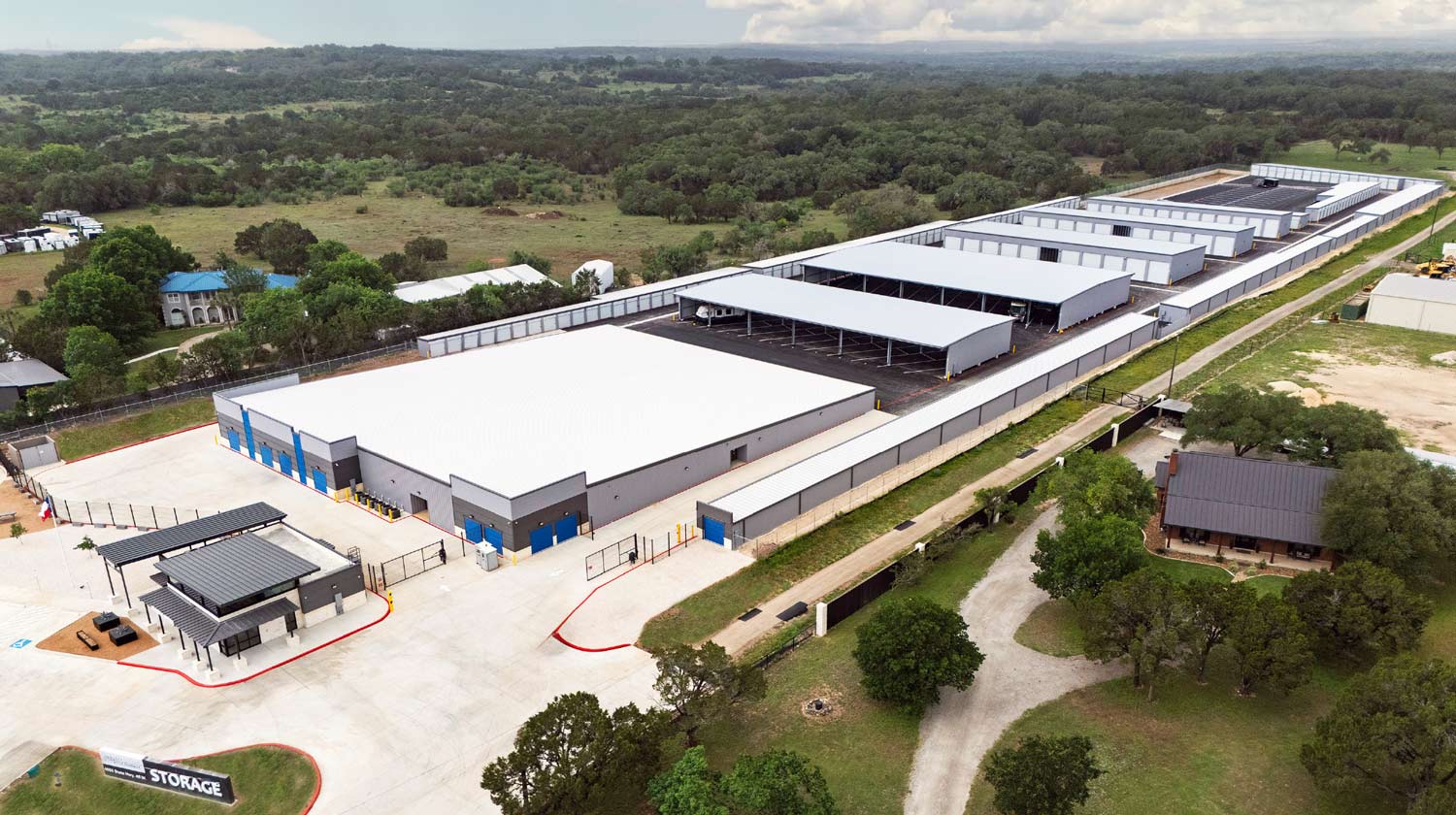
ew Braunfels is the Texas town everyone’s talking about. Nestled between San Antonio and Austin, it’s garnering attention for its rapid growth and is ranked the second most moved-to U.S. ZIP code. Opened in 2025, New Braunfels Executive Storage correctly hedged its bets on this Lone Star State gem.
Developed by entrepreneur Jorden Mahler, the nine-acre facility prioritizes convenience, security, and customer experience. Located along busy Highway 46, the Class-A property spans 122,709 rentable square feet and boasts 575 units plus RV and boat storage. Design was thoughtful, with buildings arranged fortress-style to improve security, minimize fencing, and optimize traffic flow. Amenities include an air station, ice kiosk, food truck zone, and customer lounge with vintage juke box. It all reflects Mahler’s philosophy of “making storage sexy again.” And based on demand, which even required a tenant waitlist, the approach is clearly turning heads.
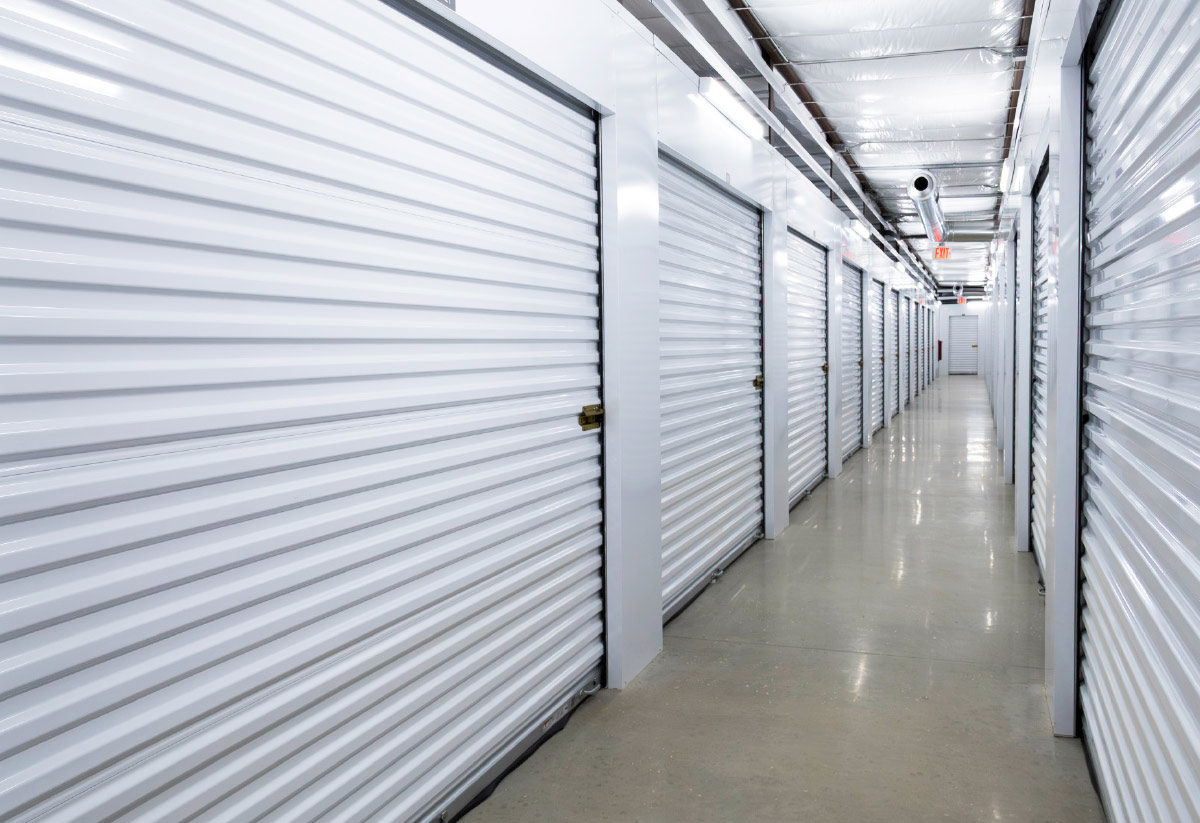

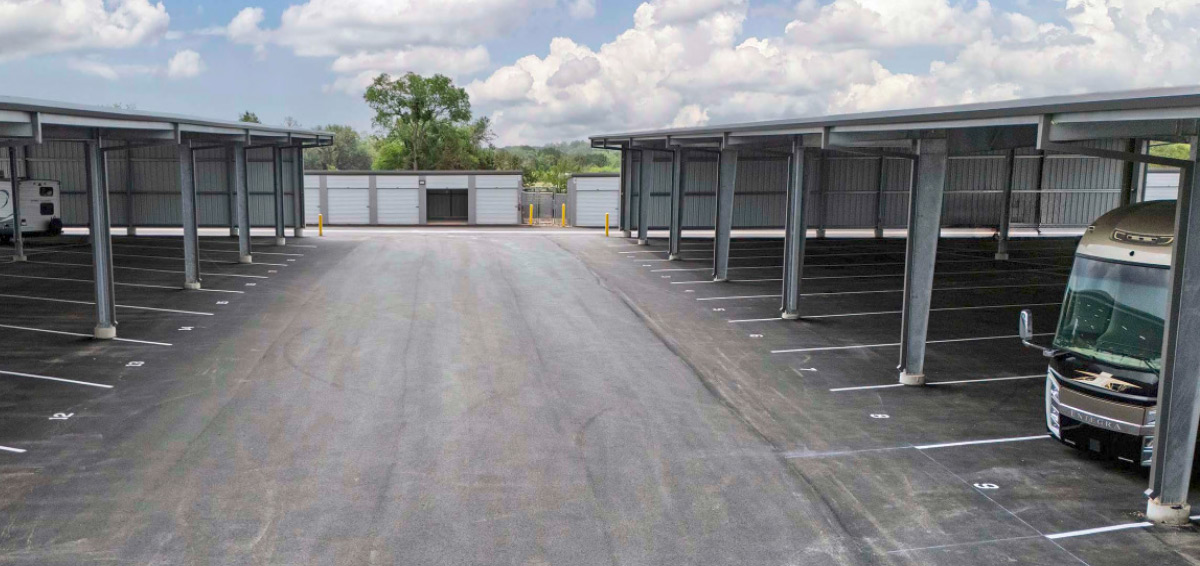
General Contractor: Capco General Contracting
Architect: Open Studio Architecture
Door & Hallways: Janus International/Twin City Hardware
Steel Systems/Office Roofing: Capco Steel/Quick Roofing LLC
Security Systems/Installer: SpiderDoor/Advanced Security
Consultant: Lighthouse Storage Solutions
Software: Cubby
Due to an inadvertent omission in the May 2026 issue of Messenger, this facility is being featured again in its entirety.

enjamin Franklin summarized the undeniable weight of taxation by saying, “In this world nothing can be said to be certain, except death and taxes.” We all know we are required to pay them, so we do, but it behooves everyone to lower those liabilities by using all available U.S. Tax Code statutes to our advantage.
Warren Dazzio is the executive vice president of sales at CSSI – Cost Segregation Services, Inc., an tax consultant firm that specializes in real estate and business taxes, and he is happy to provide general information self-storage investors should be aware of to maximize their tax savings.
When discussing this issue, Dazzio immediately mentions a laundry list of deductions. “The Section 179D energy efficiency deduction, bonus depreciation tied to qualified improvement property, cost segregation, and partial asset dispositions—that last one is often missed. When you throw something in the dumpster, like roll-up doors that aren’t fully depreciated, you can expense the remaining tax life of that asset.”
Dazzio gets very specific when discussing the role of depreciation in reducing tax liability. “Depreciation can reduce your taxable income by roughly 8 percent to 10 percent per million dollars of purchase price,” he says. “For some investors, that’s enough additional capital to help fund the acquisition of their next facility.”
In addition, he stresses the importance of being mindful of all related deductions. “Any time you buy, build, renovate, or make an improvement, there are additional deductions available. For example, bonus depreciation and Section 179 expensing are two of the most powerful tools.”
Bonus depreciation refers to a tax incentive that allows businesses to deduct a significant portion of an asset’s cost in the first year, instead of spreading out the deduction across multiple years, but it can only be used in certain circumstances. “Bonus only applies to asset classes with a life of 20 years or less,” Dazzio states. “A building itself is a 39-year asset under the IRS code, so you can’t apply bonus directly to the building as a whole, but once you break the building into shorter-lived asset classes through a cost segregation study, bonus becomes available.”
Executive V.P. of Sales at Cost Segregation Services, Inc.
Meanwhile, Section 179 expensing refers to deducting the full purchase price of qualifying equipment, up to $2.5 million; and the amount allowed as a deduction cannot exceed the aggregate amount of taxable income of the taxpayer for that taxable year.
The type of facility also plays a role in uncovering additional tax deductions. Dazzio points out that climate-controlled self-storage facilities rank among the highest of any asset class for accelerated depreciation, with 35 percent to 40 percent or more of the building costs potentially captured in the first year. “Non-climate-controlled facilities are right behind them,” he says. “Even without climate control, a facility owner can typically accelerate 28 percent to 29 percent of the building cost as a tax benefit in year one.”
Officially known as the IRS Tangible Property Repairs Regulation, this law allows owners to deduct all the ordinary and necessary expenses incurred during that taxable year, including the costs of certain materials, repairs, and maintenance.
“One of the most underutilized deductions is the routine maintenance safe harbor,” Dazzio says. “If you can reasonably expect to perform a repair more than once within a 10-year period, you may be able to expense it.” As an example, he shares the story of a storage owner who had recently acquired two facilities and was planning to spend $200,000 painting them. “When I asked him how often he expected to repaint, he said about every 10 years. Under the routine maintenance safe harbor, he could expense that entire amount, because he could reasonably expect to incur it more than once in a 10-year window.”
Another useful provision is sometimes called the one-third rule. “If you have 100 doors and you replace fewer than a third of them at one time, you may be able to expense those replacements as repairs, rather than capitalize them.”
“A 1031 exchange is a solid strategy for deferring taxes, and it can be used alongside most of these other strategies,” Dazzio adds. “That said, you can often accomplish the same result with a cost segregation study and avoid the pressure of 1031 deadlines altogether. Rather than completing a 1031 exchange, some facility owners simply perform a cost segregation study on their next acquisition. That study can generate enough deductions to help offset the capital gains from the sale of the prior property.”
That said, there is one provision storage owners should look at closely to determine whether they qualify. “The Section 179D Energy Efficiency Deduction is different from Section 179 equipment expensing,” Dazzio says, mentioning that the 179D deduction applies to new construction or significant renovations involving lighting, HVAC, and the building envelope. “When construction exceeds the current energy code requirements, the government rewards that efficiency with deductions of up to $5.81 per square foot,” he says. “This is a meaningful benefit, but the Big Beautiful Bill legislation terminates it for projects where construction begins after June 30, 2026. So, if you have a qualifying project in the pipeline, this is worth reviewing now.”
Executive V.P. of Sales at Cost Segregation Services, Inc.
The great news is that the environment looks favorable for continued growth; and Dazzio advises lining up an effective team of tax professionals, including a specialty tax consultant, to build a long-term strategy that captures every available benefit as your portfolio grows.
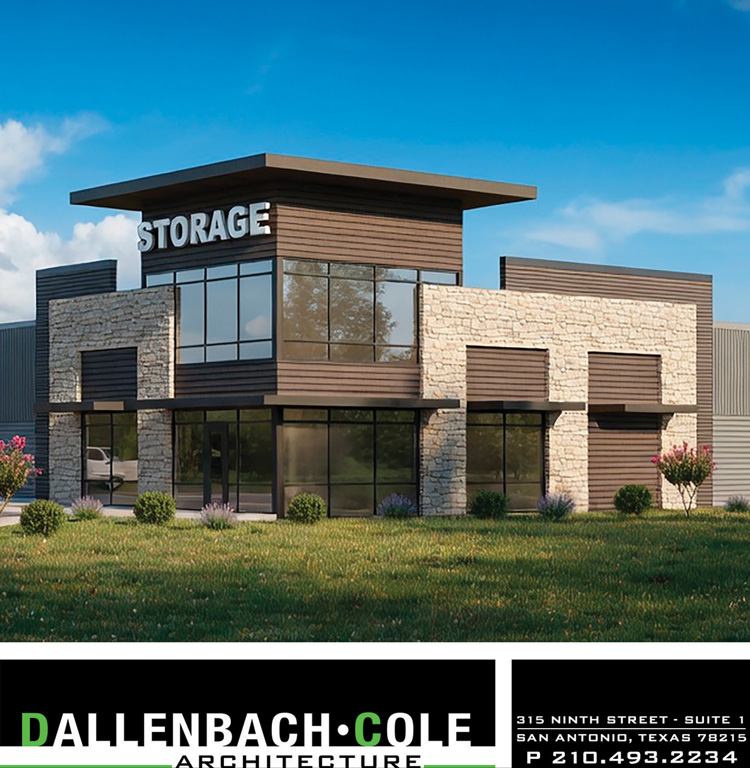



he idea of a completely “man-less” self-storage facility generating pure residual income is appealing. Recently, I read a social media post from an owner who claimed to operate a self-storage facility three states away with no manager, no staff, and no hands-on involvement—all while producing 100 percent residual income. It’s an attractive narrative. It’s also one that deserves closer examination. The real question isn’t whether remote management and automation have a place in self-storage—they absolutely do. The real question is how much work is actually being done, and by whom, before an operation can honestly be described as residual income.
- Who removes trash left in drive aisles?
- Who cleans units after move-outs?
- Who over-locks units when rent is not paid?
- Who assists a tenant when a key breaks off in a lock?
- Who follows up with delinquent tenants via calls, texts, or emails?
- Who handles lien notices and auctions?
- Who walks the property to confirm move-outs before credit cards are charged?
- Who does the marketing so that premium rates can be achieved?
- Who oversees maintenance and repairs?
- Who posts to social media and manages the Google Business profiles?
- Who monitors vendors for snow removal, landscaping, and larger repairs, etc.?
These tasks exist whether a facility is manned or not.
In my experience, there are only two realistic explanations for how these items get handled at a so-called man-less facility: either a third-party management company is doing the work, or the owner is doing it themselves. If it’s the latter, then the operation may be partially remote, but it is not truly residual.
In those cases, the economics may support automation and minimal staffing.
The challenge arises when this model is applied to medium-sized and larger facilities, typically in the range of 40,000 to 60,000 net rentable square feet or greater.
That time doesn’t disappear with automation. When a full-time on-site manager works 10 a.m. to 5 p.m., Monday through Friday (35 hours per week), the owner is effectively paying for only 19 more hours for 35 hours of on-site coverage. The return on that investment is significant.
First, it dramatically reduces owner involvement. In most cases, owner time drops from roughly 16 hours per week to closer to four. That is the difference between owning a job and owning a business.
Second, it drives revenue. On-site managers improve customer service, follow up on leads, and actively market the facility. That extra attention allows owners to charge premium rates that simply aren’t achievable in a fully unmanned environment.
We routinely see prospects visit a facility several days before needing a facility. The majority choose to rent with us because of the interaction with the on-site manager. Without that human connection, you will be sending many of those renters to visit the competition.
Our preferred approach is to have an office open seven days a week until the facility reaches stabilization, then close on Sundays. From there, owners can determine whether a five-, six-, or seven-day schedule best fits their market and goals.
The difference between a modest, remotely managed self-storage facility and a high-performing self-storage business often comes down to one thing: having the right person on site to protect the asset, serve customers, and maximize revenue.
At scale, a great manager isn’t an expense. They are a force multiplier.

hen customers entrust their physical assets to a self-storage facility, they naturally want to feel assured that their items will be kept safe and sound. That means proper security precautions, but it might also mean climate control. Simply put, temperature moderation can be a critical way for self-storage operators to ensure that the items in their care are maintained in pristine condition.
Finding the right heating solution can be a challenge, as there are concerns with both efficiency and safety. It’s crucial for operators to be strategic, seeking an approach that supports operational efficiency, customer satisfaction, and long-term profitability.
Many stored items, from wood furniture to electronics to textiles, are sensitive to fluctuations in temperature. Prolonged exposure to the cold may result in cracking, warping, brittleness, or damage related to recurring condensation.
For self-storage operators, this not only means a heightened risk of customer dissatisfaction but also a greater likelihood of insurance claims. This is to say nothing of reputational damage; being known as the self-storage facility where items are regularly ruined can be a death knell.
Unlike more conventional commercial buildings, self-storage facilities are often designed without centralized, forced-air heating. Retrofitting may be possible, but it also tends to be expensive and disruptive. There are also major logistical complications, especially in facilities with multiple buildings, varying unit sizes, or outdoor access corridors.
Unit heaters have emerged as an effective alternative. These heaters can be installed with minimal requirements for ductwork and other infrastructure upgrades, and they can be selectively placed in the self-storage units where they are needed most. For creating ambient warmth in self-contained areas, unit heaters can be a cost-effective option.
When selecting a unit heater, it’s important to verify that it’s sized to meet the cubic footage of the space where it’s intended for use. When a self-storage unit is undersized, it may not be able to keep pace with significant drops in temperature, leading to uneven results. And when units are too large, they may cycle too frequently, straining the equipment and wasting a lot of energy.
Smart placement is important, too. The most effective positions tend to be areas where cold spots naturally develop, such as near exterior walls or along entry points. Placing unit heaters in these areas can lower the facility’s overall temperature gradient. This leads to improved performance and more efficient energy consumption as systems won’t have to work as hard to overcompensate.
Insulation matters because it determines how well the building maintains heat. Properly insulated walls, ceilings, and doors function as barriers against external temperature fluctuations, thus reducing the workload for heating systems. Insulation upgrades can deliver a strong return on investment by improving both energy efficiency and tenant satisfaction. This is particularly true in older self-storage facilities where insulation may be badly out of date or of a low rating (R-value).
It’s similarly important to manage air leaks. Even high-caliber heating systems will struggle to maintain consistent temperatures if warm air is constantly escaping the facility. Gaps around doors, windows, and structural joints may allow cold air to penetrate units, endangering stored items. Sealing these gaps with weatherstripping, door sweeps, and sealants is a low-cost improvement that can significantly enhance temperature stability throughtout the facility.

evenue management has quietly become one of the most powerful profit drivers in the self-storage industry, and yet many operators still aren’t using it to its full potential.
Once reserved for REITs and national platforms, advanced pricing strategies and automation tools are now accessible to independent operators. Businesses that adopt them gain a measurable edge: higher occupancy, stronger rate integrity, and better long-term revenue performance.
In today’s increasingly competitive storage market, pricing smarter isn’t optional. It’s essential.
It’s not about raising rents blindly. It’s about optimizing pricing intelligently, so each unit earns what the market will support while keeping inventory moving efficiently.
When done correctly, revenue management doesn’t just improve performance. It fundamentally changes how a facility competes.
By assigning weighted value scores to these attributes, operators can build smarter pricing tiers that reflect true demand. The result is higher gross potential revenue without adding square footage or raising blanket rates.
Editorial Insight: The most profitable self-storage operators don’t discount across the board; they price with precision.
- Adjust rates instantly based on occupancy changes,
- Set customized pricing thresholds,
- Monitor inventory continuously, and
- React to market demand in real time.
Today’s market moves fast. Self-storage operators adjust rates and promotions constantly, and those who aren’t monitoring competitors daily risk falling behind.
Sophisticated pricing tools, once only available to enterprise portfolios, are now accessible to independent owners. That levels the playing field, but it also raises expectations. To stay competitive, operators must assume their competitors are using advanced pricing strategies and respond accordingly.
Front-loaded, expiring promotions tend to perform better. They attract renters while preserving long-term rate integrity.
Price matching should also be used strategically—limited by distance, size of the discount, and occupancy conditions. In some situations, protecting your pricing structure is more profitable than filling a unit at a steep discount.
High reservation volume may signal an opportunity to increase rates. Persistent vacancy, even at competitive pricing, may indicate market oversupply.
Seasonality plays a role as well. Summer moving surges, college cycles, and year-end storage needs all influence demand patterns. Successful operators build flexibility directly into their pricing strategies.
Another overlooked opportunity is walk-in pricing. Customers seeking immediate access often prioritize convenience over cost and may be willing to pay slightly higher rates.
Features such as:
- Real-time competitor pricing visibility,
- Manager controlled rate overrides,
- Automated promotional triggers, and
- Visual pricing displays like strikethrough offers allow staff to close deals effectively while protecting long-term revenue health.
When teams have the right tools, pricing decisions become consistent, confident, and profitable.
Facilities that embrace data-driven pricing consistently outperform those relying on gut instinct or static rates. The result is stronger margins, improved occupancy, and a more competitive market position.
In today’s self-storage landscape, pricing smarter is no longer a luxury. It’s a necessity.
Ed Nicholson is the business development manager at The Nicholson Companies.


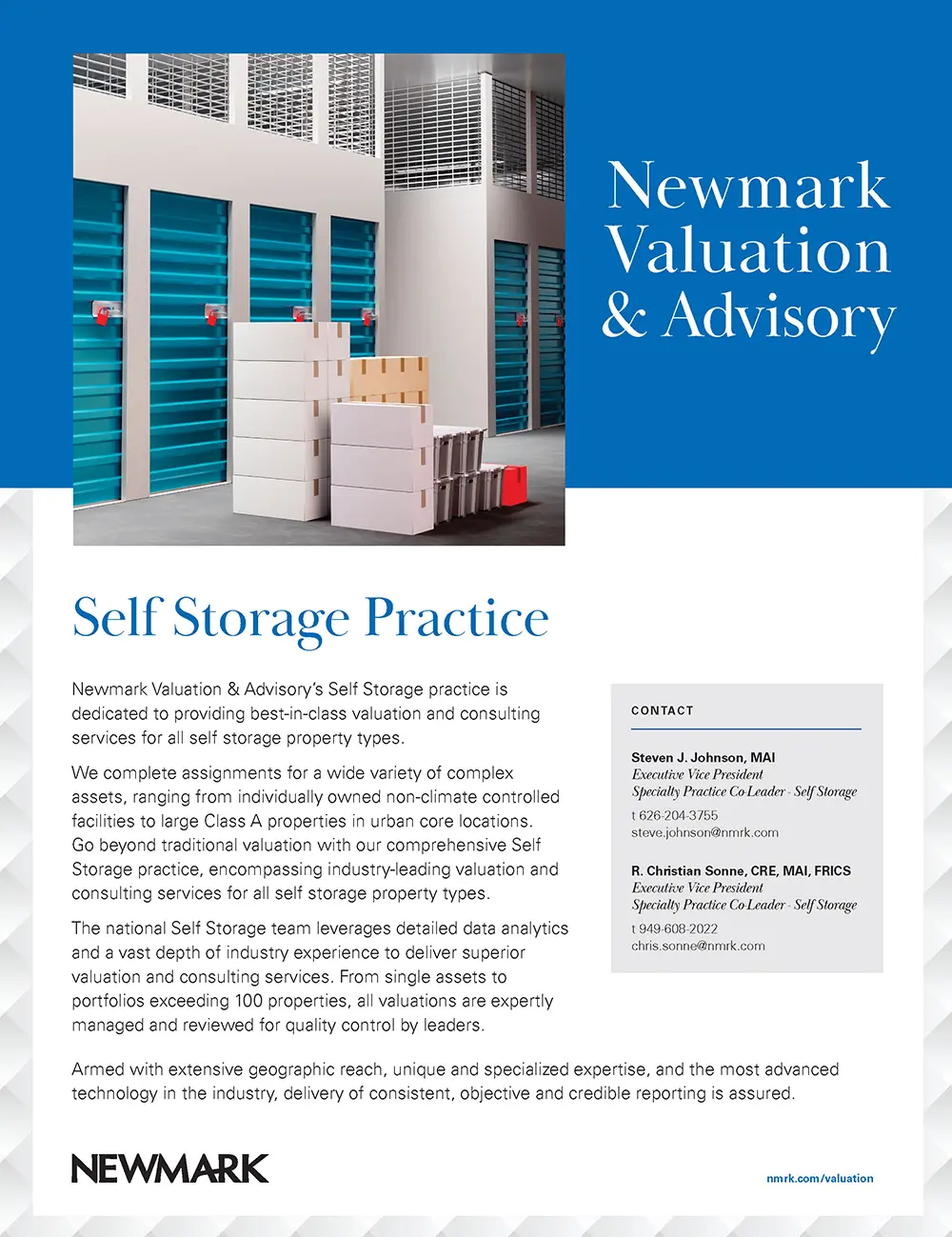

ome people stumble into the self-storage industry by chance. Others grow up around it and choose to get involved. For Spencer Duncan, founder of Corner Unit Consulting, it was a bit of both.
“I’d been around self-storage for years,” he says. His mother is Sarah Beth DeFazio, vice president of sales and development for Universal Storage Group; he also grew up with industry icon M. Anne Ballard, former president of the same company. “I didn’t plan this path, but because of them, the industry always intrigued me.”

That question became the foundation of his business. Now, rather than chasing enterprise-level clients, Duncan is focused on smaller operators—owners who often know their business inside and out but don’t have the time, tools, or technical experience to market it effectively. “The clients I work with will say, ‘We just need someone who understands this stuff,’” he says. “And that’s where I come in.”

That philosophy shapes how he works with clients. Instead of offering rigid service packages, he builds tailored plans based on what each operator actually needs. “I’m not going to sell someone something they don’t need,” he says. “I’m going to figure out what’s missing and go from there.”
That might mean managing social media campaigns, designing graphics, or developing grassroots strategies that go beyond the screen. In one case, working with a facility near a major college campus, Duncan helped turn a renter into a marketing asset. “Who better to market to students than a student? So, we offered the tenant a free unit for the summer in exchange for handing out flyers on campus,” he says. “It worked—we picked up several new rentals from that.”
It’s a simple approach, but one rooted in something bigger: building relationships to drive results. “I was a bartender; I like talking to people,” he says. “There’s a big push toward automation, and I understand that, but at some level people still want that human connection. And they want to support businesses that feel local.”
That mindset extends beyond self-storage. “Look at restaurants,” he adds. “People, especially younger generations, are moving away from chains. If they’re going out, they want to go to local spots. That same mindset applies here.”
When not building relationships, Duncan is building dashboards that track performance and surface trends across platforms. “I’ve created systems that pull in data from multiple channels,” he says. “This helps you see what’s working and what’s not in real time.”
Still, he draws a clear line. “I’m not touching pricing. That’s up to the operator. My job is to get people in the door.”
Founder of Corner Unit Consulting
He’s also experimenting with smaller, entry-level services, like quick-turn social media posts or one-off projects that allow operators to test the waters before committing to a larger engagement. “Think of it like a sample. Try it, see if it works, and then decide if you want more.”
Long term, the goal is growth, but not at the expense of quality. “I’d rather perfect what I’m doing first, get consistent results, then expand.”
It sounds like someone who knows the industry all too well.

– M. Anne Ballard
Partner/Owner,
Universal Storage Group


odes and standards continue to be the foundation of facility design and construction. As the SSA’s codes and standards consultant, my ongoing job is to ensure our industry’s interests are vigorously represented when national model codes are developed. Over the past two years, navigating the International Code Council (ICC) development cycles, we have made significant strides to protect operators from unnecessary construction costs while paving the way for industry-specific regulations.
A major win for our members recently came from the ICC’s Group A cycle regarding plumbing fixture requirements. Historically, self-storage facilities have struggled with vague occupant load classifications, sometimes forcing developers to overbuild restrooms for facilities that inherently have very low foot traffic. We successfully supported code changes, specifically proposals P17 and E11, that establish a clear occupant load factor of 500 gross square feet per person for self-storage facilities.
This ensures that facilities aren’t burdened with an excessive number of mandatory plumbing fixtures based on inappropriate business or general storage classifications. This change can save thousands of dollars in construction costs per restroom and free up square footage for additional revenue-generating units. While the code still requires at least one service sink, the overall fixture count is now much more reasonable for our typical facility sizes.
While not every proposal passes on the first try, our continued presence at these hearings opens crucial doors. During recent committee hearings, the fire code committee recommended that self-service storage become its own dedicated section within Chapter 4 of the building code. Because of the massive scope of this update, we are preparing to work alongside the Fire Code Action Committee (FCAC) to form a task group to draft this specific text. Having a dedicated section will be a massive step toward ensuring that self-storage is regulated based on its unique operational realities, rather than being shoehorned into broader warehouse classifications.
Looking ahead to the next edition, our primary goals include proactively addressing key administrative and structural provisions to better align with the practical realities of the storage industry. Specifically, we will work to refine the definition of a “self-service storage facility” to explicitly state that units designed for car and RV storage are not “parking garages.” By preventing this miscategorization, we aim to eliminate unnecessary ventilation mandates, ensuring developers are not forced to install costly and heavy mechanical ventilation systems for spaces dedicated to long-term, static vehicle storage.
Additionally, we plan to secure a targeted code exception to protect new, prefabricated relocatable buildings used for storage, ensuring they are no longer inappropriately regulated by special construction codes designed for other types of temporary structures.
The final action hearings for the current ICC cycle took place this April. We monitored the resulting monographs closely to ensure no unfavorable requirements slipped through. As a reminder, even though international codes are developed years before being adopted and enforced by most states, designs that are shown to be equivalent in safety can often be used as an alternative method immediately. It is reasonable for building officials to deem future codified language as equivalent for your current projects.

isibility is no longer optional—it is strategic. Attending industry events is important, but having a true presence on the trade show floor is what separates companies that are simply participating from those that are actively growing.
An exhibitor booth at THE Show Conference and Trade Show 2026 in Atlanta, Ga., by Modern Storage Media (MSM) is not just a marketing expense—it is a direct investment in pipeline, relationships, and long-term deal flow. While digital outreach and advertising create awareness, nothing replaces face-to-face conversations with qualified buyers, operators, developers, and investors gathered in one place with the intent to do business.
THE Show is uniquely positioned as a modern, high-engagement conference designed specifically to maximize interaction between exhibitors and attendees. Unlike traditional trade shows, where traffic can be inconsistent and fragmented, this event is structured around purposeful networking zones, centralized gathering areas, and programming that drives consistent movement across the floor. That means exhibitors are not waiting for traffic—they are part of it.
Equally important, the attendees who walk this show floor are not passive observers. They are decision-makers actively seeking solutions in development, operations, security, automation, financing, and technology. They come with budgets, projects, and timelines. For vendors, that changes everything. One conversation can translate into a multi-site deal, a national rollout, or a long-term partnership.
Too often, companies make the mistake of attending without exhibiting. They spend on travel, registration, and time away from the office, yet remain invisible in the one place where attention is highest. Without a booth, you are competing for attention in hallways, breakouts, and crowded networking events where every conversation is rushed and easily forgotten.
An exhibitor booth, by contrast, gives your company a fixed point of authority. It creates a destination. It signals credibility. It allows your team to control the conversation rather than chase it. More importantly, it ensures you are remembered after the event ends.
THE Show is not just another industry gathering—it is a marketplace in motion. And in a marketplace, visibility equals opportunity.
With limited booth space and increasing demand from vendors across the country, the window to secure placement is narrowing quickly. Companies that wait risk being pushed to the margins—or missing the opportunity entirely.
The question is no longer whether you should exhibit. The real question is whether you can afford to attend without exhibiting. Because in today’s self-storage landscape, being there is not enough. You must be seen.
So, whether you are a vendor, owner/operator, manager, industry professional, or new to the self-storage industry, attending THE Show, will be a huge opportunity to meet industry vendors, network with peers, learn with 60 hours of educational sessions, and get answers to all your questions—all in one space!
• Fully integrated solutions with in-house baȷa Engineers for faster, easier projects
• Pre-Fabricated Framing Systems with Bolted Connections – No field welding
• Snow Loads from 20psf to 100psf – Wind Speed rated to 170MPH
this image? You are.
Proven platform yielding results for owners since 1998, driving revenue and maximizing NOI.
- 265+ stores across Canada – a household name in Storage with scale.
- Highly trained and motivated team delivering results for your store.
- Resources and an infrastructure that respond immediately with boots on the ground.
- A Canadian company that understands the Canadian market and deliver results for you!