


Development
he self-storage industry has never stood still—and it isn’t about to start now. From its earliest days as a practical solution for excess household goods, to the rise of institutional ownership and the expansion into multistory urban facilities, self-storage has consistently evolved alongside shifts in how people live, work, and use space.
Today, the industry stands at another inflection point.
This moment is not simply about building larger facilities or entering new markets. It reflects a broader shift in how storage is being conceived, designed, and integrated into the built environment. The opportunity ahead is less about optimizing a single asset type and more about understanding how space can work harder, support multiple functions, and evolve alongside changing patterns of demand.
What is emerging is a development approach that can best be described as Convergent Storage Development.
In broader commercial real estate and economic development, this concept aligns with what is often referred to as agglomeration (the clustering of complementary uses in a way that creates more value collectively than they would independently). As noted by CBRE’s Spencer Levy in recent discussions on the evolution of self-storage, the growing appeal of the asset class is increasingly tied to its ability to integrate with adjacent uses and participate in a broader ecosystem of demand.
Convergent Storage Development is essentially a specialized application of that principle, where multiple storage-related and adjacent uses are intentionally designed to function together within a single site.
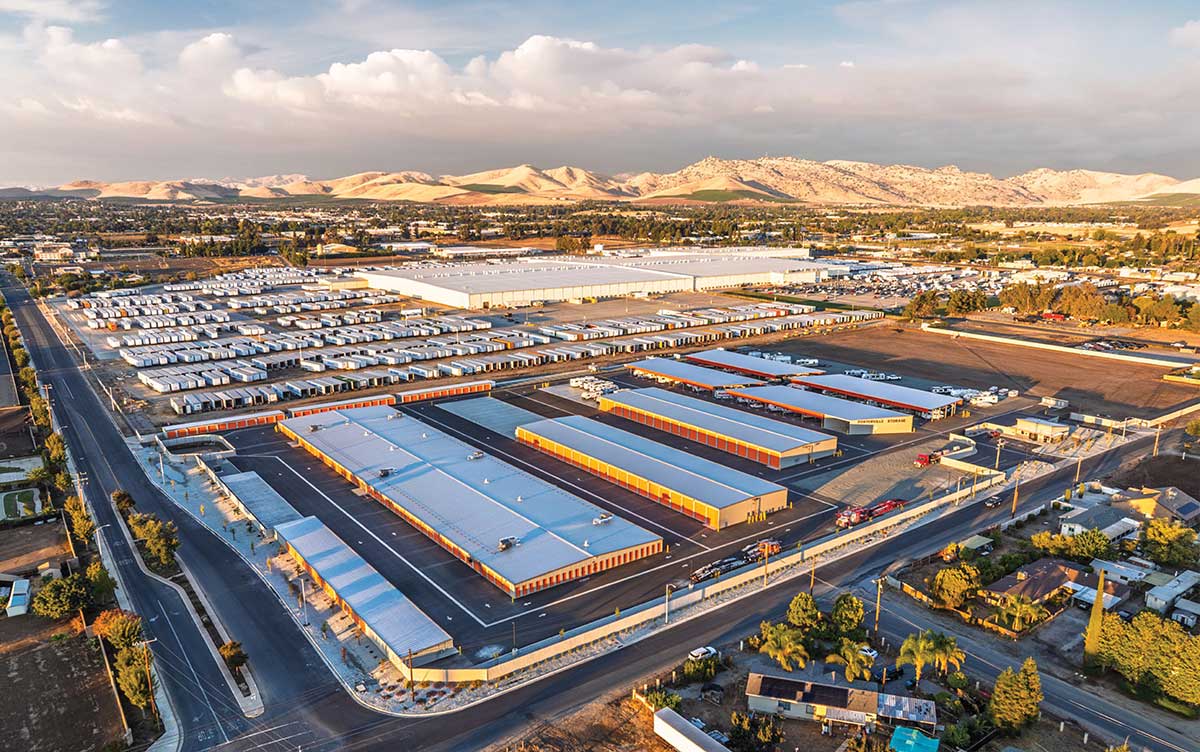
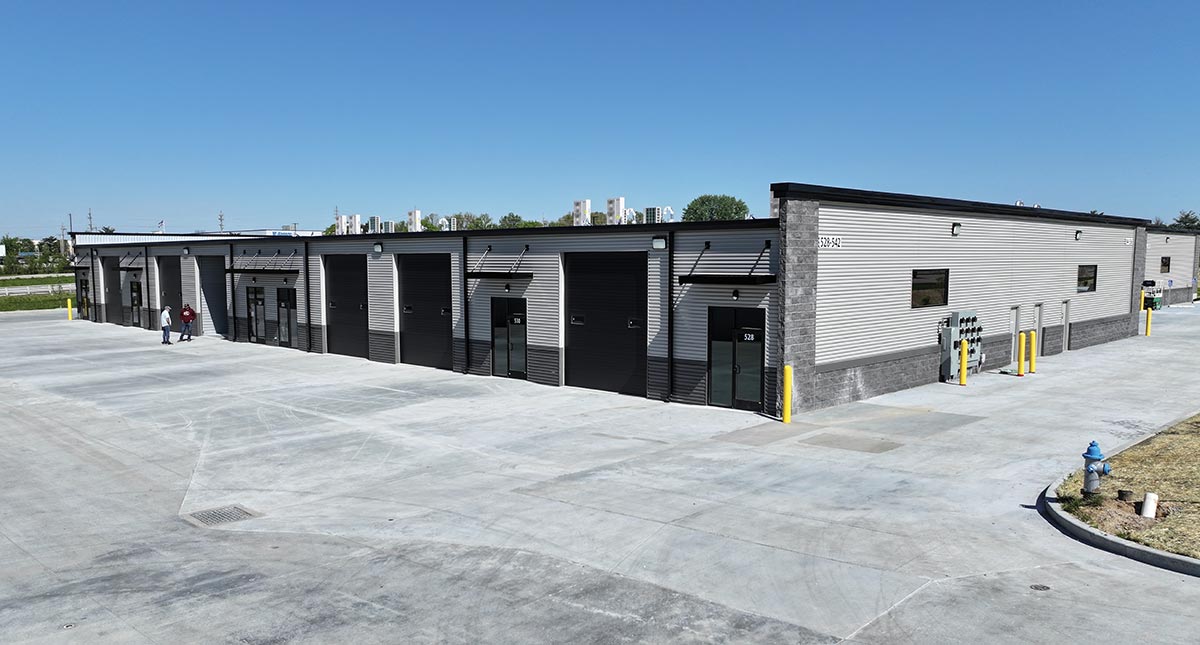
In practice, a convergent development may include multistory climate-controlled self-storage, flex space designed for small businesses and trades, boat and RV storage in both canopy and enclosed formats, portable storage solutions, and light industrial or last-mile distribution components.
Historically, these uses were often developed independently, separated by different ownership groups, investment strategies, or operational models. Today, that separation is beginning to break down as developers ask a more forward-looking question: What happens when these uses are intentionally designed together from the start?
In many urban and high-growth suburban markets, rising land costs are forcing developers to think more strategically about how sites perform financially. Single-use developments can be increasingly difficult to justify when land pricing demands stronger and more diversified returns. In many ways, this reflects a shift toward site-level agglomeration, where value is no longer created by a single use alone but by how multiple uses interact within the same footprint.
At the same time, many of the most experienced operators in the self-storage industry are entering a new phase. These are developers who have successfully built and operated traditional storage assets for years. They understand the development process, they understand operations, and they have seen firsthand how technology has reshaped the customer experience. Many are now approaching the market with more discipline, recognizing that in some regions self-storage has become increasingly competitive and, in certain cases, oversupplied.
Founder of FlexSpace Nation
What is changing is not the relevance of self-storage itself but the context surrounding it.
Storage remains the foundation—the stable and proven use anchoring the property. However, the people using that storage are operating differently than they were even five or 10 years ago. More individuals are running businesses from home, managing inventory across multiple channels, or generating income through side ventures that require flexibility, mobility, and operational space. The line between personal use and business use is becoming increasingly blurred, creating demand for environments capable of supporting multiple needs within a single location.
Developers who recognize this shift are not replacing self-storage. They are strengthening it by positioning it within a more dynamic and interconnected operating environment.
Flex space has emerged as one of the most important adjacent asset types in this transition. When integrated with self-storage, it introduces longer tenant duration, higher revenue potential, and increased daily activity across the site.
James Reid, founder of FlexSpace Nation, captures this advancement well, saying, “The next evolution of storage isn’t about separating uses—it’s about bringing them together with intention. The most successful developments will be the ones that recognize how people actually use space today, where storage, businesses, and movement are all part of the same equation.”
Traditional self-storage planning has long focused on optimizing unit mix, maximizing rentable square footage, and creating efficient circulation patterns. While those principles still matter, convergent developments require a far broader and more integrated approach.
A convergent property must accommodate users with very different operational needs and access patterns. Daily flex-space tenants require consistent and efficient entry points, while traditional storage customers may visit less frequently but still expect ease of navigation. Delivery vehicles associated with light industrial or last-mile distribution components introduce an entirely different layer of operational complexity. These movements and interactions must be considered early in the design process.
President of Self-Storage Lending at Live Oak Bank
Vertical integration is also evolving. Developers are beginning to explore configurations where flex space exists at ground level with storage above, or where enclosed RV storage is integrated into larger structural systems. These layouts require thoughtful coordination of structure, access, visibility, and long-term functionality.
Before design even begins, one of the most impactful decisions in convergent development is site selection. While undeveloped land may appear attractive, sites that have already undergone some level of entitlement review or infrastructure development can offer significant advantages. Existing access, utilities, zoning groundwork, or environmental review can reduce uncertainty and allow developers to focus more directly on how the site will ultimately function.
For convergent developments, where multiple uses must work together cohesively, that head start can become strategically valuable.
Consider a small contractor operating in a growing suburban market. They may initially lease a flex space unit to serve as a base of operations. As their workload increases, they add a traditional storage unit for additional materials and equipment. Over time, vehicle storage becomes part of the equation as they begin parking work trucks or trailers on site.What began as a single lease evolves into a much broader relationship with the property.
This is agglomeration in practice. The value is not created by any one component alone but by the way each use strengthens the others. The property begins to function less like a collection of isolated revenue streams and more like an integrated ecosystem—one capable of increasing customer lifetime value, improving retention, and creating a more resilient operating model.
Unlike traditional storage facilities, which can often feel static, convergent developments tend to experience more consistent daily activity driven by active users across multiple business types. This can positively influence visibility, engagement, and the overall perception of the property.
From a financial perspective, diversified uses also create a level of resilience that single-use properties may lack. A property that is not dependent on a single revenue stream is generally better positioned to adapt to changing market conditions. Take, for example, a three-acre site. A traditional single-story exterior-access layout at 60 percent coverage may produce approximately 680 to 700 average-size rentable units once typical efficiency adjustments are applied. However, when that same site is intentionally reconfigured to incorporate boat and RV canopy storage alongside a row of flex units, the overall unit count naturally declines.
What emerges instead is a more nuanced performance profile, where higher-rent uses and longer-stay tenants begin reshaping the economics of the land itself. In that environment, the measure of success shifts. The focus is no longer simply on how many units fit on the site but on how effectively the property performs as an integrated, revenue-generating ecosystem.
Traditional self-storage has long been attractive because it is relatively straightforward to model. Inputs are familiar, operating assumptions are well established, and performance benchmarks are widely understood. Convergent developments, however, require a more nuanced underwriting approach because they combine multiple product types with different lease structures, ramp timelines, and operational rhythms.
Bishesh Shrestha, senior vice president of self-storage lending at Live Oak Bank, sees this evolution as a natural progression for the industry. “The self-storage industry has had synergies with complementary commercial uses that was done in the past because the appeal for storage was not as high as it has been in the past decades. As a result, we still encounter vintage assets that include these ancillary businesses as part of the sale. From a lender’s perspective, some of these businesses were fundamentally different from self-storage operations, like car washes, laundromats, and gas stations, which lead to some underwriting challenges depending on the revenue and expense contributions generated by these ancillary/secondary businesses. However, the addition of flex space or commercial storage to traditional self-storage facilities, is a particularly natural evolution of the asset class, much like the addition of (fully enclosed or canopied) boat and RV storage or open parking. We are seeing increased borrower interest in flex and commercial storage as small businesses and contractors seek space for inventory, machinery, equipment, and operational overflow. From a banking standpoint, the diversification of services and revenue streams enhances the overall appeal of a self-storage project. Multiple income sources can help strengthen cash flow stability and reduce reliance on a single tenant profile or demand driver. In addition, the lease-up dynamics for flex space/commercial storage and boat and RV storage often differ from traditional self-storage units, which can create operational balance and support occupancy growth across the broader facility. As the industry continues to evolve, lenders are increasingly recognizing the value of well-executed mixed-use storage facilities that can adapt to changing consumer and business needs while providing diversified and resilient income performance.”
For lenders and equity partners, the conversation increasingly shifts from uniformity to segmentation. Different uses stabilize at different points in time and contribute to overall performance in different ways. Flex space may behave more like light industrial, while traditional storage continues to operate on a shorter-term, rate-driven model.
A well-designed convergent project allows capital partners to see not simply one income stream but a layered operating environment capable of creating both stability and long-term growth.
As Brad Relford, president and CEO of TBS Companies, explains, “In most cases, divergent customer needs and innovation ultimately lead to the best market-driven solutions. Convergent storage development is clearly following that path. As a building package and door provider, it is important to offer the full array of products, design, fabrication, and construction services to meet the needs of a very dynamic market opportunity.”
Developers are asking more of their projects, and builders are responding with more integrated and adaptable solutions that extend beyond traditional self-storage formats while maintaining the efficiencies that made the asset class successful
With the right technology in place, convergence becomes not only possible but scalable.
This evolution is also beginning to reshape how developers think about demand itself.
For years, many commercial real estate markets prioritized what were considered “higher and better” uses, often pushing industrial outdoor storage and operationally driven space further out of the development conversation. In some markets, that transition made sense. In others, it unintentionally removed critical-use space that businesses still relied upon. As a result, developers are now seeing renewed demand for functional outdoor storage, contractor space, equipment parking, and operational overflow areas that have become increasingly difficult to find.
Lance Watkins of Tenant Inc. notes that the industry is beginning to recognize that not every “self-storage” site should follow the standardized unit mix models that have remained relatively unchanged for decades. That means rethinking long-held assumptions around land use and operational functionality; for the first time, the industry now has the tools to validate those decisions with real operational insight.
Today’s modern operating platforms are generating a level of behavioral and performance data that allows owners to make more informed decisions about how a site should function. Questions such as the lifetime value of a 10-by-40 unit, how different tenant types interact across a property, or which uses create the strongest retention and revenue patterns are now becoming measurable in ways they were not before.
This represents a significant shift for the industry. Developers are beginning to move beyond instinct alone and toward what could best be described as “data-informed intuition,” where operational data, customer behavior, and market demand work together to shape development strategy.
The technology itself is also evolving alongside convergence. Platforms originally designed around traditional storage categories are increasingly being asked to support multiple space types, blended customer journeys, and more operationally diverse environments within a single ecosystem.
Watkins adds, “For a long time, operators relied on instinct because the industry simply didn’t have access to this level of information. Today, technology allows us to understand not just occupancy but behavior, retention, customer movement, and lifetime value across different space types. That changes the conversation entirely. The future platform isn’t just a storage platform anymore—it becomes an operational intelligence platform capable of supporting convergent assets within a single environment.”
As convergent developments continue to emerge, the role of technology will likely extend far beyond operations management. It will increasingly influence how sites are planned, how demand is interpreted, and ultimately how future storage environments are designed.
The next generation of storage will likely be defined less by a single building type and more by how intelligently different uses are brought together, how effectively they function as a system, and how well they adapt to changing patterns of demand.
The question is no longer simply what type of storage to build. The more important question is how a property should work. Because the future of self-storage is not just about space. It is about designing environments capable of evolving, adapting, and continuing to perform in a market that is changing around them.
And the future of self-storage will belong to those willing to design for what comes next.