


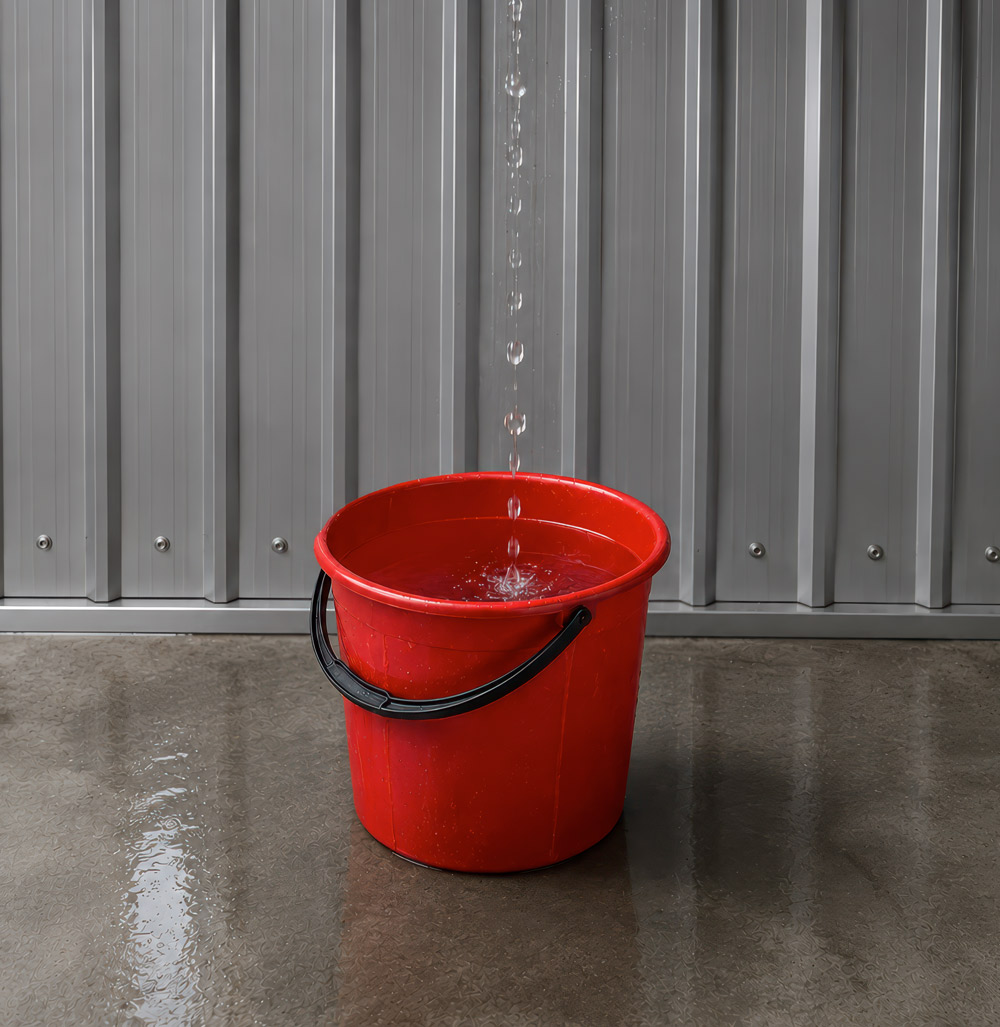
f you own a metal-roofed building and discover a leak, your first instinct is usually to call a roofer. Unfortunately, that can be the wrong move if you want to protect your investment.
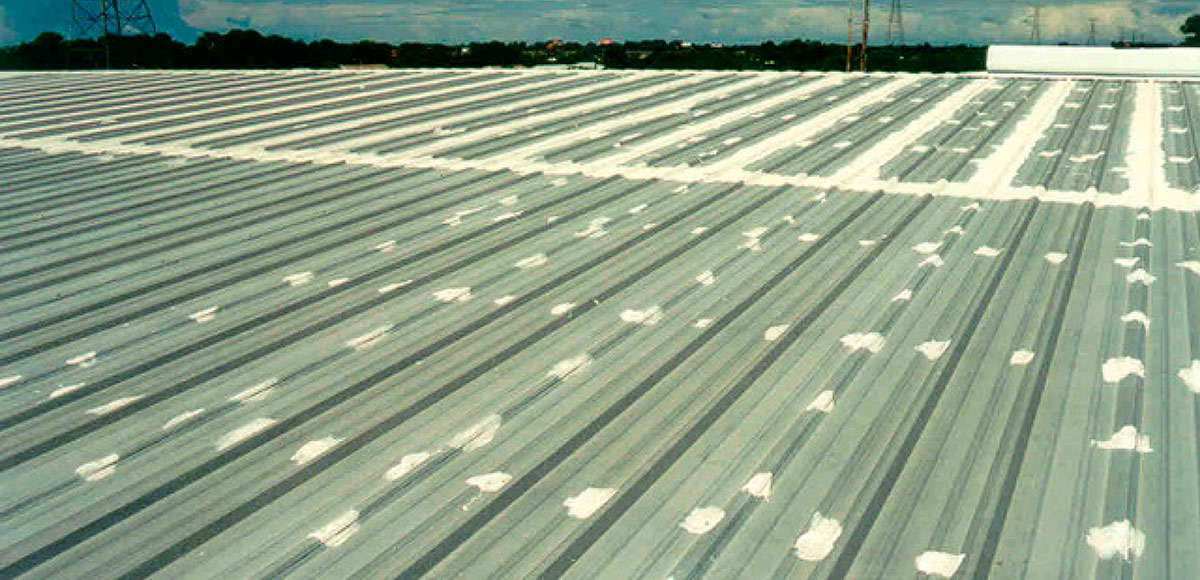
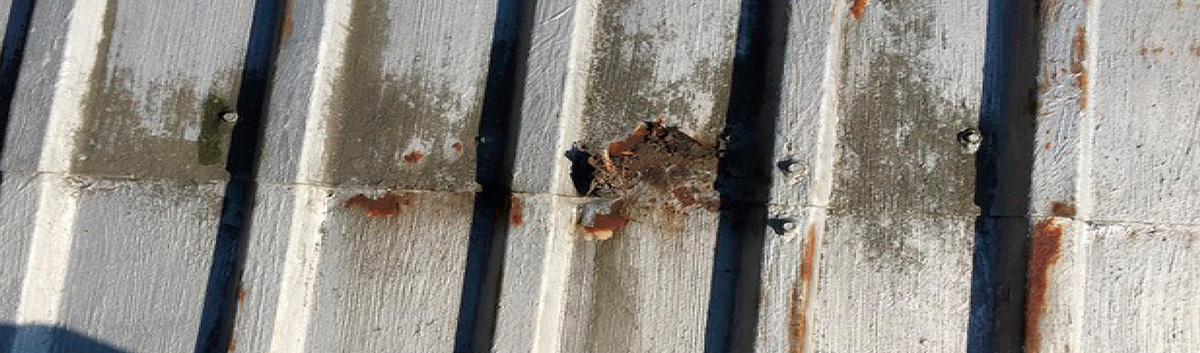
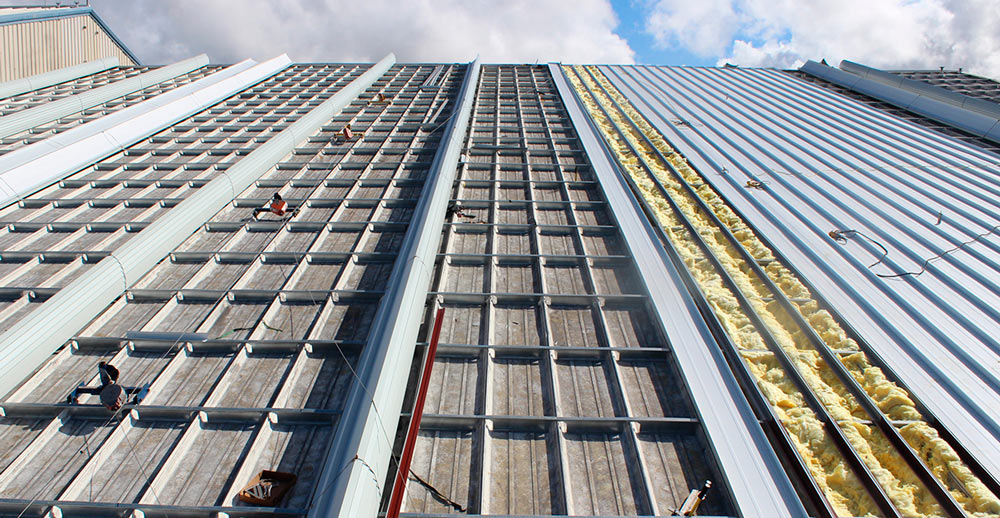
Every year, we supply retrofit framing systems that allow a new metal roof to be installed over an existing one. Too often, the original roof is being replaced not because it reached the end of its life, but because it was ruined by improper repairs. These “repairs” often involve tar, caulk, silicone, or “premium” roof coatings sprayed, rolled, or smeared onto metal panels with the promise of a long-term fix that delivers the opposite.
Metal roofs are among the longest-lasting, lowest-maintenance roof systems available. But like any roof, they can eventually leak. What makes metal roofs different is that they require specialized knowledge, and roofing contractors unfamiliar with metal systems frequently make incorrect—or even harmful—repairs. Worse, most modern metal roofs carry 20- to 40-year finish warranties that can be voided by improper repairs.
So, who should you call? Start with someone who specializes in metal roofing.
If the building is older or unmarked, contact a local metal building contractor or erector. Another excellent resource is the Metal Building Contractors and Erectors Association (MBCEA) at https://www.mbcea.org/.
If your metal roof is leaking, where do you start?
Identify the leak location.
Know what type of metal roof you have.
- Screw-down (through-fastened) roofs – These are the most common and may have 8,000 to 10,000 fasteners on a 10,000 square foot roof. Older fasteners and washers deteriorate over time and are a frequent source of leaks. Replacement should always be with oversized, long-life fasteners, not covered with caulk.
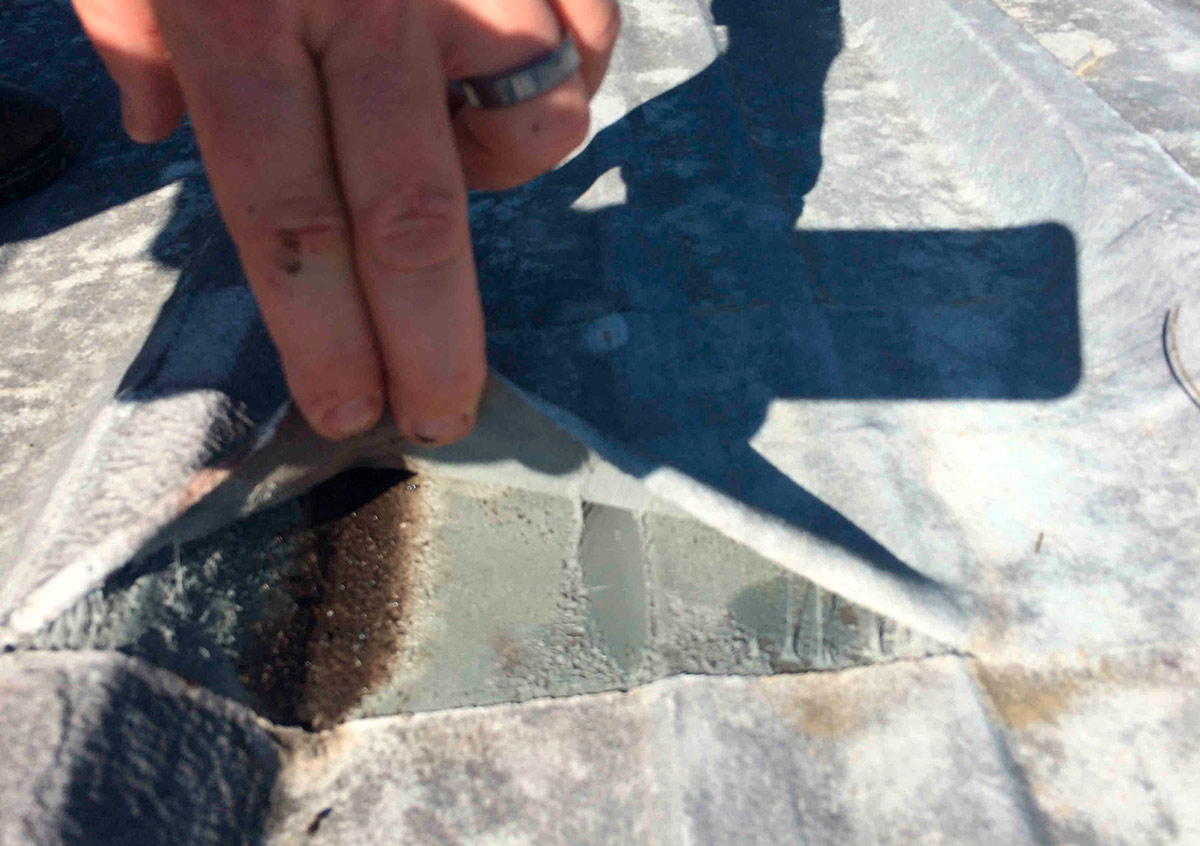
- Standing seam roofs – These panels are attached with concealed clips, have very few exposed fasteners, and are generally more leak-resistant. When leaks occur, they are often at panel end laps.
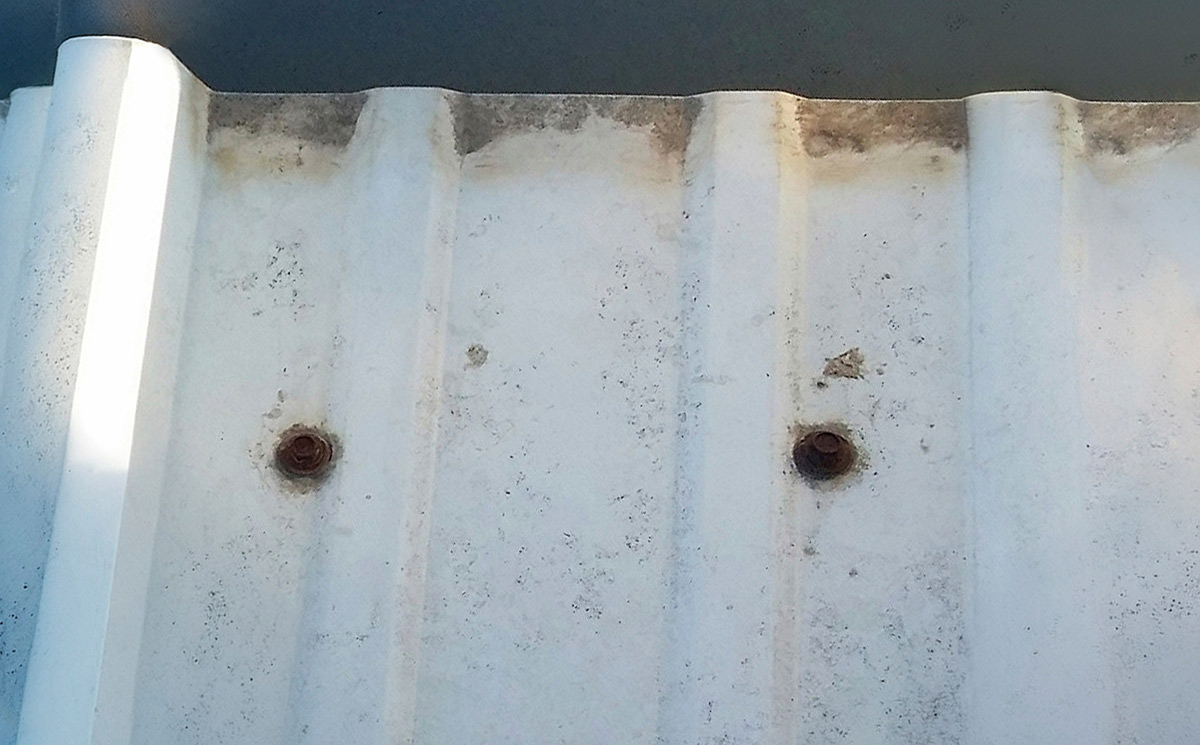
Failed fasteners
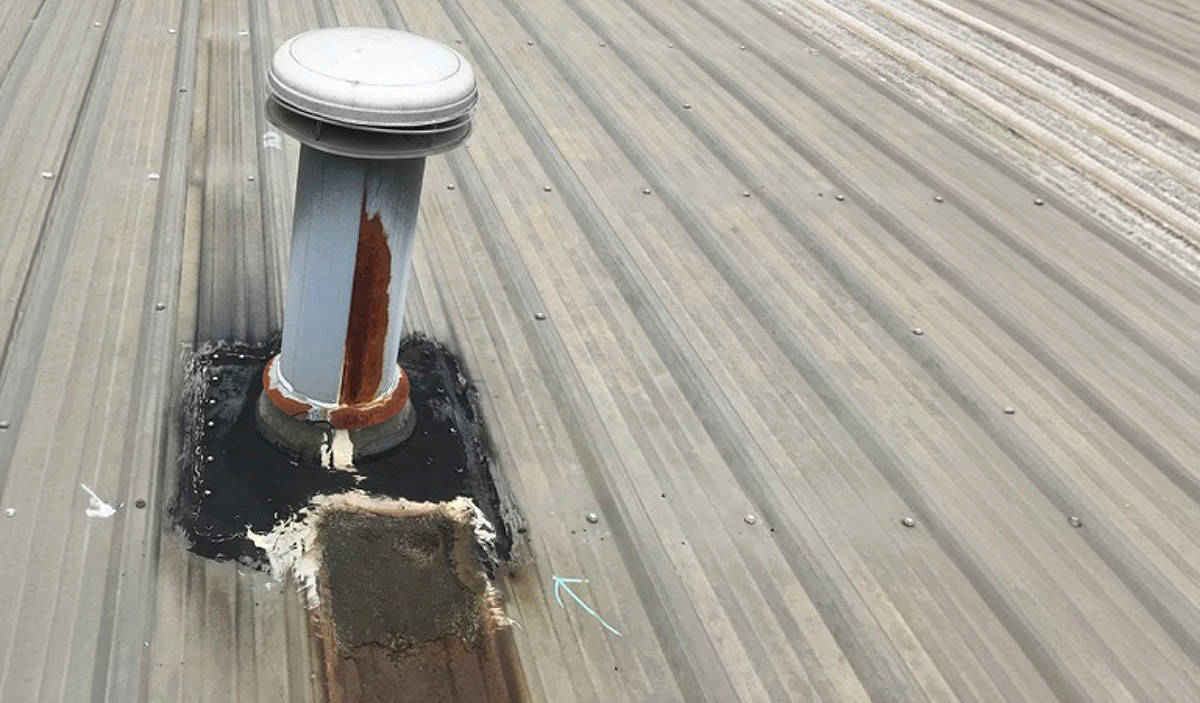
Improper vent penetration
Work with qualified metal building specialists.
But your roofer friend says he can handle it, right? Maybe. But it’s best to follow these steps.
- Demand clarity before any repair. A proper metal roof repair is not caulk, tar, silicone, or coating smeared over panels.
- Require photos of the problem and a clear explanation of the proposed fix. If a fastener has failed, it should be replaced, not coated. If a panel lap is leaking, it should be properly disassembled and corrected, not sealed over. Coating or caulking fasteners, side laps, or end laps is not a repair—it will shorten the life of your roof.
- Control who penetrates your roof. Metal roofs move constantly, and they require specialized accessories for penetrations, equipment mounts, and snow retention. Never allow plumbers, electricians, HVAC contractors, or other trades to cut into your metal roof. They are not trained for it, and they can cause serious damage, including damage from improper foot traffic.
- A metal roof is a premium roof system. When repairs are needed, use a contractor who specializes in metal roofing. Ask questions and request photos of the proposed repair.
- Avoid surface caulking or coating over problems. These shortcuts create new issues, void warranties, and reduce roof life.
- Use proper accessories for modifications. Metal roofs require components designed for movement and long-term sealing. Conventional roofing products are not compatible with metal roofs.
- If the roof has truly reached the end of its life, retrofit it with a metal over metal system. Use a fully engineered retrofit system that meets current wind and snow load codes. This improves insurability, resale value, and has the lowest long-term cost.
- Explore tax incentives. Section 179 of the IRS tax code may allow up to $1 million in deductions, making a retrofit far more affordable.
Dale Nelson is a founding partner and the current president of Roof Hugger, LLC. He is also a member of LSI Group in Logansport, Indiana. He holds a Class-A Florida Contractor’s License and a Florida Real Estate Broker’s License. He is a past chairman of the Metal Construction Association (MCA) and has received both the Patrick R. Bush and Larry A. Swaney awards from the MCA. A 25-year member of the International Institute of Building Enclosure Consultants (IIBEC) and a two-time recipient of the Metal Building Manufacturers Association (MBMA) Innovation Award, he has also been inducted into the Metal Construction Hall of Fame and serves on the board of directors of the Sertoma Speech and Hearing Foundation of Florida, Inc.