









How to enjoy our new magazine:
Just scroll!
Click or tap the table of contents icon in the menu bar to find any article.
Read any article by clicking or tapping the read full article button below each article intro.
Jump back to your previous browsing spot from any article using the menu bar or back to issue button.









-
What Going Remote Taught Us About Customers’ WantsPage 12
-
Latasha Finds A Place At Atlanta MissionPage 16
-
Six Pieces Of Advice For Growing OperationsPage 20

-
Page 32
-
Is 2027 The Year Self-Storage Stabilizes?Page 34
-
Contracting PipelinesPage 36








-
Analyzing Shifts In Consumer Demand Across Major U.S. MetrosPage 60
-
Why It’s Tough To Build In The Big ApplePage 64
-
Timp Hwy Self Storage in Lehi, UtahPage 66

-
A Self-Storage Owner’s Guide To Public AdjustersPage 68
-
Using Aerial Photography To Inspect Your FacilityPage 70
-
The Data Behind DispositionPage 74
-
Managing The Facility Identity CutoverPage 80
- Chief Executive Opinion by Travis Morrow6
- Publisher’s Letter by Poppy Behrens9
- Meet The Team10
- Women In Self-Storage: Jessie Smith by Alejandra Zilak25
- Who’s Who In Self-Storage: Jared Mastroianni by Brad Hadfield29
- Innovation Spotlight: ECRI Hub by Brad Hadfield84
- Self Storage Association Update87
- The Last Word by Carol Mixon88

Why ManagementPlus? Extra Space Storage is the largest third-party management company for a reason. They don’t differentiate between their own facilities and yours. When you partner with Extra Space, you’ll get the same resources that make their properties so successful.
For the latest industry news, visit our comprehensive website, ModernStorageMedia.com.














CEO of MSM and Storelocal Corporation,
President of National Self Storage
his is the last issue you get before Atlanta, so I’m going to spend it on the part nobody sees.
A show like this gets built in rooms you would find boring: floor plans, catering counts, run-of-show documents rewritten more times than I want to admit. Nobody claps for a seating chart. Our team has been at this for months—nights and weekends included—and they did it while putting out a magazine every single month. I have watched them fix things at 11 p.m. that you will never notice, which is the whole idea. I’m proud of them and I don’t say that often enough.
Here is what all of it was for: November 4 through 6 at the Georgia World Congress Center, four pillars of content, a Deal Room where acquisitions actually get done, keynotes from outside our bubble, and dinner inside the Georgia Aquarium with Wolfgang Puck doing the food.
Then, Thursday night is the Red Carpet Awards Gala.
The nominations are in. That is all you are getting out of me.
Last year you found out who won by reading it right here—Facility of the Year, Manager of the Year, printed and mailed to your desk—not this time. This year the winners are announced live, on a stage, in front of the industry, and that has never happened before in this magazine’s history.
So, there is no catching up on this one. No issue is coming that tells you who won before you walked in the room. You either heard it happen or you heard about it later.
Bring your teams. Bring your VPs and your managers. Bring the deal you have been sitting on; the Deal Room is open Wednesday and Thursday. Somebody in your building might be about to have the best night of their career, and you ought to be standing there when it does.
I have been doing this a long time, and I have never been this ready for a week.
Register at msmtheshow.com.
I’ll see you in Atlanta.

-
PUBLISHER
Poppy Behrens
-
Director Of Sales & Marketing
Lauri Longstrom-Henderson
(800) 824-6864 -
Creative Director
Carlos Padilla
(800) 352-4636 -
Editor
Erica Shatzer
-
Lead Writer / Web Manager
Brad Hadfield
-
Storelocal® Media Corporation
Travis M. Morrow, CEO
-
Websites
-
Visit Messenger Online!
Visit our Self-Storage Resource Center online at
www.ModernStorageMedia.com,
where you can browse our paid publications, research archived articles, sign up for a magazine subscription, submit a change of address, and more. 
- All correspondence and inquiries should be addressed to:
MSM
PO Box 608
Wittmann, AZ 85361-9997
Phone: (800) 352-4636

Invest with confidence in a family-owned and operated self-storage brand backed by 40 years of proven experience. Built on trust, stability, and hands-on management, our company has thrived across market cycles while delivering consistent value.
Join a legacy of smart growth and reliable returns in an essential, resilient industry.

210-405-6695
theparhamgroup.com
















ou’ve heard me talk about THE Show.
You’ve heard me talk about the speakers, the sessions, the networking, the trade show floor, the Georgia Aquarium, and the Thursday night gala. By now, you know we have worked hard to make this event different. Rather than repeat everything I have already told you, let me say this: If you are planning to come, now is the time to register.
The reason is simple. THE Show is no longer something we are talking about in the future. It is almost here. In just a few weeks, the self-storage industry will gather in Atlanta, and all the planning, conversations, and ideas we have been working on for over a year will finally come together.
You already know we have challenged our speakers to bring fresh ideas and new perspectives to the table. You already know there will be no educational sessions while the trade show floor is open, giving attendees and exhibitors dedicated time to connect without competing priorities. And you already know this will be about more than sitting in meeting rooms.
There will be opportunities to meet people you have wanted to connect with, talk face to face with vendors, hear what other operators are doing, and come away with ideas you may not have considered before. There will also be time to enjoy the experience.
We will open with a reception at the Georgia Aquarium, and on Thursday evening we will gather for the Awards Dinner and Gala to honor the 2026 Facility of the Year and Manager of the Year winners, which are the most prestigious awards in the self-storage industry.
But what I hope people remember most about THE Show is not just one speaker, one session, or even one event. I hope they remember the conversations, the introductions, the unexpected idea that comes up over coffee, and the connection made in a hallway.
Above all, I hope you remember the moment someone says something that makes you stop and think, “We should be doing that.”
That is why we built THE Show the way we did.
I hope you are planning to come and experience THE Show for yourself.
If you have not registered yet, visit modernstoragemedia.com or see
I look forward to seeing you in Atlanta!

Publisher

ou’ve heard me talk about THE Show.
You’ve heard me talk about the speakers, the sessions, the networking, the trade show floor, the Georgia Aquarium, and the Thursday night gala. By now, you know we have worked hard to make this event different. Rather than repeat everything I have already told you, let me say this: If you are planning to come, now is the time to register.
The reason is simple. THE Show is no longer something we are talking about in the future. It is almost here. In just a few weeks, the self-storage industry will gather in Atlanta, and all the planning, conversations, and ideas we have been working on for over a year will finally come together.
You already know we have challenged our speakers to bring fresh ideas and new perspectives to the table. You already know there will be no educational sessions while the trade show floor is open, giving attendees and exhibitors dedicated time to connect without competing priorities. And you already know this will be about more than sitting in meeting rooms.
We will open with a reception at the Georgia Aquarium, and on Thursday evening we will gather for the Awards Dinner and Gala to honor the 2026 Facility of the Year and Manager of the Year winners, which are the most prestigious awards in the self-storage industry.
But what I hope people remember most about THE Show is not just one speaker, one session, or even one event. I hope they remember the conversations, the introductions, the unexpected idea that comes up over coffee, and the connection made in a hallway.
Above all, I hope you remember the moment someone says something that makes you stop and think, “We should be doing that.”
That is why we built THE Show the way we did.
I hope you are planning to come and experience THE Show for yourself.
If you have not registered yet, visit modernstoragemedia.com or see
I look forward to seeing you in Atlanta!
Publisher
MSM’s THE Show lands in Atlanta, Ga., on Nov. 4 to 6, 2026, packing the Georgia World Congress Center with more industry speakers and keynotes than ever before, plus special guests, exciting breakout sessions, an acquisitions corner, and a trade show floor designed for engagement and visibility.
After hours, unforgettable events await, with our Deep Blue Welcome Dinner inside the underwater banquet hall of the Georgia Aquarium, catered by Wolfgang Puck, and our Red Carpet Awards Gala, honoring the very best in self-storage.
If you’ve been waiting for something different … Welcome to THE Show.









Unlock the Power of
Innovation & Technology with


Why Owner/Operators Choose TPP





hen people hear that a self-storage facility has gone fully remote, they tend to reach for the same conclusion: We must be saving a fortune on payroll. It’s a fair guess. Labor is one of the largest controllable expenses in this business, and the tools now available for access control, identity verification, payments, and customer communication have made it genuinely possible to run a property without a manager sitting behind a desk all day. But the payroll story, as real as it is, turned out to be the least interesting thing that happened to us.
Going fully remote wasn’t only an operational change. It became an unplanned exercise in customer research. Like most operators, we walked into the process carrying a stack of assumptions about what tenants wanted. Some came from industry norms, others from the way storage has been run for decades, and nearly all of them felt reasonable at the time. Then we took the office out of the equation. Within weeks it became clear that several things we were sure customers valued mattered far less than we believed, while a few factors we had quietly underrated turned out to be the ones holding the experience together.
What began as a change in operating model ended as a lesson in the difference between what operators assume tenants want and what tenants genuinely care about. That distinction matters more now than it ever has.
When we actually looked at how tenants used our facilities, a different picture came into focus. Most people weren’t coming into the office unless they had no choice. They rented online, called instead of visiting, and finished transactions long after business hours. Plenty of them never met a staff member in person. The harder we looked, the harder it became to argue that the office was creating value. What it was creating was familiarity, but familiarity and value aren’t the same thing.
Storage is moving through the same shift, and what tenants increasingly want is control. They want to rent on their schedule rather than the office’s, get answers immediately, move through simple processes quickly, and feel the friction pulled out of the experience. Once we started looking at our operation through that lens, a lot of long-held assumptions got difficult to defend.
People don’t buy storage because they want a relationship with a facility manager. They buy it because they have a problem to solve. They’re moving, downsizing, settling an estate, running out of room at home, or launching a business, working through one of the countless transitions life throws at them. The unit is the solution. Everything around it is delivery.
Remote operations forced us to redraw that definition. A customer who gets a clear answer in five minutes is often happier than one who has access to an office but must wait until tomorrow morning for help.
Response time started to outweigh location, clear communication outweighed visibility, and a straight answer outweighed proximity. Those sound like small shifts, but they change how you approach the whole experience. The question stops being whether someone is available on site and becomes whether the customer can solve their problem quickly; the answer usually has less to do with staffing than with systems.
Why does this step need a human? Why is this part confusing? Why does this generate support requests? Why do customers keep getting stuck here? The exercise pushed us to redesign experiences instead of just managing them.
With no face-to-face interaction to paper over the rough spots, every friction point becomes visible. A confusing instruction gets noticed. A slow response gets noticed. A broken process becomes impossible to ignore. In that environment, customer-centric thinking stops being a line in a marketing deck and becomes an operational requirement.
That gap between operator thinking and customer thinking isn’t unique to storage, and the danger shows up the moment operators start optimizing for things customers don’t actually value. Every business collects habits over time. Some of them create value. Others just persist because no one has bothered to challenge them. Going fully remote forced us to challenge ours. A few held up. A fair number didn’t.
The more useful question isn’t which model wins. It’s whether operators are paying attention to the right things in the first place. Technology will keep evolving, expectations will keep shifting, new tools will arrive, and old assumptions will keep getting tested. The operators who come out ahead won’t necessarily be the ones with the most advanced systems or the lowest labor costs. They’ll be the ones who understand what customers value and build around delivering it.
For us, going fully remote ended up being less about cutting payroll and more about uncovering that truth, and the realization still shapes nearly every operational decision we make. Once you see it, it’s hard to look at the traditional storage experience the same way again.
Andrew Bonnis is a self-storage operator, marketer, and writer focused on where operations, technology, and customer experience meet. He manages storage facilities and writes about marketing, automation, and the future of the industry.








atasha* has been through hell. But that’s not the woman who answers the phone. When she picks it up for our interview, what comes through is pure joy. She’s off work and is back at My Sister’s House, the women’s campus at Atlanta Mission, where she’s been staying for almost a year. Despite the long day, she’s not exhausted. Instead, she’s feeling energized because she’s back at work and has a plan for the future. But before she shares it, Latasha wants to look back at how she arrived at this place in life.
To get herself and her four youngest children (ages four, six, eight, and 11) out of the situation, she packed her belongings and kids in the car and left, bound for Atlanta (her two adult children were already living outside the home).
For a while, she and the children bounced around from hotels to shelters—anywhere they could lay their heads. Sometimes they would even stay overnight in her eldest daughter’s dorm room at Kennesaw State University, leaving in the morning to get the kids to elementary school. But she knew it wasn’t fair to put that burden on her daughter. “That’s when I rented a storage unit to get all my stuff out of the car and make room for us to sleep in it.”
The property became home for a while, even after an encounter with self-storage management. “He spotted us and I just knew he was gonna call the police,” she says, but he didn’t. He told Latasha that although she couldn’t sleep in the unit, he’d look the other way if she was just sleeping in the car; he even brought her some blankets from an abandoned unit. “I appreciated that, and I tried to respect the rule he set, but sometimes it just got so cold we did go into the unit.”
Latasha was desperate to find a job—she says she’s always been a hard worker and at one point was juggling three jobs in Augusta—but it was impossible to work a schedule with a four-year-old in tow, and she certainly couldn’t afford childcare. So, she invested more time into finding assistance. Time and again she was turned away, being told she didn’t qualify. But then she stumbled upon Atlanta Mission.

Relief flooded over Latasha when the answer was yes. To stay, however, she had to commit to Atlanta Mission’s long-term residential transformation program, “Make Progress.” For the first time in a long time, someone wasn’t just offering her a bed for the night but rather a new path forward. Once in the program, the family received housing, childcare, meals, clothing, and counseling focused on recovery and personal growth—at no cost. She was also told she was not allowed to work right away; instead, she would be working on herself.
“That gave me time I so desperately needed,” says Latasha. “Time to grieve over what I’d lost, time to heal from the trauma, and time to find myself again.”
The Atlanta Mission had a plan for her children too: The Children’s Academy for the youngest and Centennial Academy for the other three. “They all love it,” she says. “Their teachers say they’ve seen real growth. My 11-year-old was just accepted into BEST Academy, so he’ll be going there for sixth grade.”
Latasha says having stability and structure—and knowing where they’d be staying every night—has also been a blessing. “The kids stopped asking where we’d be the next day. Now they’re running around, jumping on beds, and making new friends. They’re just being kids again.”
She also regained her spirit during this time. “I’m a strong person, that’s why I got myself out of that situation, but a person gets worn down, and I started doubting myself,” she says, adding with a laugh, “Atlanta Mission put a stop to that! With their support, I regained confidence and started believing in myself again.”
Outside of work, Latasha’s focus is on finding a home—something Atlanta Mission staffers are also helping with. “It’s just a matter of time until we find something,” says Latasha, her positive attitude on full display. “I see me and the kids together in a home of our own, me moving up the ladder at work, and saving money so I can invest in my kids and whatever goals they have.”
As the call wraps up, Latasha has a message for Atlanta Mission donors. “I just want to say thank you for understanding that sometimes bad times happen to good people and someone just needs a hand. I feel like I’m on my way now thanks to you and Atlanta Mission.”
In the month since the interview, Atlanta Mission provided some wonderful news: Latasha found a two-bedroom townhome for her and the youngest children (they love their bunk beds). She also received a promotion to assistant supervisor. The future she’d described has become a reality. Mission accomplished.
MSM is thrilled to support Atlanta Mission and the amazing work they do by making the organization the official charity of THE Show, coming to Atlanta Nov. 4 to 6. The Atlanta Mission, which started in 1938 to help people displaced by the Great Depression, is now the city’s largest and longest-running provider of services for those experiencing hunger and homelessness. Travis Morrow, CEO of MSM, says the non-profit was a perfect fit for THE Show. “Many self-storage operators have had the difficult task of removing homeless individuals and even families from units they’d been living in,” says Morrow. “Atlanta Mission offers these people an alternative and a chance to rebuild their lives. You see that in stories like Latasha’s and countless others.”
To make an impact, MSM is encouraging sponsors, exhibitors, and attendees of THE Show to make in-kind and/or financial donations to the charity. Our “Wear One, Bring One” project urges the industry to help Atlanta Mission’s job placement participants dress for success during interviews and throughout their employment by bringing an extra business professional outfit to THE Show to drop off at a donation collection box. For more details about “Wear One, Bring One,” see page 19.
“Every donation, no matter the size, directly supports individuals and families in our community as they work toward stability,” says Cara Adams, in-kind donation partnership manager. “Thank you for your generosity!”
Catch Atlanta Mission CEO Tensley Almand at THE Show.
His keynote address will be held Thurs., Nov. 5, 4:30 to 5:30 p.m.










hen a self-storage facility is acquired, it’s not just the sign at the entrance that changes. Often, the culture, communication protocol, service standards, and other aspects of the business also evolve, especially if ownership is changing from an independently owned operator to an institutional, corporate framework.
Over the past decade, the self-storage industry has witnessed a significant ownership shift as REITs and regional independent operators acquired mom-and-pop businesses and also infused markets with new facilities. While approximately 65 percent of self-storage owners remain traditional mom-and-pop operators nationally, that’s a significant decline particularly felt in in high-growth markets where REITs are majority owners. This trend shows no signs of abatement.
With this ownership consolidation emerges a dramatic swing in how tenants, on-site staff, and leadership engage. Individual locations lose local appeal. On-site managers and staff struggle to fulfill neighborhood demands and needs. Communication weakens. Technology replaces the human touch.
Bottom line: The rise in institutional ownership has dramatically altered how self-storage facilities are managed. Yes, the basics remain the same—space is leased, rent is paid, coded-access provided—but now corporate owners are infusing automation and standardization across a portfolio to stretch leadership and personnel bandwidth and minimize costs. The challenge here is that national, macro-strategies do not make sense in every market.
The most successful large operators are those that preserve the best practices of small, independent owners (the mom-and-pops) by deploying scalable systems with local focus and accountability. This protocol captures the spirit of mom-and-pop operations to ensure decisions reflect local market influencers and conditions, as well as the customer base, while remaining within institutional parameters.
Expand Leadership With Portfolio Growth
A district manager with a controlled portfolio is gifted the bandwidth to gain granular knowledge of each facility. Time spent walking properties, coaching teams, and addressing potential hazards before they become obstacles keeps facilities at peak performance. Informal conversations with renters create opportunities to collect input on how to improve, from a light in a dark corner to a shift in accessibility.
Key takeaway: As management portfolios grow, district management teams must also grow in lock-step to ensure effective oversight of each facility.
Understand And Embrace The Local Market
When on site, district managers have a front-row seat to capture the unique demographics and influences of each submarket. This is important. According to a recent Space Shop customer survey, 57 percent of customers cited “location” as the top reason for renting a unit. Knowing the market and understanding where potential customers reside and commute allows marketing campaigns to target the right geographic demographic. Engaged managers:
- Drive the market to understand the customers,
- Visit neighboring businesses (be a friendly neighbor),
- Follow neighborhood social media groups such as NextDoor and Facebook,
- Utilize online resources to determine shopping and commuting patterns, and
- Employ a SEO strategy with pay-per-click advertising and AI plugins.
Independent owners also tap local, grassroots advertising outlets that quickly build trust and brand recognition—and regional owners or REITs should do the same.
- Sponsor a youth sports team.
- Donate to a community fundraiser.
- Advertise in local community event or theatre playbills.
A personal connection with a potential customer shifts the needle and increases the probability of a business transaction.
Likewise, many Space Shop facilities offer amenities that fill community voids. Meeting and conference rooms are available for small businesses, local groups, and not-for-profit organizations to congregate without a room charge expense—for Space Shop customers and non-customers alike. Some properties also accommodate a police substation providing space for officers to complete paperwork while boosting on-site security.
Key takeaway: Get to know the character, patterns, and needs of each market and invest in the community.
Enhance The Customer Experience
One of the most valuable lessons gleamed from mom-and-pop operators is the depth of personalized service found at their facilities. While small-town culture may be hard to infuse into multi-property portfolios, having well-trained, on-site professionals who engage with patrons is scalable across the entire portfolio.
When executed at the highest level, simple ideas can transform a motel lobby into a five-star resort. Space Shop intentionally designed larger leasing offices with hospitality-driven design complete with easy-listening music. Complimentary bottled water and a coffee bar with cookies further add to the elevated customer experience.
Key takeaway: Win the customer over by crafting a unique, welcoming experience with a professional property and trained on-site team members.
Use Technology Strategically
The right automation creates capacity for managers and local staff to do higher-value work. Repetitive administrative tasks, such as routine reporting, payment reminders, lead follow-up, and basic inquiries responses, can be managed with property-management and customer-relationship technology managed by both human and select AI oversight. A centralized call center or message service also enables on-site teams to foster customer relationships.
Space Shop uses automation to improve speed and efficiency while reducing repetitive tasks once undertaken by staff. Collections and payment reminders are automated. For district managers, technology conducts site audits and reports issues that require attention, allowing them expanded bandwidth to focus on staff training rather than on paperwork and reporting.
At the corporate level, automations monitor revenue, expenses, and occupancy. Programmed alerts flag incidents or discrepancies in real time for immediate remediation rather at week- and month-end.
Key takeaway: Deploy technology for the right tasks to allow for more higher-value work by humans.
Spend Like An Owner
- A clean, well-maintained, and professional facility not only attracts new customers but also encourages existing renters to stay. Aesthetic maintenance and curbside improvements, such as landscaping, paint, and signage, create a welcoming environment.
- Safety and accessibility updates also offer the all-important security, with bright motion-sensor lighting, monitored cameras, and keypads or app-enabled locks. Regular building system maintenance also alleviates unplanned repairs and replacement.
Key takeaway: Manage expenses diligently and spend to improve revenue and profitability.
Prioritize Communication
Independent, mom-and-pop operators are known for timely and personal communication with customers. The same is possible with multi-property portfolios that span regionally and nationally. Standardize the frequency and efficiency of all types of communications—both to current and potential customers as well as internal chains of command. And then, track the metrics to establish accountability.
Likewise, timely communication between headquarters and regional managers equips both with the information and skills needed to build long-term profitability. Automated reports proactively inform managers at all levels so that issues are addressed in quick-order. Regular meetings and training sessions foster camaraderie and ensure consistency and accountability at all levels.
Key takeaway: Timely communication at every level is essential to maximize performance.
Scale alone does not create an advantage. Large operators that standardize repetitive work while retaining local-market accountability in the spirit of the mom-and-pop operator are best positioned for outperformance.

supplier with three unique business
solutions to serve a wide variety of needs
- Full product line, including
doors and hallway systems - Complete storage building packages
- Multi-story premium installation






ne of the best things about self-storage is that there are so many people who started their careers in a different field. Yet, once they get here, they realize they’ve won the industry lottery and get to apply their skills in surprisingly creative ways.
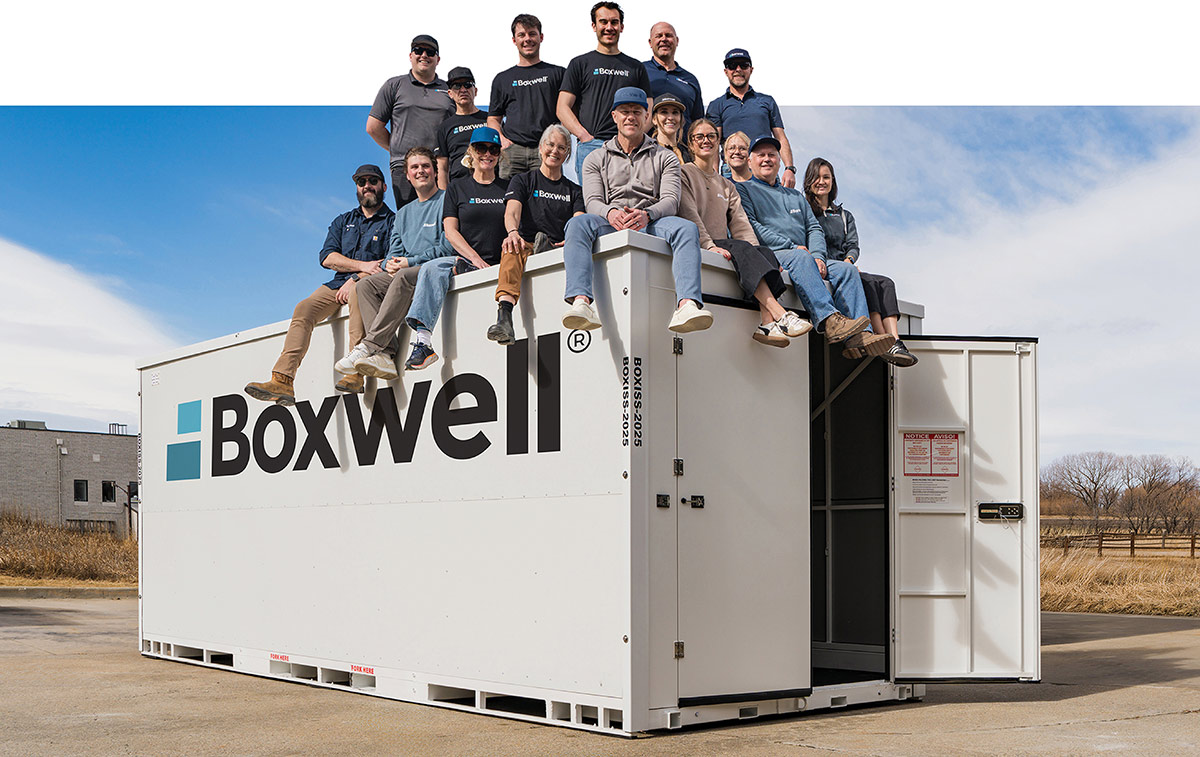
Jessie Smith is the creative director at Boxwell. Serendipity brought her here, while her unexpected love for the industry has ensured that Boxwell has flourished as much as she has.
As is the case with most Coloradans, being outdoors was an integral part of her life. “Skiing, hiking, camping, and fly fishing were all woven into how I spent my free time,” says Smith, who remains connected to nature.
Smith started working in her teens. “I was a proud Subway sandwich artist throughout high school,” she jests. While going to class, socializing with friends, and working would’ve been enough to fill her calendar, Smith also volunteered as a dog walker at the Humane Society of Boulder Valley.
As an animal lover, when it was time to think about college, she considered a degree in marine biology. And there’s no better way to study marine life than going to the South Pacific. “I started college at the University of Hawaii,” she says. “I’m a big diver and have deep respect for the ocean, so it was an ideal situation for me at that time.” However, she eventually switched gears to major in architecture; at which point she transferred to Colorado University at Boulder.
“Anyone who has gone through an architecture program knows how demanding it can be,” says Smith. “I remember countless late nights in the studio building models, working on hand drawings, and obsessing over details. I can absolutely trace a lot of my work ethic back to those years.”
Such a relentless academic schedule became a way of life. “One night in particular sums up the culture of that program pretty well,” she says. “It was around 3 a.m., and we started smelling what seemed like an electrical fire, so we called the fire department. When the firefighters arrived, they seemed bewildered to find more than 100 students, as if it were the middle of the afternoon. Their reaction was basically, ‘Why haven’t you evacuated, and why are all of you even here at 3 a.m.?’ To us, it was just another night in architecture school.”


From there, she moved to another athletic apparel brand, BOCO Gear, where she applied the same skills, tailoring messaging towards hikers, endurance runners, and other athletic outdoorsy audiences. After getting off work, she would work on freelance creative work; there wasn’t much that she turned down. She designed logos for local Boulder businesses and worked for global brands, such as creating chalkboard artwork for Lululemon and being part of a photography campaign for José Cuervo. “It was really an exercise in curiosity,” she says. “I kept saying yes to things I hadn’t necessarily done before and figuring out how to do them. Looking back, that experimentation gave me an incredibly broad creative tool kit, and I get to use nearly all of it in some capacity at Boxwell today.”
Most people who’ve been in the workforce long enough have realized that having a good network is the best way to open doors. This is how Smith arrived at the self-storage industry. “Lisa Maloney interviewed and hired me at Headsweats. Years later, after we had both moved on, she called me about an opportunity at Boxwell.”
The move occurred in early 2020, several weeks before the pandemic. “I started on a freelance basis and quickly ramped up to a full-time position,” she says. “Boxwell was still very much in startup mode and already experiencing rapid growth. Then COVID hit, the storage industry accelerated, and everything really took off.”
It turned out to be the perfect time to build a creative department within the company, and Smith enjoyed her new role. “One of the things I’ve loved most about joining a young company is that there are opportunities everywhere. Our CEO, Rod Bolls, has never been someone to hold people back. If you see something and think, I can make this better, you’re encouraged to go do it.”
Fast forward to more than six years later, and the Boxwell creative and marketing team is casting a very wide net. “We work on website design, social media, storage site plans, trade shows and events, container renderings and mockups, branding and logo design, blogs and articles, email campaigns, sales materials, and expansion into new markets and countries.”
And as most people who work in this industry have realized, storage has been a surprisingly fulfilling sector. “The industry is entrepreneurial at its core. It’s filled with hardworking, creative people who are always willing to try something new. I never would have expected to find so many genuinely fun, optimistic, and interesting people in this industry, but that has become one of my favorite things about it.”
She also admires how fast it evolves. “What worked just 10 years ago isn’t necessarily what works today,” says Smith. “The envelope is being pushed everywhere you look. Vendors are elevating their marketing and design. Trade shows are getting bigger, better, and more sophisticated. This is a multi-billion-dollar industry, and increasingly, it looks and feels like one.”
Being surrounded by her family is a priority as well. “My parents still live in my childhood home in North Boulder, and my brother lives just down the road from me, so I’m fortunate that we’ve all stayed close geographically as well as personally,” Smith says. “I’m incredibly grateful for all of them and how supportive they’ve always been.”
Finally, she closes with an insightful observation. “The way you do one thing is the way you do everything. Whether it’s work, relationships, fitness, or even cleaning the house, there’s something rewarding about showing up fully and taking pride in what you’re doing. It’s a mindset I try to carry into just about everything.”


hen most people encounter a product or service that falls short of expectations, their natural response is to complain about it and move on. Jared Mastroianni reacts differently; he sets out to improve it himself.
Time and again, Mastroianni has walked into a diverse range of industries and asked why everyone simply accepts the way things are done. Then, he does things his own way. Refreshingly, he never once calls himself a disruptor—just someone out to make things better and help others in the process.
Though Mastroianni attended UCLA and was following a typical financial track, he knew he ultimately wanted to be an entrepreneur. He zeroed in on the tanning salon business simply because he saw something it was lacking. “They were all competing, but mostly based on pricing and promotions,” says Mastroianni. “That was blinding them to emerging red-light therapies [a non-UV treatment offering skin-care benefits alongside tanning]. I wanted to be at the forefront of it, so I invested in it.”
Using those pinched pennies, Mastroianni bought his first salon and the equipment to go with it. He brazenly, and intentionally, opened the location right next door to one of the industry leaders. “I wanted to make a point, and I gained some notoriety from it,” he says, “but ultimately, I beat them out. And it wasn’t just about the technology, but about providing better value to the customer.”
His next venture hit closer to home—his own closet. Mastroianni had paid California Closets to install their popular organization system but was less than satisfied with the results. “I’d assumed a lot of the manufacturing process was automated but learned it relied mostly on low-paid manual labor.”
Determined to make a better product, Mastroianni partnered with a cabinet manufacturer and launched Colorado Closets, which he says used automated systems and better materials yet still offered products at prices below its much larger competitor. He even went after California Closets’ search rankings, eventually outranking them.
Six months later, California Closets bought him out—a financial win for Mastroianni and one that would free him up for his next venture: self-storage.

“I think a lot of people focus on revenue per square foot,” says Mastroianni. “I was ready to think of it in terms of revenue per square inch, so I began changing every aspect of how we operated, from revenue management to branding to customer experience.”
This transformation of modSTORAGE included modCAFÉ, a place for tenants to relax with premium coffee and more, and modDISPOSAL, an on-site junk removal service for tenants.
Next it was time to tackle the tech. But Mastroianni says he’s never adopted technology for technology’s sake; first he had to recognize a problem. “I was really shocked by how fragmented the software was. There was just too much to oversee and update on a regular basis, so I took a look at what we needed, didn’t need, and what could be replaced.”
This discovery process turned up one problem after another, so Mastroianni decided the best path forward was to develop the company’s own software. He started with the website, and within a month the site was outperforming the old one tenfold. “We didn’t do anything crazy or revolutionary,” he says modestly, “just what should be done.”
Inspired by the success of the website, Mastroianni began playing with “the fun stuff”: AI. “I had already had a lot of experience with it. I was probably one of the early adopters—I even invested in OpenAI when it was getting off the ground.”
Mastroianni put that knowledge to work, developing AI-driven workflows to tackle everyday operational problems. Some were relatively simple, while others became increasingly sophisticated, including predictive move-out and delinquency models and preemptive pricing. The goal wasn’t to introduce AI wherever possible but to identify problems technology could solve more effectively.
The efforts soon paid off. Mastroianni says modSTORAGE facilities now rank among the top 5 percent nationally based on specific performance measures. “We even operate the most profitable self-storage facility per square foot in New York City,” he adds.

This became the foundation for Facily, a web-based portfolio management system that gives operators information on tenants, units, leads, revenue, and more, along with AI insights, in one command center.
Some of Facily’s capabilities may seem mundane, but Mastroianni says even small efficiency upgrades can make a big difference. When several vacated units need attention, for example, the system determines which should be cleaned first based on factors such as availability, online search activity, and abandoned checkouts. These seemingly minor improvements can add up to better reviews, referrals, and customer loyalty.
Other applications are considerably more sophisticated. Rather than scraping competitors’ websites to determine rental rates, a practice Mastroianni considers unethical, Facily uses predictive models. “Our system predicts where the market’s going to go based on how it has gone in the past, while factoring in current information and data from companies like TractIQ. For nearly three years, it’s almost always been spot-on.”
These improved efficiencies don’t necessarily mean handing out pink slips, however. “We use AI to reduce the burden on our staff and then use that newfound energy in the places where we’ve been lacking.”
While AI reduced labor needs in certain tasks, the company didn’t treat that as a payroll-cutting opportunity; instead, it redirected the resources into maintenance, managerial staff, and security. “All of this leads to a better customer experience,” he says. “That gives us longer-staying tenants willing to pay more because we provide more. I believe that’s a much better model than holding them and their items hostage with rent raises.”
That’s why Facily was built with smaller operators at its core, including a sliding pricing scale designed to make the platform more accessible to them. “We want to see this industry prosper for a very long time and feel the continued success of our industry depends on the small operator.”
Mastroianni doesn’t buy the idea that independent operators simply can’t compete. “I think there are a lot of operators right now who are feeling discouraged, wondering if they just need to let a REIT manage their facility or if they need to sell because they’re not cut out for it,” he says. “I believe 99 percent of them are cut out for it. They just need the right tools.”
He’s not diminishing the REITs. He makes it clear that they’re doing exactly what they should be doing: competing aggressively on behalf of their investors. He simply thinks independents should be equipped to compete just as aggressively.
“I love this industry, the people, the operational dynamics, and the software, and the AI of it all,” says Mastroianni. “And I want to be sure it’s around for a long time. Giving the smaller guys the ability to compete will help ensure that.”
For someone who’s made a career out of moving on to the next thing he could make better, Mastroianni seems to have found a place to settle in—and plenty of reasons to keep improving it.

While recent AI doomsday scenarios aren’t likely to start at the self-storage level, Mastroianni doesn’t wave away concerns over AI security issues; in fact, it’s a core part of his approach. He’d rather build the guardrails before building the flashy stuff. “I think about things that are not so sexy or interesting—you know, the boring stuff.”
It may be boring, but it’s increasingly important. Today’s storage facilities can connect software to customer information, financial data, cameras, electronic locks, and more. Giving AI access to those systems without adequate protections, Mastroianni argues, creates risks that operators may not fully appreciate and could ultimately lead to legal battles. “People are trying to get ahead with the newest, coolest tools, forgoing security, but we have to be responsible.”
It’s an approach that makes Mastroianni unique: Although he likes to drive innovation, he also knows when to ease off the accelerator.
Data Storage Stats
he self-storage industry has enjoyed an astounding upward trend since the beginning of the decade. During the COVID pandemic, it seemed like everything was unprecedented. The word was everywhere; newscasters repeated it in every news story. In storage, the flourishing was truly unparalleled. Mom-and-pop shops were pushed to higher tax brackets. Big box names proliferated even more across the country, and startup tech companies offering related software (cybersecurity, third-party management, marketing) all grew exponentially.
Everyone raced to the bank, and more developers jumped at the opportunity to get their share from the golden goose. But everything that goes up must come down. It’s a tale as old as time, and anyone with enough life experience could have predicted that such growth would eventually stabilize. Yet, even within that prediction, there are a lot of questions. Let’s look at the main variables.
Tyson Huebner, director of research at Yardi Matrix, states that such a reduction will likely gradually take place, but to take some of the numbers with a grain of salt. “There has been a 19 percent decrease in supply in 2026 when compared to 2025, and it’s predicted that there will be another 14 percent decrease next year and a similar decrease in 2028,” he says. “However, the forecast is going to be less accurate the further out you go.”
While Huebner concedes that the numbers may slightly vary, depending on which markets you operate in, he notes that the recent decreases in 2026 have been higher than in the previous cycle (2019 to 2023). He also points out that the supply pipeline is more concentrated in the South, saying, “There are some markets that will face the most supply they’ve ever faced in a 12-month basis. Even now, performance has been struggling and it’s taking longer to lease up.” The problem stems from the areas being oversupplied for one, two, and even up to three years.
Huebner adds that a main driver of this oversupply was the boom during the COVID-related migrations. This massive growth attracted many developers with no prior self-storage experience. “Close to 50 percent of what’s been delivered this year has been built by developers working on their first self-storage property,” he says. “And even now, when I go to industry conferences, I’ve met many developers asking me about self-storage, as they try to start learning about the industry. A lot of them are hyper focused on the double-digit growth and the surge during the pandemic, but that’s not happening anymore.”
Drew Dolan, principal and fund manager at DXD Capital, a data-driven private equity real estate firm that specializes in the self-storage sector, cautions that while the numbers of new developments are going down, the data varies depending on where you look. “Radius+, Storetrac, Yardi—they are consistently saying that supply is going down, with slightly varying numbers,” he says. “The most aggressive decline I have seen is from Radius+, which shows a greater than 70 percent decrease in deliveries from 2023 to the 2026 projections. That’s a massive decline.”
Yet, Dolan points out that the current numbers are following the oversupply bubble. “I’m not surprised we’ve had a swift downturn, because none of the factors that were tailwinds in ‘21 and ‘22 exist today—low interest rates, robust home sales, self-storage occupancies at an all-time high. Today, we have the opposite—mostly headwinds.”
As an example, Dolan mentions that home sales are at a 40-year low, and this has affected even seasonal spikes in storage rentals. “A lot of times, people move in the summer because kids are out of school. I would say that one of the bigger headwinds for self-storage is that when there are fewer movers, there are fewer people needing to use self-storage.”
While this spells problems for new development projects, Dolan says it’s a silver lining for existing facilities. “The offset is that people are staying longer in their homes, so those who were already using storage are staying longer in their units.” In fact, real estate investment management firm Heitman, LLC, shared that their average stay is now 24 months, up from 18 months pre-pandemic.
Bills notes that REITs have communicated the same during earnings calls in the last two quarters. This has caused performance of existing square footage to improve, as there’s been a gradual decrease in new projects. In fact, this performance improvement has mostly come from the supply diminishing than from top-of-the-funnel demand.
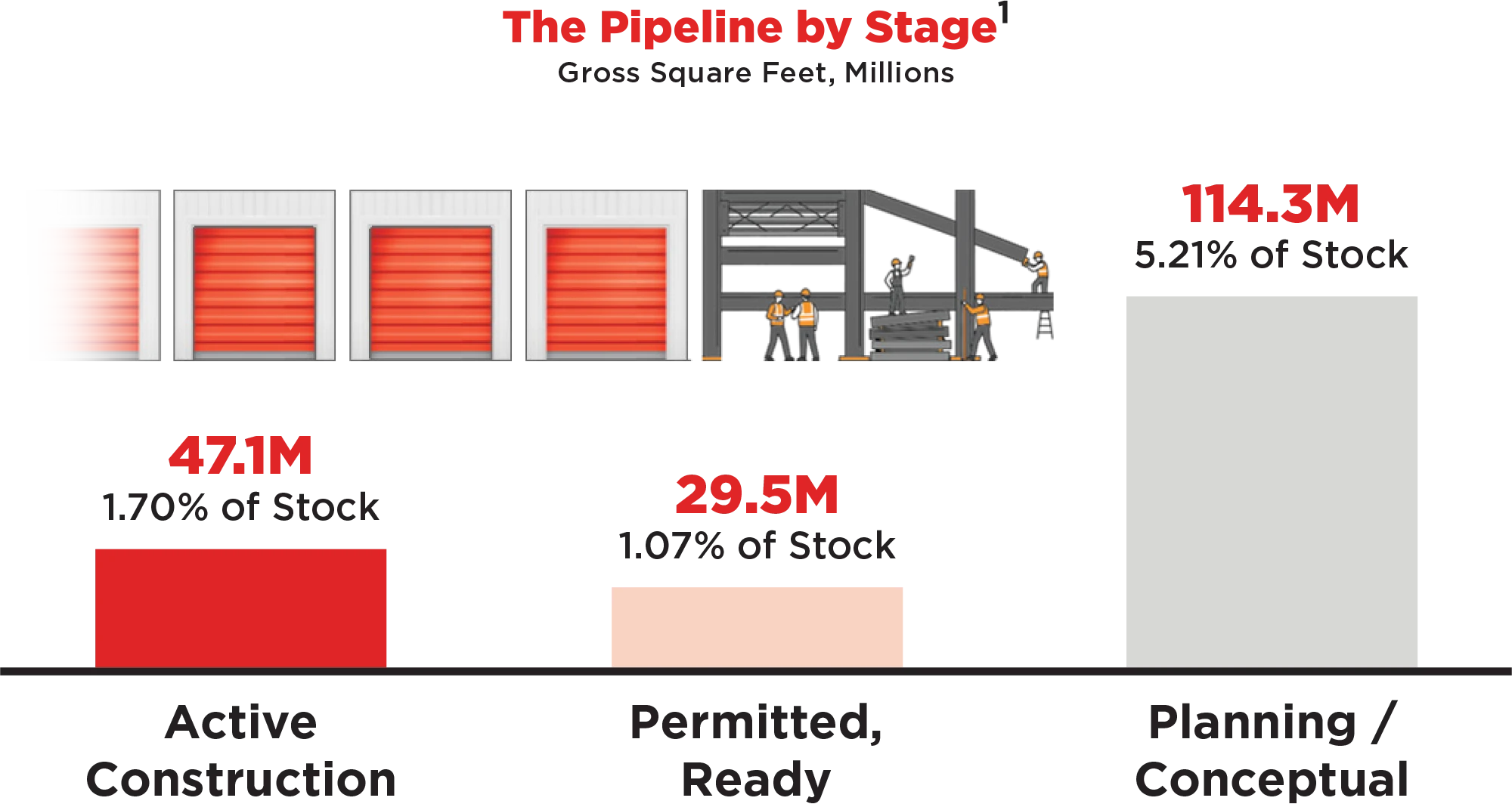
“We’ve also tracked another 25 million square feet of projects in planning phases—before construction, when developers are looking at feasibility—where there has been no update in activity in the past 18 months, either,” says Bills. “This could be due to several reasons, but it’s noteworthy.”
And when it comes to self-storage projects that are already under construction, Bills shares that TractIQ is tracking 8 million square feet that also haven’t had an update in the past 18 months.
Huebner indicates that another issue with the pipeline is that it’s taking up to five years to develop a project. “You have developers who underwrote a project when storage was still at the peak,” he says, “and now it’s a very different market. I call it a supply hangover. It’s not something we’ve really experienced before.”
A lot of markets are dependent on migration and home sales for demand, Huebner stresses, and newer projects are not going to get that kind of demand as so many storage facilities did during COVID. “It’s going to be a long recovery for those markets,” he says. “A lot of them are the top 50 markets REITs are focused on, and they’re going to have some struggles from new supply.”
Dolan agrees that the change in the market has mainly hindered new developments. “The Achilles Heel of self-storage is oversupply. Some markets got oversupplied, and that’s a point of vulnerability at the moment.”
As examples, Bills points out that in Minneapolis, rental rates are up 10 percent year over year for both street and web rates. On the other hand, Tampa has street and web rates that have decreased by more than 13 percent year over year.
For his part, Huebner shares that a lot of the developers are in concentrated markets such as college towns. “In my previous role at an investment firm, we bought a development in Columbia, by the University of South Carolina, and move-in rents would shoot up 100 to 200 percent in the summer and drop down in August/September,” he says. “Markets like Tallahassee, Tucson, and Athens are going to take even longer to lease up, and it’s going to fluctuate with seasonality.”
All things considered, Bills believes that the writing was on the wall from day one. “COVID was such a big boom. I don’t think anyone believed that would last forever. The bigger story over the last few years has been about how interest rates have affected the storage industry. There’s no doubt that demand has slowed and values have decreased in the post-COVID era. However, the data over the last year has supported the narrative that we’re seeing some stabilization.”
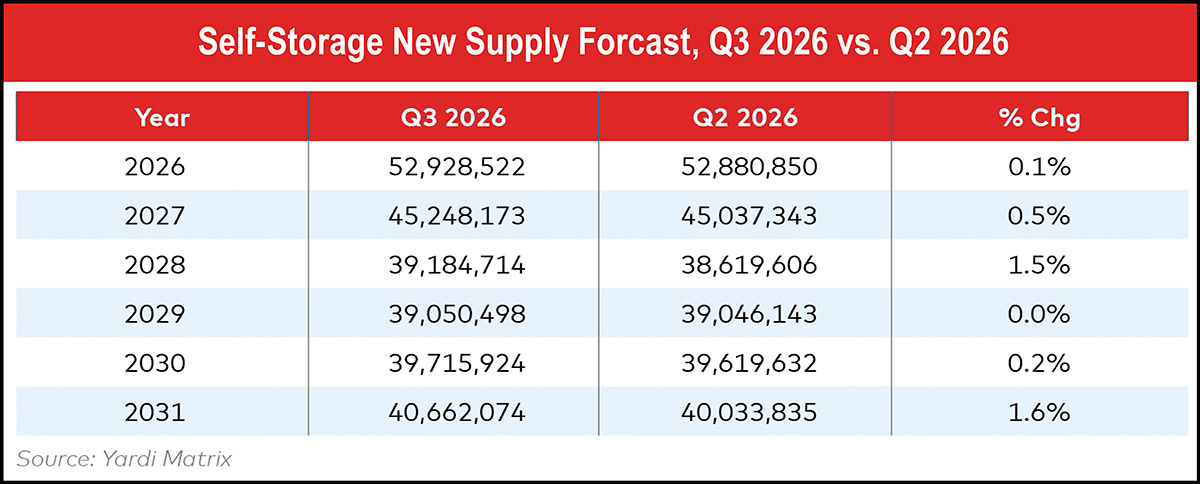
or the Q3 2026 update, the self-storage supply forecast is largely unchanged. Minor changes relative to last quarter’s forecast reflect updates to the development pipeline data Yardi Matrix maintains, rather than a material change in the forecast outlook. The supply forecast continues to foresee a decline in new self-storage supply to roughly 39.18 million NRSF by 2028.
See Self-Storage New Supply Forecast, Q3 2026 vs. Q2 2026 table.
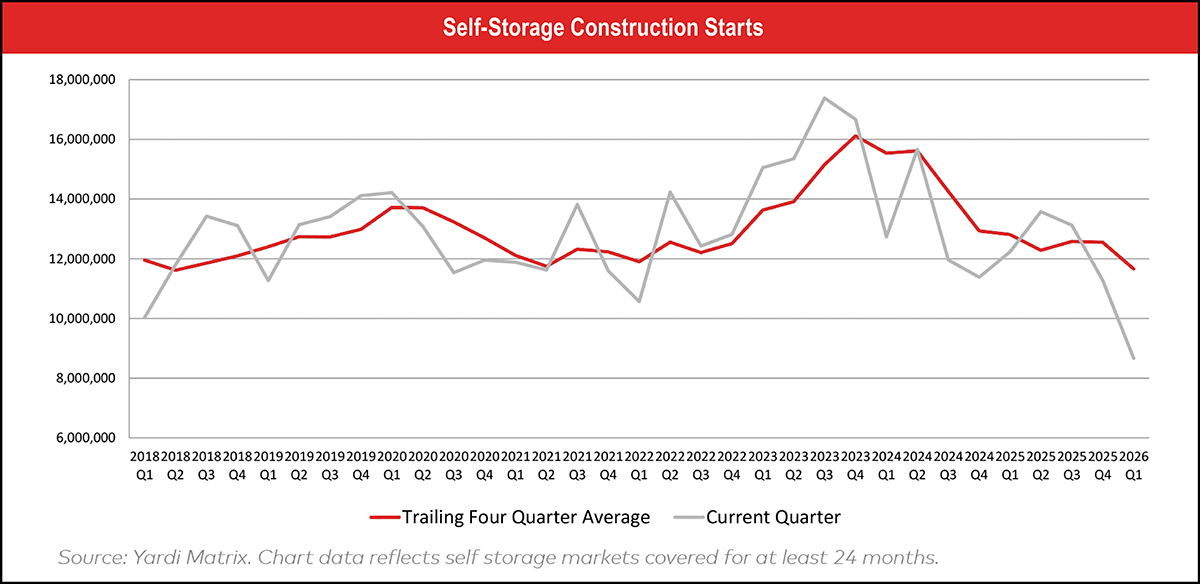
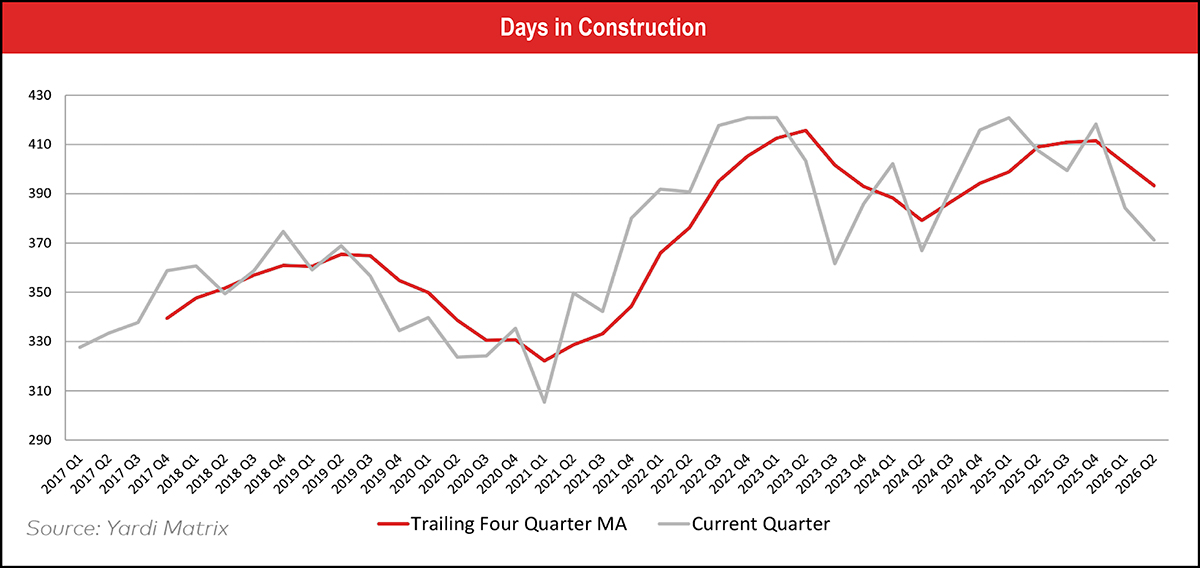
Construction starts are also trending lower. Through mid-year, 15.37 million NRSF in new construction have been identified nationally. This is 19.6 percent below the level identified during the same period one year ago. Current construction completion times are averaging a little more than 12 months, which means self-storage projects breaking ground in 2026 are likely to be completed in 2027. The continued deceleration in construction starts suggests that 2027 new supply will be below 2026 levels.
There are few signs that a meaningful rebound in self-storage new development activity will take hold in the second half of 2026. Despite a seasonal pickup in advertised rental rates during the spring and summer leasing season, year-over-year rate growth remains negative in most markets tracked by Yardi Matrix. Tariffs, the Iran War, and the artificial intelligence buildout continue to combine to create elevated inflation pressures, keeping both short- and long-term interest rates elevated.
Elevated long-term interest rates continue to suppress valuations and make new development less attractive. Elevated long-term interest rates also increase mortgage rates, suppressing sales activity in single-family home markets, a key driver of self-storage demand.
As a result, the Q3 2026 forecast update continues to expect new supply to fall to 52.93 million NRSF for full-year 2026, followed by a further decline in 2027 to 45.25 million NRSF.
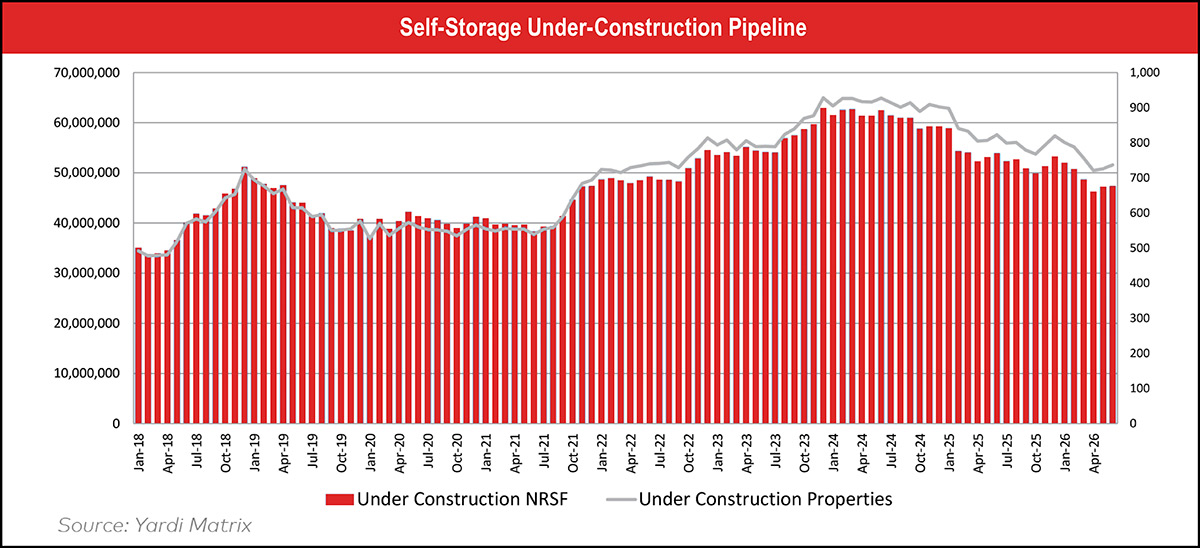
On a quarterly basis the pipeline declined by 2.8 percent, and on a year-over-year basis the pipeline has fallen by 12.2 percent. The under-construction pipeline peaked in December 2023 at 62.96 million NRSF. Current levels represent a 25 percent decline from the peak.
See Self-Storage Under-Construction Pipeline chart.
However, the level of new construction identified through mid-year is 19.6 percent below the level identified during the same period one year ago.
See Self-Storage Construction Starts chart.
See Days in Construction chart.
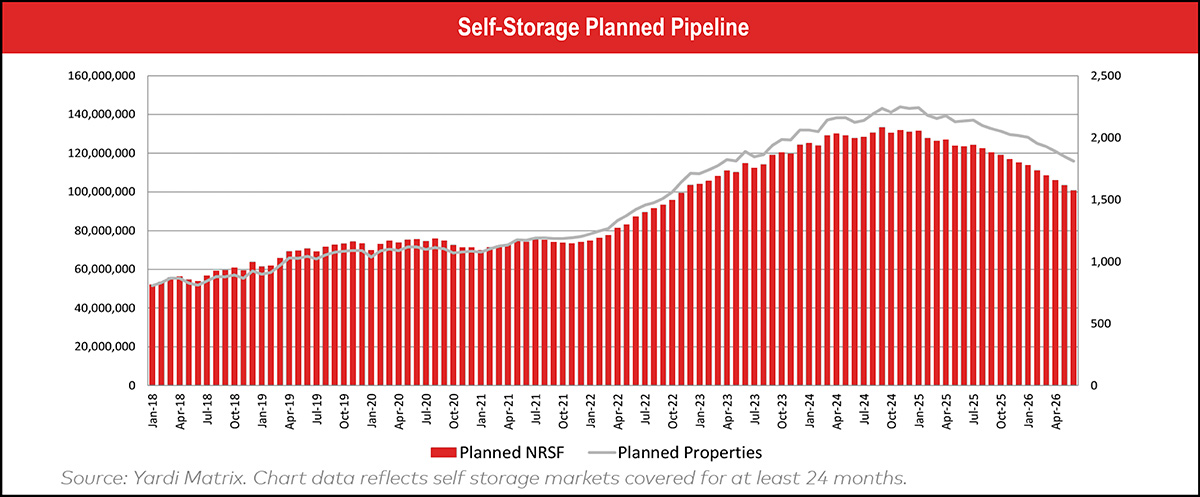
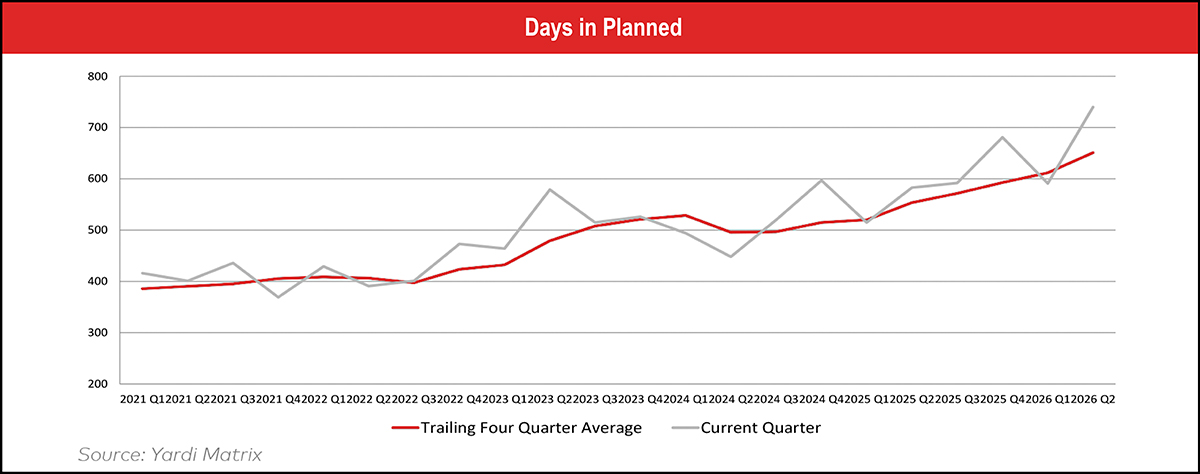
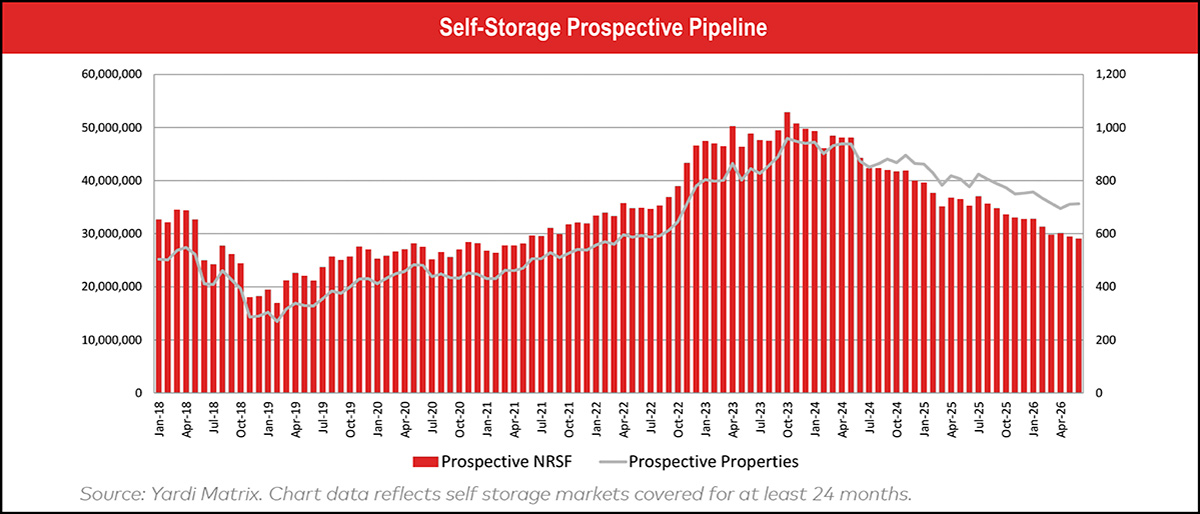
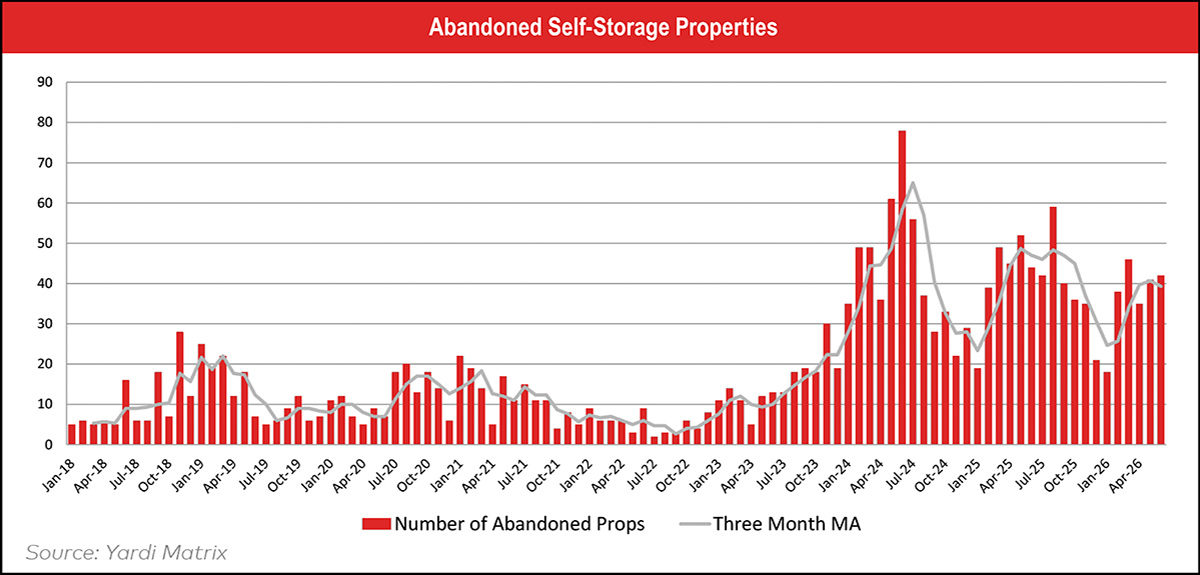
All longer-term aspects of the self-storage development pipeline continue to suggest weak new-development enthusiasm. Both the planned and prospective pipelines continue to contract, while the amount of deferred NRSF is still increasing and the monthly number of abandoned projects remains elevated.
The longer-term forecast assumes that continued fiscal deficits will support the broader economy; therefore, a recession is deemed unlikely. However, sizeable deficits will also keep upward pressure on long-term interest rates and home mortgage loans. The former suppresses new-development valuations, while the latter suppresses single-home transaction activity, which in turn reduces longer-term self-storage demand.
New self-storage development will be difficult but not impossible, with new supply in the later years falling well short of what was delivered during the peak of the post-pandemic development cycle.
See Self-Storage Planned Pipeline chart.
See Days in Planned chart.
See Self-Storage Prospective Pipeline chart.
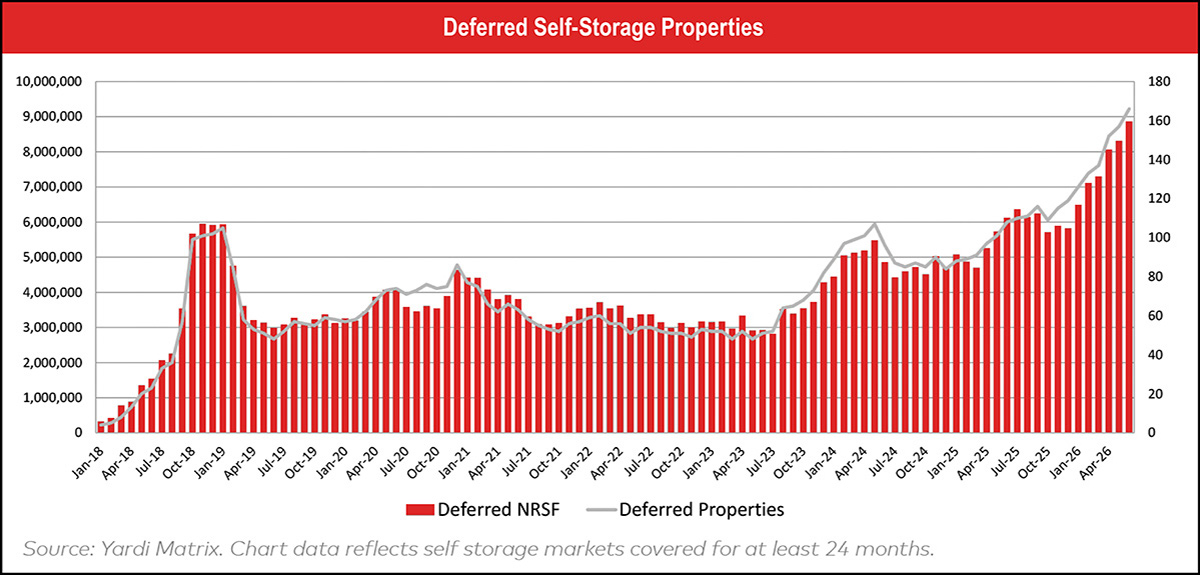
The deferred pipeline bottomed in July 2023 at 2.81 million NRSF and has since tripled in size.
See Deferred Storage Properties chart.
See Abandoned Storage Properties chart.
Both near- and long-term development pipeline data continue to suggest self-storage development interest has substantially declined. Year-to-date completions are running below 2025’s pace, suggesting 2026 new supply will fall 18.9 percent from 2025’s level to 52.9 million NRSF. Year-to-date construction starts are also running below 2025’s level, suggesting 2027 new supply will fall a further 14.5 percent to 45.2 million NRSF.
The forecast assumes that the new development environment remains difficult but not impossible over the remaining years of the forecast with a modest rebound in new supply to 40.7 million NRSF by 2031.
As always, Yardi matrix is extremely focused on accurately maintaining our development pipeline data and identifying any changes in self-storage development activity.


o matter how much you enjoy your job, life feels sweeter when you can see retirement on the horizon. Even in an industry as enjoyable as self-storage, the prospect of resting and spending more time with loved ones always lifts the spirit. And this year, after almost four decades of doing what she loves, Sue Haviland, owner of Haviland Storage Services, will pass the baton to her successor.
Her first job was serving ice cream at the local state park the summer at the age of 13. “My dad would zip me across the lake on our boat for my shifts,” she says, showcasing the truly idyllic nature of her childhood.
In high school, she was involved in as many activities as she could. “It was a good indicator of what my life would be like,” Haviland says before listing what kept her busy. “I was in the National Honor Society, marching band, the color squad, I worked in the attendance office, and I took stats for the football team.” That last activity she did with one of her good friends as a way to ride on the team bus to games with all the players. She was also a class officer every single year as well as serving on the student council. “I had my fingers in everything.”

To coordinate all those shifts, she scheduled all her classes on Mondays, Tuesdays, and Wednesdays so she could dedicate the rest of the week to work. Her schedule was full, but she firmly believes all those jobs gave her practical experience for going out in the real world.
Haviland answered a job ad for Extra Space Storage. “It was for a site manager job,” she says. “They interviewed me, but at the time, I wasn’t a good fit for the location with the position they were looking to fill.” Later on, as serendipity would have it, they remembered her when the same position became available at another one of their locations. So, in 1989, she joined the company.
About six months into the job, Haviland faced an unexpected situation. “A customer who was getting a divorce came to the facility to put all of her soon-to-be ex-husband’s stuff in storage,” she recalls. “Apparently, she hadn’t told her husband about it.”
He figured out the facility where she had stashed everything, but he didn’t know the unit number. “I got in one morning and about 80 locks had been cut,” says Haviland. “Nothing was missing from most of the units, except the one where his belongings had been stored.”
She managed to get away from the customer and locked herself in her office, where she proceeded to page the manager about the incident. When he didn’t come to her aid, because he was at a bar, Haviland called the police for assistance.
The manager was fired, but Haviland was promoted to his position of area manager. “I like to joke that I got promoted for getting beaten up,” she says through laughter. She then worked her way up to regional vice president, and a few years later she became vice president of operations.
“I was there for 10 years; the vast majority of that time were good years,” says Haviland. “I got to cut my storage teeth with Ken Woolley, who set me up for success by signing me up to speak at trade shows because he thought I’d do a good job.”

While she enjoyed her time at Storage West, she was extremely unhappy at her job in San Diego. Not one to see it as a hindrance, Haviland saw it as inspiration. “I decided to go out on my own,” she says. “At that point, I had gained so much experience, and I knew there were plenty of operators who didn’t have the budget for a full-time staff, but I could do consulting, auditing, and third-party management for them.”
Her husband, Kraig, who had also worked at Extra Space, had started his own business helping operators set up call centers for the storage industry. “He already had the name Haviland Storage Services, so I went ahead and ran with that,” says Haviland. “We are a true storage family with my bringing Kraig into it, and now our daughter, Kylie. Many family dinners were spent talking storage, much to her dismay.”

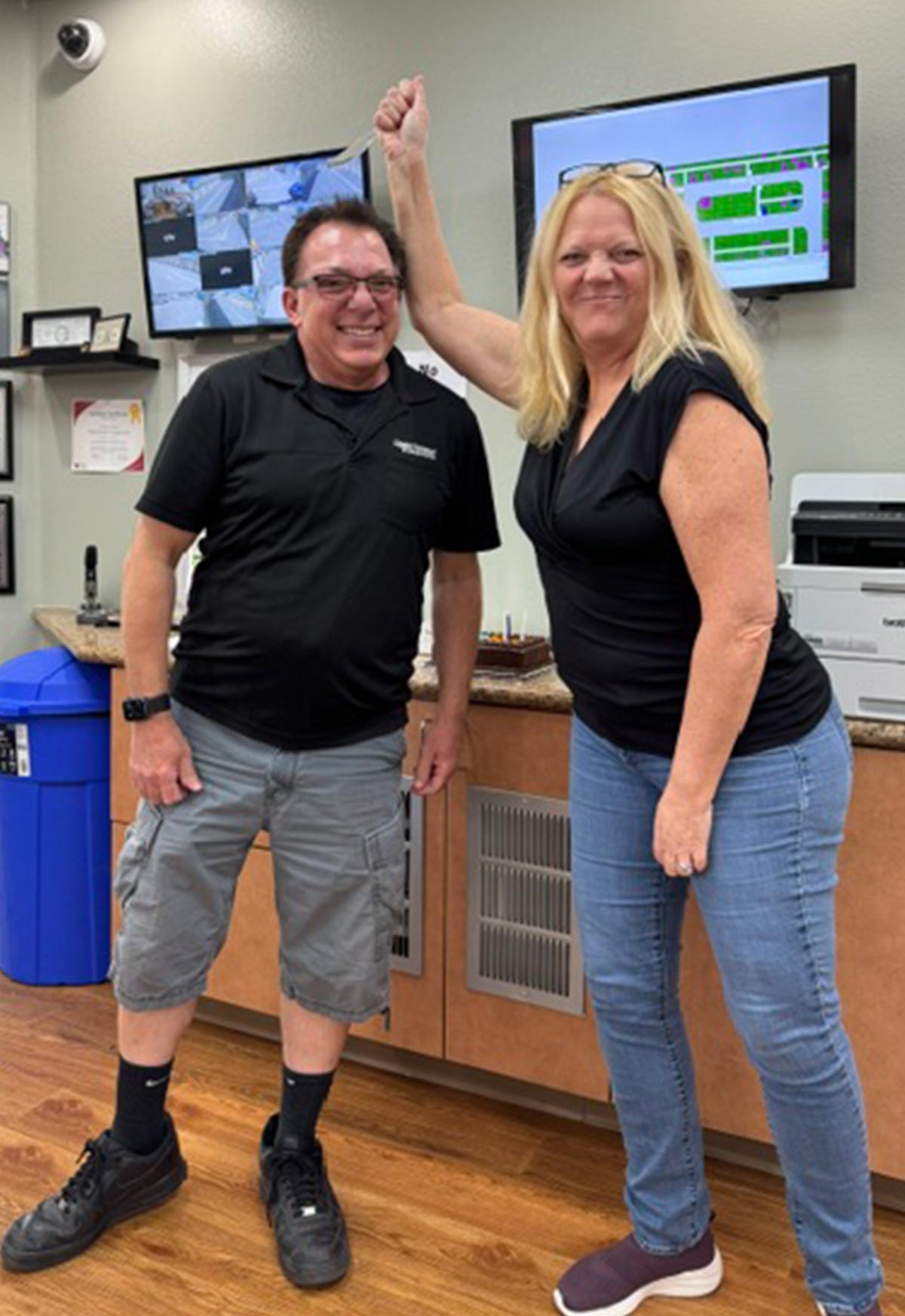
The company took off and sustained a long list of clients mostly through word-of-mouth marketing. “I was so busy promoting the properties I was trying to help, I wasn’t self-promoting that much,” she says, “so it’s mostly been referrals and people who have come to me after hearing me speak at the trade shows.”
Haviland also teamed up with longtime friend, Bob Copper, who started Self-Storage 101 for a short time. “I was running Haviland on the West Coast, and he was doing Self-Storage 101 on the East Coast, so we joined forces, helping each other with projects and referring clients to each other.”
She then joined the California Self Storage Association, eventually becoming a member of the board of directors. This is where she met the late Barry Hoeven of Westport Properties and US Storage Centers, who was also co-founder of Charity Storage, a national non-profit organization in which participating storage facilities dedicate a unit to collect donated goods. These items are then sold at auctions, and the proceeds are allocated to various charities across the U.S. The cause is very near and dear to Haviland’s heart, and she has been on its board of directors for many years. “I love the work they do, and it’s a great opportunity for facilities to do good work and give back to their communities.”
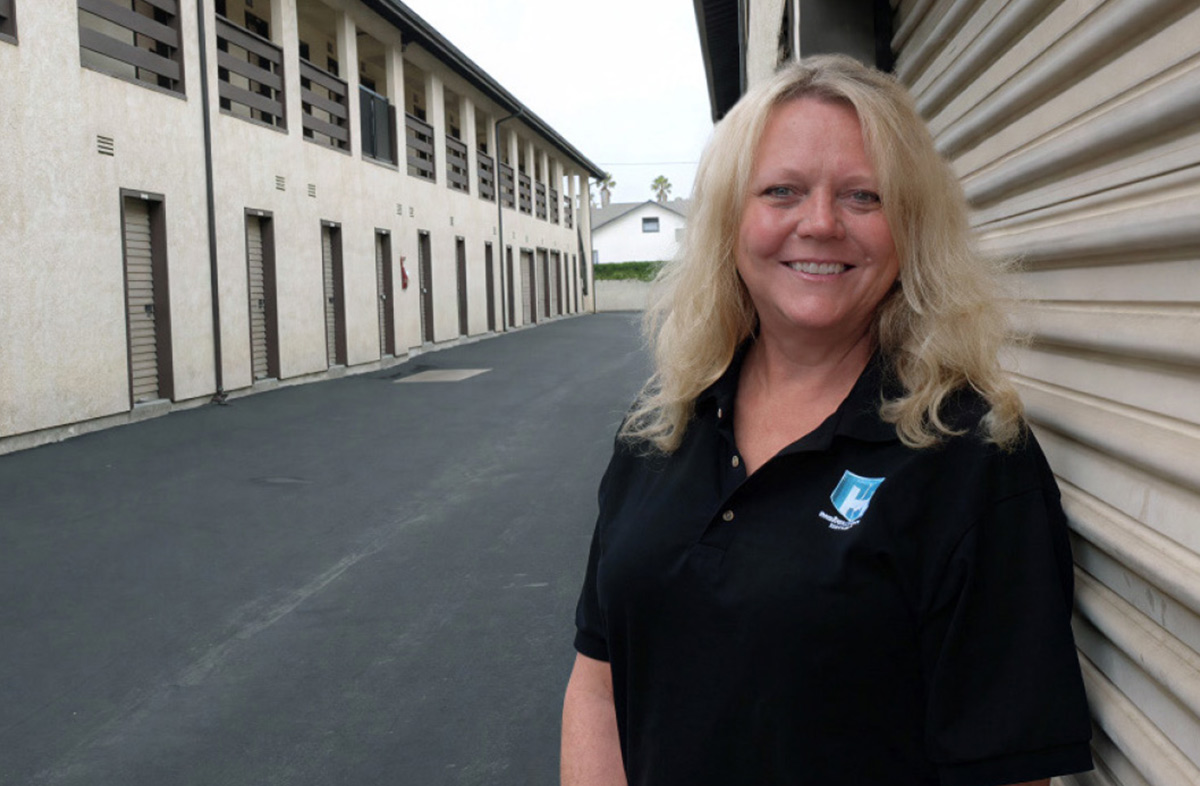

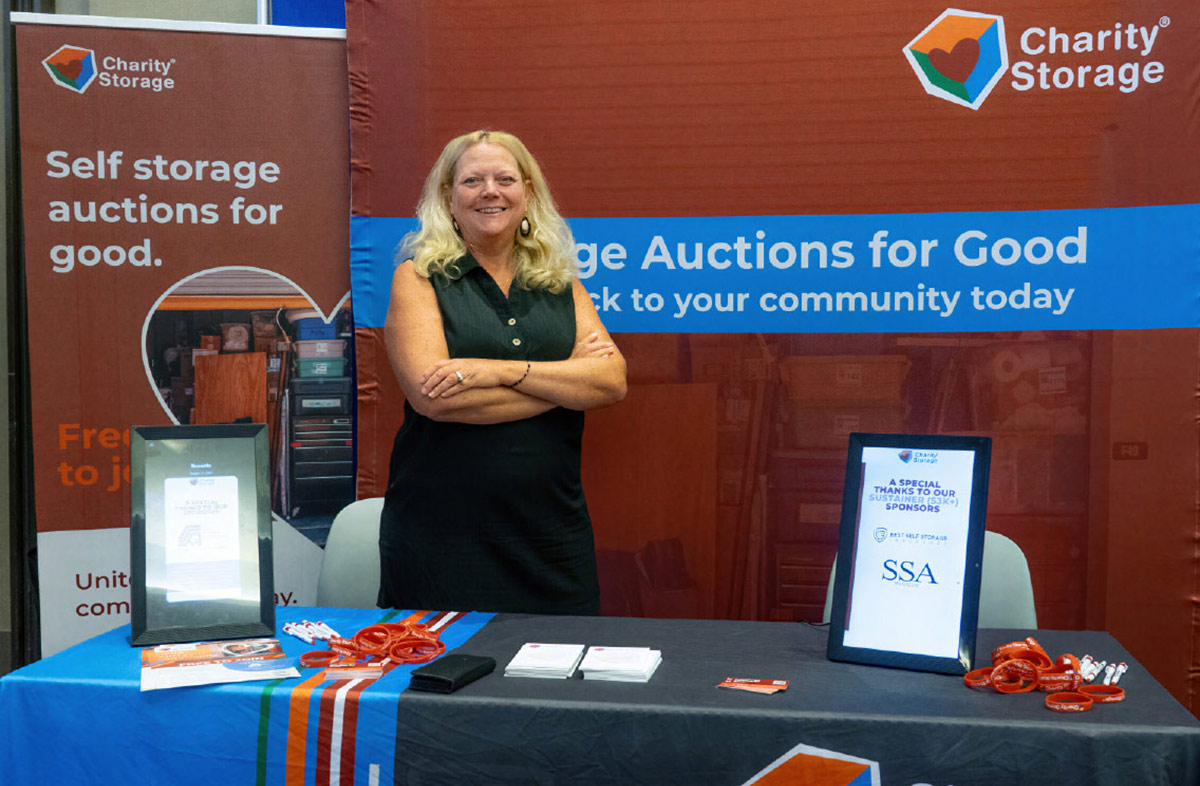
However, she’s been fortunate to get clients with shared values and whom she enjoys working with. Many of them have been with her for over 18 years on Haviland Storage Service’s third-party management side.



What she loves the most about having dedicated her professional life to self-storage are the people. “I have made some of the best friends I could ever ask for; and I know that even after I retire, they will still be in my life.”
While she’s ready for retirement, she’s also made sure to set up her longtime clients to be in good hands. “I’ve partnered with Melissa Huff from Lighthouse Storage Solutions. “She will take over my management contracts,” says Haviland. “She’s been working with me for the past year to learn my properties. I kind of joke that she’s me 20-some years ago. I’m confident she’ll keep doing them well and improving.” This gives her peace of mind, as she truly wanted to ensure her clients and employees would be OK. “I’m glad they feel comfortable with the transition, because they’ve stuck with me all these years, and I wanted to do right by them.”
Alhough working in the self-storage industry has been a blessing for Haviland and her family, she’s excited for what’s to come. “I never thought that storage would’ve afforded me the life it has,” she says. “I’ve had great friends and so much support, and I couldn’t ask for anything more. Even when I look back on the challenges, I don’t have any major regrets. Some experiences may not have been the easiest when I was getting started, but it’s a great ending to a great chapter.”
She goes on to say, “I love to travel. That’s part of what I’m really looking forward to. We already have several trips planned to various islands in the Caribbean; and after the dust settles, I’d like to rent a place in Rome for a month, so that I can hop on trains and explore Italy.”
Haviland plans on doing more of the things she enjoys, such as playing tennis, socializing with friends, and going to music festivals. “And one of the best parts is that my daughter, Kylie, and her husband, Parker, left San Diego and followed us to the Carolinas, so now my granddaughter, Cleo, lives 50 miles away, and I plan on getting more time with them.”
She loves to read too, so she’ll dedicate a lot of extra time to that. Plus, she’s working on convincing Kraig to go on a safari. “He’s not sold on it yet, but stay tuned,” Haviland says. “He retired a few years ago, and now I get to go off and be spontaneous with him. He’s always been my biggest supporter, so I am excited for our upcoming adventures together.”
As she wraps up one chapter and gets ready for the next, all she feels is gratitude—for what’s behind her and for everything that’s to come.
“I’ve been very fortunate,” adds Haviland, “and it’s been a great ride.”










nstitutional investors are transforming the self-storage market by acquiring properties traditionally owned by independent operators. These buyers (REITs, private equity funds, and sovereign wealth funds) bring advanced tools and strategies to improve efficiency and maximize returns. As of 2025, independent owners still managed roughly 70 percent of U.S. facilities, but their share is shrinking by 1 percent to 2 percent annually, and institutional ownership has nearly tripled over the past decade.
Key takeaways:
- Higher Revenue Potential – Institutional operators generate 10 percent to 20 percent more revenue per square foot than independent owners through AI-driven pricing, centralized management, and marketing resources.
- Generational Shifts – Many independent owners are aging out, with substantial numbers of facilities transitioning to institutional ownership annually.
- Acquisition Strategies – Institutions favor portfolio acquisitions, joint ventures, and platform investments to scale quickly.
- Market Dynamics – Limited new supply, rising construction costs, and zoning restrictions have tightened the market, driving up competition and prices.
- Asset Preferences – Climate-controlled and premium facilities are in high demand, commanding a 25 percent to 40 percent rent premium over standard units.
For smaller owners, improving financial reporting, adopting dynamic pricing, and addressing inefficiencies can boost valuations and attract institutional buyers. With $5 billion to $8 billion in private equity targeting the sector, the next 12 to 24 months present a strong opportunity for sellers in this consolidating market.
The acquisition was underwritten at a mid-5 percent initial cap rate, with a plan to integrate NSA’s assets into Public Storage’s proprietary “PS Next” platform—closing a substantial NOI margin gap, lifting occupancy to 90 percent, and generating $110 million to $130 million in annual run-rate synergies.
The mindset is clear: Institutions aren’t just buying existing cash flow, they’re buying the value they can create through operations and technology. Over 90 percent of institutional facilities already use automated pricing systems, versus only 15 percent to 20 percent of independent operators—a technological edge that explains why they see so much untapped potential in these acquisitions.
PORTFOLIO ACQUISITIONS
Bulk purchases are the fastest way to scale. Acquiring a portfolio in a single transaction lets institutional buyers expand quickly while spreading fixed costs (technology, marketing, vendor contracts, centralized management) across numerous locations. Public Storage’s $10.5 billion NSA acquisition is the prime example, adding over 1,000 properties with $110 million to $130 million in expected annual synergies.
“The bigger story is the value-creation opportunity from moving the assets onto Public Storage’s operating platform,” said Boyle.
The impact shows in the numbers: Institutional ownership of U.S. self-storage has climbed to 39 percent by 2026, up from just 13 percent in 2016.
Not every institution wants to shoulder large acquisitions alone. Joint ventures share risk, tap local expertise, and ease entry into new markets. Public Storage, for example, structured a $3.3 billion joint venture for part of the NSA portfolio, sharing financial risk while maintaining management control.
PLATFORM INVESTMENTS
This strategy focuses on building or acquiring the operational systems (technology, branding, management tools) that make large-scale operations efficient. Public Storage’s “PS Next” platform, with centralized call centers and AI-driven pricing, has increased revenue by 10 percent to 20 percent per square foot. That efficiency makes underperforming facilities attractive targets, because the improvement potential is both measurable and repeatable.

LIMITED NEW SUPPLY IN KEY MARKETS
Rising construction costs and nearly 600 days of planning have significantly slowed new supply, and a 25 percent tariff on imported steel in 2025 drove domestic steel prices up 18 percent, adding roughly 5 percent to construction budgets. Over 50 cities have enacted stricter zoning rules or outright bans on new storage development. As a result, new supply is projected to drop to just 2.4 percent of total stock in 2026, down from 3.0 percent in 2025 and well below the 4.2 percent long-term average, with 2027 deliveries expected to decline another 25 percent to 30 percent. The impact is severe in high-barrier markets: Boston has only 0.7 square feet of storage per capita, driving rent growth of 11 percent to 15 percent year over year. When supply is restricted, existing facilities gain pricing power—something institutional buyers capitalize on quickly.
GROWING DEMAND FOR CLIMATE-CONTROLLED AND PREMIUM ASSETS
Climate-controlled units generate $18 to $28 per square foot, versus $10 to $16 for standard drive-up units—a 25 percent to 40 percent rent premium institutions can push further with AI-driven pricing. Currently, 40 percent of new customers actively prefer climate-controlled options, and 50 percent to 60 percent of new builds are now climate-controlled, up from about 30 percent a decade ago. These facilities are costlier to build and harder to replace, making them especially appealing acquisition targets.
TENANT RETENTION AND LONG-TERM DEMAND TRENDS
The average self-storage tenant now stays 18 to 19 months, up from nine to 14 months in 2017, providing more predictable cash flow that aligns with institutional underwriting. Demand has also diversified beyond moving and downsizing—renovations, remote work setups, and lifestyle changes are now consistent drivers. In 2023, 12.6 percent of U.S. households used self-storage, versus less than 10 percent before the pandemic, creating a more stable occupancy floor. With an estimated $5 billion to $8 billion in private equity earmarked for self-storage, shrinking supply, scarce premium assets, and longer tenant retention have created a fiercely competitive buyer market.
HOW INSTITUTIONAL BUYERS UNDERWRITE STORAGE ASSETS
Institutions evaluate both current cash flow and future performance potential, taking a more analytical, data-driven approach than most private sellers. Here are the metrics and benchmarks they use.
OCCUPANCY RATES AND RENT GROWTH TRENDS
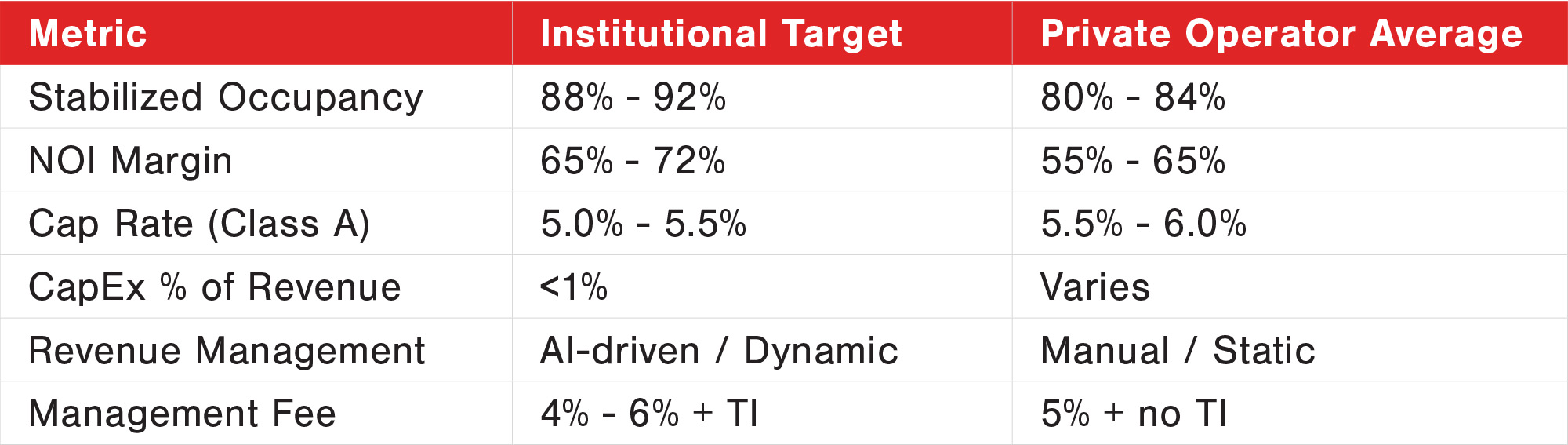
Institutional buyers target stabilized occupancy of 88 percent to 92 percent, penalizing facilities below 85 percent occupancy with a cap rate penalty of 50 to 150 basis points. They watch the gap between street rates and actual rents received: A gap exceeding 15 percent signals potential annual rent growth of 8 percent to 12 percent from long-term tenants. Rent growth projections are stress-tested against modest national increases of roughly 0.3 percent year over year, and institutions often leverage AI tools targeting revenue gains of 5 percent to 10 percent.
LOCAL MARKET CONDITIONS AND SUPPLY RISK
Underwriters evaluate the development pipeline within a 3-mile to 5-mile radius. Markets where new supply exceeds 10 percent of existing inventory are generally avoided, since lease-up can stretch to 24 to 36 months. There’s a clear divide between supply-constrained coastal areas and oversupplied Sun Belt markets: Boston represents the high-barrier profile institutions prefer, while high-construction cities like Phoenix and Austin require more cautious absorption assumptions.
OPERATIONAL EFFICIENCY AND ASSET CONDITION
Top-tier assets are expected to achieve NOI margins of 65 percent to 72 percent, versus 55 percent to 65 percent for smaller private operators. Underwriting includes expense normalization, adjusting for underestimated property taxes, insurance, and management fees. REIT-operated assets typically incur management fees of 4 percent to 6 percent, plus tenant insurance, whereas independent owners often pay below-market rates and keep 100 percent of tenant insurance. Physical condition matters too: Phase I Environmental Site Assessments run alongside inspections of roofs, parking lots, and HVAC, and deferred maintenance can drive price reductions of $100,000 to $500,000.
IMPROVE FINANCIAL REPORTING
Institutional buyers won’t take your word for performance. During diligence, underwriters will match rent rolls to bank deposits and scrutinize aging reports to verify income. Inconsistent records raise red flags and give buyers room to renegotiate. The solution is standardized reporting: accurate monthly rent rolls, lead conversion tracking, and documented occupancy trends. Clean records meet buyer expectations and speed up the transaction.
TIGHTEN OPERATIONS AND REDUCE INEFFICIENCIES
The performance gap is striking: Top REITs generate $20 to $28 in annual revenue per available square foot (RevPAF), while many independent facilities fall between $12 to $16. To close the gap, implement dynamic pricing—used by over 90 percent of institutional facilities and worth 5 percent to 10 percent in revenue—and invest in smart access systems, which can reduce on-site labor costs by 30 percent to 50 percent. One multigenerational owner improved RevPAF by 32 percent in 18 months through dynamic pricing software, security upgrades, and a professional website, adding over $280,000 in NOI across a three-facility portfolio.
POSITION ASSETS TO ATTRACT INSTITUTIONAL BUYERS
Deferred maintenance can be a deal breaker, with roof, paving, or HVAC issues triggering price reductions of $100,000 to $500,000—address them upfront. Boost ancillary revenues like tenant insurance and in-facility retail, which flow directly to NOI and sale price. If feasible, add climate-controlled units, which command a 25 percent to 40 percent rent premium and are favored by institutional buyers. If a full modernization isn’t realistic before selling, third-party professional management typically improves NOI by 10 percent to 25 percent within 12 to 24 months, elevating your position on the cap rate spectrum at closing.
The performance gap between institutional and independent operators is significant but not insurmountable—institutions run occupancy in the low 90s while many independents sit in the low 80s, a difference that directly impacts valuations. Dynamic pricing, smart access systems, and consistent rent increases can close that gap. Whether you plan to sell or hold, the approach is the same: Tighten operations, modernize where it matters, and maintain clean financial records. Owners who treat these as ongoing priorities—not last-minute preparations—will negotiate from strength and exit on their own terms.

How do institutional buyers pick which facilities to buy?
They zero in on facilities with clear operational upside in markets where demand is high, supply is tight, and barriers to new competition are significant—favoring prime locations, newer builds, and climate-controlled product. They also prize clean financial records and documented operating history, weighing cash flow stability, execution risk, and how easily the property scales within their portfolio.
What should I fix before selling my storage facility?
Start 12 to 24 months ahead. Get at least three years of clean, consistent financial records in order, and address deferred maintenance like roof leaks or broken doors. Focus on increasing NOI through automation, dynamic pricing, and reduced delinquency, and work with brokers and tax advisors early to clarify goals and navigate diligence smoothly.
Will climate-controlled units raise my sale price?
Yes. Climate-controlled units typically generate 25 percent to 40 percent higher rents than standard storage. Since a facility’s value is tied closely to NOI, those higher rents directly enhance valuation and make the property more attractive to buyers prioritizing modern amenities and revenue growth.

They gain reach they can’t build alone.
Through shared brand presence and collective online momentum, the Storelocal community helps independents show up stronger, get found faster, and compete more effectively—while staying fully independent.

omewhere in your portfolio, a customer is signing a lease at 9:40 p.m. on a Tuesday from a phone screen. They are between houses, clearing out a parent’s home, or moving inventory out of a garage because the side business finally outgrew it. They will pay you a few hundred dollars a month for a year and a half. Then they will disappear.
That customer is, by the numbers, among the highest-intent consumers in the American economy. And most operators monetize exactly one thing about them: square footage.
That gap is the opportunity—not because storage is a weak business, but because the rental event sits precisely where a life transition meets a compressed burst of purchasing decisions. What has changed is that financial technology has finally made it practical for a non-financial company to show up inside that moment, at a cost and compliance burden a regional operator can carry.
The more useful question is why those households rent. A large share of demand is tied to moving: tenants storing goods between homes or shedding what won’t fit after downsizing. Businesses make up the other major segment, and they tend to stay longer than household renters. Business formation remains elevated, which keeps that segment growing.
Put plainly: Every rental tells you something. When someone signs a lease, you have learned, that this person is moving, downsizing, renovating, inheriting, separating, launching something, or growing something. Very few businesses ever receive a signal that clean. Banks and insurers pay handsomely for weak proxies of it. You get the real thing at move-in, but many operators let it evaporate.
Those decisions are unusually winnable. About nine in 10 movers actively seek out new products and services during the transition, and they are roughly three times likelier than a settled household to try an unfamiliar brand. More than half of new homeowners add or switch an insurance carrier within six to 12 months. Eight in 10 recent movers say they want brands to market to them during this window, and most brands never show up, per Speedeon Data.
You are there while all of that is being weighed, physically and digitally, with permission, inside a relationship the customer started. A direct-mail vendor working from a change-of-address file arrives weeks later and uninvited.
That is embedded insurance. It works. And it is one product.
On the tenant side, the same stack supports mobile wallets, self-service portals, and payment links that let a tenant settle up in roughly four clicks without logging in.
That is embedded insurance, and it is one product running on infrastructure that can now carry many. The question is not whether to embed more financial products—it is how many, chosen how, and on whose platform.
- Old and new address – This tells you whether this is a move across town or across the country and sets the market and price range for anything you offer.
- Unit size and type – A climate-controlled 10-by-20 means the contents of a whole house. A 5-by-5 usually means a life event, not a move.
- Consumer or business lease – The most important split. A business tenant means inventory, equipment, receivables, payroll, and a likely need for deposit accounts, cards, or working capital.
- Stated reason for renting – Most operators already ask this at move-in. Almost none do anything with the answer.
- How they pay – Autopay, ACH, or card; on-time history; paying several months up front—all of it says something about financial habits.
- Expected and actual tenure – A stated three-month need reads “between homes.” An open-ended term reads “something changed for good.”
- Move-in timing – This one matters the most because the high-intent window runs about 75 days from before the move to after it.
Four groups cover nearly all of it:
- The mover in transition – With the highest value and shortest window, offer this customer renters or homeowners’ coverage, a realtor or mortgage referral, movers, supplies, cleaning and junk removal, home security, and a deposit account if the move crosses markets.
- The downsizer – This customer is often older, often cash-rich, facing a lot of decisions at once; offer estate and valuation services, updated insurance, deposit and wealth products, consignment and cleanout services, and longer-term rate plans.
- The growing small business – Has the longest tenure, deepest wallet, and least served. May need business checking, card acceptance, working-capital lines, equipment and vehicle financing, business insurance, payroll, and financing to buy a building of their own for the ones outgrowing the unit.
- The renovator or life-event renter – May need home-equity or improvement financing, contractor marketplaces, added coverage, and flexible terms on the storage rental.
Curation is where the value sits. McKinsey & Company puts the revenue lift from personalization done well at 10 percent to 15 percent and finds that 71 percent of consumers now expect it, while 76 percent are frustrated when they do not get it. One relevant offer at move-in is a service. Six irrelevant ones are spam, and they spend trust you cannot earn back.
- Commissions and referral fees – The tenant-insurance model extended to moving services, supplies, cleaning, security, and introductions to realtors or lenders. Known economics, and you can start now.
- Revenue share on financial products – Premium share on insurance, referral compensation on accounts and cards, origination or referral fees on lending through a partner bank or licensed intermediary.
- Payment economics – The more of the customer’s spending that runs across your platform, whether rent, merchandise, third-party services, or pay-over-time, the more payments shift from a cost line to a margin line.
- Lifecycle value – This is probably the largest of the four. The SSA’s Demand Study reveals what may be the most overlooked number in the industry: 79 percent of renters say they are at least somewhat likely to stay with the same storage company if they move. That intent already exists and mostly goes to waste, because nothing in the standard operating model gives a departing tenant a reason to come back or a way to do it. A platform that helped a tenant insure, finance, and manage a transition has both. It slows rate-increase churn, lifts referrals, and lengthens tenure. Two extra months of average stay across a portfolio is a meaningful NOI gain before a single dollar of commission is booked.
Choose partners the way a bank would. Once you embed a financial product, your brand carries its service quality, its disclosures, and its complaint handling. Vet licensing and underwriting, and work with institutions that treat compliance as infrastructure rather than overhead. When something goes wrong, the tenant will call you, not them.
Restraint is the product. The temptation is to fill the post-rental screen with everything available. The operators who win will show two or three genuinely relevant things at the right moment, then earn the right to show more later.
The customer who rented that 10-by-20 at 9:40 on a Tuesday will make roughly 70 decisions over the next 90 days. Today, you are one of them. Fintech is how you get invited into the rest. The operators who understand that first will not merely be renting space. They will be the trusted starting point for one of the most consequential transitions in their customers’ lives.

- 24/7 Virtual Doctors
- 5,000+ Free Prescriptions
- Virtual Counseling & Mental Wellness
- No Insurance Required
- No Deductibles or Co-Pays
- Emergency Alert Button
- Live GPS Location Sharing
- Guardian & Family Support Network
- Trip Monitoring & Safety Alerts
- Automatic Place & Geofence Notifications
Your managers invest in your business every day. Invest in them.


he self-storage industry provides a vital service to business owners, homeowners, and tenants across the U.S., but like many major industries, the sector has faced some turbulence in recent years. Factors like a frozen housing market and inventory oversupply have created a challenging environment for many facility operators, leading to slowing demand and rising operational costs.
In 2026, as the U.S. housing market begins to stabilize and rent growth slows across many major metros, the outlook for facility operators is looking more positive. While revenue growth remains low and supply remains high, evolving tenant demands are presenting new scaling opportunities.
For self-storage facility operators looking to grow past recent turbulence and develop plans built to meet future needs, understanding where the market is headed is key. With this in mind, we’ll analyze the 2026 self-storage landscape via shifts in consumer demand across major metros.
As of March 2026, total self-storage inventory eclipsed 2.1 billion square feet, almost 300 million of which consists of spaces built in the last five years, with the market valued at around $47 million.
While oversupply remains a significant challenge, experts are confident that the surplus supply rate is decreasing beyond 2022’s peak. As new supply pipelines slow to around 2.4 percent of total inventory and demand for specialty facilities grows, facility owners are adjusting key operations. Alongside unit mix and pricing, operators are also modernizing site infrastructure, with many replacing traditional gate codes and padlocks with a keyless entry system for business sites to support self-service access and remote oversight.
Alongside unit mix and pricing, operators are also modernizing site infrastructure, with many replacing traditional gate codes and padlocks with a keyless entry system for business sites and deploying license plate recognition camera systems to support self-service access, vehicle monitoring, and remote oversight.
To gain a good understanding of where the industry is headed, and the needs that self-storage facilities must address to meet evolving demands, here are some critical insights to consider:
- Consumer Demand – Thirty-three percent of Americans use self-storage and 18 percent plan to use it in the future; demand is driven by space limitations (29 percent) and moving support needs (25 percent).
- Occupancy Rates – Occupancy rates have stabilized at around 82 percent, signifying a settling of rental levels and the beginnings of a more balanced market with fewer rent price drops.
- Tenant Length Of Stay – Average stays have increased to around 19 months, helping to lessen cash flow problems for many operators and raising the potential value of facilities.
- Street Rates – The average street rate for a standard 10-by-10 unit sits at $135 per month as of June 2026, up 0.7 percent from May, suggesting a slight rise in demand relative to supply.
- New Supply Completions – New construction pipelines have slowed in recent months, with expected new square footage declining by almost 8 percent compared to 2025 deliveries.
However, given the significant variability in consumer demand across specific regions, national figures may not always provide actionable insights to help preempt emerging operational trends.
To best understand how the 2026 self-storage landscape is likely to impact future operations in specific markets, it’s wise to analyze emerging shifts in consumer demand across major metros.
As of 2026, average 10-by-10 unit prices in the area sit between $90 to $109 per month, below the national average and representing a year-over-year rate decrease of 1.7 percent. While high local supply has brought street rates down, consistent population growth of over 1 percent year over year between 2022 and 2025 has seen consumer demand for self-storage infrastructure remain high.
Driven by population growth, renters in the region are pursuing smaller apartments, leading to an increase in demand for self-storage infrastructure. As the nation’s fastest-growing metro area for incoming residents, increasing inventory levels are continuing to be matched by stable demand, helping to create an attractive and competitive market for consumers and facility operators alike.
With the Miami metro area experiencing an annual population growth rate of almost 0.9 percent, a continuing influx of new residents is helping to keep self-storage demand relatively high. For operators in the region, a combination of high rents driving tenants toward smaller residential properties and rising demand for specialty, climate-controlled units is facilitating market stability.
While factors like slowing local job growth and regional population decline are acting to slightly soften self-storage demand, climbing rents and low space availability across rental units in New York City are helping to stabilize the market and keep demand relatively high on a regional scale.
As a result of supply and demand imbalances, average rates for a 10-by-10 unit in the metro area can reach as high as $260 per month. These factors, alongside slowing supply deliveries and strict zoning laws, are facilitating an attractive market for existing self-storage businesses and an increasingly challenging market for newcomers and facility operators planning to scale.
Average rates for a 10-by-10 unit in the area can climb as high as $278 per month, around 60 percent above the national average. Despite this figure appearing high on a national scale, it represents a slight decrease in regional rates—a decline of 2.8 percent compared to 2025 to be exact.
Consumer demand in Greater Los Angeles is driven both by traditional moving and residential storage needs, as well as rising commercial client demand. High regional costs for commercial real estate are pushing local businesses to explore self-storage infrastructure as an alternative to on-site storage facilities, with many viewing self-storage as a comparatively low-cost solution.
Downsizing is emerging as a major driver of self-storage demand in the region, as an ageing population looks to transition to low-maintenance housing. Influenced by structural limitations, like the low commonality of attics and basements in local homes, older residents with the funds required to navigate the housing market are leveraging self-storage to meet downsizing needs.
While demand may be relatively high in the region, increasing inventory supply is keeping street rates fairly low. As of June 2026, the average street rate for a 10-by-10 unit sits at around $110 per month, representing a year-over-year decline of 5.2 percent and a surprisingly challenging market.
To best-navigate the modern landscape, facility operators must focus on region-specific trends, ranging from rising demand for climate-controlled units to the capturing of emerging downsizing markets. As supply pressures continue to ease and residential asking rents cool, existing facility operators are likely to be afforded actionable opportunities to meet shifting consumer demands.




pend a few minutes driving through greater New York and it’s easy to conclude that self-storage should be one of the region’s strongest real estate sectors. Millions of people live in apartments where every square foot matters. Contractors, small businesses, and growing families all need places to store equipment, inventory, or personal belongings. Demand continues to grow.
So why are so few new self-storage facilities being built? It’s a question I hear often, usually from people who assume that strong demand naturally leads to new development. On the surface, the formula seems simple: Find a site, build a facility, and customers will come. In practice, every stage of the process introduces another financial hurdle.
As both a developer and a licensed New York City general contractor, I’ve spent years building multifamily properties throughout the city while also developing self-storage facilities in Elizabeth and Pennsauken, N.J., and converting a multistory building into storage in Buffalo, N.Y. Those experiences have reinforced one lesson time and again. Identifying a market that needs storage is usually the easy part. Creating a project that makes financial sense is much harder.
Structural steel, fireproofing, life-safety systems, excavation, insurance, and the logistics of building in one of the country’s busiest urban markets drive costs upward well before a facility begins operating. Financing remains expensive, municipal approvals can take months or even years, and carrying costs continue to accumulate throughout the process. Based on projects we’ve evaluated, hard construction costs alone can approach $200 per square foot before land, financing, professional fees, and lease-up costs are fully reflected. Those experiences mirror broader industry findings in the 2026 Radius+ Self-Storage Industry Outlook, which points to rising construction costs and tighter capital markets as continuing obstacles for new development.
Another challenge is competition for land. Self-storage often carries many of the same construction and regulatory expenses as residential development, yet multifamily projects in New York City can benefit from programs such as the City’s “City of Yes” zoning reforms and the 485-x and 467m tax incentives. Those incentives improve the economics of housing projects, making them a more attractive use for many development sites.
Several years ago, developers could expect a broader pool of institutional buyers actively pursuing newly stabilized facilities. Recently, however, the investment environment for self-storage has become more selective. But that doesn’t mean institutional interest has disappeared.
The January 2026 acquisition of a 15-property New York City self-storage portfolio for approximately $1 billion demonstrates that high-quality, stabilized assets continue to command significant attention from investors. These buyers are placing greater emphasis on proven operating performance, however, which means developers must think over a much longer timeline, spending years acquiring land, navigating approvals, completing construction, and leasing up a property before an exit becomes realistic.
By the time a facility reaches stabilized occupancy, five or more years may have passed since the site was first identified. Throughout that period, developers continue carrying financing costs while adapting to changing market conditions. Patience has become just as important as identifying the right location.
That long view is one reason we continue pursuing self-storage opportunities. We believe the sector remains an excellent long-term business, particularly in markets we know well. Relationships with municipalities, contractors, engineers, and local professionals often shape a project’s outcome just as much as the real estate itself.
Metro New York still needs additional self-storage. Population density remains high, apartments continue shrinking, and businesses still need flexible space for equipment, inventory, and records. Those fundamentals haven’t changed.
Every successful project, however, still depends on balancing land costs, financing, construction expenses, operating income, and eventual exit value. And timing can matter just as much as momentum. In fact, waiting for the economics to align isn’t hesitation. It’s part of responsible development.
Building enough new facilities to keep pace will depend less on demand than on developers’ ability to negotiate the financial complexity necessary to bring a project to completion.
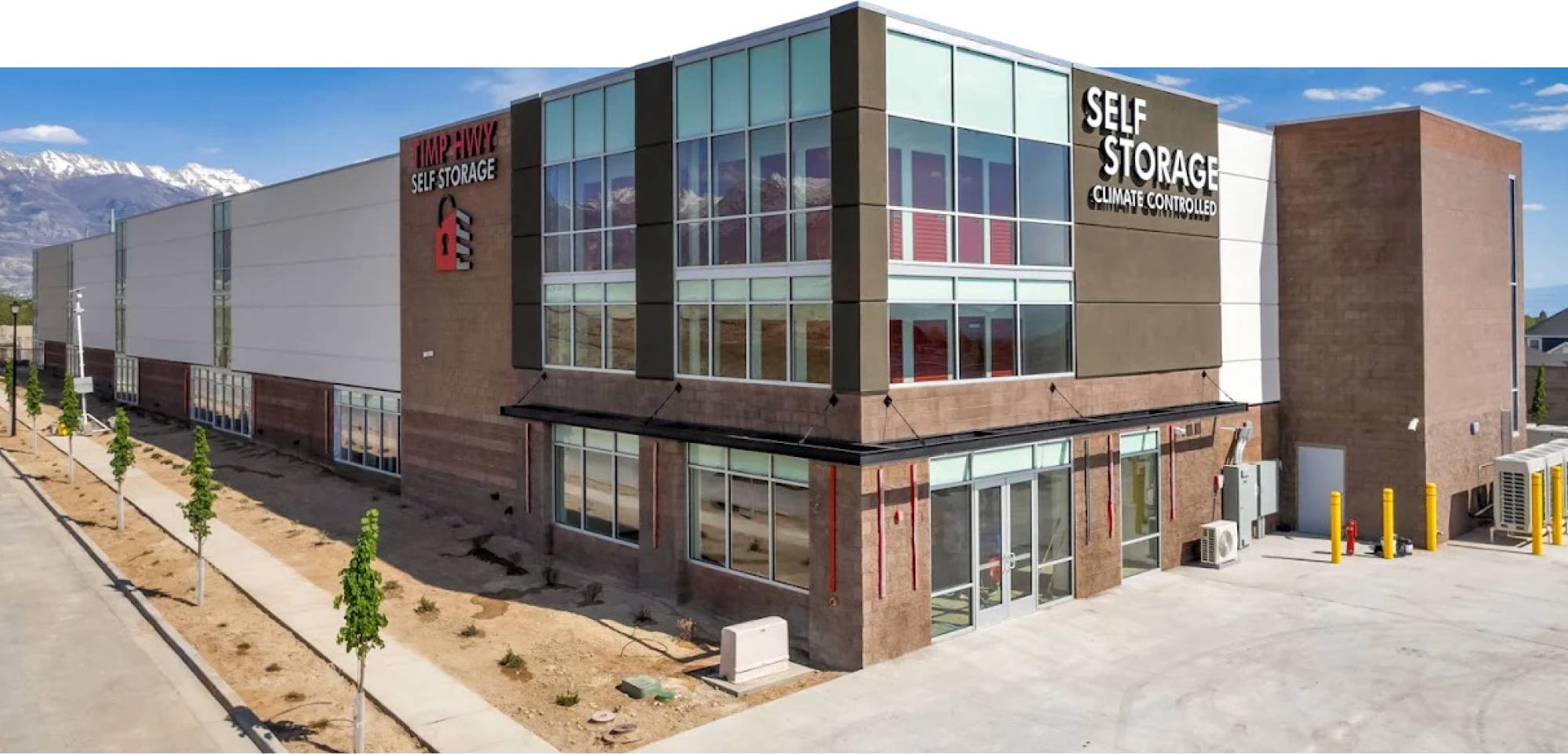
t’s Utah’s sixth-oldest city, but today Lehi is the center of the Silicon Slopes, a major hub for technology and innovation and home to a booming suburban population with a median household income of $130,000. Serving businesses and residents alike is the newly constructed Timp Hwy Self Storage, a sprawling, four-level Class-A facility with easy access to I-15.
The fully enclosed, climate-controlled design helps protect customers’ belongings from Lehi’s temperature fluctuations, winds, and dust, while high-tech features, including 35-plus surveillance cameras, coded entry, and an AI-enabled license-plate reader, keep them secure. Convenience is also key; there is a range of unit sizes, two elevators, and stairwells for easy movement throughout, plus an on-site manager attending to customer needs.
Locally owned and operated by Lehi Mini Storage LLC, the facility opened in August 2026 following 17 months of coordinated efforts between Johnson Construction and Wasatch Structures. Its vertical design and compact footprint required various levels to progress in a specific sequence, so ownership, design, construction, and supplier teams communicated closely to address changes, maintain structural and quality standards, and keep the project progressing on schedule.
The finished facility resembles a modern commercial building with thoughtful landscaping, combining white and gray surfaces with dark architectural framing, brown masonry, red accents, and large glass panes. With the Wasatch Range providing a beautiful, natural backdrop, Timp Hwy Self Storage is a standout in the Silicon Slopes.

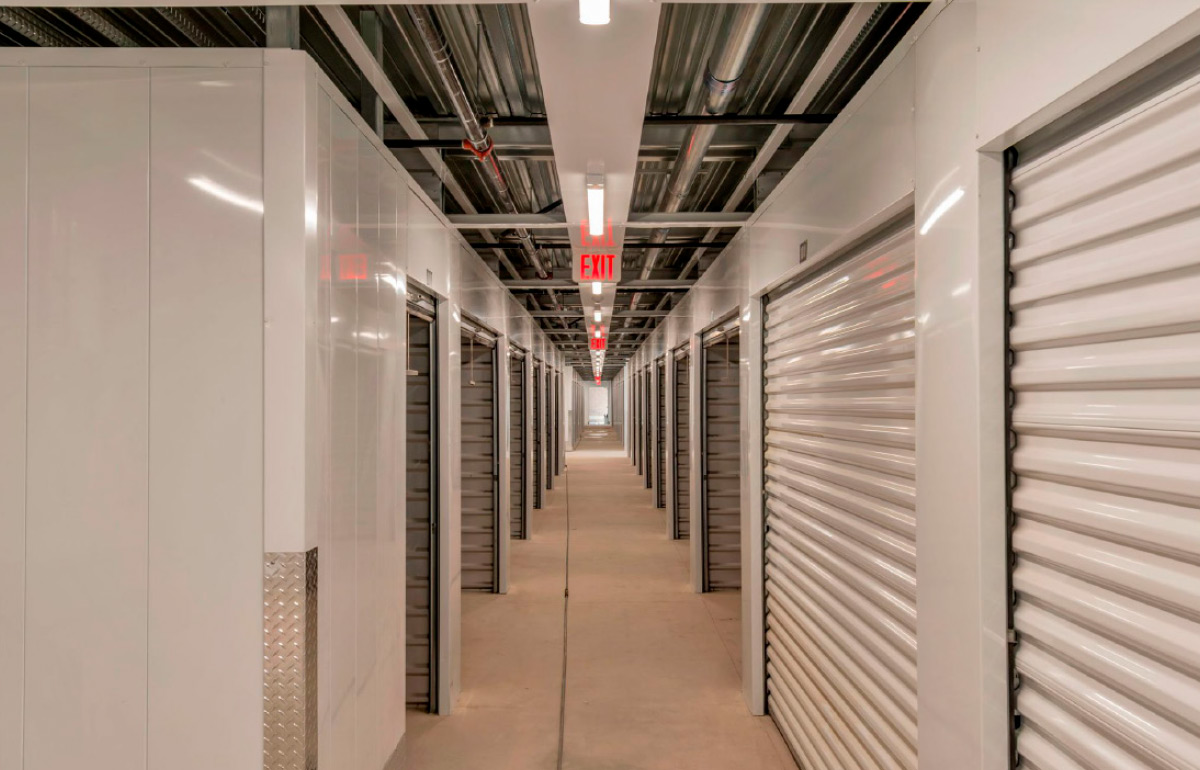
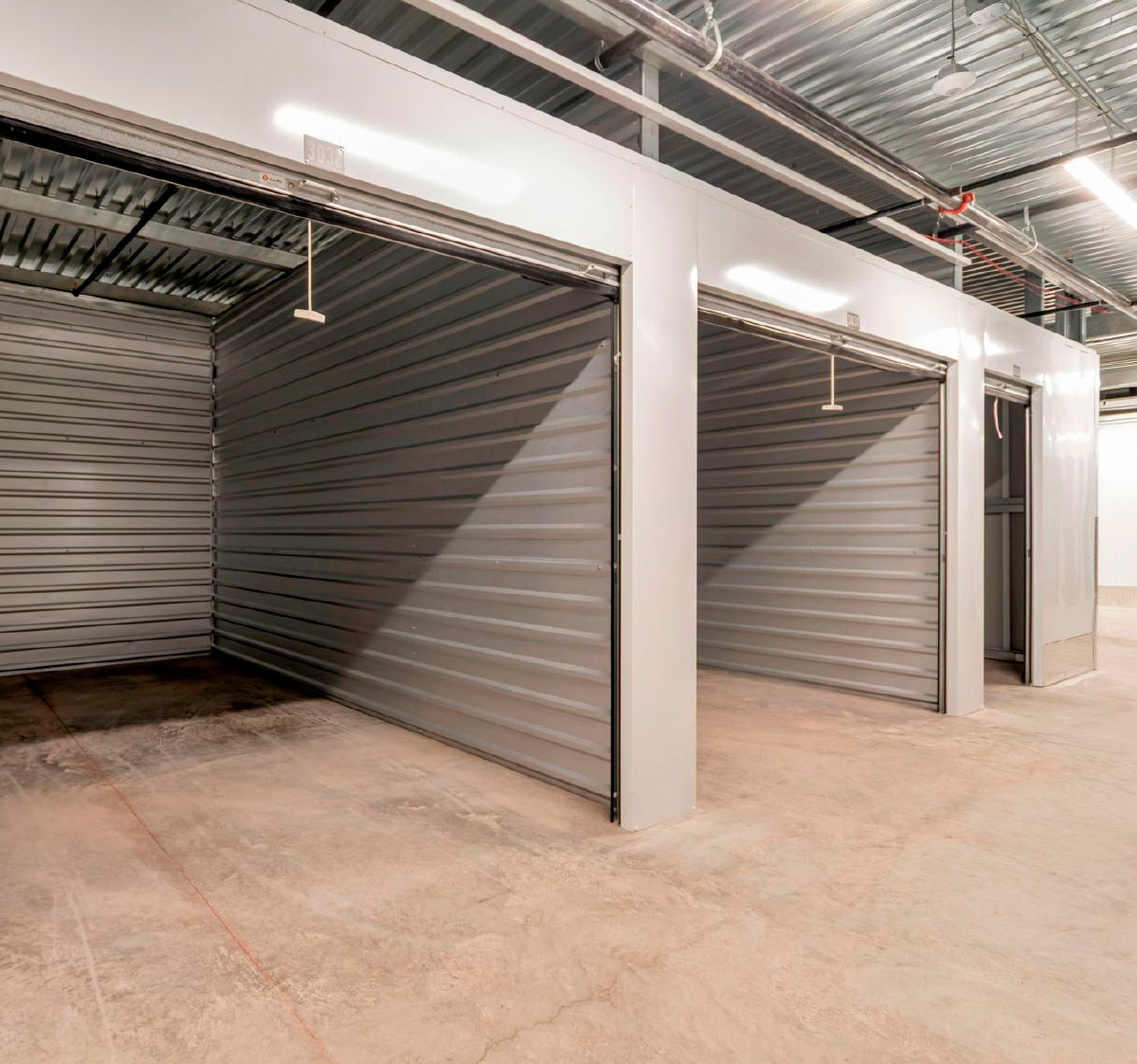
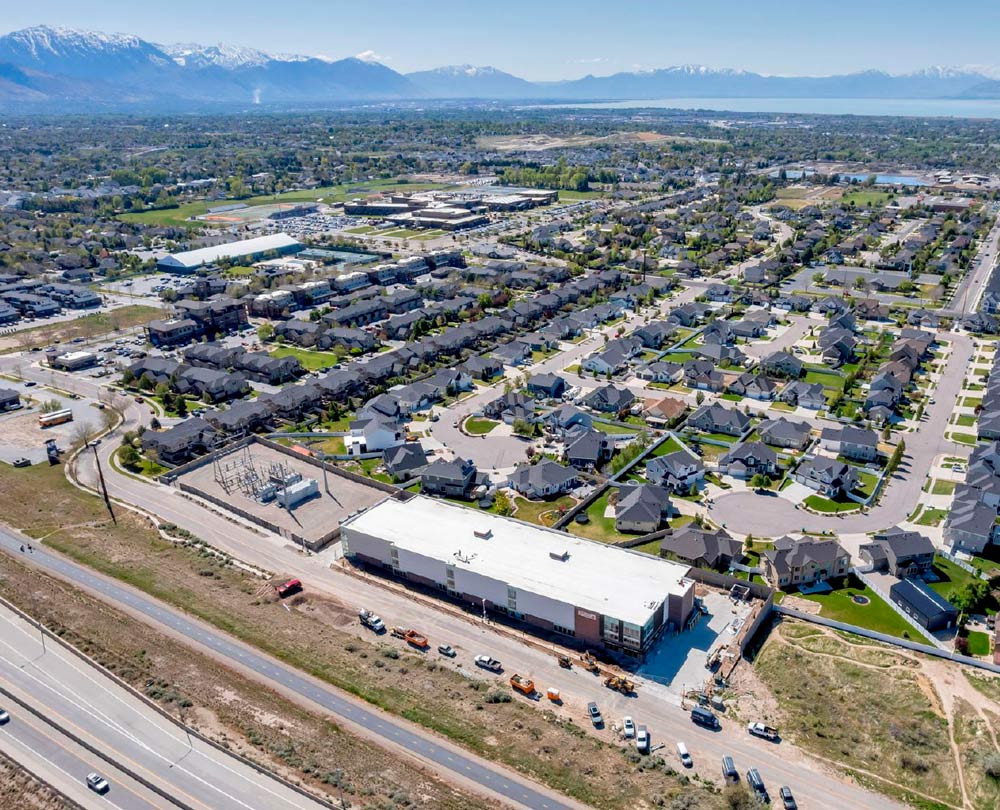
What You’ve
Built
To Public Adjusters

very self-storage owner knows the drill: You insure your facility, you pay your premiums, and you hope you never have to file a claim. But when a fire tears through a unit block, a hailstorm shreds your roofing, or a burst pipe floods your climate-controlled units, that hope isn’t a strategy. What happens next—and how much you actually recover—depends heavily on who’s in your corner.
This is an important distinction because most owners assume “the adjuster” is simply part of the process, a neutral party sent to assess the damage. In reality, the adjuster your insurance company sends out works for the insurance company. They are not neutral. A public adjuster levels the playing field by bringing the same level of expertise but works exclusively for you.
Public adjusters are licensed and regulated at the state level, and they typically work on a contingency basis, meaning they earn a percentage of your final settlement, so their financial interest is directly tied to maximizing your recovery, not minimizing it.
Consider the analogy: You don’t wait until you’re being wheeled into an operating room to find a surgeon. You research, ask for referrals, choose someone with the right experience, and a track record you trust—long before you ever need them. The same logic applies to a public adjuster. Your insurance company already has an adjuster. In fact, they have an entire claims department, staffed with professionals whose job is to close claims efficiently and protect the insurer’s bottom line. That’s not a criticism—it’s simply how the business works. But it means that from the moment damage occurs, you are, by default, outnumbered.
Owners who build a relationship with a public adjuster ahead of time gain several advantages:
- They understand your policy before disaster strikes. A public adjuster can review your current coverage; flag gaps, sublimits, or exclusions that could hurt you later; and help you have informed conversations with your broker about strengthening your policy now.
- They know your facility. A pre-loss relationship means your adjuster has context on your buildings, your business interruption exposure, your unit mix, and your typical occupancy—all of which matters when a claim is being valued.
- They can move immediately when something happens. Instead of losing days or weeks researching who to call, you have someone who can start documenting damage and guiding your next steps within hours.
- You negotiate from a position of readiness, not desperation. Insurance companies know the difference between an owner who is prepared and one who is scrambling. Preparation changes the tone of the entire claim.
Your insurer already has a team looking out for their interests before anything even happens. You deserve the same.
Your public adjuster:
- Is hired directly by you and legally bound to represent your interests only;
- Conducts a thorough, often multi-visit inspection of the damage, including areas that are easy to overlook, like structural damage to unit partitions, HVAC and climate-control systems, security and gate infrastructure, signage, paving, and roofing membranes;
- Builds a detailed, itemized damage estimate using industry-standard estimating software, often the same tools carriers use, so the numbers are credible and defensible;
- Reviews your policy line by line to identify every applicable coverage, including business income and extra expense coverage if your facility has to shut down units or waive rent during repairs;
- Handles the paperwork, documentation, and communication burden, so you’re not stuck compiling receipts and taking calls while trying to run your business;
- Negotiates directly with the insurance company’s adjuster and, when needed, escalates to appraisal or other dispute resolution processes to fight for a fair outcome; and
- Has a financial incentive that’s aligned with yours (They only get paid a percentage of what you recover, so it’s in their interest to fight for the most accurate, complete settlement possible.).
For self-storage owners specifically, this matters because your properties often have unique exposures that a generalist insurance adjuster may not fully account for—things like the cost of temporarily relocating tenant belongings, the loss of rental income while units are unusable, damage to specialized security systems, or the deterioration of climate-controlled environments after a power or HVAC failure. A public adjuster who understands the self-storage business is far more likely to capture the full scope of your loss than an insurance company adjuster working from a generic checklist.
The smartest move isn’t waiting for a crisis to start asking these questions. It’s building the relationship now—reviewing your policy, understanding your coverage, and knowing exactly who you’ll call the moment something goes wrong. Because when it does, having a doctor you trust already lined up beats searching for a surgeon while you’re already on the table.
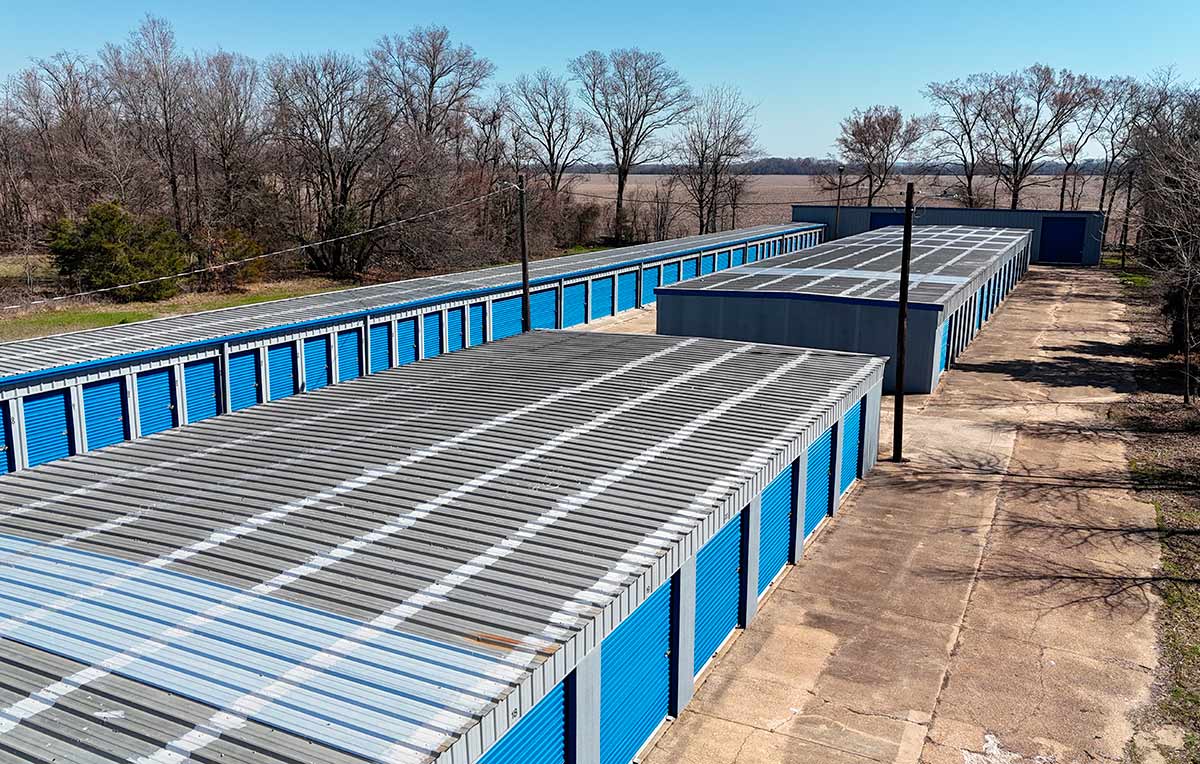
ot long ago, I visited a facility that looked terrific from the street: clean drive lanes, straight doors, tidy landscaping. If you were grading it from the driver’s seat, you would have given it high marks. When I put a drone in the air, the story changed. The roof had several large rot spots where water was unable to drain. From the ground, no one had any idea. From above, it was impossible to miss.
That’s the thing about a self-storage property. The parts that cost you the most when they fail are usually the parts you never actually see. You spend your days at eye level, while your roofs, your gutters, and the far corners of your property sit quietly out of view until something goes wrong. A drone changes that. It shows you your facility the way it really is, not just the way it looks from the driveway.
Hopefully, you’re already thinking about aerial photography for marketing, and the same flight that makes your website look great can double as a property inspection. Companies like mine offer both services on a single visit. Talk to your drone photography provider and make sure you hire someone who does this kind of work, not just someone who shoots a pretty picture.
The maintenance side is the part almost no one takes advantage of. Plenty of owners commission aerial photos for marketing, but very few think to point those same cameras at their roofs, drive lanes, or gutters. The photos get used once for the website and then forgotten. That is the missed opportunity we’re going to talk about.
For most single-facility operators, that means the simplest legal path is hiring a licensed drone photographer rather than becoming a pilot yourself. Don’t think of that as a hurdle. Think of it as the reason to finally get the professional aerial content you have wanted for your website, your Google Business Profile, and your social media.
Those dated images earn their keep another way too. When a storm rolls through and you file an insurance claim, having clear aerial photos from before and after can be the difference between a smooth claim and a fight. The same pictures help you hold a contractor accountable to what a repair actually looked like the day they called it finished. Photos do not forget, and they do not exaggerate. Make sure you check with your contractors to see if they have a staff photographer who can share their aerial photos with you if the timing isn’t right for you to hire your own drone photographer.
Here are some things to keep in mind as you look for the right photographer:
- Hire a pilot who has self-storage experience, because they already know what matters on a property like yours.
- Be specific about what you want covered, and walk through it building by building, roofs and drive lanes included.
- Ask for high-resolution still shots straight down over the roofs, not only the sweeping angles that look good on a homepage.
- Be flexible on weather and timing so you get bright, clear, usable footage.
- Ask for the raw high-resolution images, not just the edited video, so that months from now you can zoom in on a detail and actually see it.
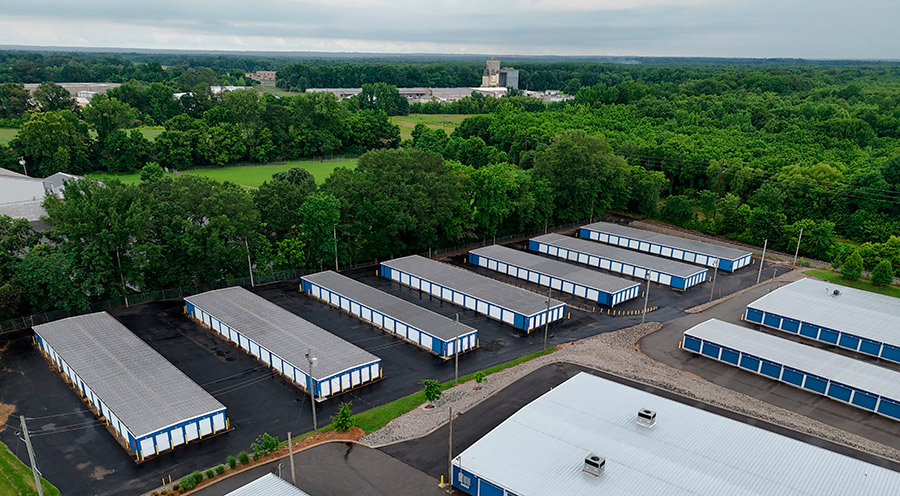
- Roofs – This is the big one. Look for rust spots, physical damage, and standing water where drainage has failed. The facility I mentioned earlier looked perfect from below while quietly holding puddles up top.
- Gutters – From the air you can see whether they are packed with leaves, whether water is draining the way it should or spilling over the side, and whether any sections are sagging or pulling loose.
- Driveways and pavement – Cracks, stains, potholes, and standing water all read clearly from overhead. Pay attention to the cracks in particular. I have seen driveways on their third or fourth round of patch repairs, each one more expensive than the last, all because small cracks were ignored until they were not small anymore.
- Landscaping and the perimeter – Watch for overgrown trees crowding your buildings or blocking sightlines, and check your fence line for leaning posts, damage, or gaps you would never notice from the office window.
Here is a bonus worth remembering: Everything on that list is also what a customer sees when they form a first impression of your property. Your maintenance checklist and your curb-appeal checklist are really the same list.
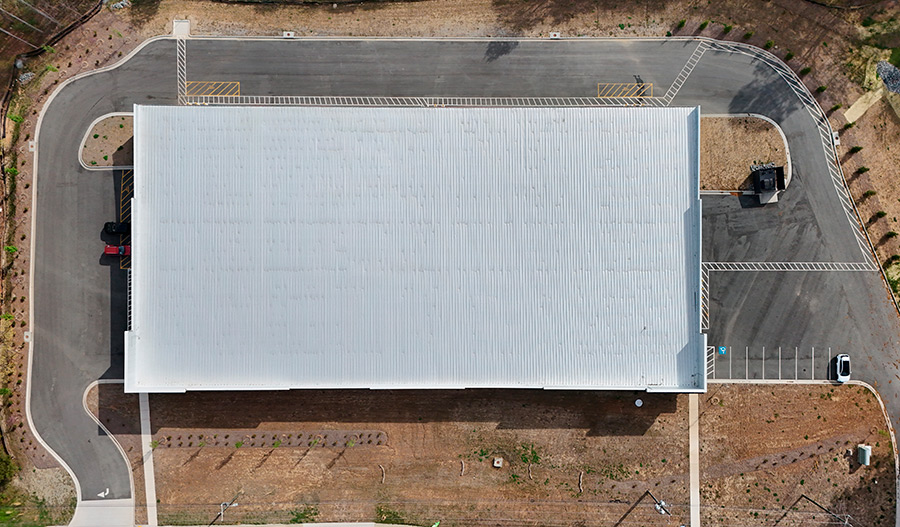
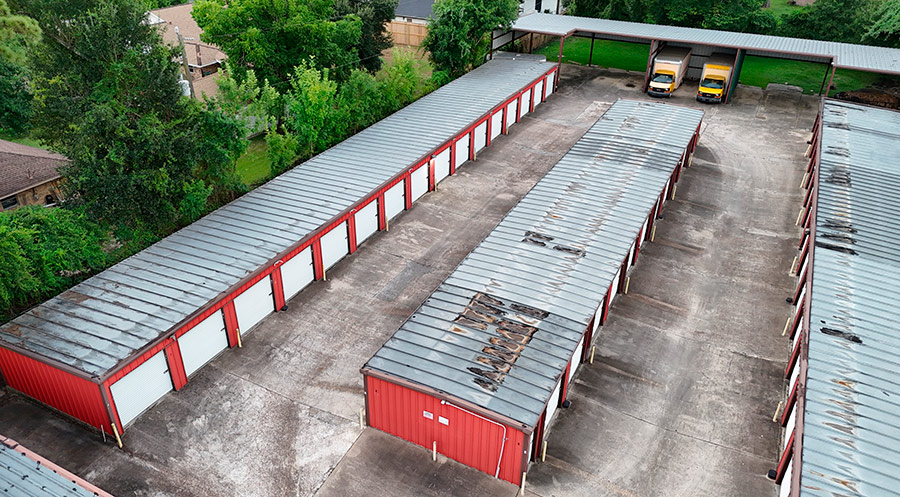
Go in with your eyes open. You will need the Part 107, which means passing an aeronautical knowledge test that runs around $175 and will require many hours of prep time, clearing a TSA background check, and completing recurrent training every two years. Your aircraft will need Remote ID. And you will want to choose NDAA-compliant equipment, because new DJI models are now blocked from sale in the United States and the government is tightening enforcement on drones it considers a security risk. There is also a time cost. Flying, reviewing footage, and keeping up with the rules is a real commitment, which is why hiring a professional is still the better answer for many operators.
elf-storage is, in many ways, a numbers game. You have square footage, occupancy rates, rental rates, cap rates, NOI, ROI, and so on. So why have we spent the last two months talking about psychology and emotions? Because understanding tenant disposition—the reasons they can’t let go of their belongings—allows you to serve them better while boosting your bottom line. But now it is time to delve into the data. Through the lens of disposition, you’ll find that attachment isn’t just something people talk about. It appears in what they choose to store, why they rent units, and how long they remain tenants.
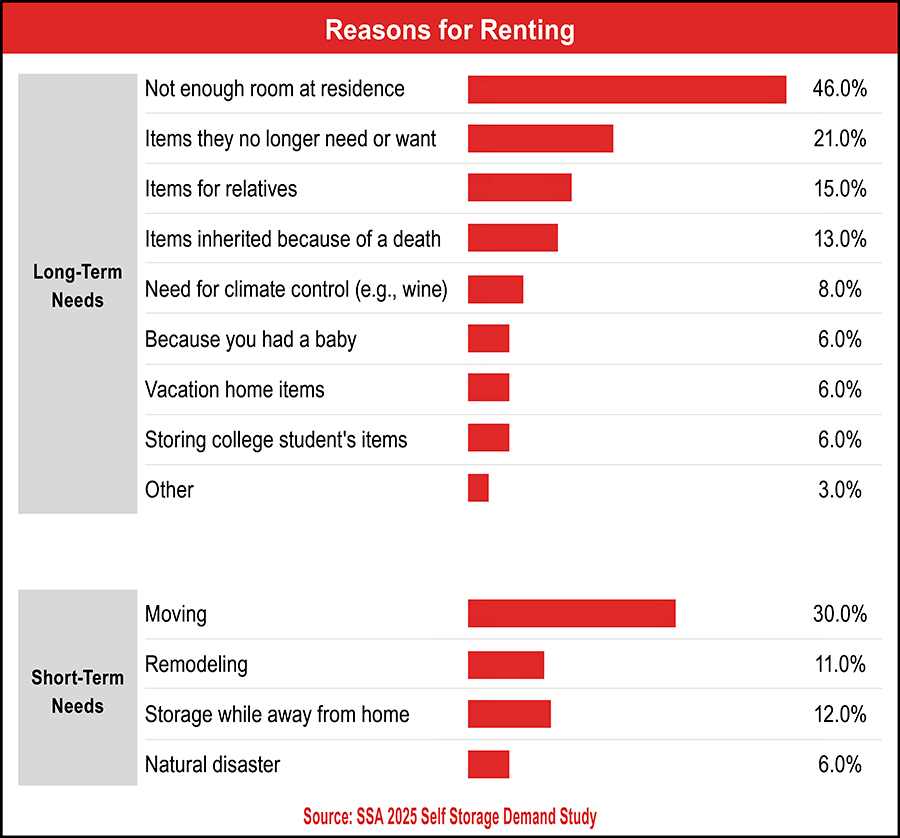
Twenty-one percent of renters admit they’re storing items they no longer want or need—that’s one in five tenants. That’s more likely an emotional attachment than a space problem. In addition, another 15 percent are storing belongings for relatives who have experienced a change in living situation and 13 percent are storing possessions inherited after the death of a loved one. Those numbers suggest many customers aren’t simply running out of space but rather postponing difficult decisions.
It’s a pattern that parallels what Dr. Russell Belk, research professor and author of Possessions and the Extended Self, described in first two parts of this series. People don’t always keep possessions because they’re valuable. They keep them because the objects have become extensions of memory, identity, relationships, or obligation. Sometimes, paying monthly rent is simply easier than deciding what stays and what goes.

Individually, these items don’t seem notable, but when you apply disposition, they paint a different picture. Furniture often represents homes people once lived in, holiday decorations may connect families to traditions, and photographs preserve moments that can never be recreated. These aren’t just possessions but physical reminders of memories.
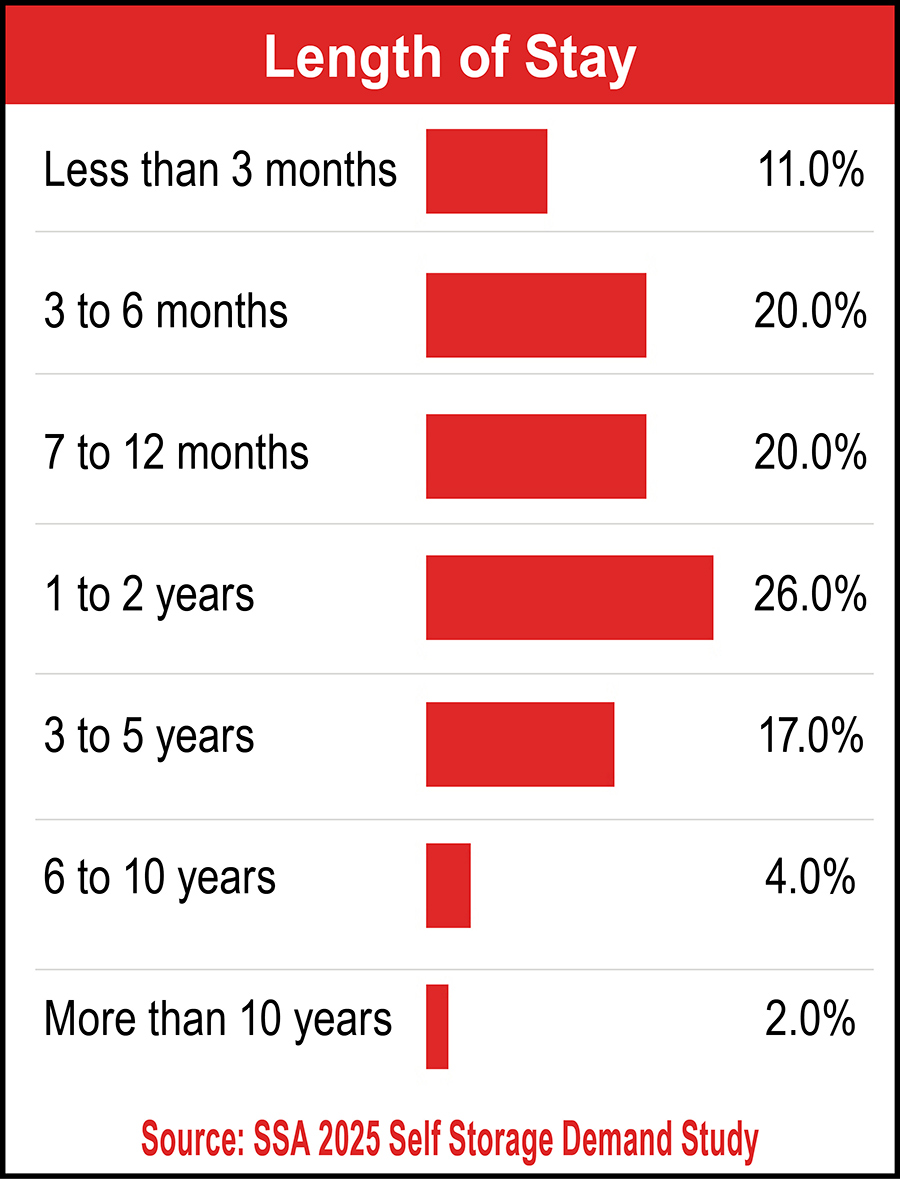
The same demand study reveals that the largest group of customers (26 percent) remain tenants for one to two years. Another 17 percent stay between three and five years, while six percent remain with a storage company for six years or longer. Only 11 percent move out within the first three months. If storage were purely a matter of available space, many of those rentals would end once the crisis passed.
M. Anne Ballard, who examined customer behavior in 2017 while leading Universal Storage Group, observed this trend for years. In an MSM report, she notes that more than half the company’s customer base rents for more than five years. Ballard recognized the importance of knowing what brought the tenant to the facility, writing, “Understanding how the population uses our product and the drivers for length of stay are paramount to keeping them happy and in place while still growing income and NOI.”
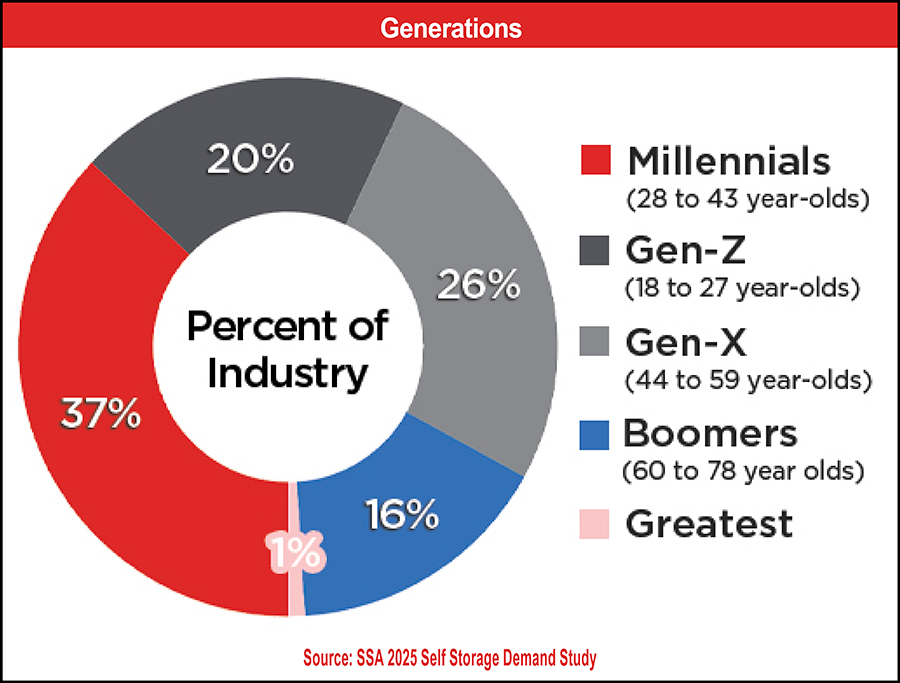
Belk would likely agree. “Older people tend to keep things, probably more so than the younger people, because they have accumulated things that have memories attached to them. Younger people store things that they tend to use, like sports equipment and so forth,” he says, all of which prove true in the data.
Last but not least is Gen X, which accounts for another sizable percentage at 26 percent. Their storage use is attributed largely to family transitions, including divorce and downsizing as children leave home. Add aging parents and inherited possessions to the mix, and that’s basically a four Ds collision course.
Self-storage manager Chad Coker also noted that many customers arrive during one of life’s four Ds, requiring managers to approach each situation with empathy. He recalled helping a man going through a divorce who needed a unit quickly but lacked an alternate contact required for the lease. Coker helped him identify a former co-worker. “After that, I was able to get him into a unit that day,” he said.
Taken together, the industry’s data and its operators tell the same story: Storage isn’t simply a business built around stuff, but a business built around necessity, identity, and delayed decisions.
Brad Hadfield is MSM’s lead writer and web manager.

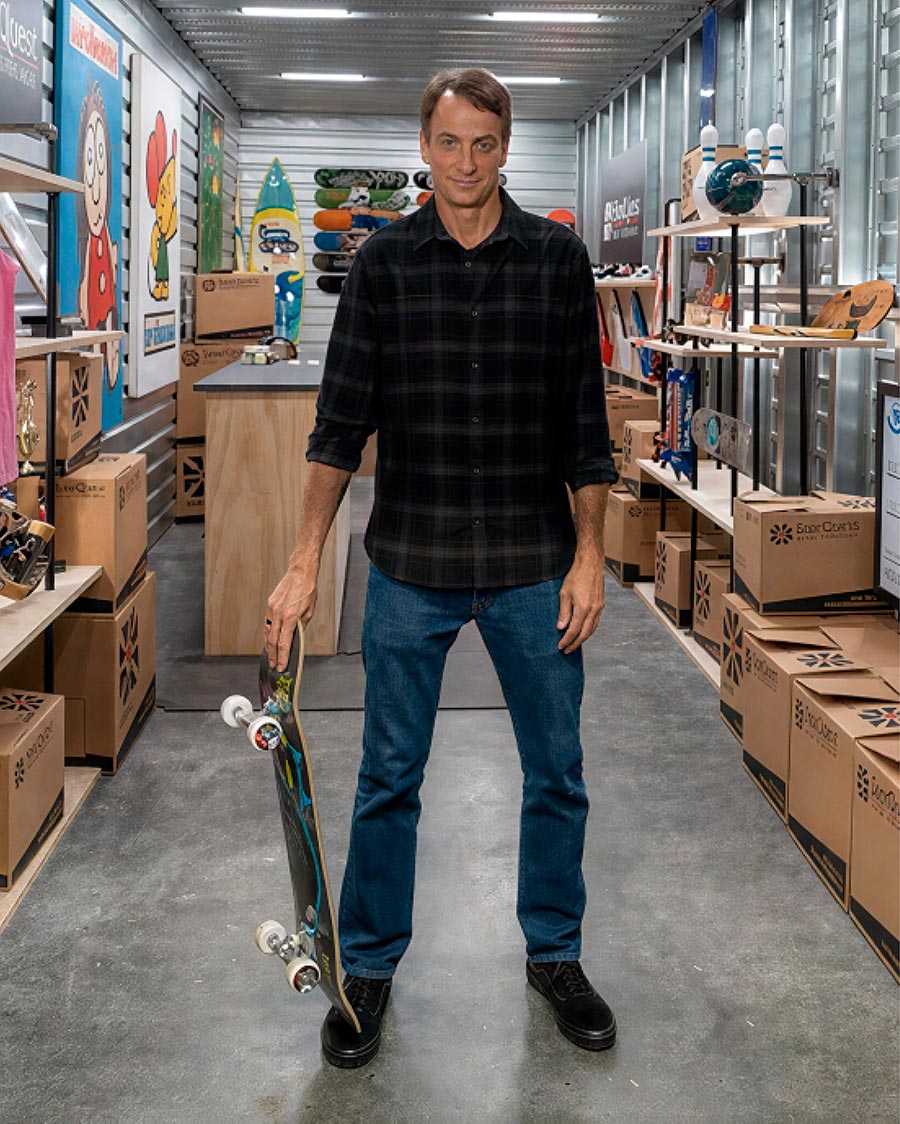
The 2025 Self Storage Demand Study revealed that of stored items, collectibles make up 32 percent and sporting goods make up 26 percent. It is natural to assume these items, and other stored items, are tucked away due to lack of space or just occasional use. But Dr. Russell Belk, a research professor who’s been on this disposition journey with us since part one of this series, thinks there could be more to it.
“Some facilities are pretty luxurious … they’re air conditioned, secure, and safe,” says Belk. “They can therefore become more of a shrine than a storage space, where people put valuable items on shelves just to look at them, so there may be a way to appeal to that [tendency].”
This concept was proven true when MSM put StorQuest Self Storage in the spotlight in a feature about their lifestyle branding two years ago. The company had sought out “Questors,” people who not only lived an adventurous life but also actively used self-storage. They found that in World Champion Skateboarder Tony Hawk and World Champion Surfer Kelly Slater.
“To me, this isn’t a collection of stuff; it’s a collection of experiences. Each piece tells a story—places I’ve been, things I’ve done,” said Tony Hawk, who stores awards, trophies, and long-since-retired skateboards and sneakers on well-organized shelves. “I’m thankful to have it all on display here.”
Surrounded by dozens of surfboards, Kelly Slater had a similar take. “My unit is great; I actually come in here and just smile. This is the most organized anything in my life is.” Why not keep these items on display at home? “I feel it’s safer here than in my own house,” he adds.
Using a unit as a shrine is certainly a unique way to think about self-storage, but maybe that’s the point. If possessions carry identity, memory, and accomplishment, then the place where they’re kept becomes important too.





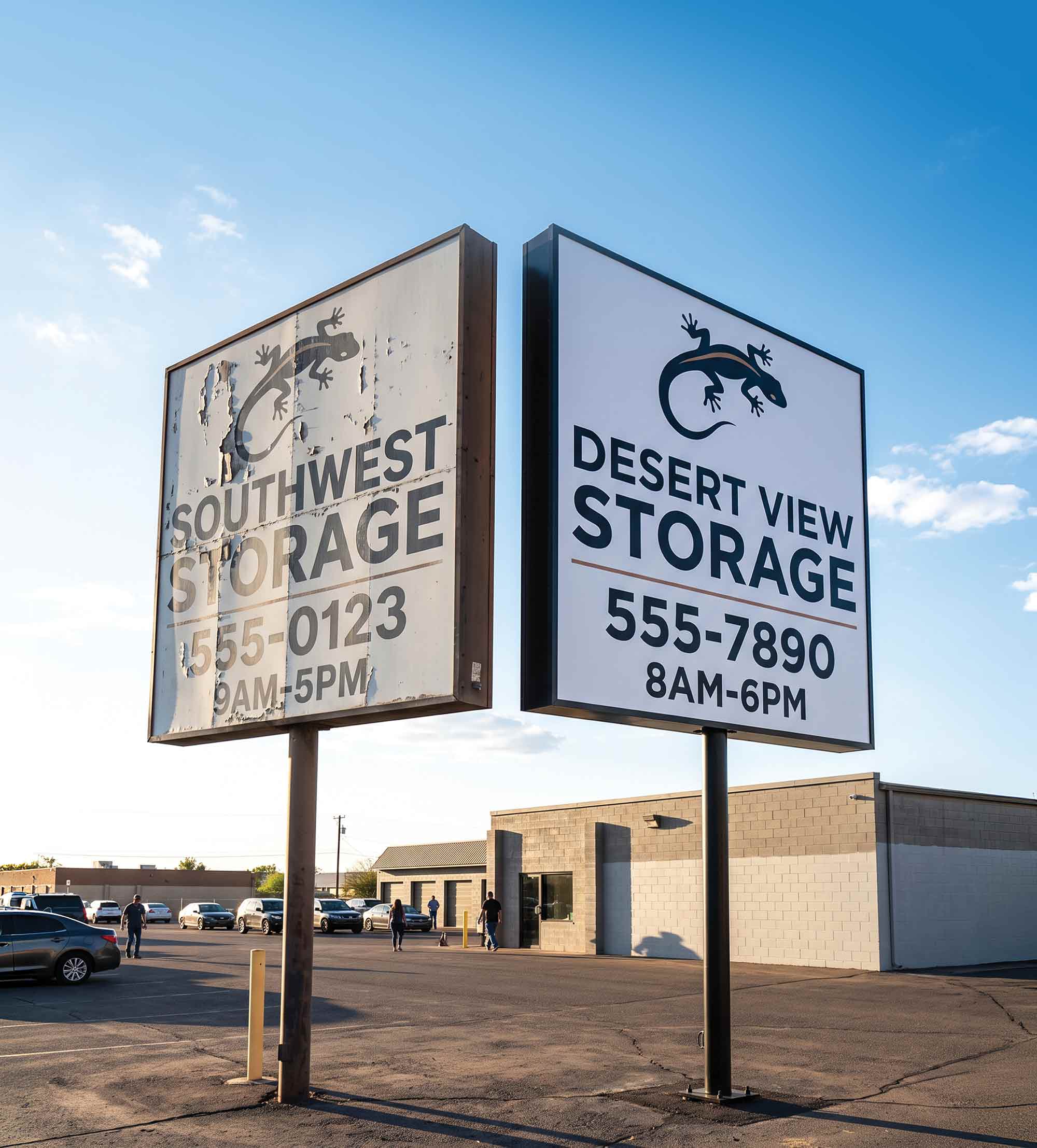
hen a facility’s name, phone number, address, or schedule changes, the dangerous period is not always before the correction. It is the interval when the old fact and the new fact are both circulating.
The website shows the new office hours. The map profile still shows the old schedule. A call-routing vendor has accepted the new number, but the rental page has not. The internal directory now uses the new facility name while an employee searches for the familiar one and opens the wrong record. Each surface can look reasonable in isolation. Together, they create a split customer experience.
Self-storage operators often approach this as a list of edits. That is necessary, but it is not enough. A material facility fact change should be run as a short, controlled cutover: one authorized change set, one effective window, a deliberate sequence, explicit stop conditions, and a final reconciliation.
The goal is not to make every system update at the same millisecond. Most platforms do not work that way. The goal is to know which version is authoritative, which destinations are still carrying the prior version, and what a customer or employee should do while the systems converge.
That difference should determine the cutover order.
Google’s current Business Profile guidelines call for a business to be represented as it is recognized in the real world, with an accurate address and no duplicate profile for the same business. The same guidance says storage facilities should use office hours as their primary hours, or front-gate hours otherwise. Google Search Central separately describes how names, addresses, telephone numbers, and hours can be represented in LocalBusiness structured data. Those are platform rules and web vocabularies, not proof that a fact is correct. They do show why a source change can affect both what people read and what machines process.
- When does the new value become effective for customers and staff?
- Which system must change first so the next action remains safe and intelligible?
- Which old value must remain temporarily available for continuity?
- What result would require the team to stop or roll back?
- What evidence will close the change?
This distinction matters during a rebrand, phone migration, hours change, website move, temporary closure, address normalization, or management transition. Some changes are reversible. Others are only partly reversible because directories, caches, and customer communications can outlive the original edit.
A stable internal facility key helps the team keep the property correlated while its public name or other fields change. RFC 9562 defines UUIDs as 128-bit identifiers intended to provide uniqueness across space and time. An operator does not need to expose such an identifier publicly, and a UUID does not prove ownership or authority. The useful principle is simpler: The durable key should not change merely because a display value changes.
- Facility key – The stable internal identifier for the exact location;
- Authorized before and after – Only the fields approved to change, shown side by side;
- Effective instant – Date, time, offset, and named time zone;
- Customer-critical paths – Phone, website, rental, office/access-hours display and arrival instructions affected by the change;
- Release sequence – The order in which systems and profiles will be updated;
- Stop and rollback conditions – The failures that pause the cutover and the prior state that can be restored; and
- Closure evidence – The independent readbacks required before the change is considered reconciled.
The brief is deliberately narrower than a master facility record. It governs one change window. It should not become an excuse to republish private contacts, security information, alarm details, credentials, or unsupported legal relationships.
The effective instant deserves more care than a date alone. RFC 9557 extends internet timestamps with additional information, including a named time zone, and explains how offset and time-zone data can become inconsistent. Operators do not need to adopt that technical format everywhere, but they should record enough context to distinguish, for example, 8 a.m. Eastern from 8 a.m. Mountain during a multi-state release.
First, admit the change into the authoritative operating source. The team should be able to identify who approved it, what evidence supports it, and when it becomes effective. A submitted platform edit is not the source of truth simply because it was submitted.
Second, prepare continuity and rollback. If a phone number is changing, confirm what happens to calls made to the old number. If a page URL is changing, prepare the redirect and retain the prior route. If hours are changing, prepare the temporary message that explains the transition. Rollback should be executable, not a note that says, “restore if needed.”
Third, update direct customer pathways. The owned facility page, rental flow, customer-service script, call routing, and operational directory usually deserve priority because they shape the customer’s immediate next step. Structured data should reflect the same approved visible facts; it should not become a separate place where a different answer survives.
Fourth, update discovery and directory surfaces. Map profiles, business listings, and industry directories may review changes on their own schedules. Record submitted, accepted, applied, and publicly observed as separate states. A confirmation screen does not prove that the public value changed.
Fifth, reconcile every affected destination. Test the live page, call the public number through an approved test, inspect the exact profile, check both desktop and mobile displays (where relevant), and record unresolved discrepancies. Search indexing and ranking are downstream outcomes; they are not closure evidence for the operational change.
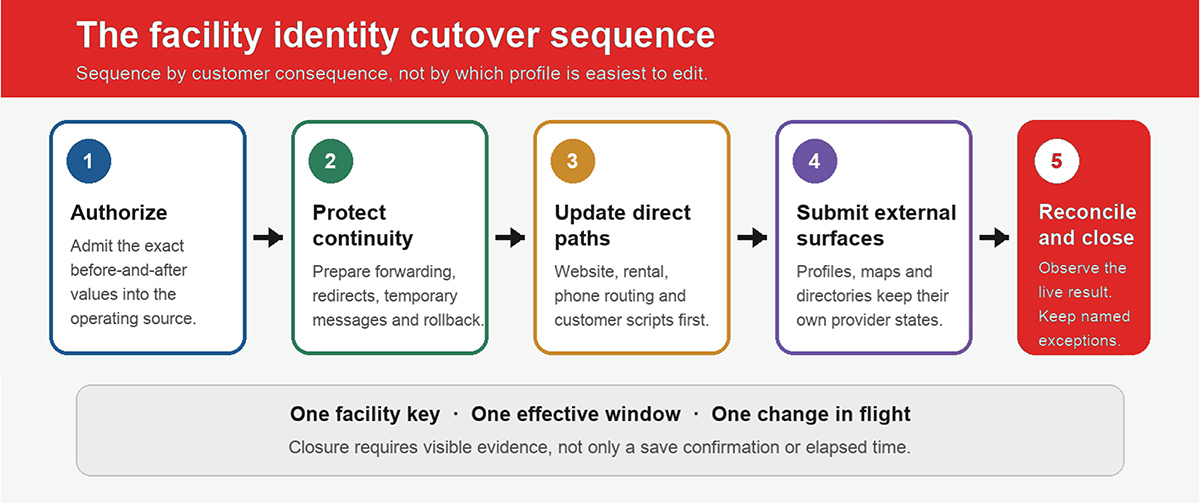
Without that rule, a team can lose causality. A name change and a phone migration happen together. A directory rejects one field but accepts another. A manager then cannot tell which change produced the visible result or which prior value should be restored.
The W3C PROV-O Recommendation provides general concepts for linking entities, activities, agents, sources, revisions, and times across systems. A self-storage operator does not need to implement an ontology to benefit from the idea. Each visible result should be traceable to the change activity, source, and responsible actor that produced it.
NIST SP 800-53 is a security and privacy control catalog rather than a self-storage operating manual, but its configuration-management family reflects a broadly useful discipline: Changes, inventories, and system states should be controlled as part of an organization-wide risk process. The analogy should stay bounded. It supports disciplined change management; it does not turn a facility profile into a regulated information system.
The team assigns one stable facility key and freezes the exact before-and-after values. The old phone number will forward for 30 days. The customer-service script and facility page are prepared in advance but remain unpublished. The map-profile edit cannot be scheduled and may require provider review.
At 10 a.m., the authorized source changes. Call routing activates, then an independent test confirms that both new and old numbers reach the intended queue. The owned facility page and rental contact route publish next. The team checks the visible page and its machine-readable data. Only then does it submit the map-profile change and update lower-consequence directories.
At 10:35 a.m., the website, rental flow, and phones show the new state. The map profile still shows the prior closing time and has not yet applied the new number. The cutover is not failed, but it is not closed. The team records a visible exception, keeps the old number forwarding, and gives customer-facing staff the temporary discrepancy note.
At 11:42 a.m., the map profile shows the new number and hours. A second reviewer confirms the public result from a separate session. The cutover closes with one remaining task: Recheck the forwarding dependency before its retirement date.
Nothing in this fictional example proves a recommended timeline, platform approval speed, customer result, or performance improvement. Its value is the sequence: authorize, protect continuity, update direct pathways, submit downstream changes, and close on observed evidence.
- Every customer-critical path shows the authorized value or has an approved temporary exception;
- The prior value is either retired or intentionally preserved for continuity;
- Every submission, provider decision, and public readback is recorded separately;
- The team can name the unresolved destinations and their owners;
- Rollback dependencies remain usable for the stated period; and
- A reviewer other than the person who made the change has checked the consequential results.
Schema.org includes a SelfStorage type and inherited LocalBusiness properties that can represent approved facility information on the web. That vocabulary can help systems describe a location consistently. It does not verify a business profile, prove legal control, guarantee a search result, or replace the independent readback.
The discipline is the same whether the change affects two surfaces or 20. Make the transition explicit. Keep the customer path intact. Separate provider receipts from visible results. Do not let an old value disappear until the new path is proven—or until the team has deliberately accepted the exception.
Facility identity is not only a record to maintain. During change, it is a release to govern.





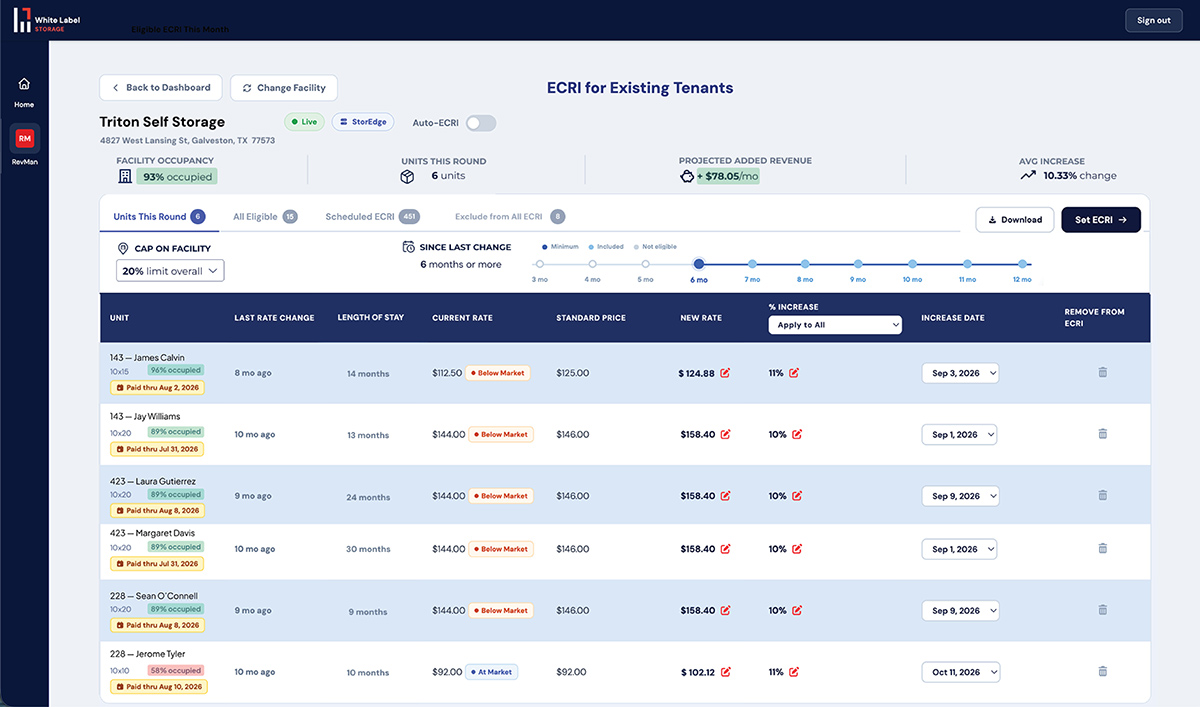
elf-storage operations have come a long way over the years, with technology playing an increasingly important role. Today, it’s helping operators manage everything from customer service and revenue management to security and delinquency. At White Label Storage, much of that evolution has happened in-house.
The Brooklyn-based third-party management company develops much of the technology supporting its operations. Its latest tool, the ECRI Hub, is designed to simplify one of the more complicated and time-consuming aspects of revenue management: existing customer rate increases (ECRIs).
Hartman and Smyth started with very limited resources. “It was just the two of us—answering the phones, cleaning everything, setting up the security cameras—but we knew we were building something bigger than ourselves,” says Smyth.
As they grew the business from one location to more than 50, they saw firsthand the unique challenges involved in self-storage operations, including how easily day-to-day tasks could distract operators from seeing the bigger picture. That’s when the entrepreneurial wheels started spinning again and White Label Storage was born.

PRODUCT STRATEGY: Madeleine Paulson
Another key has been continual innovation. In fact, the company develops most of the technology it uses to run facilities. “The most integral piece of the tech stack is the facility management software (FMS). That’s the backend database that houses all the tenant data, processes payroll, and integrates with third-party technology like access control, security cameras, and customer service software. We are not replacing the FMS,” says Smyth. “We build all our tools on top of the FMS: websites, revenue management, dashboards, AI agents, and a delinquency management tool.”
Operators may be divided on the use of certain ECRI tactics, but managing them has become increasingly complicated. White Label Storage’s ECRI Hub, proprietary software designed to optimize and de-risk the process, aims to simplify the job. “Rate increases for existing tenants are essential to keeping self-storage facilities competitive and profitable, but the process is resource-intensive,” says Smyth. “I’d say it’s one of the most time-consuming tasks in self-storage management.”
Managing ECRIs requires teams to track which tenants are eligible, calculate appropriate increases, confirm notice periods, and keep records straight across separate systems, all while avoiding increases that would spark customer churn. In cities and states where they’re being scrutinized or new legislation surrounding them is being enforced, managing them also means maintaining compliance.
White Label wasted little time putting the ECRI Hub to work. “Actually, it’s already being used across White Label’s operations teams,” says Madeleine Paulsen, product strategy and design manager. “The Hub enables our managers to be more strategic by consolidating tenant data and actions to take for ECRI. In one view, we can review eligibility, pricing gap of in-place versus street rate, and other tenure data. The ECRI Hub helps improve revenue generation quickly and consistently, which delivers more value to owners and operators without the extra overhead of legacy third-party tools. Now, revenue managers have a streamlined interface to review and execute rate increases, ultimately maximizing owner returns.”
Like much of White Label’s technology, the ECRI Hub was built in-house, an approach that was important to the company. “Off-the-shelf solutions usually mean working around software bottlenecks,” says Paulsen. “By building our own tool, we directly reflect our operational core and value of WLS management. In addition, because we built this ourselves, we can quickly adapt the tool as the compliance landscape evolves.”
As it stands, the ECRI Hub will function as an internal tool that White Label Storage uses to improve revenue management across its portfolio.
- Dynamic with the compliance landscape – The hub features built-in guardrails and automated effective-date logic, meaning that rate increases are far less likely to run afoul of notice requirements. It’s also noteworthy that the team is able to efficiently implement changes as compliance evolves with time. “We can adapt quickly to requirements as they continue to roll out,” she says.
- More consistent revenue capture – The hub allows operations teams to easily see which tenants are eligible for an ECRI, and the expected revenue per round for increases. “This lets them notice and act on pricing opportunities they might otherwise have missed or postponed,” she adds.
- Focus on strategy – By replacing manual, cross-system tracking with one streamlined tool, the ECRI Hub cuts down the administrative time operators spend managing rate reviews. “That’s time that can then be focused on strategy and not hunting down all kinds of data points that inform it,” says Paulsen.
Hartman adds, “Of course, it’s not going to stop there. We’ll continue to build new in-house technologies. We won’t be satisfied until White Label Storage is a fully comprehensive platform that helps self-storage owners do less and earn more.”
For Hartman and Smyth, this idea goes back to something they set out to do early on: build something bigger than themselves.


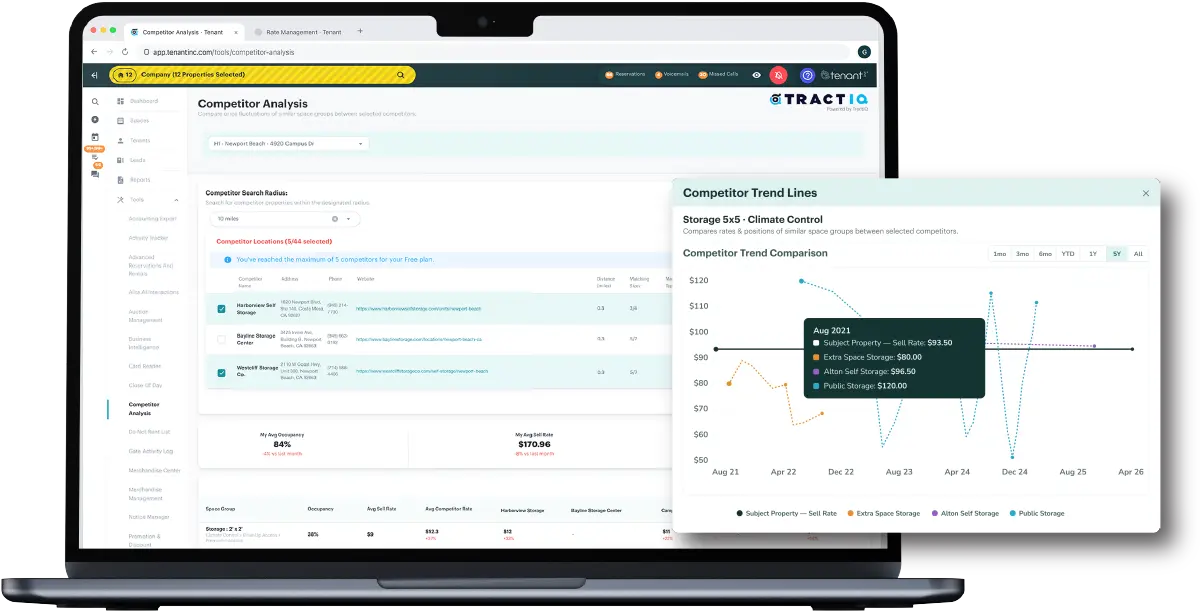

avigating the self-storage industry can sometimes feel like wandering through a haunted house. From the headaches of lien sales to the chaos of tropical storm water damage and the frustration of undertrained staff, owners face plenty of terrifying scenarios.
But there is no need to fear, because the Self Storage Association is here to guide you on your journey.
As an SSA member, you gain immediate access to a powerful toolkit designed to solve your worst business nightmares. Whether you need emergency operational plans or comprehensive training for your team, the SSA has you covered.
Do not let operational roadblocks haunt your dreams. Rely on the SSA for the elite resources you need to turn your storage business into a massive success—no tricks, just treats!
For more information, visit selfstorage.org. If you aren’t yet a member, you can join by going here.

hen I first heard about the proposed New York City regulations concerning cleanliness, allergens, and pest control at self-storage facilities, I understood why operators might be frustrated. Nobody likes being told how to run their business, particularly when new requirements mean additional time, documentation, and expense.
But I also understand why cleanliness matters. I’ve managed properties where pest problems became serious, and one thing I’ve learned is that they can start quickly and be difficult to stop. The challenge in self-storage is right there in the name: self. Customers bring their belongings into the facility, and we don’t know where they’ve been or what may have hitched a ride.
Boxes that had been sitting in garages or sheds could be home to roaches, while furniture may contain crumbs that attract mice. Tenants have also been known to store food in their units, and rodents and insects don’t care whether that’s against the rules.
At one property I managed in the San Francisco Bay Area, we developed a significant rat problem. One tenant claimed rats had ruined her couch. When I finally saw it being removed, there was hardly a couch left. The rats had sharpened their teeth on the wood and taken most of the stuffing out of it to make nests.
Instead of hiding the problem, we notified every customer, told them to inspect their belongings, reminded them not to store food, and explained what pest control action we’d be taking. We ultimately became much more aggressive about treating the property, because when a pest problem becomes severe, treating only the common areas may not solve it. Pests simply move elsewhere; if a rat’s skull can fit through an opening, so can its whole body.
That experience changed the way I approach pest control. Today, I prefer having professionals treat properties on a set schedule rather than managers handling the chemicals themselves and only doing it when they notice a problem. Normally, monthly professional service may be sufficient. When there is an active infestation, however, weekly treatment may be necessary until it is under control.
Regular inspections matter too. I once accompanied a prospective customer to a vacant unit and opened the door to discover so many dead crickets that I could barely see the concrete. The extermination had obviously worked, but nobody had checked the unit afterward. Needless to say, that prospect didn’t rent. That’s a preventable mistake. Before showing a vacant unit, someone should already know that it is clean and ready to rent.
Operators also need to educate tenants. With rentals increasingly completed electronically, customers may sign agreements without reading rules that managers once explained in person. Something as simple as a checklist can remind tenants not to store food, to inspect boxes and belongings before moving them in, and to report signs of pests immediately.
Additional regulations create costs, but there is another cost to consider: lost customers due to damaged belongings and negative reviews. Sometimes spending the money and doing the work before there’s a problem—or before a problem gets bigger—is simply good business.





Now those structures are powering 24/7 lighting, security cameras and other amenities, saving the operator as much as $2,500 each month.
All on the same plot of land. With the same tenants. Now, with lower overhead. And new revenue opportunities that are through the roof.
Send us your site plan, and we’ll get it done, better and faster than anyone.





Proven platform delivering results since 1998.
- 265+ stores nationwide.
- Experienced team focused on results.
- Resources that respond when you need them.
- Canadian expertise that delivers.