


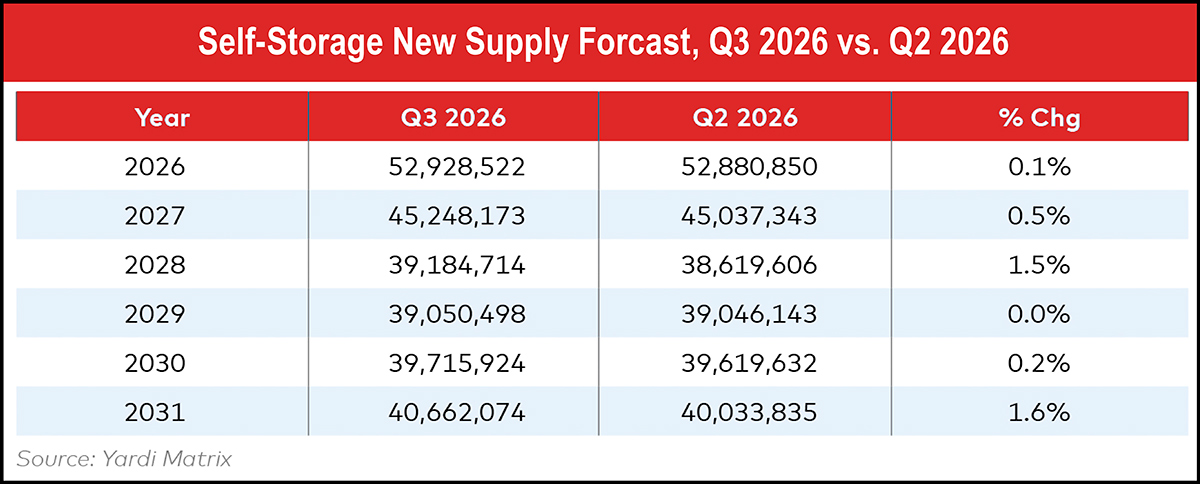
or the Q3 2026 update, the self-storage supply forecast is largely unchanged. Minor changes relative to last quarter’s forecast reflect updates to the development pipeline data Yardi Matrix maintains, rather than a material change in the forecast outlook. The supply forecast continues to foresee a decline in new self-storage supply to roughly 39.18 million NRSF by 2028.
See Self-Storage New Supply Forecast, Q3 2026 vs. Q2 2026 table.
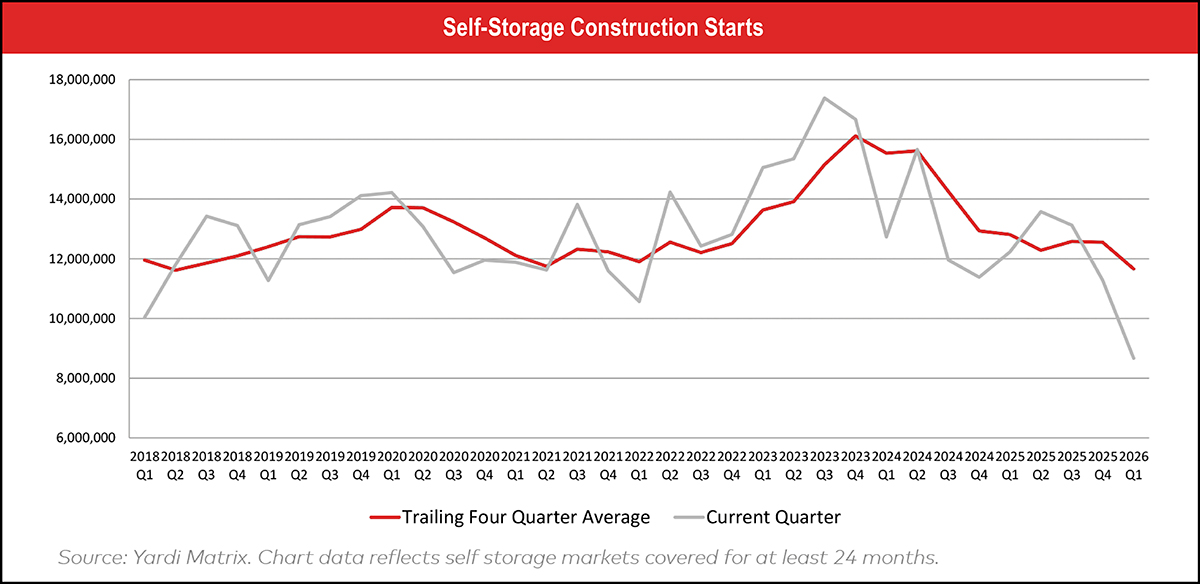
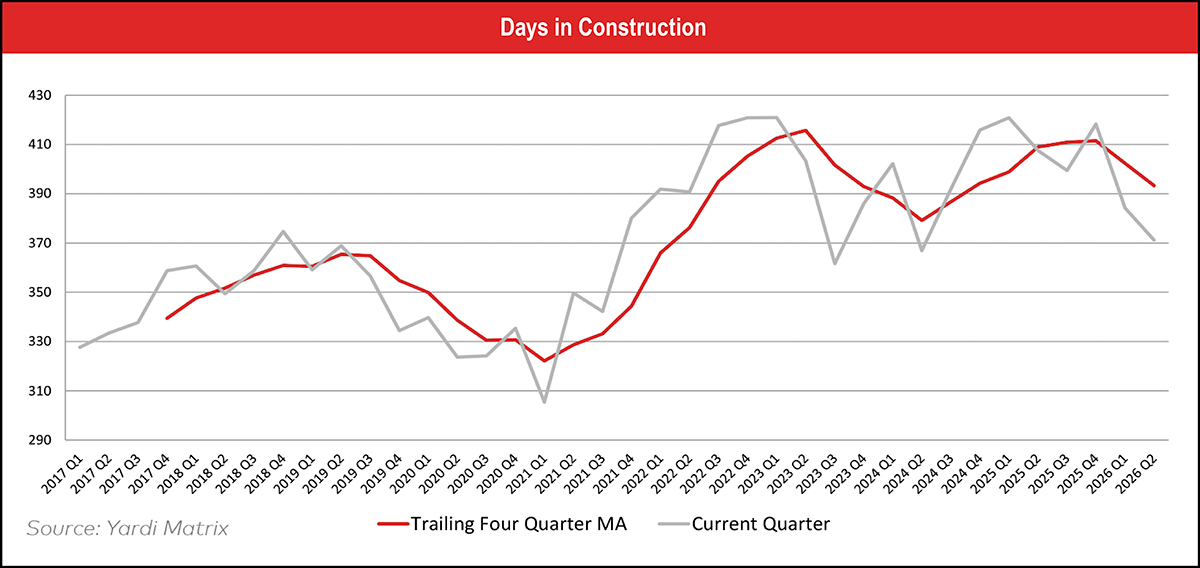
Construction starts are also trending lower. Through mid-year, 15.37 million NRSF in new construction have been identified nationally. This is 19.6 percent below the level identified during the same period one year ago. Current construction completion times are averaging a little more than 12 months, which means self-storage projects breaking ground in 2026 are likely to be completed in 2027. The continued deceleration in construction starts suggests that 2027 new supply will be below 2026 levels.
There are few signs that a meaningful rebound in self-storage new development activity will take hold in the second half of 2026. Despite a seasonal pickup in advertised rental rates during the spring and summer leasing season, year-over-year rate growth remains negative in most markets tracked by Yardi Matrix. Tariffs, the Iran War, and the artificial intelligence buildout continue to combine to create elevated inflation pressures, keeping both short- and long-term interest rates elevated.
Elevated long-term interest rates continue to suppress valuations and make new development less attractive. Elevated long-term interest rates also increase mortgage rates, suppressing sales activity in single-family home markets, a key driver of self-storage demand.
As a result, the Q3 2026 forecast update continues to expect new supply to fall to 52.93 million NRSF for full-year 2026, followed by a further decline in 2027 to 45.25 million NRSF.
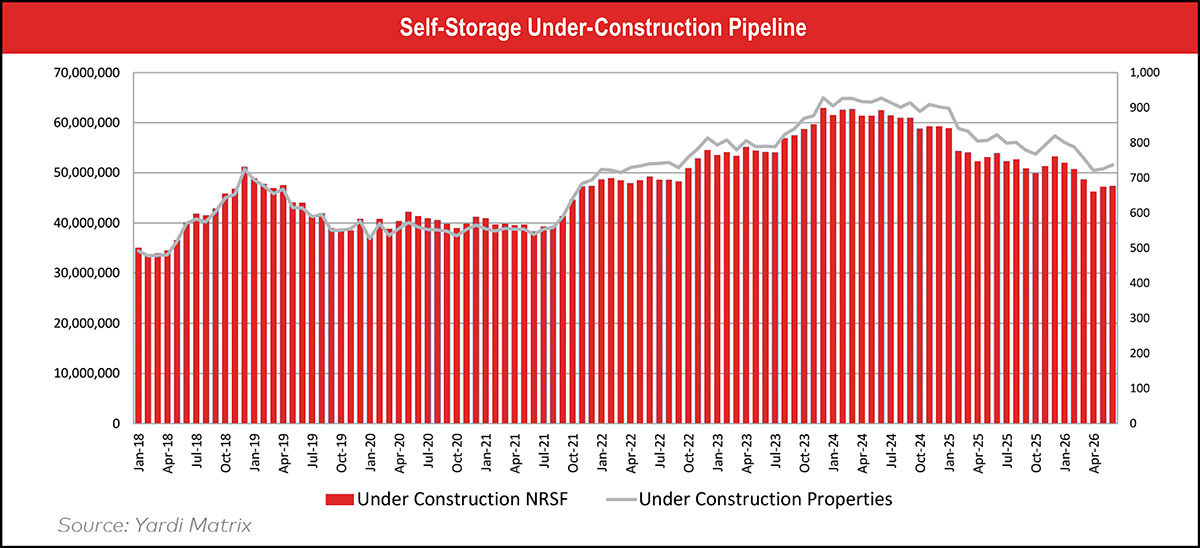
On a quarterly basis the pipeline declined by 2.8 percent, and on a year-over-year basis the pipeline has fallen by 12.2 percent. The under-construction pipeline peaked in December 2023 at 62.96 million NRSF. Current levels represent a 25 percent decline from the peak.
See Self-Storage Under-Construction Pipeline chart.
However, the level of new construction identified through mid-year is 19.6 percent below the level identified during the same period one year ago.
See Self-Storage Construction Starts chart.
See Days in Construction chart.
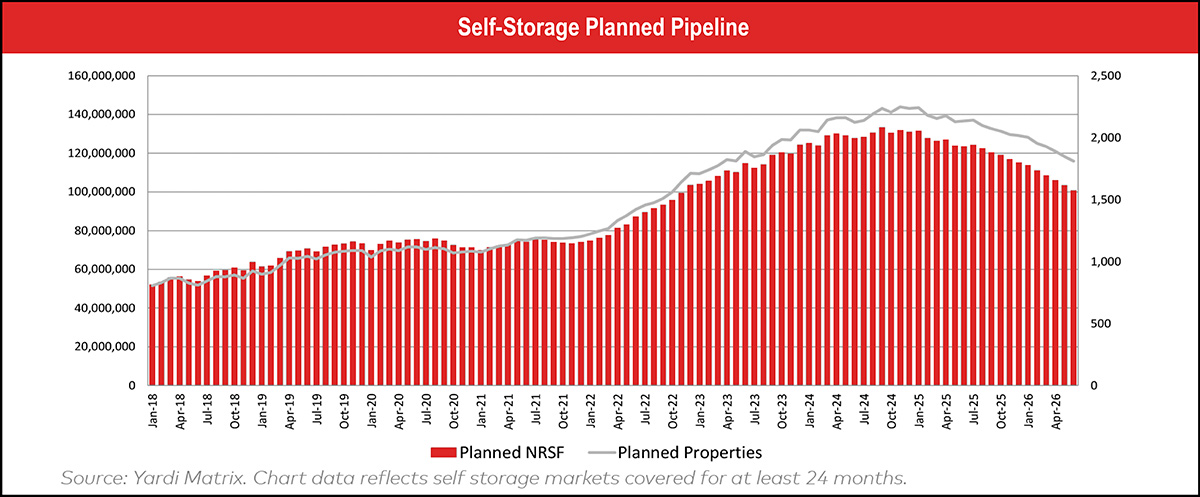
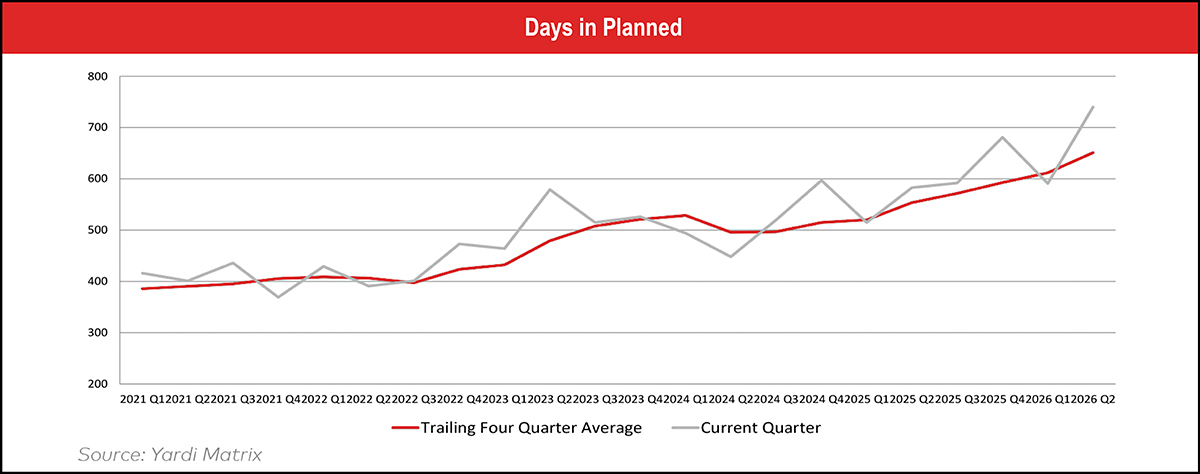
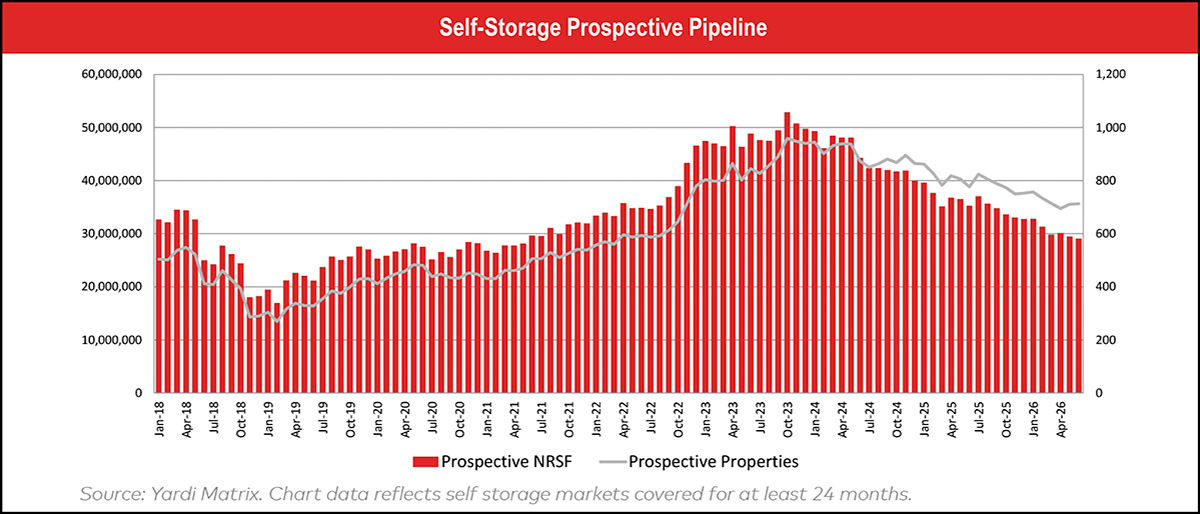
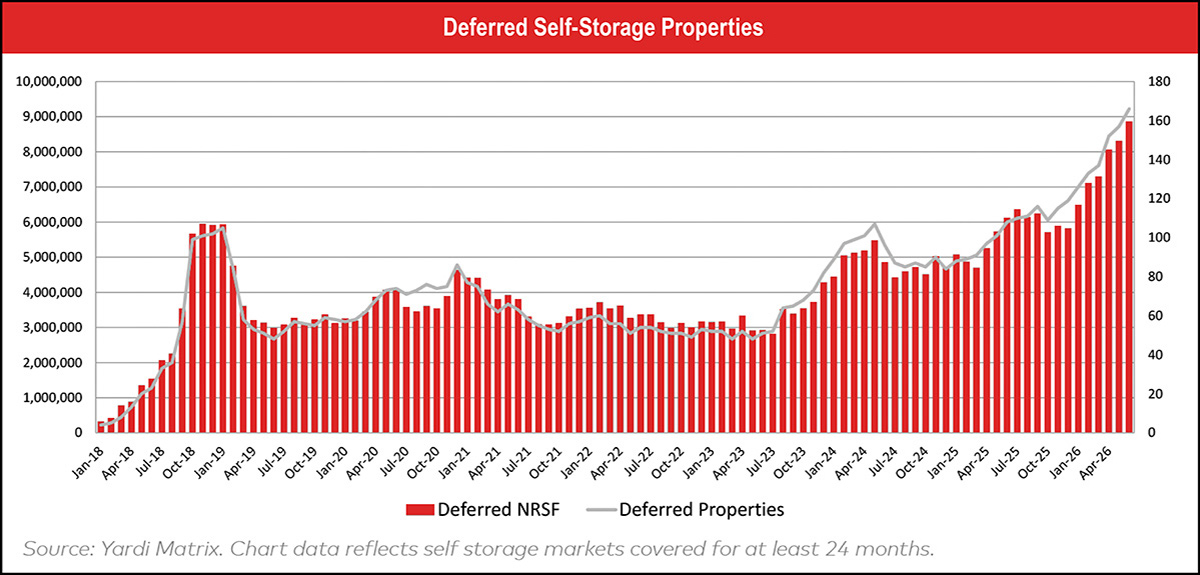
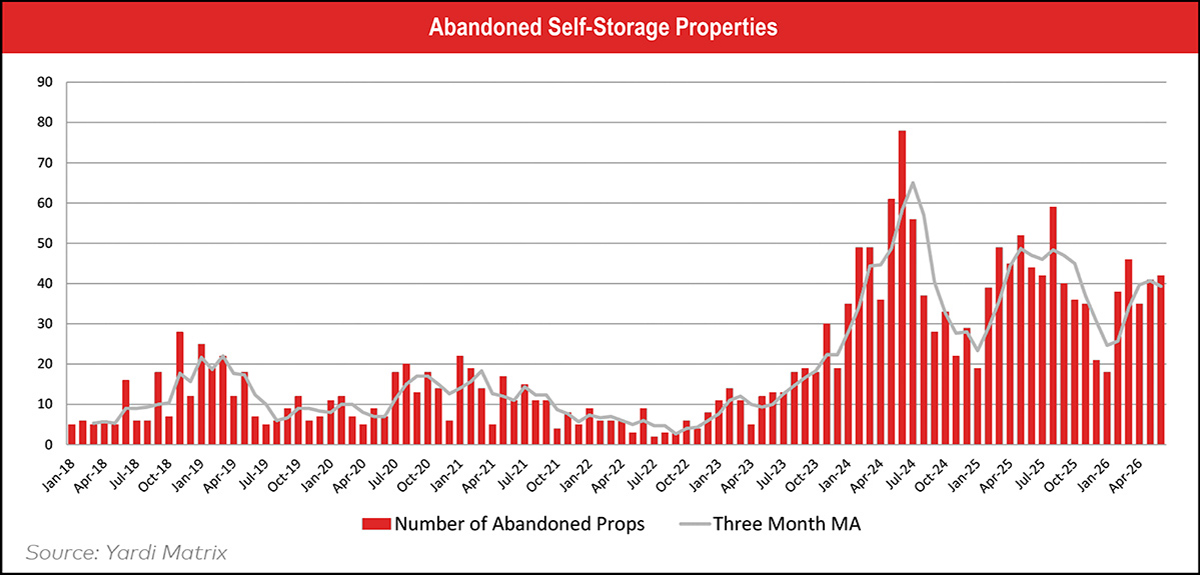
All longer-term aspects of the self-storage development pipeline continue to suggest weak new-development enthusiasm. Both the planned and prospective pipelines continue to contract, while the amount of deferred NRSF is still increasing and the monthly number of abandoned projects remains elevated.
The longer-term forecast assumes that continued fiscal deficits will support the broader economy; therefore, a recession is deemed unlikely. However, sizeable deficits will also keep upward pressure on long-term interest rates and home mortgage loans. The former suppresses new-development valuations, while the latter suppresses single-home transaction activity, which in turn reduces longer-term self-storage demand.
New self-storage development will be difficult but not impossible, with new supply in the later years falling well short of what was delivered during the peak of the post-pandemic development cycle.
See Self-Storage Planned Pipeline chart.
See Days in Planned chart.
See Self-Storage Prospective Pipeline chart.
The deferred pipeline bottomed in July 2023 at 2.81 million NRSF and has since tripled in size.
See Deferred Storage Properties chart.
See Abandoned Storage Properties chart.
Both near- and long-term development pipeline data continue to suggest self-storage development interest has substantially declined. Year-to-date completions are running below 2025’s pace, suggesting 2026 new supply will fall 18.9 percent from 2025’s level to 52.9 million NRSF. Year-to-date construction starts are also running below 2025’s level, suggesting 2027 new supply will fall a further 14.5 percent to 45.2 million NRSF.
The forecast assumes that the new development environment remains difficult but not impossible over the remaining years of the forecast with a modest rebound in new supply to 40.7 million NRSF by 2031.
As always, Yardi matrix is extremely focused on accurately maintaining our development pipeline data and identifying any changes in self-storage development activity.