









How to enjoy our new magazine:
Just scroll!
Click or tap the table of contents icon in the menu bar to find any article.
Read any article by clicking or tapping the read full article button below each article intro.
Jump back to your previous browsing spot from any article using the menu bar or back to issue button.





-
Marketing To RV And Boat Storage CustomersPage 14
-
Maintaining Your RV And Boat Storage FacilitiesPage 18
-
Seven Methods To Modernize Your WebsitePage 22
-
Operating A Remote RV And Boat Storage FacilityPage 24
-
The Latest In Self-Storage TechnologyPage 28
-
A Golden Anniversary And A Great CausePage 32

-
Ten Mistakes To Avoid When Developing A New FacilityPage 72
-
My Neighborhood Storage in Winter Garden, Fla.Page 76
-
Why Timing The Lending Market Is Nearly ImpossiblePage 78
-
The Power Of Cost Segregation In Self-Storage FacilitiesPage 80
-
What Makes Specialty Self-Storage SuccessfulPage 82
- Chief Executive Opinion by Travis Morrow6
- Publisher’s Letter by Poppy Behrens9
- Meet The Team10
- Women In Self-Storage: Alonna Ross by Alejandra Zilak35
- Who’s Who In Self-Storage: Luke Shardlow by Victória Oliveira39
- Stats With Starr by Noah Starr50
- Self Storage Association Update85
- Innovation Spotlight: Instaboxx by Brad Hadfield86
- The Last Word: Noah Starr88
For the latest industry news, visit our comprehensive website, ModernStorageMedia.com.

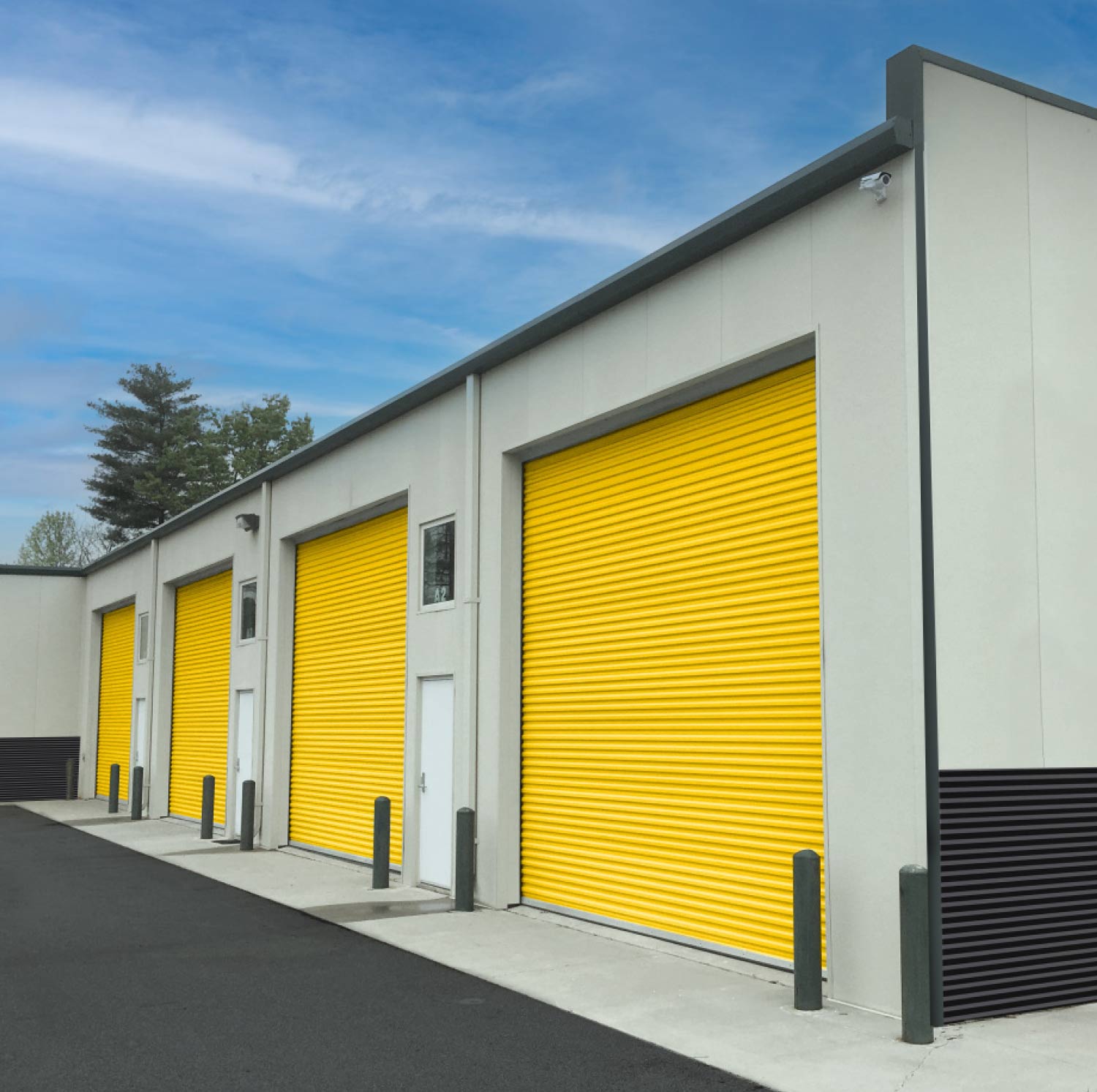
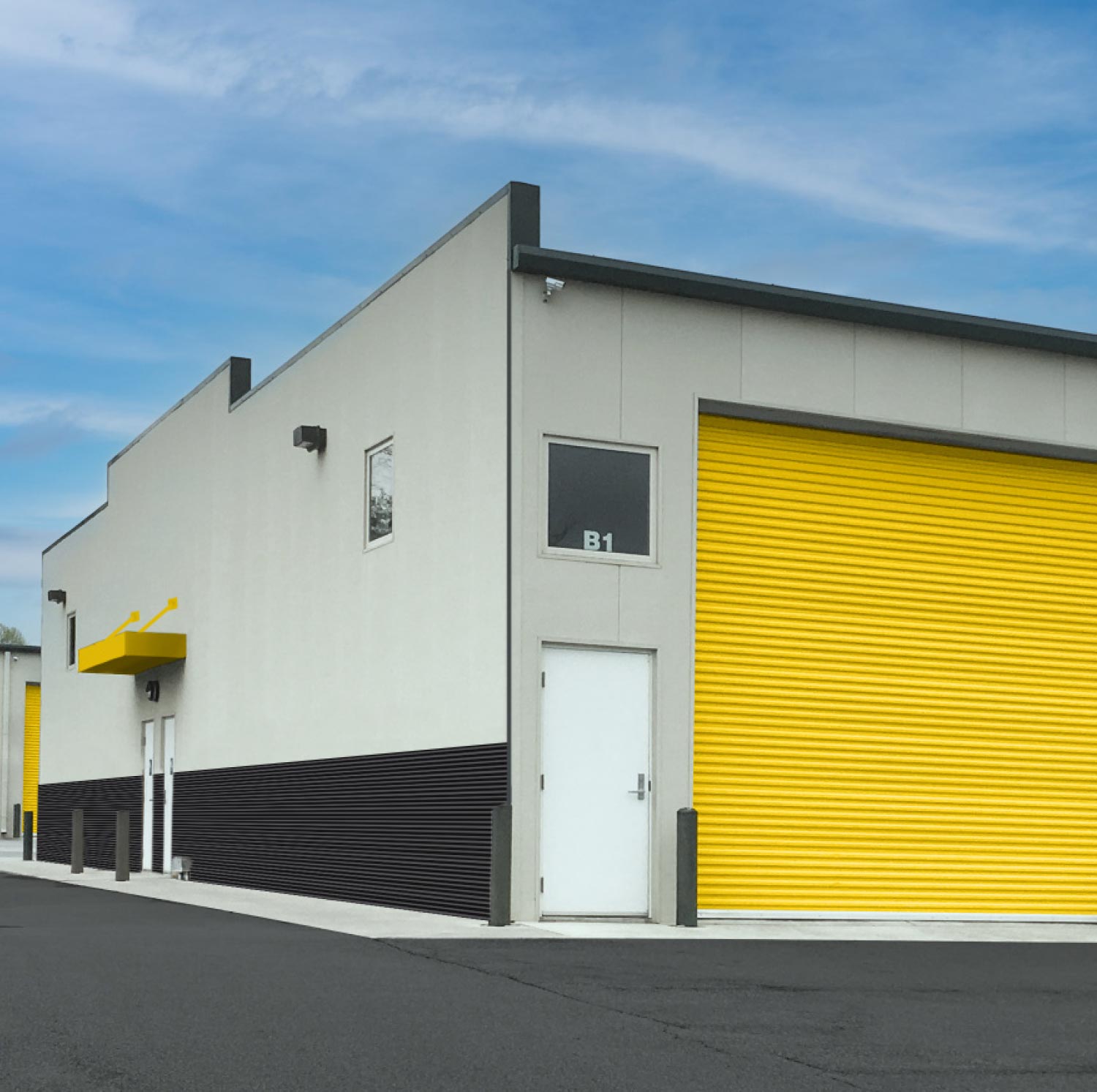
With decades of experience in self-storage construction, BETCO delivers smart layouts, durable steel construction, and full-service support from concept to completion.



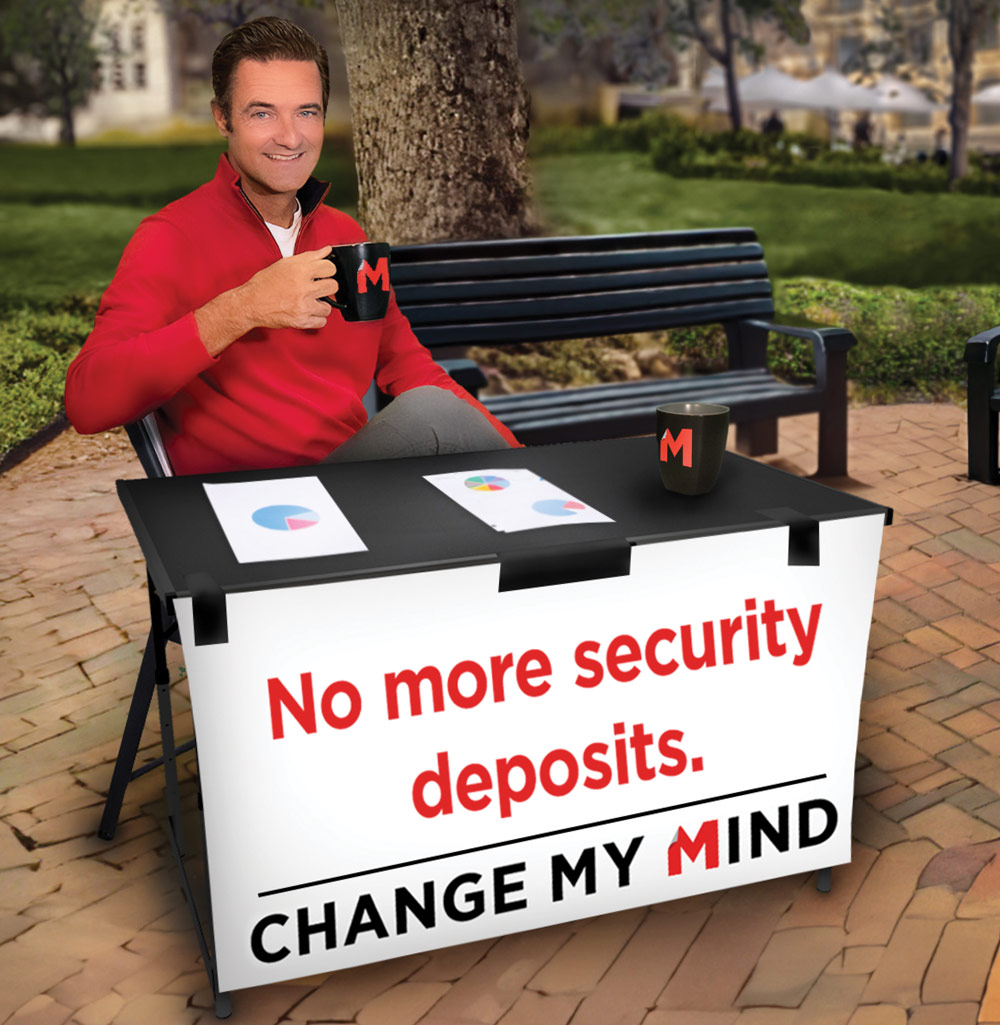
f you take away one thing from this month’s issue, it should be that taking a security deposit at the time of move-in is a thing of the past. It has been for quite some time. Change the deposit to an admin fee, keep the funds, and tell everyone you’re making a lot more money because you read Messenger.

He’s also the president of National Self Storage.

-
PUBLISHER
Poppy Behrens
-
Creative Director
Jim Nissen
-
Director Of Sales & Marketing
Lauri Longstrom-Henderson
(800) 824-6864 -
Circulation & Marketing Coordinator
Carlos “Los” Padilla
(800) 352-4636 -
Editor
Erica Shatzer
-
Web Manager / Lead Writer
Brad Hadfield
-
Storelocal® Media Corporation
Travis M. Morrow, CEO
-
Website
-
Visit Messenger Online!
Visit our Self-Storage Resource Center online at
www.ModernStorageMedia.com
where you can research archived articles, sign up for a subscription, submit a change of address. 
- All correspondence and inquiries should be addressed to:
MSM
PO Box 608
Wittmann, AZ 85361-9997
Phone: (800) 352-4636

theparhamgroup.com

elieve it or not, it is that time of year again! Time to take the 2025 Top Operators Survey!
This year, as in the past, the top 100 self-storage operators will be ranked according to net rentable square footage. This time-honored list will appear in the November edition of Messenger, as well as the 2026 Self-Storage Almanac, which is scheduled for release in January 2026.
In addition to appearing in both publications, the 2026 Top Operators Kit will be available for purchase in November of this year. This kit includes the complete listings as they appear in the November Messenger, as well as an Excel file with all the information at your fingertips, allowing you to sort and use it as you see fit.
Last but not least, every operator on the list will receive a personalized certificate celebrating their 2025 ranking. Certificates will be sent in November along with a copy of the magazine. Please see the opposite page for survey details.
If you have questions, please feel free to reach out to me at poppy@modernstoragemedia.com! We look forward to receiving your completed survey!

Publisher

elieve it or not, it is that time of year again! Time to take the 2025 Top Operators Survey!
This year, as in the past, the top 100 self-storage operators will be ranked according to net rentable square footage. This time-honored list will appear in the November edition of Messenger, as well as the 2026 Self-Storage Almanac, which is scheduled for release in January 2026.
Last but not least, every operator on the list will receive a personalized certificate celebrating their 2025 ranking. Certificates will be sent in November along with a copy of the magazine. Please see the opposite page for survey details.
If you have questions, please feel free to reach out to me at poppy@modernstoragemedia.com! We look forward to receiving your completed survey!
Publisher

Now, our online edition has received a new look for the new year! The guide has been relocated to the MSM website for better security, easier access, improved features, and greater SEO for everyone.
You’ll love the dynamic new search function.
You’ll love the new features:
- A unique link to a dedicated company page
- Ability to include more content, images, video, and social
- Access to dynamic layouts and designs


























epending on your RV and boat storage facility’s position in relation to highways, lakes, marinas, or RV destinations, you may need to rethink your marketing radius and demographic.
“Knowing your market and your tenants is crucial,” says Sarah Beth DeFazio, vice president of sales and development at Universal Storage Group. “Stay on top of what’s in demand in your area. It’s important to know what unit sizes and types are full at your competitors. If you’re having trouble filling up your facility, it may not be your marketing—your unit mix could be the issue. Are customers looking for covered RV storage, extra-wide parking spaces, or pull-through options that you don’t currently offer?”
Don’t abandon your marketing efforts, just make sure you’re promoting the right product for your target customer.
“Amenities can be a secret weapon,” says DeFazio. “A quick survey at move-in or via email can help you prioritize offerings like ice machines, dog washes, dump/pump stations, wash bays, or even a community lounge. These thoughtful extras don’t just boost satisfaction—they can become selling points in your marketing campaigns.”
Listening to your tenants and adapting to their preferences is one of the most effective ways to stand out from the competition.
“Stay on top of the latest technology,” adds DeFazio. “RV and boat owners spend a lot of money on their toys, and in most cases, they’re willing to pay a premium to store them at a facility that pampers them and their ‘baby.’ Consider smart security systems, app-based gate access, covered and climate-conscious storage, and even remote monitoring options that help owners feel connected to their vehicle even when it’s parked.”
When it comes to knowing your customer, marketing RV and boat storage isn’t a one-size-fits-all approach, especially when location plays such a huge role in where your tenants come from compared to the proximity radius of traditional self-storage renters. DeFazio shares five marketing tips on how to attract and keep RV and boat storage tenants filling your units in any season.
Consider billboard advertising along key travel routes.
Network with local businesses that serve the RV and boating community.
Events are key to local outreach.
Creative engagement can go a long way.
Ask for Referrals.




reating a successful RV and boat storage facility that can weather the changing climate and season sounds deceptively simple. However, there are tricky maintenance elements and seasonal challenges to consider when you’re building or developing RV and boat storage.
“There are a lot of considerations; it’s not so straightforward,” says Scott Ramser, founder and CEO of Ramser Development Company, who poses a few preliminary questions. “What sort of paving surface do you use? What amenities do you provide? How much land are you going to lose in your development to stormwater retention and runoff?”
“Building design plays a crucial role in reducing seasonal maintenance needs and ensuring the durability of self-storage facilities throughout the year,” says Shannon Dodge, senior vice president of construction at Devon Self Storage. “Proper insulation, ventilation, and drainage systems are essential to regulate temperature and humidity, minimizing the risk of mold and mildew during wet seasons and maintaining energy efficiency during hot and cold months.”
Flood-prone regions will need elevated foundations or specific water-resistant materials and sealants to guard against water damage and infiltration. Wildfire risk regions might require fire-resistant metal roofing or non-combustible siding. When customers are storing pricy RVs and boats, these kinds of details give confidence their goods are guarded from the challenges of seasonal climate issues.
“Using durable, weather-resistant materials is key to protecting from extreme weather,” says Dodge. “Steel and reinforced concrete are excellent for withstanding high winds and heavy snow loads, while impact-resistant windows and doors can help protect against flying debris during storms.”
Design aspects, such as the building’s orientation, roof pitch, and overhang, can manage snow and rain runoff to further lessen seasonal maintenance burdens. Keep in mind winter maintenance such as plowing could have far-reaching effects when it comes to ensuring easy access for fire or medical personnel who might need to arrive unhindered to handle emergency situations.
Erickson operates his facility in a manner catering toward premium customers while staying flexible to meet their needs. “I define Red Rock as the place for that second-time storage customer,” he says. “Whether it be climate-controlled, whether it be enclosed RV and boat storage, the ‘second-time person’ is someone who has more money, who’s buying a nicer toy and has learned the lesson the hard way of what happens when they took the cheap route and all of the rubber on the windows has shrunk, the paint is faded, the tires are gone. Those second-time owners have learned their lesson and they don’t have a problem paying a premium for enclosed storage.”
They will also pay extra for solutions that safeguard their investments. Smart sensors monitor temperature fluctuations, leaks, and fire hazards, offering early warnings to prevent large scale damage. Motion-activated cameras and lighting not only offer enhanced security but also help management stay abreast of issues and damage during serious seasonal weather events.
When it comes to high-paying tenants, tech-savvy convenience and security can be the deciding factor when someone’s choosing between one facility and the next facility down the road.
“The overwhelming number of spaces that are rented by the consumer are outdoor parking on pavement with no covers, no canopies, no enclosures, and no buildings,” says Ramser. “Drive-thru spaces are nice, but when 85 percent of people in the market rent outdoor parking, it’s all about the expense. It’s expensive to park inside and most people can’t afford it. The reality is canopies only give you full protection at noon; every other part of the day you’re getting some level of sun exposure.”
“Asphalt is probably the best,” says Ramser. “Sometimes people do asphalt with concrete aprons for the landing gear. There’s a number of different types of all-weather surfaces which are less expensive, but they can create a little bit of a dust scenario.”
Not only do facility owner and operators need to think about seasonal maintenance, whether it be prepping for winter plowing or ensuring drainage can accommodate heavy spring rains, but RV and boat owners need to get ready for their own “off season.”
“These days, ‘winterizing’ an RV is a pretty straightforward process,” says Whitney Jurjevich, owner of Ameripark Covered Storage and Covered RV & Boat Storage. “Any RV service center today would have a port to connect to. It’s located at a low point, so when open it, it just drains. Some are done with compressed air to blow any fluids out, and then you add a bit of antifreeze in all the traps, and you should be set.”
Providing access to areas to help accomplish these seasonal chores is a plus.
“The more important thing in our region is coverage; you’ve got to keep it covered,” says Jurjevich. “Your tires are what really get it the most. If you don’t move the tires periodically, you have to keep the RV covered because the sun will get those quick. It’s best to move them anyway, because even if they don’t see the sun, if you just let them sit, they will start to dry rot. The two biggest things for our area are to move your RV around and keep it covered from the sun.”
The seasons can have a big effect on occupancy, whether due to renters using their RVs or boats offsite more during certain months or residents relocating their households (and their toys) elsewhere for the off season.
“In locations like here in Phoenix or South Florida, there’s definitely a snowbird effect,” says Jurjevich. “We’ll have people who will stay with us for five or six months during the late fall through the winter season, and then they’ll go back to whatever colder climate they live in.”
Surprisingly, despite the market changing and loosening up, this doesn’t pose a major issue, keeping occupancy level steady for many operations.
“Most of the locations we are doing business at are year-round,” says Gary “Wojo” Wojtaszek, founder and CEO of RecNation. “Tenants continue to maintain their storage units with us. Once you have a spot, you don’t want to risk giving up your location because you might have to go through that whole nightmare again of trying to find another safe spot to store your vehicle.”
However, there are boom months where vacancy numbers will fall in an RV and boat storage facility’s favor.


“In those markets, we will start getting busier in September, October,” says Wojtaszek. “It really starts heating up until April as people migrate back out of there to their full-time homes.”
“We have uncovered RV spaces, like a parking spot, or parking spots with canopy structures over them to provide some protection from the elements,” says Wojtaszek. “And then we have fully enclosed units where you can park your vehicle inside completely protected which also feature lighting and electricity.”
When it comes to strategies to upsell or convince standard open parking or even canopied renters to upgrade to indoor storage, a picture is worth a thousand words.
“You just show them one,” says Wojtaszek. “What happens to one RV during a Texas hailstorm, and they’re pretty convinced they want to store RV and boats in enclosed storage, because they get destroyed. And hailstorms here are pretty frequent.”
It isn’t just extreme weather events that are important when protecting property but the cumulative effect of the elements in the long term.
“If you’re storing outside with the Texas heat in the summers, that sun is just beating down on the roof of your RV,” says Wojtaszek. “It’s impacting the tires; it impacts the roof, the wear and tear—over a few years you’re now seeing the paint chipping. To maintain your RV, it’s a great idea at least to have a roof over top. Fully enclosed is definitely the best option to maintain your RV in the best condition as possible for many years.”


our self-storage website is the digital front door of your facility, and in today’s competitive market, it’s critical to have an effective online presence.
Some operators report as much as 30 percent of rental inquiries happen after business hours, so an optimized website can make you money while you sleep. On the other hand, an outdated site can send tenants running toward your competition.
But what makes a good website? It’s a mix of design, content, and functionality. Here are seven actionable ways you can significantly improve your website to attract and convert more tenants.
Update Your Design To Build Trust
Suffice it to say, design matters a lot. But that doesn’t mean you have to create a complicated website filled with over-the-top aesthetics. A modern, clean design that’s easy to navigate will get the job done.
USE QUALITY PHOTOGRAPHS
Potential tenants want to see what your facility looks like before they rent a unit and store their belongings there, so be sure to include a generous number of high-quality photos on your site to give your audience a true sense of your facility. If you’re highlighting amenities, add pictures. To instill a sense of trust in your security measures, add photos of your gate, cameras, and other technologies.
CREATE VIRTUAL TOUR VIDEOS
Video is another powerful format for visual content. While I don’t recommend putting a looping video in the hero section of your homepage, there is a lot of value in embedding a video further down the homepage that takes tenants on a tour of the premises. This is a heavier investment than photography, especially if you use drone footage, but it can pay off if you need another way to differentiate your facility and improve the content on your website.
Optimize Your Website For Mobile
In practice, designing a website for mobile means reworking each page so that the content fits a smaller screen and ensuring the pages load quickly to keep people engaged. The best way to create a mobile version of your site is to design it to be responsive, meaning the site will automatically adjust to fit whatever device the user is accessing it through.
Many content management systems (CMS) include responsive themes for website design out of the box. Building your site with one of these templates removes a lot of technical work and helps your content display properly. However, there’s still a bit of quality assurance work required. Even if your website lives in a responsive template, double check every page to ensure the content loads quickly and fits the screen. Your audience will thank you.
Use Reviews As Social Proof
In essence, social proof is any kind of content where external sources vouch for the legitimacy and expertise of a business. In self-storage, that means reviews and customer testimonials.
Although potential tenants can read reviews on your Google Business Profile, you can make their lives easier (and your conversion rates higher) by including testimonials front and center on your website’s homepage.
Whenever possible, include pictures of the tenants who left the review. If you have the budget, create a video testimonial or two. By adding more detail about who is behind the review, you’re making your marketing more authentic, which makes it more trustworthy.
Write Content That Answers Frequently Asked Questions
Make It Easy To Rent Online
Additionally, clearly display pricing, available unit sizes, and features to streamline the selection process. Offer intuitive filtering options so customers can quickly find suitable storage solutions without unnecessary hassle.
Finally, make sure you keep the number of clicks to a minimum. The more complex the rental process, the less likely people are to complete it. Even if it means you collect less information on the front-end, it’s worth improving your conversion rate by reducing the number of hoops tenants must jump through.
Once you have your online rental flow built, take it for a test drive. Then, ask yourself, “Was this easy to use? Would I go through these steps if I was looking to rent?”
Implement Value-Based Pricing
Offer Online Bill Pay

ith over 11 million households owning a recreational vehicle in the U.S. alone, running a remote RV and boat storage facility is a smart, innovative way to transform your self-storage business. The unparalleled convenience and customer satisfaction recorded by existing automated facilities point towards a future where unmanned sites become the norm.
While remote RV and boat storage have unique challenges, the benefits of reduced overhead and increased flexibility are hard to ignore. Let’s discuss some practical insights on how you can keep your RV and boat storage facility running smoothly without your on-site presence.
This emerging trend reflects a broader move toward convenience and technology-driven service models. Facility operators are now investing in smart gate access, mobile apps for reservation and payment, remote surveillance systems, and responsive virtual customer service. These innovations not only reduce overhead costs but also align with the expectations of modern RV and boat owners who prioritize flexibility, security, and ease of use.
As remote storage continues to gain traction, it’s poised to reshape how storage businesses are run, pushing the industry toward a more scalable and tech-savvy future. One exemplary case study is how White Label Storage’s remote management operations helped Northwest Valley RV & Boat Storage, a new facility in Sun City, Ariz., raise occupancy rates from 20 percent to 76 percent in only 4.5 months. Nonetheless, you should be aware of the specific challenges associated with operating a remote RV and boat storage facility and, most importantly, how to navigate them and position yourself for success.
Remote facility management introduces a new level of flexibility and efficiency for storage businesses. With benefits ranging from reduced operational costs to improved customer convenience, this business model is here to stay.
Reduced Overhead Costs
By eliminating the need for full-time, on-site personnel, remote operations allow owners to significantly reduce recurring expenses by:
- Minimizing payroll and administrative costs,
- Reducing utility and maintenance requirements tied to staffing, and
- Freeing up marketing budget, automation tools, or site improvements.
Enhanced Customer Experience
In the absence of in-person staff, technology plays a central role in creating a seamless, user-friendly experience. For example, you can invest in online reservation portals and automated billing to simplify the customer onboarding process. Similarly, virtual tours can help prospects explore units remotely before making a decision, while contactless check-in/check-out can foster a seamless renting experience that aligns with modern customer expectations.
Customer Communication And Support
Without an on-site team to address concerns face to face, communication becomes more complex and requires robust digital support.
To address this issue:
- Implement CRM and help desk systems to track and respond to customer requests,
- Offer self-service portals with detailed FAQs and chat support for quick resolutions, and
- Use call forwarding or virtual assistants to ensure timely customer service.
Security and Theft Prevention
Remote facilities are more likely to be broken into or vandalized, especially when storing high-value assets like RVs and boats.
To address security concerns:
- Use cloud-based camera systems with redundant backups for footage retention,
- Integrate alarm systems and motion detectors that trigger remote alerts, and
- Restrict access via electronic gates and maintain digital audit trails.
Timely maintenance is critical, especially when you’re not physically present to identify issues.
We recommend taking these proactive steps to ensure your remote storage facility is always safe for customers to use:
- Schedule periodic inspections through third-party vendors or part-time local staff.
- Build relationships with nearby contractors for urgent repairs.
- Deploy IoT sensors that can detect problems like power outages, leaks, or unauthorized entry.
Ultimately, remote operations hinge on the reliability of digital tools and infrastructure, which can be a point of vulnerability. Understanding operational best practices is critical to ensuring the uninterrupted functioning of these technologies.
Streamline Access Control and Customer Onboarding
A robust access control system can improve customer experience in a remote RV and boat storage facility. You should consider using gated entry with individual access codes to ensure security while providing 24/7 accessibility for customers. For seamless onboarding, develop an online rental center where new clients can easily reserve spaces, complete paperwork, and make payments without the need for an on-site staff.
Prioritize Security and Surveillance
Invest in advanced security features to give customers peace of mind about the safety of their valuable vehicles. For example, consider installing high-quality surveillance cameras with remote monitoring capabilities to enable timely tracking of the facility’s activities from anywhere. You may also use technologies like remote video monitoring integrated with AI to detect suspicious activities in real time. Another strategy is to implement individual unit alarms and regular virtual security checks to further enhance protection.
Maintain Effective Communication Channels
Effective communication fosters trust and customer satisfaction. Establish clear, multichannel communication methods to stay connected with your customers. Offer support through email, phone, and a user-friendly mobile app. Regularly send updates about facility improvements, weather alerts, or relevant local events. This proactive approach helps build trust and loyalty, even without a physical presence on site.
Build Customer Loyalty
Customer retention is as important as attracting new clients. Offer loyalty programs or incentives for long-term storage contracts. Maintain clean facilities and provide amenities tailored to RV and boat owners’ needs, such as ample maneuvering space or charging stations.
By integrating these strategies into your facility’s operations, you can enhance efficiency, security, and customer satisfaction while positioning your business for sustainable growth and scaling in the competitive RV and boat storage market.
Optimize Your Facility Design
As you expand, focus on creating an efficient layout that maximizes space utilization. Design your facility with a grid system to optimize vehicle storage and movement. Consider offering a mix of storage options, including open spaces, covered areas, and enclosed garages, to cater to diverse customer needs. Also, ensure your facility provides wide drive aisles and convenient amenities like electrical hookups and dump stations to attract and retain high-end tenants.
Consider Hybrid Models
Transitioning to a hybrid management model combines remote operations with minimal on-site staffing. This approach reduces payroll costs while maintaining efficiency through technology-driven solutions like property management software. Tasks such as reservations, maintenance scheduling, and customer support can be handled remotely, freeing up resources for strategic growth initiatives.
Expand Strategically
When scaling your business, conduct thorough market research to identify prime locations for expansion. Look for areas near tourist attractions, bodies of water, or major highways with a high concentration of RV and boat owners. Also, consider regions experiencing growth in outdoor recreation, such as the Southwest. By targeting areas with strong demand, you can ensure the success of your expanded operations while minimizing vacancy risks.


nce believed to be a low-tech industry, the self-storage community is now far from it. Self-storage owners and facility managers are adopting digital management systems and software programs designed to help improve daily operations within the facilities. With the help of these programs, operators can ensure that no issue in the facility is overlooked, employees are meeting their goals and deadlines, and tenants are satisfied with the service.
The high demand for this type of technology can be explained by the results it generates, including an increase in profitability, higher rental demand, and an improved workflow. And that’s not all: These programs are much simpler to use when compared to paper records/documents or online spreadsheets that need to be manually updated constantly.
Technology can automate systems that otherwise would’ve caused an increase in the mental workload of self-storage employees. Without that added pressure, these professionals can perform at a much higher rate and focus their attention on additional necessities within the facilities.
To cover how the self-storage industry is evolving regarding technology usage, MSM interviewed representatives from companies that are changing the industry and helping self-storage owners and managers improve their operations. We spoke with NodaFi, Storage Commander, and Tenant Inc. to understand how they’re helping their self-storage clients thrive.
“Fast forward, that was the inception of it. Eventually, we started talking to hundreds, probably thousands, of facility managers, maintenance workers, technicians, janitors, whoever we could talk to within the space,” says Pandl. They discovered that maintenance workers were using paper documents and spreadsheets to track their demands, which was slowing them down. “That was the moment we decided to do something a lot better to solve what we saw as a pretty massive problem,” Pandl added.
That’s when NodaFi created the Facilities Operations System (FOS). “FOS captures what keeps a facility running, whether that’s a self-storage facility, a hospital, an airport, or a school. It’s a lot more than just the maintenance component, there’s a whole operations layer, as well,” Pandl says.
What’s FOS? It’s a software platform that can help self-storage managers streamline their operations by tracking maintenance tasks, scheduling work orders, improving communication between managers and employees, and organizing documentation within the platform. In addition, it generates data and reports about the company.
According to Pandl, one of the biggest challenges that self-storage managers face (either small, independent owners and managers or large, multifacility chains) is their ever-growing to-do lists, and that’s where FOS can help. “We take that off our client’s plate and put that under an automated system.”
By using FOS, Pandl believes that clients can increase profitability as they improve their operations. However, the platform can also help decrease expenses, such as staffing costs, for example. Since FOS is automated, it can lower the workload of self-storage managers. “Instead of a regional manager overseeing 10 facilities, they can manage 20 or 25,” says Pandl.
NodaFi’s FOS is easy to use and intuitive, but the brand also provides training to its clients. “We arm our clients with the tools that they need to bring to their team so that everybody can get up to speed using things effectively.”
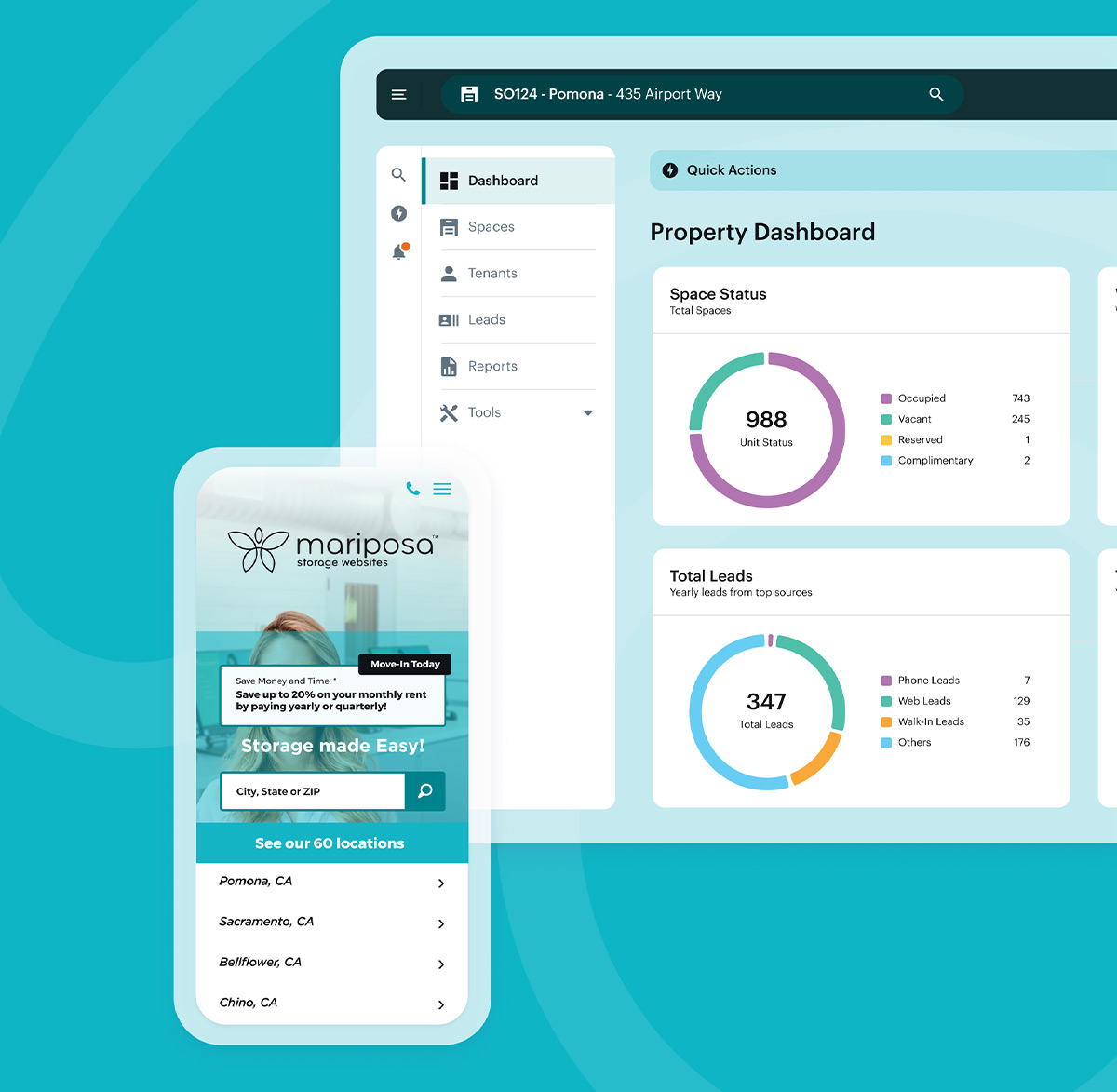
“Over the last year, we’ve been working to bring these five companies together as one under the Storage Commander brand and work on launching our new product, SC Navigator. The most exciting thing for us is that we have a combined industry experience of over 50 years,” says Richard Witka. “We’re really excited about where we’re headed. SC Navigator serves the self-storage industry at a very high level and in a way that we think is going to be a big game changer for the industry.”
What is SC Navigator? It’s a cloud-based software as a system (SaaS) property management platform designed to reduce manual tasks by automating processes within self-storage facilities. Storage Commander believes that by using SC Navigator, self-storage owners and managers can increase their profitability and improve the efficiency of their facilities, helping them run smoothly.
The program can be used by owners and operators with a single location, as well as those running multifacility companies and businesses. “We built the software so that it can grow with the operator,” says Joel Washburn.
The program can help self-storage managers improve their efficiency by automating administrative and repetitive tasks, such as invoicing. SC Navigator can streamline invoicing with automated rent collection. It’s also possible to open the software on multiple screens at once, so the whole team has access to the data. SC Navigator can run on a PC, smartphone, or tablet. That way, it’s easier to check on work demands and the team’s productivity, even when away from the office.
And what about profitability? “By using SC Navigator, we can reduce expenses on the employee side,” says Witka, who explained that the software does a lot of the repetitive tasks, meaning that employees can work on other areas of the business. Managers and owners can then save on employee costs.
The software can also identify “flight risks,” which are tenants interested in moving out or who aren’t satisfied with the service. It does that by analyzing tenant behavior. “If a tenant hasn’t been on the property in nine months, but then, all of a sudden, they’re there three days in a row, they’re a flight risk,” says Washburn. “The tech can communicate with that tenant and send them a message about how they’re appreciated. We can offer them a 20 percent promotion, just as an appreciation token to try and help raise that occupancy.”
Witka and Washburn say that the software can generate data and reports about the facilities that can help them grow. Storage Commander also offers services such as marketing and tenant insurance to support their clients in that area as well. They share that their goal is to see their clients thriving and growing.
According to Bevan, the self-storage industry is hyper-competitive, especially in recent years, which puts pressure on all operators, regardless of size. The competitive aspect of the industry can affect operators in attracting tenants and running their companies efficiently. In her opinion, this is why it’s so important to leverage technology to help improve business operations.
“Standing out and staying profitable requires sophisticated tools and strategies, and Tenant Inc. addresses this by providing operators with an integrated technology platform designed to enhance competitiveness through improved online presence, advanced property management, significant operational automation, data insights, and a modern tenant experience,” she says.
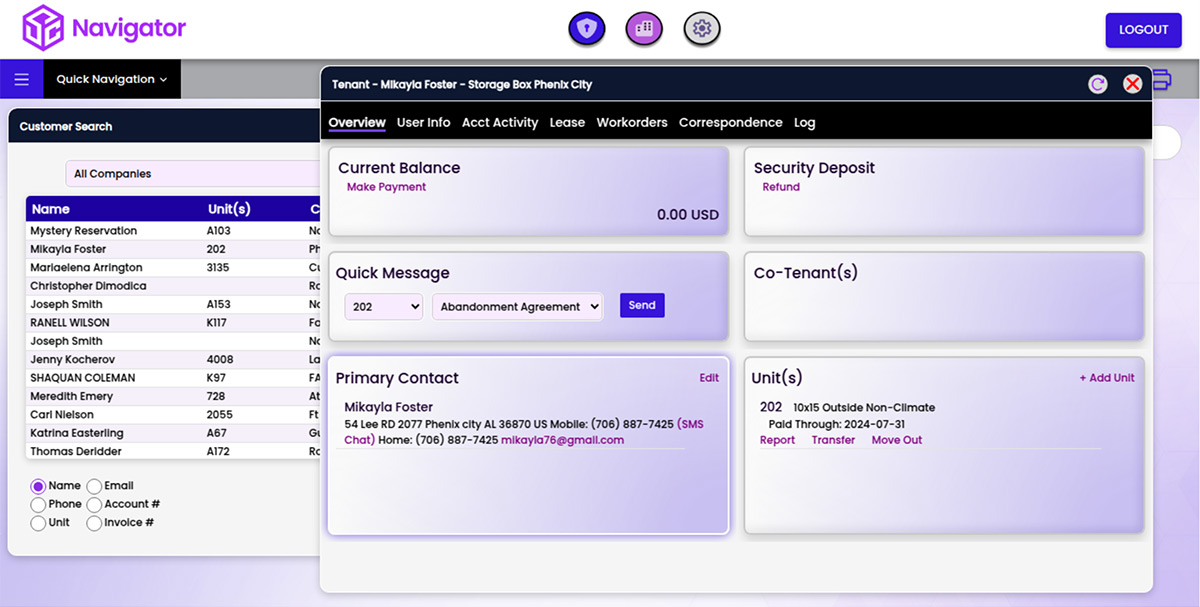
The Hummingbird software automates processes for self-storage owners and managers, improving their efficiency by taking part of the workload, especially regarding financial and repetitive tasks, off their plates. Bevan explains that the platform is scalable, meaning it can be used by businesses of all sizes. “You’re able to automate texts and emails with one-click payment link for customers, letting them know their payment is due in X number of days.”
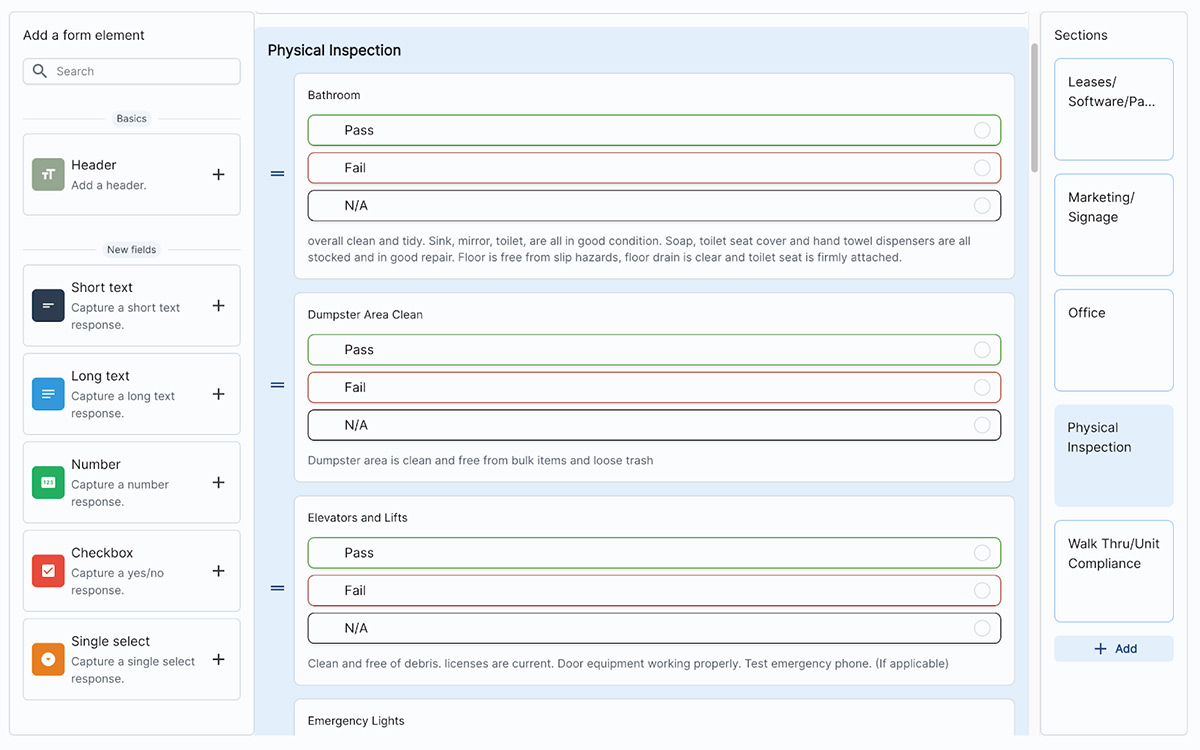
Mariposa creates websites adapted to SEO best practices, which makes them rank high on Google searches and increases visibility for the company. In addition, making the process simpler, tenants can reserve or rent their units online and Tenant Inc.’s clients can verify tenants’ identities online.
Tenant Inc. helps its clients increase efficiency and profitability by providing a platform catered to their needs. “Operators that have switched to Tenant Inc. see a 30 percent increase in online rentals, a reduction in delinquencies, and modernizing operations, and switching to Tenant Inc. gives you a future-proof, scalable platform that grows with your business,” says Bevan.
Even though the self-storage industry is becoming more intertwined with technology as time passes, there are still managers and operators who aren’t interested in management software, which is understandable. “Change can be daunting, especially when your current system works, but the biggest thing is always wondering the ‘what-ifs,’ if your operations could be more efficient, your revenue could increase, and you could save hours of work each week,” says Bevan. “We’ve helped operators transition seamlessly hundreds of times without disrupting daily operations.”



he self-storage industry was still in its infancy in 1975 when the Self Storage Association (SSA) was formed. Now 50 years later, it’s hard to believe how far the industry has come in terms of growth, investor interest, and innovation. In celebration of this milestone, numerous events have been planned.

One of the main attractions will be seeing award-winning musician Darius Rucker, the former front man of the band Hootie & the Blowfish, performing his hits exclusively for SSA attendees. “We couldn’t be more excited to have a musical icon like Darius Rucker headline our private reception in Las Vegas,” said SSA President and CEO Tim Dietz. “Darius is a legendary singer and songwriter who appeals to fans of all musical genres, and the SSA is thrilled that he chose to help us commemorate our golden anniversary.”
Charity Storage was founded in 2011 by Lance Watkins, CEO of Tenant, Inc., and the late Barry Hoeven, founder of Westport Properties. It is a national self-storage industry nonprofit that is supported by many self-storage owners, operators, management companies, industry associations, organizations, and vendors. The organization uses existing storage facility operations to raise funds to support charities throughout the United States.
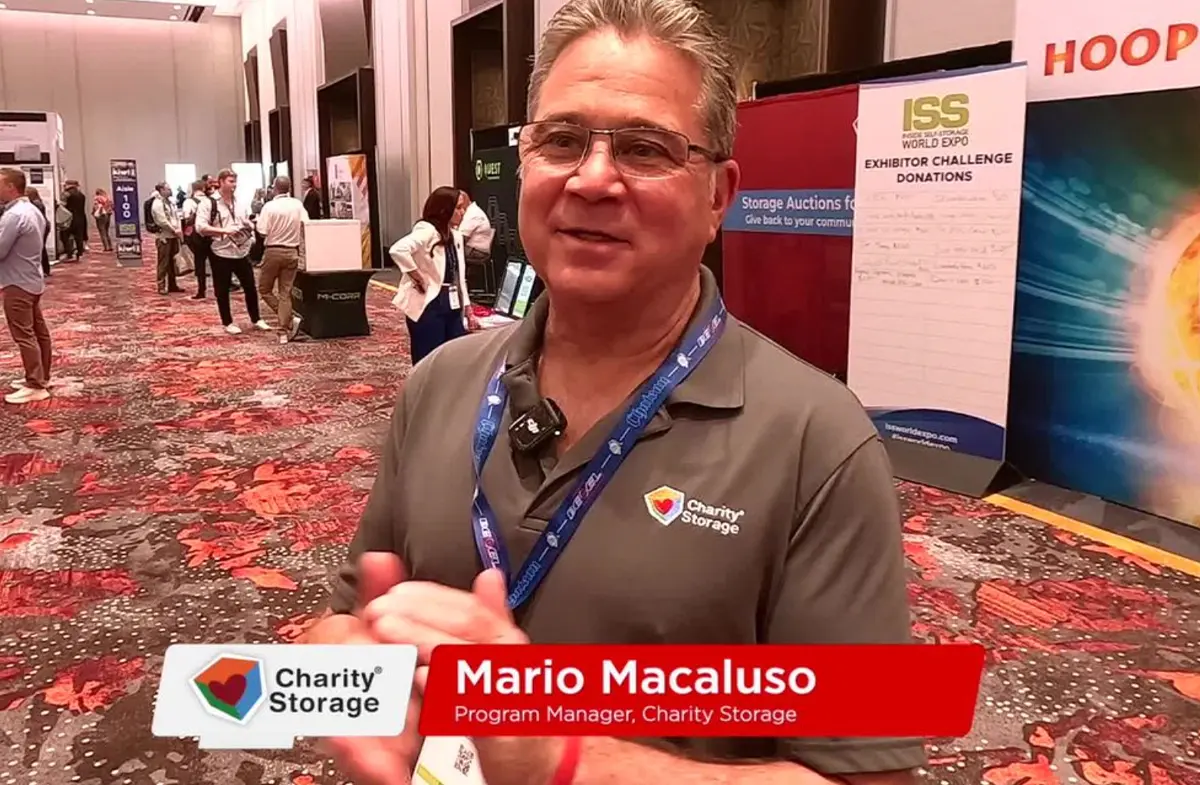
Barry Hoeven was also the founder of Kure It Cancer Research. Celebrating 18 years as an Orange County, Calif.-based nonprofit, Kure It raises money for innovative cancer research for underfunded projects at comprehensive cancer centers across the U.S. Using a tenant-driven Round Up For Research program with storage partners, Kure It is leaving a significant mark on patient treatments, screening, and preventive programs.
“Kure It is deeply grateful to the storage industry for turning compassion into action. Your unwavering support fuels the research that brings hope and world-class treatment options to thousands of patients,” says Brooke Adams, director of strategy and development. “We encourage all self-storage operators and vendors to learn how they can support the good work we are doing with Charity Storage and Kure It’s Round Up For Research program. This program is designed to engage tenants to assist with raising funds for the SSA Scholarship Fund, Kure It, and Charity Storage.”
For more information, visit www.selfstorage.org, www.charitystorage.org, and www.kureit.org.





mall talk is a common part of basic socialization. We comment about the weather, traffic, sports teams, and our children and pets. Then there are people who, from the moment you say “Hello,” start telling you real stories about life, such as things they love, meaningful moments with loved ones, or heartfelt accounts.
The latter is the experience you get when speaking with Alonna Ross, sales executive at Storable. She’s immediately likeable, and as she speaks, you’re suddenly feeling thankful you’re getting to hear all about it.

Despite it being a supportive work environment, eventually Ross needed to work from home to better accommodate the special needs of her youngest son, Colten. In addition to Colten, there’s Samantha, Nathan, Joshua, Matthew, and Alyssa. She adores all of them, but she has no qualms about admitting that Colten is her favorite. “Messenger actually published an article about him for Autism Awareness Month! The magazine has been part of some of the most important parts of his life,” she says with gratitude reflected in her voice.
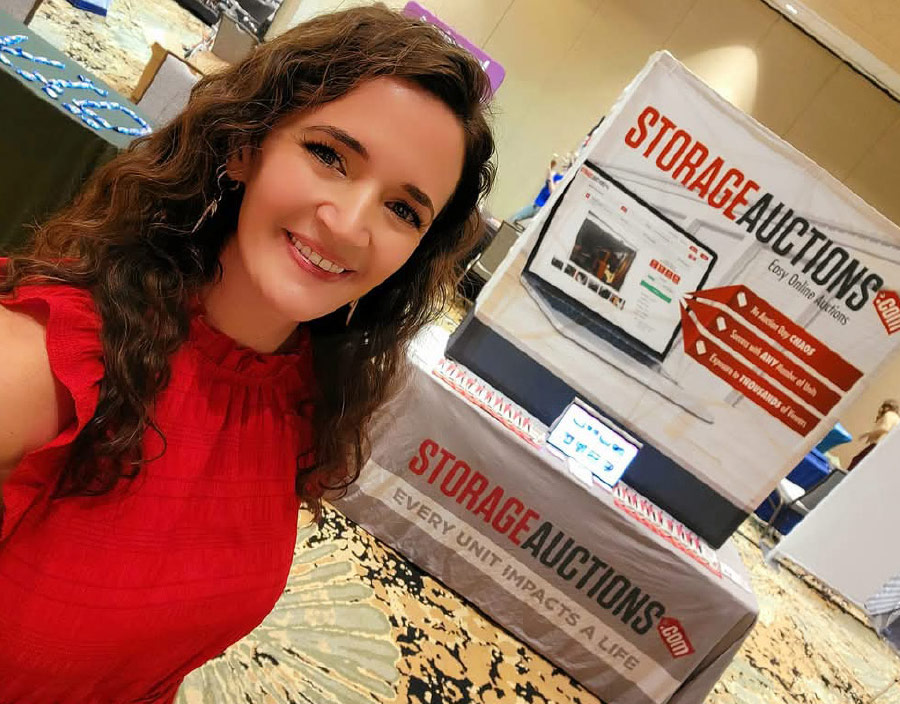
They also volunteered together at St. Mary’s Food Bank Alliance, Andre House, and Crisis Nursery. In all, she volunteered regularly at every single one of the organizations at U-Haul’s Volunteer Program, so it’s no surprise that she won their Volunteer of the Year Award in 2013. She’s clear on the importance of helping others. When asked how she managed to work with all of them in addition to her job, she credits being a mom. “Having six kids makes you a master at multitasking. “People say they don’t have time to do it, but they really do. It’s all about priorities.”
At the end of the day, it’s been good for the people she’s helped, as well as for her own children. “Parents should strive to raise good humans. It’s not about whether someone becomes a doctor or a lawyer. It’s about becoming good, contributing members of society.”
She was also a part of the Self Storage Association’s Young Leaders Group (YLG) when she first joined the industry. “I actually attended the very first YLG event. I really loved being a part of it, but at the beginning, I was always on the sidelines, thinking that I didn’t have enough time to participate. Yet, in my late 30s, I figured out that if I wanted to be in leadership, I had to do it now, because you age out at 40.” That was how, at 39, she became a senator and managed the membership committee, an experience she thoroughly enjoyed.
In addition, she’s on the board of the Missouri Self Storage Owners Association (and MSSOA) the Arizona Self-Storage Association (AZSA) and the vendors committee for the Self Storage Association (SSA). As if her plate weren’t full enough, she also assists the Oklahoma Self Storage Association (OKSSA). “All of these associations are a huge part of my life, and I encourage people to get involved in their state’s [association].”
When not at work, Ross enjoys off-roading and live music. She also loves being the unofficial “adventure ambassador” in self-storage. “At every trade show, people ask me for things to do. I’ve taken operators swimming with manatees, skydiving, going on hot air balloon rides, and even getting tattoos together. Everyone does steak dinners, but at some point, no one remembers those. But they remember that one time I pushed them out of an airplane!”



uke Shardlow has been working in the technology industry for the past 20 years, having had the opportunity to lead key aspects of renowned companies such as eBay and Staples. The Australian native moved with his family to the U.S. in 2009, initially settling in the Bay Area and later relocated to the Boston area, where he resides to this day.
“In Boston, I joined Launchpad Venture Group (LVG), where I’ve been a member for several years. Through LVG, I connected with the Ai Lean team and began advising them on technology and product strategy,” Shardlow states. “When their CEO relocated to Europe for family reasons in early 2024, I was invited to step into the leadership role.”
Ai Lean is Shardlow’s first time working in the self-storage industry, and he has been captivated by the camaraderie he has found in the process. “This is my first foray into the self-storage industry. I have been blown away by how inclusive and collaborative the industry is. It’s rare to find an industry where competitors truly work together and support each other, all to benefit the industry as a whole and ultimately the tenant experience. While many industries talk a big game regarding collaboration, the storage industry actually lives it.”

“From day one, we’ve been an ‘AI-forward’ company—to borrow the phrase from Jeffrey Bussgang, author of The Experimentation Machine—not because it’s trendy, but because we saw the massive opportunity to apply intelligent automation to solve real problems in self-storage operations. While many companies are just now exploring how to add AI features, we built our entire business model around leveraging AI strategically,” he states. “The difference is that we don’t view AI as a feature to bolt onto existing processes. It’s foundational to how we operate, from how we develop our products and analyze market trends to how we optimize our client services and monitor regulatory changes. This approach isn’t about having a chatbot on our website; it’s about using intelligent systems to drive better outcomes across every aspect of our business.”
According to Shardlow, the key to achieving success with AI in the industry is to build it from scratch, instead of trying to add it to existing models. “The strategic advantage comes from our AI-first approach to product development. We’re not retrofitting AI onto legacy systems, we’re building intelligent automation from the ground up,” he says. “The real competitive advantage isn’t any single AI feature [but rather] having an entire organization and product ecosystem built around intelligent automation. That foundation allows us to innovate faster, serve clients better, and stay ahead of regulatory changes in ways that companies with traditional, non-AI architectures simply can’t match. The operators who succeed long term will be those who partner with companies that truly understand how to apply AI strategically across the entire business ecosystem, not just as a surface-level add-on.”

The same rule applies for improving asset valuation in the storage sector. “Clean financials tell the story. When you have automated delinquency management, your NOI becomes more predictable and your bad debt write-offs shrink significantly. Investors and appraisers love consistent processes that demonstrate professional management. For smaller operators, this is actually crucial because they don’t have the brand recognition of the big players. When a potential buyer sees that you’ve systematized your operations and have solid delinquency controls in place, it signals that this isn’t just a mom-and-pop operation … it’s a professionally run business. That perception can add real value to your asset.”
He advises documenting interactions when managing or mitigating delinquency-related challenges in high-risk compliance areas. “Documentation is everything. In the world we live in, you need bulletproof records of every interaction, every notice sent, and every deadline met. Manual processes just can’t deliver that level of precision consistently. We also see successful operators take a proactive stance on legal requirements rather than a reactive one. Instead of waiting for regulations to change and scrambling to adapt, they implement systems and automation robust enough to handle evolving compliance requirements. It’s about building operational resilience from the ground up.”
As for maximizing returns in the auction process, Shardlow says you should treat it as a legitimate part of your revenue strategy, not just something you do when you must. “Obviously, quality listings and professional presentations make a huge difference. We’ve found that when auction listings include good photos, accurate descriptions, and are posted consistently across multiple platforms, bidding activity increases significantly,” he says. “Timing matters. Regular auction schedules, rather than sporadic ones, tend to build buyer confidence and participation.”


Investor Survey

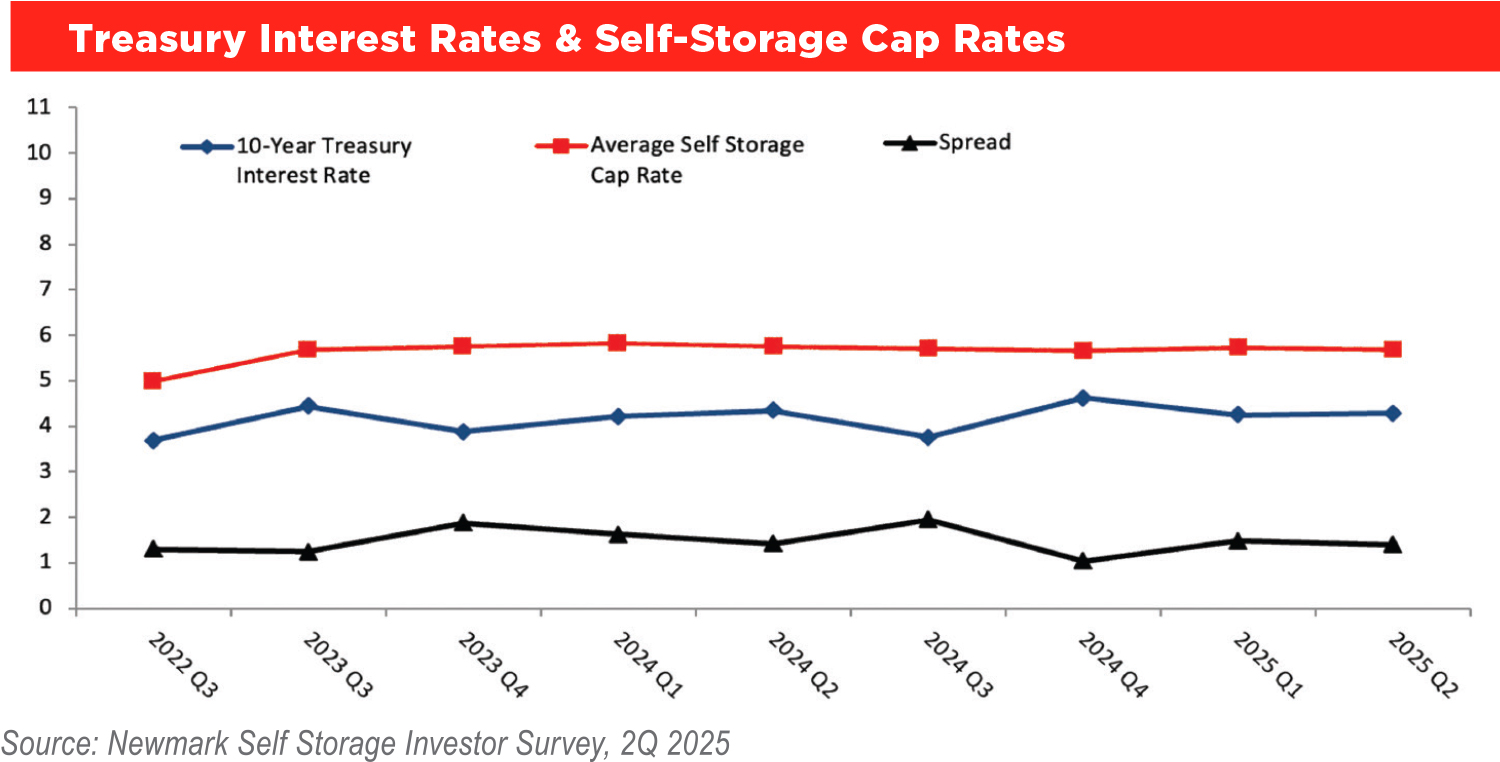
he average cap rate the last eight quarters was 5.72 percent in a range from 5.66 to 5.83 or only 17 basis points (bps), a steady and narrow range. It is another indicator of the steady and resilient characteristics of self-storage in uncertain macro-economic conditions and investment markets. This steady, if not dull, trend is reflected in the the Treasury Spread & Self Storage Sales chart. Interestingly, the cap rate spread to 10-year Treasuries averaged 150 bps over the last eight quarters, but a wider range as a function of dynamic Fed movement and slower market reactions. Overall, the Treasury spreads have been at record lows in the last eight quarters compared to the 20-year time trend.
See Treasury Interest Rates & Self-Storage Cap Rates chart.
See Segmentation by Investment Quality Q2 2025 table.
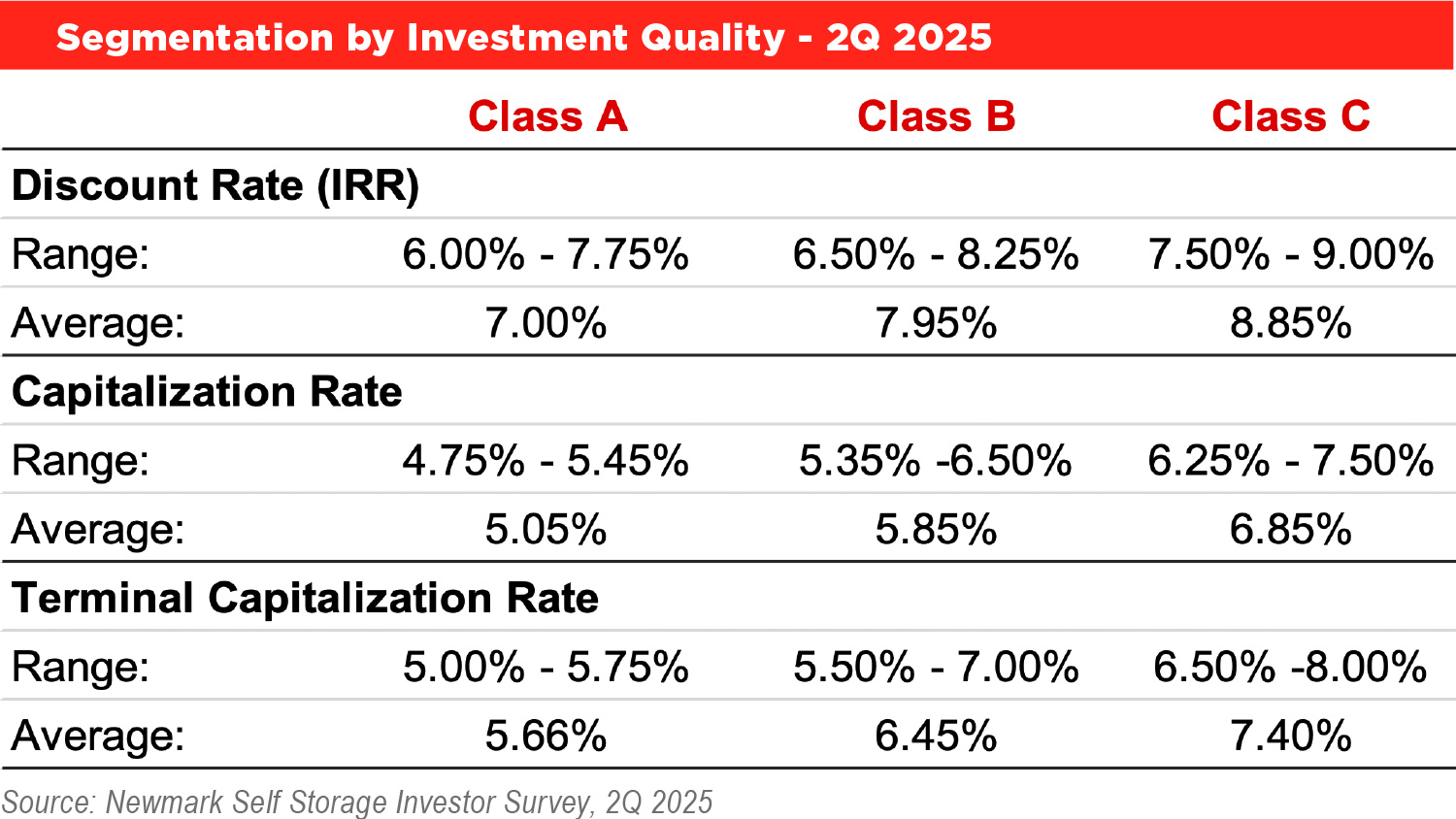
Many market participants expressed a belief or hope that interest rates would decline somewhat this year, suggesting lower cap rates. We note a similar sentiment in the past eight quarters, but exogeneous factors such as the election, global warfare, and U.S. tariffs have created uncertainty. As a result, we have seen three directional changes in investment rates over the last eight quarters.
Going forward, investment rates are likely to remain steady, pending clear direction in macro-economic conditions and 10-year Treasuries. Comparing self-storage market conditions to standard unit sizes (such as 5-by-5, 5-by-10, or 10-by-10), market sentiment seems to indicate a 5-by-10 outlook for the next quarter.
Self-Storage Relic


ollecting accurate customer data is essential for the smooth operation and long-term success of any self-storage business.
These actions appear to legitimate customers as thoughtful tokens of good service. However, the clever side benefit is to verify the email address provided is valid, ensure the phone number is active and correct, and confirm the physical address is accurate. Reliable contact information is also critical for reasons other than ensuring a customer’s identification.
“If there’s ever an issue with a unit—whether it’s related to access, billing, or potential auction proceedings due to delinquency—you must be able to reach the tenant quickly and efficiently,” says DeFazio. “Having the correct email, phone number, and mailing address ensures important communications are received without delay.”
“We prioritize customer data security,” says DeFazio. “One of the key tools we rely on is SiteLink. As a trusted and widely used software in the self-storage industry, SiteLink offers built-in encryption to safeguard sensitive customer information. In addition to encryption, we also follow best practices such as controlled access, regular system updates, and staff training to ensure data remains secure at every touchpoint.”
Leveraging customer data allows operators to make smarter decisions, tailor their marketing, and ultimately boost revenue, but that can’t come at the price of safety.
“When it comes to security, we take a multilayered approach because we understand the trust our customers place in us,” says Androniki “Niki” Bossonis, vice president of digital marketing at Tenant, Inc. “We maintain SOC 2 compliance, implement end-to-end encryption, and have strict access controls in place. Our team receives regular security training, and we conduct routine audits to ensure we’re staying ahead of potential threats. Data governance isn’t just a checkbox for us—it’s built into our culture.”
Having this data helps analysts help owners. “One of the first things I look at is the management summary,” says Carol Mixon, owner of SkilCheck Services, Inc. “I look at the economic occupancy of the store and then I look at the physical occupancy. Owners say, ‘What are you worried about?’ I explain, looking at the data, the store is 98.2 percent occupied, but you are only bringing money in as if it were 83 percent.”
Without data, the depths of these disparities might go unnoticed. Lacking clear numbers to analyze led one company to not only unwittingly offer $50,000 to $70,000 in annual concessions and bonuses but four times that number in discounts due to waived increases. Another company allowed a charitable free unit program creep up from a handful to 200 free units—one sixth of their available spaces. This can have a huge effect on revenue.
“If you don’t teach your managers how to manage by the numbers, you’re not being very effective,” says Mixon. “It’s problematic if you just look at the occupancy and not the economic side. In one software program, they call it ‘effective rate after concessions.’ You have to start looking at the data on your concession sessions and discounts and rent variances, or the store stops performing well.”
Data tells the story that the picture of success is not a completely full facility. “If you’re at 100 percent occupancy, you ought to be taking those lowest paying customers and start working with them first,” says Mixon. “When right-sizing rents, you might lose some customers resistant to paying more, but most will stay, and the few who don’t will give you something to sell at a higher price.”
Profits don’t only grow through data-driven rent management but by highlighting ineffective staff. “Data can also clearly show when a manager is under performing when it comes to sales,” adds Mixon. “It can show the trajectory, and if it just keeps going down, it might be time for a change or some training. Having the hard data is helpful during tough conversations when you have to let someone go. It objectively shows the store isn’t doing well, so it isn’t anything personal.”
Data can also help steer an operation back to success. “Our platform can identify when a facility is approaching peak capacity and automatically suggest rate increases for new customers while protecting existing ones,” says Bossonis. “We help operators understand seasonal patterns, maybe they’re consistently underpricing during peak moving season, or maybe they could be more aggressive with promotions during slower months. It’s about finding that sweet spot where you’re maximizing revenue without pushing customers away.”
“Knowing where your customers are located, along with demographic insights such as age group or generation, allows you to develop more targeted and efficient marketing campaigns,” says DeFazio. “For example, outreach to baby boomers may look different than outreach to Gen Z, and localized promotions can be more effective when you’re confident in the areas your tenants are coming from.”
From communication to compliance to customer engagement and marketing, accurate data collection is a critical foundation for running a successful and responsive self-storage business.
“Marketing data in self-storage has traditionally been somewhere between nonexistent and very basic,” says Bossonis. “Operators were fed up with spending thousands of dollars on clicks and not knowing if they were tied to actual revenue. But data changes everything. When you understand your customer segments deeply, you can optimize your paid and organic campaigns with messages that actually resonate.”
One issue with marketing is attribution of success.
“We help operators identify their most valuable customers, understand which marketing channels are actually driving conversions, and predict which prospects are most likely to rent,” says Bossonis. “Many operators are spending money on marketing without really knowing what’s working. Our data helps them understand the complete customer journey, from first touchpoint to move-in, so they can invest their marketing dollars more effectively.”
Targeted Marketing That Drives Demand
Understanding where your tenants come from and their generational demographics (such as millennials vs. boomers) allows you to create highly targeted marketing campaigns. Instead of casting a wide—and expensive—net, you can focus your efforts on the areas and platforms that are most likely to deliver results. For example, younger customers may respond better to digital ads and SMS marketing, while older tenants might prefer direct mail or phone calls. This precision not only increases your marketing ROI but also helps fill units faster.
Dynamic Pricing And Rate Management
Analyzing occupancy trends, seasonal demand, and move-in patterns allows you to make informed decisions about pricing. If you see consistent demand for certain unit sizes or during specific months, you can implement rate increases or offer limited-time promotions strategically. With the right data, you’re no longer guessing—you’re adjusting in real time to market behavior and maximizing each unit’s revenue potential.
Customer Retention And Upsell Opportunities
Customer data can help identify patterns that signal when a tenant may be at risk of leaving or when they might need more space. For example, tracking how long customers stay or what types of units they rent can uncover opportunities to offer upgraded spaces, insurance packages, or extended rental terms. Sending personalized messages based on this data helps build loyalty, reduce churn, and increase the lifetime value of each tenant.
“We’re not going in the right direction if we don’t embrace technology,” says Mixon. “As a consultant, it seems crazy when you see facilities still using a manual system. There are many inexpensive options that can offer all the pertinent data in front of agents when they are making delinquency or check-in calls. Owners can be reluctant about learning new software or requiring that of their managers, but the problem is they’re going to be left behind by not doing so.”


magine you have found the perfect self-storage facility to invest in. Buying right is only half the equation to a successful deal. Now it’s time to execute on the business plan and produce a profitable investment. How do you decide the best way to operate a facility? When it comes to managing self-storage properties, investors have a few options:
- Self-manage,
- Remote management, or
- Outsource to a third party.
So, which management solution is right for you? It depends on your goals. There isn’t a one-size-fits-all approach to every situation. Are you looking to scale and grow your self-storage investment business? Third-party management might be right for you. Are you looking to maximize profits and stay small? Perhaps self-management is something you should consider.
The top three publicly traded REITs in the industry (Extra Space Storage, CubeSmart, and Public Storage) manage hundreds of facilities on behalf of other owners. The chart Third-Party Managed Stores shows how many facilities each REIT manages.
See the Third-Party-Managed Stores chart.
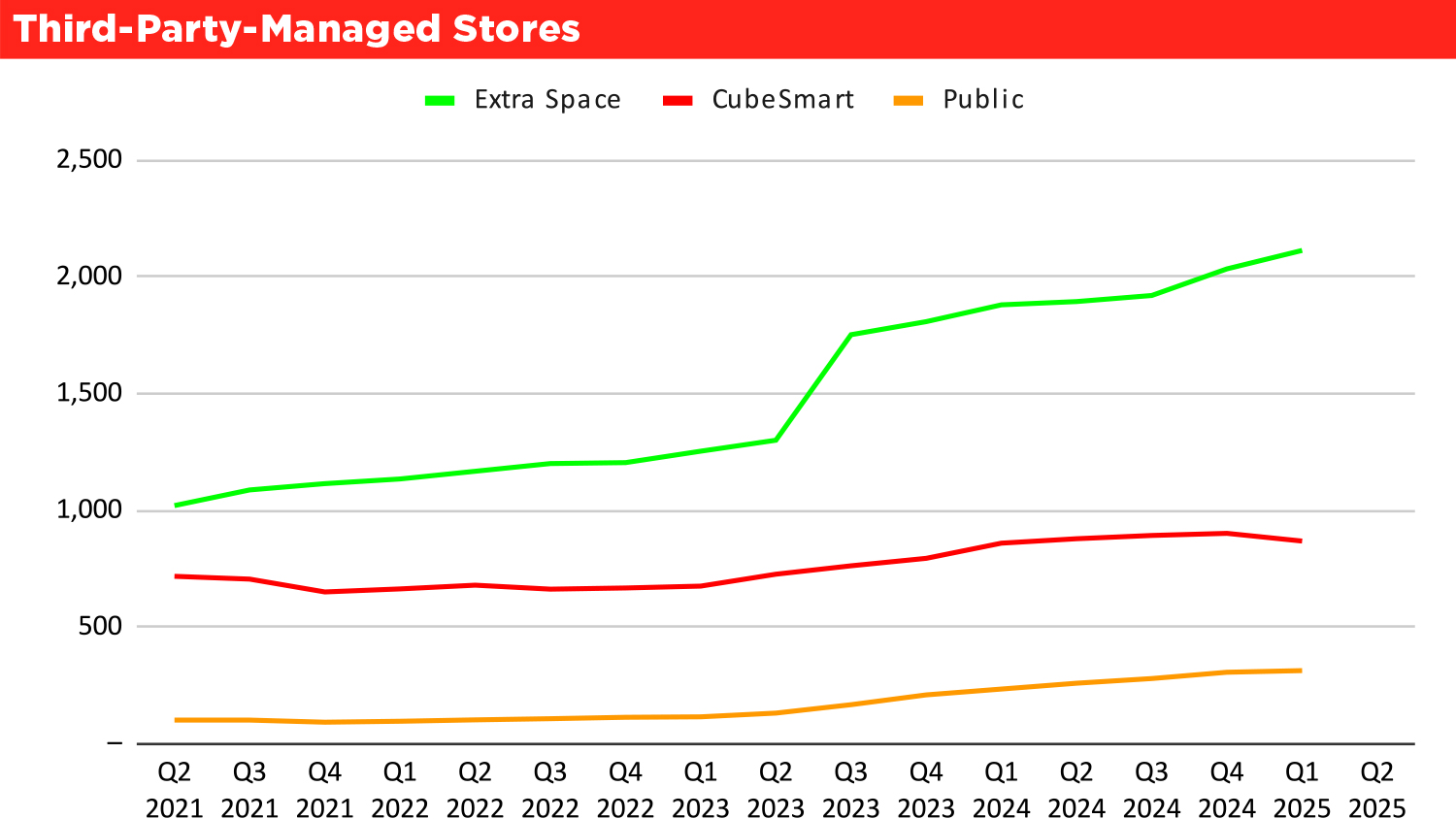
Having the most third-party managed stores doesn’t necessarily lead to the best performance. Have you ever wondered if one REIT outperforms the others in a given market? Which REITs have the highest achieved rates in a given MSA? Should this factor into your decision when choosing a REIT to manage your facility?
The bar graph compares REIT achieved rates and street rates for the New York, N.Y., MSA going back to Q4 2020.
See the New York, N.Y., MSA chart.
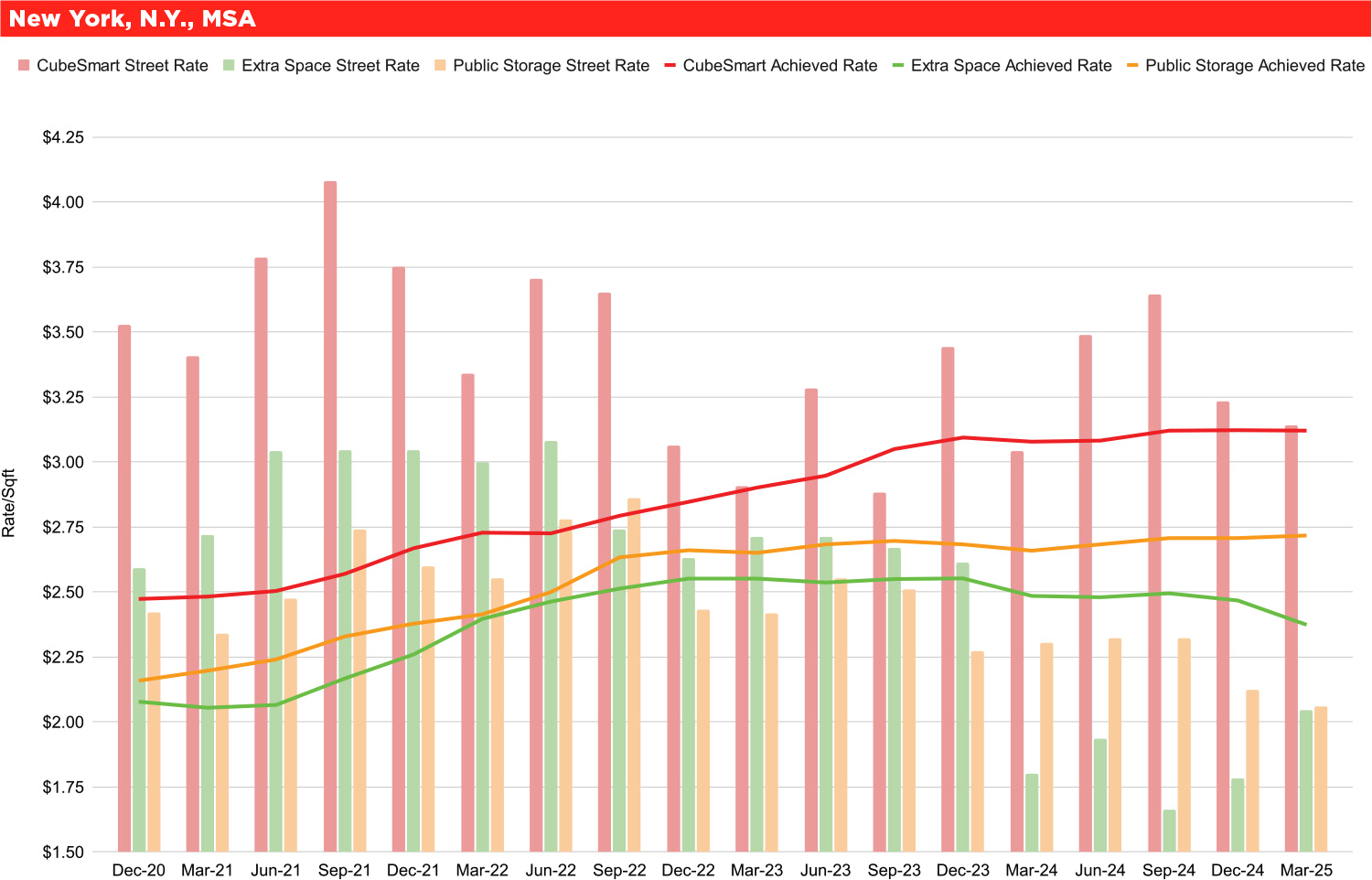
Why is CubeSmart achieving such better rates in this MSA? Does it have something to do with scalability and the number of stores owned in the market?
See the REIT Number of Stores in New York, N.Y., MSA chart.
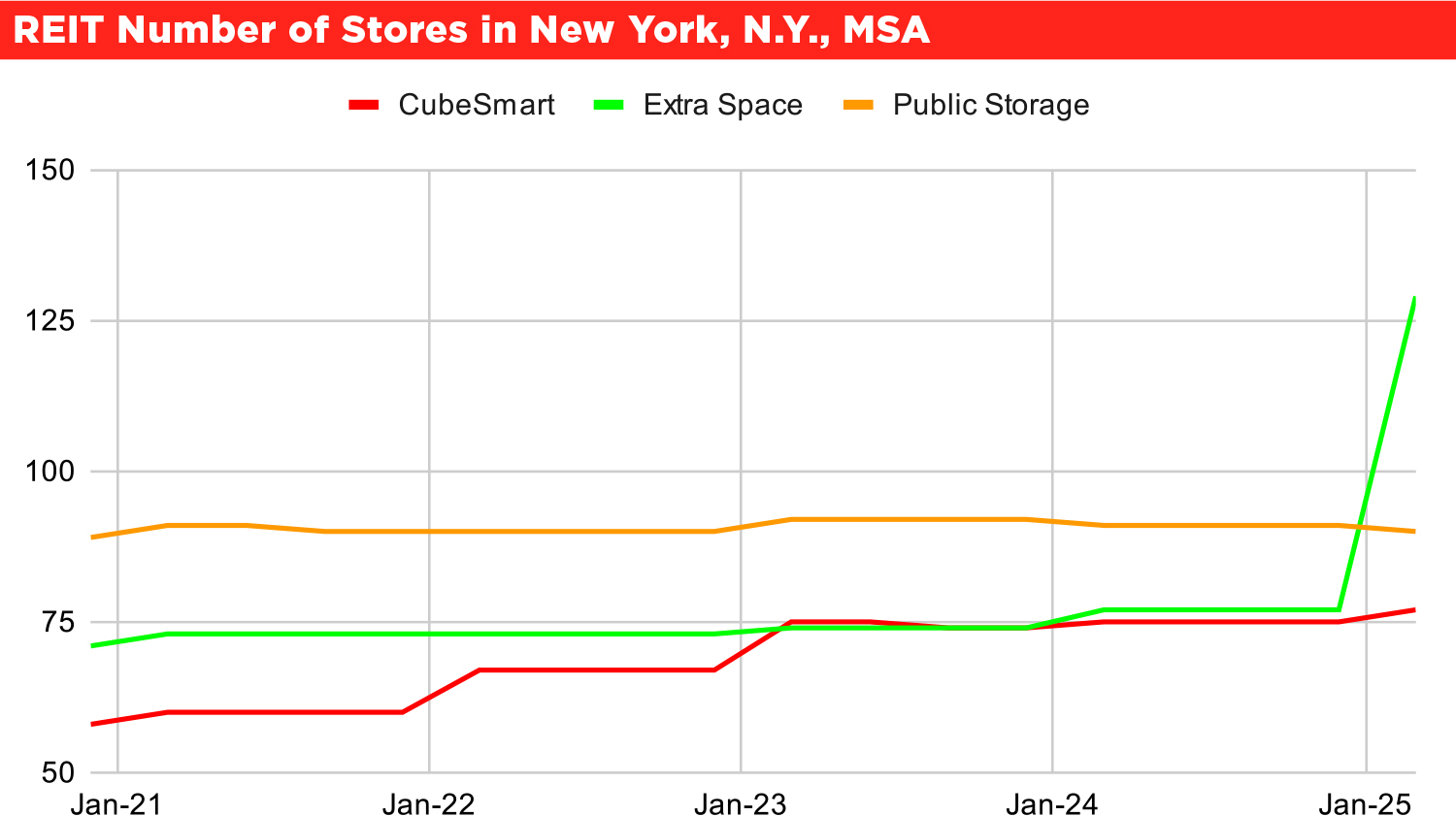
What does the occupancy story tell us?
See the REIT Average Occupancy – New York, N.Y., MSA chart.
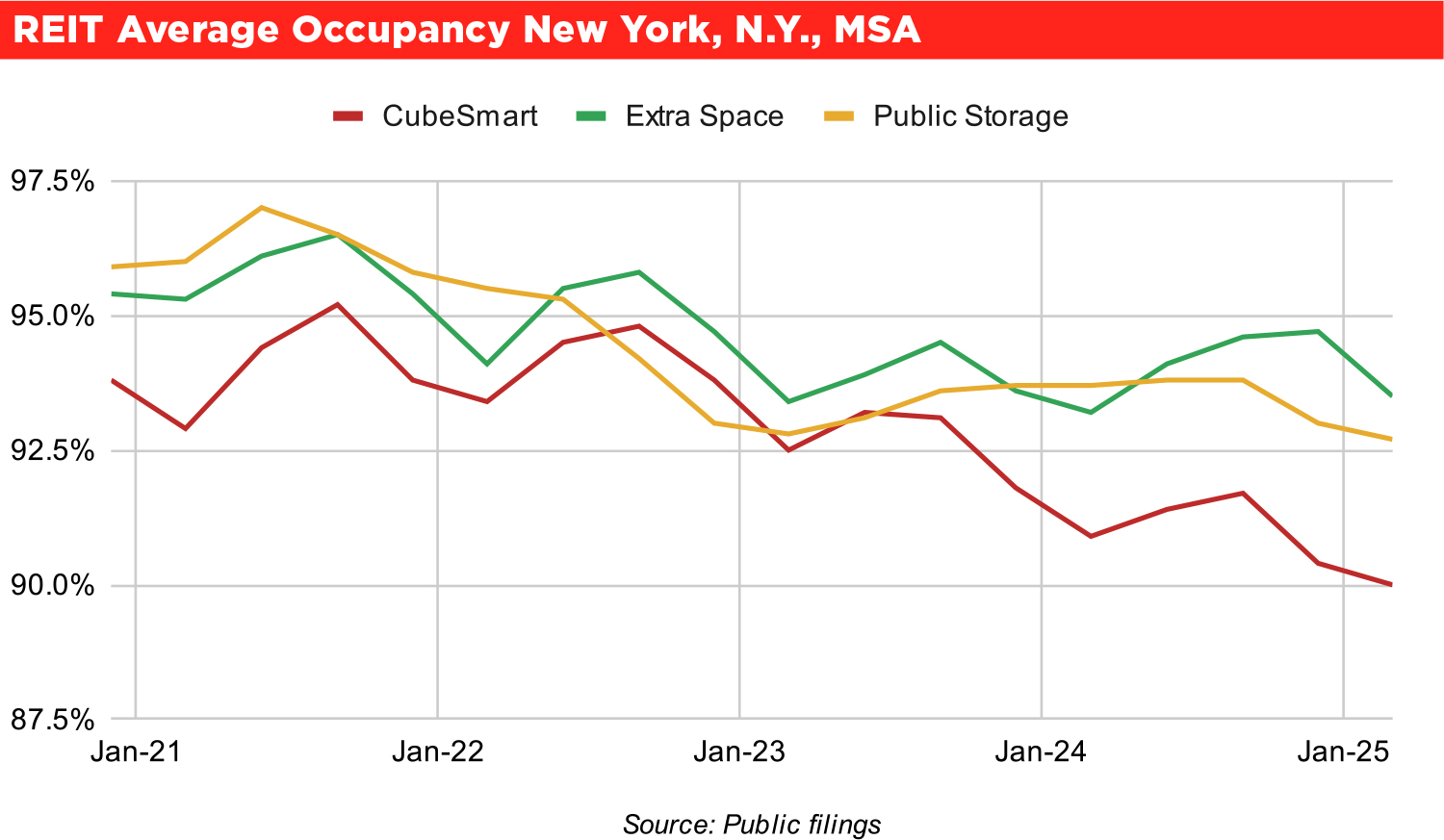
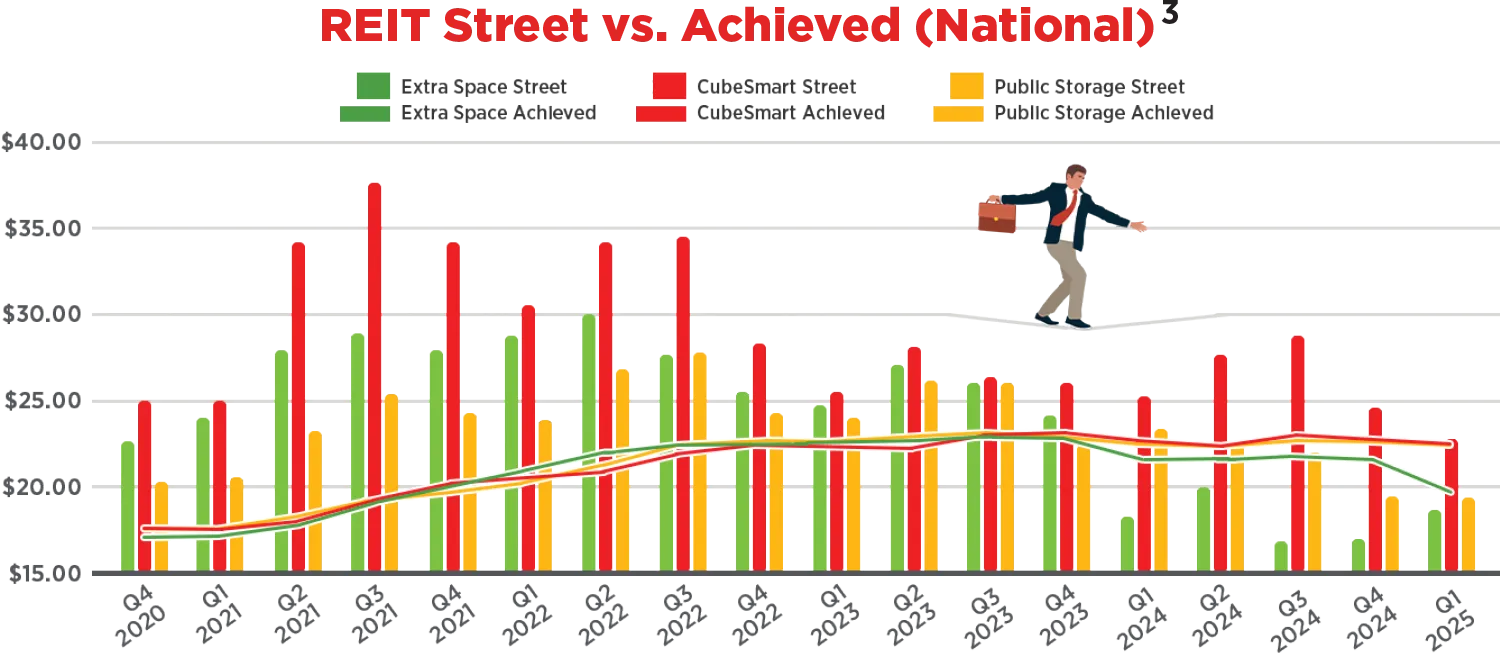
You will notice in the first chart that CubeSmart has taken a contrarian approach in this market. CubeSmart’s street rates (advertised rates) are currently slightly higher than their own achieved rates. Compare this to Public Storage and Extra Space, which currently have street rates lower than achieved rates. This hasn’t always been the case for Public Storage and Extra Space. Previous to 2023, advertised rates for Public Storage and Extra Space were higher than achieved rates, and only recently that trend has reversed. This is likely an attempt to entice new customers in a market with lower demand.
CubeSmart has largely maintained their unique pricing strategy since Q4 2020. In fact, since Q4 2020 CubeSmart’s street rates have, on average, been 20.9 percent higher than their achieved rates. Extra Space’s street rates have, on average, been 7.6 percent higher than their achieved rates since Q4 2020. Public Storage’s street rates have actually, on average, been 2.7 percent lower than their achieved rates since Q4 2020.
By keeping advertised rates higher than competitors, CubeSmart captures higher revenue from the first day a new customer rents a unit. This boosts overall move-in revenue and achieved rates. In fact, from Q4 2020 to Q1 2025, CubeSmart has increased achieved rates by 26.1 percent, the highest compared to Extra Space (14.2 percent increase) and Public Storage (25.8 percent increase). In CubeSmart’s Q3 2024 earnings call, CubeSmart commented on attracting the highest quality customers who are willing to pay “premium rates.” CubeSmart also commented that these higher quality customers “tend to stay longer and are less sensitive to price increases.” The data we are seeing (higher street rates from CubeSmart) supports CubeSmart’s commentary on the subject. On the flip side, CubeSmart isn’t attracting price sensitive customers due to higher initial rates, so naturally CubeSmart’s occupancy will suffer compared to competitors with lower advertised rates. Extra Space is implementing the opposite strategy than CubeSmart in the market (lower advertised rates leading to lower achieved rates and higher occupancy).
Even though occupancy for all three REITs has decreased since 2022, achieved rates have stayed the same, or even increased in CubeSmart’s case. The data suggests that CubeSmart’s higher move-in rates have led to higher achieved rates and lower occupancy than competitors in New York.
When comparing the performance of REITs within the New York market, we must talk about expenses. The REIT Expense Ratios – New York, N.Y., MSA table shows expense ratios over the last year for each REIT within the New York MSA.
See the REIT Expense Ratios – New York, N.Y., MSA table.
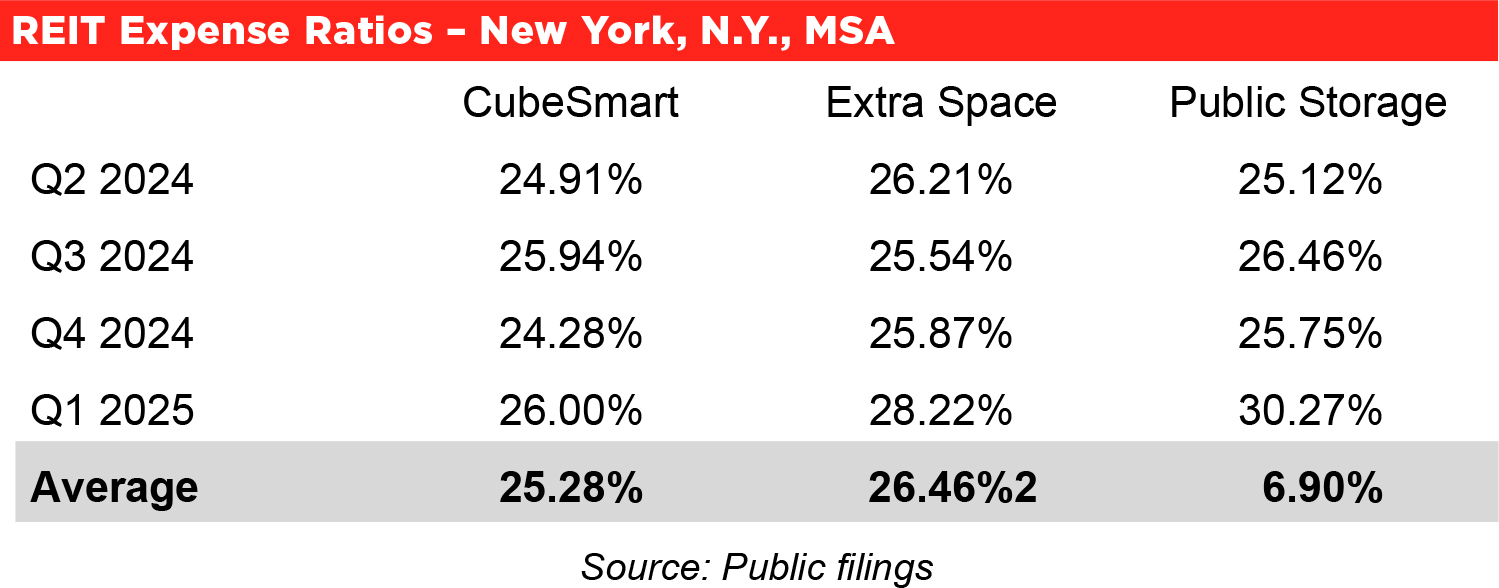
Let’s analyze a simple hypothetical example using all the data discussed above and look at potential net operating income (NOI) and value of a 50,000 square foot facility for each REIT.
See the Hypothetical REIT Property Valuation Example.
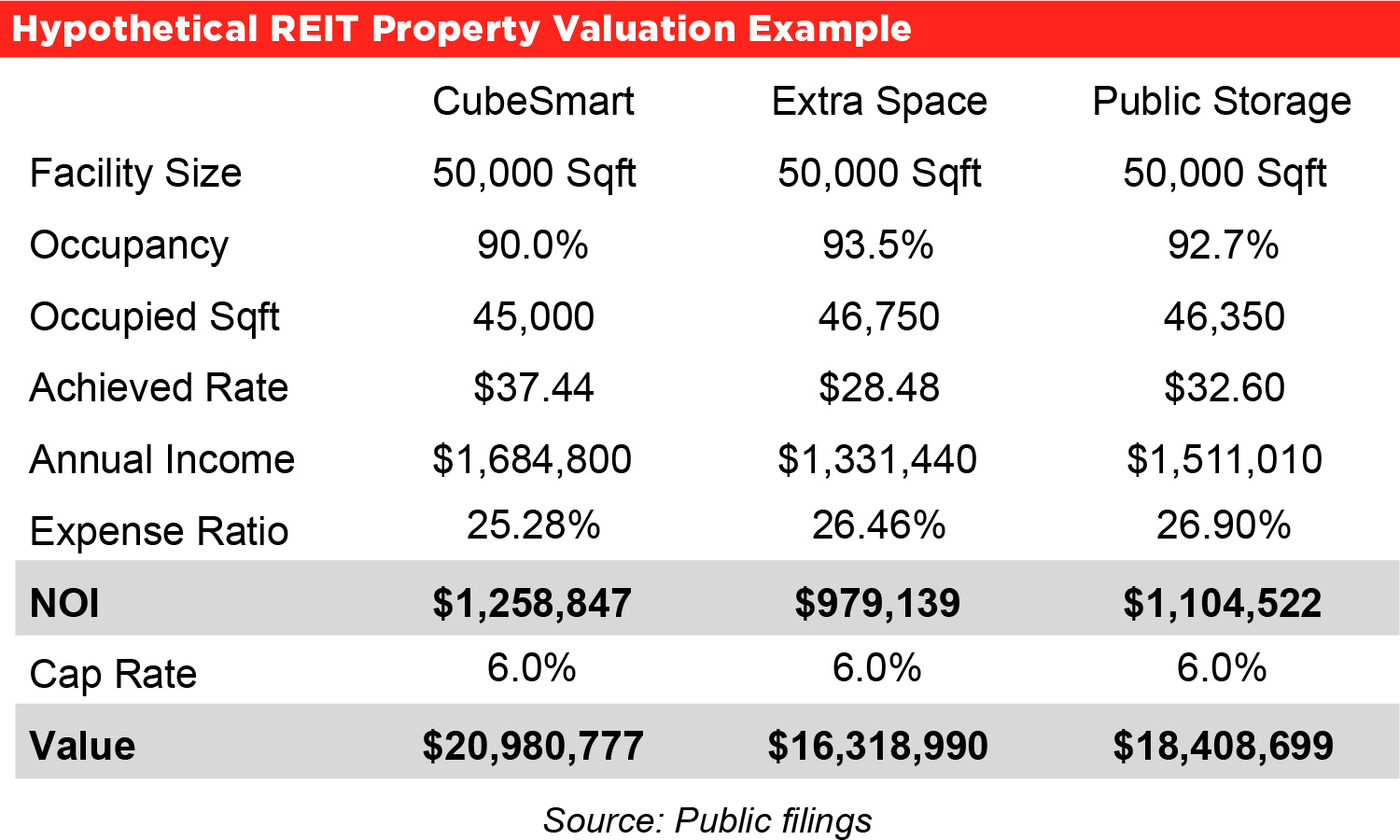
It is worth noting the above analysis doesn’t account for tenant insurance revenue sharing. Each REIT differs in the amount of revenue from tenant insurance, if any, that is shared with the owner when a REIT is hired for management. Tenant insurance revenue sharing is a topic worth discussing when considering hiring a REIT to manage your property.
In conclusion, CubeSmart is achieving the highest rates with the best expense ratio and has outperformed the other REITs since Q4 2020. If you are an active investor in the New York MSA and are considering hiring a REIT to manage your property, CubeSmart has a good argument to make for management.
If you want more data on other MSAs, reach out to support@tractiq.com or visit our website, tractiq.com/reits-compare-across-top-msas, to download your full report.

Move
icking up a part-time job in high school used to be a rite of passage for teenagers. It was how you earned money for dates, a new record, and maybe even a used set of wheels. But most people aren’t still talking about that high school job 40 years later. Guy Middlebrooks is an exception. He took a part-time gig at Winn-Dixie supermarkets and turned it into a career. While he eventually pivoted to self-storage, the lessons he learned stocking shelves and managing stores still resonate today.
icking up a part-time job in high school used to be a rite of passage for teenagers. It was how you earned money for dates, a new record, and maybe even a used set of wheels. But most people aren’t still talking about that high school job 40 years later. Guy Middlebrooks is an exception. He took a part-time gig at Winn-Dixie supermarkets and turned it into a career. While he eventually pivoted to self-storage, the lessons he learned stocking shelves and managing stores still resonate today.
Winn-Dixie recognized his potential early. They invested in him, sending him to meat cutting and produce schools, then off to Jacksonville for a two-week certification course that opened doors to corporate positions. “After that, I became a district manager, then regional manager.”
At every level, Middlebrooks absorbed the lessons. “Early on, it was all about customer service, store conditions, cleanliness, managing employees and schedules. Later it was budgets, financials, and P & L reports. That all carried over when I transitioned into CubeSmart.”
In 2006, his résumé landed on the desk of a recruiter for U-Store-It. “That was our brand before we became CubeSmart,” Middlebrooks says. “It had gone public two years earlier, but we didn’t rebrand until 2011.”
Middlebrooks remembers the phone call like it was yesterday. “The recruiter says he’s calling on behalf of a self-storage company that had recently gone public, raised a lot of capital, and was growing fast, and they were looking for operations people to run properties.”
At the time, Middlebrooks had no real knowledge of the self-storage industry, so he politely declined. But the recruiter anticipated that. “He says, ‘No, Guy. They want people like you—your skill set, your experience in retail. They think you’ll fit in well with their industry.’”
Despite some hesitation, Middlebrooks made the leap, leaving behind the familiar comfort and occasional chaos of Winn-Dixie to manage a Florida district for U-Store-It, a territory that stretched from Jacksonville to St. Augustine. He quickly found his footing, applying lessons from retail through a self-storage lens and spotting connections others might miss.
“In retail, you have your everyday grocery shoppers,” Middlebrooks says. “But as a store manager, you begin to recognize life events—weddings, funerals, birthdays, graduations. Customers need your help, whether it’s a catering tray, a cake, or a bundle of balloons.”
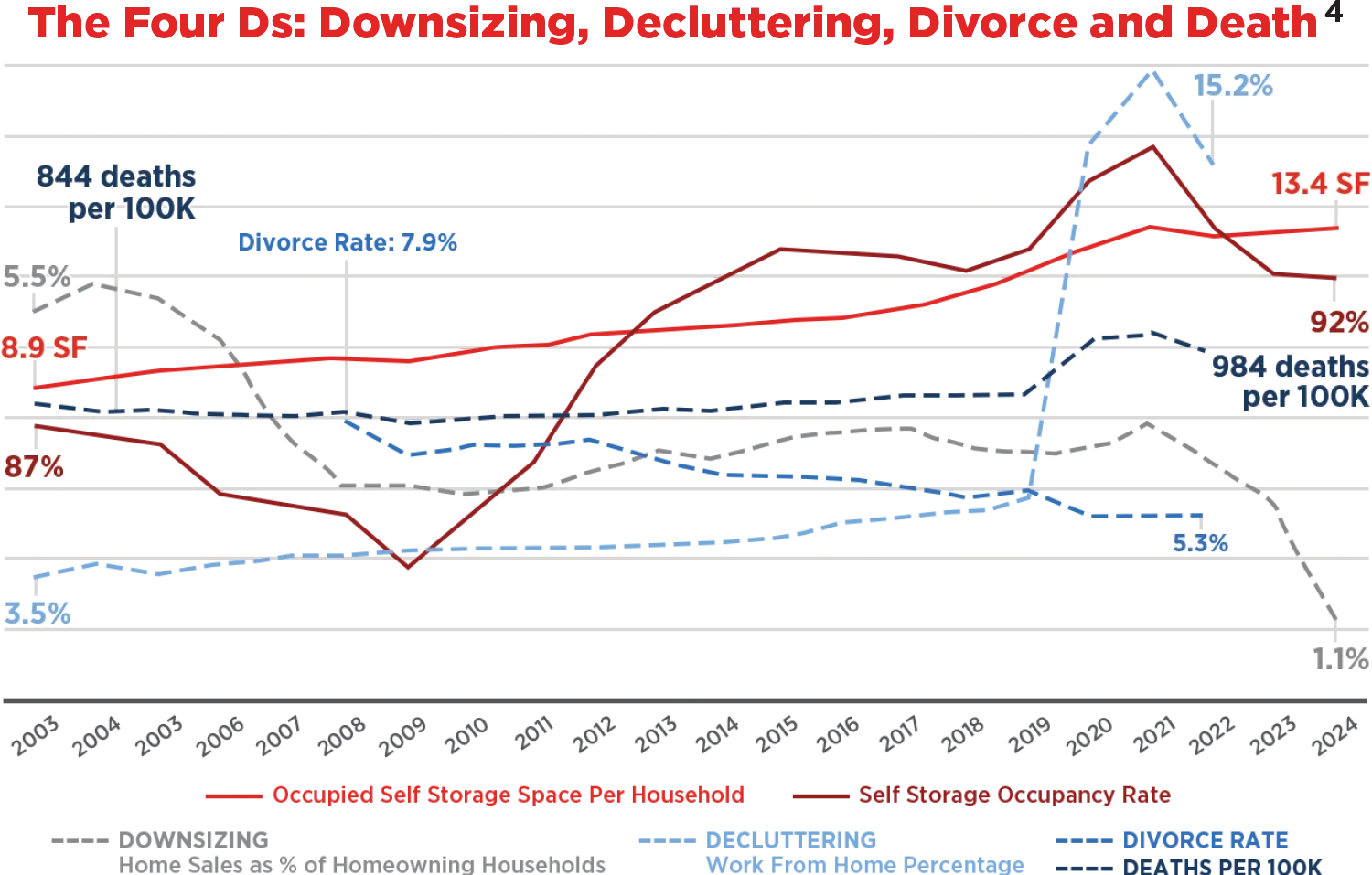
Drawing the parallel, he adds, “And what’s the primary driver in this business? Life events.” He counts them off on his fingers—death, divorce, downsizing, displacement, deployment—and continues. “When someone passes away or a couple splits, sentimental items or furniture gets placed in storage. Someone loses a job and downsizes, they turn to storage. Conversely, your career is booming, so you’re spending money and you need a place for your toys—the boat, motorcycle, or convertible. That’s the self-storage cycle.”
With this understanding, Middlebrooks made customer care a focus, just as he had done at Winn-Dixie. “When someone walks in or calls to rent a unit, our teammates need to understand their situation and be empathetic. The personal interactions we have with our customers really set us apart from the competition.”
Putting this perspective into action made his district very successful, and it didn’t go unnoticed. Not long after, he received a call—not from a recruiter but from the CEO himself. “Dean Jernigan, the CEO at the time, asked me to take over Atlanta as well,” recalls Middlebrooks. Jernigan told him, “We need you to duplicate what you did in Florida—Atlanta’s struggling.”
Not long after that, Jernigan asked Middlebrooks to take on the director of operations role. Middlebrooks was game, but there was a catch. The Florida native would have to uproot his family and move to Malvern, Pa.
“There was a lot of discussion about that,” Middlebrooks says with a laugh. “We lived eight blocks from the ocean in Neptune Beach, and our kids, Matthew and Hannah, loved it there. Giving that up wasn’t easy. But Dean was persuasive, telling me I’d have a really bright future with the company if I did it—he even got my wife in his corner!”

He’s not exaggerating. Middlebrooks and his team grew the original 80 stores acquired through United Stor-All to an impressive 850 third-party-managed locations.
But there was still another rung on the ladder left to climb. Today, Middlebrooks serves as executive vice president of operations, overseeing store operations, facility services, real estate development, and store transitions. Although Middlebrooks has taken on a lot of responsibility, he says the secret to his success is having a good team. “I work with some really good folks,” he says with a bit of his Southern drawl shining through. “I only have four direct reports, but there are many other layers of people helping out.”
That’s what has allowed him to keep a finger in the third-party-management pie. “I didn’t want to give it up completely—I enjoy it too much,” he says. “So, along with everything else, I’m still involved, but I promoted Devin Crow to run the day-to-day, and I’m lucky to have him.”
Middlebrooks also made a lot of connections during his three-year stint with the Self Storage Association (SSA). “I was on the board of the SSA as their first-ever REIT representative,” says Middlebrooks. “In 2010 or so, it got to a point where the REITs were getting so big that the SSA wanted a voice from them on the board. And that was me.”
There wasn’t any tension between himself and smaller operators; rather, being there helped open the lines of communication to make business better for everyone, regardless of size.
His involvement with the associations didn’t stop there. Middlebrooks has gone on to speak at numerous events for the Texas, Arizona, Colorado, and New York SSA chapters; he even joined the latter two years ago. “We have a big presence in New York City as a company, so I’m able to stay close to what’s going on there, offer support to the association and the board, even help out from a political perspective.”
He’s not wrong, but he does agree to field a couple of questions before moving on.
On the topic of existing customer rate increases, particularly the strategy of offering low rates followed by high rent increases a few months later, he is firm that CubeSmart has not taken that approach. “Our strategy is to take really good care of our customers and to maximize revenue for our shareholders. Sure, there is some pushing and pulling in different areas to improve revenue, but we’re not engaging in that.”
Still, he respects what other operators are doing. “Our peers are smart—really smart. They know that pricing makes an immediate impact and they’re doing what works best for their company or property.”
Next up is remote management, which grew in popularity during the pandemic and continues to grow today–not that everyone is on board. “CubeSmart has 75 to 100 remotely run properties,” he says, “but it’s more of a hub-and-spoke model.” The hub-and-spoke model simply means that a large, fully staffed property with a strong general manager supports smaller, remotely managed sites nearby. “That’s the way to do remote management,” he says. “Otherwise, I like the customer care aspect of having someone on site.”

Many businesses tout “customer service” as their differentiator. And many start out with that being true; they offer a personalized approach, willing to adjust their standard model to serve each customer in an individualized way.
That kind of service works, but suddenly there are too many customers with too many individualized asks. The business struggles to keep up, and customization turns to standardization. Customer requests that were once met with “Of course we can make that work,” now get a response like, “Let us do it our way; we know it works.”

Guy is the personification of customer service. His empathy, patience, and genuine commitment to our partners’ success shape how we listen, tackle challenges, and support their growth.
To Guy, customer service can be individualized and standardized at the same time. He and the team work so closely with our partners that they know what we can successfully personalize for our partners and when to guide them to follow our proven methods. It is his empathy that enables him to know when the appropriate response is contrary to what a customer wants to hear. He and the team know that it is OK to say “no” when it is what is best for the customer.
Guy personifies customer service not just with our external partners but internally with his team as well. He genuinely cares about their development and their success, which is why the team has the talent needed to support our 230 third-party owners in our uniquely personalized way, even as we grow.
Customer service has always been our differentiator. As we continue to grow, we intend for it to remain that way. I am confident that we will be one of the few businesses that can scale and maintain our service-first model under Guy’s leadership.
With his recent promotion to executive vice president, I share in the comfort our 800,000-plus storage customers and 230 third-party owners have in the continued stewardship of Guy Middlebrooks–the personification of customer service.
His goal is to serve them all. “If there’s a manager there, people can choose whether or not to interact. I think that’s important because technology can fail. We’ve all experienced hiccups.”
One tech hiccup he recalls happened when he was attending a conference shortly after the hotel implemented Bluetooth-enabled locks on the rooms. “I did the pre-check, went straight to my room, and it didn’t work, so then I’m having to drag my luggage back down to the check-in desk anyhow. It’s like, ‘Just give me a key I can put in my wallet, please,’” he says with a laugh.
Lastly, Middlebrooks shares the biggest headwind in the industry today: “New supply,” he says matter-of-factly. “That can have a dramatic effect on local market pricing, occupancy, and financial results. It’s fine when there’s a lack of supply or a fast-growing population, but not when a market is already oversaturated. We get worked up about legislative issues and such, and those are important to keep an eye on too, but ultimately oversupply is our biggest challenge.”
Mentorship is also something close to Middlebrooks’ heart. “I’ve mentored many teammates who started right out of college or whom we brought in with no industry experience. Over 17 years, I’ve watched them grow in their career, get married, have kids, and even attend some of their weddings. It’s been a joy to help them on their journeys. It’s all about our company culture and our values … and the leaders who genuinely care about developing their teams and role model what it means to be a CubeSmart teammate. Those are the things I’m most proud of. Their stories are my greatest successes.”
Middlebrooks shakes his head, as if he still doesn’t believe it. “I mean, that’s a big deal!”
When he gets back to the Sunshine State, does he ever think about staying? “We’ll probably retire there one day, but there are no plans in the immediate future! I’m continuing to take on new responsibilities, so I’m in this for the long haul.”
Middlebrooks pauses for a moment, then smiles. “I’ll put it this way: Your story may be my first cover, but I don’t plan on it being my last.”
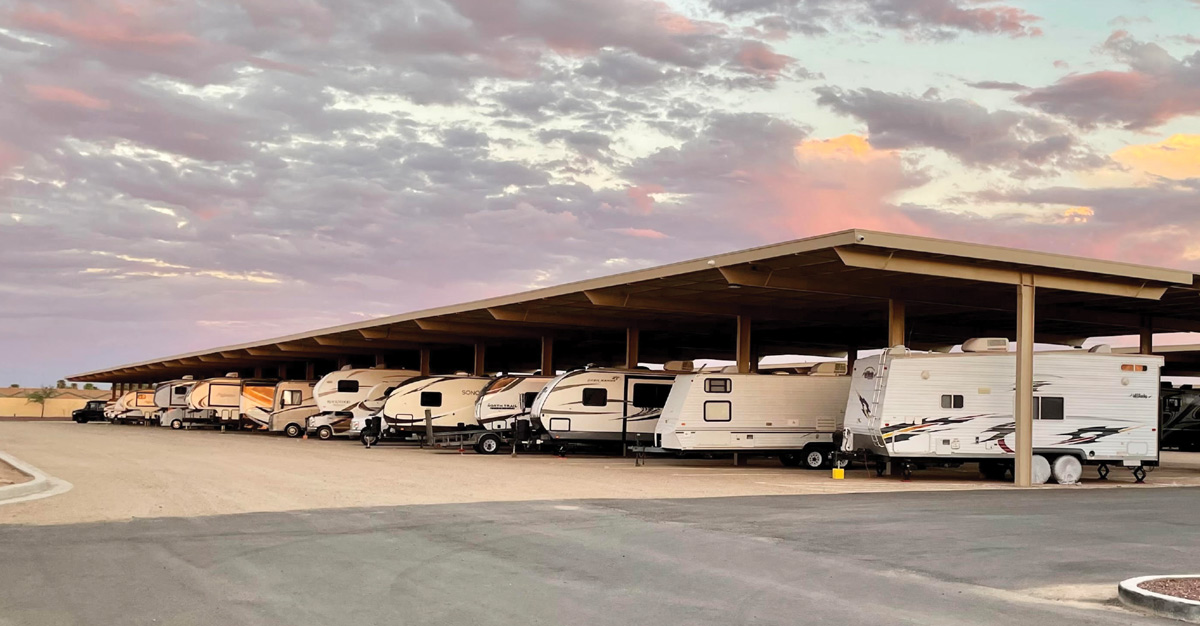
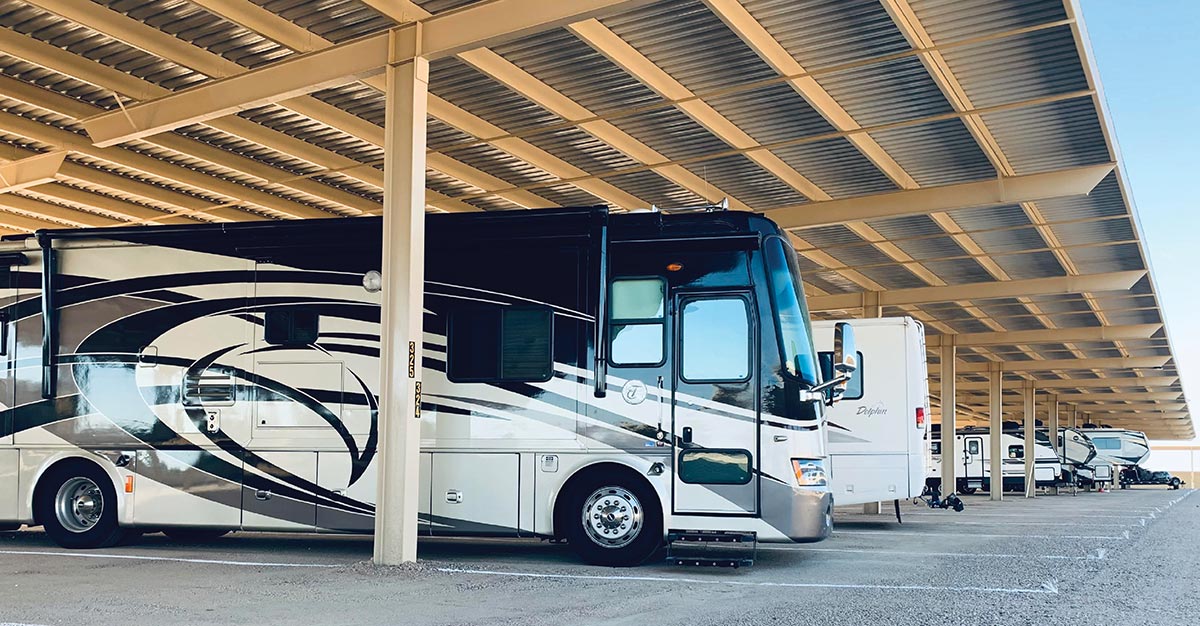
hile some of the elements of RV and boat storage are facing challenges due to the uncertainty of financial times, there are several new and exciting developments in the recreational vehicle storage industry.
“We run a platform that allows our RecNation storage customers to list their RVs and earn revenue from renting out their recreation vehicles,” says Kait Wojtaszek, director of business development at RecNation RV & Boat Storage. “Very similar to Airbnb, owners can monetize their otherwise depreciating asset that’s just sitting in storage for much of the time throughout the year. Whenever they’re not using it, they can put their RV into our rental program.”
A renter who wants to spend some time with their family out on the road, taking the kids on camping trips or exploring with their partner for a long weekend in nature can access the program to rent quality RVs.
“It’s a win-win for everybody,” says Wojtaszek. “Our customer base can enjoy making revenue from their RV and some other happy renter gets a chance to experience what it’s like to have an RV for the weekend. It’s a really nice side layer of business that we have that remains complementary to what we’re doing.”
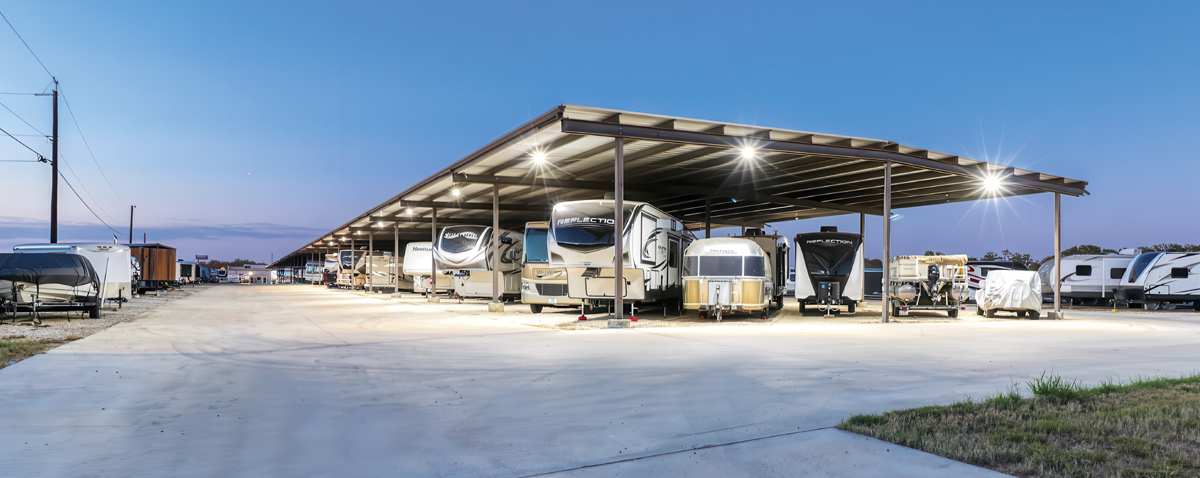
“We broker the deal, but our role ends when we put the parties in touch,” says Wojtaszek. “RV owners who store with us either manage it as their own business or we partner in a consignment system. They can either meet the renters, clean the RV before and after, check for damage, and run their own operations, or they can put their RV in as part of our rental fleet.”
For that option, the fleet operator will handle the rental from start to finish as a RecNation trust partner in various metro areas.
“The fleet operator would carry out all the operations and the RV owner would make their cut after the trip is complete, while the fleet operator makes a commission,” says Wojtaszek. “RecNation doesn’t manage the actual RV or the rental.”
This dovetails nicely with another unique service RecNation implemented: on-site cleaning and maintenance.
“The cleaning and the repair business is great for customers who come in and want somewhere convenient to store but prefer to spend their time enjoying the RV rather than maintaining and taking care of it,” says Wojtaszek. “We partner with different vendors across our various locations who offer repair services, who take care of appliances, tires, windows, and your roof, essentially anything that could go wrong in an RV, as well as the cleaning.”

“You can spend more time out there on the road and less time doing the administrative work,” says Wojtaszek. “It’s a concierge level of service at the same location you are storing your RV.”
RecNation partnered with Camping World to offer every customer buying a new RV one free month of storage. This program results in a healthy number of customers who are new to the world of recreation vehicles.
“When it comes to the repair side, there’s a lot of customers who just aren’t familiar with maintenance procedures,” says Wojtaszek. “You have to be pretty handy when you maintain an RV. If you’re not, you need to rely on somebody to go in and fix things. Little things add up, so it’s a great, convenient service for our customers.”
“We’re seeing higher levels of vacancy, and we’re seeing a reduction in street rate and the lack of rent growth,” says Scott Ramser, founder and CEO of Ramser Development Company. “I think the uncertainty surrounding the last year of the Biden administration, plus all of the turmoil of the election and the tariffs, has scared a lot of people.”
Another element to consider is whether the boom of recent years is now creating a natural decline.
“In some instances the consumer is very strong, and in other instances the consumer is weak,” says Ramser. “There could also be a supply glut that is creating the higher vacancy rate, lower street rate, and less rent growth because there’s been a lot of development.
“There were a lot of CofO deals in the RV storage space that ended up not getting sold because interest rates went up. A lot of those CofO deals didn’t get sold, so owners who never wanted to be an operator are panicking and they’re dumping rates, hoping to get occupancy. There’s a lot of distress in the market at this point in time because people are over-leveraged and they’re in positions that they did not expect to be in.”
Families choosing more conservative spending habits directly affect the RV and boat storage industry.
“Other than food and lodging, everything is discretionary,” says Ramser. “In a down economy, consumers start taking the lower-importance discretionary pieces out of their discretionary income budget. One of the most important things to do to protect yourself would be to be at a low leverage. If you’re at low leverage, you can weather the storm. If you’re at high leverage or you have debt that’s coming due, you’re going to be in distress.”
Quick fixes done the wrong way can create more problems. Some existing self-storage facilities feel like they can add on an RV and boat component to make some quick cash. However, this might not be the best time to make well-intentioned gambles.
“It’s a lot more difficult to just add on RV storage than people think,” says Ramser. “If you are thinking you have an excess three acres of land from your second phase of self-storage which didn’t happen, and now all you have to do is put up a fence and put down some gravel and rent it for RV storage, that’s not how it works.”
Grading, pavement, security, secured access, lighting, amenities, and ground water management concerns are serious aspects that must be addressed.
“The whole concept of ‘I’ll just take this extra two acres and fence it and start renting RV spots,’ that maybe happened 25 years ago, but it’s not very realistic,” says Ramser. “The current trend we most often see in California and Central Florida markets is the larger self-storage entities purchasing properties that have existing RV and boat storage components to immediately kick out all the RVs and build vertical for additional self-storage. This, ‘If you build it, they will come,’ is not happening anymore.”
Although the scene has changed, that doesn’t mean a downturn will be a lasting trend.
“There are still lots of people who want to use recreation vehicles to go out and have fun,” says Ramser. “There’s a lot of young families in the United States who will continue to buy boats and RVs. The overwhelming majority of those people are going to need to store them somewhere other than their house. The market can be strong again, but we’re definitely going through an oversupply situation combined with a little bit of consumer weakness at the moment, which is stifling the new vehicle sale market. It’s just a little bit of a slow situation right now.”
Industry data concurs.
“The core customer is a do-it-yourselfer,” says Whitney Jurjevich, owner of Ameripark Covered Storage and Covered RV & Boat Storage. “We’re seeing data right now that shows RV sales are going up in terms of number of units, however the total size and price tag is going down. The dollar amount isn’t coming back.”
A change in demographics of owners also changes the landscape for RV and boat storage.
“What was selling years ago were huge toy haulers, nice big coaches,” says Jurjevich. “Now we’re seeing inexpensive and smaller ball-hitch, tow-behind trailers that are inexpensive. Frankly, those are probably what people should have bought in the first place because they don’t use them enough to justify the big buys. But everybody was doing so well, they spent extra, they spent more. It’s the way economies work. Now people are back to sensible spending. I do want a travel trailer and I can afford a travel trailer, but I can afford a 32-foot, ball-hitch tow behind, not a 42-foot fifth wheel and a brand new $80,000 F250 to pull it.”
The key might be meeting the current level of demand where it is.
“Some of this we did do to ourselves because of the commoditization of the self-storage industry,” says Jurjevich. “So much institutional capital has flooded the industry. There’s just been a spectacular overbuilding and oversupply in so many of these markets, so we have to take a little responsibility for some of this ourselves.”
Taking advantage of data analysis and the latest in tech can help owners and investors weather the storm and make the most of the current market. This can be more productive than trying to upsell with promotions offering high-priced amenities.
“In a down market, where people are concerned and they have less money, the only promotion that gets them in the door is price,” says Ramser. “We use revenue management software. We use Hummingbird for our tenant management, which is very adequate. We also do monthly comp studies where we actually call or visit our competitive sites and get pricing from them, so we understand what’s happening in the market.”
“When you see pictures of Red Rock Storage, something will stand out,” says Jonathan “Jon” Erickson, president of Red Rock Mega Storage, LLC. “You’ll see artistic metal work, you’ll see stonework, things that you typically wouldn’t expect to see on a storage facility.
RV and boat storage often faces an uphill battle with communities who view it as an unattractive addition with little tax money and cash flowing into the town.
“When you go into a community where they don’t want any development at all, and then they see not just a plain steel building going up but one with artwork celebrating the region—a giant 30-foot-by-50-foot American flag made of patina steel, three giant bighorn sheep famous in Reno, the two part outline of the Red Rock mountainscape, planter boxes, and a large metal bristlecone pine tree [Nevada’s state tree]—the attitude changes.”
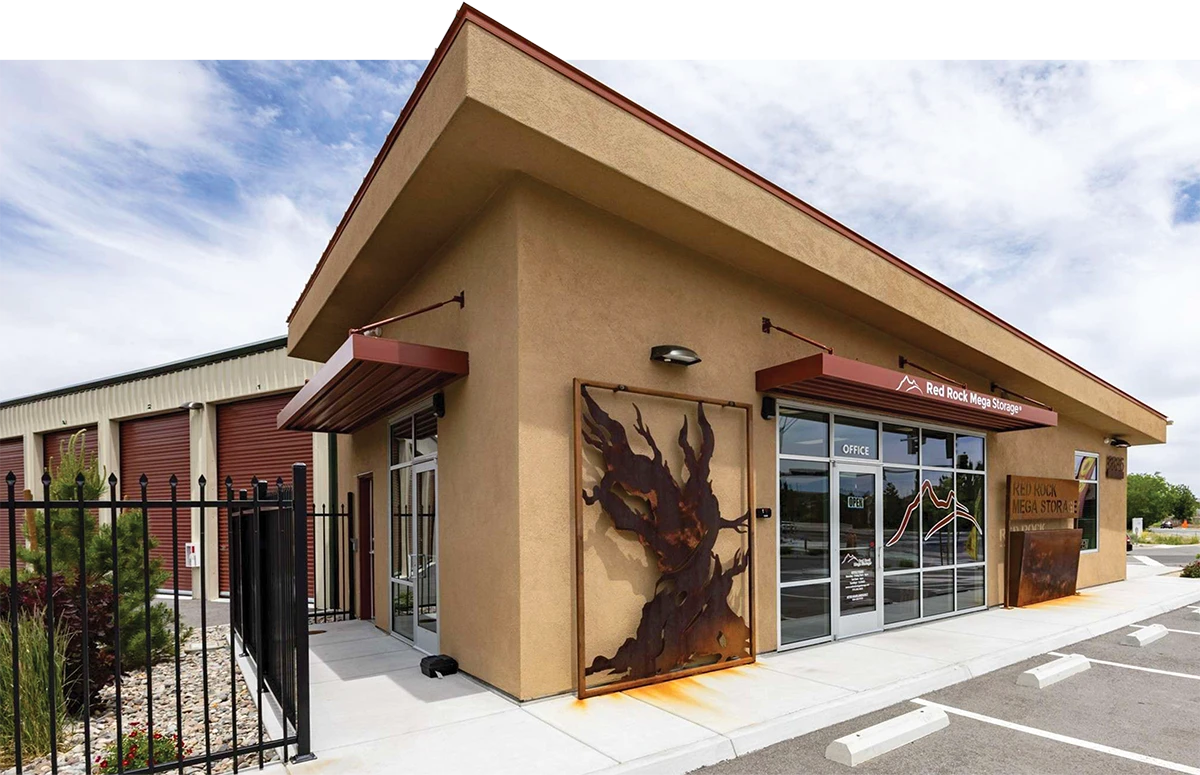
“When you come onto the property, you don’t feel like you’re in a storage facility because there are so many things that are appealing,” says Erickson. “People would argue that it’s a waste of money. My argument back is it is advertising because people are talking about it. If this is the nicest facility that they have seen, it makes a bold statement about the quality of where they store RVs, boats, the things they value.”
Erickson credits such attention to detail of the facility’s environment for helping to attract quality, higher-paying customers.
“Red Rock’s demographic is premium, oversized, climate-controlled and enclosed units,” says Erickson. “That’s my customer. One customer has five enclosed units, with one wooden boat in each. No debris, no boxes, no bikes, or clothing—just five units with beautiful wooden boats. He’s a retired fisherman and his hobby is rebuilding wooden boats. When he completes one, he puts it in storage. His wife came in once. Instead of having an issue with her husband paying $2,500 a month on storage, she says, ‘If I could only get him to get two more boats into storage, I could have my garage back.’ You just don’t know who your customers are going to be until you get out there and meet them.”
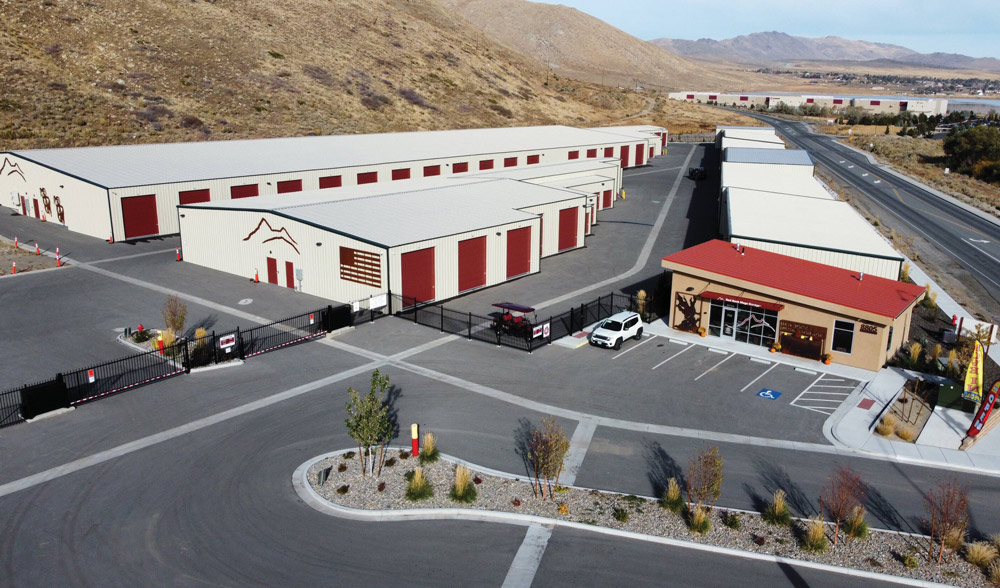
“The bristlecone pine is the tree of Nevada, but it is also the oldest living tree on the planet,” says Erickson. “They say the oldest is almost 5,000 years old. It’s incredible when you think how that tree made it through every ounce of change and floods and transitions and communities come through, and somehow the tree survived in that one location through it all. I have a big bristlecone pine, cut out of metal, against the office exterior, greeting every customer.”

ow much do you love your family? If it happens to be unconditionally, would you still look at them through rose-colored glasses if you constantly had to make business decisions with them? It can be both convenient and practical: You’re all working toward the benefit of the same family unit, you get to spend a lot of time with them, and you can carpool if you live together.
However, there a few elephants in the room to address. Won’t you get tired of spending so much time together? How do you keep vacations and holidays from being overtaken by work talk? And what if the non-family employees start thinking that the family has it easy because, after all, you own the business and you’re all related?
As with anything in life, there are many factors to consider, but the best way to get the scoop is to talk to people who are doing it successfully.
Gordon Burnam eventually wanted to expand that business, and he started by building a facility in the Midwest in 1973, where he also struck up a friendship with a local retired banker. Together, they co-invested to build 14 stores throughout the U.S. “We sold 12 of those, then brought two of my brothers and a sister into the business,” Mike says.
Once the company went public in 1994, it grew to 237 stores; then Public Storage took over. The family rebuilt the company, and everything snowballed like something straight out of a Wall Street movie, with expansions into Canada and the United Kingdom, and eventually the acquisition of Manhattan Mini Storage, which was one of the largest private transactions in the history of the industry.
Cris Burnam’s extraordinary start into the business is paralleled by Michael Clark, founder and owner of Ramona Self-Storage in Southern California. “Around 1983 or ’84, I saw a small advertisement in a San Diego newspaper about seminars Buzz Victor was conducting. I didn’t work in the self-storage industry, but I was intrigued.” At the time, Clark was a casual real estate investor who was always looking for investment opportunities. Once he realized that self-storage was the golden ticket, he decided to go into business with his children. “The challenge for me was to determine which of them was truly interested in the industry and who wanted to work with me,” he says through laughter. “You want to make sure you’re choosing to work with the right family members for the right reasons.”
Knowing which family members she wanted to work with was easy for CJ Stratte, president and CEO of On The Move, Inc., the fourth-largest truck rental fleet in the U.S., serving self-storage facilities that offer truck rental services. “My grandfather started his first facility in 1978,” she says. He saw a need for the business model, as well as the supplemental insurance programs to rent out the trucks.

Tarik Williams, president of TLW Construction has also always been close to his family. “My dad started the business in 1983, and as his kids, we’d help clean up the facilities and work together during summers and holidays,” he recalls. Williams went to college for a construction management degree; after graduating in 2001, he partnered with his dad. “We started growing the business together, and my younger brother Devan joined us as an intern.” All three of them have always been invested in seeing the business succeed; Devan Williams worked his way up until he became a partner with his brother, when he and two other new partners bought out their dad.
Speaking of working with dad, Jamie Bennett, a president and founding partner of Sunbird Storage, started working with his father after graduating from college with a history degree and limited employment opportunities. “My father is 88 and still very active in the business,” he says proudly. “His role is more on the investment and oversight side these days, but he started as a real estate developer and got into storage when we moved to Florida in 1982.” It turned out to be a serendipitous event, since he thoroughly enjoys this career path and the wealth of knowledge he’s gained from working together.
Stratte recognizes that her role gave her a shoe in—something she’s aware of even more now that she’s CEO. “When I explain things to my marketing team, I know that sometimes they have to guess what I want; and that’s understandable. Meanwhile, when my mom was CEO, we’d sometimes show up in the same outfits,” she says with a laugh. “She also held me to a higher standard, though, which was nice because it helped me grow.”
Williams also brings up being mindful of the dynamics with employees who aren’t family members. “We never want them to think we’re getting favorable treatment,” he says. “We have other partners who aren’t related to us, and we like to make sure they’re treated the same way. Meetings are an excellent opportunity to do that. Everyone gets a chance to report on their successes, talk about challenges, and are held accountable about areas of responsibilities.”
For his part, Bennett highlights the benefits of being able to talk business whenever the urge to do so arises. “You can embrace the freedom of family. We can work anywhere and mix business and pleasure.” When asked whether he ever tries to avoid talking too much about work on vacation and family gatherings, he’s quick to point out that he doesn’t feel the need to. “It’s ignorant to pretend that you can’t talk about one of your passions in common. I just apologize to others in the room afterwards,” he says.
Mike Burnam, president of StorageMart, agrees. “We do not avoid it! Business is family, and family is business!” He enjoys everything that comes with the lifestyle. “Rarely can anyone say they see their family members every day. How lucky we are to see our children participate and mature into active parts of the company, each doing what they do best.”
Williams emphasizes the importance of knowing when to separate what’s personal from strictly business decisions. “Maintaining open communication is really important,” he says. “That is true in any partnership, but also, don’t let family things trickle into work relationships.”
Stratte points out that sometimes there’s a need to compartmentalize each area of life. “The biggest challenge is that there’s no break,” she says. “All of our conversations have always been related to On The Move, forgetting we have other parts of our lives besides the business. We’ve had family gatherings when we say we’re not going to talk about work at all. Our spouses say they don’t want to talk about it, and the children get very bored. They do not care,” she says through laughter.
No matter the hurdles, Mike Burnam recognizes that at the end of the day, everyone has their own strengths and it’s important to let people be. “As with any family, there are always challenges, but we have been fortunate that each of the family members have fallen into roles where they can run their part of the business in which they have excelled. And even when we have disagreements, every one ends with ‘Let’s go to lunch.’”
Williams stresses the importance of ensuring everyone is on the same page. “There have to be clear lines of delegated responsibilities and areas of decision-making,” he says. “Whatever you as a partnership decide it will look like, it needs to be crystal clear.”
Bennett likes to be mindful of the value everyone brings to the table, regardless of age. “There is a way of doing things that is tried and true; the younger generation needs to respect what has worked, and older generations need to understand that the world is changing and how things are done is going to evolve.”

Clark is also clear on how rich his life is precisely because he gets to work with his family. “They bring me a great deal of joy, because I have been able to share their lifetimes with them,” he says. “I enjoy sharing my weaknesses and strengths with them and learning from their responses. Same with important business decisions.”
Stratte also brings up how fortunate she feels to have worked with her grandad for so long. “I value my relationship with him so much. It was one of my favorite parts of working with him—I got to talk to him every single day. He was my mentor, and we had such a deep relationship and respect for each other.”
She also shares a touching moment with her grandma at the ISS World Expo this past April. “My grandma has been more of a stay-at-home wife. She never had a need for tech skills, so we’re trying to get her up to date. But we just had her at the trade show, and she actually sold one of the trucks my grandpa designed on the show floor. We didn’t know she had that skill! She’s our hidden gem, and grandpa would’ve been so proud of her! It’s nice to have that connection between them, even after his passing. My heart’s full that we were able to execute his great ideas.”


xpected to reach $51.23 billion by 2030, the current size of the self-storage market in the United States is $45.41 billion, according to a research report by Mordor Intelligence. With over 52,000 facilities in the U.S., as stated by the Self Storage Association, the compound annual growth rate (CAGR) is at 2.44 percent, representing the pace at which the U.S. self-storage market is growing. Globally, the CAGR is even higher at 4.15 percent.
These numbers showcase that as self-storage grows in demand and popularity, the industry becomes a greater opportunity for investors. However, before diving headfirst into a new business venture, it’s important to learn about the market and its nuances. And who better to learn from than professionals with years of self-storage experience? MSM spoke with David Meinecke, the vice president of business development at Jordan Architects. He’s a member of the Self Storage Association’s Young Leaders Group (YLG) and has over 10 years of experience in self-storage design. In addition, MSM interviewed Tarik Williams, president of TLW Construction. He has developed three storage projects independently and worked on the design and construction of an estimated 4 million square feet of self-storage projects. Finally, we spoke with Ted Culbreth, the vice president of sales and marketing at SBS Construction. He has been working at SBS Construction for 20 years and has 30 years of experience in the self-storage industry.
Each of these experts shared errors that occur frequently in their lines of work, as well as how investors and aspiring self-storage professionals can avoid these common missteps.
Failing to build a team at the appropriate time
There are many professionals involved in the process of developing a self-storage facility, including engineers, architects, and contractors. If an investor forms their team in the beginning stage, before they make decisions regarding the project, such as settling on a site, for example, they’re more likely to make better-informed choices based on the expertise of all the professionals onboard and avoid costly mistakes in the future.
Culbreth advises hiring a commercial real estate broker, a well-connected civil engineer, an architect, and a third-party management company if they’re not going to manage the facility themselves.
“It takes all of the professionals to see this project through, so if you can start having everyone review the decisions that are made by each professional in the beginning, then you’re more than likely going to get those scenarios solved before they become problems,” Culbreth adds.
Employing professionals with little self-storage experience
“Self-storage isn’t rocket science, but there are nuances that are involved in all aspects of it, and when you get someone with experience, you don’t have to spend a portion of the process educating them on the product that you are trying to put in place,” Culbreth says.
“Choosing professionals who do have experience will save you a lot of time and costs down the road,” says David Meinecke, who has seen designs by professionals with no self-storage experience that often show “narrow drive aisles, odd shapes, and odd dimensions that make a unit mix difficult to deal with.”
Professionals who don’t understand self-storage can directly affect the success of the final product. “I think a lot of the common mistakes you see are just underutilizing the property and not understanding the full functionality of self-storage and how it relates on an operational level to its clientele,” Meinecke adds.
Forgetting about the geotechnical report
Tarik Williams believes that the geotechnical report is a crucial part of the process. It can help the developer “determine if there are any kind of soil issues with their development that they don’t want to discover once they’re already pregnant on the property, far down the road,” Williams says.
“A lot of our guys will get way down the road on a site without determining the geotechnical report and the civil implications of building on a particular site,” Culbreth adds.
Inattention to environmental factors
According to Williams, a Phase 1 or Phase 2 study can analyze possible environmental hazards that can affect the site and the project, and doing these studies in the beginning stages of the project can be very beneficial. “In a lot of markets around the U.S., there will be concerns about wetlands issues, endangered species issues, or possibly Native Americans’ historical discoveries on site. Anything along those lines should really be studied early on in the process,” says Williams.
Neglecting dry and wet utility companies
He advises developers to stay on top of these demands with the help of their civil engineers and salespeople (regarding phone and data services), otherwise it can cause problems later on, and that’s an area where he sees people making mistakes often. “Developers need to be heavily engaged in that process, kind of from the time that they originally conceived the idea for development,” he states.
Skipping market research
It’s important to understand what the competitors are doing, from their unit mix, design choices, and market efforts to their pricing strategies and where they’re located. A site can have an attractive price, but it’s beneficial to learn if it’s buildable by conducting the geotechnical report and studying construction possibilities. Knowing all of that information before beginning an active plan is very beneficial for the success of a project.
Thinking it’s a quick process
Williams states that there’s a long hold before there’s a return. “People coming into self-storage see it as a big cash-flowing business, and they want to walk right into it. I think they need to understand that, in most large municipalities, from the time an idea is conceived until it’s zoned, entitled, designed, permitted, and built could be anywhere from easily two years, if not four or five years, and then you have the lease-up phase beyond that, which is another two or three years. It could be anywhere from three to seven years, easily, from the time that they commit the money to do the deal until they get a return on it. Understanding the time is really critical.”
“It’s not uncommon to take three years for something that’s an idea to actually become a facility that’s open. You could do it earlier, but it doesn’t shock me when that timeline is three years,” Culbreth adds.
Underestimating additional costs
Ignoring the jurisdiction during the entitlement process
“I see a lot of clients get hung up in lengthy entitlement processes on properties that they’re trying to kind of force, and they don’t have the timing needed that it takes to get that entitlement. Selecting a property that is zoned appropriately for self-storage to begin with is a much better step than trying to push something and going through this lengthy entitlement process,” Meinecke says.
Inefficient communication with the team
Good communication with the team is crucial for the success of a project, but it should also be extended to everyone else the investor may come in contact with. “For a new developer, they must be a very good communicator and very, very patient and diplomatic in all of their approaches with neighbors, with cities, with land owners. If you come off as brazen or disrespectful at any level along that, you can really struggle with the city approval and entitlement process,” he adds; “let’s just put it that way.”
Even though there are many aspects of the self-storage industry to learn about before investing, and it may seem overwhelming, as Culbreth said, “self-storage isn’t rocket science.” It’s possible to learn all of the nuances of the industry and to be successful in that approach. Culbreth’s advice to new developers is “to surround yourself with experienced professionals who are good at what they do and pay them what it takes to get them on board, that will be the best money you spent on the whole project.”

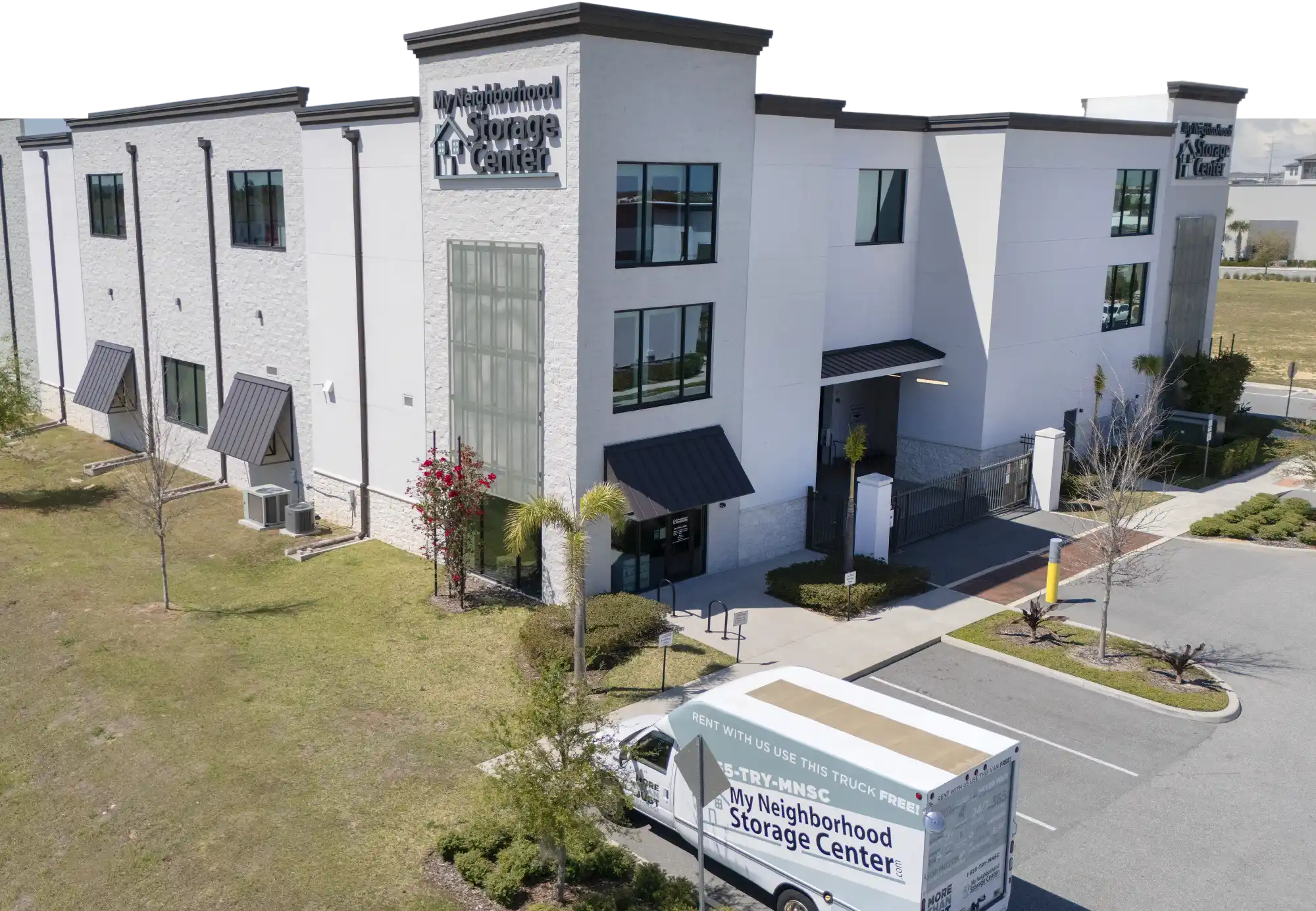
inutes from Disney World and downtown Winter Garden, the vibrant area of Hamlin, Fla., is part of Horizon West, one of the fastest-growing master-planned residential and commercial communities in the country. And where homes and businesses bloom, storage inevitably follows.
Spotting the opportunity early, My Neighborhood Storage’s owners staked their claim, building the very first self-storage facility approved for the area. Managed by Orlando-based Liberty Investment Properties, the three-story facility spans 82,975 rentable square feet and offers 667 climate-controlled units, plus 22 RV and boat spaces with power hook-ups. Designed with Florida’s summer heat and rains in mind, the building includes a covered breezeway and drive-thru access to make tenants comfortable. Each detail, from the façade to the landscaping, was carefully planned to match the modern aesthetics of Horizon West and position the site as a high-value flagship.
By launching a successful pre-leasing campaign ahead of opening, the team captured early demand, and the facility continues to perform strongly. To root itself in the community, the site hosts local events and participates in disaster relief efforts. My Neighborhood Storage is truly part of the neighborhood!

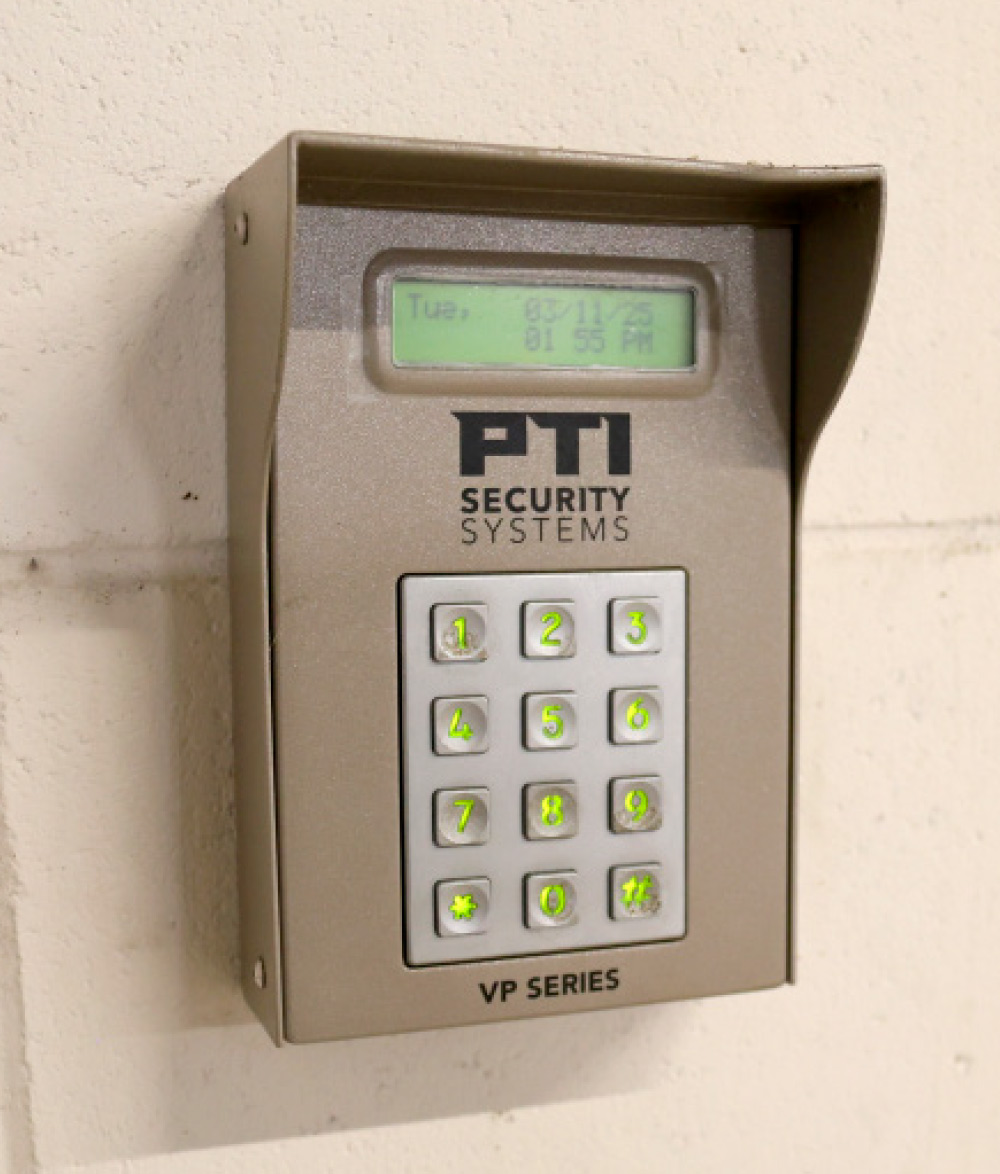


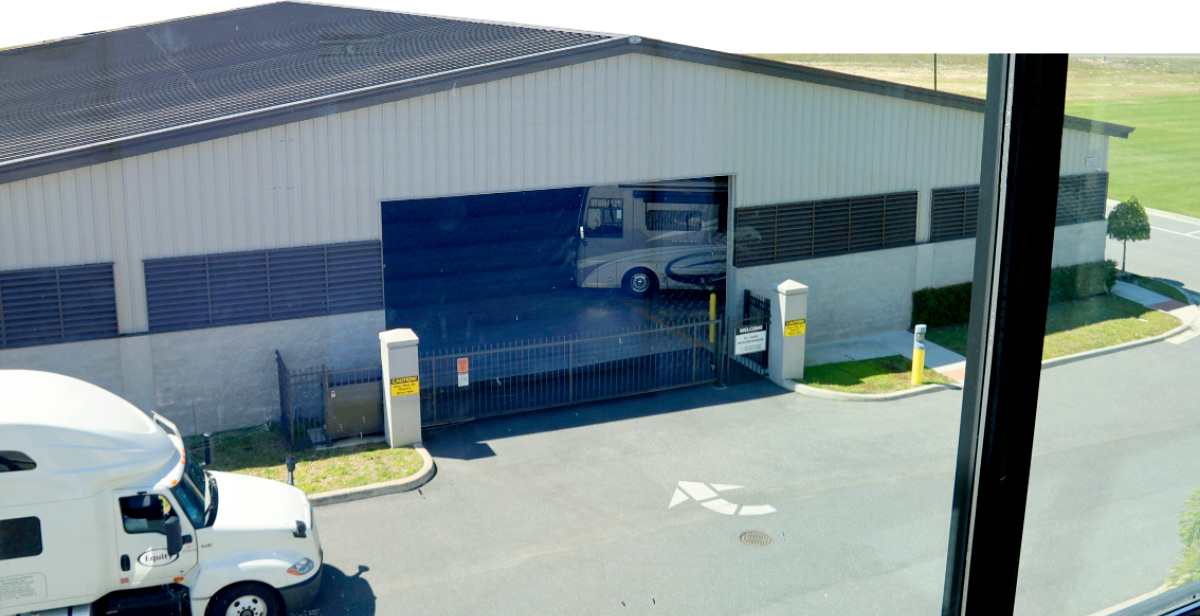

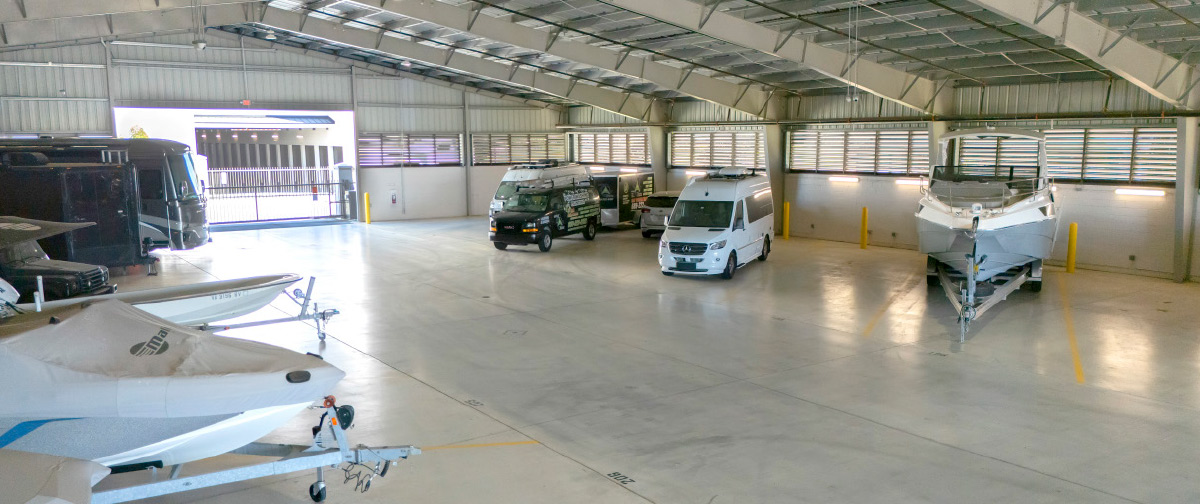


ates are down—until they’re up again. Does this sound familiar?
If you’ve been watching mortgage rates over the last few years, you’d probably agree that it has become very difficult to see any consistent movement in one direction or another. Mortgage rates drop one week, spike the next, then dip again—only to bounce back. In the self-storage financing world, where deal timelines can be tight and financing options are increasingly diverse, this interest rate rollercoaster can be frustrating.
Here’s the simple truth: Trying to time the interest rate markets is somewhere between extremely difficult and impossible. Rates rarely move as expected, or when needed. Instead of trying to predict what’s next, smart self-storage investors are using conservative rate assumptions—or a range of rates—when evaluating their next opportunity to ensure their investment goals can be met despite reasonable rate variability. If rates happen to be lower than projected when it’s time to close the loan, all the better—but don’t count on it. Time is much better spent focusing on specific financing goals, understanding the different types of lenders, and knowing what each offers to find the best fit for your business plan.
Let’s break down how today’s market is behaving and how you can navigate the self-storage lending landscape with more clarity and confidence, regardless of where rates head tomorrow.
Since that time, many self-storage buyers and sellers have been on the sidelines with the hope that interest rates will come back down. While the Fed cut rates a few times in 2024 and inflation has shown intermittent signs of cooling, commercial interest rates have not come down much, and the path for rates in 2025 and into 2026 remains unclear. It’s also important to note that additional Fed rate cuts do not guarantee that U.S. Treasury yields will follow suit. When the Fed Funds rate was reduced in 2024, the yields on the five- and 10-year U.S. Treasuries (the primary fixed-rate indices used by commercial lenders) actually increased!
Many factors can and do affect U.S. Treasury bond rates, and they seem to arise with increasing frequency. Economic event risk and the overall level of uncertainty are extremely high today in the U.S. and across the globe. Factors including geopolitical instability, tariffs, and U.S. fiscal policy will very likely continue to drive interest rate volatility. A surprise inflation report, a shift in employment data, or another unexpected global event can swing rates overnight.
This uncertainty leaves many self-storage owners and investors asking the same question: Should I wait for a better rate? Too often, the answer is no. Many investors miss out on the right deal, at the right time, while waiting for a hypothetical “perfect” rate. The reality is that the perfect rate rarely comes when you need it.
After roughly three years of waiting for a lower interest rate environment, the most active self-storage buyers, sellers, and developers are now incorporating today’s rates into their business plans. Operators are focusing on strategy with today’s rates in mind, not on speculation. Instead of asking whether rates will go down, they are asking what loan structures and which lenders best fit their plans right now.
Banks currently hold over 50 percent of the nearly $6 trillion of outstanding commercial real estate debt (according to Trepp) and remain the primary lenders in the self-storage industry. Banks provide approximately 80 percent of all commercial construction loans and are still the go-to lender for most self-storage developers today. While they have become more conservative and capital-constrained over the last few years as rates have risen, community, local, and regional banks are often the first stop for many self-storage investors. Typical bank loan terms are between three and seven years, with a 25-year amortization and a maximum loan-to-value (LTV) of 75 percent. This LTV is usually subject to a minimum debt service coverage ratio (DSCR) of 1.25 to 1.35, which, with today’s higher rates, often limits loan proceeds to 60 percent to 70 percent LTV. Construction loan proceeds are generally limited to 65 percent to 70 percent loan to cost (LTC), requiring the borrower to provide 30 percent to 35 percent of total development costs in equity. Banks underwrite borrower creditworthiness and financial strength as much as the underlying real estate asset and, with very few exceptions, require personal guarantees.
Credit unions are often overlooked but can be excellent for smaller acquisitions or owner-operators. They are becoming more familiar with the self-storage asset class and offer terms similar to banks. Unlike many other lenders, credit unions often do not impose prepayment penalties—a clear advantage if rates fall during the loan term. While some credit unions offer construction loans, many have limited capacity and are generally not a good fit for larger, more complex deals.
CMBS, or commercial mortgage-backed securities, can be a great source for competitive, non-recourse, fixed-rate debt. Unlike lenders who hold loans on their balance sheet, CMBS loans are pooled together and sold into the capital markets as securities. CMBS underwriting focuses primarily on the underlying real estate and cash flow, with less emphasis on borrower financial strength, and is best suited to properties with stabilized cash flow. Many borrowers also choose CMBS loans to secure a five- or 10-year fixed rate with interest-only payments instead of a 25- or 30-year amortization schedule, which can boost current net cash flow. Because of the interest-only payments and a lower DSCR requirement (often around 1.20), CMBS loan proceeds can exceed those of most other lenders. The main downsides are high prepayment penalties, higher transaction costs than a conventional bank loan, and somewhat impersonal third-party servicing after closing.
Life insurance company loans share some advantages with CMBS loans, such as limited personal recourse, long-term fixed rates, and interest-only payments. Life company lending also focuses on properties with stable cash flow. Unlike CMBS lenders, many life companies will lock the interest rate at the time of loan application instead of waiting until closing. In the past, life companies focused mainly on larger loans in primary and secondary markets, but today many have widened their scope to include smaller loans and smaller markets. For low-leverage loans (50 percent or less), life companies offer some of the lowest rates in the market.
Bridge lenders and debt funds provide speed and flexibility when traditional lenders won’t. They’re ideal for lease-up, expansions, value-add strategies, or distressed deals that need to close quickly. You’ll pay more in interest, but the creative structure and faster timeline often make the deal possible. Just be sure you have a clear exit plan, whether that’s refinancing or selling, as the high interest costs add up quickly.
SBA loans are partially government-backed and can be a great option for newer owner-operators, first-time buyers/developers and/or smaller transactions. They offer higher leverage (up to 85 percent to 90 percent) and longer terms. However, they come with extensive documentation, higher fees, and often a slower closing process, so plan ahead if you choose this route.
Start by considering your goals. Is this a short-term repositioning or a long-term hold? Do you need speed and flexibility, or do you have time to close? Is maximum leverage needed to get this deal done? How important is non-recourse? Do you plan to sell or refinance within a few years?
Next, look at the full loan structure, not just the rate. Prepayment penalties, recourse requirements, amortization terms, and fixed versus floating rates can affect your returns just as much as a small difference in interest rates.
Finally, work with experienced lenders or mortgage advisors who understand self-storage and can hit the ground running.
In this environment, certainty of close, the optimal financing structure, and a lender aligned with your goals are worth far more than saving a fraction of a percent on the interest rate.

n today’s competitive self-storage market, owners and investors are looking for every advantage to improve cash flow, reduce tax liability, and fuel future growth. One of the most powerful, yet still underutilized, strategies is cost segregation.
Cost segregation is not just an accounting tactic; it is a strategic tax strategy enabling owners of self-storage facilities to uncover hundreds of thousands of dollars in accelerated tax savings. Whether you are developing new properties, acquiring existing ones, or expanding your storage portfolio, understanding how cost segregation works and when to use it could be a game-changer to your bottom line.
When you construct or buy a storage facility, the IRS allows you to depreciate the entire building over 39 years (commercial real estate). But not everything in a building needs to be depreciated that slowly. Certain components qualify for shorter depreciation schedules, typically five, seven, or 15 years.
By identifying and reclassifying these components, a cost segregation study accelerates your depreciation deductions, meaning you can write off more now instead of waiting nearly four decades.
Lots of qualifying components
Storage facility sites often include significant outdoor assets, like fencing, asphalt paving, sidewalks, storm drainage, landscaping, lighting, signage, and security systems. Many storage facilities have a sales office with removable flooring and cabinetry and may offer conditioned space to their customers. All these assets are prime candidates for accelerated depreciation.
Immediate cash flow impact
Many storage facilities operate on tight margins, especially in the first few years. A cost segregation study can bring in substantial deductions, reducing taxable income and freeing up cash for reinvestment. Even if you have owned your facility for years, you can still do a look-back study to catch up on missed depreciation.
Applicable for renovations and expansions
Owners who converted an existing building to self-storage space are eligible for special tax treatment: “Qualified Improvement Property” or QIP.
- You have acquired or built a storage property in the last 15 years.
- You are planning to build or renovate soon.
- You are expecting high income in the next few years and want to reduce your tax burden.
Even older properties can benefit; the IRS allows catch-up depreciation without amending past returns.
Studies should always be conducted by qualified professionals (engineers or firms specializing in cost segregation) to ensure they meet IRS standards and withstand audit scrutiny.
- Phase-down of bonus depreciation: While 100 percent bonus depreciation is still available for properties placed in service before 2023, it is decreasing gradually (80 percent in 2023, 60 percent in 2024, etc.).
- Passive activity rules: If you are not a real estate professional, your ability to use losses from cost segregation may be limited. Consult with your CPA about how it applies to your specific tax situation.
- Recapture on sale: Accelerated depreciation may result in higher depreciation recapture when you sell, but the time-value of money still often makes cost segregation a net win, especially if you plan to hold for three-plus years or engage in 1031 exchanges.
In an industry where every advantage counts, cost segregation is more than a tax strategy, it’s a smart business move.

Self-Storage Successful
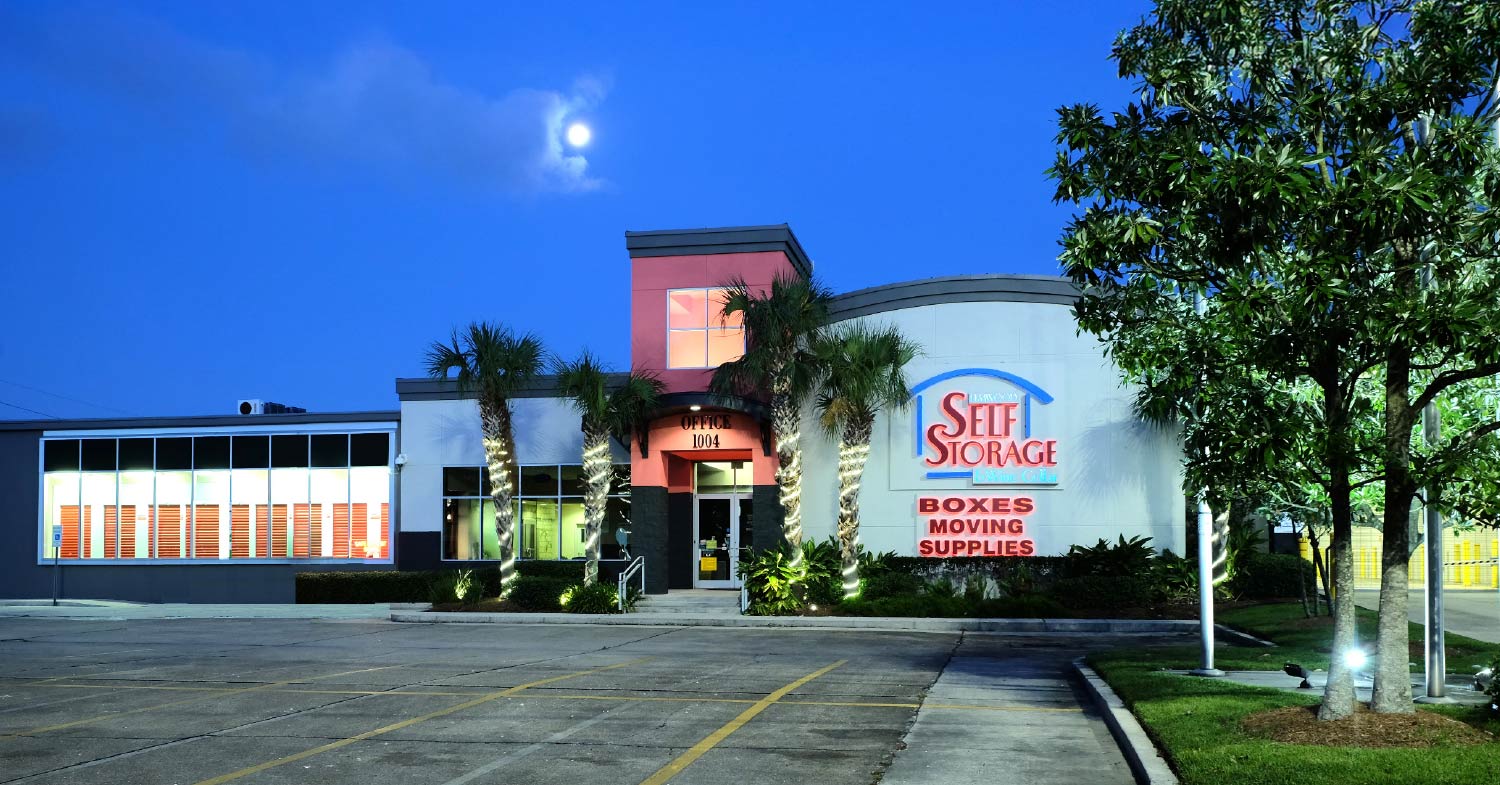
ike many people in the industry, most successful owners of specialty storage facilities got into their niche without plans to do so. Life has presented them with unique opportunities, and they had the curiosity to find out where this path would lead them.
Each of the specialty storage options described in this article showcases the myriad of ways humans learn to protect what they find most valuable, so let’s find out how all these stories started.
Then Gardes had an idea that would change the course of his career. “I had a friend who had made a fortune in storage, so I told our principals that we should try it,” he says, admitting that he didn’t know anything about the industry at the time. He figured that joining the Self Storage Association (SSA) was a good place to start.
With Ballard’s help, Gardes managed to get his self-storage facility off the ground. Then came his next best idea. “We’re in New Orleans. This is a party town,” he says, “so I thought we may as well add a wine cellar.” That’s how Elmwood Self Storage and Wine Cellar was born. It has reliable gas generators that ensure the wine is kept at optimal temperatures, even during a natural disaster like hurricane Katrina. The power never went down during that storm, which is why Elmwood has customers from all over the country. They even have their own private entrance into the building. “It’s very high security,” says Gardes. “We have 150 security cameras, and there are multiple keypads to get in.”
Elmwood also ensures that wines are stored in optimal conditions. “We keep the cellar at 56 degrees, with 70 percent relative humidity at all times,” he says. They also record the temperature every minute of every day; if a potential buyer wants to verify the storage conditions, they can request a printout of the controlled climate the very minute they walk in the door.
The business model has proven to be successful beyond Gardes’ wildest dreams. However, he emphasizes that the reason wine cellars have worked so well for him is because of the facility’s geographical location. He wouldn’t advise going into wine storage on a site that makes no sense.

She explains that it’s crucial to get all elements of storage right to attract wine enthusiasts. “We offer 24/7 access to their lockers. We have good HVAC with four condensing and AC units and backups. Security is ironclad. You have to get through the gates, then through the doors, then to your own lock. It’s private, safe, and clean, and we make sure to keep the temperature at around 57 degrees, with 70 percent to 72 percent humidity.”
Wetzel adds that collectors treat wine like art. It’s something that is meaningful and personal to them. “I’ve met collectors who catalog their bottles like a museum curator. They want to ensure that humidity levels never dip. Different vintage wines require different types of insurance. These bottles are investments. They create memories; they can be a status symbol even. Clients aren’t just storing wine. We’re here to protect their most prized possessions.”



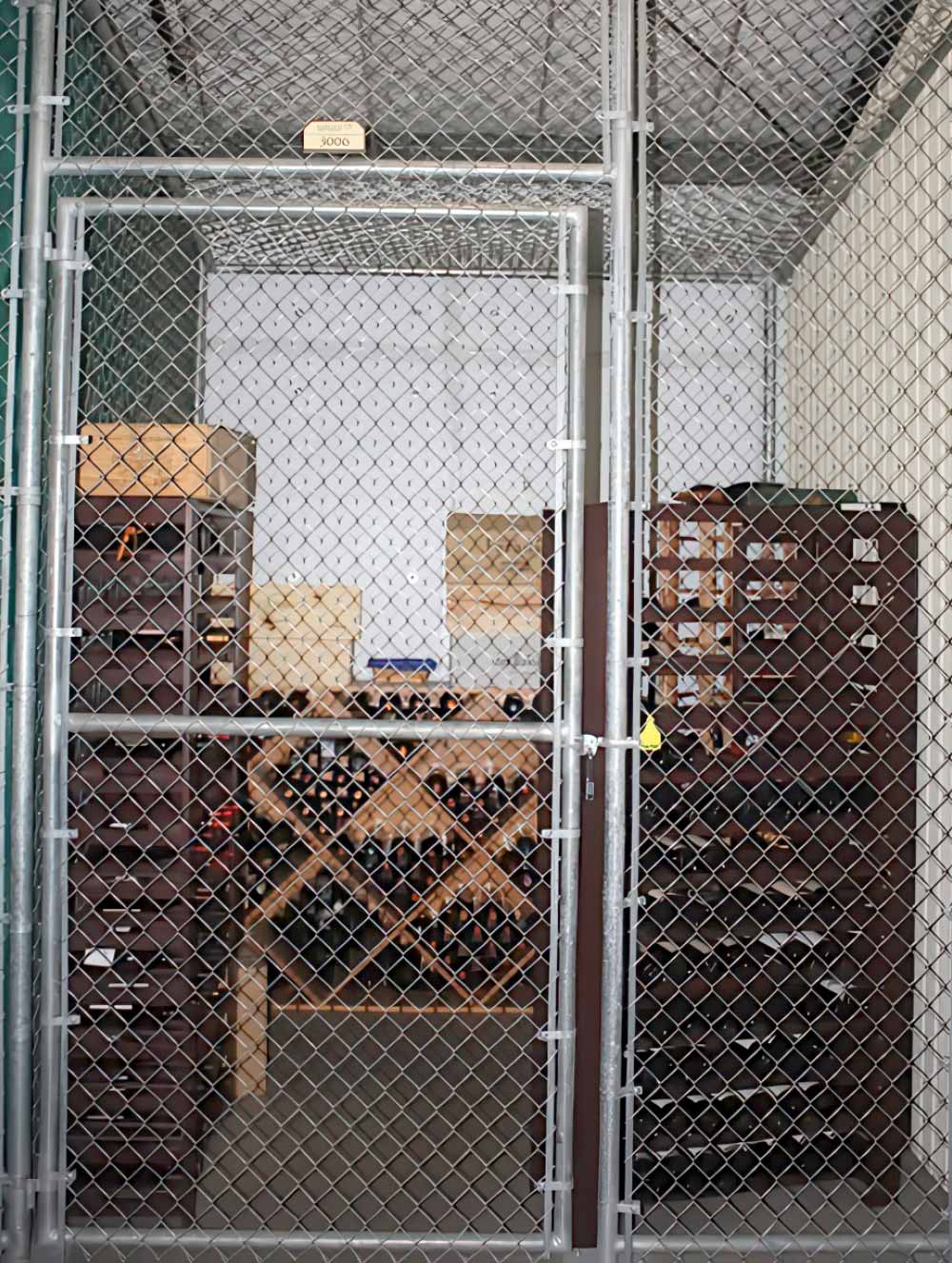

This goes back to identifying opportunities within a community. Wetzel and Vail Ranch’s employees weren’t the only ones using the postal station. The entire town had a need for closer personal mailboxes, shipping services, postage, and Amazon returns. They started drawing in visitors who weren’t in the market for self-storage, and Vail Ranch was top of mind when a need arose. “It was a good way to provide something the community needed, as well as to diversify our revenue and keep busy,” she says.
t’s membership renewal season again, so we wanted to take a few moments to remind you why being a member of the SSA is imperative to the success of your self-storage business.
It only seems fitting that August is the annual legislative issue of SSA Magazine to remind you that access to legal resources is key to running and protecting your facilities. SSA works tirelessly to provide the most current legal information available through our Legal Resource Center. Find answers to most of your legal questions that pertain to running storage facilities, including lien law updates, tax information, ADA requirements, and so much more.
With so many changes happening across the country with state laws affecting self-storage, you will want to keep up to date with how they affect your business. You will want to attend our state and regional events to hear one of SSA’s legal experts share information about what’s happening in your state with advocacy. Our legal team is working hard to prevent laws that could be detrimental to your business. Look at the states event calendar on the SSA website to see when an event will be held near you to attend.
If you can’t find the answer to your legal question in the resource center or an SSA publication, SSA also offers the Self Storage Legal Network (SSLN). Get exclusive access to legal hotline services.
The SSLN is available only to SSA members at an additional cost and is one of the best sources available for obtaining industry-related legal information.
SSA’s Legal Dream Team of Joe Doherty and Daniel Bryant serves as the industry’s primary advocates on legislative matters and government relations. They work closely with state associations, local politicians, and lobbyists to further the industry’s public policy agenda and safeguard the industry’s welfare. They work hard to ensure that laws are passed that benefit you. Our work is never done when it comes to protecting the industry.
Are you joining us in Vegas for our 50th Anniversary Celebration 2025 SSA Fall Conference and Trade Show at our new venue, the Aria Resort & Casino? Be sure to attend the closing session on Fri., Sept. 5, featuring a legal update and Q&A session with all our legal all-stars. You won’t want to miss the chance to get answers to your pressing legal questions live and in person. Register at www.selfstorage.org/Events-Education/Events/National-Fall-Conference.
Don’t forget that members also get first-rate educational opportunities through the SSA, including our fall and spring conferences, value and acquisition courses, regional conferences and state meetings, the Certified Self Storage Manager Program (CSSM), and member-only events like the ski workshop.
SSA offers so much to its members, from legal information to advocacy to education to networking, so make sure to renew or join to be part of the association. We are stronger together.




nstaboxx founders Larry Balaban and Carmen Mirabella have been friends for nearly 25 years, but when they first met, self-storage wasn’t even on their radar.
“I was the creator of Baby Genius,” says Balaban, who had recently become a father and developed the brand of CDs, DVDs, books, and toys to stimulate the development and wellbeing of children. The products proved to be wildly successful and were featured on numerous shows of the time, with popular celebrities like Rosie O’Donnell touting their benefits. “Once they blew up on the talk show circuit, I realized I needed someone else to handle fulfillment,” says Balaban.

“That’s an understatement,” Balaban says with a laugh, as Mirabella was eventually moving upwards of 40,000 packages per day and even more during the holiday season.
Interest in Baby Genius continued to grow, but one day Balaban received an offer he couldn’t refuse. “I sold the business,” he says. “It was a great deal.” He and Mirabella parted ways, though they remained friends. During their time apart, Mirabella built his own successful fulfillment house, Fulex, and Balaban (the serial entrepreneur that he is) began playing with new ideas. One of those was Instaboxx, which was conceived as a smart e-commerce platform that would ship curated moving kits directly to consumers, removing the need for self-storage facilities to stock on-site inventory.
“Storage customers want speed and simplicity,” says Balaban, noting that the ready-to-ship kits arrive in one to three days nationwide. “Typically a day, unless they’re out somewhere like in Kalamazoo,” he jokes. “We saw a void in the industry and Instaboxx fills it. It also makes it easy for operators to earn ancillary revenue [20 percent on every sale] without having to keep any inventory or deal with shrinkage.”
To get those boxes shipped expeditiously, he knew he wanted Mirabella along for the ride. The two worked on Instaboxx and had some help along the way from Darren Kelly, president of Right Move Storage, and Jim Mooney, president of Freedom Storage and co-host of numerous successful self-storage podcasts. “Those guys were instrumental in helping me and Carmen get this thing going off the ground,” says Balaban. “They spent so much time with us, showing us how their business works, explaining what customers need, and giving us a lens into the future of the industry.”
Mike Rowe from the reality television show “Dirty Jobs” had a hand in the development of Instaboxx as well. “We actually worked together on Baby Genius,” adds Balaban. “He did a lot of voiceover work for us.”
As a television show host, Rowe had a knack for marketing and advertising. So when the duo approached him for an Instaboxx slogan, he was ready. “‘You Got This,’ that’s our slogan, and that’s all Mike,” says Balaban. “The idea being that moving is tough and stressful. ‘You Got This’ is a quick, memorable, and encouraging statement. And it gets to the heart of what Instaboxx does: make moving a little less painful.”
But Instaboxxes are not just another box. “They’re designed to be ergonomically correct,” says Balaban. “They’re more rectangular versus square-shaped, so they’re easier to carry.”
Adds Mirabella, “The corrugate is also hard, so they stack well.”
Prior to the launch of Instaboxx, a study they conducted revealed that 50 percent to 80 percent of people book their storage units online, so they never step foot in the facility until their move-in date, which means they likely get their boxes elsewhere, such as Home Depot or Lowe’s. “Now, they can simply order Instaboxx from the storage facility’s website,” says Balaban. “They don’t need to go to a separate site; we create custom branded landing pages and QR code access for our clients.”
Even if Balaban and Mirabella have built a better box, they have no plans to stop there. “A box is too easy to replicate,” says Balaban. “Our intention is to not just be a box delivery service but to leverage technology that will help people during their moving process. You know how moving boxes have the little lines on the side so you can write what’s inside? This takes that concept to the nth degree.”
When pressed for more, he explains the plan but says it’s off the record for now. “It’s still in beta, and we’ll be releasing it soon, but I can’t give away the secret sauce just yet,” Balaban says with a laugh.
In other words, stay tuned for more Instaboxx innovation in the near future!

ometimes, your best deals are the ones you never do.
We celebrate deals closed but not disasters avoided. When the FBI stops an attack, it rarely makes headlines. When a pilot delays takeoff to fix a mechanical issue, passengers complain. No one cheers when your website stays online because an engineer found a bug before deploying. But behind every “nothing happened” is someone who made the right call early.
Real estate works the same way. Everyone loves a closing photo, but the best investors I know take quiet pride in the deals they walk away from. They tell me about how they constantly pass, and sometimes they sound disappointed, but these investors recognize that it only feels like they are missing out on money. Over the life of a deal, the value of a closing fee can be wiped out quickly.
At TractIQ, we see this all the time. An investor will look at an aggressively priced asset in an “undersaturated market,” but when they look closer, they see the red flags: negative YoY rent trends, lack of incoming housing developments, high crime, the two competitive sites breaking ground down the street, the geographic barriers blocking them from population centers. It just takes a quick insight discovered early to realize you’re spending time on the wrong deal.
It’s not glamorous. There’s no commission or celebratory post. But it’s the right call, and it builds trust.
Warren Buffett said, “Rule No. 1 is don’t lose money. Rule No. 2 is don’t forget rule No. 1.” Saying no today protects your dry powder and your reputation so you can do the great deal that you find tomorrow.
Before my days at TractIQ, I ended up in a few deals that I later realized should have been a pass. Those were painful because they don’t just come with financial loss, they come with years of stress, distraction, and pressure that I carried home every night.
In the moment, your investors might yell, “Swing, you bum!” like they’re in the cheap seats at a Mets game, but later they’ll thank you for waiting on your pitch.
We built TractIQ to help you move fast, but more importantly, to help you move smart. Sometimes that means doubling down, other times it means stepping back.
Good investors say how many deals they’d underwritten. Great ones can find meaningful lessons from the winners, from the dogs, and from the “almost dones.”
If you genuinely review the thinking behind the 100 opportunities you pass on, you can 100 times your learning opportunities. How much stronger would your decision making be with 100 times the learning?
There’s no trophy for avoiding a bad deal, but there is credibility. There is investor confidence, and there is the freedom to go all-in when the right pitch finally comes. Because sometimes, your best deals are the ones you never do.
• Fully integrated solutions with in-house baȷa Engineers for faster, easier projects
• Pre-Fabricated Framing Systems with Bolted Connections – No field welding
• Snow Loads from 20psf to 100psf – Wind Speed rated to 170MPH

matters most
Our brands


