


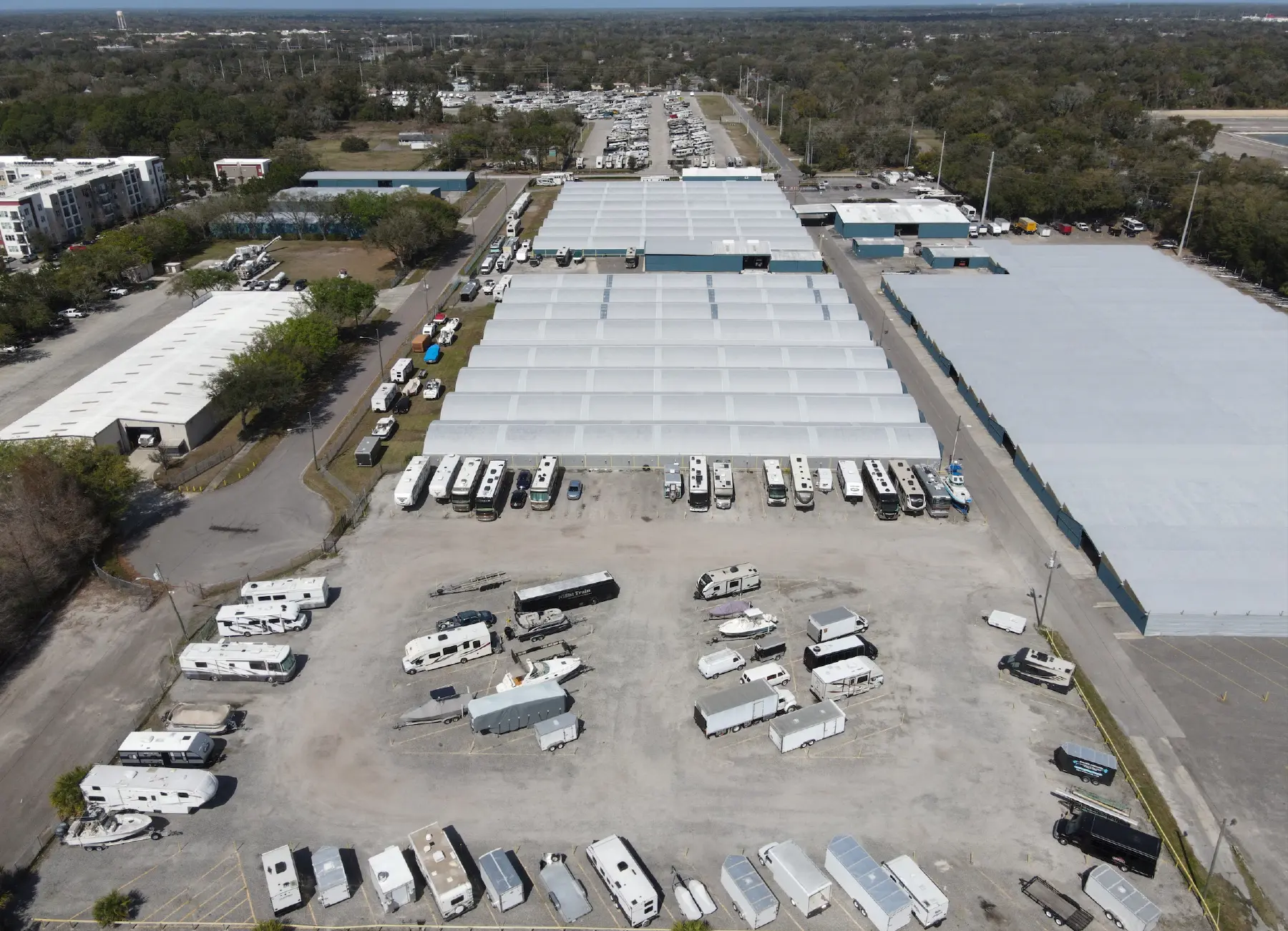
reating a successful RV and boat storage facility that can weather the changing climate and season sounds deceptively simple. However, there are tricky maintenance elements and seasonal challenges to consider when you’re building or developing RV and boat storage.
“There are a lot of considerations; it’s not so straightforward,” says Scott Ramser, founder and CEO of Ramser Development Company, who poses a few preliminary questions. “What sort of paving surface do you use? What amenities do you provide? How much land are you going to lose in your development to stormwater retention and runoff?”
“Building design plays a crucial role in reducing seasonal maintenance needs and ensuring the durability of self-storage facilities throughout the year,” says Shannon Dodge, senior vice president of construction at Devon Self Storage. “Proper insulation, ventilation, and drainage systems are essential to regulate temperature and humidity, minimizing the risk of mold and mildew during wet seasons and maintaining energy efficiency during hot and cold months.”
Flood-prone regions will need elevated foundations or specific water-resistant materials and sealants to guard against water damage and infiltration. Wildfire risk regions might require fire-resistant metal roofing or non-combustible siding. When customers are storing pricy RVs and boats, these kinds of details give confidence their goods are guarded from the challenges of seasonal climate issues.
“Using durable, weather-resistant materials is key to protecting from extreme weather,” says Dodge. “Steel and reinforced concrete are excellent for withstanding high winds and heavy snow loads, while impact-resistant windows and doors can help protect against flying debris during storms.”
Design aspects, such as the building’s orientation, roof pitch, and overhang, can manage snow and rain runoff to further lessen seasonal maintenance burdens. Keep in mind winter maintenance such as plowing could have far-reaching effects when it comes to ensuring easy access for fire or medical personnel who might need to arrive unhindered to handle emergency situations.
Erickson operates his facility in a manner catering toward premium customers while staying flexible to meet their needs. “I define Red Rock as the place for that second-time storage customer,” he says. “Whether it be climate-controlled, whether it be enclosed RV and boat storage, the ‘second-time person’ is someone who has more money, who’s buying a nicer toy and has learned the lesson the hard way of what happens when they took the cheap route and all of the rubber on the windows has shrunk, the paint is faded, the tires are gone. Those second-time owners have learned their lesson and they don’t have a problem paying a premium for enclosed storage.”
They will also pay extra for solutions that safeguard their investments. Smart sensors monitor temperature fluctuations, leaks, and fire hazards, offering early warnings to prevent large scale damage. Motion-activated cameras and lighting not only offer enhanced security but also help management stay abreast of issues and damage during serious seasonal weather events.
When it comes to high-paying tenants, tech-savvy convenience and security can be the deciding factor when someone’s choosing between one facility and the next facility down the road.
“The overwhelming number of spaces that are rented by the consumer are outdoor parking on pavement with no covers, no canopies, no enclosures, and no buildings,” says Ramser. “Drive-thru spaces are nice, but when 85 percent of people in the market rent outdoor parking, it’s all about the expense. It’s expensive to park inside and most people can’t afford it. The reality is canopies only give you full protection at noon; every other part of the day you’re getting some level of sun exposure.”
“Asphalt is probably the best,” says Ramser. “Sometimes people do asphalt with concrete aprons for the landing gear. There’s a number of different types of all-weather surfaces which are less expensive, but they can create a little bit of a dust scenario.”
Not only do facility owner and operators need to think about seasonal maintenance, whether it be prepping for winter plowing or ensuring drainage can accommodate heavy spring rains, but RV and boat owners need to get ready for their own “off season.”
“These days, ‘winterizing’ an RV is a pretty straightforward process,” says Whitney Jurjevich, owner of Ameripark Covered Storage and Covered RV & Boat Storage. “Any RV service center today would have a port to connect to. It’s located at a low point, so when open it, it just drains. Some are done with compressed air to blow any fluids out, and then you add a bit of antifreeze in all the traps, and you should be set.”
Providing access to areas to help accomplish these seasonal chores is a plus.
“The more important thing in our region is coverage; you’ve got to keep it covered,” says Jurjevich. “Your tires are what really get it the most. If you don’t move the tires periodically, you have to keep the RV covered because the sun will get those quick. It’s best to move them anyway, because even if they don’t see the sun, if you just let them sit, they will start to dry rot. The two biggest things for our area are to move your RV around and keep it covered from the sun.”
The seasons can have a big effect on occupancy, whether due to renters using their RVs or boats offsite more during certain months or residents relocating their households (and their toys) elsewhere for the off season.
“In locations like here in Phoenix or South Florida, there’s definitely a snowbird effect,” says Jurjevich. “We’ll have people who will stay with us for five or six months during the late fall through the winter season, and then they’ll go back to whatever colder climate they live in.”
Surprisingly, despite the market changing and loosening up, this doesn’t pose a major issue, keeping occupancy level steady for many operations.
“Most of the locations we are doing business at are year-round,” says Gary “Wojo” Wojtaszek, founder and CEO of RecNation. “Tenants continue to maintain their storage units with us. Once you have a spot, you don’t want to risk giving up your location because you might have to go through that whole nightmare again of trying to find another safe spot to store your vehicle.”
However, there are boom months where vacancy numbers will fall in an RV and boat storage facility’s favor.
“In those markets, we will start getting busier in September, October,” says Wojtaszek. “It really starts heating up until April as people migrate back out of there to their full-time homes.”
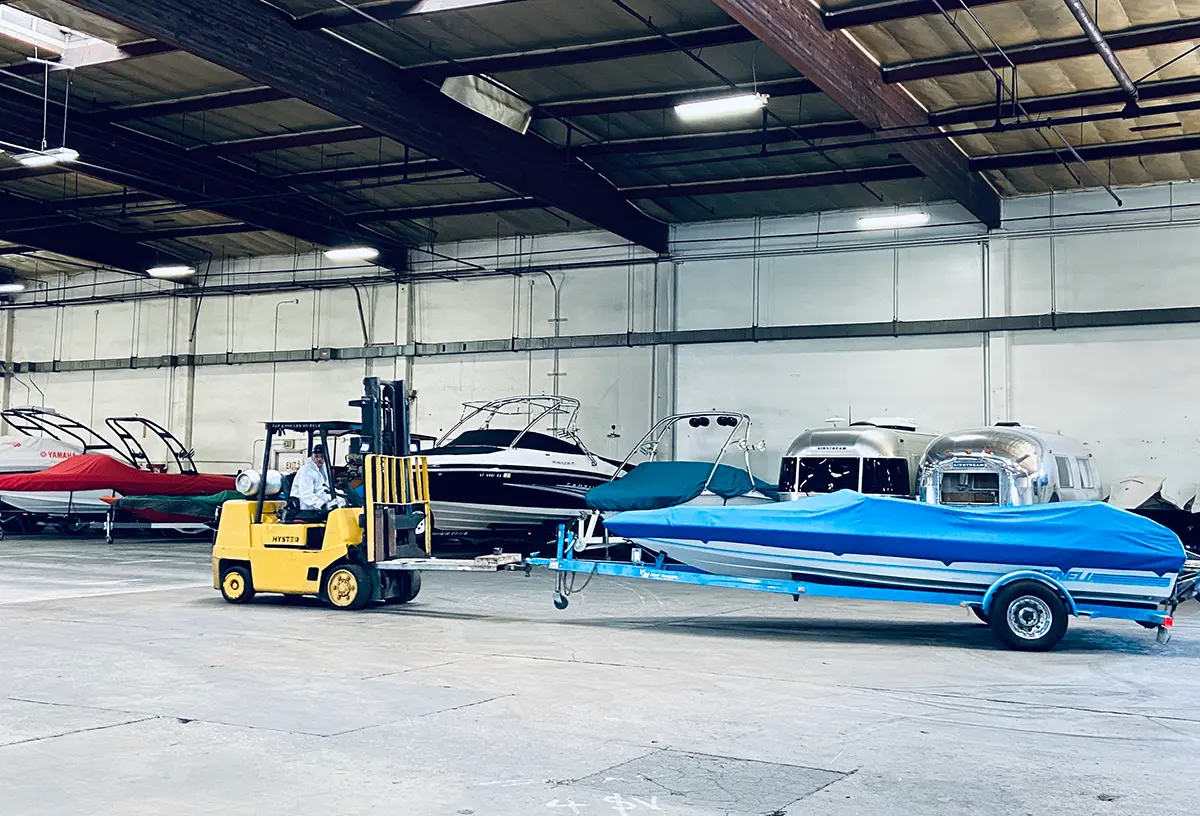
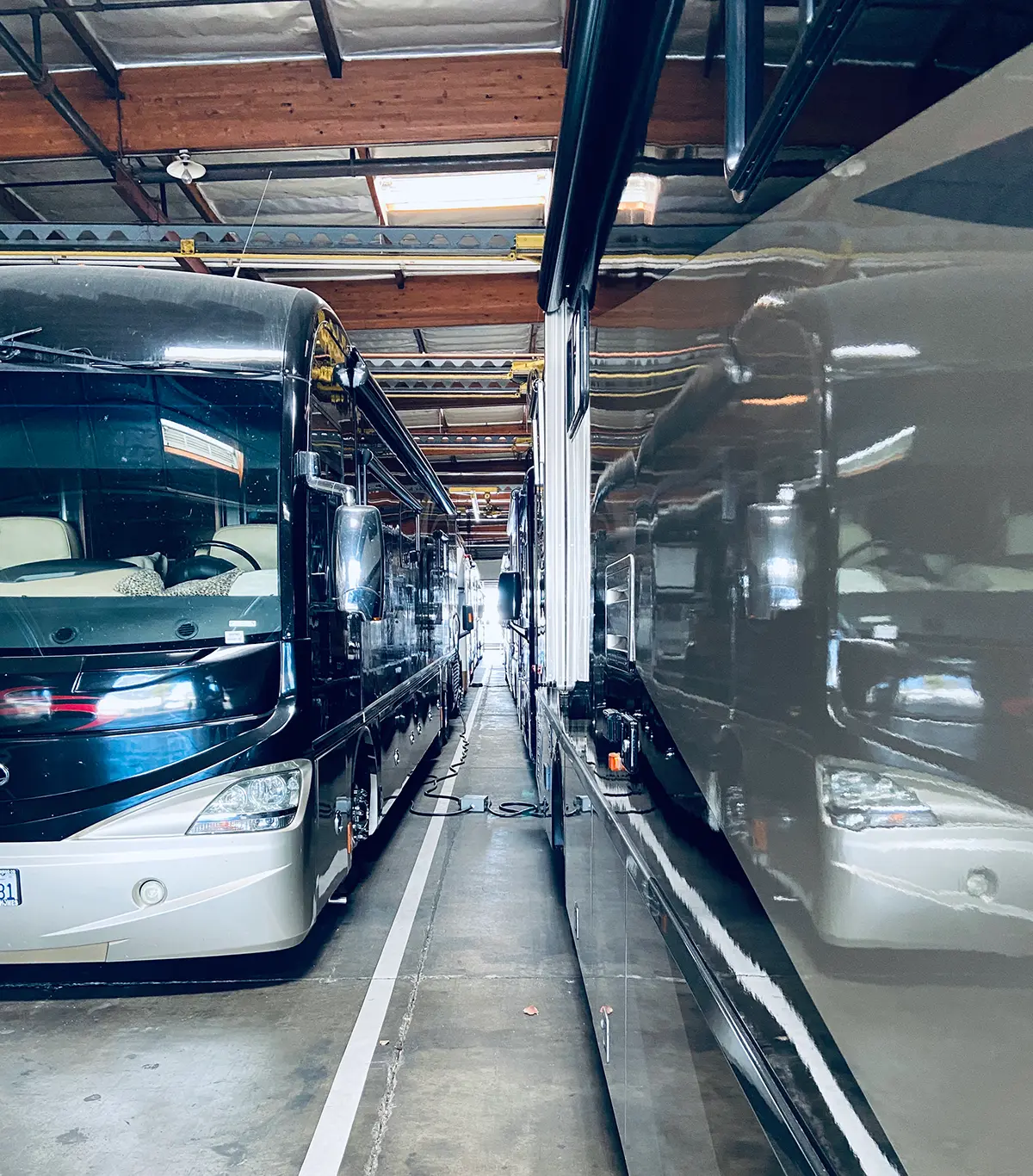
“We have uncovered RV spaces, like a parking spot, or parking spots with canopy structures over them to provide some protection from the elements,” says Wojtaszek. “And then we have fully enclosed units where you can park your vehicle inside completely protected which also feature lighting and electricity.”
When it comes to strategies to upsell or convince standard open parking or even canopied renters to upgrade to indoor storage, a picture is worth a thousand words.
“You just show them one,” says Wojtaszek. “What happens to one RV during a Texas hailstorm, and they’re pretty convinced they want to store RV and boats in enclosed storage, because they get destroyed. And hailstorms here are pretty frequent.”
It isn’t just extreme weather events that are important when protecting property but the cumulative effect of the elements in the long term.
“If you’re storing outside with the Texas heat in the summers, that sun is just beating down on the roof of your RV,” says Wojtaszek. “It’s impacting the tires; it impacts the roof, the wear and tear—over a few years you’re now seeing the paint chipping. To maintain your RV, it’s a great idea at least to have a roof over top. Fully enclosed is definitely the best option to maintain your RV in the best condition as possible for many years.”