









How to enjoy our new magazine:
Just scroll!
Click or tap the table of contents icon in the menu bar to find any article.
Read any article by clicking or tapping the read full article button below each article intro.
Jump back to your previous browsing spot from any article using the menu bar or back to issue button.



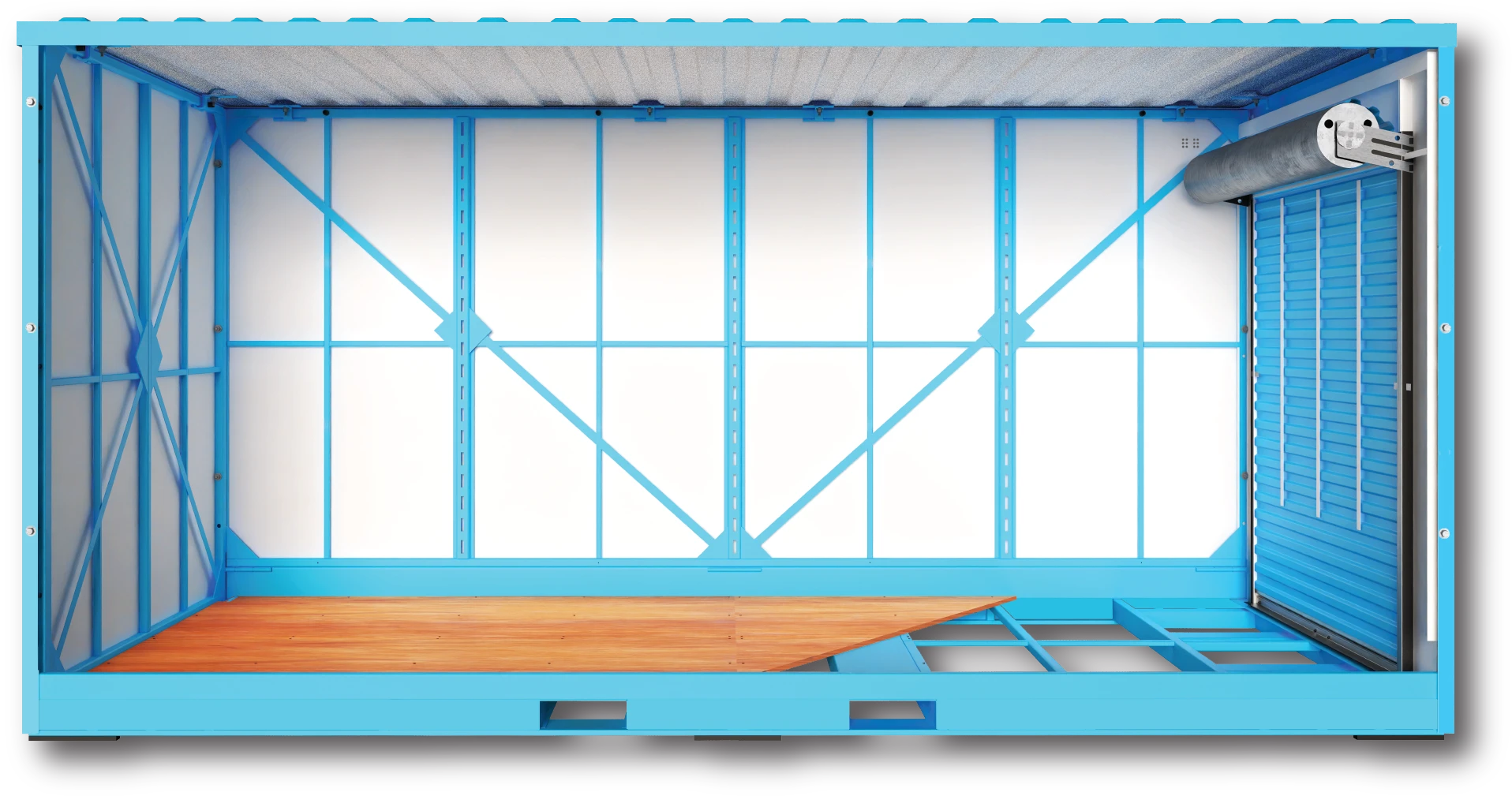


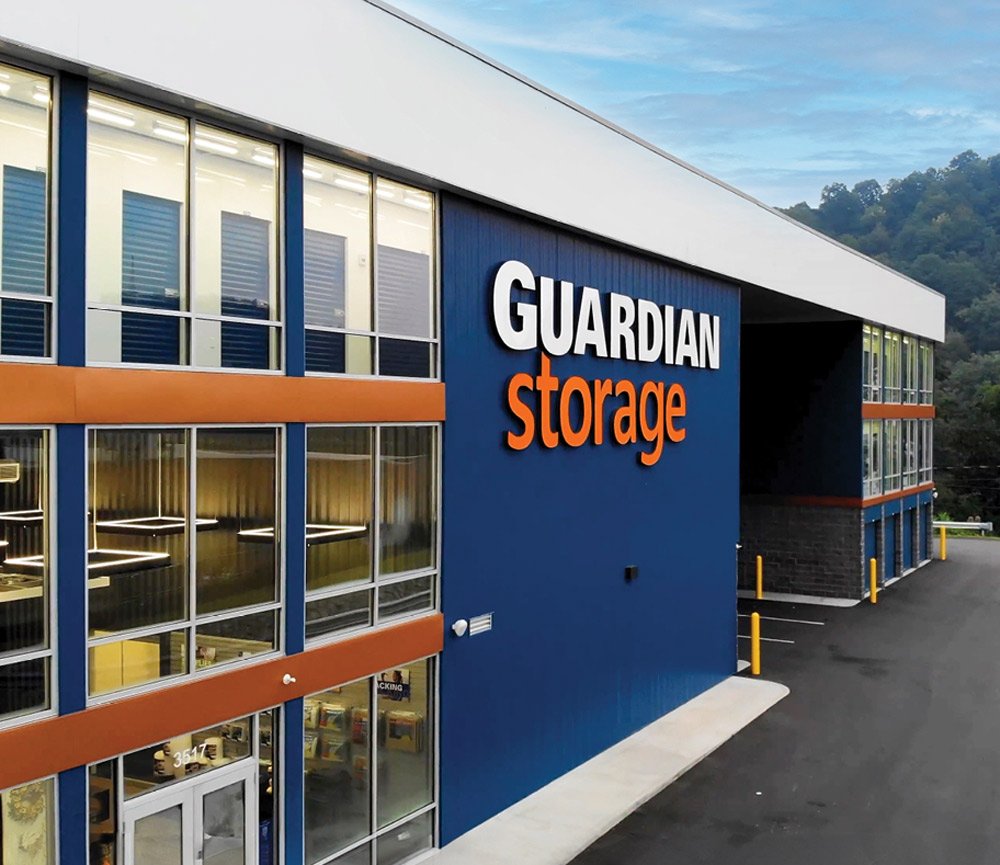


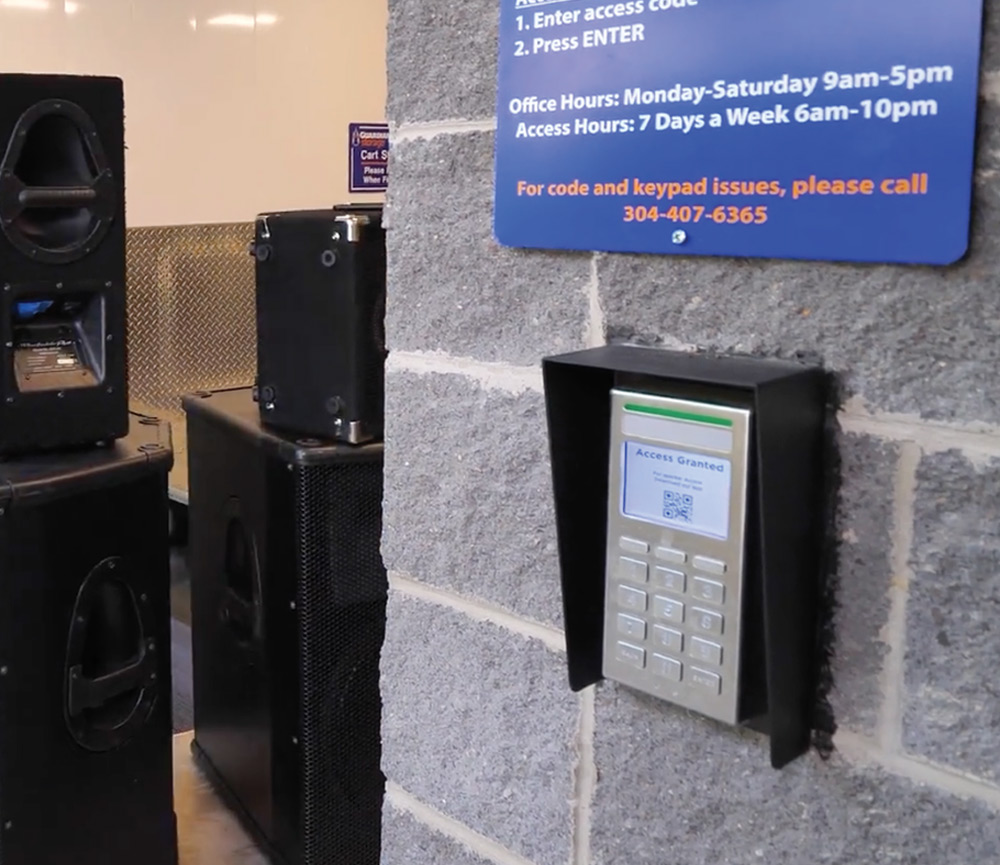
+ Janus Doors
– Gina Cruz, Property Manager, Guardian Storage.




-
Generative Optimization Is Replacing SEOPage 12
-
Do Self-Storage Facilities Need To Use Social Media?Page 16
-
From Tin Box Mini-Warehouses To Algorithmic AssetsPage 20
-
Redefining Delinquency Management In Self-StoragePage 24
-
Generative Optimization Is Replacing SEOPage 12
-
Do Self-Storage Facilities Need To Use Social Media?Page 16
-
From Tin Box Mini-Warehouses To Algorithmic AssetsPage 20
-
Redefining Delinquency Management In Self-StoragePage 24

Some Builders Back Down. We Build Stronger
For over 30 years, we’ve taken on the industry’s most ambitious projects—and delivered every time.

Enclosed Boat & RV
Conversions
BEHIND THE EDGE


-
Self-Storage Scores In Latin AmericaPage 56
-
Launching Self-Storage In Hong KongPage 60
-
Montreal Mini-Storage in Quebec, CanadaPage 64

-
Facilities Can’t Afford To Ignore Local SEOPage 66
-
Software To Boost Your Bottom LinePage 70
-
Getting AI Search Bots To Cite Your ContentPage 74
-
Raise Rates Without Tanking OccupancyPage 78
- Chief Executive Opinion by Travis Morrow6
- Publisher’s Letter by Poppy Behrens9
- Meet The Team10
- Women In Self-Storage: Shannon James by Alejandra Zilak29
- Who’s Who In Self-Storage: Craig Conway by Alejandra Zilak33
- Innovation Spotlight: Self-storage.ai by Brad Hadfield80
- Self Storage Association Update83
- The Last Word: Tommy Nguyen84
For the latest industry news, visit our comprehensive website, ModernStorageMedia.com.













CEO of MSM and Storelocal Corporation,
President of National Self Storage
like to say I can sum up my career in self-storage into the following advances:
- Moved competition analysis into a database.
- Moved the AZSA member guidebook from a three-ring binder onto a CD.
- Moved from disc locks and keys to smartphone access.
- Bought an old magazine and revamped the reader experience.
This is hardly groundbreaking stuff; maybe I did a little more than that. However, at the time I oversaw these changes, they felt like a huge leap for the customer. I’ve been talking about modernizing the customer experience since 2018 and doing it long before that.
Since Storelocal purchased MSM in 2023, the question that we’ve been asked the most is, “When are you going to do a show?” In November we answered that question with the unveiling of THE Show in Atlanta in November 2026. I want to take every opportunity to thank our sponsors who’ve signed on early to make this event happen: Janus International, Tenant Inc, CubeSmart, Tenant Property Protection, TractIQ, Kiwi Construction, and StorageLife. Putting on a first-year event is no small lift, and their early support is crucial.
Now it’s time to modernize the self-storage conference and trade show experience. There’s a lot of opportunity to improve, and we have the team to do it. Speakers, sponsors, content, production, experience, trade show floor, networking opportunities, breakfast, lunch, dinner—all of these are areas that can be improved and more!
Will other shows take notice? Will they make some changes? I sure hope so, as that’s good for the whole industry, which is what we at MSM care about over everything else.
The “Change My Mind” meme served us well the past couple of years, but for 2026, this space will be reserved to keep you up to date on all that we are working on for THE Show. It may seem early to start talking about a fall event in January, but you’re going to want to book your hotel, your flights, and your tickets early for this one. If you don’t want to take my word for it, check back here every issue while I change YOUR mind.
Get your tickets here and save $450:

-
PUBLISHER
Poppy Behrens
-
Director Of Sales & Marketing
Lauri Longstrom-Henderson
(800) 824-6864 -
Creative Director
Carlos Padilla
(800) 352-4636 -
Editor
Erica Shatzer
-
Lead Writer / Web Manager
Brad Hadfield
-
Storelocal® Media Corporation
Travis M. Morrow, CEO
-
Website
-
Visit Messenger Online!
Visit our Self-Storage Resource Center online at
www.ModernStorageMedia.com
where you can browse our paid publications, research archived articles, sign up for a magazine subscription, submit a change of address, and more 
- All correspondence and inquiries should be addressed to:
MSM
PO Box 608
Wittmann, AZ 85361-9997
Phone: (800) 352-4636

theparhamgroup.com
Scalability: Benefit from a scalable business model that allows for easy expansion into high-demand areas, maximizing your return on investment.
Steady Income Stream: Enjoy a reliable and consistent income stream with long-term leases and a diverse tenant base, providing stability even in uncertain economic climates.
Location, Location, Location: Our strategic locations are meticulously chosen to cater to growing populations, ensuring optimal visibility and accessibility for potential tenants.
Tech-Driven Management: Embrace the future with state-of-the-art technology that streamlines operations, enhances security, and ensures a seamless experience for both investors and tenants.
Quality: We build facilities with the utmost quality that differentiates our brand from competitors.

ave you heard about the only East Coast self-storage conference and trade show in 2026? Presented by MSM and sponsored by Janus International, the inaugural event will take place in Atlanta, Nov. 4 to 6, 2026. And this is an event that people will be talking about for years!
First, this unique event will be hosted at The Signia by Hilton, one of Atlanta’s top-tier hotels: no casinos, no distractions, and no trade show grid flow or stuffy ballrooms. Instead, THE Show is just a fantastic event in the Hollywood of the South, with more innovation, more energy, and an agenda that features all-star industry heavy hitters and surprise celebrity MVPs.
Second, you’ll enjoy high-flying perks with discounted flights from our travel partner, Delta Airlines. Has any other trade show ever offered that?
Third, enjoy dinner with the sharks at our opening reception held at the Georgia Aquarium, featuring a private culinary experience by Wolfgang Puck.
Fourth, you’ll want to dress to the nines for our red-carpet awards gala celebrating the 2026 Facility of the Year and Manager of the Year winners.
Last but not least, you’ll get a jump start on 2026 with our innovative platform, which includes a private Investor’s Corner where you can get deals done on the spot, private meeting rooms where you can close the deal, and a trade show floor that works for you. What does that mean? No “bad booth” dilemma! It’s a layout designed for excellent visibility and great conversations.
For more information about THE Show, please see pages 6, 8, and 10. Questions? Feel free to reach out to me at poppy@modernstoragemedia.com. Interested in securing your booth before we sell out? Contact Lauri Longstrom-Henderson at (800) 824-6864.
See you in Atlanta!

Publisher

ave you heard about the only East Coast self-storage conference and trade show in 2026? Presented by MSM and sponsored by Janus International, the inaugural event will take place in Atlanta, Nov. 4 to 6, 2026. And this is an event that people will be talking about for years!
First, this unique event will be hosted at The Signia by Hilton, one of Atlanta’s top-tier hotels: no casinos, no distractions, and no trade show grid flow or stuffy ballrooms. Instead, THE Show is just a fantastic event in the Hollywood of the South, with more innovation, more energy, and an agenda that features all-star industry heavy hitters and surprise celebrity MVPs.
Second, you’ll enjoy high-flying perks with discounted flights from our travel partner, Delta Airlines. Has any other trade show ever offered that?
Third, enjoy dinner with the sharks at our opening reception held at the Georgia Aquarium, featuring a private culinary experience by Wolfgang Puck.
Fourth, you’ll want to dress to the nines for our red-carpet awards gala celebrating the 2026 Facility of the Year and Manager of the Year winners.
Last but not least, you’ll get a jump start on 2026 with our innovative platform, which includes a private Investor’s Corner where you can get deals done on the spot, private meeting rooms where you can close the deal, and a trade show floor that works for you. What does that mean? No “bad booth” dilemma! It’s a layout designed for excellent visibility and great conversations.
For more information about THE Show, please see pages 6, 8, and 10. Questions? Feel free to reach out to me at poppy@modernstoragemedia.com. Interested in securing your booth before we sell out? Contact Lauri Longstrom-Henderson at (800) 824-6864.
See you in Atlanta!
Publisher

MSM’s THE Show lands in Atlanta, Ga., on Nov. 4 to 6, 2026, packing the Georgia World Congress Center with more industry speakers and keynotes than ever before, plus special guests, exciting breakout sessions, an acquisitions corner, and a trade show floor designed for engagement and visibility.
After hours, unforgettable events await, with our Deep Blue Welcome Dinner inside the underwater banquet hall of the Georgia Aquarium, catered by Wolfgang Puck, and our Red Carpet Awards Gala, honoring the very best in self-storage.
If you’ve been waiting for something different … Welcome to THE Show.














Shift
Is Replacing SEO

or decades, search engine optimization has been the cornerstone of digital visibility. From carefully chosen keywords to backlink strategies, operators in the self-storage industry have relied on SEO to capture traffic from potential renters. However, a major shift is underway. With the rise of generative AI tools like ChatGPT, Gemini, and Claude, customers are increasingly turning to conversational interfaces rather than search engines. This new landscape demands a different approach. Generative optimization, or GO, is rapidly becoming the next frontier in digital marketing, and self-storage operators cannot afford to ignore it.
Generative AI changes the dynamic completely. Instead of scanning through 10 blue links, a customer may now ask an AI assistant, “What is the best storage option near me with climate control and good reviews?” The AI does not provide a list of links. It provides a synthesized answer, often citing only a few sources.If your facility is not in the AI’s knowledge base or structured data, you will not appear in the response. Where SEO gave answers in the form of rankings and links, generative optimization gives solutions tailored to customer intent.
This is the core of generative optimization. It is the practice of ensuring that your storage business is discoverable, credible, and favored within generative AI outputs. In other words, GO is about optimizing for the answer, not for the search results page.
Structured Data And Schema
AI models draw from structured data like schema markup, Google Business Profiles, and location databases. Ensuring that your property information is complete, accurate, and machine-readable is critical.
Reputation Signals
AI prioritizes trusted sources. This means Google Reviews, Yelp, and even social signals become more influential than ever. Reputation management is not just about human customers now, it is also about training AI systems to see your facility as credible.
Content Designed For Questions
Traditional SEO rewarded keyword-focused blogs. GO requires content that answers natural language queries. Instead of a post titled “Best Storage Units Dallas,” think “What should I look for in a storage unit in Dallas?” The framing must anticipate conversational queries.
Data Partnerships
Some AI systems ingest third-party databases. Partnering with aggregators or ensuring your listings feed into these systems can expand your reach. If your facility is missing from those sources, you are invisible.
Brand Authority
Large operators may see an advantage because AI often defaults to recognized brands when in doubt. Smaller operators must compensate with hyper-local authority, reviews, and unique differentiators.
- Reduced dependency on expensive paid search – If your business is recommended directly by AI, you bypass costly bidding wars for keywords.
- Higher quality leads – AI-generated recommendations are tailored to user intent, which often results in more qualified inquiries.
- Opportunities for differentiation – Operators who emphasize unique features, such as eco-friendly facilities or exceptional customer service, can see those strengths amplified by AI assistants.
- Future-proofing digital presence – SEO will not vanish overnight, but preparing for GO ensures long-term relevance in a changing digital landscape.
- High-intent, local searches – Most customers search for storage when they are ready to rent. They want convenience, location accuracy, and quick answers. AI assistants are well-positioned to deliver exactly that, bypassing traditional search listings.
- Highly competitive keywords – Storage-related keywords have long been among the most competitive in Google Ads and organic SEO. If generative AI reduces reliance on those listings, the economics of paid search and SEO shift dramatically.
- Fragmented industry presence – While large REITs have the scale to invest in AI-ready data strategies, many independent operators rely on traditional SEO tactics. Without adaptation, they risk disappearing from the customer journey.
- Reviews and reputation as core signals – Generative AI systems heavily weigh customer reviews, ratings, and local authority. Operators who fail to manage their online reputation could find themselves excluded from AI-generated recommendations.
- Lack of transparency – Unlike Google’s search results, which can be audited through rankings and analytics, AI-generated outputs are less predictable. Measuring success will require new tools.
- Data accuracy issues – If AI pulls outdated or incorrect information, it could harm your brand. Active monitoring of your digital footprint is essential.
- Potential bias toward large brands – Smaller operators may find it harder to compete if AI favors national chains. This makes local differentiation critical.
- Ongoing costs – GO strategies require continual investment in content, data accuracy, and reputation management. It is not a one-time fix.
- Audit your digital footprint. Review your listings, reviews, and schema data. Ensure consistency across Google Business Profile, Apple Maps, Yelp, and any aggregator sites.
- Prioritize reputation management. Encourage happy customers to leave reviews. Respond promptly to both positive and negative feedback. AI systems reward active engagement.
- Shift your content strategy. Create FAQ-driven content that mirrors the way customers ask questions. Use natural language and practical advice.
- Leverage local authority. Highlight partnerships with community organizations, sponsorships, or local recognitions. AI systems value local signals when recommending businesses.
- Experiment with AI integrations. Some operators are already testing AI chatbots on their own websites. This not only improves customer experience but also provides training data for generative models.
- Track new analytics tools. Emerging platforms are building “Generative Analytics” to monitor how often brands appear in AI outputs. Stay informed and be ready to adopt them.
Generative optimization represents the next evolution of digital marketing. For self-storage operators, the implications are clear. Customers will increasingly rely on AI assistants to find, evaluate, and select storage facilities. Being absent from those answers means being absent from the market.
The transition from SEO to GO is not optional. It is already underway. By taking proactive steps now, operators can ensure that they are not only discoverable in the generative age but positioned as the preferred choice for customers seeking storage solutions.
The future of self-storage marketing is no longer about climbing search rankings. It is about becoming the trusted answer in a world where answers, not links, are what customers seek.




A strategy briefing for independent operators focused on risk, revenue, and technology.
 February 5th – 6th
 Newport Beach, CA


ocial media is an intrinsic part of the internet since it became widely available and accepted by the public. It’s in our nature to share aspects of our lives with others, both online and offline. Participating in the creator economy plays an essential role in supporting successful online marketing strategies. Never before has it been easier to attract and connect with your target audience and even get them to act, yet many self-storage facilities are not active on social media despite popular platforms attracting millions of people every month.
It may seem nonsensical to market your facility on social media, because storage is inherently not as flashy and eye catching as other industries. The reality is it’s not about starting the next viral trend, creating controversial content, or entertaining the masses—it’s about connection.
On the flip side, sloppy posts or a lack of posts signal neglect and can push potential renters elsewhere. People often check a business’ website and social media before deciding where to store, so presenting thoughtful, authentic content shows you care about your facility and your customers.
In many cases, your social presence is the first step in building trust—don’t let it fall short.
It’s also a great place to run flash deals or promotions, which boost engagement and provide insight into what drives rentals. Beyond updates, social platforms let you answer common questions, address misconceptions, and set clear expectations for customers.
This positions your facility as professional, knowledgeable, and committed to providing a great storage experience.
Social media gives you the power to bring your audience together by interacting with your page and content. You can post content that allows your audience to feel your facility understands them by speaking to them about community-specific topics with which they resonate.
Additionally, many social media platforms feature groups where people can post exclusively about one topic or category on one dedicated page. Many local communities create group pages to keep each other connected about the happenings in the community, along with business highlights and recommendations.
This is a massive opportunity to position your facility as a valuable addition to the community and build brand loyalty that larger conglomerates can’t replicate.
Social media can’t directly impact your website’s search ranking, but it can help indirectly. Search engines use your social media activity as a sign to see if users generally have positive experiences with your company. If there’s a lot of positive engagement (sharing, comments, and liking content) with your social media pages, then search engines will consider this when ranking your website for different search terms.
Some members of your target audience might be in the awareness stage, looking at your content for the first time as they just discovered your facility. Others might be using your social media as a way to verify website claims as they navigate the consideration stage. It can even work for the later loyalty stages where customers share reviews on your page or leave positive feedback on your content for others to read.
The biggest issue with social media is the options are endless in the directions you can go, where to post, what to post, and when. Social media is full of many choices; it can quickly become overwhelming when you don’t know the right platforms, what to post, or when the posts should go up. Having a target audience in mind sets guardrails to keep you on a better track instead of navigating in the dark.
- Facebook – This social media platform is almost a must for self-storage facilities. Facebook has some of the highest monthly traffic, caters to a wide audience type, allows for multiple types of media posting (videos, images, and even long text passages), and has Facebook Groups. Facebook Groups are a goldmine in of themselves, offering facilities a chance to directly interact with members of their community, unlike most other popular platforms.
- Instagram – This platform is also beneficial and growing in popularity amongst older audiences, but it’s still mostly dominated by younger audiences because of its focus on high-quality visuals. Unlike Facebook, where posts can be even simple text if desired, Instagram requires images or videos to post. This offers a chance to keep spreading your digital footprint while showing off your facility to your audience.
- Google Business Profile – Google Business Profiles (GBPs) are another must for self-storage facilities for multiple reasons, though not always perceived as a traditional social media platform. A professional looking GBP will leave prospective customers with a good first impression, helping build the trust needed to move through the marketing funnel. GBP also has a posting feature where you can regularly post content related to facility features, promotions, and other essential information a user might need answered. Being active on GBP can positively influence your website’s SEO ranking as well, and when done right, it can guide people through the buying process seamlessly!
- TikTok – Initially, TikTok wasn’t widely recognized as a reputable source for businesses to spend their time and energy on, but the narrative has shifted as time has progressed. TikTok is a video-only platform that caters to a younger audience. This platform allows you to not only show aspects of your facility to your audience, but it can also let you tap into younger audiences who might need storage, like students, and allow you to age with them over time.
- YouTube – Many self-storage owners might not understand the importance of being active on YouTube. It’s not necessarily to build a massive following, though this can happen; it’s more about creating better social signaling for your facility and giving your audience more insights about your facility, what you offer, and how you contribute to the local community. Walkthroughs and facility tours, for example, give key insights to interested prospects about the layout and what to expect before they arrive.
AI can be viewed as inauthentic, so despite being a major helping hand, be sure you’re injecting a bit of yourself into the content before it goes out. AI is great for helping get started, ideation, or even rough drafts, but it should not be your sole means of content creation if you want to connect with your audience.
If you want to take it a step further, then setting up spreadsheets that track goals, key performance indicators (KPIs), and other metrics across all platforms in one place can become massively beneficial later in your social media journey.
Tracking performance is essential to know what is and isn’t working within your social media strategy. After enough time, your data will start to show you how to best modify your strategy with proven insights to guide the way.
Social media is all about being consistent, especially when first getting started, because it takes time for your content to start circulating in the algorithm. Platforms value content that has heavy engagement because it shows that users are getting a certain amount of value from it.
By focusing on being consistent, you’ll learn more about how to provide that value which is most often rooted in being authentic. Social media can be a great display for your company to present itself to the world, but if your facility doesn’t match the expectations created online, this can quickly deteriorate your overall brand presence.
Being authentic is the best way to connect your facility with the local community, because they’ll recognize you speak the same language and share similar ethics and values. Don’t wait any longer; start tapping into the power of social media today and start building your online presence to help empower your facility.


Self-Storage

alk down a corridor of any new, multistory storage facility today—keyless entry on your phone, cameras humming, soft music in the lobby—and it’s hard to believe this industry began on the far edge of town, behind chain-link fences, with a handwritten ledger and a couple living over the office. This is the story of how self-storage moved from the margins to mainstream retail real estate, and why technology and revenue science now set the pace.
Sites were almost never on Main and Main. The economics favored low-traffic, cheap industrial land—deep setbacks and metal rows with roll-up doors. Security was basic: chain-link fencing, a manual gate, maybe a floodlight. Many municipalities didn’t have a defined zoning use for “mini-warehouses,” and early developers often shoehorned projects into industrial districts where the use was tolerated rather than embraced.Operations followed what veterans still call the “motel model.” A husband-and-wife resident-manager team lived on site, kept the books, swept the drives, and opened and closed the gate. The office, if you could call it that, might have been a 150-square-foot vestibule, or even a corner of the managers’ living room. As the industry professionalized, it slowly moved away from resident management, but that change didn’t arrive until much later.
Technology’s first cameo was modest and improvisational. Some operators experimented with early microcomputers and serial interfaces to run rudimentary access controls; it was the era when affordable hobbyist machines like the Tandy TRS-80 (introduced in 1977) made such tinkering possible, even if the systems were crude by today’s standards. Dedicated access control vendors emerged in the late 1970s and early 1980s, paving the way for keypad gates and basic software tie-ins.
Names told the story. These properties were “mini-warehouses” or “mini storage,” and tenants brought their own locks. The lexicon evolved as the product did. Lexicographers now treat self-storage as shorthand for self-service storage, a usage widely reflected in industry literature. The Oxford English Dictionary even traces “self-storage” in print to the 19th century, long before the modern product, underscoring how language often precedes mature business models.
“Mini-warehouse” gave way to “self-storage,” and the product became unmistakably retail: larger lobbies, merchandising walls of boxes and locks, branded moving supplies, and—importantly—software to handle reservations, billing, access, and reporting. Ancillary income matured from an afterthought to a deliberate profit center with retail packs, truck rentals, protection plans, tenant insurance, administrative fees, and more. Industry trade sources often peg total ancillary contribution in the mid-single- to low-double-digit share of revenue for well-run stores, with publicly traded REITs reporting ancillary percentages ranging from 4 percent to 12 percent in their Q3 2024 public filings, according to Tract IQ.
To win municipal acceptance, buildings became cleaner and more architecturally presentable, with better façades, glassy corners, and thoughtful landscaping—an aesthetic upgrade that turned former zoning fights into more predictable approvals. Some jurisdictions still resist storage on prime retail corners, but the overall arc bent toward acceptance as the product got “nicer” and consumer-facing.
Statutes And Industry Guardrails
As the industry scaled, state statutes codified essential rights and processes (most famously lien enforcement), helping operators manage delinquencies, notices, and sales with clarity. The Self Storage Association (SSA) became the clearinghouse for education and model language, and today publishes annotated lien-law booklets and legal resources for nearly every state.
The SSA At 50
Founded in 1975, the Self Storage Association grew from a small cohort of “mini-warehouse” owners into a national trade body with affiliated state associations across the country. Over five decades, SSA has represented operators large and small in legislative advocacy (lien laws, insurance, and the right to use online auctions instead of newspaper ads), standardized best practices through education and conferences, and created a professional home for a once-niche asset class. In 2025, the SSA celebrated its 50th anniversary—a milestone highlighted throughout its spring and fall conferences—underscoring its role in policy, networking, and industry identity.
But the most transformative shift is invisible to the casual renter: revenue management. Borrowing from airlines car rental agencies and hotels, operators use dynamic pricing rules at move-in and structured existing customer rate increases (ECRIs) to grow in-place revenue over time. Done thoughtfully, dynamic pricing adjusts to occupancy bands, unit attributes, seasonality, and competitor moves; ECRIs migrate promotion-heavy move-ins toward proforma rent while preserving occupancy.
Independent studies and REIT commentary now treat algorithmic pricing as table stakes. Simply “staying full” is no longer the goal; optimizing yield per available square foot is. The industry has even debated where automation ends and customer experience begins—how aggressively to cycle rates, whether to require insurance or protection plans, and how high frequency price changes should be.
Penetration, Inventory, And The Shape Of Supply
Measuring the industry accurately requires consistent definitions (gross vs. net rentable, open vs. operating) and up-to-date sources. Publicly compiled industry snapshots indicate:
- Facility count – Roughly 52,301 facilities operate in the United States, which is comparable to the number of fast-food restaurant locations. Many sources now see over 60,000 facilities as the current count, including those in development.
- Square feet per capita – Methodologies vary, but the national benchmark is approximately 6.1 to 7 square feet per person. This makes the U.S. the world’s most penetrated self-storage market.
- Usage – The SSA’s Self-Storage Demand Study puts current household utilization at 11.1 percent, meaning over 14.4 million households are actively renting at a point in time.
- Ownership – While public REITs own a significant number of facilities, the industry remains highly fragmented, with roughly 65 percent of facilities owned by small, independent operators.
Why the variance? Different compilers count different unit types, treat pipeline and conversion space differently, and update on different cadences. For strategy, operators should align to a single definitional set when underwriting a market.
REITs, Capital Flows, And Professionalization
As the product matured, so did the capital. The 1990s and 2000s saw the ascendance of public REITs—notably Public Storage (PSA), Extra Space (EXR), CubeSmart (CUBE), and National Storage Affiliates (NSA)—and the expansion of third-party management platforms that brought institutional process discipline to acquisition and development pipelines. NAREIT recognizes storage as a distinct REIT sector. Investor decks and earnings calls now routinely discuss dynamic pricing, ECRIs, and tech adoption alongside occupancy and development yields.
Operators who master this stack are less vulnerable to promotional races and can often accept slightly lower occupancy to capture meaningfully higher revenue per occupied unit. That’s the “governance” piece: The model sets the course, not just the site manager’s instincts.
The early pioneers proved people would pay a small, recurring fee for convenience and control. Gen 2 made that convenience respectable to cities and attractive to mainstream customers. Gen 3 made it predictable to capital.
- Deeper integration and automation – Expect more “invisible” automation (AI-assisted pricing, LPR at gates, fraud detection in digital leasing, auto-ECRI scheduling tied to cohort performance) and lighter, greener buildings (solar, EV charging, smart lighting).
- Sharper segmentation – Urban infill will keep funding multistory, 100 percent climate-controlled product; suburban and exurban stores will mix drive-up with climate-lite; and vehicle storage and niche amenities will be driven by micro-market demand. Ancillary income will remain a lever (insurance/protection, retail packs, premium access perks) because small percentage gains compound across stabilized portfolios.
- Digital Facility Proof Of Concept – The jury may still be out on the efficacy of unmanned or digitally operated facilities. Recent data shows consumer preference for human assisted rentals. This is best accomplished in a staffed facility with human intervention. The business model of unstaffed properties is being tested and scrutinized. It is not until fully embraced by institutional investors that the model may be fully accepted. There is growing sentiment that fully matured and stabilized facilities in a hub-and-spoke business model may be the best candidates for digital operations.
- Continued Consolidation – The sector has long attracted big money, from Wall Street to family offices. These behemoths will continue to grow and achieve economies of scale, pushing owner-operated facilities to be more likely found in tertiary markets, as institutional buyers pursue long avoided secondary markets to achieve acquisition optimization, maximization, and scale.
For operators entering or expanding, the lesson from over 50 years is simple: Location still matters, but systems decide the winner. The first builders chased cheap land and filled a need. The modern winners measure, test, and price that need with discipline.



he self-storage industry is entering a new era of operational efficiency. As portfolios expand and labor markets tighten, operators are confronting an unavoidable reality: Manual collections and delinquency management processes can no longer keep pace with modern business demands. Across the country, companies large and small are finding that outdated systems (spreadsheets, ad-hoc reminders, and manager-driven timelines) are creating mounting costs, compliance risks, and lost revenue opportunities. According to the Self Storage Association’s 2024 Fact Sheet, industry occupancy remains strong, but operators are reporting rising delinquencies and extended auction timelines compared to pre-pandemic years.
According to Inside Self-Storage’s 2024 Manager Compensation Study, operators report spending five to 15 staff hours per location per month on delinquency-related tasks such as sending notices, managing lien paperwork, and coordinating auctions. Multiplied across dozens or hundreds of facilities, that’s the equivalent workload of a dedicated back-office team focused solely on collections administration.
Meanwhile, compliance exposure continues to rise. A missed deadline or incorrect notice template can trigger legal disputes that cost far more than the delinquent rent being pursued. For multi-state operators, keeping up with these variations has become a full-time job all on its own.
As detailed in MSM’s article “Technology and the Modern Manager,” operators are increasingly turning to automation to streamline repetitive, time-sensitive tasks while empowering teams with better visibility and data.
Key advantages include:
- Early Intervention – Real-time monitoring and automated reminders prevent small delinquencies from escalating. Operators using automated outreach report 20 percent to 30 percent fewer accounts reaching the auction stage, per StorageTreasures’s 2024 Auction Trends Report.
- Consistent, Multichannel Communication – Tenants receive notices via their preferred channels (email, text, mail, or phone) to ensure timely, documented contact.
- Built-In Compliance – Automated templates adapt to each state’s lien sale laws, minimizing legal risk and removing guesswork.
- Scalability and Predictability – Standardized workflows enable accurate forecasting of cash flow, auction timelines, and resource allocation.
- Data-Driven Insights – By capturing every event in the delinquency cycle, automation turns collections into a measurable, optimizable process rather than a reactive chore.
- Labor savings of at least $8,000 to $10,000 per facility per year,
- 50 percent reduction in outstanding tenant debt within the first 12 months,
- 80 percent to 95 percent drop in 90-day delinquencies within 90 to120 days, and
- 500-plus staff hours recaptured monthly for every 100 locations.
In addition to measurable financial gains, automation improves operational predictability, reduces staff burnout, and ensures every facility remains compliant without requiring additional headcount.
- End-to-End Workflow Coverage – From initial collections to auction close-out
- Verified Legal Compliance – Maintained by experts and updated as laws change
- Integration With PMS/FMS Systems – Ensuring data accuracy and eliminating manual imports
- Comprehensive Reporting Dashboards – Enabling teams to track recovery rates, time to auction, and compliance performance
- Dedicated Industry Support – Providers who understand storage operations, not just software
As Forbes Technology Council noted in its 2024 article “Why Automation is the Next Wave in Property Operations,” automation in property operations isn’t just about replacing labor—it’s about building infrastructure that scales efficiently while improving accuracy and oversight.
Portfolio operators, private-equity investors, and REITs are all demanding greater operational efficiency and compliance consistency. In that environment, automation isn’t a luxury—it’s essential infrastructure!
As one industry executive summarized in the previously mentioned MSM article, “The facilities that master automation aren’t just saving time—they’re building resilience. They can scale faster, stay compliant, and protect their margins when conditions change.”
For operators finalizing 2026 budgets, the decision is clear. The era of manual delinquency management is ending. The winners of the next decade will be those who invest now in systems that make collections predictable, compliant, and scalable.






hannon James is the lead human resources business partner at Storable, but her job title is only the tip of the iceberg. She lives a beautiful life with a loving family and a job she enjoys. She loves to read. She loves to travel. She loves being a leader and helping others pave their way. As this month’s feature for the “Women In Self-Storage” column, she’s happy to share her story to show readers that everyone gets sea legs when starting a new job and that confidence comes from getting things done.
Since her mom traveled for work and took her along, she was fortunate to travel often while growing up. “She believed travel was just as educational as school,” says James. “She even sent me to Europe for a few weeks one summer, sparking my lifelong love of travel—something I’ve passed on to my daughters, Elizabeth and Emma.”
She didn’t play sports, but she loved watching them, especially college football and women’s basketball. Her hobby was baton twirling, and she still picks one up now and then. She can still twirl two batons at once and still dreams of trying fire batons one day.


She graduated in 2002 and went to work at IBM, where she worked primarily in university recruiting, hiring college seniors into full-time roles. “It was fast-paced, deadline-driven, and full of energy—exactly the kind of environment I thrive in.” That experience shaped her work style and instilled what she calls her “hurry up” driver. “I still love the adrenaline of getting things done.”
Her next chapter took her to the temporary services department at her alma mater, NC State. She loved the role because it allowed her to connect the department with talented individuals seeking opportunities. “Many came from diverse backgrounds, including refugees and those transitioning from homelessness,” she recalls. “Watching people secure full-time roles with benefits and build new lives was incredibly fulfilling.”

She approached the opportunity with an open mind, and within minutes of meeting Storable’s chief people officer, she knew it would be the right move for her. “To this day, it’s been the best career decision I’ve ever made. Our culture revolves around building trust and practicing radical candor, which are invaluable lifelong skills. It has really provided me with the runway to grow and develop.”
She also loves attending trade shows and meeting customers face to face. “It reminds me why I do what I do. They truly care about their businesses and the people they serve.”


She goes on to highlight the importance of finding one’s voice. “That has been a lifelong journey for me,” she says. “I’ve had to learn when to temper my need to please others and when to stand firm.”
James also talks about the very relatable sensation of feeling out of her element. “Early on at Storable, impostor syndrome hit hard. Everyone around me was brilliant and tech-savvy, and I remember being completely thrown off by the term ‘deck.’ I had no idea it just meant a PowerPoint presentation! But through time, support, and effort, I grew into confidence.”
Finally, she acknowledges that being in a leadership role requires making difficult decisions. “Just like parenting, you can’t always give people what they want, but you can guide them with honesty.”
Then there’s her work at Storable. “As an HR business partner and as a leader of Women of Storable, I’ve learned to be comfortable in my own skin and use my story to help others grow.”
When not working, James is rediscovering her love of reading. True to her commitment to growth, she starts her mornings with professional books. “I’m in a book club at work, and we’re currently reading Brené Brown’s ‘Strong Ground.’” At night, she winds down with thrillers.
She’s been happily married for 28 years to her high school sweetheart and fellow foodie. “Last year, we set a New Year’s resolution to visit a new restaurant each month in 2025. Some have become instant favorites. Others, not so much, but it’s still been fun!” They also love to travel together. “Traveling is always on my radar. This year, we’re going on a European river cruise to visit the Christmas markets, and we have a New Year’s cruise to the Caribbean.”
Last but not least, she has a bulldog named Lola, a cat named Luna, and a grand-dog named Pugsley. She’s immensely proud of her daughters and stays close to her 90-year-old dad. “He remains my greatest teacher,” says James. “He taught me lessons I still live by: never burn bridges, work hard, go the extra mile, never say ‘that’s not my job,’ and always know a little about a lot so you can connect with anyone. And even when you know more, sometimes the kindest thing you can do is let someone else have their moment.”


raig Conway has a fulfilling life. He also has a heart full of gratitude for many things: growing up in a loving family, having a beautiful life with his wife and kids, and his very successful career trajectory, which has led him to become group managing director at Janus International Europe, a subsidiary of Janus International Group, Inc.
His title is impressive, especially because he works for one of the self-storage industry’s leading manufacturers and solutions providers. How Conway ended up there is the result of a lot of hard work and determination, but he always kept his eyes on the prize. “I’d work harder than the person to my right and to my left, making sure that if extra hours were ever needed, I was the one working them.” His main goal was to set the foundation for his family, so that they could have a good life.

He met his wife, Samantha, when he was still a kid. “We went to nursery, primary, and secondary school together. We got together, went to prom, and we’ve hit it off since then. And now we are married and have five lovely kids: Bobby, Bailey, Bear, Birdie, and Bella,” he says. “During that time, we couldn’t afford a big wedding. But there was a radio competition with a grand prize of a £25,000 wedding [$32,864.88 U.S.].”
The Conways did several social events to raise funds, including the pièce de résistance: naked bungee jumping. “Our friends were throwing in ideas, and someone suggested bungee jumping, and that they’d pay if I’d do it naked,” he says through laughter. “Everyone paid so I would do it. Charity is close to my heart, and if you have to make yourself look silly to support a good cause, so be it.”
He and his wife won by raising more than £16,000 [$21,012.48 U.S.], turning their stunt into an unforgettable story.
Conway then enrolled at Teesside University in Middlesbrough to study mechanical engineering; he worked in the nuclear power industry after graduating. “I ended up becoming the production director and head of engineering at Cowie Technology,” he says. “I had a stake in the organization, and I was there for about nine years.”
During his tenure, Conway opened facilities in the United States, Austria, and several European countries, including Germany.
Then, as previously happened, Conway once again decided that he wanted to learn about something else, so he started working at Newcastle Safety Glass, designing ballistic (bullet-resistant) glass for trains, planes, and automobiles.
This job entailed a lot of traveling, and when his wife expressed that she’d like him to be closer to home, he was OK with the idea of a career shift. At this point, Conway wanted to build and lead an organization defined by technology and forward thinking.

He then switched departments to take on the position of director of Janus International Europe’s Nokē Smart Entry division. The Nokē Smart Entry system is a digital access control and business management solution. Using a smartphone, tenants can access gates, loading bays, elevators, and individual units, thus eliminating the need for traditional keys or PIN codes. The solution is also invaluable for operators, since its web portal offers data analytics and integrations with property management software systems to enable automated online rentals and move-ins. “We achieved remarkable growth, increasing system sales by 100 percent year on year and supporting self-storage operators in developing automated, future-proof operations,” says Conway.


Conway credits his personal mentors for his success within Janus. Specifically, Ramey Jackson (CEO), Morgan Hodges, and Alan Campbell in the parent company Janus International Group. “They’re all really gracious, fantastic people, and I have the utmost respect for them. If these guys don’t know, it’s not worth knowing,” he says. “I’m so thankful for the trust they’ve placed in me.”
As for his wife wanting her husband to stay close to home, eventually she became OK with him getting back on the road. “I’m very lucky,” he says about having an understanding spouse and a position he truly enjoys. “I’ve been very fortunate to have a job that has taken me to so many places.”
Conway regularly travels to meet Janus teams, partners, and customers—three to four times a year in Australia and every other week across Europe—emphasizing that sustained success comes from being present.
“Everyone’s always willing to help,” he says. “No one wants you to fail. The key part is that people are always willing to guide and steer you.”
And the people are precisely what Conway appreciates the most. “It’s not the product or the service. It’s the people. Our self-storage customers and partners are all entrepreneurs—driven, bright, intelligent people. They’re great individuals who are willing to share their experiences.”
He shares his own advice with novices getting started in the industry. “Scope the market out. Get acquainted with the fabulous people in the sector. Make sure that you listen more than you talk and absorb all of their experience before making your own foundation or roadmap.”
He also enjoys watching football, specifically Middlesbrough Football Club. Staying true to his childhood roots, he also loves “playing football with the lads.” He’s very fond of his little corner of the world. “The Lake District in the U.K. is my special place for relaxation.”
Because he’s very English, he enjoys a good Sunday roast. “Sunday roast isn’t a roast without Yorkshire pudding,” he says with a laugh. “I look forward to it every week. My wife does a mega Sunday roast!”


espite widespread adoption of modern security tools such as smart locks and access control systems, AI-enabled monitoring, high-security doors, drones, and even robots, crime remains a persistent issue for the self-storage sector. But are things slowly getting better? According to a recent MSM survey, operators are beginning to see fewer crimes, and they’re definitely taking security seriously.
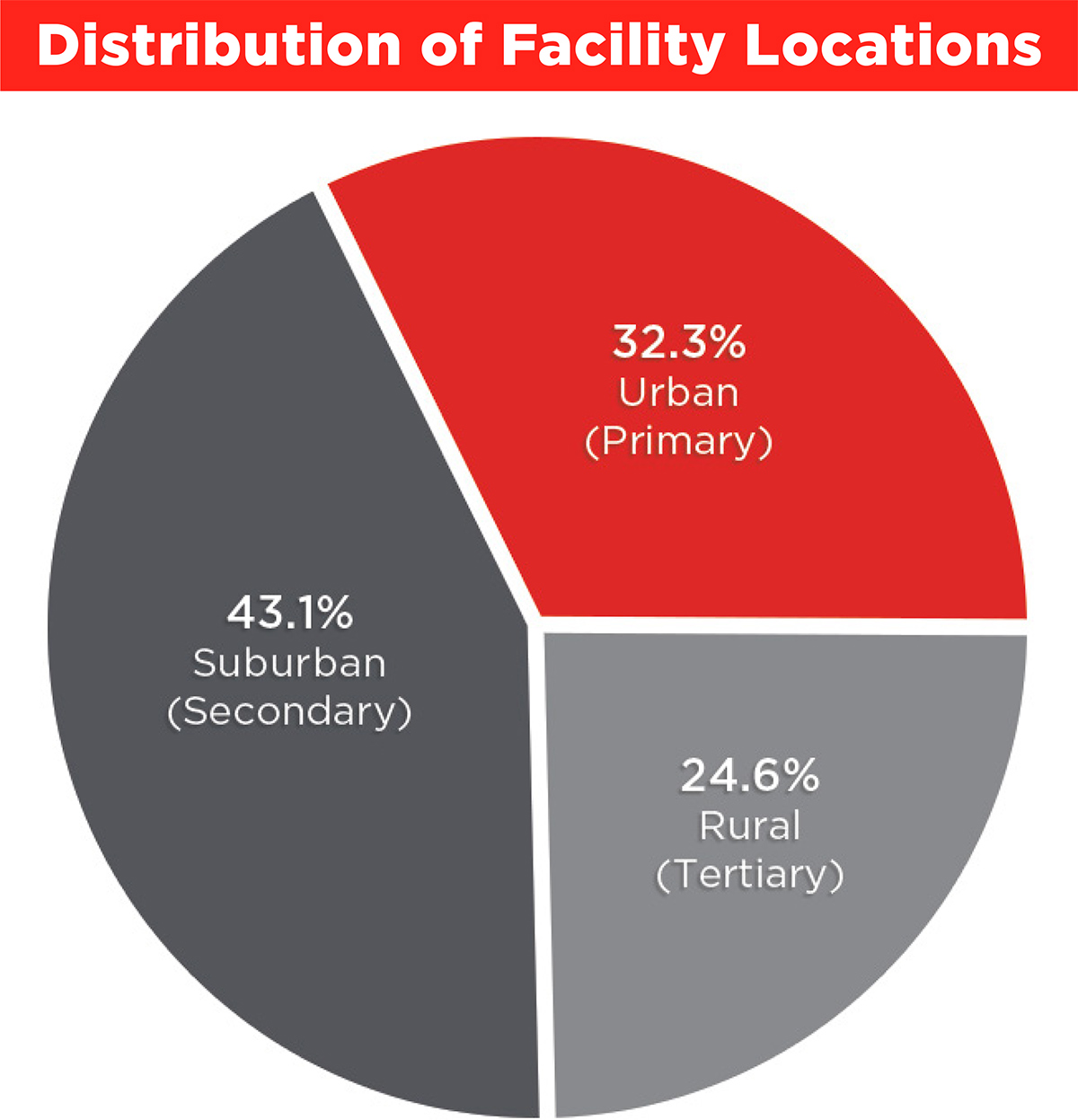
Our survey of over 100 self-storage operators, conducted in September 2025, was broken out across urban, suburban, and rural markets. We also conducted the same survey in September 2024 with a similar breakdown.
See Distribution of Facility Locations chart.
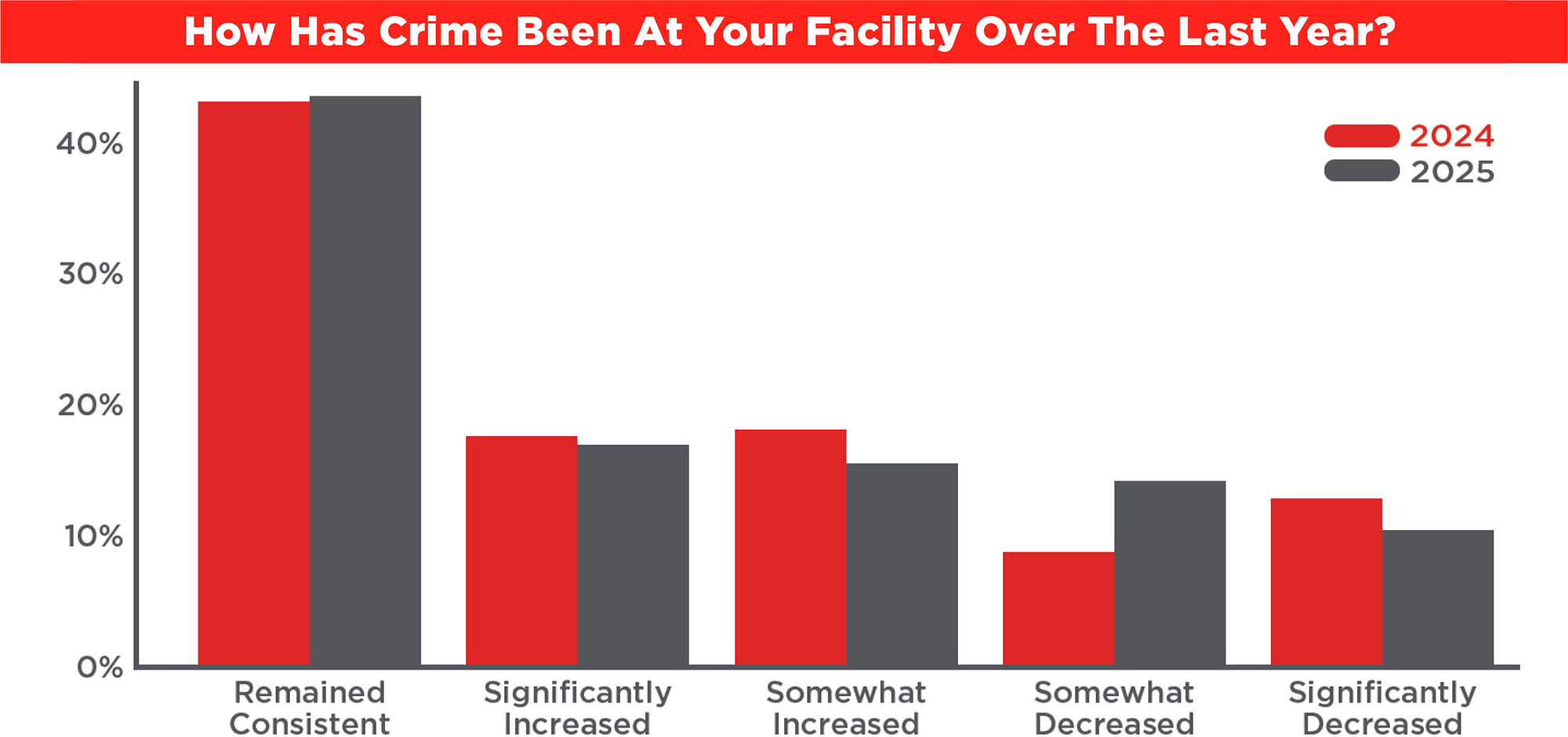
The results were nearly identical when looking at the two-year trend, again with most operators continuing to describe their situation as stable, fewer reporting worsening conditions, and slightly more seeing things get better.
Taken together, the data points to a slow but steady improvement in operators’ confidence that when it comes to crime, their facilities are either holding steady or witnessing a decline.
See How Has Crime Been At Your Facility Over The Last Year chart.
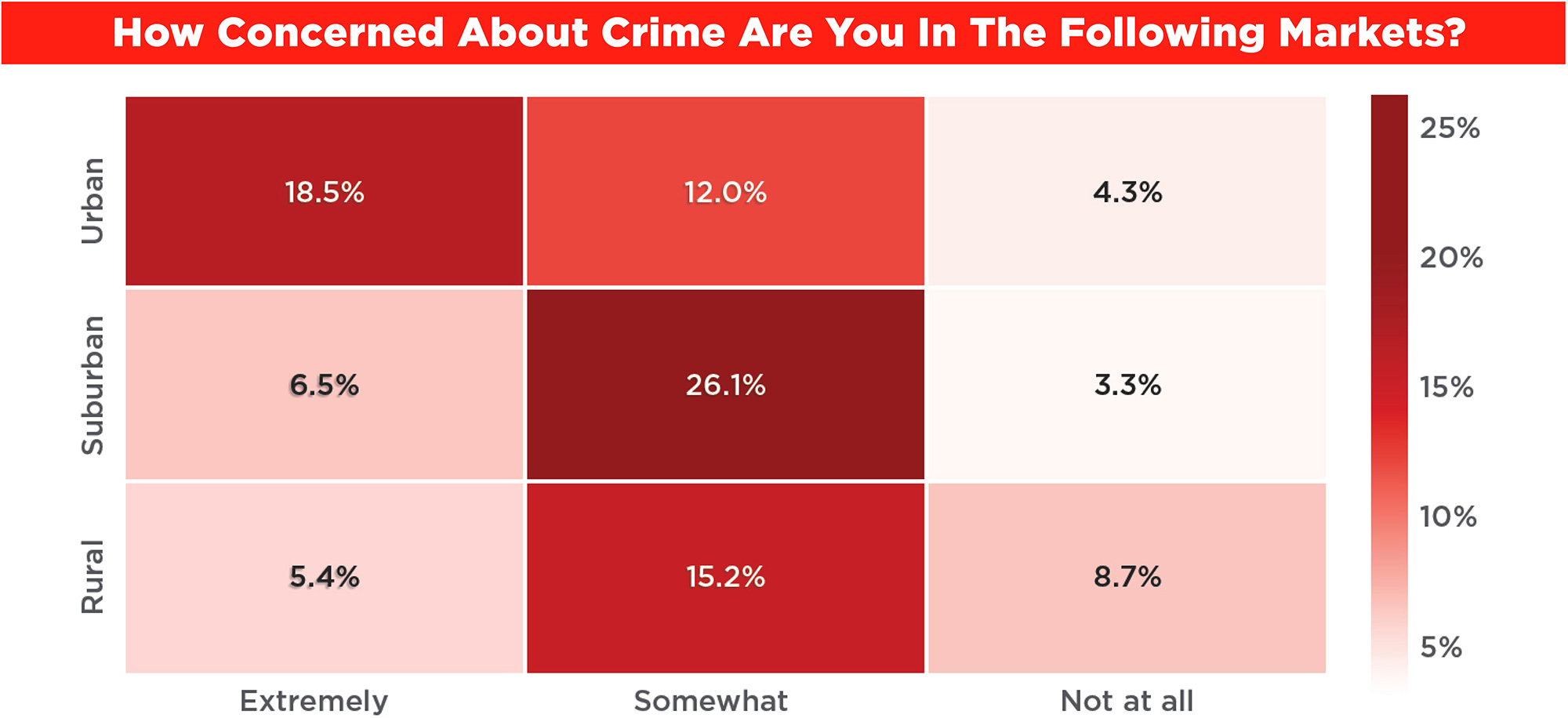
That suggests some operators moved from the “not at all concerned” camp into the “somewhat concerned” middle ground, showing more recognition that crime remains an industry-wide factor worth watching, even as reported incidents appear to be stabilizing or declining.
See How Concerned Are You About Crime In Your Markets chart.

See How Concerned About Crime Are You In The Following Markets chart.
See Crime Gives Self-Storage A Bad Reputation chart.
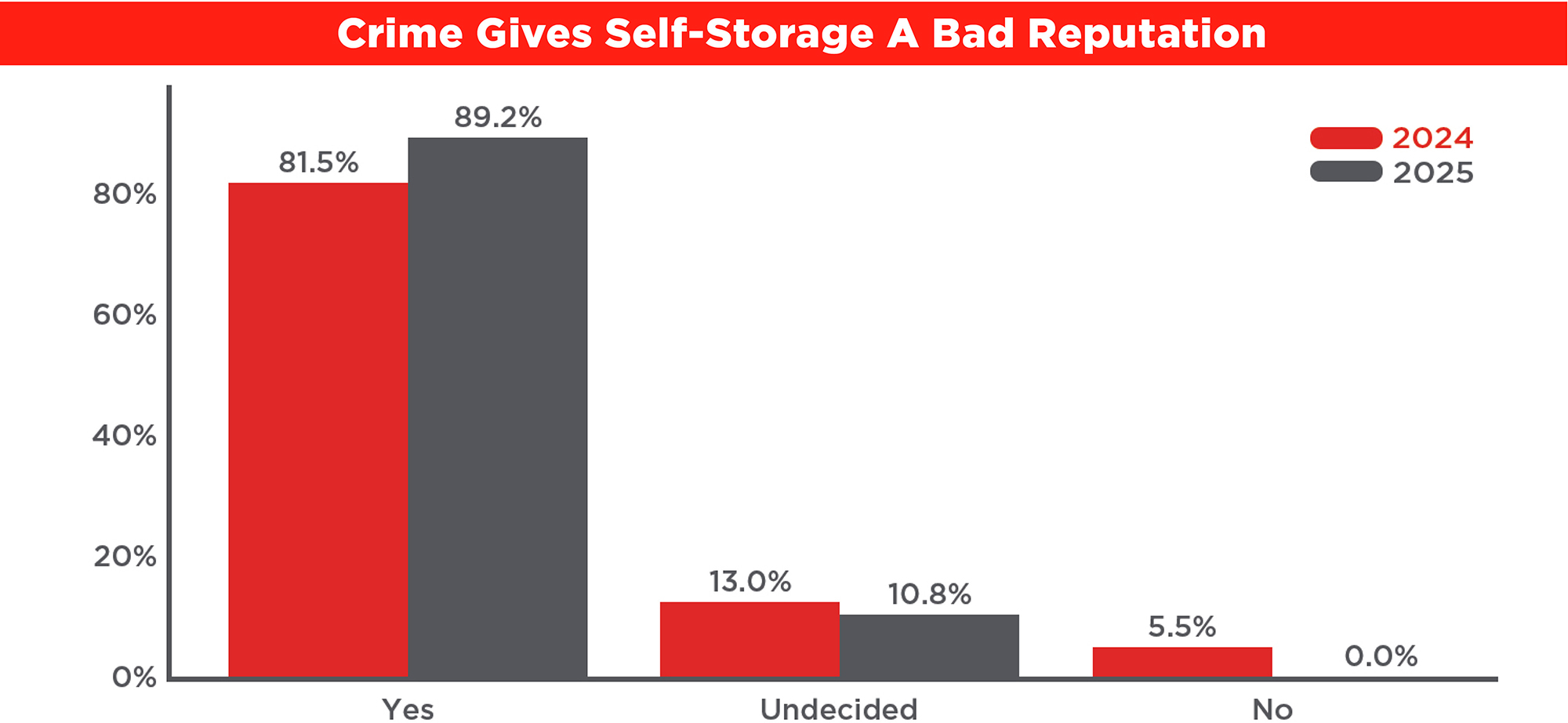
Nearly all facilities in the survey (approximately 99 percent) now use surveillance cameras, up slightly from 97 percent in 2024, reinforcing that visual deterrence remains the most popular form of security. Other significant gains were reported in digital access control systems (up 5.6 percent), security alarms (up 4.3 percent), and smart locks (up 8 percent), showing operators are open to more tech-driven solutions. Even modest increases in unit alarms (up 3 percent) and high-security doors (up 2 percent) show that operators are getting serious about security. With no respondents dismissing crime as a reputation issue, they appear to be taking a more proactive stance.
See What Security Measures Have You Employed To Combat Theft chart.

- Bright lighting and nighttime illumination are among the most universally implemented deterrents and motion-activated lighting is cited more often in 2025 as a supplement to fixed lighting.
- On-site manager or staff presence remains popular for lock checks and property walks. A handful of respondents mentioned having resident managers who patrol the grounds day and night.
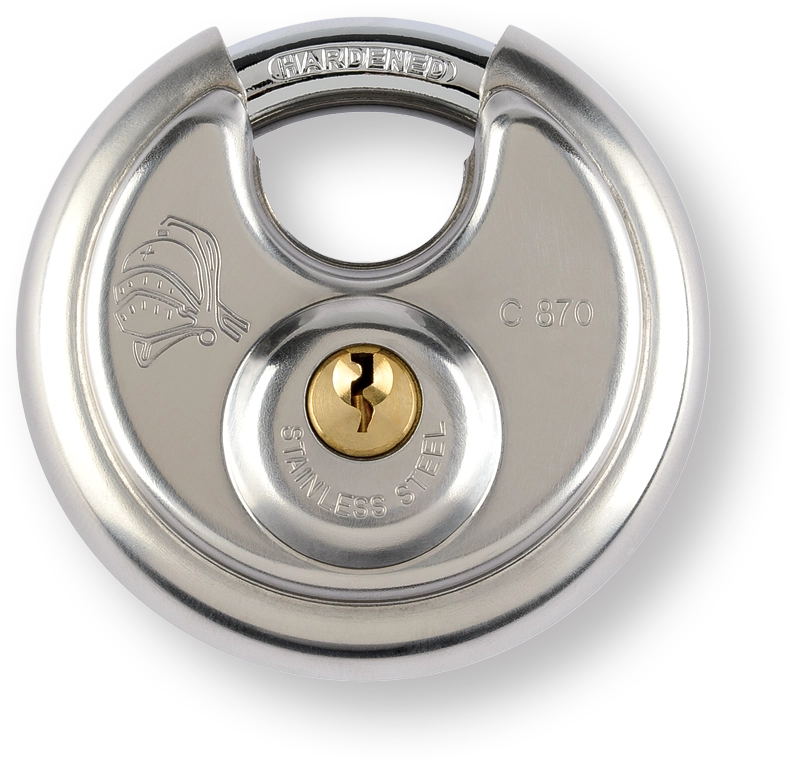
- Disc and cylinder locks are the dominant standard recommended to tenants and used by operators.
- Regular lock checks and property walks multiple times per day remain standard practice for many operators.
- Improved fencing and locked gates after hours remain widely implemented physical barriers. One operator said bluntly, “Electric fencing. ‘Nuff said.”
- Professional security patrols during nighttime/closed hours gained mentions in 2025.
- Limited access hours with staff present instead of 24/7 access is frequently emphasized as a crime-prevention policy. “24-hour access is silly,” one operator wrote.
- Remote or software-based monitoring appears more often in 2025 responses as tech-forward solutions.
Finally, a few operators disclosed that they would take security matters into their own hands if necessary—an approach that MSM doesn’t advise. “Fear is a deterrent,” wrote one respondent. “I have a sign that reads ‘Thieves: You’d Better Call The Sheriff, Because I’m Not.” Another wrote, “There’s always an armed guard on site—me.”
To increase awareness and transparency, MSM has launched the Storage Blotter, a continuously updated log on its website that tracks crimes, fires, and other incidents at self-storage facilities across the country. Each entry includes key available details, such as the incident date, location, facility, individuals/vehicles involved, and the outcome. Each incident links to the original source or an MSM news story. Storage Blotter is fully searchable by those same details, allowing owners, operators, and managers to monitor trends and activity in their area, including unsolved cases. The MSM Storage Blotter is live at www.modernstoragemedia.com/blotter.
In conclusion, the surveys indicate a shift in operator attitudes toward crime. In 2024, it seemed like there was a more reactive mindset. Today, it feels more proactive, with more scheduled patrols, defined access hours, surveillance systems, and other tech-based solutions. And again, not one respondent said crime didn’t impact the industry’s reputation, meaning that crime prevention is not just good for business, it’s also brand protection.
Stay safe and be vigilant!

At PTI Security Systems, our commitment to quality and passion for innovation drives the development of advanced security solutions to help operators scale with confidence. From smart technology to fully integrated systems, our solutions provide greater security, insights, and control across any facility.

don’t keep up with the competition;
they lead the pack.



MOBILE APP
SMART KEYPAD
SMART LATCH
MOBILE APP
SMART KEYPAD
SMART LATCH

Fame

Fame
ameron Barsanti is a self-storage investor. He’s also a public speaker and the owner of StorageLife, a company that provides mentorship and coaching to others wanting to invest in self-storage and/or scale their current storage portfolio. But there is more behind the scenes. He also owns and operates multiple self-storage facilities in eight states and the U.S. territory Guam.
Yet, within a span of merely five years, he managed to purchase more than $80 million in storage properties. The leap was autodidact. “We live in a time where we have access to unlimited resources and information,” he says. “If we can take advantage of our opportunities and utilize books, podcasts, mentorships, and other educational platforms, we literally can accomplish anything.”
It’s the kind of rags-to-riches story that inspires anyone who hears about it. It also describes what everyone in the self-storage industry knows so well: You can’t judge a book by its cover. Self-storage may seem boring from the outside, but it’s a lucrative endeavor.
By the time he turned 18, Barsanti was burned out from all the athletic activities and wanted to try something different, so he moved to Hollywood to pursue an acting career. “I had never acted, but had always loved entertainment, TV, and movies, and felt like I could do it because of my work ethic, discipline, and passion for inspiring others.”
He began taking acting classes and was quickly picked up by a reputable talent agent. It didn’t take long for him to book acting gigs. “At 19, I suddenly had massive opportunities to actually work as an actor,” he says. “I had well-known professionals take me under their wing, including celebrity acting coaches and some of the biggest casting directors in the business.”
These opportunities slowly dissipated because, frankly, he wasn’t ready for them. “I was immature,” says Barsanti. “I was wild; I also started to dabble with drugs and alcohol and quickly became swept up by Hollywood debauchery.” As he tells the story, it becomes clear that those memories are intertwined with conflict but not necessarily regret. “During that time, I was extremely frustrated and disappointed that I wasn’t able to straighten out, and that I was taking this once-in-a-lifetime opportunity for granted.”
Unfortunately, that level of self-reflection wasn’t enough to get clean and focus on his career. “I spent 10 years of my life living like that,” Barsanti says, “and I lost many opportunities.”

Taking matters into his own hands, Barsanti began to produce his own feature film. “I was 35, and it took two years to shoot,” he says. “This was while my wife was pregnant with our first kid, too, so there was a lot on the line.”
Once the film was finished, he hoped that the money would roll in. However, it was a flop.
The couple was living off her county job, sporadic unemployment checks, and a few residual checks from his TV and film credits. The family was not making an ideal living from their joint incomes, and by this point, they had two young boys: a toddler and an infant.
During this challenging time, his wife started listening to real estate podcasts. Within a month, she told him to drop everything because she had learned they could start investing without really having any money. “She learned about wholesaling real estate and leveraging debt to buy property we otherwise wouldn’t be able to afford. Like an obedient, broke husband, I nodded my head and said yes.”
To appease his wife and his guilty conscience, Barsanti started attending real estate investing (REI) meetups and listening to podcasts about the subject. They even hired a coach to walk them through the process of creating wealth this way. “After learning the basics, I sprang into action,” he says. “Massive action. I started hunting for off-market deals like my life depended on it—because it did. My desperation met a new, big opportunity, and this time I wasn’t going to take it for granted.”

He’s very well aware of his fortune. He’s also cognizant of the fact that it’s been a thorough team effort. “I’ve had the help and guidance from the best partner anyone could ever have: my wife.”
Today, his wealth consists of 12 facilities in eight different states and the U.S. Territory of Guam. “We’ve sold seven, and did extraordinarily well on those sales, to the tune of multimillion dollars in profits.” They currently have over 15 employees running their portfolio.
Although the Barsantis have achieved that, and they could easily fly off into the sunset to enjoy early retirement, at the end of 2022 he decided to launch his coaching and mentorship program called StorageLife. Presently, they have about 40 students across the country, and StorageLife is guiding them to find, fund, and operate storage nationwide. “Our community is one of the most successful in the industry,” he says. “We don’t just teach you how to understand and invest in self-storage. We hold you accountable and help you take action. We do it with you.”
In fact, they’ve helped more than 30 students close deals and they’ve partnered with over a dozen, actively helping families replace their income by leveraging debt and investing in cash flowing assets that appreciate over time. “Through investing in self-storage, we are helping people reach true financial freedom.”

They’ve also created an elaborate course that assists students with everything: real estate fundamentals, finding storage, conducting due diligence, speaking with sellers, negotiating techniques, creative finance structures, underwriting, facility takeover procedures, and operational instruction. “Most people don’t have an education problem,” says Barsanti; “they have an implementation problem.”
There’s something else that separates the wheat from the chaff. “One of the reasons that our community is so successful is because of mindset,” he says. “I speak about this on stages now, to inspire others who want to invest in storage. Committing to these types of investments is intimidating, and people often let their self-doubt keep them from taking action. But if I want to be a successful coach, I have to help them believe in themselves and that they can do it. This is such a significant aspect of the success of the StorageLife community.”
Their students consist of people from all walks of life: entrepreneurs, real estate developers, doctors, surgeons, lawyers, house flippers, teachers, government employees, firemen. “You name it. We teach them.”
All the couple’s income streams (real estate, coaching, public speaking, and partnerships) have enabled them to build a truly fulfilling life. “I work from home. I see my boys almost every day of their lives. Cristina works a few hours a day, max.” They can work from anywhere in the world, and they take Fridays off to go to yoga classes and have lunch together. “We can travel wherever we want, whenever we want. We are, in fact, living the dream; and now we get to help others do the same.”
When he’s not working, Barsanti loves spending time with his family in Corrales, N.M. His two rambunctious boys keep him and his wife on their toes. He also loves to surf and snowboard, so he’s always planning trips to do so as often as possible.
Looking back at his entire trajectory, it would be easy to decide that maybe luck had a lot to do with it, but upon closer inspection, Barsanti’s story is testament to what happens when you turn wishful thinking into reality. Everyone wants to create wealth and build a dream life. Many talk about it ad infinitum, but few actually take action.
From that passion came additional lessons about the importance of self-education, the strength of partnerships, and knowing that it’s never too late to accomplish something great. “I was already 40 when I started learning about this industry,” he says, “and look how much my life has changed for the better in just five years.”
Barsanti wants people to be aware that it’s entirely possible to find opportunities even amid desperation. “In fact, that desperation can serve as fuel for success,” he adds. He was at rock bottom, but against all odds, he built a real estate empire. Then, after he did, he turned around to help others do the same.
For anyone looking to achieve a dream, regardless of industry, his philosophy is simple: “Surround yourself with those who are successful at what you want to be successful at and your dreams will become a reality.”












ising tides lift all ships, but in 2025 it was Warren Buffett’s addendum to that which mattered most: “It’s only when the tide goes out that you see who’s been swimming naked.” Last year revealed a number of economic truths and industry vulnerabilities, as assumptions that once worked began to show cracks. The question now is whether those stress points ease in 2026, or if the industry will face more headwinds. MSM’s panel of 10 industry experts weigh in on what you can expect in the new year and beyond. (Interviews were held Oct. 25 to Nov. 20, 2025.)
CRAMER: More rate cuts should lead to a lower mortgage rate and in turn more storage demand; however, several markets have been overbuilt, and it’ll take time to work through the excess supply. Atlanta, Phoenix, Las Vegas, and the West Coast of Florida are good examples where we don’t need any new building, but clearly several developers haven’t gotten the memo.
HANSON: The lack of mobility amongst homeowners has affected us significantly, and Fed rate cuts haven’t significantly improved self-storage rentals. We feel self-storage demand is down 18 to 22 percent the last few years. However, I’m optimistic that by Q3 2026 we’ll be in a better place; the housing market will improve and be more affordable. Even if it doesn’t, people that have been wanting to move and have been waiting for lower interest rates aren’t going to wait any longer.
CRAMER: I think cost pressures, extended lease-up time frames, market rental rates, and occupancy levels, combined with lender selectivity, will persist in 2026. However, the bigger issue is that there’s an elevated amount of recent developments that need to be absorbed before we get back to market equilibrium. That alone should give developers pause.
MARGOLIS: Self-storage is hyper-local, so there may be “holes in the donut” where developing a new facility makes sense, but overall, we don’t believe it’s an opportune time to develop. Along with oversupply, development headwinds are significant: Higher rates make debt more costly, equity is harder to raise and wants higher returns, entitlement periods are longer and more uncertain, construction costs remain elevated, tariffs could add more pressure, and immigration policy could lift labor costs. Another key factor: When public companies guide to essentially flat 2025 revenue growth, it’s tough to model 5 percent annual revenue growth in a development proforma.
PARKER: If you’re already sitting with existing facilities, I would stay put. The larger gap between lower online asking rates and in-place rates has made it harder than ever to project future value or upside. If owners can hold off until storage demand improves and rent strength increases, property values will likely increase. In the meantime, if owners aren’t already using institutional management, now is the time; having operational data and economies of scale can dramatically improve NOI.
NGUYEN: I think secondary and tertiary markets have a lot of potential. You’ve got these small markets emerging outside main cities where it’s too expensive to buy or housing supply is too low. They’re going to need infrastructure, including storage. Investing in these markets can be rewarding if that’s in your DNA.
POGODA: One of the biggest contributors to oversupply is the Excel spreadsheet. Developers can make those numbers say anything they want. Need a 25 percent IRR? You got it. Need to fill up in 15 months? Done. Now, if you’re really in the industry, you know that’s a joke. But for those determined to build, the numbers don’t seem to matter. At $130 per square foot, unless they’re getting great rental rates in a truly underserved market, they’re sucking wind for a long time. I’d like to think oversupply will stop when people miss projections and lose their property, but it appears there is always someone who believes “If you build it, they will come.”
HILL: As rates come down, debt becomes more affordable, and developers will be motivated to do what they do–develop. Even if we’re shouting from the rooftops, “Don’t overbuild,” they still will if the yields pencil. So, the risk for the industry is managing the pipeline sustainably. More precise market data regarding achieved rents and occupancies could help temper the rosy assumptions developers use in their models and help curb some borderline projects.
PARKER: Data sharing is definitely the long-term solution. More transparency into facility-level data like occupancy, attrition, and effective rates would allow developers to make more informed decisions. However, they should conduct their own market due diligence rather than relying on the free revenue and expense projections provided by REITs that want to sell their management services. Partnering with an honest, transparent operator can save developers from making huge mistakes.
STARR: While letting the market know about projects you’re working on is helpful, you also need to be sharing your existing facility information. Meaning, if an area has a low square foot per capita, but your occupancy went from 90 to 75 percent last year and your in-place rents dropped by 15 percent, share that. By doing so, developers can see that even if peripheral metrics indicate opportunity, actual metrics don’t. It staves off competition you don’t want and saves others from building where they shouldn’t. I predict we’re going to take a major leap forward in data transparency, truly understanding occupancies and achieved rents so better investment decisions can be made.
DEFAZIO: More new owners whose projects haven’t performed as expected have reached out for guidance or complete third-party management. Some of these inexperienced developers will eventually leave the industry, but many can recover with proper support and education. We also expect a wave of facilities coming to market soon, as some owners purchased with minimal capital and now feel the impact of rising interest rates and tighter margins. A good audit may uncover hidden revenue opportunities and operational inefficiencies.
STARR: ECRIs worked for a period, with achieved rates staying level despite declining street rates, but then it fell apart. One REIT hasn’t maintained achieved rates in the last two years but still uses this strategy; in our opinion, it’s misleading customers, confusing other operators, and hurting investors who don’t know which rate to underwrite. That said, we track about 72,000 facilities, and independents far outnumber REITs—about 46,000 to 26,000. So, while there’s opportunity for more transparency amongst independents, when people think storage, they think of the major players. The reputational damage they can cause, along with others who follow their playbook, compromises the whole industry. I believe the biggest long-term risk is pissing off half the customer base by misleading them on pricing. You can’t mess with people’s money. We could go from 12 percent of Americans using storage to six percent.
POGODA: I agree; aggressive ECRIs are a black eye for the industry, whether it’s a REIT or a smaller operator following their lead. Too often, any disclaimer winds up in the fine print, and a lot of renters are in distress and aren’t reading that. They just think they’re getting a great deal. That old bait and switch doesn’t feel right to us; we don’t do that.
NGUYEN: Low prices attract customers, so initial discounts make sense in theory. Unfortunately, operators haven’t been great about outlining disclaimers. So, I think legislation/regulation will continue focusing on transparency. My hope is that the industry gets better at communicating what tenants can expect rate-wise, so the government doesn’t step in and cap our potential. Transparency is also a great marketing tool; promotions like a 12-month rate lock at a higher move-in rate is a smart play and a trust builder.
MARGOLIS: California’s SB709 started as price control but morphed into a bill requiring certain disclosures, and we support that. Our disclosures were already strong; now they’re specified down to font and color. Our web customers want and respond to an initially discounted rate, and we’ll offer customers what they want as long as it’s fully disclosed that it may change upon notice.
POGODA: I don’t believe moratoriums are ever in response to existing supply. When city leaders say no, it’s out of sheer prejudice against our property type; they don’t think storage belongs on their main streets. But today’s facilities are as nice as anything, and they meet a very real need. Of course, mixed use is always an option, and you’re more likely to get approval with this strategy, but managing those spaces can be a pain in the butt.
CRAMER: I think it can be helpful to limit the amount of overbuilding, but in general we are not in favor of increased regulation.
CRAMER: Self-storage is a highly fragmented sector, and I think the public REITs and a handful of large private operators will continue to drive consolidation. There are meaningful benefits from scale, and at NSA, we think we have an advantage as a consolidator in many of our secondary markets, where we are the dominant player, and through our extensive industry relationships. The opportunities ahead for growth are very attractive. The risk is that the acquisition market gets too overheated, and sellers get too unrealistic about pricing.
NGUYEN: Secondary and especially tertiary markets will likely always be heavily independent. If you’re a REIT, you have to ask: How much can we make on this particular asset, and what value does it bring us relative to the work involved? There’s a point of diminishing returns with smaller assets if you operate like those big companies. But others with the desire and operational mindset? They can make money in those markets.
HUFF: In general, larger operators have always had an advantage over independents. AI is going to help level the playing field as independent operators grow in their understanding of AI and adopt the tools it offers.
HILL: From a financial perspective, if there is an “AI bubble,” as some analysts suspect, it could be the impetus for a major market correction akin to the housing bubble, which would most certainly impact the capital markets. A meaningful market correction will impact liquidity in the markets as lenders and investors move to the sidelines.
NGUYEN: Data suggests that, on average, manned facilities generate more revenue than unmanned facilities, even with caveats like size differences. For managers reading this, it’s not all doom and gloom. Treat it as an opportunity: Embrace the tech, run your facility at a high level, and make it impossible to replace you with a kiosk. There will always be a place for skilled, passionate, customer-focused people in self-storage.
HUFF: Managers are absolutely still effective, and the need for good people will never go away—their roles may just look different. When the self-checkout was first introduced, we thought that all cashiers were going to be unemployed, but there are still staff working the checkout lines; their role is simply different. The effective manager will learn how to grow with the technology instead of fighting against it.
HANSON: I get calls all the time from potential new clients that want to run their facilities unmanned, especially in boat and RV storage. Payroll is typically the second-largest expense on a P&L behind property taxes, so cutting staff is a go-to move versus, say, cutting advertising, which helps generate leads. But there are alternatives. Instead of “unmanned,” we coined the term “low-manned,” reducing payroll but not eliminating it, and augmenting the human touch with technology.
DEFAZIO: The key is understanding your market, community, and tenant expectations, because unmanned simply doesn’t work everywhere. Now, when it’s done correctly, with robust technology and security, a strong website, solid management software, tenant insurance options, and in-person maintenance checks, it can absolutely work. But even then, I rarely see the same level of revenue management precision or occupancy performance as a staffed facility.
MARGOLIS: Storage is a high-margin business; revenue matters more than expenses. If you cut payroll 15 percent and lose one lease a month, you’re roughly -2.5 percent NOI at our average rate. We let customers transact any way they want: call center, fully online, or in person. A little over 30 percent of our tenants still walk in without interacting digitally. If no one’s there, and they don’t use QR codes or kiosks, they might go across the street. We test part time, reduced hours, and hub and spoke, but there’s no one-size-fits-all [solution]. A big Manhattan site will always be staffed; an annex in a smaller market may run with fewer hours.
MARGOLIS: Physical security is important, and technology can also help, with after-hours monitoring systems like Blue Eye. We even tried the cone-style patrol robot; tenants disliked it, so we stopped. That said, human presence still matters; unmanned or reduced-hours sites see more incidents.
HUFF: Security is one of the coolest ways that AI is making a difference in our industry. The technology that is used in camera systems today, that can detect and alert us to unwanted behavior, is going to continue to grow in popularity. The best way to combat our industry’s bad reputation is to address it head on. Take an active role in prevention on your property and communicate those intentions with your tenants and community. A sleepy property is an easy target. Be alert and don’t be afraid to talk about the measures you are implementing to thwart crime.
STARR: Combatting crime starts with smarter underwriting. Investors don’t think about how crime impacts repairs, maintenance, professional fees, on-site staff, cameras, security costs, and the like. If you’re buying in a high-crime area, you should budget for more security: Nokē doors, automated alarms, higher reserves. Most people underwrite every property the same way, but they need to adjust upwards of 30 percent to properly address crime; TractIQ has a total crime index showing which states, counties, etc. have the highest rates to help with these matters.
HANSON: The capital is going to keep flowing into self-storage, and while that’s a vote of confidence in the industry, it definitely narrows the buyer pool. I hear from people constantly who say, “I’ve been trying to buy a facility for years but keep getting outbid by institutional groups or REITs.” They just can’t compete on price against that level of institutional money.
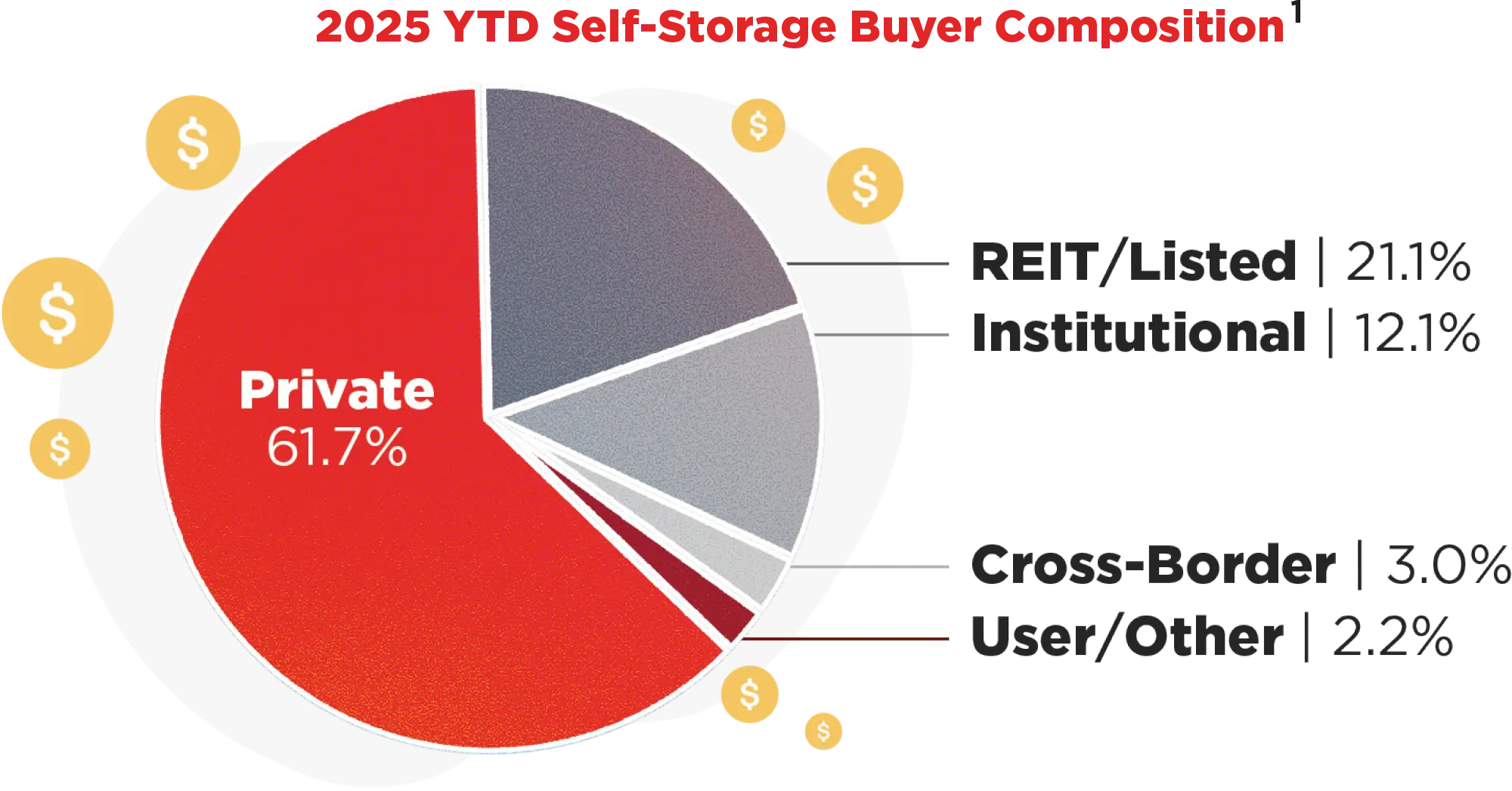
MARGOLIS: You see many sovereign wealth funds, PE firms, and investment banks at the storage conferences now. If that wave continues, it affects pricing. Despite interest rates moving up several hundred basis points, cap rates haven’t moved as much because demand for the asset class remains strong.
CRAMER: Self-storage has become more of a core property type and will continue to attract institutional capital given the attractive return profile of the sector at lower levels of risk versus other property types. I think this will support valuations over time. Separately, this also benefits larger players who can partner with that capital looking to enter or grow in the sector.
POGODA: A lot of capital coming in is fair weather money, like the stock market—when things are great, everybody’s in; when things go south, they’re out. It’s also hard to deploy big chunks of money into the sector. A large investment firm may want to invest $500 million in storage … that’s probably 50 properties, and it’s not easy to buy 50 properties. So, consolidation will continue, but as a shifting round robin, with different players and the same properties changing hands.

razil is known for its vibrant culture, futebol (soccer) fanatics, and an Amazon that grows trees instead of boxes. It was never really known for self-storage, but that’s changing. Now, facilities are beginning to dot the landscape, becoming one of the country’s fastest-growing commercial real estate sectors. A slowdown isn’t in sight, with new projects in the pipeline as entrepreneurs, developers, and international capital pile in. One of the sector’s newest players making a name for itself is SmartStorage, a company with lean operations and a sharp strategy that reflects where the market is headed. To understand their path to success, however, it helps to look at the pioneers who set the stage.
Also in 2013, GoodStorage entered the arena under real estate executive Thiago Cordeiro’s watch (he remains CEO and is now president of the Brazilian Self Storage Association, ASBRASS). The company expanded aggressively, eventually becoming Brazil’s largest operator and acquiring GuardeAqui in 2024, though both brands continue to operate independently.
Para Guardar also set up shop that year in Manaus, but it did things a little differently by converting an empty warehouse into a Class-A facility. It was an approach that would later become standard practice for many operators. “I chose self-storage because it combines the excitement of retail with the stability of real estate,” said founder José Benchimol.


“More countries around the world are picking up on this trend, and nowhere is that more evident than in Latin America,” Blum told MSM in 2013. Despite his confidence, Brazilian consumers still needed a little convincing. But Blum didn’t rely on billboards, which can be hard to lease due to strict regulations; instead, he hired “storage ambassadors” to walk São Paulo’s busiest streets, handing out mini-CDs explaining the concept.
His son Eric, who’s picked up the mantle at BMSGRP, reflects on those early days. “Dad recognized that traditional advertising was going to be difficult, and it really wasn’t a good outlet to explain the concept of self-storage anyhow,” he says. “Handing out those CDs was guerilla marketing at its finest!”
“We’re witnessing a reorganization of urban space,” Cordeiro recently told Valor International. “Self-storage has moved beyond a niche market to become part of the urban infrastructure.”
The rise of e-commerce has added fuel. Mercado Livre, the region’s dominant online retailer, has enabled thousands of small businesses to flourish without traditional warehouses. Many of those sellers rely on self-storage for inventory, logistics, and flexibility. Urban growth, unpredictable real estate cycles, and rising land costs have all converged to create an ideal environment for the industry’s next stage.

Kovesi’s roots are in the technology industry. In the late 1980s he built a thriving hardware company that is still going strong today, but by 2001, he was looking at opportunities in real estate, dabbling in them passively. “Years later, after researching investment opportunities, I found self-storage offered higher yields and less volatility than other asset classes,” says Kovesi.
Kovesi signed up for a Self Storage Congress event and met Francisco Canuto, an industry vet who’d worked on GuardeAqui. “Canuto’s operational knowledge was a key factor in SmartStorage’s success and growth,” says Kovesi. “I initially approached to ask him to be a consultant, and he’s now the co-founder with a CEO role, giving him real skin in the game.”
The duo opened the first SmartStorage facility during the height of the COVID pandemic. It was deemed risky, but it paid off as demand for storage spiked globally. Since then, SmartStorage has grown to nine facilities with stabilized occupancies north of 90 percent, well above the national average of 80 percent.
But SmartStorage’s edge isn’t just timing—it’s efficiency. The company operates with only 12 employees, relying heavily on digital onboarding and mobile access technology. Tenants can move in, access their units, and manage their accounts entirely through an app.
Kovesi also created a proprietary referral dashboard, building an ecosystem of partners who use it to send their clients storage options. “Individuals receive 15 percent of the first year’s revenue from each renter they refer, while agencies can split commissions. It gives us a bit of an edge over competitors who depend on expensive digital ads.”
SmartStorage has also struck partnerships with multifamily property owners and short-term rental platforms, embedding referral links in their apps and websites. The result is a growing network of partners incentivized to send tenants their way.


The company has already appointed a head of expansion to formalize its franchise structure and aims to become one of the top three operators in Brazil within five years. Because SmartStorage doesn’t build from scratch, preferring to repurpose 20- to 30-year-old industrial buildings, franchisees receive healthier margins.
“This strategy also cuts capital costs, speeds time to market, and lowers environmental impact,” says Kovesi. “These cost advantages let us offer more favorable royalty terms and scale without massive debt.”
Brazil’s self-storage story began with a handful of facilities and a box of mini-CDs. Two decades later, it has grown into a multimillion-dollar industry, with SmartStorage and its industry peers racing to define its future.

Hardy Good

Helen Ng
nown as a vertical city, where land is scarce and the only way to go is up, Hong Kong holds millions of untold stories. Hardy Good and Helen Ng may be just two of them, but their impact has reshaped the commercial real estate sector and the way Hongkongers live. Good is the American pioneer who helped launch Hong Kong’s self-storage industry; Ng is the Asian trailblazer who broke barriers to build a successful, female-led enterprise.
“She’s a powerhouse,” Good says of Ng when her name comes up. Ng is equally complimentary when his name is mentioned in a separate interview. “Hardy was an original, and he saw an opportunity that others missed.”
Though their paths occasionally crossed in the early days—after all, they were both starting businesses in an industry that was just getting started itself—each has a unique story set within “The Pearl of the Orient.”
The findings were favorable, and MiniCo went to work establishing MiniCo Asia, Ltd. But progress was slow, with short-term leases making it difficult to secure property. “Without a long-term option, we felt it was better to own,” Good says. “We searched for over a year, and everything suitable wasn’t affordable, and vice versa.”
After 18 months, Good was ready to abandon the project. Then came a turning point. “On the very last day, on the very last Realtor tour, we came to a dead stop in traffic. I looked up out the window at this building and said, ‘Well, what about that place?’”
It was the Crocodile Building, a landmark on the Hong Kong horizon. Nothing was for sale, but they negotiated a two-year lease with an option to renew. “We decided we could work with that, testing the idea by renting since we couldn’t buy anyhow.”
MiniCo Asia leased one floor, filled it within a year, then leased another and another. Eventually, the company occupied 50,000 square feet before the building was sold and torn down. “Knowing we had to move, we got serious, bought our first owned facility on Hong Kong Island, and expanded from there,” Good says with a grin. “It took some courage, ignorance, and a few million dollars.”
Within two years, copycats flooded the market, but MiniCo Asia remained on top, even taking home GoHome real estate’s “Best Storage award” in 2013. On the heels of that win, the company was approached by global investment firm Blackstone. “They told us they wanted to be Asia’s dominant self-storage operator, and they wanted us because we were leading the way.” It was a tough, year-long negotiation, and Good credits Hong Kong COO Marilyn Leslie for seeing it through, along with the late Ched Yu, who served as the company’s “guide, advisor, and friend.”

As the eldest daughter of a taxi driver and a homemaker, Ng collected beer bottles for pocket money, but never considered herself disadvantaged until a professor told her to “buck up” because she was in the bottom five percent of Singapore’s socioeconomic strata.
“I told myself I’d prove him wrong,” she says.
She did. Today, Ng is chairwoman of the Self Storage Association Asia and Singapore’s first female self-storage CEO at General Storage Company, which operates Lock+Store in Singapore and Malaysia and The Store House in Hong Kong. The latter was incorporated in 1999, opening its first site in 2002. “We were among the originals with Hong Kong Storage and SC Storage. Then came StoreFriendly, Apple, Cube, and more recently Redbox,” says Ng, adding that self-storage in Hong Kong began with individuals familiar with the industry, like Good, or those who discovered it overseas, like SC Storage’s Kevin Shee, who imported the concept from Canada. And although penetration is under one percent, Hong Kong remains one of Asia’s more mature markets after Japan.


Exterior of The Store House building
Competition is intense since prices and promotions can be matched instantly. To stand out, The Store House focuses on service. Whereas many competitors operate remotely, The Store House always has two employees on site daily—and typhoons test that approach. “Last year, Hong Kong was hit with three in one week and it caused some water leakage,” says Ng. “Within 24 hours, we were calling customers and helping them sort things out. Operators without staff probably didn’t even know about the damage.”
Ng has also distinguished the company through social responsibility and was recently recognized by the Hong Kong Council of Social Service. Leona Lo, head of marketing and CX, led numerous initiatives, including its partnership with Hong Kong Dog Rescue.

Poppy Behrens, Brad Hadfield, Leona Lo, and Lauri Longstrom-Henderson
Despite challenges, the market remains ripe for growth. It’s nearly four million square feet and projected to reach 5.82 million by 2030. “I’m surprised there are no Americans operating there yet,” says Good, who is enjoying semi-retirement. “Perhaps they’re waiting to swoop in and snatch what someone else has built. Helen’s properties, maybe?”
“We have been approached,” says Ng. “But our shareholders are Japanese, and they think long term.” As proof of that, The Store House just increased its footprint 50 percent, going from four facilities to six. “You can let Hardy know we’re not on the market,” she says with a smile.


ontreal Mini-Storage (MMS) has brought a woman’s touch to self-storage. The company’s 24th facility, at 500 Sauvé Ouest, opened in 2025 and is the first in the world to be designed by women for women. Conceived by five leading ladies at MMS (Margaux Chetrit, Andrea LaFrechoux, Serena Miscione, Alida Wu, and Tonia Assaf), the concept prioritizes safety, accessibility, aesthetics, and community, especially for women entrepreneurs, changemakers, and artists. After the building was acquired, the business opened in a record three and a half months.
The grand opening was a full-blown celebration with food, live music, and an art showcase by ArtMarket, spotlighting emerging female artists. Speakers included City Councillor Julie Roy and leaders from women-led businesses and nonprofits. Guests were encouraged to tour the bright, airy facility, which sits conveniently on a main thoroughfare rather than tucked away in an industrial park. It’s now 60 percent leased (nearly 20,000 square feet occupied) and Chetrit credits its early success to meeting a broader range of customer needs. As for what’s next, she says MMS will keep a finger on the pulse of customers. “Whatever they ask for, we will be building,” attracting tenants with storage that fits the urban desert lifestyle.


hen a potential tenant searches “storage units near me,” does your facility appear on the first page, or are you lost among competitors who invested in their online presence first?
If your facility isn’t actively optimizing for local visibility, you’re likely missing your most valuable source of leads: renters already looking for storage in your area.
Many self-storage operators still rely on physical location, signage, and word of mouth to fill their units. While those matter, today’s success begins with a digital presence. Local search engine optimization (SEO) is one of the most effective (and often overlooked) ways to increase visibility, attract qualified tenants, and strengthen occupancy rates.
When a potential tenant searches for a storage unit, Google doesn’t show random results. It uses a sophisticated algorithm to highlight the most relevant, trustworthy, and nearby options. Understanding that algorithm helps self-storage operators take control of where and how their business appears.
Proximity
How close is your facility to the person searching? You can’t move your property, but you can make sure your service area is clearly defined online.
Relevance
How accurately does your online presence match what a renter is searching for? For example, if your website says “storage units,” but renters are searching “climate-controlled RV storage,” your relevance score drops. Especially with AI search, it’s essential to include the specifics of unit sizes and features to ensure your facility receives higher ranking.
Prominence
This is how established and trusted your business appears online. It includes your website quality, the number of mentions across the web (citations), and the strength of your online reviews. If you’re looking to improve ranking, having embedded reviews that are not linked to Google & Yelp will not increase your SEO. Google needs to identify that these are actively being updated.
By improving proximity, relevance, and prominence, you tell Google your facility deserves to be seen, and more importantly chosen, by potential tenants.
Equally important is maintaining consistent business information across every platform. Your facility name, address, and phone number (NAP) must match exactly everywhere: your website, Google listing, social media pages, and directories. Even small inconsistencies can confuse search engines and lower your rankings.
For a tenant ready to rent a unit, the local pack is often their entire decision-making process. If your facility isn’t there, you risk being invisible to active renters.
Lower Cost Per Lead
Unlike paid ads, which stop producing the moment your budget ends, local SEO builds long-term visibility. Once your facility ranks well, you continue generating leads without constant ad spend, delivering a higher ROI over time.
Build a Trusted Brand
Your online presence is your reputation. A complete Google Business Profile, backed by authentic reviews, sends trust signals to both search engines and renters. Respond to every review, positive or negative. This shows professionalism and engagement, helping you stand out in a crowded market.
Improve Occupancy
Strong SEO means stronger lead flow. High rankings lead to more phone calls, quote requests, and rentals from people already ready to move in. It’s one of the most reliable ways to boost occupancy and maintain consistent performance year-round.
Optimize Your Google Business Profile
- Use accurate categories, detailed descriptions, and quality photos of your facility.
- Add updates regularly, such as special offers, new features, or reminders about hours and services.
Create Content That Matches Search Intent
- Include blogs, FAQs, or short videos that answer tenant questions (e.g., “What’s the best way to store my boat during winter?”).
- Add city and neighborhood mentions naturally throughout your content to boost local relevance.
Encourage and Respond to Reviews
- Ask happy tenants to share their experiences.
- Thank them personally and address concerns constructively. Google rewards this engagement.
Ensure NAP Consistency Across The Web
- Audit your online listings regularly to make sure your business information is accurate.
Monitor Performance
- Track your local rankings, calls, and traffic to measure improvement. Even small adjustments can produce meaningful gains.
Here’s what that means for self-storage operators:
Voice And Conversational Search
People are now searching in natural language, with phrases like “Where’s the closest storage with weekend access?” or “Which facility near me has drive-up units?” To compete, your website should include conversational keywords and question-based headings that mirror how tenants talk, not just what they type.
EEAT
EEAT stands for experience, expertise, authoritativeness, and trustworthiness. AI algorithms heavily weigh whether your business looks trustworthy and authentic. You can strengthen these signals by:
- Listing verified credentials (like BBB accreditation or association memberships),
- Including staff photos and bios on your site, and
- Publishing blogs written by team members who work in the industry.
Visual Search Optimization
More users are finding facilities through images, especially on Google Maps and mobile search. Make sure every image of your facility includes keyword-rich alt text and metadata (e.g., “climate-controlled storage units in Phoenix”).
Competitor Insights Through AI Tools
Modern SEO platforms use AI to track which competitors are ranking for your keywords. Tools like SEMrush or Ahrefs can show where competitors are gaining visibility and where your facility can close the gap. For example, if another facility is ranking higher because they have more review responses or keyword-rich photos, that insight becomes your next actionable step.
Your facility deserves to be seen. The renters searching right now deserve to find you.
Visibility improves ranking, but its foundation lies in understanding that it’s about revenue, trust, and growth.
Make sure tenants find you first.



Through the years, Argus has assembled a highly skilled network of real estate professionals experienced in self-storage and income property investments. Now the largest self-storage brokerage network in the United States, Argus is able to meet the individual needs of self-storage investors and owners through our national marketing platform and industry reach.





They use their specialized expertise to solve problems and bring more transactions to a successful completion. Additionally, many Affiliates are involved in the leadership of their state Self Storage Associations and are up to date on local issues and market conditions that affect self-storage owners.

Argus has represented both buyers and sellers of large, multi-property and multi-state self-storage portfolios throughout the U.S. We are committed to maintaining relationships with the most active and well-qualified buyers and sellers in the industry. Argus helps our clients identify opportunities and successfully navigate both portfolio and single-asset transactions.

Our experience and reach extends to second- and third-tier markets as well as the major MSAs throughout the U.S. Our unique combination of local expertise and national marketing exposure ensures that listed properties receive maximum exposure to the marketplace.
KW Commercial/The Gorden Company
(480) 331-8880
Arizona, Nevada & Utah
Ken Miller
Northstate Commercial Partners
(530) 768-1650
Northern California
Cole Carosella & Matthew Cox
Argus Self Storage Advisors
(720) 909-8602
Colorado
Scott King
Merit Commercial Real Estate
(541) 890-6708
Oregon
Ryan Layton & Greg Meager
American Real Estate Associates
(509) 435-2424
Washington & Northern Idaho
Kim Van Delinder
Van Delinder Realty, LLC
(406) 698-6850
Montana
(312) 518-3550
Northern Illinois & Wisconsin
Tom Flannigan
Area Storage Advisors
(651) 269-6307
Minnesota, North Dakota, South Dakota & Iowa
Larry Goldman, CCIM & Derek Arnold
Goldman Investment Advisors
(913) 707-9030
Kansas, Missouri, Arkansas & Southern Illinois
Mike Helline
Column Realty
(502) 296-4586
Kentucky
Kevin Friedman
Hayes Ventures
(847) 436-5483
Michigan & Ohio
Rob Schick
Schick & Associates, Inc.
(317) 403-1205
Indiana
MLB Commercial Real Estate
(713) 805-2907
Central & South Texas
Chad Snyder & Tyler Trahant
Dominus Commercial
(817) 242-2361
North Texas
Samuel Livingston
Livingston Brokerage, LLC
(915) 497-4054
West Texas, New Mexico
Bill Barnhill, CCIM
Omega Properties, Inc.
(251) 432-1287
Alabama, Mississippi & Florida Panhandle
Jared Jones, CCIM
Jones Investment Real Estate
(918) 948-3941
Oklahoma
NAI Norwood Group
(603) 714-4019
New England
Jim Remler
Coldwell Banker Commercial
(973) 936-8250
NYC, Long Island & Northern New Jersey
Chuck Shields
Beacon Commercial Real Estate
(610) 862-1645
Eastern Pennsylvania, Southern New Jersey & Delaware
Guy Blake, CCIM
Cushman & Wakefield Pyramid Brokerage Company
(845) 522-5900
Upstate New York & Western Connecticut
Percival Partners
(704) 995-9168
North Carolina & South Carolina
Ryan Haney & Josh Koerner
Coastal Storage Group
(904) 591-1556
Georgia
Josh Koerner
Coastal Storage Group
(904) 591-0140
Florida (except Panhandle)
Ed Nicholson
The Nicolson Companies
(757) 474-5365
Virginia & Maryland

nowing your numbers and understanding historical data is essential for making sound business decisions that result in boosted profits.
“We’re strong believers in using software for reporting,” says Sarah Beth DeFazio, vice president of sales and development at Universal Storage Group. “We rely on multiple layers of technology to help our sites run more efficiently. We don’t just review reports; we teach our new owners how to read and interpret them, what benchmarks we aim for, and how those metrics reflect the real-time performance of their site. This empowers our owners to not only stay informed but also to hold us accountable for results. Our managers go through similar training. You can’t be an effective manager if you don’t understand the ‘why’ behind the numbers or know what goals you’re working toward. Reporting isn’t just a tool—it’s a roadmap to success.”
Real-Time Data For Smarter Decisions
Automation Of Daily Tasks
Performance Tracking And Accountability
Prorize uses tech to help storage companies precisely right-price their units without the heavy lift of complex manual calculations and decision-making.
“We understand that pricing is multi- faceted in highly dynamic self-storage markets,” says Kuyumcu. “There isn’t a single logic that works in every situation. Setting an optimal price for a product or service in a dynamic, time-dependent fashion is the most complex and challenging domain of artificial intelligence (AI) and machine learning (ML). We leverage data, science, and facts to prevent customers from overreacting to market changes. We offer detailed information, demand forecasts, and rent recommendations, empowering them to make informed pricing decisions.”
Customers can either manually approve changes or establish rules for automatic approval, offering owners and investors a greater sense of control and comfort. Self-storage operations can also benefit from efficiency and transparency through advanced workflow and reporting capabilities.
“We do all the work necessary for system configurations,” says Kuyumcu. “Our fully automated, AI-based solution provides complete transparency on revenue, pricing, and the competitive landscape. It allows customers to focus on their core business rather than spending extensive hours configuring the system and managing pricing decisions.
“When we adjust prices, our software provides detailed explanations and related reports about why rents are changing. The ongoing system’s configuration is also automated and data-driven, saving our customers valuable time. As part of their software subscription, we provide quarterly executive updates to ensure high-level pricing strategies are effective and to identify any necessary fine-tunings.”
Implementing this kind of program can bring a surprisingly big bump to numbers.
“We’ve observed double-digit incremental revenue growth through the use of the RM technology. Market conditions in the self-storage industry change daily, and staying ahead of them is crucial for success.”
“In the snapshot below (Chart 1), Tenant’s Hummingbird revealed one customer initially had over 220 tenants (approximately 20 percent) without any rent changes for over 12 months,” says Tenant data analyst Gandhar Rane. “With data-driven scheduling of rent increases, they reduced this number to under 25, which directly contributed to a steady increase in monthly revenue from $77,000 to $103,000, without negatively impacting occupancy.”
See Chart 1.

“One notable success involved a customer who initially struggled with tenant delinquency rates hovering around 10 percent,” says Rane. “Upon adopting Tenant’s platform, they leveraged our intuitive BI dashboards and user-friendly features, particularly around autopay enrollment.”
See Chart 2.

- Autopay enrollment increased from 36.8 percent in November 2024 to 48.9 percent by April 2025.
- During the same period, delinquency counts dropped dramatically, from 33 down to just nine tenants.
“In the below dashboard (Chart 3), we see a practical demonstration of dynamic pricing,” says Rane. “During early 2024, the customer was offering $3,000 to $4,000 in monthly promotions to boost occupancy. As the occupancy hit a peak of 96.13 percent, they tapered off these discounts while introducing a well-planned rent increase. Despite a modest occupancy dip to approximately 91 percent, revenue continued to climb, peaking at $106,000 and showcasing a higher yield per occupied unit. This approach not only maximized revenue but also created new leasing opportunities by slightly lowering occupancy to a manageable level, thereby allowing for fresh tenant acquisition at optimized rates. Tenant’s BI tools make it seamless to monitor such metrics and take timely, strategic actions.”
See Chart 3.
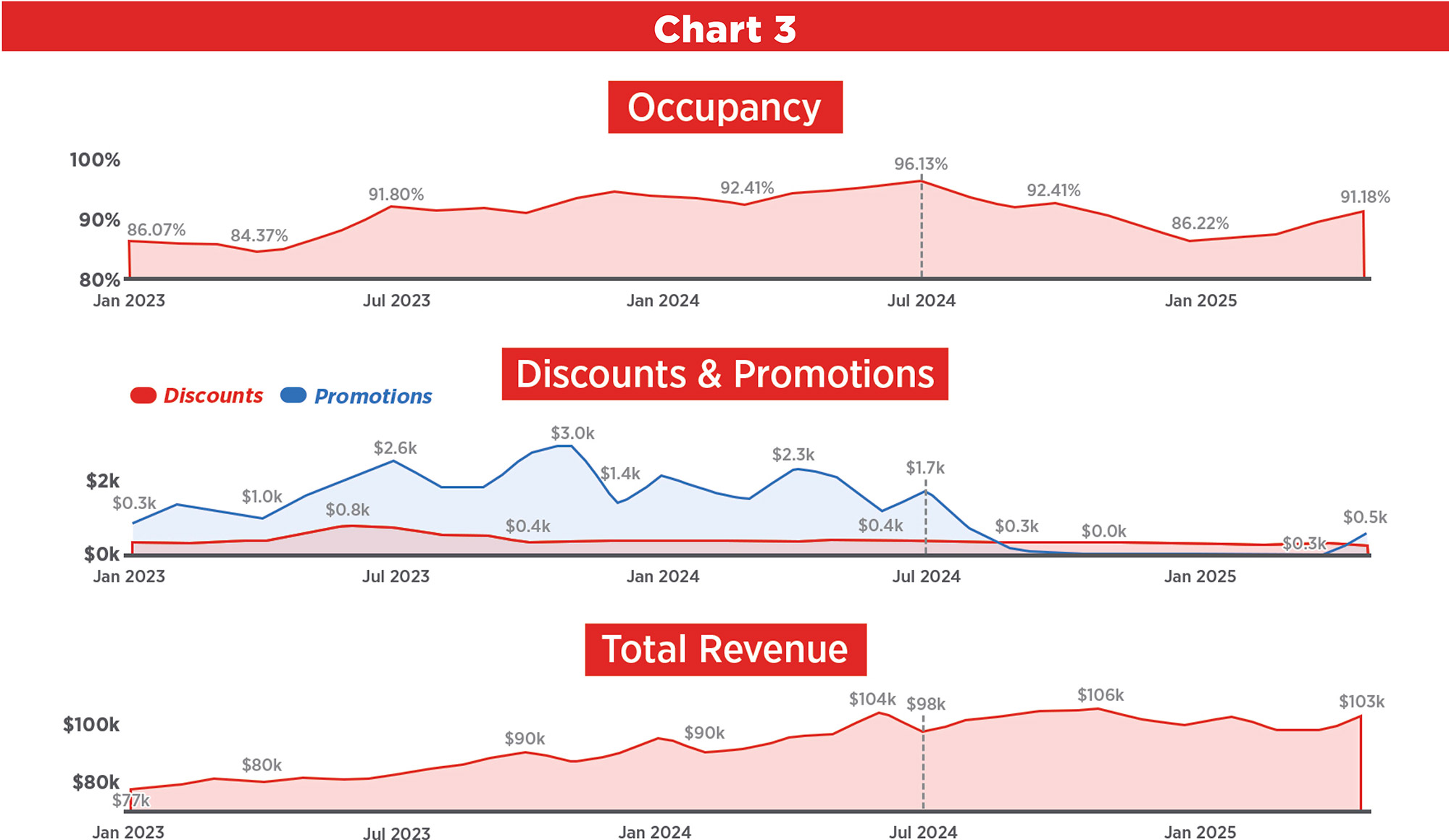
The right software should make your business easier to run and more profitable.
“Talk to management companies and other owners operating sites of the same caliber as yours to see what they’re using and why,” DeFazio says. “Then begin interviewing software companies until you find the one that fits your specific needs. The right partner will be just as invested in your success as you are. Remember, the software company works for you. You are the consumer, and they should provide continuing help and guidance. The average owner is not an IT expert—you should receive the one-on-one service you deserve.”
Universal Storage Group uses best-in-class software products available on the market in their management of properties.
“A good software provider should not only train you on all the ins and outs of the system but also tailor reporting to your operational needs,” says DeFazio. “The right partner will equip you with the tools necessary to run a successful business. We work closely with our software partners to make sure we have exactly what we need.” Know your numbers. Learn how to read the reports—and what those numbers actually mean. Ask questions, dig deeper, and stay engaged. In the process, remember to keep that precious data safe.
- Optimize Pricing Strategies
- Identify high-demand unit types and adjust prices dynamically based on occupancy, seasonality, and competitive positioning.
- Improve Operational Efficiency
- Track property performance to identify underperforming locations or units, enabling targeted operational interventions.
- Enhance Customer Experience
- Analyze customer behavior to understand preferences, enabling more tailored communication, better promotions, and improved retention.
- Forecast With Confidence
- Use historical data to forecast revenue, occupancy rates, and inventory needs, helping plan for expansions or marketing campaigns.
- Streamline Collections
- Identify patterns in delinquency to proactively manage risk and reduce auction volume.





Online Engagement
n these days of AI search bots, you want your content to be cited. Thus, your content needs to be on the platforms where the AI bots look for information, like communities, forums, and social media. In my last article, I wrote about how social media has become one of the main sources of content for the AI search bots. However, there are other channels where you can compete with the big players. It’s called omni-channel marketing.
Throw that strategy out the window! Now you need to be everywhere!
“Over the last 12 months, ChatGPT’s U.S. referral traffic to websites jumped by 3,496 percent (U.K. up 5,950 percent), from 14 to 516 million,” according an article on the Search Engine Journal titled “ChatGPT Vs. Google At Every Stage Of The User Journey.”
In other words, AI search use is growing. Citing is rich in context. Referral traffic and conversions are increasing. Your content needs to be on as many channels as possible, especially online communities.
The top online communities are Reddit, Quora, Facebook, LinkedIn, YouTube, Instagram, and X (formerly Twitter).
Here are the basics of Reddit:
- Subreddits – These are specialized forums focused on specific topics (e.g., r/selfstorage, r/selfstorageinvestors, and r/TalesFromSelfStorage).
- Posts And Comments – Users can post content like text, links, images, and videos. Other users can comment on these posts to create discussions.
- Asking Questions – Here’s an example: “Is the rent prorated if you move out in the middle?”
- Voting System – Upvotes and downvotes determine the visibility of a post. Popular posts rise to the top, while less popular ones sink.
- Karma – Users earn karma points through upvotes on their posts and comments, which can add credibility to their account.
By the way, the subreddit “r/selfstorage” has over 8,000 members, 17,000 weekly visitors, and 115 weekly contributions. Their description reads, “r/selfstorage is a community intended for helpful discussion, information, and advice about the self-storage industry. Operators, managers, employees, and customers are encouraged to contribute information, opinions, tips, and tricks. This is NOT a place to slander companies or persons.”
To get started, follow these seven tips.
- Understand Reddit culture.
Redditors value authenticity and community involvement. It’s essential to participate genuinely as an individual rather than as a corporate entity. - Choose the right subreddits.
Identify subreddits relevant to the industry and local community. Follow and engage in these communities to understand their norms and interests before posting. - Read the rules.
Each subreddit has its own rules. Make sure you understand them to avoid being banned or flagged as spam. - Create valuable content.
Share useful insights, resources, or engaging content. Avoid blatant self-promotion. For instance, provide tips, answer questions, or share relevant news. - Engage with the community.
Respond to comments on your posts, participate in discussions, answer questions, and upvote interesting content. - Use Reddit ads sparingly.
To promote your products or services, consider using Reddit’s ad platform. However, don’t rely solely on ads; genuine interaction is crucial. - Monitor and adjust.
Regularly monitor the performance of your posts and adjust your strategy based on what resonates with the community.
Conversely, here are several common mistakes to avoid.
- Skipping Subreddit Rules – Every subreddit has its own culture and posting guidelines. Ignoring them can quickly get your post removed or your account banned. Always check the “rules” section in the sidebar before posting.
- Overt Self‑Promotion – Redditors are quick to spot marketing disguised as “helpful” content. If most of your activity is linking to your own site, you’ll be flagged as a spammer. Follow the 90/10 rule of 90 percent genuine engagement and 10 percent self‑promotion.
- Low-Effort Posts or Comments – One-liners, vague questions, or link-only posts rarely do well. Reddit rewards thoughtful, well-formatted contributions.
- Not Engaging Beyond Your Own Posts – Only posting your own threads without commenting elsewhere limits visibility. Upvote, comment, and join discussions to build rapport.
- Ignoring Feedback – Downvotes and critical comments are signals, not just noise. Use them to refine your approach rather than getting defensive.
- Cross-Posting Without Context – Dumping the same link into multiple subreddits without tailoring it to each audience is spammy. Customize your title and intro for each community.
- Chasing Karma Over Value – Posting just for upvotes can lead to shallow content. Focus on adding genuine insight or entertainment.
… AI search use is growing. Citing is rich in context. Referral traffic and conversions are increasing. Your content needs to be on as many channels as possible, especially online communities.
- Evergreen Content – Answers remain searchable and can rank high on Google for years, continuing to bring traffic long after you post.
- Topic And User Following – You can follow topics relevant to your industry and connect with people who are interested in them.
- Built-In Distribution – Quora’s feed, email digests, and topic notifications push your answers to interested readers, even if you have no personal following.
- Advertising Options – Quora Ads allow precise targeting by topic, keyword, or audience intent.
Follow these tips to get started:
- Craft a strong, optimized, individual profile. Use a clear, friendly headshot. Add your role, business name, and a short, credibility-building bio. Include links to your website or key resources.
- Identify relevant topics. Search for topics your customers care about. Follow them to get notified of new questions. Focus on your niche expertise. Stick to your topic. Don’t start posting fake questions about things that have nothing to do with the industry.
- Answer with value first. Provide detailed, helpful, and non-promotional answers. Use examples, short paragraphs, and bullet points for readability. Subtly weave in your expertise and link to resources only when relevant.
- Be consistent. Aim for a few high-quality answers per week. Over time, this builds authority and trust. Do not disappear and then come back months later.
- Leverage evergreen potential. Focus on questions that will still be relevant months or years from now. These can keep driving traffic long after you post.
- Engage with the community. Upvote good answers, comment thoughtfully, and follow other experts. (You can also downvote stupid questions or bad answers.) This increases your visibility and credibility.
- Repurpose your content. Adapt your Quora answers into blog posts, LinkedIn articles, or email newsletters to maximize ROI.
Common mistakes to avoid include:
- Overt Self-Promotion – If you drop links to your site in every answer without adding real value, readers (and site moderation) will see this as spam, which will hurt your credibility. Be careful with this. I get people asking the same questions repeatedly, and if I copy and paste the same answer and link, the posts will be deleted.
- Neglecting Engagement – Don’t fail to upvote, comment, or follow other experts. Interaction boosts visibility and helps you learn what resonates with your audience.
- Expanding Too Soon – Don’t jump into paid ads or multiple topic areas before you have built a solid base of quality answers and followers.
When used properly, a small business owner can turn Quora into a steady stream of visibility, credibility, and leads. Personally, I used Quora regularly and got more traffic to my website from Quora than from the other social media networks.
What I’m seeing a lot lately are posts featuring an infographic or video, and then the text providing a detailed explanation.
Next time, I’ll dig deeper into X and how to use video in your online marketing.


evenue management in self-storage isn’t just about filling units. It’s about making sure every square foot is generating the maximum return for your business.
Without a revenue management strategy in place, even properties with 90 percent occupancy can underperform at a net operating income (NOI) level.
One of the most effective (and often misunderstood) levers you can pull is existing customer rate increases (ECRI).
If your occupancy is stabilized and you’re not raising rents for current tenants, you’re leaving money on the table. But it’s not as simple as pushing prices up across the board.
Done wrong, self-storage ECRI can damage your occupancy, erode customer trust, and ultimately cost you more in lost revenue than you gain. Done right, this tactic is a steady, predictable way to grow (NOI) and strengthen your facility’s long-term performance.
In this article, we’ll walk through why independent operators should approach ECRI differently than the REITs, the risks of mismanaging your program, and the three principles we use at White Label Storage to implement ECRI successfully across more than 200 facilities nationwide.
Over time, inflation and rising operating costs eat away at margins.
As the name suggests, ECRI is a framework for steadily increasing rents on existing customers. It is a core part of revenue management because it improves your income from each customer without providing new amenities or services.
ECRI works because the psychology of tenants changes once they’ve been in place for an extended period of time. People enter a loss aversion mindset, where they will accept new pricing to keep what they have, that is the storage unit they’ve come to rely on.
A well-designed ECRI program makes sure you’re not underpricing your units while still protecting occupancy. Even if some customers leave after an increase, the additional revenue from those who stay almost always offsets the churn. The key is finding the right balance.
For these institutional operators, the math works. Even if a significant number of tenants leave, REITs can absorb the loss because they operate at enormous scale. They target markets with plentiful demand and spend a small fortune on advertising to ensure a constant stream of new customers.
Independent operators don’t have that luxury. If you’re running a facility in a secondary or tertiary market, an aggressive REIT-style approach can backfire badly:
- You burn through local demand. Unlike a REIT in a major metro, secondary and tertiary markets don’t have an unlimited supply of new tenants. Once your churned customers are gone, they’re gone for good.
- Marketing costs spiral. Even if you’re in a big city, filling vacant units will become more expensive with increased churn. Digital ads, promotions, and staff time add up quickly, especially if you’re competing against REITs with massive spending power.
- Customer trust erodes. Independent facilities often rely on reputation and word of mouth. Sudden, steep rent hikes damage that trust, making it harder to maintain long-term relationships. Increased churn can spark a negative review cycle.
For independents, the goal isn’t to maximize short-term revenue at all costs. It’s to steadily grow NOI while protecting occupancy and keeping customer satisfaction high.
At White Label Storage, we’ve tested ECRI strategies across a diverse portfolio of facilities, urban and rural, stabilized and lease-up, large and small. What we’ve learned is that patience and moderation win.
Here are three simple rules that we use as best practices for increasing tenant rates.
1. Only raise rents on tenants who have been in place for nine months or longer.
Customers who are newer to your facility are still price sensitive. Raise their rent too soon and they’ll move out quickly. But tenants who have been with you for nine-plus months are less likely to churn. They’ve settled in, and the hassle of moving is often greater than the added cost.
2. Never increase rents more than 50 percent.
It may sound obvious, but pushing too hard is a fast way to lose tenants. Even if market rates justify a bigger jump, cap increases at 50 percent or less. Most of your tenants will absorb that change without uprooting their belongings, and your long-term revenue (and customer satisfaction) will be stronger as a result.
3. Be flexible and work with your tenants.
ECRI isn’t just a math problem; it’s a customer service moment. Some tenants will push back. Train your staff to negotiate, offer middle-ground solutions, or provide short-term discounts.
You need to control churn, so if move-outs start to spiral, start prioritizing keeping customers, if even at a slightly reduced increase.
When long-term tenants move out, it opens inventory you can rent at higher street rates. That turnover gives you a chance to reset pricing, often bringing in even more revenue than before.
The key is to monitor performance. Track occupancy trends, churn rates, and revenue growth before and after each increase. Over time, you’ll find the sweet spot for your facility.
At White Label Storage, following these principles has consistently produced positive results across hundreds of facilities. The outcome has been higher NOI, stronger occupancy, and healthier customer relationships.
Are you ready to make your self-storage property more profitable? Learn more at www.whitelabelstorage.com.

ne of the best-selling video games of all time is Tetris. Released in the mid-80s, the puzzle game challenges players to fit falling blocks of various shapes and sizes together in the most efficient way possible. That simple premise hooked millions of players around the world. Nearly 40 years later, the 3D Storage Planner, developed by Self-storage.ai, is taking that same principle and applying it to the real-world logistics of self-storage. Where Tetris gave players satisfaction in clearing lines, this tool gives customers the confidence of fitting their lives into a unit that’s the perfect size.
Co-founder Nylan Raufaste has long used technology to change how people access storage. His first venture was a peer-to-peer storage marketplace, an “Airbnb for self-storage,” he calls it. He then launched a pricing comparison tool to help customers find the best deals. Both ideas took hold, but the rapid advancement of AI, and his growing understanding of the self-storage customer journey, led to a new vision. “We decided to use AI and 3D technologies to create a unit size selection tool,” he says. “We had a strong understanding of the booking process and what pushes online conversions, so we created the 3D Planner.”

Raufaste notes that customers are often surprised by the results. Many discover their original size choice was too large, and some find they can save money by choosing a smaller space. “They can play around with items, unit sizes, and so on until they think they’ve got it right. The visuals give them confidence when booking the right unit size,” he says. For operators, this solves what’s often the biggest sticking point in the customer journey. With the right sizing decision made online, the need for lengthy calls or in-person visits disappears.
The 3D Planner is fully white labeled, living seamlessly on a facility’s website and carrying their branding and logo. Current clients include National Storage in Australia and New Zealand, with roughly 270 locations, as well as Montreal Mini-Storage, which operates 24 facilities in Quebec. Raufaste says it’s also gaining traction with operators who want to modernize their online presence and remove friction at the point of booking.
“When facing uncertainty about unit sizing, maybe two out of 50 people will reserve an oversized unit,” says Raufaste. However, the majority either leave the website because they can’t identify the size they need or call the facility to determine the right size. “Both outcomes create friction in the booking process and increase the risk of losing the rental. The main takeaway remains: Is losing conversions from many worth a couple of oversized rentals? Our clients and I say no.”
That conversion benefit isn’t the only win. “The user experience is better, website engagement and SEO are improved, and clients see more conversions and fewer dropouts,” says Raufaste. Less time on the phone also frees up managers and agents for other tasks, and if someone does call, the employee can use the 3D Planner to provide the recommendation. “It’s a win-win.”
To demonstrate value, Self-storage.ai tracks 3D Planner engagement data and conversion rates for every client. As usage grows, the team has been refining the tool and launching new features designed to make the process even more intuitive. Another new feature is coming soon, but for now Raufaste is keeping it under wraps. “All I can say is it is going to simplify every step of the tenant’s journey, from booking to move-in day; and for operators, it will continue to reduce friction and boost revenue.”
Just like in Tetris, success comes down to precision. Only now, the falling blocks have been replaced by real beds, boxes, and couches—and fitting them together can mean the difference between unit size frustration and perfection.




he self-storage industry might look simple from the outside, but it’s full of complex details where a solid foundation of knowledge is key to success. For 2026, prioritizing education will be one of the smartest investments you make, whether you’re a seasoned operator or just starting out. Even the most experienced professionals can find new insights that lead to significant improvements in their day-to-day operations. Here’s why making education a priority in 2026 is essential.
Learning how to better run your facilities is a direct path to success. The SSA offers resources that help you master every angle of your business.
- Understanding the Market – Utilize SSA data and market trend updates to spot new opportunities and proactively tackle challenges in the self-storage sector. Informed decisions are based on knowing local demand, competition, and emerging trends.
- Operational Excellence – Our specialized courses and publications cover the entire spectrum, from facility management to marketing strategies. You’ll learn to optimize operations, deliver superior customer service, and effectively manage costs. Look out for the SSA’s new webinars and the Certified Self Storage Manager (CSSM) program this year.
- Legal and Compliance Knowledge – The industry is constantly shaped by changing state and national laws. Our legal team keeps you protected and informed through SSA Magazine, the SSA Magazine Weekly email, and webinars, ensuring you navigate the complex legal landscape with confidence and avoid potential pitfalls.
- National Events – In-person events like the members-only Executive Ski Workshop, the Valuation & Acquisition courses, and our two national conferences are designed to connect you with peers and industry leaders. These interactions can lead to valuable insights, strong partnerships, and essential mentorships.
- Local Opportunities – If you can’t make it to a national event, don’t fret. Our SSA-managed state associations plan many local options, including lunch-and-learns, state-specific legal webinars, networking events, and regional conferences. You’ll easily find a high-impact learning and networking opportunity that fits your time and budget.
As the storage industry evolves with new technologies, legislation, and customer preferences, staying educated is essential. Investing in your knowledge unlocks new potential and paves the way for success in a business landscape that rewards adaptability.
Explore the SSA courses, webinars, and conferences available today by visiting our website (selfstorage.org). Take that first step toward becoming a knowledgeable leader in the industry—your future self will thank you for it.

he question everyone is asking today is “How will AI impact the industry, for better or worse?” There’s a clear upside, of course. Revenue management is an area where AI really shines—analyzing huge amounts of data, optimizing rates for existing and new customers, and forecasting demand is its superpower. AI can also power better security, such as license plate recognition, person and vehicle tracking, and more affordable AI-enabled camera systems. Those tools exist today but are still expensive; costs will likely come down and adoption will spread. Hopefully operators will embrace it, learn it, and use it to run smarter facilities.
But there are also real concerns, like job losses and the broader impact on society. We’ve considered these things in the short term, but I don’t know that society has grappled with the long-term consequences or how this technology will affect future generations.
First, we aren’t prepared for mass layoffs. If 10 percent to 30 percent of people see their jobs disappear over the next five years, as some experts predict, we don’t have the infrastructure or social systems in place to handle that. We don’t have universal basic income, and we’re not structurally ready.
Second, we don’t know how to teach children in the age of AI. That’s honestly more concerning to me than job losses. Kids today are going to be AI natives, the way some of us were digital natives. But there’s a big difference: With AI, you can offload so much work that used to have to be done mentally. You don’t become a critical thinker if an AI does all your thinking for you; you don’t become a problem solver if AI gives you all the answers. Our school systems don’t yet know how to handle this.
So, when I think about AI, I’m not just thinking about self-storage efficiency. I’m thinking about how it’s shaping the way the next generation will interact with information and make decisions. I’m thinking about my own kids; this technology is going to define the world they grow up in.
Self-storage is a generational business. There are so many children of owners and developers entering the fold, and the children of those children, too. It’s important that some of these questions are answered before they’re the ones running the show. I don’t think the solution is “no AI,” but we haven’t yet figured out the right approach. That said, there are some very smart people working on these questions, and I’m confident they’ll find the answers—hopefully sooner than later.
• Fully integrated solutions with in-house baȷa Engineers for faster, easier projects
• Pre-Fabricated Framing Systems with Bolted Connections – No field welding
• Snow Loads from 20psf to 100psf – Wind Speed rated to 170MPH
looking…
Party Management
Company



