

Data icon
Data
Crime Crackdown
MSM Survey Reveals Fewer Incidents, Increased Security Measures
By Brad Hadfield
D

espite widespread adoption of modern security tools such as smart locks and access control systems, AI-enabled monitoring, high-security doors, drones, and even robots, crime remains a persistent issue for the self-storage sector. But are things slowly getting better? According to a recent MSM survey, operators are beginning to see fewer crimes, and they’re definitely taking security seriously.

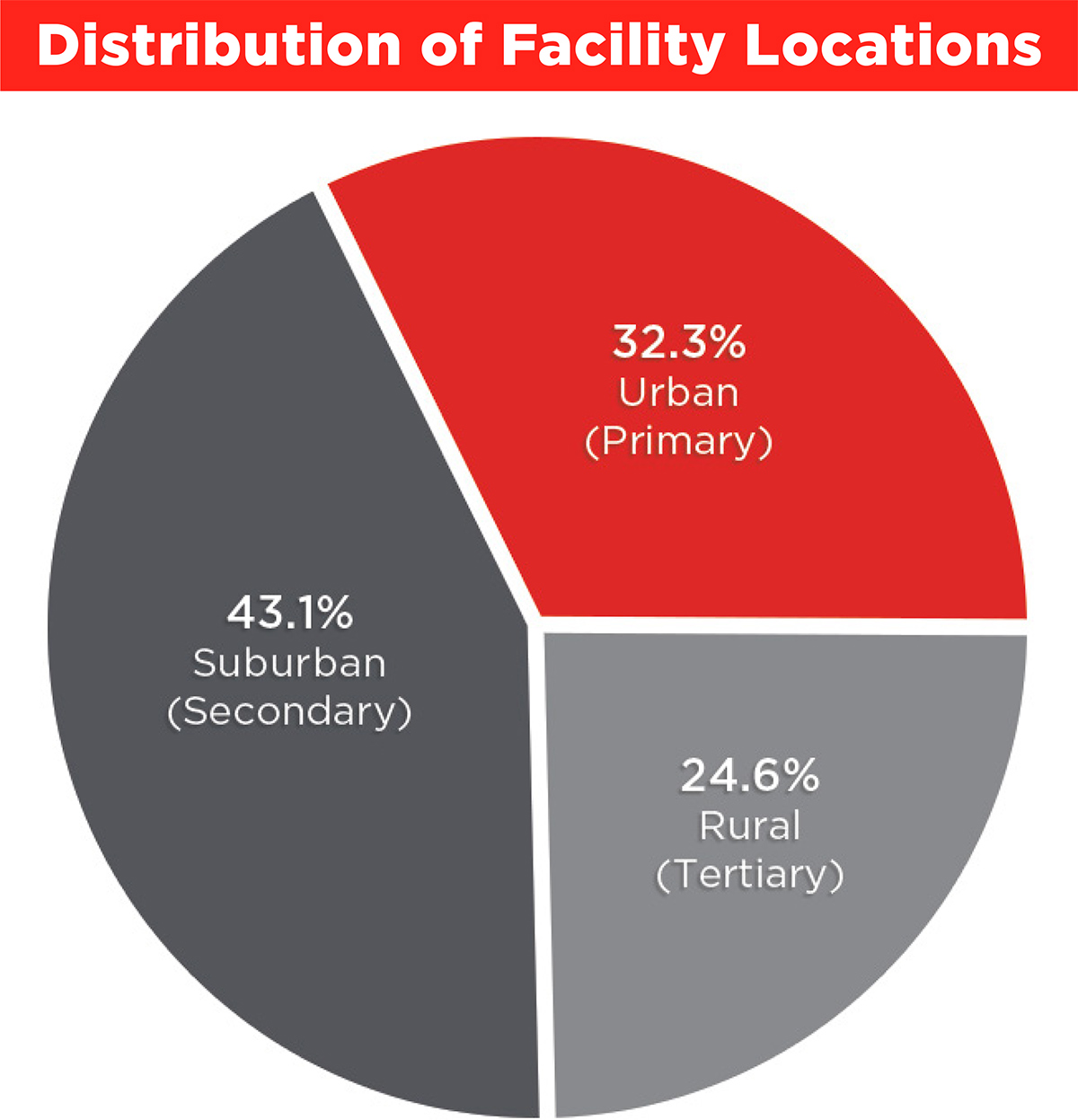
Our survey of over 100 self-storage operators, conducted in September 2025, was broken out across urban, suburban, and rural markets. We also conducted the same survey in September 2024 with a similar breakdown.

See Distribution of Facility Locations chart.
Distribution of Facility Locations chart
How Has Crime Been At Your Facility Over The Last Year?
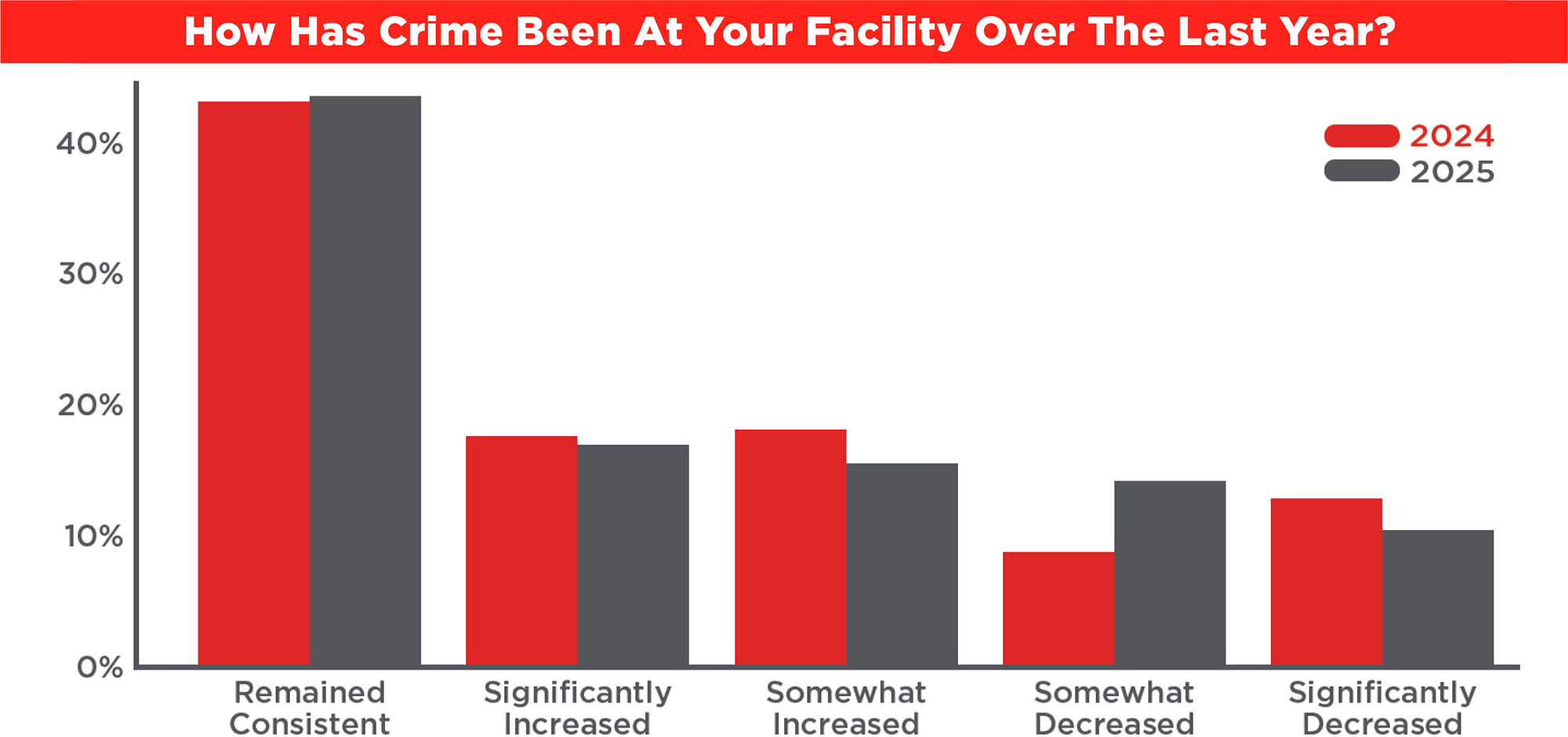
Most operators—roughly 43 percent in both 2024 and 2025—said crime at their facilities has remained consistent. While that could indicate stability, it also leaves room for interpretation, as “consistent” may reflect anything from persistently low crime to persistently recurring crime.Among those reporting changes, fewer operators saw increases in crime year over year. The share citing that crime had somewhat or significantly increased fell from 37 percent in 2024 to 32 percent in 2025. Meanwhile, reports of improvement rose; 25 percent said crime had decreased significantly or somewhat in 2025, up from 21 percent the year before.

The results were nearly identical when looking at the two-year trend, again with most operators continuing to describe their situation as stable, fewer reporting worsening conditions, and slightly more seeing things get better.

Taken together, the data points to a slow but steady improvement in operators’ confidence that when it comes to crime, their facilities are either holding steady or witnessing a decline.

See How Has Crime Been At Your Facility Over The Last Year chart.
How Has Crime Been At Your Facility Over The Last Year chart
How Concerned Are You About Crime In Your Markets?
While operators’ concerns about crime remained largely unchanged between 2024 and 2025, with those who described themselves as “extremely concerned” holding steady at roughly 54 percent, there may be a heightened sense of awareness in the other categories. The portion of respondents saying crime was “not a concern” slipped from 8.9 percent to 7.4 percent, while those calling it “somewhat of a concern” increased from 36.7 percent to 38.9 percent.

That suggests some operators moved from the “not at all concerned” camp into the “somewhat concerned” middle ground, showing more recognition that crime remains an industry-wide factor worth watching, even as reported incidents appear to be stabilizing or declining.

How Concerned Are You About Crime In These Markets?
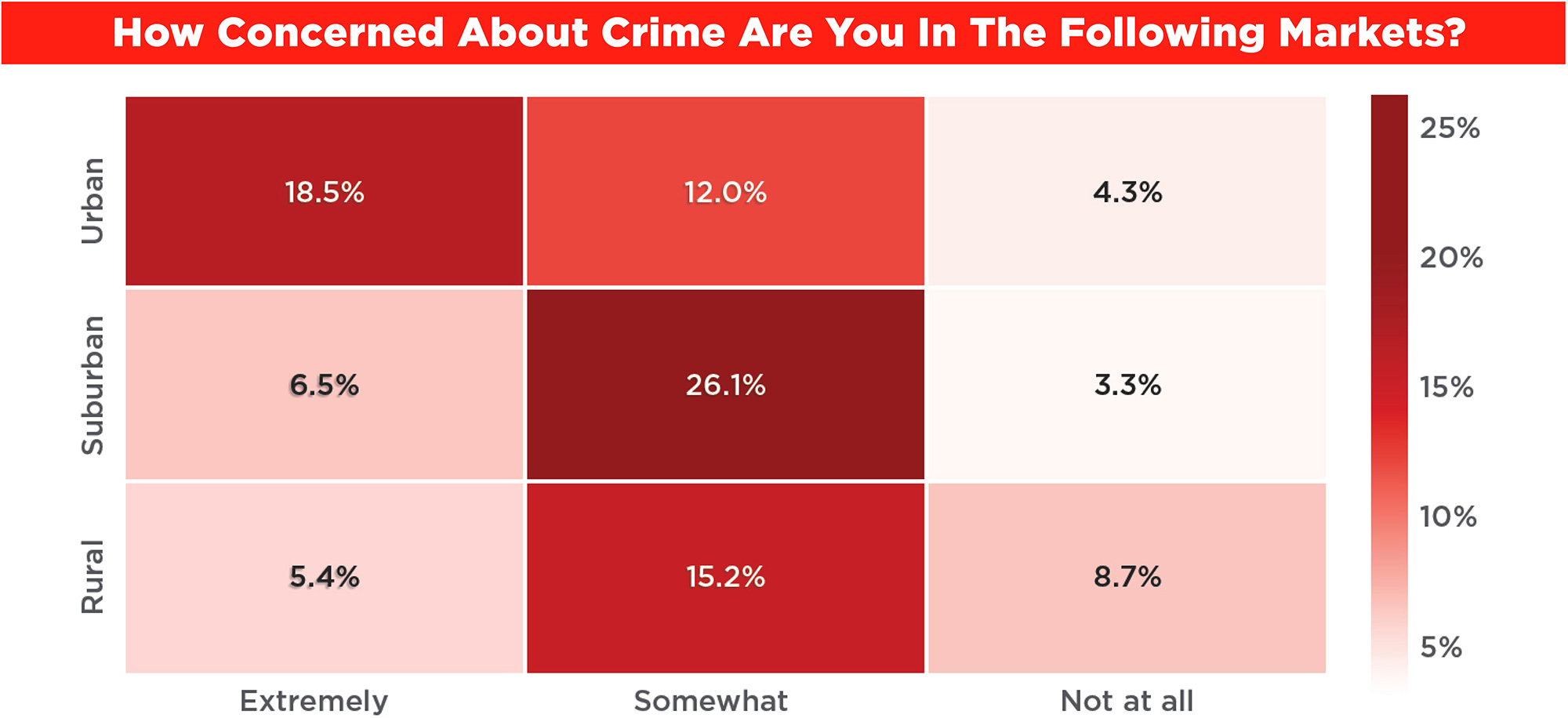
Concern levels differ sharply by market type. Urban operators remain the most worried: Nearly 19 percent described themselves as extremely concerned and another 12 percent fell into the “somewhat concerned” category. That means roughly one in three urban respondents view crime as a persistent issue in their markets.

See How Concerned Are You About Crime In Your Markets chart.

How Concerned Are You About Crime In Your Markets chart
In suburban areas, sentiment shifts toward the middle ground. About 26 percent said they’re “somewhat concerned”—the largest concentration in any category—while only 6.5 percent described themselves as “extremely concerned.” This suggests suburban operators see crime as a manageable factor rather than a daily threat.

See How Concerned About Crime Are You In The Following Markets chart.
How Concerned About Crime Are You In The Following Markets chart
Rural operators remain the least concerned overall, though they’re not entirely carefree. Only 5 percent say they are “extremely concerned,” but 15 percent still fell into the “somewhat concerned” range, showing that even low-density markets aren’t completely immune to security worries.
Crime Gives Self-Storage A Bad Reputation
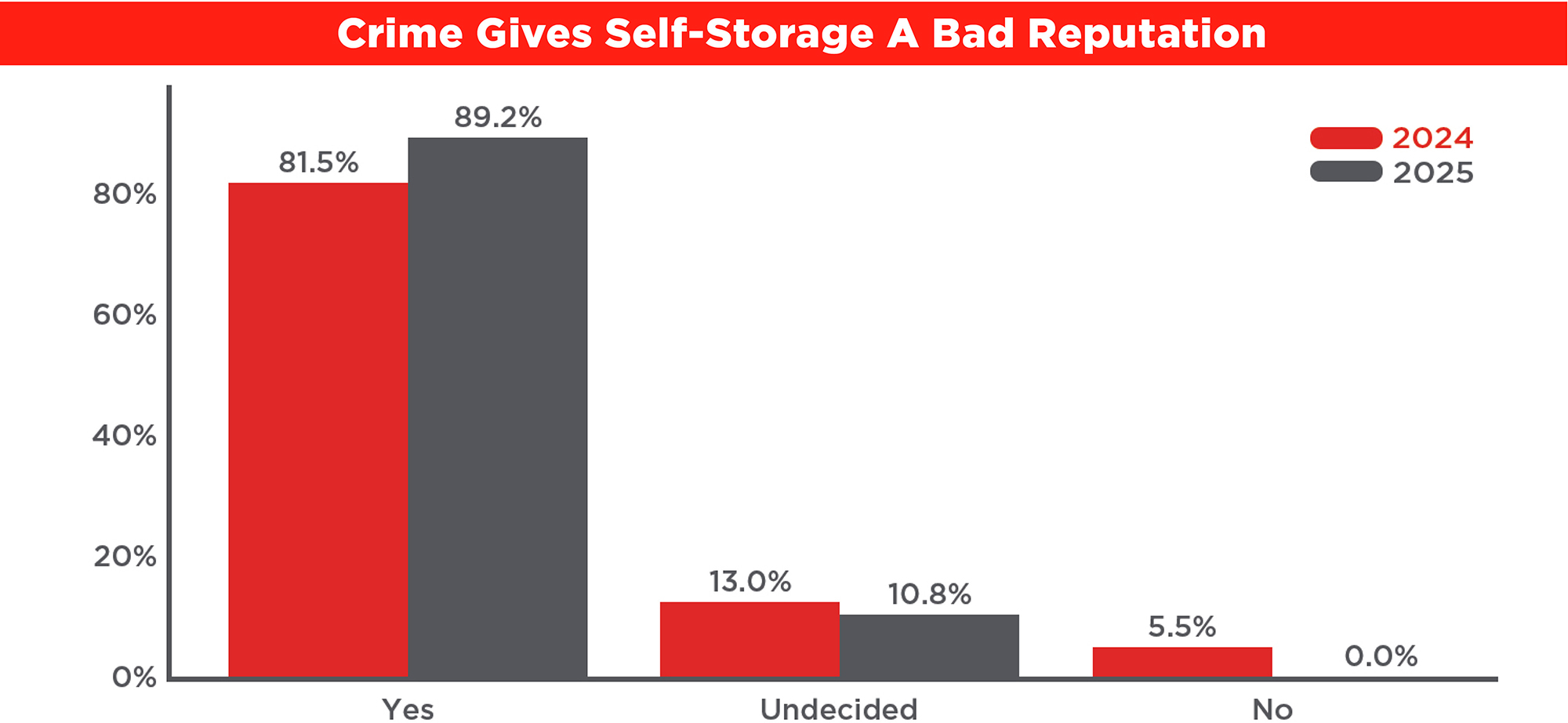
Does crime give self-storage a bad rap? Operators responded overwhelmingly yes, even more so than just one year ago. In the most recent survey, nearly nine in 10 respondents (89 percent) agreed that crime contributes to a negative public image for the sector—up from 82 percent the previous year.

See Crime Gives Self-Storage A Bad Reputation chart.
Crime Gives Self-Storage A Bad Reputation chart
At the same time, undecided responses dipped from 13 percent to 11 percent, and the share of operators who said crime does not damage the industry’s reputation fell to zero. That’s great news, showing across the board that everyone is treating crime seriously. It suggests that even if crime is easing, they see it as an image problem that affects how customers, investors, and communities view the sector, and now they’re doing something about it.
As concern about crime’s impact on the industry’s reputation has grown, operators appear to be investing more heavily in security. In 2025, every measure tracked increased in adoption compared to the previous year.
Operators Respond To Crime With Stronger Security Measures
As concern about crime’s impact on the industry’s reputation has grown, operators appear to be investing more heavily in security. In 2025, every measure tracked increased in adoption compared to the previous year.

Nearly all facilities in the survey (approximately 99 percent) now use surveillance cameras, up slightly from 97 percent in 2024, reinforcing that visual deterrence remains the most popular form of security. Other significant gains were reported in digital access control systems (up 5.6 percent), security alarms (up 4.3 percent), and smart locks (up 8 percent), showing operators are open to more tech-driven solutions. Even modest increases in unit alarms (up 3 percent) and high-security doors (up 2 percent) show that operators are getting serious about security. With no respondents dismissing crime as a reputation issue, they appear to be taking a more proactive stance.

See What Security Measures Have You Employed To Combat Theft chart.

What Security Measures Have You Employed To Combat Theft chart
For this last question, we also offered respondents the opportunity to write in some security measures they employ. Here’s a rundown of responses:

  • Bright lighting and nighttime illumination are among the most universally implemented deterrents and motion-activated lighting is cited more often in 2025 as a supplement to fixed lighting.
  • On-site manager or staff presence remains popular for lock checks and property walks. A handful of respondents mentioned having resident managers who patrol the grounds day and night.
  • Disc and cylinder locks are the dominant standard recommended to tenants and used by operators.
  • Regular lock checks and property walks multiple times per day remain standard practice for many operators.
  • Improved fencing and locked gates after hours remain widely implemented physical barriers. One operator said bluntly, “Electric fencing. ‘Nuff said.”
  • Professional security patrols during nighttime/closed hours gained mentions in 2025.
  • Limited access hours with staff present instead of 24/7 access is frequently emphasized as a crime-prevention policy. “24-hour access is silly,” one operator wrote.
  • Remote or software-based monitoring appears more often in 2025 responses as tech-forward solutions.

Finally, a few operators disclosed that they would take security matters into their own hands if necessary—an approach that MSM doesn’t advise. “Fear is a deterrent,” wrote one respondent. “I have a sign that reads ‘Thieves: You’d Better Call The Sheriff, Because I’m Not.” Another wrote, “There’s always an armed guard on site—me.”

Crime Challenges
Has crime truly eased a bit? It’s difficult to say. Reliable self-storage crime data is hard to come by, as incidents are typically combined with other property crimes in national reporting. However, self-storage remains an appealing target due to “the hotel rule.” Justin Insalaco, a retired police officer and Atlas One Law Enforcement Network advisor, explained this to MSM: If a burglar hits 20 units at one facility, it’s often treated as a single burglary, whereas targeting multiple properties could lead to multiple charges. He adds that non-violent theft is rarely prioritized in court, often resulting in a “catch and release” cycle for offenders.
“Don’t just push small break-ins to the side and tell tenants to file with insurance. Put your PI hat on and get to work. Every break-in counts. Communicate with nearby companies, as I guarantee they’re experiencing the same thing, often from the same thief.”

—Taylor Pierce
In our 2024 story on combatting crime, Taylor Pierce, executive director for Great Oaks Capital Partners, LLC, offered advice to any operator. “Don’t just push small break-ins to the side and tell tenants to file with insurance. Put your PI hat on and get to work. Every break-in counts. Communicate with nearby companies, as I guarantee they’re experiencing the same thing, often from the same thief.”

To increase awareness and transparency, MSM has launched the Storage Blotter, a continuously updated log on its website that tracks crimes, fires, and other incidents at self-storage facilities across the country. Each entry includes key available details, such as the incident date, location, facility, individuals/vehicles involved, and the outcome. Each incident links to the original source or an MSM news story. Storage Blotter is fully searchable by those same details, allowing owners, operators, and managers to monitor trends and activity in their area, including unsolved cases. The MSM Storage Blotter is live at www.modernstoragemedia.com/blotter.

In conclusion, the surveys indicate a shift in operator attitudes toward crime. In 2024, it seemed like there was a more reactive mindset. Today, it feels more proactive, with more scheduled patrols, defined access hours, surveillance systems, and other tech-based solutions. And again, not one respondent said crime didn’t impact the industry’s reputation, meaning that crime prevention is not just good for business, it’s also brand protection.

Stay safe and be vigilant!

Brad Hadfield is MSM’s lead writer and website manager.