









How to enjoy our new magazine:
Just scroll!
Click or tap the table of contents icon in the menu bar to find any article.
Read any article by clicking or tapping the read full article button below each article intro.
Jump back to your previous browsing spot from any article using the menu bar or back to issue button.





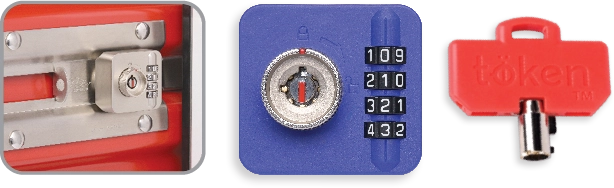
Turn a DUMB Lock
Into a Smart One.

us that one kiss
can change
everything.
In real-world
self-storage, it
usually doesn’t.



-
The Case For Smarter SecurityPage 12
-
A Strategic Guide To Spend OptimizationPage 16
-
The Power Of Manager Training And Association MembershipPage 20
-
Considerations For Employing Low Move-In Rates And High ECRIsPage 24
-
How The Industry’s Using AI To Its BenefitPage 26
-
Essential To-Dos Before The Busy SeasonPage 30




Experience
Local Expertise

Not Just a Builder


-
Page 44
-
Expectations And Actions For AI Search In 2026Page 46
-
Value Metrics That Determine SuccessPage 50
-
Self-Storage Supply And Rent RecapPage 56
-
Industry ValuationPage 64

-
Removing The Guesswork And Funding Your RemodelsPage 88
-
Seven Steps To Rezone Land For Self-StoragePage 92
-
Sugar Hill Self Storage in Sugar Hill, Ga.Page 94

-
Five Components Of A High-Converting WebsitePage 96
-
How QR Codes Are Quietly Revolutionizing Self-StoragePage 100
-
What’s In Store For The Industry?Page 106
- Chief Executive Opinion by Travis Morrow6
- Publisher’s Letter by Poppy Behrens9
- Meet The Team10
- Women In Self-Storage: Denee Burns by Brad Hadfield34
- Who’s Who In Self-Storage: Adam Karnes by Alejandra Zilak39
- Innovation Spotlight: Prorize by Brad Hadfield110
- Self Storage Association Update113
- The Last Word: Mitch Briggs114
For the latest industry news, visit our comprehensive website, ModernStorageMedia.com.









CEO of MSM and Storelocal Corporation,
President of National Self Storage
y now you’ve heard about THE Show in Atlanta, Ga., from Nov. 4 to 6, 2026. What you might not realize is that we didn’t build it just to be different—we built it to be “better,” and we hope the rest of the industry copies every bit of it.
Here are the biggest changes we made that we’d love to see become industry standard:
- Dedicated tradeshow hours—no competing content – Every other national show schedules breakouts, keynotes, and lunches that empty the floor right when exhibitors need traffic most. We said no. Trade show time is sacred. No sessions, no overlap, no excuses. Exhibitors get full attention all day. If that becomes the norm, every vendor wins.
- Zoned floor with built-in activations – The old grid layout is dead. Attendees walk straight down aisles and leave. We zoned the floor (Dugout, Bullpen, Upper Deck, Home Run Porch, Chipper Corner) and put thoughtful activations in each one (demos, lounges, quick hits) so people actually stay and circulate. Steady traffic for every booth, no favorites. Copy this and trade show floors stop being ghost towns and become self-storage Disneyland.
- Central Clubhouse right on the floor – Other events hide the lounge off site or in a side room, pulling people away from booths. I get it, real trade show floor space is expensive, but we put the StorageLife Clubhouse dead center—refreshments, seating, semi-private meetings all on the floor. Attendees stay longer, exhibitors get more eyes. Simple fix. Everyone should do it.
- Acquisitions Corner, a real deal-making room – Deals still happen in hallway shadows at most shows. We built the Acquisitions Corner as a theater: Sellers pitch facilities/portfolios on stage (five to 10 minutes), segmented by size, broker-moderated, buyers in the seats. Newbies learn valuation and sourcing live. The dream outcome is a million-dollar deal closed at the event. If this catches on, it could change how transactions start.
- Affiliate program that turns sponsors into partners – Traditional sponsorship/exhibition is one way: pay and pray. Our affiliate program lets exhibitors, influencers, associations earn 10 percent on every registration they drive. It’s real revenue share, real incentive, real team sport. If this catches on, sponsorship becomes a partnership, not just a logo on a banner.
These aren’t gimmicks; they solve real problems: low traffic, poor ROI for vendors, missed networking, lack of education on deals. If other national shows copy even half of this list, the whole industry gets better through higher attendance, better vendor experience, stronger connections, and more deals done.
That’s our ultimate goal—to make our industry better. We’re not trying to be the only game in town; we’re trying to raise the bar so high that everyone has to step up.
Early bird pricing is still open (save $450): operators for $749 and teams for $2,247. Visit MSMtheshow.com.
See you in Atlanta!

-
PUBLISHER
Poppy Behrens
-
Director Of Sales & Marketing
Lauri Longstrom-Henderson
(800) 824-6864 -
Creative Director
Carlos Padilla
(800) 352-4636 -
Editor
Erica Shatzer
-
Lead Writer / Web Manager
Brad Hadfield
-
Storelocal® Media Corporation
Travis M. Morrow, CEO
-
Website
-
Visit Messenger Online!
Visit our Self-Storage Resource Center online at
www.ModernStorageMedia.com,
where you can browse our paid publications, research archived articles, sign up for a magazine subscription, submit a change of address, and more. 
- All correspondence and inquiries should be addressed to:
MSM
PO Box 608
Wittmann, AZ 85361-9997
Phone: (800) 352-4636

Invest with confidence in a family-owned and operated self-storage brand backed by 40 years of proven experience. Built on trust, stability, and hands-on management, our company has thrived across market cycles while delivering consistent value.
Join a legacy of smart growth and reliable returns in an essential, resilient industry.

210-405-6695
theparhamgroup.com















fter 26 years in the self-storage industry, I can honestly say I’ve attended many conferences, trade shows, and industry events. I’ve seen what works, what doesn’t, and what tends to feel a little too familiar. That’s exactly why I’m so excited about THE Show, presented by MSM and Janus International. This isn’t just another event on the calendar. It’s something we’ve built with intention, and I truly believe it will offer a fresh experience for an industry that continues to evolve.
THE Show, presented by MSM and Janus International, our inaugural self-storage conference and trade show, will take place Nov. 4 to 6, 2026, in Atlanta, Ga., and will be the only East Coast self-storage conference scheduled for 2026. That alone makes it significant, but what makes it special is the way we are reimagining the entire conference and trade show experience.
From a thoughtful trade show floor layout to elevated educational sessions that do not compete with expo time, every detail has been designed to create a better experience for attendees. We’re also planning evening events that will make networking feel less rushed and more meaningful. After so many years in this industry, I know people want more than a packed schedule—they want real value, real connection, and a reason to feel energized about attending.
One of the things I’m most excited about is our speaker lineup, which is already shaping up to be extraordinary.
Among our keynote speakers is Scott Jennings, political commentator, former U.S. Presidential Advisor, and CNN’s senior conservative commentator. Known for his sharp analysis and candid commentary, Scott brings a political lens that connects national policy to real-world business impact. With the event coming on the heels of the 2026 midterm elections, his perspective on federal policy, regulatory priorities, and the broader economic climate will be especially timely for self-storage owners and operators.
We are also honored to welcome Hall of Famer Chipper Jones, who spent his entire Major League Baseball career with the Atlanta Braves after being selected first overall in the 1990 MLB Draft. An eight-time All-Star, 1999 National League MVP, and 2008 National League batting champion, Chipper remains one of the most accomplished third basemen in the game’s history. Having him join us in Atlanta adds another exciting and memorable dimension to THE Show.
One thing that matters to me personally is making these keynote moments accessible. Some conferences reserve celebrity speakers for only a select group of attendees. While VIP guests at THE Show will enjoy exclusive meet-and-greet opportunities, all attendees will be able to attend the keynote presentations. We want everyone there to benefit from these important conversations and experiences.
Early bird registration is still open, and the host hotel, Signia by Hilton, is accepting reservations at MSM’s special rates. If you’re ready for a modern event created with intention, insight, and energy, I hope you’ll join us in Atlanta.
See pages 8 and 10 or visit msmtheshow.com to learn more.


Poppy Behrens
Publisher
fter 26 years in the self-storage industry, I can honestly say I’ve attended many conferences, trade shows, and industry events. I’ve seen what works, what doesn’t, and what tends to feel a little too familiar. That’s exactly why I’m so excited about THE Show, presented by MSM and Janus International. This isn’t just another event on the calendar. It’s something we’ve built with intention, and I truly believe it will offer a fresh experience for an industry that continues to evolve.
THE Show, presented by MSM and Janus International, our inaugural self-storage conference and trade show, will take place Nov. 4 to 6, 2026, in Atlanta, Ga., and will be the only East Coast self-storage conference scheduled for 2026. That alone makes it significant, but what makes it special is the way we are reimagining the entire conference and trade show experience.
From a thoughtful trade show floor layout to elevated educational sessions that do not compete with expo time, every detail has been designed to create a better experience for attendees. We’re also planning evening events that will make networking feel less rushed and more meaningful. After so many years in this industry, I know people want more than a packed schedule—they want real value, real connection, and a reason to feel energized about attending.
One of the things I’m most excited about is our speaker lineup, which is already shaping up to be extraordinary.
Among our keynote speakers is Scott Jennings, political commentator, former U.S. Presidential Advisor, and CNN’s senior conservative commentator. Known for his sharp analysis and candid commentary, Scott brings a political lens that connects national policy to real-world business impact. With the event coming on the heels of the 2026 midterm elections, his perspective on federal policy, regulatory priorities, and the broader economic climate will be especially timely for self-storage owners and operators.
Publisher
We are also honored to welcome Hall of Famer Chipper Jones, who spent his entire Major League Baseball career with the Atlanta Braves after being selected first overall in the 1990 MLB Draft. An eight-time All-Star, 1999 National League MVP, and 2008 National League batting champion, Chipper remains one of the most accomplished third basemen in the game’s history. Having him join us in Atlanta adds another exciting and memorable dimension to THE Show.
One thing that matters to me personally is making these keynote moments accessible. Some conferences reserve celebrity speakers for only a select group of attendees. While VIP guests at THE Show will enjoy exclusive meet-and-greet opportunities, all attendees will be able to attend the keynote presentations. We want everyone there to benefit from these important conversations and experiences.
Early bird registration is still open, and the host hotel, Signia by Hilton, is accepting reservations at MSM’s special rates. If you’re ready for a modern event created with intention, insight, and energy, I hope you’ll join us in Atlanta.
See pages 8 and 10 or visit msmtheshow.com to learn more.

MSM’s THE Show lands in Atlanta, Ga., on Nov. 4 to 6, 2026, packing the Georgia World Congress Center with more industry speakers and keynotes than ever before, plus special guests, exciting breakout sessions, an acquisitions corner, and a trade show floor designed for engagement and visibility.
After hours, unforgettable events await, with our Deep Blue Welcome Dinner inside the underwater banquet hall of the Georgia Aquarium, catered by Wolfgang Puck, and our Red Carpet Awards Gala, honoring the very best in self-storage.
If you’ve been waiting for something different … Welcome to THE Show.















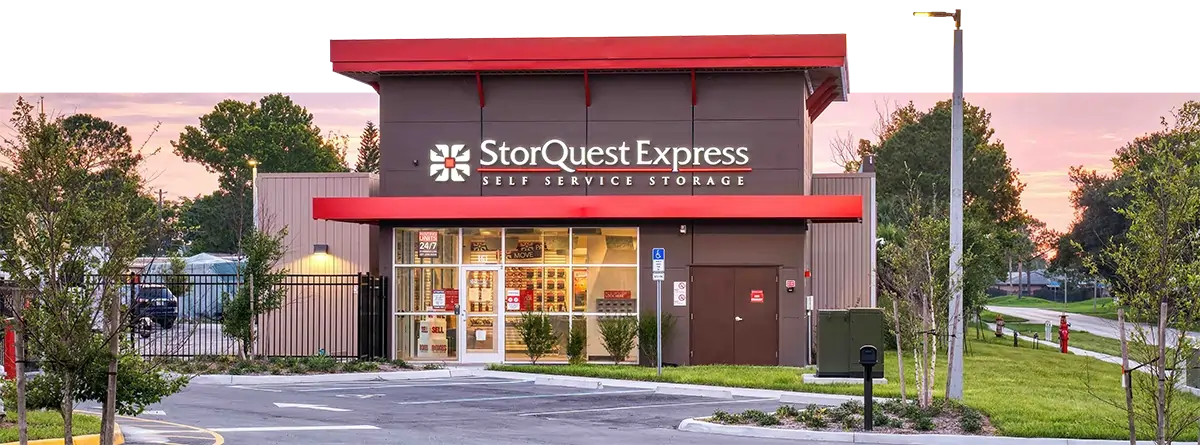
eeping our customers’ personal belongings safe across 260-plus locations isn’t just about building trust—it also directly impacts insurance costs. Self-storage facilities are frequent targets for theft, and insurance providers are well aware of the risks.
With premiums rising, we knew it was time to modernize our security strategy and platform. Our goals were clear: reduce insurance costs while delivering stronger peace of mind to our customers. This became especially critical for our StorQuest Express locations that operate 24/7 without on-site staff.
Beyond the technology itself, the fragmented approach creates operational blind spots. Teams spend valuable time troubleshooting camera networks, coordinating multiple vendors, and managing inconsistent data streams—all of which pull focus from the guest experience. A single unified system promised to simplify not just monitoring but also day-to-day management, troubleshooting, and reporting.
We wanted a surveillance system that could activate the moment a true threat emerged because building an in-house, 24/7 team would be cost-prohibitive given the relatively low frequency of actual incidents. Third-party monitoring was a better fit and solution for us with the caveat that it would integrate with our on-premise infrastructure.
We needed a smarter, more scalable solution—one that reduced false alarms, enabled efficient third-party monitoring, and lowered maintenance costs, all while increasing overall site security.
Equally important was the ability to scale. As new StorQuest locations open nationwide, our teams can deploy plug-and-play cameras and instantly link them to the existing cloud platform, ensuring consistent standards and compliance. The platform’s intuitive dashboard also gives our operations, facilities, and risk management teams an easy-to-share, real-time view of what’s happening across the portfolio.
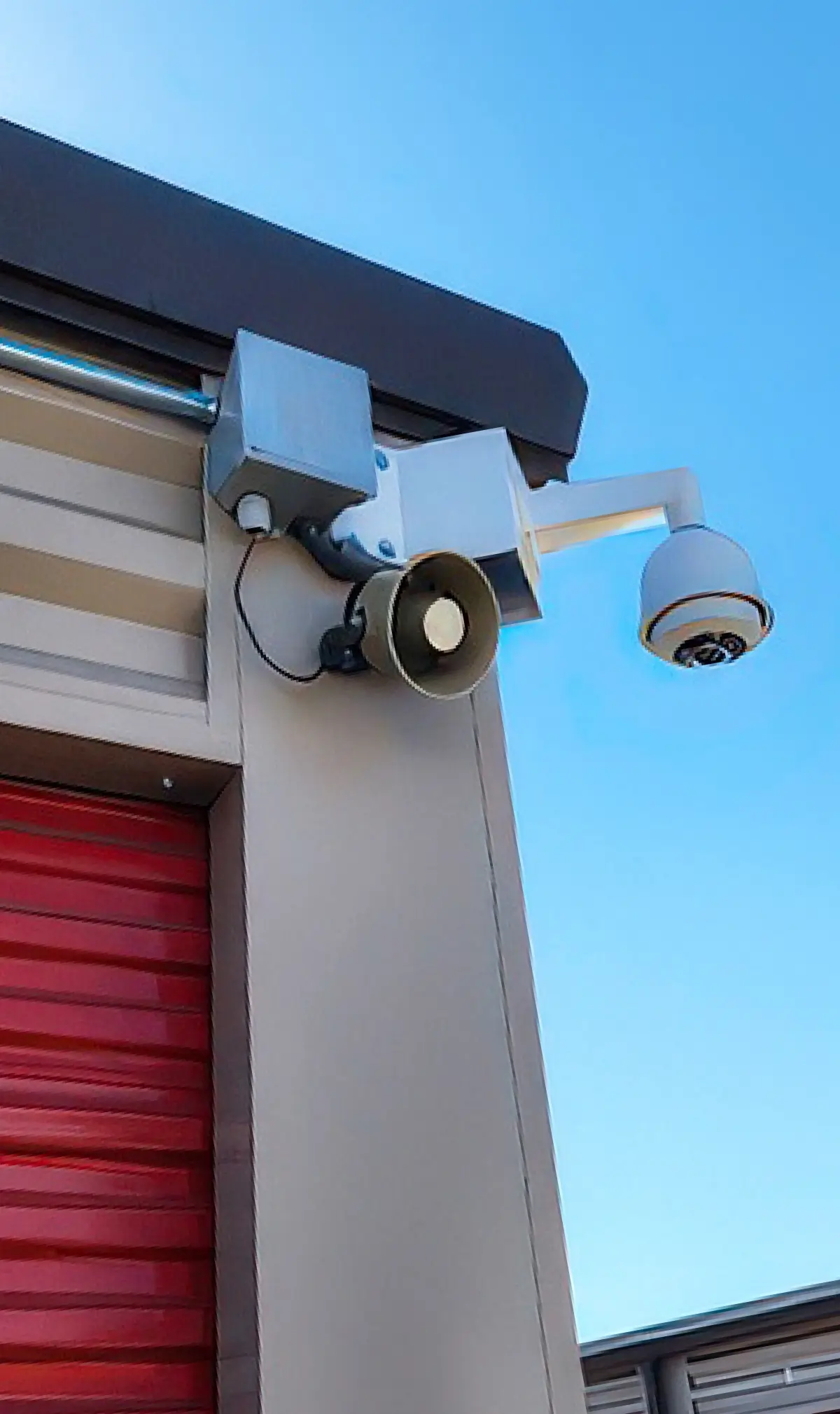
With this infrastructure in place, we now work with third-party monitoring teams to provide real-time surveillance that activates only when human presence is detected. False alarms from wildlife or weather are virtually eliminated thanks to advanced AI filters.
The impact has been especially meaningful at our StorQuest Express locations. When a guest arrives, an IoT-connected device greets them via an automated message and initiates two-way communication. Our remote customer contact center receives an alert and engages if needed. It can even grant access to specific parts of the self-storage facility through integrated access control.
For potential intruders, the system works differently by broadcasting automated trespassing warnings while alerting our third-party monitoring team, who can immediately contact police and prepare evidence for prosecution.

Operationally, the shift to a subscription-based model has cut maintenance visits by over 50 percent, while Rhombus Relay Lite has extended the life of legacy cameras by enabling cloud connectivity, giving us modern benefits without full system replacements.
We’ve also seen real gains on the customer service front. Our StorQuest contact center team reports efficiency improvements from the integrated access control system and simplified customer interactions in a shared platform.
Perhaps most notably, our teams now operate with greater confidence and transparency with Rhombus’ AI integration. Previously, when looking for specific footage it was like looking for a needle in an ocean and would take hours of time. With Rhombus, real-time alerts and consistent visibility across all facilities are a game changer; they’ve turned what was once a reactive, manual process into a proactive, AI-automated discipline saving countless hours. This shift not only protects StorQuest’s assets but strengthens our brand promise of security, innovation, and reliability by offering tagged, immediately discoverable video clips.
We’re also piloting AI-powered video search for faster footage review and testing integrations with alarm monitoring centers to streamline emergency response. Modern security tech isn’t just about protection—it’s a catalyst for smarter operations, lower costs, and elevated customer experiences. It’s helping us build safer facilities while enabling scalable, next-generation business models.


They gain reach they can’t build alone.
Through shared brand presence and collective online momentum, the Storelocal community helps independents show up stronger, get found faster, and compete more effectively—while staying fully independent.

ost self-storage operators are running tight operations. Occupancy is solid, rates are competitive, but the profit margin isn’t where it should be. The problem usually isn’t on the revenue side. It’s hiding in the monthly recurring expenses.
The data shows that most storage facilities overspend by 10 percent to 20 percent on recurring services and software. For a facility doing $500,000 in annual revenue, that’s $15,000 to $30,000 in lost profit every year. Scale that across a portfolio and the numbers get serious, fast.
The opportunity here is different from chasing occupancy or pushing rates. Those strategies have limits and face market resistance. Optimizing recurring spend is completely within an operator’s control, and the savings flow straight to NOI.
Property services include security monitoring, gate maintenance agreements, access control systems, and general repairs and maintenance contracts. Many operators pay for overlapping coverage or services they rarely use.
Technology and software subscriptions have exploded in recent years. Property management systems, CRM tools, revenue management software, online marketing subscriptions, website hosting, and payment processing can easily run into thousands per month. The problem compounds when paying for duplicate features across multiple platforms.
Insurance policies for property, general liability, and specialty coverages represent another major recurring cost. These rarely get shopped competitively after the initial purchase, despite significant market movement.
Utilities are less negotiable in most cases, though in deregulated markets, supplier choice matters. The bigger opportunity is in service contracts around utilities, like regular electrical or plumbing maintenance agreements.
The relationship premium is real. An operator works with the same janitorial company for years. They know the facilities, they’re responsive, and they’ve earned trust. That relationship has value, but it often carries a 15 percent to 30 percent price premium over market rates. Vendors understand that switching costs keep operators in place.
Operators are negotiating blind most of the time. Unless running a large portfolio with procurement staff, there’s no visibility into what comparable facilities pay. When a waste company quotes $450 per month, there’s no frame of reference. Vendors know this and use the information advantage.
Contracts drift upward through small increments that seem reasonable in isolation. That $350 monthly cleaning contract three years ago is now $525 through annual CPI adjustments, fuel surcharges, and scope additions that each seemed justified. The cumulative effect is significant cost inflation.
The busy operator problem is universal. There are delinquencies to manage, maintenance issues to handle, tenant questions to answer. Reviewing vendor contracts isn’t urgent, so it gets pushed indefinitely. Auto-renewal clauses ensure the contracts continue at whatever rate the vendor sets.
Competitive bidding remains the most powerful tool available. Document the current scope of work in detail, get bids from at least three qualified vendors, and make sure everyone is bidding on identical scope. If the current pest control includes monthly inspections and quarterly treatments, every bidder needs to quote the same service.
This serves two purposes. It reveals true market pricing and often surfaces qualified vendors the operator didn’t know existed. And even when staying with the current vendor, having legitimate alternatives completely changes the negotiation dynamic.
Strategic renegotiation with incumbent vendors can deliver 15 percent to 25 percent savings without the disruption of switching. Armed with benchmark data and competitive bids, operators can approach current vendors directly: “You’ve been a solid partner, and we want to keep working together, but we’ve researched market rates and received competitive bids that come in significantly lower. We need you to adjust your pricing to stay competitive.”
Most vendors will negotiate when facing the real possibility of losing the business. They’ve invested in learning the properties. The cost of replacing an operator typically exceeds the margin they’d give up through a price reduction. The key is being specific about the gap and being prepared to actually switch if they won’t move.
Operators should set up a review calendar that examines each major recurring expense every 12 to 18 months. For annual contracts, start the benchmarking and bidding process 90 days before renewal to prevent auto-renewals at inflated rates.
Multi-site operators should always negotiate at the portfolio level. Vendors value larger contracts and will discount to win them. A vendor might hold firm on pricing for a single facility but sharpen considerably when five or 10 locations are on the table.
Pay attention to contract terms beyond price. Auto-renewal clauses, termination notice requirements, and price escalation formulas all matter. Termination clauses requiring a 90-day notice mean starting the rebid process a full quarter before renewal.
Evaluate actual usage against what’s being paid for. Most software sells tiered packages, and many operators pay for advanced features they never use. Paying for 10 user licenses with only six staff members is immediate savings waiting to be captured.
Technology vendors rely heavily on inertia. They know switching to a new PMS or access control system feels like a major project, so they can be aggressive on renewals. Make it clear that alternatives are being evaluated. Most will negotiate when the threat of switching is credible.
Multi-site operators should push for portfolio pricing. Most software vendors offer volume discounts at certain thresholds. Consolidating locations onto a single contract often triggers meaningful savings.
A 15 percent reduction in recurring operating expenses flows directly to NOI. In a cap rate environment where every dollar of NOI translates to $15 to $20 of property value, recovering 10 percent to 20 percent of recurring spend might be the highest ROI initiative an operator undertakes this year.
These opportunities exist in every operation right now. The question is whether operators will prioritize capturing them. Vendors are counting on everyone staying too busy with other priorities. Start with the biggest recurring expenses, get market data, run competitive bids, and negotiate from a position of strength.
The money is there.
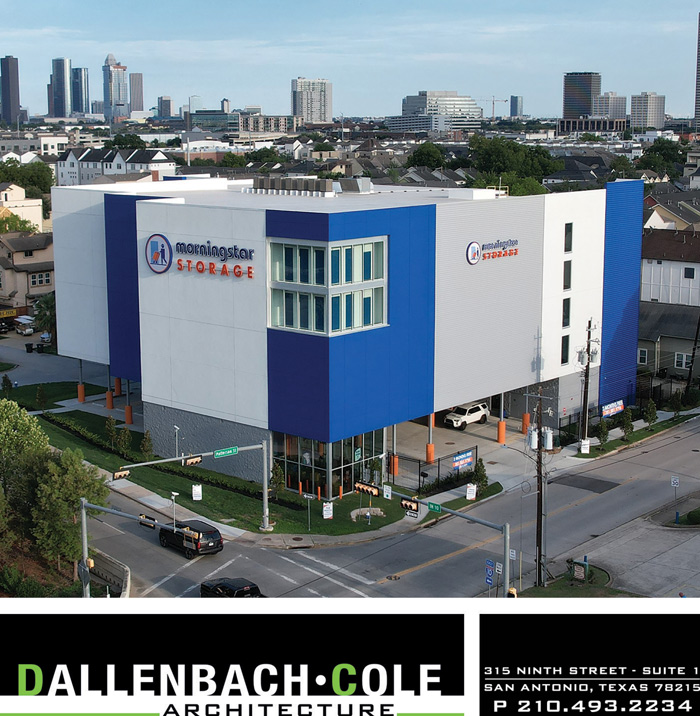


• structural steel& miscellaneous metals
• door & hallway systems •metal roofing
• insulated metal panels

he self-storage industry has always been resilient, adapting to economic swings, shifting customer expectations, and evolving technology. But as the industry grows more competitive, operators are recognizing a truth that other sectors have long embraced: Well-trained managers are the backbone of success. In an environment where customer service, compliance, and efficiency can make or break a business, training is no longer optional—it’s essential.
At the same time, state self-storage associations are stepping up with resources that give operators, especially smaller ones, a fighting chance to compete at a high level. From legal tools to educational programs, association membership provides tangible benefits that directly impact a facility’s bottom line. Taken together, manager training and active association involvement create a powerful combination that positions operators to thrive in today’s market.
A structured training program helps employees gain confidence, reduces costly mistakes, and sets clear expectations. For new hires, training shortens the learning curve and builds consistency across locations. For existing staff, it keeps skills sharp and ensures compliance with evolving laws and industry standards.
Training also directly impacts customer satisfaction. Tenants often select facilities based not only on price or location but also on how they’re treated when they call, walk in, or need assistance. A knowledgeable, well-trained manager can turn a potential one-time renter into a long-term tenant. In an industry where occupancy and retention drive profitability, that makes manager training an investment with measurable returns.
Video-based training platforms are designed with flexibility in mind. Employees can watch short modules on core topics, such as daily operations, lien law compliance, or customer service skills, without leaving the facility understaffed. Many programs keep lessons under 20 minutes, understanding that managers often need to pause and assist customers before resuming. To reinforce learning, quizzes follow each video, ensuring that key points are absorbed and understood.
This approach reflects the realities of self-storage. Training doesn’t happen in a vacuum; it happens in real time, between phone calls, walk-ins, and daily tasks. Online training allows employees to balance learning with customer care, creating a practical and effective solution for operators of all sizes.
Unlike general customer service topics, lien law training often requires deeper dives. That’s why many online programs dedicate longer modules to this subject, ensuring that managers grasp the nuances of compliance. By investing in legal education, operators safeguard their businesses from costly errors while demonstrating professionalism and fairness to tenants.
- State-specific lease agreements, updated regularly to reflect current laws;
- Educational resources, including webinars, certification programs, and industry guides;
- Advocacy at the state level, ensuring the industry’s voice is heard on legislative and regulatory issues; and
- Discounts and vendor partnerships, helping members save money on products and services.
For smaller operators, these benefits are especially valuable. Access to a professionally drafted lease, for example, can save thousands in legal fees while reducing liability. Webinars and training opportunities bring expertise directly to members who might otherwise miss out on industry best practices. And advocacy ensures that the concerns of self-storage owners are represented in state capitols, where decisions can significantly affect operations.
Membership also signals professionalism. Customers may not always know which facilities are association members, but vendors, lenders, and industry partners do. Being part of a respected association shows that an operator is serious about running their business the right way, with compliance, ethics, and quality in mind.
Online manager training, for instance, helps owners ensure that even a single employee receives consistent, professional education. State association leases and legal updates give them the same legal protections as larger competitors. Together, these resources help smaller operators compete effectively while maintaining the personalized service that often sets them apart.
Manager training builds strong, confident employees who can handle the demands of daily operations while providing excellent customer service. Association membership delivers the tools, education, and advocacy that no single operator could secure alone. Together, they form a foundation for long-term success.
For operators considering the next step in strengthening their businesses, the message is clear: Don’t go it alone. Invest in training, join your state association, and take advantage of the resources available. In a competitive and evolving industry, these choices can make the difference between simply managing and truly thriving.




BEHIND YOUR SUCCESS
- Single Story
- Multi-Story
- Hallway Systems
- Climate Control
- Superwide
- Conversions
- Boat/RV
- Canopies
- Portables



t is impossible to ignore the change in strategy amongst the REITs and other large operators in which they are luring customers in with heavily discounted rates, only to implement large existing customer rate increases (ECRIs) a few months later.
Are you practicing this strategy at your facilities? It is an approach more operators are considering in order to compete for new customers. There are factors, however, to consider when executing this strategy. A bigger question remains though: Is this strategy sustainable for overall revenue growth?
Historically, the gap between street rates and in-place rates has been fairly low. According to Marcus & Millichap’s 2025 Self Storage Mid-Year National Investment Outlook, in 2017, street rates were six percent lower than in-place rates. By mid-2025 that gap had widened to 43 percent. Move-in rates are so low now that, in more cases than ever before, customers are coming from beyond the typical one- to three-mile trade area to rent.
With previous revenue management strategies, the advertised street rate was much more in line with in-place rents than with today’s approach. For example, your in-place rents might have been $100 and your advertised move-in rate was $94. You then increased customer rates once a year at a modest 5 percent–15 percent to bring them up to the street rate. Those days are over. In today’s environment, the ECRI cadence is much more frequent than once per year. With the current models, the first ECRI is typically three to five months after moving in, and a second and third increase anywhere from six to nine months later. Only after the third or fourth increase does the cadence change to annually. With this accelerated schedule, the rate of rent increases as a percentage of the existing rate is also significantly higher, anywhere between 20 percent to 75 percent, depending on a variety of factors, including what your move-in rate was, what the current street rate is, unit type occupancy, and whether or not this is your first rate increase, to name a few.
Does this newer strategy result in revenue growth? Is this strategy sustainable in the long run?
It may be too soon to tell. Data suggests some recent small improvements in street rates and in-place rents, but if the strategy of super low move-in rates continues and churn increases, revenue growth could prove difficult. For the third quarter of 2025, in-place rent rates amongst the REITs were down 3 percent year over year. On a positive front, compared to the second quarter of 2025, third quarter in-place rates were up 7.2 percent. The tide on continued decreases in street rates may be turning, and I suspect that this coming rental season will be telling as we will see what the REITs do with move-in rates as occupancy peaks during the busy season.
Are you practicing this strategy at your facilities? Have you considered the pros and cons of a low move-in rate/high ECRI strategy?
Here are some factors to think about as you formulate or revise your plan.
- How do you compete for new customers and maintain occupancy if you do not offer low move-in rates?
- Will you see an uptick in negative reviews resulting from more frequent and higher rate increases? If so, how does this affect your brand’s reputation? Do negative reviews impact potential customers from renting from you?
- Does your churn rate increase? One operator told me that before the high ECRI strategy, their churn rate averaged 4 percent, but over 12 months, as they increased the percentage of ECRIs, the churn rate increased to 6 percent.
- What does potential legislation surrounding high customer rate increases mean? Self-storage has typically not received much attention from legislators, but that may be changing. The number of consumers using storage is increasing, and the supply of storage is increasing. This could lead to more customers complaining about rate increases, which would put the industry on the radar for more legislators. Last year, for example, the state of California proposed a bill that would cap the rate of a customer increase at 5 percent annually, plus the percentage change in the cost of living, or 10 percent over any 12-month period. That bill did not pass; however, out of it came a strict disclosure requirement. As of Jan. 1, 2026, operators must now disclose in their rental agreement whether the move-in rate is promotional or discounted, whether the rate is subject to change, and the maximum rental rate an owner could charge during the first 12months. Will other states follow? Do we want self-storage to be on legislators’ radar where they could impose other restrictions on operations?
There is much to consider when determining what your street rates, move-in rates, and rate increases should be. What are you comfortable with? What is or is not working with your current strategy and where do you need to tweak it? Is there an effective balance between low move-in rates and high ECRIs? What does that look like to you?
I think time will tell as to whether this strategy is sustainable. I do believe it is here to stay, at least through the upcoming rental season and likely beyond. In the meantime, create your revenue management plan now so that you are ready for peak season. Watch the data—your own, the REITs, and what your competitors are doing with their rates. Be prepared to adapt and change to stay competitive while growing revenue.

everaging AI helps Stuf Storage manage a nationwide self-storage portfolio with a tiny team. Founded in 2020, the startup partners with real estate owners to turn underutilized spaces into remotely operated storage locations.
Tapping AI in areas such as video surveillance and pricing and revenue management has been critical to Stuf’s success in building a portfolio of 31 locations across seven cities with just three full-time operations staff. The company plans to continue scaling its business with the assistance of a purpose-built AI agent, dubbed Sidney, which it launched in 2025 to manage routine customer interactions.
Stuf notes that Sidney’s augmenting of its member experience team, which includes taking inbound calls as well as making outbound calls and sending outbound texts, has driven a 17 percent increase in sales conversions. “It really is a good extra set of hands,” says Katharine Lau, Stuf Storage co-founder and CEO.
Stuf is one of many self-storage operators harnessing advanced AI to help rent units and manage customers. Three years after the release of ChatGPT, generative AI (the kind of AI that can spin up content such as text and images on command) has begun to improve efficiency and support decision-making throughout the industry.
Storage operators and vendors have found promising use cases for AI in areas such as marketing, customer service, and pricing. The most visible impact has been at the top of the sales funnel, where leads are nurtured and the customer journey begins.
During an online meetup in August 2025, Jim Ross, founder of self-storage management company 3 Mile Storage Management, demonstrated how platforms such as ChatGPT and Lovable can be used to conduct competitor analysis, role play customer interactions, and create marketing content from scratch.
Ross showed how a user can prompt ChatGPT to generate detailed profiles of the five to seven top competitors within a three- to five-mile radius of a specific storage facility in Tennessee. For each competitor, he asked for a company overview, a summary of reviews on the facility’s Google Business Profile, key features and amenities, target keywords on the website, and ownership information and history.
The platform took just over five minutes to provide a detailed analysis. Ross told Messenger he finds AI useful for generating marketing images and videos for storage owners, as well as competitor analysis that can inform decision-making about pricing and marketing. “In the past, you’ve had to pay for those kinds of services,” says Ross. “It’s still kind of bare bones, but at least it gives you something to work with that’s free.”
This helps level the playing field for operators who don’t have the budgets to develop their own internal tools. “It gives the small operator the tools to kind of compete against the big boys,” Ross adds.
Powered by advanced large language models (LLMs), Uniti AI provides conversational support and persistent follow-up across a variety of channels: voice calls, email, SMS, WhatsApp, and web chat. The partnership with OpenTech aims to automate routine customer inquiries while smoothly escalating more complex cases to live human operators.
“You still get the benefit of a 24/7 human backup, but it’ll be at a lower cost than if you had that alone,” says Francesco Decamilli, Uniti AI’s co-founder and CEO.
Routine conversations that can be easily automated account for up to 80 percent of communication; these would be, for example, calls about rental rates, move-in and move-out policies, gate code requests, and outstanding payments. The other 20 percent are more complex situations that require a human touch, such as when customers have a billing dispute or need to report damage to their units or an emergency.
“It’s a fully native AI backend, which is a differentiator for us relative to some legacy industry platforms that have more traditional chatbot infrastructure with decision trees and so on,” he says, noting that the partnership with OpenTech allows Uniti to market the combined voice agent plus call center solution to potentially hundreds of thousands of self-storage facilities worldwide.
Another company innovating in this space is self-storage tech firm Storable, which launched an AI-powered digital assistant called Agent Assist in July 2025. Storable told Messenger that more than 60 percent of Agent Assist interactions are happening after hours when facilities are closed, yet the tool still resolves 90 percent of tenant requests.
“Operators are willing to adopt AI where there’s clear ROI, and with Agent Assist we’re already seeing that in the form of new revenue and cost savings,” says Taylor Yarbrough, Storable’s vice president of product.
For companies that develop their own AI solutions, the data-crunching required to build a helpful chatbot can yield far-reaching benefits. Stuf Storage’s AI agent, Sidney, was trained on 60,000 hours of customer calls and millions of interactions and data points.
Sidney handles routine customer inquiries and sales, supplementing the capabilities of the company’s proprietary self-storage management software, StufOS, which also incorporates AI. Intensive training allowed Stuf to “mold” Sidney into a personality that can effectively connect with users and drive bookings, according to Lau.
Sidney also has a built-in AI model that analyzes calls and extracts recommendations to support the company’s decision-making via an insights dashboard. A jump in customer mentions of price matching from one week to the next, for example, might be a sign that it’s time for Stuf to compare its rates against competitors.
“If there are a lot of questions about sizing for this particular location, you might want to improve how you talk about sizing here,” says Lau. “Sometimes we’re so focused on one thing, let’s say this month it’s all about customer rate increases, but maybe we’re not thinking about the list prices, or we’re not thinking about new supply coming online.”
“We develop a lot of our own software to either automate or augment the workflows that go into running a self-storage facility,” says Peter Smyth, CEO and co-founder of White Label Storage, a third-party self-storage management company with over 200 managed facilities in its portfolio. “Pretty much every single one of these tools has some piece of AI embedded in the software.”
“We use LLMs to help process rate management with our revenue management tool. We use it to audit code across all of our products, and we use it to assist in strategy recommendations at the asset level. For example, this tool uses AI to collect data on a submarket level that informs what a competitive rate looks like within that area,” Smyth adds.
Another company that uses AI to inform pricing decisions is SmartStop Self Storage REIT, a listed REIT that owns or manages 236 properties in the U.S. and Canada. SmartStop’s proprietary AI pricing agents enable millions of automated pricing adjustments each month.
“AI is a key part of our operating platform and a critical component of our broader innovation strategy,” H. Michael Schwartz, SmartStop chairman and CEO, said in a statement. He added that the company’s pricing system delivers “meaningful performance improvements across the portfolio.”
Without using LLMs, the company’s automation platform enables operators to slash their over-90-day past-due accounts by up to 95 percent and reduce their outstanding debt by 50 percent within one year of implementation.
“We not only reduce the overall delinquency dollars that are outstanding, but our automation accelerates the process and empties out those units quicker, so they go back into circulation,” says Shardlow.
For example, Ai Lean maintains attorneys alongside its tech platform to advise on tricky legal situations like abandoned vehicles. Shardlow also noted that artificial intelligence shouldn’t replace human judgment when it comes to tenant relationships or strategic business decisions.
People are in the driver’s seat for all decisions at White Label, but using AI in the company’s pricing strategy enables smarter and more informed decisions for clients, according to Smyth.
“Operators need to remember that AI is not at the place where you can set it and forget it,” he says. “You need people to execute and provide sanity checks on whatever AI produces.”



pring and summer are the make-or-break months for many self-storage facilities. Demand surges as people move, renovate, downsize, travel, and reorganize their homes. With higher occupancy comes higher expectations: Tenants want speed, simplicity, security, and a frictionless experience from the moment they find your facility to the moment they move in. Whether you operate a single facility or are a regional player, now is the time to prep your property, your team, and your technology for peak season. Here are the critical to-dos every owner should have on their radar.
- Inspect doors, springs, latches, and hallway systems for wear. Spring and summer heat can accelerate component fatigue for aging parts.
- Repair or replace dented panels, misaligned doors, or rust-prone hardware.
- Test lighting, access control, elevators, HVAC in climate-controlled units, and drainage systems.
- Refresh landscaping and repaint high-visibility areas to improve curb appeal.
Small fixes now can prevent large disruptions once occupancy peaks.
- Gate access systems and keypad performance (including back-up power);
- Camera clarity, angles, recording retention, and nighttime visibility;
- Unit-level smart locks or Bluetooth-enabled access, which continues to grow as a tenant expectation; and
- Perimeter fencing, bollards, and lighting to reduce liability and improve tenant confidence.
The goal is to create an environment where tenants feel safe leaving and visiting their belongings and where would-be intruders quickly realize they shouldn’t attempt anything.
- Website load speed and mobile usability,
- Online reservation capabilities,
- Unit availability accuracy online,
- Pricing and promotion consistency across platforms, and
- Google Business Profile photos, hours, and reviews.
Smart access and contactless rentals are predicted to be important differentiators for some customer types.
- Fast, consistent responses to inquiries (email, phone, chat);
- Contactless rental workflows and troubleshooting;
- Upselling rental insurance, locks, and packing supplies; and
- Scenario training for after-hours issues, late payments, and high-volume move-ins.
A sharp team keeps move-ins flowing smoothly and an increase in positive reviews.
- Lubricating and balancing doors,
- Checking spring tension, especially as temps rise,
- Cleaning gutters and drainage channels,
- Replacing worn weather stripping, and
- Ensuring climatecontrolled units maintain consistent temperatures.
Reducing mid-season outages protects your operations and your tenant experience. If you find components that need to be replaced, consider upgrading to higher quality materials that can extend the life of the units and potentially reduce or even eliminate some forms of ongoing annual maintenance.
- Inspect roofs, gutters, downspouts, and grading.
- Stock emergency supplies for power outages.
- Create and publish safety plans and safe areas for staff and customers during a severe weather event.
- Confirm computers, security systems, and gate operators are surge protected.
Proactive preparation can help avoid costly downtime and tenant claims.


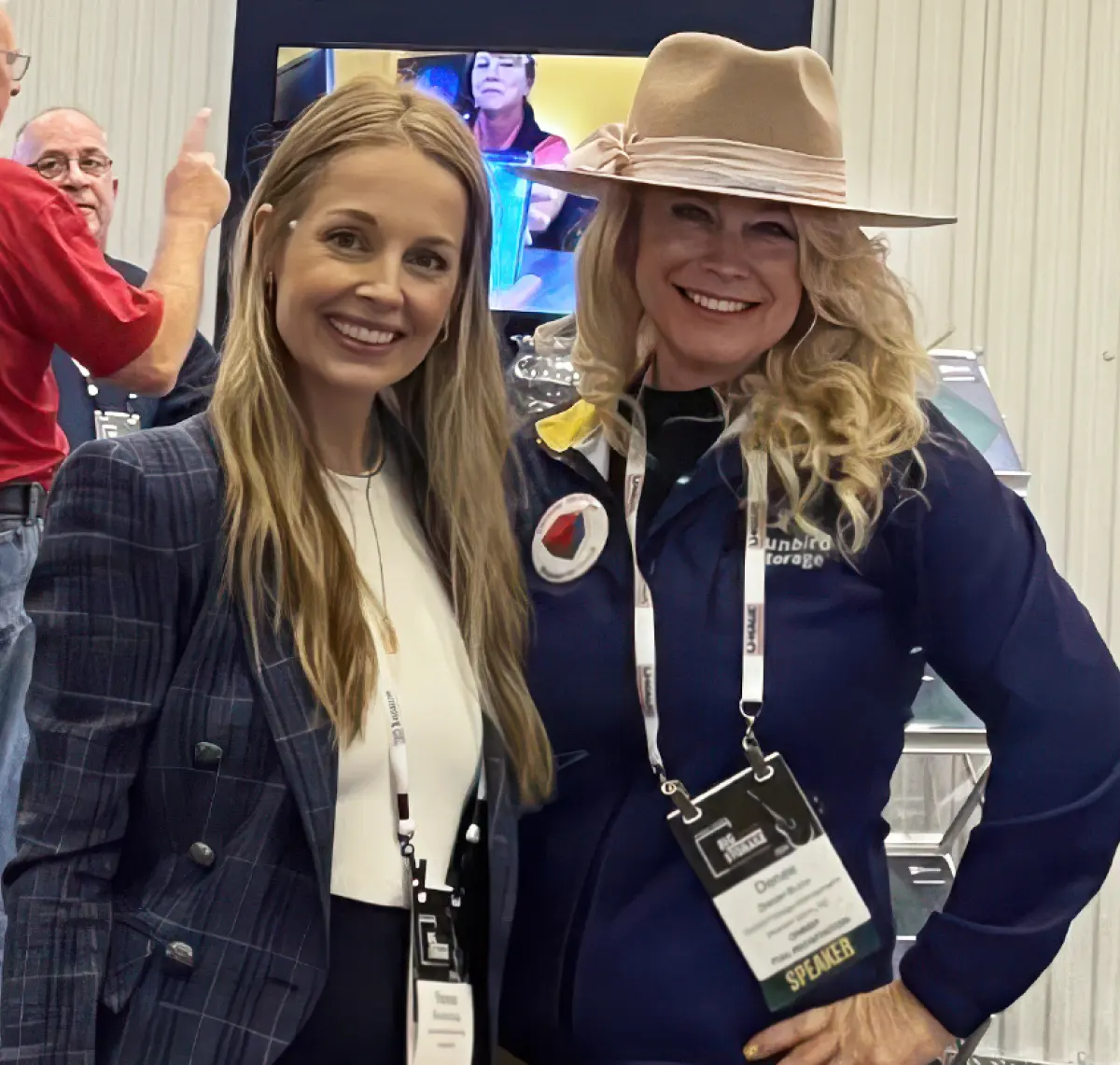
enee Burns was the kind of leader who made the self-storage industry, despite its rapid growth, feel a bit smaller and a lot more human. She believed that business could be personal: Build relationships first and trust that results would follow. Whether improving operations, shaping strategy, or mentoring colleagues, she focused on making a real difference, not just for companies but for the people within them.
Her recent passing has left a void not only among her family and loved ones but also across the industry she loved. She was slated to be featured in this “Women in Self-Storage” column later this year, but sadly, she passed away on Feb. 12 following a two-month battle with anaplastic thyroid cancer, a rare and aggressive disease. So, we’ve dedicated this space to honoring her life and the legacy she leaves behind.
Prior to her executive leadership roles, she was instrumental in expanding Tenant Inc.’s national presence, driving significant account growth and representing the company at major industry events. Earlier in her career, she managed national and international accounts for Storage Commander, helping expand operations into Australasia and South Africa while strengthening executive relationships worldwide.
“Heaven gained an angel today,” wrote Sunbird Storage on its LinkedIn page. “Our dear friend Denee Burns went home to be with the Lord.”
She regularly contributed to stories for MSM. She was passionate about giving back, and even suggested the story MSM published in September 2025, “Industry Generosity,” which highlighted the charitable work the industry does for others. “It’s not just about the bottom line,” she said. “Leadership must have heart and caring to set them apart.”
Moreover, she wasn’t afraid to speak out about hot topics, like aggressive rate hike strategies. When she penned “The Last Word” in Messenger, she made it clear that an operator can compete with more than just a price tag—by caring about customers. “We strive to provide an exceptional customer experience, even though we charge more for rent,” she wrote. “They feel safer with us and appreciate the cleanliness of the facility and courteousness of the staff. It’s something that can be implemented at other facilities to compete on quality over cost—and maybe put an end to the price wars.”
Despite being in an industry driven by data and ROI, she always believed people were the greatest investment.


“She was one of a kind. She left everyone better than she found them, and her smile was infectious. She loved what she did and focusing on non-profit partnerships was her specialty. That work gave her wings. Now she’s truly got them.” —Jason Koonin, Bluebird Self Storage/Sunbird Storage
“Denee brought so much joy and happiness to everyone around her. She was smart, talented, and a true believer. She inspired me every day and I will miss her dearly. We must find peace knowing she is home in heaven and keep her family in our prayers.” —Shana Kirton, Bluebird Self Storage
“Denee was one of those rare people whose faith wasn’t just something she talked about—it was something she lived, every day. The last time I stood beside her was at the prayer gathering during SSA in September—a moment that feels even more meaningful now. She will be deeply missed across the industry, but her impact, her joy, and her faith will live on in the many people she encouraged and prayed with over the years.” —Thaddeus Campbell, S3 Partners
“Denee Burns’ passing leaves a hole in the heart of the self-storage industry. Her passion for learning and studying the Word was an inspiration to me and so many others. Her faith gives me comfort knowing she is in Heaven. She had a special gift for making everyone feel welcome. She will be deeply missed. —CJ Stratte, Self-Storage Advisor



“I still remember the first time we met … At every storage conference after that, she always went out of her way to make me feel welcome. She didn’t just make conversation—she made people feel seen. The world needs more people like her. Denee, I will truly miss seeing your radiant face and feeling the warmth you brought into every room.” —Danielle Pancheri, Advantage Management Inc and STORAGExperts
“Rest easy Denee Burns. Your kindness and huge smile will be so missed. Taken way too young and way too fast. You brought such a positive attitude to not only the industry but to anyone who crossed your path.” —Jessica Johnson, The Storage Group
“Denee was a light. Real, vibrant, and endlessly encouraging. She cheered for me, and the beautiful thing is she did that for everyone around her. She had a way of making people feel seen and capable and worth celebrating. I hope I can carry even a fraction of the kindness and encouragement she gave so freely into the way I show up for others.” —Jessie Lamb, nodaFi
“The storage community lost someone special. Denee was a force in this industry and an even better friend. She believed in people. She pushed you to step up, speak up, and own your space. Her impact on my business and so many others is real and lasting.” —Eva Chavez, Beacon Ave Marketing
“Denee truly had one of the biggest hearts of anyone we’ve ever known. She could light up any room, always positive, full of energy, and constantly pouring into others. She was a giver through and through, always showing up, always supporting, always encouraging.” —James Reid, Investa Capital
“I will miss my sweet friend and will miss her inspiring and uplifting prayers at our self-storage prayer group. Her hair was like a halo! Rest in peace sweet Denee; you are home now.” —Lauri Longstrom-Henderson, MSM
“You were always a staunch supporter of women and so active at our Women’s Council events. Your smile, kindness, and desire to see others succeed will long live on.” —Theresa Gallas, Storage Building Company




n any industry, there are many personalities. Specifically in self-storage, there are those who become legends (Anne Ballard). Those who have a radio station (Harry Sleighel), and those who overcome unimaginable hardships and become successful as an author and podcaster (AJ Osborne). And there are people who are so endearing, you immediately want to become friends with them. That’s the case of Adam Karnes, senior vice president at The BSC Group. He is relatively young, yet he is so good and enthusiastic about what he does that it became absolutely necessary to feature him in an installment of “Who’s Who in Self-Storage.”
It’s clear he loves life. No matter the topic—his childhood, family, career, hobbies—he talks about all of it in an upbeat, appreciative way; and you can’t help but get excited about all of it as well. You want to hear more and learn about a person who’s a refreshing presence in the industry and in life in general.
He describes being nerdy in a very relatable way. “I played a lot of video games, and I loved skateboarding. I also tried playing a lot of sports at school—hockey, lacrosse, and basketball, but I was never very good at any of them,” he says with a laugh.
He attended public school until fifth grade, but his parents noticed that he wasn’t as focused on his studies, so they enrolled him in a private school, the University School of Milwaukee. “My mom wanted me in smaller classrooms, and it actually turned out really well. It made me realize I enjoyed math and science, and it reinvigorated my love for reading. It was really a great experience and I feel very blessed that my parents cared enough about my education that they put me somewhere I could thrive academically.”
He credits this experience as the reason why he got into the University of Wisconsin at Madison. “I fell in love with the campus as soon as I visited it,” he recalls. “It was really fun, too, because those were good years for the school’s football, basketball, and hockey teams. It was great being at a Big Ten school, and I loved showing my friends and family around and taking them to Badger tailgates when they would come visit.”
While there, he joined Kappa Sigma. “I didn’t see myself as a fraternity person when I first went to college, but I went to a few parties and frankly had a blast. The fraternity showed me a good balance between having fun and being a serious student. To this day, those guys remain some of my best friends.”
It was during his college years that Karnes started developing his strong work ethic. He worked several jobs while going to school, including at the Kohl Center, where he was part of a crew that would convert the arena from basketball to hockey and occasionally for concerts. “It was so much fun. I got to work with people from so many walks of life.” He also worked at various restaurants, both in the kitchen and as a server and cook. “I kept pretty busy and worked the whole time I was at school. I was lucky to be in Madison, which was affordable as an in-state student, and I was able to pay for my books and rent.”
Over the course of his studies, he spent two summers working at Northwestern Mutual, where Karnes sold insurance. And while he realized early on that it wasn’t a career path he was going to follow, he appreciated the valuable skills he was learning along the way. “I had to call people and have difficult conversations about what would happen to their family if they weren’t around. It taught me a lot of what I do now as a mortgage broker, [like] asking difficult questions to understand what they’re working through. Even though it’s a totally different industry, I value that experience because it took me out of my comfort zone. I don’t think I fully appreciated it at the time, but I look back on it really fondly because it really set me up well.”

Karnes interviewed for numerous jobs his senior year, eventually accepting an offer to work at DBRS in Chicago, where he stayed for almost two years. “It was investment banking hours, without the investment banking salary,” he says through laughter. “It was really intense working 90 hours a week. I’d go home, hang out for a few minutes, go to bed, wake up, and do it all over again. It was my intro into my credit training, working on the debt and finance side of real estate. It taught me to underwrite, and what I do now every day, I learned on some level at DBRS.”
He thought he’d work there long term, but serendipity had other plans. His boss at the time, Erin, had a cool husband with whom he got along really well. “We had similar interests, and we’re both big fans of the Grateful Dead; and with his wife’s permission, he called me and said they were looking to hire an analyst, and he thought I’d be a good fit for the role.”
The caller was Shawn Hill, principal and founding member of The BSC Group, a company that provides commercial real estate financing advisory solutions. It was an interesting proposition, but one that made Karnes a bit nervous, since he did have a good job and a steady paycheck, and jumping ship to work at The BSC Group meant working in areas he wasn’t well acquainted with. “It was a pivotal time in my life,” he says. “Shawn pointed out that I was still in my 20s and didn’t have a family yet, to come over and try it, and if I didn’t like it, that’d be fine, but that he thought I could be good at it.”
Even though The BSC Group works in many areas of commercial real estate, Karnes’ focus was primarily the self-storage industry. While it wasn’t a vertical that he had foreseen himself in, he’s thoroughly grateful this is where he landed. “It’s an industry I appreciate so much. The people are so kind and generally very humble. You meet individuals with portfolios that are worth a lot of money, and you really wouldn’t know it. Our clients are really special people, many who will be lifelong friends of mine because they genuinely care. They ask how my family’s doing, and I really appreciate them.”
He also enjoys working on the mortgage side. “There’s always a problem to solve. Maybe not the same way as a doctor or nurse, but I’m helping people, working directly with them.” He also highlights that he enjoys working at a small organization where he gets to wear many hats. “When you look at an org that’s only five people, being 20 percent of what we do means really having an impact, helping progress the business, add value, and grow the company. I’m so proud of all the work we’ve done and the people we’ve helped. It’s the ethos of what we do. We’re helping people grow their business and set their families up for generational wealth.”
He’s also appreciative that his work enables him to have a good work/life balance. “We’re hard workers, but we also enjoy our time with our families.” And he’s thankful of working with Shawn Hill and Devin Huber, the other principal and founding member of The BSC Group. “They’ve shown me that work is important, but so is taking care of yourself, spending time with family, and creating memories.”



“Cat is wonderful, such a hard worker and so smart. She’s an awesome mom and she could probably do what I do 10 times better. She’s a wonderful life partner.”
When asked about his proudest achievement, he’s quick to answer. “Being a dad to my daughter. She’s only two and a half and she already talks in full sentences and full paragraphs. She’s going to be smarter than me by the time she’s 10.”
He’s also extremely fond of his brother, Joe, who lives in Denver. “He’s my little brother, and even though he’s six years younger than me, I really look up to him.”
And we most definitely need to mention both of his grandfathers. “My grandpa Bob (Karnes) is a long-time math teacher at the local high school, and he also owned a bar and was a driving instructor. He was the one who taught me how to drive. He’s the one who instilled in me the love of math. He was a teacher and found other ways to supplement his income. Very smart and diligent investor.”
On the other side, his grandpa Dom Tirabassi is another one of the biggest inspirations in his life. “He’s 91 and he still works. Real estate guy, too. Worked in construction for a long time. He instilled in me that you are going to get run over a little bit if you don’t stand up for yourself or if you don’t know what you’re talking about. He also taught me to always treat people with kindness. He often sponsored underprivileged kids to go to high school, and it’s because of him that I know the importance of keeping busy and to always exercise your mind.”


These are two lessons he’s applied well in life, including at Wisconsin’s Fall 50K relay race, which he ran with his wife and her cousins. “I ran 12 and a half miles for my part of the relay. We came in third out of almost 500 teams,” he says proudly, admitting he counts the experience as one of his biggest accomplishments. “It’s funny how I played so many contact sports as a kid, and I wasn’t good at any of them, yet I started running as an adult, and it turns out I’m really fast!” And that’s not hyperbole. He can run 10 miles at a seven-minute pace.
He loves his family. He loves his job. He loves running, hunting, fishing, biking, and cooking. He also loves going to Packers football games and concerts, especially the Grateful Dead and Phish. “I’ve been to 50 Phish shows,” he says unabashedly. What’s more, Karnes is a prolific reader, counting among his favorite books nonfiction works like “The Comfort Crisis” by Michael Easter, suspenseful thrillers by Stephen King, and dystopian novels like Ayn Rand’s “Atlas Shrug.” And because he’s so enthusiastically supportive of those around him, he read one of his clients’ books, “Minus 148 Degrees” by Art Davidson. “Shawn told me ‘You gotta read this book,’ and it’s one of my all-time favorites!”
When reflecting on his life, all you hear is gratefulness. “I’m proud I took the leap to get into the industry,” he says. “Partial credit to Shawn and Devin convincing me, but I had faith in myself, and it’s paid so many dividends. I’ve been able to take care of my family, and I’m very pleased and honored to be part of an industry held in such high regard, and with people I think the world of. When I made the leap, it wasn’t as clear how good it was going to be, and it’s been so good.”

At PTI Security Systems, our commitment to quality and passion for innovation drives the development of advanced security solutions to help operators scale with confidence. From smart technology to fully integrated systems, our solutions provide greater security, insights, and control across any facility.

don’t keep up with the competition;
they lead the pack.



MOBILE APP
SMART KEYPAD
SMART LATCH
MOBILE APP
SMART KEYPAD
SMART LATCH

Data Storage Stats
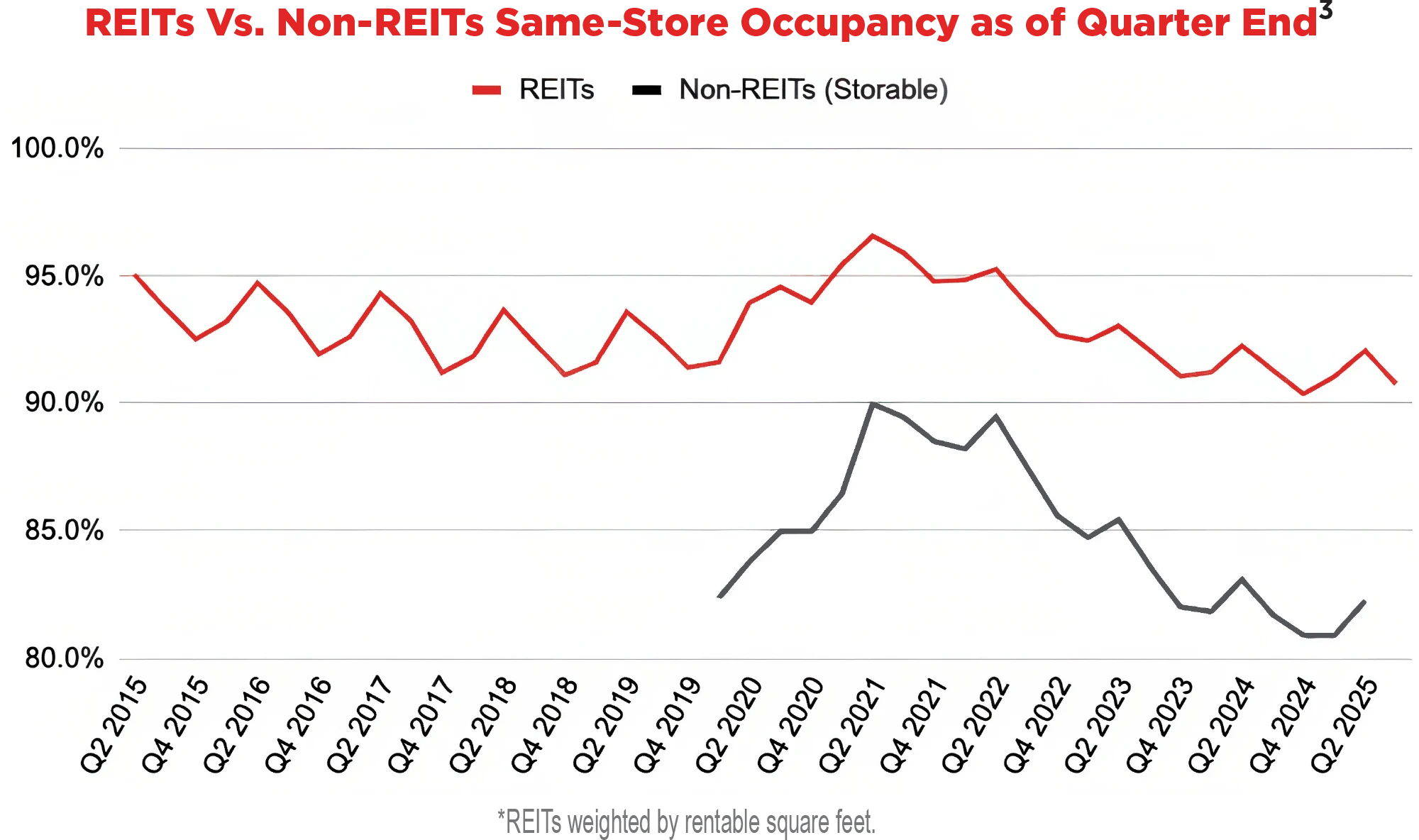
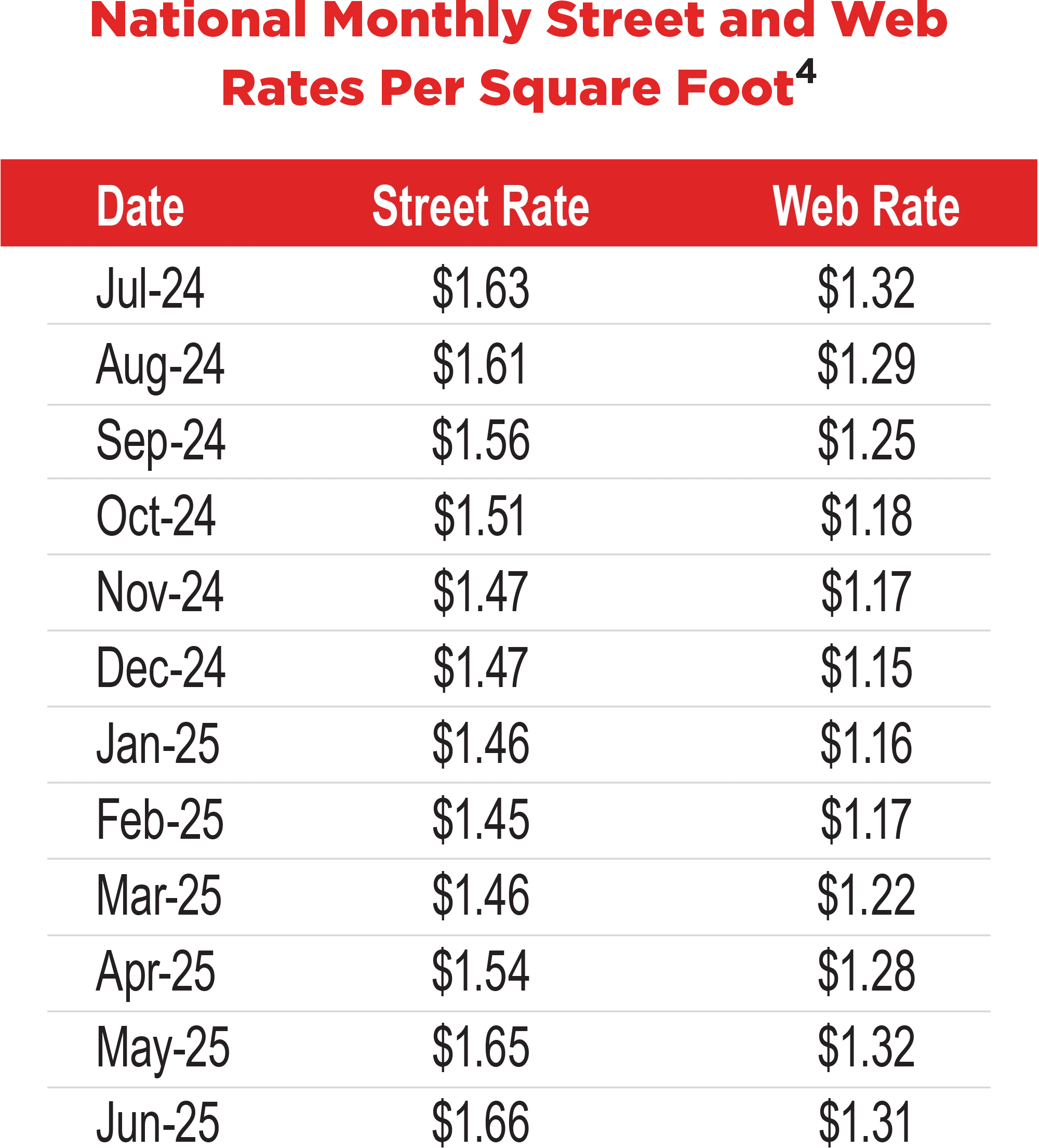

he digital landscape is undergoing its most significant transformation since the invention of the search engine. I have been working in digital marketing since 1995 and have witnessed the slow evolution of the tools and platforms, such as social media networks and search engines. People took their time adapting to the platforms.
What makes the AI search evolution different is head-spinning velocity. In all my years in this business, I have never seen technology change and grow in usage so quickly. Besides that, the AI answer bots are making it easy for people to use them!
For the self-storage industry, whether you’re an owner-operator, part of a large chain or franchise, or are in the commercial real estate side, the rules of “getting found” have changed. In 2026, marketing will no longer be just about ranking No. 1 on Google. It will be about being the trusted answer provided by AI. This shift is called answer engine optimization (AEO) or generative engine optimization (GEO), among other terms.
Key search trends include:
- The “Crocodile Mouth” Effect – You may notice your “impressions” (the number of people who see your brand) are increasing, while your “clicks” are decreasing. This happens because AI tools answer questions directly, so users don’t always need to visit your website unless they need what you have to offer or have additional questions.
- Conversational Discovery – People are asking complex, human questions. AI evaluates these intents and summarizes information from multiple sources to give one clear answer.
- Local Shifts – For local businesses, “Ask Maps” has replaced Google Business Profile Q&A. For instance, someone may ask, “What is the best storage facility in <insert location> where I can store a three-bedroom house temporarily?” directly into their Google Maps. It then scans the web—everywhere—for reviews, recommendations, and mentions of your business.
This is the most popular “answer engine,” currently holding a massive share of AI referral traffic. It prioritizes extremely fresh content, often citing information that is newer than standard Google results. It is also moving toward “agentic” search, meaning it can eventually find a product and purchase it for a user.
Perplexity
A hybrid tool that acts like a conversational search engine, it is highly valued for real-time research because it provides clear citations and links to the sources it uses. Their browser, Comet, is an incredible tool for analyzing data and reporting fast. In a previous article, I showed how I took analytics from Google Search Console and came up with frequently asked questions using Comet.
Google Gemini And AI Overviews (AIO)
Gemini is the AI model that powers Google’s algorithm. AI overviews are the summaries you see at the top of Google search results. These behave like traditional search but prioritize “answer-ready” content from your website.
AI models don’t just read websites. They collect not only data that’s on the internet but also pick up posts, conversations, and comments that people post on Reddit, YouTube, LinkedIn, Facebook, Instagram, and Quora. AI cites Reddit often (up to 30 percent of the time) because it craves authentic, human perspectives that corporate websites often lack. I recently wrote on this in a past issue of Messenger.
- Short and Precise Answers to Frequently Asked Questions (FAQs) – Break your content into clear, topical, self-contained blocks that can stand alone if extracted by an AI. However, don’t put all your FAQs on one page. Add FAQs to blog posts and pages.
- Put Questions in Headings – Use H2 or H3 heading tags for your questions (like “How do I choose the right-sized storage space?”) followed by short, direct, factual answers.
- Tables and Lists – AI loves structured data. Use tables for comparisons and bulleted lists for steps, data, or features.
- Find Content Gaps – AI tools can help you find content gaps on your website. Using any of them (Gemini, ChatGPT, or Perplexity), upload a CSV file of your sitemap. Then, ask it to analyze the content and find any gaps. Your sitemap is simply an index of all your pages and blog posts. Depending on your website platform, an SEO tool can retrieve it for you.
- Don’t Just Research Keywords – Type common customer questions into ChatGPT and Perplexity. If your business isn’t mentioned, see which competitors are and analyze their content structure to see what you are missing.
- Keep Content Fresh – AI assistants look for the freshest, most accurate information. Add “last updated” dates to your pages and ensure product inventory, availability, or service details are current. Your blog’s archive page and individual posts should also include dates. Yes, that means you need to blog weekly.
More than likely, you won’t have to completely redo your website, and you don’t need a big budget. Just reformat the content and optimize it for the AI bots. Most importantly, write and structure your site for your human potential customer first, but keep the AI answer bot in mind. In other words, don’t forgo the user experience, which leads to conversions, to get noticed by AI.
Amplify EEAT
Both Google and AI models prioritize experience, expertise, authoritativeness, and trustworthiness (EEAT). I have written about this extensively in past issues of Messenger.
- Your Company Story – Clearly state your founding date, location, leadership, team, core values, and unique mission in your “About” page, so AI can “map” who you are.
- Authorship – Create detailed author and about pages with bios and links to each team member’s LinkedIn profile to provide credibility, authority, and trustworthiness.
Optimize Everything
Optimize your Google Business Profile (GBP). For local businesses, this is your most important asset. Double down on review acquisition. AI looks at your reviews and attributes to answer user questions in “Ask Maps.” Ask Maps will get information from your website as well. Make sure all your blog posts get posted to your GBP as soon as they are published. Use a tool like Dlvr.it.
Social Media Posts
It’s no longer solely about engagement on social media. It’s about sharing posts with substance. Consistently use your major keywords in your text posts, captions, and video scripts. Short-form, vertical videos (TikToks/Reels/YouTube Shorts) are grabbed by Google to provide visual answers in search results.
How I used AI to write this article: I had 44 sources of blog posts, videos, and PDFs to analyze, study, and then compose the article. It would have taken me days to go through everything. I uploaded them to Google’s NotebookLM (https://notebooklm.google.com/), and I had an article in less than a minute. Now, I did have to edit it and add my own EEAT. Never post an AI-written article verbatim. Google knows. If you want to learn how to use all these cool tools and get a free analysis, visit my website and book a free consultation (https://AZSocialMediaWiz.com).



he 1989 film “Field of Dreams” was famous for the line, “If you build it, they will come.” Although that may be true for sports fantasy movies, it is not accurate when it comes to increasing occupancy at a self-storage facility. Substantial market research should be compiled before building, and facility layout and unit mix must be considered to optimize your ability to lease up and maintain stabilization. Knowing how to identify, access, interpret, and track value metrics is essential for owners, operators, investors, and developers to increase their likelihood of finding success.
Think outside the box when it comes to discounts and offer discounting that encourages the tenants you are trying to attract. Offer the third month free with autopay, give an ongoing percentage off monthly rent for tenants willing to sign longer leases, or consider quarterly discounts for tenants with no late payments. Using discounts that support overall revenue goals will grow your business and maintain economic stabilization. Review your current discounts compared to your monthly operating income. If your discounts negatively impact your ability run daily operations, it is time to give them an overhaul.
How can you solve the problem of owning a facility in an oversaturated market? Take a deeper dive into the community drivers in your market. Offer niche storage such as RV/boat, parking, and specialty storage to provide more solutions to more customers. Value-add services, loyalty programs, improved facility features, and improved technology can help your facility gain a competitive edge in an oversaturated market. Sometimes you have to spend money to make money, but mystery shop your competitors and come up with a plan to outperform them before you spend.
It sounds pretty straightforward—the average rental rate per square foot of storage space—but all too often owners will focus on the idea of “average” rates and forget that the sales cycle in self-storage exists. Developers need to pay specific attention to rates throughout the sales cycle, because if your facility delivers in Q4, your revenue generating ability will be lower than delivering in Q2.
For existing facilities, the rent per square foot should never remain the same throughout the year. This not only shows lenders and buyers that you are not leveraging rate increases, but it means you are leaving money on the table throughout the year. Rental rates determine your operating income and are indicators of potential income for your facility. Tracking the highs and lows in your market will allow you to adjust rates more efficiently, budget for capital improvements, and create growth opportunities for your business.
Revenue Management Index
The right time to use average rates is when determining your revenue management index. This metric analyzes the average rental rate of your facility and compares that amount to the market average. It is a good way to identify if you are charging too little or too much for your units and reveals the need to adjust rates to be more competitive in your marketplace. If you determine that your rates are the lowest in your market, the rates need to be increased, even if occupancy is high. Don’t be fooled by the idea that your occupancy is high so charging market rates does not matter—it does, but you do not have to make up the rate difference all at once. Choosing to have small, incremental rate increases over time can allow you to recapture lost revenue without sacrificing customer satisfaction. Although you may receive some complaints, they will be minimal if rate increases are communicated well and not excessive. Revenue generated by rate increases can be reinvested into your facility to increase your chances of attracting higher-end customers in the future and provide opportunities for customer retention programs.
Monthly Rent Roll
Rent roll is designed to analyze the effectiveness of your rates, areas for improvement, and opportunities for growth. It is the monthly revenue generated by your facility from all revenue sources (rental income, fees, administrative charges, and miscellaneous). Further, this valuable report provides you with insight into unrentable units, vacant units, and delinquencies. It creates a clear picture of your property’s cash flow and determines opportunities to increase revenue, review/adjust lease terms, and identify areas of underperformance.





Self-Storage
Report
autious sentiment shapes the self-storage market in 2026. Yardi Matrix recently attended the NYSSA Investment Forum and KeyBanc Capital Markets events in New York and the SSA Ski Workshop in Aspen. The overall tone to start the year is more cautious than in prior years, reflecting sustained weakness in self-storage demand driven by historically low home sales and supply pressure in select markets and submarkets. Rents, occupancy, and revenues remain under pressure, leading investors to adopt more conservative underwriting assumptions around rent growth, lease-up timelines, and exit cap rates. While fundamentals are challenged, capital availability is not: Both debt and equity remain plentiful for experienced investors and operators, though capital is increasingly selective and deal flow has been constrained by consistent loan extensions and a surge in bridge lending. Although asking rents appear to have bottomed nationally, they are still well behind in-place rates, and the recovery will be gradual and uneven in 2026, favoring markets with low supply and improving housing conditions.
Rates continue to rise annually, but growth moderates further in December. Nationally, advertised rents increased 0.3 percent year over year in December, extending the trend of annual growth. However, this pace reflects a slowdown from earlier in the fourth quarter, when rents rose 0.6 percent in both October and November. In December, the national average rent reached $16.32 per square foot across all unit sizes and types.
Roughly half of Yardi Matrix’s top 30 metros posted lower annual rate growth in December than November. Same-store advertised rates for non-climate-controlled (NCC) units increased in 15 of the top 30 metros. For climate-controlled (CC) units, rates increased in 23 of the top 30 metros year over year.
Nationally, Yardi Matrix tracks a total of 2,846 self-storage properties in various stages of development, including 730 under construction, 1,796 planned, and 320 prospective properties. The share of projects (net rentable square feet) under construction nationwide was equivalent to 2.7 percent of existing stock through December, unchanged from November.
Yardi Matrix also maintains operational profiles for 32,266 completed self-storage facilities in the U.S., bringing the total dataset to 35,112. We are happy to announce the expansion of our existing Little Rock, Ark., storage market, now available to Yardi Matrix customers on the subscriber portal.
While CC units once again outperformed NCC units in December, both unit types saw a deceleration in annual growth compared to last month. NCC asking rates decreased 0.1 percent year over year, a slowdown from November’s increase of 0.2 percent, while CC rates rose 0.9 percent year over year, down from 1.0 percent in November.
Advertised rents at stabilized properties among all self-storage REITs were up 1.4 percent year over year versus -0.2 percent for their non-REIT competitors in the same markets nationwide. However, REIT rent growth has also slowed over the past two months, down from 2.2 percent in November and 2.0 percent in October, as operators pulled back on pricing amid weaker leasing conditions.
See December 2025 Year-Over-Year Rent Change for Main Unit Sizes.
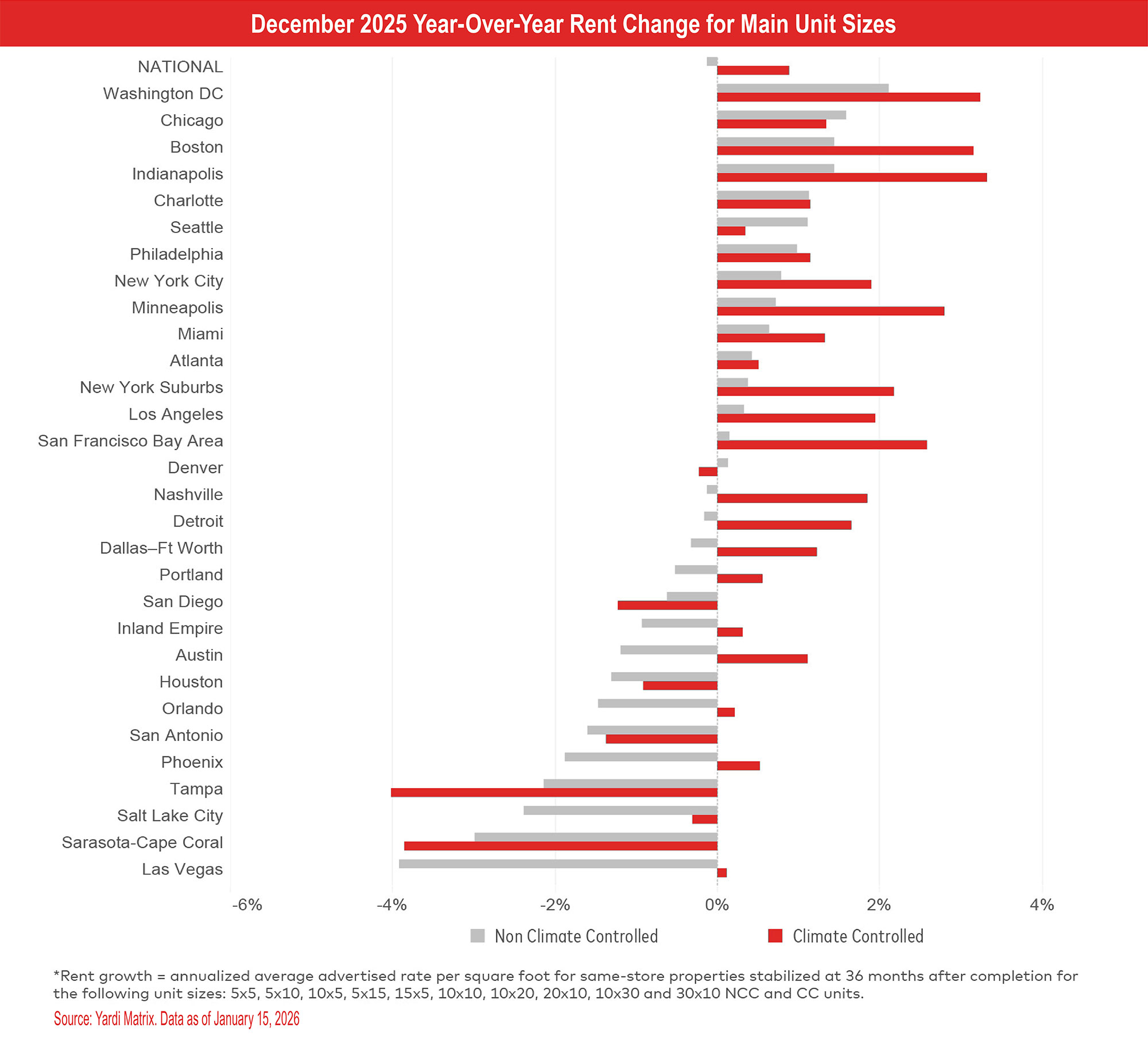
Advertised rents fell month over month in 25 of the top 30 metros in December. New York City saw rent growth month over month in December for the second year in a row, marking a shift in momentum from -0.8 percent growth in November.
Despite leading in year-over-year advertised rate growth, Washington, D.C., posted one of the largest month-over-month decreases (-0.5 percent), signaling a seasonal slowdown in demand. This trend is not supply-driven but reflects weaker winter demand patterns, typical for this market due to factors like reduced intern activity outside peak summer months.
See Average Street Rates by Metro Table and National Average Street Rates PSF for Main Unit Types Chart.
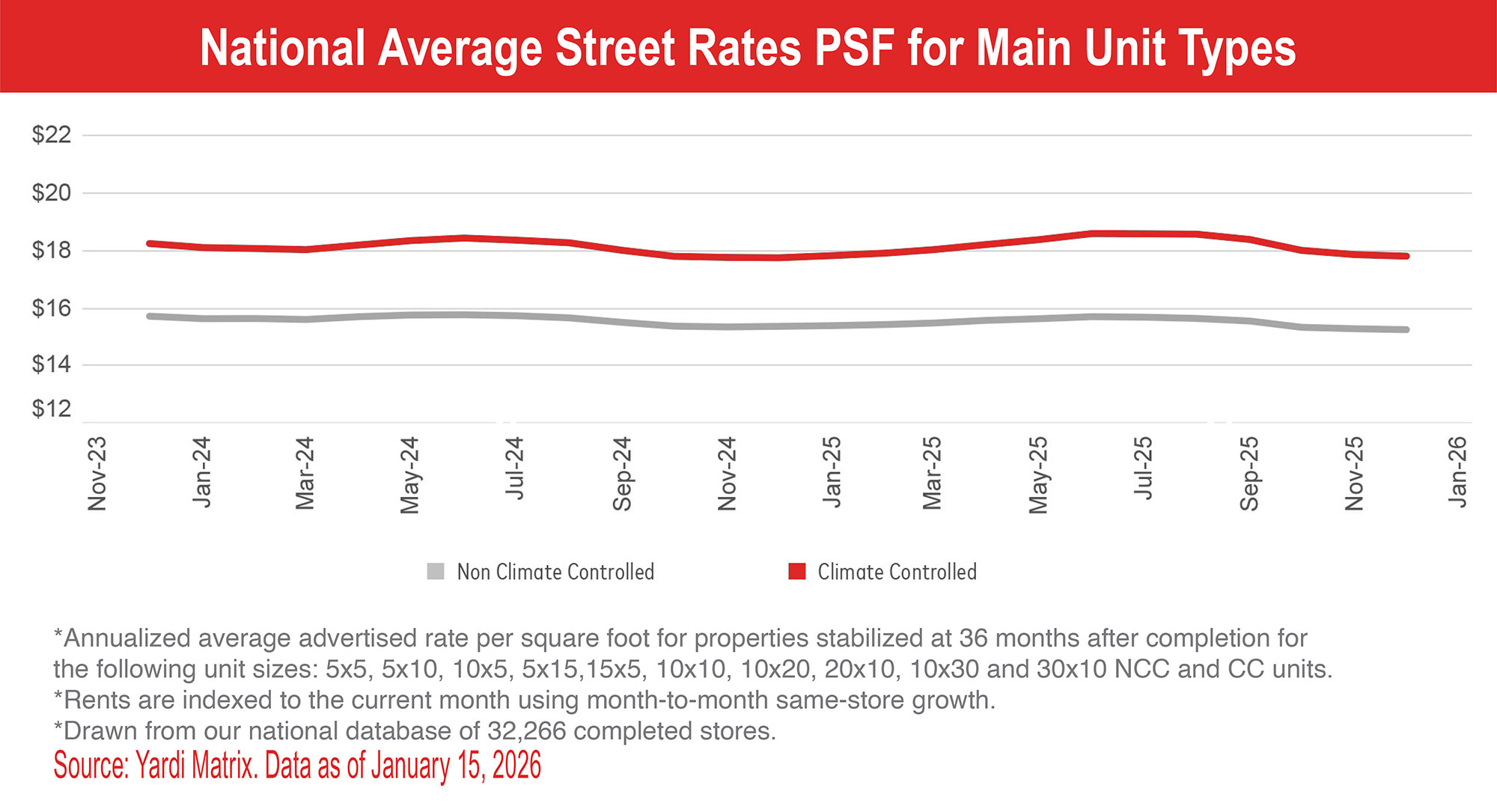
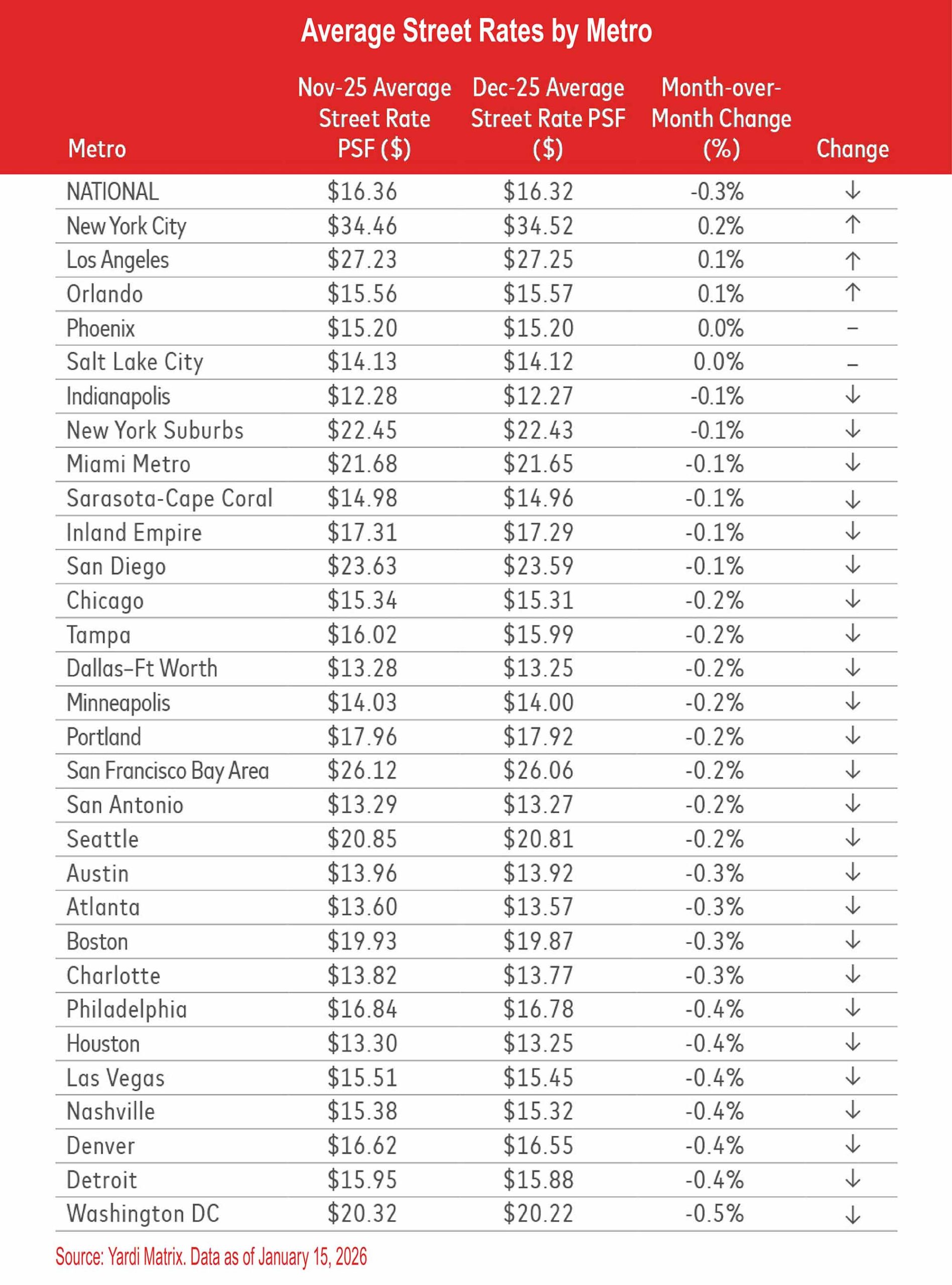
Meanwhile, top metros including Denver, Portland, and San Diego are clustered in the lower-left portion of the chart, reflecting weaker population growth and slower multifamily rent growth. These markets continue to see weaker advertised rates even when new supply is limited.
Overall, the chart underscores that future rate growth is likely to remain uneven, with stronger performance concentrated in markets supported by sustained multifamily demand rather than those benefiting only from slower supply growth.
See Self-Storage Major Metro Summary Chart.
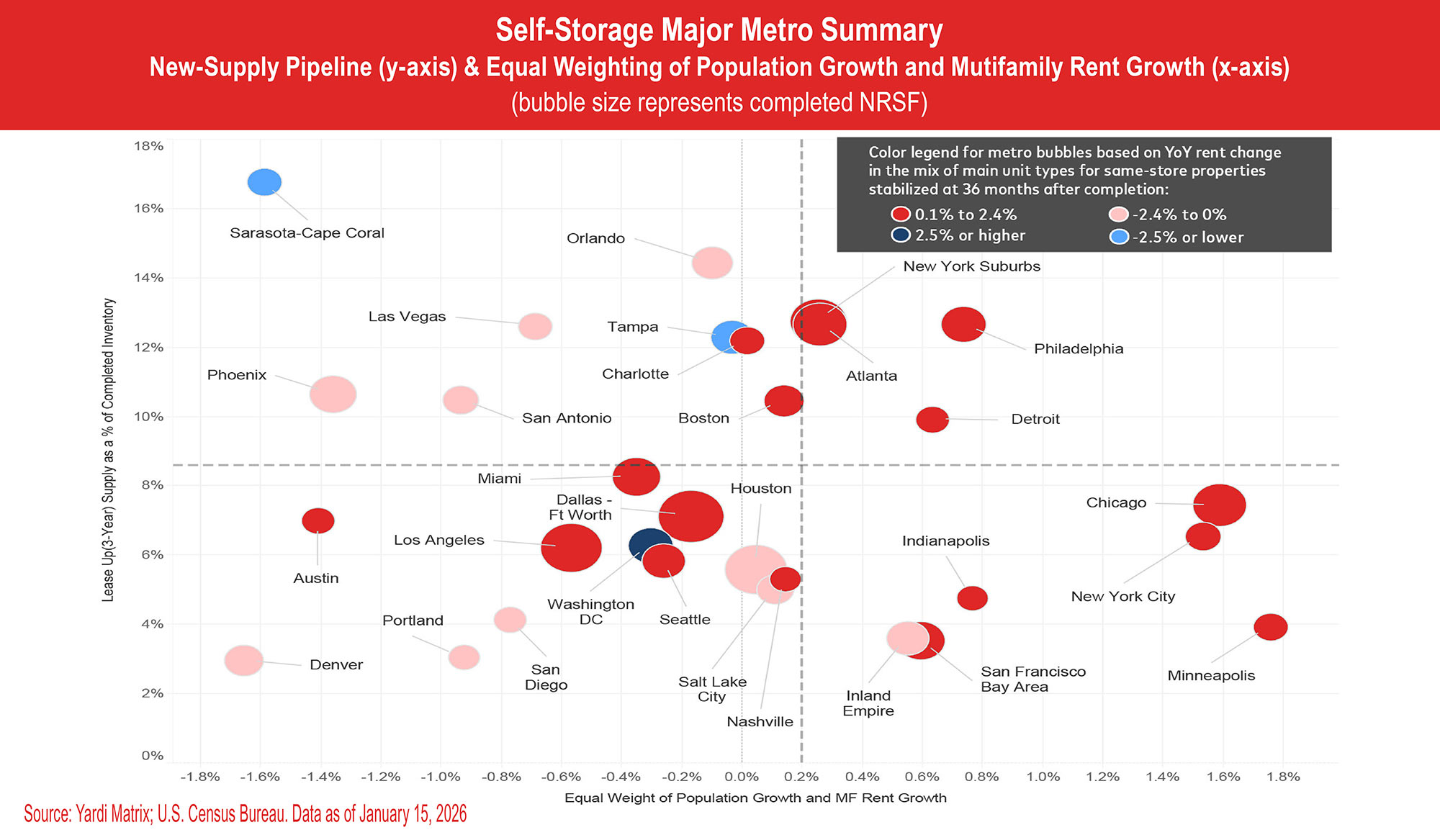
At the metro level, 16 of Yardi Matrix’s top 30 metros had more lease-up supply in December 2025 compared to December 2024, led by Orlando, San Antonio, and Detroit.
Despite having one of the highest trailing three-year supply levels, the New York suburbs continue to post above-average advertised rent growth, supported by historically undersupplied conditions and robust demand fundamentals. Recent supply deliveries have been concentrated in Northern New Jersey, while areas like Westchester County and Long Island remain relatively constrained, contributing to sustained strength in advertised rate performance.
See NRSF Delivered Over the Last 36 and 12 Trailing Months Table and Chart.
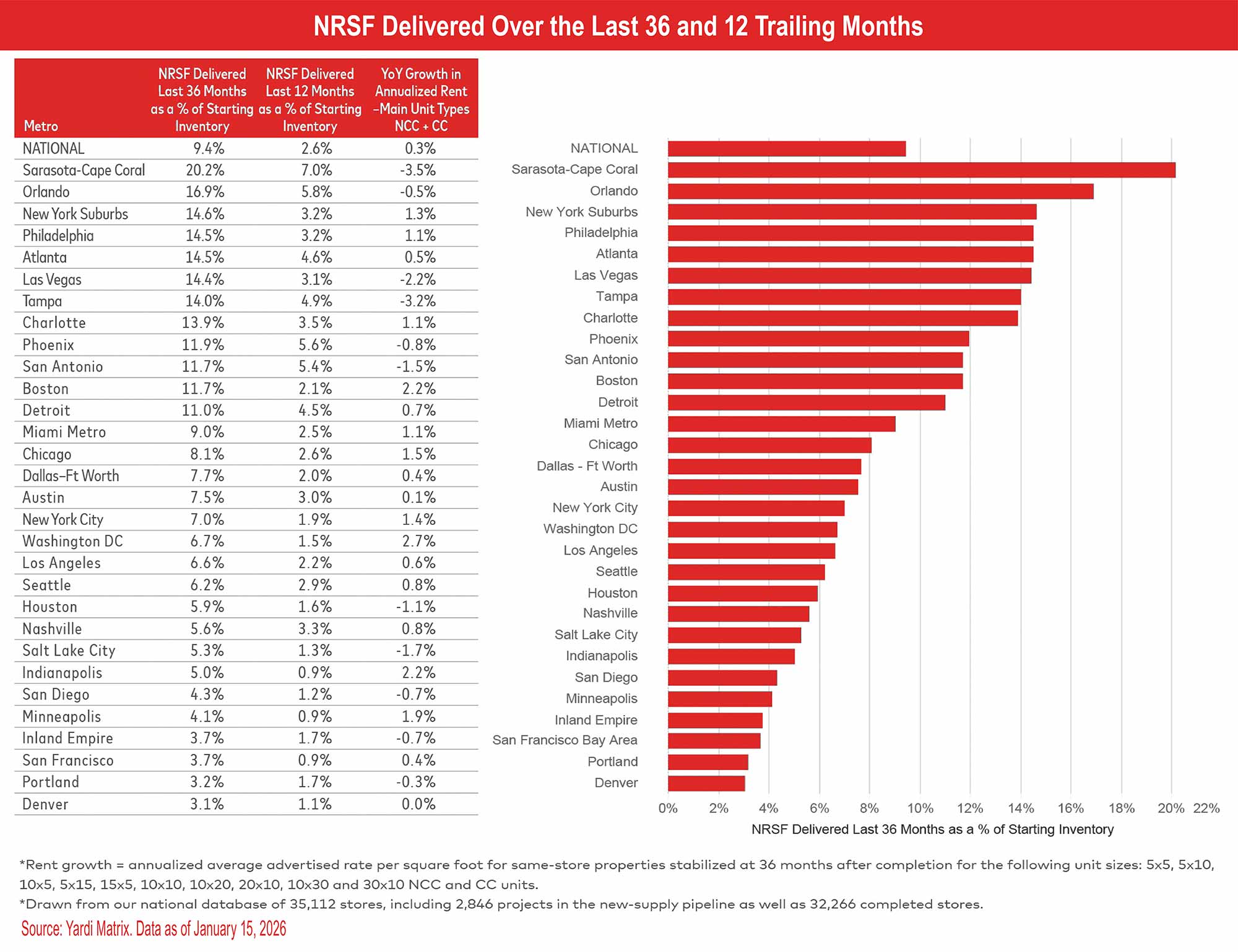
Compared with December of last year (2.8 percent), under-construction activity is essentially flat. This stability likely reflects longer construction timelines and slower winter building activity.
While national supply levels remain steady, metro-level trends are mixed. Several top metros, including Nashville, San Antonio, Philadelphia, New York City, Atlanta, Detroit, and Seattle, have seen notable declines in under-construction supply over the past year. Conversely, top metros such as Miami, Las Vegas, Salt Lake City, Washington, D.C., and Tampa recorded increases.
Several Sun Belt markets continue to exhibit elevated construction pipelines, even as development has become more expensive and harder to underwrite. Miami, Tampa, Phoenix, Sarasota-Cape Coral, and Las Vegas stand out for maintaining or increasing under-construction supply, reflecting continued developer interest.
See Under Construction Percent of Existing Inventory Table and Chart.
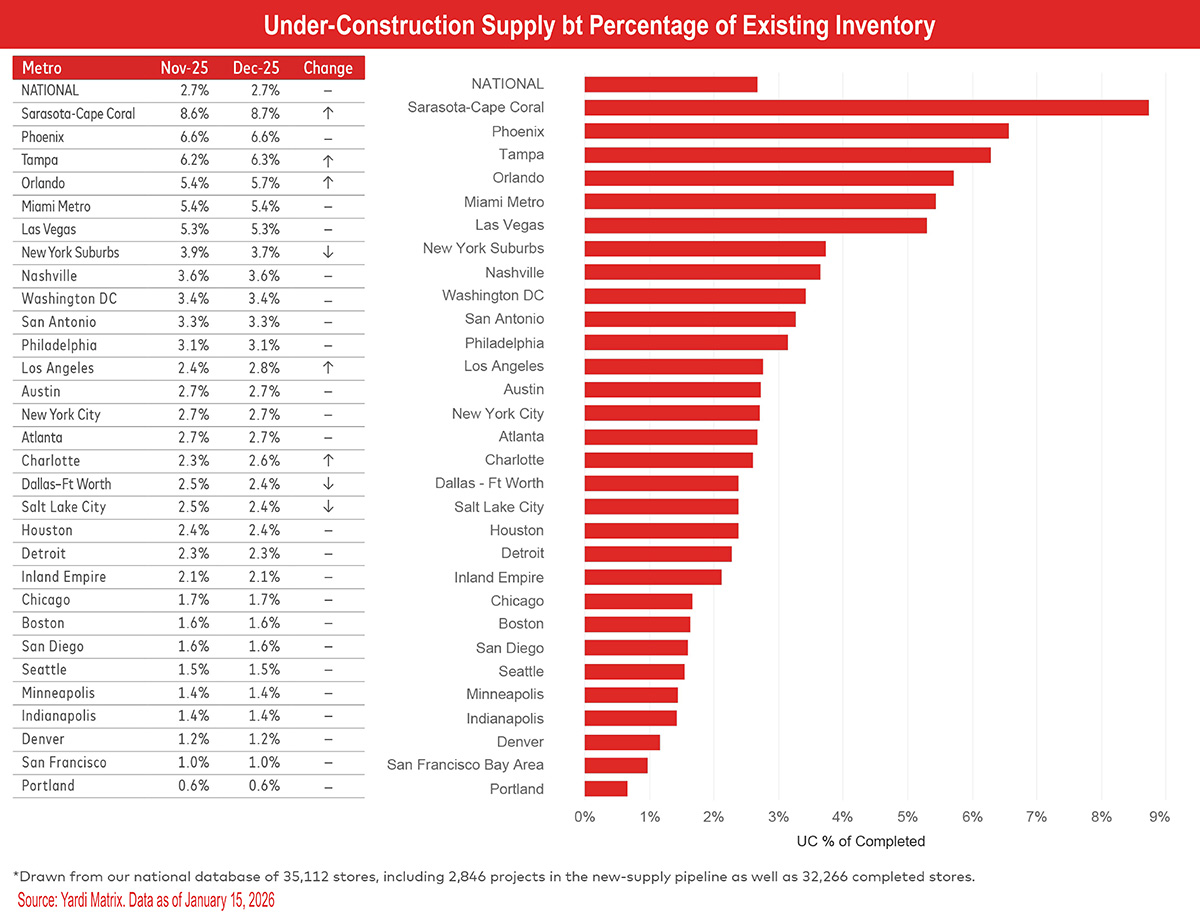
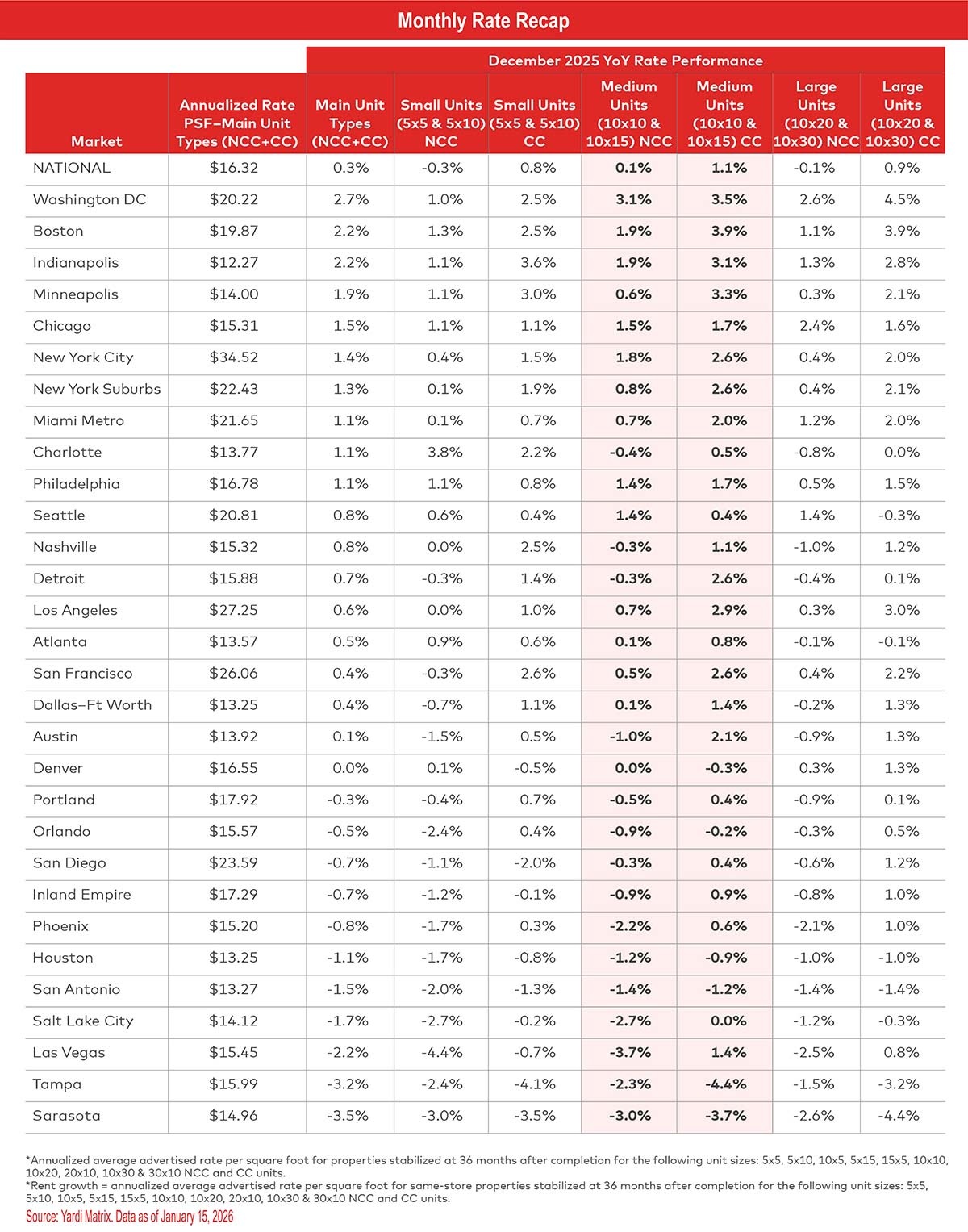

Reports
Studies
Services
• Site Plan Reviews • Development Assistance • Office Layout • Vendor Recommendations • Unit Mix Reviews • 3rd Party Management Contract Review • Security Plans • Asset Management
 1-866-279-5673
  info@bmsgrp.com
he total value of U.S. self-storage real estate declined to approximately $432 billion in 2025, representing a roughly 2 percent decrease year over year. Slower demand recovery, muted rate growth, and elevated operating costs continued to pressure valuations across the sector.
After years of outsized growth, 2025 marked another period of normalization for self-storage. While fundamentals remain structurally sound long term, near-term performance has yet to fully rebound. In Table 1, TractIQ breaks down how we estimate the total value of the industry and what the data signals for owners, investors, and brokers in 2026.
See Table 1.
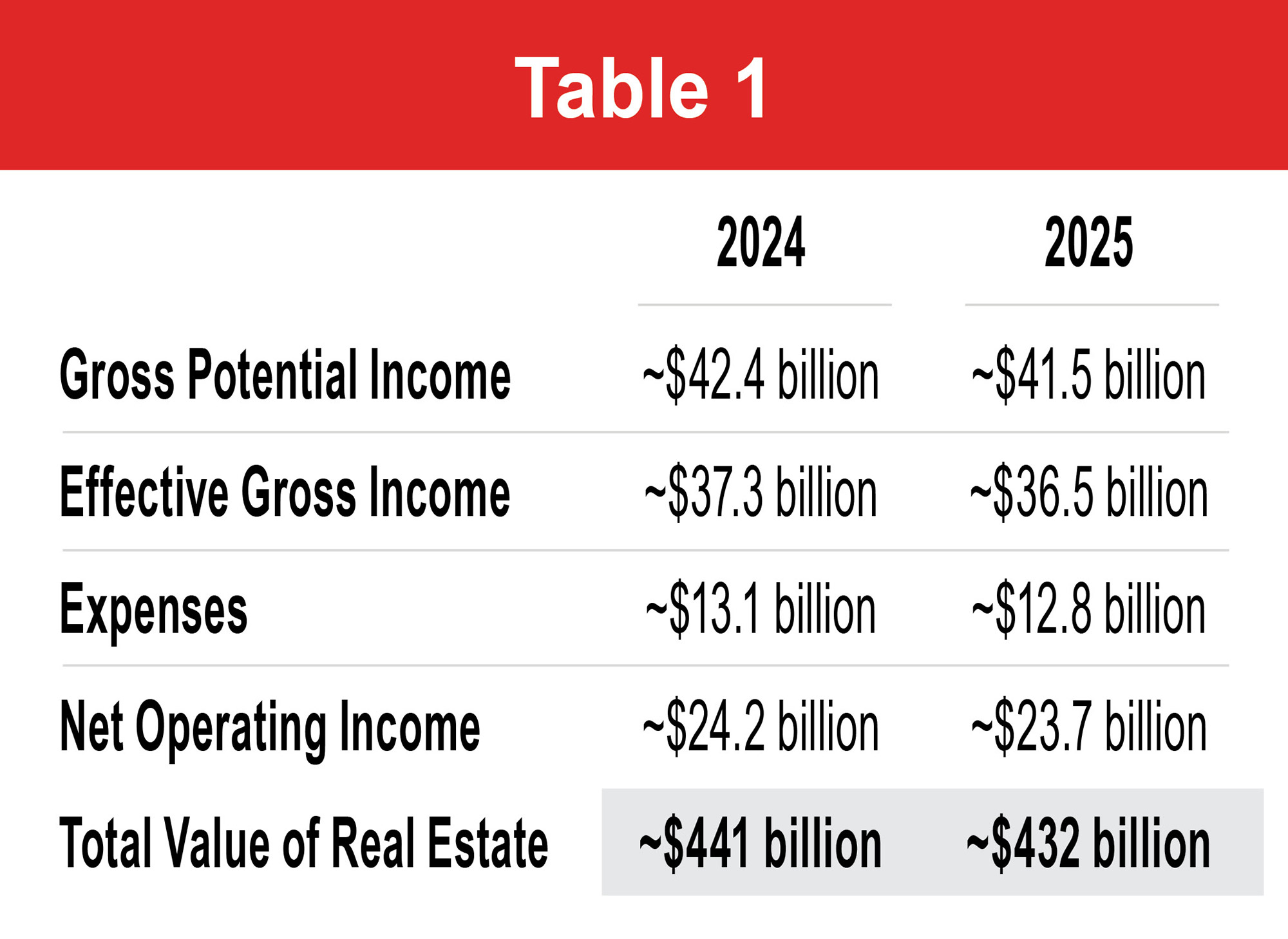
GPI also includes ancillary income from administrative fees, tenant insurance, billboards, retail sales, and other non-rent revenue streams. Based on Q3 2025 public filings, ancillary income for the five major publicly traded self-storage REITs ranged from approximately 3.8 percent to 13.0 percent of rental income. Because REITs represent a minority of total industry square footage, we conservatively applied a 3 percent ancillary income assumption across the broader market.
In 2025, achieved rates often exceeded street rates due to existing customer rent increases. According to TractIQ’s Q3 2025 Self-Storage REIT Report, achieved rates averaged 3.7 percent higher than advertised street rates. We intentionally excluded an achieved rate premium from this analysis due to the difficulty of consistently applying it across non-REIT operators. Including this premium would increase estimated industry value.
Effective Gross Income (EGI): This is the net revenue generated by the industry after applying vacancy and collection loss to GPI. For reference, the publicly traded storage REIT’s average occupancy rates for Q3 2025 ranged from 84.5 percent to 93.7 percent. We’ve used an 88 percent occupancy rate in our analysis to account for collection loss in addition to physical vacancy.
Operating Expenses: Operating expenses include property taxes, insurance, payroll, management fees, utilities, marketing, repairs, and administrative costs. We applied a 35 percent operating expense ratio to EGI. For reference, the publicly traded storage REIT’s expense ratios for Q3 2025 ranged from 24.4 percent to 33.6 percent.
Net Operating Income (NOI) and Total Value of Real Estate: Net operating income is calculated as effective gross income minus operating expenses. To estimate total real estate value, we applied a 5.5 percent capitalization rate to industry-wide NOI. Table 2 illustrates how valuation changes across different cap rate and expense ratio scenarios.
See Table 2.
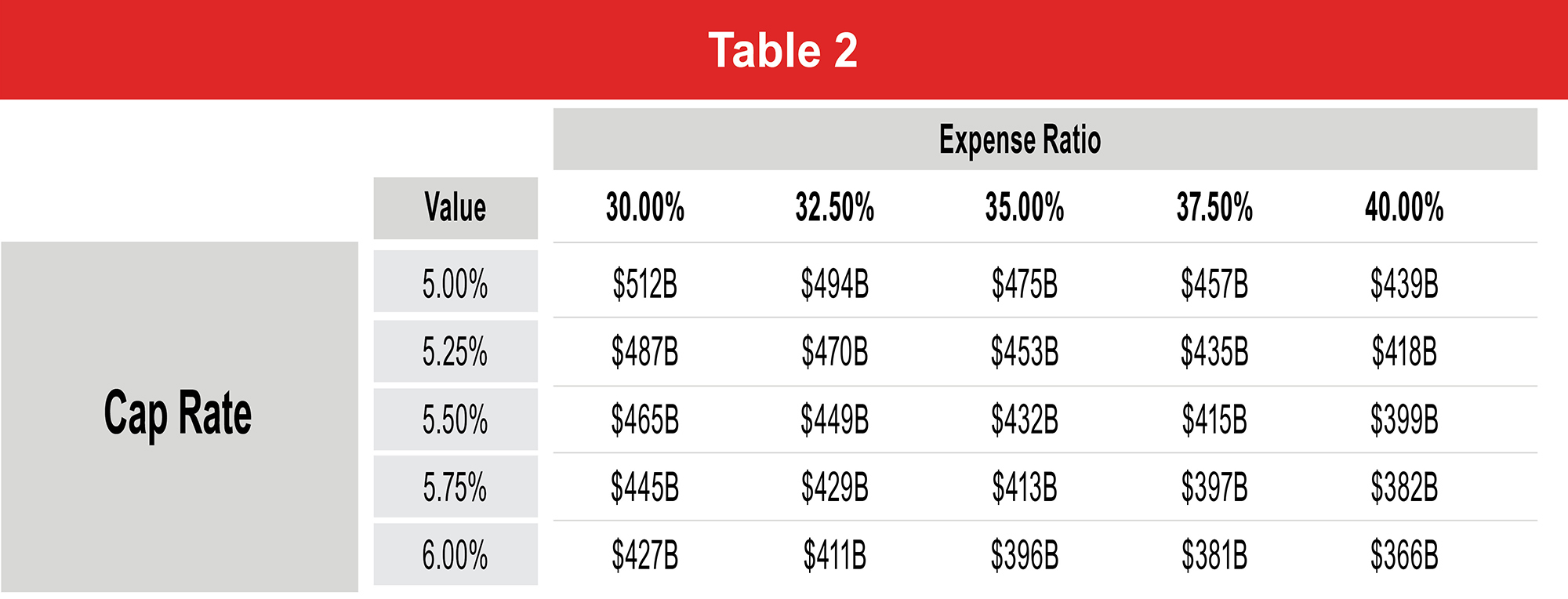
- Slowing new supply deliveries in oversaturated markets;
- Street rate stabilization following years of softness;
- Expense normalization, particularly insurance and payroll;
- Cap rate movement tied to interest rate policy; and
- Greater reliance on verified operating performance rather than proxy data.
In an environment where small changes in rates, occupancy, or expenses materially impact value, access to accurate facility-level data has never been more important. TractIQ remains focused on delivering the most comprehensive and transparent self-storage intelligence platform as the industry moves into its next phase.
Data Driven
Driven

I always wanted to have an interesting life.”
For Noah Starr, co-founder and CEO of TractIQ, that pursuit took shape early, long before buying businesses or building one.
It began on a Long Island lacrosse field. The sport, which he describes as hockey meets soccer meets football, is where he first honed his leadership skills. “Lacrosse is a very physical sport, and you have to be fast, tough, and smart,” says Starr. “But it also taught me a lot about strategy, teamwork, and working toward a common goal.”
Starr was learning leadership through love of the game, but from the sidelines he was also noticing other kinds of wins. His family was filled with entrepreneurs—from a hedge fund and fintech father to grandparents (and great-grandparents) who owned companies in dentistry, meat distribution, and apparel manufacturing. He was keen to know more.

For more entrepreneurial inspiration, Starr studied modern legends like Steve Jobs and Bill Gates, but he also looked further back, reading about John D. Rockefeller and Andrew Carnegie. One figure resonated more than any other: President Theodore Roosevelt. And one line stuck with him: “Do what you can, with what you have, where you are.”
“That’s something I never forgot, and something that has propelled me throughout my career,” Starr says.
Fortunately, Starr had a backup plan. He had also applied to the University of Texas at Austin—a decision that would alter his trajectory entirely.
“UT was a total 180,” he says. “About 40,000 students, huge campus. And going from Long Island to Texas was a big move.” Once there, however, he quickly found his footing. “I got a pair of cowboy boots, whitewashed jeans, and made it my home.”
Starr also brought his lacrosse sticks with him. He became co-captain of the UT lacrosse team alongside Ethan Galowitz, who is now TractIQ’s co-founder and CPO.
“Honestly, not getting into Haverford was one of the best things that could’ve happened to me,” says Starr.

“I worked on the debt side with some of the smartest and most experienced investors,” says Starr. “We financed a wide range of asset classes, including commercial real estate.”
One of those classes was self-storage, and it was Starr’s first experience with the industry. He helped finance ground-up construction for CubeSmart and Public Storage developments. As he did, his interest in the industry was immediately piqued. “I learned how resilient the asset class is across cycles,” he says. “It’s a bet on American mobility and dynamism. It made intuitive sense to be part of it.”
Still, he wasn’t ready to jump in. Starr moved back to Austin to join Amherst Holdings, a private equity firm focused on residential real estate, where he shifted from debt to equity.
“I wanted to drive the plan,” he says, “not just provide loans but understand what makes a good investment and how to raise capital around it.”
That was the breaking point. “I realized I had no autonomy over my life. There was no end in sight.”
But just like his college backup plan, he had a career backup plan: He’d been working on buying a self-storage property.
Using $25,000 of his own savings and capital raised from friends and family, Starr had made a play for a small facility near Beaumont, Texas. “I wanted something close enough to drive to, small enough to manage, and solid enough that I knew I could raise the capital responsibly.”
When it looked like a go, he made the leap. “I knew the deal was going to happen, and I had chills, thinking ‘How can I possibly go back into an office tomorrow?’” So, in April 2022, he packed up his office. “I said, ‘That’s it. I’m out. I’m going to be an entrepreneur.’”
And while he knew the deal wouldn’t make him financially independent, it would change everything.

Still, he believed that if he could keep finding opportunities that met rigorous investment standards, he could continue raising capital and scaling. Between 2022 and 2024, Starr and his partners acquired approximately 700,000 square feet of self-storage across Texas, Tennessee, Arkansas, Michigan, and Ohio. They focused on undersupplied, growing markets with value-add potential.
Some investments performed well. Others did not. “I really get the pain of a bad deal,” Starr says. “It’s anxiety-inducing, financially expensive, emotionally expensive—all of it.”
In hindsight, timing played a role. Demand peaked in 2020 and 2021, and rental rates followed. Underwriting at peak demand alongside historically low interest rates proved risky once conditions shifted.
“When demand falls and interest rates rise, that’s a bad time to buy,” Starr notes. “Now, ironically, is probably a better time.”
But the larger lesson was about data.
He states that self-storage underwriting has long relied on what he calls “proxy metrics” as a form of market intelligence (supply per capita, advertised street rates, and demographics) instead of actual operating performance. “What really matters is occupancy, achieved rates, in-place revenue, expense pressure, and debt coverage at the market level. That’s what tells you whether a market actually works.”
Starr says that the issue is that REITs can draw from thousands of facilities, while independent operators don’t have that ability. “At my peak, I had 12 facilities in 11 different cities. You can’t truly understand a market with those numbers.”


What Starr was experiencing personally was a structural problem across the entire industry. To make his mark, he began looking for a solution. And it would come from just a Google search.
The trio stumbled down a Google rabbit hole and discovered TractIQ, a data platform founded in 2018 by a gentleman named Thomas Halatyn, initially called SSDMS. When they contacted the company, they learned that Mr. Halatyn had sadly passed away two years earlier. Still, the company was in business, aggregating data for a handful of clients.
When Starr asked about licensing the platform, the response surprised him: Why not buy it?
Initially, Starr acquired TractIQ to gain an edge for his investment business, but demand exploded. “People started paying us for the data I wanted to use for my own investments,” he says. “And I never wanted to compete with my customers on a deal.”
Starr faced a decision: shut TractIQ down for external users or stop investing and go all-in on data. He chose the latter. “I publicly committed to no longer buying properties in favor of exiting our portfolio and building TractIQ into the best data company that it could be.”
The decision wasn’t easy, admits Starr, but it turned out to be the right call. “It was such a great decision. We’re growing really quickly. I feel we’re the best data company in the industry.”
That confidence soon found external validation. In 2025, Modern Storage Media (MSM) selected TractIQ to be the official data provider for its Self-Storage Almanac, a data- and fact-filled annual publication that has been helping investors, developers, and operators make better informed decisions since 1992. “I’ve been reading the Almanac since 2018, so it was incredibly meaningful to have TractIQ become the official data provider,” says Starr.
Transparency, he says, is the point. “No matter what people say about me, I want them to come away thinking: He’s telling the truth, he cares, and he’s doing the best he can every day.”
It’s a statement that Roosevelt would admire. He famously said, “It is not the critic who counts … The credit belongs to the man who is actually in the arena, whose face is marred by dust and sweat and blood.”
From the lacrosse field to the investment world to co-founding TractIQ, Starr has fought through the sweat and blood. And as for leading an interesting life, he’s definitely in the arena.

As an entrepreneur, Starr says there will be times when you can’t sleep, you let people down, and you disappoint them. “You can feel like you’re completely alone, and there’s no one to save you. This can lead to deep despair. A lot of people are afraid to talk about that.”
He admits that he’s been afraid to talk about it too. “Before TractIQ, when you close a deal, what do you do? You go on LinkedIn and post how excited you are about the acquisition. You get applause and likes.” But there’s something you don’t see on LinkedIn. “You don’t see that person announce that the acquisition missed underwriting by 20 percent.”
When that happens, Starr says there are difficult calls with investors, banks, and others—all of whom are disappointed with you. “I wanted to put this out there, because I really get the pain of a bad deal. Entrepreneurship doesn’t always get the positive outcome you want.”
Still, Starr has refused to let those moments get him down. “What those did was fire me up and motivate me to fix the underwriting problem in storage. I want to be sure no one falls into a bad deal by giving them the data they need to never invest in the wrong place.”

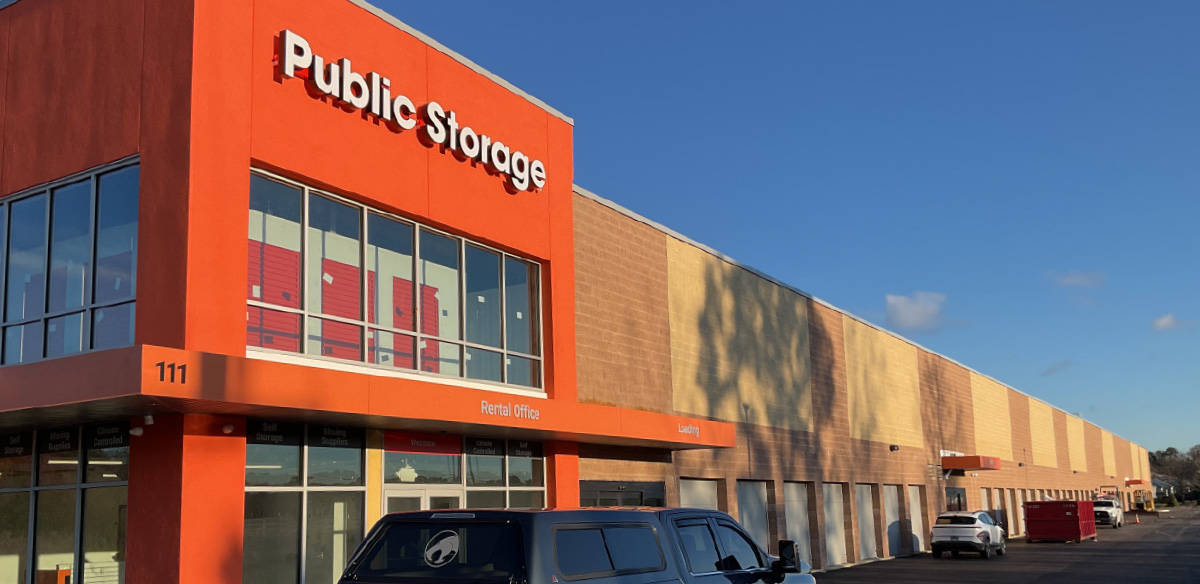
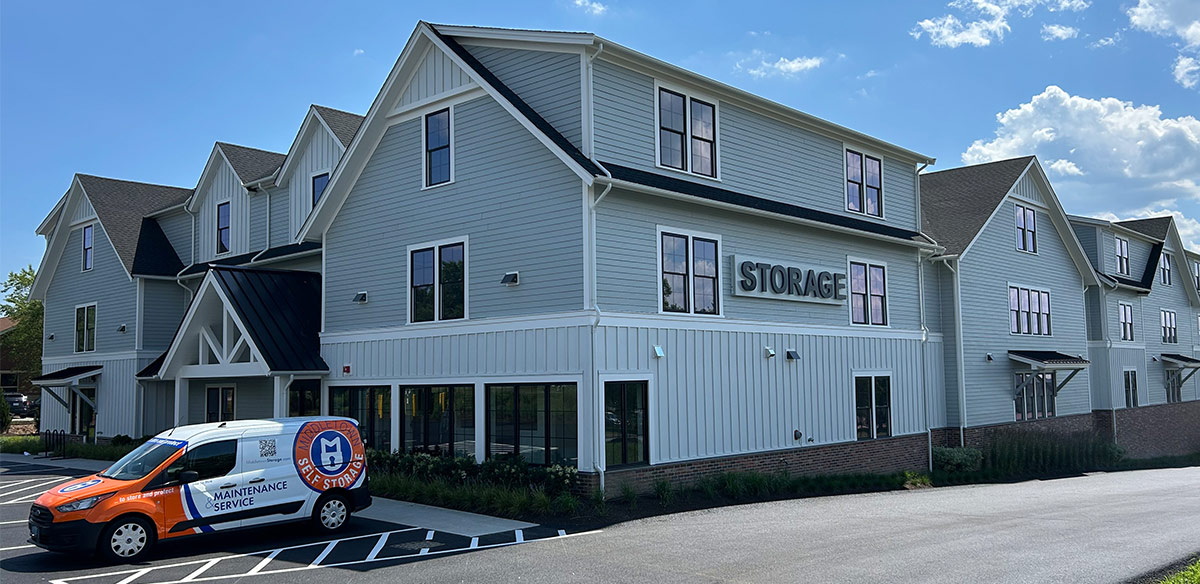
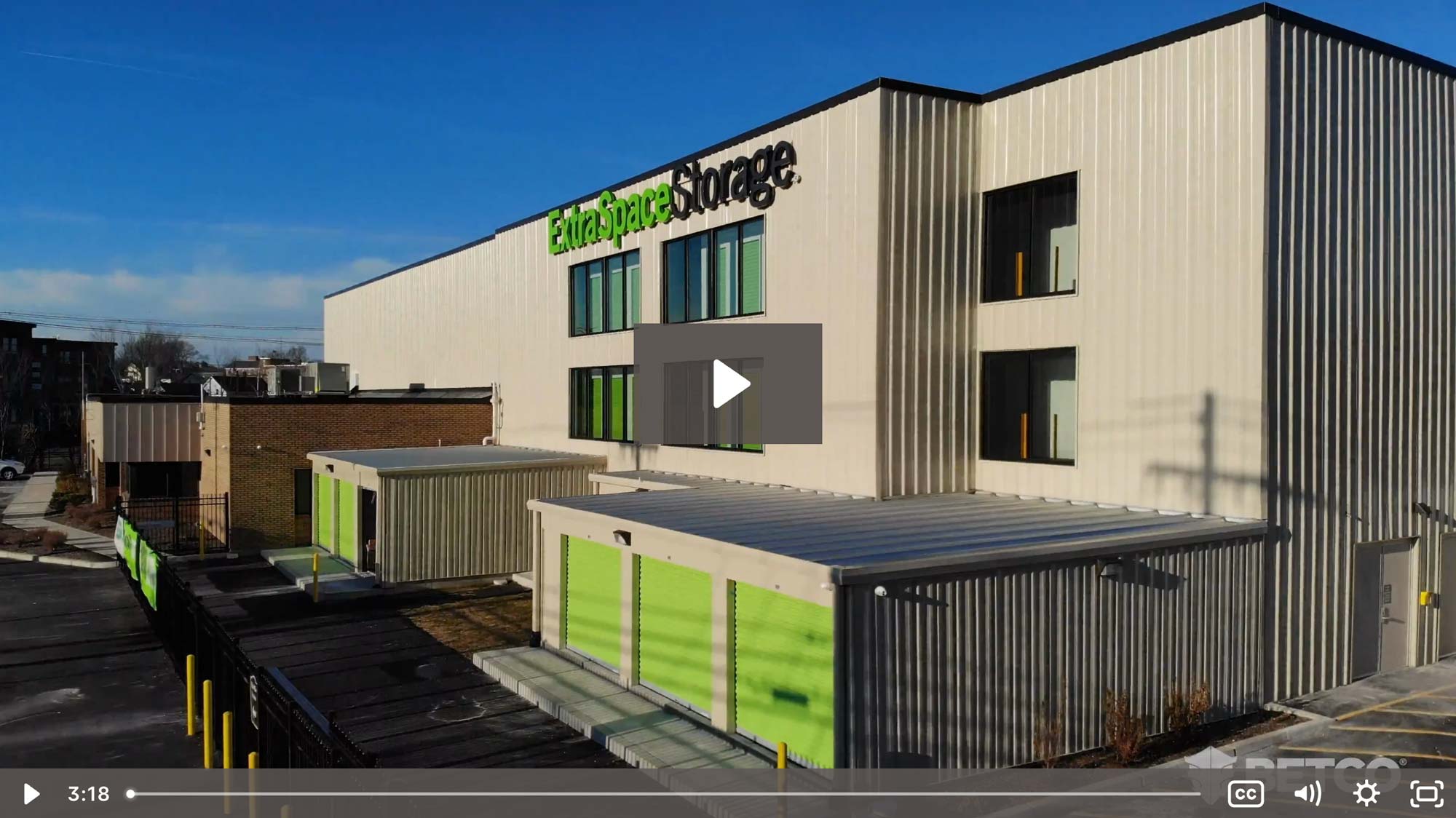




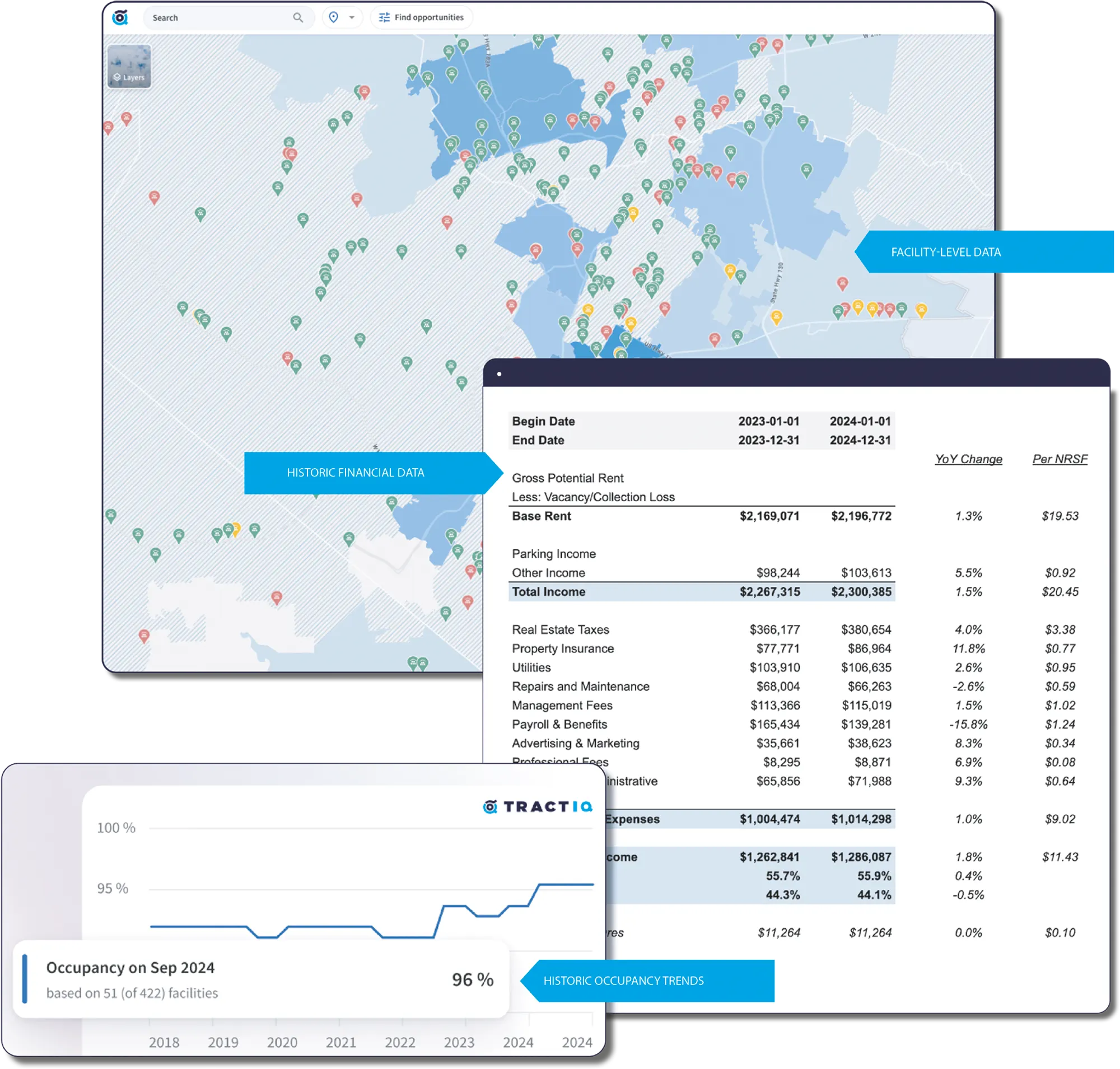


oe Shoen is taking a stand. In an exclusive interview, Shoen sat down with MSM to explain why he’s going against the grain when it comes to pricing. He says he’s “fed up” with what he describes as a strategy among major players (offering low introductory rates and then increasing them multiple times a year, sometimes before customers even move in), so he’s taking a different approach: offering customers a one-year rate lock guarantee.
Shoen had been circling the idea for a while, and then he got hold of a year-old article in Slate titled “Sneaky Self-Storage Unit Rate Increases.” He reads a piece of it aloud. “These kinds of massive rate increases [ECRIs] are more common among larger companies … familiar names like Public Storage, Extra Space Storage, U-Haul, National Storage Affiliates, CubeSmart, Prime, and StorageMart,” quotes Shoen, and he shakes his head. “The thing is, we don’t do that. We’ve never done that. I didn’t even know what ECRI meant until I read this. And now we’re being lumped in with those who are doing this because we’re all the biggest names in the industry. That sealed it. I thought, ‘I need to distance myself from these other guys.’”
Shoen says he’s had many people including industry colleagues tell him that he could make a lot more money if U-Haul did adopt aggressive ECRI practices. “I’ve heard it all. They say, ‘But all the REITs are doing it,’” says Shoen. “And the REITs, by doing this, they’re communicating to me that they are smarter than me. OK, maybe you are, but I’m not being sued by the city of New York.”
U-Haul is also famous for its “first month free” promotion with a truck rental. “We don’t require a dollar. There’s no admin fee, no insurance requirement. You need to have a lock, but it can be your own lock. It’s legitimately one month free. There are customers who come and stay for just one month, and they get it for free. Now, we’re hoping we can sell them a box or a lock, but it’s a straightforward promotion.”
U-Haul does increase rates over time, of course, but customers receive a notice 30 days in advance, and it’s never an “outrageous” amount. “We apply rent increases that are somewhat in line with inflation. We’ll perform an analysis by location, unit size, it’s pretty simple. If all our 10-by-10s are rented up, we’d probably consider a rate increase. But even that won’t happen now, not for a year from the move-in date.”
Is the first month free promotion going away with the new price lock guarantee? No, says Shoen. “They still get the first month free with a truck rental. So, for those customers, the price lock is 11 months. I had to double-check the literature to make sure it was written that way so that we weren’t locking in 12 months free,” says Shoen with a chuckle.
Photo courtesy: U-Haul
Because of their financial perspectives, Shoen doesn’t think they understand that storage can be a significant expense for a lot of customers. Instead, he says, “They’re attending seminars on how to squeeze the most amount of money out of people. How much can you crank it without incurring the wrath of the government? Can you crank it 30 percent? Can you crank it 40 percent? That’s a bit like people who’d raise the price of gas because it’s running out. There’s something wrong with that and that’s a real sore point for me.”
Shoen says it’s difficult enough for people these days without self-storage taking advantage of them. “Renting a unit for $34 when you know you want $99 for it, just to get them in the door, knowing full well you’re going to nearly triple that within 90 days, is disgraceful. People’s money and their belongings that they’ve entrusted to you are not something to be played with.”
What also infuriates him is that he understands that many customers have had a disturbance in their lives and they’re coming to you for help. “Maybe they lost their home. Maybe they had a death in the family. These things happen. To imagine preying on them in their time of need is ridiculous.”
Shoen also knows that at least half of the customers who need storage are very budget conscious and are living paycheck to paycheck or payment to payment. He says these same people are the ones who’ve helped make U-Haul the success it is today. “Why would you want to take advantage of them?” asks Shoen rhetorically. “There has to be some modest amount of reciprocation, so at U-Haul we say, ‘Service comes before profit.’ Unless you serve someone, why should they allow you to make a profit? You’ve not done anything, so service comes before profit.”
This is not naivety; Shoen knows he still has to pay the banks, the employees, and so on, but he doesn’t feel he needs to “trick customers” to do that.
“It’s offensive to me,” says Shoen. “The storage industry has spent years establishing itself as a legitimate consumer product, and now we’re gonna just throw it away?”
Photo courtesy: U-Haul
Shoen says nothing is going to change his mind. Has he spoken with the heads of other REITs about this? He shakes his head no. “I have not, and I went back and forth on that one. Maybe I’ll lose some friends over this, but I don’t want to tell them how to run their business. I’m just saying that it won’t work for me, so there was no need to have a discussion. I have spoken at other events and said that I didn’t think raising rates exorbitantly was a smart move, that it would bring the government into our business because they’d finally determine that this is a form of consumer fraud.”
In addition to U-Haul owned stores, the company also works with approximately 5,000 dealers who are independent self-storage operators. “These are people who own one, two, or three stores. They haven’t raised rates in two years. They get full enough that they’re happy, they’re making a return, they’re good. If you told them, ‘Move somebody in for $27, then jack the rate to $99,’ they’d look at you like you were crazy.”
Shoen says this is because this is the part of the industry that is not run by finance people. It’s run by small businesspeople who now are pretty big small business people, but they’re still small operators compared to the REITs. “They’re the heart of this industry. They’re just trying to serve the community and do their job. And that’s largely how we view ourselves at U-Haul too.”
Despite this hope, he does believe the industry is going to get price controls from this. “It’ll be a crying shame,” says Shoen. “You worry about making money, but you want to see what’s really going to increase your costs? Government regulation of anything. Your costs are going to go up and you’re not going to like it.”
Photo courtesy: U-Haul
If the regulators were to come to him today, Shoen would tell them exactly what he’s saying in this interview. “I’m not going to cover for others and say, ‘Well, they really just didn’t understand what they were doing,’ because they damn well know what they’re doing. They have conferences on how to do this. They have people who consult on how to do this. Go talk to them because I don’t engage in this.”
In California, where rent control bills were on the table with Senate Bill 709, the California Self Storage Association and the national Self Storage Association worked together to transform it into a bill about transparency; rate hikes were OK so long as proper disclosures were provided.
“There was a lot of lobbying done around that bill, and I supported that lobbying because I don’t like rent controls. They don’t work well.”
However, the outcome for disclosure, he says, is something that anybody can work around. “All the other majors have engineered around the California law, pure and simple. Sure, they disclose it to comply with the minimum requirements of the law, but it’s buried deep enough with a lot of other terms and conditions that people don’t pay attention or even see it. They’re just initializing boxes to get the contract signed.”
He thinks New York City won’t go for this. “I was told of a clip where [Zohran]Mamdani, in a live speech, mentioned both Public Storage and Extra Space,” he says. “I’m probably next. I’m number three. So, although he didn’t mention my company, it’s not a great leap to imagine the next time he adds, “and U-Haul.” I need that like a bad cold. And that’s why we’re going to set U-Haul apart from the crowd.”
He adds a few words of caution for the REITs. “Abusing the customer doesn’t work out in the long term; the customer figures a way to get even. It’s a complicated process and involves tens of millions of people, but it happens. You may be an economic behemoth today and can’t imagine taking a fall, but plenty of companies have come and gone because a customer changed their attitude towards the business.”
Shoen also hopes his actions show independents that operate with honesty and integrity that they’re doing it right. “I’m ashamed that I didn’t speak out publicly before now. What those smaller guys are doing is reasonable and fair, and I should be backing them up, so I’ve decided to separate myself from what really is all the other majors, who are all in this to one degree or another. So, just as that Slate article mentioned U-Haul with the others, I don’t want to be mentioned in that contest. U-Haul’s not in that contest.”
Shoen wraps up the interview by stating that by taking a stand, he’s hoping to do his part to make the industry better. For Shoen, what was once a fight to make self-storage legitimate as an asset class has now become a fight to make self-storage reputable again.








Stream it now: RadioWilderlive.com
Request a song: 602-935-4989
Grayson’s Gift Store: RadioWilderLive.com
- APRIL: Jim Mooney Jr. President of SBOA
- JUNE: Travis Morrow, Chairman & CEO of Storelocal Corp.


here is a noticeable shift in the self-storage industry, driven by an unexpected yet rapidly growing customer segment: contractors, tradespeople, service-based businesses, and small ecommerce operators.
In many smaller markets, the demand for large contractor-style storage units is increasing faster than operators can supply them. What was once considered a niche offering has become a core revenue opportunity for storage facilities looking to diversify beyond traditional residential renters.
Large contractor units give these businesses something often hard to find in smaller markets: flexible, affordable, secure space to run operations, store equipment, and manage inventory. As the industry continues to evolve, operators who understand this trend are well-positioned to capture long-term, stable revenue while meeting a very real local need.
These units also help support community growth, allowing essential service providers to operate more efficiently and reliably as their customer base expands within smaller markets. As this demand accelerates, many operators are rethinking their unit mix to seize new opportunities and better serve business users.
Electricians, plumbers, HVAC technicians, landscapers, carpenters, roofers, and mobile automotive specialists have all expanded their presence in secondary and tertiary regions.
These businesses need space, but smaller markets typically offer limited options for light industrial or warehouse use. Traditional commercial real estate is often too expensive, too large, or simply unavailable. Self-storage fills the gap by offering contractor-friendly units that provide flexible square footage, secure access, and predictable pricing.
This arrangement helps maintain organization and professionalism while allowing small businesses to scale at a comfortable pace.
First, the cost of doing business in major cities continues to climb. Rent, utilities, and labor costs have pushed many tradespeople to relocate or expand outward into more affordable regions. These workers still need access to storage and workspace, but the infrastructure in smaller markets has historically lagged.
Second, smaller markets are experiencing population growth due to lifestyle changes. Remote work has allowed more families to move beyond metropolitan areas, increasing demand for local services. Contractors follow demand, and with few light industrial properties available, large storage units have become a practical and affordable stand-in.
Third, supply chain challenges have changed how many small businesses operate. Rather than depending on frequent shipments, contractors now prefer to keep larger inventories of commonly used materials.
This helps them avoid delays, reduce costs, and maintain consistency for their customers. Large storage units are ideal for staging lumber, plumbing fixtures, electrical components, hardware, tools, and seasonal materials.
Finally, e-commerce has fundamentally changed local business landscapes. Many small online sellers use storage units as miniature fulfillment centers, reducing overhead while providing the space needed to receive shipments, pack orders, and maintain inventory. This approach is especially appealing in smaller markets where warehouse availability is limited or prohibitively expensive.
Inventory And Material Staging
Most contracting businesses operate across multiple job sites at once. This requires access to consistent supplies that can be picked up at the start of a shift or restocked throughout the week. Large units provide room for:
- pallets of materials,
- lumber and sheet goods,
- electrical and plumbing supplies,
- roofing materials and shingles,
- bulk hardware and fasteners, and
- job-specific tools and equipment.
Having the ability to store and stage materials helps contractors prepare for projects more efficiently and prevents the need to haul everything from home garages or trucks each day.
It also reduces lost time on job sites by ensuring crews have what they need before they leave for the day.
Vehicle And Trailer Parking
Many trades rely on large vehicles that do not fit typical residential restrictions. Box trucks, utility vans, enclosed trailers, and equipment trailers often require a secure place to be parked. Larger contractor units provide interior parking or wide-door access that accommodates vehicles used in daily operations.
For contractors who keep valuable equipment locked inside their trailers, indoor or oversized units provide the additional security needed to protect their assets.
Micro-Warehousing For E-Commerce
Small e-commerce brands are increasingly emerging from small towns and rural regions. These businesses often do not need full industrial warehouses, but they do require:
- a secure space for inventory,
- room for receiving shipments,
- open floor space for packing and sorting, and
- access to loading areas for carriers.
Large storage units serve as micro-fulfillment hubs, providing e-commerce sellers with a cost-effective operating base without long-term commercial leases. This flexibility is especially important for growing companies that need to scale operations quickly during busy seasons.
Light Workspaces Or Prep Areas
While storage units clearly cannot substitute for fully zoned industrial workshops, some businesses use them for permissible light activities such as:
- equipment maintenance,
- assembly and prep work,
- organizing tools for upcoming jobs,
- minor repairs, and
- customizing tool setups.
As long as the activities comply with local regulations and facility rules, units can serve as hybrid spaces for both storage and operational workflows.
Lower land costs make it easier for facilities to build or convert large units. Operators in smaller markets often have more acreage and flexibility, making it practical to design units that are deeper, wider, or taller than standard 10-by-20 or 10-by-30 layouts.
Additionally, traditional commercial landlords are less prevalent in small towns. The shortage of flex spaces, light industrial buildings, and mid-sized warehouses leaves contractors with few options. Storage facilities naturally fill the void by offering secure, accessible, affordable alternatives.
In many cases, tradespeople run their businesses from home. A large storage unit allows them to separate work and personal life while maintaining a professional, organized base of operations. This setup also supports better workflow and reduces the clutter that often accumulates in home garages and driveways.
Unit Size And Configuration
Contractor-focused units often differ from consumer storage. Operators may need to consider:
- units ranging from 12-by-30 to 20-by-50,
- high ceilings for tall shelving or inventory,
- oversized roll-up doors,
- pull-through units with doors on both ends, and
- electrical outlets or lighting.
Large turning radii and wide drive aisles are also crucial for accommodating trucks and trailers.
Security Requirements
Contractors store tools, materials, and vehicles worth thousands of dollars. As a result, they expect:
- robust lighting,
- gated access,
- surveillance cameras,
- keypad entry logs, and
- well-maintained fencing.
Stronger security provides peace of mind and often justifies higher rental rates.
Noise, Traffic, And Layout Considerations
Contractors typically start work earlier than residential customers. Facilities should evaluate whether early morning traffic could disrupt other renters or affect nearby homes.
Operators also need to consider parking flow, loading areas, and turning space. Poorly designed layouts can create bottlenecks or limit the types of vehicles that can access units.
Zoning And Compliance
Before marketing a unit as suitable for business use, operators must verify local zoning restrictions and occupancy rules. Some municipalities allow limited commercial activities, while others prohibit any commercial activity beyond storage. Understanding these regulations helps avoid miscommunication and ensures units are used appropriately.
Longer tenancy is one of the most significant benefits. Contractors rarely relocate once they establish a base of operations. Moving their equipment, materials, and inventory is inconvenient, so they tend to remain multi-year tenants.
Higher rental rates are another advantage. Larger units generate more revenue, and add-ons like power access, oversized entries, or enhanced security allow operators to create premium tiers.
Low turnover reduces marketing expenses and maintenance labor. Contractor-friendly units typically maintain steady occupancy and require fewer tenant interactions than smaller consumer units.
When facilities introduce power-enabled units or specialty configurations, operators often discover a new, loyal customer base willing to pay for features that standard renters do not require.
Small e-commerce brands often use large units as staging and fulfillment spaces for online orders. These businesses receive packages, prep shipments, and organize inventory in ways that mirror warehouse operations but with significantly lower overhead.
Many of these users value flexibility, privacy, and predictable costs. They want a space that is large enough to grow with their business, secure enough to store high-value equipment, and affordable enough to keep in the long term.
The rise of independent tradespeople is one factor. More workers are leaving corporate jobs to start service businesses in HVAC, electrical work, plumbing, landscaping, home remodeling, flooring, and mobile repair services. All of these require storage space.
E-commerce growth is another trend that shows no signs of slowing. Smaller online brands need storage and fulfillment space before they are large enough to justify traditional leasing.
There is also a noticeable increase in hybrid business models. Mobile detailers, pressure washing companies, small fabrication shops, and specialty service providers all use storage units as a combination of workspace, warehouse, and operations hub.
As consumer demand for fast, local service increases, contractors will continue relying on nearby, flexible spaces to streamline their workflows. Facilities that provide the right size units, strong security, and easy access are positioned to benefit the most from this upward trend.
Because businesses rely on uninterrupted access to their tools and materials, contractor renters are far less likely to move out during slow seasons or economic uncertainty. This produces a predictable, steady income for operators.

In many cases, operators find that their contractor units are among the most consistently occupied and profitable on the property.
Operators who invest in larger units, enhanced security, thoughtful layout design, and contractor-focused features will be well-positioned to attract long-term tenants and build more stable, diversified revenue streams.
Large contractor units are no longer a niche experiment. They have become a foundational element of modern facility design in many smaller communities, and the trend shows no signs of slowing down.
Andrew Bonnis is a content specialist at StorIQ, a digital marketing firm specializing in helping storage operators generate more move-ins. As a self-storage investor himself, with 84,000 square feet under management, he focuses on practical insights for owners and operators.
Actual Intelligence is the how.
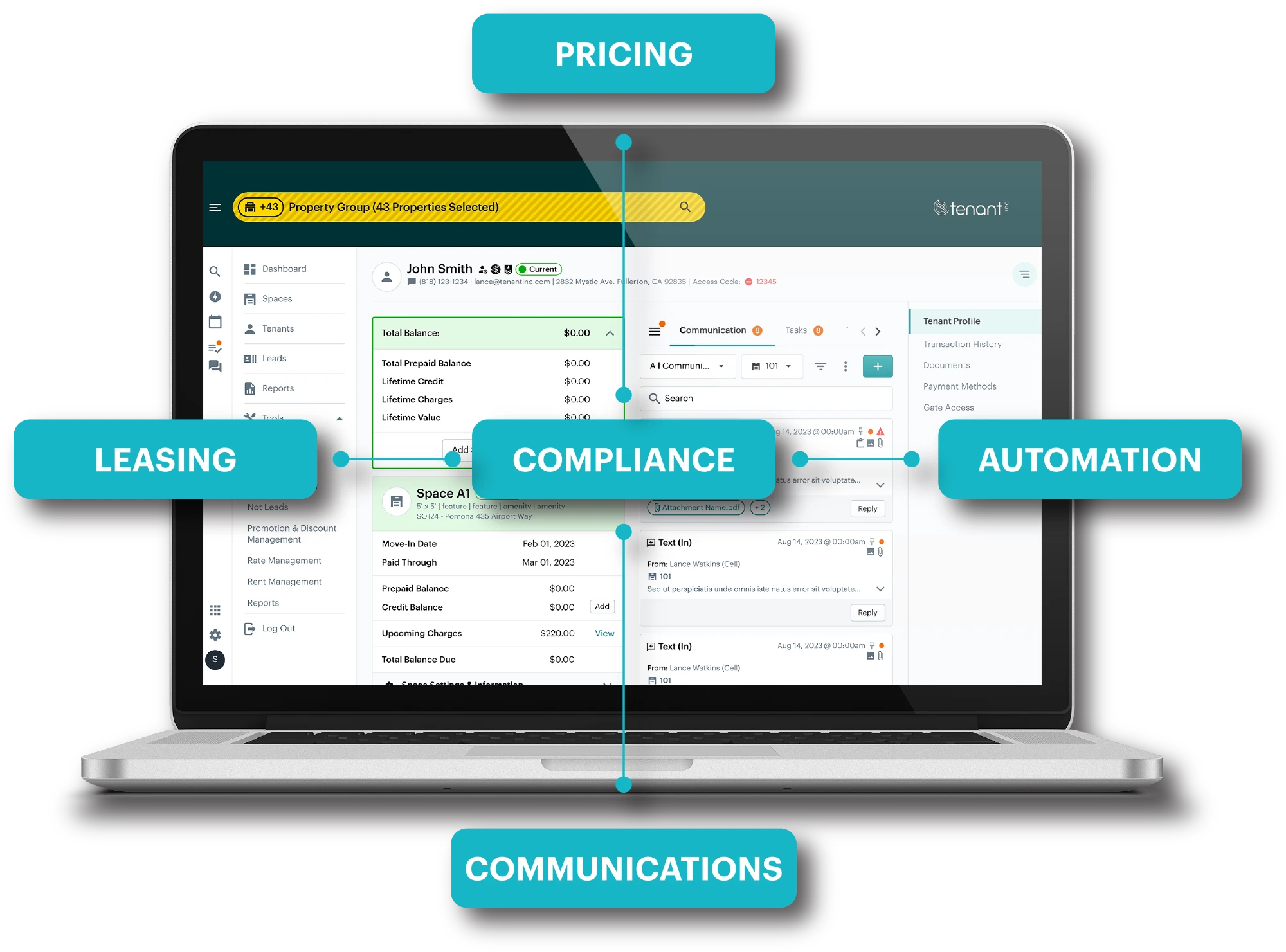


s self-storage owner-operators exit the first quarter of 2026 and prepare for the busy season ahead, it is time to review your capital expenditure (CapEx) plans. But that doesn’t mean you can’t take some lessons learned in 2025 and turn them into strategies for success.

- Delayed repairs or remodels due to stretched budgets,
- Aging infrastructure in need of significant updates after years of heavy use,
- Shifting tenant expectations toward “smarter,” more secure and more comfortable facilities,
- Facility upgrades required to meet modern customer needs,
- Declining rental rates as new, more contemporary facilities enter the market, and
- Outdated unit mixes failing to keep up with the needs of today’s customers.
Unfortunately, taking a wait-and-see approach to costly remodels and repairs can cost you in the long run with lackluster curb appeal that leads to reduced revenue and damaged reputation as potential tenants seek facilities that look shiny and new. And not repairing issues when they are minor often turns them into big problems with bigger prices tags. For example, a roof leak that requires a $300,000 replacement and a month without tenants could be avoided with regular roof inspections.
The good news is it’s not too late for self-storage owner-operators to get started with essential strategies that allow you to stay competitive and maximize ROI. Despite aging facilities and evolving tenant expectations, a proactive plan can alleviate many of these issues, especially when you align it with long-term value rather than short-term cost savings. Read on for tips on how to take the guesswork out of tackling your deferred maintenance, renovations, and smart upgrades, and how to pay for it with today’s tax breaks that allow you to save money while making facility improvements.


- Door Replacements – Old or dented doors are more than an eyesore—they’re a liability. Replacing aging roll-up doors reduces maintenance costs, enhances curb appeal, and improves tenant satisfaction. Newer models also offer smoother operation, improved weather sealing, and better long-term durability. With a door replacement program, you can get a fast and effortless solution that uses experts to discard the old doors and install the new ones in a single day.
- Hallway Reskins – Fresh hallway paneling creates a cleaner, brighter environment that can help justify higher rental rates. By choosing new panels with long-term durability and minimal maintenance, you can help your facility maintain a modern, professional appearance.
- Unit Remixes – If occupancy is uneven, consider reconfiguring unit sizes to match current market demand. A remix can improve rental yield without expanding your footprint. A well-planned unit remix can improve rental yield and optimize your space–all without expanding your footprint. Adding removable storage units is a great way to accomplish remixes, and these portable solutions are eligible for 100 percent bonus depreciation under the 179 criteria.
- Paving and Asphalt – Smooth drives and proper drainage reduce claims and increase site safety. Paving is one of the most visible aspects of your property and one of the most common sources of tenant complaints when neglected. Regular maintenance and time resurfacing protect your investment and preserve your professional image. With a proactive maintenance program that includes critical elements like paving, you can prevent costly issues and keep your operations running smoothly.
- Painting and Office Remodels – A refreshed office can do wonders for first impressions. Simple upgrades like new paint, lighting, or signage elevate your brand presence, improve customer satisfaction, and make your facility feel more welcoming and well-managed. Again, a proactive maintenance program helps in this area as well to ensure your property remains secure, functional, and inviting.
- Roofing And Building Repairs – With today’s metal roof restoration and coating systems, owners can often extend roof life by 10 to 20 years at a fraction of full replacement cost. By choosing a restoration solution that includes warranties for up to 20 years for new membrane systems, you can create substantial savings versus a full tear-off.
- HVAC And Lighting Upgrades – Upgrading to LED lighting and modern HVAC systems not only enhances tenant comfort, especially in climate-controlled buildings, but also improves energy efficiency. These upgrades can qualify for energy tax credits and utility rebates, providing both operational and financial benefits. By working with a team of experts to perform these upgrades, you’ll have an overall safer and more efficient self-storage facility.
- Smart Security System Upgrades – Security remains one of the top decision factors for tenants. Upgrading access control systems, gates, and surveillance deters theft, improves peace of mind, and can increase occupancy and rental rates. Industry-leading smart-entry systems and unit door smart locks provide integrated smart access, security-grade motion sensing, and mobile app control for tech-forward facilities.

s developers search for the ideal storage site, their choices are driven by demographics that will result in financial success. These demographic areas have fewer and fewer sites where the vicinity allows storage. When storage is not allowed on a site, there are multiple ways to gain approval for storage development. Reviewing site conditions and determining the best avenue to gain storage approval is the starting point of the process. The municipality will review and determine if a special use permit (SUP), conditional use permit (CUP), or a zoning change is required to develop storage. A zoning change is altering the classification of a property from a different type of development/use to the storage use. In many cases, a zoning change is the only option, and it can be quite a process to navigate.
Cheryl L. Cole is the associate partner of Dallenbach-Cole Architecture.
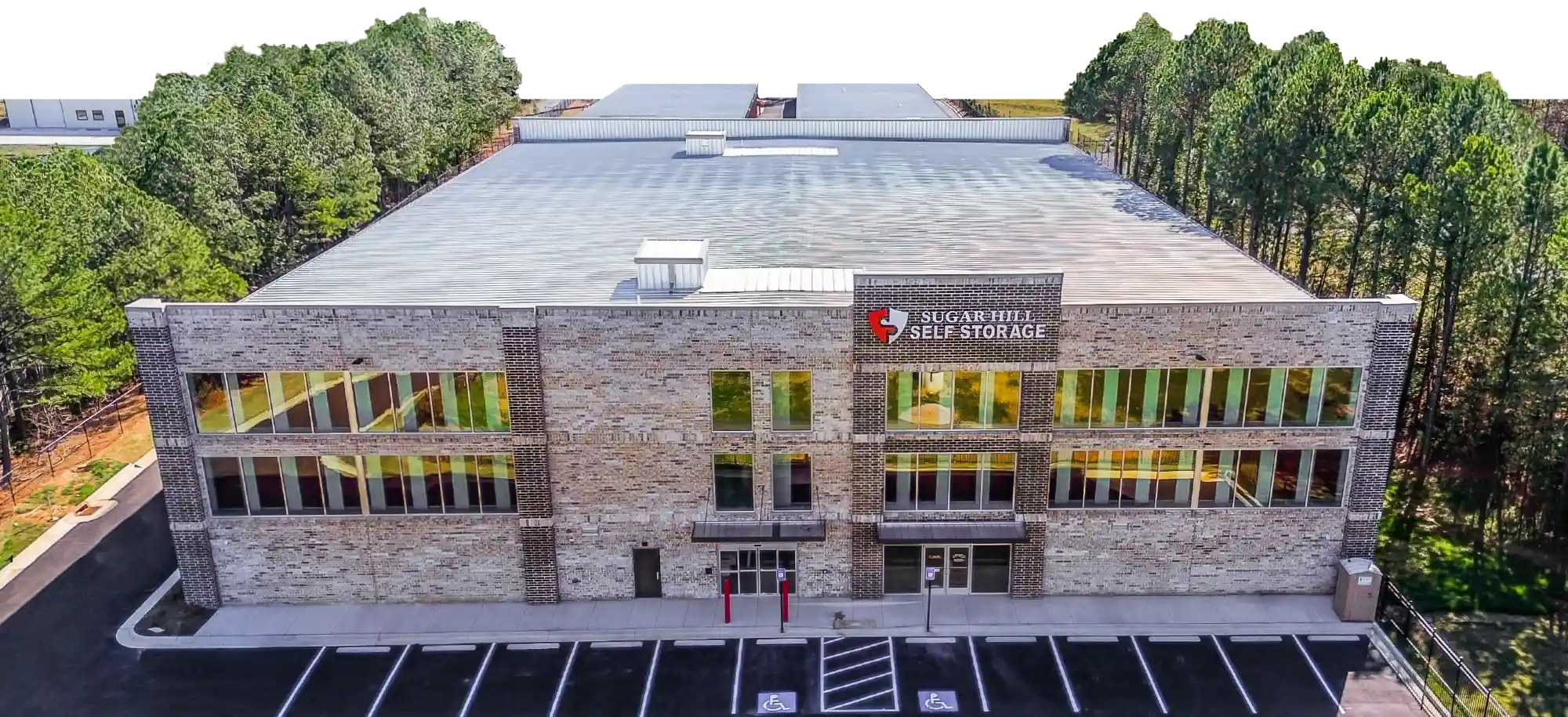
omfort, connection, and family-friendly living—that’s the “Sweet Life” in Sugar Hill, Ga., which is the city’s motto. The fast-growing Gwinnett County suburb builds on that identity with the opening of Sugar Hill Self Storage, located along a commercial thoroughfare yet still close to residential neighborhoods. The three-story facility, which opened in January 2025, spans more than 93,000 square feet and features 726 units.
The property is owner Stan Howington’s first foray into the self-storage industry. A lifelong resident with deep community roots, Howington wanted the facility to be both functional and welcoming. To that end, Sugar Hill Self Storage offers a range of customer-focused amenities, including drive-up and climate-controlled units, private office and warehouse suites, on-site business center, beverage bar, ample parking, and oversized contractor units up to 600 square feet.
All of this is housed within a sophisticated red brick and stone façade, a nod to Georgia’s architectural heritage. Inside, the facility features a calming palette of whites, grays, and beiges, while reclaimed wood accent walls in the office and conference room add warmth. Now, with occupancy ramping up and community response strong, it’s clear this was a sweet deal.
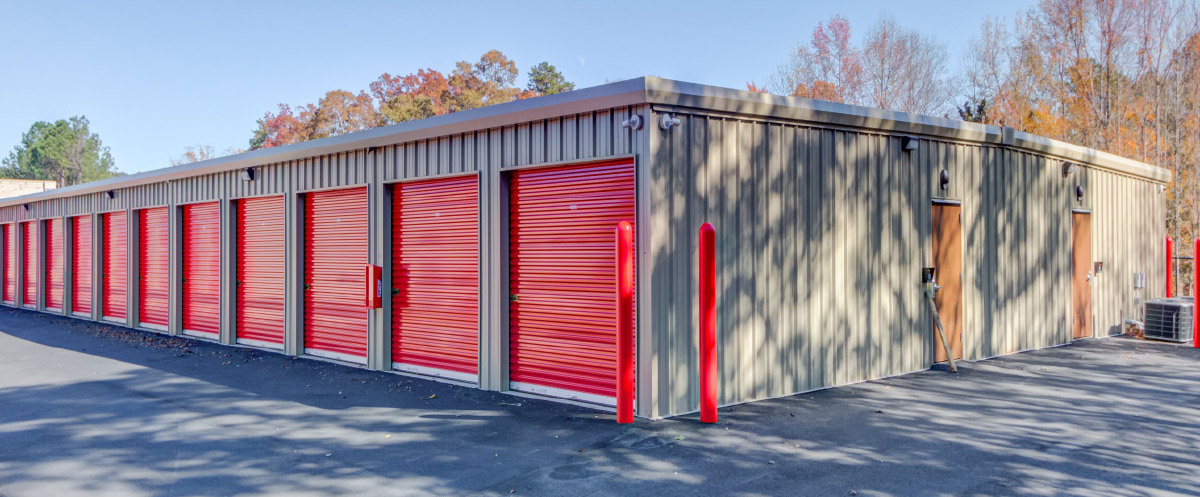
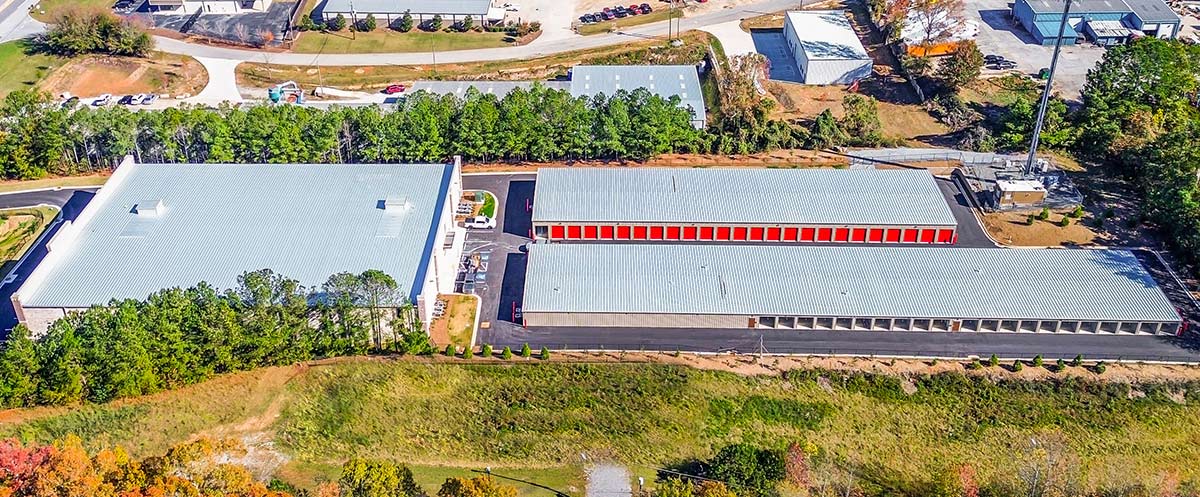
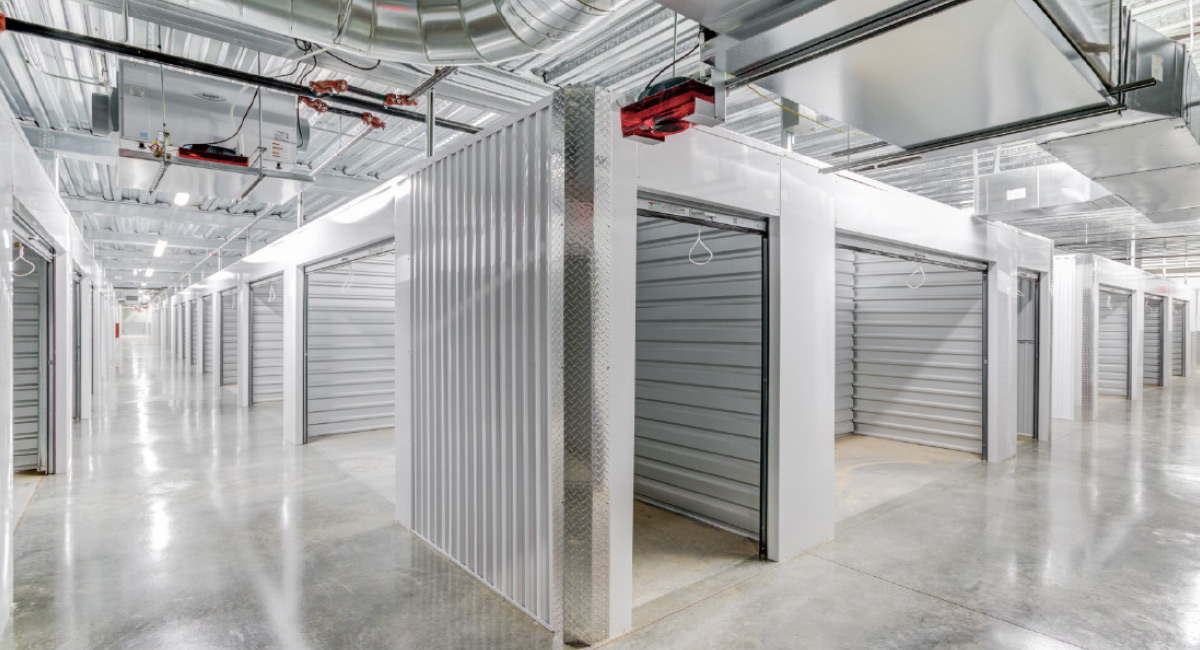

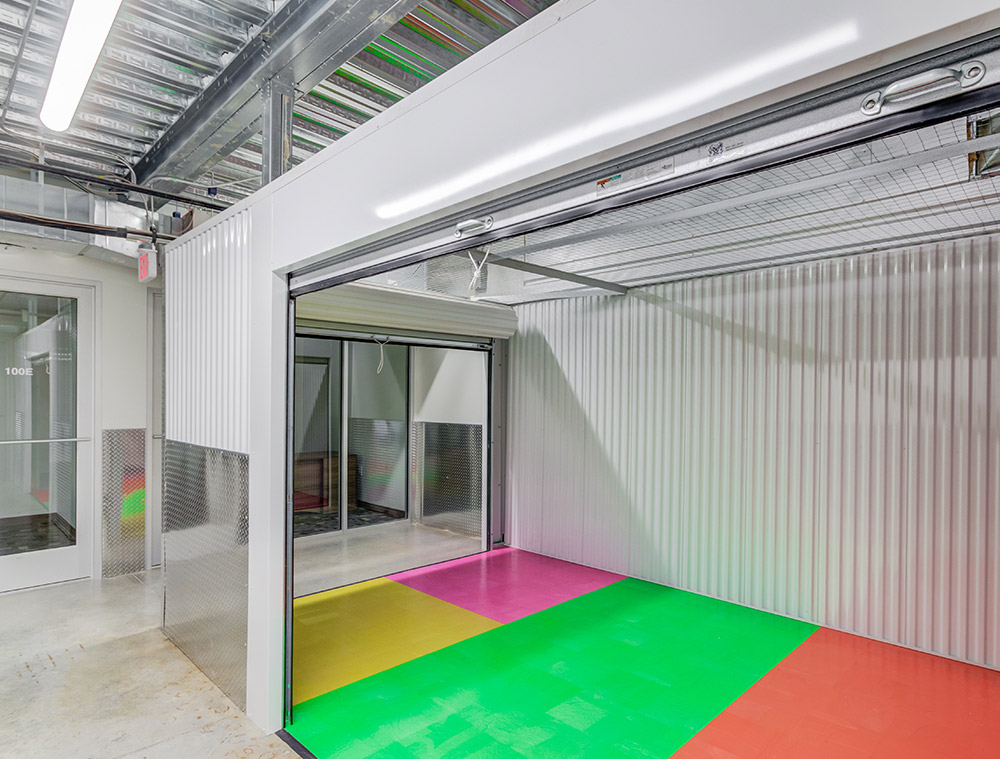
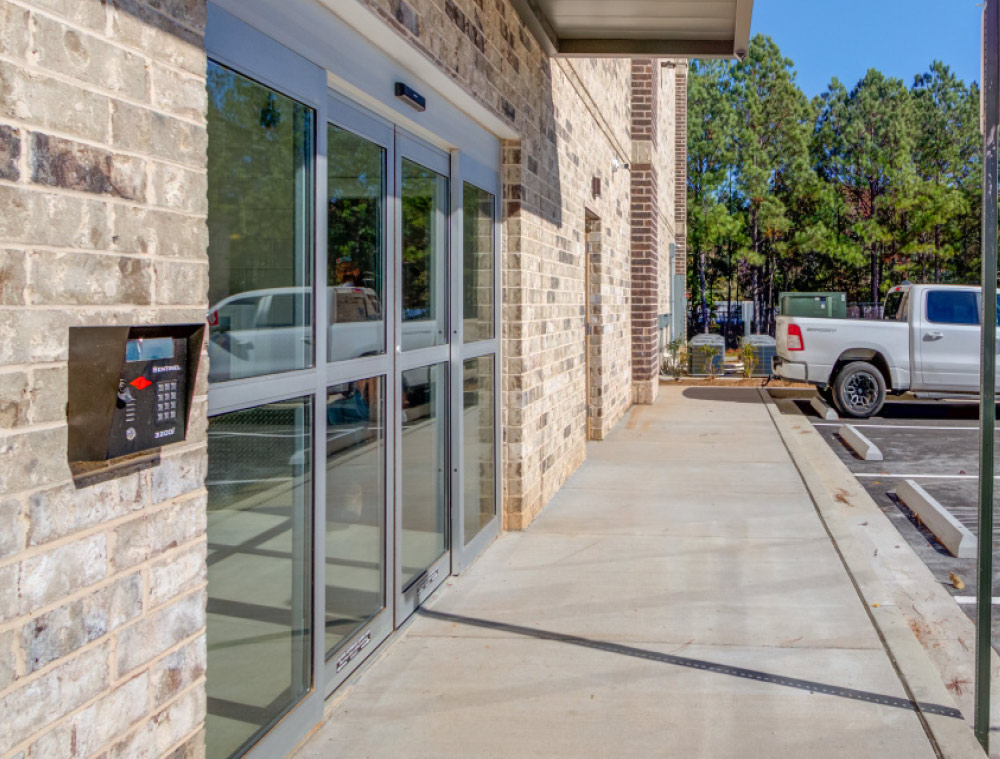
Security: Sentinel Security Solutions
Civil Engineer: John Nicol, Blue Landworks, LLC
Doors: Janus International
Management Software: Sitelink
Interior Design: M. Anne Ballard
or most self-storage owners and operators, your website is your storefront. It’s where modern tenants compare prices, check availability, and decide (often in less than 60 seconds) whether to rent from you or a competitor down the street.
In an industry where a majority of renters begin their search online and prefer to reserve digitally, a high-converting website isn’t a nice-to-have anymore. It’s a major revenue lever. Operators who invest in a conversion-focused website consistently see higher occupancy, stronger lead quality, faster leasing cycles, and better pricing power.
But what actually makes a self-storage website convert? What separates the top-performing sites (the ones that help owners make money in their sleep) from those that leak renters?
At White Label Storage, we’ve spent years analyzing tenant behavior, marketing performance, and conversion data across dozens of markets. The highest-converting websites consistently excel in five core areas. Let’s break down each one and unpack why it matters for your NOI.
- Simple navigation – Simplicity is a luxury, and the easier it is to navigate to key parts of your website the better. This often manifests in obvious calls to action like “View Units” and “Rent Now.”
- Visual hierarchy – This design term refers to the order in which content appears on the page. A good visual hierarchy presents the information that matters most first. For example, high-performing self-storage websites typically display information and filtering options about available units directly on the homepage. As a result, potential tenants can quickly sort units and find pricing, which is their primary purpose for visiting the site.
- Mobile-optimized layouts – Mobile design is different from desktop design. The smaller screen requires a different experience. So, ensuring your site has fast load times, large tap targets, and scrolling designed for fingers is critical for creating a good mobile experience.
- Modern brand presence – The previous three points all refer to user experience design, or what it’s like to navigate and use a website. But pure visual design still matters because people make decisions based on aesthetics. In that case, be sure to include high-quality, professional photography, consistent brand colors, and clean typography across your site (and in your other marketing)
Why Mobile Design Matters
Numbers vary, but the majority of self-storage website traffic originates from mobile devices. Mobile users behave differently. They scroll quickly, skim text, and expect instant clarity. If your site isn’t optimized for that behavior, you’re losing half your potential renters before they even see your pricing. Good design equals higher trust. Tenants often choose the brand that feels the safest, the cleanest, and the most professional. A polished website conveys operational excellence, and that directly increases conversion rate.
This audience is driven by an immediate need, so if they can’t find the information quickly or if the information is outdated, they’ll move on. High-converting websites include:
- Real-time inventory syncing with your PMS;
- Transparent pricing (no hidden fees);
- Filters for unit type, size, and amenities;
- Clear “Only X units left!” indicators to create urgency; and
- Google-style UX patterns tenants recognize (simple lists, expandable details, clean CTAs).
White Label Storage has consistently seen that facilities with live inventory outperform those without. When tenants can rent or reserve on the spot, the friction disappears, bounce rates drop, and conversion rates jump.
The Psychology Behind Real-Time Pricing
Storage tenants typically rent under stress because they’re moving, downsizing, or in some life transition. Their willingness to rent is high, so presenting them with the information they need is critical. Tenants very often choose whichever facility answers their questions fastest.
- Work seamlessly on mobile,
- Require the fewest steps possible,
- Autofill addresses and personal information where allowed,
- Use secure, familiar payment fields,
- Provide a clear progress indicator (e.g., steps 1 to 3),
- Allow renters to add insurance and accessories (locks) without confusion, and
- Send instant confirmation via SMS and email.
What We See In Our Management Practice
When the rental process is optimized, abandoned checkouts fall dramatically and total rentals increase. This process is so critical we actually created a customized checkout flow that we utilize for all of our clients’ websites.
The philosophy is simple: Remove as many barriers as possible between the customer and the moment they complete their rental. During the rental process, visualize the tenants’ progress so they know how long they have left to go.
This kind of progress tracking makes multi-step interactions more bearable for users because they can conceptualize how far they have left to go.
Even with all the hype around AI, local SEO is still a critical part of website development. Here’s how high-converting websites integrate SEO:
- On-page optimization – This part can be a bit technical, but it matters how each of your website pages is structured. Using keywords in prominent headlines, writing meta descriptions for each page, and using alt text for every image all have a big impact on how your site ranks.
- Location-specific keywords – Utilize keywords that relate to searches in your submarket, for example, “storage units in {neighborhood}” or “climate-controlled storage near {local highway or landmark}.” These keywords are critical indicators for Google because they show your website is a reliable resource for the people searching for these terms.
- Google Business Profile optimization – Your Google Business Profile (GBP) plays a huge role in driving local search traffic to your website. Ensure all business information—particularly name, address, and phone number (NAP)—are up to date.
- Fast, mobile-friendly load times – Load times matter a lot for SEO, particularly mobile load times. Again, this is more on the technical side, but you can use Google Pagespeed Insights to track and improve load speed across your site.
Why SEO Is A Conversion Multiplier
Local SEO is an important part of your marketing mix. It can help turn your website into a sustainable, long-term acquisition engine that generates customers without having to solely rely on paid ads.
Trust signals matter, especially in storage, where renters worry about security, professionalism, and hidden fees. The strongest trust builders on a storage website are:
- High-quality facility photos and videos (clean, well-lit, inviting),
- Google Review widgets with real ratings,
- Security feature icons (gated access,cameras, lighting, alarms),
- Clear policies (refunds, billing cycles, autopay),
- Transparent fees that eliminate surprises,
- Professional, consistent branding, and
- Prominent contact options (click-to-call, SMS, chat).
Why Trust Signals Work
Renters aren’t only comparing price; they’re also comparing quality and trustworthiness. Many renters (particularly in more affluent areas) will happily pay more for a facility they perceive to be higher grade.
But those who invest in conversion-optimized websites see a different trajectory. Yes, you have to spend more upfront to improve your site, but over the long term you’ll see a significant ROI through:
- Higher-quality digital leads,
- Stronger revenue management performance,
- Healthier NOI, and
- A defensible competitive
- advantage in their market.
When your website works, everything else works better too.

et’s be honest: For a while, QR codes felt like a gimmick. A clunky solution in search of a problem. But in the self-storage world, they’ve quietly become one of the most powerful and practical tools for bridging the gap between your physical facility and your digital rental platform. They aren’t just a fancy barcode; they’re a direct line to faster rentals, smarter operations, and a genuinely better customer experience that captures revenue you might otherwise be losing.
By placing a simple QR code on your main signage, unit doors, or marketing banners, you turn your entire property into a 24/7 digital storefront. It’s about meeting customers where they are, in their car, on their phone, and ready to act. And this isn’t a tool for a niche audience; with the number of U.S. smartphone users scanning QR codes set to surpass 100 million this year, according to Statista, it’s a mainstream behavior you can’t afford to ignore.
Imagine this flow:
- A customer scans a QR code on the office door.
- They land directly on the location’s page, where they can explore a virtual tour, view transparent pricing, and rent with just a click.
- They complete the rental and payment process right on their phone.
- Gate access codes and lock codes are displayed in an instant.
This flow drastically reduces “rental abandonment,” providing the instant gratification consumers now expect.
A static QR code is the simplest form. The destination URL is encoded directly into the black and white pattern. Once generated and printed, it can never be changed. It’s like writing a web address in permanent ink. These are often free to generate and are fine for information that will never, ever change, like a link to your company’s homepage on a business card. The downside is they offer zero flexibility, zero data, and are typically visually unappealing because they are limited to a basic, pixelated look. You’ll never know if anyone is even scanning them.
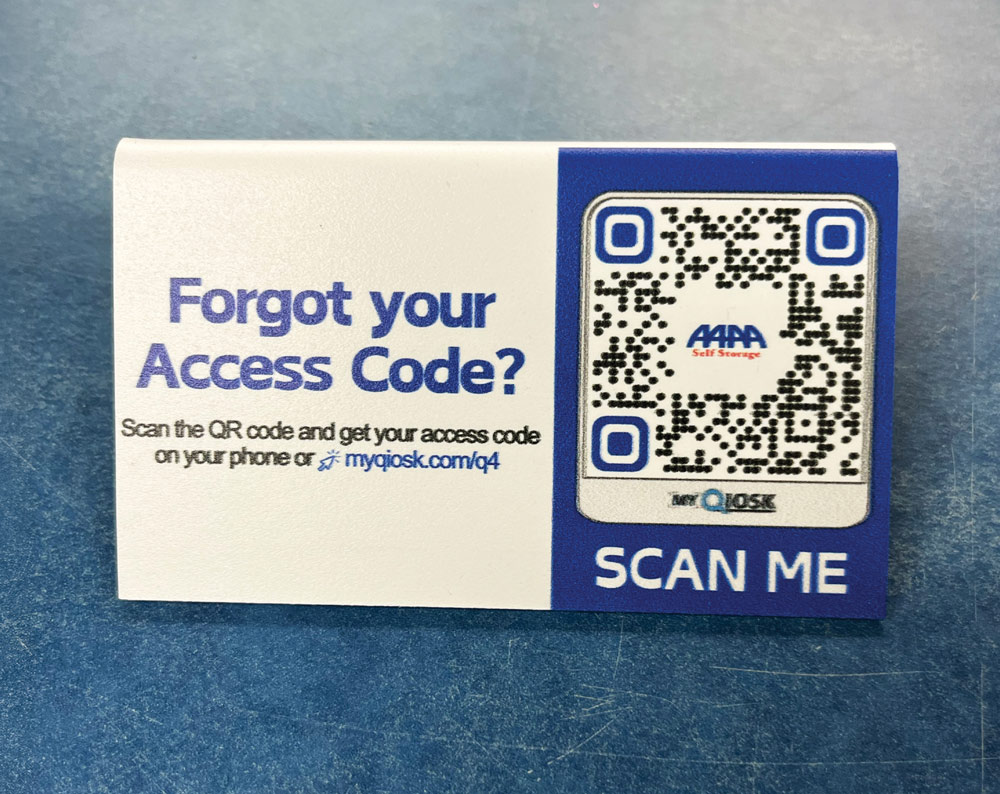
For any serious business application, the choice is clear. Dynamic codes provide the flexibility, intelligence, and visual appeal needed to make smart decisions and represent your brand effectively.
This aligns with broader trends showing QR code-based coupons can have redemption rates up to 10 times higher than traditional print coupons, according to Business Insider. With dynamic codes, you can A/B test offers, see which ad placements get the most scans, and calculate your marketing ROI with precision. It moves marketing from an expense to a measurable investment.
Instead of messy paper logs, managers can use QR codes for security checks and maintenance audits. A quick scan of a code at a specific checkpoint logs the time, date, and staff member, creating a perfect digital record.
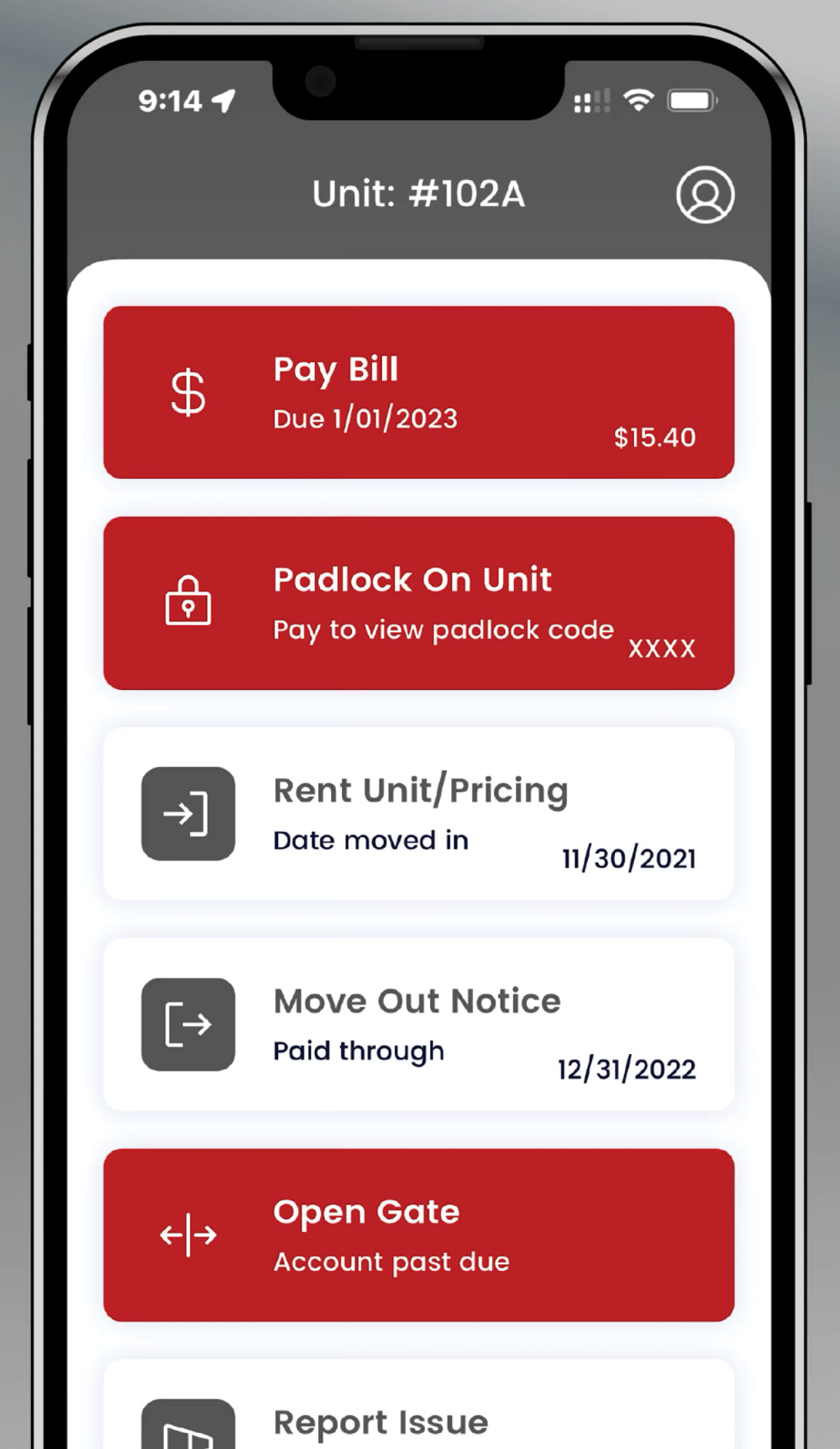
We’ve also found great success using QR codes as a simple nudge for customers to leave Google reviews. Place a strategic code linking straight to your Google My Business review page and it becomes effortless for happy renters to share their positive experiences. This boosts your online reputation and helps attract new business.
- Your Main Gate Sign or Office Banner – This is your most visible asset. Place a large, clear QR code here with the call to action “Scan to View Rates & Rent Online.” Use a dynamic code and link it to your main unit pricing page. Later, if you want to run a site-wide promotion, you can update the link in seconds without spending a dime on new signage.
- Stickers on Vacant Unit Doors – Print durable, weather-proof stickers with a dynamic QR code and place them on the doors of all your empty units. Link each code to the direct rental page for that specific unit size. This is incredibly powerful. A customer can walk the property, find a size they like, scan the code, and rent it on the spot. You can also track which unit sizes get the most on-site interest.
- Your Next Flyer or Mailer – The next time you print any marketing material, add a dynamic QR code. Create a unique code just for that campaign (e.g., “Apartment Outreach Fall 2025”). This will give you a crystal-clear picture of that campaign’s performance, allowing you to prove its value and make better decisions next time.
If you’re ready to unlock the full potential of QR codes, especially with the robust capabilities of our MyQiosk product, we invite you to learn more. Visit getnoa.com/demo today to schedule a personalized demo and discover how we can tailor a QR code strategy to boost your specific location’s success. Let’s make your facility a 24/7 digital powerhouse.



Position
ew real estate sectors have experienced a more remarkable evolution than self-storage. Once viewed as a peripheral niche, we have seen the sector become a strategic priority for many of the most sophisticated real estate investors. That growth did not happen overnight. It came from a deeper appreciation of storage’s core demand drivers and the compelling characteristics that make it both defensive and operationally complex.
When we first began investing in the asset class in 2005, our conviction was immediate: defensive needs-based demand, fragmented ownership, and operational complexity that rewarded experience and scale. Two decades later, we believe those foundational truths remain as relevant as ever, but the thesis has matured. After more than 330 investments and partnerships with 15 operating companies, we have developed a multi-decade base of experience, encompassing real data on micro-market behavior, supply cycles, and operator performance across varied market conditions.
Throughout this time, we have observed continued demand for storage solutions supporting individuals and businesses through both predictable and unpredictable moments of life. Yet, as this demand remains steady, the depth of institutional understanding has evolved, showcasing the potential opportunities that lie ahead.
Second, renters have accounted for more than 60 percent of household moves since 2012, and renters typically move more frequently than homeowners. As a result, many customers now treat storage as an extension of their living space, particularly those navigating frequent relocations or living within smaller urban footprints.
Third, approximately 20 percent of self-storage demand comes from business and commercial users. This segment has shown itself to be stable across economic cycles. The remaining 80 percent comes from households, which we broadly categorize as long-term users, life-event users, and those managing temporary transitions such as moves, renovations, or downsizing.
Across economic environments, we believe the data tells a clear story: The durability of storage comes from a diversity of demand. It is largely powered by human behavior, not a single economic variable. While economic cycles fluctuate, life events (forming households, relocating, downsizing, managing estates, etc.) remain steady over time, demonstrating the durability of the sector’s long-term performance.
In 2024, NCREIF formally introduced self-storage as its own property type within the NFI-ODCE index and expanded guidelines, allowing core strategies to hold larger allocations to alternative sectors. Storage has grown from a negligible allocation to roughly 4 percent of ODCE market value, with several large core strategies targeting meaningfully higher exposure. The rationale is straightforward: Self-storage combines fragmented ownership, operational complexity, pricing flexibility, and durable, life-event-driven demand.
Over a 20 year period, index data has shown that self-storage has demonstrated stronger performance relative to other real estate property types in both public and private markets. As a result, we have seen that institutional investors are continuing to increase their focus and allocation to storage.
Historically, markets such as New York, Los Angeles, San Francisco, Boston, and Chicago have reflected these dynamics. More recently, however, high-growth Sun Belt metros have also attracted increased industry attention.
Our firm has been actively capitalizing on this trend, recently acquiring a 21-property, 1.3-million-square-foot self-storage portfolio through a joint venture with Morningstar Properties. The portfolio spans high-growth markets across Texas, the Carolinas, Florida, Georgia, Virginia, and Arkansas, reflecting continued conviction in regions with strong population and employment trends.
As we look toward 2026, we believe several dynamics will support the sector:
- Tenant length of stay continues to increase. Nearly half of customers now remain in storage for more than 12 months, supporting revenue stability and pricing power.
- Generational demand is accelerating. Millennials and Gen Z use self-storage at higher rates than prior generations, driven by mobility, urban living, and lifestyle flexibility.
- Commercial usage remains steady at approximately 20 percent. This demand provides downside mitigation during housing market slowdowns.
- New supply is declining meaningfully. Deliveries in 2026 are projected to be the lowest since 2014—less than half the trailing seven-year average.
We believe one of the sector’s defining characteristics is the asynchronous nature of its demand drivers. When one source of demand softens, another often strengthens. That diversity acts as a built-in shock absorber. Combined with a shrinking development pipeline, the setup remains significant for disciplined investors and experienced operators.
We expect 2026 to be an active year for the industry. We have seen that storage fundraising accelerated materially in the second half of 2025 as investors positioned capital for improving fundamentals. At the same time, development starts have declined sharply due to higher construction costs, tighter financing conditions, and more conservative underwriting. As a result, supply growth in 2026 and 2027 is projected to remain below 2 percent annually—the lowest level since 2014.
As investors increasingly seek assets with predictable cash flow, inflation resilience, and low correlation to traditional economic cycles, self-storage is expected to continue its evolution from a niche allocation to a core component of institutional portfolios. We look forward to continuing to build alongside our experienced operating partners and contributing to the long-term strength and maturation of the self-storage sector.





Lock Distributors-AUS
02-9880-3844
www.lockdistributors.com.au
sales@lockdistributors.com.au




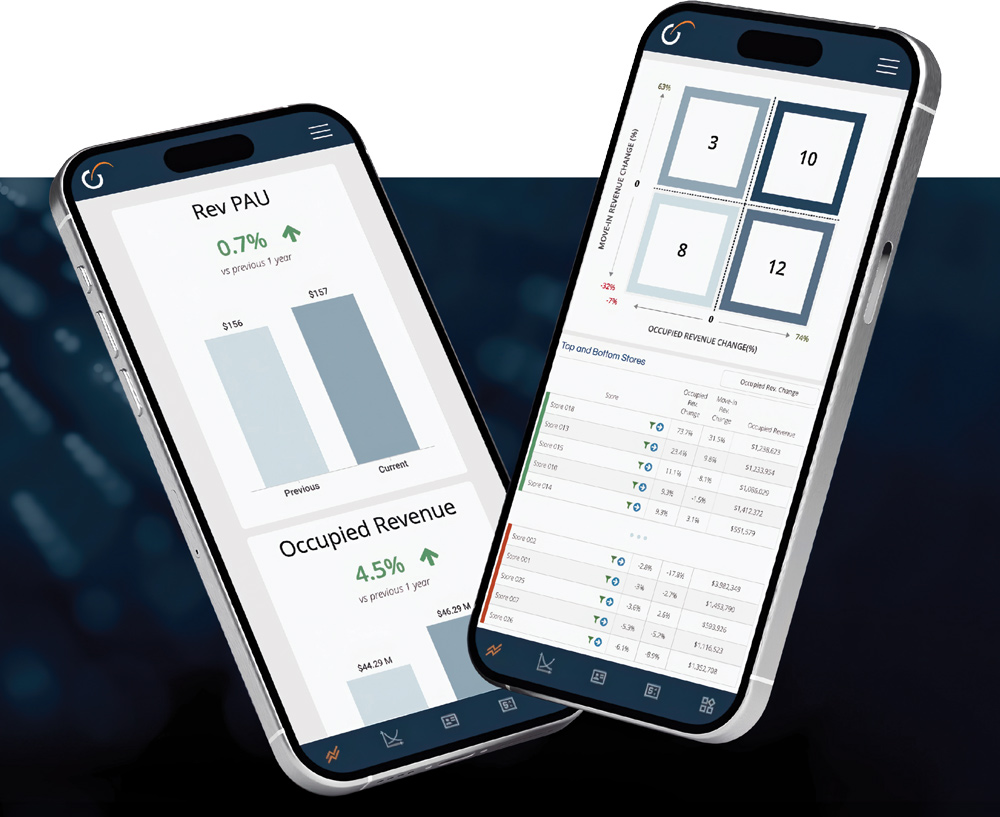
n self-storage, every vacant unit represents “perishable” inventory—revenue that is permanently lost each day it sits empty. That reality often pushes operators toward aggressive discounting in the name of occupancy. Over time, those tactics can erode asset value and fuel unsustainable local price wars. Prorize was founded to help operators navigate that delicate balance between price and volume.
Most people in the self-storage industry are already familiar with Prorize. Founded in 2006 by Dr. Ahmet Kuyumcu, the company has long been a fixture at industry events and a pioneer in revenue management strategy. Its flagship platform, the Self-Storage Revenue Optimizer™ (SSRO™), uses advanced algorithms to forecast customer demand and compute prices designed to maximize revenue. What many operators may not realize is how much Prorize is expanding that platform—and how broadly it is redefining what revenue optimization means.
One of the most immediate developments is the addition of AI-powered alerts and mobile intelligence. “Our AI-driven alerting layer complements reports and dashboards by providing an automated ‘eyes-on-glass’ system,” says Kuyumcu. “It continuously monitors data for emerging patterns, anomalies, and early warning signals, cutting through noise and translating complex signals into clear guidance.”

VP of Products and Engineering: Dinesh Mehta
At the same time, the company is expanding SSRO’s optimization capabilities to support more sophisticated pricing structures increasingly used by operators to stay competitive. These include strike-through pricing, good/better/best packages, and lease-term-based pricing. “We are extending SSRO to optimize across these complex structures, including prepaid discounts and other advanced mechanisms that have been proven in adjacent industries,” says Mehta.
Promotions are another area receiving renewed analytical focus. “Promotions play an increasingly central role in customer acquisition, but poorly designed incentives often trade margin for volume without clear returns,” Mehta says. To address this, Prorize is developing analytical frameworks that measure promotional effectiveness at both the unit and store level, drawing on methodologies refined in retail and hospitality. “These tools help operators identify which incentives drive incremental, profitable demand—and which simply erode revenue,” adds Kuyumcu.
Beyond pricing and promotions, Prorize is also advancing tools designed to support a more intentional value-selling process, both online and in store. “How units are presented, and in what order, strongly influences customer decisions,” says Kuyumcu. “Behavioral science shows that choice architecture can meaningfully shape outcomes without changing underlying prices.”
These designs are paired with market-response models that measure lead-to-move-in conversion behavior and continuously refine price-sensitivity estimates. The result is a tighter feedback loop between pricing, value presentation, and demand.
Revenue optimization, however, begins long before the first rent is set. Much like airlines design flight schedules before pricing tickets, the mix of unit sizes and types at a facility fundamentally shapes its revenue potential. “For existing stores, we are advancing AI-driven models that use unconstrained demand forecasting to identify imbalances and recommend data-driven adjustments to unit mix,” says Mehta. “For new developments, demographic and market data inform initial configurations. In both cases, the objective is the same: aligning physical inventory with true market demand.”
High-performing operators also recognize that pricing cannot be separated from marketing efficiency. Kuyumcu and Mehta point to two critical questions: What is the true cost of acquiring one incremental move-in, and how should marketing dollars be allocated across stores, channels, and unit types?
To answer those questions, Prorize is adapting Marketing Mix Models (MMMs)—commonly used in advanced D2C industries—to the self-storage environment. These models estimate channel-, store-, and unit-level returns while accounting for local demand, availability constraints, and the interaction between pricing and marketing. “The result is a coordinated approach where marketing and revenue management operate within a single analytical framework,” says Kuyumcu.
Looking ahead, Prorize is also extending SSRO’s forecasting capabilities to support scenario-based budgeting. While the platform already incorporates move-in and move-out forecasts when generating rent recommendations, new tools will enable operators to model best-case and worst-case revenue outcomes. “This replaces static, Excel-based budgeting with on-demand, unit-level forecasts that explicitly incorporate uncertainty,” says Mehta.
The company is also developing tools to help operators manage rent-increase conversations more effectively, specifically deciding when to hold firm and when limited flexibility makes sense. “In practice, rent-increase discussions often look more like B2B pricing negotiations than traditional retail pricing,” says Kuyumcu. Instead of recommending a single take-it-or-leave-it increase, Prorize is focusing on providing a recommended increase range: an optimal target supported by a pre-defined floor. This gives managers guidance they can actually use on the phone, allowing them to address customer pushback while protecting revenue, improving retention outcomes, and maintaining pricing discipline across the portfolio.
Taken together, these developments underscore a broader shift in how Prorize views innovation. It is not technology for its own sake but a move toward more adaptive, disciplined, and resilient revenue systems as market complexity increases.
“The future of self-storage revenue management is not reactive,” says Kuyumcu. “It is engineered—built on data, grounded in economic principles, and designed to support better, more consistent decisions at every level of the organization.”

Use AI + Google + Your Facility Data to Capture More Move-Ins And Maximize Return on Ad Spend

Adverank doesn’t just manage ads.
It uses powerful AI to recommend where to spend based on demand, occupancy, and past performance.
No guesswork. No agency reports. Just better marketing decisions.


See it in action at adverank.ai
See it in action at adverank.ai

urveys over the past 20 years attest to the ever-growing role that female customers play in the realm of self-storage. So, it only makes sense that the role of women as professionals in the industry has likewise grown.
What started as an informal gathering of female professionals in 2015 officially became the SSA Women’s Council two years later. And now the group gatherings at SSA conferences have evolved into cornerstone conference events, drawing standing-room-only crowds and becoming a favorite among attendees.
The reason is simple: The power of shared experiences, making new connections, and collaborating on projects allows women of all ages in the industry to enjoy a common bond.
“The Women’s Council was established with the mission of fostering a safe, inclusive environment at conferences where women could build meaningful connections and friendships, collaborate, share experiences, and learn together,” says Anna Bennett, partner and head of acquisitions at the Sage Property Company.
According to Kristi Adams, chief marketing officer at OpenTech Alliance, the Women’s Council provides a time during busy conferences when women across all levels of the industry can learn from one another, share challenges, and successes openly, and grow both personally and professionally.

Ginny Stengel, SSA’s senior vice president of education and events, has watched the council grow in size and stature over the years and seen its effect on the industry.
“At its heart, the SSA Women’s Council is about people helping people,” says Stengel. “It’s about sharing experiences, opening doors, and lifting each other up. It has created this community of connection and mutual support that’s not always easy to find. It certainly helps individuals, and the industry, move forward together.”
The Women’s Council also offers a mentoring program in which women new to the industry can build connections and trust with established mentors.
As far as gatherings at SSA conference and trade shows, the Women’s Council is intentional about offering a wide variety of content to engage and support as many members as possible, while also making sure the experience is fun and welcoming.
“Events often feature thoughtful hospitality, from wine and cheese receptions to our most recent brunch—complete with a fabulous spread—all included as part of the SSA registration fee,” adds Bennett.
“The Women’s Council fosters a community of women from many different backgrounds to share ideas, lessons learned, perspectives, and allows the creation of a supportive environment for growth, both personally and professionally,” says Jackie Hogan, director of business development at CubeSmart. “I’ve learned so much from the amazing women in this industry.”

y now you probably know AI is more than just ChatGPT. It’s an entirely new category of advanced computing, giving rise to things like machine learning, natural language processing, computer vision, and agents.
AI agents, software that can shop, schedule appointments, browse websites, use other software, or even make phone calls on a person’s behalf, are here.
Today’s AI agents are good at handling well-defined, repetitive tasks. They can follow steps, fill out forms, compare options, and move information from one place to another. What they are not great at is navigating ambiguity, handling exceptions, or completing high-stakes actions without human oversight. In practice, they work best on what technologists call the “happy path”—clean websites, clear pricing, simple workflows.
That’s why AI agents aren’t showing up en masse to rent storage units yet. Storage is still a nuanced purchase. Unit availability changes quickly. Promotions vary and have different requirements. Identity verification, online leases, insurance liability, and payment steps all introduce friction for a computer to figure out.
But this technology is changing rapidly. AI agent commerce is here for many industries, so it’s only a matter of time until customers start to trust agents to do more and more complex tasks.
As search engines, browsers, and voice assistants evolve, the idea of “delegated intent” becomes more realistic. Instead of a customer searching 10 sites themselves, they may say, “Find me a climate-controlled 10-by-10 near my office for under $125 a month and reserve it for next Saturday.” It could know your location, personal info, credit card number, daily commute, brand preferences, reviews, and previous decisions and can compare multiple facilities and offers without anyone clicking or visiting your website. The customer could just review and say, “Let’s go with option B,” and it’s booked!
The agent doesn’t fully replace the customer, but it does compress the effort required to act. But just like search behavior today, if you don’t show up, you’re not even in the game.
From a marketing and operations standpoint, this isn’t a sudden disruption but an evolution of trends we’ve seen for two decades. Search got smarter. Rentals moved online. Mobile changed expectations. AI agents will simply be another layer on top that we’ll need to ensure our digital experiences are able to accommodate.
But there is so much to unpack here! Who becomes accountable when something goes wrong? How can we know what’s happening in the black box of decision-making? How will I know if I’m being represented/recommended correctly?
There’s no need to panic. AI isn’t booking storage units for people en masse today. But the future will be wild! Operators who focus on data clarity, price transparency, and digital innovation will be the ones agents (and humans) want to do business with.
• Fully integrated solutions with in-house baȷa Engineers for faster, easier projects
• Pre-Fabricated Framing Systems with Bolted Connections – No field welding
• Snow Loads from 20psf to 100psf – Wind Speed rated to 170MPH

Talk to StorageVault
StorageVault takes care of the
day-to-day. You enjoy increased
value and maximized cash flow.
StorageVault delivers stress-free
transitions and strong outcomes that
maximize value and minimize taxes.
providers in Canada and join a team dedicated to
supporting communities from coast to coast.
Talk to StorageVault
StorageVault takes care of the day-to-day. You enjoy increased value and maximized cash flow.
StorageVault delivers stress-free transitions and strong outcomes that maximize value and minimize taxes.