









How to enjoy our new magazine:
Just scroll!
Click or tap the table of contents icon in the menu bar to find any article.
Read any article by clicking or tapping the read full article button below each article intro.
Jump back to your previous browsing spot from any article using the menu bar or back to issue button.



And that’s what we do with Movable Additional Storage Structures (MASS) from Janus International.
MASS relocatable storage isn’t just a portable storage unit—it’s a Class A building solution that’s built without sacrificing any quality, unit mix, opening height or rental square footage. It stands the test of time—and so will your investment. But don’t just take our word for it. Use our checklist to see how we stack up against portable storage units.

The only building solutions that get this premier designation are those with top-tier finishes, modern systems and excellent accessibility


All MASS units are manufactured in the U.S.

- Highest grade quality steel
- Drip-stop barrier prevents condensation
- Wind-load of 145 mph
- 7’ door height
- Roofing snow load up to 75 pounds
- Sloped roof (Standard) Customization available

Modules available from 10′ x 10′ to 10′ x 30′ and can be subdivided as needed. Available in 30+ colors.

Top-of-the-line warranties include manufacturing, workmanship and materials covered for 1 year and a 35 year paint warranty.

4-6 weeks lead time



-
Surefire Ways To Improve Your CollectionsPage 14
-
The Industry’s Shift Away From Residential ManagementPage 18
-
What Makes A Good Social Media Manager?Page 22
-
Battling The New Rent Control BillPage 26


-
Creating Facility Designs For Extra Space StoragePage 66
-
Save Up To $1 Million On Your Next ProjectPage 70
-
Value Engineering And Interior FinishesPage 76
-
Noah’s Ark Self Storage in Rhome, TexasPage 78
-
Developing Effective Branding For Your BusinessPage 80
-
Developing An Exit Strategy For Your BusinessPage 84
-
Drone Photography And Videography Help Sales SoarPage 86
-
First Quarter 2025 Investor Survey ResultsPage 90
- Chief Executive Opinion by Travis Morrow6
- Publisher’s Letter by Poppy Behrens9
- Meet The Team10
- Women In Self-Storage: Jennifer Downer by Alejandra Zilak31
- Who’s Who In Self-Storage: Jackson Stevens by Victória Oliveira35
- Stats By Starr by Noah Starr48
- Innovation Spotlight by Brad Hadfield92
- Self Storage Association Update95
- The Last Word: Noah Starr96
For the latest industry news, visit our new website, ModernStorageMedia.com.



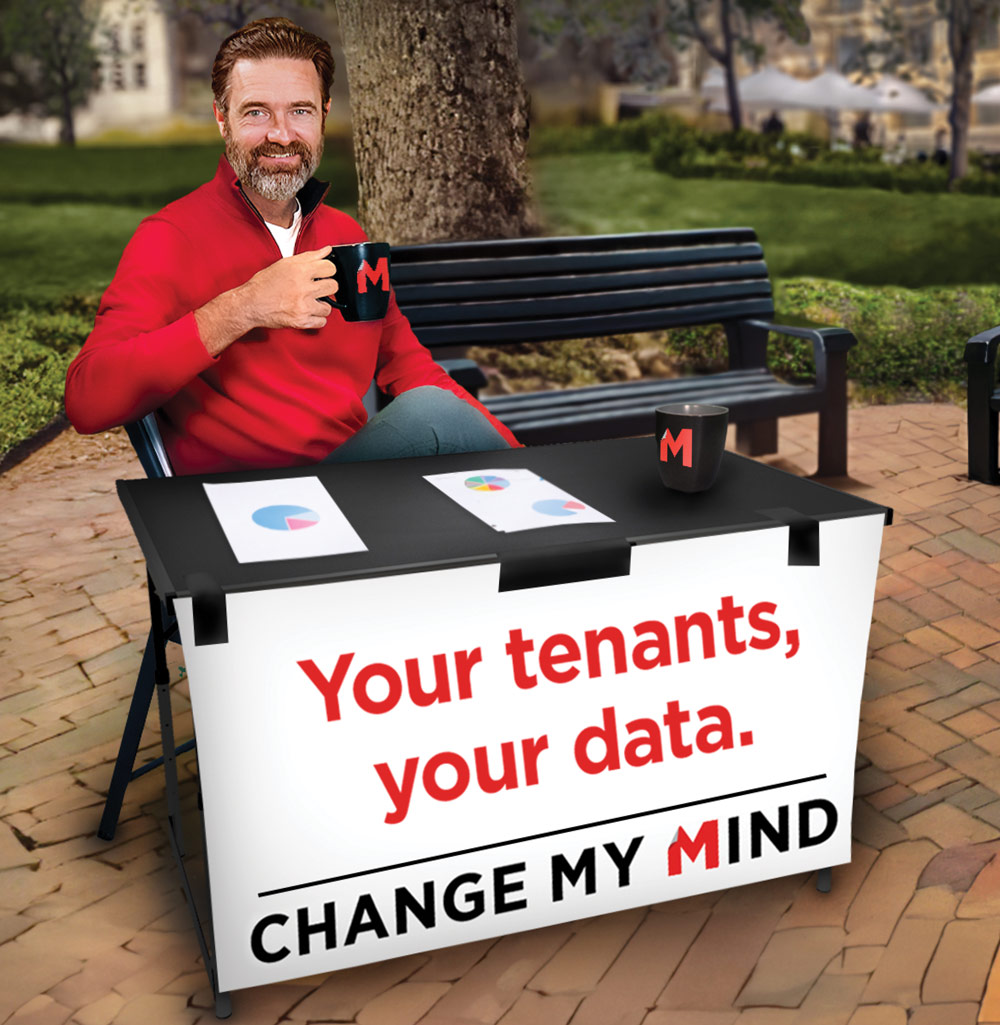
t’s becoming a tale as old as time. Who owns your customer data? If it’s entered into software, but you can’t get 100 percent of it out, do you own really own it? My thought is no, it doesn’t seem like you would.
We rarely think about the exit when making buying decisions for anything except real estate. So, it’s always a worthwhile question to ask as you go through your buyer’s journey. It’s not just about the Benjamins anymore; don’t forget the bits and bytes.

He’s also the president of National Self Storage.

-
PUBLISHER
Poppy Behrens
-
Creative Director
Jim Nissen
-
Director Of Sales & Marketing
Lauri Longstrom-Henderson
(800) 824-6864 -
Circulation & Marketing Coordinator
Carlos “Los” Padilla
(800) 352-4636 -
Editor
Erica Shatzer
-
Web Manager / News Writer
Brad Hadfield
-
Storelocal® Media Corporation
Travis M. Morrow, CEO
-
MSM
Jeffry Pettingill, Creative Director
-
Website
-
Visit Messenger Online!
Visit our Self-Storage Resource Center online at
www.ModernStorageMedia.com
where you can research archived articles, sign up for a subscription, submit a change of address. 
- All correspondence and inquiries should be addressed to:
MSM
PO Box 608
Wittmann, AZ 85361-9997
Phone: (800) 352-4636




elcome to the May edition of Messenger! This month, we have some exciting announcements we would like to share with you!
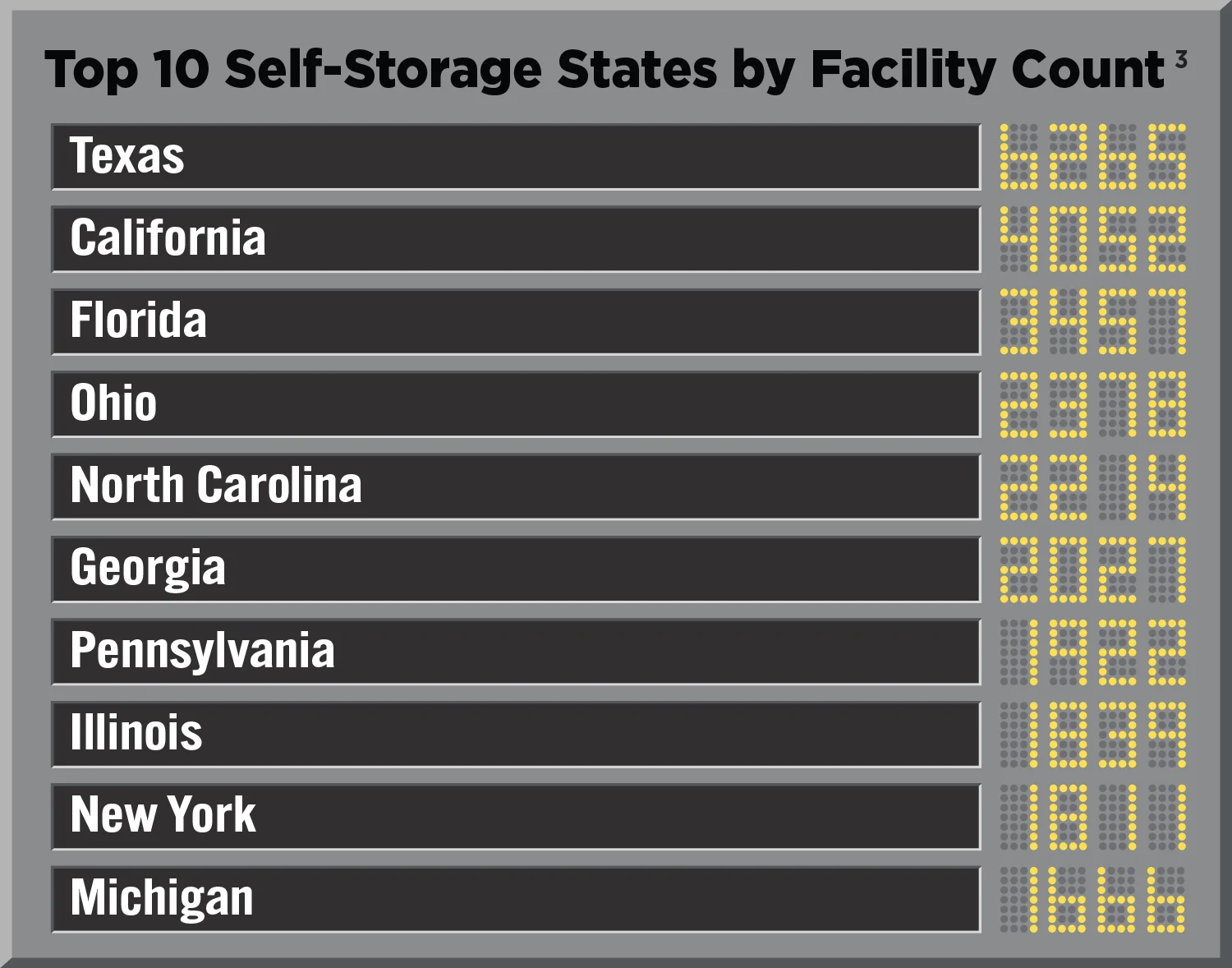
First, we are proud to announce that TractIQ has been named as the new official data partner for our annual Self-Storage Almanac! Led by CEO Noah Starr, who also writes our monthly column “Stats By Starr,” the company is a leading provider of self-storage data and analytics. TractIQ keeps track of more than 70,000 self-storage facilities and includes insights on rental rates, construction activity, ownership data, and demographics.
Next, we’ve started a new column called “Innovation Spotlight.” We meet and speak with so many innovators in the industry that it’s high time we highlight them. After all, they could be the next big thing, or they could be just what you need on a smaller scale. “Innovation Spotlight” is an unpaid, unbiased monthly column to show you the latest and greatest inventions in the self-storage sector. Maybe we’ll reach out to you about something you’ve created that’s worthy of the spotlight!
Speaking of spotlights, we have a digital one that uses the same scrolling format as our online Messenger. It acts as a valuable digital brochure for your company, housed on our branded site for high levels of engagement. The content is SEO-optimized for lead generation or traffic handoff to your site. You can check out a Janus Spotlight by scanning the QR code on page #. If you’re interested in creating your own spotlight, contact Lauri Longstrom-Henderson at (800) 824-6864.
As always, it is our intent to bring you the best of the best in data, industry innovations, and educational content. Do you have an idea you’d like to share? Please reach out to me at poppy@modernstoragemedia.com. We can make it happen!

Publisher

elcome to the May edition of Messenger! This month, we have some exciting announcements we would like to share with you!
First, we are proud to announce that TractIQ has been named as the new official data partner for our annual Self-Storage Almanac! Led by CEO Noah Starr, who also writes our monthly column “Stats By Starr,” the company is a leading provider of self-storage data and analytics. TractIQ keeps track of more than 70,000 self-storage facilities and includes insights on rental rates, construction activity, ownership data, and demographics.
Speaking of spotlights, we have a digital one that uses the same scrolling format as our online Messenger. It acts as a valuable digital brochure for your company, housed on our branded site for high levels of engagement. The content is SEO-optimized for lead generation or traffic handoff to your site. You can check out a Janus Spotlight by scanning the QR code on page #. If you’re interested in creating your own spotlight, contact Lauri Longstrom-Henderson at (800) 824-6864.
As always, it is our intent to bring you the best of the best in data, industry innovations, and educational content. Do you have an idea you’d like to share? Please reach out to me at poppy@modernstoragemedia.com. We can make it happen!
Publisher

Now, our online edition has received a new look for the new year! The guide has been relocated to the MSM website for better security, easier access, improved features, and greater SEO for everyone.
You’ll love the dynamic new search function.
You’ll love the new features:
- A unique link to a dedicated company page
- Ability to include more content, images, video, and social
- Access to dynamic layouts and designs





MSM



Messenger, SSN, SSC



for a Reason!
Concierge Services













Revenue

ust like tax season, delinquent tenants are an inevitable part of life for self-storage operators. Despite your best efforts, there will always be customers who fall behind on their payments. And while the collections process can be laborious, it’s a necessary endeavor to maintain the health of your business.
One way to ensure you spend less time on collections is to get better at collections. By setting clear policies, refining your communication, and applying automation in the right moments, you can optimize how you handle delinquent accounts and improve your success rate.
Losing revenue through delinquent tenants upends your well-laid plans. It renders your forecast inaccurate because a certain percentage of customers fail to pay. A better collections process means a more reliably profitable business.
Suffice it to say, avoiding auctions is a smart financial move, and improving collections is the primary way to do so.
This logic has been muddied by the churn and burn tactics of REITs; a small amount of churn can be acceptable in exchange for higher in-place rents, but investing in customer retention is absolutely worthwhile in the long term.
You must also consider the reputation of your business in the context of churn. A thoughtful collections process can save tenant relationships and ensure they remain satisfied customers.
The best collections process is a billing workflow that prevents tenants from going delinquent. You have a lot of freedom to structure normal billing processes as you see fit, but once a tenant goes into delinquency, state regulations come into play that limit how you can contact tenants about payment. Therefore, your strategy should be to ensure as many tenants pay on time as humanly possible. A few tried-and-true ways to do that are discussed in the remaining sections of this article.
Having a well-defined rental agreement that clearly outlines payment terms, late fees, and the consequences of non-payment is essential. Ensure tenants understand these policies upfront by providing them with written documentation and verbal explanations upon signing their lease. Best practices include:
- Clearly communicate payment deadlines and accepted payment methods.
- Outline late-fee structures and escalation policies.
- Ensure tenants acknowledge and sign a detailed delinquency policy.
- Use multiple communication channels, such as email, text messages, and phone calls, to remind tenants about upcoming or past-due payments.
- Provide tenants with a copy of frequently asked questions regarding payments and collections.
- Offer an easy-to-access online portal where tenants can review their payment history and account status.
UTILIZE AUTOPAY
Signing tenants up for autopay is a surefire way to reduce delinquency. There’s still the chance that a customer’s payment information could change, but implementing automated payments will ensure more payments arrive on schedule. To get tenants to sign up:
- Set autopay as a requirement for your facility. Make it the standard method for payment.
- Give tenants some flexibility for when they want to pay. If a certain part of the month is better, let them choose that date.
- If someone still won’t sign up, give them the option for manual payment, but be clear about your late-payment policies.
AUTOMATE BILLING REMINDERS
Like autopay, automation is your friend when it comes to billing communication. Sending reminders one week and one day before payment is due can work wonders for ensuring people pay on time. Here are three implementation strategies:
- Use property management software to send automated invoices and payment reminders.
- Set up a sequence of reminders (gentle reminders before the due date, firm notifications after the due date, and escalation notices as necessary).
- Implement text-based reminders in addition to email notifications, as text messages tend to have higher open rates.
Act swiftly when delinquencies arise to prevent prolonged unpaid balances. Create a timeline for follow-ups and enforcement actions to maintain consistency and provide transparent communication. The following is a suggested timeline:
- 1 to 5 days past due – Send a friendly reminder via text or email.
- 6 to 15 days past due – Send a formal notice with late fees applied.
- 16 to 30 days past due – Send a final warning before lien proceedings begin.
- 30-plus days past due – Initiate the lien process per state laws and facility policies.
To ensure efficiency, create a standardized script for customer service representatives to follow when making collection calls. Staff should remain professional, firm, and empathetic, providing tenants with possible solutions while emphasizing the importance of timely payment.
REMOVE PAYMENT BARRIERS
Sending an email or text with a link to pay is only half of the battle. If the payment process is still too complicated, tenants will drop off. The ease with which your customers can pay is a massive part of resolving delinquent payments. To design a better payment flow:
- Use software that allows tenants to save their passwords. People often forget their login info, which makes the process much more cumbersome.
- Make sure your payment experience is optimized for mobile. Most tenants will click an email or text link from their phone, so optimize for that experience.
The fewer barriers customers encounter during the payment process, the more likely they are to follow through.
- Provide proper notifications as required by law.
- Maintain records of all communications and payment attempts.
- Consider working with a professional auction service to manage the process.
- Notify tenants in advance of lien enforcement and give them a final opportunity to settle their debt before losing their stored belongings.
- Track delinquency rates and recovery percentages.
- Identify common reasons for non-payment and address them proactively.
- Gather feedback from tenants to improve communication and payment processes.
- Conduct internal audits to identify weaknesses in the collections workflow.
- Train staff regularly on updated best practices for managing delinquent accounts.
Periodic training sessions for staff can help refine collection techniques, ensuring that employees handle delinquent tenants professionally and effectively.
- Use respectful and non-threatening language in all correspondence regarding delinquent accounts.
- Offer proactive solutions instead of immediate penalties.
- Show empathy toward tenants facing financial difficulties while maintaining firm policies.
- Encourage tenants to communicate if they anticipate payment issues.
Delinquency can be embarrassing for tenants, so frame the conversation as a way to repair a problem. Shame is not an effective motivator. When tenants feel respected and understood, they are more likely to communicate openly and seek solutions rather than avoid payments altogether.
By implementing clear policies, leveraging automation, and maintaining a structured collections approach, self-storage operators can minimize the impact of delinquent accounts while maintaining positive tenant relationships. Consistency, transparency, and legal compliance form the foundation of any effective collections strategy.


n the early days of self-storage, many companies opted to hire husband and wife teams who not only shared the caretaking responsibilities of managing a storage facility but enjoyed the added bonus of living on site. Is this reality a thing of the past? Is this even viable, much less desirable? Seasoned pros say times have changed for the better.
The sad reality is that the odds of finding two equally talented individuals within a couple is very unlikely. A facility would often knowingly hire a less qualified individual solely because they were married to someone who was qualified.
“When you are looking for a husband and wife, a couple who want to work together, who don’t have their own skills to get jobs out in the marketplace, all of a sudden your employment pool gets tiny,” says Carol Mixon, president of SkilCheck Services, Inc. “It’s like fishing out of a really small pond. You just can’t possibly ever get enough traction to get multiple people interested. Sometimes I only have one or two couples apply, and it almost always works out where one of them was great and the other one was just … why do we even pay this person? That’s how stark the difference was.”
Lack of skills wasn’t the only hiccup in the old school model of management.
“I have had some really spectacular husband and wife couples, but it’s not the norm for sure,” says Mixon. “Even when it works, it doesn’t work. The problem is when they want to take off time to go on vacation or have a family emergency; they are going to go together. It’s not like you have two separate employees who can cover each other, so it causes scheduling issues.”
Some residential managers also began to feel a little too at home on site. “When you hire a professional to do a job, they don’t go back to their attached apartment and cook lunch, leaving the office filled with the odor of onion soup or tuna melts or something that smells terrible as prospective tenants are coming in choosing whether to rent and entrust their personal goods to our environment,” says Pogoda. “We’ve gotten away from that old mom-and-pop shop model. We’re just trying to hire the best professionals we can who essentially come to work and do their job.”
“Out of our 70-plus stores, we may have four or five that still have resident managers,” says Pogoda. “A lot of times, those apartments are leased out to outsiders for the income. We also might put in a maintenance person servicing 10 of our properties in the surrounding areas, so that they have a central place to live.”
The old way of thinking was that installing a resident manager equaled a higher level of security. “Some people made the mistake of talking about 24/7 security, which was a potential liability, because no one’s around 24/7,” says Pogoda. “It’s been replaced by all kinds of technology, from cameras that are monitored off site, digital smart locks to call centers. Even if we even have an on-site manager, they are secondary to our professional call center, which is specialized to sell and advise tenants.”
“I went to a sheriff’s office and put a listing up—three-bedroom apartment, rent is X, located at a storage property,” says Mixon. “I rented it within two days. One of the guys called; ‘Hey, I’m a sheriff’s officer and I saw your ad. What do I need to do?’ I said, ‘Nothing in particular; there’s an outside entrance, so you don’t even have to go through the office.’ I was thinking it would lead to a no-trouble renter, but then I realized he would be taking his marked car home with him at night! How great is that? Some customers were like, ‘Hey, we saw the police were here,’ and we said, ‘Oh no, no, the guy lives upstairs.’ It was a universal, ‘Oh my gosh, that’s so awesome.’”
This inadvertent, passive security boost led to further unexpected benefits. “The alarm would go off on occasion, so I said, ‘Listen, if you just tell me when, and if you have to go outside to check, I’m happy to pay you to do that,’” says Mixon. “He offered to also do a round while he was out there. He even discovered the alarm was being triggered by feral cats going over the fence and had his friends come out to rehome them. From that point on, I never ever housed a husband and wife couple in an on-site apartment again.”
Community relations are a major aspect of a successful storage business, and Mixon built onto her positive renter experience. She volunteered one facility to be used as a training ground for drug-sniffing police dogs, and upon alerting her customers, found ne’er-do-wells eagerly and quickly moving out without incident.
“One of the biggest stores I ever ran had 2,000 units,” she says. “I had over 80 break-ins one year. I didn’t have a residential manager, so I gutted the office/apartment to increase retail space, and then I made a large lounge room with a couch, big table, a bathroom, and its own exterior entrance. I asked the local police officers if they’d like to use it as a comfortable break room to write up reports, rather than sitting in their cars. I gave them a key, kept it stocked with coffee and donuts and they were so appreciative.”
Pleased customers noted cop cars parked outside at all hours, and Mixon never had a single break-in again. “It was pretty simple to do,” she says. “So fantastic. I will never ever hire another husband and wife couple unless lightning strikes twice.”
Sara Beth Johnson, vice president of sales and development with Universal Storage Group shares additional innovative approaches to maximize financial returns with the space.
Community Or Conference Room
Transforming the apartment into a meeting space allows storage facilities to provide added value to local businesses or community groups. These spaces can be rented out for small events, business meetings, or co-working opportunities, generating additional revenue.
Additional Storage Units
Converting the space into rentable storage units is a practical way to increase revenue while aligning with the facility’s core business model. If demand in the area supports it, turning former apartments into climate-controlled storage units can be highly profitable.
Managers can use this area as overflow storage for merchandise. This allows facilities to maintain a well-stocked retail area without using valuable rentable storage units. Items such as packing supplies, moving equipment, and specialty storage accessories can be stored in this space to help streamline inventory management and ensure that high-demand products are always available. Additionally, keeping merchandise in a separate space prevents clutter in the main office, enhancing the customer experience and operational efficiency.
Things have changed, even for family-owned properties. “Sometimes I run into sites where the owner is also the manager,” says Blum. “You see a few stragglers in rural-type markets. Sometimes it’s a family business. When I started 20-plus years ago, I would go to the apartment complexes around the facility, visit the local businesses, attend chamber meetings, but with the internet and Google, the majority of leads and even rentals are all done online. That really got enhanced during COVID, when you couldn’t have in-person contact. Smart locks, phone, or Bluetooth access, pay online have cut down on the cost of labor nowadays.”
The landscape has changed and savvy owners evolve with it. “Everything has become more professional, more retail oriented,” says Pogoda. “Gone are the days where people were building rows of garage doors with a separate apartment and a small office. The much larger operators are so technologically advanced that small operators of five to 10 facilities don’t have enough money and time and expertise to do the things that we do. Our presence is greater; the sheer buying power of large management companies and the REITs in terms of Google and SEO—when we have employees, we’re able to offer health care and 401(k) to attract the best. If you want your daughter running your facility, that’s great, as long as you understand that you are leaving money on the table. You might save on payroll, lawn care, snowplow, but you don’t have revenue managers with dynamic pricing models. So you think, ‘I’m 100 percent occupied, so I’m doing great,’ but you’re not maximizing your rate. Very simply put, the industry has evolved.”

Or Hire?

ocial media and digital marketing are important to promote your business. However, you don’t have the time to do it all yourself. So, what are your options?
- Hire an outsider to do it all for you.
- Hire an in-house employee with the knowledge and experience.
- Train a trusted employee how to do social media and content marketing properly and effectively.
Let’s dive into each of these.
In my 50 years of working as an adult, I’ve sold cars, timeshares, cookware, advertising, subscriptions, hotels, and even encyclopedias. No matter what I was selling, I went through intensive training to learn the product or service inside and out, upside down, backwards and forwards. I had to be able to explain why it was different from the competitors. I had to learn the customers’ pain points and be ready and able to fill their needs, solve their problems, and answer their questions.
There is no way an outsider can know your business like you know your business! Unless, of course, they specialize in your industry. Naturally, that brings up the question of how long they have been marketing in the self-storage industry.
The main idea of social media marketing is the social part. The only people who should be building relationships with your company’s potential customers are you and/or a trained staff member—someone who, like a properly trained salesperson, is an asset to your company.
A shyster is a person who uses unscrupulous, fraudulent, or deceptive methods in business. They usually overcharge. If they charge more than $1,500 per month to manage your social media pages, it’s too much.
Shysters purchase fake “influencers” on your behalf and charge you for it. Their “followers,” more than likely, are not your target audience. And they don’t provide monthly reports with monthly insights, analytics, statistics, and demographics—all of which are critical for you to know what’s working and not working.
Unfortunately, many small business owners don’t know what they don’t know. Don’t fall for too-good-to-be-true pitches or promises. No one can guarantee you the first page of Google or any specific growth. Organic strategies are the best, but they take time. Make sure they provide you with a customized strategic plan for your business and not some cookie-cutter plan they use for everyone. For the self-storage industry, you know that each facility is different because each location is different.
If you do decide to hire an outside freelancer or agency, make sure they are in the U.S. If there is an issue, you can contact the Better Business Bureau and get the problem solved. You have no recourse if they are outside the country.
Which networks are driving the most traffic to your website? You need to know this so you can adjust your social media tactical plan accordingly. If you see that more folks are coming from LinkedIn than Facebook, then you need to spend more time on LinkedIn.
Your stats will change as your following grows, and it will vary with the types of blog posts and promotions.
- They are usually very transient and leave when the internship semester is over, along with your company’s usernames and passwords.
- They are usually young, so they may be irresponsible and immature. Alternatively, you may get lucky and land a good, upstanding kid with integrity.
- They may not understand marketing on social media. Just because they can post on Facebook, Instagram, and X (formerly Twitter) doesn’t mean they know how to market on Facebook, Instagram, and X. Make sure they’ve taken the proper social media marketing courses and passed with good grades.
- They don’t understand basic marketing principles in general. Again, you must take into account their marketing coursework. Ask to see some of their assignments and term papers.
- Be a social media specialist who knows everything—all the ins and outs of social media marketing, not just how to post on Facebook or Instagram.
- Know how and where to keep abreast of all social media and digital marketing news and changes on Google and regarding SEO.
- Have a decent following on the major social media networks (Facebook, LinkedIn, X, and Instagram) and be using them regularly. They should have a completed LinkedIn personal profile, which shows you they know what they’re doing.
- Understand the difference between all the networks (know the lingo, who their users are, and their cultures).
- Know how to use third-party tools to manage the social media networks.
- Understand SMART goal setting to be able to outline objectives.
- Know how to prepare a social media strategic marketing plan to help reach those goals and outline the strategies for each network.
- Know how to develop a tactical marketing plan based on the strategic plan to implement the strategy.
- Be a decent writer, communicator, and SEO copywriter (if blogging is involved).
- Be familiar with the self-storage industry or be willing to learn.
- Know how to handle customer service issues when they come up on social media.
- Be clever enough to know how to spin a marketing message and take advantage of what’s trending on social media without looking foolish or hurting your company’s reputation.
- Understand analytics and insights to be able to provide you with monthly reports showing what’s working and not working. Most importantly, are your goals being met?
- Consequently, they should be able to adjust the strategic and tactical marketing plans accordingly with new goals and campaigns.
In this day and age, ignorance is no longer an excuse. Marketing is an integral part of your business if you want to attract new customers.
All in all, the marketing basics still hold. Know your target audience. Do your research. Set goals. Plan and execute, then report and adjust.


enate Bill 709 (SB709) has many in the self-storage industry on high alert. This rent control bill, introduced on Feb. 21, 2025, and brought forth by California Senator Caroline Menjivar (Burbank/San Fernando Valley) and coauthor Assembly Member Nick Shultz (Burbank/San Fernando Valley), is directed toward Golden State self-storage operators and will limit rental increases to no more than once every three months. The bill also aims to limit the amount of each rent increase. If it is signed into law, self-storage owners across the country can expect the dominoes to fall, with other states introducing and passing similar bills. Now, a dedicated team of industry experts and business leaders is working to kill the bill before it can harm the industry.
The CSSA has also put together a leadership team to tackle this issue made up from the Board and Legislative and Legal Committee. Additionally, the Self-Storage Association (SSA) has expanded the role of their lobbyist, Naomi Padron, partner with McHugh Koepke Padron, and brought in additional outside counsel with the Capital Advocacy. The group also consists of government affairs/legal counsel and lobbyists from several of the REITs and other large operators.
Lastly, a legislative and communications program has been secured with Russo McGarty & Associates to assist in every step of the process. Founder Tony Russo has a strong, 30-year track record in political strategy and public policy, particularly in opposition to ballot initiatives. He has been involved in successful opposition campaigns against Proposition 10 (2018), which would’ve allowed cities to limit rent increases on single-family rental properties, and Proposition 21 (2020), which would have expanded the local government’s authority to enact rent control on residential properties. The firm also quashed California’s Proposition 15, the “split roll” bill, which the CSSA also fought against. The bill would have forced commercial and industrial properties to be assessed at market value at least every three years, leading to an increase in property taxes for these businesses.
“We have a great team in place ready to tackle this serious matter, and we meet three times per week,” says Steve Mirabito, president of StoragePRO Management and the CSSA’s legislative and legal committee chair. “We have developed a strategy and are working to defeat or mitigate the risk of this bill that is unfairly targeting self-storage businesses and will ultimately hurt consumers too.”
Because the bill does not have a monetary impact on the state budget, if approved, in whatever form, it will move to the California State Senate for a vote. If it passes, it goes to the California State Assembly, where amendments could be made to the bill, for another vote. If approved here, it will land on Governor Newsom’s desk for his signature.
At this time, the CSSA and its partners in opposition to the bill are considering options on what they feel they could do to alleviate the impact of SB709. MSM reached out to Ross Hutchings, executive director of the CSSA for an update. “There are many steps in legislation, so moving through the process takes time,” he says, “but we have a solid group working hard on this, and we’ve had several meetings planned with key legislators. We will be moving forward with a coordinated strategy.”
The main point that all involved agree on is that no one wants to see a bill that restricts pricing.
“This is especially true when you look at what consumers receive in the way of benefits for their storage,” says Hutchings, noting that self-storage is affordable, flexible, offers discounted entry fees, and supports local communities during disasters and through other charitable deeds. Industry-wide customer satisfaction is high, and the self-storage supply has kept pace with consumer demand. “Consumers are getting tremendous benefits, which would change drastically should price controls be implemented.”
- Reduce supply, lower quality, and increase prices over the long term;
- Reduce property sales and values, resulting in lower state and local tax revenues at a time when the government faces growing deficits; and
- Reduce investment in California storage facilities, including new construction and maintenance.
“Price control legislation is modelled on residential rent control regulations, which are based on a completely different business model with long-term leases, tenant deposits, and tenant credit checks,” adds Hutchings. “This bill would force consumers into long-term leases designed to recoup the higher and inflated business costs of insurance, utilities, online marketing, and labor, and nobody wants that.”
Those who wish to make an online donation can click the button below or visit www.californiaselfstorage.org/products/industry-issues-advocacy-campaign. Checks made out to the CSSA can be sent to 5325 Elkhorn Boulevard, #283, Sacramento, CA 95842.
Hutchings says that when the time is right, a grassroots effort will get underway to appeal to local legislators. The leadership team will be reaching out to self-storage owners and other businesses, providing information on whom to contact, how to reach them, and the best way to address the situation so that everyone is on the same page.
“We’re at a pivotal moment,” says Hutchings. “Our industry needs to come together to defend us from this dire regulatory threat. The self-storage industry will never be the same if SB709 passes.”
MSM will continue to keep you up to date on the latest developments regarding SB709.






veryone’s life comes with its share of good times and hardships. What makes some people stand out is how they come back stronger from setbacks, especially when their challenges are relatable.
This month’s “Women in Self-Storage” features Jennifer Downer, senior vice president of operations at Mini Mall Storage Properties. One of the many things that makes her story so heartfelt is its realness. No matter the hurdles that life has thrown at her, her grit has helped her get back up and keep going, both in her personal and professional life.

It had become a family tradition for everyone to go to school at Emmanuel. “Honestly, I went there because I was scared to go anywhere else,” says Downer. “Since my brother and some of my church friends were already going there, I knew I would have people to look after me.”
While in school, she worked at the local Rite Aid as the one-hour photo girl. She failed her Old Testament class and Intro to Psychology, but she excelled in journalism, winning several journalism and photography awards while she worked towards her degree in communications. “I did an internship at the local newspaper, which turned into my first real job after college.”
Downer had applied for a job as an assistant manager at a self-storage facility. Fortunately, she was offered a property manager position the day after her severance package ended. “Looking back, that was one of the many times that God showed me his providence,” she says.
At some point, after a series of personal issues, she had to scale back on work to take care of her family. “I needed to work, but I also needed to be more available for our kids,” says Downer. “After much fear and resistance, I started my own consulting firm, helping new owners and operators get started in the industry.” This is when providence, once again, intervened to provide her with exactly what she needed. “Along the way, I was introduced to John Traver, the owner and CEO of XPS. He hired me as a consultant to help launch a remote management initiative; and a few months later, I joined XPS.”


When asked to offer advice for women getting started in self-storage, she mentions the importance of being authentic. “For so long, I was insecure and intimidated by others, so I tried to stay in the background, or I would become a chameleon and adapt to whoever the audience was,” Downer says, adding that the problem with this approach is that it won’t help you feel comfortable in any environment. “It wasn’t until I married my now husband in 2021 that I truly committed to be myself, and it’s been life-altering for me. Don’t be afraid to be who you are. You will fit somewhere, and that’s the place you want to be.”
She also shares that it’s impossible to be perfect; oftentimes, doing your best is more than enough. “I’m a bit of a perfectionist and overachiever. I always want to be the best employee, wife, and mom I can be.”
That can be a tall order under any circumstances, but Downer’s life has had its share of complexities, making her attempts to be perfect even more challenging. “My husband already had five kids from a previous relationship when we got married, so I became a mom of seven overnight; three of them are on the autism spectrum,” she says. “I’ve learned that my best isn’t always needed or necessary. Sometimes, just being OK is perfectly fine.”
When not working, Downer loves spending time with her family. “I’m usually hanging out with them or washing the mounds of clothes that come along with seven kids,” she says with a laugh. “I also enjoy refinishing furniture or doing something artistic.”
At the end of the day, she just loves spending time with her family. “My favorite place in the world is home,” she says. “My husband and I enjoy the weekends on our back deck, listening to music or watching a game. He’s an amazing cook, so he’s generally grilling something delicious for all of us to enjoy,” she says, noting that those are pretty much the most luxurious things in life.
online.
Being an SEO expert shouldn’t be on your list.


ackson Stevens’ origin story is a bit different from what you would guess upon meeting him. Trained as a classical musician, he first joined the workforce as a fundraiser for the Colorado Symphony back in 2012. After gaining a few years of experience under his belt, he was recruited by a friend to join CKD Technology Partners, a technology company, as an account executive. The abrupt change of title and industry might have shocked most people, but he was able to notice some similarities, which helped with tackling day-to-day tasks. “There were some transferable skills between fundraising and sales,” he says.
At CKD Technology Partners, he had the opportunity to try his hand at working in different parts of the business, which allowed him to learn many invaluable skills that eventually led to a promotion. “I kind of had my opportunity to work on all sorts of things,” Stevens adds. “And eventually became a product manager.”

For business owners looking to start the automation process into a fully remote management system in their facilities, Stevens suggests starting small and moving forward from that, instead of jumping headfirst into a total system automation process. “What I typically recommend to people that want to go in that direction is that it’s not something that you have to rip the Band-Aid off, so to speak, and make a complete transformation overnight. There are ways you can start to move in that direction.”
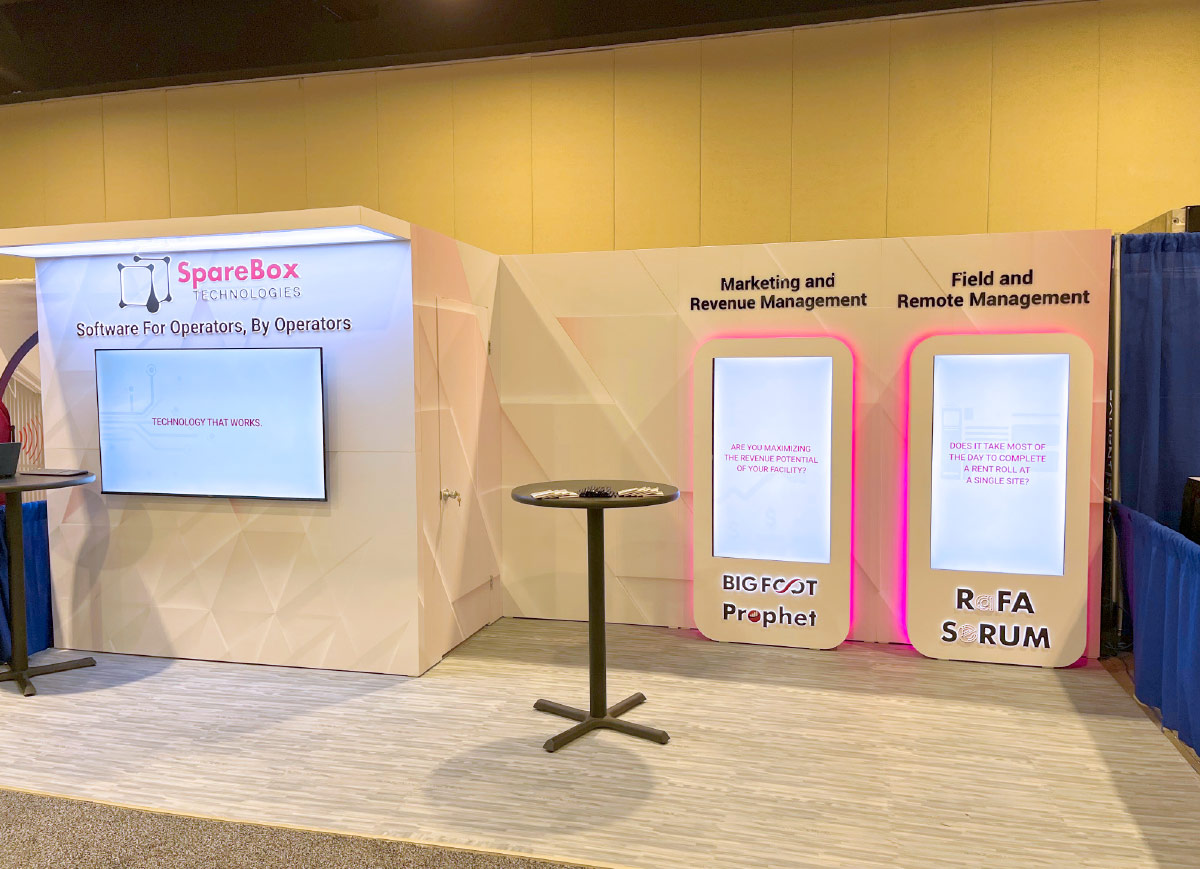
He goes on to say, “Additionally, you need a tool that connects the entire operation together. Thinking of that, we created our app, RaFA, our remote field app. [We noticed] what invariably ends up happening when people make this shift to remote management is that it is hard to connect what’s happening in the field with what’s happening in the corporate office or with customer service. The two aren’t really talking to each other, and invariably it ends up being a lot of emails, Teams meetings, or Slack messages. And none of this is centralized or tracked,” Stevens says. “It’s really hard to know what work is getting done and what happens; I’ve seen this firsthand. This is why we designed this product.”
However, before jumping headfirst into any new technology, he suggests talking to peers in the industry and asking around which tools they have successfully implemented in their own facilities. “Talking with peers will tell you a lot, as most people in this industry are happy to share what products and teams they like working with and which ones aren’t super great.”
Stevens also believes it is a good idea to do a trial period of any new technology before purchasing it to keep you from investing in something that won’t work in your company. “Several companies will offer free trials, so it gives you an opportunity to actually see if something’s going to move the needle for you or not before signing off on a year contract.”
As for the must-have basic specific software functionalities, he believes should be prioritized in the automation process. “If you do not have an FMS, a facility management system, that’s step one. You really, really need to have one of those,” he states. “The alternative to that is doing things in QuickBooks, and the only instance where I would say that’s probably OK is if you have one property with up to 20 units total. Besides that, I think a revenue management platform will be important. You can get away with doing it in your FMS, but there are much smarter tools out there that will be more efficient. Lastly, you need access control–not necessarily digital locks or anything like that, but having an automated gate where people have individualized pins to get in.”
In his professional experience, Stevens has noticed one common thing keeping businesses from achieving success in their automation efforts: the team not adopting the new technology. “There’s nothing worse than implementing a system that 10 percent of your organization adopts, and you’re just wasting money every month. You need to be thoughtful about how the technology is plugging into your broader operational strategy.”
There’s an ongoing debate in the industry about the loss of personalization and customer connection that automation brings. To that, Stevens suggests polished communication and tackling problem-solving as an opportunity. “Much larger organizations outside of this industry have kind of solved these problems. Visually appealing written communications that automatically come out of your FMS are important. Your automated communications should be polished and buttoned up and professional and represent your brand well,” he says. “But when there is a problem, that’s where you have the opportunity to shine. In terms of personalization, you can really take care of people on that front. If someone’s ever interacting with a call center agent, a customer support team member, or a customer care team member, it’s really important to make sure that that team is showing up well.”



our website is not just an online storefront for your businesses. It is also a powerful tool for better understanding your customers.
By using marketing data to customize and personalize the experience of web visitors, you will create a better user experience for potential customers. The better the web experience, the more likely a visitor turns into a paying self-storage tenant at one of your facilities. Ensuring a smooth and efficient transaction is a win for the customer and a win for your storage business.
What Google’s example shows us is that user data isn’t just interesting information—it is in fact a veritable goldmine of intelligence. By studying changes in your website metrics, you can identify aspects of your website that are performing well and areas that need improvement. Analyzing the data will tell you what is working, where users drop off the consumer pipeline, and how to optimize websites and marketplace listings to boost results.
- Traffic sources – Where do your visitors come from?
- Bounce rate – What proportion of your visitors leave without clicking on anything?
- Conversion rate – What percentage of your website visitors move into a self-storage unit?
Depending on the measured performance of these figures, you can diagnose problems or identify further enhancements. In the next few sections, we’ll take a closer look at what each of these key metrics can tell you about the performance of your website and what actions to consider based on the results.
- Organic – Visitors from search engines,
- Direct – Users typing the URL directly into their browser,
- Referral – Traffic from other websites or emails,
- Social – Hits from platforms like Facebook or Instagram, and
- Paid – Ads and sponsored links.
For a self-storage operator, traffic source analysis can refine both website strategy and operations. If most visitors come from organic search, improving SEO with location-specific keywords could boost visibility. If social media drives traffic, investing in targeted ads or community engagement might yield better returns. Referral traffic from moving companies or real estate sites could be leveraged with partnership opportunities. Operationally, if website visits spike from paid ads but don’t convert to rentals, adjusting pricing, promotions, or call-to-action clarity may be necessary. By tracking traffic sources, operators can target marketing spend where it counts.
For a self-storage operator, analyzing bounce rate reveals areas that need improvement. If the homepage has a high bounce rate, it might need clearer navigation or stronger calls to action. If visitors leave from the reservation page, the booking process may be too complicated or pricing unclear. Slow load times or mobile-unfriendly design can also drive users away.
By monitoring bounce rates across different pages, operators can refine website content, streamline the user journey, and improve conversions. To tackle a bounce rate problem, take a fresh look at the page in question and consider what small improvements might make a better experience, such as:
- Rewording or replacing copy,
- Changing images or colors,
- Changing buttons/layout, and/or
- Technical improvements to increase page speed.
By putting these changes into place incrementally you can observe the results over time and continue to make optimizations until you achieve the results you are after.
Self-storage operators that track conversion rates can identify opportunities for improvement and act on them in a similar way to tackling bounce rates. If many visitors reach the reservation page but don’t complete a booking, the process may be too complex or pricing may be unclear. If conversion is low despite high traffic, adding trust signals like customer reviews or live chat support could help. A/B testing different layouts, improving mobile usability, and offering limited-time promotions can also increase conversions. By continuously optimizing based on conversion data, operators can turn more website visitors into paying customers.
EITs see revenue decline in Q4 amid occupancy and rate drops. Q4 2024 self-storage REIT results reflect ongoing challenges, with revenue growth slowing each quarter, ending the year down 1 percent. This was driven by a 0.5 percent drop in occupancy and rates. While markets in the Northeast, Midwest, and West show signs of stabilization, Sun Belt regions struggle with weak home sales and oversupply. The 2025 revenue growth forecast midpoint averages -0.3 percent, with some improvement in advertised rent growth already occurring. NOI growth for 2024 averaged -2.2 percent due to rising expenses, a trend expected to continue. Occupancy is likely to remain flat, with potential growth driven by higher rents in the second half of the year and declining new supply. The transaction market should continue last year’s momentum, with estimated sales volume up 50 percent year over year in the second half of 2024, as a number of well-capitalized private owners and operators have remained very active.
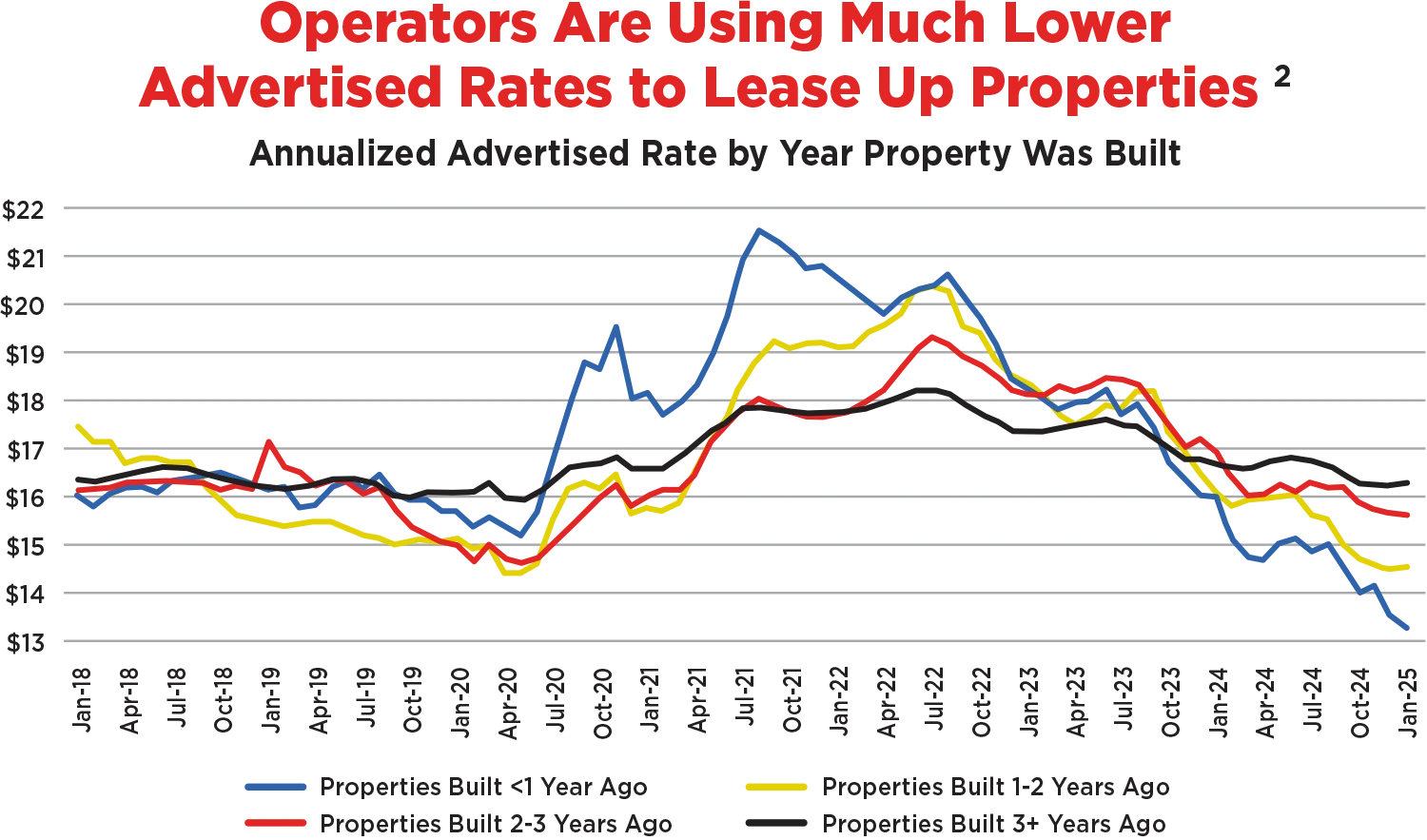
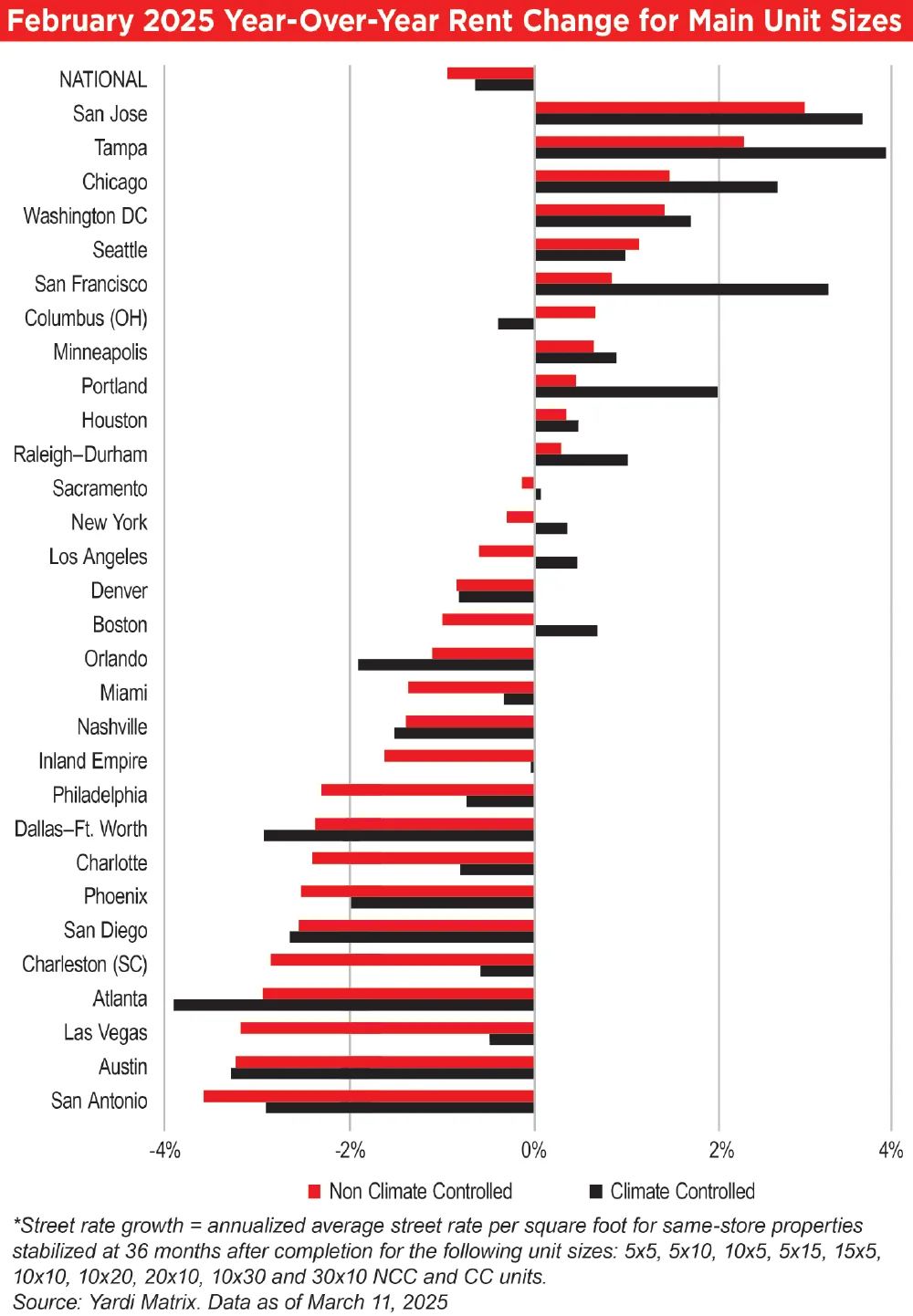
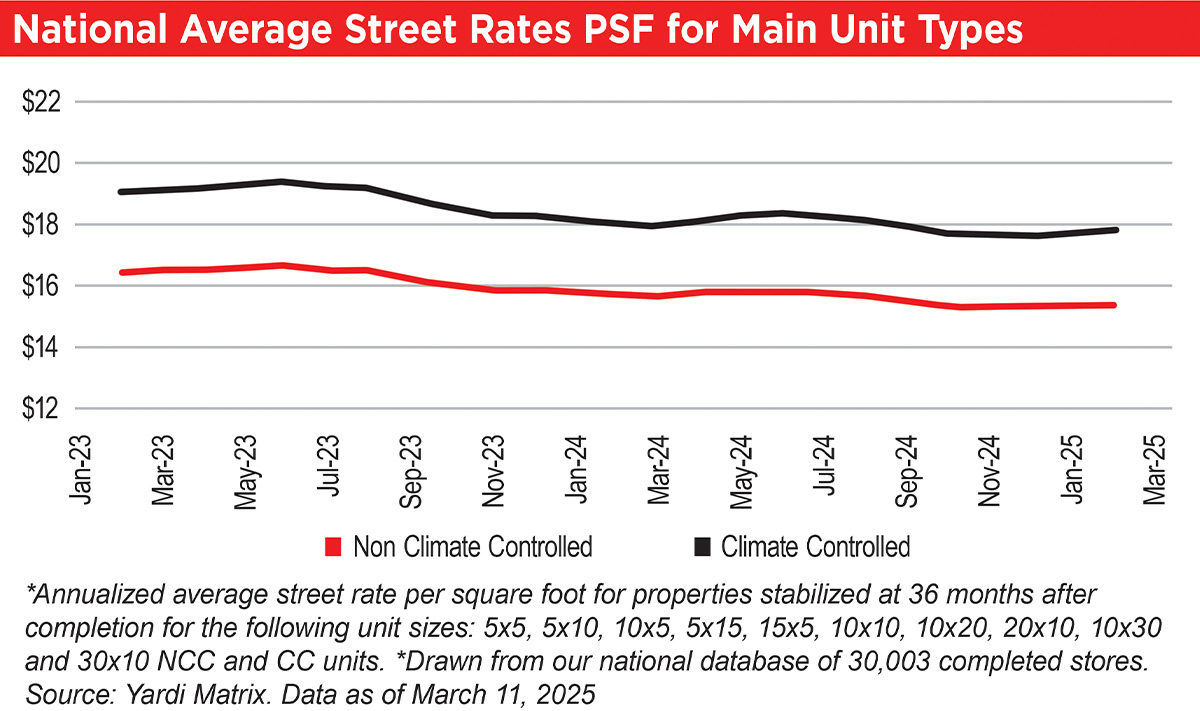
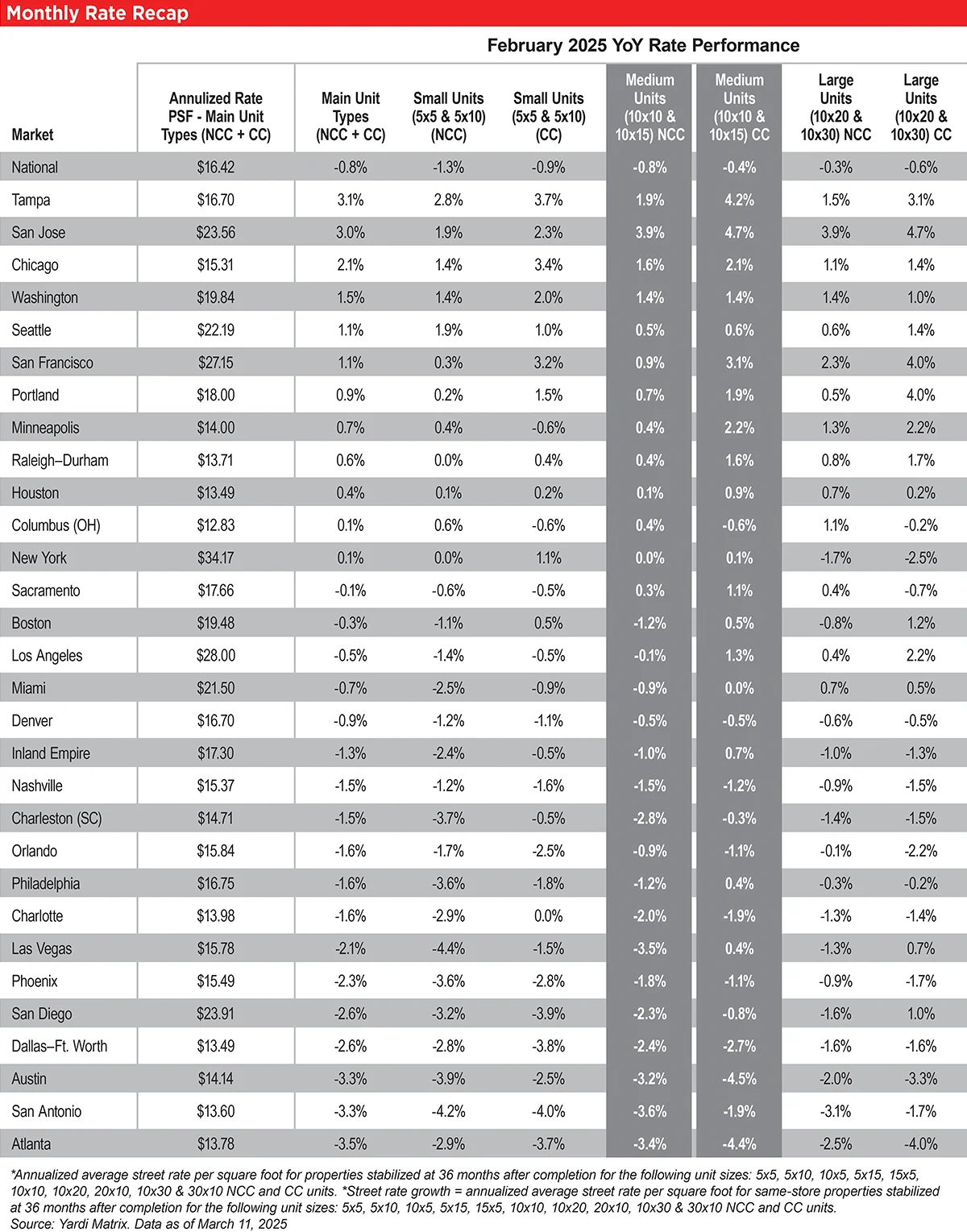
Advertised rates continue to improve year over year in many top metros. While advertised rates continue to drop year over year on a national level, they are declining at a slower rate than in the previous 27 months. National advertised rates were down 0.8 percent year over year in February, with an annualized average per square foot of $16.42 for the combined mix of unit sizes and types. This is an improvement from -1.1 percent in January and -2.2 percent in December.
A significant portion of the top metros actually saw advertised rates increase year over year in February. Same-store rates for non-climate-controlled (NCC) units increased in 11 of the top 30 metros. For climate-controlled (CC) units, rates have risen in 14 of the top 30 metros compared to a year ago.
Nationally, Yardi Matrix tracks a total of 3,153 self-storage properties in various stages of development, including 740 under construction, 1,989 planned, and 424 prospective properties. The share of projects (net rentable square feet) under construction nationwide was equivalent to 2.9 percent of existing stock through the end of February, a 10-basis-point decrease from the month prior.
Yardi Matrix also maintains operational profiles for 30,003 completed self-storage facilities in the U.S., bringing the total dataset to 33,156. We are happy to announce the release of our new Medford, Ore., and Green Bay, Wis., storage markets, which are now available to Yardi Matrix customers on the subscriber portal.
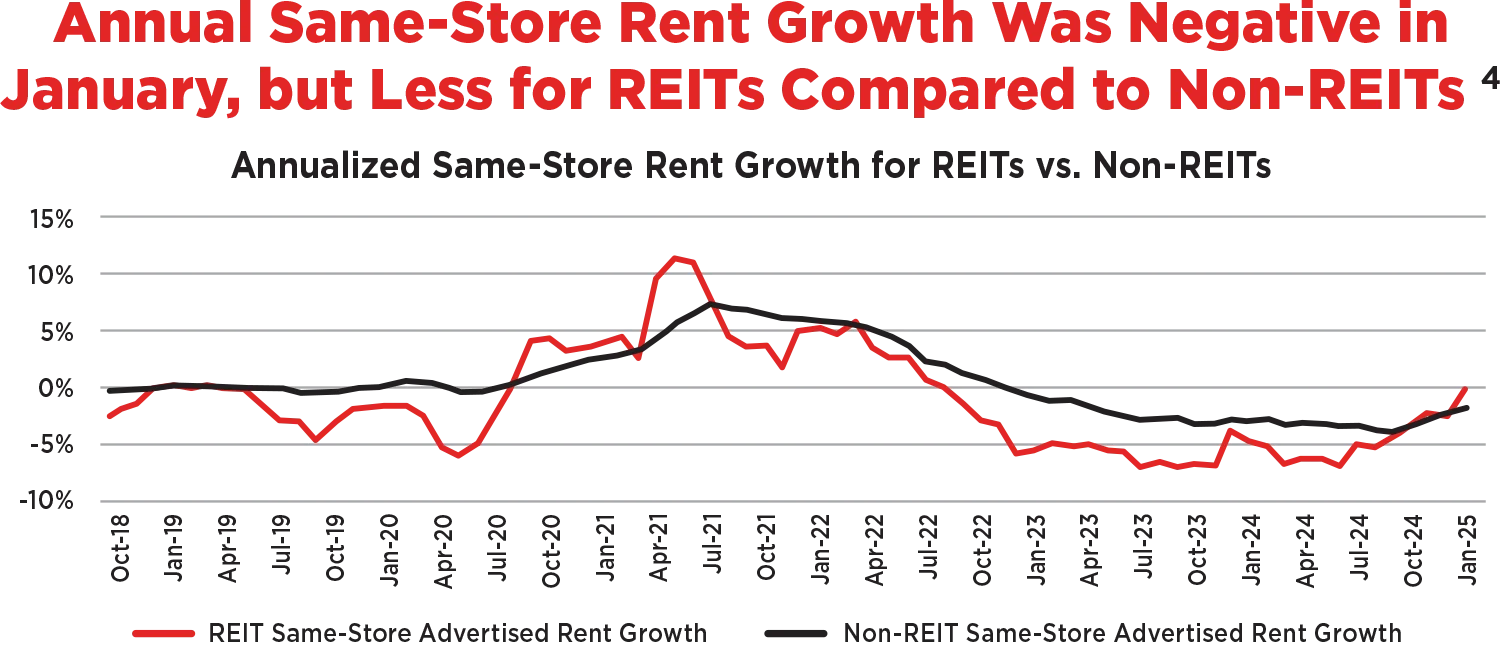
For the first time since August 2022, self-storage REITs increased their advertised rates year over year. Same-store advertised rents at stabilized properties for all REITs were up 0.3 percent year over year in February versus -1.4 percent for their non-REIT competitors in the same markets nationwide. Public Storage led the REITs, increasing advertised rates 2.8 percent year over year.
See February 2025 Year-Over-Year Rent Change for Main Unit Sizes.
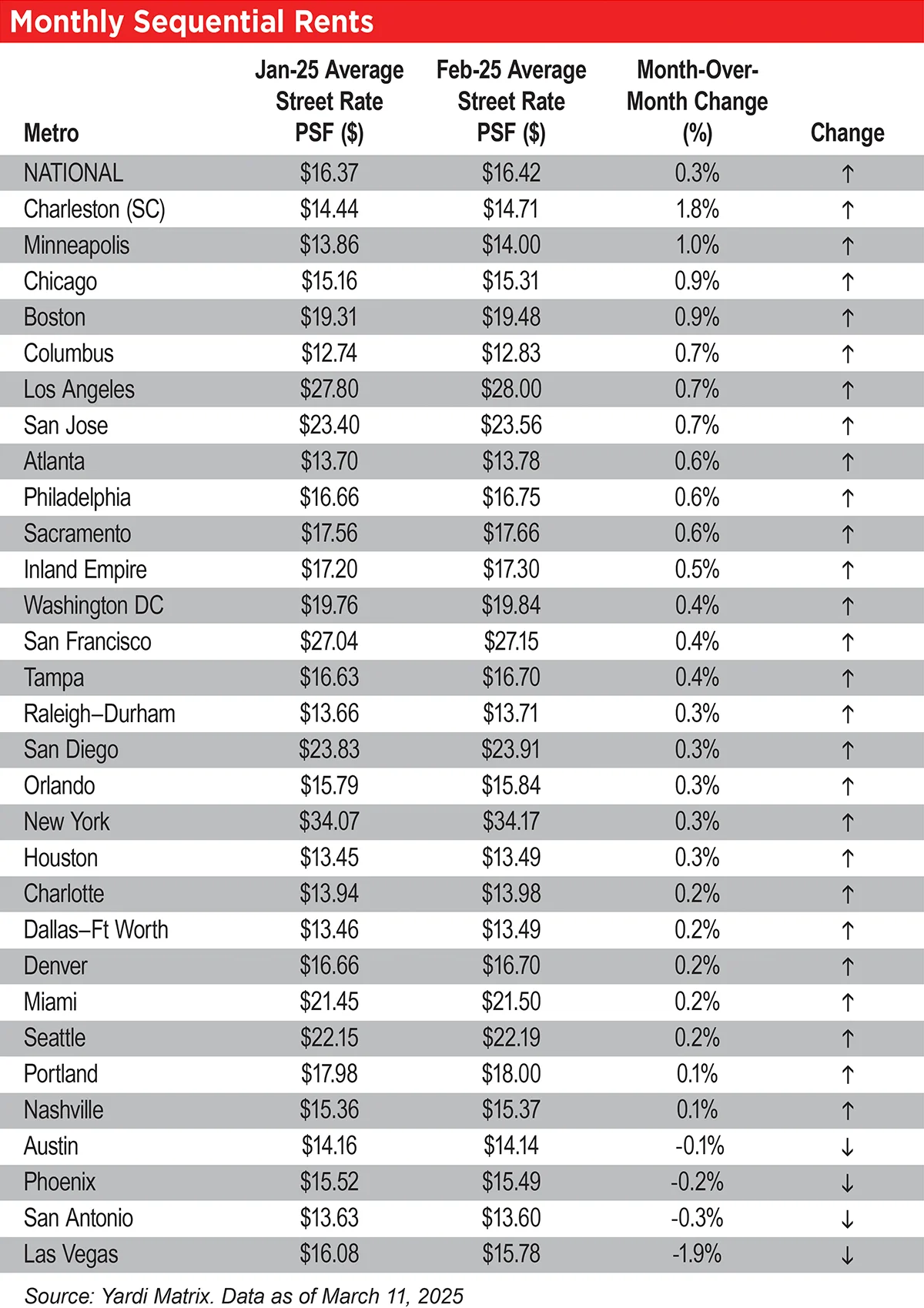
The increase in sequential asking rates was also broad-based across markets, with same-store advertised rates rising month over month in 26 of the top 30 metros in February. The remaining four top metros saw rates fall month over month.
Charleston led the other top metros in month-over-month advertised rate growth, up 1.8 percent in February. Charleston benefits from a recent major slowdown in lease-up supply and supply under construction, as well as strong migration and population growth.
See Monthly Sequential Rents Table.
See National Average Street Rates PSF for Main Unit Types.
Tampa continued to have the strongest year-over-year advertised rates of Yardi’s top metros in February. Advertised rates increased 3.1 percent, an improvement from 2.0 percent in January. The metro still benefits from hurricane-driven demand, despite having among the greatest amount of supply in lease-up, as well as supply under construction.
See Self-Storage Major Metro Summary.
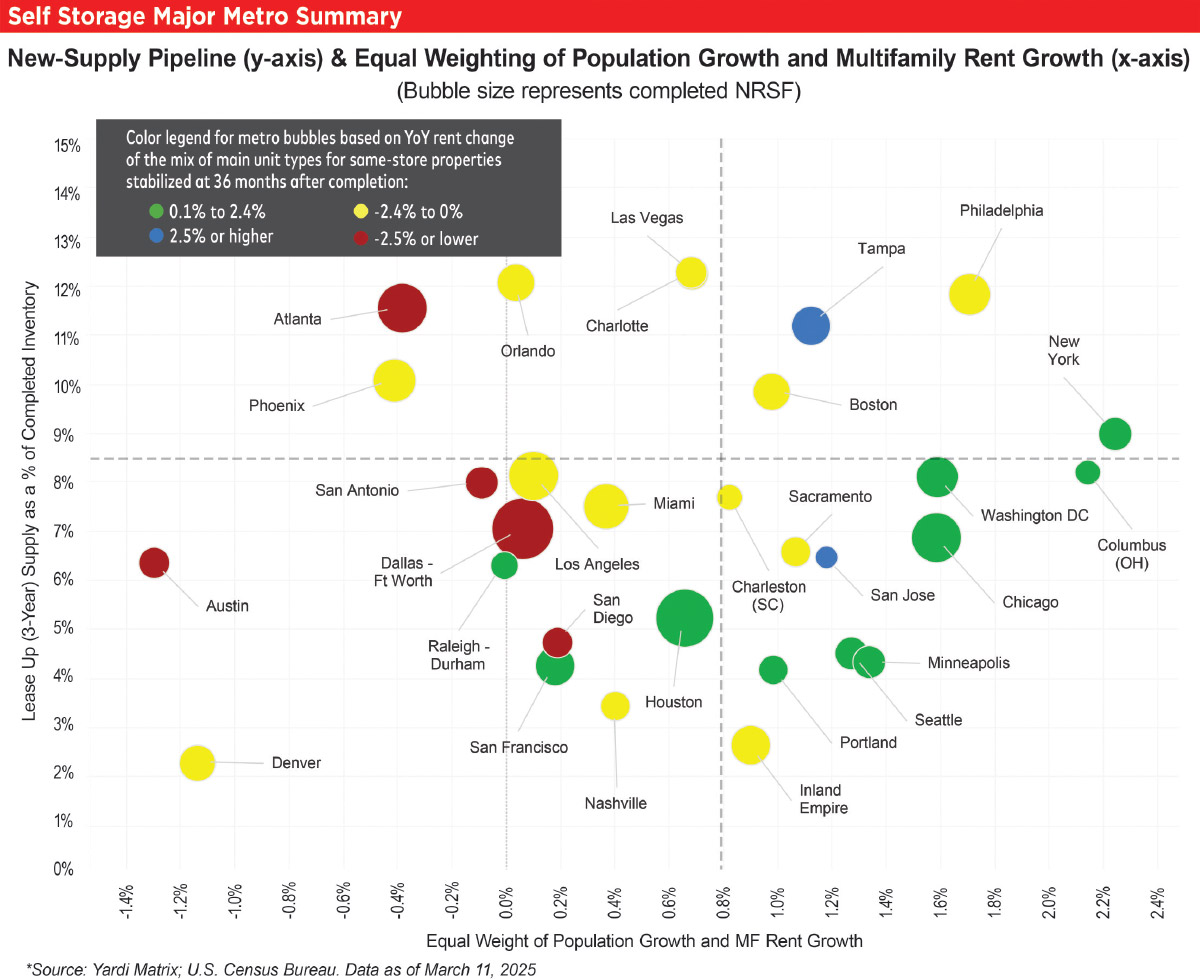
The majority of Yardi Matrix’s top 30 metros have a lower level of lease-up supply than the national average, indicating that new supply has recently shifted towards smaller markets outside the top 30. However, new construction starts in the last year have shifted back to the top 30 metros, so this trend will likely be temporary.
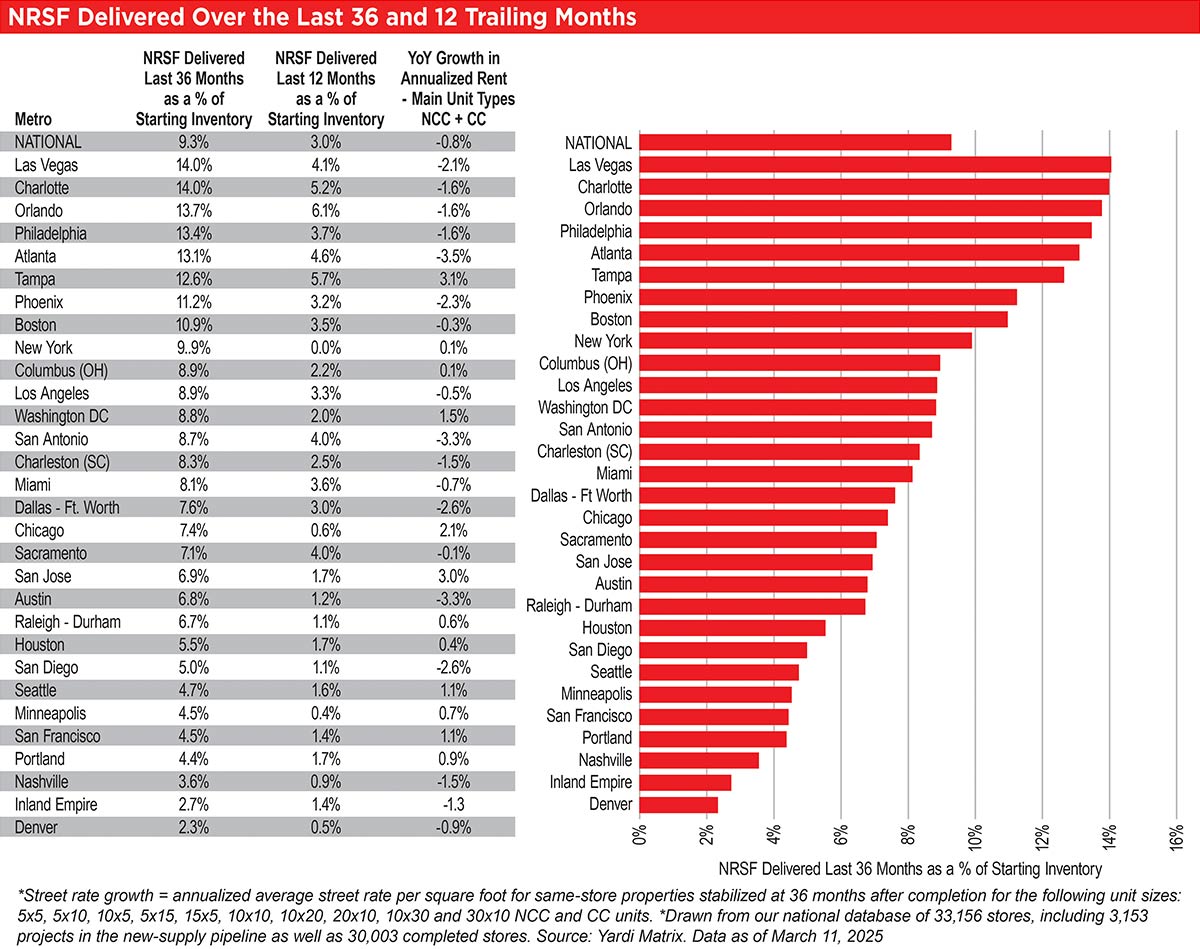
Atlanta has seen substantial new supply recently, with deliveries over the last 36 months equal to 13.1 percent. Due to this influx of new supply, advertised rates have faced downward pressure, and Atlanta had the weakest rate performance in February, down 3.5 percent year over year.
See NRSF Delivered Over the Last 36 and 12 Trailing Months.
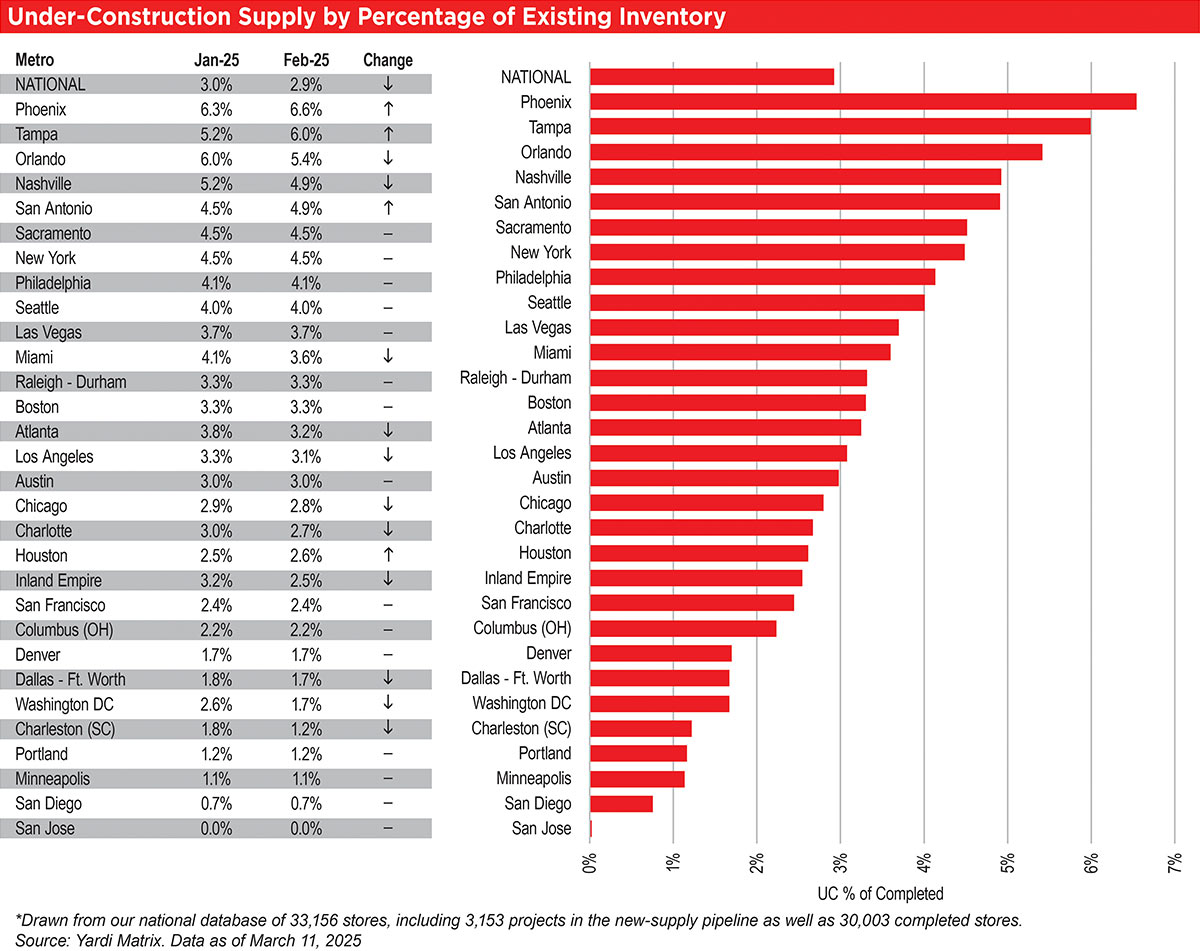
Washington, D.C., had the largest decrease in construction activity, contracting 1.0 percent month over month. With a construction pipeline equal to 4.9 percent of existing stock, the metro has had limited new supply growth over the past year, which has helped support advertised rate performance. However, there is uncertainty in the future performance of Washington, D.C., due to recent job cuts, especially as rate improvement has decelerated in recent months.
Phoenix has the most supply under construction, equal to 6.6 percent of existing stock through the end of February. Phoenix has seen construction activity increase over the past year, despite the metro already dealing with heavy existing supply and robust supply in lease-up. The ongoing construction pipeline will likely continue to create headwinds for advertised rates in Phoenix.
See Under-Construction Supply by Percentage of Existing Inventory.
See Monthly Rate Recap.

ne of the most important factors to consider when analyzing self-storage deals is the demographic makeup of your customer base. Uncovering the full demographic picture of your market will help you understand who your customers are, what needs they have, and where to find them. Below are some critical demographic indicators the best investors look at when analyzing deals.
- How many people live within one mile, three miles, or five miles of your site?
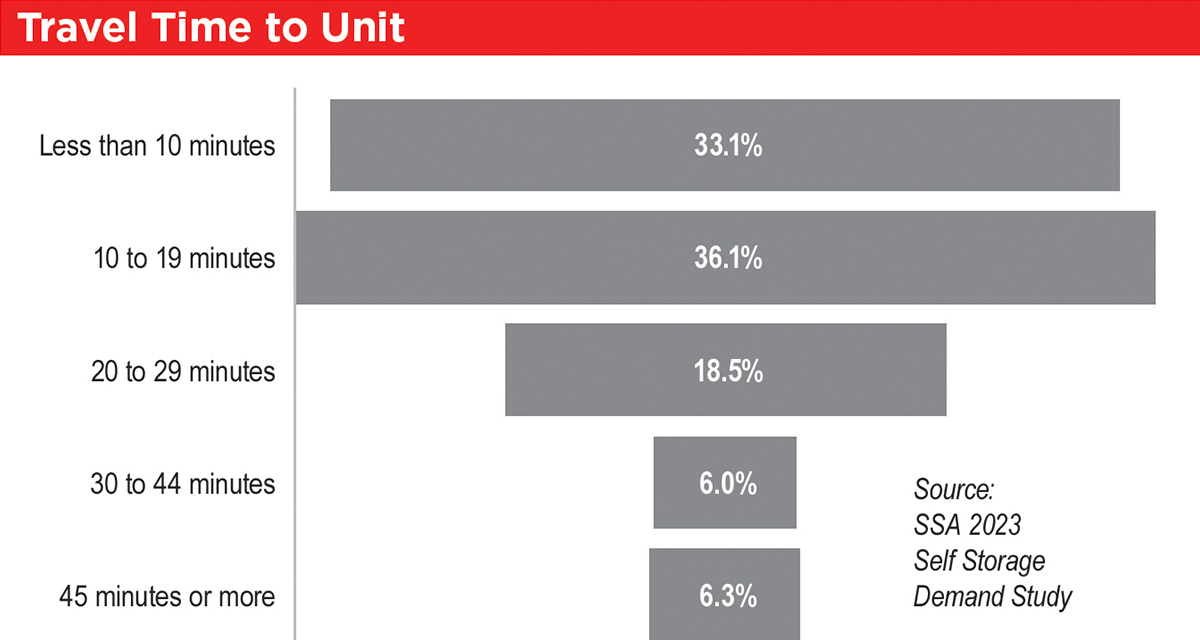
- How many people live within 20 minutes of your site?
- Typically, the more people that live close to your site, the easier it will be to find new customers or replace customers that decide to leave because you have a greater population to draw from.
- According to the SSA 2023 Self Storage Demand Study, nearly 70 percent of renters live within 20 minutes of their self-storage unit.
See Travel Time to Unit.
- Is the population in your area growing or shrinking? By how much?
- What residential construction projects are underway in your area?
- If the area around your facility is desirable and people want to live there, it’s a positive sign for the future demand potential of your site.
- Investors typically favor markets with positive population growth trends. However, just because a market isn’t growing doesn’t mean the deal is bad. It could just mean that the market is more urban or has higher barriers to entry.
- By the way, TractIQ tracks projected population based on census data and housing starts, which can be ahead of the census data in showing growing markets.
- Does your customer base mostly own their home in the area or rent?
- Does your customer base have attics, basements, or garages?
- Apartment renters typically don’t have basements, attics, or garages and may have a greater need for self-storage due to lack of space.
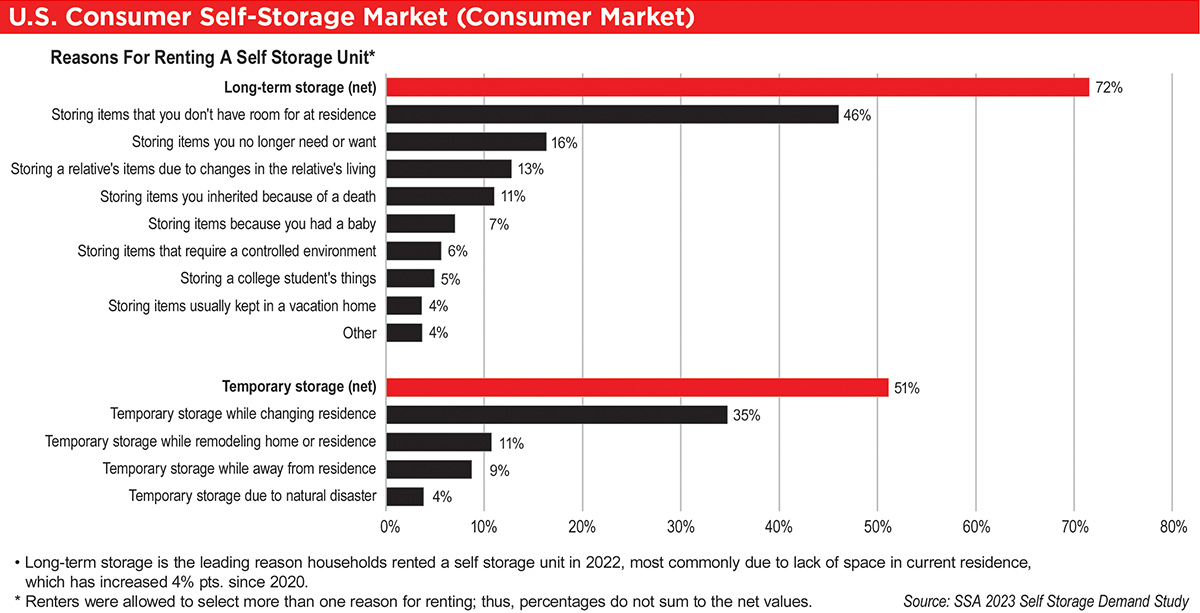
- According to the SSA 2023 Self Storage Demand Study, 72 percent of long-term renters use storage because they don’t have room at their residence.
See U.S. Consumer Self-Storage Market.
- What is the median household income in the area?
- What is the median home value in the area?
- Although the above indicators aren’t the best predictors of storage performance, they will give you a snapshot of an area’s economic stability, desirability, and long-term wealth accumulation. Areas with higher income and home values can generally support higher rental rates.
- Though many investors use median household income, median home value is a much better predictor of higher rental rates.
- How many people travel to or away from your facility during the day?
- According to the SSA 2023 Self Storage Demand Study, over 30 percent of renters first learn about a facility from driving by.
See How Renters First Learned About the Facility.

- If your facility is located within a hub where people naturally travel daily, your organic leads will be much better than a facility located in an area where people migrate away from daily.
- What is the supply per capita within three miles and five miles of your site?
- The supply per capita metric is widely used among investors in the industry. It is simply the amount of self-storage space per person in a given area and is calculated by taking the total net rentable square footage of every self-storage facility within a particular radius divided by the total population of that same radius.
- Typically, the lower the supply per capita metric is, the better. If there is a low amount of self-storage in an area compared to lots of people, self-storage owners will have greater pricing power.
- While many investors will set an arbitrary threshold for supply per capita and ignore all deals above that threshold, the data actually shows that once supply per capita is above 8.0, there is little correlation between rental rates and supply per capita. To learn more, visit www.modernstoragemedia.com/msm-exclusives/does-lower-market-saturation-sf/c-lead-to-higher-storage-rates.
Understanding the demographics of your area is critical in answering the question “Do I want to invest here?” Next time you are analyzing a deal, make sure to look at the above indicators before furthering your research.




Dodge
ife has a funny way of helping you out. That’s a line of the popular 90s pop song “Ironic” by Alanis Morissette, but it likely became so famous because it’s so relatable.
David Dodge has been the founder and president of Paramount Metal Systems for over two decades, designing and constructing steel structures for multiple industries, including self-storage. While his track record speaks for itself, his success showcases how every single chapter in life can serve as building blocks to what one can accomplish, even if none of it follows a specific rhyme or reason, and even when life throws you a devastating curveball.
Get ready for an inspiring education on how going with the flow can lead you to a pretty fulfilling life. There’s no need to make detailed road maps or to worry about how you’ll get from Point A to Point B.
ife has a funny way of helping you out. That’s a line of the popular 90s pop song “Ironic” by Alanis Morissette, but it likely became so famous because it’s so relatable.
David Dodge has been the founder and president of Paramount Metal Systems for over two decades, designing and constructing steel structures for multiple industries, including self-storage. While his track record speaks for itself, his success showcases how every single chapter in life can serve as building blocks to what one can accomplish, even if none of it follows a specific rhyme or reason, and even when life throws you a devastating curveball.
Get ready for an inspiring education on how going with the flow can lead you to a pretty fulfilling life. There’s no need to make detailed road maps or to worry about how you’ll get from Point A to Point B.
“We grew up on Main Street, USA,” he says. “We all knew each other. All our relatives were there, all our friends were there; our whole world was in that little corner of Indiana. It’s funny how when we were growing up, we couldn’t wait to get away from there, but as we all got older, we kind of long to go back.”
He attended Fremont High School, where he was into education, sports, girls, and construction. He wants to make it clear that his priorities weren’t necessarily in that order, and when he says sports, he means all of them. “I played football, basketball, baseball, and golf,” he says.
During his junior year, he participated in a building trades program, where the class was assigned a project to construct a new home, from site selection to finish. The sale proceeds would go to the school. He enjoyed it so much, he participated again in his senior year.
When graduation was drawing closer, his parents asked him where he wanted to attend college. They never expected his answer. “I said I wanted to go to the University of Arkansas,” he says. “It may have sounded like a random choice, but I had played sports with people from Arkansas, and I enjoyed those visits.”
However, that dream was not going to happen—at least not yet. His parents made it clear that they weren’t going to pay for out-of-state tuition, so he enrolled at Indiana State University, where he continued playing golf on the college team. “After two years, I knew I was not going to get my PGA Tour card, so I made the decision to follow a favorite character of mine from the book ‘Gone to Texas’ by Forrest Carter and head south to start my career path.”



In 1981, he left Indiana and moved to Dallas to start his career with Wickes Lumber. It was an easy decision, since his brother Rick was already in Texas working at Wickes. At the time, they were innovative, being part of the introduction to the market of pre-engineered buildings. It was an exciting time to be in construction, since so many new things were happening in the industry. “The birth of the steel component manufacturer was in its infancy, and Rick made the jump from wood to steel at Omega Building Products,” he says. Soon enough, Rick told him that Omega was looking to grow the company and hire new people, so David decided to follow his footsteps there.
“I figured if they would take him, they would sure be ecstatic to have me come on board,” he says with a laugh. “The only catch was that they wanted me to relocate. Fortunately for me, it was to Little Rock, Ark. God has a funny way of putting you in the right place and right time.”
His dream of finally living in Arkansas came true in such an unexpected way. “My mom has always said since that conversation in high school, ‘Boy, when you said you wanted to be in Arkansas, you really meant it! I’ve lived here for two-thirds of my 64 years, and I love it. It’s a true paradise for people who like outdoor activities: hiking, biking, fishing, and golfing. I’ve done all of them throughout my life. I really am so happy to be here.”
Arkansas has also been the gift that kept on giving. Around the year 1998, David had some friends at church who kept trying to set him up on a blind date with the sister of one of his fellow church band members. “I kept saying no, but they kept insisting, so I had dinner with Janet at an Outback Steakhouse, and we’re still together 27 years later.”
As serendipity would have it, in 1983, Omega was acquired by Vic West Steel. “I was in my mid-20s and not fully versed on mergers and acquisitions,” David says. “I had to make a choice about whether to stay with the new ownership or accept a sales position with one of the oldest and most established component manufacturers at the time, McElroy Metal. They had been established in 1963, so they had longevity on their side. However, they had not expanded past their comfort zones.”
David saw this as an opportunity to bring the expertise he gained at Omega. “I consider my time in Omega as my undergraduate education,” he says, “and decided to make McElroy the start of my MBA, and master we did.”
He worked at McElroy for a decade, a time in which the company’s sales grew from $25 million to $80 million. “In 1989, my region alone generated 10 percent of the total volume of the company, contributing to the growth and success they still enjoy today,” he says.
Once he had mastered the sales aspect of the industry, he decided to take on his next challenge. Specifically, he wanted to learn how to take those components and design and engineer a building system. He also wanted to learn about the construction process. “It was time for my PhD,” he says, highlighting his love for educational analogies. So in 1993, he started working at Rib Roof Metal Systems. At the time, it was considered one of the power five companies in the self-storage industry. “Adding development and construction to the manufacturing was just another step in my quest for a higher education.”
He’s also proud of the work culture at Paramount. He explains that since most people spend the majority of their time at work, he wanted to make sure his business was an environment people enjoyed. “I know it’s a cliché, but we really are like a family. I make sure that everyone can be who they truly are, and we provide flexibility for people to take care of their families when they need to. We work hard and we play hard. We work together, we laugh together, and we go through things together.”
He also loves that the vast majority of the team at Paramount has been there long term. “People here come and they thrive. It’s actually a career, not just a job. And I love that I’ve had the opportunity to help create careers for others. All these people we’ve hired have been able to elevate to high levels. That’s pretty rewarding.”
After all these years, he’s still happy life brought him down the self-storage path. “I love working with the people in the storage industry, associates and competitors alike. There’s always been a sincere camaraderie, especially because many of us got started in the same fashion—learning the ropes as we went along, working hard and playing hard.”
In addition, he’s aware that being in this industry affords him with the opportunity to make a difference in the lives of others, both as customers as well as the option to create a sustainable future for those who seek to be in storage as well.
He also loves that being around the block several times comes with the invaluable perspective of hindsight. “I became a part of this industry in its second generation, and it has grown so much since then, and at such a fast pace, that it’s sometimes not recognizable.”

But it hasn’t all been celebrations. David also pauses to reflect on the biggest challenges he’s overcome. “There were many times when it was difficult to convince others of the possibilities I saw. I’m an idea guy. You have to have that vision as a business leader, or you’re going to end up following the crowd.”
One of the times when he was able to convince others of innovation was when Paramount was selected to perform a couple of grant projects for the Department of Energy & Defense. “We were tasked to show through a consortium of products, such as solar photovoltaics, solar thermal, and rain water harvesting, that they were a great way to leverage your building for additional payback. And they worked too, because of their sustainability.”
But just as that example ended up well, there were also plenty of ideas that were shot down. He sees no point in dwelling on them, however.
Then there was the biggest scare anyone could face. In 2007, he went to the doctor because he had kidney stones. “I ended up finding out that I had an 18 centimeter tumor in the abdomen.” He underwent surgery to remove it, but surgeons couldn’t get it all. The cancer metastasized and David underwent surgery again in 2012. Treatments are ongoing, but he’s been in remission since 2015. “Going through that experience really changes you,” he says. “Things that used to bother you before don’t bother you anymore. You no longer sweat the small stuff, and you do everything you can to enjoy life and be happy, because everything can turn with one test or one scan.”
He also mentions how now that the experience is behind him, he’s better able to understand employees at Paramount. “We’ve had people deal with cancer themselves, or a family member gets diagnosed. And when you go through that, nobody else understands what that’s like unless they’ve lived it themselves. So I’ve been able to mentor them, or even just lend an ear. I fully understand that when you’re going through that, work is the last thing on your mind, and you have to be flexible.”
When reflecting on his life, he highlights that all of his successes are due to establishing good relationships with people. “I’ve learned that it’s all psychology. It’s not about whether you know how to make the best buildings or manufacture something. It’s all about how you relate to people, whether it’s an employer, clients, vendors, or people in your personal life.” It’s why most of the people at Paramount have lasted since he first started the company.
He also remembers all of the well-intentioned people throughout his youth who wanted to steer him in the right direction. “I got plenty of good advice when I was young. I just never followed it. I’m not sure if that would’ve made things turn out differently, or if I even would have wanted them to.”
But at the end of the day, it doesn’t really matter. One of the beautiful things of getting older is the wisdom that comes with it. “When I was in high school contemplating the choices before me, a friend of mine slipped me a note. The words on that paper have been the compass I have lived by my entire life: If you were meant to be like everyone else, you would have never been given the power of thought. To follow the crowd takes no thought at all.”


he self-storage industry continues to evolve rapidly as more storage operators and vendors enter the market. According to a report from Mordor Intelligence, the estimated value of the global self-storage market was around $48 billion in 2020. The estimated value of the market in 2027 is $64.7 billion.
The growing market size allows us to rethink how we approach critical aspects of self-storage operations, including security hardware, software, and processes. Having only padlocks, fences, and managers nearby is not an adequate security strategy any longer. As storage enterprises have grown and customer expectations have changed, storage operators must think beyond their site’s perimeters when devising a security strategy. Investing in equipment that provides layers of security and numerous fail-safes is critical for any self-storage operation.
- Incorporating keypads at access points to enter buildings or restricted areas, such as boat and RV parking areas near their unit;
- Zone control – Leveraging an access control-enabled elevator or door so tenants can only access the areas near their units;
- Adding motion-sensitive lights and high-resolution cameras to the hallways;
- Offering door alarms and electronic smart locks for individual unit-level security;
- Offering to equip high-value items like boats and RVs with motion-sensitive alarms; and
- Requiring tenants who wish to access a property during unmanned or off hours do so only via Bluetooth-enabled devices and not through a keypad.
Technologies that enable self-storage owners to implement a layered security approach include motion detection, electronic smart locks, and even AI-enabled video surveillance. There are many hardware and software components available to self-storage owners and operators. It can be hard to determine what security solutions work best for your operation when there are so many options available.
One technology in particular that is becoming more mainstream within self-storage as it provides an additional layer of security is Bluetooth. Today’s modern self-storage security devices, including keypads, locks, and latches, are all beginning to embrace the merits offered by Bluetooth, including:
- Bluetooth-enabled smart devices are paired with keypads and locks within a self-storage facility, thereby eliminating the need for keypad codes and keys. By forcing tenants to use Bluetooth, security is elevated, especially during unmanned hours, because only authorized devices can enter a property or unit, eliminating people looking “over the shoulder” while paying guests input a code.
- Because Bluetooth has a range of up to several dozen feet, it can be configured to open a gate whenever a tenant approaches a keypad, allowing tenants to stay secure within their vehicle and not be forced to press a code into a keypad.
- Do you want remote monitoring capabilities for your operation?
- How will you notify your employees and tenants of potential security breaches?
- How do you want your security strategy to influence the customer experience?
- Will you have employees on site?
- Will you offer after-hours access to your tenants?
- What access control processes do you plan to automate?
- How automated do you wish your facility to be?
- What are the expectations of your tenants, or what do competitive facilities offer their tenants?
- How much interaction do you wish your staff to have with new tenants while they are signing up to rent a unit?
Even if the security providers have the technical ability to install the equipment, you should consider the overall value-add experience when selecting your provider. Here are a few factors to consider when choosing your security provider.
- Shared Goals – Does the integrator listen to your security concerns and align with your goals regarding site security?
- Industry Experience – Does the vendor have ample experience in the self-storage industry?
- Integrable Systems – Does the vendor only install specific security components, or do they offer a complete security system? Does the access control software integrate with your property management software?
- Industry-Standard Credentials – Does the integrator have the appropriate training and certifications? Do they follow industry-standard protocols, or are some of their certificates outdated?
- On-Going Relationship – Will the integrator install security components and then disappear? Or have they ensured the system runs well?
- Ready To Scale – Has the individual set the system up so that there is room to scale as your business grows?
After you have determined your security strategy and selected a trusted vendor, you must evaluate the security components your site needs.
In addition to discussing the different materials and types of gates and fencing available, you will want to consult an expert to ensure that your gate operator fits your operation’s needs. There are several gate types, including slide gates, vertical gates, swing gates, and pivot gates. You’ll want to consider your tenants’ needs and expectations when selecting the gate type. For instance, a site housing boats and RVs likely wants a different gate solution than a non-specialty storage site because maneuvering these high-value vehicles can be particularly challenging. You want to minimize the risk of damaging the gate and the vehicle when tenants enter the storage area. Typical weather patterns at your location may also influence your decision. Again, it is important to consult experts in the industry as you evaluate your options.
Your access control system should possess several components, but three major components should come to mind when building your access control system.
1. Keypads
Keypads should be top of mind when you think of access control. You should place keypads at all entry and exit points in your facility. It is also wise to put a keypad on every floor of a multistory facility. If you offer specialty storage options like boat and RV storage, we recommend also putting a keypad at the entrance of the specialty storage area. With recent technological advancements, there are more options available than the standard numeric keypad. Integrating numeric keypads with Bluetooth technology creates a simple but secure way for tenants to enter your property. Encouraging tenants to create longer PIN codes than the minimum four digits also enhances your security protocols.

Moving your facility from desktop-based to cloud-based access control software will also enhance your site’s security. Cloud-based software is built to scale in ways its desktop counterpart cannot support. For example, cloud-based software can integrate with your property management software and unit security devices to automate the overlocking process, saving your operation valuable time. You can monitor the site remotely and get real-time notifications for any security event. Moreover, cloud-based software gives you access to a wealth of reports and analytics that can help you improve your operation. Even if the internet fails, a site controller with cloud-based software capabilities will allow you to perform some actions offline so your business doesn’t come to a screeching halt. As of October 2024, 2,680 facilities used PTI’s cloud-based access control solution, StorLogix Cloud.
3. Mobile Access
Mobile access apps are now a standard feature in leading self-storage facilities. PTI has seen this type of app usage grow an average of 157 percent every year since launching its first version in 2017. Equipped with an integrated mobile app, authorized tenants can access areas of the property without using a code, key fob, or swipe card. Mobile apps also enable digital key sharing, where a tenant can give a friend a one-time encrypted key to their unit. Of course, site managers can deny the key share if they suspect foul play. Bluetooth technology also enhances the mobile access solution by opening the access points within a certain radius. You don’t have to worry about tenants opening their units when they aren’t on the property. Site managers can also use an operator-facing mobile app like StorLogix Mobile to monitor gate access and check critical reports. Incorporating a mobile app into your access control strategy increases your operation’s security and elevates your customer experience.
See Tenant-Facing Access Control Chart.
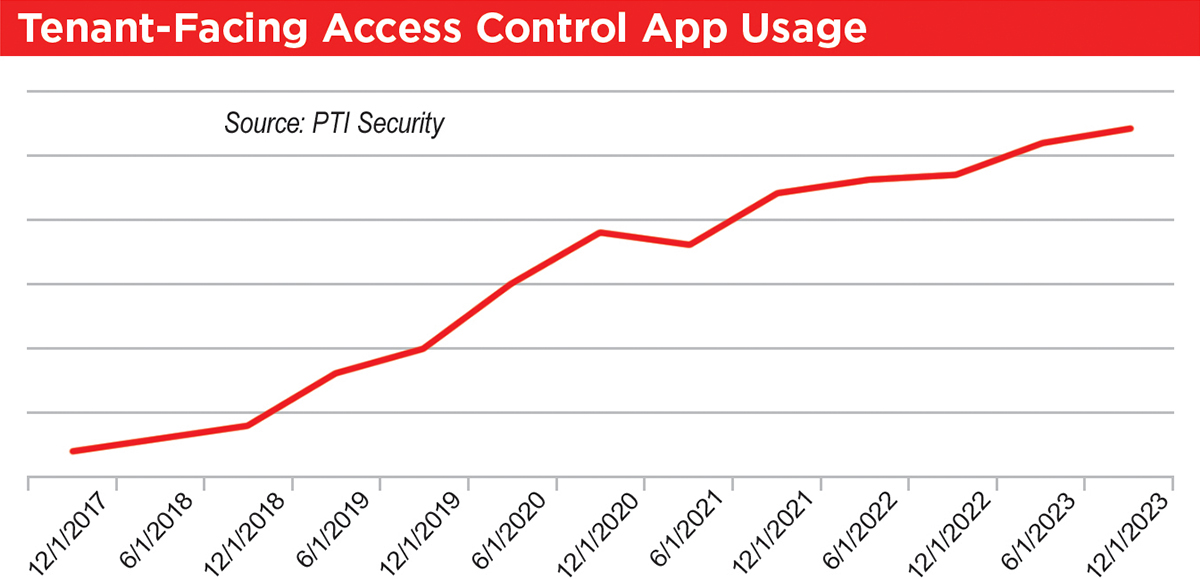
You can also employ AI-assisted video cameras. The software can automatically alert operators of security concerns like detecting movement in restricted areas. Some AI-enabled software can even notify the police if needed. Pinhole cameras at various entry points are another option. Moreover, many aspects of video surveillance can be automated; you may also choose to outsource your video monitoring. You don’t need to hire someone to watch the cameras all day to have a secure site. Placing lights near the cameras will provide a clear picture of site activity as well. Bad actors naturally want to avoid well-lit areas. Additionally, having good lighting and cameras is critical for tenants who have permission to access the facility after hours. If tenants wish to retrieve their RVs before sunrise, they expect to feel safe during their visit. Think critically about where you need to place lights and cameras to prevent crime and reassure tenants of their safety.
It may be tempting to skimp on the cameras or not prioritize fixing them when they break in the hope that the visual of the camera is enough to deter crime. However, crime attempts are inevitable at any facility, regardless of how much you invest in your security strategy. Select high-resolution cameras that clearly identify people and license plates so you can quickly resolve security incidents.

Electronic smart locks are an excellent unit security solution. Some examples of electronic smart locks include electronic overlocks and Bluetooth-enabled padlocks. The overlocks can sync with your access control software to engage the moment tenants are late paying their bills. It can also alert management if the lock gets damaged. Moreover, Bluetooth padlocks leverage smartphones and mobile apps to access the unit, eliminating the need to carry a physical key or remember a PIN. Unlike simple latches and padlocks, smart locks also provide valuable data to the operator regarding access times and an audit trail detailing who entered a unit and when. In the near future, the biometric ID technology we are accustomed to using to access smartphones will enter the self-storage market. Biometric-enabled locks are already present in the wine storage market.
Portable Locks
Portable locks (typically padlocks) have remained a constant in self-storage and are often used by operators who need a solution that can be moved from unit to unit. Historically, these locks are used for overlocking units for tenants who are late in payment or for those existing construction where running wires could be cost prohibitive and/or have traditional latches on doors of the facility. Today’s portable locks (like PTI’s Helox Smart Padlock) are now more advanced and provide operators the ability to do contactless rentals through cloud-based access control as well as a more pleasant tenant experience that leverages Bluetooth connectivity, which is rapidly becoming an expectation of tenants.
Door Alarms
Door alarms are another aspect of unit security to consider. Just like electronic smart locks, door alarms can communicate with your access control software so you can know of the security threat instantly. Syncing the alarm with lights and sirens will also deter intruders and alert you to the threat in the office or be paired with sirens, lights, etc., to scare off intruders and alert anyone in the area.
In-Unit Monitors
Theft is a problem for any self-storage operator and can be partially, if not completely, mitigated by combining the above security solutions with an in-unit monitor such as StorageDefender. Such monitoring typically provides both operators and tenants activity alerts sent directly to the owners’ smart devices whenever any activity is detected in the unit. While this additional layer of security may not be for every facility, operators should know it is an option and can typically be an additional source of revenues for tenants that demand additional security.
When polled, 82 percent of portfolios shared that access control data was important to them, but only 10 percent felt that they were using access control data effectively. (See the pie charts.)
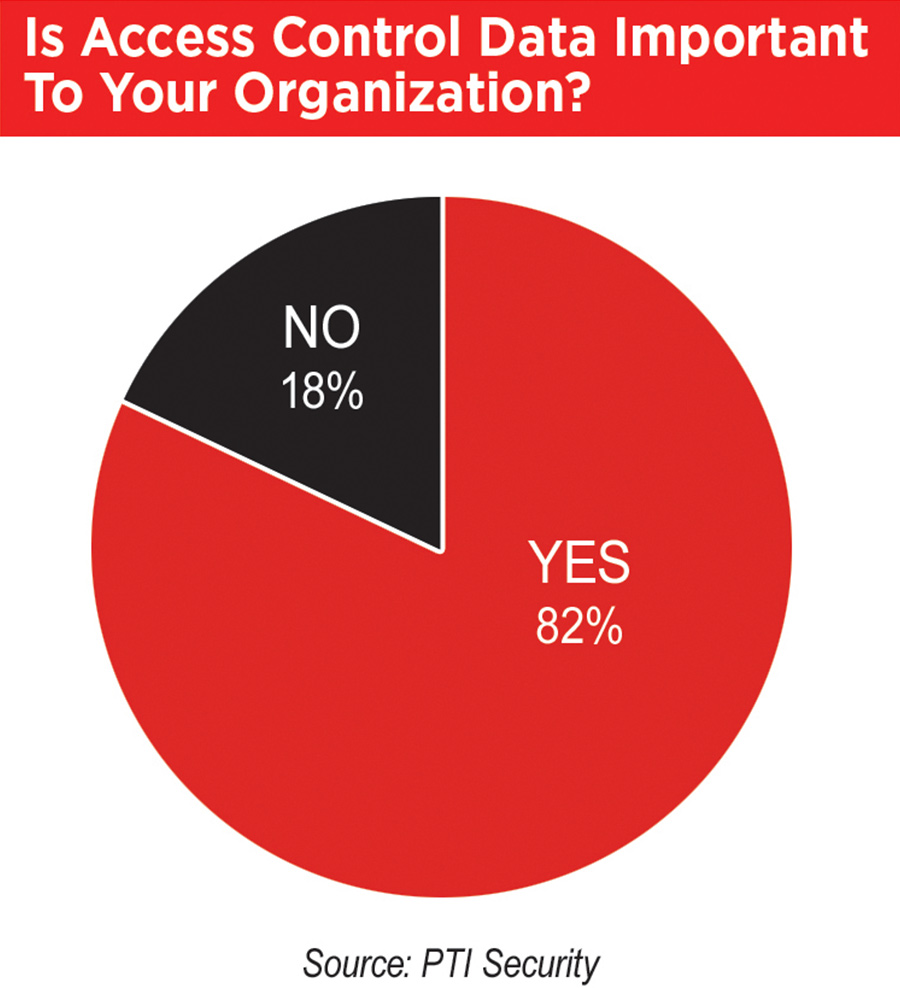
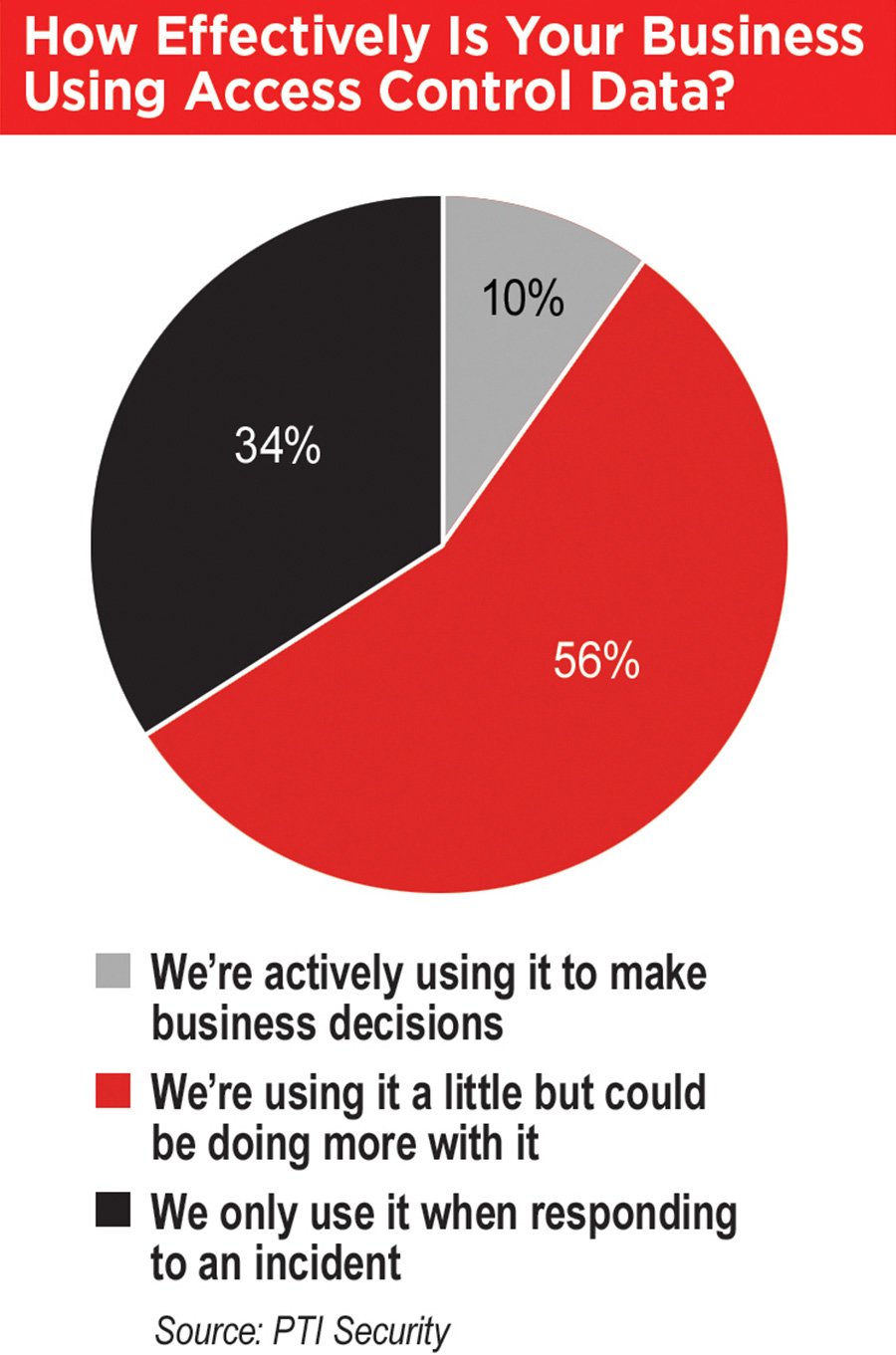
- At-a-glance intel on site activity and security equipment statues
- Portfolio-wide visibility that allows you to access this data from anywhere for all of your facilities
- Geographic site mapping that visually represents the security health of all your facilities
- Fully customizable reports so you can track the KPIs that matter to your business
- Remotely control your site’s accessways and doors with one click
- Open, lockdown, or hold open access points so you can respond to emergencies quickly
- Identify the notifications you want to receive without getting bogged down by the notifications you don’t need.
- Receive the notifications in the way that works best for you and your team, whether it is via text, email, browser, or push notifications.
- Receive all notifications in real time so you never miss a potential security incident.
- Leverage the notification data to generate granular reports and make better business decisions.
- Mobile access solutions
- Unit security devices
- Property management software
Security technologies such as the CloudController and StorLogix Cloud will continue to advance the analytics capabilities and access control integrations in the future.
- How does automation fit into your business vision and security strategy?
- What kind of experience do you want for your tenants?
- How do you want to position your facility relative to your competition?
- How do you plan to track and analyze data to make better business decisions?
- What are your plans for growth in the next few years? Are the systems you’re putting in place today ready to scale?
Knowing the vision for your business and designing a security strategy that achieves this vision will drive success for your self-storage operation.
Redevelopment

hen someone pictures storage in their mind, they might be imagining a small, rural, drive-up property. They could picture a downtown, multistory, climate-controlled building, or maybe a property that was once a big box store but has transformed into storage units. There’s a wide range of ways storage can look. In fact, if you look at the thousands of self-storage properties across the U.S., no two look identical. Creating beautiful properties that fulfill the needs of the company, the customer, and the community where they are built is a creative challenge.
Rob Burns, Extra Space Storage’s director of design, and the design team he leads at Extra Space Storage is known industry-wide for tackling that challenge. The team currently focuses on redeveloping properties, transforming them into modern, attractive, and highly functional self-storage facilities. This year, Burns is celebrating 25 years of creating self-storage designs for Extra Space Storage. This quarter-century of work has given him a unique perspective on the industry.
“I have been the lead design voice at Extra Space Storage for over 25 years now,” says Burns. “When I started as a construction manager in 1999, the projects I worked on weren’t always the most visually appealing, but they set the groundwork for future innovations to come. Over the years, I began to see the potential for something more—storage facilities that weren’t just practical but also aesthetically pleasing.”
JJ Van Komen, Extra Space Storage’s vice president of facility operations says, “Typically, self-storage buildings can be very plain and utilitarian, but Rob’s designs break that mold by integrating sleek, modern elements and ensuring that every project has its own distinctive character. He carefully balances functionality and aesthetics, making certain that each facility stands out while meeting the practical needs of both owners and users.”
Burns believes that self-storage should be an attractive real estate asset class. The goal is to create secure, conveniently located, and customer-oriented spaces where valued possessions can be stored and accessed with ease by individuals and businesses alike. Every new redevelopment project is designed in-house, from the site plan and unit mix layout to the office and building elevations. His work is often critical in getting a project approved.
“Rob has an incredible ability to win over the hearts and minds of city planning commissions and neighborhood groups,” says Zack Dickens, Extra Space Storage’s executive vice president and CIO. “His designs, with their beauty and stylistic façades, often made the difference in securing project approvals and pushing them across the finish line.”
Back in the day, the story would follow a familiar pattern: Extra Space would present a new project for approval at neighborhood hearings, only to face opposition from city representatives and various local groups. In the early days, self-storage was often stigmatized and regarded as an unwanted asset class. The “not in my backyard” mentality was frequently voiced during these hearings.
“At even the slightest sign of resistance, we knew it was time to showcase Rob’s stunning renderings and images of recently completed projects. More often than not, this would win people over, helping them see the potential of a well-designed storage facility. We have Rob to thank for that,” Dickens adds.
“Rob [has] had more impact on the design of storage than anyone I’ve known in the industry,” says David Decker, a self-storage industry veteran.
Self-storage has evolved a lot in the past 25 years, and it continues to evolve with Burns as a key voice in the look and feel of storage.
“It’s been incredible to see these ideas take shape, winning design awards, and setting new industry standards. But what I’m extremely proud of is walking into Extra Space headquarters and seeing so many of my designs framed on the walls. It’s a constant reminder of the importance of innovation and the lasting influence creativity can have on a company,” says Burns.
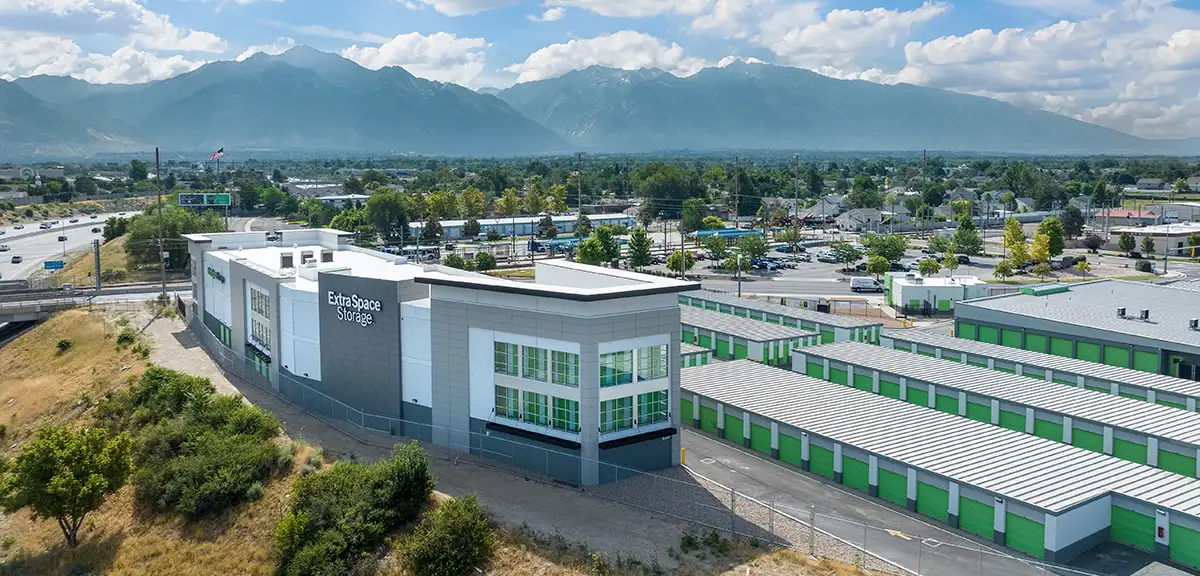


Once a property is selected, Burns’ team begins the design process by creating initial renderings. These designs undergo an internal committee review, ensuring they align with the company’s vision and business objectives. Once approved, the design team collaborates with an architectural vendor who refines the conceptual designs into code-compliant, construction-ready documents. The architect also works closely with city officials to navigate the permit approval process, public hearings, and regulatory requirements.
When all approvals are in place, Extra Space partners with a construction company to bring the project to life. From breaking ground to the final touches, the team remains actively involved, ensuring the finished facility meets the company’s high standards for quality, security, and customer convenience.
“I’ve always believed that design matters, even in an industry like self-storage,” says Burns. “When a building catches your eye as you drive by, it doesn’t just change how people perceive the facility, it changes how they perceive the brand. That mindset led to a complete transformation in how we design our properties, focusing on curb appeal, modern architecture, and customer-friendly spaces. This shift not only elevated our company’s image but also helped drive growth and public recognition.”
Through careful selection, thoughtful design, and seamless execution, Extra Space continues to elevate the self-storage experience, delivering modern, well-located, and purpose-driven spaces that meet the evolving needs of customers.

This property was originally constructed in 1993, but in recent years, several of the storage buildings started experiencing settling issues. In 2018, Extra Space acquired the property from a joint venture partner with plans to redevelop the site in three phases. Phase one focused on renovation of the main office building with full exterior façade renovation and conversion of the remaining space on the first floor from office to storage. Phase two demolished the existing buildings to construct a new three-story “L” shaped building adjacent to State Road 7. Phase three finished the redevelopment with a newly designed RV lot and other final site touches.
Another example is Extra Space’s Murray, Utah, property. This site was originally acquired in 2010, the site saw its first major expansion in 2016.
Fast forward to present, and the latest expansion required the dismantling of six buildings adjacent to I-215 on the northern perimeter. In their place now stands a modern three-story structure that houses 230 climate-controlled units and accounts for an added 23,184 NRSF.
“Projects of these magnitudes are never completed alone,” says Burns. “Their success is a testament to the collaboration and dedication of countless individuals, including our design and redevelopment teams, field team members, contractors, consultants, and the cities we work with. Each new expansion provides a promising new chapter for each location.”
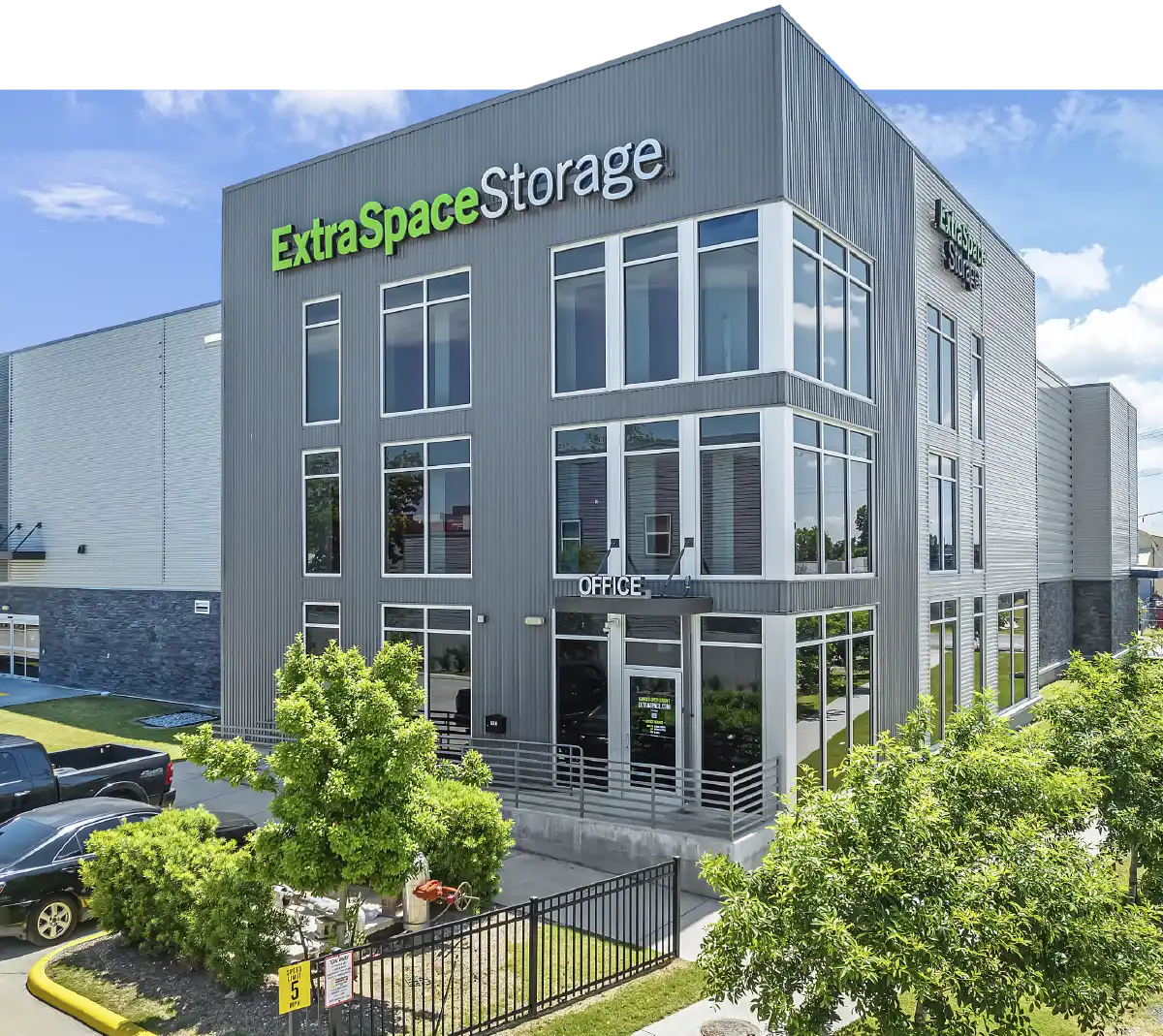
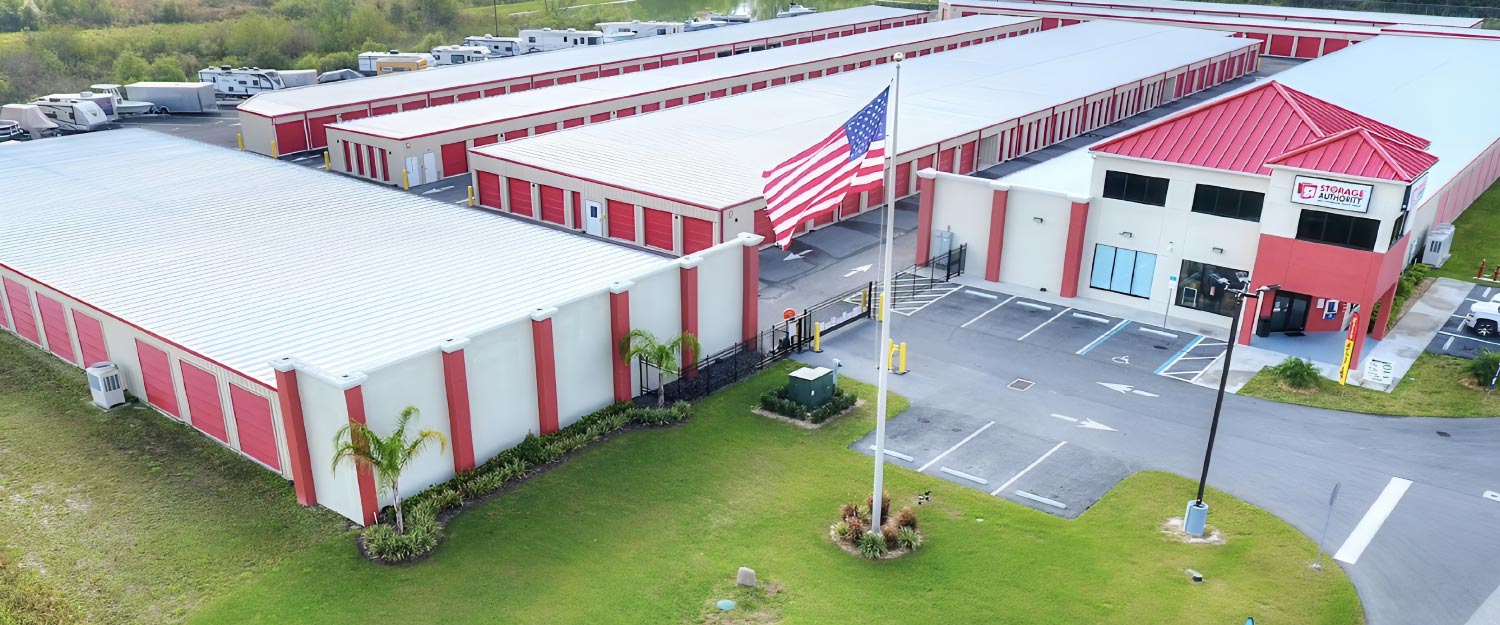
hese days, everybody is looking to save a buck. What if you could save one million of them? If you’re a self-storage developer, it probably sounds too good to be true, especially in the current economy. However, Marc Goodin, CEO of Storage Authority Franchise, says it’s entirely possible. He sat down to share tips and a few trade secrets that anyone can put into play when considering a new project, or even their first project. As Goodin explains, it begins with understanding the three distinct phases of development.
One thing to be wary of is easements. “Say you have two frontage roads. That may seem good for access, but it can be a restriction,” he says. “You could have a 100-foot setback on a road, and with two, now you’re losing 200 feet of rentable space. You need to make sure that’s going to be acceptable to you. You also want to watch out for wetlands.”



The next factor to be cautious of during your land search is the overall topography. “To a lot of folks, topography is just lines on a paper, but a trained eye can tell if there are two feet between lines or 20 feet, and that’s a big difference.”
Because self-storage facilities are typically built flat, developers know to look for flat land, but Goodin says looks can be deceiving. For example, when checking out a plot that’s 1,000 feet long, the naked eye may register a two-foot drop within that stretch when there’s actually a 10-, 20-, or 30-foot drop. “That’s where you can lose the largest amount of money if you decide to build,” he says.
Should you pursue construction on unlevel land, Goodin recommends that you first try to balance things on site, even though there are still costs for cuts, fills, and machinery. “If that doesn’t work, if the topography is too steep, you’ll need to bring in material or haul it off. That can easily cost you an extra dollar per square foot.”
Goodin recalls one Storage Authority franchisee coming to him with a “great deal.” “He’d found someone selling land for $300,000, when every other plot of a similar size was a million. Well, the owner knew he had to price it low because of the topography. I said, ‘It’s going to cost you a million to bring in that fill, so you’re really looking at $1.3 million. Go back and look at those million-dollar ones instead!’”
Utilities, and their location, also need to also be a consideration. Goodin recalls one project in which the utilities were located on the other side of the road. However, this “road” was a four-lane highway, and it would cost more than $50,000 to tunnel the three utilities underneath it to reach the facility. “Thankfully, we found that out during the design stage and negotiated with the owner, ultimately splitting the cost.”
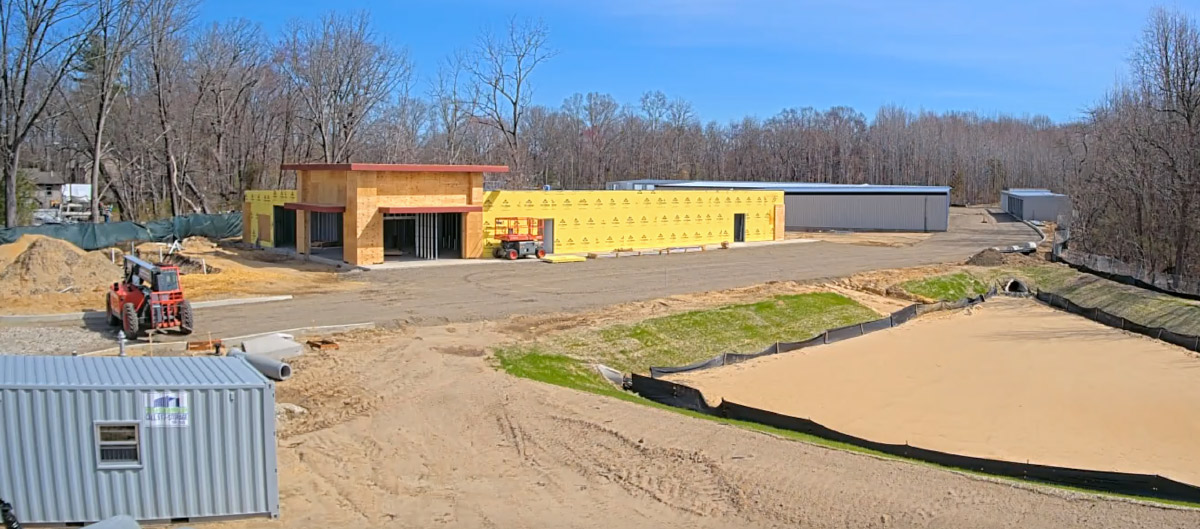
When it comes to the number of buildings you put on site, Goodin says you need to be calculating. Obviously, if it’s a small plot of land, you don’t really have a choice but to do one vertical build. Far too often, however, he sees sites with upwards of a dozen buildings, when it would be so much less expensive to build fewer. He offers an example of two buildings that are 80 feet wide built side by side. “You’re better off putting them together. First of all, you’ll save on that 30 feet of pavement between them, which could cost $50,000 right there. You’ll also save on construction, because where there were two walls, now there’s one; instead of two footings, there’s one.”
There are other times one building makes sense, and that’s based on location. “Say you’re in Florida, and your feasibility study shows you need 80 percent of your units climate controlled. Well, then one building makes sense, as most units will be indoors and climate controlled, with only 20 percent on the exterior offering non-climate control. Now, if you’re in a location where temperature isn’t an issue, a few buildings is probably best, as they don’t need to be climate controlled, and people really do like those outside units … they like the convenience of them.”
Goodin throws out the following example: A change needs to be made, and it takes, on average, two weeks for the order to be signed. The delay in construction will then take twice as long as it takes to get the order signed because it messes up schedules and leading to “contractor stacking.” This is when you have multiple subcontractors scheduled to work simultaneously in the same area, causing overcrowding and inefficiencies. Now the project is delayed a month and you’ve lost about $57,000 thanks to that delay. If you have another change order, you can count on more delays and more money lost.

Continues Goodin, “You would not believe how many things are not on the plans that delay the project and add to the costs and lost revenue. I can’t tell you how many times I’ve seen plans for something like ‘16-foot gate.’ OK, but that doesn’t narrow it down. Rolling? Lift? Material? Power backup? Beam and wire mesh? If it’s not on the plan and not specified, or it doesn’t meet safety requirements, you’re going to have a change order and a delay. So take those change orders seriously and get them signed immediately.”
Before he’s done with the lesson, Goodin says there’s one more thing to watch out for. When you’re ready to build and you hand over a set of plans to a contractor and he gives you a price of $10 million, know that it probably doesn’t include items like cameras, access control, low voltage, and a whole slew of things. “Later, when you question it, the contractor is going to say, ‘That was for the owner to do.’ Hell if I’m going to do any of that stuff!”
For Goodin, it goes back to making a list, or in this case, an addendum. “This is what I’ve done on my last three projects. Now, someone can help you make the addendum; it has to include all the things that may be on a plan that contractors don’t typically build. And when you go out to bid, you say, ‘I want you to include these things in your bid.’ And you get a signature on that before the shovel hits the dirt.”
It’s easy to see how Goodin’s tips can quickly rack up savings and hasten construction to lease up faster, in turn growing revenue quicker. But why share the secret sauce? “I’m here to help everyone,” says Goodin. “A developer can take these tips and run with them on their own and I encourage it. But some people don’t like to go on their own. And I can say in all honestly, you’re going to save somewhere between $250,000 and $1 million with Storage Authority; most of our franchisees have saved over $500,000. Let me run some numbers with you. Marc@StorageAuthority.com, or (860) 830-6764. Give me a call.”
It’s clear Goodin means business, so if his voicemail is full, you might want to try back later.
e’s already been very generous with his money-saving tips, but Goodin seems like he might have another secret up his sleeve. “OK, one more,” he says, leaning in as if this needs to be kept on the QT. “It’s the AIA construction contract.”
The American Institute of Architects (AIA) contract, he explains, is written by architects and includes language that is advantageous to the contractor. Once you’ve signed it, you open yourself up to liability. For example, the AIA may state that all change orders must be approved by the architect. So, something as simple as, say, changing countertops from blue to red, requires a change order and the rehiring of the architect.
Goodin is ripe with examples, quickly relaying another. In this case, the architect forgets to plan for a fire riser, the vertical pipe carrying water from a supply source to the fire sprinklers. “Of course, that is a building requirement, but it was missed,” says Goodin. “So, the contractor says, ‘Well, Mr. Architect, you forgot this, so I’m charging an extra $50,000.’ And the architect approves it.”
“No, sir,” says Goodin. “I’m the owner, nothing gets approved without my say. I’ll ask the architect, I’ll ask the civil engineer, I’ll get their input, but I get to negotiate. There needs to be a way to do this for less than $50,000.”
Another sticking point are items like “rain dates.” Goodin says if you bother to look within those 200 pages of the AIA contract, you’ll see that they’ll often refer to expected rainfall in given months for a particular city, and state that if it rains more than X days in a certain month, you need to pay extra.
“It’s all in there,” says Goodin. “It’s easy to think it’s just fine print that we tend to ignore, but read every paragraph. You may not understand it all, but you’ll see enough and realize that it’s written to be very much against you. And if you don’t believe me, hire a lawyer to look it over. He or she will cost you a lot less than some of these provisions you find; I guarantee it.”

Pre-Plan with BETCO SmartReadyTM

Are you ready to get SMART?



he idea of interior design often conjures images of redoing a kitchen or a spare bedroom in someone’s home. Whether you realize it or not, the practice of well-planned interior design in any business, like a self-storage facility, serves a much bigger function than just colors and patterns.
Interior design and finishing affect and influence functionality, comfort, effective use of space, safety, branding, and much more—on top of aesthetics. With all of that in mind, it can be easy to go over an interior finish budget in a construction project.
Storage Construction works with its clients to prevent that type of budget “overrun” by keeping the builders and the budget in mind during the design process. We refer to this as value engineering, a creative, organized, collaborative effort that analyzes the requirements of a project to achieve the essential functions at the lowest total costs over the life of the project.
In this article, I’ll focus on a few suggestions that my team offers building owners when it comes to aesthetic-, function-, and budget-minded decisions in the area of interior finishes.
To that end, there’s no need to overdesign or overspend on office treatments and finishes. Here are just a few things to consider for the design of an office:
- Keep light fixtures simple.
- Plan for drop ceilings instead of drywall ceilings.
- Don’t use high-end wall treatments like ceramic or subway tile or LED back-lit wall panels. Just install drywall and paint it.
- Don’t plan for excess built-in cabinetry or storage.
- Use carpet tile or sealed concrete as floor finishing instead of porcelain/ceramic tile floors.
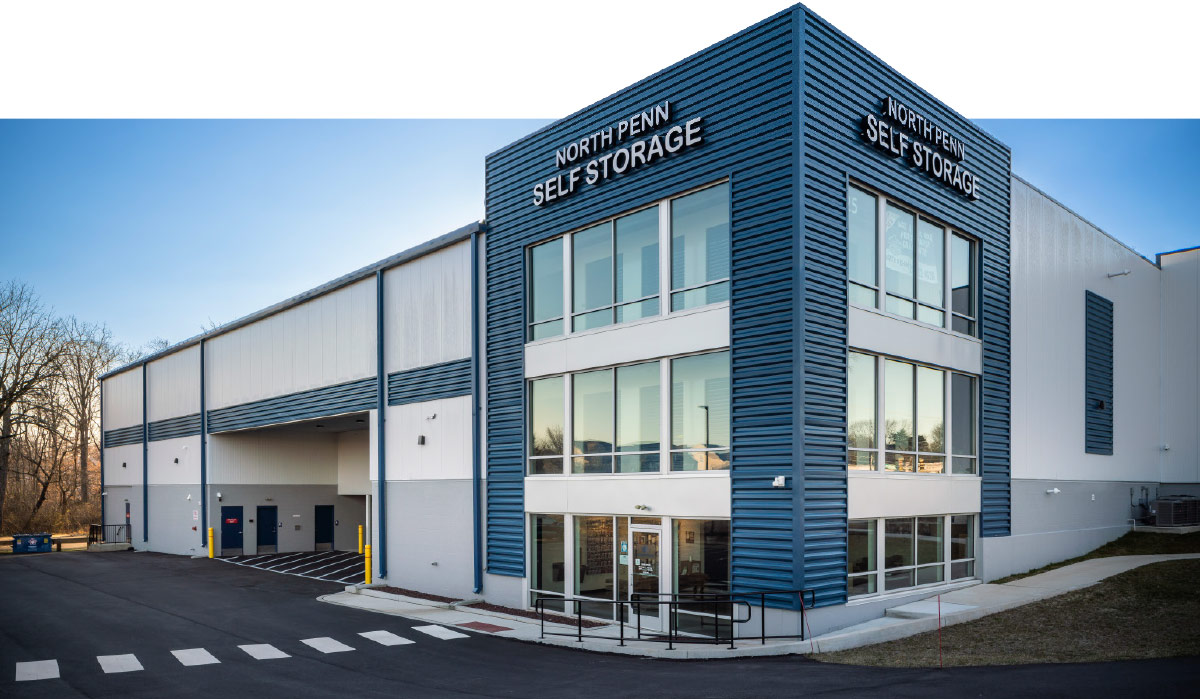
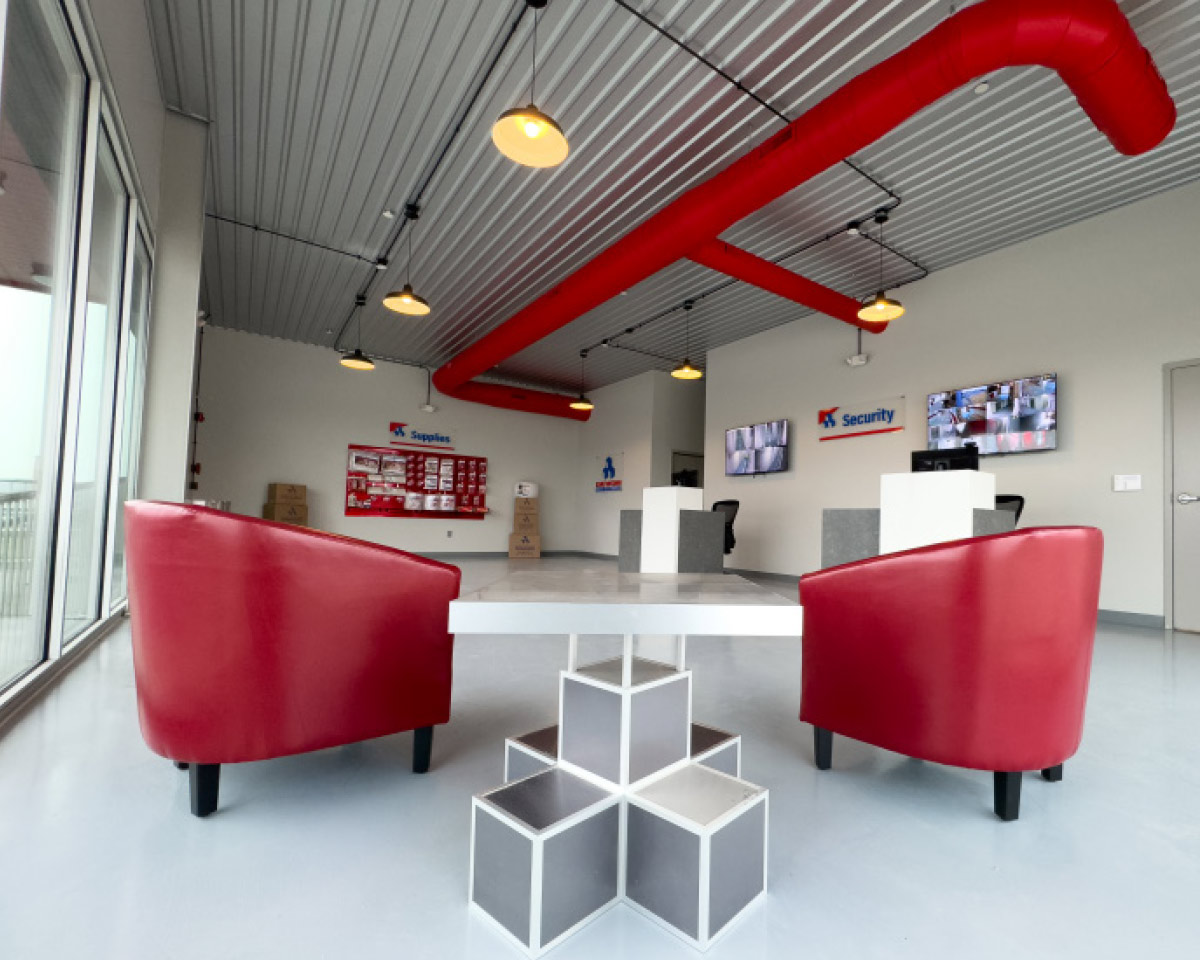

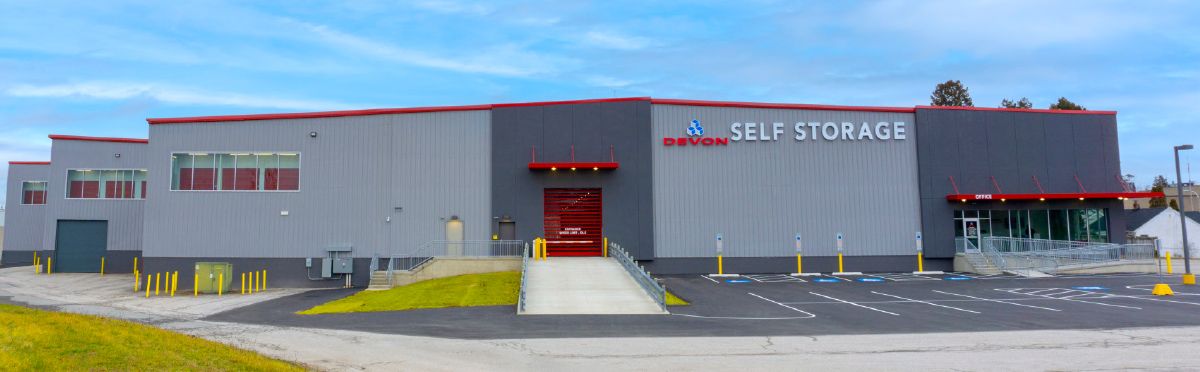
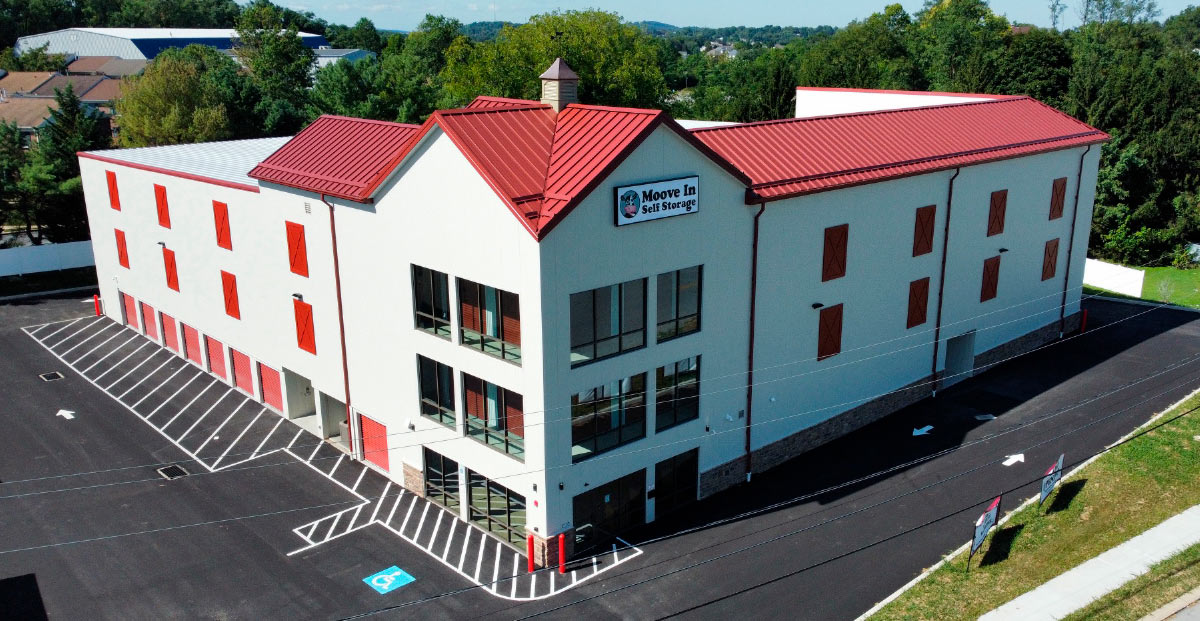
KEEP HALLWAY CEILINGS EXPOSED.
Open ceilings can give the sense of a more spacious facility, but they also cut down on costs. Installing a ceiling finish such as ceiling panels, soffit ceilings, or drop ceilings is expensive and can add time and complications to mechanical runs like HVAC ducting, sprinkler piping, lighting, and others.
STICK WITH CONCRETE FLOORING.
There is no need for carpeting or epoxy floor finishes in self-storage hallways. These hallways will see a lot of traffic and wear. Leaving the concrete exposed, perhaps with a sealant, will save costs down the road by eliminating or reducing the need to replace worn materials.
KEEP IT BRIGHT.
When choosing colors, we always suggest choosing bright white colors for the hallways. Even though some other colors aren’t an upcharge, many are an added expense. More importantly, bright white interior colors will brighten the overall structure for customers without the need for the installation of additional lighting.
For the interior hallway lighting, we recommend an 8-foot LED strip light with a built-in motion detector. Anything beyond this will expand your budget for both parts and installation, and built-in motion detectors can offer an additional reduction in costs for wiring and installation labor.
Groundbreaking Development

he city of Rhome has small-town charm to spare, but it is actively working to accommodate new development. Part of that growth is Noah’s Ark Self Storage, located just off U.S. Highway 287 for great visibility and accessibility. Constructed and owned by the Parhams and designed by the Kaufman Design Group, the 124,000-square-foot, Class-A facility blends in with the surrounding community and consists of four buildings and plenty of RV parking. Currently, the facility is 100 percent remote thanks to Joshua Management and the Janus Nokē Smart Entry system, allowing management to monitor the facility from afar.
Site selection was a strategic move, with the Parhams purchasing the land before the implementation of zoning laws. Now grandfathered in, annexing the property in phases to accommodate population growth will be easy; the forward-thinking family even created two access points so tenants would not be disrupted when additional construction begins. Phases two and three will expand the number of rentable square feet and erect an office. At that time, an on-site manager will be brought in to engage with people and ensure Noah’s Ark is a staple within the close-knit community.
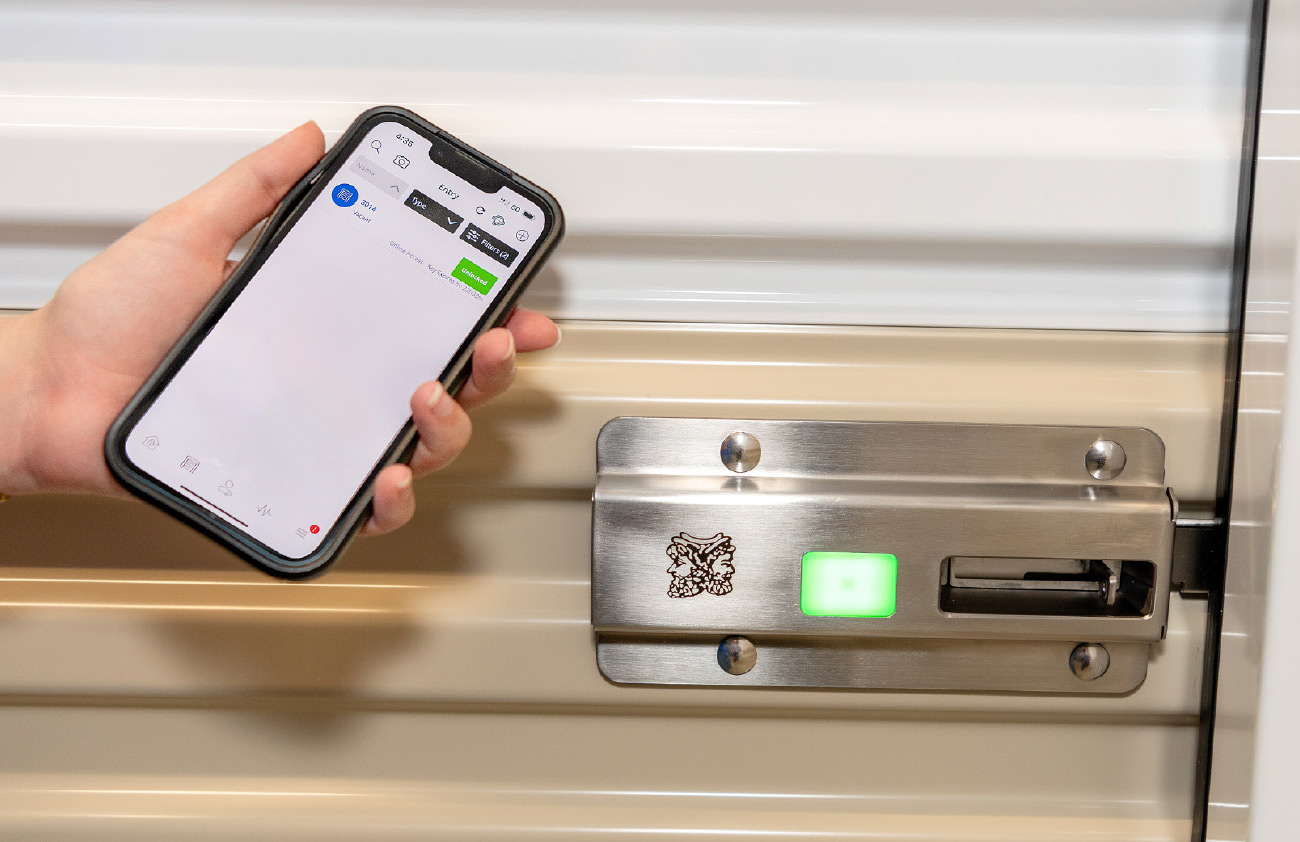
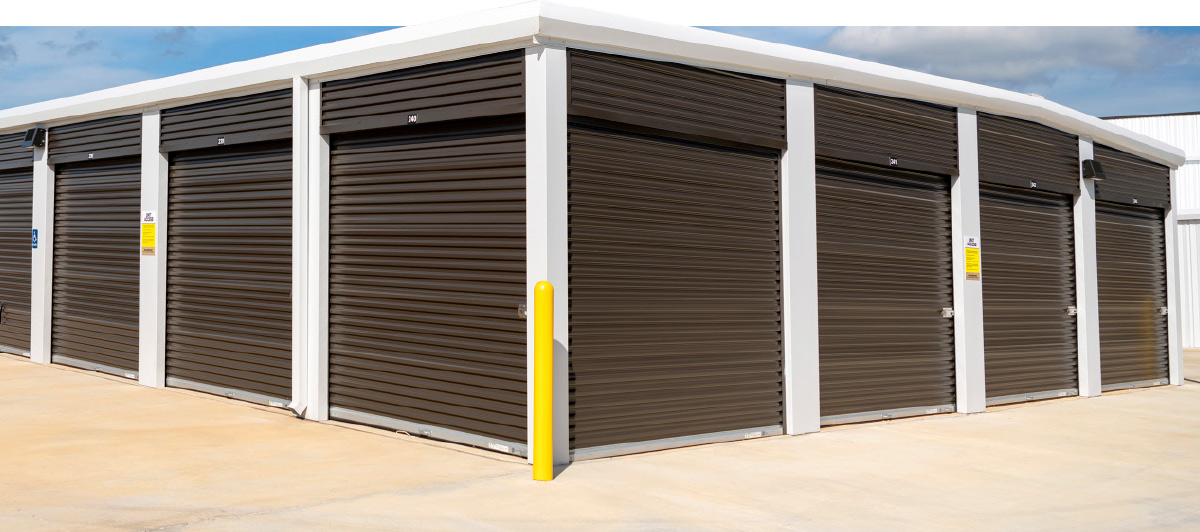
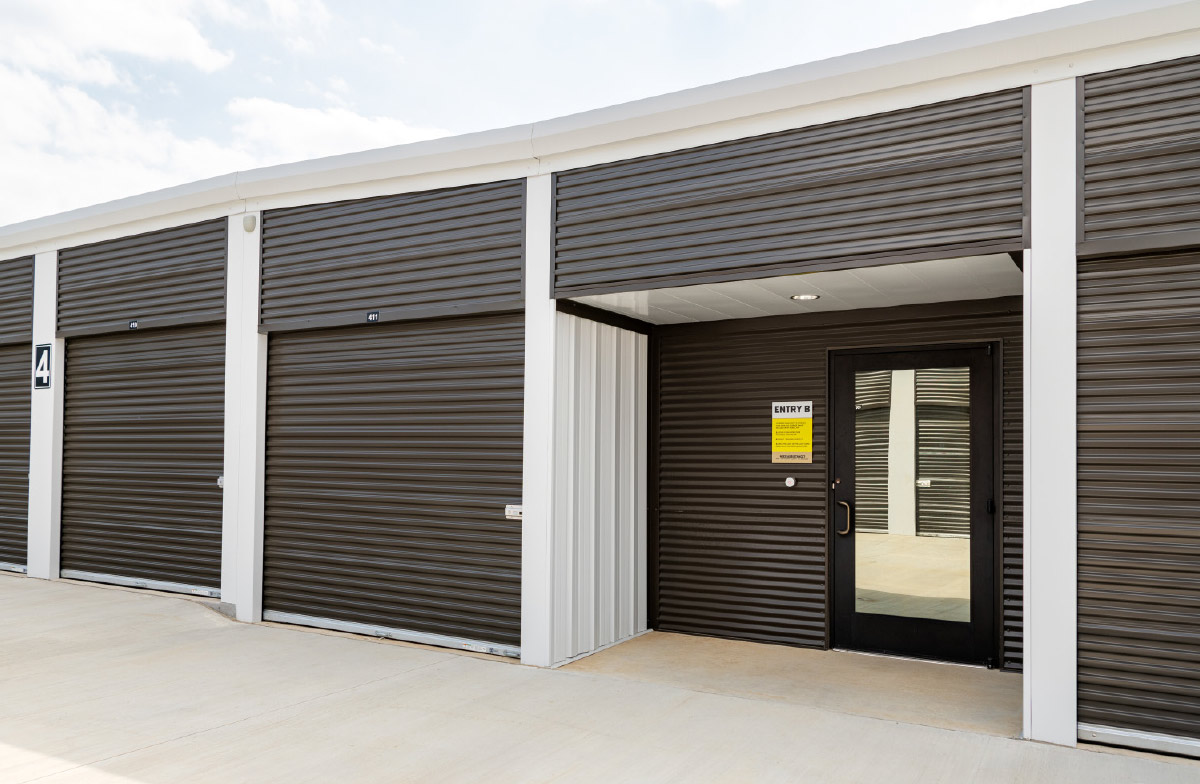



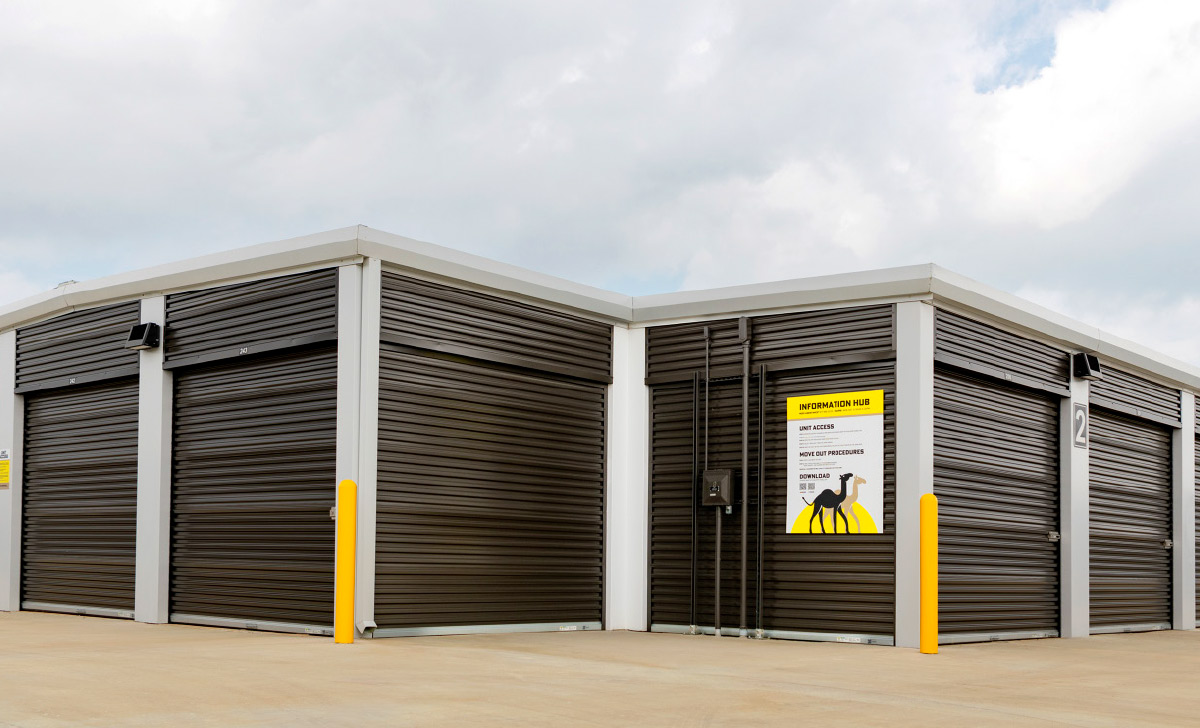


randing has become an all-encompassing term that has engulfed all aspects of life. People no longer seem to have personality traits. They just act on brand. Many people no longer do product research before deciding to buy an item. They just automatically gravitate towards whichever brand has earned their trust.
There’s no escaping it. Whether you like it or not, branding has become an essential part of any business, and the self-storage industry is no exception. So how can you ensure that you’re doing branding right? What is it that makes some entities be so successful with their branding, while others are forgettable at best? Are you willing to bet your annual income that your self-storage business is optimizing its branding efforts?
“How people feel about you and your brand is more impactful than whether or not they like the blue in your logo,” adds Nguyen. “What you evoke is what’ll set you apart from all other self-storage businesses who offer the same 10-by-10 empty units.”
Once you know how you want your customers to feel, it’s time to figure out an effective way to communicate that to your audience. How do you do that? Let’s start with your website.
First, be mindful that nowadays people tend to have the attention span of a gnat (plus multiple phone notifications and life responsibilities competing for their attention). Therefore, before even going into the details of what your site will look like, make sure that it loads fast (under two seconds tends to be a fan favorite timeframe) and it’s optimized for mobile devices since the vast majority of people look up businesses from their phones. If visitors have to zoom in or scroll sideways to see what you offer, they’re probably going to go with a competitor instead. Your north should always be the user experience.
Now to get into the actual content of the website. While the written information is essential, you also have to be strategic with the visuals. “Your photos should showcase what makes you great and let customers see what you have to offer,” adds Nguyen. This means bypassing scenic images and generic stock photos. Flaunt your facilities. Let people see the layout, the cleanliness, and the security features.
Be mindful that a lot of people are coming to the homepage to scan the product offerings and pricing. “Avoid big spans of text above the fold and stick with taglines that communicate who you are, what you offer, and where you’re located,” Nguyen says. “Save the big paragraphs for other parts of your website for SEO reasons, such as product pages, storage tips, and Frequently Asked Questions.”
Always remember that customers are coming to your website to find a solution, so focus on highlighting the solutions you offer. As Nguyen describes it, branding is less about you and more about your customers. Prioritizing the user experience, make sure the layout is easy to follow. Including social proof, such as testimonials for individual customers and case studies for corporate ones, provides prospects with verified accounts that your business will offer them with what they’re seeking.
Now, back to the logos. While it’s true that prospects don’t care about the shade of blue you use, you still want to develop a memorable design. At the end of the day, once people start experiencing your offerings, the logo is what makes you instantly recognizable. “Treat building a brand like pouring concrete for your foundation,” says Nguyen. “If designing a good logo is in your wheelhouse, do it and do it well.” If graphic design isn’t your forte, he advises hiring marketing experts to do it for you.
Once you have your website in place, it’s time to think of how to make things as seamless as possible for your customers. Think about all the well-known and successful self-storage operators. In the past decade or so, the industry has evolved from rudimentary and unsophisticated to tech-forward and customer-centric offerings. “This evolution can easily be seen with messaging,” says Nguyen. “Think of: ‘Easy to manage. Anytime. Anywhere (CubeSmart).’ ‘Skip the counter and go straight to your space (Public Storage).’ ‘Skip the line, rent online (Reliable Storage).’ Brands big and small have made it clear that renting is easy!”
Speaking of easy, while you do have to be strategic about developing your brand, it’s not necessary to overcomplicate things. When asked about choosing their own branding for StoragePug, Nguyen’s enthusiasm is clear. “For the name, we had a feeling that an animal-themed company delivers on the fun factor. A pug is a funny mascot, and storagepug.com was available on Google Domains for $12!” You can’t argue with that reasoning, and the success stories on their own homepage are testament that their branding has been effective.
Those testimonials are also proof that even when you get your branding right (a logo that reflects your personality, the excellent user experience, and niche offerings), what actually makes that brand trustworthy is backing it up with your products and customer support. “People don’t rent because the doors are green, red, or orange,” says Nguyen. “They rent because they find your facility convenient, safe, and the right price.”
Who would’ve ever thought that self-storage and Maya Angelou would ever be discussed in the same article? But her famous words ring true on this topic: “People will forget what you said and what you did, but they’ll never forget how you made them feel.” And if you make them feel like they can trust you with their belongings, they’ll keep coming back any time they need storage space.



well-rounded business strategy includes planning for every eventuality, including an exit strategy. This is not a decision made impulsively upon acquiring assets, nor is it a simple task. Exit strategies evolve with market fluctuations and the company’s performance. There is no fixed time or place to create or execute an exit strategy; rather, success depends on having the right mindset, preparation, and composure to determine when it is the right time to sell—or to hold firm.
Building a business with all possible outcomes in mind is crucial, whether the goal is long-term growth or eventual sale. Strategic planning should be an early consideration. “Any investment you make, you think about what it will look like on the way out,” says Neal Gussis, executive director of capital markets at SPMI Capital. “Every property is different. Each one sustains different cash flows and returns, so you have to modify the expense structure; there are different strategies for each property.”
Developing an exit strategy from the outset ensures clarity regarding acceptable sale prices and the desired state of assets at the time of sale. However, market conditions can shift. “The price you’re selling for isn’t necessarily what it’s going to be bought for,” says Jim DiNardo of J. DiNardo Consulting. “Then you might sell at the wrong time.”
Timing is everything, and exercising patience is key. “The timing swings like a pendulum,” DiNardo adds.
Each business, property, and unit type is unique. Factors such as property size, cash flow, and cap rates—both for acquisition and exit—must be considered. Property valuation may differ from its purchase price, making timing an integral aspect of exit strategy development. This ensures a sustainable profit.
“Every buyer has a different plan for their property; everyone has different visions,” says Gussis. Buying and selling are influenced by numerous factors, including fluctuating fiscal and personal timelines. A business opportunity may arise where selling is the best move, even if it was not originally planned.
Gussis points out that, “A few years back, properties were being sold at below 4 percent under the cap rates because valuations were so high, and they couldn’t miss out on that market.” With increasing pressure on rents, operating income has not always met projections. In some cases, selling now may be more ideal to avoid lower-than-expected returns.
The self-storage industry is a strong long-term investment, but no one can perfectly time the market. Success comes from balancing risk and opportunity. While an exit strategy should be considered from the start, it should also remain flexible. The market is unpredictable, so long-term thinking and adaptability are essential.
Every exit strategy presents both advantages and disadvantages. Depending on a company’s stability, financial standing, and cap rates, selling may not always be the best choice. Many operators find that holding onto assets long term is more beneficial, allowing them to continue reaping the rewards of their hard work. While an exit strategy may not always be the best move, it should remain an option, especially if circumstances shift and make it the optimal choice.
Exit strategies should be privately assessed and only discussed externally when the intent to sell is genuine. “If you never sell, you should at least know what the offers are; they may be something you cannot walk away from,” adds DiNardo.
An exit strategy is not always straightforward. There is no guarantee of selling to a Real Estate Investment Trust (REIT). “That is a common pitfall,” DiNardo says. “They’re not always buying or paying the best price. It depends; they might not meet another asset either. I talk to people who think they can sell, but it depends on the size and quality of their units.”
Nothing is guaranteed in this industry, but preparation significantly improves the odds of making the right move when opportunities arise. Factoring in fluctuating conditions is key to staying ahead in the self-storage business.
Confidence in one’s business is vital. Believe in long-term success, but remain realistic and adaptable. The key to longevity in this industry is balancing ambition with strategic foresight.

et’s turn back the clock a few years to 2021. The pandemic was in full swing, and self-storage operators were realizing that all they had to do was open their doors and people were renting. Did you have an on-site manager, climate-controlled units, drive-up storage, gravel lots? None of that mattered. All you needed was vacant units and a basic website and you were in business. Supply was well short of demand and everyone needed storage.
Today, things are much closer to life before the pandemic, at least in regard to supply and demand. People know they have options when it comes to storage, and they are using all the tools at their disposal to find the right option for their needs. The self-storage space is becoming crowded, with each location telling a different story about what they offer.
These days, the key is figuring out how to tell your self-storage story to your potential customers in a way that is more captivating than your competitors. Ads and signs can spread the message, but if that message is wrong, indistinct, or boring, you may be wasting your time and money.
So how do you tell an effective story about your facility? How can you elevate your message and your marketing above your competition? Drone photography and video might be your answer.
Drone imagery grabs the viewers attention due to its unique vantage point. Since over 65 percent of potential customers see photos of your facility before ever visiting in person, those images need to set you apart and draw tenants in. While ground-level photography remains valuable, drone photography and videography offer advantages both in showcasing your facility and in taking advantage of the precious little time a customer will spend shopping for storage.
Drone footage is especially impactful on mobile devices, allowing customers to quickly understand your facility’s layout and amenities without extensive scrolling or clicking. This user-friendly experience increases engagement and helps customers make informed decisions faster. More customers use mobile than desktop, sometimes at a 2:1 ratio, so make sure to keep this important benefit in mind.
Additionally, it’s important to verify the pilot’s experience with self-storage facilities. Storage is different than other commercial real estate, with unique amenities to highlight. An experienced pilot will know what to film. To make sure you have the right person, request to view their portfolio to evaluate their previous work. Also, make sure to confirm that the pilot’s equipment is professional-grade, as high-quality drones are better equipped to handle variable weather conditions and provide clear, stable, high-definition (HD) and 4K footage (four times the resolution of 1080p HD video).
- Create a detailed shot list. Clearly outline the features you want to highlight. Your pilot may not know you’ve just completed an addition or recently installed new cameras. Make sure to communicate everything you want to capture. This ensures you don’t miss critical amenities or perspectives.
- Be flexible with weather. Optimal and legal drone footage typically requires clear, sunny weather. Plan a backup day to accommodate unforeseen conditions and make sure to check the weather as filming day approaches.
- Quality matters. Ensure the footage quality meets your needs without overwhelming your website with excessively large files. HD and 4K are ideal, but editing to manageable file sizes is important, especially if you want to post to Google or upload online.
- Edit for impact. Professional editing enhances images and videos by adjusting lighting, removing distractions, and integrating branding or subtle enhancements that direct customer focus to key amenities. It can also reduce file sizes so your videos and photos won’t negatively impact your online performance.
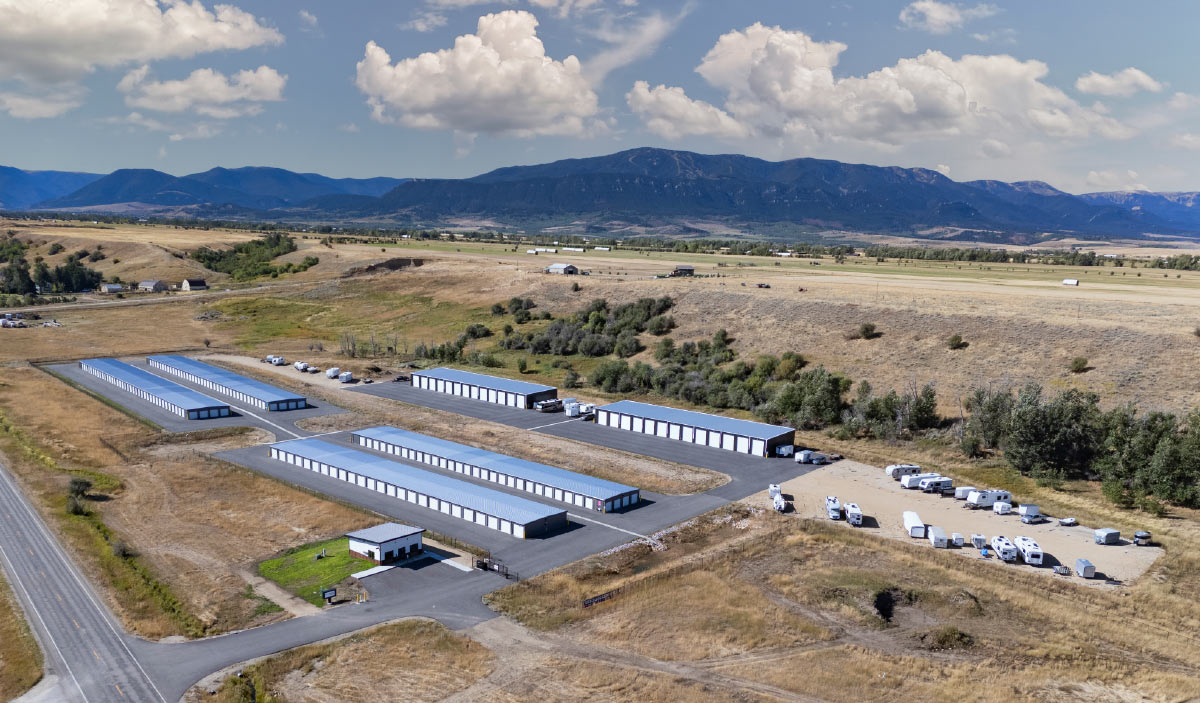

- Website Integration – Utilize drone images as headers or banners on your homepage, offering immediate visual impact. Include videos on prominent pages to enhance user engagement and time spent on your site.
- Google Business Profile – Regularly update your profile with fresh drone images and videos. This significantly boosts visibility and can increase organic search rankings.
- Social Media – Drone footage makes ideal content for platforms like Instagram, Facebook, and YouTube. Short, engaging clips showcasing various amenities or events can significantly boost your facility’s online presence and engagement.
- Grassroots Marketing – Incorporate drone images or short videos in your signage or direct mail campaigns to existing and potential customers, emphasizing security features, facility upgrades, or special promotions.
Another consideration is investing in professional photography at key milestones, such as opening a new facility, showcasing major renovations or periodically refreshing your online presence. Many capital expenditures are undertaken to increase the value of the property or improve the customer experience. In this way, professional drone footage can provide a substantial return on investment by significantly enhancing your facility’s perceived value. This also helps justify rental increases as the facility improvements are shown to your tenants.
Take advantage of the power of aerial imagery and ensure your facility stands out from the crowd, making a lasting and compelling impression in today’s digital marketplace.


ncertainty regarding the direction and magnitude of investment returns is causing a flight to quality with a direct route to self-storage. Uncertainty in macro-economic conditions generally causes a loss of confidence in investments. As a result, caution has led to an increase in self-storage investment rates in the First Quarter 2025 Investor Survey. For example, the survey results show an increase of 7 basis points or an overall cap rate average of 5.73 percent, indicating a change in direction after several quarters of declines. Market participants expressed confidence in the self-storage sector, given the long history of stable performance.
The self-storage team at Newmark Valuation & Advisory surveyed over 50 market participants about a wide variety of data points, including the usual cap rate, terminal cap rate, and yield rates. Key performance indicators are shown in the Segmentation by Investment Quality 1Q 2025 table.
See Segmentation by Investment Quality 1Q 2025.
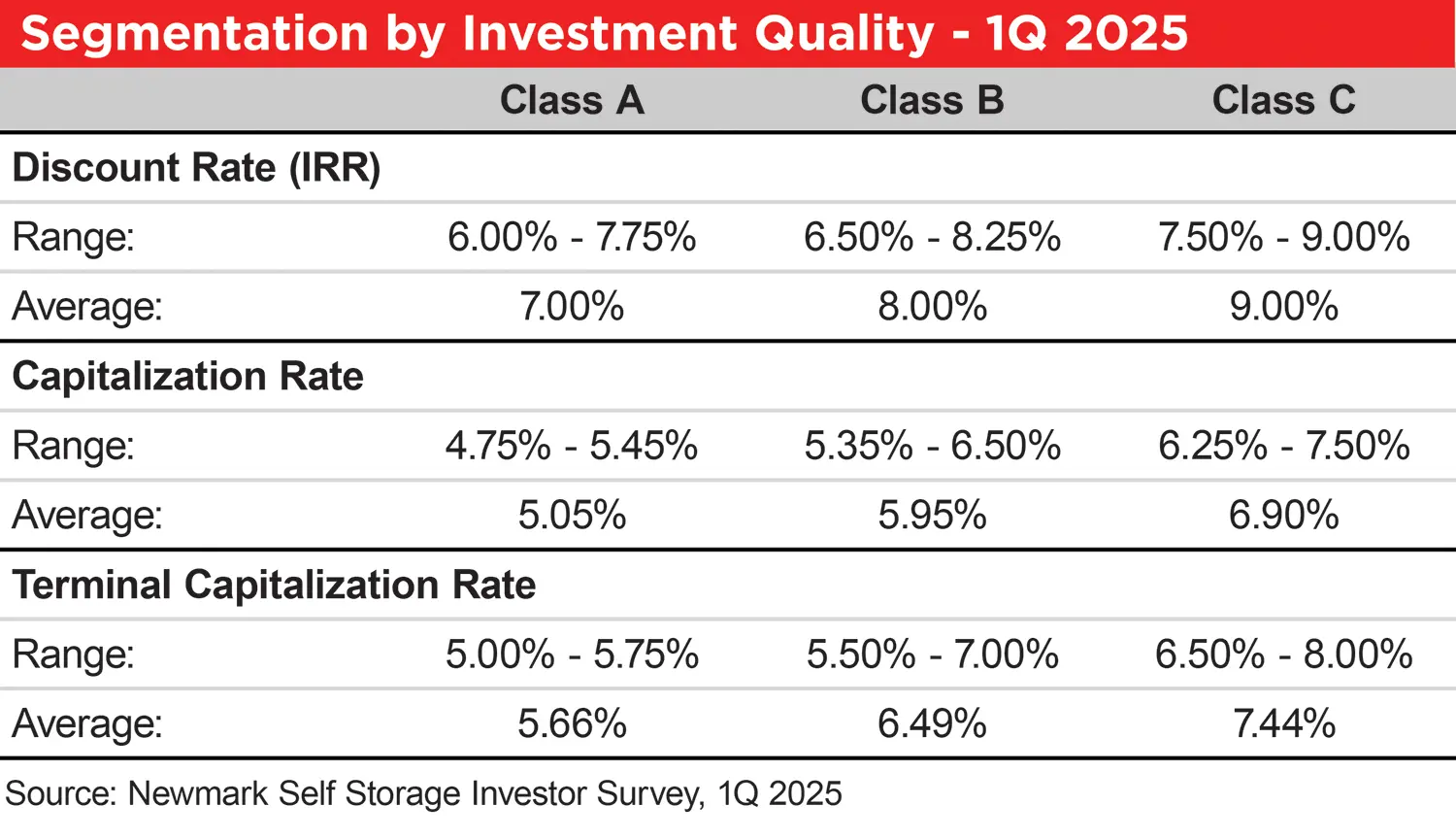
Among other short-term investment concerns, the 10-Year Treasury dipped below 4 percent, a leading indicator of recession. At the same time, inflationary concerns remain. Some investors noted that even if a period of stagflation is reached (recession with inflation), self-storage is recession resistant and existing customer rate increases are a hedge against inflation.
With dynamic change in macro-economic conditions, there is uncertainty regarding the future leading to low confidence in investment markets in general. Self-storage continues to be viewed as a safe and stable investment but with slightly elevated return expectations.




Owner Brickhouse Self-Storage Georgia

Multi-property Owner Mississippi




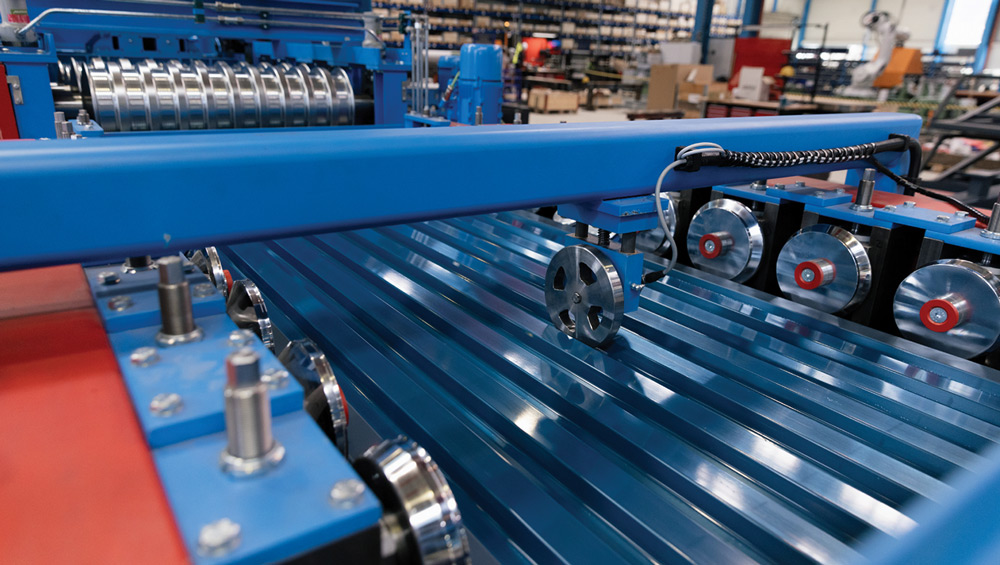
ounded in 2016 and developed by Kerry Hayes in Southport, Australia, Tractive Motion Technologies is poised to change the way self-storage doors are designed and produced. Using a patented, turnkey automated/robotic production line, Tractive produces custom-built self-storage doors and accessories in a fraction of the time it would take on a general assembly line–and with more flexibility.
Initially, Hayes developed the machinery for the garage door industry. That scope broadened when Japan-based Bunka, one of his biggest clients and one of the largest door manufacturers in the world, approached him with a challenge: Create an unmanned production line for self-storage doors. “Can you do it?” asked the client.

Bunka helped fund Hayes through the prototype, and it wasn’t long before it was in full production, even winning a Japanese robotics innovation award. Today, Hayes is already in discussions with some prominent self-storage door suppliers. “We’re the first in the world to have automated this particular process of door making,” he says, noting that while there are some companies claiming they’re already doing it, they’re only using partial automation. “Ours is much more complex, and we are ready to disrupt the market.”
With other processes, Hayes explains that it would take 80 to 150 man minutes to produce one door; with Tractive, it takes just two minutes. “If you put in one of these machines and your competition does not, they don’t stand a chance. Tractive can mass produce very rapidly.”
Hayes holds up his hand to make one more point very clear: Tractive is also designed to provide suppliers with more flexibility in order to serve their clients better. “If you have Tractive and a client walks in with a damaged door that needs to be replaced ASAP, the machine can interrupt production for 1.5 minutes, make that door regardless of color and size, pack it, wrap it, and have it ready to go before the client has driven to the back of the shop to pick it up.”
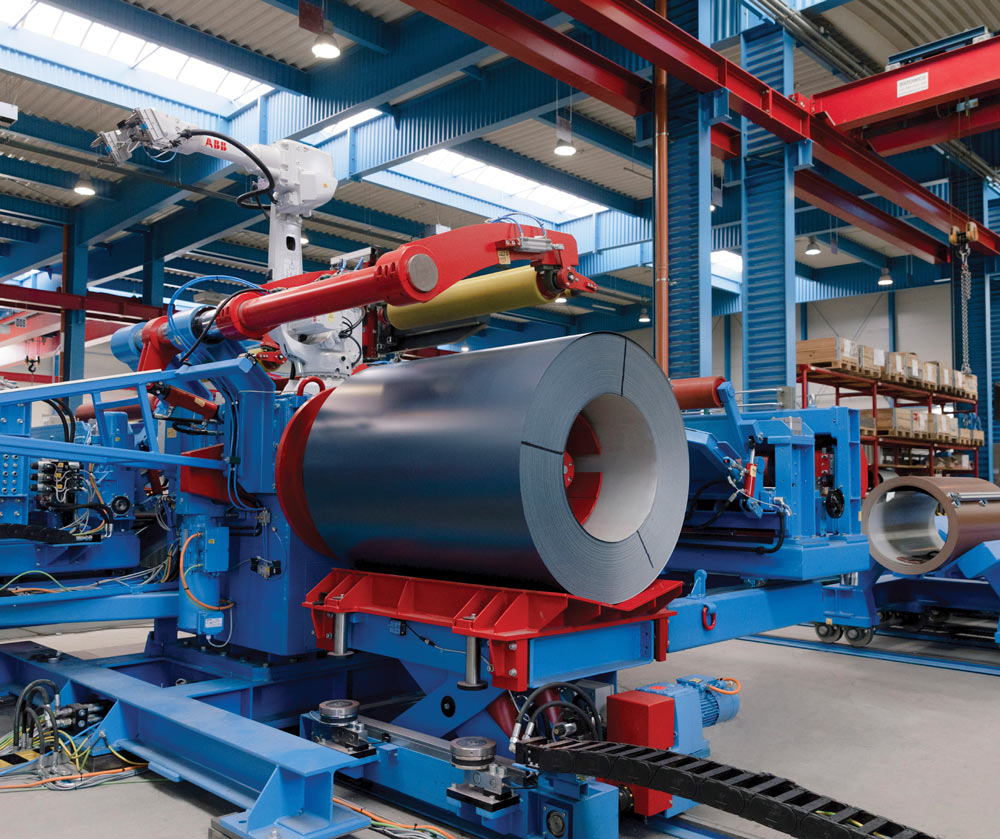

More innovations are on the horizon, and one that will be released by the end of 2025 is already inside storage doors: springs. “They’re a big cost, they’re dirty, and they’re a pain in the ass,” says Hayes with a laugh. “Wait until you see what we do with them.”
Tractive-drive door openers
In-line rapid imaging and coating:
- Roller doors (3.9” – 19.6”)
- Sectional doors (3.9” – 26”)
- Insulated doors/slat doors


Call: 877-350-4104
Email: Results@StoragePRO.com
StoragePROmanagement.com


he 2025 legislative sessions have already finished in a few states, but most remain in full swing. As background, the SSA typically seeks several core changes to Self Service Storage Facility Acts in states that have not previously adopted them. Overall, these amendments aim to reduce costs, streamline operations, and limit liability for the operator as outlined below.
- Idaho – A bill to eliminate the newspaper advertising mandate entirely will take effect on July 1, 2025. Once effective, Idaho storage operators will no longer have an affirmative legal obligation to advertise by any means; however, we do recommend that owners continue to advertise most units online to drive traffic to the sale.
- Maryland – Two bills are still working their way through the process, but we anticipate that both will be signed into law as the legislation is a compromise with the Office of the Maryland Attorney General Consumer Protection Division. Starting July 1, 2025, all Maryland operators should be prepared to notify the occupant at least 10 days before the sale of the time, place, and terms of the sale. That notice must be delivered by hand delivery, verified mail, or email. If the owner sends notice by email and does not receive a response or confirmation of delivery at least five days before the sale, the owner must send a second notice of sale by verified mail.
- Tennessee – The legislation provides a process for handling non-monetary defaults, such as a tenant living in the unit, and ensures the enforceability of unsigned rental agreements. These changes will take effect on July 1, 2025.
- Other Legislation – Numerous other bills that would benefit storage operators remain pending in 19 states. Stay tuned for further developments.
- Montana considered a bill that would have required storage owners to mitigate their damages if the occupant vacated the unit before the end of the lease term. It did not pass.
- Virginia considered legislation that would have imposed taxes on self-storage rentals. While it did not pass this session, we anticipate that a similar bill will likely be considered in an upcoming session.
Several bills remain under consideration that would negatively impact self-storage operations. Most significant are measures in California and Connecticut to limit rent increases for tenants.
- Like Virginia, Washington is currently considering a tax on self-storage rentals.
- New Jersey is considering bills that would significantly impair an owner’s right to deny unit access following a catastrophic event and that would prohibit owners from charging certain fees to some low-income consumers.
- Additionally, several bills that would negatively impact the lien enforcement process are under consideration in New York.
The SSA and state associations are engaging on all these harmful bills.
SSA members can review the status of all the legislative initiatives for 2025 on the SSA’s website. Also, we cover these topics in more depth in the Self Storage Legal Review, which is published six times per year.
We will release our annual legislative memo later this year, in which we will outline the key changes that make it over the finish line. In the interim, please do not hesitate to reach out with any questions at dbryant@selfstorage.org.

or decades, self-storage customers, investors, and operators relied on simple, traditional information to make decisions.
But in the last three years, that simplicity has vanished, replaced by a high-stakes game where pricing is no longer based on fundamentals but on short-term tactics and game theory.
Some operators treat walk-in prices as short-term promotions, while others hold steady for years. Meanwhile, the rise of ECRIs (existing customer rate increases) has created confusion at every level.
- Customers sign up at one price, only to be hit with unexpected hikes.
- Investors misjudge market rent potential, assuming prices are lower than reality.
- Operators react by slashing rates, creating a negative feedback loop and a race to the bottom.
The industry wasn’t always like this. In the past, self-storage pricing was straightforward and predictable.
Customers could shop rates with confidence.
Investors could underwrite deals with useful market data.
Operators could set pricing based on true competitive insights.
That transparency eroded as digital pricing strategies and aggressive revenue management models took hold.
Now, bad data drives bad decisions, and the entire industry feels the effects. Customers feel misled, investors miscalculate market potential, and operators fall into a cycle of price wars.
There is a tremendous opportunity to shift the landscape in storage to drive better decision-making. To get there, the industry must lead with integrity, ensuring clarity over confusion.
Transparent data enables investors to develop markets that need more supply without overwhelming already-balanced markets. This will ease market penetration volatility and reduce reliance on aggressive ECRIs.
With better visibility comes certainty, smarter decisions, and better outcomes for customers, investors, and operators alike.
It’s time for self-storage to embrace data clarity over data manipulation and obfuscation.
The time for change is now. The industry can’t afford to keep flying blind.

matters most
Our brands


