


o gain a precise understanding of the self-storage construction market, our Contractor Survey gathers insights directly from the source: general contractors who specialize in this unique asset class. This data-driven approach allows us to look past high-level trends and capture the nuanced, on-the-ground shifts in sentiment and costs. By focusing on this expert group, we can detect the subtle but significant progressions that define the industry’s outlook.
2025 began with the industry focused on external pressures, primarily the potential for rising steel prices and tariffs to drive up costs. By the third quarter, however, those anxieties had largely subsided. The real story became the market itself, as we observed an increase in competition among subcontractors, who were bidding more aggressively for fewer projects.
It seems the GCs and subcontractors have realized that the projects stalled for the past two years are unlikely to move forward. Many of these projects were bad deals in the first place and were put to bed once and for all when interest rates spiked.
One indicator of the slowdown is that Janus, the 800-lb. gorilla of the door and hallway system manufacturers, just laid off over 100 people.
The cure for low prices is low prices. Headwinds shift to tailwinds, but in order to catch that breeze you need to be out of the dock with your sails raised and ready.
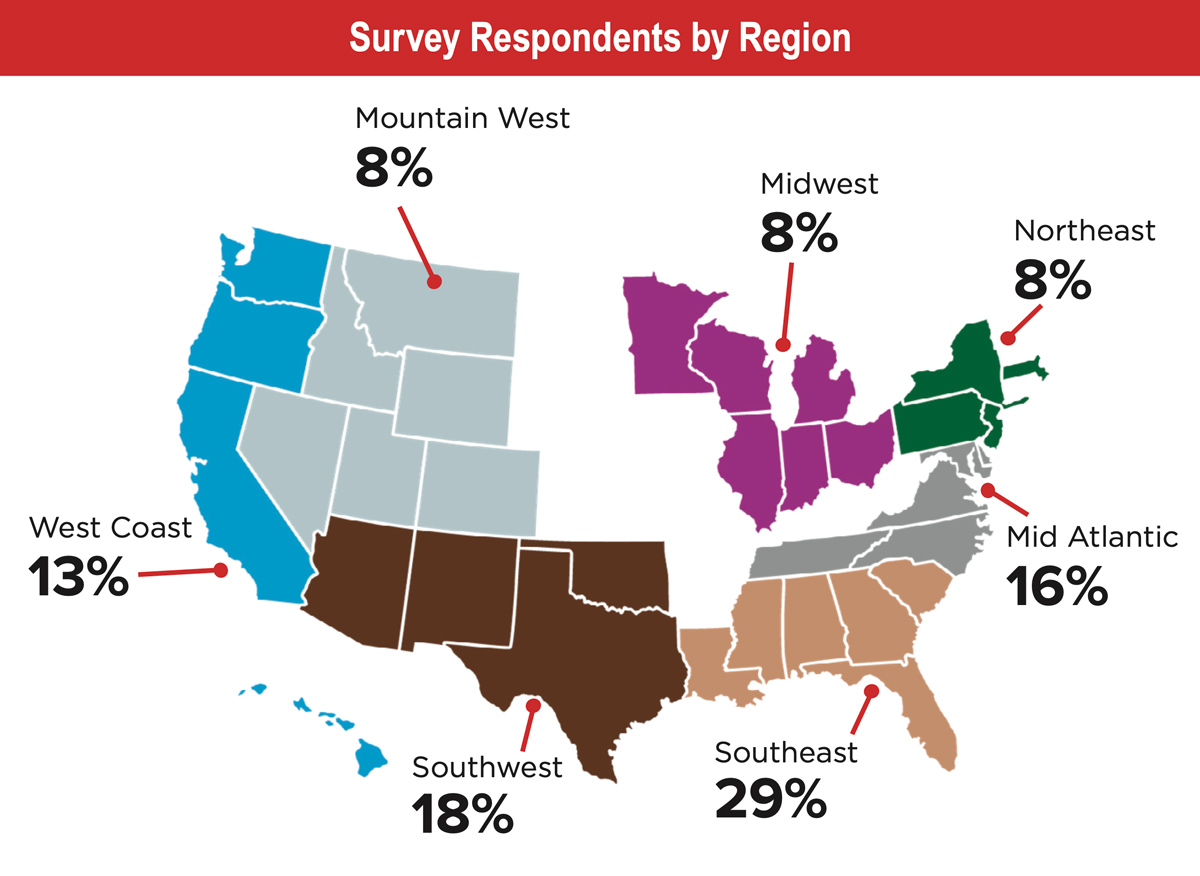
See the Survey Respondents by Region map.
See Tariffs Impact On Hard Construction Costs chart.

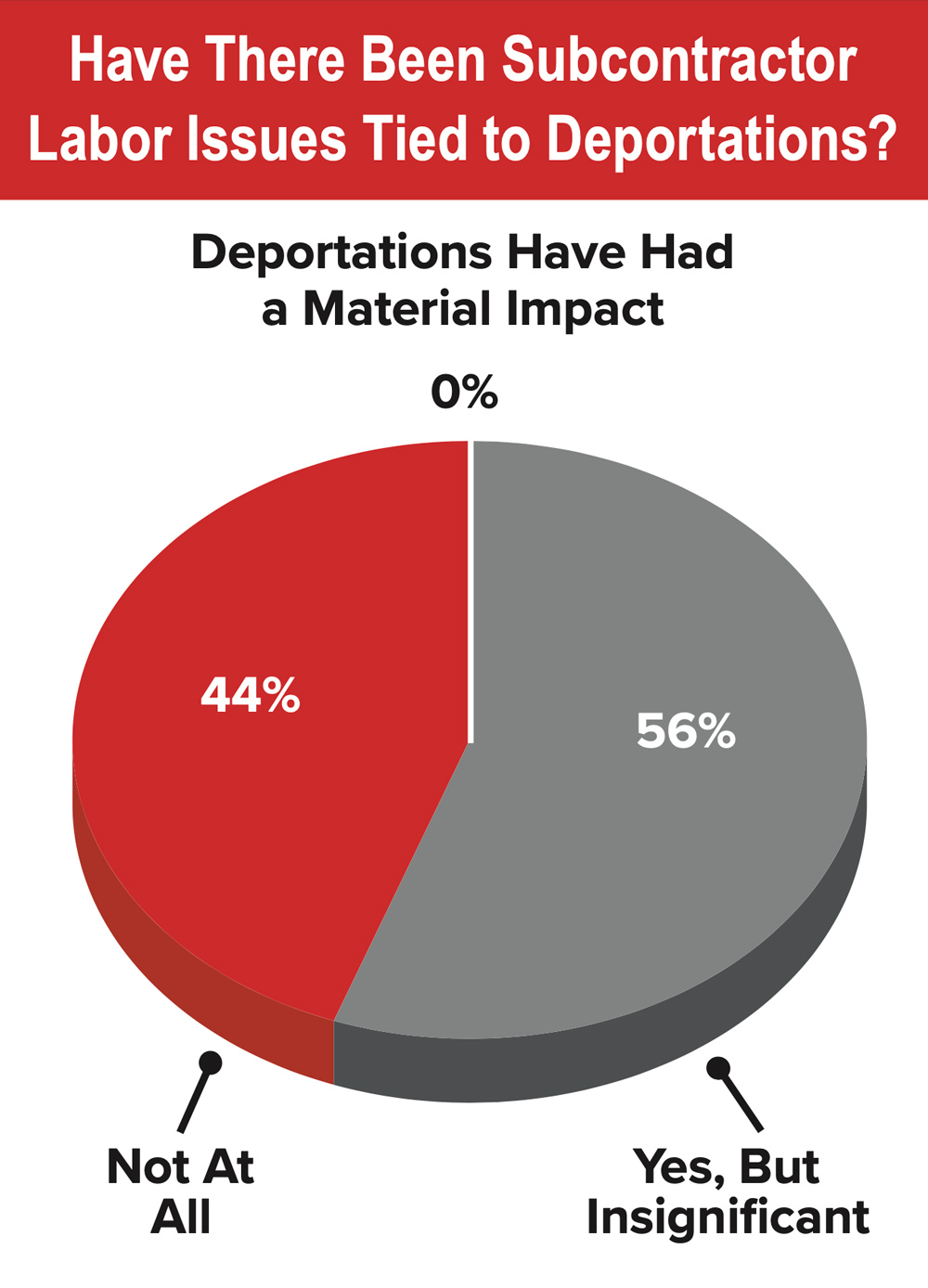
By Q3 2025, 22 percent noticed a material impact.
Today, while 44 percent still report no disruption at all, the share reporting some level of impact has more than doubled since Q3 2025.
See Subcontractor Labor Issues Tied To Deportations chart.
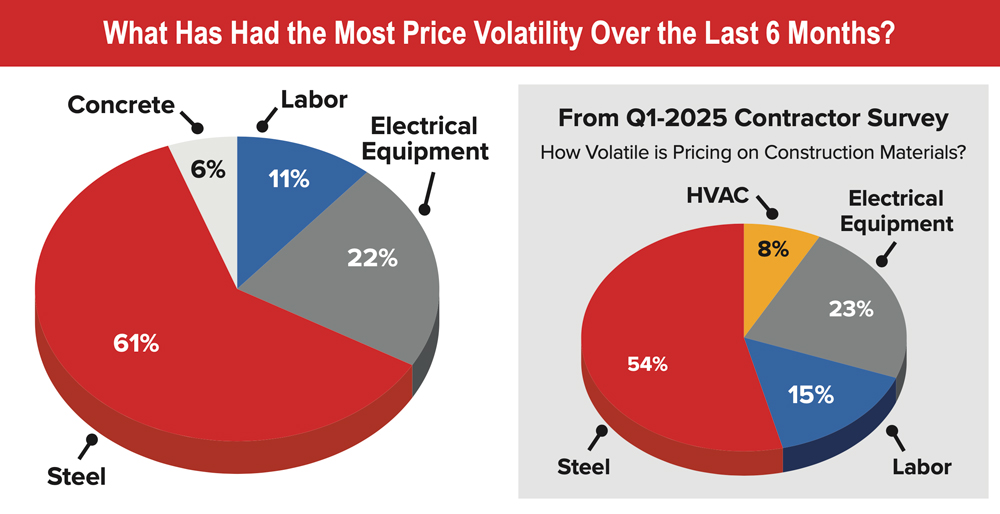
Since Q1 2025, concrete has replaced HVAC in the most volatile construction materials.
Labor and electrical equipment ranked similar to Q1 2025, with steel increasing its majority by 5 percent.
See Price Volatility charts.
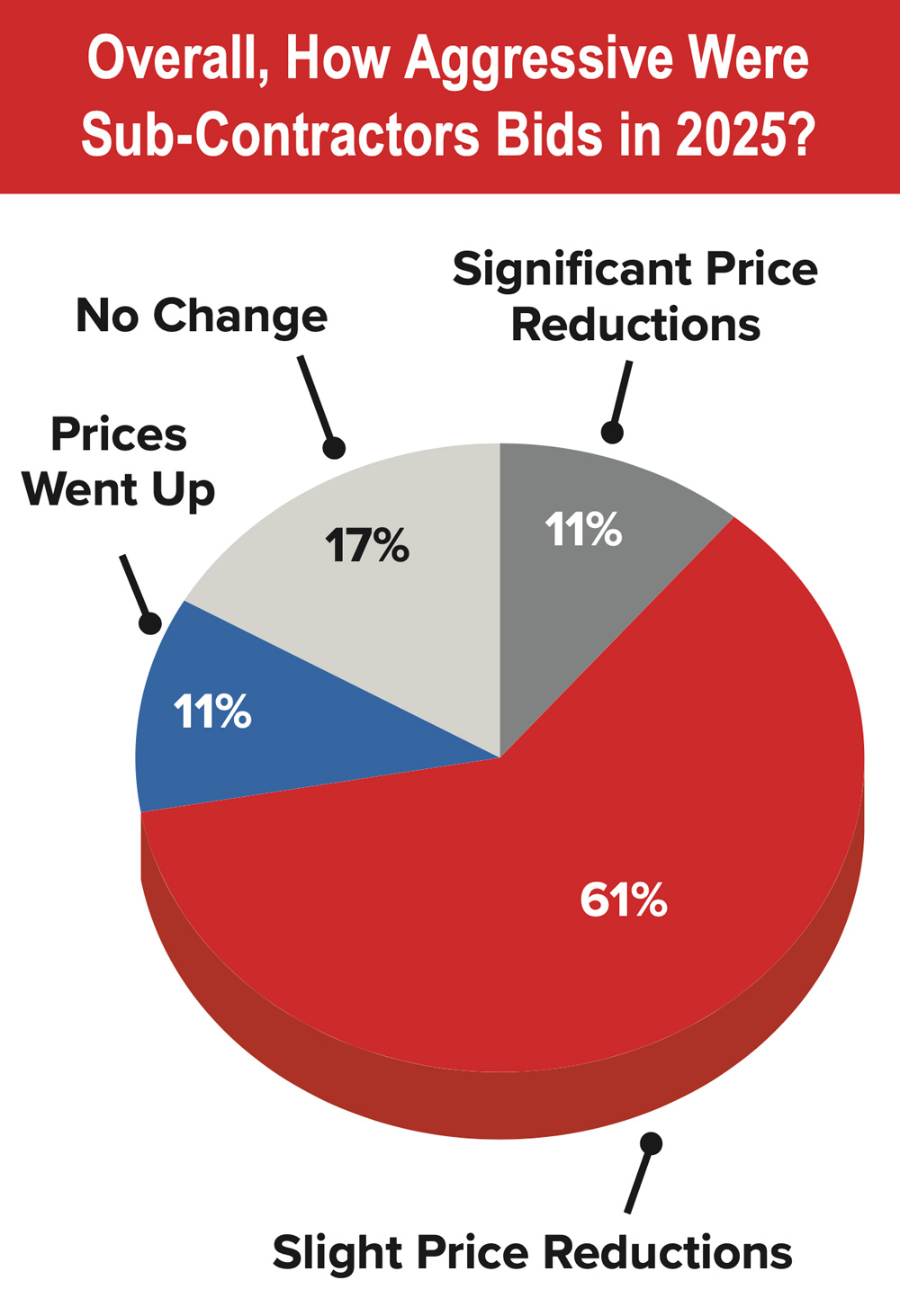
Today, more than 70 percent of contractors have reported that subcontractor prices continue to decline.
See Aggressiveness Of Sub-Contractor Bids chart.
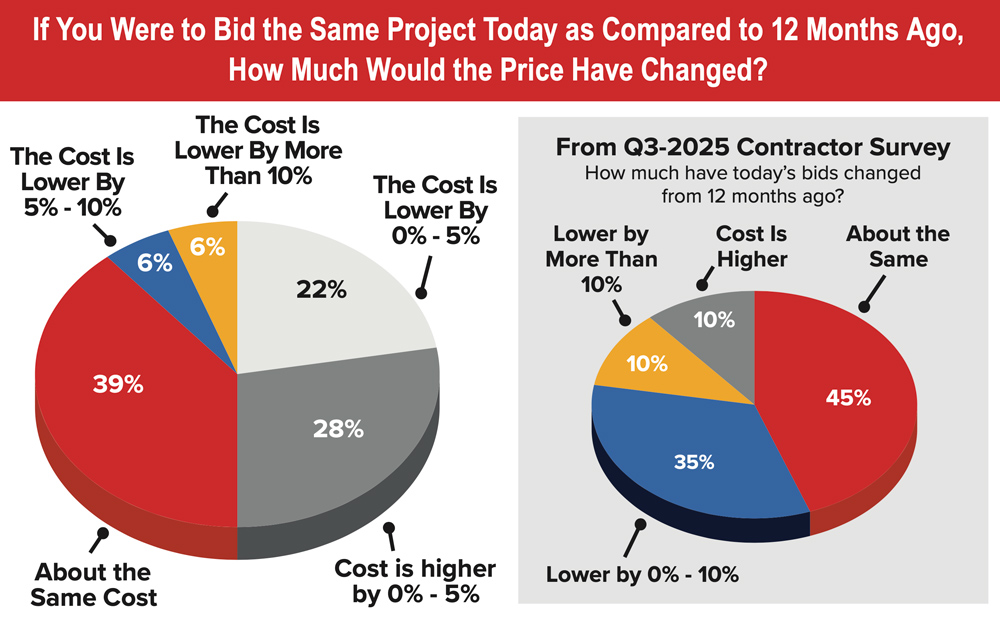
Today, 28 percent of contractors surveyed now say costs are higher than a year ago, roughly double the level seen in the prior survey.
See Year-Over-Year Pricing Change charts.
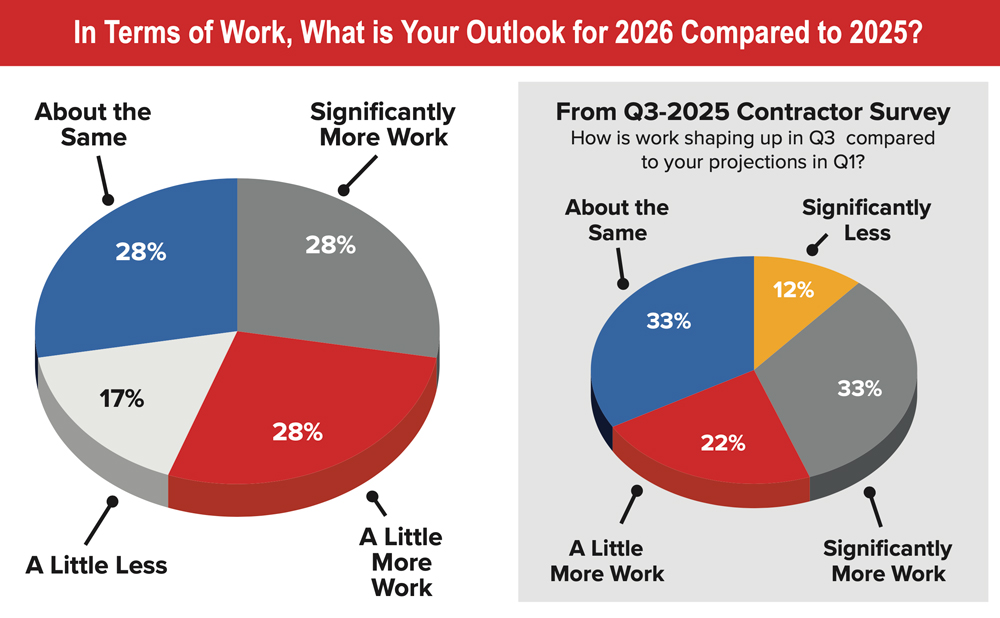
In Q3 2025, more than half of contractors reported more work.
Today, more than half of contractors surveyed expect more work in 2026.
At the same time, those expecting a little less work have increased by about 5 percent, suggesting conditions remain solid but not uniformly strong across all markets.
See Year-Over-Year Outlook and 2025 Projections charts.
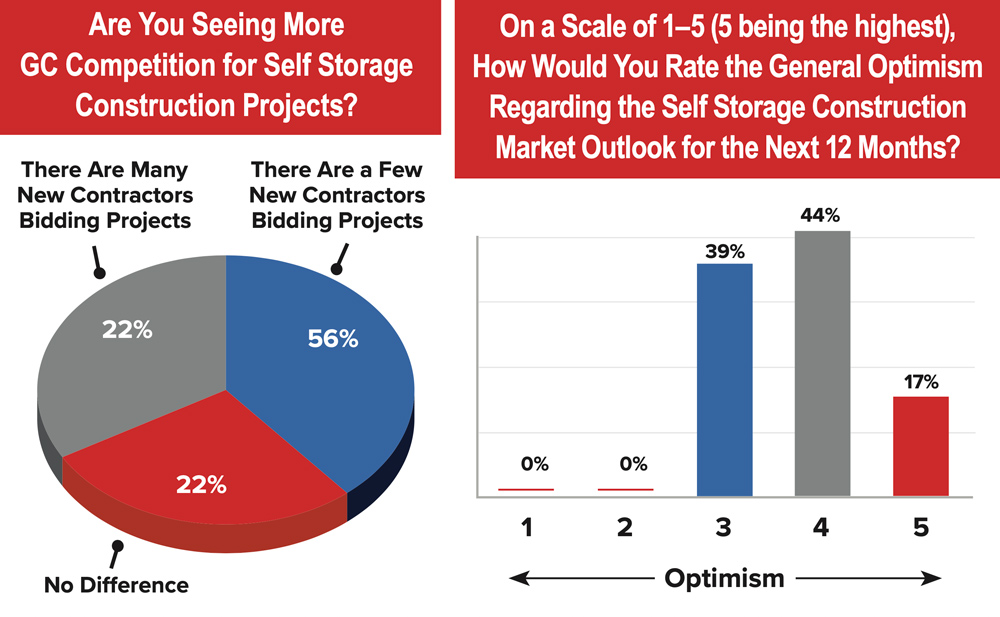
With the slowdown in construction on other assets classes like multifamily and industrial, contractors are looking toward self-storage for work, regardless of their experience in the sector.
Contractor sentiment remains solid, with 61 percent rating their outlook a four or five and no respondents expressing pessimism. This reinforces the outlook that self-storage construction demand should remain steady throughout the year.
See General Contractor Competition chart and Optimism For The Self-Storage Construction Market bar graph.
The information contained in this 2026 Contractor Survey – Winter (Survey) is provided for informational purposes only and is not comprehensive. The Survey is based on third-party CRE contractor responses to questions posed by DXD Capital (DXD). DXD makes no representations, warranties, or assurances, express or implied, regarding the accuracy, completeness, reliability, or suitability of the information provided in the Survey.
This Survey reflects the responding contractors’ perspectives, estimates, and expectations. It does not constitute DXD Capital’s opinions, commitments, recommendations, or assurances regarding future lending conditions, capital market dynamics, regulatory changes, or self-storage sector performance. Any reliance on the information in this Survey is at the sole risk of the recipient.
DXD expressly disclaims any liability for inaccuracies or incompleteness and for direct, indirect, or consequential losses arising from the use of or reliance on this Survey. The findings should not be construed as financial, legal, or professional advice. Recipients are encouraged to conduct their own due diligence and consult with qualified professionals for specific guidance with respect to any business or investment decisions.