



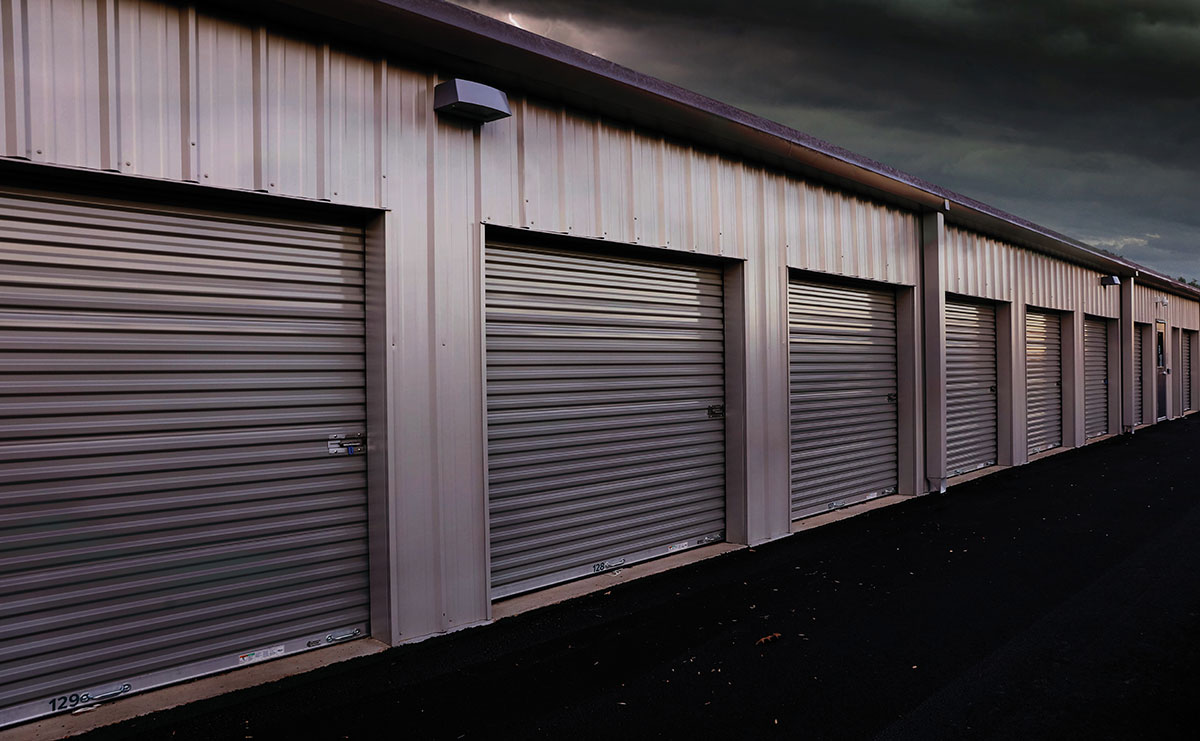
xtreme weather is no longer an occasional stress test for self-storage facilities, it is a recurring operational challenge. Inland hurricane-force winds, hailstorms, and flooding are affecting markets that historically faced little exposure to these risks. As weather patterns become more unpredictable, the ability of a facility to remain operational increasingly depends not just on how it was built but on how well it is maintained.
In many severe weather events, buildings do not fail catastrophically at once. Instead, damage often begins at vulnerable points along the building envelope, allowing wind, water, or debris to enter and amplify the impact. For self-storage operators, roofs and roll-up doors are among the most critical and most exposed components. When one element fails, multiple units can be affected, increasing tenant disruption and recovery costs.
Things to look for include:
- Fastener wear – All metal roof fasteners experience wearing over time, but those facing the elements on a daily basis, as is the case in exposed fastener systems, are especially prone to degradation. Look for wear on washers as well as the screws and replace them before they fail.
- Scratches or wear on paint or coatings – Paints, primers, and coatings, like zinc or aluminum, can help protect the metal underneath and extend its life, but scratches or excessive wearing of those protective coatings can leave the metal underneath vulnerable. Specific scratches can be covered with touch-up paint, and if a significant portion of the roof is showing wear, a full roof coating can be applied to extend the roof’s life.
- Areas of exposure – Look for penetration or gaps in coverage in areas where panels connect or accessory products have been added, like valleys, ridges, edges, around ventilation or skylights, etc. Additional cements, sealants, butyl tape, or closures may be needed to close these penetrations.
Beyond visible components, structural connections deserve close attention. Severe weather damage is frequently traced to failures in fasteners, brackets, and other connecting hardware rather than primary structural members. Corrosion, metal fatigue, or minor loosening can reduce a component’s ability to transfer loads safely into the structure. This is particularly important in regions with high humidity or salt exposure, where corrosion can accelerate deterioration. Routine monitoring of these small but critical parts can significantly reduce the likelihood of unwanted damage.
Here are things to look for during maintenance and inspections:
- Damage to door curtain – Look for individual slats or the seam between slats with creasing. This can be the result of a tenant hitting the door with a vehicle, dolly, or forklift and could impact the long-term performance of the door. Many manufacturers offer replacement door options to consider.
- Rust or corrosion around bottom bar – The bottom bar is an important defense against wind and driving rain, but some non-aluminum versions can be susceptible to issues when water pools at the base of the door or there is significant exposure to humidity, rain, or snow. Look for surface rust (orange or brown discoloration), flaking metal, soft spots, or thinning metal. Replace bottom bars or full door assembly as needed.
- Bent or damaged guides – Look for gaps between curtain edges and the guide, scrape marks, or tracks that are visibly bowed, pinched, or twisted. In high-wind areas, make sure to inspect extra clips for integrity. These issues could lead to premature wear of the curtain or hardware, increase strain on springs, or even result in the door jumping the track. Replace components or full door assembly as needed.
- Worn fasteners – Look for loose bolts or screws, missing hardware, stripped threads, rusty or corroded fasteners, and any wall anchors that are pulling out of masonry or metal walls. Repair or replace components as needed before extreme weather strikes.
As insurers and regulators respond to rising weather-related losses, operators may face increased scrutiny of facility conditions and preparedness. Maintenance records, inspection schedules, and documented repairs are becoming more than operational best practices—they are part of broader risk management strategies.
Ultimately, extreme weather resilience is not achieved through a single upgrade or product choice. It is built through consistent attention to detail, informed inspection practices, and an understanding of how individual components interact under stress. For self-storage operators, maintenance is not just about extending asset life. It is about protecting tenants, preserving operations, and ensuring that facilities remain dependable when conditions are at their worst.