









How to enjoy our new magazine:
Just scroll!
Click or tap the table of contents icon in the menu bar to find any article.
Read any article by clicking or tapping the read full article button below each article intro.
Jump back to your previous browsing spot from any article using the menu bar or back to issue button.





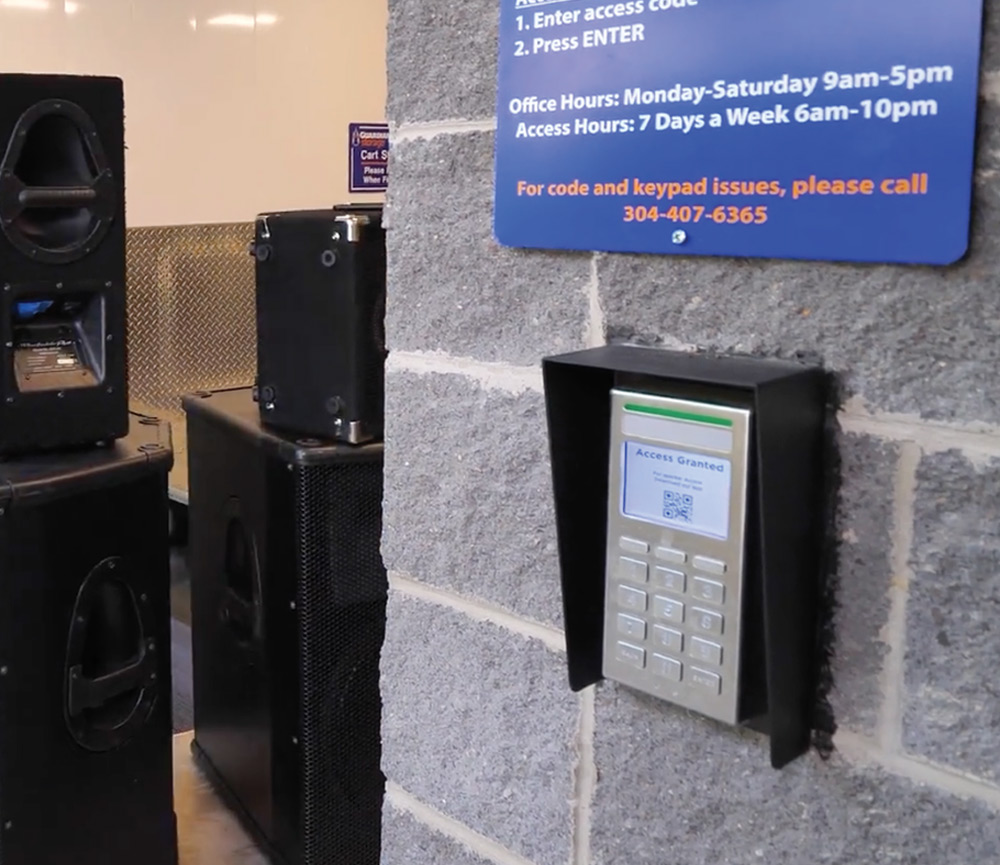
+ Janus Doors
– Gina Cruz, Property Manager, Guardian Storage.


-
Storelocal Storage in Surprise, Ariz.Page 48
-
Trojan Storage in Englewood, N.J.Page 56
-
CubeSmart in Nashville, Tenn.Page 64
-
Fletcher Storage in Redding, Conn.Page 72
-
Woodbridge Self Storage in Vaughan, Ont.Page 84
-
Twelve Drama-Free Ideas for Holding People AccountablePage 12
-
Extra Space Storage Team Feeds Kids In UtahPage 16
-
Proven Marketing Strategies For A Packed PlanetPage 20
-
Page 34
-
Uncovering Occupancy DataPage 36

-
The Process Of Securing Competitive Construction QuotesPage 92
-
Public Storage in Palm Valley, Ariz.Page 100
-
The Effects Of Declining Interest RatesPage 104
-
Five Ways To Protect Your Bottom Line In The Age Of AIPage 108
- Chief Executive Opinion by Travis Morrow6
- Publisher’s Letter by Poppy Behrens9
- Meet The Team10
- Women In Self-Storage: Ilyssa Caretsky by Brad Hadfield25
- Who’s Who In Self-Storage: Dr. Ahmet Kuyumcu by Brad Hadfield29
- Innovation Spotlight: iPostal1 by Brad Hadfield110
- Self Storage Association Update113
- The Last Word: Scott I. Zucker, Esq.114
For the latest industry news, visit our comprehensive website, ModernStorageMedia.com.



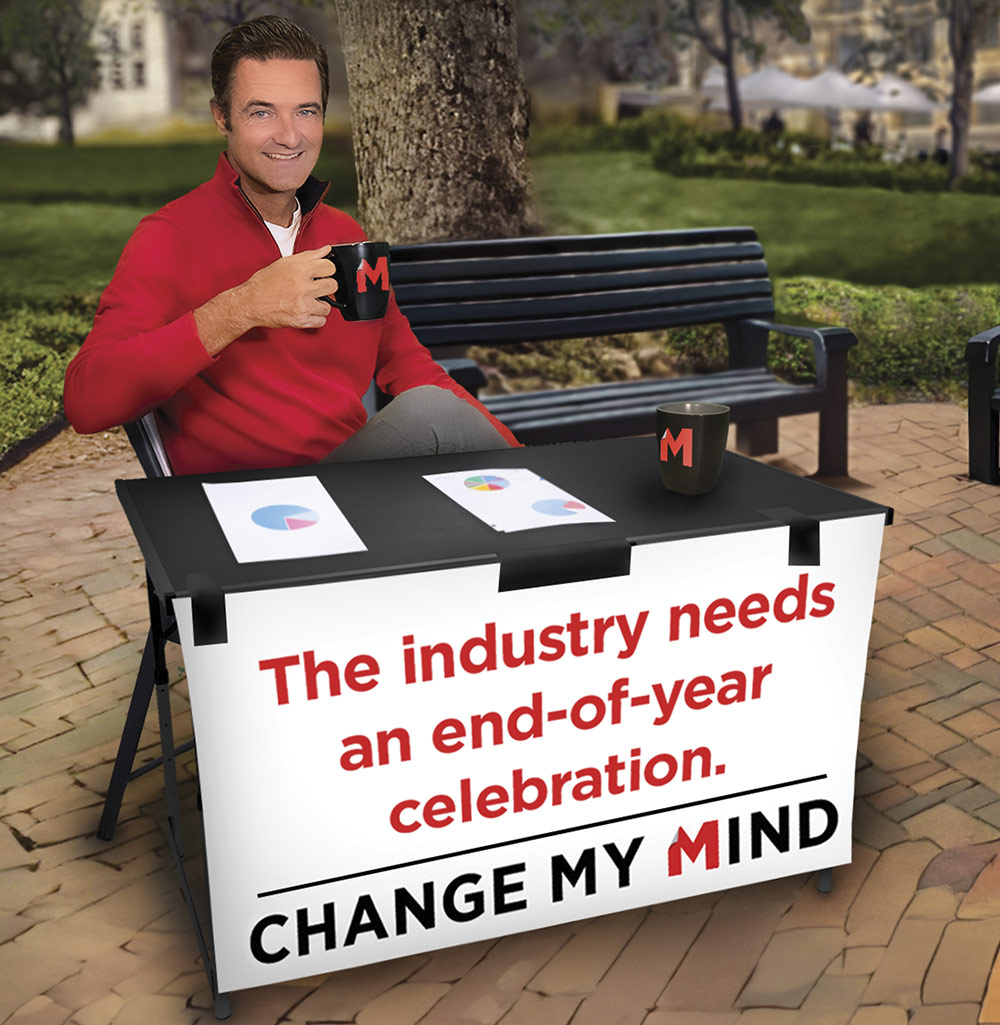
hink about it: a black-tie (optional), red-carpet gala celebrating the self-storage industry. MSM is going to give it to you! Starting next year, the winners of the Facility of the Year awards and more will be announced live at our version of the Oscars at THE Show in Atlanta. Register today to be there and get your 2026 submissions in early!

He’s also the president of National Self Storage.

-
PUBLISHER
Poppy Behrens
-
Creative Director
Jim Nissen
-
Director Of Sales & Marketing
Lauri Longstrom-Henderson
(800) 824-6864 -
Circulation & Marketing Coordinator
Carlos “Los” Padilla
(800) 352-4636 -
Editor
Erica Shatzer
-
Lead Writer / Web Manager
Brad Hadfield
-
Storelocal® Media Corporation
Travis M. Morrow, CEO
-
Website
-
Visit Messenger Online!
Visit our Self-Storage Resource Center online at
www.ModernStorageMedia.com
where you can research archived articles, sign up for a subscription, submit a change of address, and more. 
- All correspondence and inquiries should be addressed to:
MSM
PO Box 608
Wittmann, AZ 85361-9997
Phone: (800) 352-4636
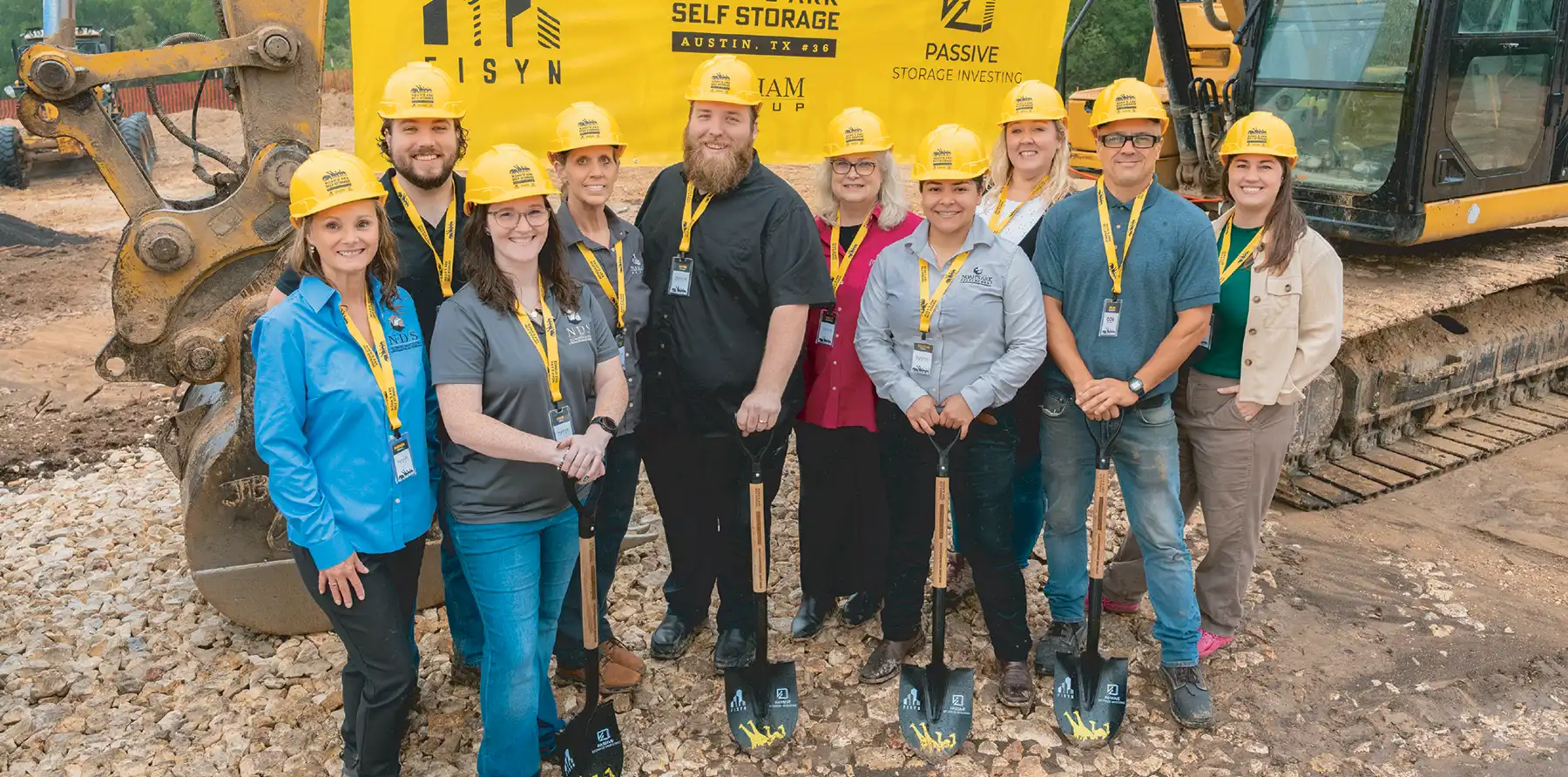

theparhamgroup.com

Welcome To THE Show!
ver the past 26 years, I’ve attended a significant number of industry conferences and trade shows—state, national, and everything in between. After walking countless aisles and sitting through just as many sessions, one thing has become clear: While the topics and speakers change, the format rarely does.
So, we decided it was time for something different.
Imagine a national conference unlike anything you’ve experienced—a truly modern self-storage event built for the next era of our industry.
Welcome to THE Show! Presented by Modern Storage Media (MSM) and sponsored by Janus International, this groundbreaking event takes place in Atlanta, Nov. 4 to 6, 2026, at the Georgia World Conference Center, with the stunning Signia by Hilton serving as our host hotel just steps away.
This reimagined conference features a fresh approach to the trade show floor, giving every booth prime visibility. We’ve redesigned networking with tech-driven lead generation, sponsor meeting zones, and optional data-sharing opportunities. Add in high-profile speakers, future-focused content, and The Acquisition Corner—where investors, buyers, and sellers can strike deals on the spot—and you have the ultimate who’s-who gathering of the self-storage world.
And when the day wraps up? Get ready. We’re kicking things off with an underwater welcome party at the Georgia Aquarium catered by Wolfgang Puck. Then join us for a glamorous red-carpet awards dinner celebrating the 2026 Facility of the Year and Manager of the Year winners.
As the only national East Coast conference in 2026, THE Show fills that year-end gap vendors often feel and positions you for strong momentum heading into 2027.
For event details, speaker announcements, agenda highlights, and vendor opportunities, visit msmtheshow.com.
You won’t want to miss the most modern event our industry has ever seen!

Publisher

Welcome To THE Show!
ver the past 26 years, I’ve attended a significant number of industry conferences and trade shows—state, national, and everything in between. After walking countless aisles and sitting through just as many sessions, one thing has become clear: While the topics and speakers change, the format rarely does.
So, we decided it was time for something different.
Imagine a national conference unlike anything you’ve experienced—a truly modern self-storage event built for the next era of our industry.
Welcome to THE Show! Presented by Modern Storage Media (MSM) and sponsored by Janus International, this groundbreaking event takes place in Atlanta, Nov. 4 to 6, 2026, at the Georgia World Conference Center, with the stunning Signia by Hilton serving as our host hotel just steps away.
This reimagined conference features a fresh approach to the trade show floor, giving every booth prime visibility. We’ve redesigned networking with tech-driven lead generation, sponsor meeting zones, and optional data-sharing opportunities. Add in high-profile speakers, future-focused content, and The Acquisition Corner—where investors, buyers, and sellers can strike deals on the spot—and you have the ultimate who’s-who gathering of the self-storage world.
And when the day wraps up? Get ready. We’re kicking things off with an underwater welcome party at the Georgia Aquarium catered by Wolfgang Puck. Then join us for a glamorous red-carpet awards dinner celebrating the 2026 Facility of the Year and Manager of the Year winners.
As the only national East Coast conference in 2026, THE Show fills that year-end gap vendors often feel and positions you for strong momentum heading into 2027.
For event details, speaker announcements, agenda highlights, and vendor opportunities, visit msmtheshow.com.
You won’t want to miss the most modern event our industry has ever seen!
Publisher

Now, our online edition has received a new look for the new year! The guide has been relocated to the MSM website for better security, easier access, improved features, and greater SEO for everyone.
You’ll love the dynamic new search function.
You’ll love the new features:
- A unique link to a dedicated company page
- Ability to include more content, images, video, and social
- Access to dynamic layouts and designs










- Faster Install
- Less Maintenance
- EnhancedComponents
- 32 Colors Industry-Matched Hues
- 40-Yr Warranty on Paint System
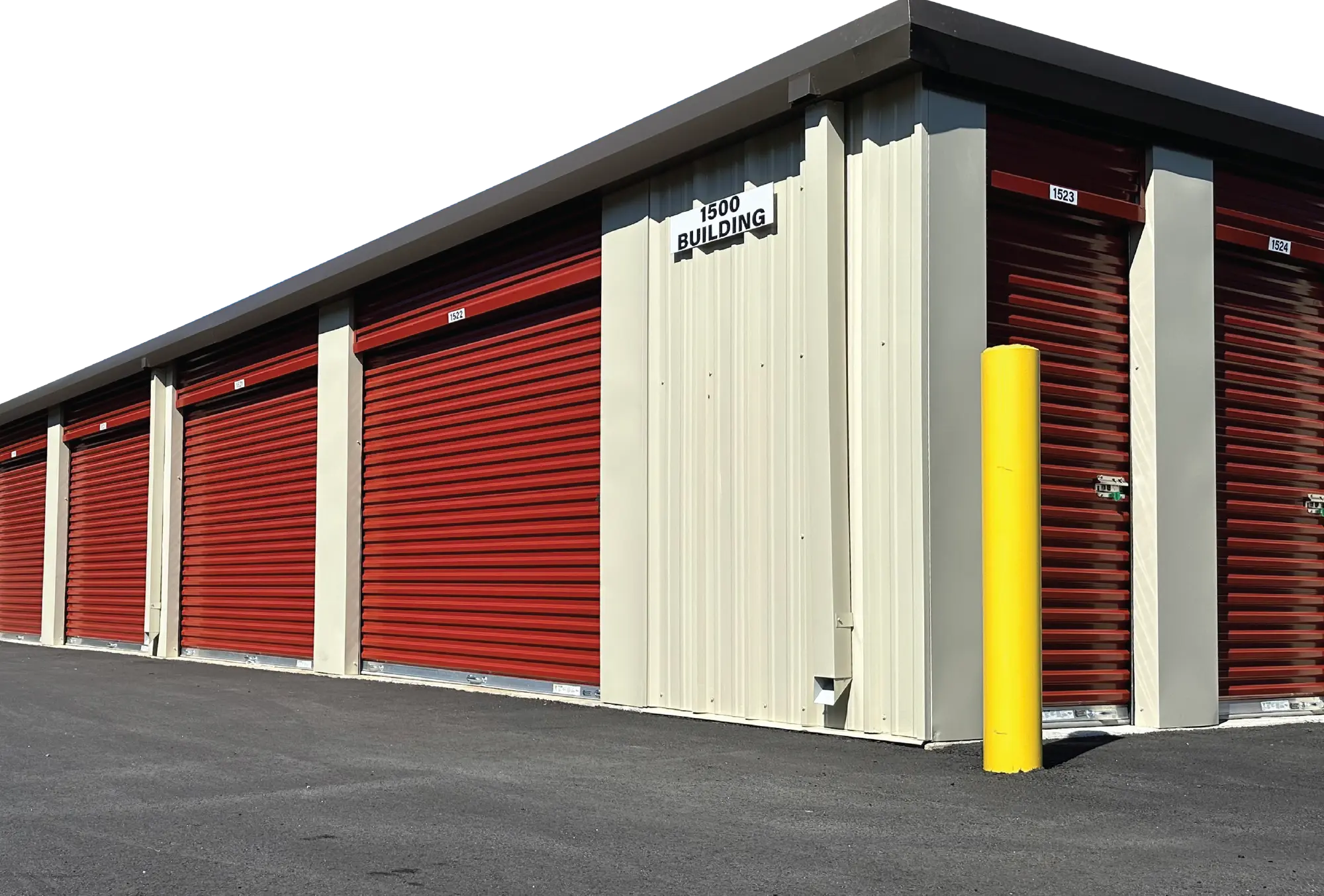

centralstatesco.com
Into Action
Holding People Accountable

ost of us have been there: a deadline whooshes by, a teammate consistently shows up late to meetings, or someone just isn’t pulling their weight. And what do we often do? We avoid the conversation, hoping the problem will magically resolve itself. Spoiler alert: It never does.
Dodging these accountability conversations doesn’t help anyone. In fact, it usually makes things worse. When we let issues slide, we’re essentially signaling that standards don’t matter. Before long, missed deadlines pile up, trust crumbles, and frustrations boil over. So how do we break this cycle? How do we muster the courage to address issues without being labeled the office hammer or hard-nose? This article’s a practical roadmap to hold others accountable with respect, clarity, and confidence.
Get Clear on What’s Bothering You
Check Yourself First
Be Direct and Respectful
Make It a Dialogue, Not a Monologue
- “Can you share what happened with the missed deadline?”
- “What challenges were you facing that I might not have been aware of?”
By asking questions, you create an opportunity for collaboration rather than confrontation.
Frame the Conversation Around Shared Objectives
Be Specific About Expectations
Reinforce Expectations
Acknowledge Improvements
Own Your Shortcomings
Make Accountability Routine
- Regularly check in with team members to discuss progress, challenges, and expectations.
- Use these check-ins to normalize feedback and course correction.
Celebrate Success
Get to the Root Cause
Start small. Address one unresolved issue this week. Be prepared, stay direct, and focus on solutions. By practicing accountability consistently and modeling it yourself, you can help build a workplace culture where trust and respect thrive.












Tomorrow
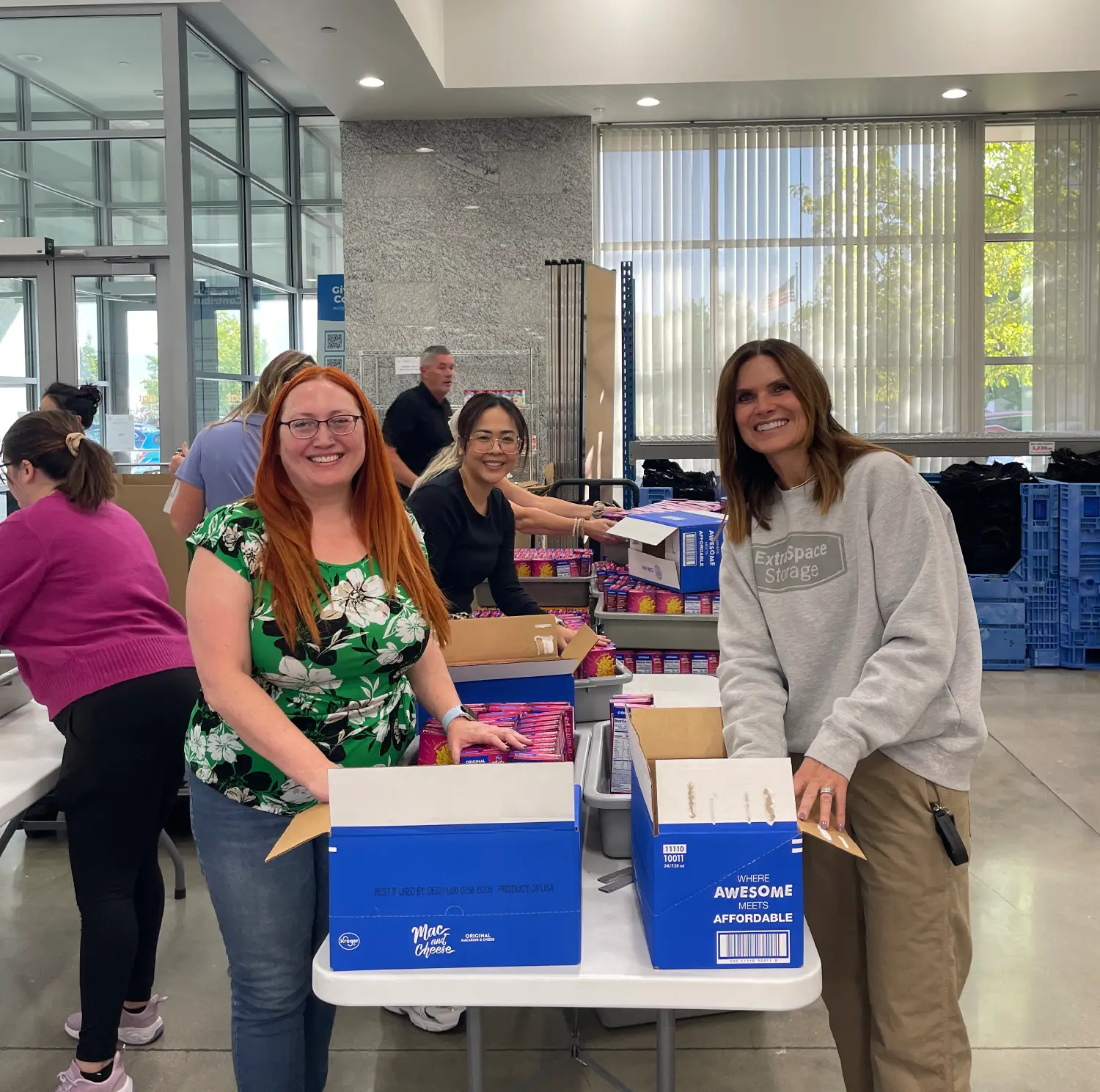
t Extra Space Storage, our mission to “help people to a better tomorrow” extends beyond simply providing a clean, secure place for our customers to store their belongings. We also have a commitment to create a positive impact within the communities we operate, including 43 states and Washington, D.C. As the person who oversees our various volunteer and community programs, I have the privilege of watching this commitment turn into action every day. My team has designed several programs intended to empower our team members to give back to their local communities, because we know the strength of our business is linked to the strength of our neighborhoods.
Throughout the volunteer shifts, team members spent time at the USANA Kids Eat warehouse packing weekend backpacks filled with non-perishable food items for students who typically rely on school meals during the week. When school meals are unavailable during the weekends, many kids are left at risk of going hungry. A single bag can make a huge difference, offering nourishment and comfort to a child on those critical days away from school. It was rewarding to know that our work will directly help ensure kids have enough to eat over the weekend.
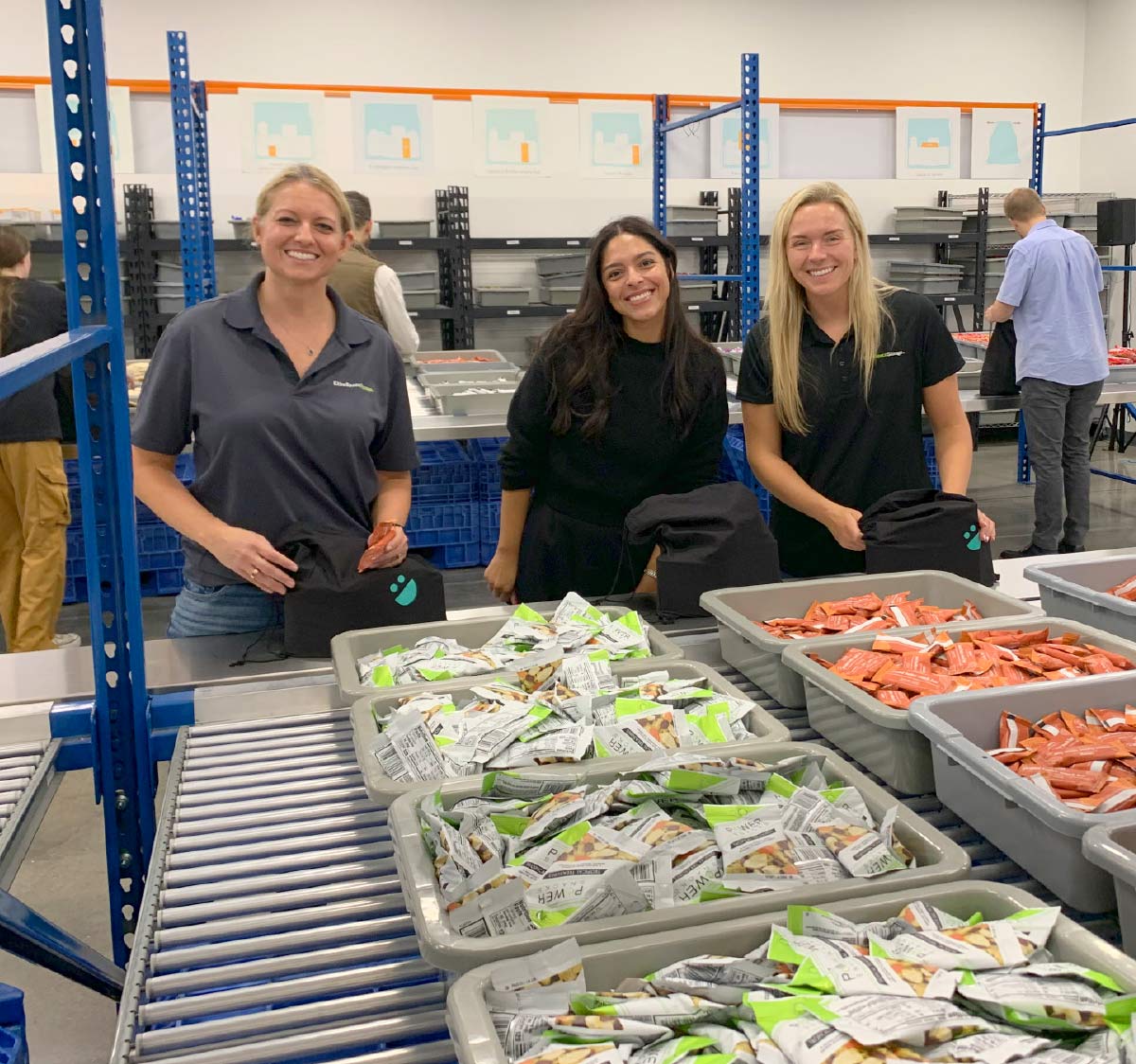
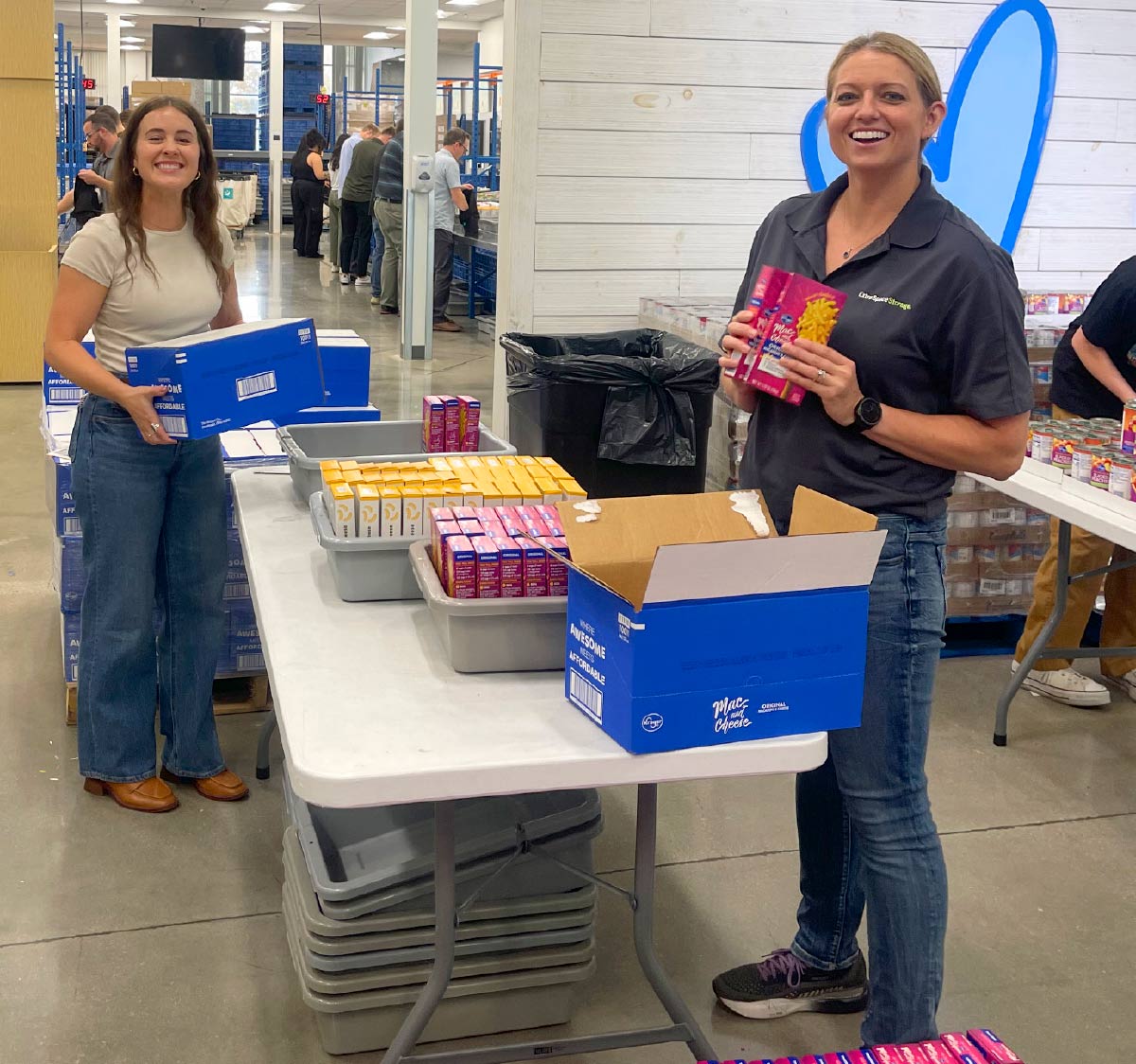
It was inspiring to see team members from various departments and roles come together to focus on a single goal. Here’s what a few of our employees had to say about their experience volunteering:
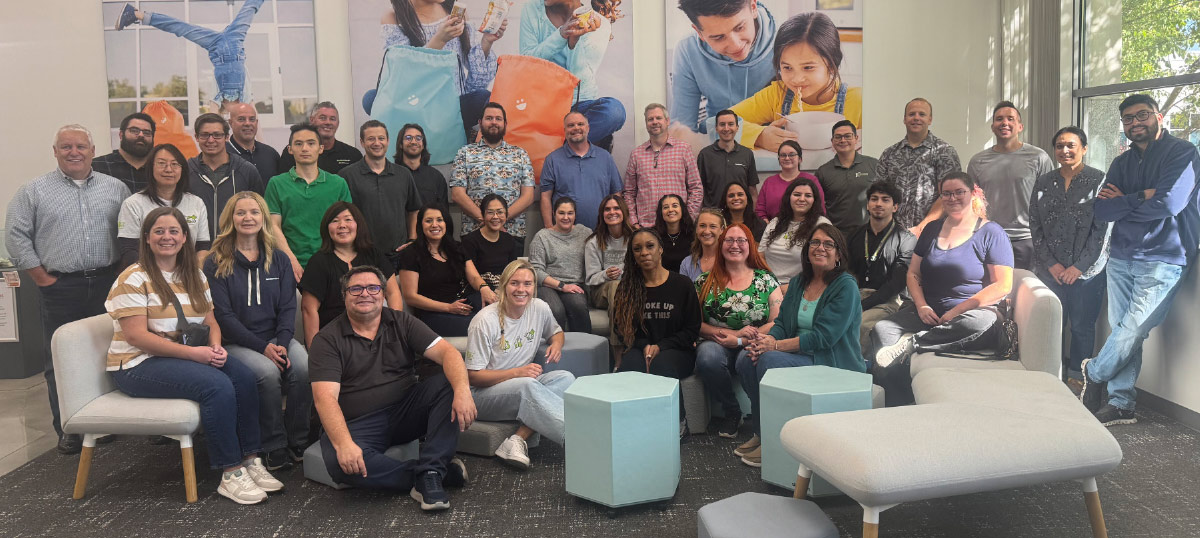
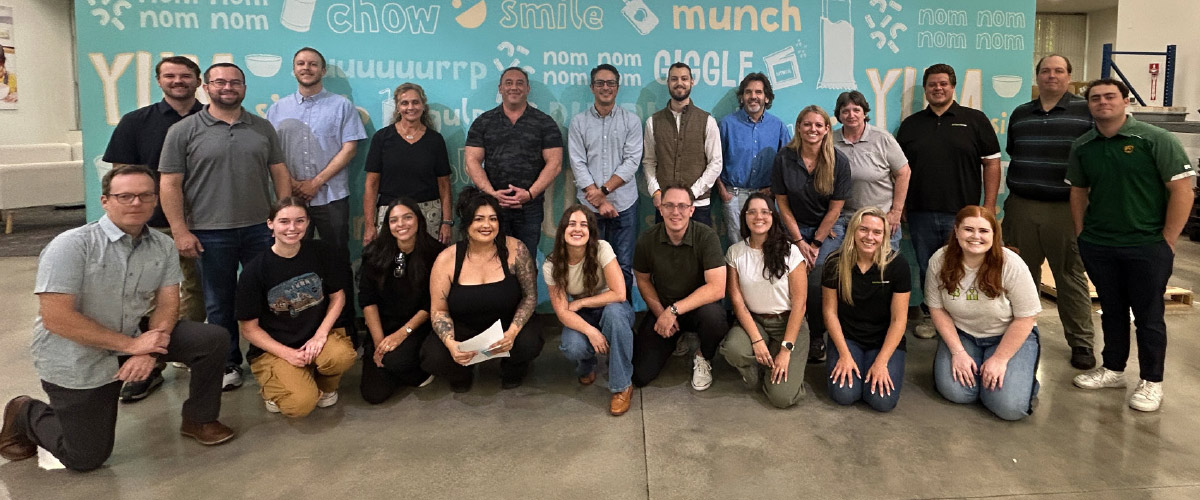

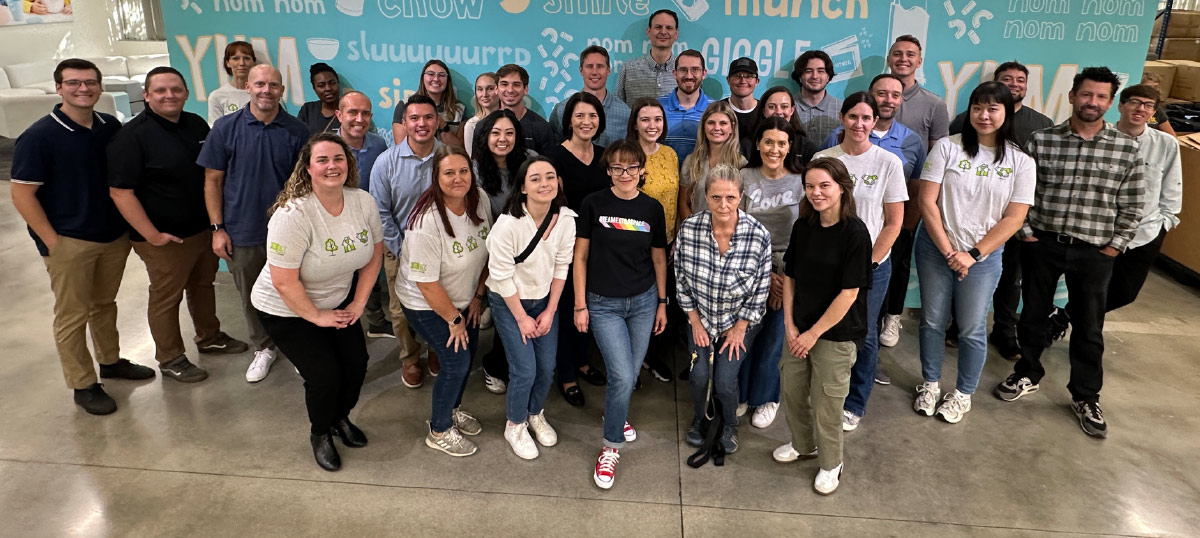
“This is my third year volunteering with USANA Kids Eat and the Extra Space team, and I always make it a priority to join. I love seeing the care and intention behind how they support kids and families, and it’s inspiring to see the impact on our local neighborhoods. Plus, it’s a fun way to spend time with the team while doing something meaningful together.” —Haley Schettler, Risk Management Senior Analyst
“I really appreciate the opportunities we have as Extra Space employees to give back to the community! Partnering with USANA Kids Eat gave our team a chance to connect outside of the office in compelling service. I was grateful to learn that Extra Space donated the food in addition to the labor from employees. All this directly benefits children who need meals in the Salt Lake valley.” —Steve Leyland, Director of FP&A
“This was an awesome experience—volunteering with USANA Kids Eat gave me a chance to help kids and families right here in our community. It was a lot of fun working alongside my coworkers, knowing that just a little of our time could make a big difference for so many. I love giving back and would absolutely do it again knowing that a child will have a meal.” —Kevin Coggin, National Solutions Center Senior Manager
“Volunteering with USANA Kids Eat was such a fun and meaningful experience. Working side by side with coworkers in an assembly line to pack food bags for kids was a fun experience filled with laughter, teamwork, and a shared sense of purpose. Knowing those bags would go directly to kids in need made the whole experience even more rewarding. I was grateful to be able to participate and enjoyed being able to support our community!” —Makayla Hill, Learning and Talent Development Coordinator
“Volunteering at USANA Kids Eat was a fun and wonderful experience. Serving and volunteering is a great opportunity to forget about yourself and brighten someone else’s day. These sweet kids are in a tough situation, so I hope it brightens their day knowing they will have food for the weekend.” —Jessica Jenson, Senior Accountant Supervisor
By adopting Heartland Elementary, we are not only enriching the lives of these kids but also helping to foster a stronger, more compassionate community right in our backyard. These backpacks help ease the weight of worry for families and give kids the energy and confidence they need to thrive in school and beyond. It was rewarding to know that the hundreds of backpacks we packed will directly help ensure these kids don’t go hungry.
Our people are the key drivers of our performance and progress, and we believe that if we take care of our employees, they will take care of our customers, our facilities, and our communities. This philosophy is the engine that drives our business and our volunteering and community efforts. When our team members participate in one of our programs, they know they are playing a vital role in making a positive community impact. The recent event with USANA Kids Eat perfectly illustrated this mission in action. We also have several other initiatives in place to recognize our team and empower them to give back.
Here are a few other examples of these efforts:
- Paid Volunteer Time Off (VTO) – Our corporate employees receive VTO to volunteer and support causes that are important to them.
- Employer Donation Matching Program – We encourage charitable giving by matching employee donations, effectively doubling their impact on the causes they care about most.
- Team Extra Space Volunteers Recognition – We have a company-wide volunteer recognition program where we highlight one team member each quarter for their outstanding volunteer efforts. Many of our team members spend their free time volunteering, and this program is designed to recognize them for their ongoing dedication. We reward them with a personal bonus and a donation to the charity they volunteered with.
By providing these opportunities, we empower our employees to live out our mission and company values in their everyday lives. I’m energized by our team’s enthusiasm and look forward to continuing this work within the Extra Space community and beyond.

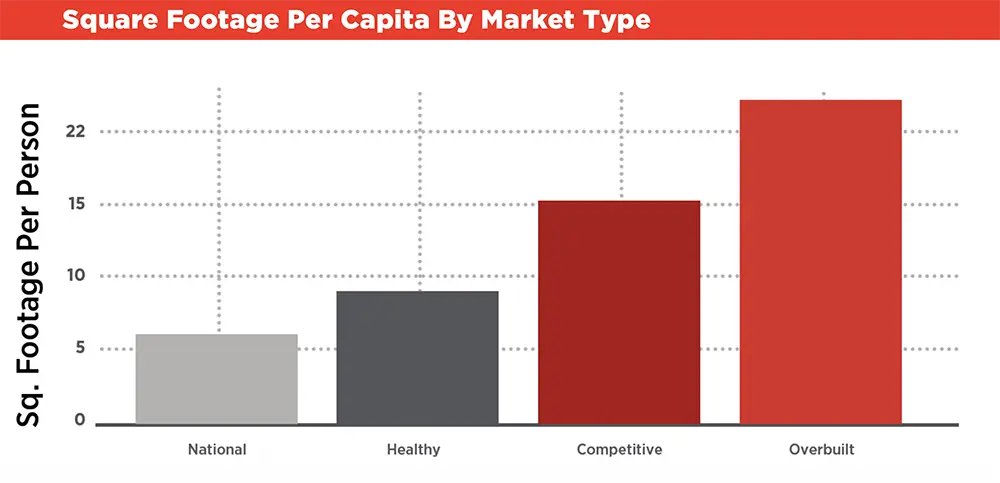
s of 2025, the U.S. has more than 2 billion square feet of rentable self-storage space, which is roughly 7 square feet per person. More than 290 million square feet has been added in the past five years, and another 56 million is to be completed by end of 2025. In certain urban and suburban markets, the rentable space can exceed 20 square feet per capita. This saturation means fierce competition. Success today means more than having a good location—it means smart, aggressive marketing.
Here we’ll lay out a roadmap for outperforming your competition, starting with confirming your market dynamics and ending with a high-conversion, local-first marketing strategy. These strategies will impact the performance of any facility, but if you’re trying to compete in a saturated market, bringing these tactics to bear on the challenge is essential. We’ll assume you already have the basics (a modern website, SEO, and local directories) and instead focus on ideas beyond these essentials.
The national average and the state average for Virginia (where we are) is under 8, but our portfolio average across multiple states is closer to 15. If your market is over 20, it’s safe to say you’re in a highly competitive market; if yours is under 10, then most likely you aren’t.
See Square Footage Per Capita By Market Type chart.
Hopefully you’re getting good traffic flow to your website. Unfortunately, there isn’t a universal metric to say how much traffic you should be getting, as this varies by market, season, and more. I’d suggest focusing on year-over-year and month-over-month trends.
If you need to increase traffic quickly, try Google Ads. If you’re already doing that, try Meta Ads; they now make it simple for reaching people through not only Facebook but Instagram and Threads too). There’s no harm in doing both if your marketing budget can handle it.
If your Google budget is low, like $400 or less, you should focus on specific keywords, like “storage units near me” or “self-storage near me;” we are seeing greater than 20 percent click-thru rates on these. Use your competitors’ names as keywords too. Remarketing (retargeting/pixels) is a great tactic to deploy. As potential customers are searching around, you can target ads to those who have previously interacted with your website. The cost per click (CCP) for this is typically a little lower too.
If you’re not already on Sparefoot, it would be worth at least adding your unit types with high availability (lower occupancy) on here. Despite a high cost per rental, the average length of stay remains high for our portfolio for Sparefoot customers (greater than 14 months on average), meaning the return is usually worth it.
Offer aggressive referral incentives. It works. Just make sure your campaigns are consistent, professional, and not overly pushy.
- Offer $100-plus referral incentives (credits to rent, check, or gift cards).
- Send monthly updates with tips, promotions, and referral links.
- Automate it with tools like Mailchimp or Constant Contact. Limit your email campaigns to weekly or monthly to help avoid unsubscribes.
Reviews drive local SEO, trust, and conversions, but don’t pay for them; it’s a bad look and against platform rules. Instead:
- Ask sincerely for feedback.
- Explain how reviews help you improve.
- Aim for consistency (a few reviews every month, not a flood and then silence).
Once they are on your site, remember the goal in this competitive market is to convert more than your fair share to rentals.
- Match or beat the best special in your market. Customers care most about how much it costs them to move in today and how much their monthly rates will be moving forward. You can get too creative or detailed with your specials and actually lose the sale.
- Match or beat the prices, particularly on your units with low occupancy. We use a custom integration between our system (called NOA) and StorTrack to automatically do this for us daily on select units and locations.
- Worry about the rates after the move-in, letting your revenue management strategy do its job, which it can’t do if they don’t move in to begin with.
- Make it easy to rent. Show the lowest price first; highlight the move-in cost, not just monthly rent. Keep in mind that menu overload is a real thing and people will walk away if it is too cluttered or difficult to understand.
- Whether in person or online, always create a sense of urgency and ask for the sale. Consider price matching if they mention a better deal elsewhere, but don’t send them back to the competitor to get it in writing; this gives the competitor another chance to do what you didn’t—close the sale.
To build real relationships through community engagement:
- Host food truck days, car shows, or community yard sales;
- Offer corporate discounts to local apartment complexes or aggressive referral incentives; and
- Share event photos and tag customers on social media.
Some examples seen online include a Texas facility that ran a “Free First Friday” with local coffee vendors, resulting in 31 leads in a week, and a North Carolina facility that reported writing 22 leases in 60 days solely from partnering with local realtors.
These local strategies don’t just boost leads—they build long-term loyalty.
Use these tools and tactics to get more than your fair share and grow your business with confidence. Once you get the rental, then put your revenue management tactics to work and you’ll recoup the incentives over time.
There’s a lot to unpack here, and even more that wasn’t covered. If you’d like to discuss any of these in more detail, or need help applying these tactics, just reach out and continue the conversation; we’d be glad to share what’s working across our portfolio. And be sure to check our free local SEO report on https://getnoa.com.





Owner Brickhouse Self-Storage Georgia

Multi-property Owner Mississippi


n a recent LinkedIn post, Ilyssa Caretsky wrote, “Who says you can’t do it all? Sometimes being a working mom means shifting gears on the spot. The playground becomes the office, calls happen with snacks in hand, and the to-do list is squeezed between swings and slides.”
While most people use the platform to present a polished version of themselves, Caretsky pushes back on the idea that everything on LinkedIn must be strictly professional, sharing anecdotes from her life—sometimes even the messy ones.
“Posts about real feelings often get the most meaningful responses,” she says. “Being vulnerable and open can help others feel seen. If something I write resonates with just one person, that’s a win.”
That instinct has also helped shape her career in branding and making customer connections. “How I approach LinkedIn is how I approach work: speak to people the way they want to be spoken to and understand their needs and pain points.”
In self-storage, a sector that outsiders often reduce to square footage, Caretsky brings the human touch, even if she found the industry by chance.

But life has a way of throwing curveballs. “After my son Noah was born, I felt burned out,” Caretsky says honestly. “The economy had been tumultuous, and this industry wasn’t driving my passion anymore. I thought I’d start and end there, but it wasn’t meant to be, so I decided to hang up my retail hat and focus on Noah.”
Days later, a two-word message came through from one of the moms. “DM me,” it read.
Caretsky wrote back, and the mystery mom told her about a position with market intelligence agency Radius+. “She thought it might be a good fit for me, but of course I didn’t know anything about self-storage. But I said I’d take an interview.”
Caretsky was offered the job and she started a month later. She caught on quickly. “The learning curve isn’t as big as you might think, which is a testament to the people in the industry. Everyone is willing to help.”

“I learned a lot at Radius+, but this was the right move and offered the career momentum I was looking for,” she says. “Plus, there was no animosity. People in this industry want each other to succeed, even when they’re competing. That’s what makes it so special.”
Even though both companies are data providers, Caretsky makes it clear that there are distinctions. “Each excels in a unique way,” she says. “Plus, a lot of users don’t stick to one data provider. They pull niche needs from each to make informed decisions, so it’s beneficial to the industry to have multiple players in the same space.”
Caretsky says that StorTrack’s biggest differentiator is the vast amount of historical data it houses, going back over 10 years, and the hundreds of overseas employees focused on research and development. At the helm is CEO John Tilly, for whom she has nothing but respect. “Working with John at StorTrack has been energizing. He is fair, involved, and deeply committed to the mission, and that level of leadership makes it easy to show up at my best.”
She actually had her start in professional sports, even working with those Jets. Although they were brief stints before moving to retail, they set her up for success when working with men and gave her a lot of perspective. “I can see, just in the last 20 years, how much the acceptance level for women in the workplace, and women leaders, has increased.”
In self-storage, Caretsky has never felt any sort of barriers; everyone she works with has been respectful of her role as a mother. “My team is used to my son Zoom-bombing our meetings,” she says with a laugh. “But they’re wonderful when that happens. They’ll say, ‘Hey, Noah, how was your day?’”
Caretsky adds, “I’ve been fortunate to find roles that have given me autonomy to get the job done while respecting life outside the nine-to-five.” She says that as long as she’s delivering at StorTrack, working flexible hours is not an issue. “When companies trust you, it drives you to do better work.”
“It’s not always easy,” her post from the start of this story went on to say. “Some days demand more from me at work and others from me at home, but both deserve my best. What matters most is being present and intentional wherever I am. To every parent juggling work and family in real time, you’re not alone. Here’s to giving ourselves grace and finding strength in the chaos.”
These musings resonate with people, Caretsky says, and several of them have reached out to her to say thanks for making the platform a little less formal and a lot more personal. “One industry colleague messaged me to say how one of my posts helped him be more outspoken about his own struggles,” she says. “I’m not trying to be anyone’s voice, but if I can help amplify theirs, that’s an incredible honor.”



hen Dr. Ahmet Kuyumcu came to the United States, it wasn’t quite what he’d expected. Instead of towering Manhattan skyscrapers or glamorous Hollywood hotspots, he was in the Lone Star State, and there were cowboy hats—lots of them. How did he wind up in Texas?
“After graduating from a top university in Turkey, I took a national exam to determine the next step in my academic path,” says Kuyumcu, founder and CEO of Prorize. That year, he placed second in the country and earned one of the most competitive scholarships, covering full tuition, a monthly stipend, and giving him carte blanche to attend graduate school anywhere in the world.
Wanting to improve his English and attend a prestigious university, Kuyumcu chose the United States, but he couldn’t pick the school. “I’m thinking New York, Los Angeles … and then the government tells me I’m going to the University of Texas at Austin,” he says, throwing up his hands. “I was like, ‘Where is this place? This isn’t what I signed up for.’”

When the time came to write his PhD dissertation, Kuyumcu was still searching for an inspirational topic. Things fell into place when American Airlines CEO Robert Crandall gave a talk on challenges in the industry, particularly the emerging science of revenue management. Sitting in the audience, Kuyumcu was captivated. “I was enthralled by the nuances of pricing and the lightbulb went off,” he recalls. “I wrote my dissertation on it, and that’s how it all began.”
The deeper Kuyumcu explored the field, the more determined he became to bridge the gap between what buyers will pay and what sellers will accept. “I’ve been focused on this for nearly 30 years, and still find it fascinating,” he says. “Pricing is still in its infancy, with many challenges yet to be solved. And because it constantly evolves with new data, technology, and algorithms, it always keeps me on my toes.”

One of his most challenging projects involved developing a revenue management system for a major TV network, designed to determine the optimal placement of ads during the multibillion-dollar upfront market. “This was the early 2000s,” Kuyumcu recalls, “when e-commerce companies were paying around $8 million for a 30-second Super Bowl spot.”

Kuyumcu also pioneered the first multifamily housing revenue management system of its kind, which was later acquired by RealPage for $300 million. That success opened the door to new opportunities, most notably in the self-storage industry. Kuyumcu’s first self-storage client was Extra Space Storage, which was looking to create a formal revenue management program in 2009. He embarked on a proof-of-concept study with the REIT, building a fully offline prototype to demonstrate the system’s potential value.
Despite acknowledging the benefits, Extra Space didn’t want to outsource, so the two parted ways. “There were no hard feelings,” says Kuyumcu.
Kuyumcu says a lot of what Prorize does is designed to help small to mid-sized operators compete with the industry giants. “The REITs already have massive amounts of data and technology and can try different things to see what works, while smaller operators don’t have that luxury until they work with us.”
As Prorize grew, Kuyumcu decided it was time to give back. “Every time a deal is closed, we make a charity donation.” In 2017, when Prorize’s project with Holiday Retirement won the Franz Edelman Award, a distinction considered the Nobel Prize of Operations Research and Analytics, Kuyumcu and his colleagues gave the $15,000 to the Alzheimer’s Association of America. “I know how devastating this disease can be,” Kuyumcu says. “It was our privilege to support the organization’s fight.”
To that end, Prorize devotes substantial research and development resources, led by its team of Ph.D.-level pricing scientists, to ensure every AI innovation is cutting-edge and impactful to its customers’ bottom line. The company’s intelligent AI alerts fit the bill, cutting through the noise and eliminating hours of sifting through reports by turning complex data into clear, actionable guidance. “We want unusual situations to be completely apparent to operators so they can either accept the system’s recommendations with confidence or override them if they feel differently.”
As for Prorize, the company continues to grow. Today, 35 employees (spread across the United States, Turkey, Denmark, Finland, and Kenya) support clients in 28 different countries. “We keep busy,” says Kuyumcu, who at one point didn’t want to advertise because the company simply could not take on any new clients. “It was a good problem to have,” he says with a smile.
Pricing isn’t the only way Kuyumcu has used statistics to make money. His work with gaming companies frequently brought him to Las Vegas—and its casinos on occasion. One of his most memorable moments came in the early 2000s, when he began counting cards at a two-deck blackjack table inside Paris Las Vegas. “It’s actually a fairly simple technique,” he explains. “You just track high- and low-value cards to make more informed betting decisions on the next hand.”
He started with $200 and turned it into $17,000, and then the other players at the table began mirroring his bets. This caught the attention of the “eye in the sky,” and soon two security guards approached and politely asked him to leave, making it clear he was no longer welcome.
Fast forward two years, and Kuyumcu was back in Sin City, this time meeting with executives from Caesars Entertainment Corporation, which owns Paris Las Vegas. Of course, that’s where the client booked Kuyumcu a room.
As he was checking in, the front desk agent began eyeing him and then asked him to step aside. Kuyumcu naturally thought he was going to be asked to leave–or worse. He knew that counting cards wasn’t illegal, but some casinos were known to retaliate by bringing trespassing charges against those who dared to come back.
It wasn’t long before the agent returned. “Mr. Kuyumcu, thanks for waiting,” he said. “As a guest of Caesars, we’ve upgraded you to a deluxe suite.”
Kuyumcu breathed a sigh of relief, and decided at that moment he was done with blackjack. “I switched to poker,” he says with a laugh.




Uncovering Occupancy Data
Find Trends Through Publicly Available Sources
By Noah Starr
ccupancy data is arguably the hardest data to uncover when looking at any market. Unlike rental rates, there aren’t web scraping tools that gather occupancy data because the data is not publicly available on websites. One way to gather occupancy data in a market is by calling self-storage facilities in the area and asking for the data directly. Some owners and operators are willing to share this data, but others keep it confidential out of fear of losing a competitive edge.
Another way to get occupancy data is through publicly available sources. There are several publicly traded self-storage companies that publish quarterly and annual data on occupancy. Let’s dive into self-storage REIT occupancy trends since 2017.
See Historical Same-Store REIT Occupancy As Of Quarter End chart.
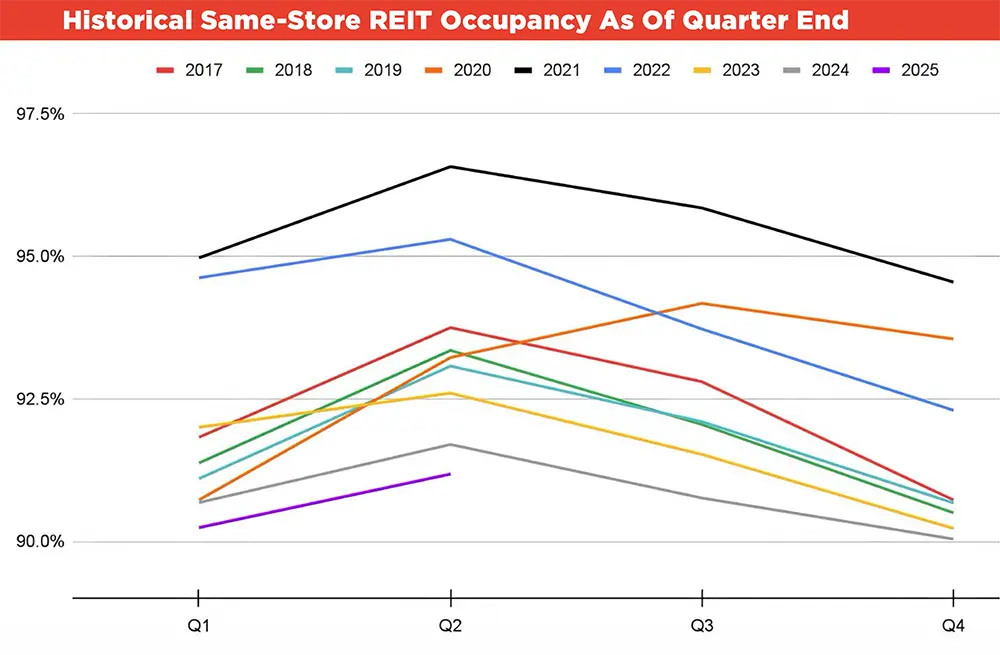
There are three items worth noting from the data in the chart:
- Seasonality – You will notice distinct highs and lows in the chart showing increased occupancy in Q2/Q3 and decreased occupancy in Q4/Q1. The data highlights a higher need for storage during the spring/summer months, when residential migration is typically higher.
- 2020 was abnormal – The COVID-19 pandemic year created outsized demand for self-storage due to increased residential mobility, which is why Q3 and Q4 occupancy were higher than Q2 for that year (the only time this has happened in the last eight years).
- 2025 hits rock bottom – Although we don’t have all the data yet for 2025, Q1 2025 started off with the lowest occupancy rate for Q1 since 2017. Inflation, high interest rates, and general uncertainty have plagued the overall real estate market since 2022, resulting in lower occupancy. It will be interesting to see if occupancy has truly bottomed out, or if 2026 will set a new record.
It is important to disclose that this data on occupancy is not a representation of the entire self-storage industry. The data is a small sample size compared to the rest of the industry. For example, the number of facilities that make up the same-store pool for the four publicly traded REITs and U-Haul presented in this data does not exceed 7,000 facilities. That is less than 10 percent of the total number of facilities in the country. These facilities are also most likely the highest performers out of the entire industry, in the best condition, and located in the best markets.
Even though occupancy data isn’t widely available, it’s important to look at what is available through public sources like self-storage REITs and other public companies. At the very least, you will uncover trends that are vital to understand when evaluating deals.






TEXAS • LOUISIANA • KANSAS • MISSOURI • FLORIDA • ALABAMA • MISSISSIPPI • ARKANSAS • OKLAHOMA
17 Scenic Loop Rd.,
Boerne, TX 78006
830-388-7620
TEXAS • LOUISIANA • KANSAS • MISSOURI • FLORIDA • ALABAMA • MISSISSIPPI • ARKANSAS • OKLAHOMA
17 Scenic Loop Rd.,
Boerne, TX 78006
830-388-7620
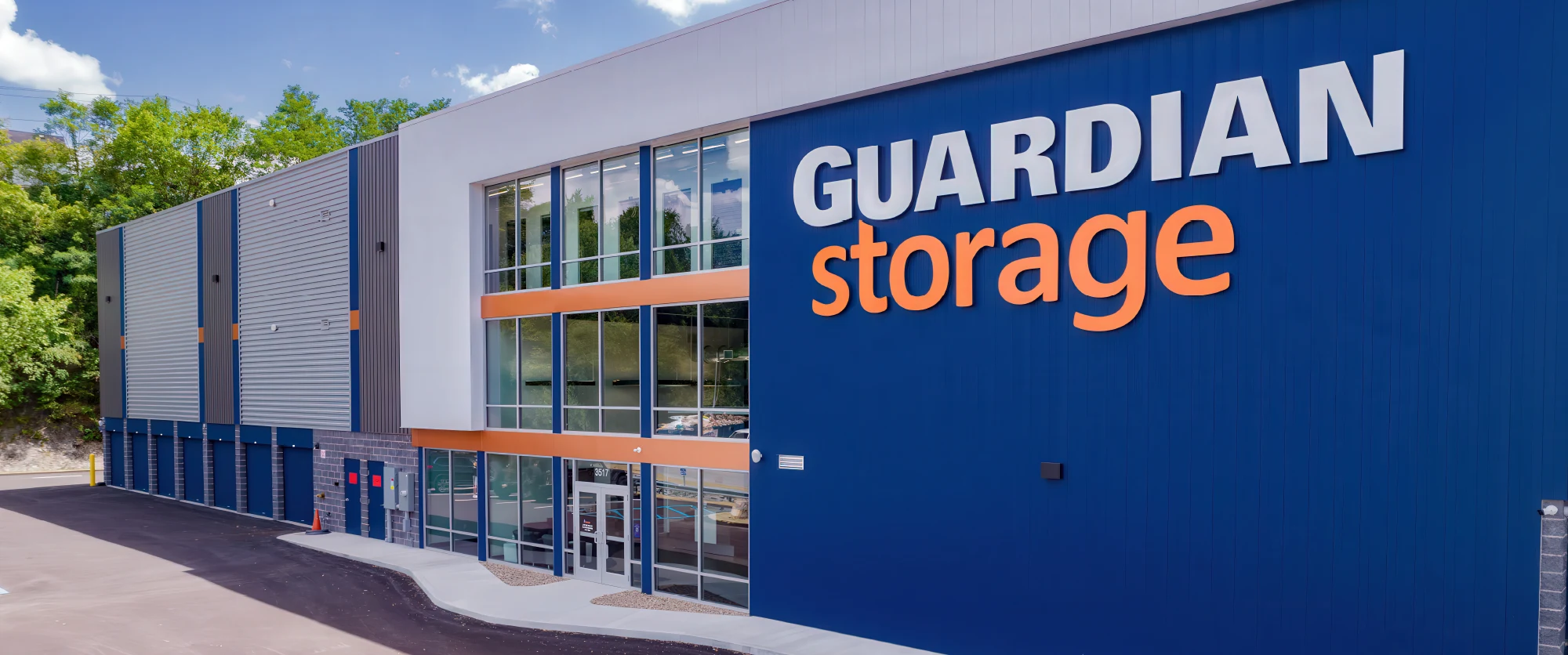
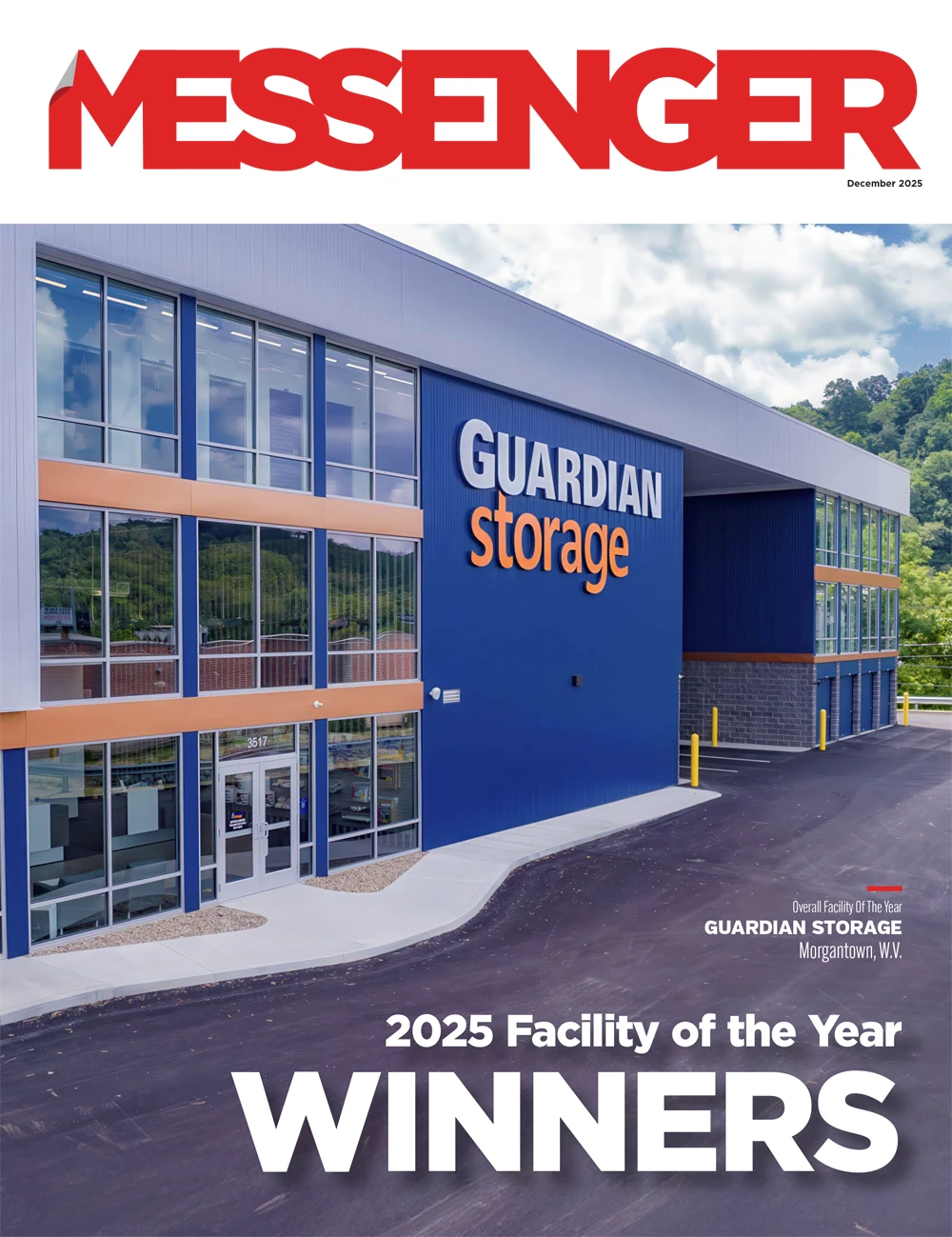
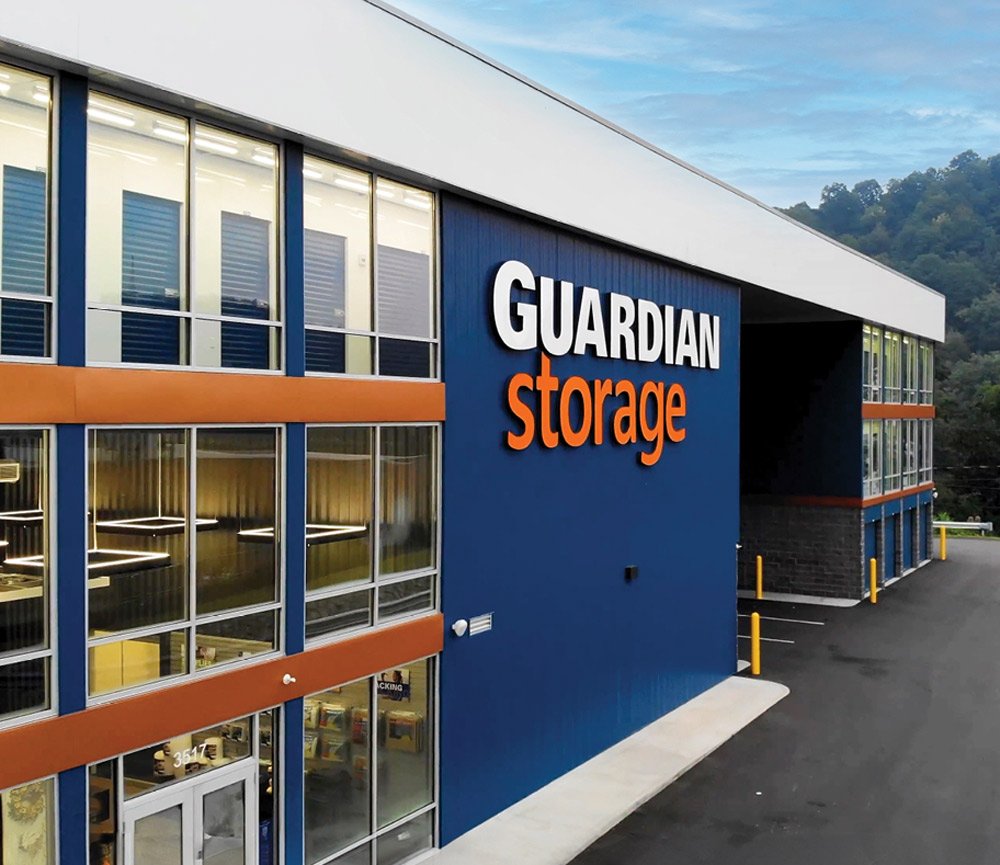
ith a commanding presence at 3517 Monongahela Boulevard, a stone’s throw away from the Monongahela River, Guardian Storage Morgantown stands like a steadfast sentinel. Owned and managed by Guardian Storage, LLC, a top operator with 38 facilities in Pennsylvania and Colorado, the pristine facility was the company’s first foray into West Virginia. It’s also MSM’s 2025 Overall Facility of the Year winner. The accolade comes only a year and several months after they first opened their doors in July 2024, which is an impressive feat considering that they raced against the clock during the development phase to stay on track.
“For this project, Guardian engaged ARCO/Murray after identifying a unique site with an accelerated entitlement schedule,” says Sylver Cook, marketing coordinator for the leading design-build company. The team was up for the challenge and got to work immediately. “We leveraged our design-build expertise to streamline the process, breaking ground quickly and delivering a facility that went from initial design to grand opening in under 18 months.”
The project was completed in a year and a half, and not even two years after opening, they’re already being recognized as the most noteworthy facility for 2025. Looking at all the pieces of the puzzle, it becomes clear that team effort from everyone involved—from design, construction, and project management to operations—has been instrumental to the facility’s success.
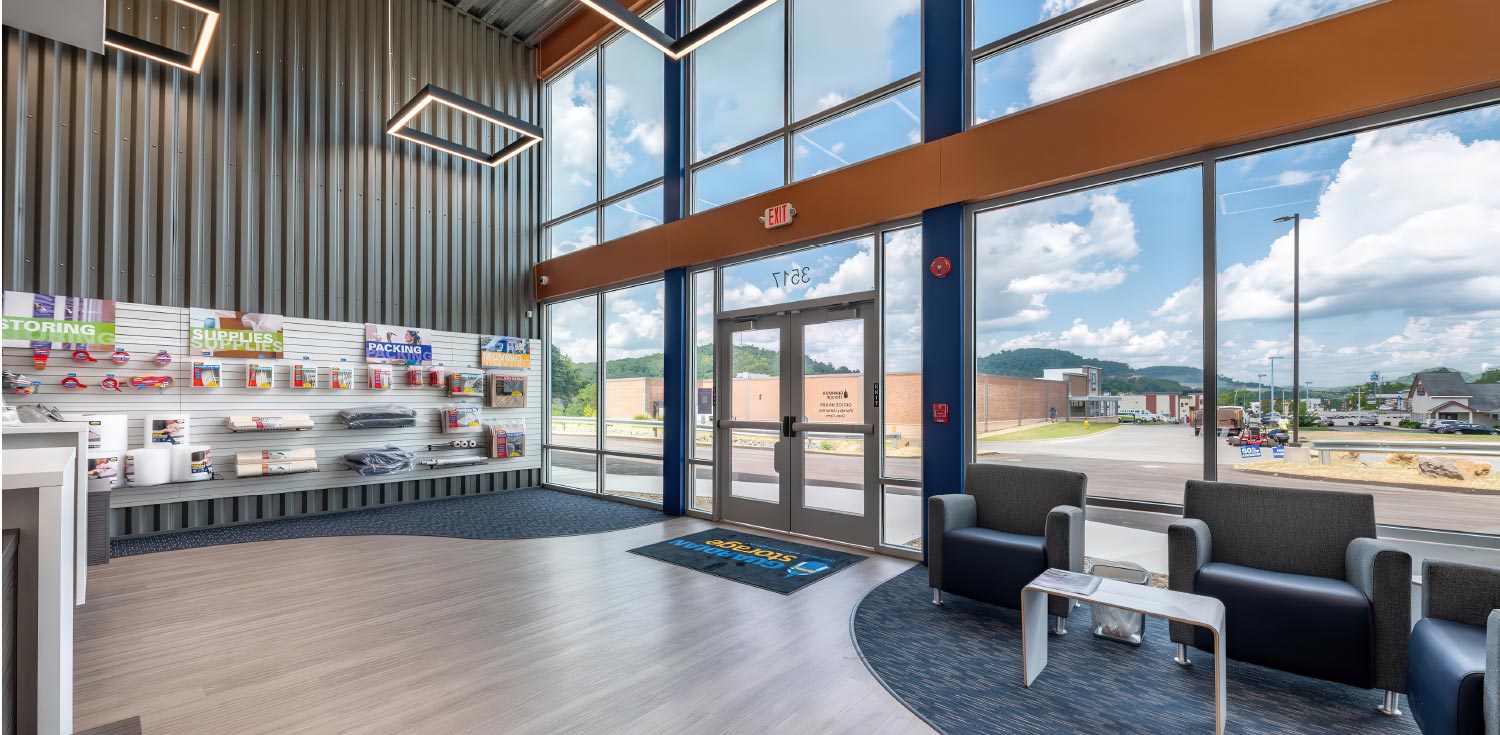
ARCO/Murray’s resolve to work around these challenges on such a tight schedule highlights that the project’s resounding success is the result of the adherence to excellence from everyone involved, starting with their construction company. “We are proud of our long-standing partnership with Guardian Storage, a leading owner and operator in the self-storage industry,” says Cook. “And our team leveraged our design-build expertise to streamline the process, which highlights ARCO’s commitment to delivering on schedule and executing at the highest level for our partners.”
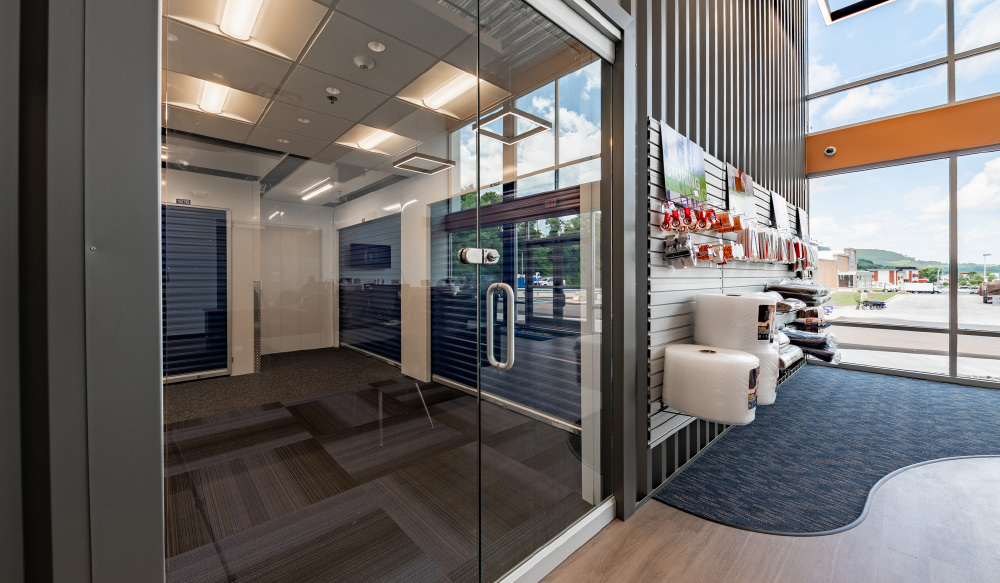

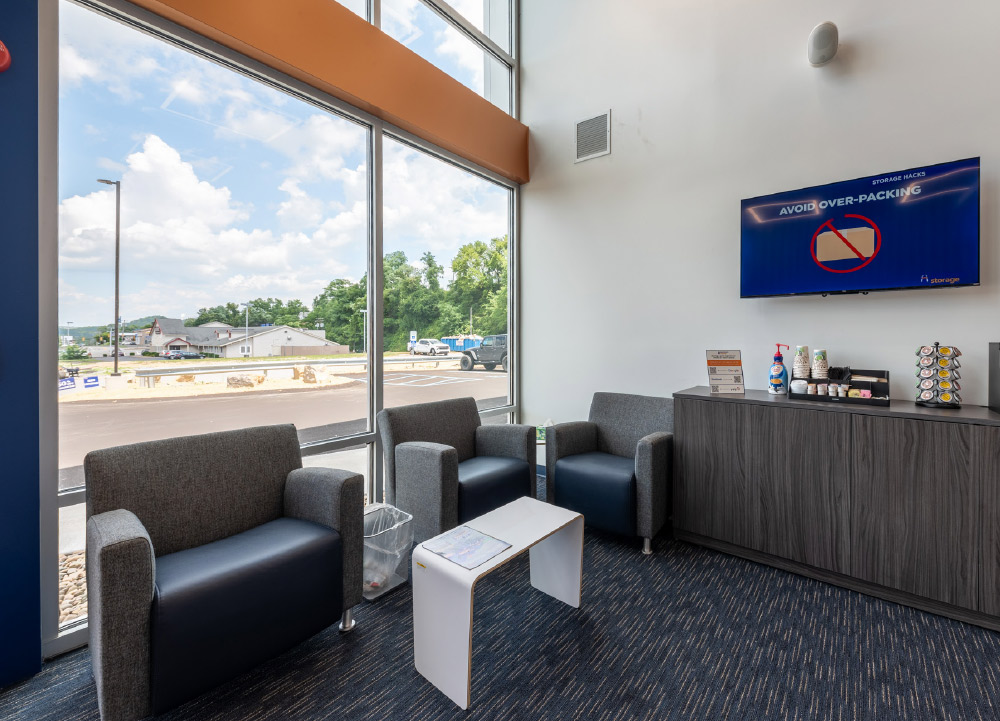
“Energy-efficient LED lighting was installed throughout, and the HVAC system was engineered with three levels of programmed controls to maximize efficiency,” says Cook. “Together, these features allowed the building to meet all ASHRAE [American Society of Heating of Heating, Refrigerant, and Air Conditioning Engineers] energy standards while achieving energy cost savings of nearly 40 percent, compared to prescribed core methods.”
Construction of the facilities include energy-saving windows that reduce heat transfer through the glass panes and all the computers within the building are EnergyStar rated, which means fewer emissions and lower energy usage, thus preserving the environment while keeping energy bills down. They also reduce their carbon footprint by partnering with local companies to reduce shipping and transportation distances.
In addition, Guardian provides tenants with an on-site location where they can leave their cardboard boxes for recycling. This feature serves a dual purpose: reducing the amount of waste that reaches landfills and providing other tenants with the option of reusing the boxes. Guardian Storage Morgantown even offers customers a space to dispose of electronics and non-Freon containing appliances for proper disposal or recycling.
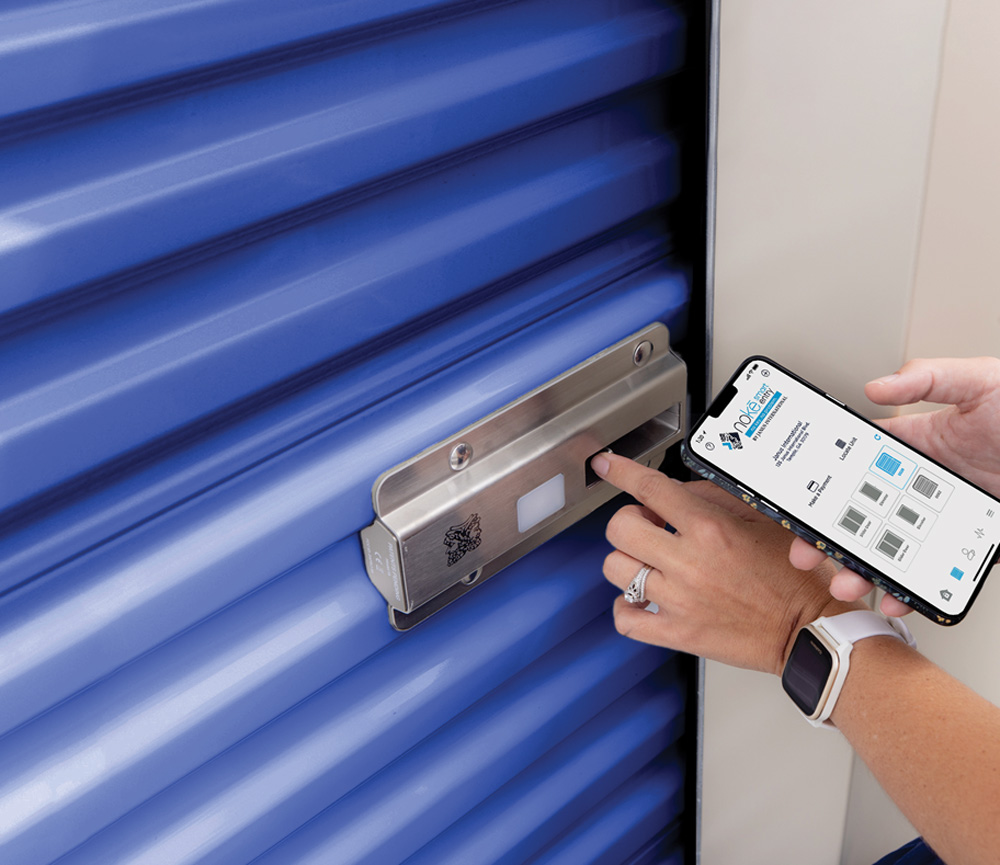
Nokē not only makes access to storage units easier for tenants, but it also enables the granting of temporary access to any friends or family members who may need to visit the unit. All activity is tracked, and access can be revoked at any time, making the process easier while maximizing security.
The system is tied into a wireless network that integrates with the facility manager’s online portal, offering advanced usage analytics such as occupancy rates, pricing, rental trends by unit size, and the busyness of the site. These data points work wonders when optimizing the allocation of resources and remaining competitive.
Being accessible to tenants from their mobile devices makes Nokē practical. “This fully digital platform allows tenants to access gates, doors, and their individual units directly from our Guardian Storage mobile app, eliminating the need for keys or access codes” says Scot Vayo, Guardian Storage’s COO. “Beyond access control, the system provides added security by tracking all entries and exits on the property and at each individual unit.”
To support this advanced technology, the property is equipped with reliable Wi-Fi coverage, ensuring reliable functionality of the Nokē system and easy connectivity for their tenant base.
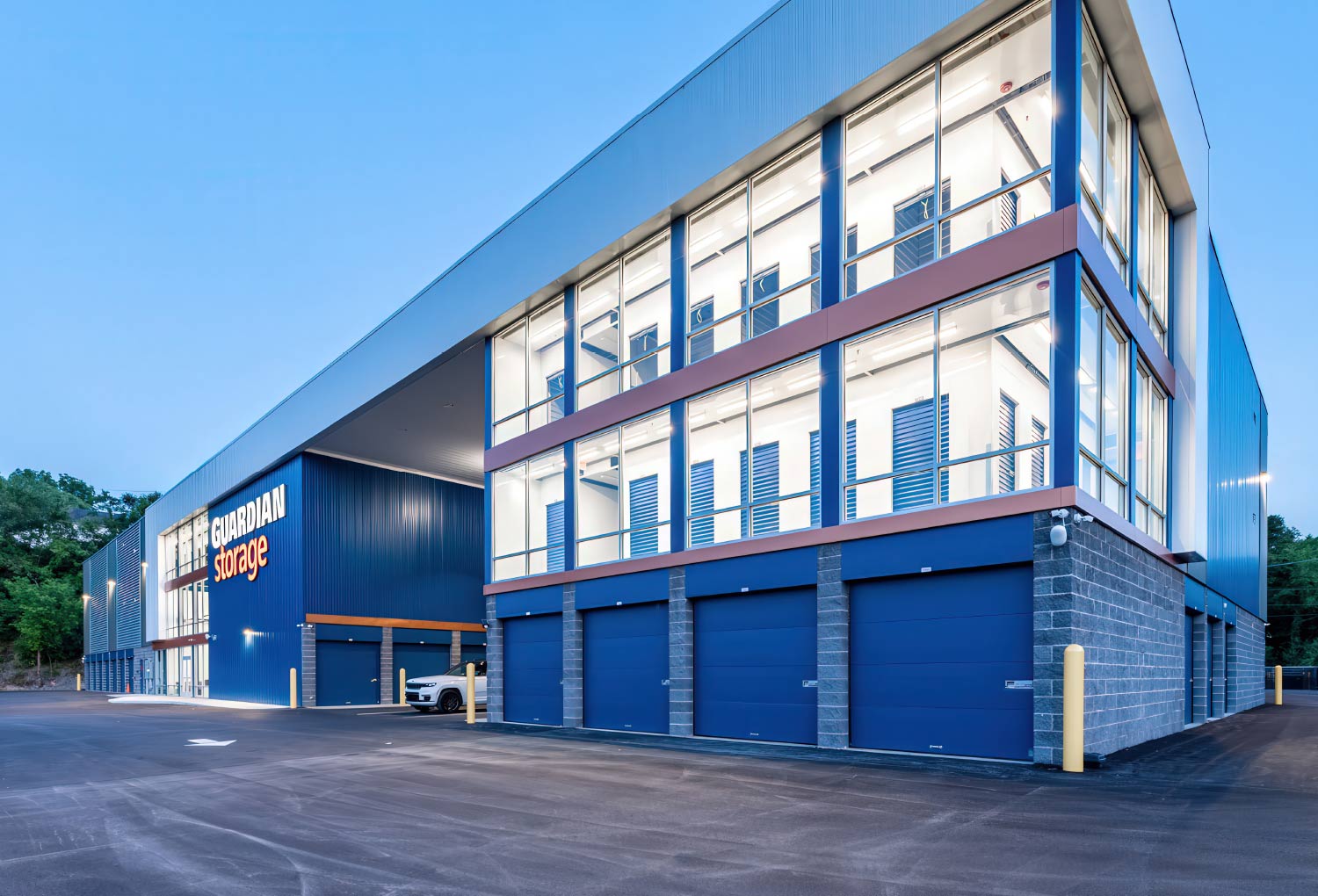
Each unit is also equipped with motion sensors built into the back of the Nokē latch, adding even more peace of mind to tenants. “Together, these features make Morgantown one of the most secure and technologically advanced storage properties in the region.”
While the Nokē One system is impressive by itself, it’s only one part—albeit a major one—of Guardian Storage Morgantown’s resolve to protect tenants and their personal belongings. “The first layer of protection is a state-of-the-art camera system that allows us to monitor activity throughout the property,” adds Vayo. “This property is also exceptionally well lit, both inside and out, which enhances visibility and provides tenants with an added sense of safety and comfort when visiting at any time of the day.”
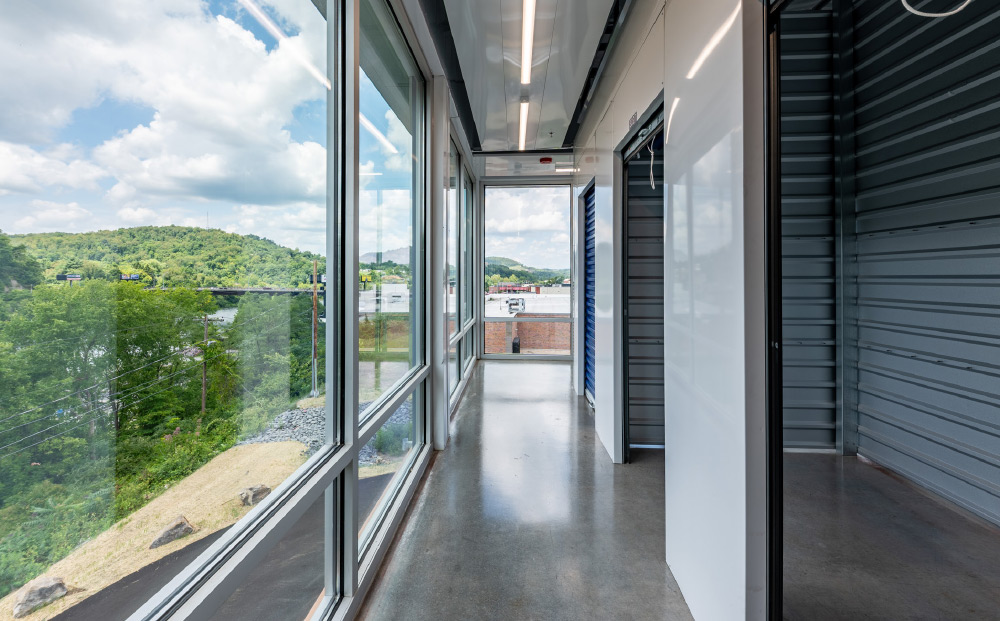
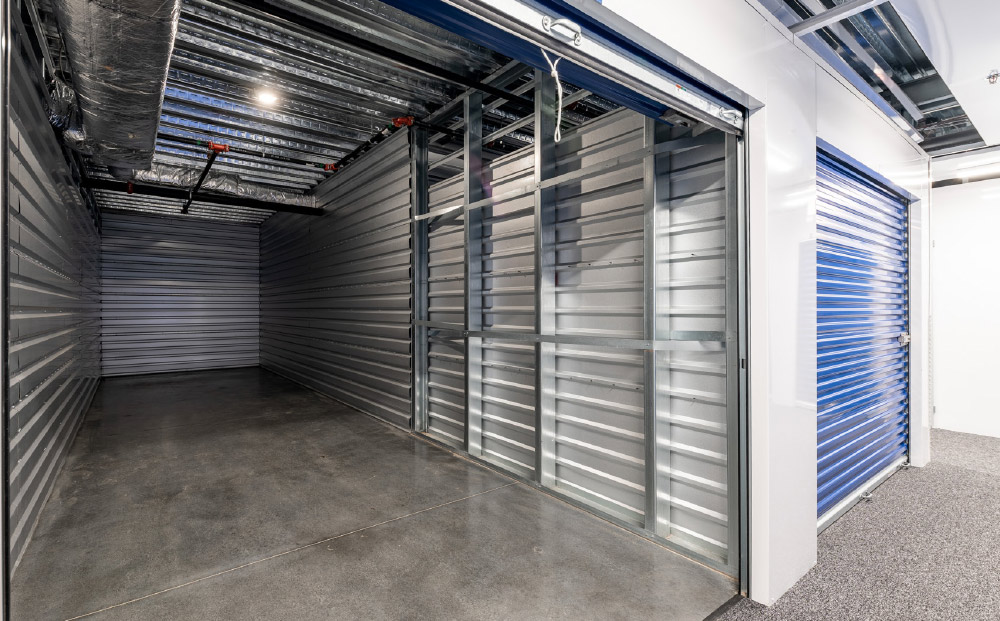
That said, the primary challenge the facility has faced, from a management perspective, is indeed the broader macroeconomic environment, which has slowed demand for self-storage across the industry. “While this is not unique to Morgantown, our property management team has worked diligently to ensure we continue to meet our goals,” says Vayo. “We’ve leaned into building strong community connections, participating in local events, and partnering with the chamber of commerce. These efforts have helped us strengthen brand awareness and establish deeper roots in the Morgantown community, ensuring that our property remains a trusted choice for storage, even during slower demand cycles.”
The best form of marketing is word-of-mouth marketing, and when the surrounding community already sees you as well-established and trustworthy, half the work is done.
“What truly sets Morgantown apart is the people behind it,” says Vayo. “Our on-site property team delivers exceptional service day in and day out, while our marketing, operations, and support teams provide the resources, strategy, and innovation that make success possible. Together, they create an environment where tenants feel valued, the property is maintained to the highest standards, and Guardian’s reputation for excellence and community commitment continues to grow.”
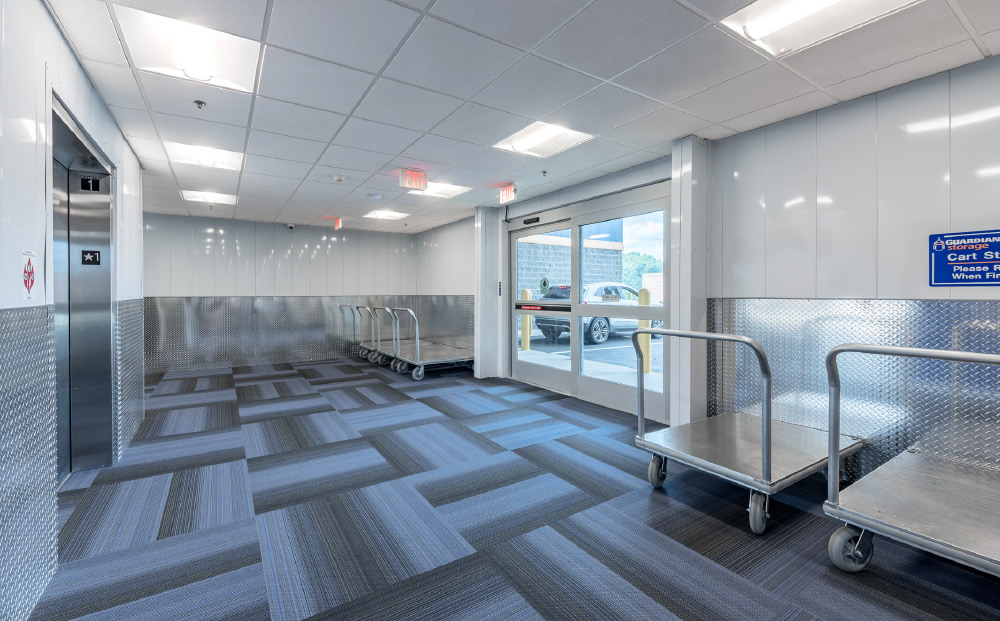
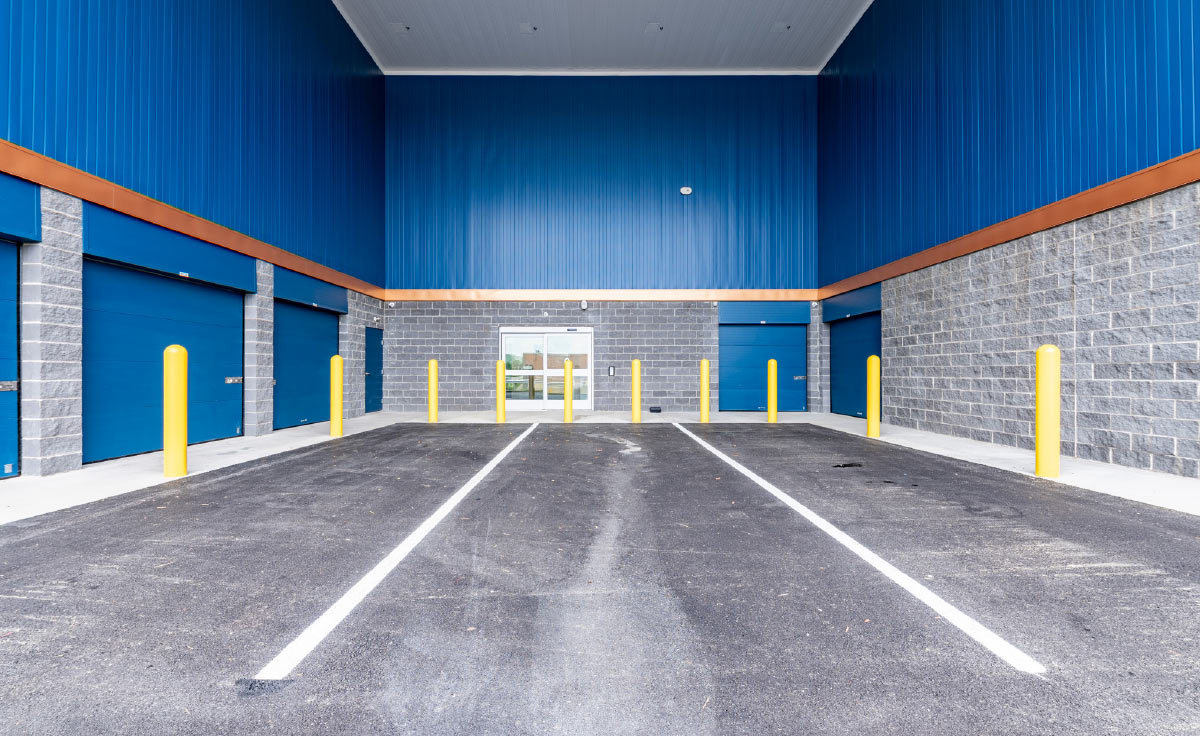
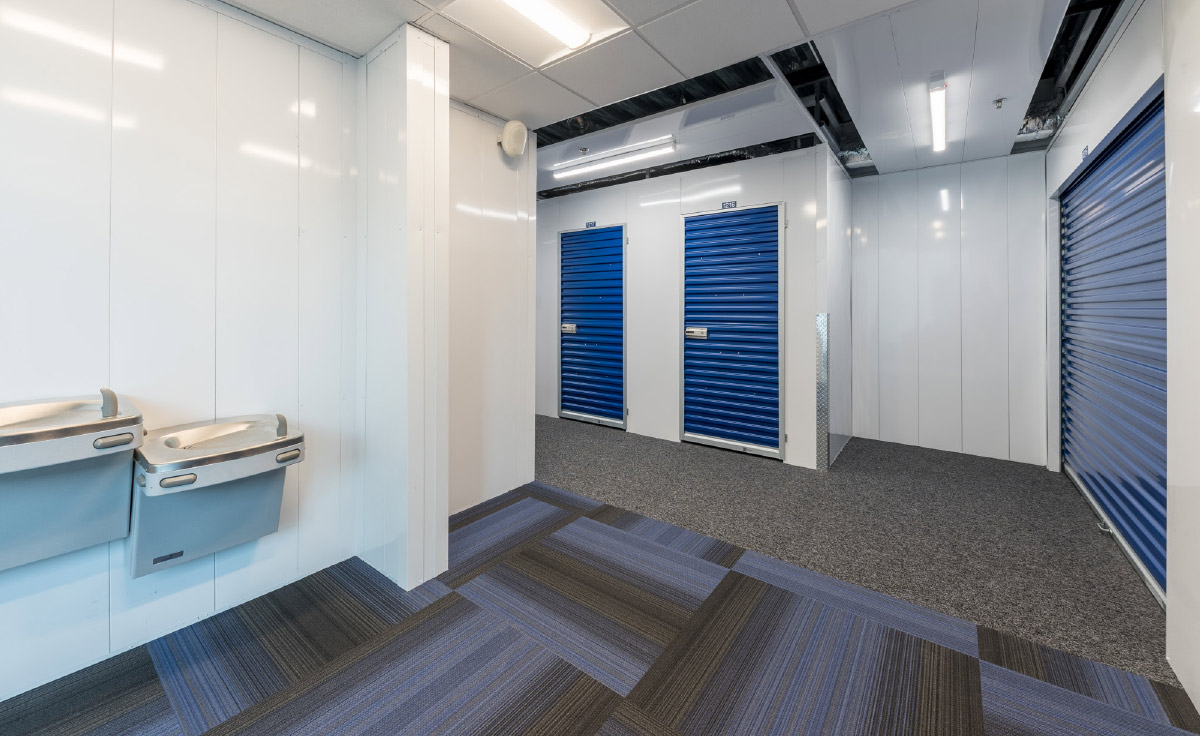
He points out that tenants can experience this team effort and thoughtful design upon first walking through the doors. “Visitors immediately notice the easy access and covered loading areas that make moving items simple in any weather; and the property is well lit, creating a welcoming atmosphere,” Vayo says, noting that unique features such as package delivery acceptance, moving and packing supplies, climate-controlled drive up units, two oversized elevators, and an ample supply of moving carts and dollies highlight that Guardian Storage Morgantown has really paid attention to detail.
Then there are the ancillary items that elevate each visit. “Tenants also have access to a conference room, coffee bar, and restrooms; and they have access to a free moving van [tenants only have to pay $20 for insurance and fill up the gas tank], which further demonstrates Guardian’s dedication to making the storage process as efficient and stress-free as possible. Together, these features make an immediate and lasting impression that sets Morgantown apart.”
“Guardian Storage Morgantown exceeded my expectations! The team was extremely knowledgeable, friendly, and took the time to address all my concerns. I felt confident in their ability to meet my storage needs, thanks to their excellent customer service. I highly recommend it and will definitely refer friends!”
“I was impressed by the exceptional customer service at Guardian Storage Morgantown! The staff was patient and understanding, answering all my questions without hesitation. Although I asked a lot of questions, they didn’t seem to mind, and I appreciated their willingness to help. Great experience overall!”
“The associates are friendly and helpful. The facility is clean, well-lighted, and easy to navigate, and the carts make transport easy. The storage unit is well-planned and easily accessible. This is a first-rate storage facility.”
“Very clean, very secure facility. They use a lot of modern technologies to make access safe and easy. The two ladies up front were also kind and very helpful.”
In a world where most of the people who post online about a business tend to do so after an upsetting experience, the positive remarks from tenants highlight one of the many reasons Guardian Storage Morgantown deserves the industry limelight. And we’ve only shared the tip of the iceberg! You could spend hours scrolling through Google reviews—all of which are from happy and appreciative customers.
For ARCO/Murray, this project is one that will remain top of mind for years to come. “We’re proud of the successful execution of this project,” Cook says about the overall experience delivering a Class-A facility in West Virginia in partnership with Guardian Storage and Janus International. “From addressing complex site conditions to incorporating sustainable design features and advanced security technology, ARCO delivered a high-quality facility that reflects both Guardian’s vision for innovation and ARCO’s commitment to meeting client goals with precision and efficiency.”
Owner: Guardian Storage LLC
Management Company: Guardian Storage LLC
Builder: ARCO/Murray Design Build
Architect: Desmone Architects
Property Management Software: SiteLink
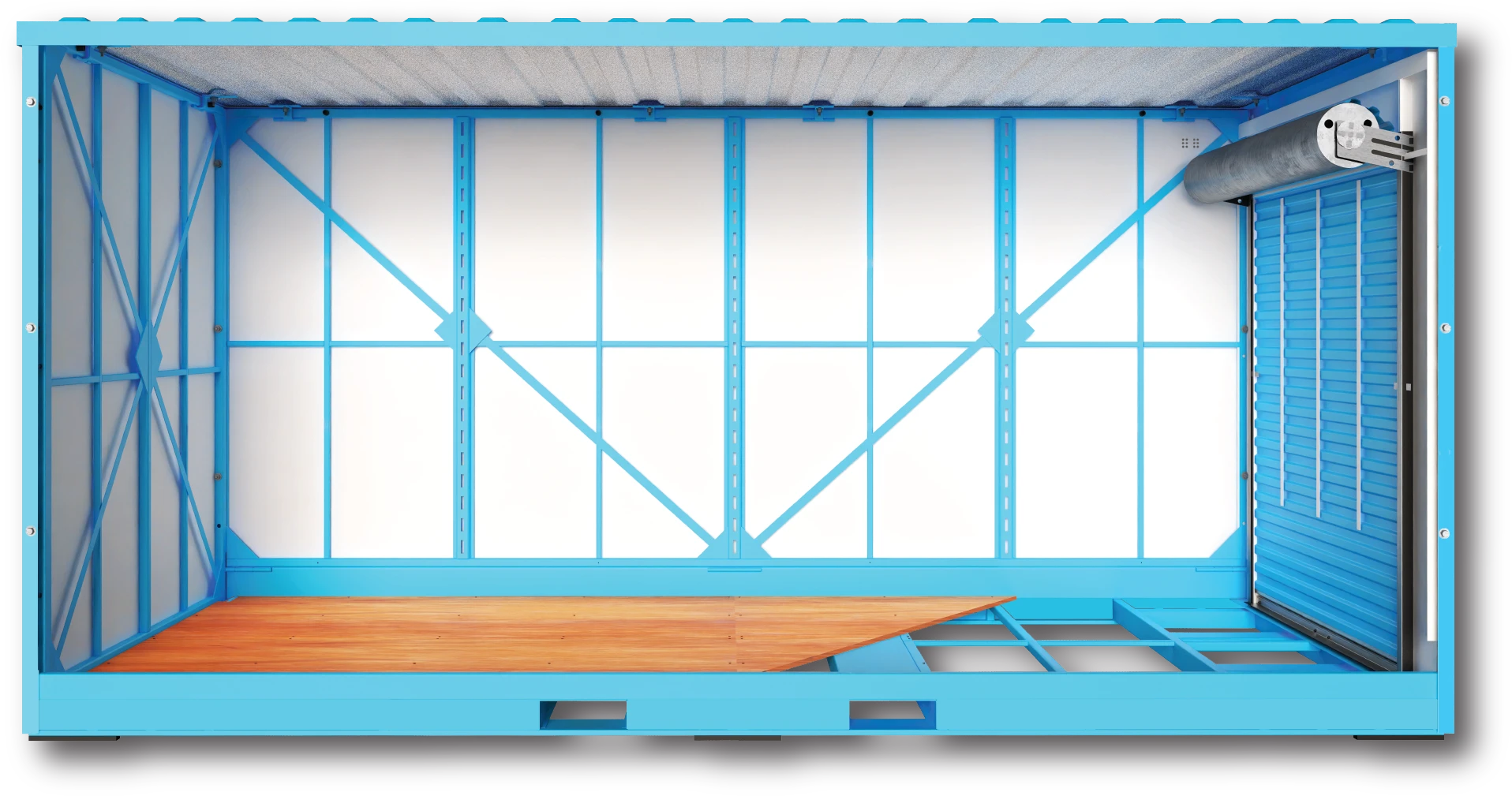
Doors & Hallways: Janus International
Access System & Locks: Nokē Smart Entry by Janus International



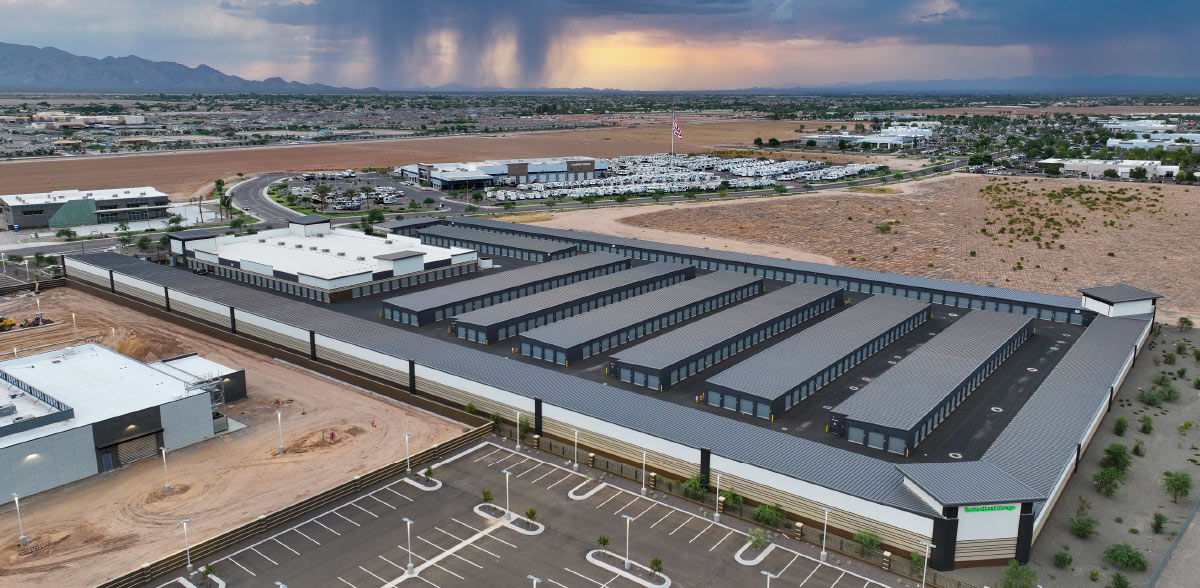
ike its name suggests, Surprise, Ariz., is full of them. First off, it’s one of the fastest-growing cities in the country, with its population projected to reach nearly 250,000 by 2030. The city is also adding 2,000 to 3,000 single-family homes each year, and major projects, such as the $65 billion Taiwan Semiconductor Manufacturing Company site and a $7 billion mixed-use development along Loop 303, are fueling a surge in jobs and housing. Now ready to meet the needs of the community is Storelocal, a Class-A self-storage facility that came with quite a few surprises of its own.
“I began looking into the area and found there was a significant mix of high-income retirees, seasonal snowbird travelers, and enthusiastic RV owners,” Osborne recalls, noting that these demographics are big users of self-storage. “Add to that the recent residential and commercial growth, and this was a prime spot for a premium, secure self-storage facility.”
Osborne also liked the property setbacks, which were minimal on three sides of the site. “This would allow for maximized building footprints along the lot lines and would give us more rentable square footage than a conventional layout could provide.”
Permits to build the three-story facility were obtained, and the crew got to work pouring footings for the first building and erecting reinforced concrete masonry unit (CMU) walls. They also didn’t wait until the ribbon-cutting ceremony to begin marketing the property. Instead, they approached nearby RV dealerships right away, offering them one month of complimentary storage once the operation was open for business. This gave them early lease commitments and a big boost to their proforma. “Marrying land acquisition with proactive revenue generation is something I would recommend that any developer do,” says Osborne.
It wasn’t long before hurdles began to appear. And once one was cleared, another appeared.
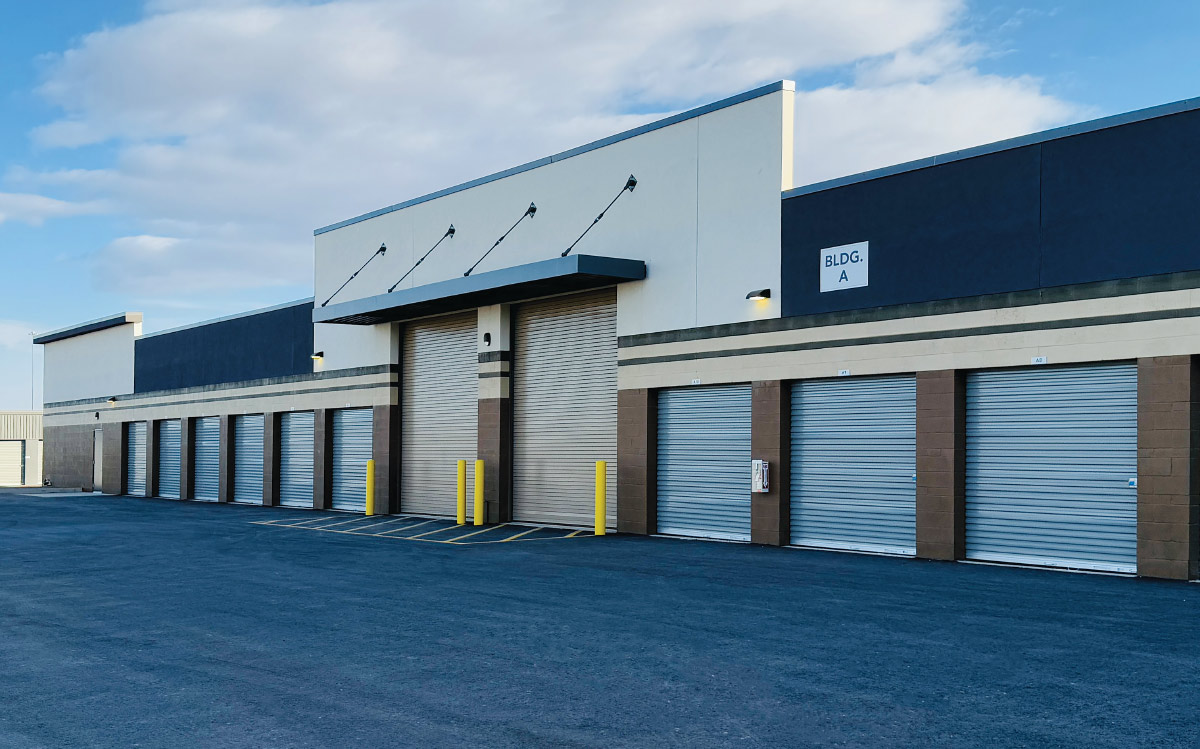
The team began making some quick financial maneuvers. First, they fast-tracked private equity investments from their ownership group while strengthening the capital base and reassuring lenders. Next, they established contingency funds to procure critical long-lead equipment early on, including the standard electrical system (SES) switchgear, which had a lead time of 10 to 11 months. They also conducted a value-engineering review to reduce non-essential finishes and replace the original design with simple right-angle walls and optimized structural systems. The result was millions saved without compromising the building’s overall presence.
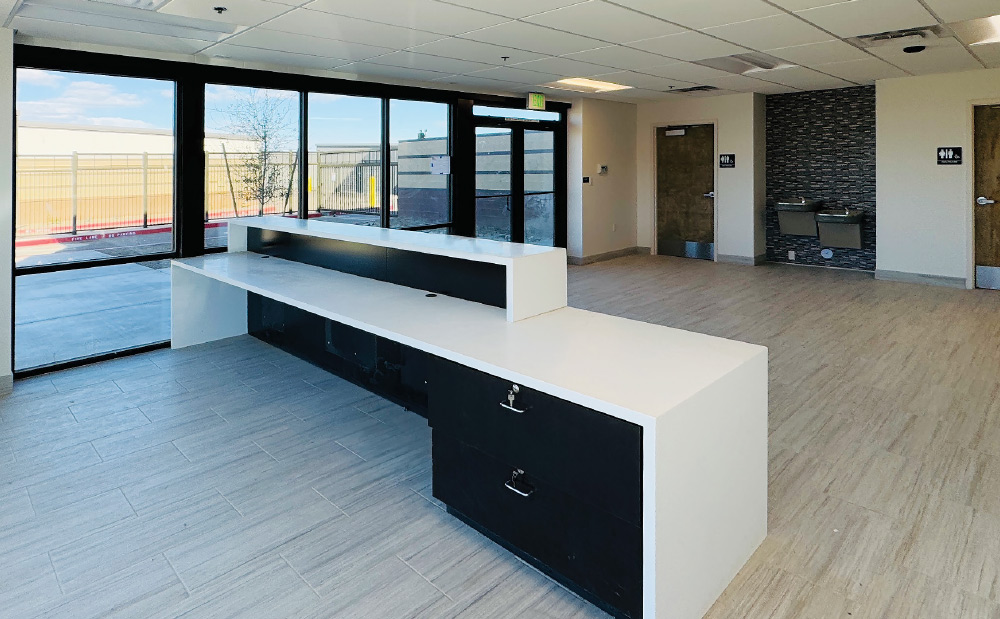

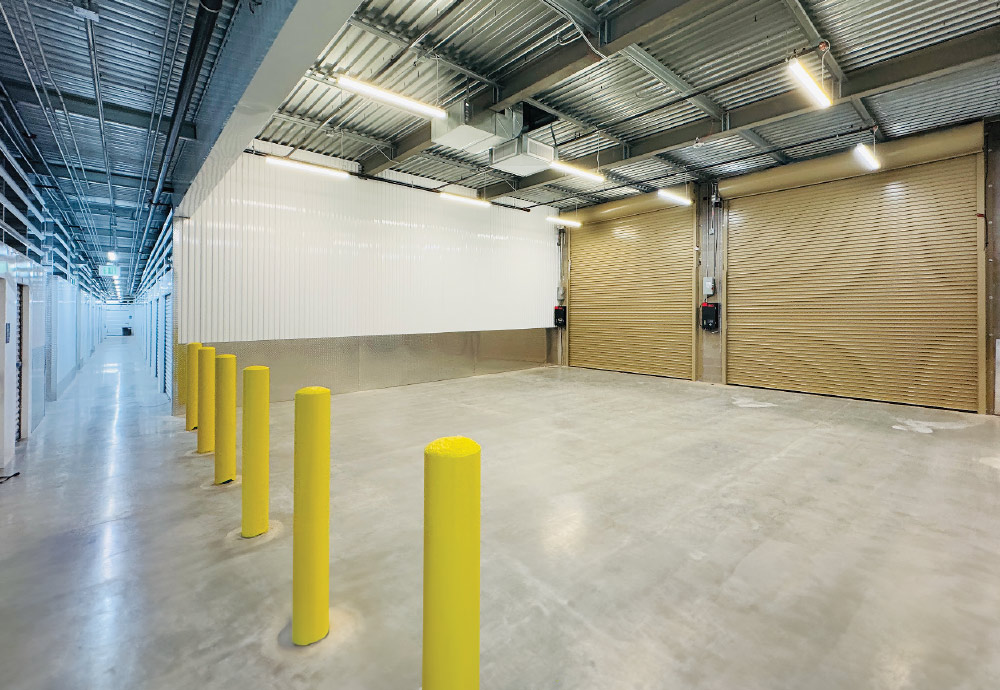
“The new design promised to deliver a leaner, more profitable and more efficient facility,” says Randy Haislet, project manager for RKAA. Despite the new design’s benefits to Cedar Creek, the city’s planning department was not pleased; they had, in fact, wanted the three-story facility as initially designed. “We had to have multiple meetings with city officials to make our case,” recalls Haislet. “It wasn’t easy, but in the end, we did get approval for the new design.”
There were still thorny civil engineering hurdles to clear before the site could take shape. As the project evolved, Tyler Paulson, civil engineer with Olsson, pushed through multiple rounds of “back-to-permit” revisions. “We had to realign water and sewer mains, reroute storm-drain piping, reposition stub-outs, and reshape grading contours to fit the new footprint,” he says. “Stormwater management was probably the trickiest task.”
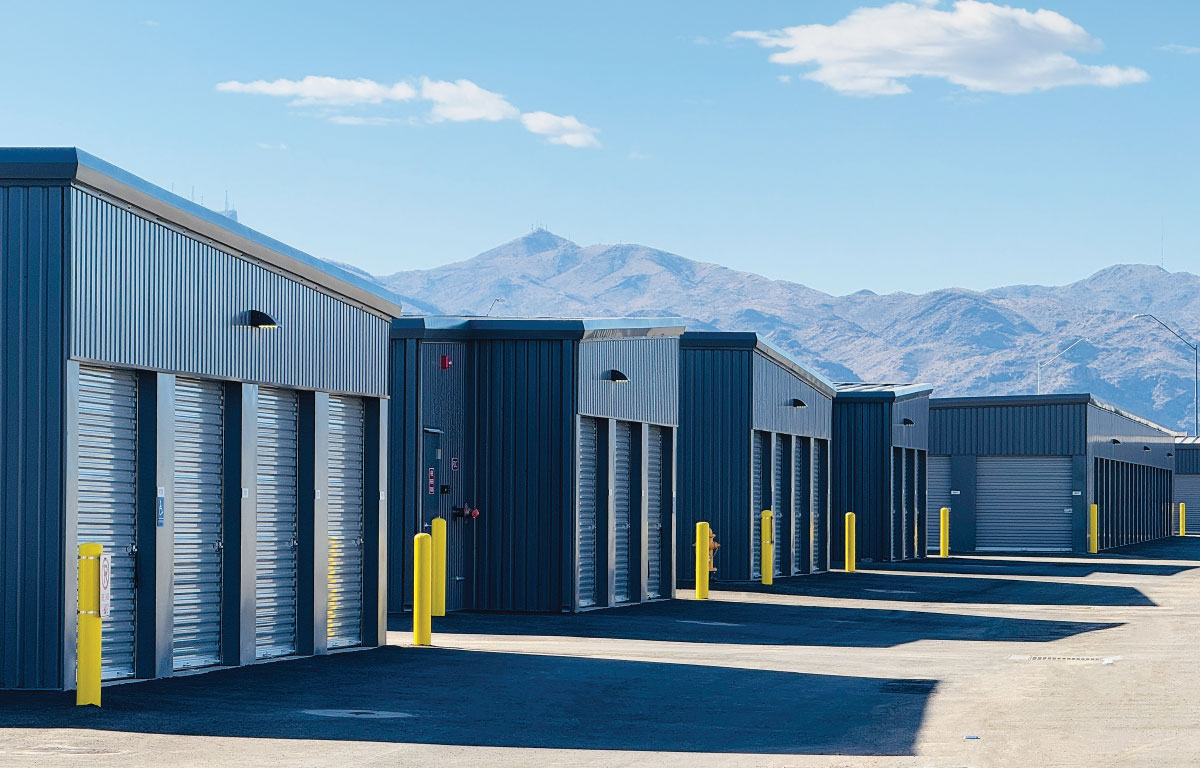
Because of the facility’s long drive aisles, underground retention vaults needed to be added beneath each, with the ability to store nearly 60,000 gallons of runoff. Overflow was then directed to surface basins tucked into the western landscape buffer, adding both capacity and curb appeal along Cactus Road. Each building pad was also given a subtle rise to match adjacent grades and funnel water to catch basins, eliminating thresholds at roll-up doors. “This hybrid system met the city’s demanding drainage standards without sacrificing a smooth customer experience,” adds Paulson.
When exterior cladding supplies (materials needed to install an outer protective layer on the building’s exterior) fell victim to global panel shortages, USD moved fast, vetting new suppliers and coordinating with Campbell Development and the project’s engineers to keep the schedule intact. Campbell Development, under the leadership of President Steve Heil, faced its own pressure point when lenders withdrew support for the three-story tower.
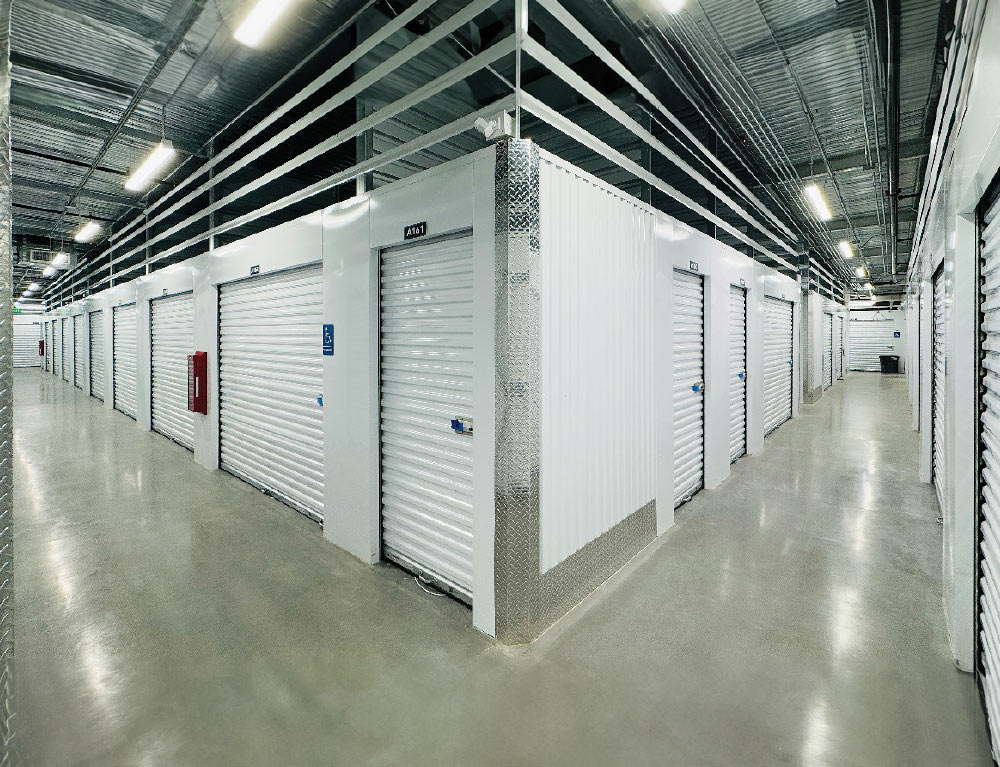
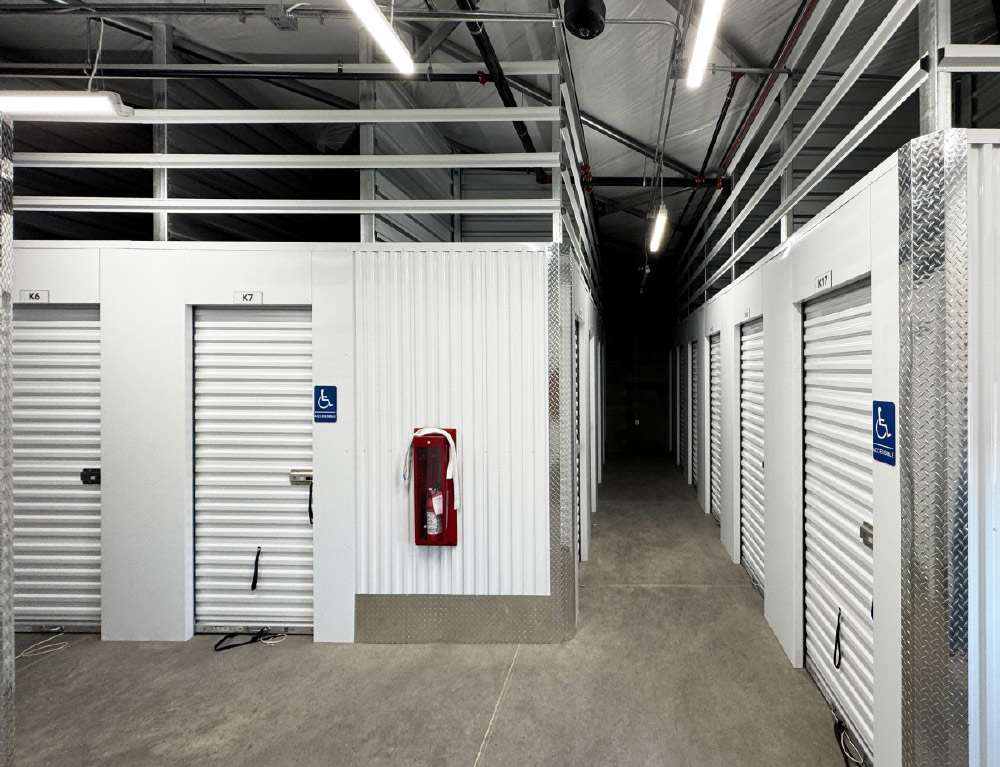
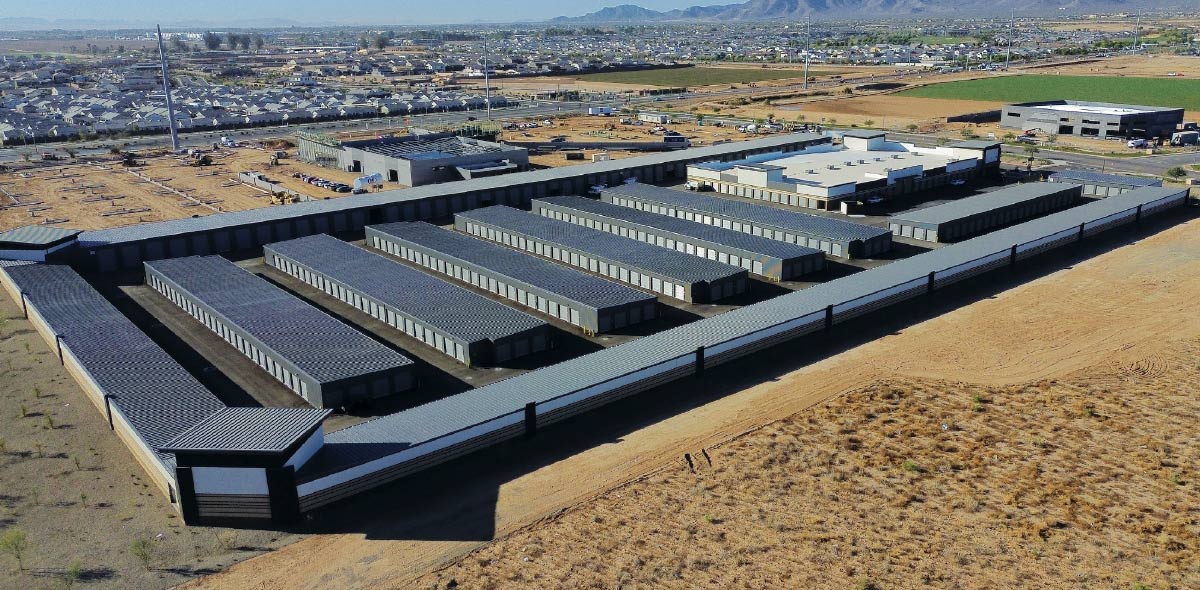
At this time, the pandemic had been in full swing, and other critical components were also facing delays. In response, Campbell Development assumed a hybrid role, serving as both the general contractor and handling strategic procurement. Heil’s team renegotiated contracts with suppliers, rerouted shipments through alternative ports, and orchestrated just-in-time deliveries to ensure the construction timeline was safeguarded.
Frequent site walkthroughs by investors Goldwater Jr., Ken Picard, and Tariq Masad also kept the crew on its toes, accelerating their decisions on finishes and materials. Communication protocols evolved into a real-time, inspection-based design workflow. RFI’s were generated within hours rather than days, and when the design team altered the unit mix late in the process, drawings were modified mid-build. This agility fostered deep trust among Cedar Creek, Campbell Development, and RKAA Architects, transforming potential rework into opportunities for refinement and ensuring that each delay, rather than stalling progress, maximized innovation.
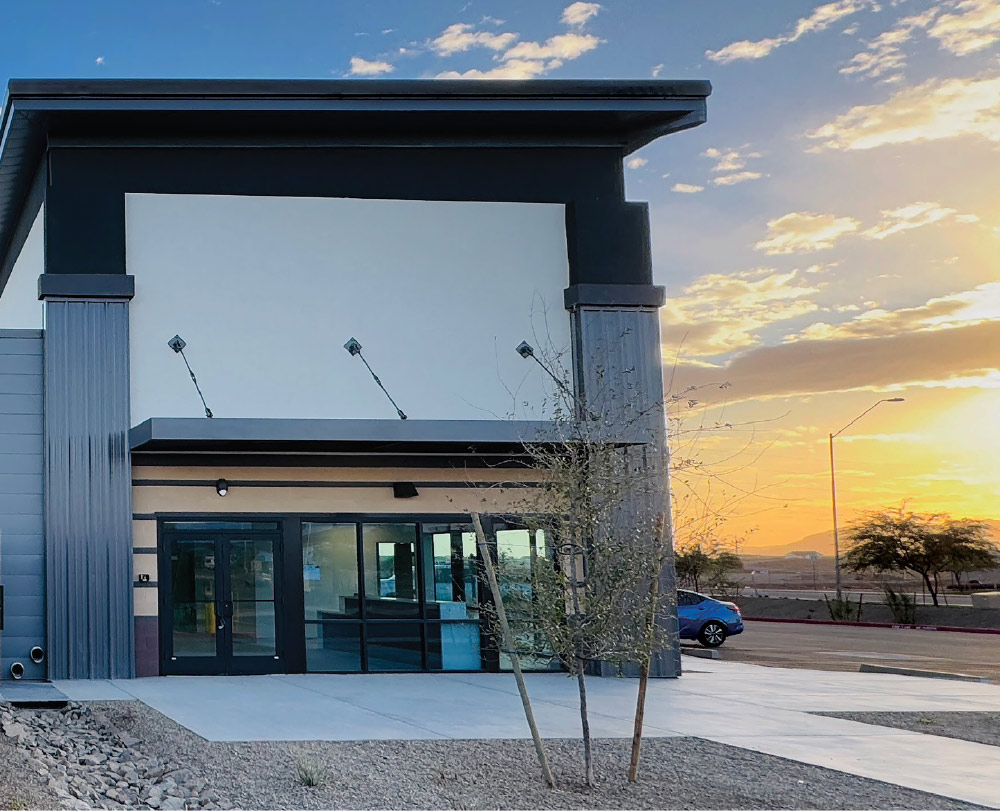
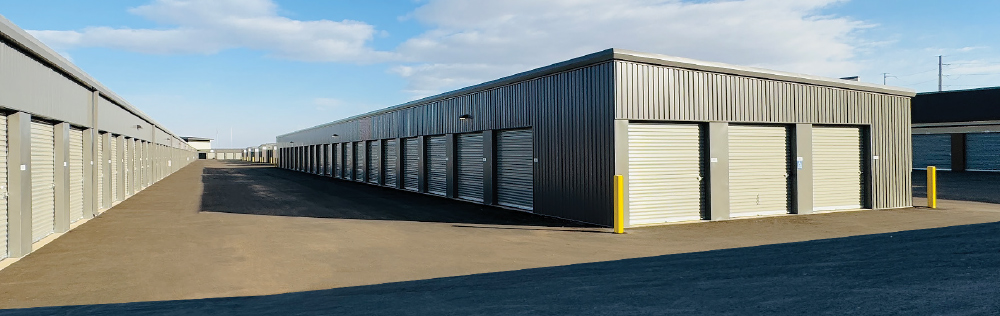
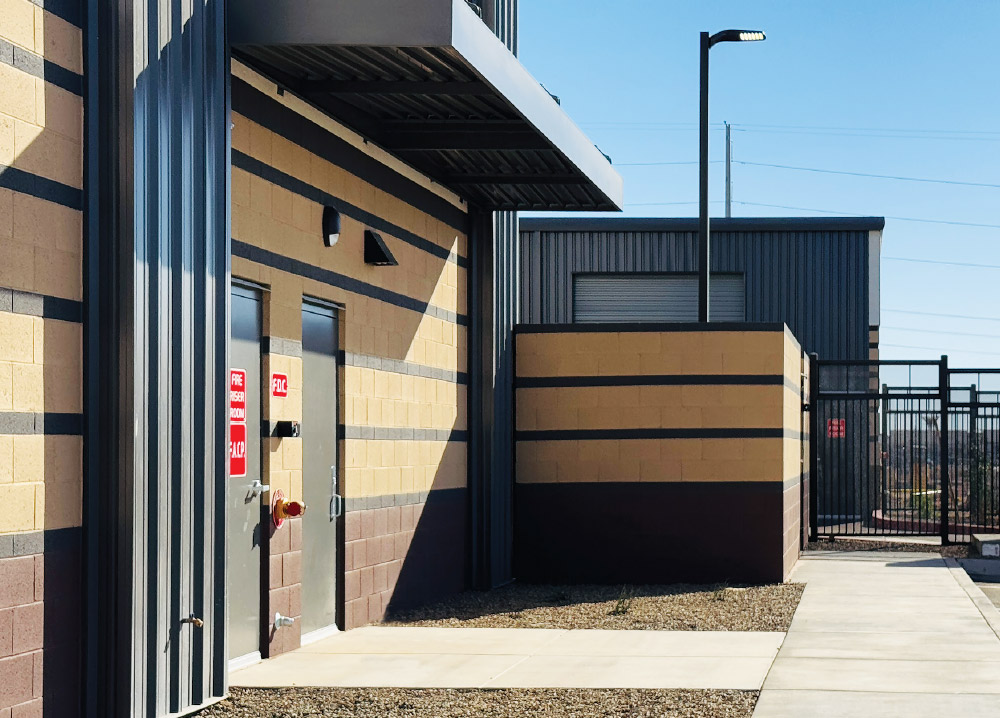
Marketing followed the same forward-leaning strategy. Alongside traditional direct mail, the team launched a geofencing campaign that displayed digital ads to people visiting nearby RV dealerships. By drawing a virtual perimeter around these locations, the campaign targeted likely customers on their mobile devices the moment they entered or left the area. Pay-per-click ads captured online searches, while listings across top third-party storage platforms ensured maximum visibility.
Six months after opening, Storelocal Surprise has delivered on its promise. The facility offers 169,845 rentable square feet across 891 units (267 climate-controlled rooms, 624 drive-up bays, and 48 RV/boat stalls). Occupancy reached 44 percent by unit count and nearly 50 percent by square footage. Drive-up bays commanded the highest per-square-foot rates, underscoring the premium value of scarcity in the emerging market, and revenue outpaced the original proforma by an incredible 20 percent.
Tenants have nothing but good things to say about the facility, which enjoys a 5-star rating on Google and a 4.9-star rating on Yelp. Take a look at some of these accolades:
“Just rented a unit today, VERY NICE facility. Secured surroundings and having the loading dock is so wonderful and convenient!” –James D.
“Great state-of-the-art facility! I appreciated the awesome customer service from Shawn, so friendly and helpful! The units are well-lit, very secure, and easily accessible with electronic locks.” –Lila J.
“I cannot say enough good things about our experience at Storelocal Surprise. First off Shawn, the manager, was extremely helpful, transparent in communication, and personable. In addition, this facility has the best prices in town; we actually left our other unit to transfer our long-term storage here.” –Jeremy S.
Today, Storelocal Surprise anchors the auto park along Loop 303 as a major regional landmark. The project turned mid-permit redesigns, financing curveballs, supply shortages, and shifting city mandates into steppingstones rather than setbacks. More than a place to store RVs and personal belongings, it reflects resilience, thoughtful collaboration, and long-term value for the community it serves.
Owners/Developers: Cedar Creek Capital
Construction Company: Campbell Development
Structural Engineer: United Structural Design, LLC
Civil Engineer: Olsson
Architect: RKAA Architects, Inc.
Project Manager: RKAA Architects, Inc.
Security Provider: Access Control Technologies
Management Software: Tenant, Inc.
Roof: Progressive Roofing
Doors: Snee Door Sales LLC
Interior Systems: Janus International Group, LLC
Landscape Architect: TJ McQueen & Associates
Englewood, N.J.
his year’s Facility of the Year winner for the construction category is Trojan Storage in Englewood, N.J. Like the overall winner, Trojan Englewood rises through the ranks thanks to various elements: practical architectural components, implementation of innovative technologies, and incorporation of sustainability at an exceptionally large scale. The five-story building boasts 162,446 square feet of space, with 1,030 square feet dedicated to offices, and houses 1,368 climate-controlled units with the finest components provided by Janus International.
It’s easy to admire a project once it’s completed, but the construction of Trojan Englewood faced challenges from the beginning that made reaching completion even more admirable. Thanks to GMA Architects and ARCO/Murray Design Studio’s extensive expertise, each issue was resolved within budget and the project’s timeline, and the facilities were able to open their doors to the public on Aug. 28, 2024.
Without further ado, let’s take a walk down that memory lane and see why this facility is being celebrated within the industry and what can developers learn so they can implement smart design into their future projects.
These hurdles weren’t completely unexpected, considering that the building is located along Dean Street, which is a main corridor that runs through the city, and is thus in a densely populated area. Yet, ARCO was able to work around these challenges by thinking outside the box, and successfully delivered the state-of-the-art facility exactly as it was planned.
First was the discovery of contaminated groundwater beneath the site. This posed a significant obstacle to establishing the building’s foundations, but rather than viewing it as a setback, the team approached it as an opportunity to demonstrate the value of ARCO/Murray’s design-build methodology.
“By collaborating closely with our subcontractors’ engineers, we implemented a comprehensive dewatering strategy that removed contaminated groundwater while safely redirecting clean water flow around the structure,” says Cook.
Next up was the zero lot line. “The site was tightly constrained, bordered by two operational businesses to the east and west, an active railroad to the south, and a heavily trafficked major roadway [Dean Street] at the front,” Cook says. It sounds like a nightmare scenario, yet ARCO overcame these conditions by implementing a highly coordinated logistics plan that centered on three key strategies:
- Phased Construction Approach – The facility was built in three distinct phases, allowing portions of the building to be completed and utilized for material staging. This maximized available space and streamlined progress.
- Proactive Logistics and Procurement – This process entailed close collaboration with subcontractors and suppliers, which enabled just-in-time delivery scheduling. “This minimized on-site storage needs and reduced congestion,” says Cook.
- Safety and Traffic Control – Recognizing the risks of working adjacent to a major corridor, ARCO/Murray secured traffic control and police oversight to protect both construction personnel and the public while advancing critical activities.
Then there was the presence of power lines along Dean Street, which could pose a security risk, as well as conflict with municipal requirements. To solve this challenge, ARCO/Murray incorporated a setback roof design, meaning that the top of the structure doesn’t go all the way to the front edge like the floors below. (Think of a stack of books and pushing the top one a bit farther back.) Designing the roof this way ensures that the top of the structure is keeping a safe distance from the power lines.
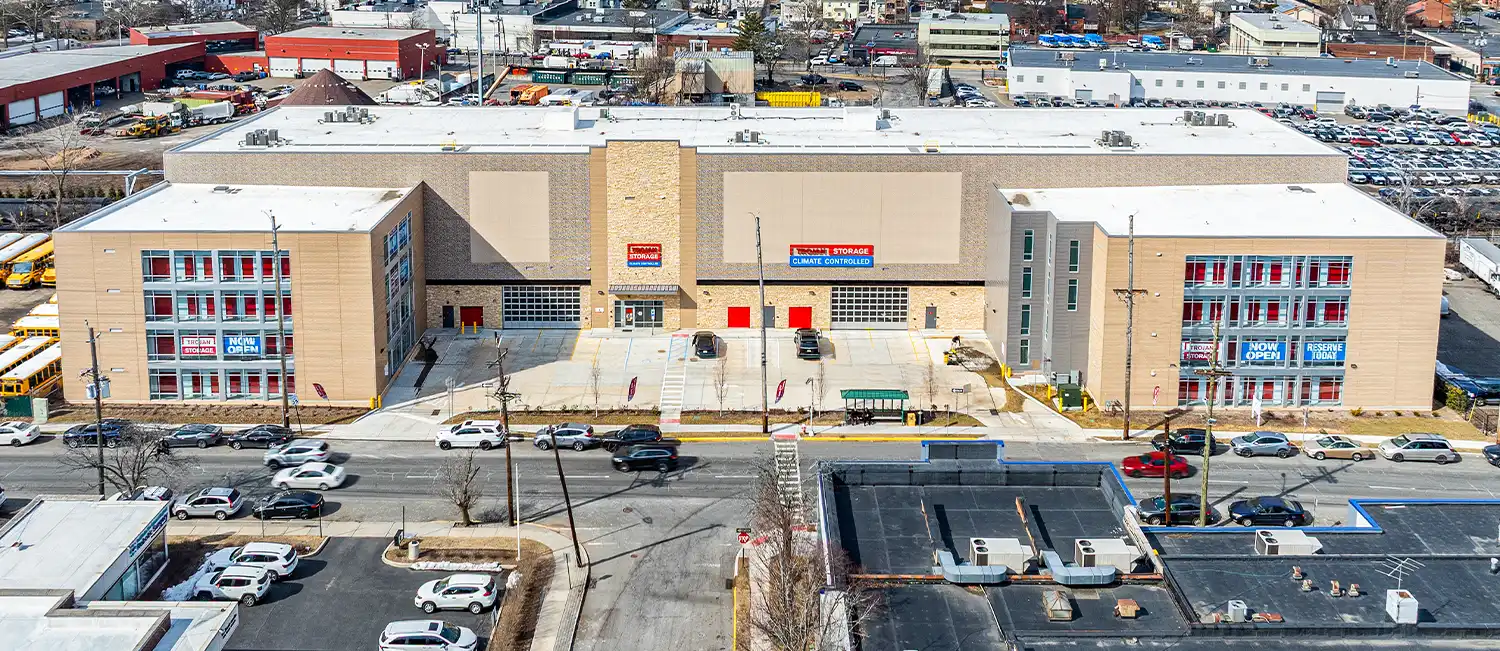
“This adjustment not only resolves functional constraints but also creates a distinctive architectural profile,” Cook says, noting that the contemporary design contributes to the visual interest and identity of the building. “The street-facing elevation presents as four stories, while the primary volume of the structure rises to a full five stories, reinforcing both scale and presence within the major street.”

Finally, ARCO also wanted the building to match aesthetically with its surroundings, so they blended architectural wall panels with metal panels, storefront windows, and stone veneer accents. It features over 5,000 square feet of glazing as well.
“From an aesthetics perspective, it’s a good-looking building,” says John Bilton, director of western Nokē sales at Janus International. “There’s no gate or fence. You have this gorgeous looking multistory building with lots of glass, brick, and metal. You drive by it, and you think, ‘My stuff is going to be safe there.’ It looks like a fortress.”
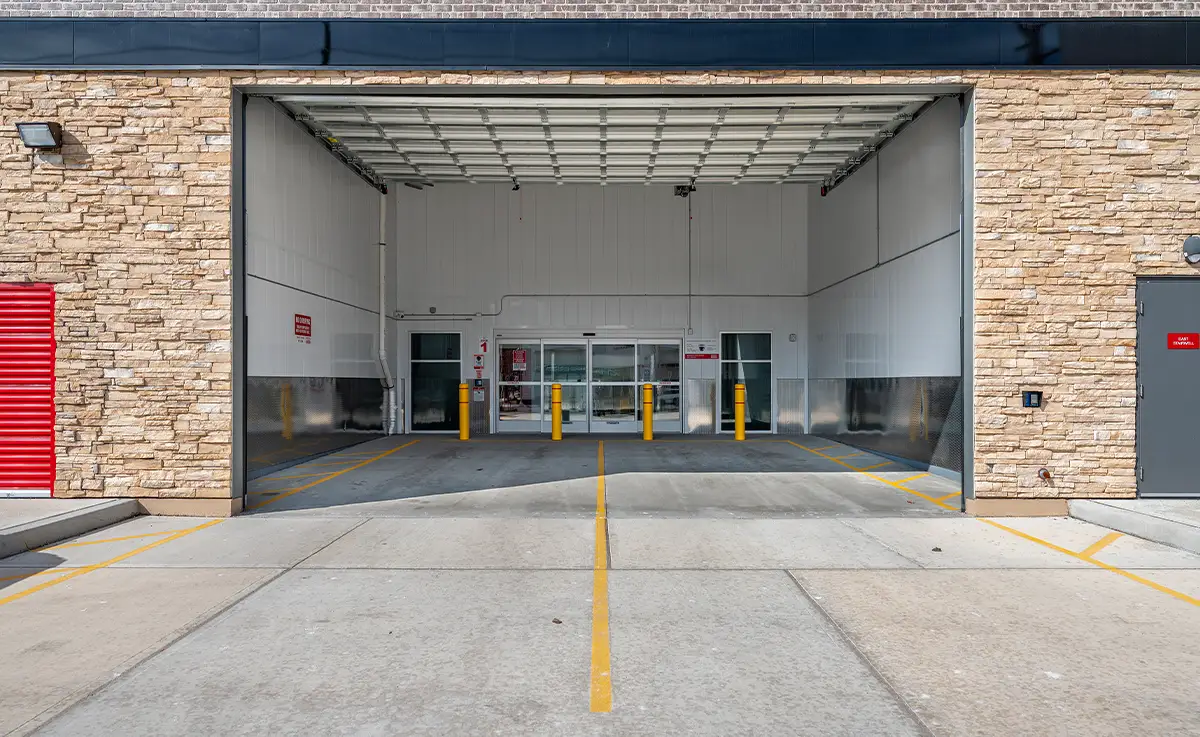
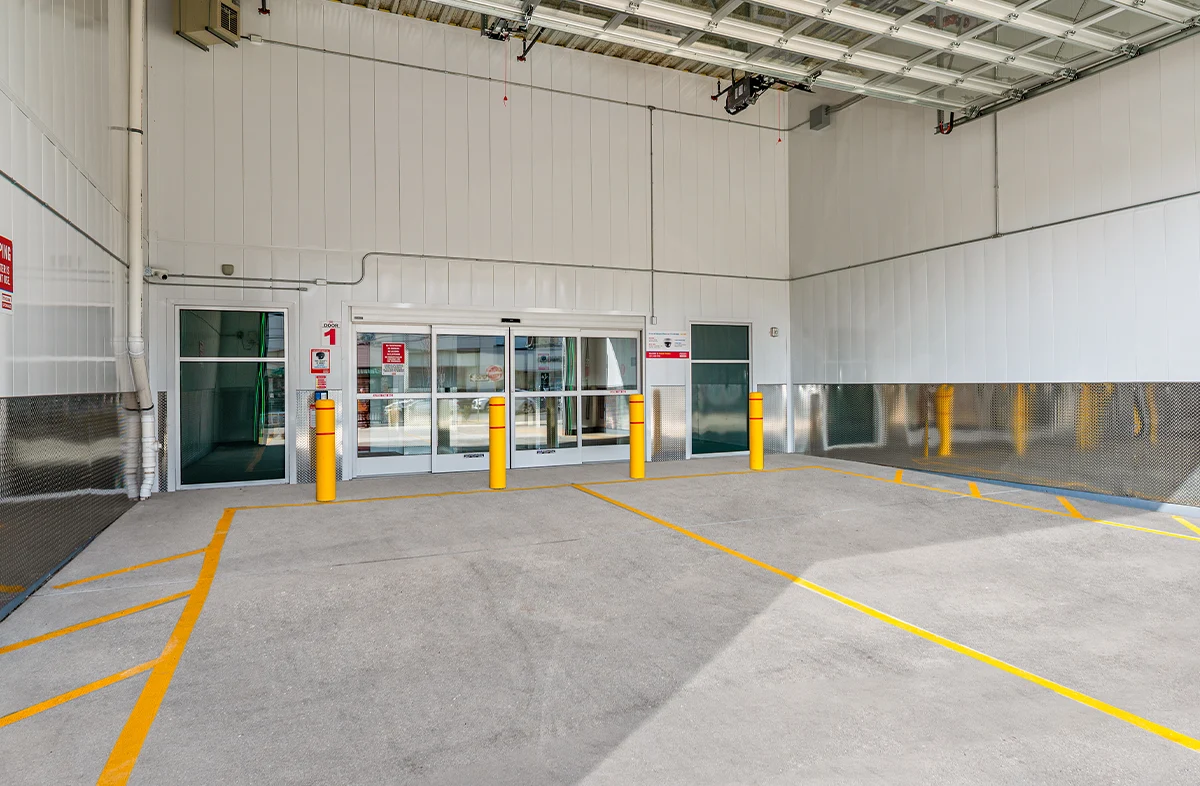
The facility also enables tenants to drive into the property. “You can get out of a storm or winter weather and unload your car inside, where there’s a large holding area for vehicles. And another cool thing is the double slider doors for one of the main entrances,” Bilton says. “When you are going to move materials in, you have these doors that go from the center to either left or right, so you can create a very large opening and easy access to the elevators, so you’re not fighting a regular man door size. I can get out of traffic, go directly inside the building, unload my stuff in a nice environment, and feel secure about my gear being secure. That’s really an important element.”
Cook agrees, pointing out that the drive-in access ensures a smooth move-in experience and a secured space.
“The circulation experience of this well-designed self-storage facility is intuitive, efficient, and user-friendly,” says Cook. “This includes having wide drive aisles and clearly marked pathways that guide tenants seamlessly from entry gates to loading zones. The facility also has large overhead doors and direct access corridors that make loading and unloading simple.”
The first level also has larger storage units, which are ideal for certain types of commercial storage. For example, pharmaceutical or medical device companies that require bigger, climate-controlled units for their products.
Then there is logical wayfinding and elevator placement, as well as clear sightlines that help customers navigate easily between floors and units, creating a smooth flow that minimizes confusion and enhances overall convenience and safety.
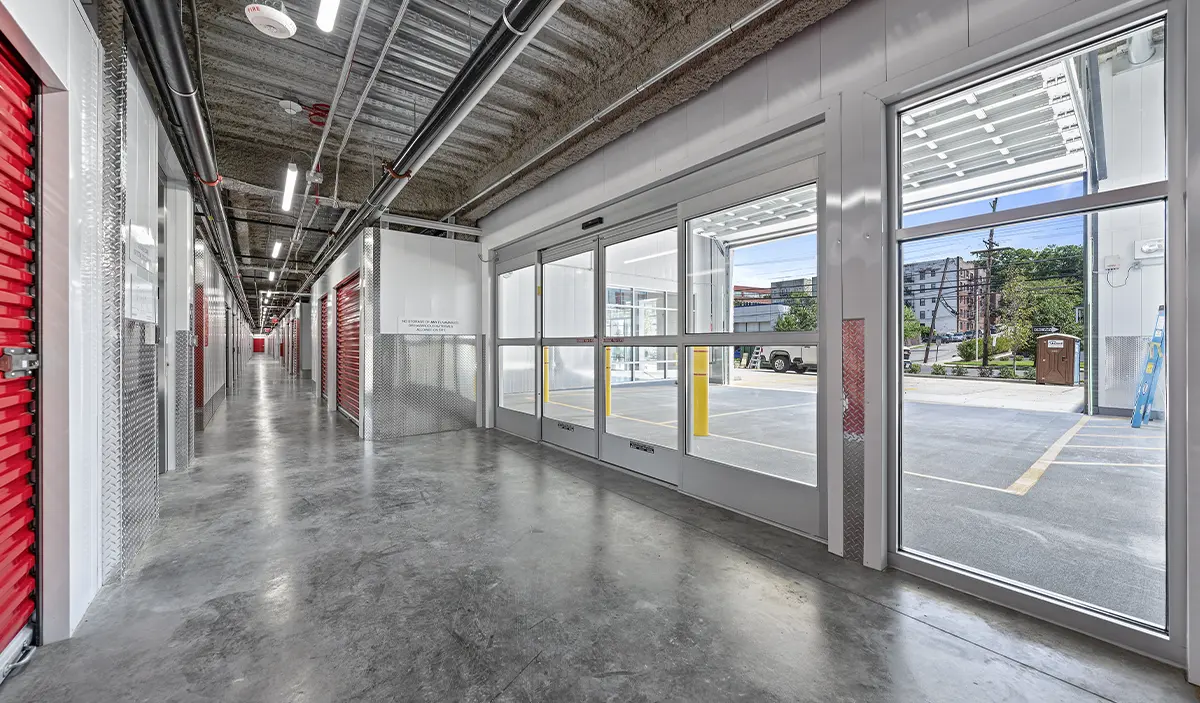

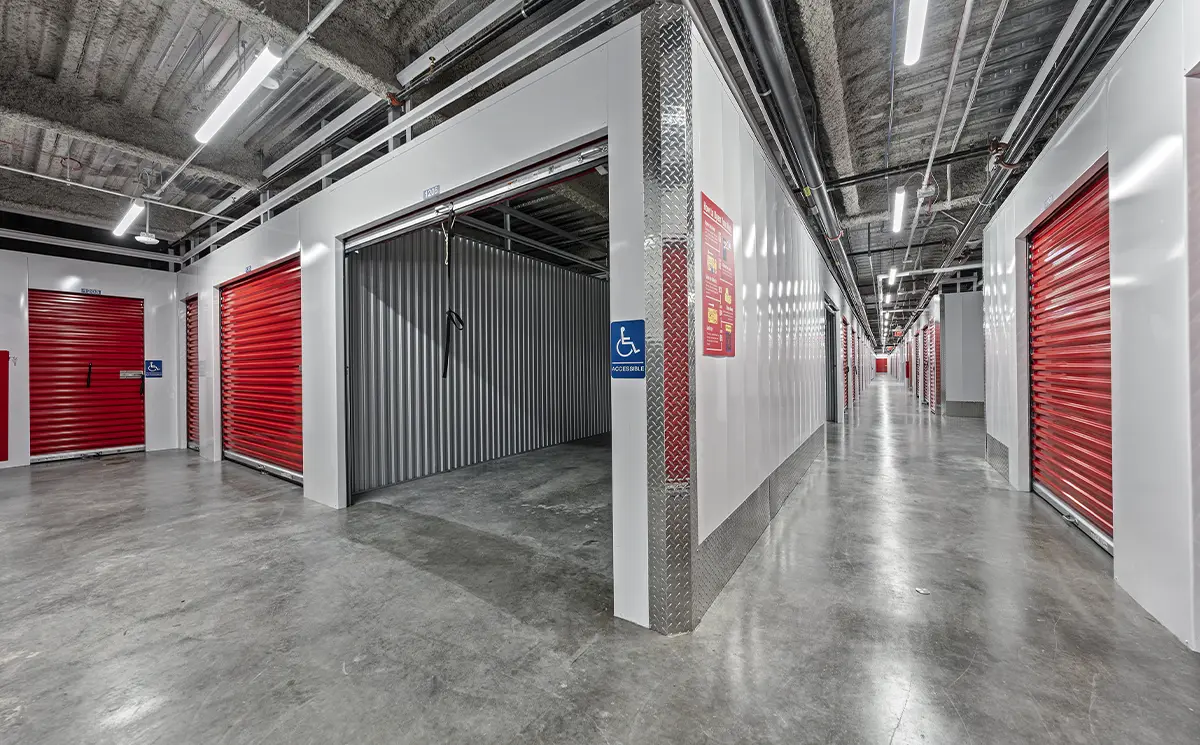
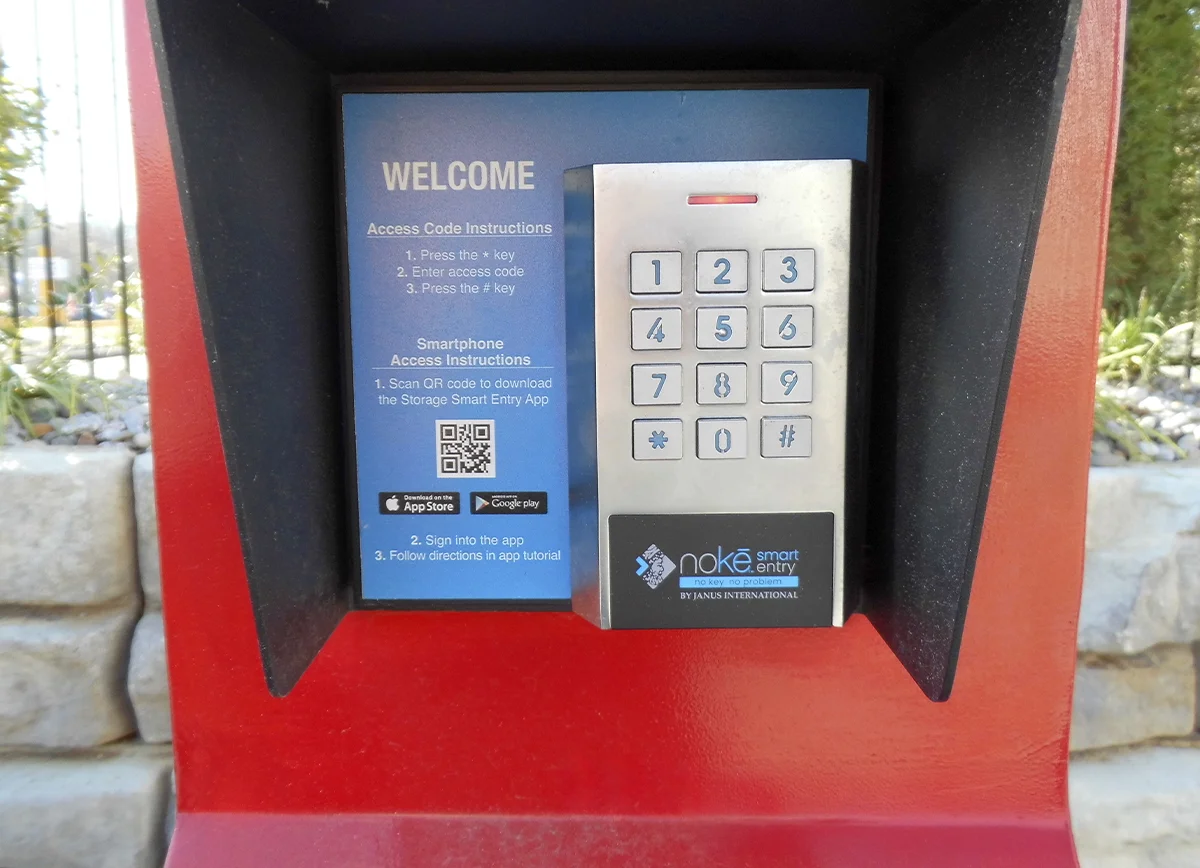
That said, the most popular feature by leaps and bounds is the cloud-based Nokē Smart Entry technology. First, it fully automates access into the building through keyless keypad technology that tenants control through their mobile devices. This application enables them to share access with friends and family, withdrawing that access with the tap of a button, and ensures heightened security within the building since Nokē only allows access to the floor where the tenant’s storage unit is located. It also provides Bluetooth latches on all units, which are accessible via the app too.
“The facility is also leveraging Nokē locks and smart entry technology that enable a seamless customer experience while also elevating the security of the individual unit. The Nokē smart technology at this site means tenants never have to remember a gate code or key; their phone is all they need to enter the facility and their unit,” says Bilton. “In addition to convenience for tenants, Nokē also provides peace of mind. The only way to get in that property is to have the correct credentials on your smartphone. And since most of them now have facial recognition, you have that extra level of security. This is extremely valuable because, historically, there has been crime committed within self-storage facilities. Here, tenants can see that safety is of utmost priority.”
Nokē Smart Entry feels like the gift that keeps on giving for Trojan Storage’s operators since, in addition to making life easier for tenants, it gathers valuable data for staff, such as occupancy rates, rental trends by unit size, when is the facility the busiest, and pricing. This information has enabled Trojan Englewood to maximize efficiency by allocating staff when and where they’re most needed. Operators don’t even have to log into their computers to verify this data. They can check Trojan’s Englewood web portal to see what’s going on from their phone or pad.
And rest assured, while all information is stored in the cloud, the platform is certified with the highest cybersecurity standards, so all personal information is always protected.
Then there are multiple surveillance videos feeding live footage to a wall of screens. “These are massive, 50-inch screens,” says Bilton. “There’s probably 100 cameras on those screens. Every screen has 10 camera feeds on them, so you know everything on this site is being monitored. Everything is also so clean and well lit.”
Trojan Storage is keenly aware of the importance of providing an excellent tenant experience and the fact that sometimes small details can have a significant impact. “Metal tends to expand and contract with changes in temperature, and sometimes this can cause odd noises,” says Bilton. “If you walk into the facilities at 10:30 at night, when it’s all clean and quiet, those sounds could potentially feel eerie, but not at Trojan Englewood. The operators have nice, pleasant music playing in the background, so you can run your errands at any time, knowing that, from a safety perspective, you’re fully covered, but you’ll also have an enjoyable experience while visiting the facilities.”
Trojan incorporates advanced storm water management as well. “Beneath the facility’s parking area, the existing underground infrastructure was failing to manage storm water effectively,” Cook says about the early construction days. “Recognizing the impact this could have on both construction and long-term site performance, our team removed the outdated system entirely and installed a new drainage pipeline to reroute all clean water to the existing river at the rear of the property and away from the job site.”
She explains that taking this approach delivered multiple benefits to the client. “By redesigning the system, we freed up additional space for rentable units, directly increasing the Trojan’s revenue potential. At the same time, the upgraded system improved storm water management for the city, ensuring a sustainable and resilient solution for future operations.”
The new system is also capable of handling the Northeast’s variable climate, and as Cook explains, it turned a complex challenge into a strategic advantage that maximizes both operational efficiency and project value.
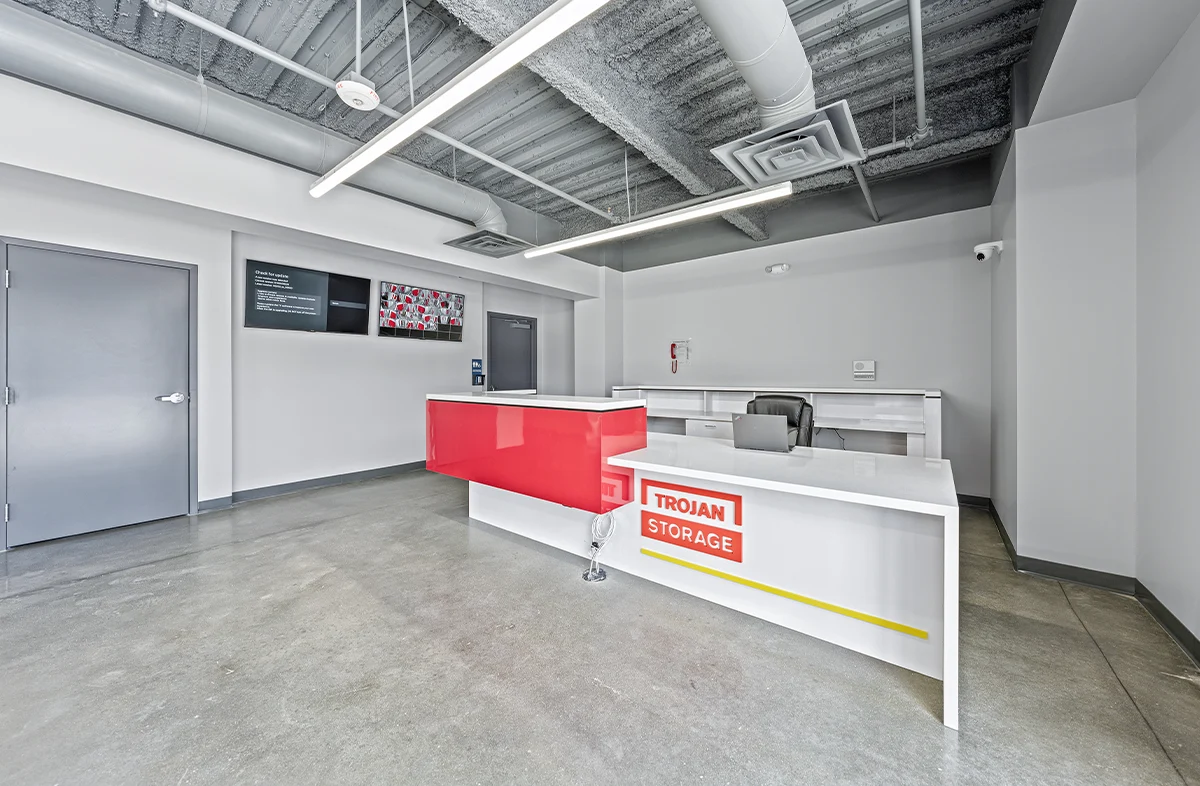
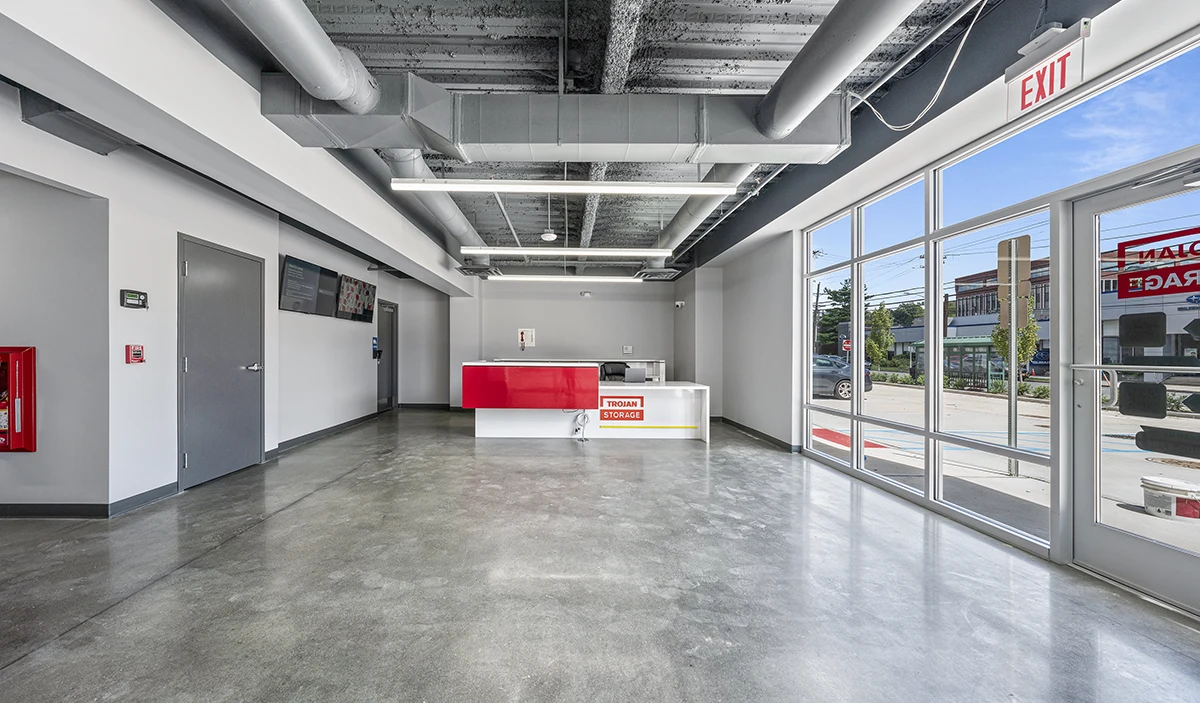
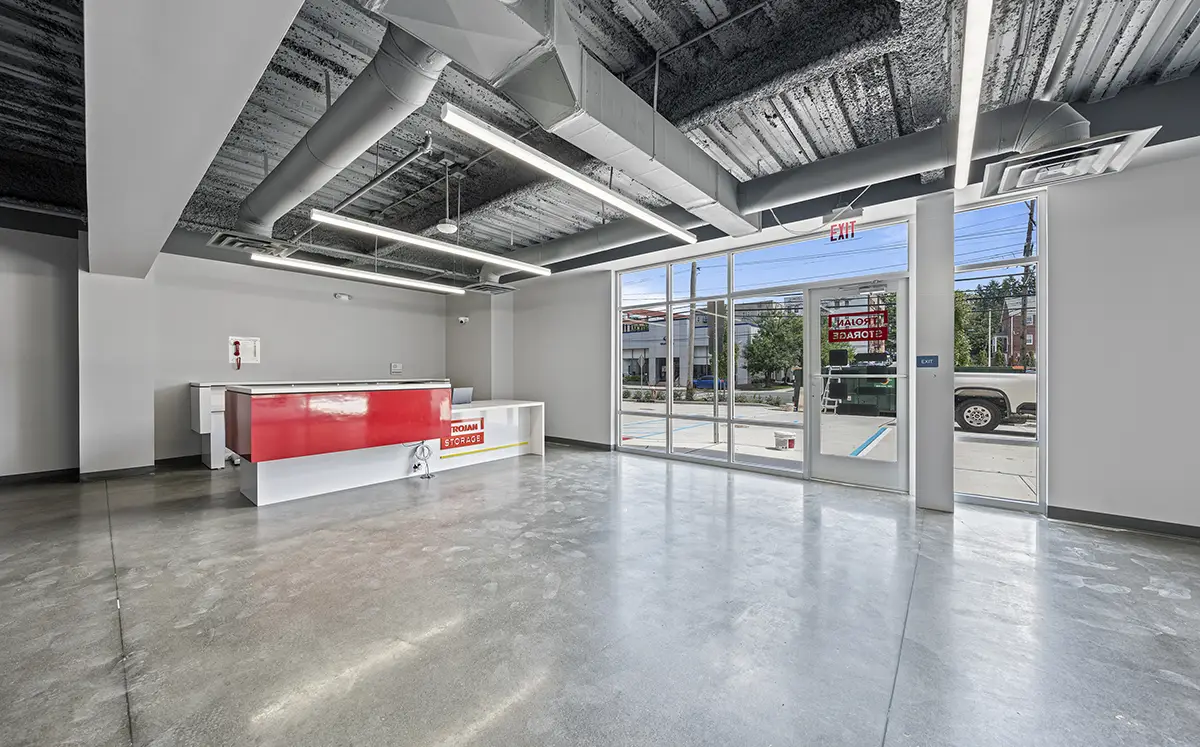
“The collaborative effort between ARCO/Murray and GMA resulted in a state-of-the-art, Class-A self-storage facility that balances efficiency with architectural character,” Cook says, singing praises of her team as well as the finished masterpiece that is Trojan Englewood.
In fact, there are several key lessons learned from this project that could very well serve future self-storage builds. One of them is the value of integrating advanced technology and thoughtful design early in the process. “The fully integrated Nokē system greatly enhanced security and customer convenience, while architectural features like wide overhead doors, red Trojan-branded unit doors, and expansive display areas elevated the facility’s presence and user experience,” says Cook. “From a construction standpoint, other lessons include careful coordination around nearby power lines, early planning for swing stage access, and ensuring proper roof slope design were critical takeaways to improve efficiency and avoid rework.”
As for Bilton, he could wax poetic all day about how much he likes the property. “Everyone thinks their baby is beautiful, but for storage, this is truly a Class-A facility—a high quality building with state-of-the-art amenities. It’s modern, clean, and leverages the highest quality products and technology. I can definitely see why it came up on top when considering the most outstanding facilities of the year.”
General Contractor: ARCO/Murray Design Build
Doors & Hallways: Janus International
Access System & Locks: Nokē Smart Entry By Janus International
Architect: GMA Architects
Structural Engineer: O’Donnell & Naccarato
Civil Engineers: Stonefield Engineering and Design
MEP Engineers: Henderson Engineers
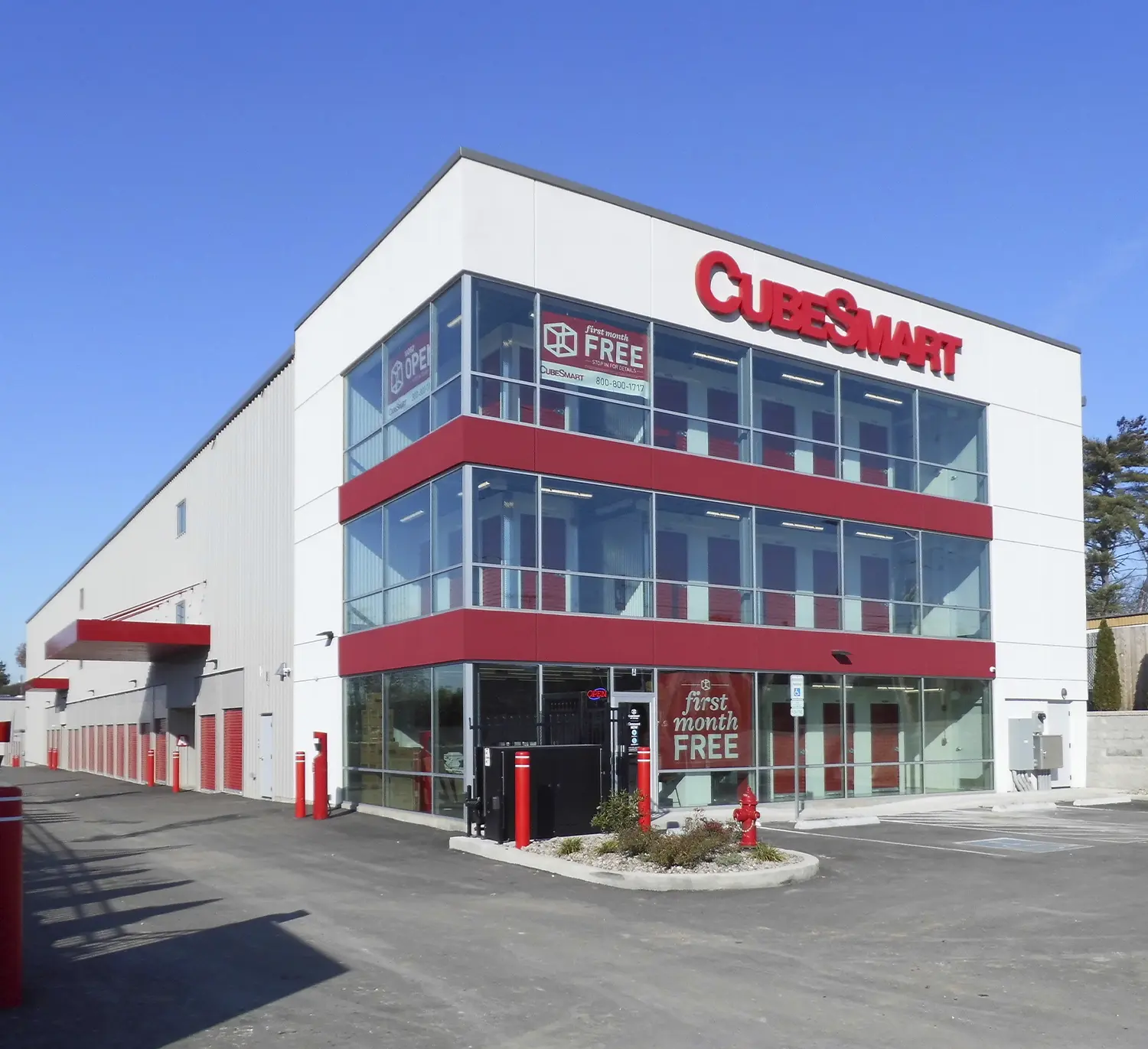
n recognition of innovation and technology adoption, a CubeSmart facility in Nashville, Tenn., has been honored as MSM’s 2025 Smart Facility of the Year. This award underlines not only the facility’s commitment to advanced self-storage solutions but also marks a showcase of how smart technology is transforming the self-storage industry.
The award reflects an ongoing shift in the storage sector, where facilities are increasingly adopting automation and energy-conscious design to meet the expectations of a more digital and sustainability-minded clientele. For CubeSmart and Janus International, the company that nominated the facility, this recognition serves as both a milestone and a model for how forward-thinking infrastructure can set a new industry benchmark.
The Nashville facility, opened in 2025, has already made significant strides. Faced with a challenging site and ambitious design, the development team embraced forward-looking technology and building systems. The result is a facility that blends advanced access, energy-efficient HVAC, comprehensive security, and a smart-enabled tenant and staff experience.
Beyond convenience, these design choices reflect a deeper understanding of how urban growth patterns and digital lifestyles are reshaping customer needs. Today’s tenants expect the same seamless connectivity and control they experience at home—an expectation that CubeSmart’s design directly fulfills.
With its odd shape, sprawling landscape, and multibuilding layout, the development team could not simply build a cookie-cutter box-shaped edifice. This complexity undoubtedly increased the cost, but it also created opportunity: more building volume, more units, and the ability to design a campus experience rather than a single building.
Every successful site begins with strong planning and development foundations. From the first brick laid, to the last camera installed, there are many steps to take and obstacles to hurdle. Construction of a facility with “primarily climate-controlled units required extensive excavation for the distribution of electricity and other utilities throughout the site,” notes Janus International.
In effect, what might have been a straightforward self-storage project instead became a complex civil-engineering and building infrastructure challenge. This hard work paid off: The facility now comprises eight climate-controlled buildings, 100 percent electronic access via smart locks, full security monitoring, and a wireless network across the entire site.
Together, these systems reflect a holistic approach to building design, not just storage units but a smart campus built for operational efficiency, tenant convenience, and differentiated market positioning. All these new developments push forward a momentum of upgrading the self-storage industry to be more accessible and successful for both the tenants and staff on the ground. Many menial tasks, as well as daily inefficiencies in the workplace, have been resolved with the technology installed.
Luke Coriglia, a contributing developer of the property, notes that “as a developer and owner, we are responsible for setting the third-party managers up for success and providing a facility that meets the needs of today’s self-storage tenants.” When this facility was in the works, as was the technological vision for cameras and smart locks (on both the units and for the access to each building), the goal was that it would hopefully make the manager’s and staff’s lives easier so they could focus their attention on their tenants.
Partnering with Coriglia and CubeSmart, and one of the most integral contributors to this and many other self-storage facilities’ successes, was Janus International.
“We partnered with the developer as well as the management company CubeSmart,” says Christine DeBord, CMO of Janus. “We’ve had relationships with them for quite some time. We partnered with them for the door hallway, the design for all of the units, the Nokē system, and the smart locks … Janus has been working with CubeSmart for many years. We are their preferred partner for their new development. We work with them from a technology and integration standpoint. We do a substantial amount of involvement with restoration, rebuilding, and replacement.”
The technology strategy was embedded early in the project: the owner/developer, the management company (CubeSmart), and the technology-integration partner all aligned up front. Technology was not an afterthought; it was thoroughly integrated into both the design and the operations.
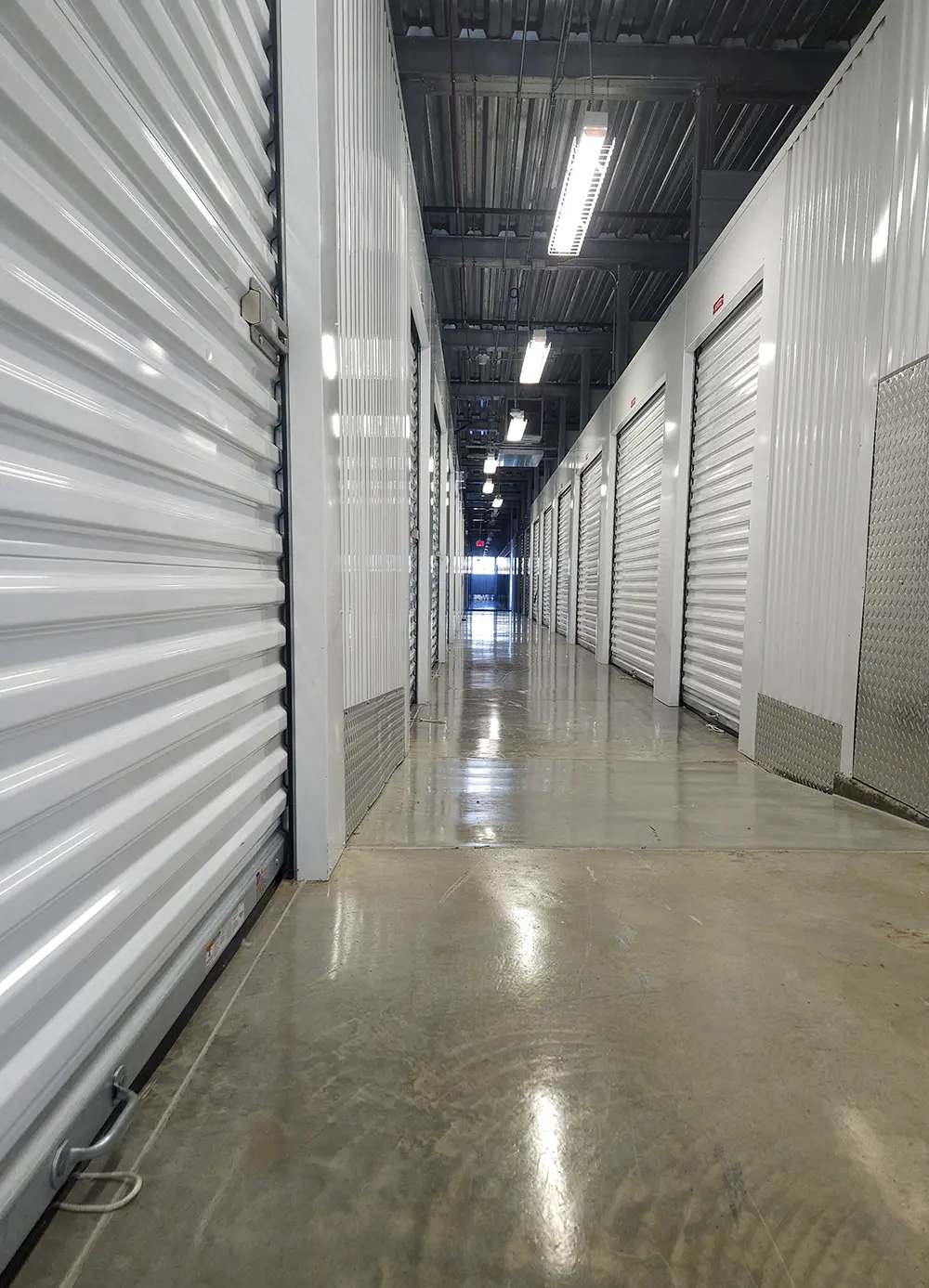
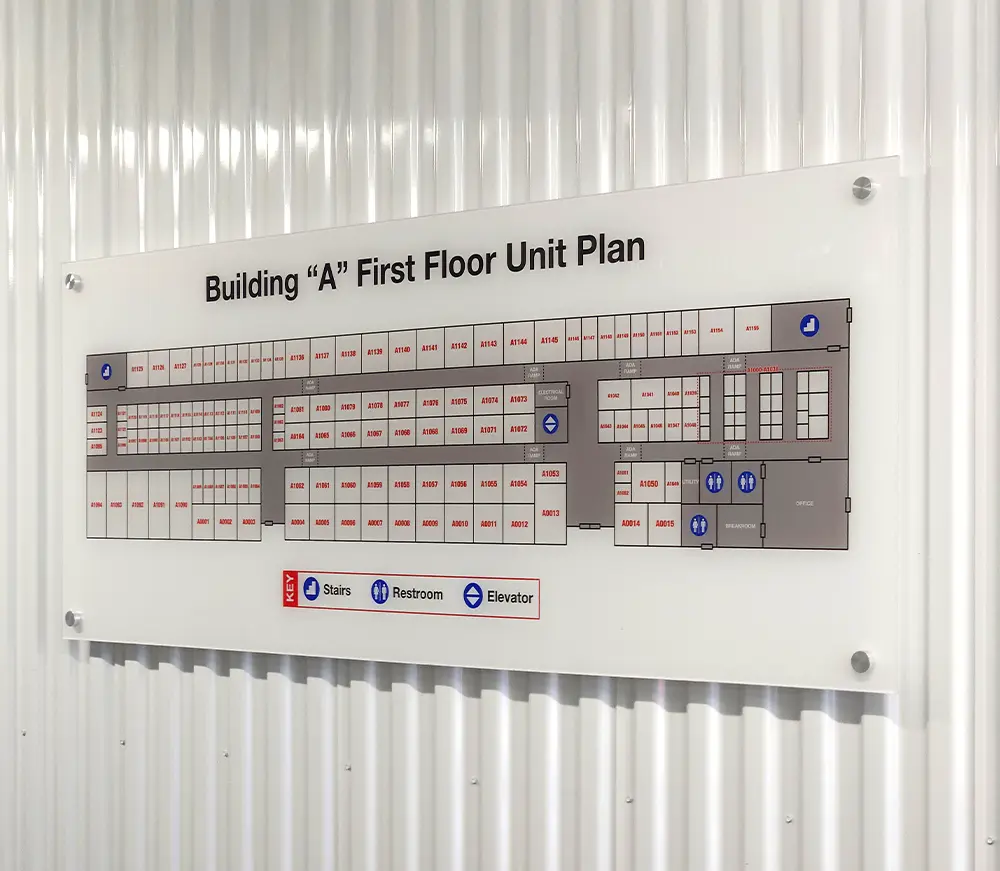
“At this site in Nashville, there’s a lot of buildings, and it’s much easier to push a button than walking all the way over to manually lock and unlock,” Coriglia says, adding that adapting to one’s environment is a great way to stand out in your local market. “Addressing the customers’ needs is important. Nashville is a market of young professionals and people who are tech savvy—these people want a smart product and a smart solution.”
Coriglia also points out the positive reception from management and customers for accessibility. Security is highly valued to anyone, but especially those who are leaving what could be valued belongings in a unit. Instead of intermittent supervision, CubeSmart now has high-security cameras that detect any motion and doors that provide a logged history of those who entered and exited the building that day. In fact, Janus International Inc. reports that there are “95 percent of owner-operators reporting fewer break-in claims using our Nokē smart locks versus traditional padlocks.”
Not only is the security superb, but there are solar panels and geothermal equipment, and the access to this equipment is all very advanced, such as the web-enabled thermostats to control the HVAC. With the Wi-Fi network and physical cables running throughout the buildings, the cameras, ventilation system, and security system are all interlinked.
Acknowledging the current and progressing nature of one’s clientele is key to keeping up with trends. DeBord addresses this, saying that the “Nokē app has a high rating. Customers and tenants are used to using their smartphones for accessing their homes, and we’ve really embraced and are aware of the smart technology’s place—it’s become ubiquitous in the consumer space.”
Managers can now look at any web portal from any device to see which units are open or closed, which tenants are on site, and any motion activity within the facility. “The value to the owner is it increases the manager’s ability to focus on marketing and customer interaction,” says DeBord. “Without smart tech, the managers will spend hours a week on property walks, unit checks, etc.” With this new tech, managers are at the front desk and available to assist any tenant who requires one-on-one interaction. “It helps a manager make the most out of their day,” she adds. In sum, the owner and developer recoup the investment through improved operations and tenant experience.
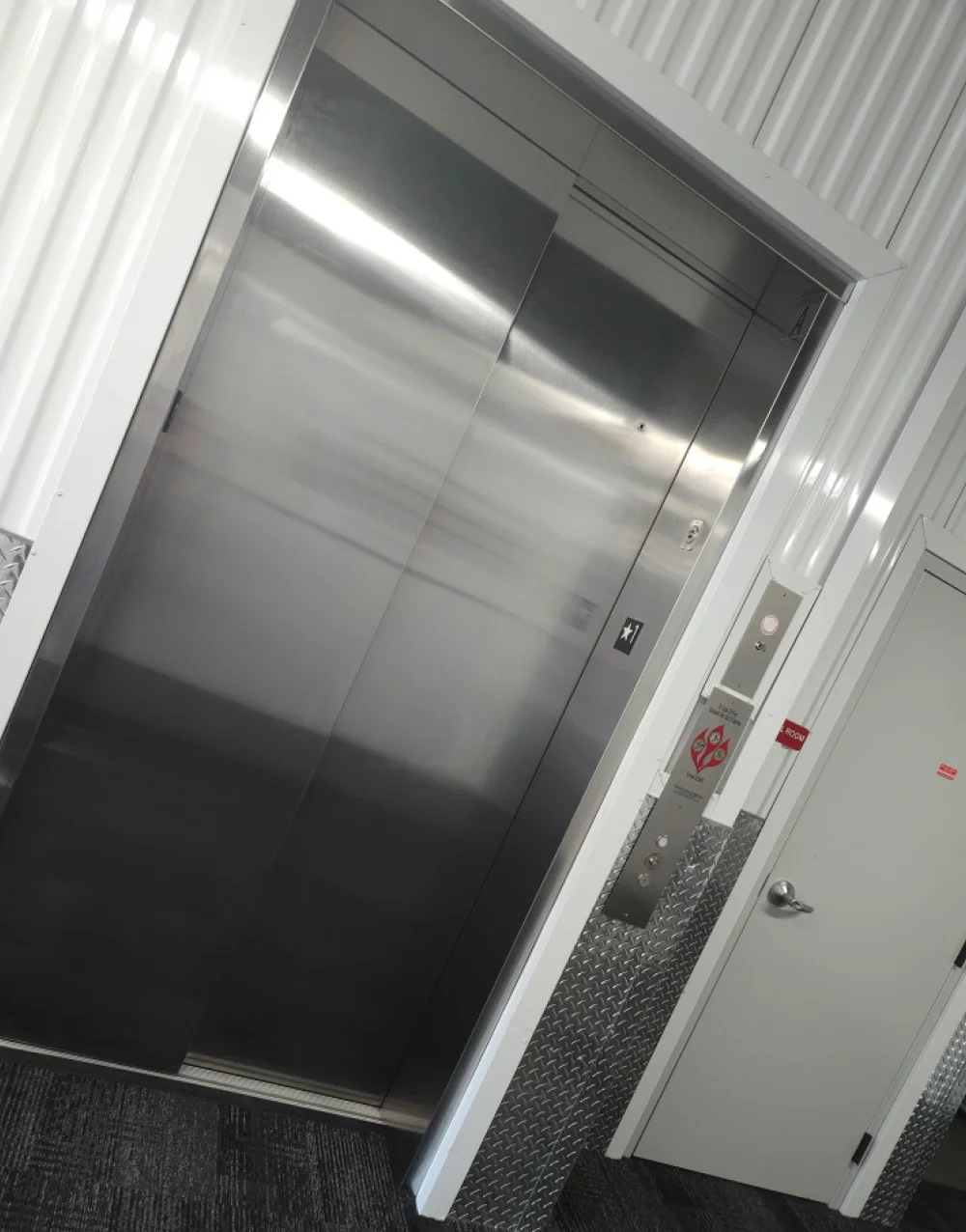
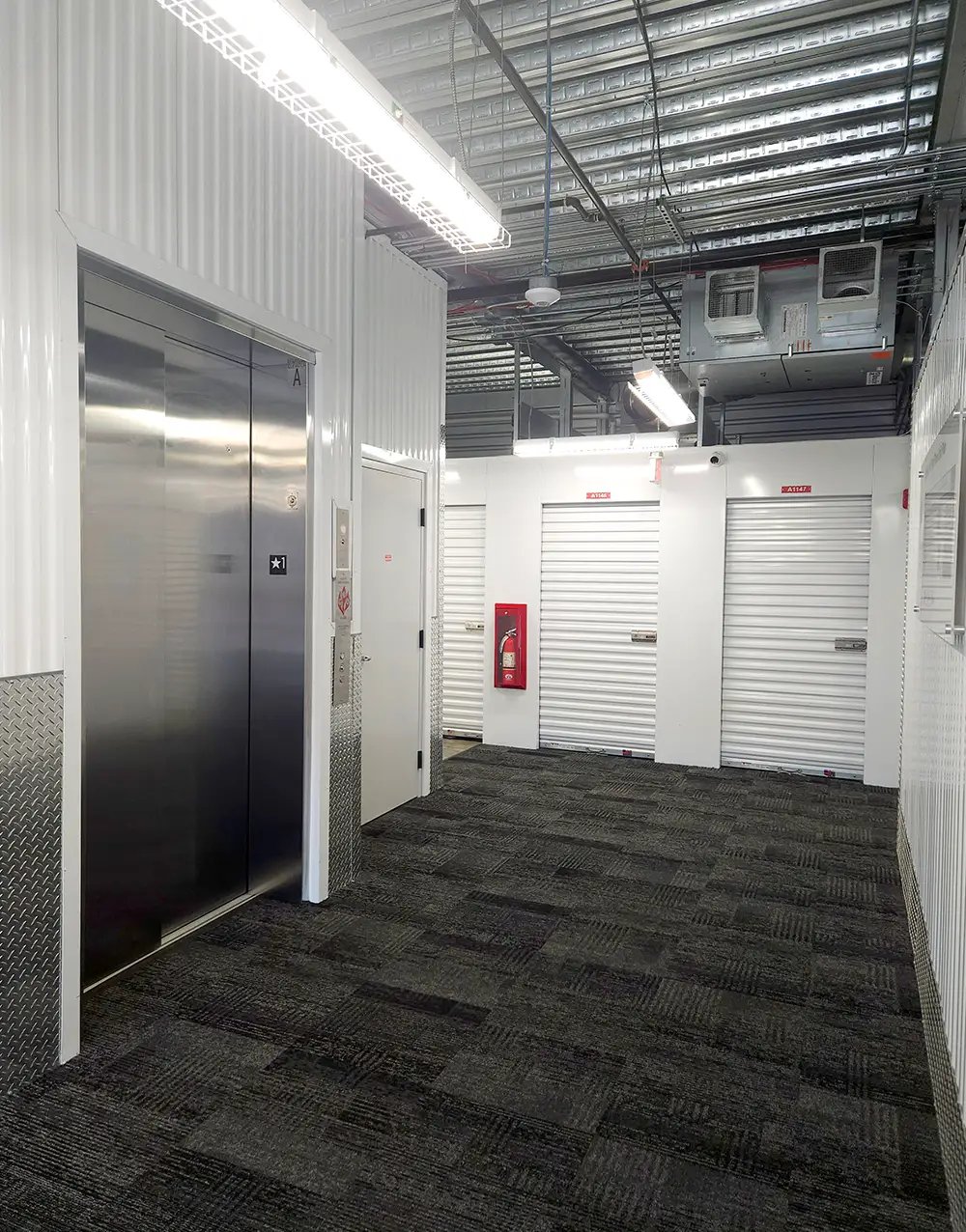
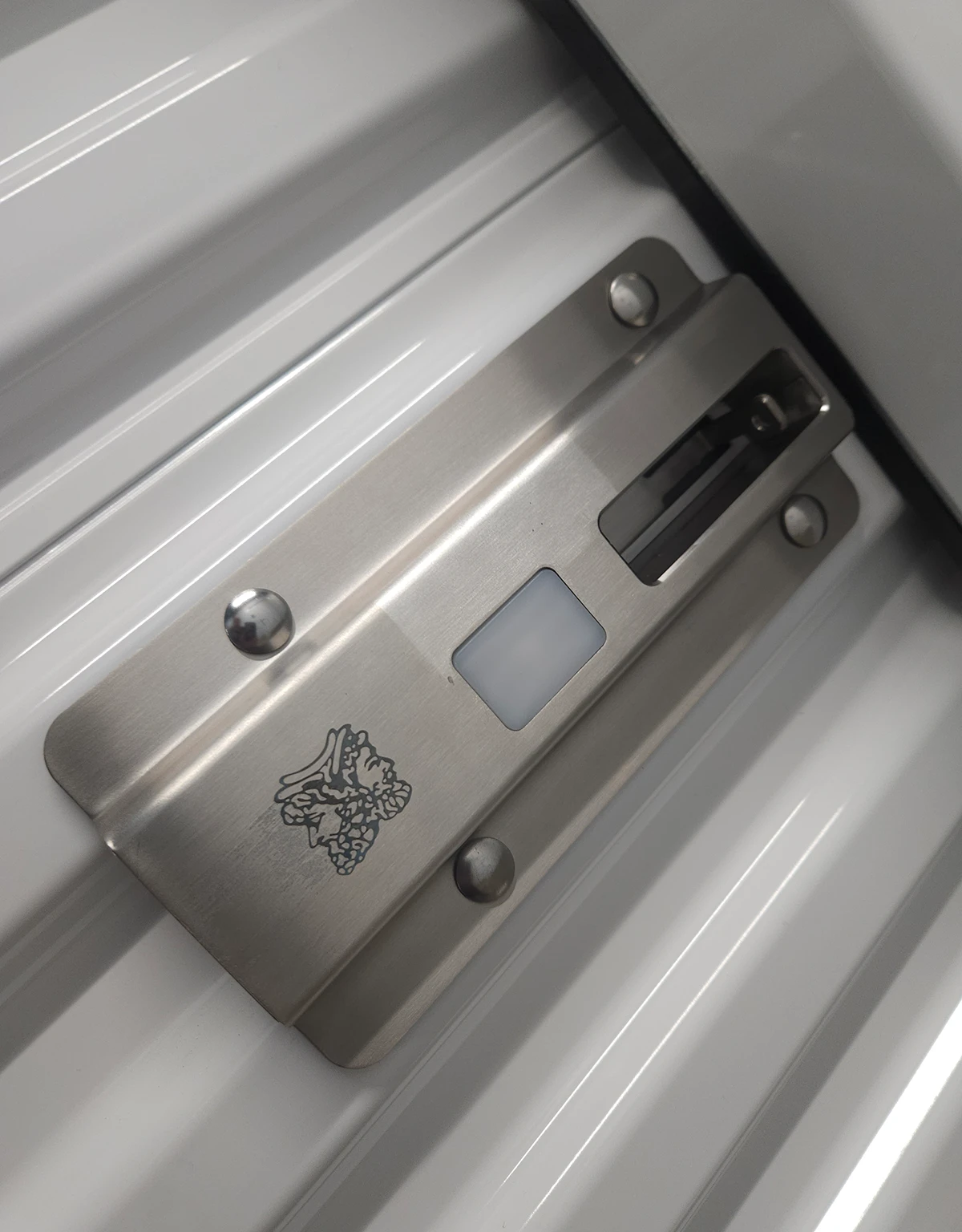
“One thing we’ve seen in getting off the ground is the smart locks were very helpful in the beginning for troubleshooting 1,100 units to see which units are open or not,” says Coriglia. Things like this maximize the facility’s time, and in turn launched this facility much quicker than if this troubleshooting was done manually. Customers have also responded very positively to the extensive security features, as not only does the security system keep out non-tenants, but it restricts tenants to only have access to their specific building. Coriglia sees “the parallels in the multifamily industry using similar locks on apartment units; it’s less expensive than recutting keys and getting new locks. This demonstrates how operational improvements [access monitoring, building separation, remote oversight] translate into value.”
DeBord makes a noteworthy observation. “One thing about this technology is that this facility is never closed to rentals,” she says. “Most facilities are closed on Sundays, with limited hours, and you may be able to make a reservation, but with this technology they can reserve a unit online; they can move in immediately after verifications and signing their lease online. They can move in whenever they are ready.”
This distinguishes smart facilities from competitors, highlighting their accessibility and feasibility to the public. DeBord brings forward Janus’ contribution to the industry, noting how smart locks have been increasingly making headway in the self-storage space since 2017, saying that “the uptick has been real. At first we led the industry in smart-lock tech. We launched our first Bluetooth smart lock in 2017. Since then, roughly half a million have been installed.”
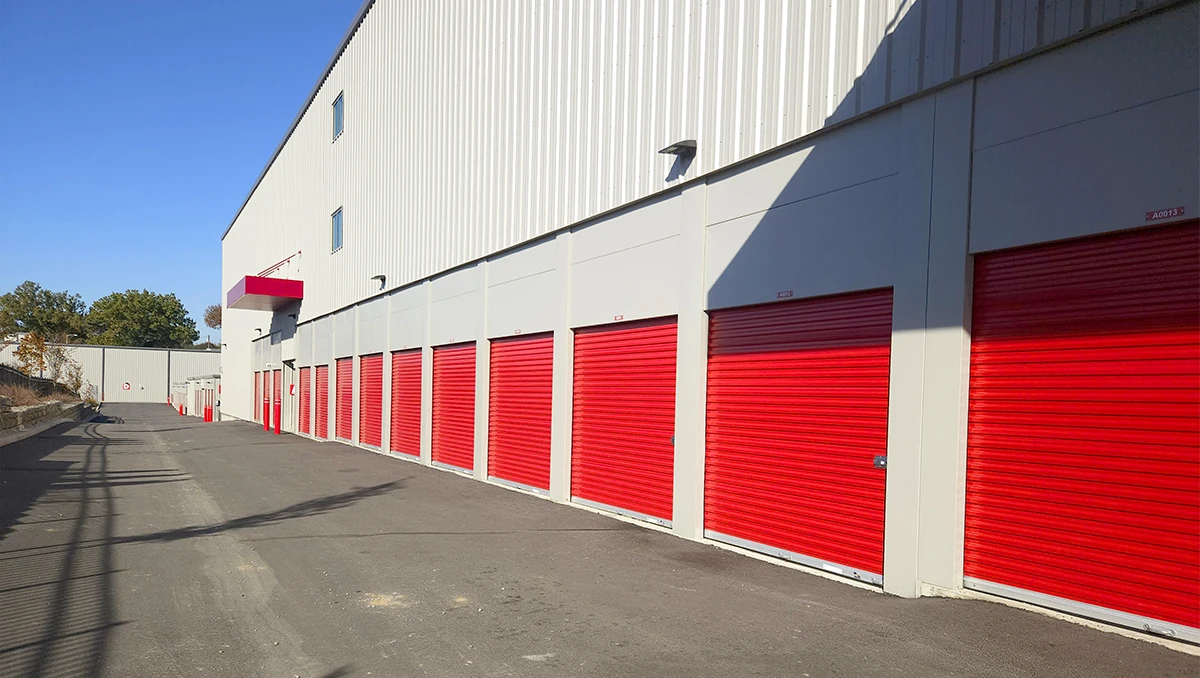
In an era where consumers expect app-based access, instant reservation, digital keys, and robust security, self-storage facilities that lag behind risk being commoditized. By contrast, the CubeSmart Nashville facility shows how high-end infrastructure (smart access, campus-wide connectivity, data-driven HVAC, multibuilding design) can create a premium asset that appeals to tech-focused users, including remote workers, small-business storage, and niche segments (like bands or mobile creatives) that value smart systems.
From an operational vantage point, the building owner and operator benefit from remote oversight, analytics on access and usage, fewer manual tasks (property walks, key cutting, lock changes), faster turnovers, and differentiated marketing appeal.
For owners and operators considering their next facility, the CubeSmart Nashville story offers a blueprint: Integrate smart systems early; ensure the user experience is simple and seamless; focus beyond just storage to access, security, and operations; and recognize that the investment pays off particularly in larger, multibuilding complexes.
While smart technology is not right for every facility, in the right context it delivers real value—for owners, managers, and tenants alike. Congratulations to CubeSmart and all the teams behind the Nashville campus for achieving this recognition. The self-storage industry is evolving, and this facility is leading the way.
Owner: Farragut Investments & Warden Capital
Management Company: CubeSmart
Builders: JM Williams Contractors
Architect: H2A Architecture & Design
Access System & Locks: Nokē Smart Entry by Janus International
Property Management Software: Storable Edge
Doors & Hallways: Janus International






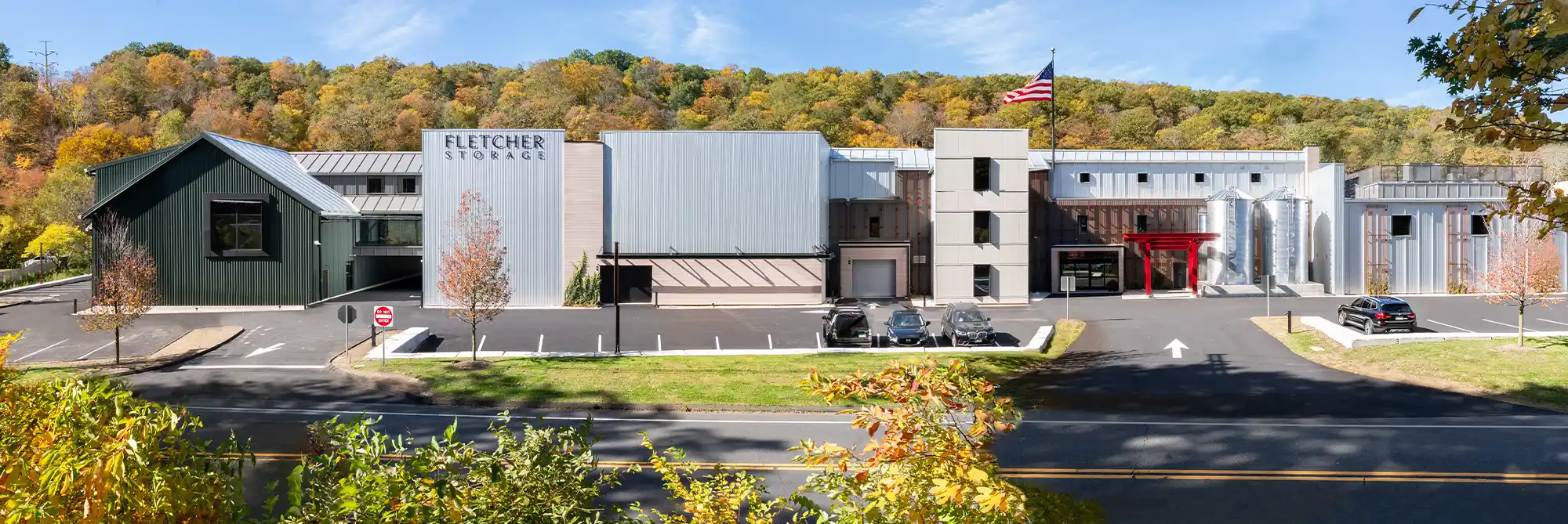
he Fletcher Storage facility in Redding, Conn., is a stunning development by Nick and Ryan Fletcher, who each brought their own unique talents to the team. Nick came from a background in technology, brother Ryan construction. Nine years ago, they joined forces to become operators and developers within commercial real estate.
“Our company started out as a high-end residential home construction company,” says Nick. “We build custom homes in Greenwich, Darien, the Hamptons, typically from $5 million to $50 million-type custom homes. We are involved in the whole process, soup to nuts, working very closely with architects as well as design build.”
The brothers used their experience to enter the storage arena with an impressive first foray into the industry. Notable features at this 2025 New Facility of the Year winner include Bluetooth locks, climate-controlled storage units, luxury vehicle storage, EV charging stations, superior security features, drive-thru access, 24/7 access to units, white-glove concierge service, and upscale wine storage with a dedicated wine tasting area.
“Any of the deals that we have done, any of the projects that we’ve worked on, have always been local in Fairfield County or Westchester County,” says Nick. “We have an intimate understanding of the local market and the submarket. We understand the demographics and the main economic drivers of these towns and how they move.”
He goes on to say, “We look at things a bit differently. It’s almost a contrarian view on commercial real estate. We take a residential approach to commercial projects. Because we have such a good understanding of the demographics in this part of Connecticut, we tailor our projects and the deliverable to best suit our clients.”
The Fletchers started buying value-add office and multifamily projects in Greenwich, taking the same approach of inspiring through design and elevated aesthetic to inject an unexpected spark into the commercial setting.
“With Fletcher Storage, this was a project that we actually got under because it is located in our hometown of Reading,” says Nick. “It is a quiet residential town, but wherever they have commercial pockets, the zoning is all encompassing and generally pretty liberal.”
Securing a project in an area with generous zoning policies is key in an era of tougher and tightening restrictions on self-storage.
“We drove past this dilapidated vacant property for eight or nine years,” says Nick. “It was a 40,000-square-foot R&D/office building. Eventually it went on the market and there was just no interest. It was almost forgotten when my brother secured it under contract in 2017. There was some remediation and some environmental issues that we had to work through. Ultimately, we purchased the property in 2021, in the early days of COVID.”
The Fletchers had never done self-storage before but recognized it could be an interesting opportunity because it was allowable, a permitted use, and it had square footage and acreage that would enable the brothers to build density on the property.
“We spent close to two years studying self-storage really closely,” says Nick, “and ultimately decided this is the product that we wanted to build on this site. We went before the town, got it approved for self-storage, and started the design of the building and structure.”
In the process of gaining approval from the town authorities, it didn’t hurt that these were local sons of Reading and had built a stellar reputation in the region as quality developers.
“I imagine the fact that we were boys who grew up in town and were now trying to leave our impression and leave something positive behind helped the process go faster,” says Nick. “I think there was a great deal of confidence in us because the town of Reading knew about the Fletcher brand. We’ve built homes here before. They knew our project would be built right and it was going to be aesthetically pleasing and something that residents wouldn’t mind driving past.”
Although the personal connection with Reading might have helped dodge some slanted questions, it wasn’t a blank check for acceptance.
“We were the beneficiaries of really liberal zoning in a town that is so unaccustomed to commercial real estate [that] in some ways we were able to educate authorities along the way because of an inexperience with the asset class. The municipality had to outsource and go to other towns to figure out what self-storage even meant at the core. We helped guide them and there was a certain level of confidence because we were the boys from Redding.”
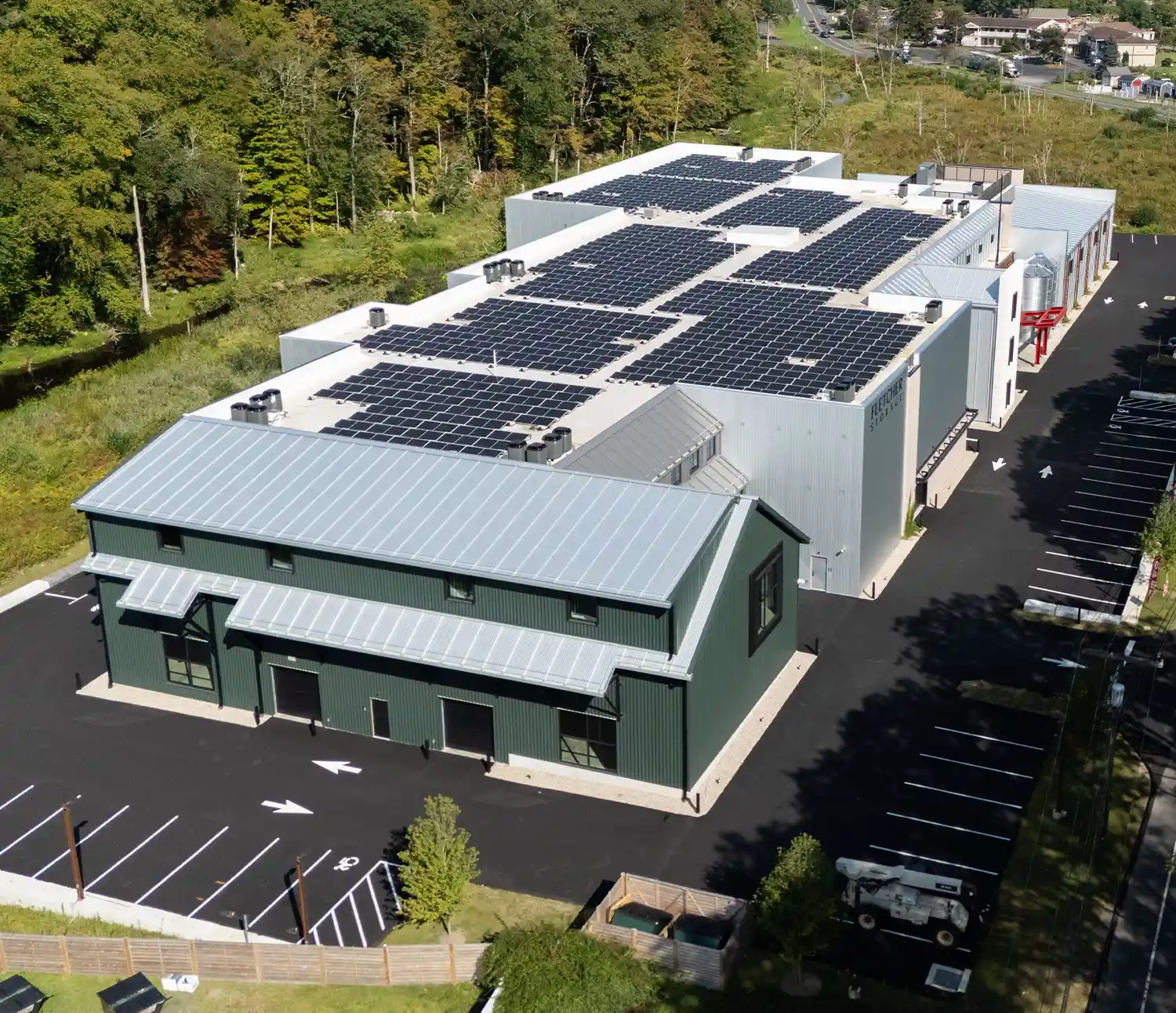
“I originally set out to recreate the historic mill,” says Ryan, “but then I asked, ‘Why recreate the past when we can engineer the future? We designed the 241 Ethan Allen facility to be a modern, sustainable marvel, off-grid, using continuous insulation and a full heat pump system, with above-ground water detention as an architectural feature.”
Blending design and future-proof sustainability in a beautiful way makes the project a standout.
“It’s about inspiring people to see that responsible design can be beautiful, resilient, and can last hundreds of years,” says Ryan. “We wanted people to drive by and think, ‘These guys did something extraordinary,’ because we can do better than just another white box.”
That personal connection with the area came into play when making decisions about aesthetics.
“This became kind of a personal project for us,” says Nick. “For one, it is in the town that we grew up in. It was also an opportunity for us to make a statement on what was otherwise a very forgotten piece of real estate in Redding. We took a great deal of care. Our process when we build is we don’t cut corners. We’re always thinking progressively about sustainability.”
At the same time, the Fletchers feel a responsibility to think about efficiencies when it comes to expenses and driving costs down.
“We try to be as mindful as possible about the user experience and how the property circulates. That all went into the pot when we were developing the design and coming up with a business plan for this real estate. We had a heavy hand in the design of the building and started construction at the end of 2022.”
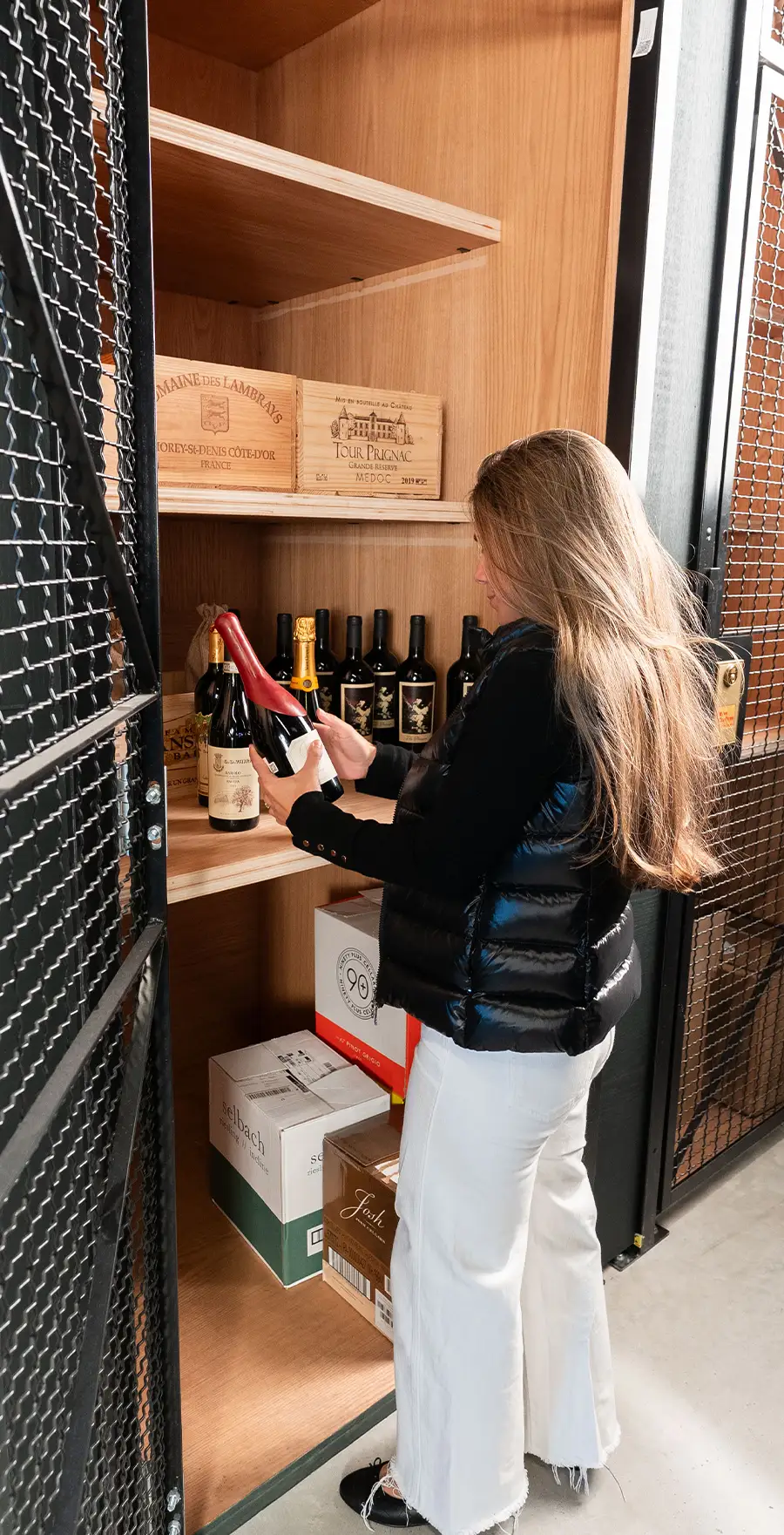
“We ran into some hiccups along the way with site conditions, product delays, and some price increase consequences of COVID-19,” says Nick. “We were fortunate to dodge the more recent tariff issues we’ve been seeing with the most recent presidency, but we had to bob and weave through construction as discovery was occurring and as numbers started to settle. We stayed committed to what we’ve always done—building a best-in-class product that we have firm belief in and can be proud of.”
A fundamental aspect of building storage is ensuring the project stands on solid ground, especially due to the live loads that can be substantially heavier than other commercial buildings.
“One of the biggest ones which elongated both the timeline as well as the cost was this area has a lot of unsuitable soils for the superstructure and steel load,” says Nick. “The foundation needs to be really, really solid. What we learned as we started to drill was we had to go down a lot farther than expected. We weren’t driving into ledge; we had to drive in deeper, which took more time. Because the soils weren’t great, we had to install more piles to support the building. There were real costs associated with that.”
Even best-laid plans can run into unforeseen bricks walls, or lack thereof.
“We did a major architectural rehaul halfway through the project because the cost of brick skyrocketed and the cost of labor post-COVID went through the roof,” says Nick. “The masonry budget changed rapidly as we got closer to the siding stage. We made a dramatic change to the architecture and what the façade and the elevations of the building were going to look like to be more cost-effective.”
These changes didn’t mean abandoning the goal of a beautiful end result.
“We still wanted to deliver something that really was appealing to the eye,” says Nick. “An unexpected benefit of it was we found this really great paneling technology. It’s like a three-in-one paneling technology that serves as an interior wall, insulation, and exterior siding. You slap the panels onto the girts or steel of the building, and it creates an immediate, much tighter envelope. A lot of engineering went into this, and from a climate-control standpoint, the building becomes a much more efficient incubator holding temperature than if we had gone with the previous design.”
Tyler Divoll, chief sales officer of R.J.D. Associates, says, “R.J.D. Associates Inc. (NY) is proud to have been the industry representative of MetlSpan insulated metal panels for the Fletcher Storage facility at 241 Ethan Allen Highway project in Redding, Conn. The insulated metal panels not only enhanced the building’s architectural appeal but also delivered exceptional performance. Creating an efficient and weather-tight building envelope, simplifying the installation process, and meeting the design objectives.”
Turning a loss into a win made a more sustainable project product while maintaining the same level of design and aesthetic appeal previously planned.
“When we were looking at getting credits for solar and going through cost analysis, we received much higher marks,” says Nick. Higher scores meant more credit as a result of the product that we used.”
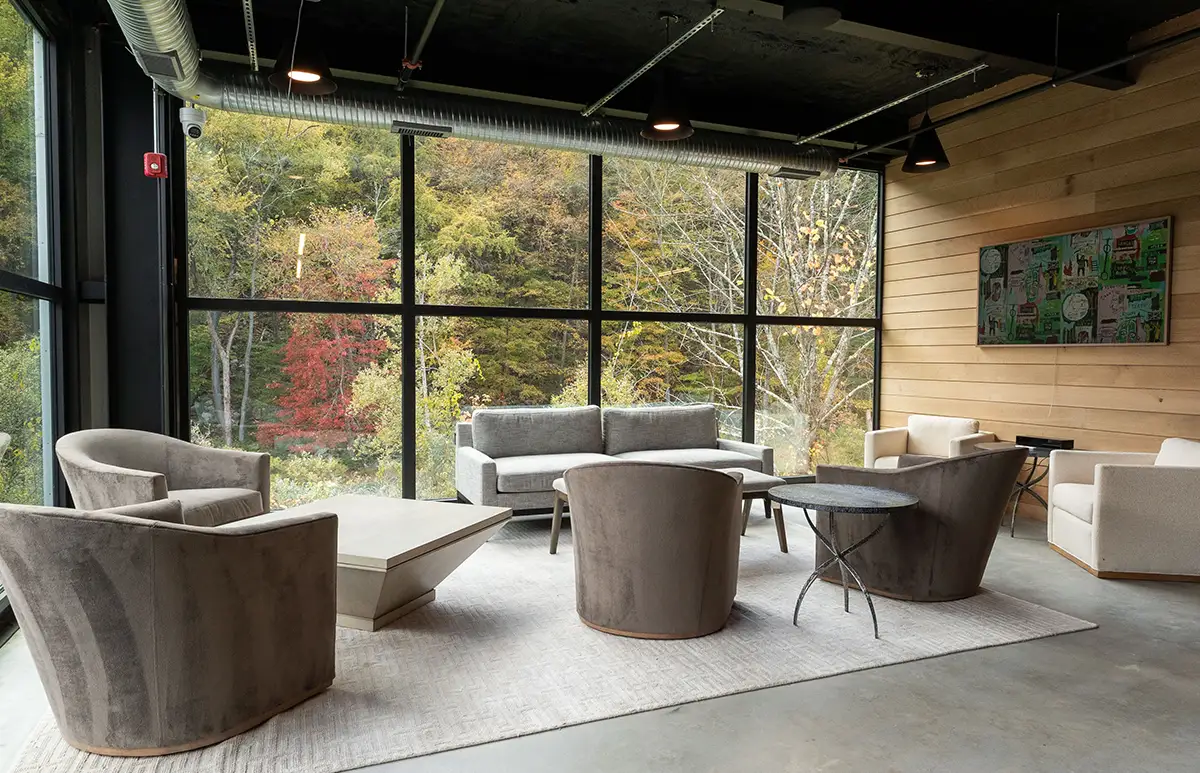
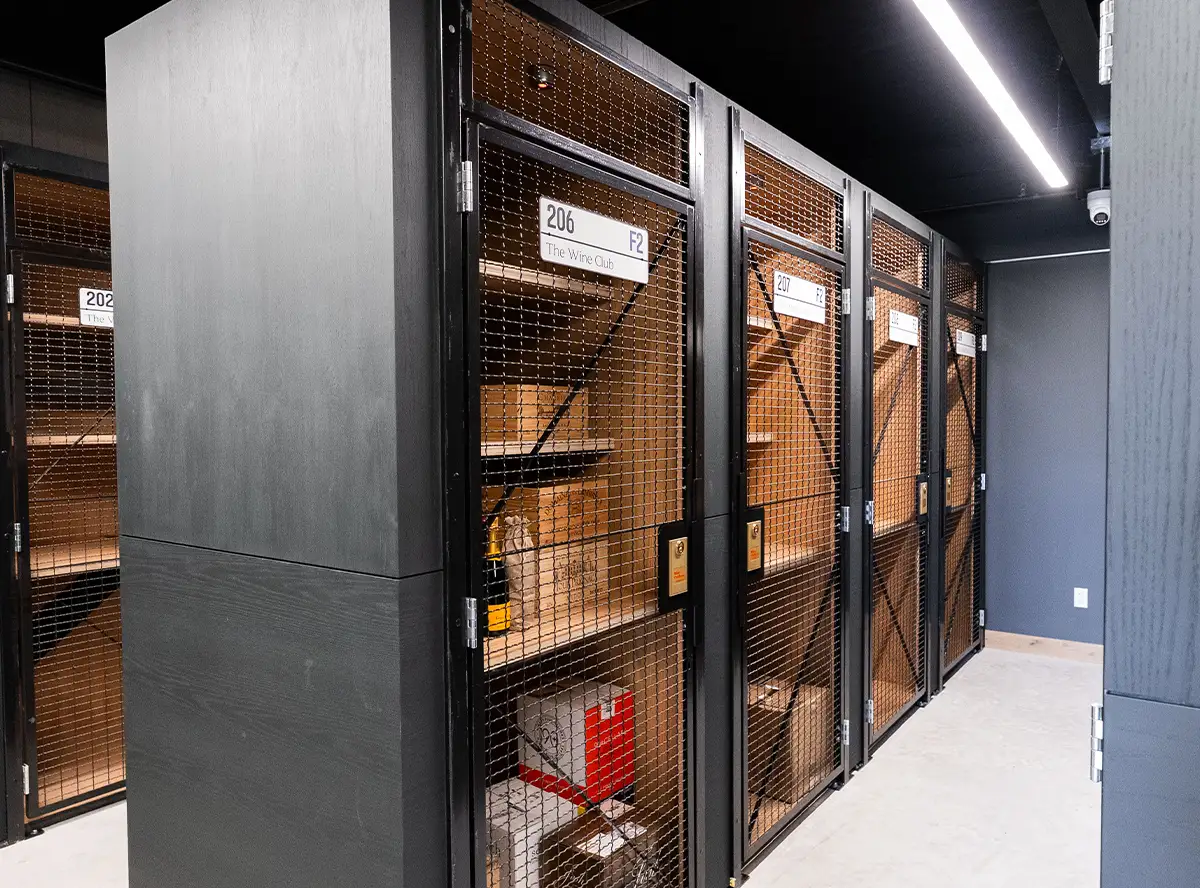

The beauty of the facility wasn’t the only element to elevate the project.
“We’re also unique because we have the high-end car and wine storage pieces,” says Nick. “We’re trying to take a rifle shot approach to our marketing strategy and it’s been yielding quality tenancy for us.”
One of the major considerations as the Fletchers got closer to the end of the project was making a plan to operate a kind of business they’d never managed before.
“A lot of the people that we spoke with in the industry had third-party operators and marketer,” Nick says. “One of the things that Ryan and I knew pretty clearly is that we wanted the exterior design to stay in keeping with this whole new experience and this new vision for self-storage—no giant flags or big chain signs the municipality might not love. We tried a third-party management group who would do the operations but allow us to brand it as Fletcher Storage. As we started to try and build out the framework of our unique product in the software, it became pretty clear that they didn’t operate like that. They weren’t interested in having luxury car storage, wine storage, moving programs, white-glove servicing; they wanted us to be a cookie-cutter [facility]—here’s your lock, here’s your unit, sign up for auto-payment, and goodbye. Those operators are just focused on keeping it lean, and we had a different vision.”
The brothers went through the process of learning about all the different software options and cobbled together a framework and an architecture that would foster the sort of specialty programming they were offering.
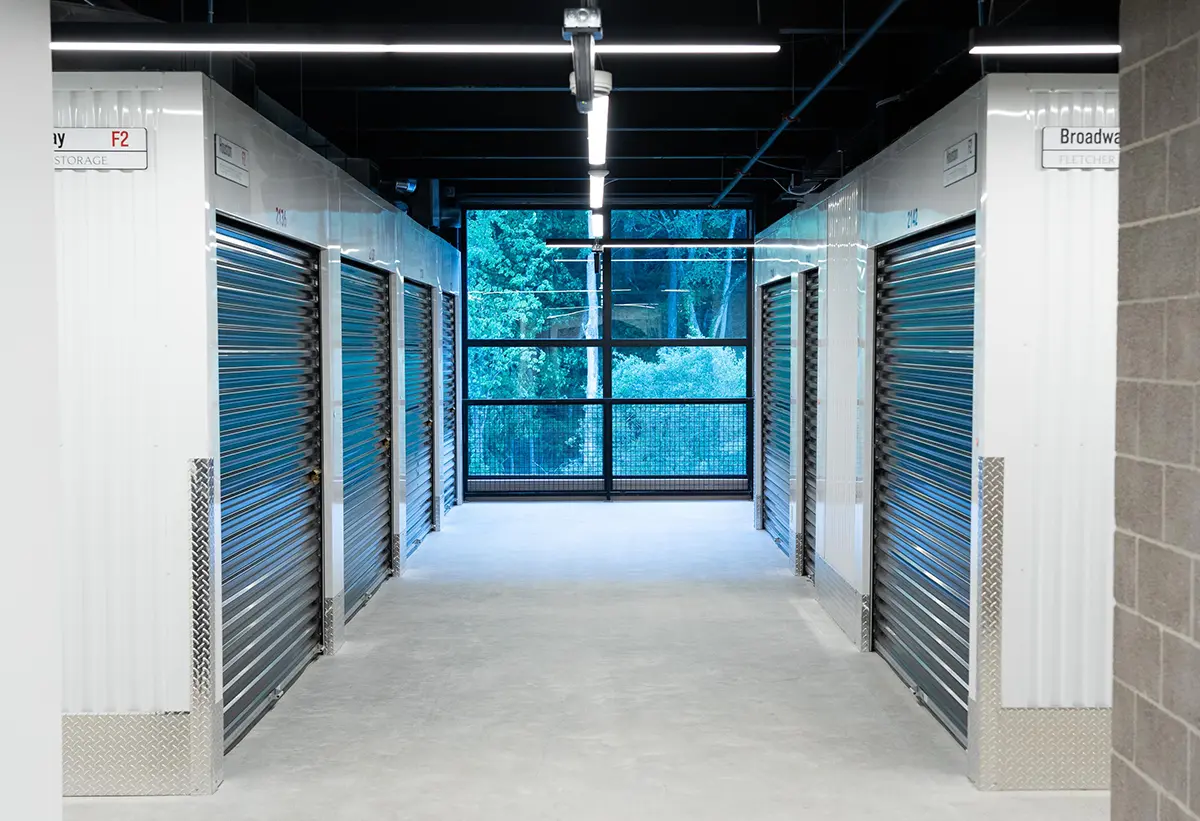

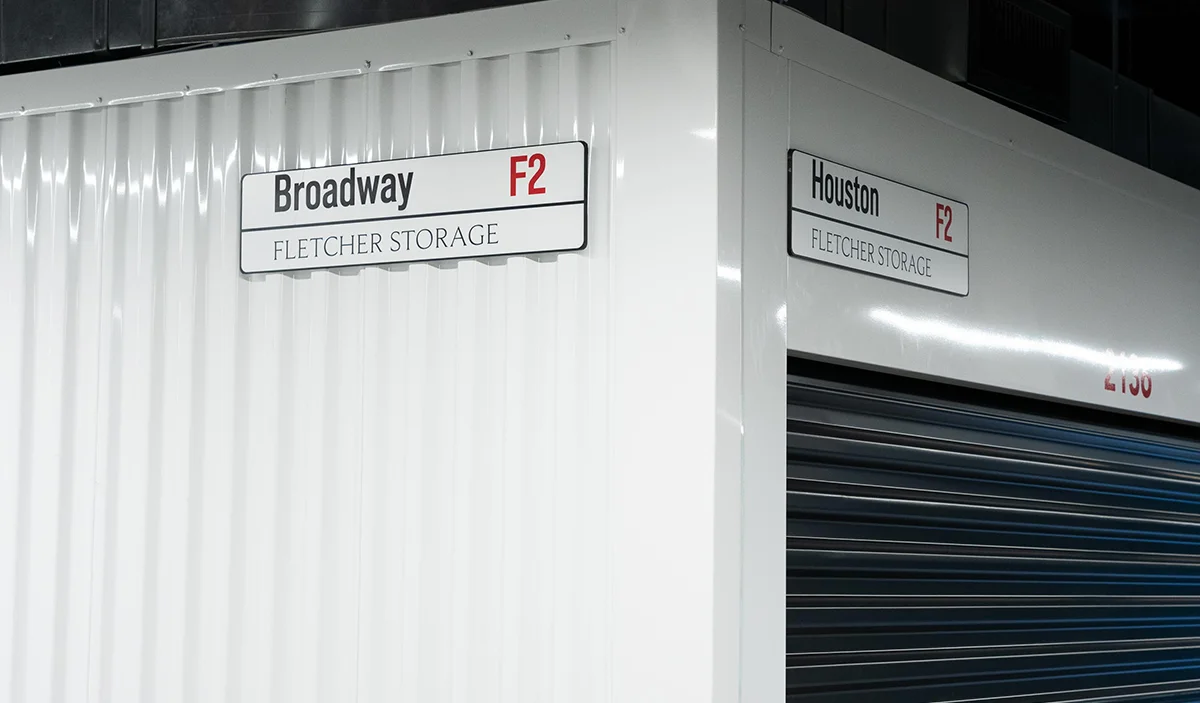
“We spent a lot of time thinking about the customer experience,” says Nick. “There’s a lot of talk in the industry about automation and AI and eliminating your human capital expense. Our feeling is that in this market and the way people use self-storage in our area, that human component is really critical. They need to trust the person that they meet, so we spent a lot of time looking for the right people to manage this facility.”
The Fletchers felt it was important to simplify the user experience and make it an easier product to use.
“There is a barrier to entry when it comes to using self-storage.” Nick says. “It’s going to take up your weekend. You will need to find a mover, physically pack boxes—just all those things you don’t want to do. We’ve created white-glove service offerings by partnering with some exceptional moving companies and service providers in the local community. It makes that transition and decision to store easier, so that clients can be more hands off.”
When imagining a potential local client, the brothers thought of a busy mom taking care of multiple kids, handling work responsibilities, and still needing to get the garage cleared out.
“Call us up; we’ll take care of it,” says Nick. “We’ll coordinate somebody to come out; we’ll get them to pack it up. They’ll deliver it directly into your unit. I’m going to send you an email with a lease; you’ll get a text message or phone call with a code for your credentials. You don’t even need to show up at the facility. We take it all off your plate.”
In this community, time can be one of the most valuable commodities.
“That resonates with people because we absorb all the things that you don’t want to do,” adds Nick. “It’s about being solution-oriented to unlock more customers in your market. When you are considering high-end wine storage and luxury car storage, you need to be present and a reassuring face for people to trust in the care of their prized possessions.”
The facility boasts a tony wine tasting area, complete with tasting table, that looks out onto the area’s gorgeous Connecticut woodlands. The dedicated wine storage allows bottles to mature gracefully in climate-controlled self-storage units that ensure the perfect temperature and humidity for important bottles. Understanding that UV rays can ruin a wine’s complicated aging process, the facility protects bottles from light intrusion, maintaining their value and taste.
“Fletcher Storage is a state-of-the-art facility with a very distinct focus on ensuring customers are treated to an enhanced storing experience both on and off site,” says Jack Perrins, northeast regional sales rep for Nokē Smart Entry at Janus International Group.
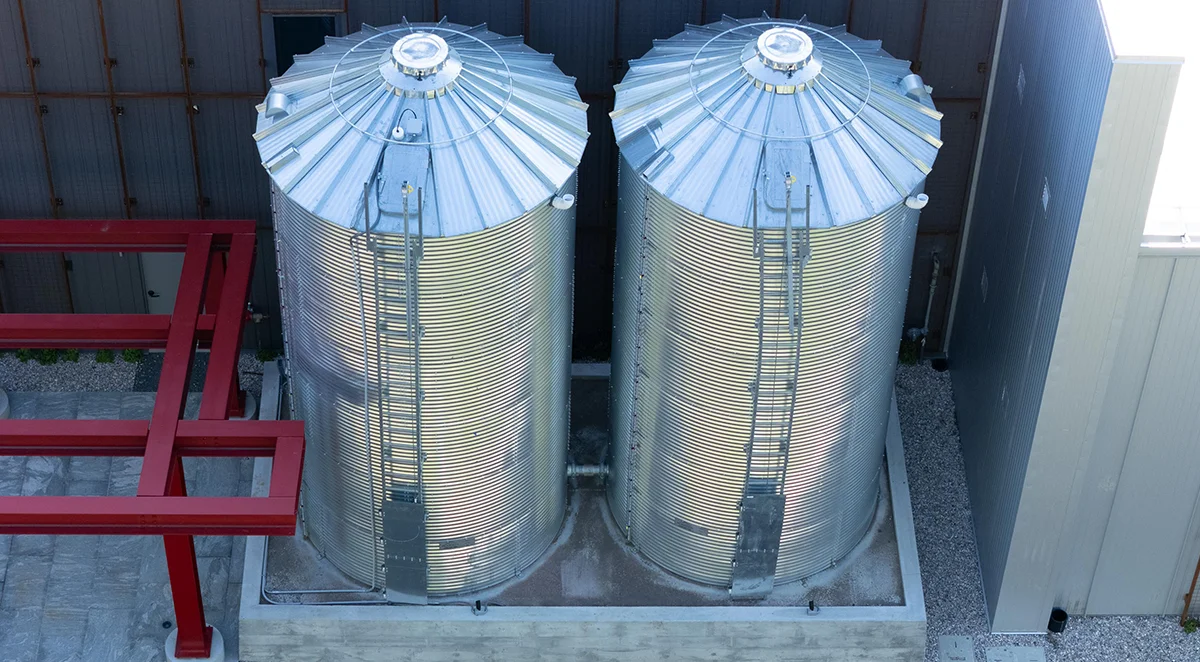

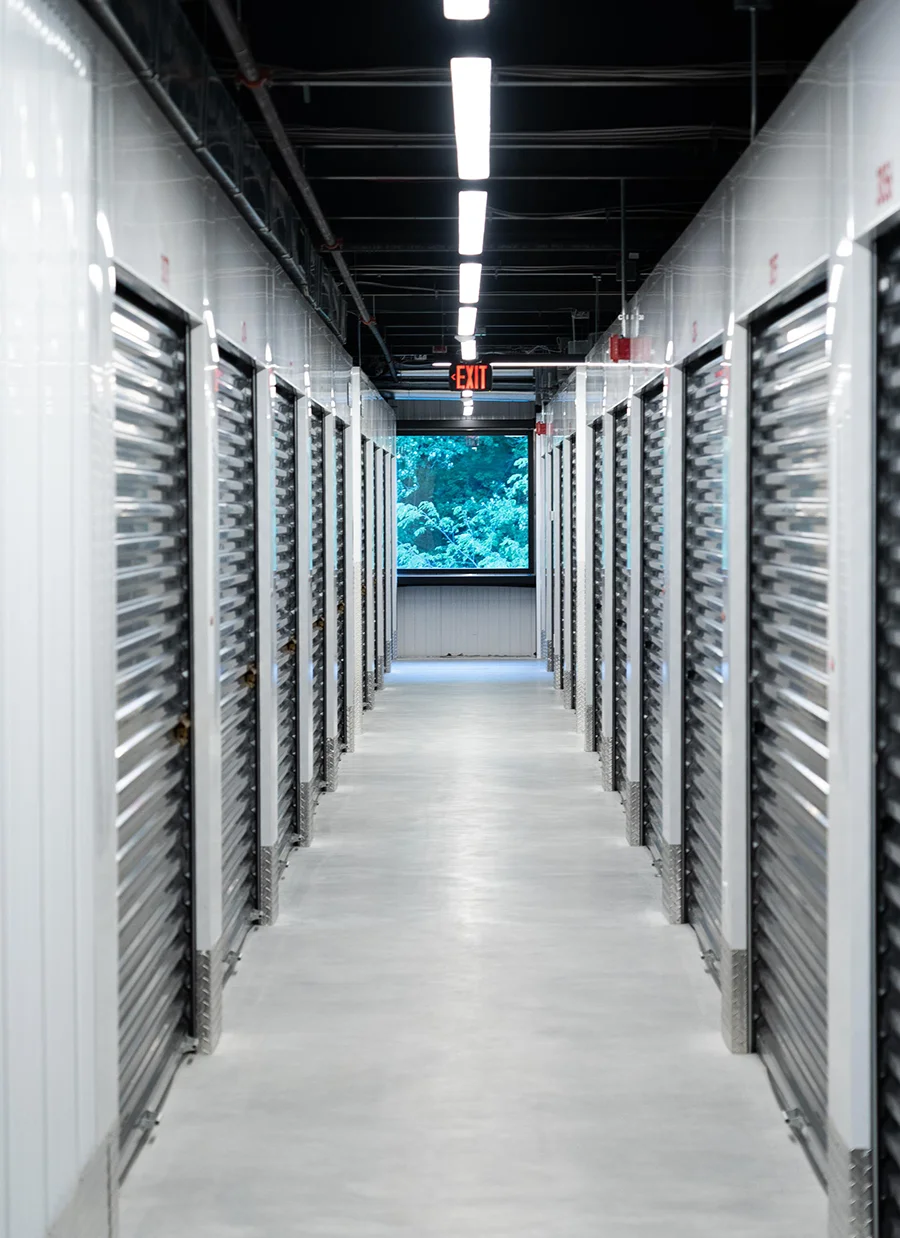
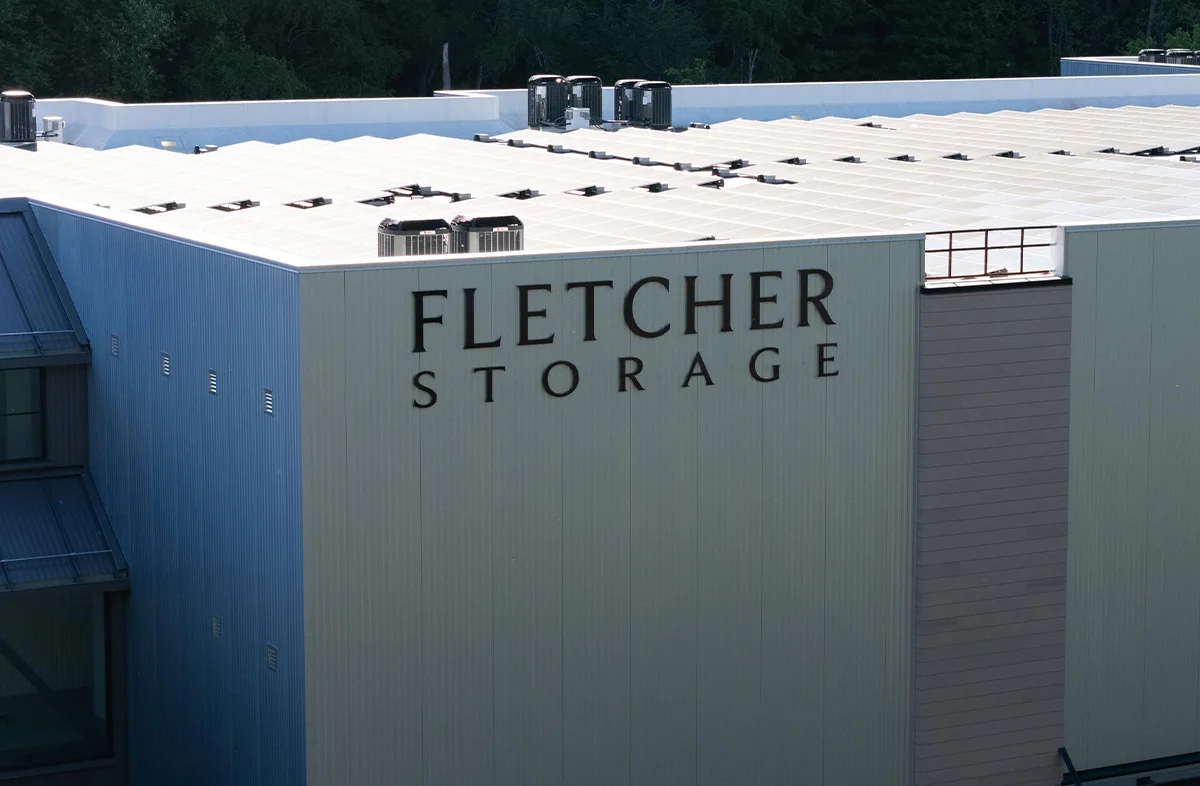
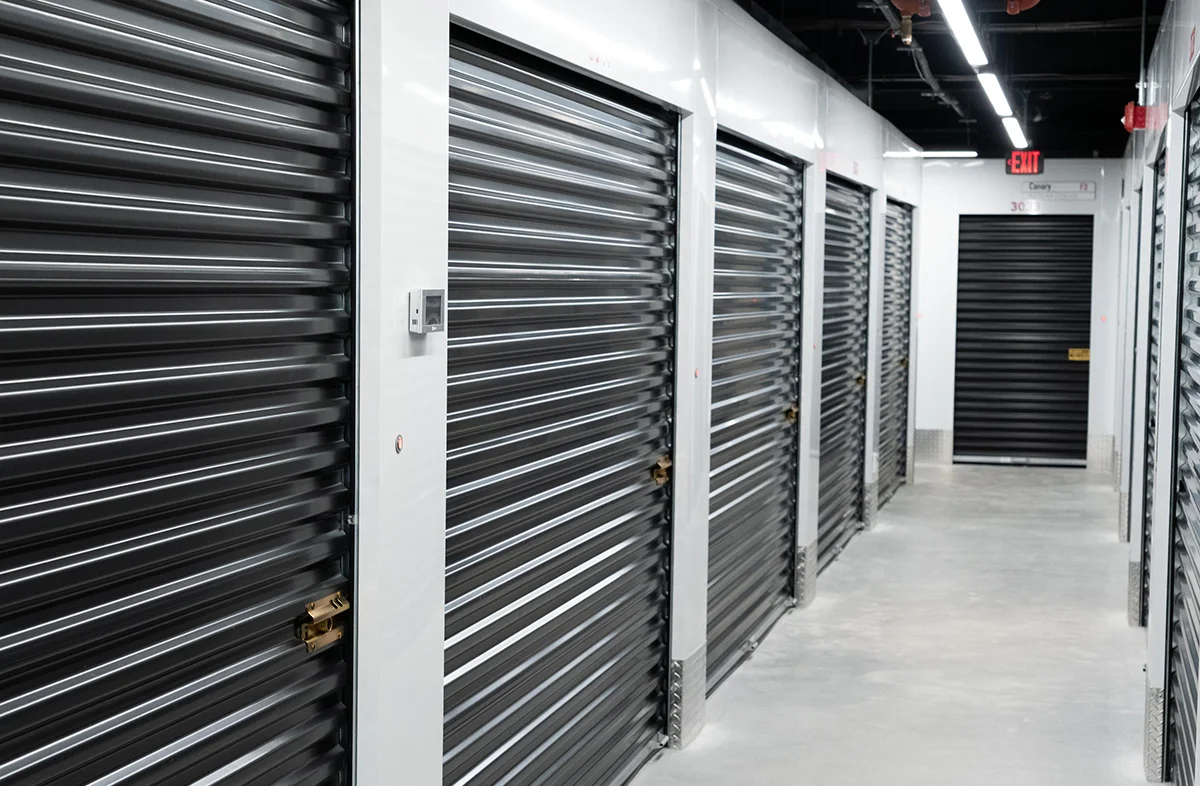
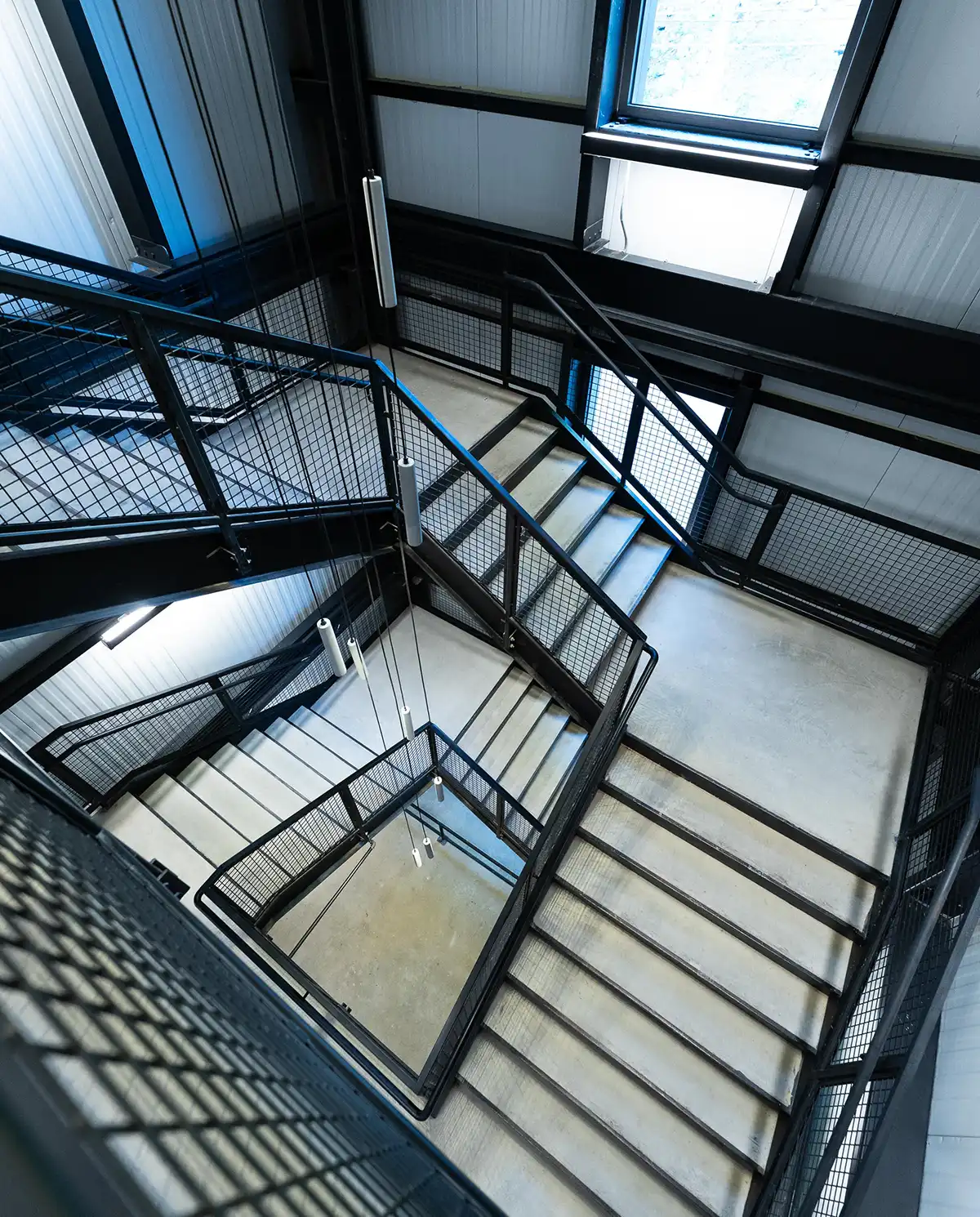
“Whether it’s a financial asset, whether it’s a sentimental asset, whether it’s an emotional asset, this facility is intended to store and to maintain those in the best form that we can,” says Nick. “Our clients need to trust the people they’re engaging with, so we put a lot of weight and emphasis on the people that work here. We are here on site all the time. That’s the most important part—it’s the relationship.”
This has always been true in the industry: Relationships and trust go hand in hand.
“When a tenant is storing $4 million worth of cars in your garage, they want to have our cell phone number and they want to be able to pick up the phone and know who they are speaking with if they have a question about their car or access to the facility,” Nick says.
One of the benefits of being new to the industry is that it required the brothers to give a fresh look and browse all potential solutions when it came to security.
“The technology has been very helpful,” says Nick. “We have cameras everywhere. One of the biggest things for us has been the Nokē Smart Entry product. Access continuity was really critical. With a tech background, I was really focused on people opening one single app to access everything that they need. Janus delivers that product, and they deliver it very, very well.”
No matter how high the level of trust, some customers will want to personally put eyes on their goods.
“The integration with cameras was amazing,” says Nick. “Car storage customers can open the app and literally see their cars in real time at the facility. They can also share access if their mechanic wants to come and grab the car to do some work or detailing. They can remotely share that app with a 24-hour key, so that individual can get in and access the items. Security is something we take very seriously.”
Fletcher was sold on the broad benefits of the Nokē system for discerning customers.
“Janus International’s Nokē Smart Entry system is a complete digital smart access solution, comprised of keyless smart entry points, keypads, and electronic locks that fit seamlessly to both roll-up and swing doors,” says Perrins. “Nokē smart locks were built and designed with self-storage owners and customers in mind and help to improve the security of individual self-storage units, providing a more convenient customer access experience and automating labor-intensive operational processes like lock checks and overlocking.”
Best-in-class self-storage offerings fit nicely with the Fletchers’ philosophy of melding customer service with new and innovative technologies to redefine the total self-storage experience.
“Whether you’re enjoying our viewing area with a gorgeous view of the Connecticut forest or taking advantage of our white-glove moving service, we guarantee you’ll feel well-taken care of,” says Nick.
Owner: 241 Ethan Allen LLC
Management Company: Fletcher Storage LLC
Builder: Fletcher Development LLC
Architect: Holmes King Kallquist & Associates, Architects, LLP
Civil Engineer: Landtech
Structural Engineer: McCormack & Associates
Access System & Locks: Nokē Smart Entry by Janus International
Property Management Software: Storable
Doors & Hallways: Janus International

 tbs@trachte.com
- Self-Storage Buildings
- Door & Hallway Systems
- Conversions
- Boat/RV Buildings
- Canopies
- Portables

in Vaughan, Ont.
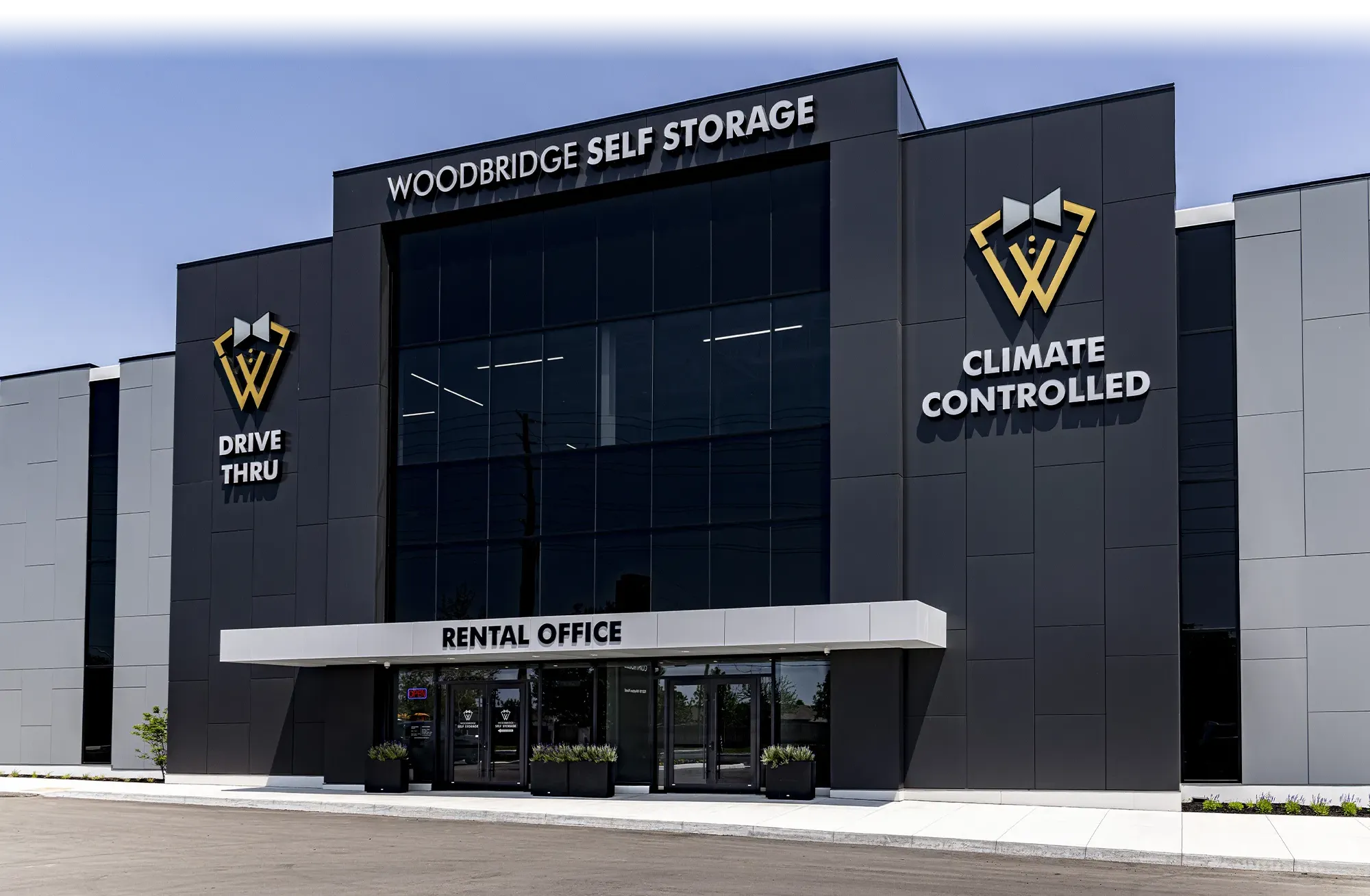
hings don’t always go as planned in self-storage development. But sometimes, that’s by design. Woodbridge Self Storage, MSM’s 2025 International Facility of the Year, was originally conceived as a simple single-story facility, a straightforward build in a busy corridor of Vaughan, Ont. Through bold reimagining and meticulous design, it became something extraordinary: a two-story, modern, Class-A facility that’s as functional as it is visually striking.
Design challenges were just as complex. Customer access, truck maneuverability, and loading zones demanded wide drive aisles, generous turning radii, and both external and internal loading areas. “We wanted the location to meet the needs of individuals and tap into area transport and logistics flows by offering drive-up units and a truck-friendly design,” says Onorio Moscone of XTX Engineering, “so we installed a 26-foot-wide drive aisle and designed an extra-large 50-by-40 loading area with two oversized loading doors to accommodate any size moving truck.”
The internal layout was also configured to prioritize pedestrian safety while accommodating the large vehicles. “It had to function like a well-planned logistics hub,” adds Moscone. “Every turning radius, drive aisle, and doorway was mapped to reflect the real-world activity of people and vehicles.”
This change required a structural overhaul. New columns, footings, and reinforcements had to be integrated into a framework already in progress. Owners’ oversight during the construction phase directed all team participants. The engineering team quickly got to work, revising structural plans and construction sequencing with surgical precision to accommodate the new load, maintain safety, install an elevator, and keep the schedule alive.
What could have been a disaster turned into a defining moment. Flexibility, meticulous documentation, and strong trade coordination carried the project through without compromising the vision. It became proof that adaptive engineering can save even the boldest midstream gamble and that detailed documentation of subcontractor work and active planning for potential changes can allow for pivots while keeping projects on time, on budget, and to the highest standard of excellence.
For safety, the facility employed non-combustible construction with a one-hour fire-resistance rating and installed a full sprinkler system, standpipe, and fire alarm designed to meet OBC (Ontario Building Code) Group F2 low-hazard industrial standards while maintaining one-hour fire separations across floors and strategic rated partitions for compartmentalization.
Sustainability was another priority for the facility and the municipality. The LED lighting reduces energy draw, while the rooftop HVAC systems are zoned to avoid wasted conditioning and overloading localized roof framing; this also helps ensure stable temperature and humidity control for sensitive storage without excessive HVAC loads. Additionally, multiple roof drains and scuppers have been positioned to handle heavy rainfall, complying with municipal stormwater retention/detention requirements. Site-complementing landscaping completes this scope of the “green scene.”

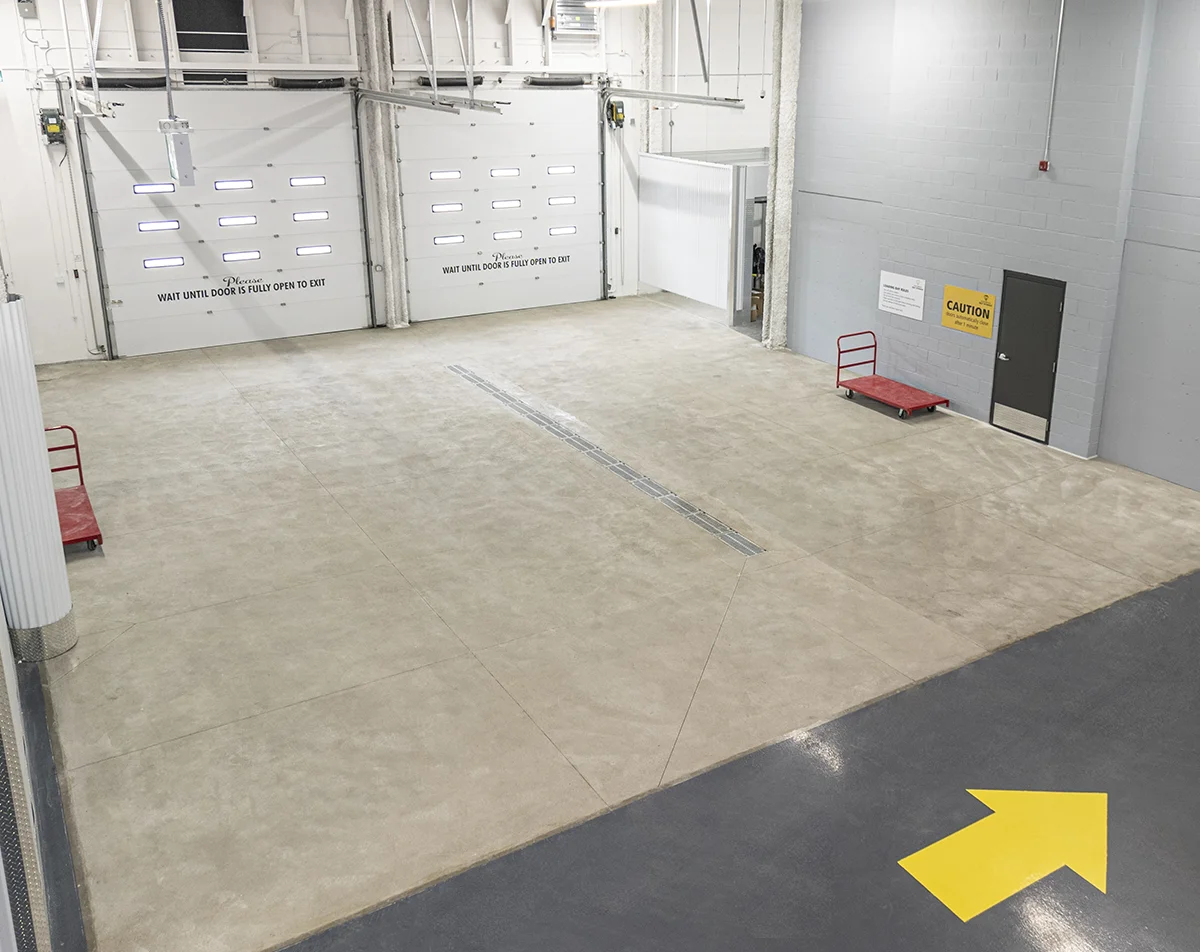
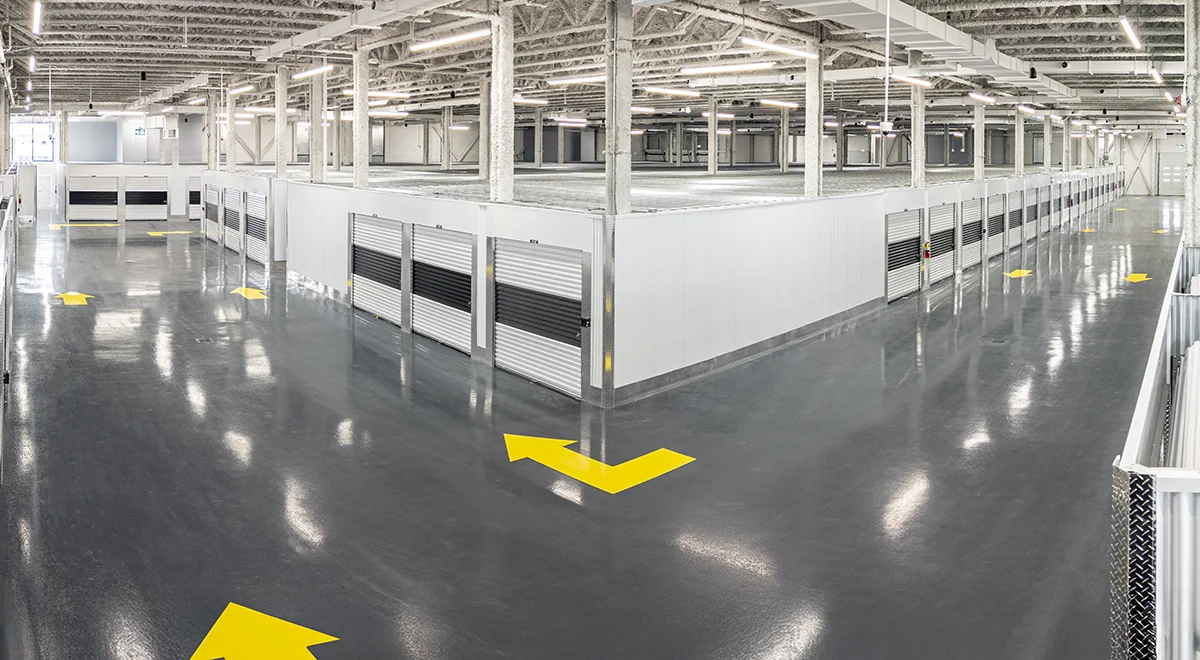
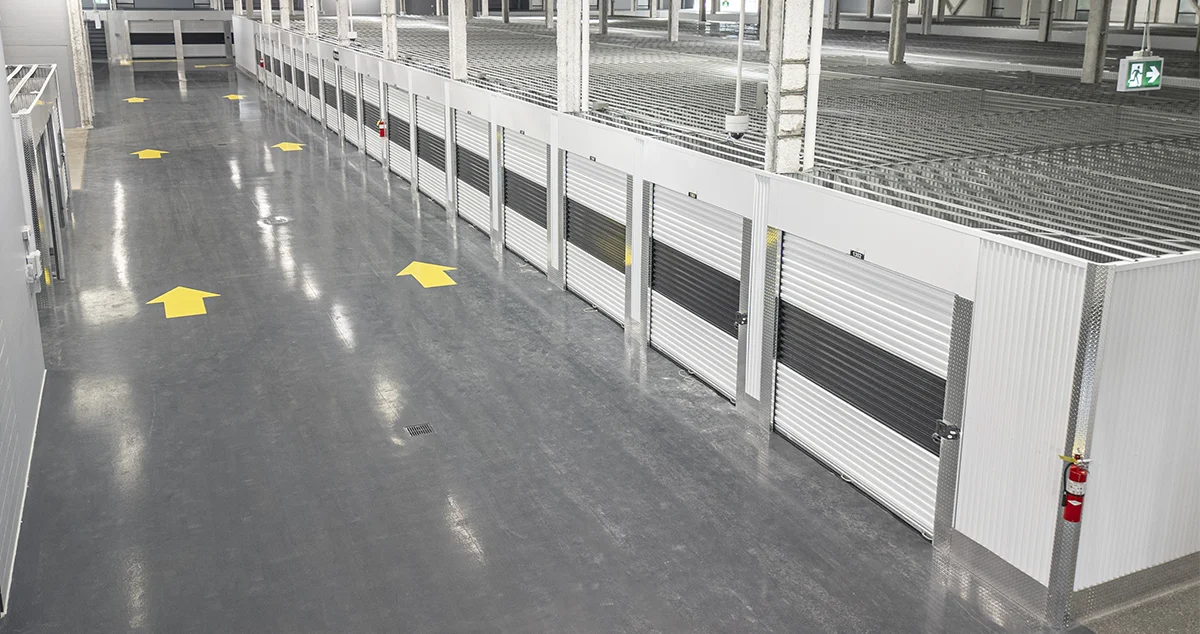
The first-floor layout was purpose-built with contractor storage in mind, offering a total of 170 units, many of which were built at sizes greater than 10-by-10 (the largest bays are 15-by-30). This design provides small business owners in the area with convenient, affordable storage, fostering long-term tenancy, stability, and sustained growth. This main, at-grade level also allows large trucks and vehicles to drive directly inside and right up to their units, enabling tenants to unload tools or belongings with maximum convenience.
The second upper floor has just been completed due to a materials delay. It was strategically designed to maximize floor space and rental yield. By focusing on units smaller than 10-by-10, even including small 5-by-3 lockers, Woodbridge Self Storage can optimize both tenant demand and price per square foot, ensuring strong operational efficiency and revenue growth.
Both inside and out, the facility has been built to meet barrier-free design standards to ensure accessibility for all users in compliance with OBC (Ontario Building Code) and AODA (Accessibility for Ontarians with Disabilities Act) requirements. This means everyone, including people with mobility challenges, can use the facility safely and independently via level or ramped entrances, automatic door openers, accessible elevators and parking spaces, and so on.
“Every technical choice was made with long-term durability, efficiency, and cost-effectiveness in mind,” says Garofalo.
Above each unit, the usual wire mesh has been replaced with solid burglar bars—an upgrade that adds superior strength to the facility’s security strategy. More than 90 cameras cover both the interior and exterior, leaving no blind spots. Every corner is monitored, every movement recorded.
Access runs from 6 a.m. to 11 p.m., with the alarm system automatically arming after hours. Any off-hours activity triggers an immediate response from the monitoring station. “It offers a secure environment where tenants feel confident their belongings are protected around the clock,” adds security provider Alessandro Marchetti.
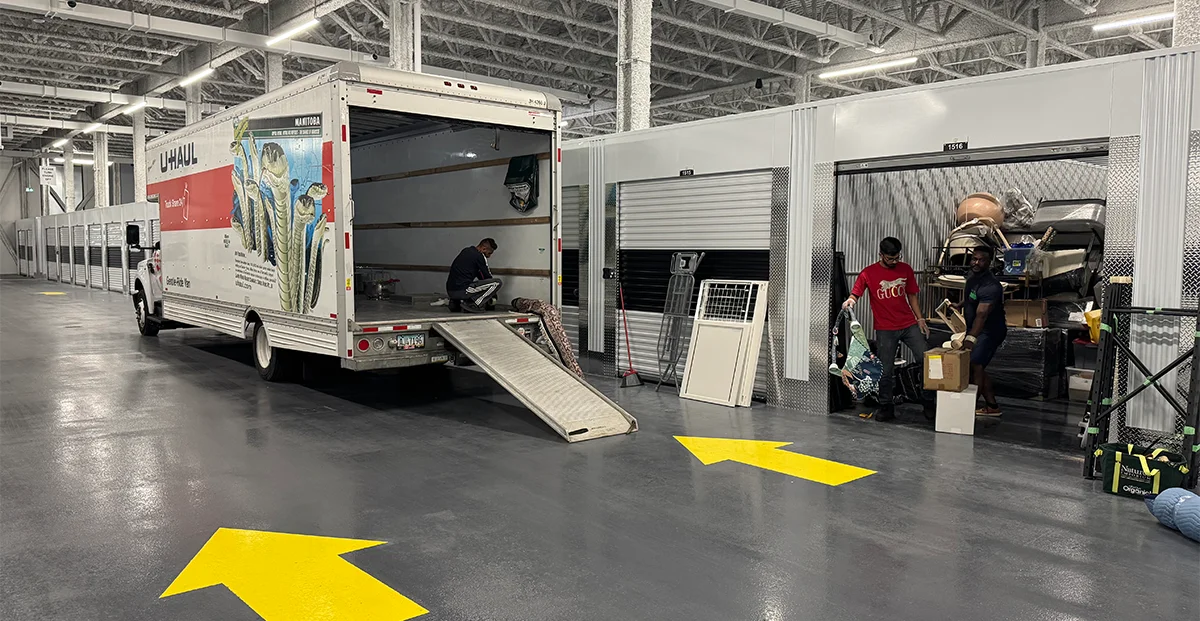

But the real difference is the sense of community. Complimentary water, coffee, espresso, and candy bars greet tenants at the door, turning routine visits into something a little more personal. “Our entire management team is made up of locals who understand the rhythms of the neighborhood, which means service isn’t just efficient—it’s familiar,” says Mario DeCicco of Woodbridge Self Storage, who knows that having that connection builds trust, encourages word-of-mouth growth, and makes Woodbridge Self Storage feel less like a storage facility and more like a place people actually want to visit.
Understanding that online marketing tactics such as using broad high-cost keywords weren’t sustainable, they partnered with The Storage Group, which built a focused digital strategy that blended SEO with precision PPC campaigns. By tightening local listings and fine-tuning on-site content, they boosted search visibility and drove qualified traffic without spending unnecessary dollars. Paid search targeted cost-effective, high-intent keywords, bringing in tenants who were ready to rent—not just browse. The result was a lean, efficient marketing engine that put Woodbridge Self Storage in direct competition with national brands and held its own.
Plus, with a tenant mix of 45 percent residential and 55 percent commercial, the leasing model is stable and resilient. “Unlike nearby competitors—major national chains, some offering deep discounts—we have been filling units without promotions, relying on Woodbridge’s thoughtful design, convenience, and service,” says Mario.
Angelo adds, “Our lease-up performance over the initial opening months has been remarkable, providing clear evidence that our facility is not only unique in concept but also outstanding in execution. Few facilities can point to such rapid momentum so soon after opening, and we see this as a direct reflection of the innovation and strength of our vision, the design, our team, and our strategy.”

But what makes Woodbridge Self Storage remarkable, and MSM’s International Facility of the Year, isn’t just its sleek architecture or impressive leasing stats. It’s the way every part of the project, from zoning battles to marketing strategy, was built on deliberate, forward-thinking choices. The owner’s had a unique vision. Engineering solved problems most developers run from. Operations delivered real value to tenants without gimmicks. And the community responded favorably.
In just a few short months, Woodbridge Self Storage became more than a storage facility. It became a benchmark for modern storage development—proof that innovation, adaptability, and customer focus can outshine brawn and budget. It’s truly a case study in how thoughtful design and operational discipline can turn a basic concept into something extraordinary.
“From the very beginning, this project was shaped by extraordinary vision, meticulous planning, and the ability to adapt to significant challenges in both design and construction,” says Angelo. “What started as a conventional development quickly evolved into something entirely new for the self-storage industry—a bold, innovative design that sets our facility apart and redefines the customer experience. The architectural layout, engineering solutions, and unique features incorporated into this project are unlike anything else in the marketplace, ensuring that our facility is not just functional but truly iconic.”
Congratulations to Woodbridge Self Storage and all involved in the project. As MSM’s International Facility of the Year, it’s truly a standout on the global stage.
Owners/Developers: Mario and Angelo DeCicco
Construction Company: Kintel General Contractors
Engineer: XTX Engineering Inc.
Architect: Giancarlo Garofalo Architects Inc.
Management Company: Woodbridge Self Storage
Access System: PTI Security Systems
Security Provider: CEG Group
Management Software: SiteLink
Roof: Las Roofing LTD


ecuring an accurate and competitive construction quote can get derailed by numerous hiccups and overlooked red flags. Some budget-busters could be groundwater issues or even changing restrictions in a municipality. For example, certain areas might require 80 percent brick used in building projects versus metal construction, which could represent a half-million-dollar blow to the bottom line. Your quote might have consisted of a schedule so tight there was no room for weather and material delays or unforeseen issues like not getting a transformer on your property in time to get your Certificate of Occupancy.
Time is money. Scheduling snafus and lack of accountability within a Tetris-field of different subcontractors trying to work together can add up to a big bite of a budget. Having storage-centric, storage-specific stakeholders at the table is of huge benefit in order to compress the schedule for a predictable outcome, meaning rolling doors quicker with your return starting to come in.
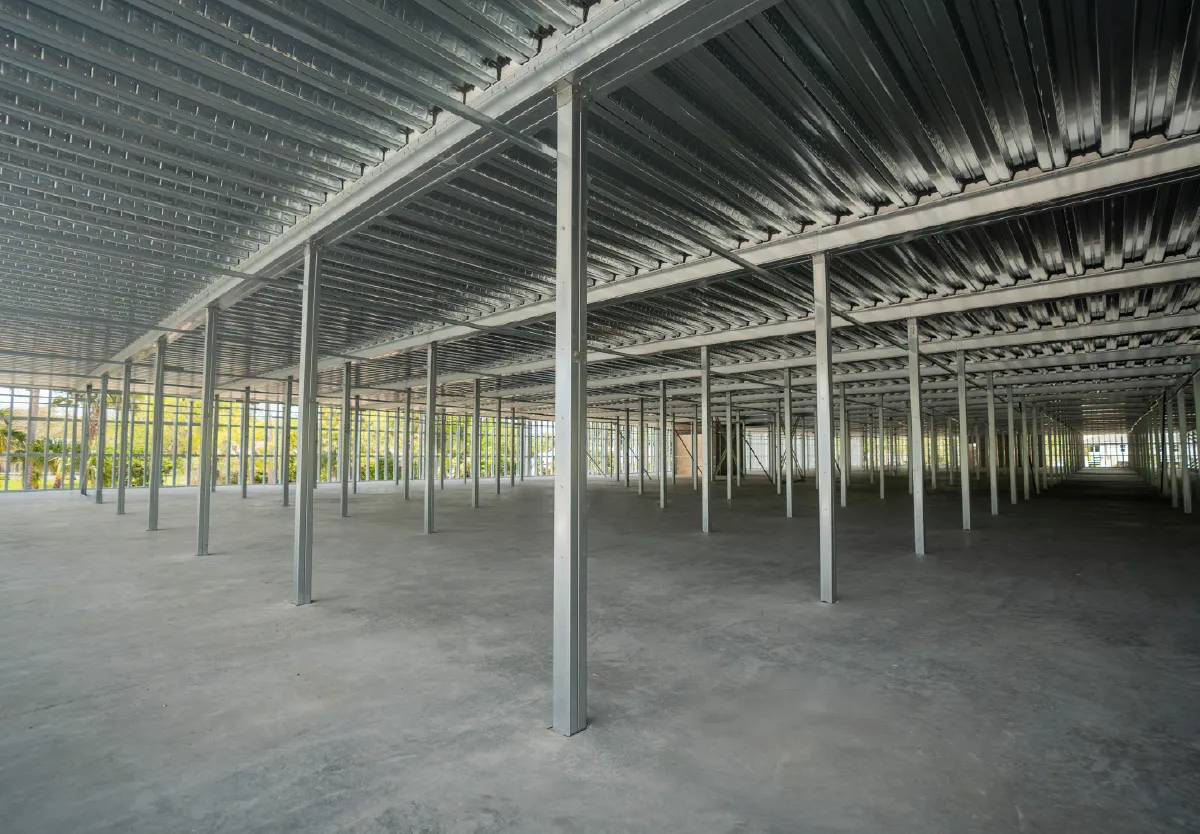
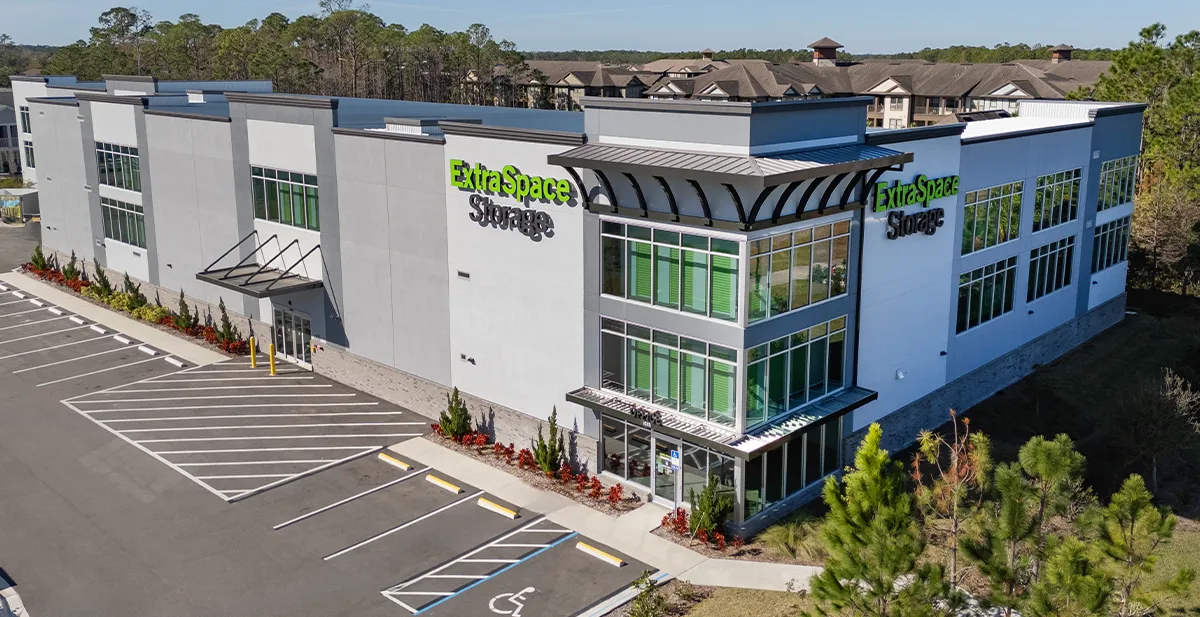
This wealth of knowledge helps general contractors ensure that the subcontractor’s pricing scopes properly and that their pricing, relative to the project scope, is competitive.
Before a sub can even bid with TLW Construction, they have to go through a pre-qualification process that includes divulging:
- How many employees they have on staff,
- Total annual dollar volume of revenue,
- How many projects they are currently doing,
- The largest project that they have done, and
- How long they have been in business.
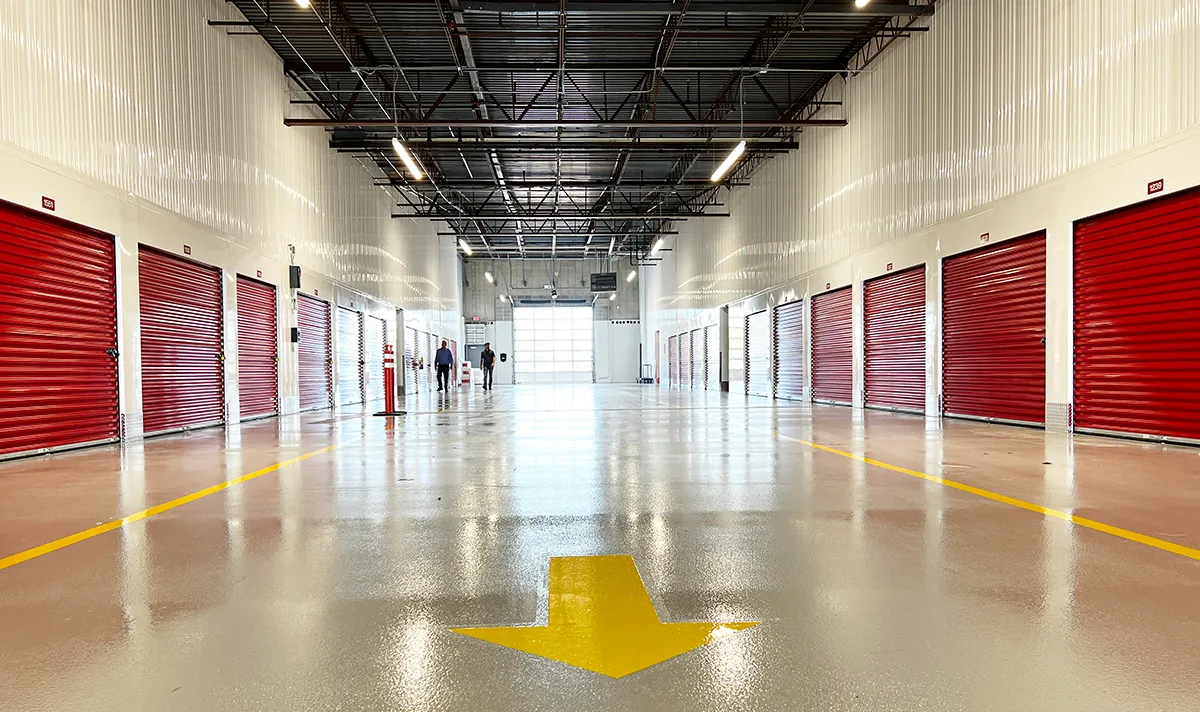
These findings can be disqualifiers or, at a minimum, red flags that signal a contractor to take the time to sit down and dig deeper.
“We require that that they provide us three years of financial statements that our in-house CPA and comptroller can review and try to sniff out any kind of financial concerns with the company,” says Williams. “We look at how they’re doing with accounts payable and receivables. If they are heavily leveraged in terms of business debt, we can learn the why and hows of the way they are managing that. We determine what type of equipment they own or don’t own. This is all before we even begin talking about the project itself.”
When a general contractor is receiving between 120 to 200 different bids on a given project, it is invaluable to gain an advanced sense for how a company is likely to perform.
“We have to filter through project bids, confirm scope and pricing, and assemble budgets based upon all of those factors in the one or two days between when the subs submit a number and we have to give a client a price,” Williams says.
Any advantage is a major gain in accomplishing that task in the most comprehensive way possible.
“The problem is that the margins are so small,” says Williams. “On a typical project, our fee is roughly 6 percent. That also has to cover all of our overhead, so the risk of loss is colossal. If there’s a miscalculation in any respect, we run the risk of a severely damaging project or severely impactful project. Everything has to be studied with real eyeballs.”
Although there is no substitute for an experienced eye, there are tech tools that can help the process.
“We use Procore as our project management and estimating and financial software,” says Williams. “Procore maintains a database of all the subs. Subcontractors will only make it into that active database if they’ve passed our pre-qualification process. This way, when a project comes in it’s very easy for our staff to use Procore to assemble the bid documents and send them to our database. It’s so much more efficient and seamless of a process than 20 or 25 years ago when we had a dedicated plan room in the office where subs could come to look at and bid off the plans. It sounds like dinosaur talk now, but it’s the reality of the evolution of the estimating business.”
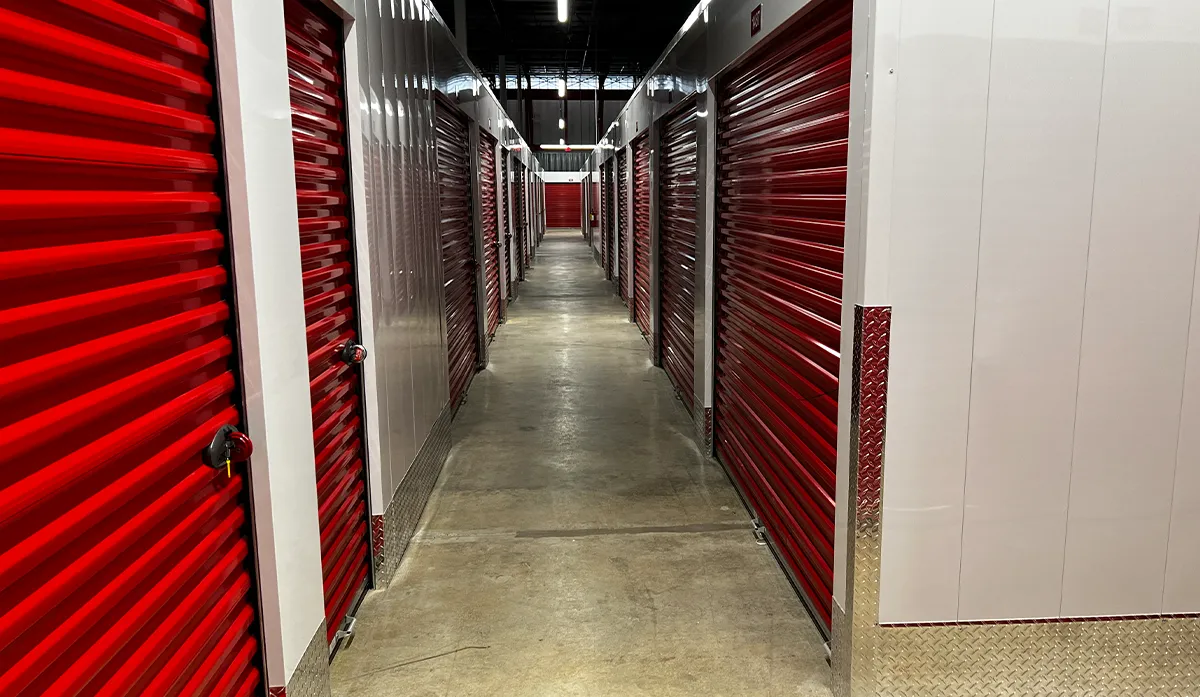
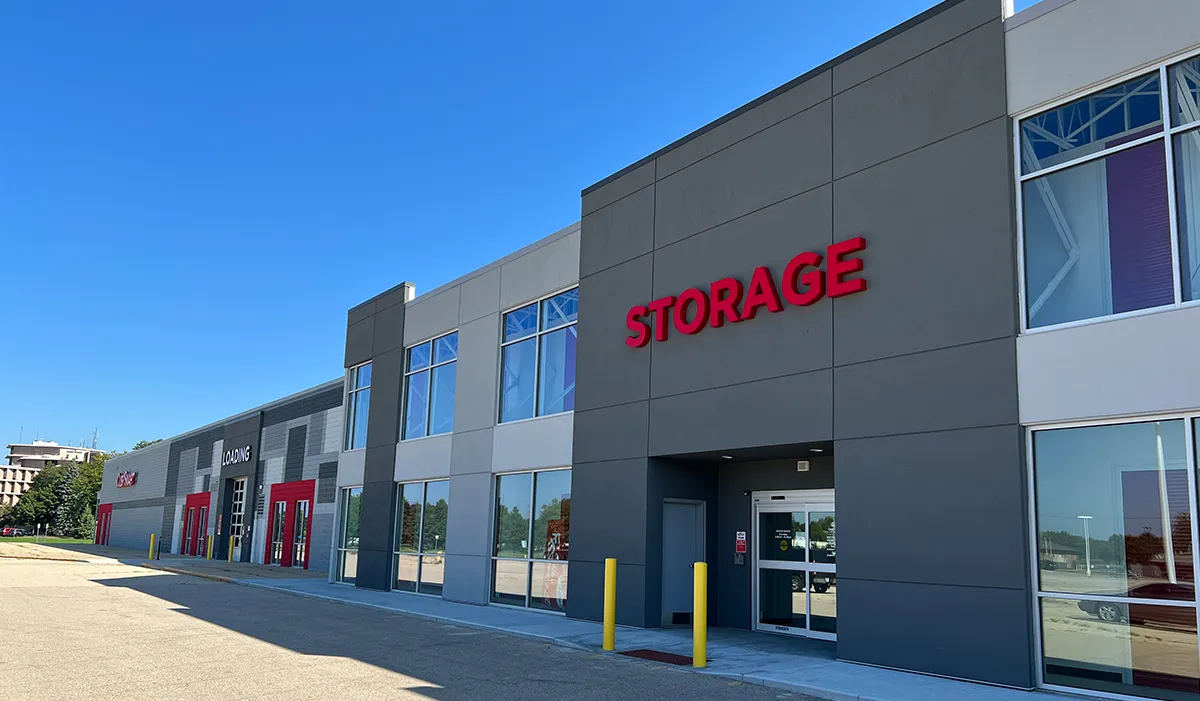
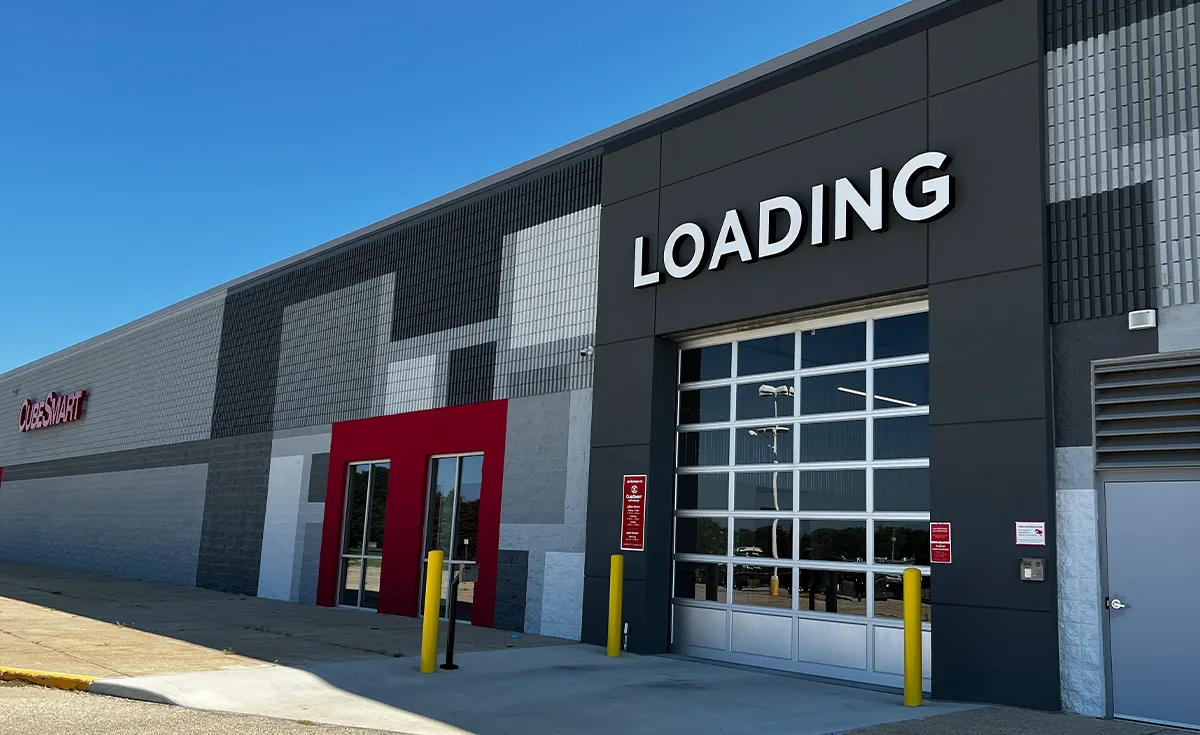
Controlling both the scheduling and the builder’s experience saves time and money.
“We have in-house training and choose crews for repeat jobs based on great customer experience,” Hajewski says. “We have an annual summit where our crews learn what’s new, learn best practices, and give valuable feedback if there’s something they don’t like about our design. It lets us create the best product.”
“When you order a building from us, we provide hassle-free labor,” says Hajewski. “We are going to schedule it, rent the equipment, take care of everything. Another bonus is the vast number of erectors we have working for us. You get a scheduling nightmare when you lock into just one erector versus when you’re working with Trachte, who has lots of crews and we are directing where they go. With so many crews, we can shuffle them around and put the resources where they need to be to stay on schedule. Our crews do this all day long; they’re fast. Our erectors will typically get a building up far quicker than someone who hadn’t put these together before. Another advantage is accountability. If something goes wrong with your installation, just call Trachte. We’ve been around since 1901 and we take care of people. We’ve got a reputation. If you hire a few guys in a truck and have an issue five years down the road, they may or may not be there. Trachte is 100 percent owned by its employees, so we care how your job goes.”

“We have a logistics department helping with on-time deliveries; we have engineering and design, construction, pre-construction—the inside quarterback for our customers managing design schedule, RFIs, talking through scope changes and any financial consequences, project management, field services, accounting and support services,” says Nigel Kreft, vice president of sales for Elevate Structures. “It makes us flexible because we control each step. When our customers are dealing with the same team members over and over, it builds consistency and it builds trust.”
This economy of scale reduces construction quotes while boosting business.
“With our structure, we’re able to hold pricing for a lot longer because our buying power is so much greater,” says Kreft. “If Mr. ABC customer in California has specific requests and builds a lot of buildings, our team doesn’t have to reset from zero every time. Our whole drive is toward a predictable outcome, which means a win for the customer.”


Working with one contractor through the entire process can work best for the project and for the developer.
“The earlier they engage us, we can identify problems we see with the piece of property that they picked from day one and know how to navigate that,” says Bergmann. “Sometimes we’ll receive a set of drawings designed by an architect that wasn’t familiar with self-storage. Their buddy might design office buildings or retail facilities. Often, they just don’t work out from a dollar standpoint and have to be scrapped because of high-end finishes or design elements that run up the cost. We’ve been in business since 1985. We have over 40 years of experience building self-storage. We know designers in the industry that are going to draw a good self-storage project, so we can build a fantastic project for them that fully functions and is within their price point.”
Transparency works both ways.
“We believe in routine meetings and letting the customer know of price increases immediately, when they occur,” says Bergmann. “We share our solution to mitigate that increase. An increase with one trade or one particular scope might be offset by a reduction with another; we always try to counterbalance that. It’s always good that a contractor comes to the table and communicates the problems as soon as they arise with solutions so that the developer can make a quick decision. Problem solving and creativity go hand in hand. At Capco, we do that all the time.”
“I am also a storage owner with three different sites built on old corn fields,” says Hajewski. “The first two we had to take out about two feet of topsoil and replace it with granular free-draining fill, which is engineer-language for ‘gravel.’ For the third, I just did the same thing. We just budgeted for that, and I didn’t have any soil tests done. We ended up finding so much bad organic matter in one section of land, we spent $100,000 over budget removing the bad fill and bringing in other dirt and fill. That was my entire contingency right there. I would have known that had I done a soil test.”
The nitty gritty of the lesson is if you want to have a high level of certainty in your construction quote pricing when building on a new plot, spring for a soil test.
“The biggest thing that’s causing problems right now is people buying sites without geotech reports,” says Ray Good, president at Valston General Construction Contractors. “A lot of sites out there right now just have bad dirt. This is a major factor when it comes to construction quotes and causing budgets to get out of whack. Geotech reports only cost a few thousand dollars compared to spending millions on a piece of property.”
The smart move to make sure you are on solid ground with your storage project is to do your homework with a simple soil test.
“If you are considering buying a big piece of property, it could have rock running through it,” Good says. “The tech will secure boring samples by digging 12 little holes. If an area looks suspicious, we might do a few more bores on a section we think might have issues to solve problems early.”
Bringing in a general contractor to help value engineer a project with an architect and civil engineer from the start can optimize a project’s value by analyzing its components, from materials to design to construction methods, to identify cost-effective alternatives to achieve the end goal on budget.
“If they don’t get us involved from the beginning, and move forward getting plans and civils done first, we have to start over to get it in an acceptable budget,” adds Good. “Discovering bad soil can be devastating. We have a site right now where a civil engineer figured that the topsoil was only 12 inches thick. We arrived and discovered it was four feet. You not only have to take that bad dirt out, you have to bring good dirt in. It’s a domino effect. Three extra feet across the whole site—that’s an unexpected six-figure expense.”
“Our real hook is not only the advantages that Alpha brings as a post-and-beam 10-by-10 system that produces three times faster than older construction methodologies,” says Kreft, “but that we’re vertically integrated all the way inside the steel chain, so we have direct access to the mill for procurement.”
“We haven’t been affected by tariffs at all because almost 100 percent of the steel we’re using is domestic,” says Kreft. “We were able to talk to our domestic mill partners 12 months ago and say, ‘Hey, this is how much we’re going to need in 2025.’ Coming to them with how much we could commit to made them commit to help us push through some of the fluctuations that came in the steel market this year.”
While the market has not been as volatile as a few years ago, nervous consumers are appreciative of one less moving piece in the construction quote process.
“It certainly made our conversations to our customers a lot easier,” says Kreft. “We’ve been very confident, especially with our pricing 120 days out, knowing exactly what that would look like, which is a big benefit to the business.”
“Storage seems like it would just be a big box with garages, but developers of all experience levels quickly learn no two projects are the same, not only from an engineering standpoint but also from a municipality, planning, and environmental standpoint,“ says Christine DeBord, CCO of Janus International. “We just did a case study for a customer with 20-plus years in storage whose build took three-plus years longer than they anticipated because it was right next to a private airfield. To keep the airfield safe, they ended up having to build two stories down, with one floor above surface level.”
Regardless of the type of development, one thing remains important.

Timing is everything when it comes to big decisions such as planning a new development.
“Before a developer even purchases the land, it’s a good idea to reach out to ask questions and get a sense of whether a conversion, acquisition with expansion, or ground-up development would be the best idea,” says DeBord. “We have in-house project management, but most manufacturers in the industry don’t.”
Comparing your construction quotes apples to apples ensures you understand exactly what’s within the scope of work for each provider.
“People assume that low voltage is part of the electrical scope,” says DeBord. “It’s not unless it’s specifically called out. Those are the kind of things that present surprises near the end of development, and surprises near the end of development are never good. You really want all of your subs streamlined and cohesive so you can open as quickly with construction can be at a quality with which you’re comfortable.”

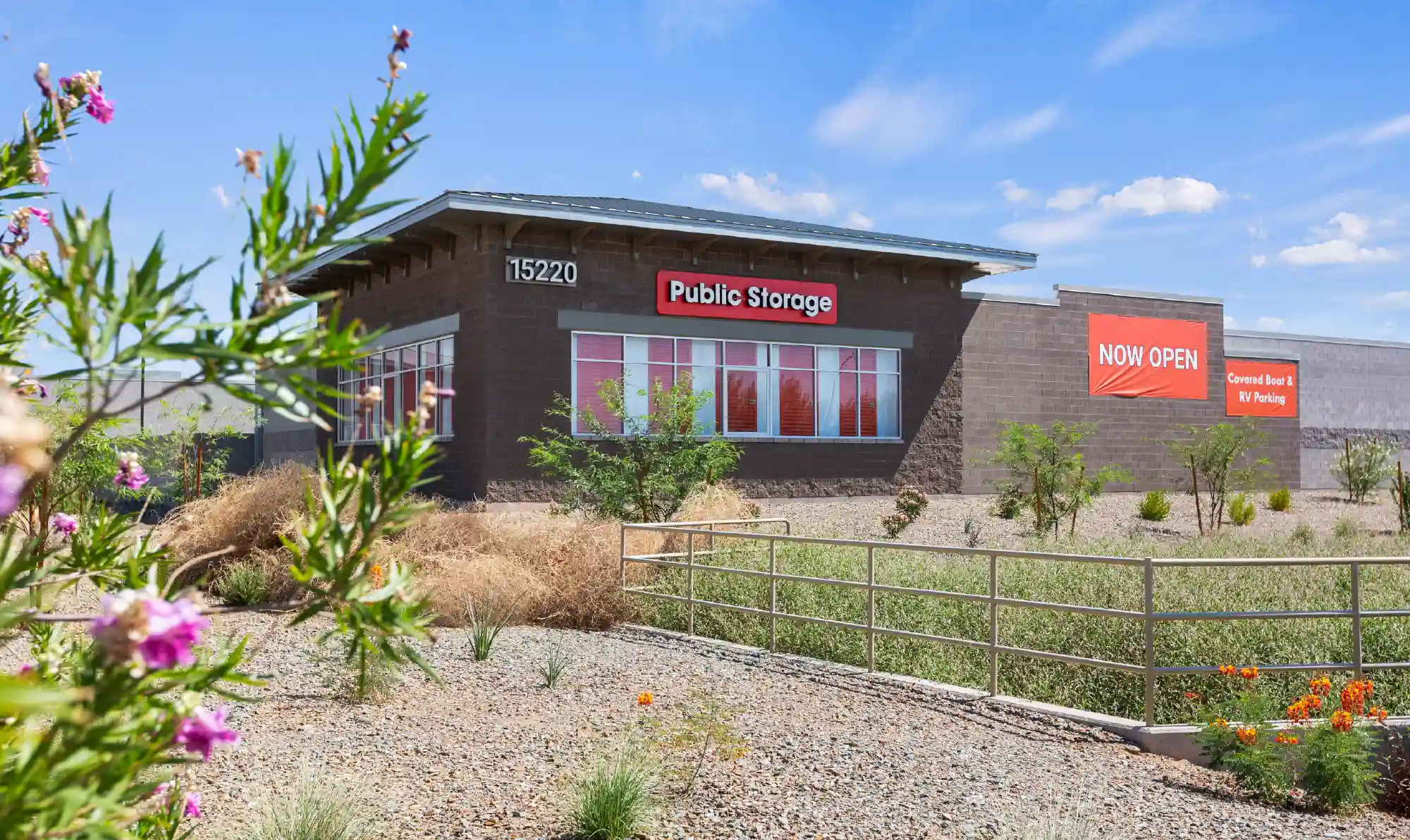
lendale, Ariz., is part of Phoenix’s thriving west corridor and has emerged as a key market for residential and commercial growth. Tucked just outside the downtown hustle is Palm Valley, where a growing population of homeowners, renters, and small businesses have a need for self-storage. Now serving them is a new Public Storage facility owned by WSD-Hamilton Palm Valley Storage, LLC and offering 126,272 rentable square feet across 779 units.
While many modern facilities climb skyward, developer Wentworth Storage Company and Robert Brown Architects kept this as a single level, making storage effortless with traditional and climate-controlled drive-up units.
James A. Campbell Construction, Inc. completed the project in 13 months, delivering a design that blends seamlessly into the community’s desert landscape. The façade pairs split-face and smooth concrete masonry units for visual depth, complemented by aluminum-framed glass doors secured by OpenTech. Inside, a full-service office leads to well-lit corridors equipped with Janus International doors and hallway systems.
As Glendale keeps growing, this thoughtfully designed facility will keep attracting tenants with storage that fits the urban desert lifestyle.

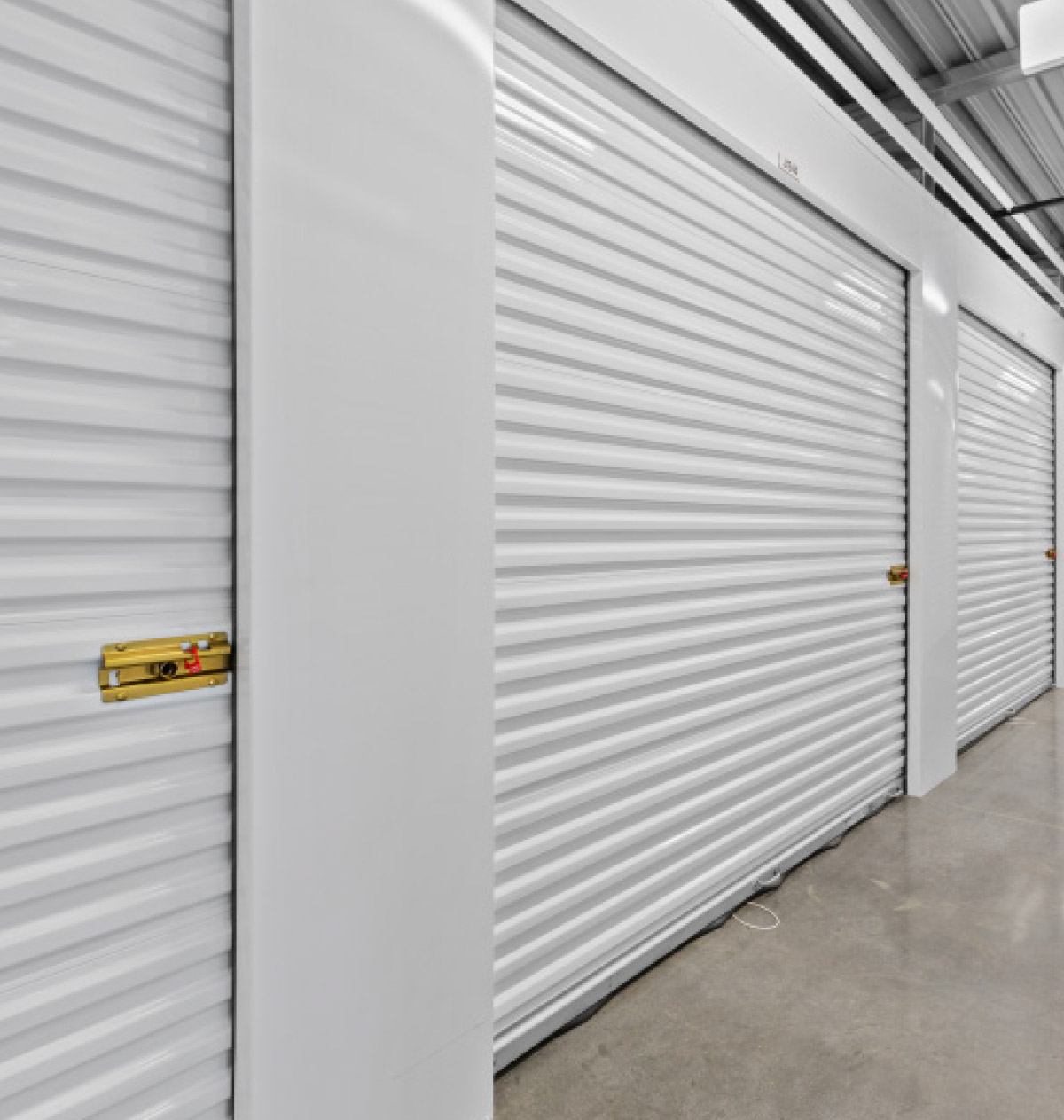
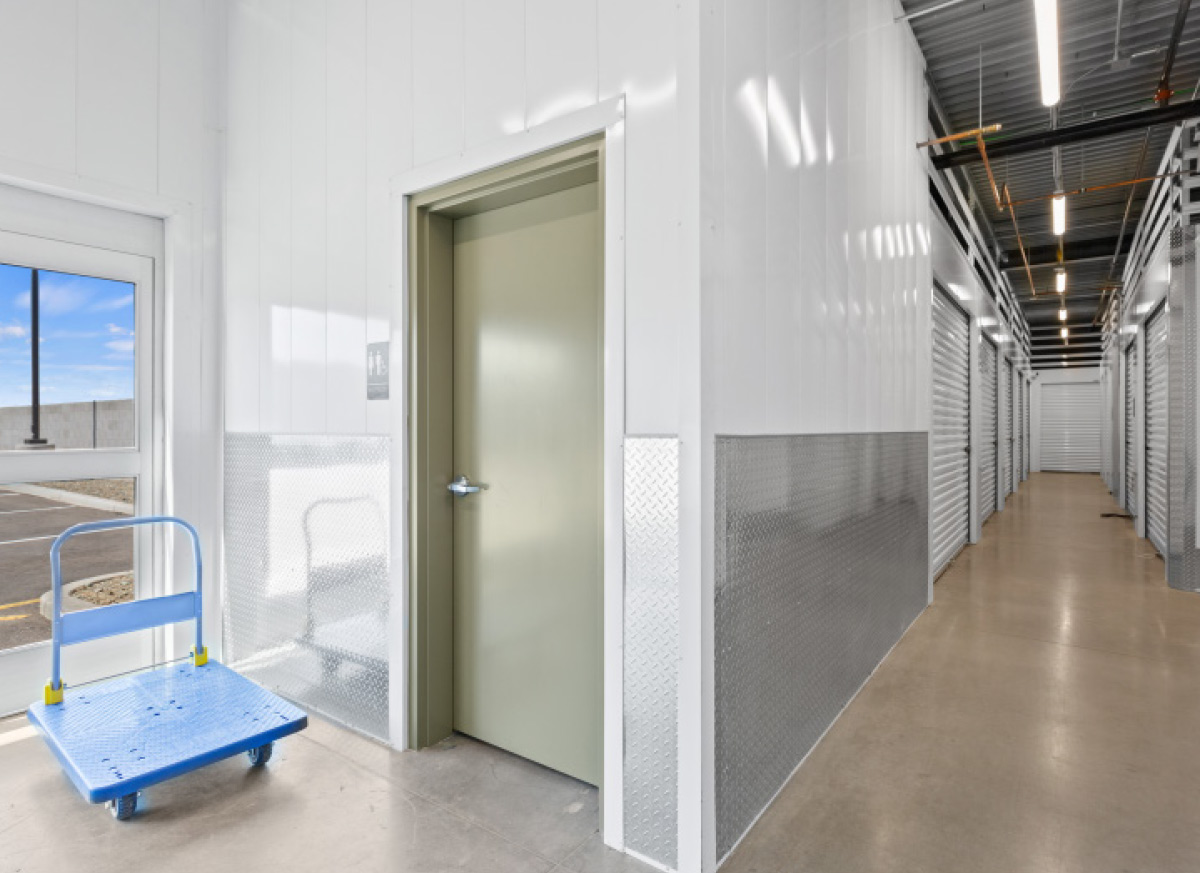
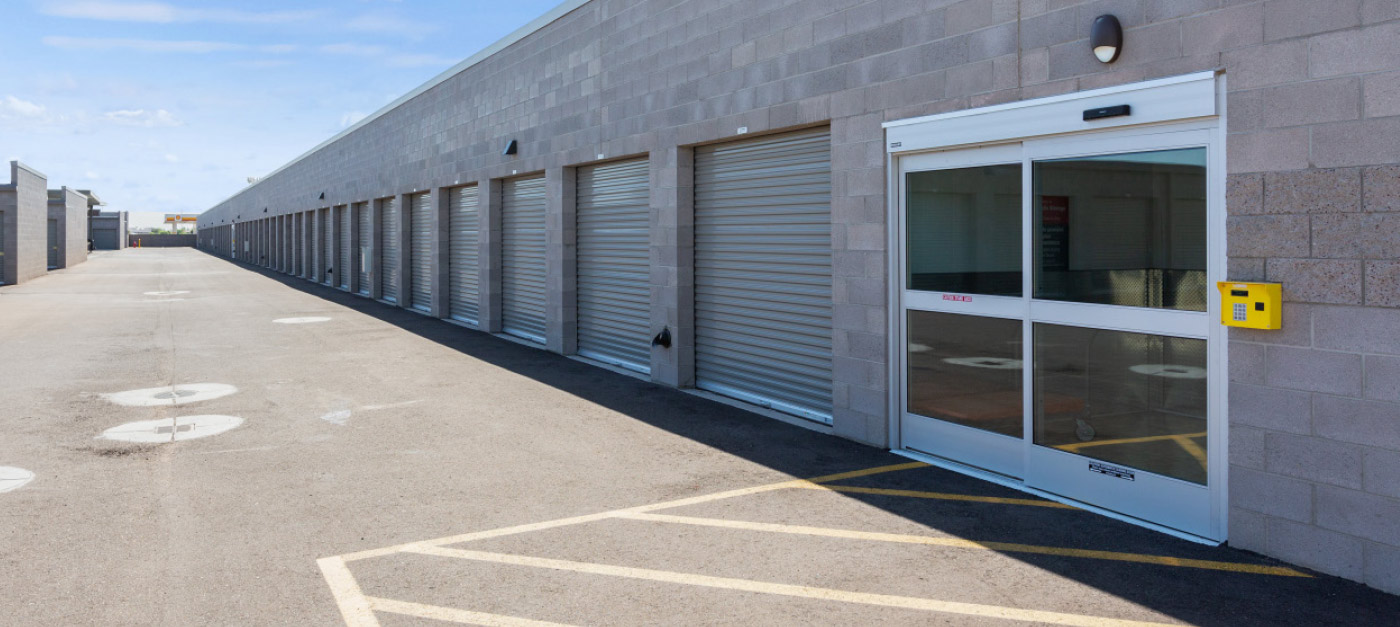
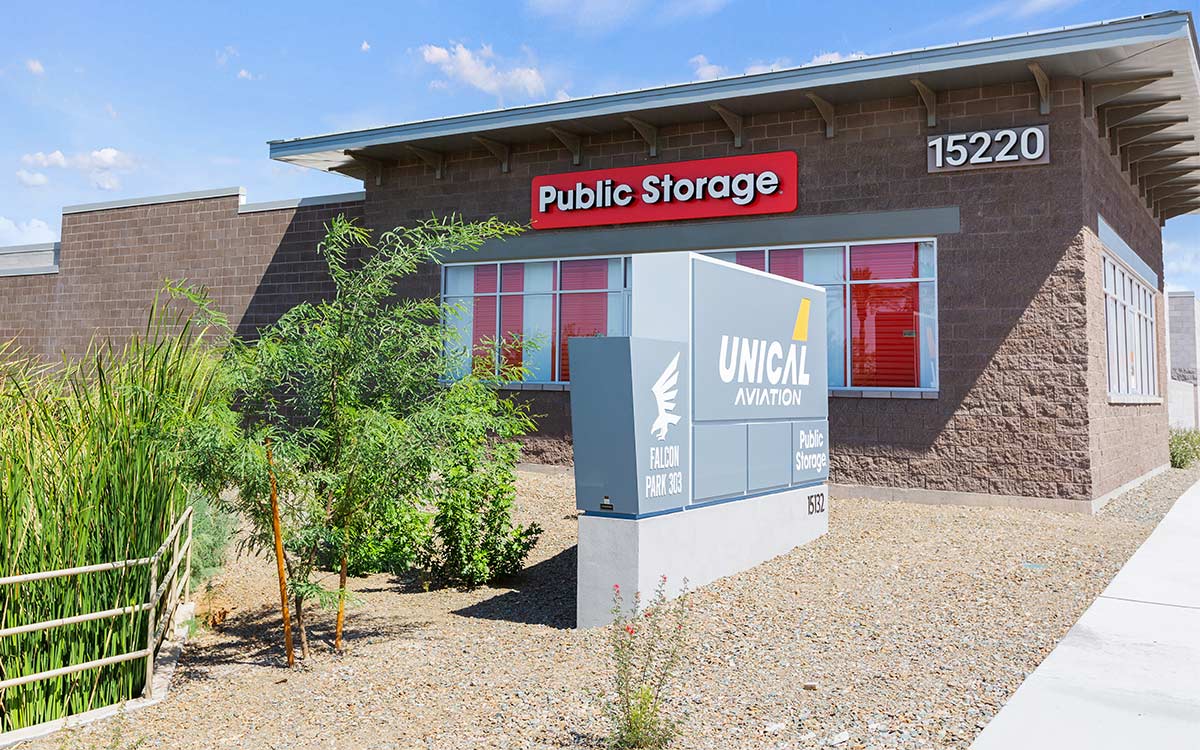
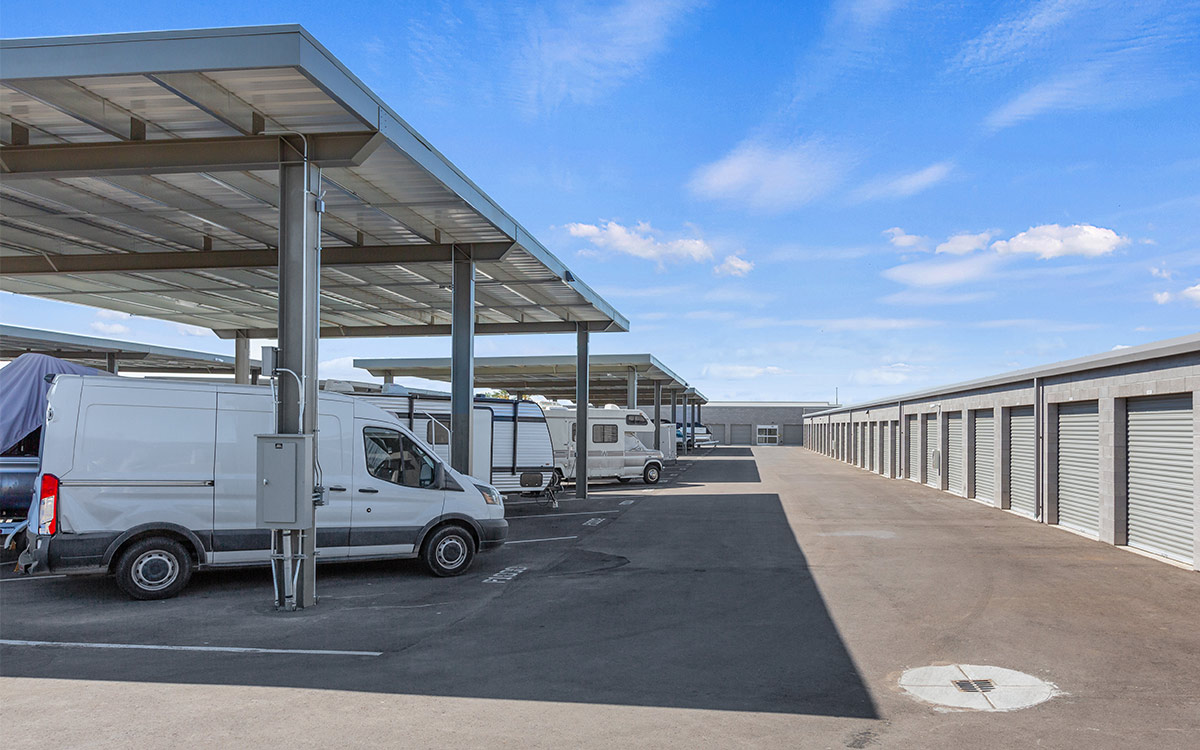
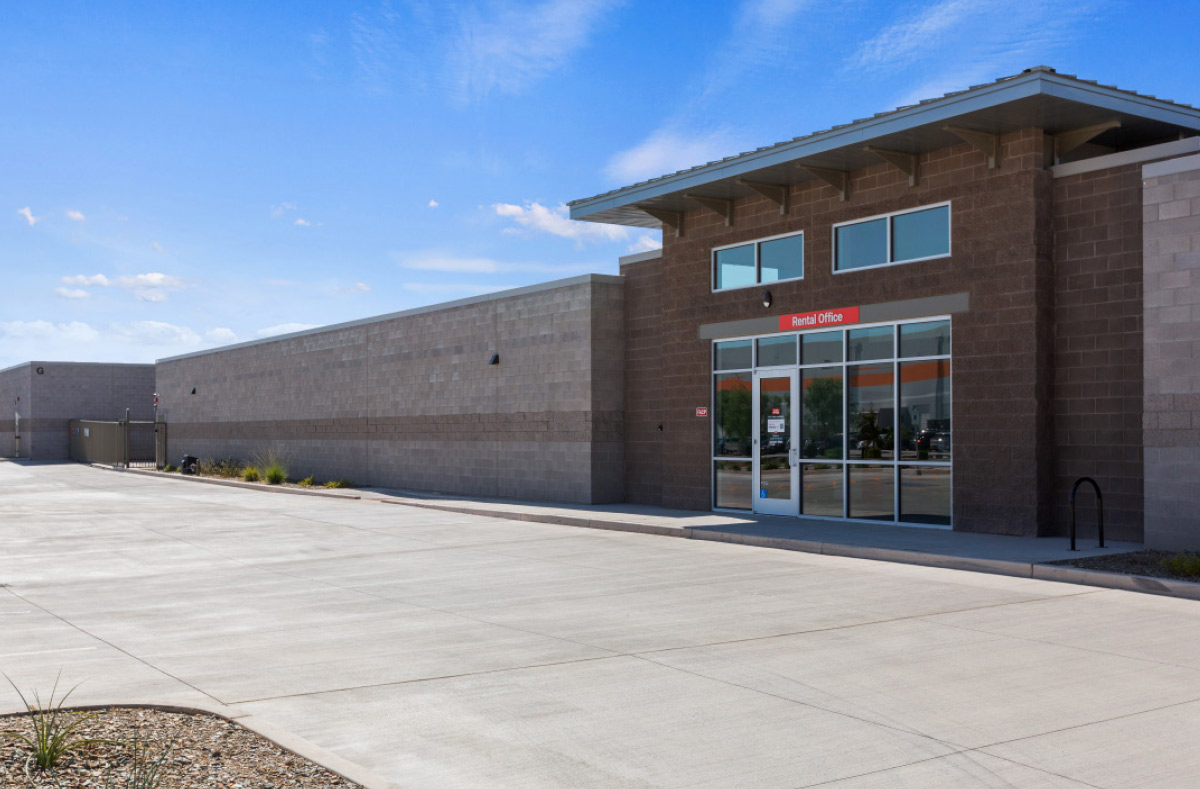
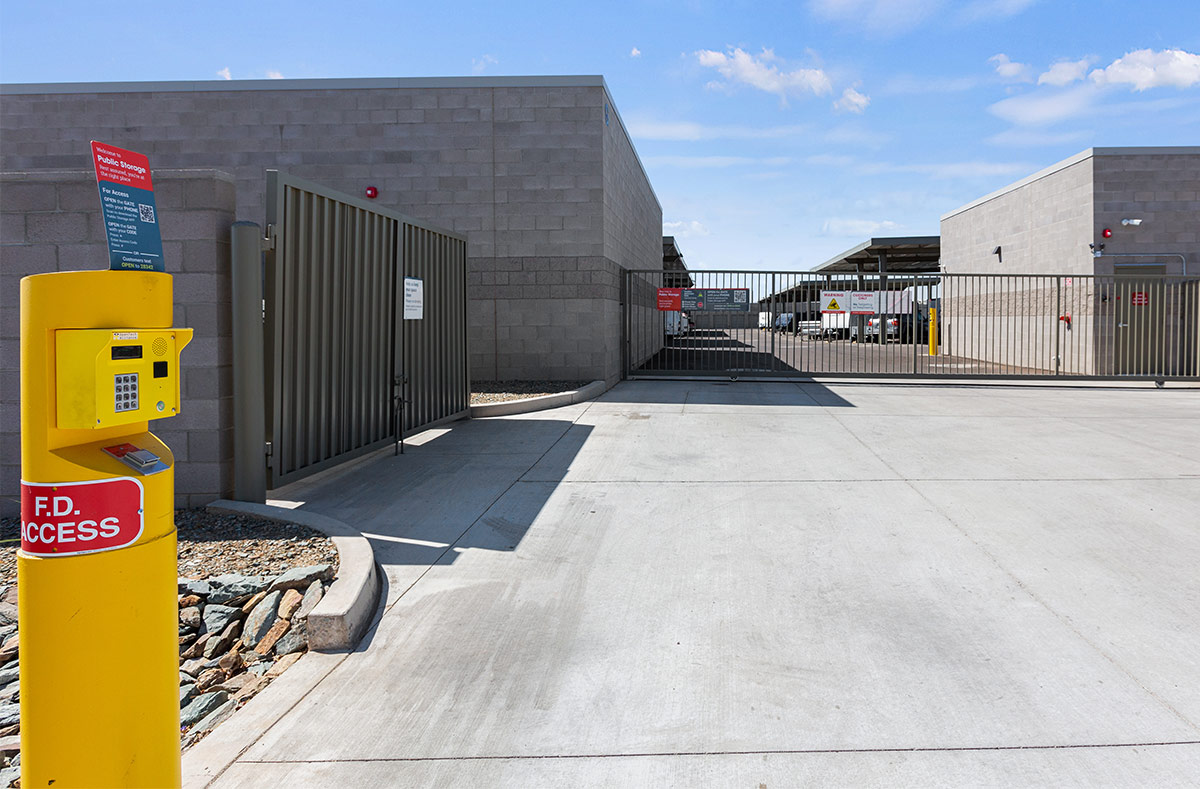

about recent price discounts!
IDEAL FOR SELF-STORAGE & RESIDENTIAL USE
IDEAL FOR SELF-STORAGE & RESIDENTIAL USE

IDEAL FOR LIGHT COMMERCIAL USE & BOAT/RV
IDEAL FOR LIGHT COMMERCIAL USE & BOAT/RV










he past five years have been interesting in the world of real estate. In March 2020, the Federal reserve cut interest rates to historic lows. As a result, it seemed like everyone was buying properties left and right, and the self-storage industry was no exception. Yet, once those interest rates rose in 2024, things started to stall. Buyers and developers pushed the pause button while the price of everything became more expensive.
Then, in September 2025 the Federal Reserve cut rates once again by 0.25 percent for the first time all year. While it’s a movement in the right direction, it’s also anticlimactic since that minute decrease is not exactly something to write home about.
Nevertheless, there is some optimism that the needle will keep moving, especially since economists are predicting additional decreases. And since the self-storage industry has been called a “cash cow” for several years, these rumors beg the question: How have the recent cuts and the potential ones in the horizon affected this space?
Hill adds that if we look at the CMBS market as a proxy, lending activity throughout 2025 has been robust. “YTD in the CMBS market alone, lending volume has exceeded $90 billion across 90 different issuance transactions, with over $9 billion in the month of September alone. Historically speaking, this is a significant volume.”
However, that optimism isn’t held by everyone. “Unfortunately, it’s the big no news,” says Chris Sonne, specialty practice co-lender at Newmark, a consulting firm that assists investors in every stage of self-storage development. “The markets have been expecting it, and the change was not significant enough to really change the needle for folks on interest rates on loans.”
Neal Gussis, executive director of capital markets at SPMI Capital, agrees. When asked whether he’s seen an increased demand for loan advisory services due to the lower rates, he answers in the negative. However, he is having increased demand with owners having upcoming maturities.
“The rates haven’t gone down that much, just 25 basis points,” says Gussis. “It’s not enough for borrowers to want to borrow more money. We have seen the five- and 10-year treasury come down a bit as well, not necessarily because the Fed rate came down but because of other economic factors.”
Gussis mentions the weakening in job numbers as a big contributor. He also points out that from July of 2022 to the beginning of 2025, there was an inverted yield curve (the difference between a two-year treasury and a 30-year treasury). “In typical times, the rates for 10-year treasury loans are higher because there’s more risk. Yet, for almost two and a half years, you could get long-term money for cheaper than shorter-term loans. A lot of people were fixating on five- or 10-year loans at 3, 3.25, 4, 4.25 percent fixed. If they took a shorter-term loan, it would’ve been more expensive.”
Gussis contrasts such scenario with where things are now. “We’re in a period where inflation as tracked by the U.S. Consumer Price Index (CPI) is fluctuating in the 2.5 percent to 3.0 percent range, which is a more normal range. There’s a reason for the shorter-term treasuries to be lower than they were two years ago, when we were looking at 9 percent annual inflation.”
“I don’t think they are rumors,” says Hill. “The current administration has made it very clear that they want rates lowered; and while the independent Fed has not fully cooperated, they have clearly gotten the message.” He adds that unless something changes dramatically in how the economy is trending, the market fully expects there will be additional rate cuts well into the first half of next year.
Sonne echoes that sentiment. “I think there’s a lot of momentum for the year ahead,” he says. “Those tend to drive decisionmakers in a good direction. We’ll see more transaction volume, deals done, more deals built than we have seen in the last three years, so I’m looking ahead to a more robust and healthy self-storage environment. Not that things have been bad, either. They’ve been OK, but storage can’t always be fantastic. It’s been good, but it can’t always be great. We’re looking forward to better years ahead.”
Aaron Swerdlin, vice chairman of real estate advisory firm Newmark Group, Inc., also recommends caution. “During the pandemic frenzy, we saw a real focus on the Sun Belt and all the markets with net in-migration,” he says. “Those, coincidentally, were the markets that saw new supply and development ramp up quickly, and those markets are now challenged because they are dealing with oversupply. The owners don’t have much pricing power, and tenants are getting deeper move-in discounts. I think that, overall, it’s more institutionally minded capital. They focus on density and areas where new supply is increasingly difficult. Rents typically in those areas are higher; operating margins are better. We see a draw to those dense markets.”
To avoid costly misjudgments, Swerdlin advises borrowers to do their due diligence. “The biggest mistake is debt making or breaking a deal. If a deal makes sense only because of the debt, in an environment where the market changes quickly, you can get trapped. If you’re over leveraged and you’re only making money when the interest rates are low, it’ll be difficult to refinance when the market is like what we have right now. If you were making all the money from low interest rates, when they go up, it’ll be a challenge.”





rtificial intelligence (AI) has moved from shiny headline to background noise. It drafts reports, crunches numbers, and spits out answers before you finish your coffee. Sure, it’s impressive, but here’s the truth: AI doesn’t carry consequences. It doesn’t look a client in the eye. It doesn’t feel the ripple effects of a decision. And it doesn’t take responsibility for your bottom line.
If the answer the machine generates tanks your revenue, alienates members, or erodes trust, you’re the one left holding the bill. That’s why strategy—and the leadership behind it—matters more than ever. No algorithm owns the outcome. You do.
Let’s move past the hype. Here are five deliberate moves you can make right now to protect your bottom line and lead beyond the prompt.
Sit with the fog.
Budgets, hiring, strategic shifts—these aren’t clean equations; they’re ambiguous, political, human. AI can draft a neat pros and cons list. Your job is to pause and ask: What’s missing? Who wins? Who loses? What happens next?
If you skip that step, the hidden costs will show up later as disengagement, member churn, or bad investments.
Picture a board reviewing a new initiative. The AI-generated summary makes the case sound airtight. But the leader who slows down and asks, “What does this mean for our youngest members? What will this signal to partners two years out?” is the one saving the organization from a six-figure mistake.
At your next meeting, call a “fog check.” Ask the three questions: What’s missing? Who wins? Who loses? Don’t let the quick answer become the wrong one.
Keep ethics at the center.
Associations and businesses don’t just move fast—they’re trusted to move right. Shortcuts that ignore ethics show up later as lawsuits, reputational hits, and fractured relationships. That’s not a side issue. That’s a direct strike on your bottom line.
We’ve all seen organizations save weeks of effort by letting AI automate outreach, only to discover the model baked in subtle bias that alienated the very people they most needed to reach. The “time savings” evaporated into months of damage control.
Before green-lighting an AI-driven idea, ask: Does this align with our values? Would I defend this decision five years from now? If not, stop.
Think in systems, not silos.
Generalist leaders, the ones who see the whole map, know that a $10,000 savings in accounting isn’t a win if it creates a $100,000 problem in member experience.
Your job isn’t to celebrate local brilliance. It’s to orchestrate the system. Otherwise, the hidden costs will eat your margin alive.
Think about your own teams. When IT rolls out a new platform without consulting HR, the disruption isn’t just technical—it’s cultural. AI multiplies the risk when every department starts adopting tools in isolation.
Assign a “system scanner” to your next initiative. Their role: flag downstream impacts before final sign-off.
Synthesize, don’t just search.
Think of a conductor. Every instrument makes noise on its own, but only with synthesis does it become music. It’s the same with leadership; you’re the one who connects the dots between data, context, and lived experience.
That’s where margin lives. It is not in the draft that AI spits out but in the connections only you can make.
A leader who notices that a single line in a market report echoes a member’s frustration last week is doing more than analysis. They’re weaving lived reality into strategy. That’s not a “nice to have.” It’s the difference between a good idea and a profitable one.
Before proceeding, demand at least one hidden link between data, feedback, and long-term strategy in your next planning session.
Protect the human work.
Machines don’t build trust. They don’t mentor. They don’t sense when silence in a room means resistance. That’s the work that keeps members engaged, employees loyal, and revenue steady.
Don’t outsource it. Double down on it.
Make time for mentoring, storytelling, and coaching. That’s not soft work—it’s bottom-line protection. When people feel seen and supported, they stay. Retention is the margin. Trust is currency.
Block 30 minutes this week for a conversation that’s not about tasks—only trust. Meet with a stakeholder, employee, or partner—your choice.
The leaders who thrive now aren’t the ones who chase speed or shiny tools. They’re the ones steady enough to sit in ambiguity, disciplined enough to keep ethics central, wide-eyed enough to think in systems, skilled enough to synthesize, and human enough to protect the work only people can do.
Holding the horizon means keeping your eyes fixed on long-term direction while navigating the fog of daily complexity. AI can generate, but only leadership delivers. Protecting your bottom line isn’t about the machine. It’s about doing the five things the machine never will—today, not tomorrow.

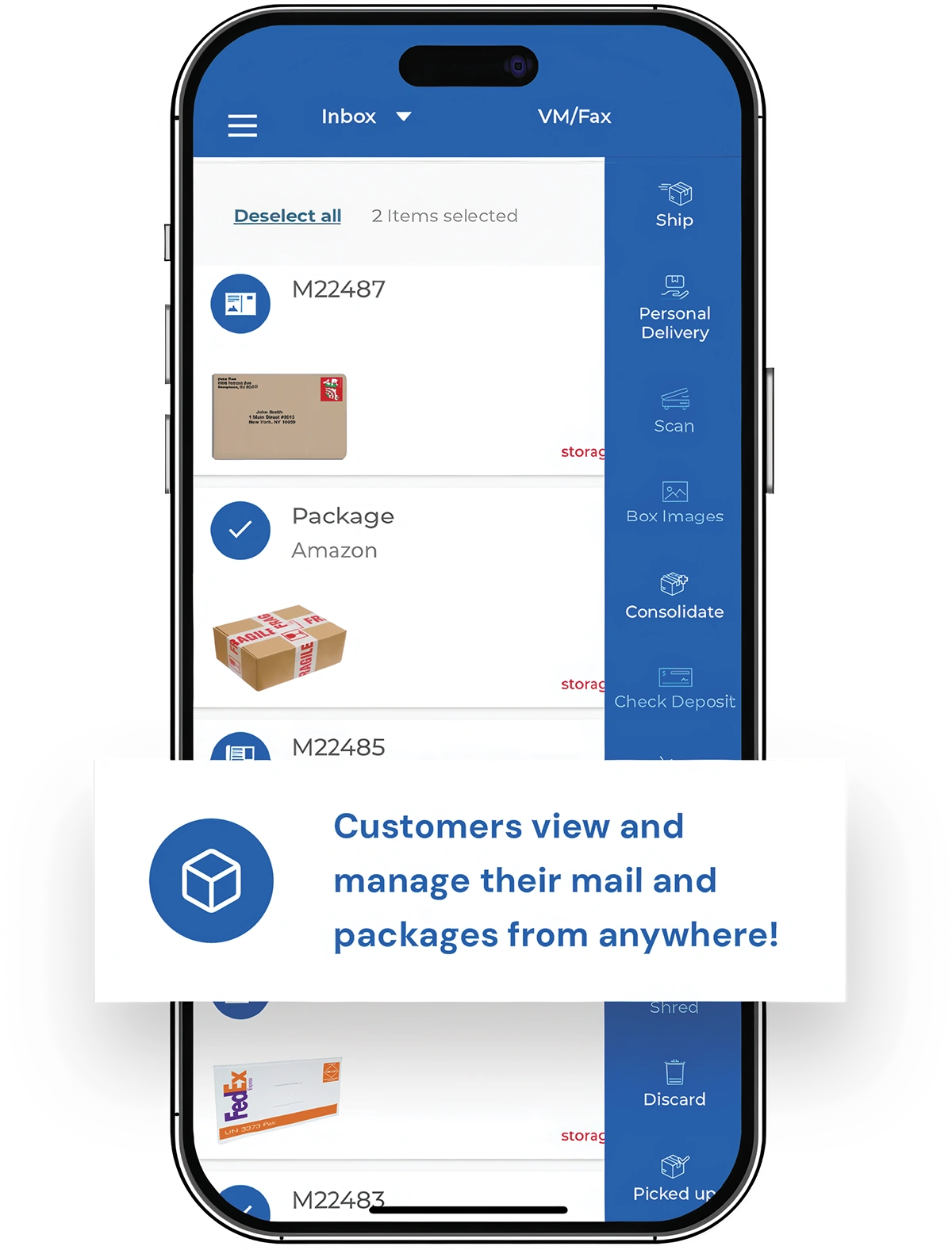

t’s money in your mailbox” could easily be a slogan for iPostal1, which is helping thousands of businesses like self-storage earn additional income each month just by becoming a mail receiving and forwarding destination.
iPostal1 was founded by Jeff Milgram in 2015, but the business’ roots took hold long before, when his educational software company took off. “In 2001 we were shipping so many CDs that we actually became the largest shipper in Rockland County, N.Y.,” recalls Milgram. “This led to opening our own pack-and-ship business to get better discounts on every package we shipped.”
As his understanding of the shipping industry grew, Milgram refined his business, putting a focus on digital mailboxes that allowed him to receive and manage postal mail and packages for international customers. He then created a platform that enabled his customers to view and manage their mail items online.

The model shift paid off quickly, starting with six pilot locations before expanding into retail pack-and-ship stores in all 50 states. Staples came onboard in 2021 with 1,000 stores, followed by hundreds of coworking spaces in prestigious office buildings. iPostal1 is now the leading digital mailbox provider world-wide, with over 4,000 addresses listed on iPostal1.com. “A lot of people have some real issues receiving mail or running their own business, and there are five main challenges,” says Barry Gesserman, executive vice president of B2B marketing and partnerships. “They may travel a lot or have a second home, or they may run a home business and want to protect their privacy or upgrade their brand image with a commercial address. Other times, a person just wants a particular business address, say Manhattan instead of Des Moines. And lastly, there’s always concern over porch pirates.” The response was phenomenal, with iPostal racking up an average 4.5 out of 5 rating on Google and Trustpilot.
As the team began building its partner network, they realized that self-storage operators would be perfect for the platform. “For one, there are a lot of them,” says Gesserman. “Many of these owners are also entrepreneurial, so they’re eager to earn more money. And people already trust self-storage businesses to watch over their belongings, so why not their mail and packages, too?”
Gesserman also knows that many self-storage owners are looking at ways to get more productivity from their store managers. “Now, that manager can manage the iPostal1 business during downtime, and the money they bring in could potentially pay for their salary!”
Because iPostal began as its own digital mailbox operation, the company knows how to make things easy for its partners, who may initially believe it’s going to be too much work. “When we hear that, we say ‘timeout,’” says Gesserman. “We explain that for 100 customers, they might be looking at 30 minutes per day–that’s it. Some days, maybe no work at all.”
That’s because iPostal completely takes care of the transactional sides of the business, taking customers’ credit card information and checking for fraud risk. They also collect all fees, remitting partners their earnings when due. Gesserman says that operationally, all the partner must do is receive the mail, insert an outside image into the customer’s digital mailbox, and perform any tasks requested.
Tasks, which can be completed with an app, may include forwarding mail, opening mail to scan the contents if the customer wants to see it immediately, or shredding it if the customer doesn’t want it. “All our locations register with USPS, so there’s no issue handling other people’s mail.”
iPostal1 also provides the marketing, spending millions to bring people to their website and select an address and plan. “We sign up customers for our partners. All they need is a computer, mobile device, printer, a file cabinet to store letters, and some shelf space for packages. These are things they already have, so there’s no investment–just money to be made.”
Revenue at any given location depends on the demand for that address. According to Gesserman, some locations make $12,000 a year, others make $50,000, and there are some earning over $100,000. Another source of income is storage fees. If customers don’t collect their mail or packages, or have them forwarded, charges start after 30 days. “If there’s one thing storage facilities have, it’s space, but we still don’t want our partners to become warehouses.”
Self-storage operators can also offer digital mailbox service directly to their own renters, many of whom are downsizing, moving, separating, or traveling and need a reliable and secure way to receive and manage mail and packages.
Today, iPostal has roughly 100 storage operators on the platform. “We’re in discussions with many more,” says Gesserman. “We had a lot of interest when we went to the last Self Storage Association trade show and we’re very excited about the self-storage channel. This is just the beginning.”

ecember is the month when many of us set resolutions for the coming year. Maybe you want to exercise more, eat better, lose weight, or stop smoking in 2026.
If you have not done so already, I encourage you to include at least one resolution related to your role in the self-storage industry. For purposes of this column, I will suggest supporting the grassroots lobbying of your national and state associations. Legislators hear from paid lobbyists like Daniel Bryant and me all the time. They want to hear more from people like you who create jobs in their communities, provide an important service to their neighbors, and/or run or work for a successful business.
Before getting to some recommendations, I want to demonstrate the importance of grassroots lobbying by highlighting the activities of two state associations this year. First, the Georgia Self Storage Association (GASSA) successfully pushed through a bill to eliminate the state’s antiquated newspaper advertising requirement. This happened because many operators in the state took the time to meet with their legislators and cultivate support for the bill. In fact, GASSA’s outreach was so successful that only one legislator voted no on the bill—a bill that never even made it out of committee in previous years!
On the other side, both geographically and positionally, the Washington Self Storage Association (WA-SSA) successfully opposed a sales tax that would have added at least 6.5 percent, and in some parts of the state more than 10 percent, to customers’ bills. While several other industries are facing new sales taxes, the storage industry is not, thanks to the dozens of operators that WA-SSA assembled to testify against the destructive bill.
So, what can you do to help? The American Psychological Association offers several considerations on how best to stick to your resolutions. I will focus on three of those considerations: start small, talk about it, and ask for support.
Now that you have met your self-storage resolution, go ahead and reward yourself with that slice of chocolate cake!

Due Diligence Is Critical
he self-storage industry continues to be a lucrative investment for buyers and a profitable exit for sellers. Whether you’re buying or selling a self-storage facility, understanding the nuances of due diligence and the specifics of rent balances and credits in the settlement process is critical to ensuring a smooth transaction. This “Last Word” delves into these key aspects to provide clarity for all parties involved.
Due diligence is a critical step in any self-storage facility transaction. It provides buyers with a comprehensive understanding of the asset they are acquiring and assures sellers that their facility is represented accurately. The core elements include both a financial analysis of the property and a physical inspection.
As part of the financial analysis, a buyer needs to review profit and loss statements (analyze at least three years of financial data to identify trends and anomalies), occupancy and revenue metrics (review occupancy rates, rental income, and fee structures), and expense analysis (validate the accuracy of operational expenses such as utilities, maintenance, insurance, and marketing costs). As part of the property inspection, the buyer would want to inspect the physical condition of the facility, including storage units, gates, lighting, and drainage systems, and evaluate the structural integrity and compliance with local zoning and building codes.
One of the most critical components of finalizing a self-storage transaction is addressing rent balances and credits in the settlement statement. Both parties must collaborate to ensure a seamless transfer of tenant accounts and rental income.
• Fully integrated solutions with in-house baȷa Engineers for faster, easier projects
• Pre-Fabricated Framing Systems with Bolted Connections – No field welding
• Snow Loads from 20psf to 100psf – Wind Speed rated to 170MPH

matters most
facilities across Canada