


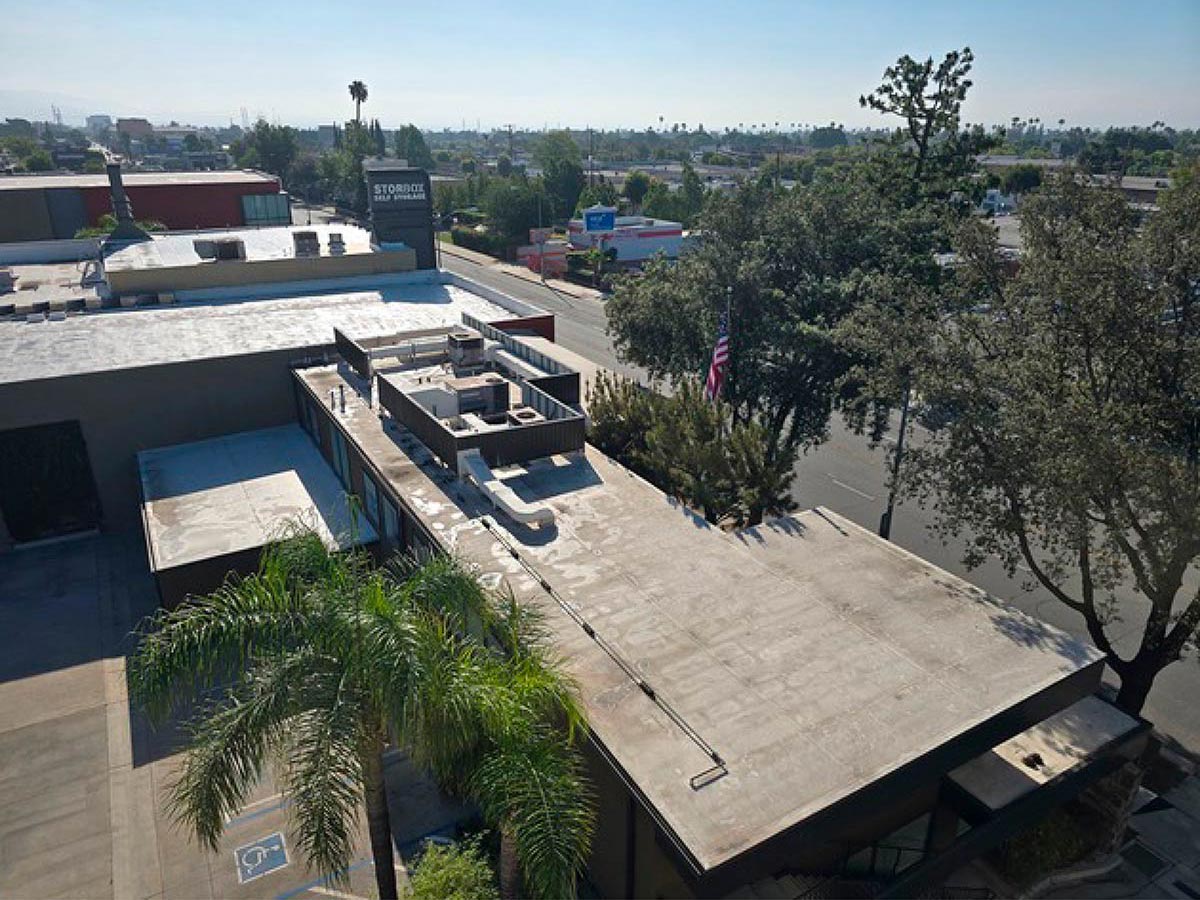
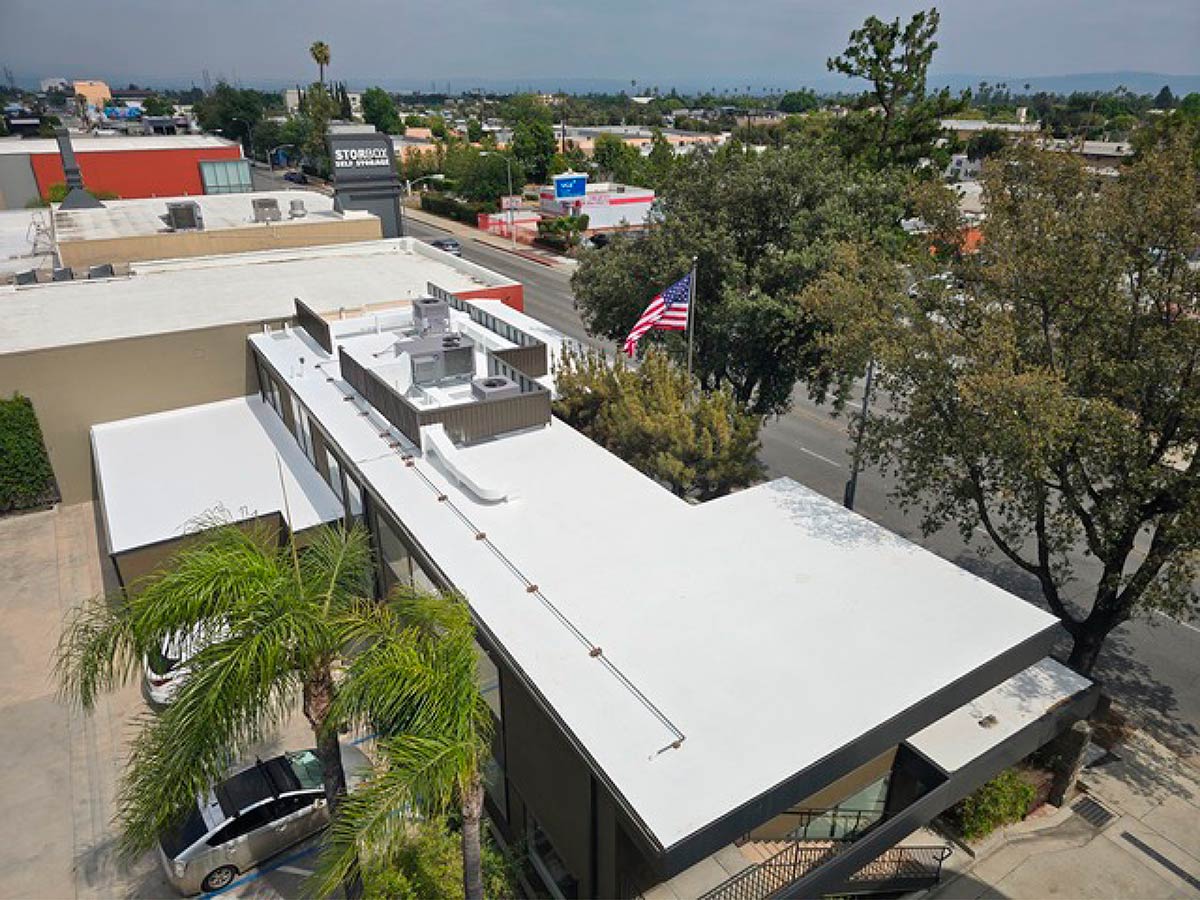
lat roofs are a popular, cost-effective choice for storage facilities because they offer lower construction costs, easier maintenance access, and usable space for HVAC units. The flat, stable, and safe surface makes it easier for repair crews to inspect and maintain the roof, reducing labor time and costs.
Flat roofs can accommodate a wide range of roofing materials, from built-up roofing (BUR) to single-ply membranes such as polyvinyl chloride (PVC), as well as metal, concrete, and thermoplastic polyolefin single-ply membrane, for example, and are often designed with a slight slope to facilitate water drainage.
Proper drainage systems can effectively direct rainwater away from the roof, minimizing the risk of leaks and water damage. However, accumulating water finds a weak spot to penetrate into permeable materials or seams that aren’t well-sealed. As water accumulates, it deteriorates most traditional roofing materials: adhesives in single-ply roof systems lose their grip, steel equipment supports are corroded, and oil solvent components of roofing asphalts seep into the water, leaving the remaining membrane brittle, cracked, and leaking as the pond grows, thus accelerating the roof’s aging. Ponding also adds more weight onto the roof and unfortunately remains until the water evaporates.
Fortunately, a spray polyurethane foam (SPF) roofing system builds resilience into the structure. The seamless, fully adhered, insulated membrane combines slope, insulation, and waterproofing in one field-applied system, becoming the evolution of the modern roof.
SPF offers a seamless, monolithic barrier, delivering the highest insulation value per inch of any roofing material (R-6.9 per inch). This system corrects poor drainage by varying application thickness, and self-flashes around roof penetrations. Sprayed as a liquid, SPF expands to create a seamless, self-adhering membrane that completely eliminates joints and seams, the most common sources of roof leaks. It’s easy for professionals to install, it’s affordable (numerous studies have shown that the ROI on spray foam systems can happen in as little as five years or less in energy cost reduction), and it has superior longevity over other roofing systems. But property owners might not know how much protection an SPF roof can provide for their building. For example:
- Durability – One of the best features of spray foam is that it insulates the building, mitigating excessive expansion and contraction due to changing outside temperatures. This characteristic gives it unparalleled durability. Contractors can install spray foam in almost any climate or harsh environment and it will hold up well.
- Seamless Surface – SPF is a continuous system that fills in cracks, holes, corners, and along the roof’s base. Spray foam has no exposed seams, so there is less chance for water to penetrate through to the deck. It is a durable cellular insulation that protects the roof from moisture and air. Building owners never have to worry about cracking or splitting in a single-ply membrane.
- Sustainable – SPF as a roofing system is a low-waste and low-labor assembly, providing an efficient installation method with less disposal and minimal tear-off costs. With proper maintenance, the SPF roof system can be renewed at the end of its service life by re-coating the existing elastomeric coating. SPF features ultra-low global warming chemistry that reduces the carbon footprint in its roofing systems.
- Meets Building Codes – SPF is ideal for meeting all commercial building codes. Coated foamed roof assemblies can meet Class-A and Class-B fire performance, which is especially beneficial in metropolitan areas where building codes are stricter.
- Reduces Heat Absorption – Self-storage flat roofs face severe heat absorption challenges due to their large, unshaded surface areas. However, SPF’s insulation and light-colored roofing surface can reduce the amount of air conditioning needed by reflecting considerably more sunlight—and therefore heat—than conventional, dark-colored roofs.
“It’s essential that our buildings’ roofs are waterproof to protect tenants’ important possessions. Talking with the manufacturer’s experienced sales manager helped me understand the entire process that would occur and got the project back on track,” says Barnard.
Prior to applying the SPF system, the team first used a roof vacuum to remove all of the loose gravel and dust; they then applied a waterborne modified acrylic neoprene asphalt primer to promote better foam adhesion and prevent blistering. Next they applied the SPF, which rapidly expanded into a dense, closed-cell insulation and waterproof barrier. And lastly, an acrylic elastomeric top coat was applied over the cured SPF to protect against UV degradation.
“Because the California sun is relentless on roofs and to meet the state’s rigorous sustainability requirements, I knew that this manufacturer’s SFP and acrylic products would be the ideal choice for this project,” says Barnard.
Barnard has been so pleased working with this manufacturer and the results of this project that he will be using SPF for other building retrofits in the future.