


ome mature companies, upon reaching the top, are content to rest on their laurels. Innovation, they decide, is a younger start-up’s game. It would be easy for Public Storage, which opened its first location in 1972 and is now the largest owner of self-storage facilities in the world, to subscribe to that notion. Of course, 53 isn’t that old in relation to companies in other industries, but in self-storage years, it’s practically primordial. This hasn’t stopped the company from keeping up with the times, and that was made abundantly clear in April when Public Storage moved its headquarters from the Golden State to the Lone Star State (while keeping major presences in both), transitioned then-CFO Tom Boyle into the role of CEO, and introduced PS4.0.
PS4.0, named to reflect the fourth generation of leadership since the company’s founding, is designed to create opportunities for Public Storage to advance into a new era of innovation and growth. Since the launch, Public Storage has already closed on its $10.5 billion acquisition of National Storage Affiliates, a deal that sent shockwaves through the industry; the company has also entered into an agreement to acquire Public Storage Canada for approximately $1.2 billion.
“PS4.0 is all about greater energy and urgency, customer obsession, and a sharper focus on building the capabilities that will drive stronger performance over time,” says Boyle. “Community impact is an important dimension—particularly projects that focus on affordability and clean energy generation. In this new era at Public Storage, every step we are taking is driving towards compounding growth and benefits for our stakeholders.”

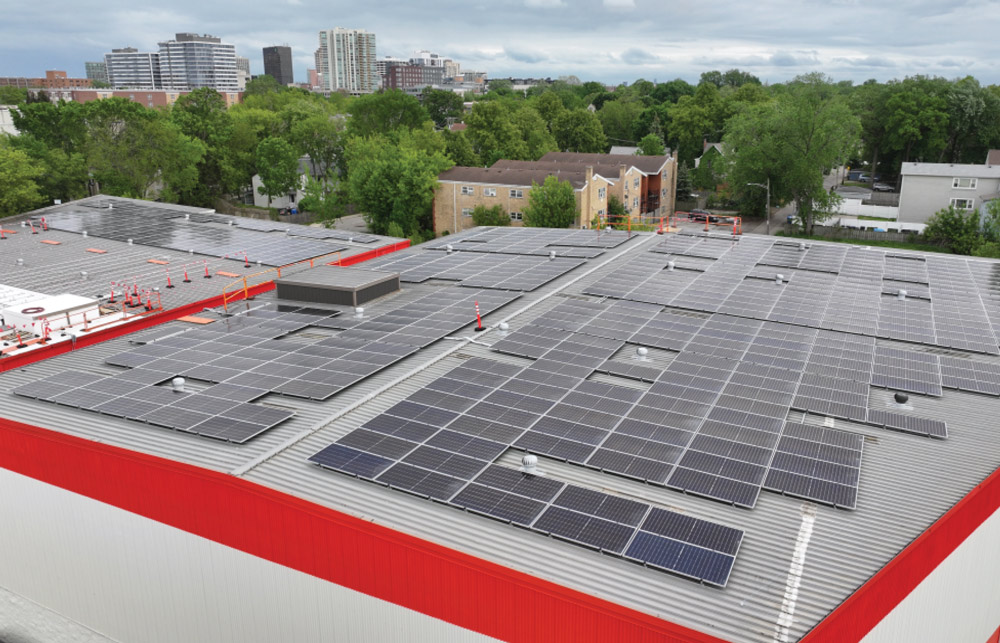
Once completed, the projects are expected to generate enough electricity each year to power more than 6,100 households while delivering about $750,000 in annual electricity bill savings for subscribers—that’s more than $36 million over the life of the projects.
Williams further points out that Public Storage maintains the largest solar energy program in the industry and is expected to expand it to 1,300 of its properties by year’s end. She also says supporting the communities the company serves is important to both leadership and employees. “Through this innovative partnership, we’re transforming underutilized rooftop space into community solar projects.”
ComEd President and CEO Gil Quiniones says that with demand for power rising faster than supply, community solar sites offer a clean energy solution that can help close the supply gap while providing the aforementioned savings. Shaun Keegan, CEO of Solar Landscape, parallels Quiniones’ thoughts by stating, “Commercial rooftops represent one of the fastest, most scalable opportunities to expand the electric grid using infrastructure that already exists.”
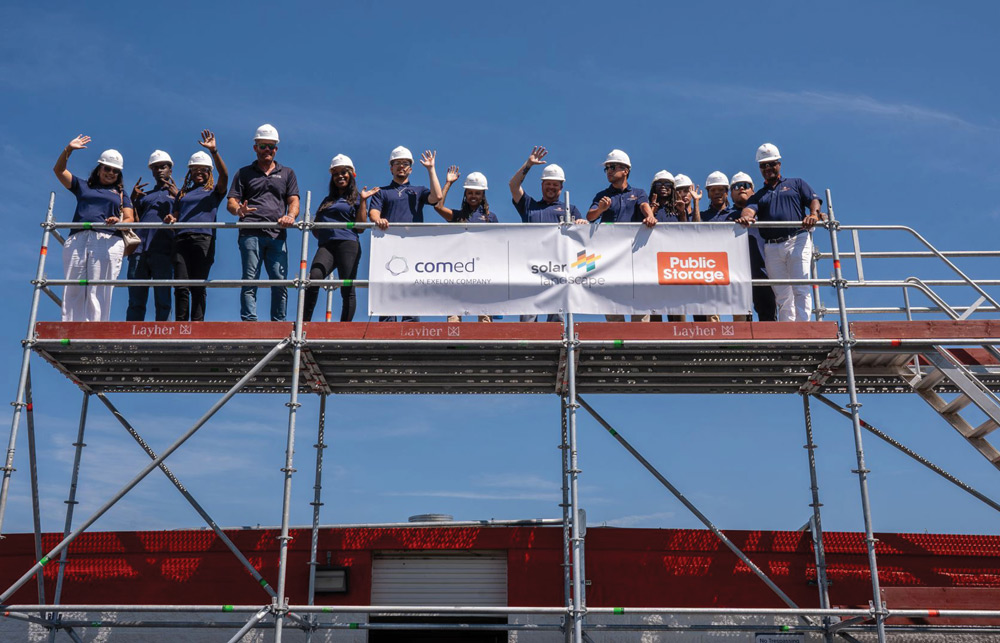
The expansion of new community solar sites is supported by Illinois’ clean energy policies, including the Climate and Equitable Jobs Act (CEJA) and the Clean and Renewable Grid Affordability (CRGA) Act. “This project represents economic development and investment here in Justice, Ill., and creates economic opportunities for job growth, investment, and sustainability,” Mayor Krzysztof Wasowicz of Justice said in a statement. Estimates suggest that construction is expected to support approximately 300 jobs, while workforce partner programs prepare Illinois residents for careers in the growing clean energy industry. “We’re celebrating the completion of this community solar project,” says Tameka Wilson, executive director of YouthBuild Lake County, which stands to benefit from the energy initiative. “By pairing clean energy development with workforce training, Illinois is helping ensure the benefits of the clean energy economy are shared by the communities that need them most.”
- Lowering greenhouse gas emissions – The company reports a 14 percent reduction in Scope 1 & 2 greenhouse gas emissions’ intensity, with a long-term goal to reduce them 45 percent by 2032.
- LED lighting everywhere – Public Storage says LED lighting, which uses significantly less electricity than traditional lighting, is now the standard for all new construction and existing property upgrades.
- Greener buildings – The company now has 263 green-certified buildings through programs such as LEED, BREEAM, and Arc Performance Certificates.
- Water conservation – Public Storage incorporates drought-tolerant landscaping, efficient irrigation systems, and water-saving plumbing fixtures at viable facilities.
- Recycled moving boxes – Even brown cardboard boxes have gone green, with the company reporting that all corrugated boxes it sells to customers are made from 100 percent recycled fiber.
Boyle concludes that sustainability isn’t a single initiative for the company; rather, it’s about “making thoughtful investments that meaningfully reduce Public Storage’s long-term environmental footprint.”