



Across The Ds
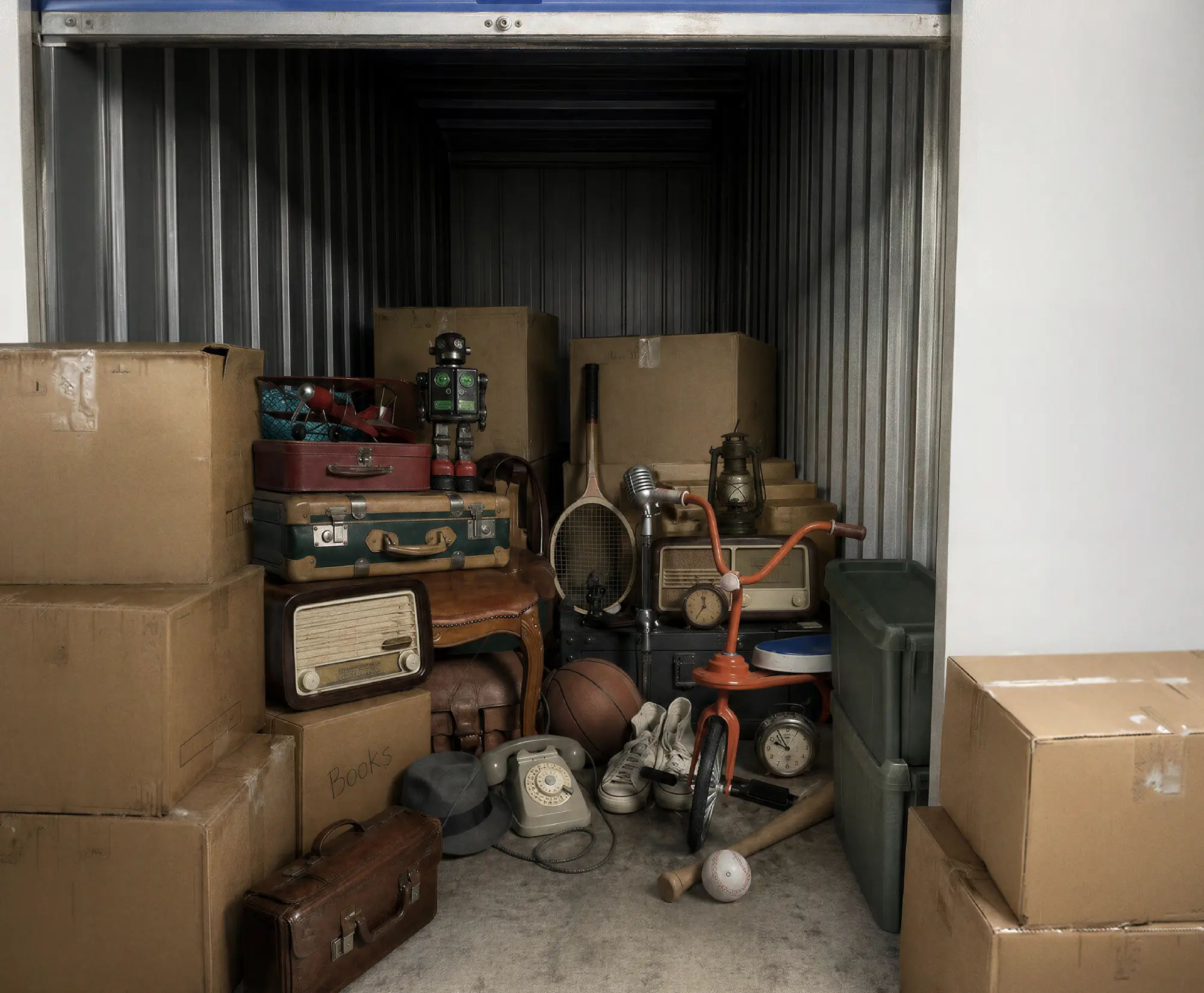
ast month, we pulled the curtain back on why people use self-storage, revealing that for many tenants, it isn’t just about space but rather preservation of possessions, memory, and identity. It’s the basis for disposition—the natural human instinct to hold onto what is ours—and it’s the D that comes before those we’ve always known: death, divorce, downsizing, and displacement. While those four may create the need for storage, disposition helps explain why our belongings find a home behind a roll-up door instead of earning a spot on Facebook Marketplace, at Goodwill, or in a dumpster. It’s also why tenants may spend thousands of dollars storing things worth a fraction of the rent.
Now, with another assist from Dr. Russell Belk, research professor and author of Possessions and the Extended Self, we’ll look at how disposition applies across each of the four Ds, and how very different circumstances can lead tenants to make the same decision: Put it in storage.
“I can’t get rid of this because it belonged to someone I loved.”
Because of this, parting with those belongings can often feel like a betrayal. “I had to go through my mother’s stuff when she passed, and while some items were meaningful, most had no significance to me other than that they had belonged to her,” Belk told MSM. “Still, since I knew they were important to her, the thought of throwing them out felt disloyal. I definitely had a twinge of guilt when I tossed that stuff in the dumpster.”
“I don’t know what to do with the remnants of our life together.”
Novelist Stephanie Danler (Sweetbitter, Stray) told TIME magazine that when she and her husband separated, they packed up their home and put the boxes into storage. She didn’t think it’d be permanent, but temporary turned into years, and it became clear it was over. “I felt like I had been much younger when I packed them,” she said when finally opening the boxes. “The first box I opened had sweaters in it. His and mine. I remember taping up that box and thinking that we were separating, but we would be unpacking this box before the next snow came … It hurt afresh to see it all again. I still loved him. He still loved me. We wept constantly.”
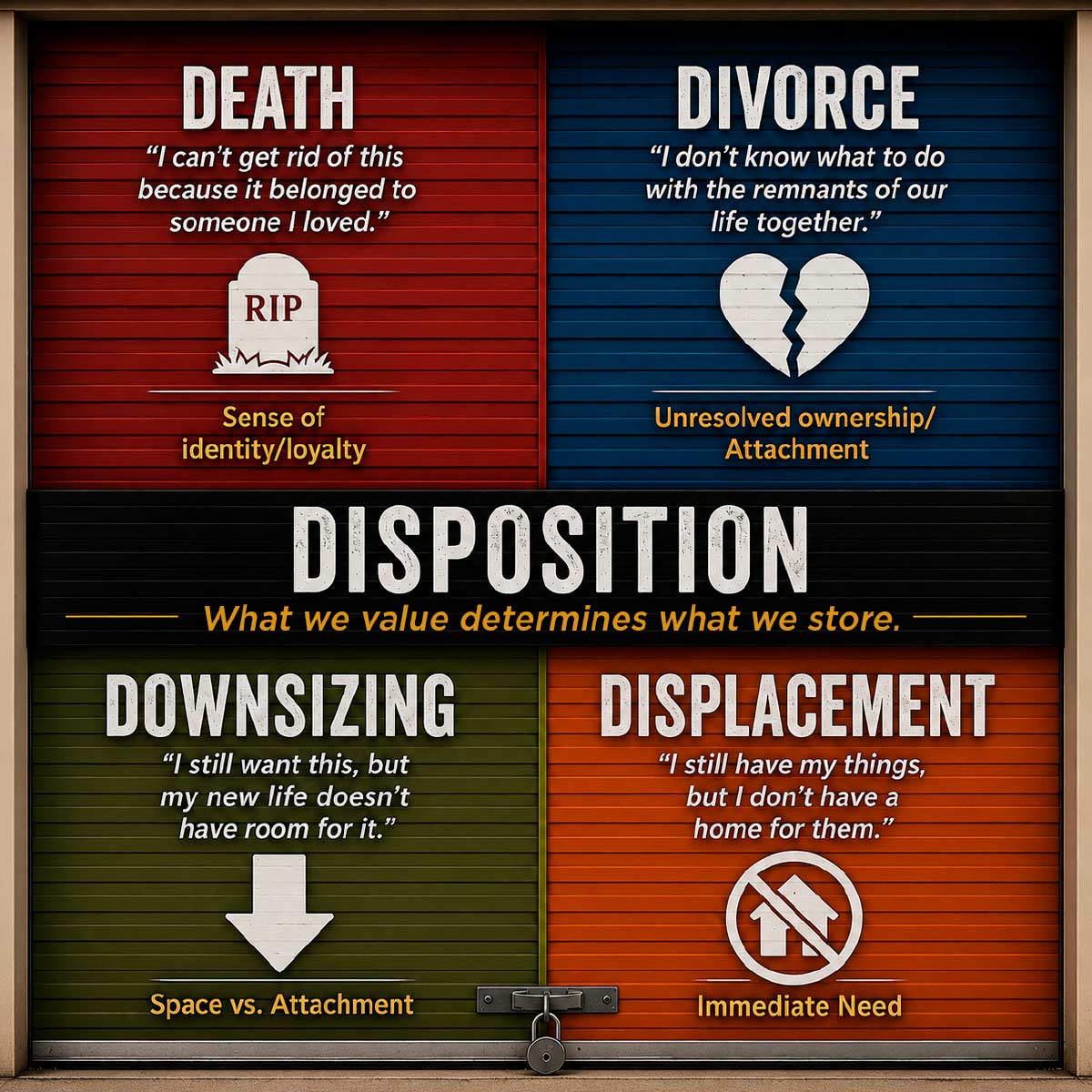
“I still want this, but my new life doesn’t have room for it.”
Amanda Titchenal, the founder of professional organizing company Well Organized, doesn’t necessarily encourage storage but does recommend it when clients refuse to part with certain belongings. However, she has some rules and tells clients their home should only hold things they use regularly. “If you need to get storage, make sure it is for specific purposes and not just a place to dump things,” she says, adding that for the ultra-sentimental it’s OK to relocate special keepsakes to storage if they’re creating too much clutter in the home.
Amber Campbell would likely agree. In a recent Business Insider story, she writes about going from a furnished townhouse to traveling with two suitcases after losing her job. She describes having associated her possessions with security and identity, which made downsizing emotionally difficult. “[It] forced me to question who I was without my stuff,” recalls Campbell. “I was so anxious about letting go that I packed my storage unit like a Tetris puzzle … That’s when it hit me how much of my life I’d spent defining myself by my stuff. They were all evidence that I’d become the person I always wanted to be.”
“I still have my things, but I don’t have a home for them.”
But disaster isn’t the only reason people lose their home permanently or temporarily. Moves often occur due to eviction, foreclosure, military deployment, or job and lifestyle changes, and they almost always create temporary chaos that can strongly activate disposition. During a disruptive move, deciding what to discard may take a back seat to simply getting belongings somewhere safe. What begins as a temporary storage solution can then outlast the displacement that created it.
In a first-person account published by Invisible People, a woman describes realizing she was about to become homeless after the end of a 10-year relationship. Before moving into her vehicle, she packed the possessions she wanted to keep into a storage unit. While living in her vehicle, the unit became the closest thing she had to a home for her belongings. She could retrieve clothes and necessities as she needed them and even use it to rotate seasonal items.
So, while the circumstances may differ, the decision is the same: keep, sell, donate, discard, or store. What makes storage so appealing is that it sells something beyond space: time before a permanent decision must be made. That’s good news for self-storage operators. What’s even better news is that although the world has been slowly digitizing what we used to hold in our hands, many people will still want to keep physical possessions.
“Today, music, movies, photos—they’re all stored digitally. People no longer write letters, but emails,” says Belk. “All of that saves space in the home, but it doesn’t diminish disposition. Those old records and tapes, those faded photos and letters—they’re too good to throw out. And so, storage remains as a place to keep our past in the present.”
In October, we move from the stories surrounding disposition to the data behind it. We’ll look at occupancy statistics, tenant surveys, generational patterns, and other industry metrics to see whether disposition shows up in the numbers.
Have you seen clear examples where disposition drove longer tenancies or strong resistance to selling? Share your stories for possible inclusion in Part 3 or 4 of our series at brad@modernstoragemedia.com.
Brad Hadfield is MSM’s lead writer and web manager.