

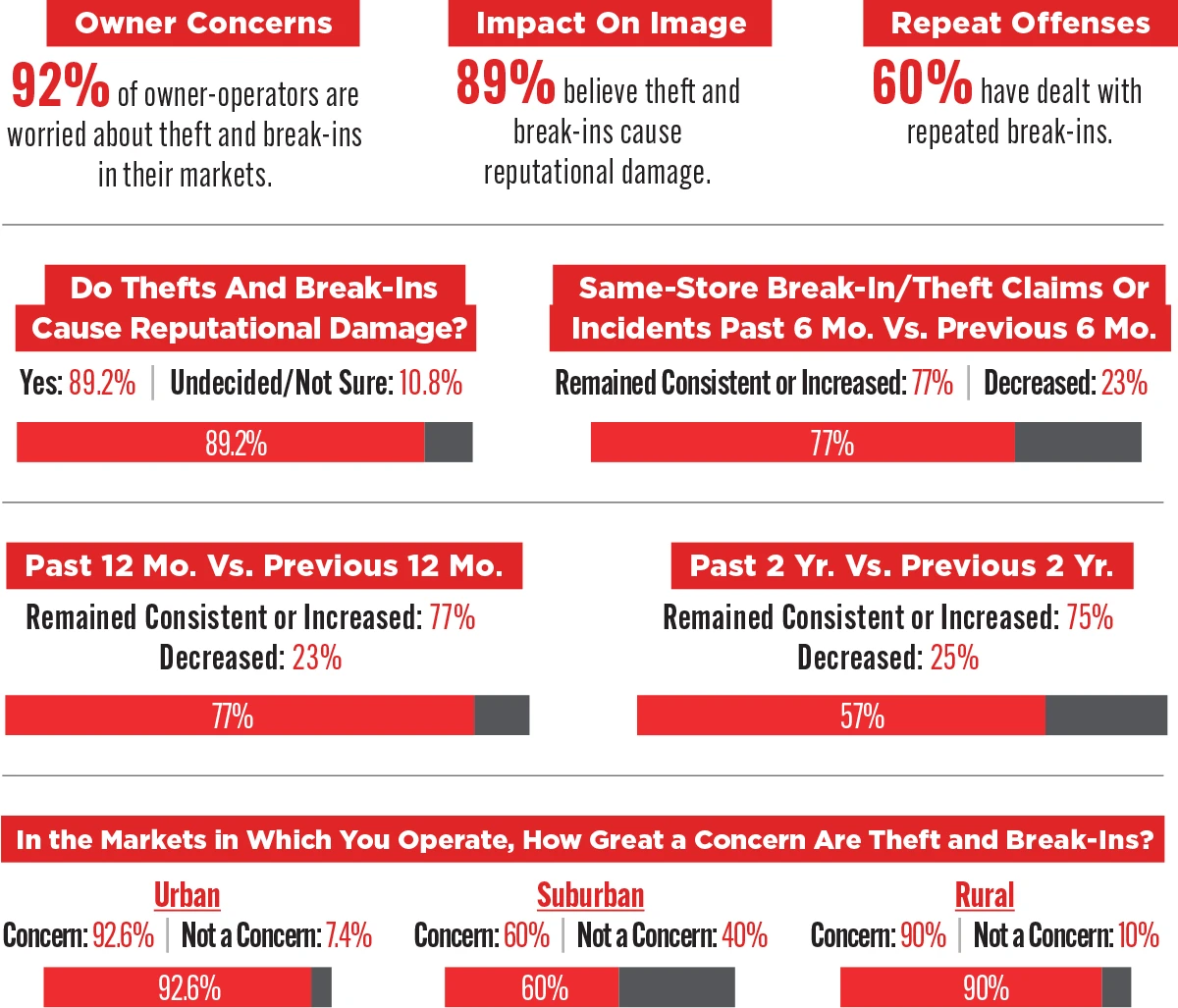
hether it’s the old-school way of criminals cutting through fences and padlocks or savvier schemes that circumvent your gate access, surveillance cameras, and layers of locks, there’s never been a greater need for greater security measures on your properties. That’s because crime is costing self-storage more than people might think in terms of lost revenue and reputational damage. In fact, many experts believe that break-ins have become the biggest threat to the industry right now, not only because of the substantial cost of time and money from claims but also the long-term cost to the industry’s overall reputation. And many self-storage owner-operators are feeling the impact, with 89 percent reporting that they believe crime can cause reputational damage (up 8 percent from last year’s survey) and no respondents dismissing crime as an issue that can hurt the industry’s public image.
But there’s a lot you can do about it, and the latest data shows a move toward doing just that. This section explores the primary security challenges owner-operators are facing today, what makes self-storage facilities so vulnerable to break-ins and other crimes, how and where it’s happening, and which markets are most concerned. Most importantly, you’ll learn which security improvements you should choose when planning new project construction or facility upgrades because of their ability to deter break-ins and protect your reputation.
The short answer: Choose smart technology measures to improve and enhance security. From the latest generation doors and smart locks for unit security to advanced smart entry solutions, you’ll discover how modern systems are reshaping our industry and dramatically helping to mitigate your security concerns. Read on for a highlight of the state of self-storage security in 2025, where technology and security are converging to create smarter, safer, and more efficient storage environments that bring you more business.
The data speaks for itself: Theft, break-ins, and general security challenges in self-storage continue to rise.
One staggering example that was reported by KTVU Fox 2 in San Jose, Calif., detailed how four suspects were arrested trying to break into a self-storage facility after already stealing $400,000 in musical equipment and other property from multiple break-ins at multiple facilities throughout the area.
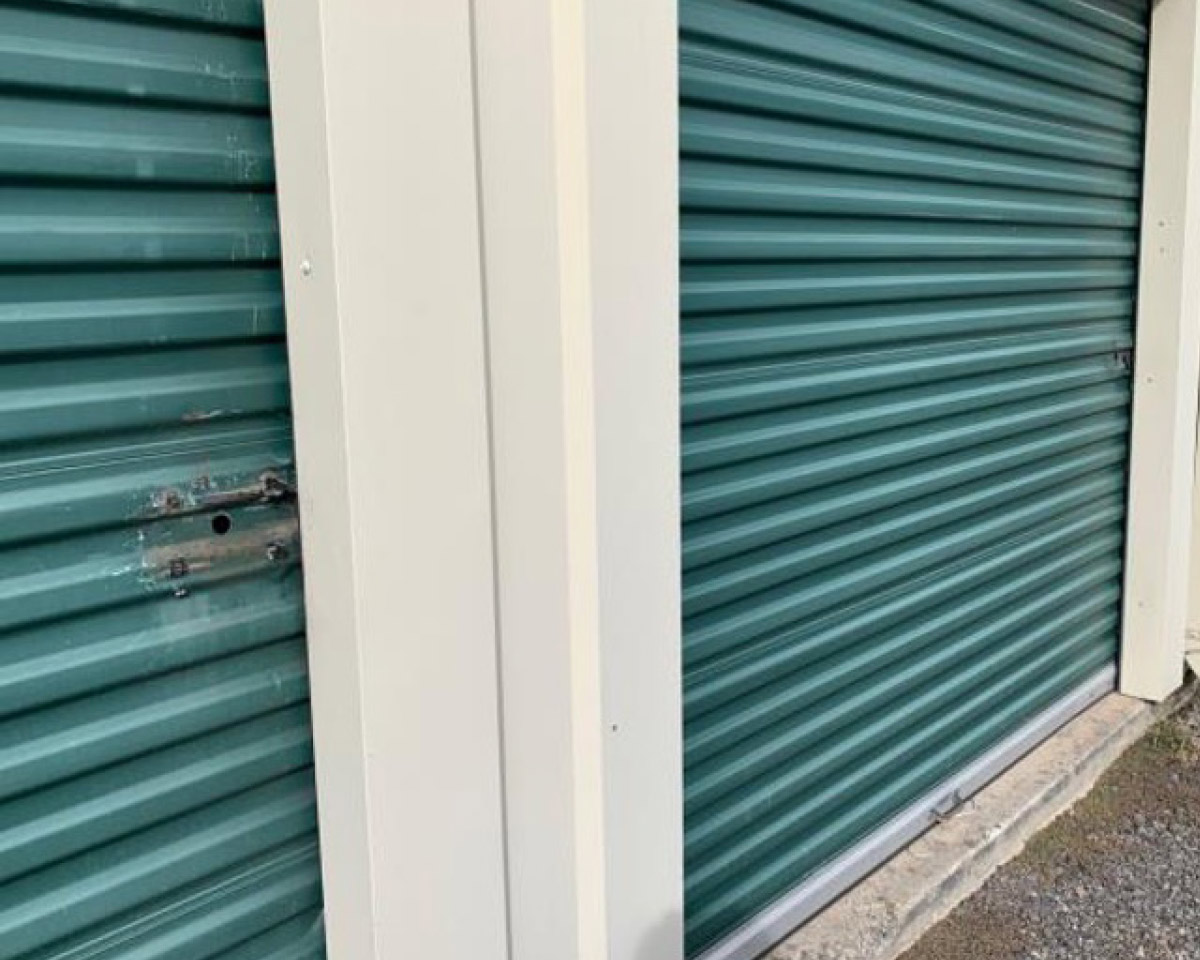
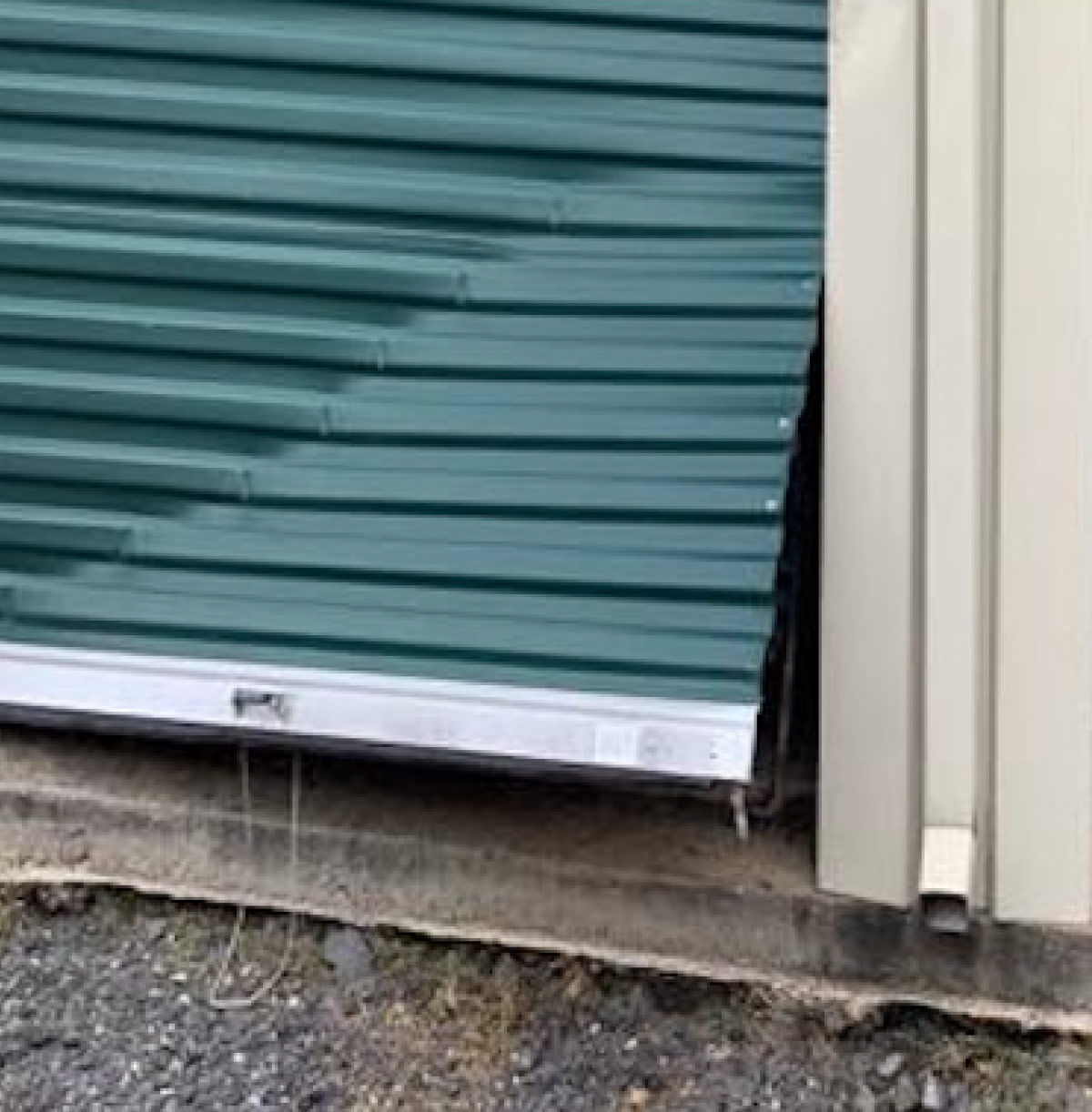
- Cutting latches and padlocks,
- Prying off latches,
- Unscrewing metal paneling on locks, and
- Climbing over unit walls and cutting through wire to access adjacent units.
The second group of criminals is a savvier bunch; they infiltrate internally, usually in the form of current tenants breaking into units that don’t belong to them. Think about it: Tenants know the property well, including when managers are on site, where cameras are located, and where expensive items are stored.
They can use bolt cutters to quickly clean out a unit that is housing cars, motorcycles, or ATVs and then quickly attach a replacement padlock before anyone notices.
With each of these types of break-ins, the traditional security equipment we’ve grown accustomed to in self-storage (padlocks, security cameras, gates, and keypads) is no longer enough to deter the crime.
1. Trouble spots – Some states have higher rates of self-storage theft, with Colorado, Tennessee, Kentucky, Texas, and California ranking at the top.
2. Soft targets – Many self-storage facilities are in industrial areas or on the outskirts of town, which make them easy targets for criminals who want to operate in locations where they won’t be noticed.
3. Windows of opportunity – Many facilities provide 24-hour access to their tenants, which gives criminals more opportunities to case facilities during off hours. One trend that has been reported is criminals renting a unit so they can check out the facility to determine any security lapses on the property. Once they identify a weakness, they hit it hard multiple times, which is why many facilities (nearly 60 percent) report multiple break-ins.
4. Lack of deterrent – In the big scheme of crime, theft is a lower priority for law enforcement, especially in larger urban areas dealing with a shortage of officers. This leads to many criminals not being arrested or sentences being light. When criminals aren’t afraid of prosecution, there’s no deterrent to stop them.
5. Lack of sophistication – The safety and security measures at many self-storage facilities haven’t kept up with the criminals in terms of sophistication; many owner-operators who opted to invest their capital in improvements like landscaping and office remodels have come to realize that it’s time to catch up on security as well.
An integrated smart technology solution—in particular, an integrated technology solution that includes industry leading smart locks on all unit doors—enables self-storage owner operators to mitigate the risk of theft and break-ins while also improving visibility to on-site activity.
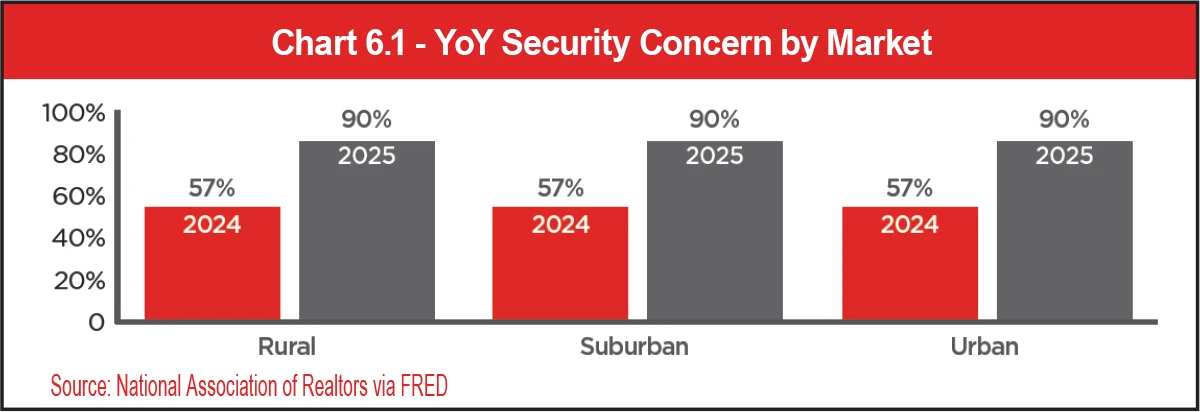
So, while crime is more common and frequent in urban areas, it’s happening everywhere, as these survey results across markets indicate.
- 92.6 percent of owner-operators in urban areas are concerned about theft and break-ins (53.7 percent of those are extremely concerned).
- 90 percent in rural markets are concerned (40 percent of those are extremely concerned).
- 60 percent in suburban areas are concerned (15.4 percent of those are extremely concerned).
The 2025 security survey data show a dramatic increase in the level of concern about theft and break-ins in urban and rural markets. In rural markets, total concern about theft and security rose by a staggering 35 percent year over year, with extreme concern increasing by 15 percent. Urban markets experienced a similar trend, with total concern raising by 18 percent and extreme concern raising by 10 percent.
See Chart 6.1.
If you look at the findings, every security measure increased in adoption in 2025 compared to 2024. Nearly all facilities in the survey report using surveillance cameras (nearly 99 percent), which is up slightly from 97 percent in 2024. Many utilize digital access control keypads for entry points (80 percent), up 5.6 percent from the previous year. Security alarm use is up 4.3 percent and unit alarms up 3 percent.
However, as criminals become savvier, these methods alone aren’t the deterrents they used to be, especially since 75 percent of facilities report the same or higher levels of break-ins year after year.
The good news is that the largest increase in security measures was in smart locks; considered a gold-standard way to mitigate the risk of theft and break-ins, usage of smart locks was up more than 8 percent, with 25 percent of facilities in the survey now reporting their use. And even smaller increases in unit alarms (up 3 percent) and high-security doors (up 2 percent) demonstrate that operators are getting serious about security.
So, which security improvements on the market should you choose when planning for new project construction or upgrading existing facilities?
- Upgrading current systems – Traditional tools like cameras and keypad systems at points of ingress and egress are not enough of a deterrent to prevent/decrease unit-level break-ins.
- Smart-locking technology – Unit-level smart locks have proven much more effective against unit-level break-ins, but the benefits are clear for those facilities that have rolled out smart locks on unit doors, with many reporting that the locks are proving to eliminate break-ins altogether.
- Better physical barriers at the unit level – Higher security roll-up doors are now available that are designed to combat the most frequent types of break-in attempts, but so far roughly 10 percent report installing these higher security unit doors with clips and reinforced bottom bars.



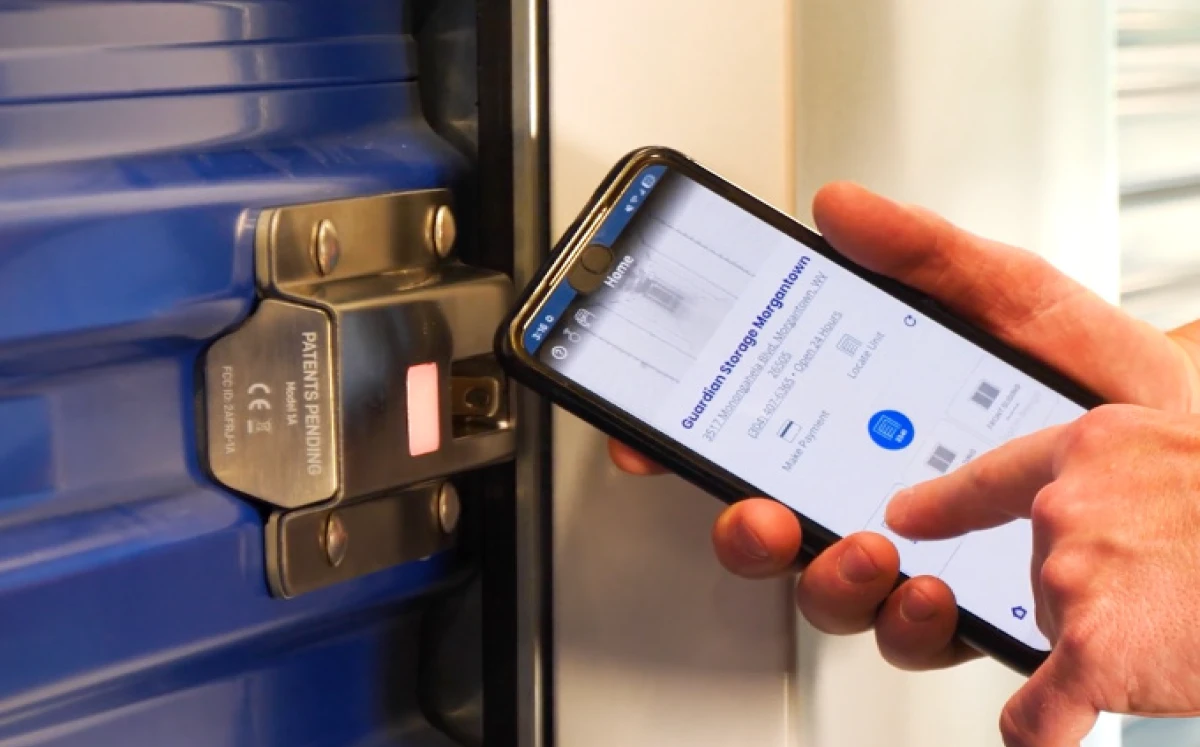
With integrated smart-locking technology, your tenants can rent a unit online or from their mobile phone and access the facility and their unit using their mobile device. They can even leverage this integrated mobile technology to monitor their unit and grant and revoke digital access to family members, employees, or movers. And that same technology gives owner-operators real-time visibility into unit status and suspicious activity.
Industry-leading smart locks also have security-grade motion sensing capabilities built in to further deter theft and break-in attempts and provide meaningful, real-time alerts when there is a motion event occurring inside a unit.
While some businesses shy away from purchasing new technology because of the cost, in this case the cost of doing nothing to fortify your facility is too high to ignore, especially because the return on investment of smart technology is so strong in deterring crime and reinforcing public confidence in your business and self-storage overall. More security not only brings more safety, but it brings you more business, too.
This shift toward smarter storage solutions is more than a trend, it’s a strategic response to changing demands and labor demands. Customers now expect seamless, contactless experiences, and operators are leveraging tools like smart locks, IoT sensors, and integrated management platforms to deliver just that. These technologies enable real-time data insights, predictive maintenance, and personalized services, creating a modern storage environment that is safer, more efficient, and more profitable. In addition to enhancing customer experience, operators can run more efficiently. Insights driven by IoT smart devices, along with the automation opportunities present with these devices, have helped many operators embrace virtual, hybrid, or hub-and-spoke management models.
The benefits extend far beyond convenience. Integrated technology empowers operators to adopt new management models, such as virtual, hybrid, or hub-and-spoke operations. This reduces labor costs while maintaining high service standards. IoT enabled devices provide actionable insights for predictive maintenance, helping prevent costly downtime and enhancing asset longevity. Automation tools streamline repetitive processes like lease execution and access permissions, freeing staff to focus on customer engagement and revenue generating activities. Ultimately, smart integration transforms the operator’s role from reactive to proactive, creating a competitive edge in an increasingly digital marketplace.
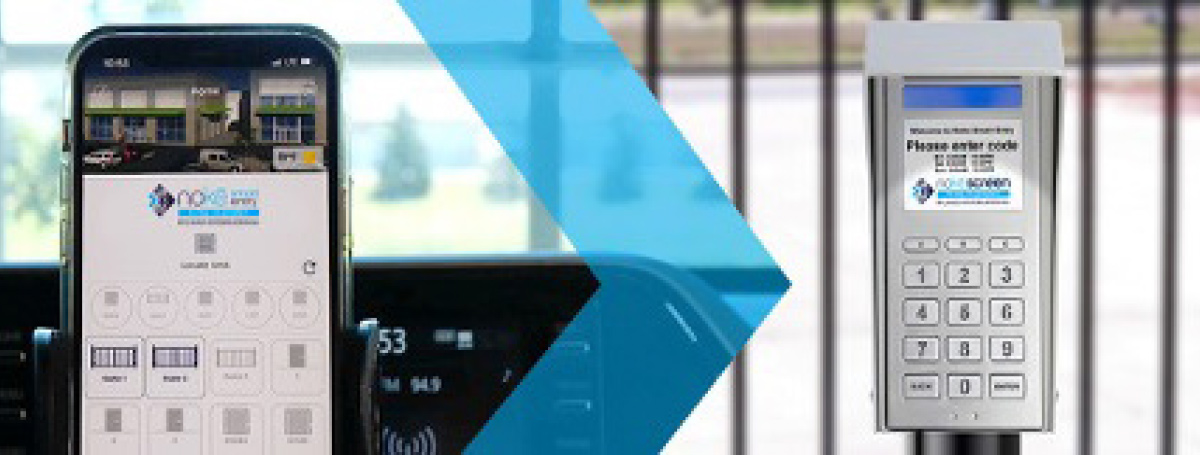
Asking a few practical questions is a simple way to assess how integrated your technology truly is. Can a customer complete the entire move-in process online (selecting a unit, signing a lease, setting up payment, and receiving access credentials) without a staff member needing to make a phone call or send a follow-up email? Can that same customer gain access to their unit without someone physically removing a lock from the door? If the answer to both is yes, you’ve addressed only half of the equation.
The other half lies in visibility and control. Integrated smart technology should give operators a real-time, remote view of what is happening across the property, down to the individual unit level. Can you see whether a tenant has shared access with another user, such as a family member or employee? Do you know how frequently a unit is being accessed, how long the door remains open, or whether it was left unsecured? Can you distinguish between residential and business customers based on access behavior? Are you alerted if someone other than the primary tenant opens a unit, or if motion or unexpected activity occurs inside? Just as important: Are delinquency workflows, such as access suspension, overlocking, and auction readiness, automated and consistently enforced without manual intervention?
When these capabilities are integrated into a single platform, smart technology moves beyond convenience and becomes a source of intelligence. Self-storage owner-operators gain access to insights that were previously unavailable or required significant manual effort to uncover. Access and usage data can reveal how tenants actually interact with their units, highlight potential security risks, and support more informed operational decisions.
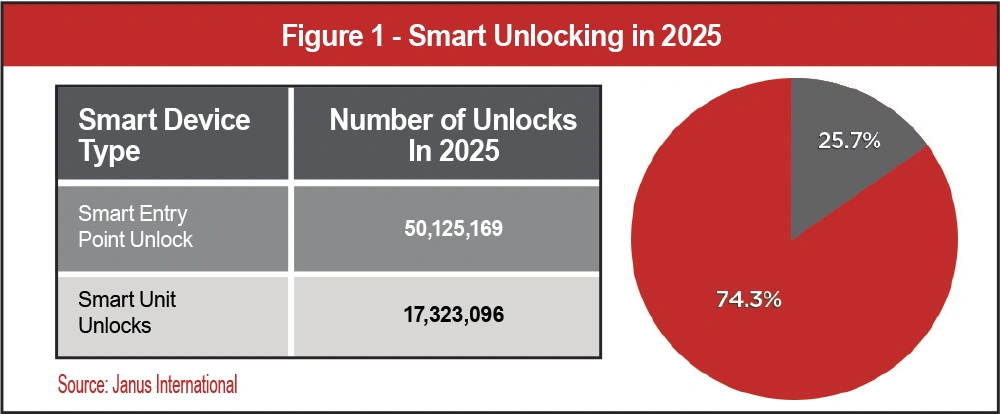
As illustrated by the data, nearly 26 percent of all access that takes places at a typical storage facility is unit-level access. This data is only available when smart technology is deployed at the site. Without unit-level smart technology, owner-operators are missing roughly half of the access attempts that occur on their sites.
In self-storage, smart locks operate on similar principles, but the operational and financial impact is often far greater. Traditional, manual access management is labor-intensive and repetitive. Staff time is consumed by routine lock checks, overlocking delinquent units, removing overlocks, cutting abandoned locks, managing lost or broken keys, and physically preparing units for new rentals. Each of these tasks carries a cost—not only in labor hours but also in delayed rentals, increased risk of error, and inconsistent tenant experiences.
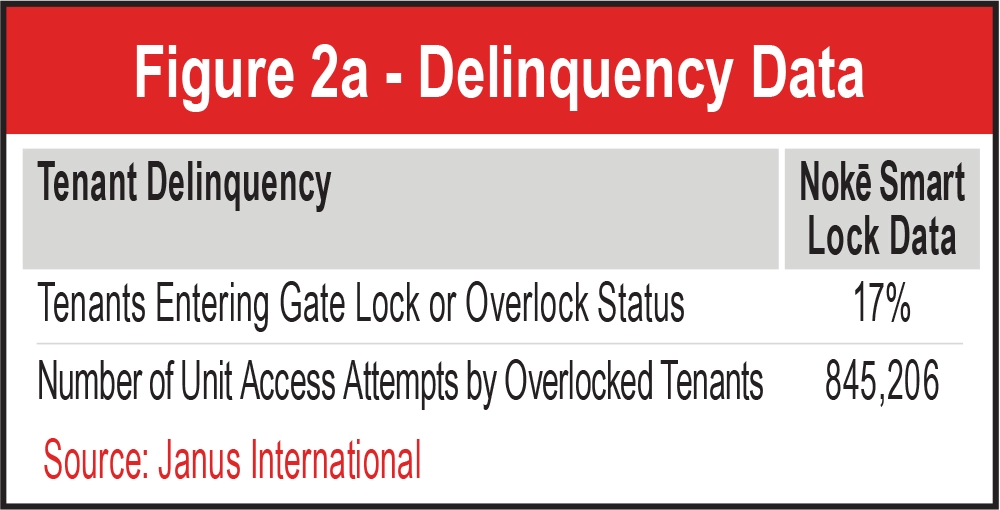
The data supports that smart technology provides more time for self-storage owner-operators to allocate hours to non-manual processes when they leverage smart technology.
See Figure 2a.
Year over year, the percentage of tenants entering some form of past-due status (gate lock, overlock, auction) rose from 10 percent in 2024 to 17 percent in 2025. The 7 percent increase in tenant delinquency is notable. On average, self-storage managers spend 6 hours per week doing lock checks, adding and removing overlocks, and prepping units for auction. With the uptick in the percentage of units entering delinquent status, facilities with industry leading smart locks were able to save 300-plus hours annually on these manual tasks.
With an increasing number of both security concerns and tenants entering delinquency at some point during their lifetime, smart locks are becoming a more important security staple than ever in self-storage.
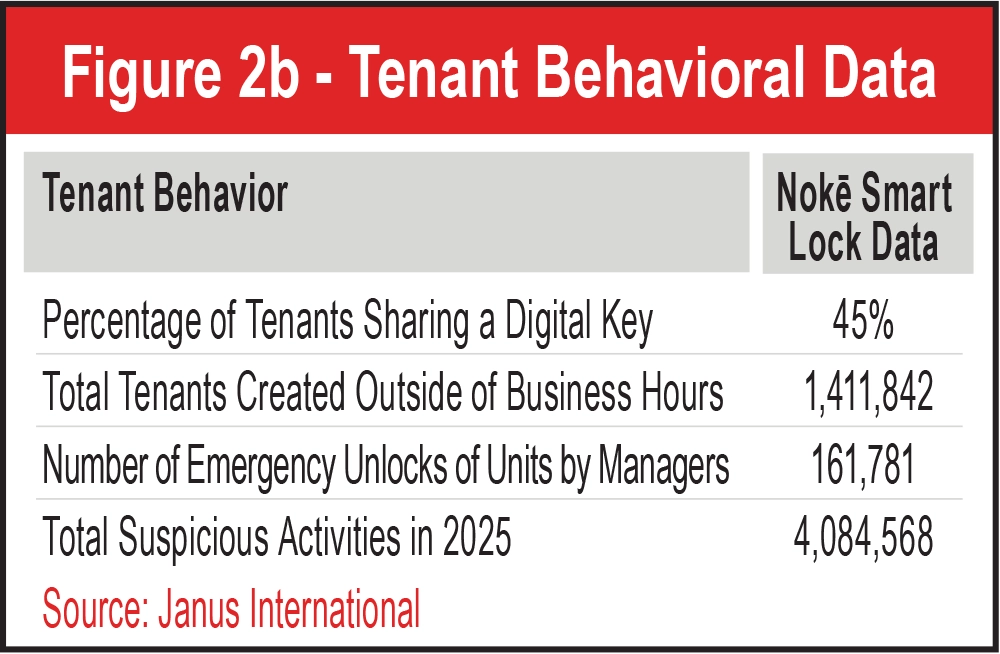
Over time, access data can also reveal behavioral patterns that help operators better understand how tenants use their space, identify underutilized units, and optimize operational workflows. In an increasingly competitive market, smart locks are no longer just a convenience feature—they are a strategic tool that enables smarter operations, stronger security, and data-driven decision-making across the facility.
See Figure 2b.
Perhaps most notably, 45 percent of renters share a digital key when given the opportunity to do so with app-based smart locking systems like Nokē. That’s notable for owner-operators because it means that almost half of the people entering their facilities may not be the actual tenant. Advanced smart locking systems enable storage owners to understand exactly who is on the property, which provides additional marketing opportunities and helps keep the property more secure as a more accurate and robust audit trail is available when key share users are identified by their name and mobile phone number.
In self-storage, mobile apps are redefining the tenant experience by placing the facility directly in the customer’s pocket. When a tenant rents a unit online, a mobile app can provide immediate access to the property and, where deployed, direct control of their smart lock—without waiting for office hours or staff assistance. This eliminates friction at move-in and creates a seamless transition from online rental to physical access.
Modern self-storage mobile apps extend well beyond access alone. Many platforms integrate payment portals that allow tenants to enroll in autopay, update payment methods, and resolve delinquent balances directly from their phone. Some apps also enable tenants to transfer to a different unit, rent an additional unit, or manage shared access for family members or employees. These capabilities reduce administrative workload for staff while giving tenants greater autonomy and flexibility.
Just as importantly, mobile apps strengthen customer loyalty. Being present on a tenant’s smartphone increases brand visibility and engagement. In other industries, consumers are far more likely to book with a hotel or airline when they already have that company’s app installed. The same principle applies in self-storage: Once a tenant relies on an app to manage access, payments, and communication, switching to a competitor becomes less appealing.
As shown in Figures 2a and 2b, self-storage tenants are rapidly adopting mobile technology. The ease of use helps explain the significant growth seen across the industry. Over the past year, the number of tenants using the Nokē system increased significantly, reflecting accelerating demand for mobile-controlled access and security solutions. In total, self-storage tenants used smart technology to access connected devices nearly 44 million times in 2025, underscoring how central mobile apps have become to the modern self-storage experience.
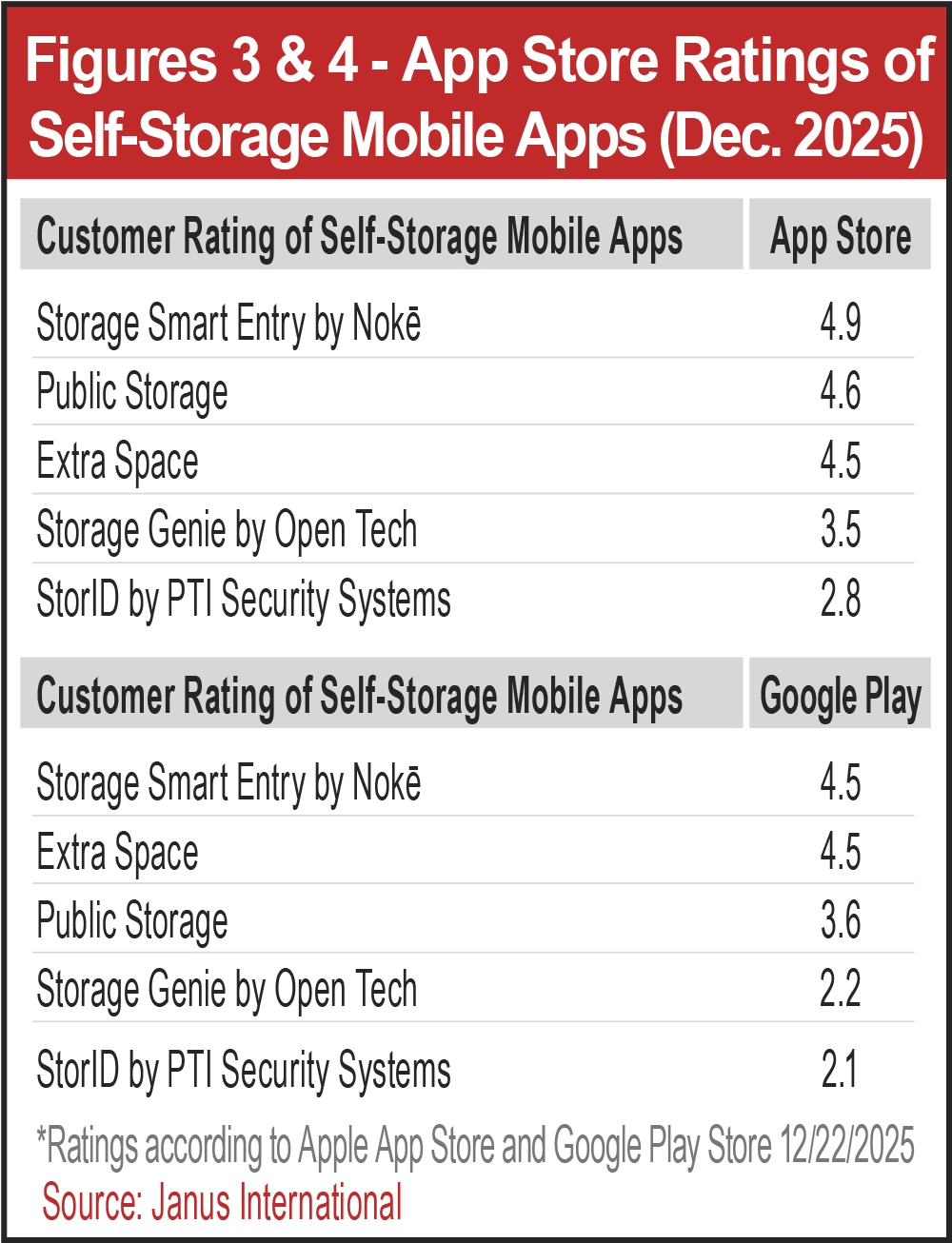
The data in Figures 3 and 4 certainly suggests that self-storage tenants are not only willing to use apps, but that they prefer using apps that are simple and intuitive when presented with the option.
See Figures 3 and 4.
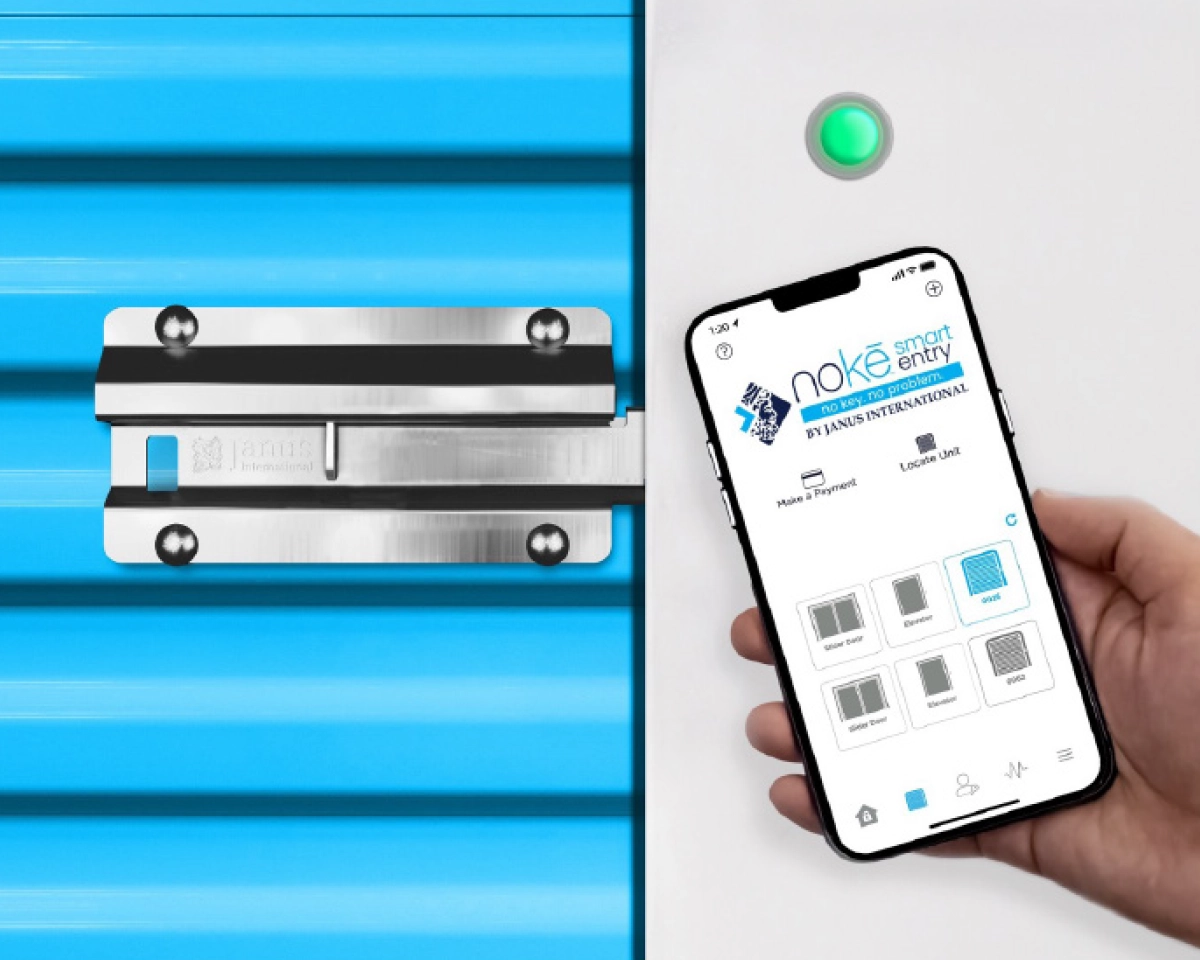
Historically, access reporting in self-storage has been largely limited to gate logs. Traditional access control systems track which code was used and when, allowing operators to reconstruct basic activity patterns at the facility perimeter. While useful, this data provides only a partial picture. As more smart devices are deployed throughout modern facilities, reporting capabilities have expanded well beyond the gate, giving operators deeper, more actionable insight into on-property activity.
Today’s network-connected smart locks can generate unit-level intelligence that was previously unavailable. Operators can see not only when a tenant enters the facility but also how often a specific unit door is opened, how long it remains open, and whether access was granted by the primary tenant or a shared user. This level of granularity enables operators to quickly identify anomalies and potential security concerns. For example, did a tenant enter the facility but never open their unit? Did a unit remain locked while the tenant stayed on site for an extended period? These patterns can signal suspicious behavior and allow staff to intervene proactively rather than reactively.
The shift to electronic smart locks has also fundamentally transformed the customer experience, mirroring the evolution seen in the hospitality industry. Just as hotels replaced physical keys with mobile credentials to deliver a frictionless guest experience, mobile app-controlled smart locks have redefined how tenants interact with self-storage facilities. Digital access eliminates the need for physical keys and shared gate codes, enabling a seamless, app-based “check-in” process that aligns with modern consumer expectations. The result is higher tenant satisfaction alongside measurable gains in staff efficiency.
In an environment where customers increasingly value security, flexibility, and convenience, electronic smart locks offer clear advantages. Tenants can access their units on demand using their smartphones, making it easier to retrieve or store belongings outside traditional office hours. This 24/7 accessibility is particularly valuable for business customers, shift workers, and anyone managing unpredictable schedules.
From an operator’s perspective, smart locks with mobile app control provide centralized management and real-time visibility across the facility. Staff can remotely grant or revoke access, monitor entry and exit activity, and receive alerts when unusual behavior occurs. Leading smart lock platforms also integrate thermal motion sensing capabilities, which can help deter break-ins and identify prohibited behaviors such as tenants occupying units. Beyond security, these insights support preventative maintenance and unlock new revenue opportunities driven by customer behavior analysis.
As illustrated in Figure 2a, 45 percent of smart entry system users shared a digital key with at least one other person over the past year. When combined with unit size, access frequency, and usage history, this data helps operators identify commercial or high-usage tenants who may warrant differentiated pricing strategies. This data-driven approach replaces assumptions with evidence, enabling more precise and defensible revenue decisions.
Ultimately, the implications are clear. Smart technology is no longer a luxury or optional enhancement—it has become an essential component of a successful self-storage operation. The data shows that it materially improves security, enhances the customer experience, and strengthens the bottom line. As adoption continues to accelerate, smart technology will remain a defining factor in how facilities operate today and how they compete in the future.