


M icon
FEATURE
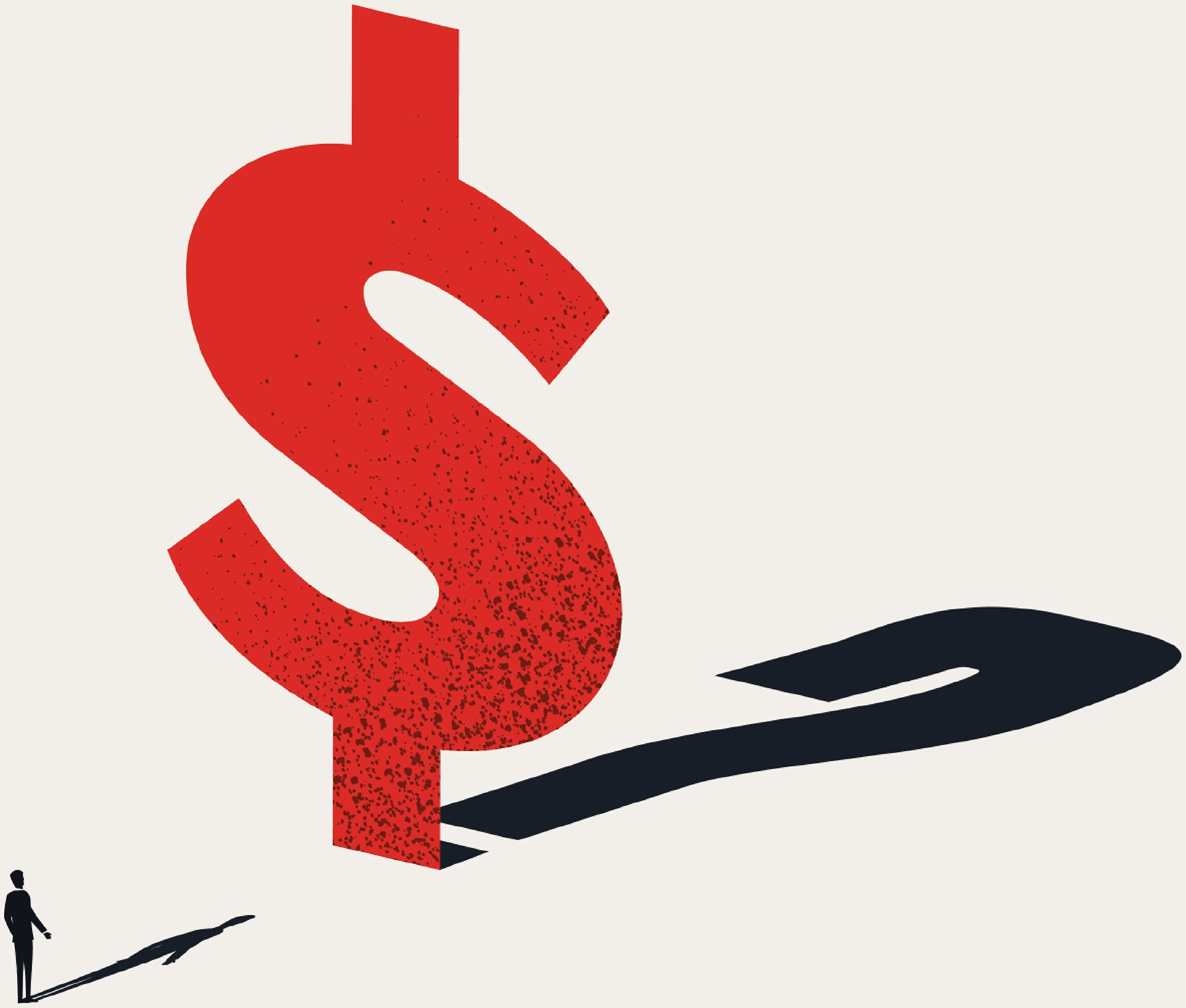
A large red dollar sign with a shadow, accompanied by a small silhouetted figure.
A Market Reset
Normalization And Maturity Expected In 2026
By Jake Bracken
F

ew real estate sectors have experienced the highs and lows of the self-storage sector over the past five years. Riding a wave of post-COVID demand tailwinds, including migration trends and a spike in remote work, the self-storage industry achieved record levels of NOI growth in 2021 as institutional capital raced to gain exposure to the historically defensive sector. The years that followed saw a swift correction in pricing and fundamentals as a wave of new supply entered the market and the backdrop of elevated interest rates stifled both the home sales market and self-storage capital markets.

Turning to 2026, owners, operators, and developers remain optimistic that a swift V-shaped recovery in sector fundamentals lies ahead. However, Green Street’s 2026 outlook, supported by historical data and commentary from the sector’s leading operators, forecasts self-storage will continue to stabilize in 2026. A more gradual path toward normalized fundamentals in the years ahead will hinge on the return of the U.S. home sales market. This gradual recovery is expected to vary by market, as larger coastal markets are expected to outperform most Sun Belt and Midwestern markets. Market selection and a renewed emphasis on operational discipline will be essential to capitalize on the gradual self-storage recovery in 2026 and beyond.

From Growth To Normalization
The self-storage industry’s recent outperformance and subsequent decline must be viewed in the context of the post-COVID economy. Between 2020 and 2022, the sector experienced a surge in demand driven by household mobility, downsizing, remote work, and elevated consumer spending. Rent growth accelerated at historic levels, as Green Street’s self-storage RentTracker estimated move-in rents grew upwards of approximately 50 percent in May and June of 2021. This surge in operating pricing power was achieved as occupancy levels reached record highs. The self-storage REITs reported an average same-storage occupancy of approximately 95.4 percent as of the end of 2021, approximately 320 bps above 2019 levels. Combined, this period of strong performance attracted a new wave of institutional capital to the sector, driving valuations to record levels. Green Street’s Commercial Property Price Index estimates self-storage asset values increased by over approximately 67 percent relative to 2019 levels.
A more gradual path toward normalized fundamentals in the years ahead will hinge on the return of the U.S. home sales market. This gradual recovery is expected to vary by market, as larger coastal markets are expected to outperform most Sun Belt and Midwestern markets.
That period was never sustainable. Over the past 24 months, fundamentals have steadily cooled as rising interest rates disrupted both self-storage demand via the home sales market and self-storage valuations via tightened capital markets. Additionally, the sector continues to work through a wave of outsized supply growth as stagnant demand has elongated the typical length of the lease-up period. Move-in rent growth has decelerated meaningfully as rates have largely returned to pre-pandemic levels. Partially offsetting more muted new leasing activity, existing customer rate increases (ECRIs) have allowed operators to maintain in-place rents at pre-pandemic levels. Occupancy levels have softened in many markets, pushing operators to rely more heavily on promotions and discounts to maintain leasing velocity. Self-storage valuations have also bottomed out as Green Street estimates self-storage pricing has declined approximately 21 percent from the 2022 peak. Additionally, move-in rents largely bottomed out in 2025, reflecting a return toward equilibrium after the unusually strong demand shock.

In 2026, the sector appears close to returning to more positive levels of rent and net operating income growth. The speed of the recovery will likely be market dependent, dictated by near-term population growth trends, the recovery of the home sales market, and the size of market-level supply pipelines. Green Street expects self-storage net operating income to grow slightly (approximately 0.7 percent) in 2026, with a return toward more inflationary levels of growth (approximately 3.3 percent) in 2028. As a result, operator rent growth expectations should be recalibrated downward from recent peaks, as self-storage continues to stabilize following the rapid institutionalization of the sector.

Stable But Less Forgiving Demand
There are countless use cases for self-storage, ranging from home buying and selling to decluttering to create work-from-home space, and even temporary storage for business needs. However, home sales activity has consistently proven to have an outsized impact on self-storage demand. An analysis of historical move-in rent growth and home sales activity since 2013 demonstrated a moderately strong correlation between the two metrics (R² of 0.50). As such, the recent downturn in self-storage operating fundamentals can be largely attributed to the dearth in U.S. home sales, which fell from 6.12 million homes in 2021 to 4.06 million homes by the end of 2025, representing an approximately 33.7 percent decline. The current level of home sales is well below the previous floor set during the “Great Financial Crisis,” which was estimated to be between approximately 4.1 to 4.3 million homes per year.

Over the past two decades, mortgage rates have strongly correlated with periods of depressed home sales activity and continue to be a key catalyst today. Following the Fed’s aggressive interest rate hike cycle, average 30-year fixed mortgage rates more than doubled over the past three years, peaking at approximately 7.8 percent in October 2023. While 30-year fixed mortgage rates have gradually softened to approximately 6 percent, home values remain sticky and unaffordable to most Americans relative to pre-pandemic levels. In the absence of substantial residential development initiatives, a moderation in interest rates and thus a mean reversion in home sales activity is likely a requirement for a full recovery in self-storage fundamentals.

That said, home sales activity started to show signs of life when December 2025 monthly home sales volume recorded an approximately 5.1 percent increase month over month. This coincides with year-end operating updates from the publicly traded self-storage REITs, which have indicated that move-in rates in the fourth quarter ranged from largely flat to slightly positive. Additionally, Public Storage reported a modest increase in same-store occupancy, further highlighting the potential improvement in fundamentals ahead. Incremental decreases in mortgage rates in 2026 should fuel additional home sales activity and, in turn, self-storage demand. Green Street expects self-storage occupancy to continue to increase modestly this year to the tune of approximately 30 to 40 basis points per year, while self-storage move-in rates return to low single-digit growth.

However, this slightly positive outlook for 2026 demand and occupancy is underpinned by the assumption that pent-up home-buying activity will begin to return. If home sales fail to meaningfully materialize in 2026, this outlook will likely prove to be too optimistic. From an investment standpoint, underwriting assumptions around occupancy and rent growth in 2026 should reflect this cautiously positive outlook. Deals predicting a rapid rebound in rent growth or occupancy in 2026 are vulnerable to disappointment, particularly as market-level pricing is expected to vary widely.

Pricing Power Driven By Market Supply Pipelines
One of the key themes for 2026 is the growing divergence in operator pricing power across markets, driven in part by new supply deliveries. During the peak of the cycle, operators benefited from broad-based rent growth driven primarily by demographic trends and strong job growth, as move-in rent growth in supply-constrained coastal markets underperformed more supply-heavy Sun Belt metros. This dynamic has changed as new development is expected to continue to impact pricing power, weighing more heavily on market fundamentals compared to demographics alone.
Green Street expects self-storage net operating income to grow slightly (approximately 0.7 percent) in 2026, with a return toward more inflationary levels of growth (approximately 3.3 percent) in 2028.
Self-storage development has historically come in waves, following a few years of strong operating fundamentals. The most recent development wave occurred from 2016 to 2020, which is estimated to have increased total U.S. self-storage inventory by approximately 17 percent. Similarly, the strong NOI growth of 2021 and 2022 (upwards of approximately 18 percent per year) brought another wave of development activity, albeit slightly muted by the backdrop of rising construction costs and elevated borrowing rates. Additionally, diminished top-of-the-funnel demand for self-storage elongated the lease-up timelines for new deliveries, resulting in a larger-than-expected impact on operator pricing power given the level of new deliveries to prior development waves. The total volume of new deliveries to be absorbed within a specific market can vary wildly and will weigh greatly on a market’s fundamentals in 2026.

For example, markets with elevated new supply, particularly in parts of the Sun Belt, have been slower to rebound and even continue to struggle with negative move-in rate growth. By contrast, supply-constrained coastal markets with high barriers to entry have already demonstrated a positive turn in move-in rate and overall revenue growth. An analysis of Public Storage’s third-quarter earnings supports this thesis, as the REIT’s highest-performing markets by same-store revenue growth consisted primarily of coastal markets (i.e., Tampa-St. Petersburg, San Diego, D.C. Metro, San Francisco, and Seattle) with mostly moderate supply growth expectations over the near term. Conversely, Public Storage’s lowest-performing markets consisted primarily of Sun Belt markets (i.e., Atlanta, Charlotte, Phoenix, and Orlando).

Green Street expects supply-constrained coastal markets to outperform Sun Belt and Midwest markets in 2026 and beyond, recommending investors overweight Los Angeles and New York markets and underweight Jacksonville. However, targeting these markets alone won’t guarantee outperformance. Operators looking to invest in a given market will need to have a good grasp of the size and depth of the supply pipeline within their targeted market, and more specifically at the submarket level. New entrants within a market without the backing of an experienced operating platform or a firm understanding of the competitive landscape will be more at risk of investing in an oversupplied corridor, resulting in prolonged pressure on net operating income until demand catches up with recent development.

Institutional Demand Remains High
The self-storage sector saw a flurry of large portfolio trades in 2020 to 2023 as institutional capital bid against large incumbent operators for exposure. These transactions featured several record-breaking billion-dollar portfolio trades, including Public Storage’s $1.8 billion acquisition of ezStorage in April 2021, StorageMart’s $3.2 billion acquisition of Manhattan Mini Storage in December 2021, and Extra Space Storage’s $12.7 billion acquisition of Life Storage in April 2023. Coinciding with this strong transaction activity, Green Street’s self-storage nominal cap rate estimates compressed over approximately 100 bps, from 5.1 percent to 4.0 percent, in 2022 for REIT-quality assets.

Since then, large portfolio trades have been limited despite strong, continued institutional investor interest in the sector. This limited deal flow has resulted in minimal price discovery for self-storage as bid-ask spreads remain wide. However, nominal cap rates have expanded significantly since the 2022 peak, as current sector cap rates sit at approximately 5.4 percent, approximately 30 bps above 2019 levels. Investors continue to view self-storage as a defensive asset class with attractive cash flow characteristics, particularly as pension funds, private equity, and other institutional capital seek to diversify away from underperforming traditional property types such as office.

Transaction activity in 2026 is likely to remain below peak levels, constrained by elevated borrowing costs and persistent bid-ask spreads. Sellers anchored to prior valuations may struggle to transact, while buyers are underwriting to more conservative exit assumptions. Over time, this tension should ease as pricing expectations reset, but today self-storage appears slightly expensive relative to other property types. Green Street’s current self-storage sector level return expectations are approximately 7.0 percent, which sits approximately 40 bps below the U.S. weighted average for all real estate sectors. Operators looking to enter the sector in 2026 should be aware that they may be paying a premium for self-storage, which is forecasted to deliver below-average risk-adjusted returns relative to other property sectors.

Transaction activity in 2026 is likely to remain below peak levels, constrained by elevated borrowing costs and persistent bid-ask spreads. Sellers anchored to prior valuations may struggle to transact, while buyers are underwriting to more conservative exit assumptions.
A More Measured Path Forward
2026 represents the normalization and continued maturity of the self-storage sector. The sector is transitioning from a period defined by extraordinary demand tailwinds and institutional investor interest to one shaped by stable growth in line with traditional real estate sectors. At current pricing, self-storage appears moderately expensive relative to other property types, and investors looking to divest from the sector should still be able to command attractive pricing from prospective buyers and institutions.

For investors still looking to invest in the sector, success will likely depend on macro trends, such as the thawing home sales market, and on executing well at the asset and market level. Green Street currently recommends overweighting Los Angeles and New York, as coastal markets are expected to outperform over the near term. Sun Belt markets are expected to lag as they continue to work through large development pipelines, highlighted by Green Street’s underweight on the Jacksonville market. For stakeholders willing to adjust expectations, sharpen underwriting, and focus on market fundamentals and supply pipelines, the coming year offers a clearer and more optimistic path forward. The next phase of self-storage growth is unlikely to be explosive, but it may still prove just as durable as years past.

Jake Bracken is a senior vice president in the Advisory Services Group at Green Street, the leading independent real estate research and advisory firm, where he has supported over $6 billion in institutional real estate transactions since joining in 2019. His work spans transaction advisory, company valuation, and investor messaging, primarily across non-traditional property sectors. He has developed deep expertise in the self-storage sector, advising public REITs and private operators on portfolio valuation, investment thesis validation, market selection, and transaction execution, most notably serving as a lead advisor on ezStorage’s $1.8 billion sale to Public Storage. Prior to Green Street, he worked as an associate at an F500 financial services firm. He holds a B.S. in finance from San Diego State University and carries the Chartered Financial Analyst (CFA) and Chartered Alternative Investment Analyst (CAIA) designations.