


Maple Leaf icon
Feature

Economic
Uncertainty

The Real Cost Of Tariffs
By Alejandra Zilak

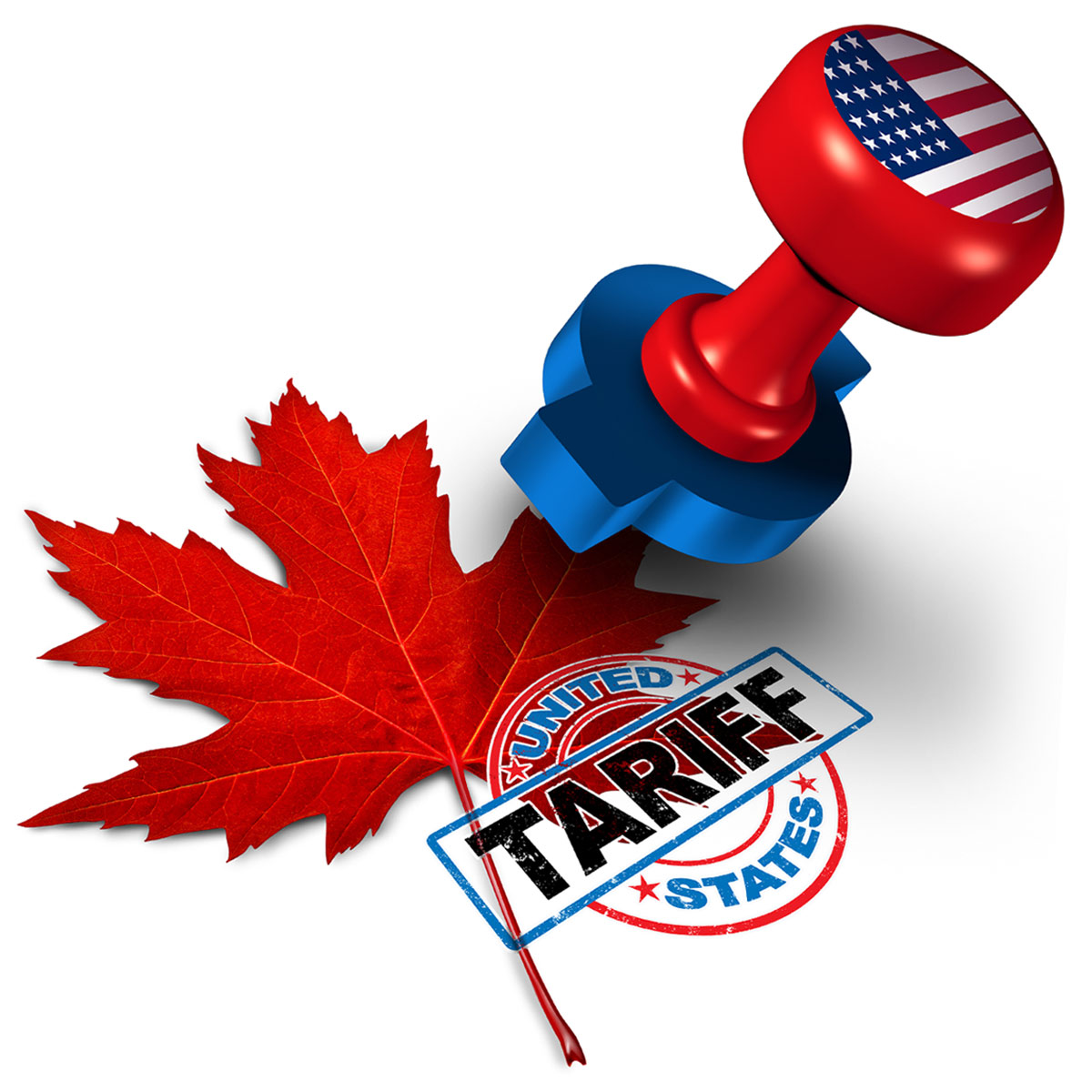
A Canadian maple leaf next to a blue tariff stamp, with a red stamp featuring the US flag hovering above.
I

t’s no secret that the cost of everything has increased—real estate, construction, and labor to name a few. Although the self-storage industry is still a very rentable one, even penciling projects has slowed down, as borrowing money is also more expensive. To add insult to injury, the Trump administration seems to be playing a chess game with tariffs. They get implemented at exorbitant percentages, then reduced, and then paused. It seems there’s been a new modification every time you blink. What will happen next is anybody’s guess, so it’s understandable to worry about how they would ultimately impact the sector, specifically within the market with Canada, which the U.S. has historically had an amicable relationship.

The Immediate Repercussions

“U.S. tariffs, particularly the 25 percent duties on steel, aluminum, doors, and pre-engineered building components, have significantly impacted construction costs,” says Al Azevedo, president of Net Zero Construction in Ontario. “This has driven us to seek local suppliers, which can be challenging due to the limited availability of certain specialized materials, leading to increased expenses and potential project delays.” Azevedo points out that as the industry evolves with more tech-based features, tariffs on Chinese goods for access controls, lighting, and security systems have also created cost pressures and supply chain disruptions. “These combined factors have led to tighter budgets,” he says.

The tariffs influence ongoing collaborative relationships between businesses in both nations. David Allan, president of Apple Self Storage, which has multiple locations across Ontario, says, “There are situations where the United States gets some steel from Canada, we ship it down, and then we get a finished product back. Both of those are unique processes, and you can get very good at one of them and have the other country get very good at the other one; and you can both benefit from it. But in situations where tariffs are involved, you lose that competitive advantage, and you have to rely on yourself to become an expert at everything. It makes everything more difficult and more expensive.” He states that this will slow the development cycle and that ultimately the end consumer is going to end up having to pay for the additional costs.

“U.S. tariffs, particularly the 25 percent duties on steel, aluminum, doors, and pre-engineered building components, have significantly impacted construction costs.”

– Al Azevedo
Jeremy Freedman, COO of Green Storage, agrees. “While rental rates have remained relatively stable so far, construction and materials costs are up by as much as 10 percent. This is putting pressure on developers and operators, and over time, this may lead to modest pricing adjustments to ensure continued investment in quality facilities and services. As the industry adapts, some of these added costs may gradually be reflected in tenant pricing.”
Mitigating The Effects
Freedman explains that there are strategies that facilities could implement to ameliorate these effects, such as streamlining operations, adjusting promotional offers, or using dynamic pricing to manage rising costs. “Under fixed-price contracts, contractors often absorb the impact, while fixed-price-plus contracts may pass costs on. And some can also switch to alternative suppliers to help control expenses before raising prices for customers.”

Both Freedman and Azevedo sing the same tune when it comes to being prepared. “The sentiment across the Canadian self-storage industry leans towards proactive planning rather than waiting,” says Freedman. “Many businesses are already exploring alternative suppliers in Asia and Australia and building new relationships to stay flexible and maintain quality standards. This strategic shift helps manage uncertainty, control costs, and ensure projects can pivot quickly if trade conditions change.”

In fact, Azevedo is relying on past experience with tariffs when deciding how to move forward in the current landscape. “The 2018 U.S. tariffs on steel and aluminum significantly impacted the self-storage sector, raising construction costs by up to 10 percent. This led to project delays, revised budgets, and slower development. In response, operators began diversifying suppliers, adding cost buffers, and adopting phased construction models. These strategies remain relevant as the industry prepares for potential future changes.”

Potential Trade War Ramifications
Robert Madsen, president of the Canadian Self Storage Association, points out the wider effects of tariffs on the Canadian economy. “Tariffs don’t directly impact the Canadian self-storage industry unless you’re a vendor or a facility under construction that needs components from across the border. However, if our country and customers are facing tough economic times because of tariffs and higher costs, then we feel that through changes in demand.” Madsen explains that given the current back-and-forth negotiations on tariffs, Canada is facing an uncertain economic future. “That can be unsettling for everyone,” he says. “Maybe we got too comfortable in thinking trade relations would not be forced into significant change. Either way, it’s a reminder for us to stay agile and be prepared for change, so that we can respond accordingly and look after our association members and consumers.”
“Many businesses are already exploring alternative suppliers in Asia and Australia and building new relationships to stay flexible and maintain quality standards. This strategic shift helps manage uncertainty, control costs, and ensure projects can pivot quickly if trade conditions change.”

– Jeremy Freedman
Simon Berman, CEO of Montreal Mini-Storage, also looks at the bigger picture of what these trade wars could mean over time, especially when you take into context that both the United States and Canada have long benefited from doing extensive business with each other. “I think Quebec is one of the biggest producers of aluminum on Earth, and I think the United States of America probably gets close to half of their aluminum from the province. That could be quite problematic for the U.S. in a trade war. It’s not that easy to find replacements and ship them from afar, so the U.S. consumer could end up paying more.”

While the U.S. may think they’re playing the tariffs game strategically, Berman states that the pain can be felt by Americans as acutely as by Canadians. “Look, we’re 40 million people here, and you have 400 million there. It’s ludicrous to expect us to buy as much from you as you buy from us. You’re richer and you’re more voracious consumers of everything, so the whole premise of a trade war is complete nonsense. The USA has an exceptional amount of leverage, so the government is treating it as a business and throwing around their weight the same way big corporations do with their suppliers. But we’re a commodity economy. We produce oil, gold, and things that pretty much everyone wants. I think it’ll be America’s worst nightmare when we find other customers. You need oil, electricity, and gold. We make cars with Ford and General Motors. It’s a fully integrated vehicle supply chain. Throw a wrench into that and you’re just hitting yourself in the head.”

Hoping For The Best

Despite the unease that the tariffs conversation has caused on many Canadian operators, there are others who are being cautiously optimistic. Jason Koonin, CEO at Bluebird Self Storage in Toronto is one of them. “At this time, it’s too soon to know the full impact of the tariffs because they keep changing! I would say we have not yet seen a significant one, and we don’t know if they are permanent. For now, we’re continuing with all projects as planned.” However, their development team has been able to source almost all their building components in Canada, so their direct impact would be minimal for Bluebird.

All things considered, Berman is not losing any sleep over the headlines, since he thoroughly believes that sooner or later this will inevitably get resolved to the benefit of everyone involved. “Ultimately, the economics will sort out the politics, even if it’s in six months or six years. But I personally am not paying attention to the headlines to run my business. We in the self-storage industry have far less exposure to international trade than most businesses, and while I sincerely feel bad for those more directly impacted, I mostly follow along for the entertainment value.”

Alejandra Zilak studied journalism, went to law school, and now writes for a living. She also loves dogs.