

Data Driven

Driven
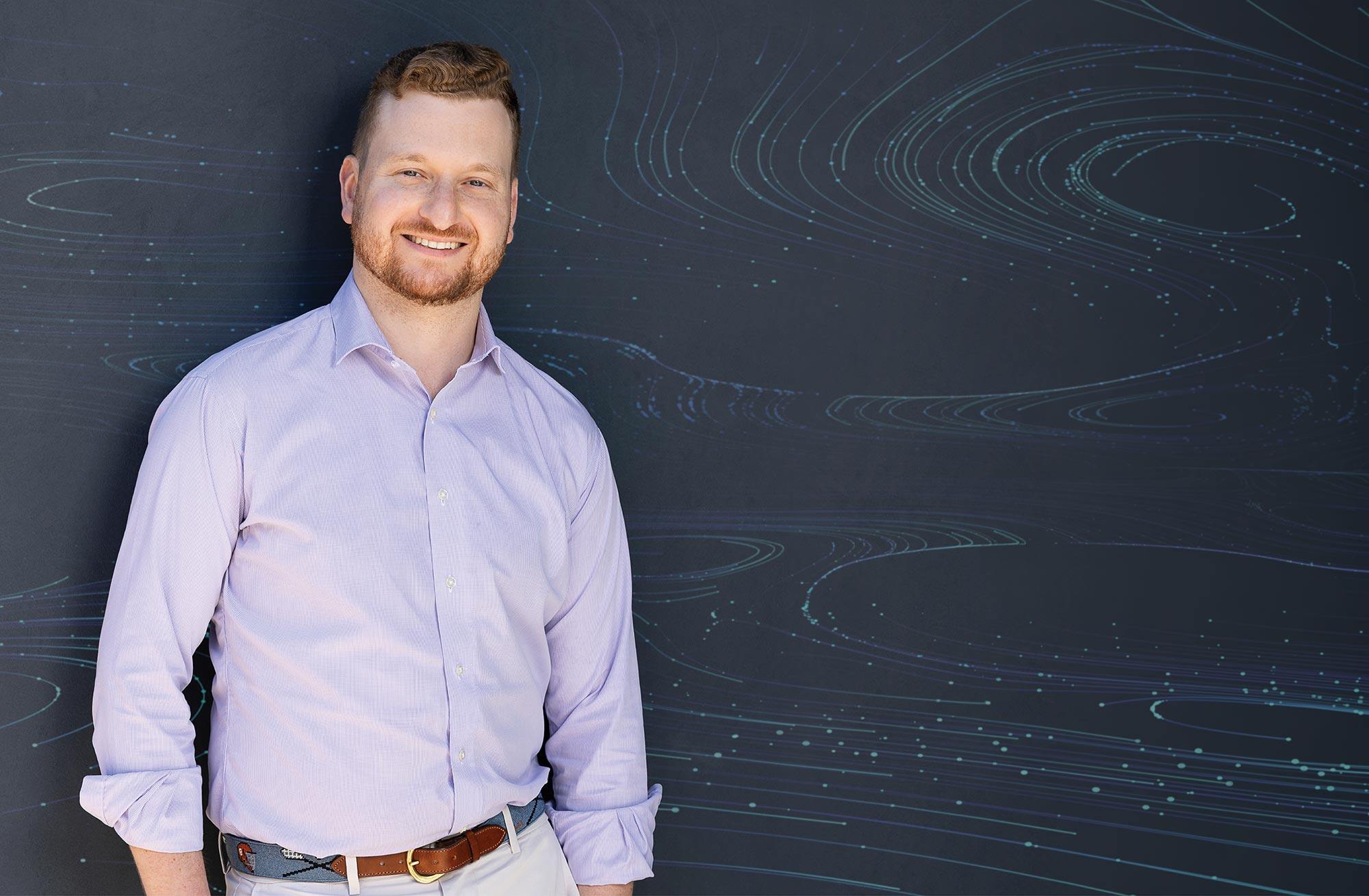
I always wanted to have an interesting life.”
For Noah Starr, co-founder and CEO of TractIQ, that pursuit took shape early, long before buying businesses or building one.
It began on a Long Island lacrosse field. The sport, which he describes as hockey meets soccer meets football, is where he first honed his leadership skills. “Lacrosse is a very physical sport, and you have to be fast, tough, and smart,” says Starr. “But it also taught me a lot about strategy, teamwork, and working toward a common goal.”
Starr was learning leadership through love of the game, but from the sidelines he was also noticing other kinds of wins. His family was filled with entrepreneurs—from a hedge fund and fintech father to grandparents (and great-grandparents) who owned companies in dentistry, meat distribution, and apparel manufacturing. He was keen to know more.

For more entrepreneurial inspiration, Starr studied modern legends like Steve Jobs and Bill Gates, but he also looked further back, reading about John D. Rockefeller and Andrew Carnegie. One figure resonated more than any other: President Theodore Roosevelt. And one line stuck with him: “Do what you can, with what you have, where you are.”
“That’s something I never forgot, and something that has propelled me throughout my career,” Starr says.
Fortunately, Starr had a backup plan. He had also applied to the University of Texas at Austin—a decision that would alter his trajectory entirely.
“UT was a total 180,” he says. “About 40,000 students, huge campus. And going from Long Island to Texas was a big move.” Once there, however, he quickly found his footing. “I got a pair of cowboy boots, whitewashed jeans, and made it my home.”
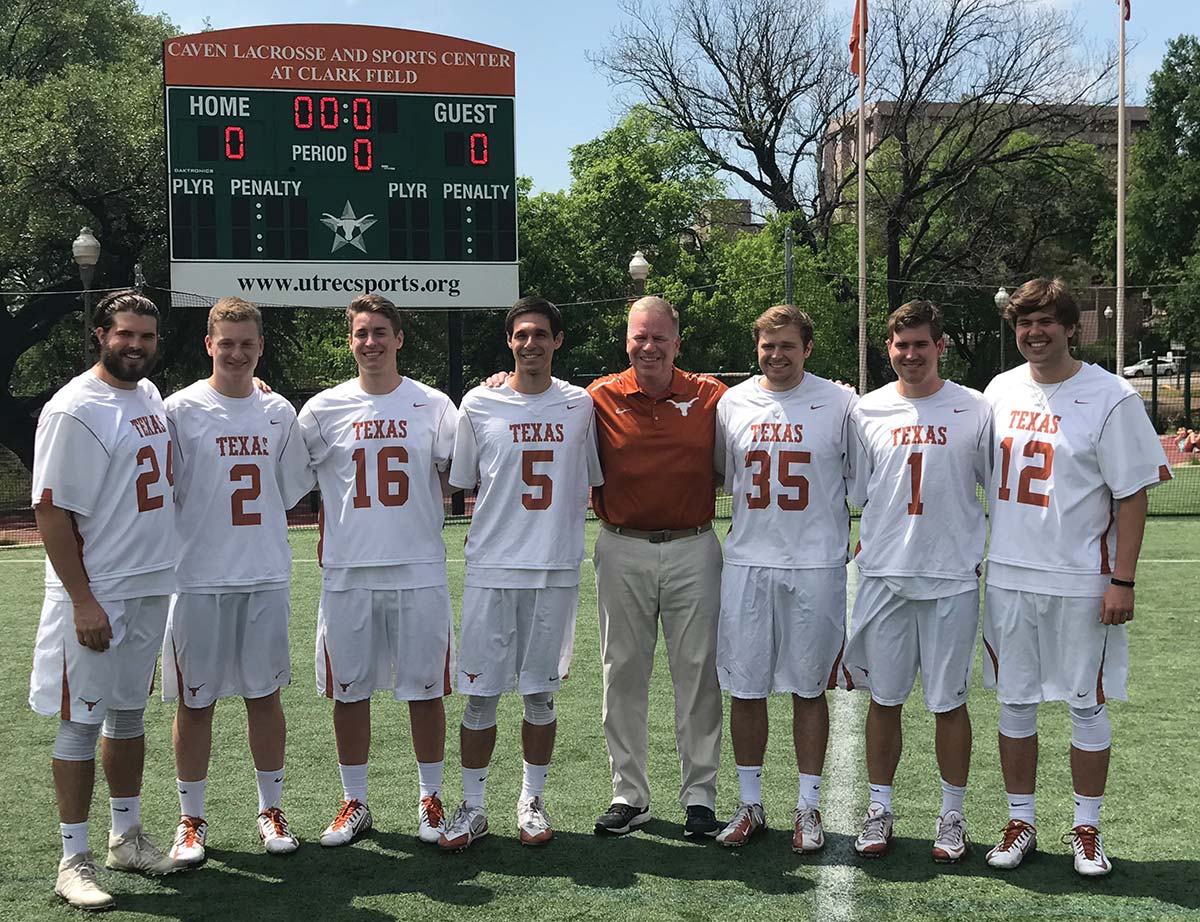
Starr also brought his lacrosse sticks with him. He became co-captain of the UT lacrosse team alongside Ethan Galowitz, who is now TractIQ’s co-founder and CPO.
“Honestly, not getting into Haverford was one of the best things that could’ve happened to me,” says Starr.
“I worked on the debt side with some of the smartest and most experienced investors,” says Starr. “We financed a wide range of asset classes, including commercial real estate.”
One of those classes was self-storage, and it was Starr’s first experience with the industry. He helped finance ground-up construction for CubeSmart and Public Storage developments. As he did, his interest in the industry was immediately piqued. “I learned how resilient the asset class is across cycles,” he says. “It’s a bet on American mobility and dynamism. It made intuitive sense to be part of it.”
Still, he wasn’t ready to jump in. Starr moved back to Austin to join Amherst Holdings, a private equity firm focused on residential real estate, where he shifted from debt to equity.
“I wanted to drive the plan,” he says, “not just provide loans but understand what makes a good investment and how to raise capital around it.”
That was the breaking point. “I realized I had no autonomy over my life. There was no end in sight.”
But just like his college backup plan, he had a career backup plan: He’d been working on buying a self-storage property.
Using $25,000 of his own savings and capital raised from friends and family, Starr had made a play for a small facility near Beaumont, Texas. “I wanted something close enough to drive to, small enough to manage, and solid enough that I knew I could raise the capital responsibly.”
When it looked like a go, he made the leap. “I knew the deal was going to happen, and I had chills, thinking ‘How can I possibly go back into an office tomorrow?’” So, in April 2022, he packed up his office. “I said, ‘That’s it. I’m out. I’m going to be an entrepreneur.’”
And while he knew the deal wouldn’t make him financially independent, it would change everything.

Still, he believed that if he could keep finding opportunities that met rigorous investment standards, he could continue raising capital and scaling. Between 2022 and 2024, Starr and his partners acquired approximately 700,000 square feet of self-storage across Texas, Tennessee, Arkansas, Michigan, and Ohio. They focused on undersupplied, growing markets with value-add potential.
Some investments performed well. Others did not. “I really get the pain of a bad deal,” Starr says. “It’s anxiety-inducing, financially expensive, emotionally expensive—all of it.”
In hindsight, timing played a role. Demand peaked in 2020 and 2021, and rental rates followed. Underwriting at peak demand alongside historically low interest rates proved risky once conditions shifted.
“When demand falls and interest rates rise, that’s a bad time to buy,” Starr notes. “Now, ironically, is probably a better time.”
But the larger lesson was about data.
He states that self-storage underwriting has long relied on what he calls “proxy metrics” as a form of market intelligence (supply per capita, advertised street rates, and demographics) instead of actual operating performance. “What really matters is occupancy, achieved rates, in-place revenue, expense pressure, and debt coverage at the market level. That’s what tells you whether a market actually works.”
Starr says that the issue is that REITs can draw from thousands of facilities, while independent operators don’t have that ability. “At my peak, I had 12 facilities in 11 different cities. You can’t truly understand a market with those numbers.”

What Starr was experiencing personally was a structural problem across the entire industry. To make his mark, he began looking for a solution. And it would come from just a Google search.
The trio stumbled down a Google rabbit hole and discovered TractIQ, a data platform founded in 2018 by a gentleman named Thomas Halatyn, initially called SSDMS. When they contacted the company, they learned that Mr. Halatyn had sadly passed away two years earlier. Still, the company was in business, aggregating data for a handful of clients.
When Starr asked about licensing the platform, the response surprised him: Why not buy it?
Initially, Starr acquired TractIQ to gain an edge for his investment business, but demand exploded. “People started paying us for the data I wanted to use for my own investments,” he says. “And I never wanted to compete with my customers on a deal.”
Starr faced a decision: shut TractIQ down for external users or stop investing and go all-in on data. He chose the latter. “I publicly committed to no longer buying properties in favor of exiting our portfolio and building TractIQ into the best data company that it could be.”
The decision wasn’t easy, admits Starr, but it turned out to be the right call. “It was such a great decision. We’re growing really quickly. I feel we’re the best data company in the industry.”
That confidence soon found external validation. In 2025, Modern Storage Media (MSM) selected TractIQ to be the official data provider for its Self-Storage Almanac, a data- and fact-filled annual publication that has been helping investors, developers, and operators make better informed decisions since 1992. “I’ve been reading the Almanac since 2018, so it was incredibly meaningful to have TractIQ become the official data provider,” says Starr.
Transparency, he says, is the point. “No matter what people say about me, I want them to come away thinking: He’s telling the truth, he cares, and he’s doing the best he can every day.”
It’s a statement that Roosevelt would admire. He famously said, “It is not the critic who counts … The credit belongs to the man who is actually in the arena, whose face is marred by dust and sweat and blood.”
From the lacrosse field to the investment world to co-founding TractIQ, Starr has fought through the sweat and blood. And as for leading an interesting life, he’s definitely in the arena.

As an entrepreneur, Starr says there will be times when you can’t sleep, you let people down, and you disappoint them. “You can feel like you’re completely alone, and there’s no one to save you. This can lead to deep despair. A lot of people are afraid to talk about that.”
He admits that he’s been afraid to talk about it too. “Before TractIQ, when you close a deal, what do you do? You go on LinkedIn and post how excited you are about the acquisition. You get applause and likes.” But there’s something you don’t see on LinkedIn. “You don’t see that person announce that the acquisition missed underwriting by 20 percent.”
When that happens, Starr says there are difficult calls with investors, banks, and others—all of whom are disappointed with you. “I wanted to put this out there, because I really get the pain of a bad deal. Entrepreneurship doesn’t always get the positive outcome you want.”
Still, Starr has refused to let those moments get him down. “What those did was fire me up and motivate me to fix the underwriting problem in storage. I want to be sure no one falls into a bad deal by giving them the data they need to never invest in the wrong place.”