



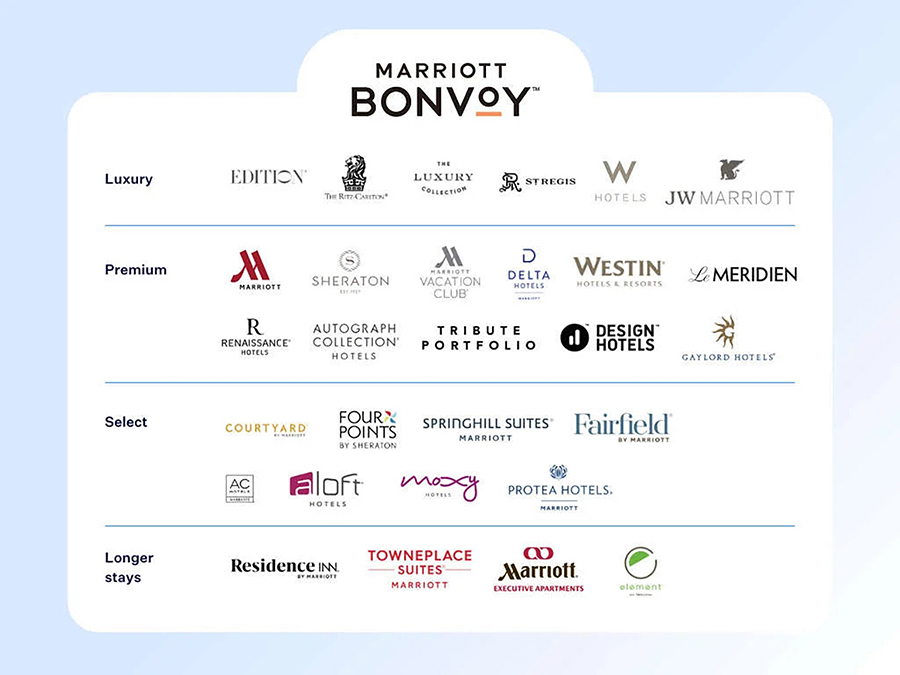
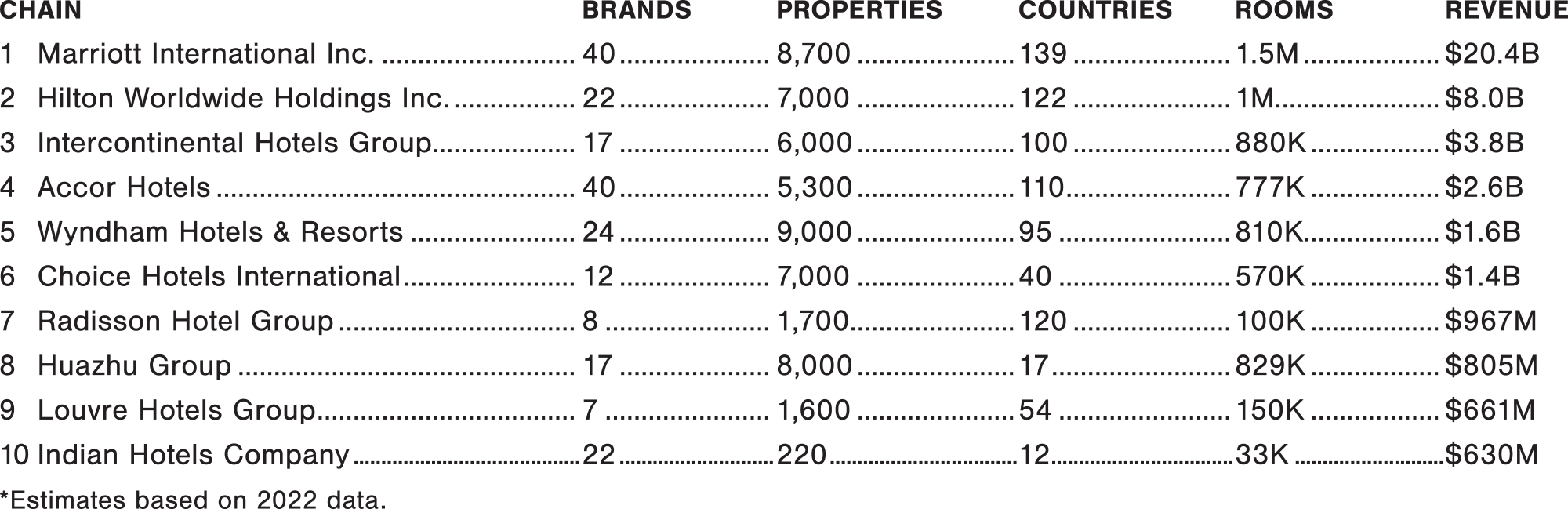
here are an estimated 700,000 hotels in the world—that’s about 18 million guest rooms. For many unfamiliar with the industry, or those who don’t belong to a frequent traveler program, it’s fair to assume that hotel brands directly own and operate the majority of properties flying their flag. But that’s no longer the case. Today, most popular hotel brands are part of 10 new “mega-chains” that use franchise and management contracts to expand their empire with minimal capital investment. So, rather than Marriott simply running Marriotts, everything from Ritz-Carltons to Residence Inns fall under an umbrella known as Marriott Bonvoy.
As I stated in May Messenger’s “Chief Executive Opinion,” I believe the self-storage industry will soon be run by 10 or so mega-chains too—we’re just fashionably late, as we always are compared to the hotel industry. Hospitality has always innovated much quicker than us, though in fairness, they’ve also had hundreds of years’ more experience than us.
But it’s worth noting that everything the hospitality industry does, we tend to follow suit. They implemented computerized reservation systems in the early 2000s, reducing staff sizes and allowing guests to conveniently register online; now we’re doing it. They adopted keyless entry technology, with IHG being the first to experiment with it in 2010 at several Holiday Inns; now we’re doing it. And they easily share industry data to the benefit of all operators, something we’re slowly (sometimes begrudgingly) beginning to do. (STR, which provides premium data benchmarking, analytics, and marketplace insights for the global hospitality industry, was founded in 1985.)
The first is likely due to the benefits of economies of scale (and the cost savings that come with it). Consolidation allowed hotel companies to centralize operations, share resources, and leverage their combined size to negotiate better deals with suppliers and distribution channels. Consolidation also often helped hotels save money by streamlining operations, eliminating redundancies, and optimizing resources across the merged entities.
We also entered the digital age in the mid-90s as the internet found its footing. Suddenly, online booking platforms were revolutionizing the way hotels could market and sell their inventory; it also made it significantly easier to reach international customers. Of course, the larger the hotel company, the better positioned they were to invest in new technology. Through consolidation, hotels could make investments in technology and quickly and efficiently enter new markets to establish a global footprint.
Finally, acquiring other hotel brands allowed companies to diversify their brand portfolios, catering to different market segments and consumer preferences. Just look at all the brands found under the Marriott Bonvoy umbrella, which is the largest of all hotel portfolios with 8,700-plus properties across 139 countries.

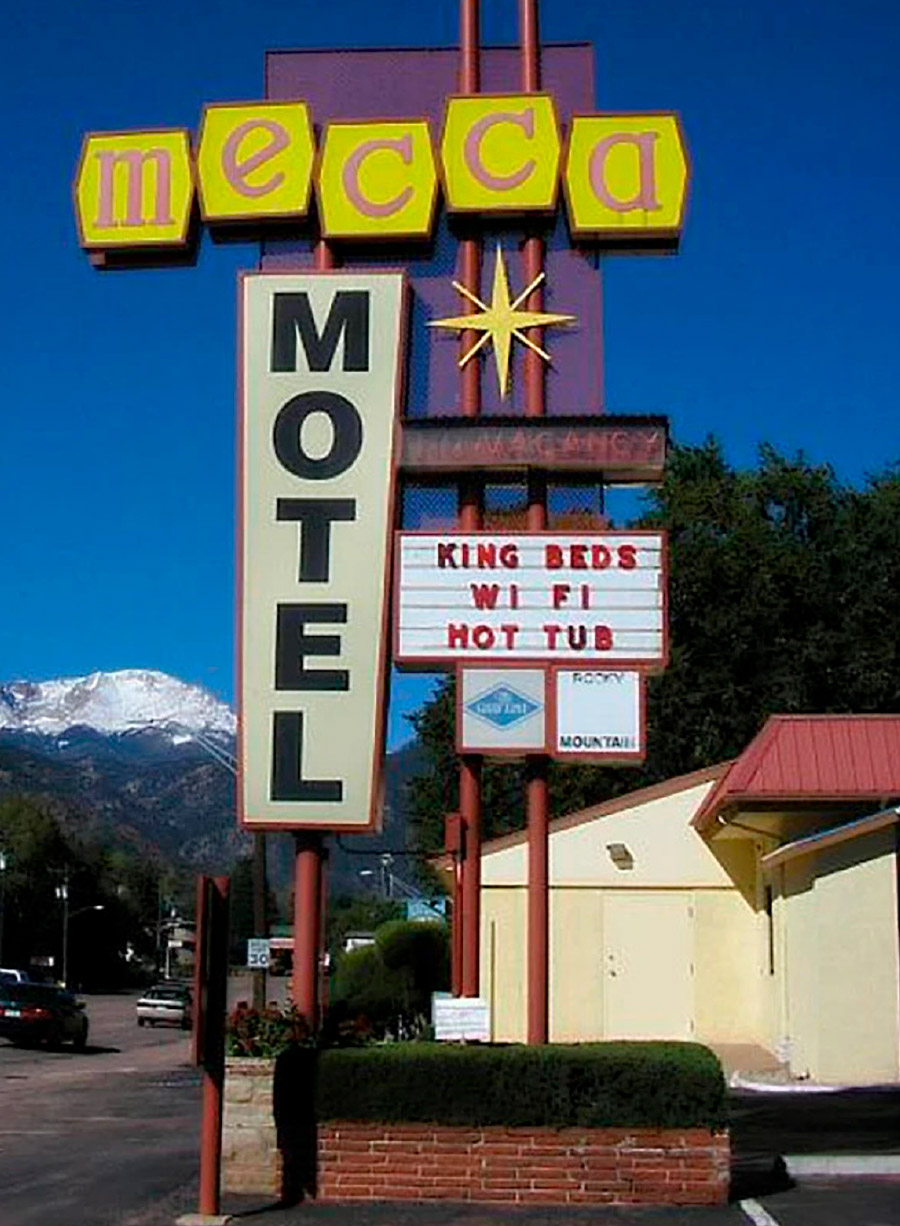
Are there still independents? Of course. Thousands of mom-and-pop hotels are operating across the country, and many succeed by offering local flavor or personalized experiences, appealing to the traveler who eschews anything corporate or unauthentic. But most travelers tend to gravitate toward a reputable brand because it takes the guesswork out of the accommodation experience. And that’s why consolidation will continue.
“We think a lot about consolidation, [but] despite all our efforts, we actually expect the industry to remain dominated by the smaller operators,” said Tom Robinson, former president and CIO of Storage USA, waving away the “threat” of consolidation. “The bigger operators, the ones with access to capital, will be buyers indefinitely, but there isn’t enough capital out there to really consolidate this industry.”
Storage USA was acquired by Extra Space in 2005—a mere 10 years later.

Talk about your on-point predictions!
By March 2016, it was clear industry consolidation would continue. That month the topic made our cover in the story “Consuming the Competition.” At the time, then-CEO of Extra Space, Spencer Kirk, told MSM that the smaller operators were having difficulty competing with the REITs for customers online and that eventually many would either choose to sell or align themselves with a REIT to manage their facility.
This is exactly what we’re seeing today in self-storage. Massive amounts of capital (some of it due to the COVID boom, which even an expert forecaster like Burnam might not have been able to predict back in 1995) means mega-deals are happening with greater frequency. And while huge $12 billion mergers like Extra Space and Life Storage and big $2 billion acquisitions like Public Storage and Simply Self Storage are the ones making headlines, there are always plenty of smaller transactions occurring too.
Of course, not all transactions are acquisitions. Instead, some smaller operators are choosing to simply hand over the reins to a larger operator or third-party management company (this also happens to be the second most popular hotel model, in which owners retain ownership control but bring on a branded management group to operate the property on their behalf).
Whether a small self-storage owner is hurting due to a slowdown in demand caused by a volatile housing market, or increasing interest rates are making the cost of borrowing too great, working with a larger operator that has deep pockets can be an attractive prospect. You can see these types of deals on MSM’s regularly updated Sales & Acquisitions page (www.modernstoragemedia.com/sales-and-acquisitions), and all the major REITs always make a point of highlighting their third-party management platforms on quarterly performance reports.
First off, by absorbing or managing other chains, self-storage giants are better able to diversify. They can begin offering differently branded tiers of storage designed for different types of tenants. The storage industry is already classified by A, B, and C. Now, one self-storage giant can have all three under their umbrella operating under different brands. This provides tenants with different experiences, from luxury Class-A facilities to no-frills Class-C facilities. We already have specialty storage facilities offering RV and boat, wine, fine art, and other types of storage; B2B-focused facilities with business centers and shipping and receiving services; short-term weekly rentals and extended stay facilities. Now it’s all in play for a mega-chain operating dozens of different brands.

What are the downsides? Perhaps the biggest negative in this situation is the fear that reduced competition will enable rate hikes and fee creep. Well folks, we’re already there. I recently wrote a series of articles on some of the aggressive rate hikes happening in the industry. Large operators initiated this, and some independents have had to follow suit in order to compete or even survive. Further consolidation is not likely to further this trend; if anything, consumer or legislative pushback will put an end to it or result in more transparency before it becomes a larger issue.
Franchising is one option. This plays a significant role in the hospitality industry, with franchisees handling the day-to-day operations but agreeing to adhere to brand standards around things like decor, amenities, and services. So, while the franchisee sacrifices some autonomy, they gain powerful distribution and operational efficiencies that allow them to compete in a crowded space.
Storage Authority is currently the only true self-storage franchise in the United States, with more than 30 franchisees operating under it. Storage Authority helps them find land, plan, design and construct the facility, and market it in order to compete with REITs. Although Marc Goodin, principal at Storage Authority, doesn’t think massive consolidation will take place as quickly as I do, he does see more of it happening over time.
“Maybe in 15 to 20 years, instead of the REITs owning 20 [percent] to 30 percent of the market they’ll own 50 percent. But I don’t think self-storage will ever be as branded as a hotel, simply because people don’t live or stay in it. It’s for their stuff, so branding isn’t as important.”

Another option for self-storage owners is Storelocal Storage. Their program allows independent operators to unite their marketing efforts under one flag while maintaining more autonomy and focus on the day-to-day operations of the facility. “Google rewards the size of an operation based on the number of facilities under one brand/domain,” says Dane Elefante of Platinum Storage, who recently moved the company’s 30-plus facilities to Storelocal Storage. “I couldn’t raise enough capital in my lifetime to build a portfolio large enough to compete with REITs online, so placing my portfolio with Storelocal Storage allows us to put our stores into a larger group with the same name to increase our online visibility.”
Of course, it’s still possible for an independent to survive on their own. Most likely, as consolidation continues, we’ll see more small operations leveraging their distinctiveness or “down-home flavor” as a differentiator to big brand names, which will always hold appeal to some segments of the population. Sure, it’s probably easier for small hotels to take this approach as Goodin noted, but like it always does, self-storage (and the independents responsible for creating the industry) will find a way.