


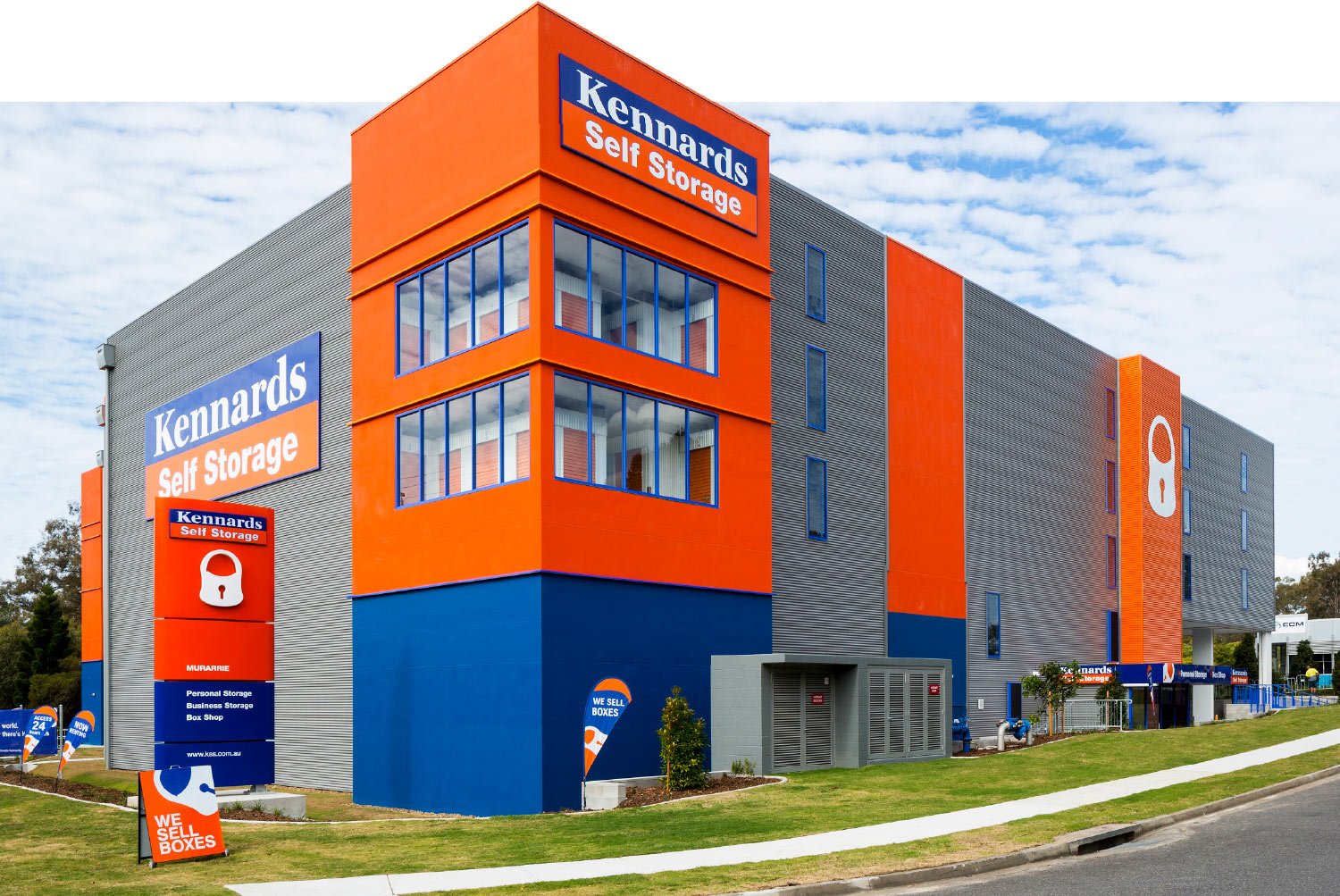
hen Neville Kennard left for a work trip to California in 1972, he didn’t expect to come across an up-and-coming business industry that he would later replicate in his hometown within Australia, creating an entirely new industry in the country that would eventually become not only a successful business but a legacy.
It was in 1973 that he first built a total of six 6-meter-by-3-meter storage units behind the Kennards Hire Centre at Newbridge Road, the birthplace of the self-storage industry in the country. A few decades later, the initially small Kennards Mini Storage would become Kennards Self Storage, with over 110 locations worth more than $3.3 billion.
The company is now headed by his son, Sam Kennard, the current CEO, who started to learn the ins and outs of the business back in 1991, officially following in his father’s footsteps in his current position back in 1994. In the past 31 years, he expanded the then 12 storage centers to a mega empire, which currently employs a total of 350 people in Australia and New Zealand, taking his father’s legacy to a whole new level.
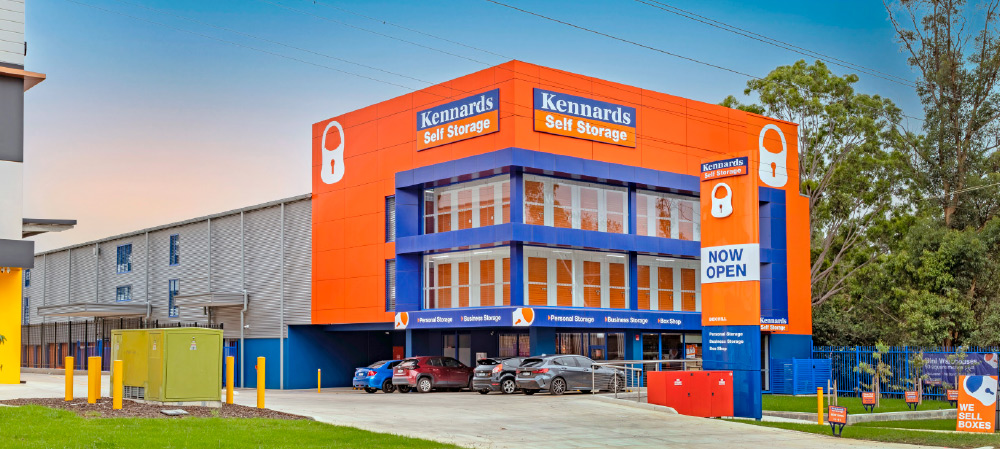
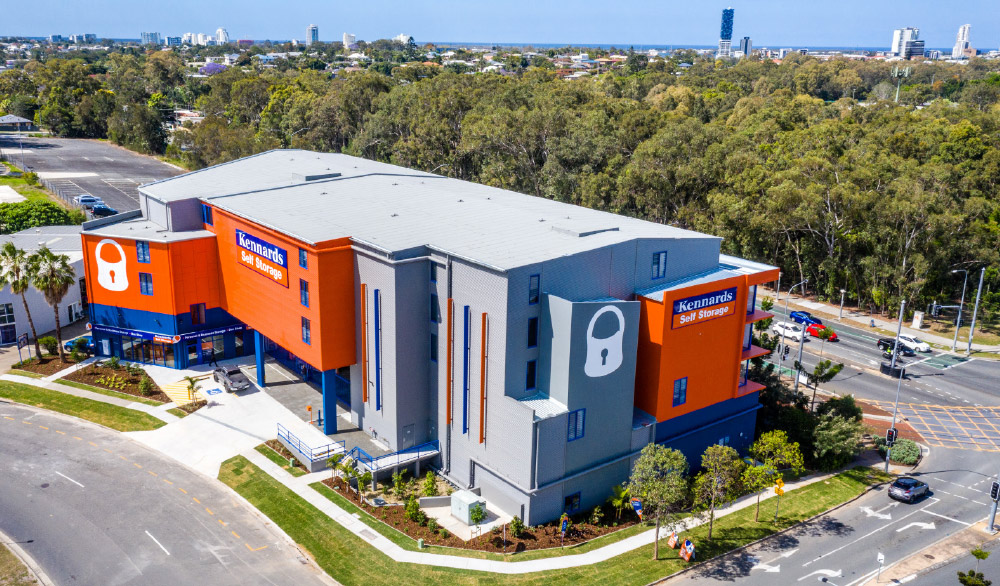
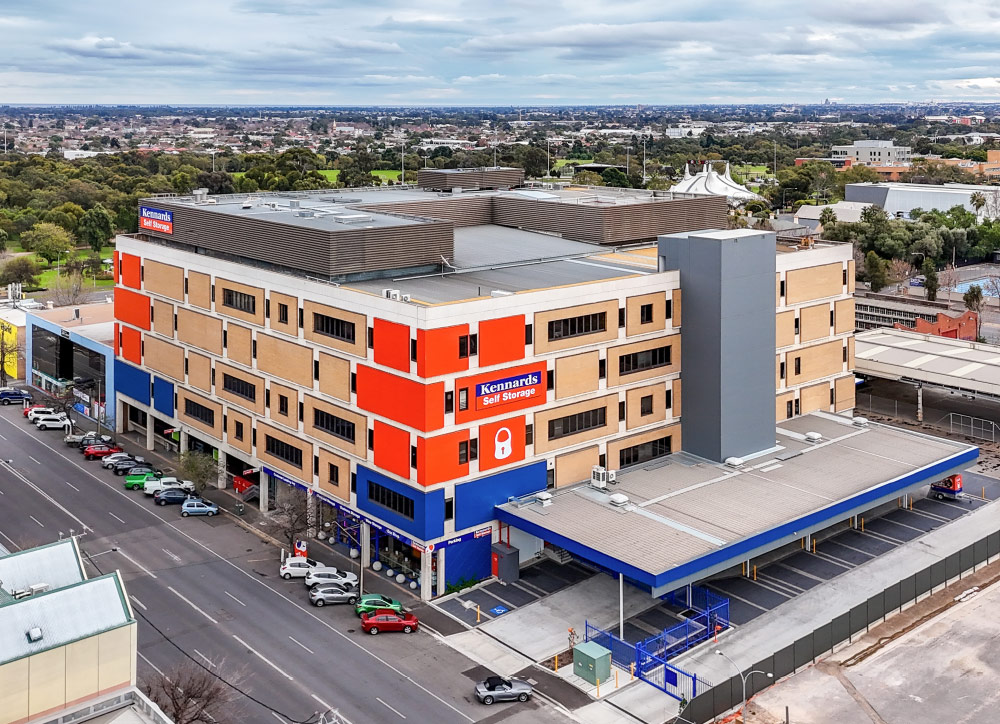
As for trends he is noticing in the industry, Kennard says, “Around 80 percent of the population lives in major cities. Australia’s one of the most urbanized countries in the world, so it means there’s an increasing density of housing, and lots of people are moving into smaller and smaller accommodations. So, first-generation storage that was built 20 or 30 years ago is proving to be too small, so what we’re doing is going back to our first-generation stores and adding. We are either demolishing single-level buildings, somehow finding space to add more supply, and adding significantly more supply into the existing locations in those infill areas where the density’s increasing.”
Like the U.S. market, the Australian and New Zealand markets are also having to adapt to the 21st century, as businesses are now expected to have state-of-the-art technology solutions. “Obviously, there’s an improvement in technology, an improvement in customer awareness, and customer sophistication,” he says. “Having higher expectations around the quality of a storage facility should be similar to the U.S.; you can’t get away with being a very grungy, industrial, crude development anymore. You need to have a sophisticated, user-friendly, high-entity user experience. And consumers expect that more and more in everything they touch.”
In New Zealand, a particular matter that new facilities must pay attention to when building or expanding is the country’s geographical location and susceptibility for earthquakes. “Some of the construction measures around seismic strength are important and expensive, so that’s unique to New Zealand. As far as I know, obviously some parts of the U.S. and other parts of the world might have that, but New Zealand has a very high threshold of seismic strength, as far as I can tell,” says Kennard. “That’s a big differential, because that’s not something you really have to worry about when you are in Australia. Geology-wise, here we are safe on an earthquake front.”
According to Kennard, businesses currently make up 25 percent of his company’s customer base, which is just under 40 percent of their revenue. Another market trend in the countries is specialty storage, from gun lockers to wine cellars. “After the Port Arthur Massacre in 1996, the gun laws in Australia were tightened. Including storage of firearms, that meant putting them in a steel compartment, lockable and secure, so guns couldn’t be stolen, but also so guns couldn’t be easily accessed by children,” he states. “They can be kept in your home, but they could also be kept off site. So, we recognized that opportunity back then and started to experiment with putting gun lockers into our storage centers. And found that there was a demand for people to have off-site gun storage away from their family, and it meant that people in apartment buildings who didn’t like to have [it around at their place], or they’re renting their house and they’re not allowed to keep the safe in there, or they’re not allowed to bolt it to the floor … There are lots of reasons why people want to have the gun off site, and so we put a bunch of those in, and we’ve got a few now.”
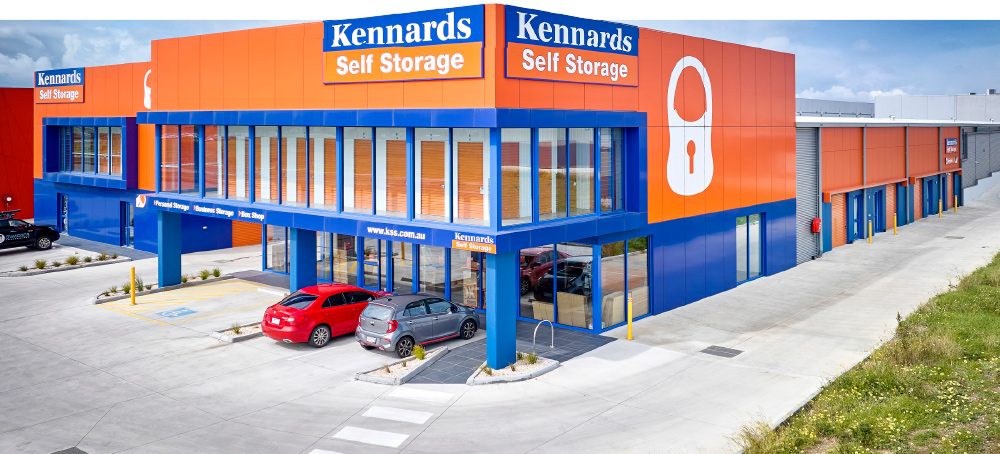
Kennard also points out the market is currently getting a lot of foreign investors. “There’s a lot of sophisticated money coming into the sector. Large global institutional money is coming in; it’ll be interesting to see how they play through a period in the sector, and they’re driven to get money out the door and deploy investment money, and that gives them a fee,” he states. “Australia is probably one of the most active investment markets currently in the last 12 months. With global money, we have Warburg Pincus investing in Australia through a company called StoreHub. We have Blackstone investing in Australia, and they’ve been buying portfolios and assembling a portfolio through a couple of brands. We have BlackRock, who has just partnered with Store Local; and so, we’ve got all of this kind of global money playing in our sector at the moment, which is quite interesting for such a small market. We’ll see how it plays out.”
In her decade-long experience in the sector, she was able to see the market mature and grow. “The Australasian self-storage market has matured into a standalone asset class and is well positioned for stable, long-term growth. Macroeconomic factors, such as population growth, housing market challenges, and lifestyle shifts, continue to underpin demand,” Castelli states. “Interest from institutional capital continues to grow, attracted by the sector’s strong fundamentals and resilience. Despite ongoing consolidation and the growth of large and major operators, independent operators and family businesses still represent approximately half the market. Record levels of self-storage supply are anticipated from 2025 to 2027-plus, leading to a shift in market dynamics, especially in capital cities.”
Since the COVID-19 pandemic, both countries have been evolving. “In a post-pandemic climate, three key shifts are changing how we live. Smaller living spaces, working from home, and the move to the regions are all driving demand for self-storage in Australasia. Business usage remains steady at around 25 percent in most facilities, but use cases are shifting from the retail economy to the trade economy,” she says. “What is becoming more evident is the blurring between business and personal use in self-storage, with more customers utilizing their storage unit for both. The Australasian self-storage industry experienced exceptional growth in the post-pandemic period. Increases in both occupancy and average storage fee rates drove strong returns, outperforming traditional asset classes.”
Technology-wise, the industry in the country is undergoing its own digital renaissance. According to the SSAA State of the Industry 2024 report, “Seven in 10 potential storers expect a fully digital journey, while for operators, retention and rising labor costs risk making traditional staffing models unsustainable. For owners and operators, this means modernizing the rental process or risking being left behind. Those who invest in the digitization of self-storage, including remote management, smart access, and seamless customer experiences, will lead the next era of self-storage.”
Castelli highlights that the fast-growing industry has been working to adhere to the remote management models. “Remote management models are emerging with technology set to enable further changes,” she says. “While the technology that enables facility automation is here, consumer demand is still outpacing the rate at which facilities are adopting digital solutions. Seven in 10 Australasian customers likely to use storage in the next two years want a digitally enabled experience. More than 50 percent of operators surveyed reported they are planning to adopt new technology to enhance customer experiences and improve operational performance in the next year. Nearly 40 percent expect to increase the capacity at their facility or begin construction of a new facility.”
Another trend spotlighted by the SSAA State of the Industry 2024 report is the use of AI for dynamic pricing. “AI-driven revenue management is now optimizing unit pricing dynamically, helping operators to find the Goldilocks zone and maximize every square meter,” the report states. “AI-driven platforms continuously analyze local demand, competitor pricing, and historical occupancy trends to optimize rental rates [by] providing granular insights into competitor activity and digital performance to help operators understand their local market, [allowing] operators to forecast seasonal demand shifts and preemptively adjust pricing to avoid revenue dips; and instead of relying on blanket promotions, AI triggers discounts only when necessary, protecting profitability.”
Like in many parts of the world, sustainability has been gaining importance in the industry. “Sustainability is an increasing focus across the Australasian self-storage sector. LED lighting remains the most widely adopted solution by existing facilities (80 percent), followed by a growing trend toward rooftop solar installations (44 percent). Developers are broadly adopting green building practices for new builds, particularly for larger metropolitan facilities,” Castelli says.
For investors looking to join the market, Castelli mentions that, just like in the U.S., the industry is very friendly, and you can learn a lot by contacting industry moguls. “A hallmark of the Australasian self-storage sector is its collegiate spirit. Many experienced owners and operators are willing to share their experiences, so seek advice early on and build a trusted, local team of advisors and suppliers who are experienced in self-storage.”