


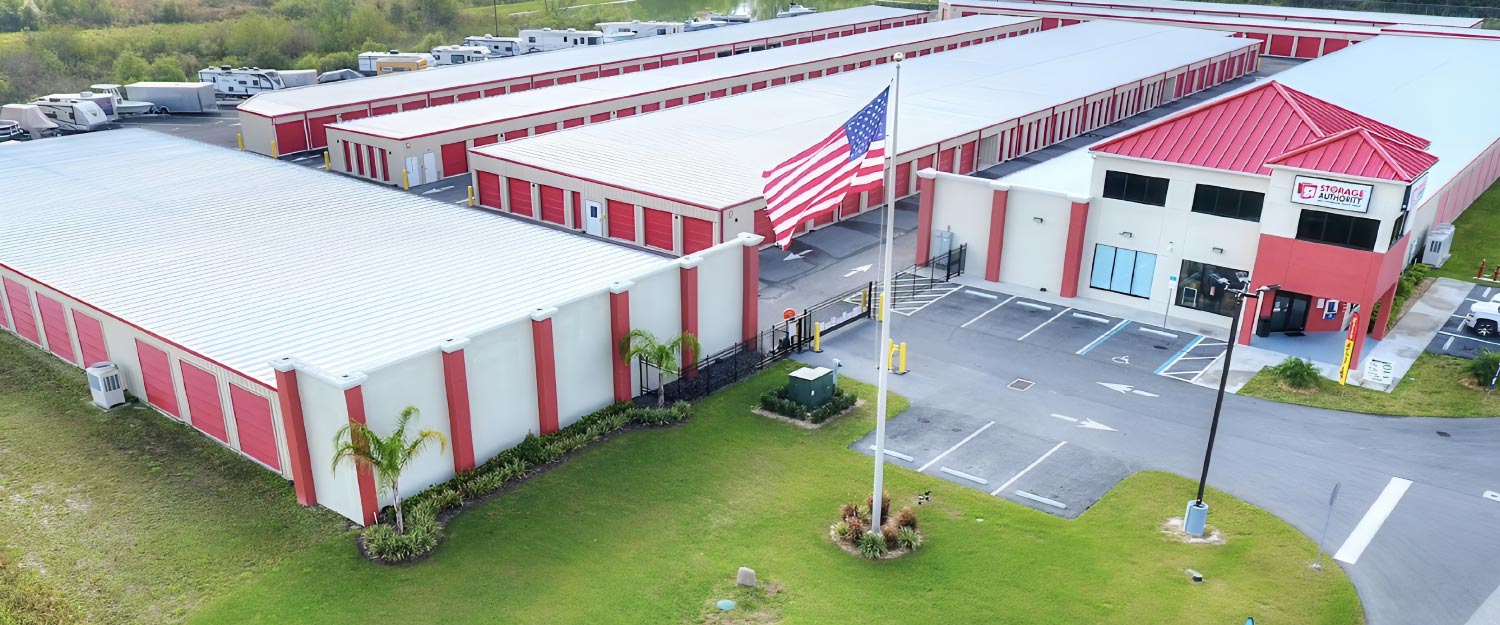
hese days, everybody is looking to save a buck. What if you could save one million of them? If you’re a self-storage developer, it probably sounds too good to be true, especially in the current economy. However, Marc Goodin, CEO of Storage Authority Franchise, says it’s entirely possible. He sat down to share tips and a few trade secrets that anyone can put into play when considering a new project, or even their first project. As Goodin explains, it begins with understanding the three distinct phases of development.
One thing to be wary of is easements. “Say you have two frontage roads. That may seem good for access, but it can be a restriction,” he says. “You could have a 100-foot setback on a road, and with two, now you’re losing 200 feet of rentable space. You need to make sure that’s going to be acceptable to you. You also want to watch out for wetlands.”

The next factor to be cautious of during your land search is the overall topography. “To a lot of folks, topography is just lines on a paper, but a trained eye can tell if there are two feet between lines or 20 feet, and that’s a big difference.”
Because self-storage facilities are typically built flat, developers know to look for flat land, but Goodin says looks can be deceiving. For example, when checking out a plot that’s 1,000 feet long, the naked eye may register a two-foot drop within that stretch when there’s actually a 10-, 20-, or 30-foot drop. “That’s where you can lose the largest amount of money if you decide to build,” he says.
Should you pursue construction on unlevel land, Goodin recommends that you first try to balance things on site, even though there are still costs for cuts, fills, and machinery. “If that doesn’t work, if the topography is too steep, you’ll need to bring in material or haul it off. That can easily cost you an extra dollar per square foot.”
Goodin recalls one Storage Authority franchisee coming to him with a “great deal.” “He’d found someone selling land for $300,000, when every other plot of a similar size was a million. Well, the owner knew he had to price it low because of the topography. I said, ‘It’s going to cost you a million to bring in that fill, so you’re really looking at $1.3 million. Go back and look at those million-dollar ones instead!’”
Utilities, and their location, also need to also be a consideration. Goodin recalls one project in which the utilities were located on the other side of the road. However, this “road” was a four-lane highway, and it would cost more than $50,000 to tunnel the three utilities underneath it to reach the facility. “Thankfully, we found that out during the design stage and negotiated with the owner, ultimately splitting the cost.”
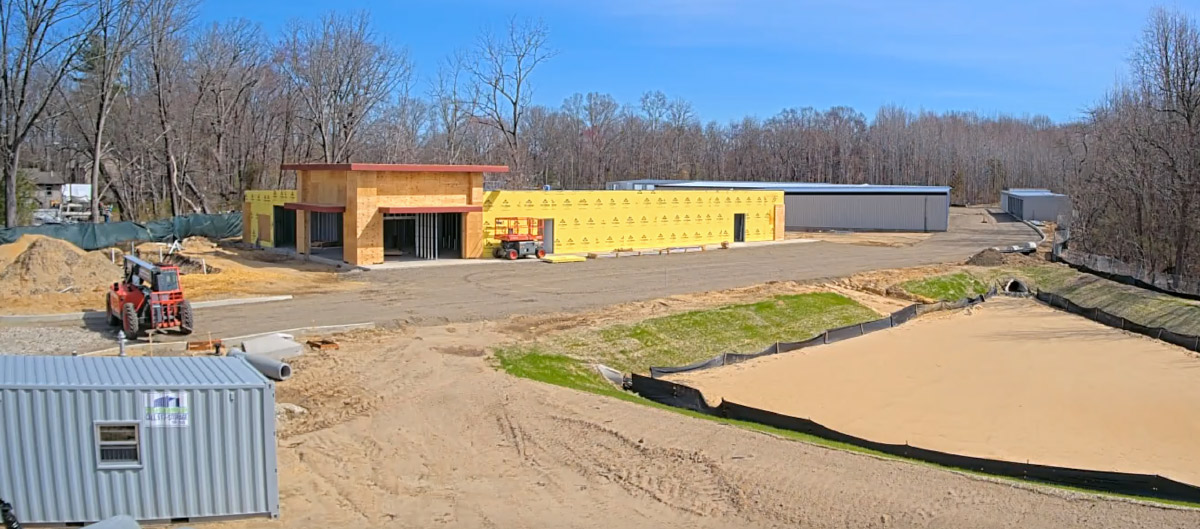
When it comes to the number of buildings you put on site, Goodin says you need to be calculating. Obviously, if it’s a small plot of land, you don’t really have a choice but to do one vertical build. Far too often, however, he sees sites with upwards of a dozen buildings, when it would be so much less expensive to build fewer. He offers an example of two buildings that are 80 feet wide built side by side. “You’re better off putting them together. First of all, you’ll save on that 30 feet of pavement between them, which could cost $50,000 right there. You’ll also save on construction, because where there were two walls, now there’s one; instead of two footings, there’s one.”
There are other times one building makes sense, and that’s based on location. “Say you’re in Florida, and your feasibility study shows you need 80 percent of your units climate controlled. Well, then one building makes sense, as most units will be indoors and climate controlled, with only 20 percent on the exterior offering non-climate control. Now, if you’re in a location where temperature isn’t an issue, a few buildings is probably best, as they don’t need to be climate controlled, and people really do like those outside units … they like the convenience of them.”
Goodin throws out the following example: A change needs to be made, and it takes, on average, two weeks for the order to be signed. The delay in construction will then take twice as long as it takes to get the order signed because it messes up schedules and leading to “contractor stacking.” This is when you have multiple subcontractors scheduled to work simultaneously in the same area, causing overcrowding and inefficiencies. Now the project is delayed a month and you’ve lost about $57,000 thanks to that delay. If you have another change order, you can count on more delays and more money lost.

Continues Goodin, “You would not believe how many things are not on the plans that delay the project and add to the costs and lost revenue. I can’t tell you how many times I’ve seen plans for something like ‘16-foot gate.’ OK, but that doesn’t narrow it down. Rolling? Lift? Material? Power backup? Beam and wire mesh? If it’s not on the plan and not specified, or it doesn’t meet safety requirements, you’re going to have a change order and a delay. So take those change orders seriously and get them signed immediately.”
Before he’s done with the lesson, Goodin says there’s one more thing to watch out for. When you’re ready to build and you hand over a set of plans to a contractor and he gives you a price of $10 million, know that it probably doesn’t include items like cameras, access control, low voltage, and a whole slew of things. “Later, when you question it, the contractor is going to say, ‘That was for the owner to do.’ Hell if I’m going to do any of that stuff!”
For Goodin, it goes back to making a list, or in this case, an addendum. “This is what I’ve done on my last three projects. Now, someone can help you make the addendum; it has to include all the things that may be on a plan that contractors don’t typically build. And when you go out to bid, you say, ‘I want you to include these things in your bid.’ And you get a signature on that before the shovel hits the dirt.”
It’s easy to see how Goodin’s tips can quickly rack up savings and hasten construction to lease up faster, in turn growing revenue quicker. But why share the secret sauce? “I’m here to help everyone,” says Goodin. “A developer can take these tips and run with them on their own and I encourage it. But some people don’t like to go on their own. And I can say in all honestly, you’re going to save somewhere between $250,000 and $1 million with Storage Authority; most of our franchisees have saved over $500,000. Let me run some numbers with you. Marc@StorageAuthority.com, or (860) 830-6764. Give me a call.”
It’s clear Goodin means business, so if his voicemail is full, you might want to try back later.
e’s already been very generous with his money-saving tips, but Goodin seems like he might have another secret up his sleeve. “OK, one more,” he says, leaning in as if this needs to be kept on the QT. “It’s the AIA construction contract.”
The American Institute of Architects (AIA) contract, he explains, is written by architects and includes language that is advantageous to the contractor. Once you’ve signed it, you open yourself up to liability. For example, the AIA may state that all change orders must be approved by the architect. So, something as simple as, say, changing countertops from blue to red, requires a change order and the rehiring of the architect.
Goodin is ripe with examples, quickly relaying another. In this case, the architect forgets to plan for a fire riser, the vertical pipe carrying water from a supply source to the fire sprinklers. “Of course, that is a building requirement, but it was missed,” says Goodin. “So, the contractor says, ‘Well, Mr. Architect, you forgot this, so I’m charging an extra $50,000.’ And the architect approves it.”
“No, sir,” says Goodin. “I’m the owner, nothing gets approved without my say. I’ll ask the architect, I’ll ask the civil engineer, I’ll get their input, but I get to negotiate. There needs to be a way to do this for less than $50,000.”
Another sticking point are items like “rain dates.” Goodin says if you bother to look within those 200 pages of the AIA contract, you’ll see that they’ll often refer to expected rainfall in given months for a particular city, and state that if it rains more than X days in a certain month, you need to pay extra.
“It’s all in there,” says Goodin. “It’s easy to think it’s just fine print that we tend to ignore, but read every paragraph. You may not understand it all, but you’ll see enough and realize that it’s written to be very much against you. And if you don’t believe me, hire a lawyer to look it over. He or she will cost you a lot less than some of these provisions you find; I guarantee it.”