


n self-storage, every vacant unit represents “perishable” inventory—revenue that is permanently lost each day it sits empty. That reality often pushes operators toward aggressive discounting in the name of occupancy. Over time, those tactics can erode asset value and fuel unsustainable local price wars. Prorize was founded to help operators navigate that delicate balance between price and volume.
Most people in the self-storage industry are already familiar with Prorize. Founded in 2006 by Dr. Ahmet Kuyumcu, the company has long been a fixture at industry events and a pioneer in revenue management strategy. Its flagship platform, the Self-Storage Revenue Optimizer™ (SSRO™), uses advanced algorithms to forecast customer demand and compute prices designed to maximize revenue. What many operators may not realize is how much Prorize is expanding that platform—and how broadly it is redefining what revenue optimization means.
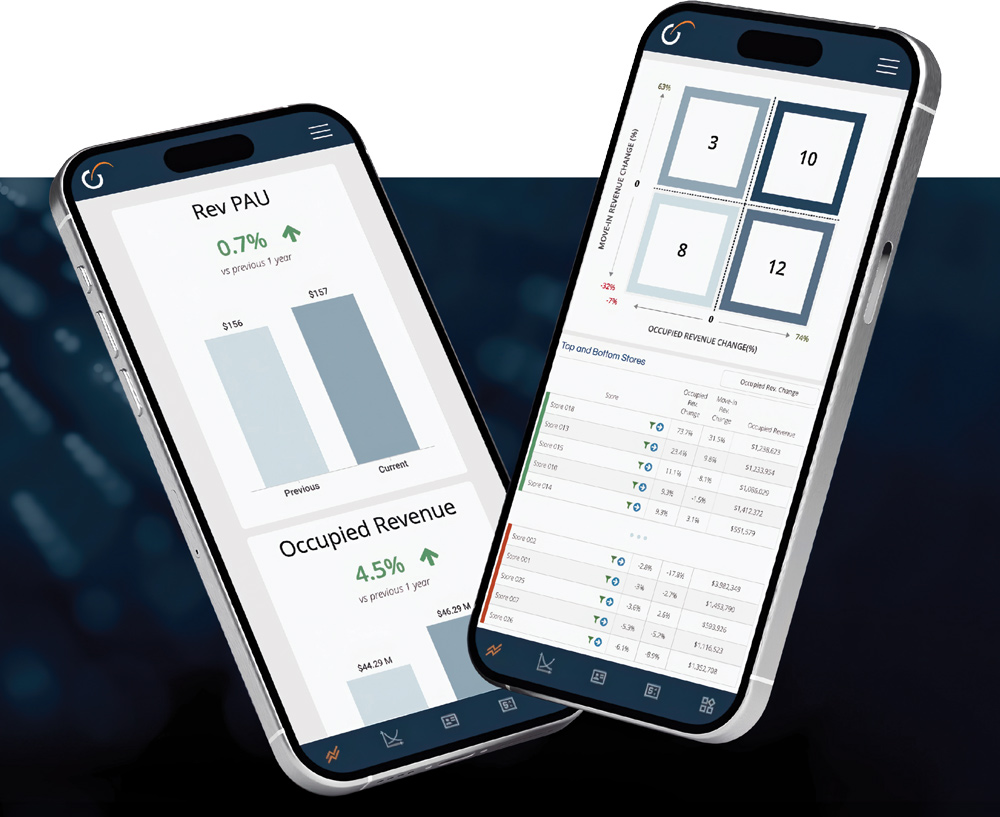
One of the most immediate developments is the addition of AI-powered alerts and mobile intelligence. “Our AI-driven alerting layer complements reports and dashboards by providing an automated ‘eyes-on-glass’ system,” says Kuyumcu. “It continuously monitors data for emerging patterns, anomalies, and early warning signals, cutting through noise and translating complex signals into clear guidance.”

VP of Products and Engineering: Dinesh Mehta
At the same time, the company is expanding SSRO’s optimization capabilities to support more sophisticated pricing structures increasingly used by operators to stay competitive. These include strike-through pricing, good/better/best packages, and lease-term-based pricing. “We are extending SSRO to optimize across these complex structures, including prepaid discounts and other advanced mechanisms that have been proven in adjacent industries,” says Mehta.
Promotions are another area receiving renewed analytical focus. “Promotions play an increasingly central role in customer acquisition, but poorly designed incentives often trade margin for volume without clear returns,” Mehta says. To address this, Prorize is developing analytical frameworks that measure promotional effectiveness at both the unit and store level, drawing on methodologies refined in retail and hospitality. “These tools help operators identify which incentives drive incremental, profitable demand—and which simply erode revenue,” adds Kuyumcu.
Beyond pricing and promotions, Prorize is also advancing tools designed to support a more intentional value-selling process, both online and in store. “How units are presented, and in what order, strongly influences customer decisions,” says Kuyumcu. “Behavioral science shows that choice architecture can meaningfully shape outcomes without changing underlying prices.”
These designs are paired with market-response models that measure lead-to-move-in conversion behavior and continuously refine price-sensitivity estimates. The result is a tighter feedback loop between pricing, value presentation, and demand.
Revenue optimization, however, begins long before the first rent is set. Much like airlines design flight schedules before pricing tickets, the mix of unit sizes and types at a facility fundamentally shapes its revenue potential. “For existing stores, we are advancing AI-driven models that use unconstrained demand forecasting to identify imbalances and recommend data-driven adjustments to unit mix,” says Mehta. “For new developments, demographic and market data inform initial configurations. In both cases, the objective is the same: aligning physical inventory with true market demand.”
High-performing operators also recognize that pricing cannot be separated from marketing efficiency. Kuyumcu and Mehta point to two critical questions: What is the true cost of acquiring one incremental move-in, and how should marketing dollars be allocated across stores, channels, and unit types?
To answer those questions, Prorize is adapting Marketing Mix Models (MMMs)—commonly used in advanced D2C industries—to the self-storage environment. These models estimate channel-, store-, and unit-level returns while accounting for local demand, availability constraints, and the interaction between pricing and marketing. “The result is a coordinated approach where marketing and revenue management operate within a single analytical framework,” says Kuyumcu.
Looking ahead, Prorize is also extending SSRO’s forecasting capabilities to support scenario-based budgeting. While the platform already incorporates move-in and move-out forecasts when generating rent recommendations, new tools will enable operators to model best-case and worst-case revenue outcomes. “This replaces static, Excel-based budgeting with on-demand, unit-level forecasts that explicitly incorporate uncertainty,” says Mehta.
The company is also developing tools to help operators manage rent-increase conversations more effectively, specifically deciding when to hold firm and when limited flexibility makes sense. “In practice, rent-increase discussions often look more like B2B pricing negotiations than traditional retail pricing,” says Kuyumcu. Instead of recommending a single take-it-or-leave-it increase, Prorize is focusing on providing a recommended increase range: an optimal target supported by a pre-defined floor. This gives managers guidance they can actually use on the phone, allowing them to address customer pushback while protecting revenue, improving retention outcomes, and maintaining pricing discipline across the portfolio.
Taken together, these developments underscore a broader shift in how Prorize views innovation. It is not technology for its own sake but a move toward more adaptive, disciplined, and resilient revenue systems as market complexity increases.
“The future of self-storage revenue management is not reactive,” says Kuyumcu. “It is engineered—built on data, grounded in economic principles, and designed to support better, more consistent decisions at every level of the organization.”