


here is a noticeable shift in the self-storage industry, driven by an unexpected yet rapidly growing customer segment: contractors, tradespeople, service-based businesses, and small ecommerce operators.
In many smaller markets, the demand for large contractor-style storage units is increasing faster than operators can supply them. What was once considered a niche offering has become a core revenue opportunity for storage facilities looking to diversify beyond traditional residential renters.
Large contractor units give these businesses something often hard to find in smaller markets: flexible, affordable, secure space to run operations, store equipment, and manage inventory. As the industry continues to evolve, operators who understand this trend are well-positioned to capture long-term, stable revenue while meeting a very real local need.
These units also help support community growth, allowing essential service providers to operate more efficiently and reliably as their customer base expands within smaller markets. As this demand accelerates, many operators are rethinking their unit mix to seize new opportunities and better serve business users.
Electricians, plumbers, HVAC technicians, landscapers, carpenters, roofers, and mobile automotive specialists have all expanded their presence in secondary and tertiary regions.
These businesses need space, but smaller markets typically offer limited options for light industrial or warehouse use. Traditional commercial real estate is often too expensive, too large, or simply unavailable. Self-storage fills the gap by offering contractor-friendly units that provide flexible square footage, secure access, and predictable pricing.
This arrangement helps maintain organization and professionalism while allowing small businesses to scale at a comfortable pace.
First, the cost of doing business in major cities continues to climb. Rent, utilities, and labor costs have pushed many tradespeople to relocate or expand outward into more affordable regions. These workers still need access to storage and workspace, but the infrastructure in smaller markets has historically lagged.
Second, smaller markets are experiencing population growth due to lifestyle changes. Remote work has allowed more families to move beyond metropolitan areas, increasing demand for local services. Contractors follow demand, and with few light industrial properties available, large storage units have become a practical and affordable stand-in.
Third, supply chain challenges have changed how many small businesses operate. Rather than depending on frequent shipments, contractors now prefer to keep larger inventories of commonly used materials.
This helps them avoid delays, reduce costs, and maintain consistency for their customers. Large storage units are ideal for staging lumber, plumbing fixtures, electrical components, hardware, tools, and seasonal materials.
Finally, e-commerce has fundamentally changed local business landscapes. Many small online sellers use storage units as miniature fulfillment centers, reducing overhead while providing the space needed to receive shipments, pack orders, and maintain inventory. This approach is especially appealing in smaller markets where warehouse availability is limited or prohibitively expensive.
Inventory And Material Staging
Most contracting businesses operate across multiple job sites at once. This requires access to consistent supplies that can be picked up at the start of a shift or restocked throughout the week. Large units provide room for:
- pallets of materials,
- lumber and sheet goods,
- electrical and plumbing supplies,
- roofing materials and shingles,
- bulk hardware and fasteners, and
- job-specific tools and equipment.
Having the ability to store and stage materials helps contractors prepare for projects more efficiently and prevents the need to haul everything from home garages or trucks each day.
It also reduces lost time on job sites by ensuring crews have what they need before they leave for the day.
Vehicle And Trailer Parking
Many trades rely on large vehicles that do not fit typical residential restrictions. Box trucks, utility vans, enclosed trailers, and equipment trailers often require a secure place to be parked. Larger contractor units provide interior parking or wide-door access that accommodates vehicles used in daily operations.
For contractors who keep valuable equipment locked inside their trailers, indoor or oversized units provide the additional security needed to protect their assets.
Micro-Warehousing For E-Commerce
Small e-commerce brands are increasingly emerging from small towns and rural regions. These businesses often do not need full industrial warehouses, but they do require:
- a secure space for inventory,
- room for receiving shipments,
- open floor space for packing and sorting, and
- access to loading areas for carriers.
Large storage units serve as micro-fulfillment hubs, providing e-commerce sellers with a cost-effective operating base without long-term commercial leases. This flexibility is especially important for growing companies that need to scale operations quickly during busy seasons.
Light Workspaces Or Prep Areas
While storage units clearly cannot substitute for fully zoned industrial workshops, some businesses use them for permissible light activities such as:
- equipment maintenance,
- assembly and prep work,
- organizing tools for upcoming jobs,
- minor repairs, and
- customizing tool setups.
As long as the activities comply with local regulations and facility rules, units can serve as hybrid spaces for both storage and operational workflows.
Lower land costs make it easier for facilities to build or convert large units. Operators in smaller markets often have more acreage and flexibility, making it practical to design units that are deeper, wider, or taller than standard 10-by-20 or 10-by-30 layouts.
Additionally, traditional commercial landlords are less prevalent in small towns. The shortage of flex spaces, light industrial buildings, and mid-sized warehouses leaves contractors with few options. Storage facilities naturally fill the void by offering secure, accessible, affordable alternatives.
In many cases, tradespeople run their businesses from home. A large storage unit allows them to separate work and personal life while maintaining a professional, organized base of operations. This setup also supports better workflow and reduces the clutter that often accumulates in home garages and driveways.
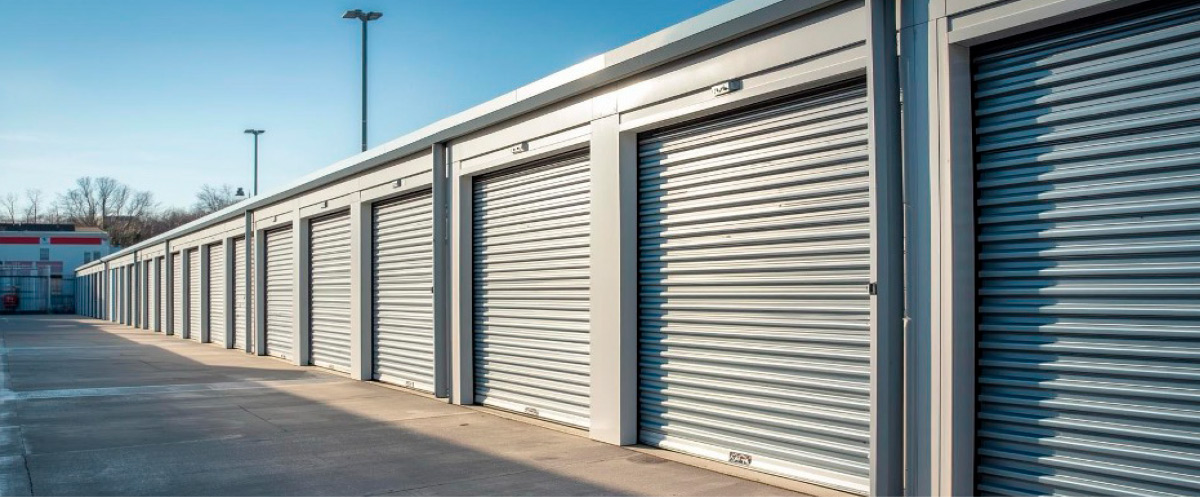
Unit Size And Configuration
Contractor-focused units often differ from consumer storage. Operators may need to consider:
- units ranging from 12-by-30 to 20-by-50,
- high ceilings for tall shelving or inventory,
- oversized roll-up doors,
- pull-through units with doors on both ends, and
- electrical outlets or lighting.
Large turning radii and wide drive aisles are also crucial for accommodating trucks and trailers.
Security Requirements
Contractors store tools, materials, and vehicles worth thousands of dollars. As a result, they expect:
- robust lighting,
- gated access,
- surveillance cameras,
- keypad entry logs, and
- well-maintained fencing.
Stronger security provides peace of mind and often justifies higher rental rates.
Noise, Traffic, And Layout Considerations
Contractors typically start work earlier than residential customers. Facilities should evaluate whether early morning traffic could disrupt other renters or affect nearby homes.
Operators also need to consider parking flow, loading areas, and turning space. Poorly designed layouts can create bottlenecks or limit the types of vehicles that can access units.
Zoning And Compliance
Before marketing a unit as suitable for business use, operators must verify local zoning restrictions and occupancy rules. Some municipalities allow limited commercial activities, while others prohibit any commercial activity beyond storage. Understanding these regulations helps avoid miscommunication and ensures units are used appropriately.
Longer tenancy is one of the most significant benefits. Contractors rarely relocate once they establish a base of operations. Moving their equipment, materials, and inventory is inconvenient, so they tend to remain multi-year tenants.
Higher rental rates are another advantage. Larger units generate more revenue, and add-ons like power access, oversized entries, or enhanced security allow operators to create premium tiers.
Low turnover reduces marketing expenses and maintenance labor. Contractor-friendly units typically maintain steady occupancy and require fewer tenant interactions than smaller consumer units.
When facilities introduce power-enabled units or specialty configurations, operators often discover a new, loyal customer base willing to pay for features that standard renters do not require.
Small e-commerce brands often use large units as staging and fulfillment spaces for online orders. These businesses receive packages, prep shipments, and organize inventory in ways that mirror warehouse operations but with significantly lower overhead.
Many of these users value flexibility, privacy, and predictable costs. They want a space that is large enough to grow with their business, secure enough to store high-value equipment, and affordable enough to keep in the long term.
The rise of independent tradespeople is one factor. More workers are leaving corporate jobs to start service businesses in HVAC, electrical work, plumbing, landscaping, home remodeling, flooring, and mobile repair services. All of these require storage space.
E-commerce growth is another trend that shows no signs of slowing. Smaller online brands need storage and fulfillment space before they are large enough to justify traditional leasing.
There is also a noticeable increase in hybrid business models. Mobile detailers, pressure washing companies, small fabrication shops, and specialty service providers all use storage units as a combination of workspace, warehouse, and operations hub.
As consumer demand for fast, local service increases, contractors will continue relying on nearby, flexible spaces to streamline their workflows. Facilities that provide the right size units, strong security, and easy access are positioned to benefit the most from this upward trend.
Because businesses rely on uninterrupted access to their tools and materials, contractor renters are far less likely to move out during slow seasons or economic uncertainty. This produces a predictable, steady income for operators.

In many cases, operators find that their contractor units are among the most consistently occupied and profitable on the property.
Operators who invest in larger units, enhanced security, thoughtful layout design, and contractor-focused features will be well-positioned to attract long-term tenants and build more stable, diversified revenue streams.
Large contractor units are no longer a niche experiment. They have become a foundational element of modern facility design in many smaller communities, and the trend shows no signs of slowing down.
Andrew Bonnis is a content specialist at StorIQ, a digital marketing firm specializing in helping storage operators generate more move-ins. As a self-storage investor himself, with 84,000 square feet under management, he focuses on practical insights for owners and operators.