



urrently, public REITs (real estate investment trusts) such as CubeSmart, Extra Space Storage, and Public Storage are lowering asking rates for first month rent to entice people to store with them only to raise rates over time.
Self-storage is unique in that it has month-to-month contracts on space. However, this can be tricky because public REITs may let you rent your first month for $50 but then charge you $150 the second month; not to mention, moving out of a storage unit can be a logistical nightmare, so more than 50 percent of customers tend to stay for at least 12 months.
Lowering asking rates keeps public REITs at high occupancy. They then make their revenue back from these loss-leaders through raising the rates of their long-term existing tenants. Anyone who leaves due to the rate increases is quickly backfilled through attractive asking rates. This keeps their same-store metrics looking good, which is appealing to investors and stockholders. However, this pricing shift has been tough for smaller operators to keep up with as they may not have the bank roll to follow a long-term pricing strategy like this.
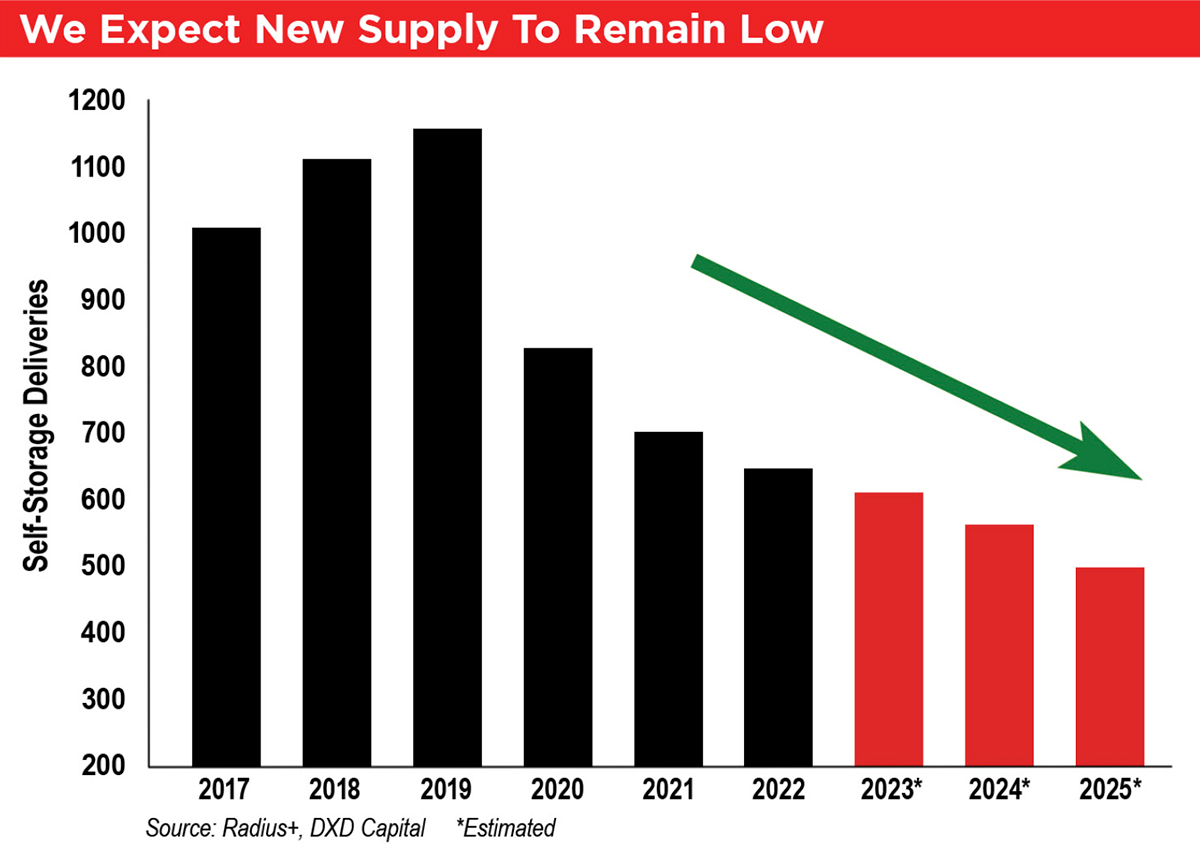
Why is this important? Since the web rates are more like teaser rates that change aggressively after three or six months, the online rents are much less representative of what can be achieved when building a new store and starting to lease it out.
Here is an example of a facility DXD Capital is starting construction on shortly.
Web rates are closer to $200 for a 10-by-10, while the actual in-place rates that are being achieved are closer to $400. This is a mature REIT facility, so there have been many years of rental rate increases on existing tenants, but it illustrates the point: Facilities are achieving higher rates (in the short and long term) that are higher than the web rates would indicate.
Self-storage development tends to attract merchant developers that used to build office or retail, but it is becoming clear that to be a great self-storage developer you need to live in this space to catch nuanced strategic changes made by the REITs.