



ohn Gilliland, like many people in the self-storage industry, comes from a completely different background. He was born into a family of farmers and intended to follow in their footsteps, as he recalls, graduating with a degree in dairy sciences from California Polytechnic State University. “I went to school for dairy science. However, some tax law changes happened with the federal government in 1986, my senior year of college, that made it really tough to make a living in the dairy business. So, I decided to get into the commercial real estate brokerage business and started selling commercial real estate in Southern California in the late 80s.”
Gilliland moved back to his homestead in Pennsylvania in 1992 and ran a few brokerage firms until 1997. “In 1997, I listed two self-storage facilities in Hanover, Pa., and sold them to the Amsdell family, who was one of the largest self-storage operators in the country at the time under the brand ‘U-Store-It,’ the predecessor firm for CubeSmart, one of our public companies now,” he explains. “They said they loved self-storage and that’s what they were looking to buy. And that they would love to buy every other one I could find.”
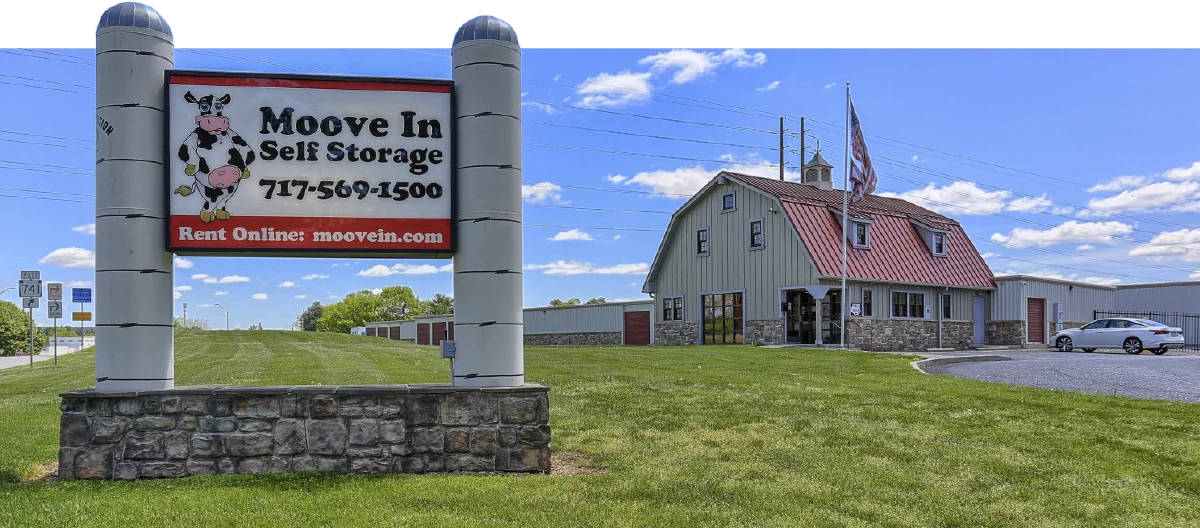
Not too long after, Gilliland, alongside his dad, decided to invest and build a self-storage facility. “My father and I bought a piece of land, and we built our first facility in the fall of 1998, near Penn State University in Pennsylvania.”
Moove In Self Storage now has over 70 locations throughout the Northeast, Mid-Atlantic, and Midwest regions. “I built almost all of the facilities that I owned up until about 2015. In 2015 is when we really started buying existing facilities,” he states. “Now we build about four to five properties per year from scratch; the rest of the properties are acquired existing facilities.”
Another important factor that will drive up prices is low delinquency rates. “We [also] do a really good job making sure all the tenants are paying, and we don’t have many delinquent tenants. It’s always important.”

Gilliland goes on to say, “A lot of times people will put rent increases in, but they’re very small ones, maybe only $5 a month or something like that. And that’s not really keeping up with the market. We’re just buying a facility next week in New York, and the property is currently achieving $18 per square foot in rents, but the market for that three- to five-mile market around there is actually $30 a square foot. So really, the people we’re buying it from are leaving a lot of value on the table by simply not raising the rent for existing tenants to $30. The property would be worth another million and a half dollars in value had they done that.”

“The most important thing is to make sure there’s excess demand in the marketplace to support an additional self-storage facility. There’s lots of construction happening across the United States these days, and we all worry about getting into an overbuilt market where we build too much self-storage and can’t fill it. Or we can fill up, but we have to fill it at rents far below what we were projecting when we first built the property.”
Gilliland also broke down a timeline for those considering building from scratch. “If you want to build a self-storage facility today, it’ll take a year to a year and a half to get all the approvals. Then it takes another six to nine months to actually build the facility, plus three to four years to fill it up. So, you know, all of a sudden, you’re looking at a six- or seven-year time frame until you can get the property to a point where you can sell it, and that’s a big commitment. Most people don’t understand the risk that developers take to build these things, but to invest $15 million and take seven years before you see a return, that’s a big risk.”