



arketing is key in the world of self-storage. One arm of sharing awareness of your business and capturing the market is offering a referral program to welcome in new customers.
“Referral programs are crucial, not just ‘nice to have,’ especially for independent operators,” says Lou Barnholdt, vice president of sales and development at Universal Storage Group (USG). “Self-storage is one of the most hyper-local, relationship-driven businesses you can operate. You’re not just competing on price or amenities, you’re competing on trust and convenience.”
The message shared not only takes a higher importance coming from a personal connection, but it can inform owner-operators and investors about how things are going within a facility.
“A referral program is also important because it’s part of the facility’s overall image and message,” says Jim DiNardo, a self-storage consultant with 33 years of experience. “Every operator should want existing customers to be so happy that they would recommend the facility to someone else and back that up by encouraging them to do so.”
“I would say the No. 1 thing to be successful at any sort of referral campaign is to have a good customer support team,” says Liisi Fall, head of marketing for White Label Storage. “If your customers are happy, they will refer you business. If you are delivering a bad user experience or customer experience and trying to push a referral program, it’s not going to be very successful.”
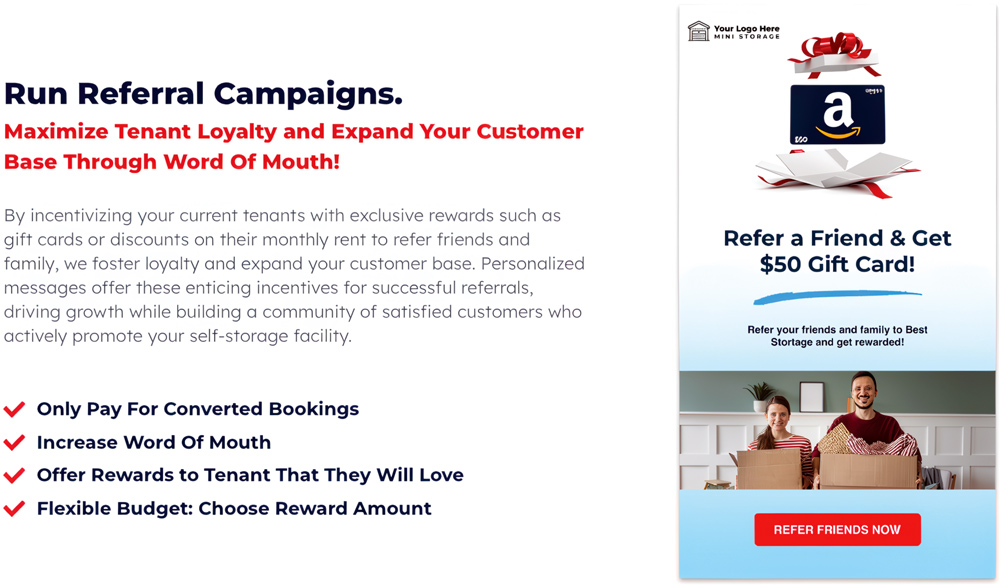
Amazon gift cards, free months of rent, cash or checks, regardless of the incentive offered, effective recommendations largely evolve from a positive experience.
“Customers trust referrals from friends, real estate agents, apartment managers, movers, or even your competitor’s employees far more than paid ads,” says Barnholdt. “Happy tenants refer. The beauty is that referrals tend to convert at a higher rate and usually become better long-term tenants because they were sent by someone who gave them confidence.”
The best referral program in the world won’t work if your facility is dirty, the staff is inattentive, or online reviews are poor.
“We work with a review management platform company called Storage Reach to help us get positive reviews more often and frequently,” says Fall. “A great tactic for our call center and support agents is to identify who’s really happy with us and encourage referral programs through those customers more.”
“The internet is where most people look for storage and operators get more bang for their buck, so REITs (real estate investment trusts) and bigger operators generally only focus on the internet and digital marketing,” says DiNardo. “Large operators have the budget to dominate markets, while smaller operators sometimes have to find other ways to skin the cat and gain an advantage. This could mean mailers. Just recently, I helped an operator who was already doing mailings to the local community and it was working quite well.”
Taking advantage of multiple avenues to share recommendations helps investors efficiently focus their resources.
“In smaller towns and suburban markets, direct mail, coupon packs, and even bulletin boards at the diner still pull leads,” says Barnholdt. “In larger or younger markets, it helps to leverage digital tools like QR codes, textable referral links, and social media sharing. What’s really changed is word-of-mouth amplification through online reviews and community platforms [like Google, Facebook, Nextdoor].”
Adding a focus on these platforms can allow your referral program to have both offline and online legs, helping you reach more people.
The best way to capture demand is being in front of those looking for storage.
“I would categorize direct mail as more of a ‘create demand’ effort,” says Fall. “It’s a great option if you are a brand-new facility in an area without much competition to get the brand out there. Otherwise, I wouldn’t say it’s the most effective marketing tactic; it really depends on your market.”
Make the most of a small community by honing in on what matters to residents.
“We tied one referral program into the town’s pet shelter,” says Barnholdt. “We offered a $50 reward to the referring person and a donation to the shelter for every referral that rented. It blew up! The facility was featured in the local newspaper and saw a surge in referrals and rentals during what is usually a slow season.”
Harnessing this kind of community spirit leads to ongoing goodwill and improved local relations.
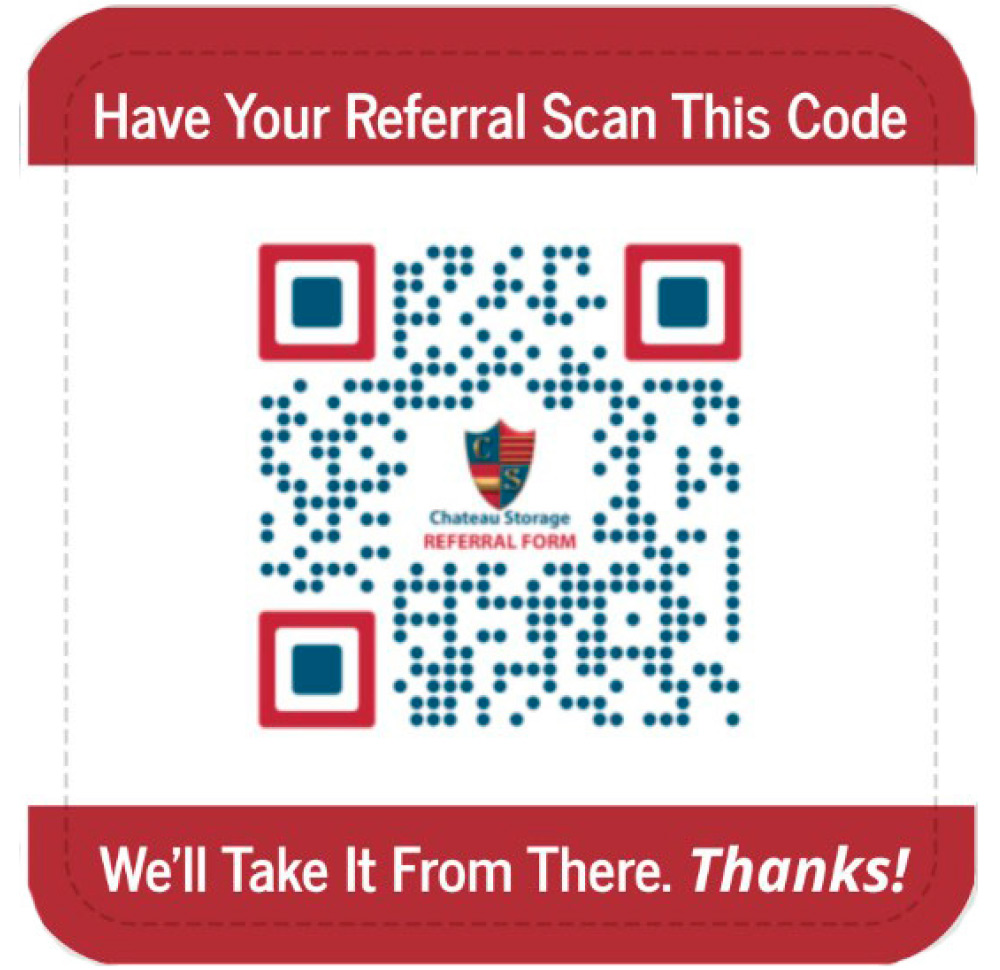
“If it’s not easy to refer someone, it won’t happen,” says Barnholdt. “Create referral cards, QR codes, or simple digital forms. Don’t just slap a flyer in the office. Use your website, social media, newsletters, signage at the gate and office, and employee email signatures. Treat the referral program like it’s a product launch and consider limited-time boosts like ‘double referral bonus months’ to excite people.”
Connect The Dots.
Make It Visible.
Create Contests For Employees.
- Quarterly or seasonal contests for the most referral program participation (tracked by the number of leads generated, marketing efforts, or partnerships built).
- Include gift cards, extra PTO, recognition at meetings, or fun local experiences.
- Recognize employees who bring in creative referral sources or build lasting relationships with key partners (apartment managers, realtors, movers, etc.).
Make It A Game.
- Number of referral cards/flyers distributed,
- Number of new local contacts established (apartment complexes, real estate offices, moving companies), and
- Number of leads sourced via grassroots efforts.
People are competitive by nature, so make it fun and visible and participation will climb.
Give Them The Tools.
- Referral cards,
- Business-to-business flyers,
- Scripts or simple conversation starters, and
- QR codes or links they can text or email to potential referral sources.
Role-play how to pitch the program to movers, apartment managers, real estate agents, and local influencers.

The Phantom Referral Trick Still Applies.
“Hey John, thanks again for that referral you sent us! We’ll have your check ready—who should I make it out to, and when can you stop by to pick it up?”
This creates a sense of expectation and urgency with people who may have been sitting on potential referrals. It also proves that you pay rewards. Try it, and watch those referrals start rolling in!