


veryone in the industry is aware that divorce is one of the many demand drivers for self-storage. Divorce generates demand while couples resituate themselves into new residences and sort through their belongings. Temporary (and oftentimes smaller) living arrangements may require individuals to place their excess belongings into storage for a few months or longer. Although divorce is typically associated with loss, sometimes one man’s misfortune is another man’s (or company’s) gain. As a matter of fact, it was divorce that altered the course of business for Emeryville, Calif.-based Devon Self Storage Holdings LLC (formerly known as Devon Capital Management LLC).
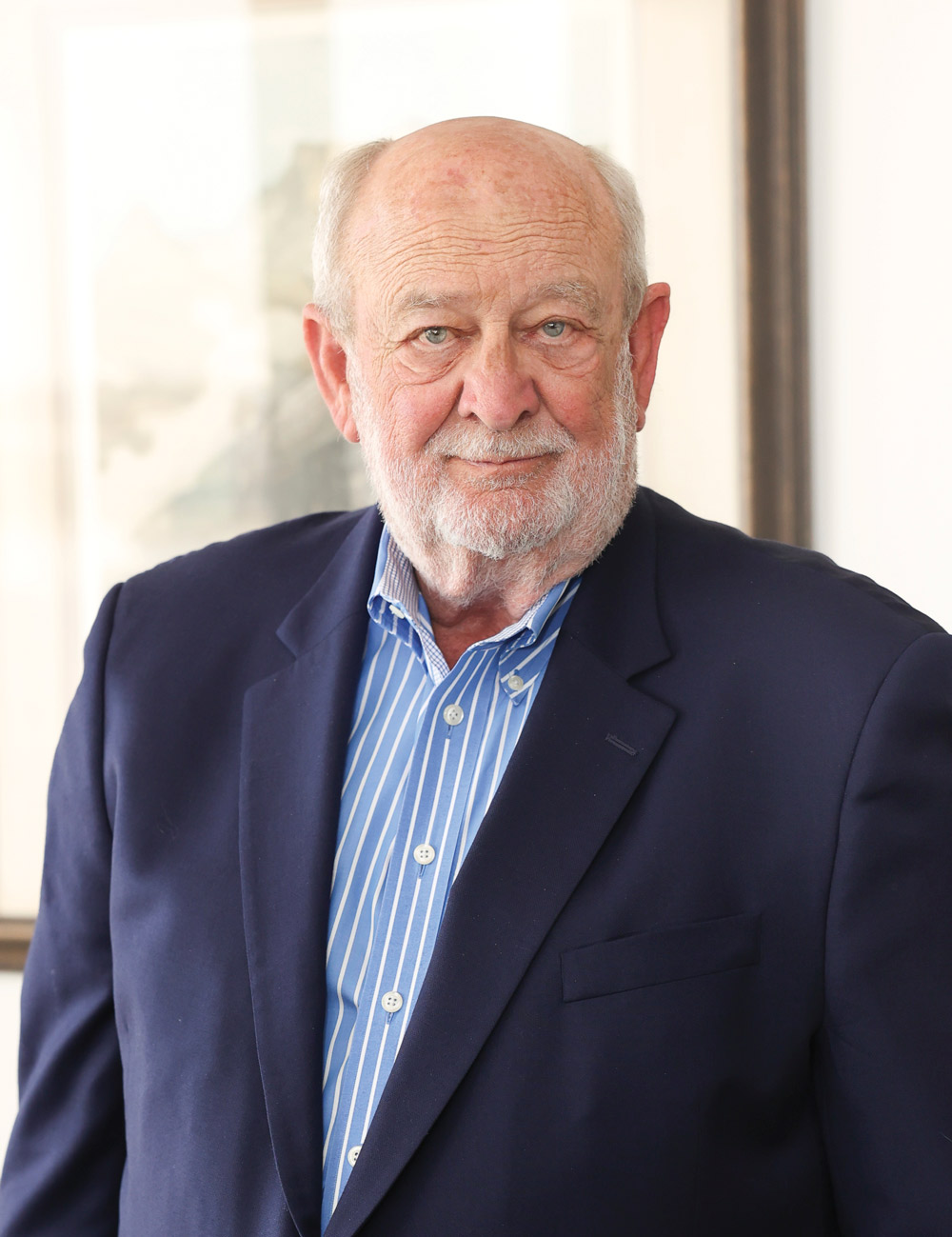
Devon, which Kenneth E. Nitzberg, chairman and CEO, founded in 1988, was originally focused on office, retail, and multifamily commercial real estate. It’s first foray into self-storage, however, was “by accident.”
As Nitzberg recalls, the year was 1993, and one of Devon’s real estate acquisition officers was in the throes of a divorce. He was “kicked out” of his former home and needed to store his possessions, but he couldn’t find a single storage unit to rent in the then small community of The Woodlands, Texas.
veryone in the industry is aware that divorce is one of the many demand drivers for self-storage. Divorce generates demand while couples resituate themselves into new residences and sort through their belongings. Temporary (and oftentimes smaller) living arrangements may require individuals to place their excess belongings into storage for a few months or longer. Although divorce is typically associated with loss, sometimes one man’s misfortune is another man’s (or company’s) gain. As a matter of fact, it was divorce that altered the course of business for Emeryville, Calif.-based Devon Self Storage Holdings LLC (formerly known as Devon Capital Management LLC).
Devon, which Kenneth E. Nitzberg, chairman and CEO, founded in 1988, was originally focused on office, retail, and multifamily commercial real estate. It’s first foray into self-storage, however, was “by accident.”
As Nitzberg recalls, the year was 1993, and one of Devon’s real estate acquisition officers was in the throes of a divorce. He was “kicked out” of his former home and needed to store his possessions, but he couldn’t find a single storage unit to rent in the then small community of The Woodlands, Texas.

An unfinished strip shopping center on a five-acre lot was on the market for $600,000 through the Resolution Trust Corporation, a quasi-governmental agency formed to relieve the mutual savings banks of their failed real estate loan. The center had 50,000 square feet of space and only four month-to-month retail tenants, including a nail salon, a hair salon, a light bulb store, and a cookie shop, but instead of going the retail route, the divorcé was instrumental in pushing Devon towards transforming it into a self-storage facility. Devon decided to take a risk. They purchased the building for $600,000, borrowed $1 million from Wells Fargo Bank to fund the conversion of the building into self-storage, and then flipped it 40 months later to what is today CubeSmart (formerly U-Store-It Trust) for $4 million.
“We did nothing but storage after that,” says Nitzberg. “We thought we had found the ‘holy grail’ of self-storage by discovering that we could purchase a vacant building at a very favorable price from a distressed owner as the building had failed in its financial objectives and then convert it into a state-of-the-art self-storage asset. Essentially, we were buying storage assets on a wholesale basis versus a retail cost basis.”


Then, in 1998, Goldman Sachs stepped up and acquired a 90 percent interest in Devon Self Storage. At the time of the sale, the company was operating 20 properties for three institutional investors and several smaller private investors. Through Goldman Sachs’ Whitehall Fund XI, $83 million was used to acquire 16 facilities over a three-year period, six of which were in Holland, France, and Germany; the other 10 assets were in the U.S.
Devon’s presence in those countries prompted Nitzberg to assist with the development of the Federation of European Self Storage Associations (FEDESSA), which presently represents 2,000 facilities or more than 70 percent of Europe’s self-storage sites. Various Devon employees were very instrumental in the formation of the FEDESSA, particularly in its formative years. He also served as chair of the Self Storage Association (SSA) in 2006 and was inducted into its Hall of Fame in 2015. Moreover, in 2023 Nitzberg was the third person to receive the Michael T. Scanlon award for his contributions to the SSA.
Although conversions had been Devon’s “main business,” Nitzberg mentions that the company did execute “some scrape and rebuilds,” as well as the acquisition of a number of existing self-storage facilities. Devon also managed more than $1 billion of real estate assets, including a portfolio with 20 self-storage properties from 2009 to 2011, on behalf of several CMBS special servicers. (A CMBS special servicer assumes servicing responsibility for defaulted CMBS loan or loans that are at risk of default.) Devon Self Storage ended up buying several of those properties and subsequently sold them a few years later, after filling them and bringing the respective NOIs to market levels, thus generating significant profits.
The Tax Cuts and Jobs Act’s (TCJA) creation of Qualified Opportunity Zones in 2017 further fueled Devon Self Storage’s preference for conversions. “The tax benefits are substantial,” Nitzberg says about investing in real estate within low-income communities that have been designated as distressed based on the 2010 Census data. Many of those communities have undergone significant economic improvements since the census was finalized. Investments in Opportunity Zones also spur economic growth and job creation. Plus, there’s an abundance of possibilities with 8,764 Opportunity Zones in the United States.
Throughout its 31-year history, Devon has owned, managed, or developed more than 350 self-storage facilities in 27 states and three European countries. What’s more, Devon Self Storage has been present on Messenger’s annual Top Operators list numerous times.
Inland Private Capital Corporation President and CEO Keith Lampi was hopeful that Devon might have interest in partnering on Inland’s strategic entry into the sector, but “I told him no,” says Nitzberg. “We had just bought a 22-property portfolio from CubeSmart and didn’t have the bandwidth. Inland then did about 84 deals with others.”
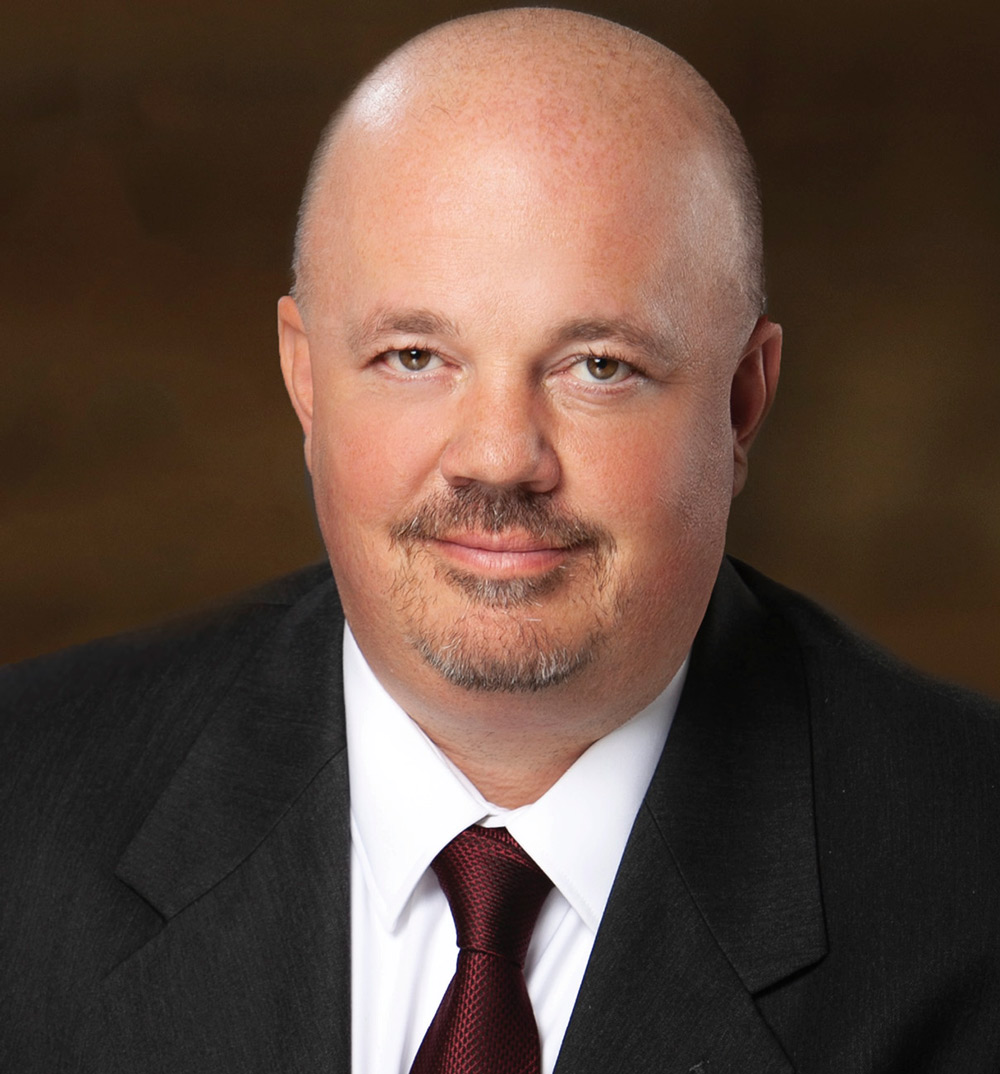
According to Matthew Tice, senior vice president at Inland Real Estate Acquisitions, LLC and co-CEO and president of Devon, the two firms eventually reconnected through Inland’s acquisition of the very same 22-propertry portfolio that led Nitzberg to turn Inland down in the first place.
In 2020, the two companies formed a development strategic relationship aimed singularly at acquiring conversion candidates in Opportunity Zones. Inland raised $100 million through a private fund and charged Devon with sourcing, acquiring, and converting those assets into self-storage assets. When that fund’s capital was fully raised, Inland exercised its “green shoe” to increase the offering to $150 million, which was completed September 2021. Inland still had an appetite for additional Opportunity Zone assets, so a new fund was formed, and it raised an additional $100 million around the same storage re-development strategy.
With the $250 million of new capital, Inland, through its relationship with Devon, acquired 15 assets. Eight have been converted and opened for leasing; seven are still under construction, but all of them should be completed in 2024 and open for leasing. These two programs provided a significant boost in Inland’s growth trajectory in the self-storage sector.
Since entering the self-storage sector in 2016, Inland has amassed a $1.7 billion self-storage portfolio of both stabilized assets and development projects across 30 states. As of February, they had a total of 98 operating facilities and 13 under construction with Devon and 87 assets with other property management companies.


“For over 30 years Devon has been doing what we do best: acquiring, redeveloping, and operating high-quality self-storage properties,” Nitzberg said in the press release that heralded the news. “I am thrilled to continue that work with Tony [Chereso, Inland’s Chief Executive Officer], Matt [Tice], Keith [Lampi], and the entire Inland team as well as Devon’s more than 270 employees dedicated to delivering best-in-class self-storage properties and services.”
According to Tice, the acquisition allows Inland to leverage Devon’s existing senior management team, which has been together for more than two decades, while at the same time providing additional capital and infrastructure necessary to further drive the going-forward platform’s innovation and expansion plans including growth of Devon’s third-party management and development platform.
“It was the right time to form an integrated partnership,” says Tice. “Inland has internal entities and its own staff to augment Devon.”
“Devon has been an integral strategic partner as Inland has expanded our presence in the self-storage sector,” Lampi, said in the press release. “As the sector continues to institutionalize, creating operational efficiencies for the benefit of our investors through scale has never been more important. I am looking forward to the synergies created by this transaction.”
Those synergies will enable Devon to eventually take over the management of Inland’s other 87 self-storage assets. The facilities currently being managed by other companies will “all transfer to Devon by the end of 2025,” says Tice.
“Inland bought the people, presence, systems, and the reputation of Devon,” says Nitzberg. Also included in the deal is its proprietary acquisition and market analysis software specific to the self-storage industry.
Despite the change in ownership, Devon Self Storage will retain its name to avoid costly signage changes. “It creates liquidity and ensures the company will continue after I’m gone,” Nitzberg says, pointing out that the capital injection will also enable Devon to stay on top of the tech changes and better compete with the large, well-capitalized REITs.




Tice shares those sentiments, saying that Inland plans to add approximately 50 self-storage properties to its portfolio each year. “We’ll continue to purchase facilities, do redevelopment with Devon, and expand its third-party management platform,” he says. “We’re well-positioned to grow that third-party portfolio.”
Tice goes on to say that the goal for its third-party management clients will be to grow them and make them as profitable as possible while managing them the same way they manage their own facilities.
About these exponential growth strategies, Nitzberg quips, “Don’t stand in front of the elevator or we’ll run you over!”
Lastly, don’t expect to see a retirement announcement from him anytime soon. “I would die of boredom,” Nitzberg says, adding that he did retire once, back in 1987 after selling his previous company, Equitec, which he had grown to $4.5 billion in assets under management for 250,000 individual investors and 100 institutional clients. “I’ll quit when it isn’t fun anymore!