


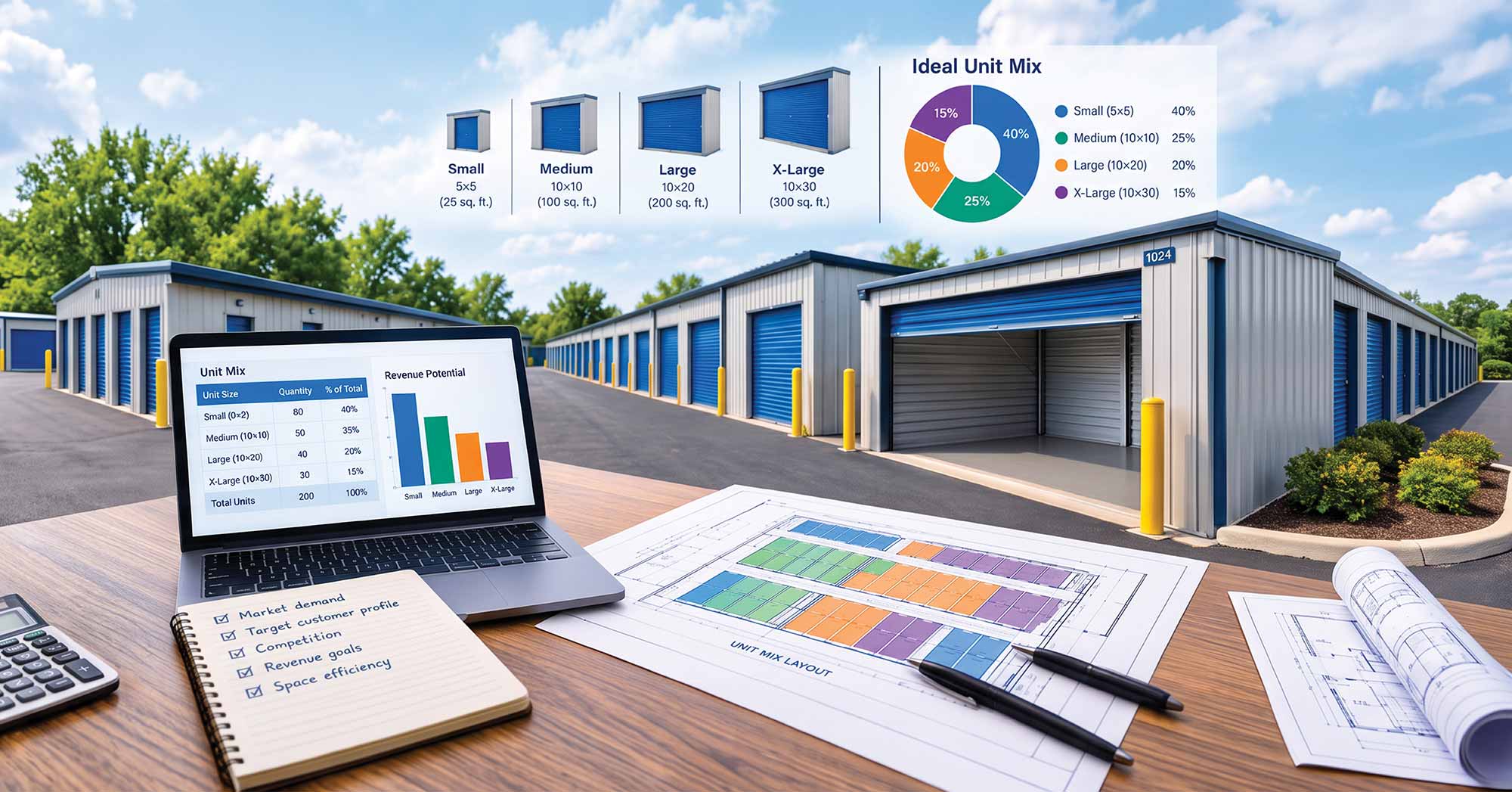
f your property has the wrong mix of storage units, you’re leaving money on the table. Too many large units can sit empty for months. Too few smaller units can cause you to miss steady demand from renters who want affordable space. When your unit mix doesn’t match your market, profitability suffers.
StorSuite’s strong third-party management team can make a real difference. They can help you build a smarter unit mix strategy based on local demand, pricing opportunities, and long-term revenue goals.
Instead of guessing what renters want, StorSuite uses data, expert insight, and forecasting to shape a property that performs better. The right unit mix doesn’t just fill units. It supports higher occupancy, stronger growth, and more dependable cash flow.
When your mix isn’t working, you can run into the following problems:
- High vacancies in unit sizes with low demand,
- Missed rentals because your most requested sizes are always full,
- Lower average revenue per square foot,
- Increased discounting to fill slow-moving spaces, and
- Reduced flexibility as market demand changes.
A profitable unit mix helps you match supply to demand. That creates a better customer experience while improving revenue and operational efficiency.
- Market Study – A market study shows what renters in your area actually need. It looks at competition nearby, population trends, household density, new development, and local business activity. It identifies which unit sizes are most common and where supply gaps exist. This is critical because your property should reflect your local market, not a generic self-storage model.
- Expert Advice – Data is important, but experience matters too. An experienced third-party management team can interpret market conditions, identify revenue opportunities, and spot operational risks. For example, an expert may see that a market appears oversupplied in larger units but still has room for premium climate-controlled small units. That kind of insight can help design a profitable strategy.
- Forecasting – A good unit mix plan should not only fit today’s demand but should also account for future changes. Forecasting helps you prepare for shifts in renter behavior and expectations, seasonal demand, economic conditions, and new competition. With the right forecast, you can make the right decisions before it’s too late.
Consider the following trends when developing unit mix:
- Strong demand for smaller, lower-cost units;
- Continued interest in climate-controlled storage;
- Rising value of vehicle, RV, and boat storage in the right markets;
- More customer focus on convenience and access; and
- Greater need for flexibility in how space is used and priced.
These trends are not the same in every location. That is why third-party management is so valuable. A management team can track your market, compare your performance against local demand, and recommend adjustments that make financial sense.
- Focus on revenue per square foot. Not all units generate the same return. In many markets, smaller units can produce more revenue per square foot than larger ones. A profitable strategy looks beyond occupancy alone and considers which spaces are actually driving income.
- Balance demand and availability. If your most popular units are always full, you are either able to raise prices without losing customers or you could have a supply problem. If other sizes remain vacant, you may need to rework pricing, marketing, or future conversion plans.
- Build in flexibility. Markets change. Your unit mix strategy should leave room to adapt. That could include converting underperforming spaces, repositioning unit types, or adjusting pricing strategies to guide demand toward the most profitable sizes.
- Support premium offerings. Climate-controlled units, covered parking, and specialized storage can increase revenue only when they align with local demand. The goal is not to haphazardly add features but to offer premium space in areas where renters are willing to pay more.
- Reviewing occupancy and move-in trends by unit type,
- Monitoring competitor pricing and product mix,
- Adjusting rates based on demand patterns,
- Identifying underperforming inventory,
- Recommending operational and layout changes, and
- Forecasting future risks and growth opportunities.
You’ll stay ahead of market shifts instead of falling behind and be able to make better decisions about pricing, capital improvements, and long-term asset performance.
StorSuite’s third-party management team helps self-storage owners create unit mix strategies built for profitability. If your property isn’t producing the returns it should, it’s time to take a closer look.
Contact StorSuite to learn how our third-party management team can help you design and manage a more profitable unit mix strategy.