



alk into a wet market in Bangkok, Shanghai, or Hanoi for the first time, and it’s complete chaos: the noise, the smell, bodies everywhere. Vendors shout prices. Produce is stacked in ways that defy logic. Nothing feels organized.
But then you spend time there. You start to see the patterns. There’s a language—spoken and unspoken—between vendor and customer. It’s body language—a handshake that means something, a nod that closes a deal. Wherever you turn, there’s something you’ve never experienced: a smell you can’t place, a texture you don’t recognize, a fruit you didn’t know existed. Underneath all that novelty, there’s consistency, rules, and logic. It all works. That’s organized chaos.
Asia’s self-storage market is exactly the same.
Most people talk about “Asia’s self-storage opportunity” as if it’s one thing—a single market, a single playbook. On the surface, it looks completely chaotic: eight markets, eight different rules, eight different customer bases, eight completely different economics. Nothing seems to fit together.
When you spend time in each market, you start to see it. There’s logic underneath. There are patterns and consistencies in how customers behave, how pricing works, and how occupancy stabilizes, but there are surprises everywhere you turn: a market where rents are USD 0.11 per square foot per month (USD 1.2 per square meter per month), another where they’re USD 8.7 per square foot per month (USD 93.6 per square meter per month). Unit sizes range from 10 square feet to 100 square feet and occupancy rates range from 63 percent to 93 percent.
The chaos is real, but it’s organized. Understanding that difference is everything.
What follows is a market-by-market breakdown—not a one-size-fits-all playbook but a guide to understanding the organized chaos underneath.
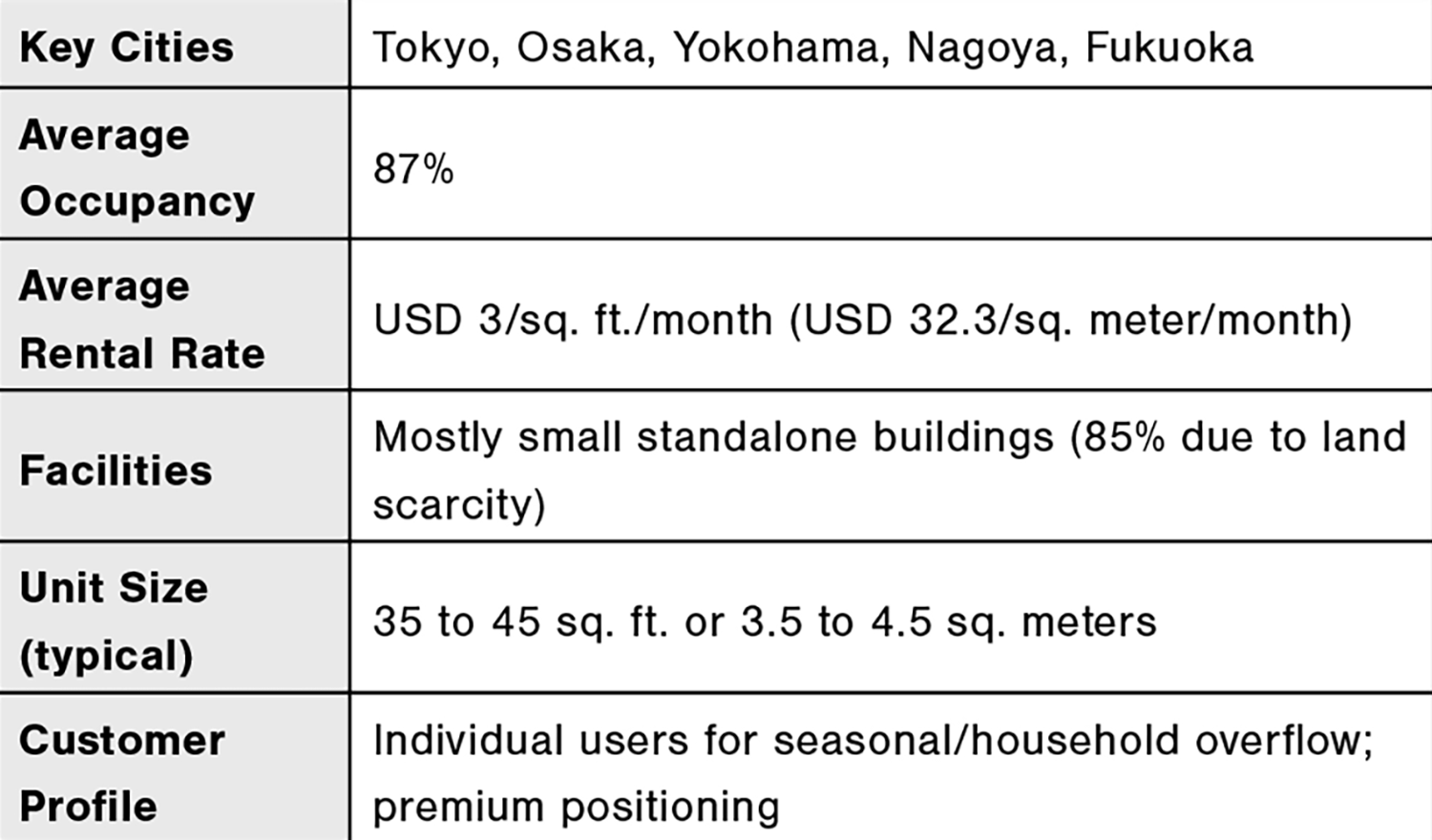
The unit economics are tighter than you’d expect. Small unit sizes (35 to 45 square feet) mean you’re playing a volume game, not a yield game. Climate control and indoor facilities are table stakes, not differentiators. Your customer is someone storing seasonal goods or household overflow, not a business looking for logistics space.
One key insight is that 90 percent of storage customers live within walking distance of their facility. In Japan, storage is not something you drive to—it is something you walk to. It functions as an extra room, an extension of the home. This is fundamentally different from most Western markets, where customers think nothing of a 20-minute drive to a suburban facility.
Key Recommendation: Build a local-language-first website (Japanese), then English. Partner with established operators or financial institutions. Solo foreign entry is difficult. Focus on digital integration, yield management, and portfolio consolidation.
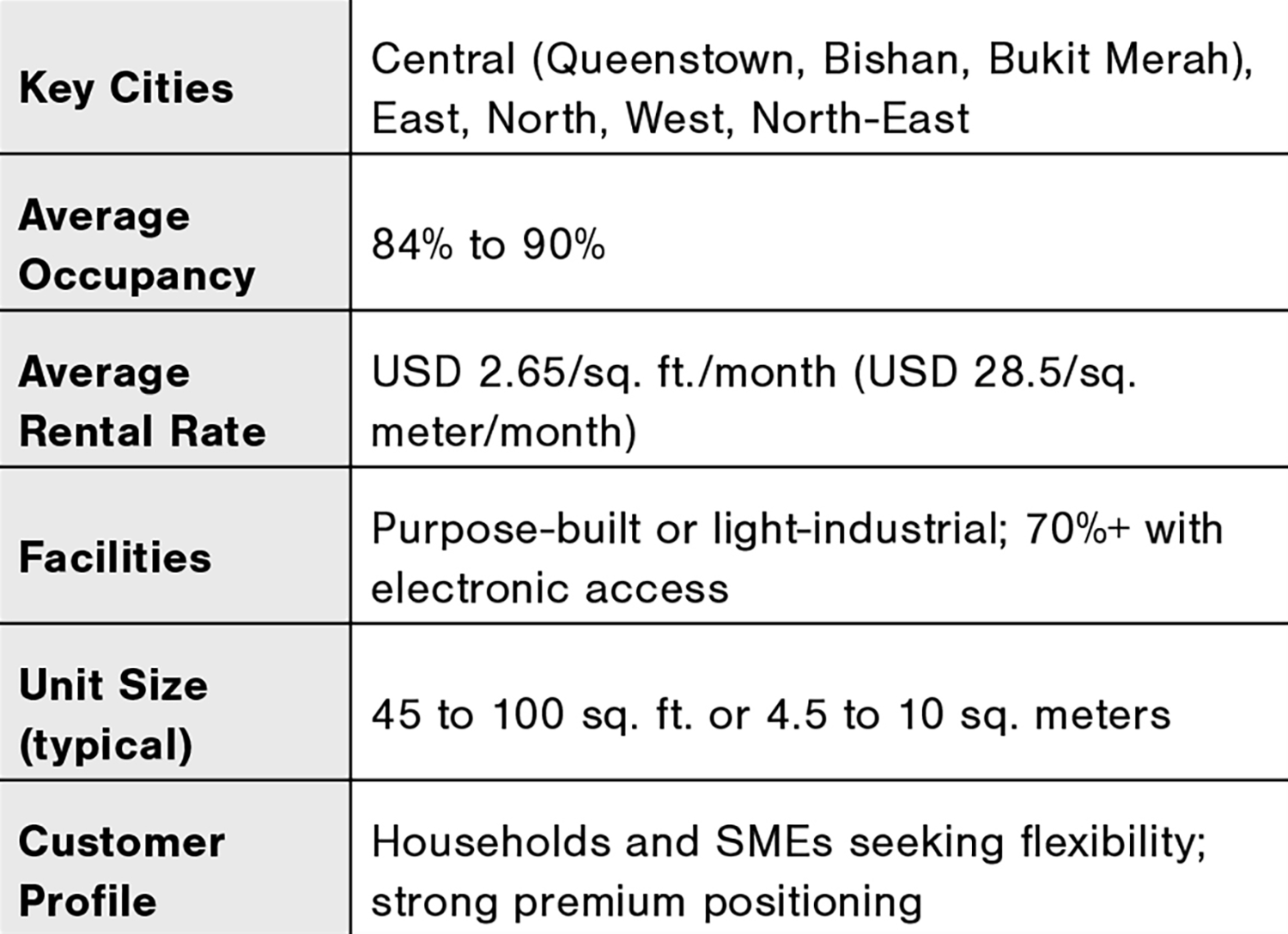
What makes Singapore different from Japan isn’t maturity—it’s diversity within maturity. Unit sizes are bigger (45 to 100 square feet). Customers include both households and SMEs. Digital access and technology enablement are table stakes, not emerging trends. The market rewards operational excellence and service differentiation, not price competition.
Central areas command premiums (SGD 7 to 9 per square foot or SGD 75 to 97 per square meter per month) because land scarcity is even more brutal than Japan. Eastern corridors stay affordable because they serve long-term residential tenants. It’s a tiered market, not a monolithic one, but the tiers follow clean logic.
Singapore shows you what happens when a small, dense market reaches full institutional maturity: no wild swings, no surprises, just steady, disciplined execution.
Key Recommendation: Build an English-first website. Emphasize digital-first experience and AI-driven pricing. The market rewards operational excellence and customer service. Compete on technology and service quality, not price.
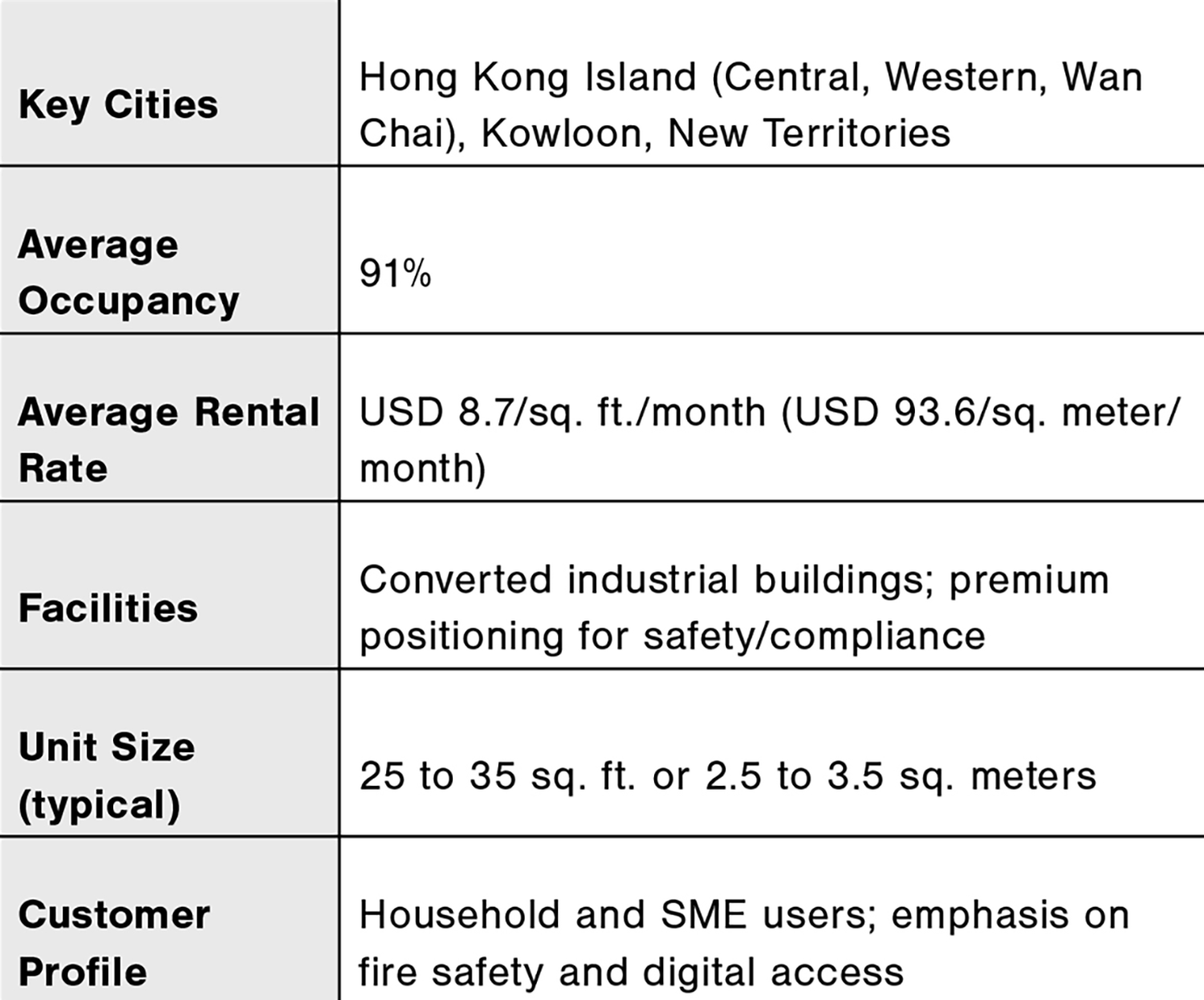
Density and scarcity are the reasons. The entire city is vertical, and every inch of ground is fighting for dollars. Unit sizes are tiny (25 to 35 square feet) because there’s literally nowhere else to put them. Your customer isn’t looking for value—they’re looking for space because they have nowhere else to go.
Regulatory tightness adds another layer. Fire safety and licensing compliance aren’t nice-to-haves; they’re existential. New territories offer cheaper units (HKD 50 to 60 per square foot or HKD 540 to 650 per square meter per month) because they’re further out, but even “affordable” Hong Kong storage is premium pricing by any other market’s standard.
Hong Kong shows you that maturity doesn’t mean stability. Scarcity can drive rents into another stratosphere entirely. And when land is this constrained, the economics stop following normal rules.
Key Recommendation: Build a local-language-first website (Cantonese with traditional Chinese), then simplified Chinese, then English. Focus on premium branding and compliance certifications. The market is saturated, so compete on service quality and location precision, not price. Regulatory excellence is your moat.
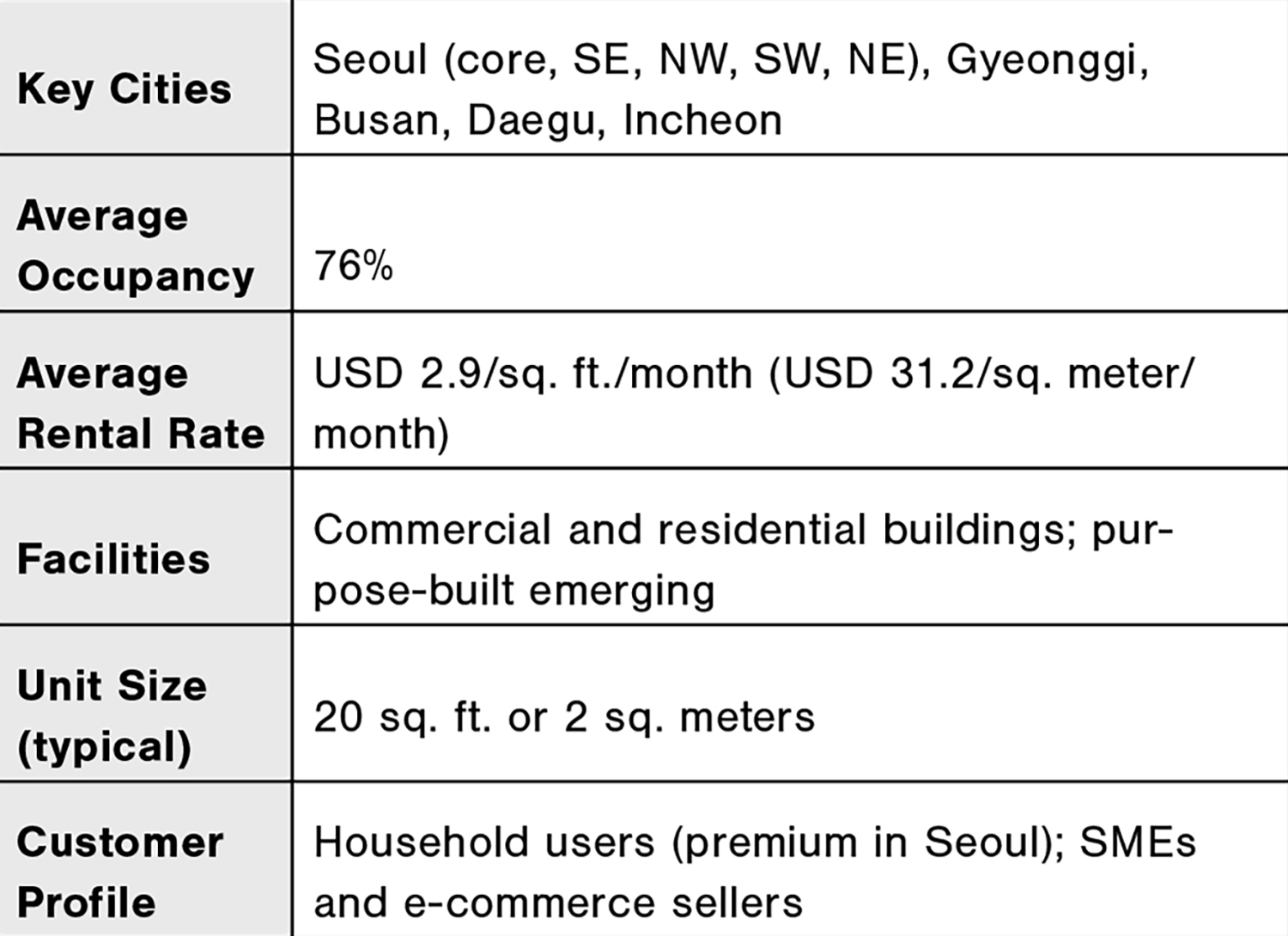
Unit sizes shrink to 10 to 30 square feet because space is at a premium but not as constrictive as Hong Kong. Seoul’s core districts demand premium rates; secondary hubs are more affordable. The market is stratified, and your position in the hierarchy matters enormously.
But here’s the crucial difference: Technology is the differentiator. Opt for AI-assisted pricing, automated booking systems, 24-hour digital access, and mobile-first platforms that let renters manage their units from their phones. In Japan and Singapore, technology is table stakes. In South Korea, technology is competitive advantage. That’s a fundamental shift.
Key Recommendation: Build a Korean-language-first website, then English. Tech stack is critical. Implement AI-assisted pricing, automated booking, and 24-hour access. The market rewards digital integration and operational efficiency. Operators who can’t match tech sophistication will lose share.
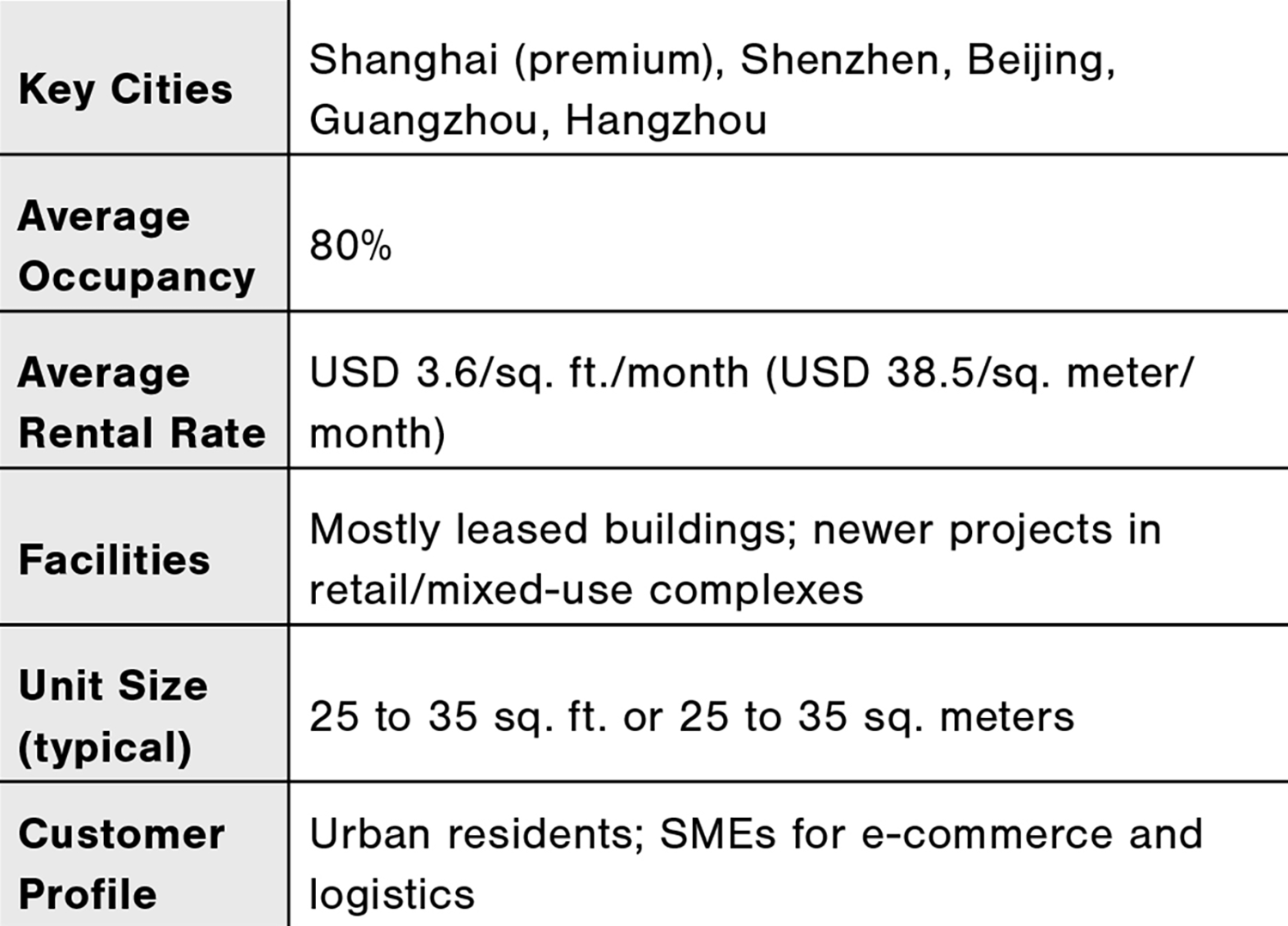
Most facilities operate through long-term leases in industrial buildings or increasingly within retail and mixed-use complexes, seeking visibility and customer accessibility. The sector is still fragmented—no single operator dominates—which means there’s room for consolidation and innovation. But there’s also room for disaster if you pick the wrong city or the wrong landlord.
China shows you what happens when a massive market is still figuring itself out. Occupancy is recovering and rents are stabilizing, but there are no guarantees. Regulatory risk exists. Supply can flood in overnight, but so can growth. It’s not for the faint of heart.
Key Recommendation: Build a Chinese-language-first website (Mandarin), then English. WeChat integration, Alipay/WeChat Pay, and mobile-first booking are essential; this is non-negotiable. Differentiate on digital transformation and cost efficiency. Local partnerships and regulatory relationships matter enormously.
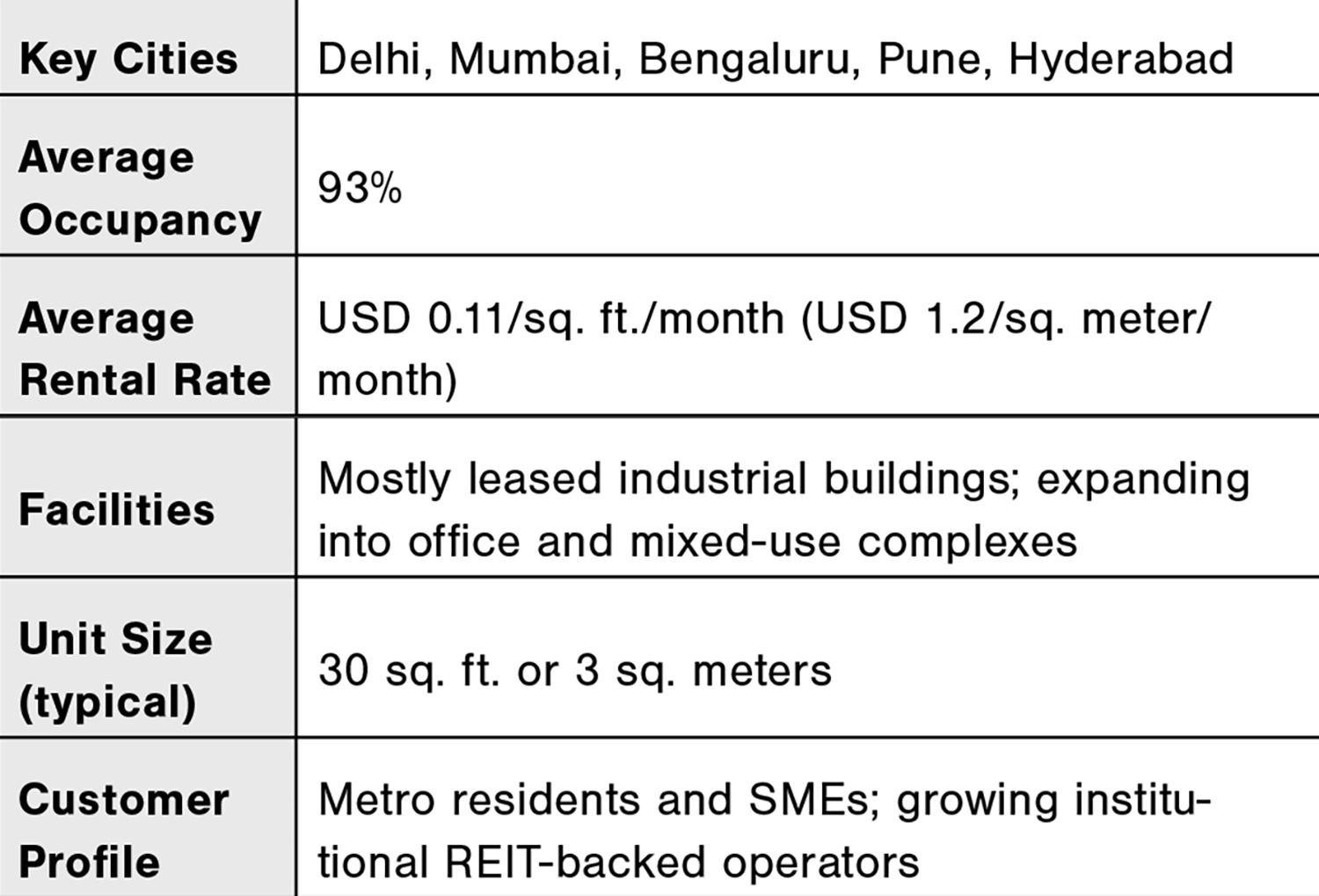
A basic 1-meter-by-1-meter-by-1-meter unit in Mumbai or Delhi costs less than USD 1.20 per month. That’s not a typo. For that price point, the customer base isn’t the affluent household—it’s small business owners, e-commerce sellers, and SMEs managing working capital with razor-thin margins.
The crucial difference: India’s market is being built by REIT-backed operators and institutional players who understand that professionalization drives adoption. It’s not organic customer discovery—it’s directed capital building a market from the top down. And the volumes required to make USD 1.20 unit economics work demand scale that only institutional capital can provide.
India shows you what happens when institutional capital meets an emerging market with minimal existing supply. High occupancy doesn’t mean maturity—it means opportunity and risk colliding at extraordinary speed.
Key Recommendation: Build an English-first website with regional language support (Hindi, Tamil, Telugu). REIT partnerships and institutional relationships are non-negotiable. Focus on scalable operations and asset optimization. The market is consolidating fast—be professional or get crowded out.
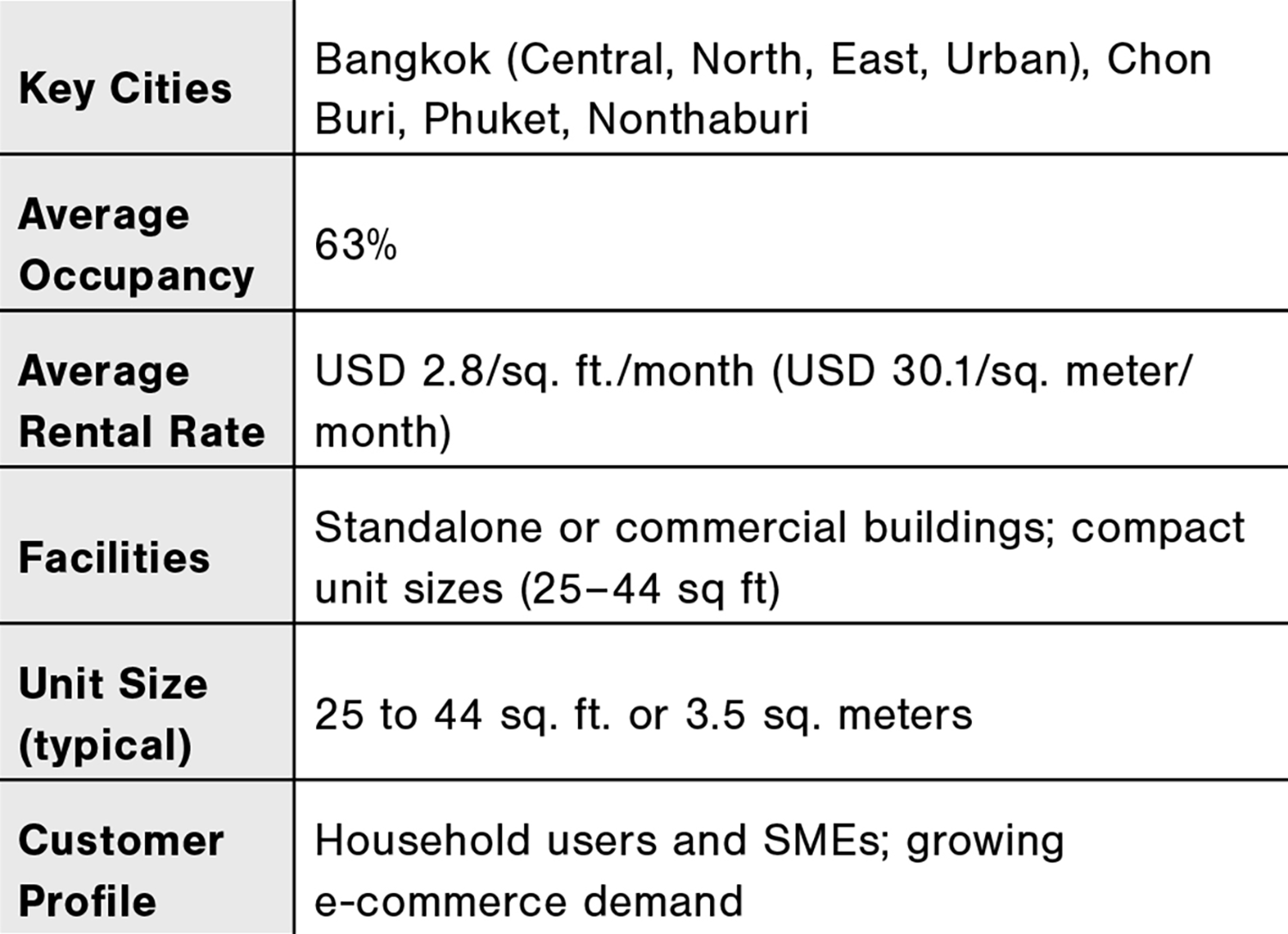
Bangkok’s central areas command premiums because density is high and residential space is tight. Eastern areas remain cost-competitive because they serve longer-term tenants and household users looking for affordability. The market is bifurcating, but the split is clean and predictable.
What matters here is digital-first marketing and online leasing, mobile payment integration, and regional-language customer support. The Thai market isn’t looking for premium positioning—they’re looking for access and convenience. If you can make it easy to rent online, easy to pay via phone, and easy to access 24/7, you win.
Thailand shows you what the next growth phase looks like. It’s not yet saturated, not yet hyper-competitive, but it’s moving in that direction. Entry now gets you first-mover advantage; entry later puts you fighting for scraps.
Key Recommendation: Build a Thai-language-first website, then English. Mobile payment integration and regional-language customer support are crucial. Be early on digital marketing and online leasing shifts. The market is moving toward digital-first operations—lead that transition. During typhoon/monsoon season, educate customers about stacking goods above ground level and consider restricting ground-floor unit rentals during peak rainfall months.
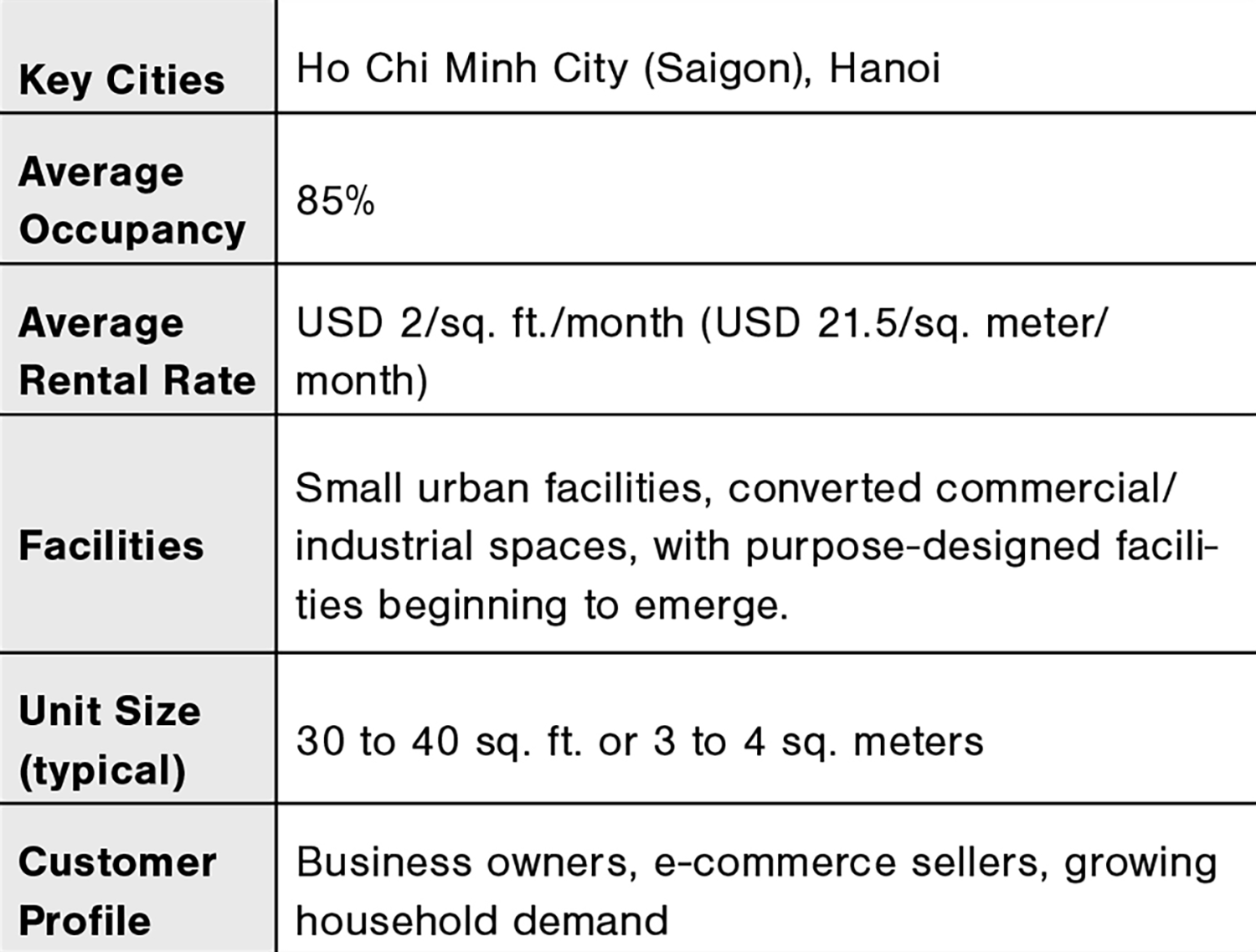
Occupancy at 85 percent is remarkable for an emerging market. But rents are USD 2 per square foot per month (USD 21.5 per square meter per month)—cheaper than most developed Asian markets, but significantly more expensive than India. Vietnam’s demand is unusually mixed. SMEs, e-commerce sellers, and small businesses are important customers, but household demand is already meaningful, particularly around moving, renovation, relocation, and temporary space constraints.
The market is app-first and mobile-first by necessity. Cash payments are still common, but digital adoption is accelerating. Flexible rental terms are important because customers need this flexibility.
Key Recommendation: Building a Vietnamese mobile-first site with a focus on Zalo, Vietnam’s No. 1 messaging app, phone nr, website chat, QR payments, and a simple online reservation is a good place to start. Compete on trust, convenience, and flexibility. Keep in mind that the market is still discovering the category of self-storage. Typhoon and monsoon seasons are operational realities, so invest in drainage, waterproofing, sump pumps, and elevated entry points before your first flood.
The operators who win aren’t the ones who build a Japan playbook and try to export it to Vietnam, Thailand, or India. They’re the ones who slow down, spend time in each market, understand its language—both literal and economic—and build something that fits. They’re the ones who see the chaos and recognize it for what it is: order underneath.
That’s the only playbook that works in Asia. It’s not one strategy but eight strategies, eight websites, and eight approaches to your customer, your pricing, your technology, your brand.
Welcome to organized chaos. Now go build something that works inside it.