



s self-storage owners and operators look toward 2027, the challenge is familiar: maximizing asset value while controlling expenses. Construction costs remain elevated, labor shortages continue to impact project timelines, and customers still expect facilities to look clean, modern, and secure.
The good news is that improving an aging facility does not always require a major capital investment. In fact, one of the most cost-effective improvements available today is often hiding in plain sight: replacing old, worn, and failing roll-up doors.
For many operators, door replacement offers an opportunity to dramatically improve curb appeal, enhance customer satisfaction, reduce maintenance costs, and extend the life of existing facilities at a fraction of the cost of major renovations.
As facilities enter another year of heightened competition, smart maintenance decisions may deliver a better return on investment than expensive expansions.
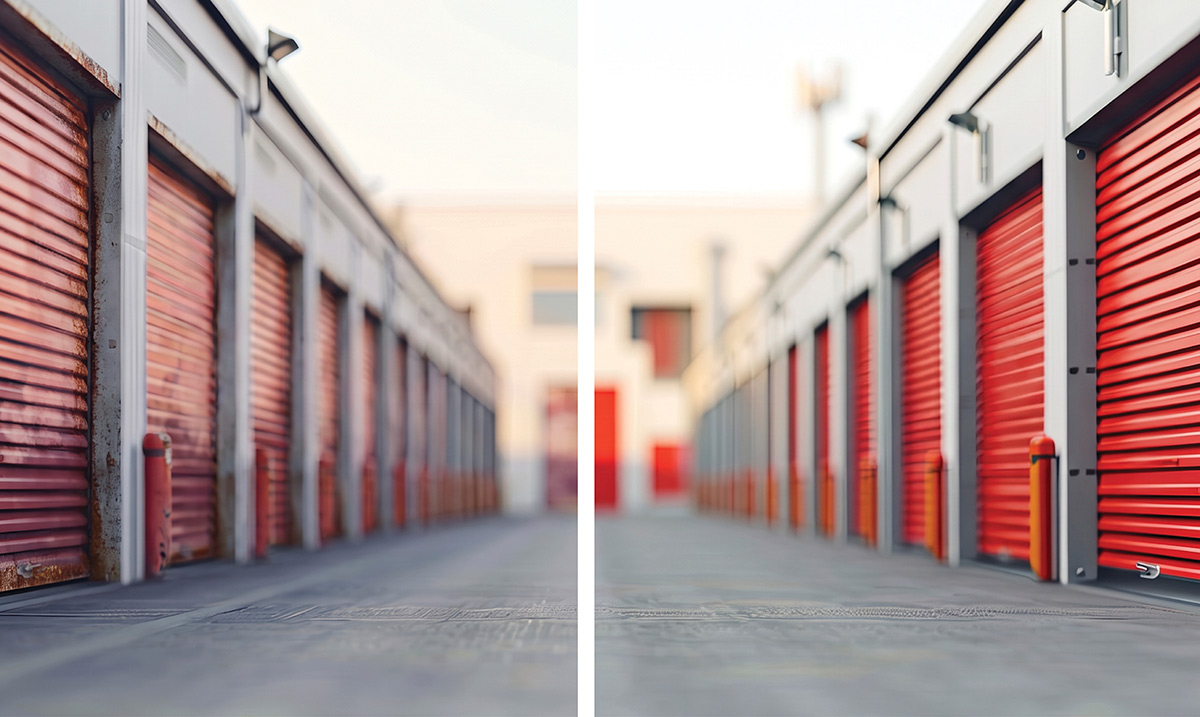
While owners often focus on large-ticket investments such as office renovations, fencing upgrades, or technology enhancements, storage doors represent a significant portion of what customers actually see. A facility with hundreds of units may have hundreds of opportunities to make a positive first impression. Conversely, every damaged or worn door can become a visual reminder that maintenance has been deferred. Replacing aging doors can provide an immediate transformation that modernizes an entire property without altering the facility footprint.
As doors age, maintenance requirements often increase significantly. Operators may encounter:
- Misaligned tracks,
- Damaged springs,
- Bent panels,
- Failing latches,
- Rust and corrosion,
- Increased service calls, and
- Difficulty operating doors.
While individual repairs may seem relatively inexpensive, the cumulative cost over time can add up quickly. Maintenance teams can find themselves repeatedly addressing the same issues, diverting resources away from other critical facility improvements. In many cases, operators are spending money to maintain equipment that has already exceeded its most productive life cycle. Door replacement shifts the focus from ongoing repairs to long-term reliability.
Second, replacement doors may reduce ongoing maintenance expenses. Modern door designs frequently incorporate improved materials, finishes, and construction methods that are resistant to corrosion, fading, and wear.
Third, new doors can improve operational consistency. Fewer service interruptions mean less frustration for tenants and less demand on facility staff.
The result is a relatively straightforward improvement that can generate operational savings while supporting revenue growth. For operators preparing capital improvement budgets for 2027, that combination can make door replacement one of the most attractive maintenance investments available.
That reality has shifted attention toward asset preservation. Replacing aging doors allows owners to refresh facilities without the disruption or cost associated with major redevelopment efforts. Rather than spending millions on expansion or reconstruction, operators can often achieve meaningful improvements through targeted upgrades that address highly visible and heavily used components.
Doors fall squarely into that category. They represent one of the most frequently operated pieces of equipment on self-storage property. Every rental cycle creates wear. Over years and decades of service, that wear inevitably accumulates.
A disciplined replacement strategy helps facilities maintain a modern appearance while avoiding the operational risks associated with aging infrastructure.
Upgrading older doors provides an opportunity to improve both real and perceived security. Customers notice equipment that appears solid, well-maintained, and professionally installed. Facility owners benefit from the confidence that comes with modern construction standards and dependable performance. In an industry built on trust, these factors continue to influence customer retention and long-term facility reputation.
The most successful investments are often those that deliver value year after year through reliability, appearance, and reduced maintenance demands. Many operators have found that selecting doors engineered for durability and lower maintenance can significantly reduce lifecycle costs.
For example, Central States’ Sentry™ line of doors has gained attention among facility owners because of the innovative design that extends optimum door life while also eliminating some forms of annual maintenance. These product enhancements can help support long-term maintenance goals while preserving facility appearance.
Just as importantly, modern door systems can often be installed as part of phased improvement strategies, allowing owners to spread investments over time while steadily improving facility performance.
While large-scale redevelopment projects will continue to play a role in some markets, many owners will discover that smaller, targeted investments can generate impressive returns. Door replacement is one of those opportunities.
It improves curb appeal, enhances customer confidence, reduces maintenance demands, and extends the useful life of existing assets, all without the expense and disruption of major construction projects.
For operators building maintenance budgets for 2027, the question may not be whether aging doors should be replaced but whether continuing to maintain outdated doors is costing more than they realize.
In an industry where every dollar matters, replacing old doors can be one of the simplest ways to give a facility new life while protecting long-term profitability.