

very self-storage customer and every self-storage owner-operator have one thing in common: space. They want it; we rent it.
Units are so similar from one facility to the next that customers tend to differentiate them based on price alone. That’s why price is the most important factor when customers rent space, as highlighted in Chart 5.1 below.
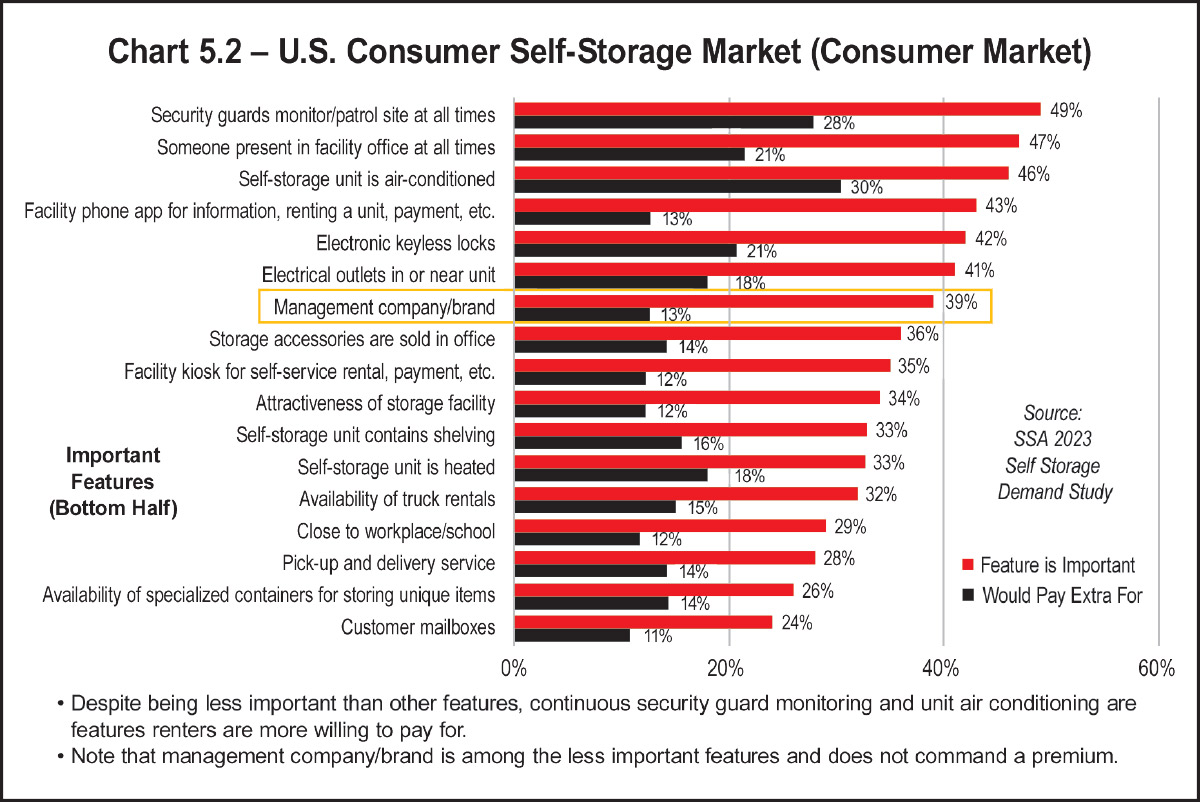
Further emphasizing the point that one space seems like every other, in the consumer’s eye, is the poor showing of “brand” as a reason to rent, as shown in Chart 5.2.
One customer trait made clear by the data is that the self-storage renter is very price sensitive. REIT and large operators’ pricing strategies have likely increased consumer price sensitivity. In the last two years, many consumers have rented at a low move-in rate, only to see their rent increased significantly soon thereafter. As described in Section 8 on rental rates, this practice led to an increase in consumer complaints, focusing more attention than ever on self-storage rental rates.
“We can expect rate increases to be much more competitive than in the last decade,” said Brett Copper, president of Copper Storage Management. In other words, it will be harder to raise rates because the consumer is less likely to tolerate it. Therefore, revenue management may not be as significant a source of increased revenue as it has been in the past.
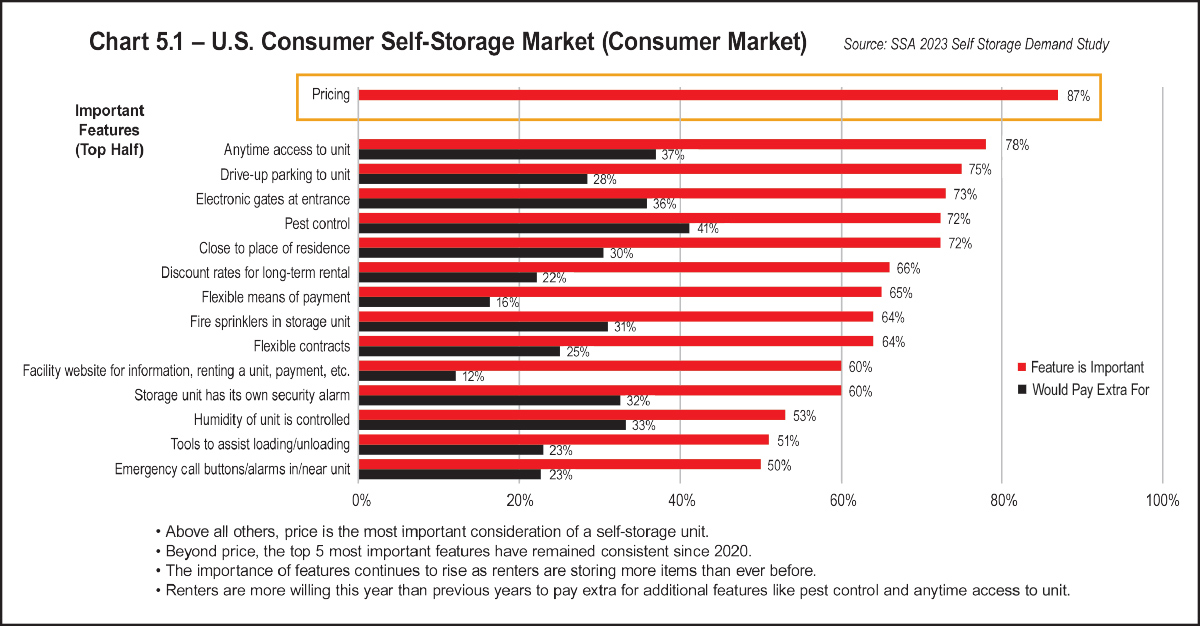
Today’s Amazon-trained consumer is more demanding than self-storage tenants of the past. Price has long been the leading factor when prospective tenants make a rental decision. However, today’s consumer is more concerned than yesterday’s, with the service and features that go with the price, including the convenience of up-to-date technology.
Therefore, you need a customer experience strategy that goes beyond price. You have to go far above bare bones expectations to attract and keep today’s consumer.
For many tenants and prospects, self-storage is more than a convenience. It is part of how they manage their lives, especially when they are in transition. This reflects growth and maturity of the industry in the eye of the American consumer. Self-storage is not just a luxury; it is a necessity and a convenient tool to manage life changes.
One source of customer data is the Self Storage Association’s 2023 Self Storage Demand Study. To produce the 2023 Self Storage Demand Study, 11,000 households were contacted and 2,371 were surveyed, along with 645 businesses.
- The economy is less predictable,
- The housing market is in a slump,
- Home prices and mortgage rates are higher than people are used to, and
- Elections and new administrations add uncertainty to the business climate and to people’s personal finances.
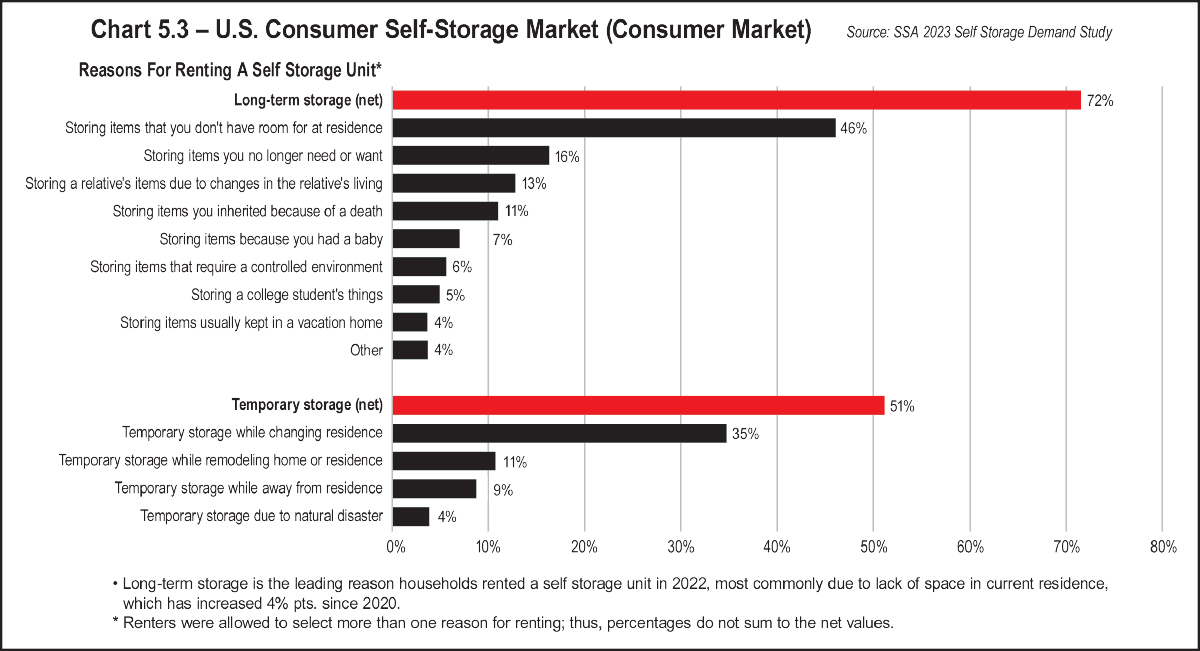
Expanding on the data, reasons to rent space are further elaborated in Chart 5.3. There is a wide variety of motivators for the American consumer renting space. Increasingly, people rent because they don’t have enough room in their homes or apartments, and they can’t move because of high mortgage rates and home prices.
People store for stressful reasons, so make it easy and pleasant to rent space, offering superior customer experience and convenience, including the technology today’s consumer is used to having at their fingertips.
Chart 5.3 parses self-storage demand differently, breaking down why people store into long-term and short-term needs. Predictably, moving is at the top of the list of short-term needs for storage. Remodeling is the reason 11 percent of customers need short-term storage rentals.
“Other” was the remnant reason for renting self-storage for 4 percent of survey respondents. This component of demand may suggest that consumers are seeking specialized storage options such as RV and boat storage.
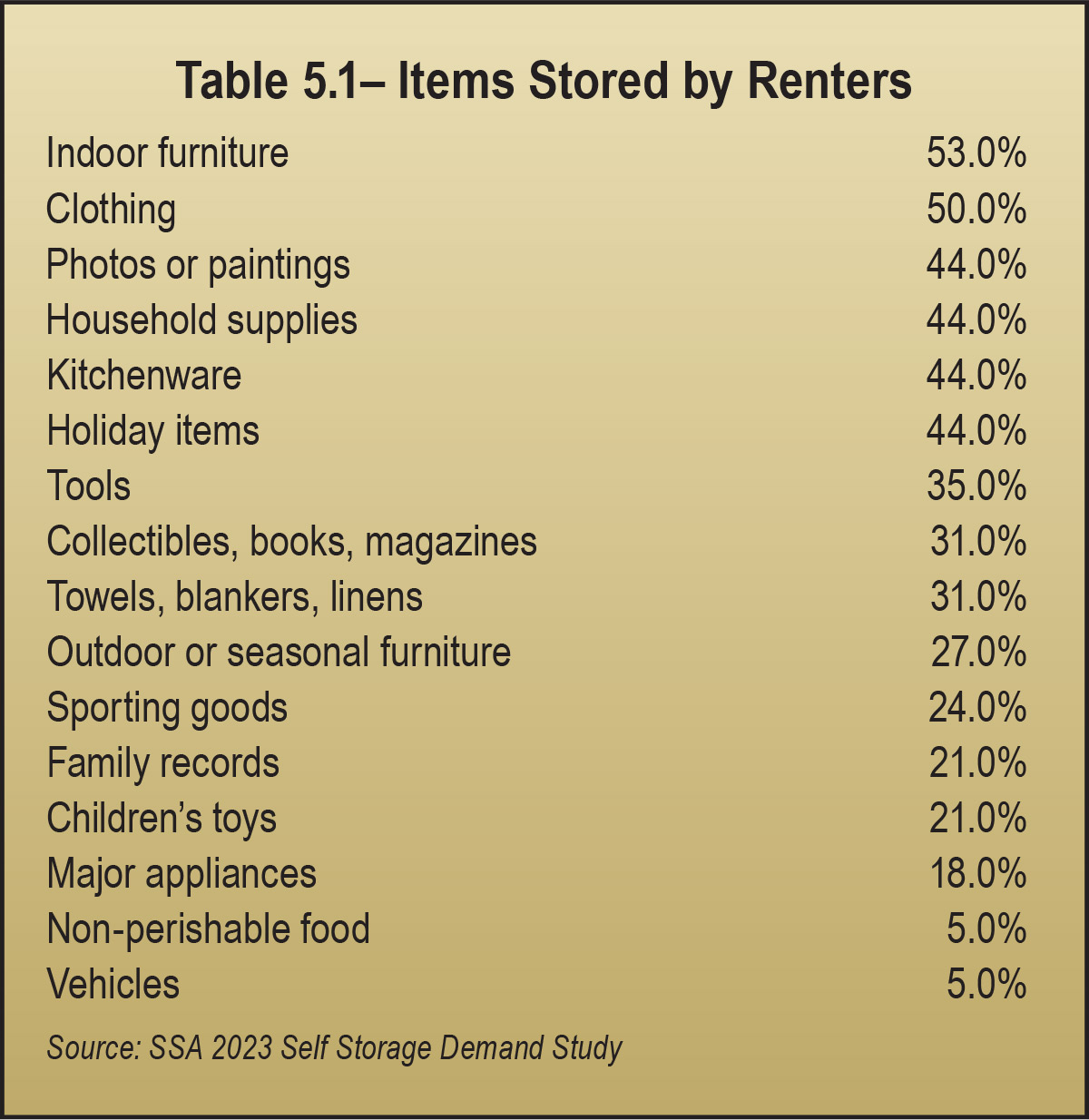
Knowing what customers store in their units can provide facilities with opportunities to make additional sales. For instance, tenants storing collectibles may appreciate a tenant protection plan to insure their investments. Alternatively, someone storing belongings in a non-climate-controlled unit may not realize that DampRid is a worthwhile expense in humid areas where excess moisture can be problematic.
The housing market remained in a slump throughout 2024 because cuts in interest rates by the Fed were fewer and slower than hoped, according to the Yahoo! Finance article “Average rate on 30-year mortgage hits 7 percent after 5th straight increase, now highest level since May,” which was published on Jan. 16, 2025. Even though the Fed cut rates, mortgage rates continued to climb throughout 2024, ending the year north of 7 percent, after climbing for five months in a row.
In fact, 2024 was the worst year for sales of previously owned homes since 1995, according to the Yahoo! Finance, “Why a housing market ‘thaw’ never came in 2024,” which was published on Dec. 22, 2024.
Mortgage rates inching up adds hundreds to a household’s monthly payments, so the slump in national home sales that started in 2022 continues. Last year ended worse than the year before, which also broke the record for the worst year for sales of previously owned homes since 1995. That’s even worse than the Global Financial Crisis in 2008 (JVM Lending, “Worst year ever for home sales; that time I almost died,” Jay Voorhees, Dec. 30, 2024).
Why was it the worst year ever for home sales? Because of an imbalance between supply and demand, and price sensitivity:
- Home prices are high.
- Mortgage rates are high.
- Demand to buy houses is weak.
- There is limited inventory.
“A lot of people were surprised that home prices did not go down as mortgage rates went up. This showed us that the supply and demand imbalance was more powerful than the borrowing costs,” said Ali Wolf, chief economist at Zonda, the largest home construction data company.
Most people expected mortgage rates to go down when the Fed cut rates. They were sorely surprised. Wolf stated, “Historically, mortgage rates move in tandem with Fed rate changes. (Last) year, however, mortgage rates actually went up after the Fed cut rates. This is because investors ultimately drive mortgage rates, and they are taking in other economic data and policy proposals and allocating their funds accordingly.”
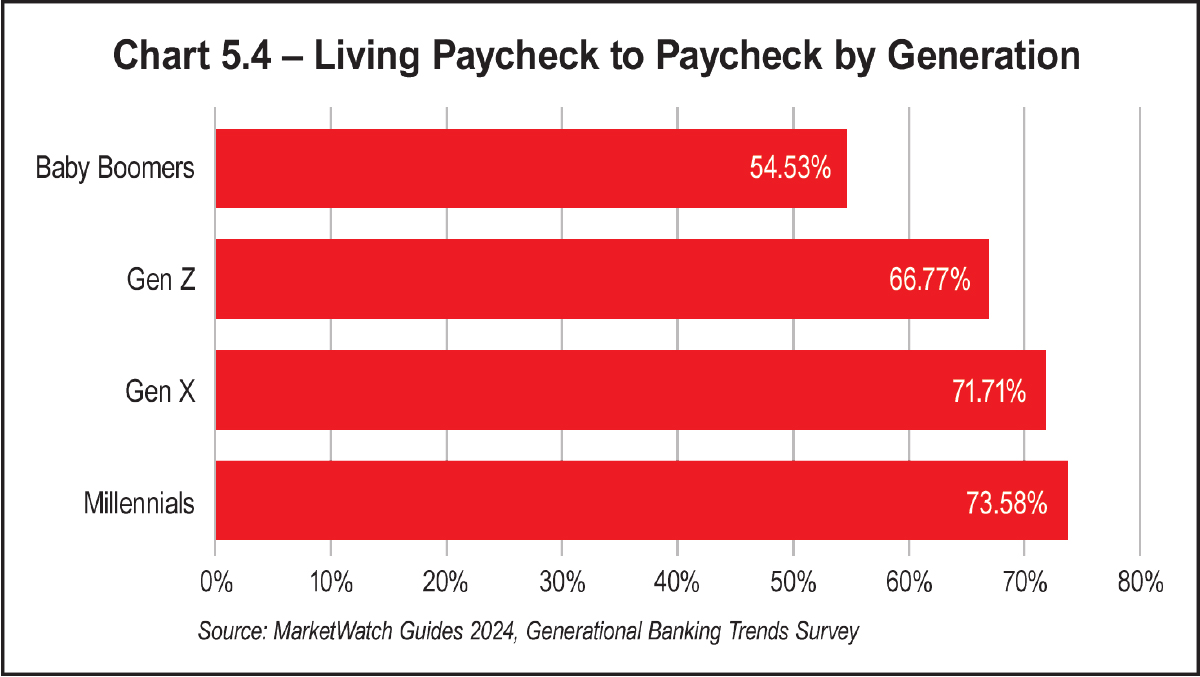
But consumers are not confused. They understand high prices, and they remain on the sidelines. In 2024, home prices reached new highs, and mortgage rates remained high, so prospective home buyers stayed put as the year drew to a close, continuing the waiting game. When it comes to buying a home, most consumers are budget-conscious, and current conditions do not entice them into the housing market. Economists, whose personal finances differ from many Americans who want to buy their first home, think consumers will accept conditions as the new norm and move ahead with home purchases. They don’t understand living paycheck to paycheck, a hand-to-mouth existence, which is how nearly two-thirds of Americans describe their personal finances, as shown in Chart 5.4.
Looking ahead, uncertainty emerges as a significant customer trait for prospective home buyers and self-storage renters. The Fed changed its “forward guidance” at the last meeting of 2024, reducing the number of rate cuts anticipated for 2025 from four to two. Both the Fed and investors continued to be concerned about inflation, and of course a new presidential administration creates its own uncertainty. The stock market does not like uncertainty, and neither do Americans who want to buy homes. In all likelihood, the housing market will remain in a slump until the future is easier to anticipate.
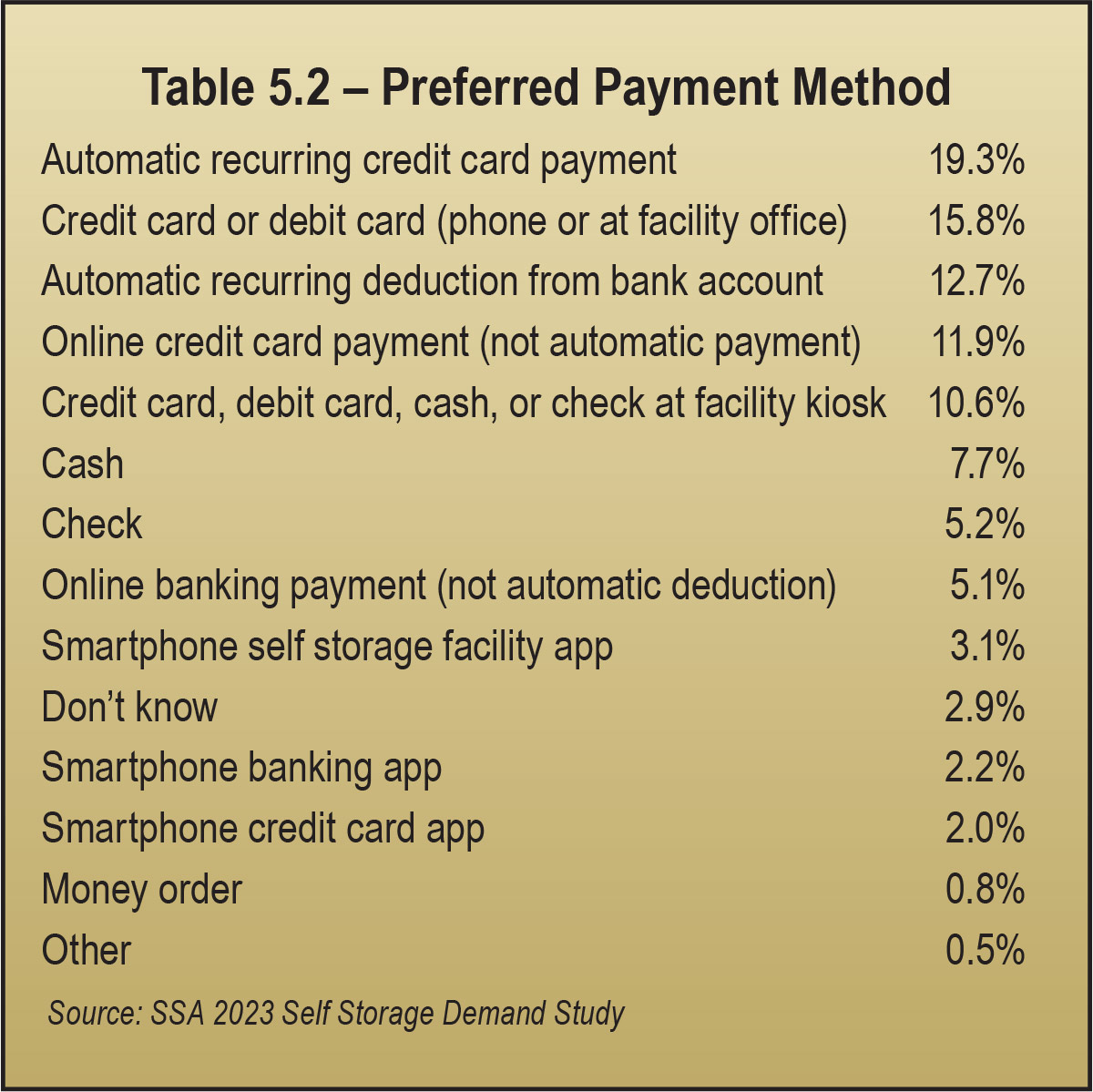
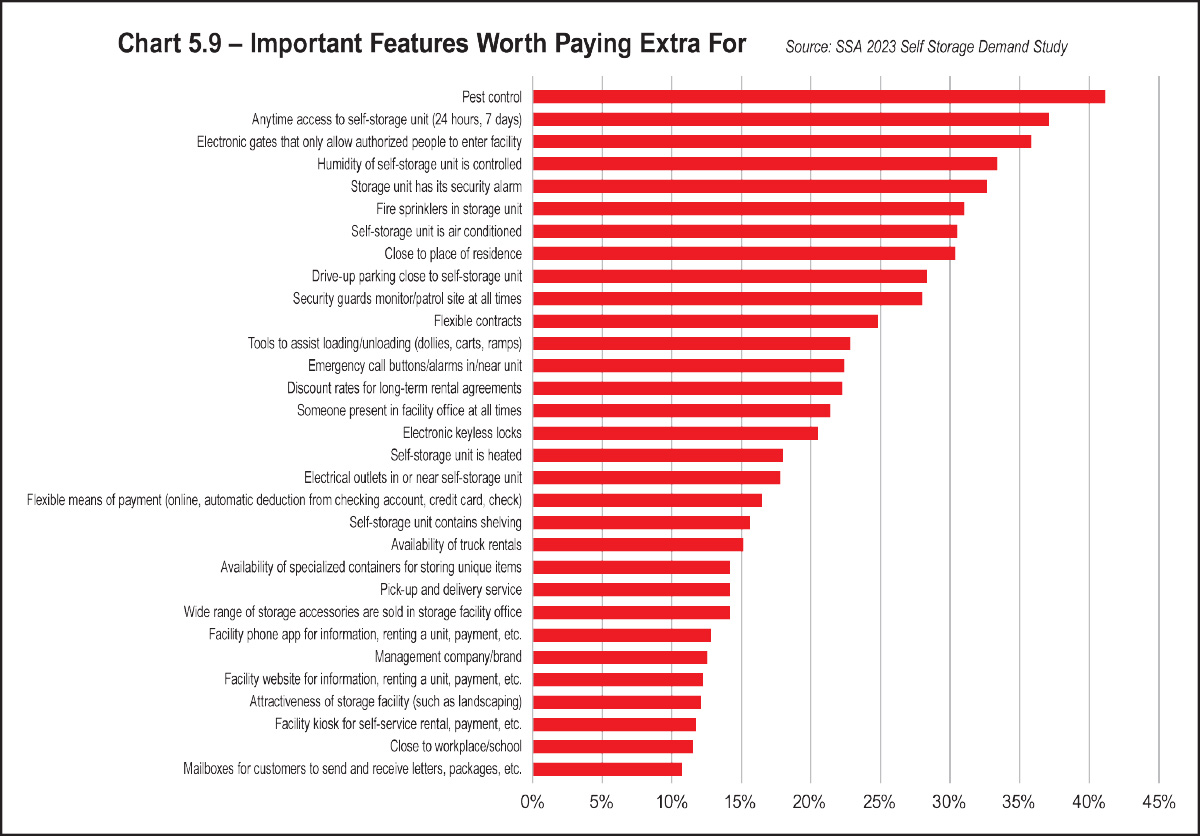
Flexibility sought by today’s self-storage customer is shown in the wide variety of features and benefits described in Charts 5.1, 5.2., and 5.3. A desire for flexibility is also evident in Table 5.2, which shows the multiple payment options tenants utilize by generation. Overall, all five generations prefer to pay rent through an automatic recurring credit card payment. Money orders are the least preferred payment option of all generations.
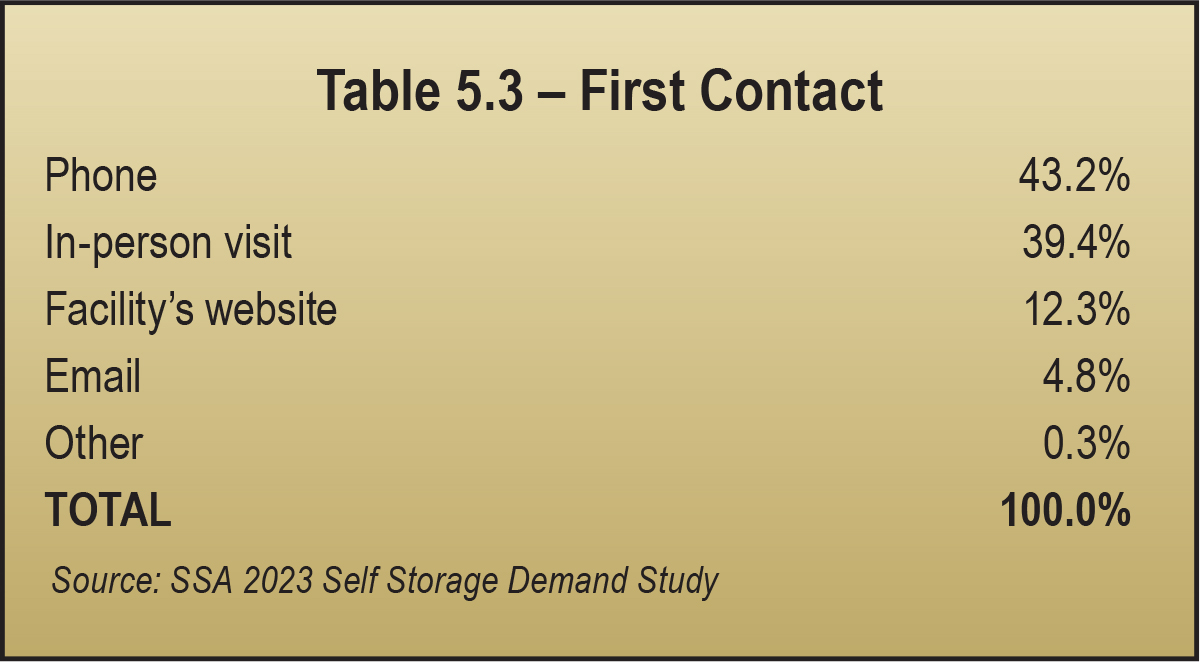
This same desire for flexibility is reflected in how customers first contact facilities. More than 43 percent still reach out via phone. Another 39.4 percent go directly to the property to obtain initial information. As for the 12.3 percent who made first contact through a facility’s website, they likely searched for “self-storage near me” beforehand. According to the SSA’s 2023 Self Storage Demand Study, 50.4 percent of customers search for self-storage on their smartphones. Furthermore, 26.2 percent search on a laptop, 18.5 percent search on a desktop PC, and 4.5 percent search on a tablet. See Table 5.3.
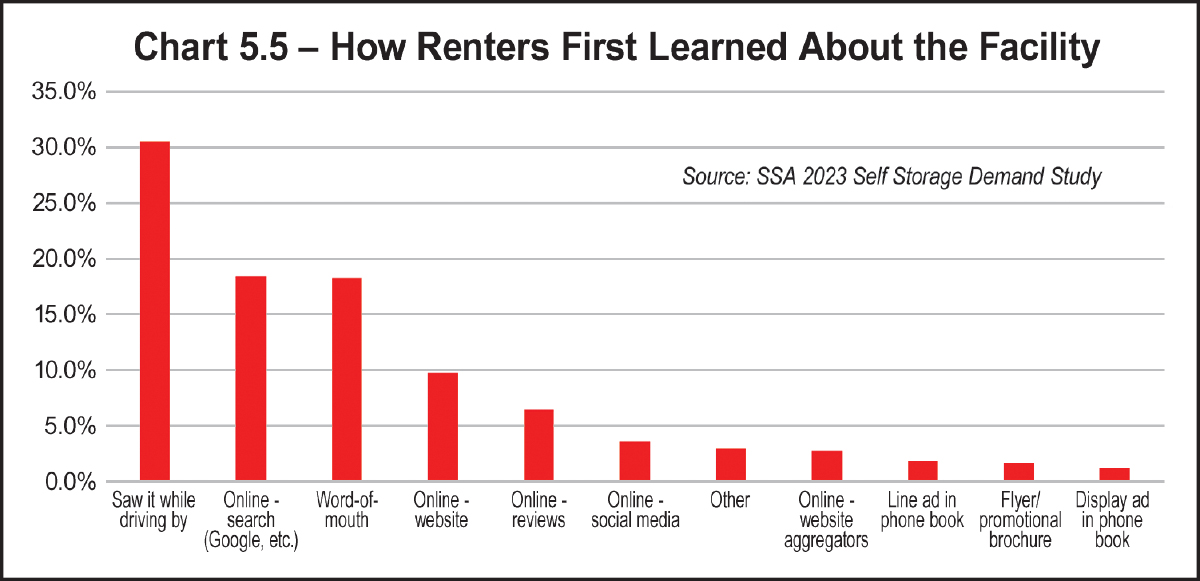
While customers may be more likely to contact you first by calling, they had to find you first. Where do they find you? While Chart 5.5 below shows that a strong online presence is critical, and positive word-of-mouth advertising is valuable, drive-by traffic still accounts for more than 30 percent of a facility’s leads. In addition to being visible online, online reputation is important. Prospects check out customer reviews and ratings when making rental decisions.
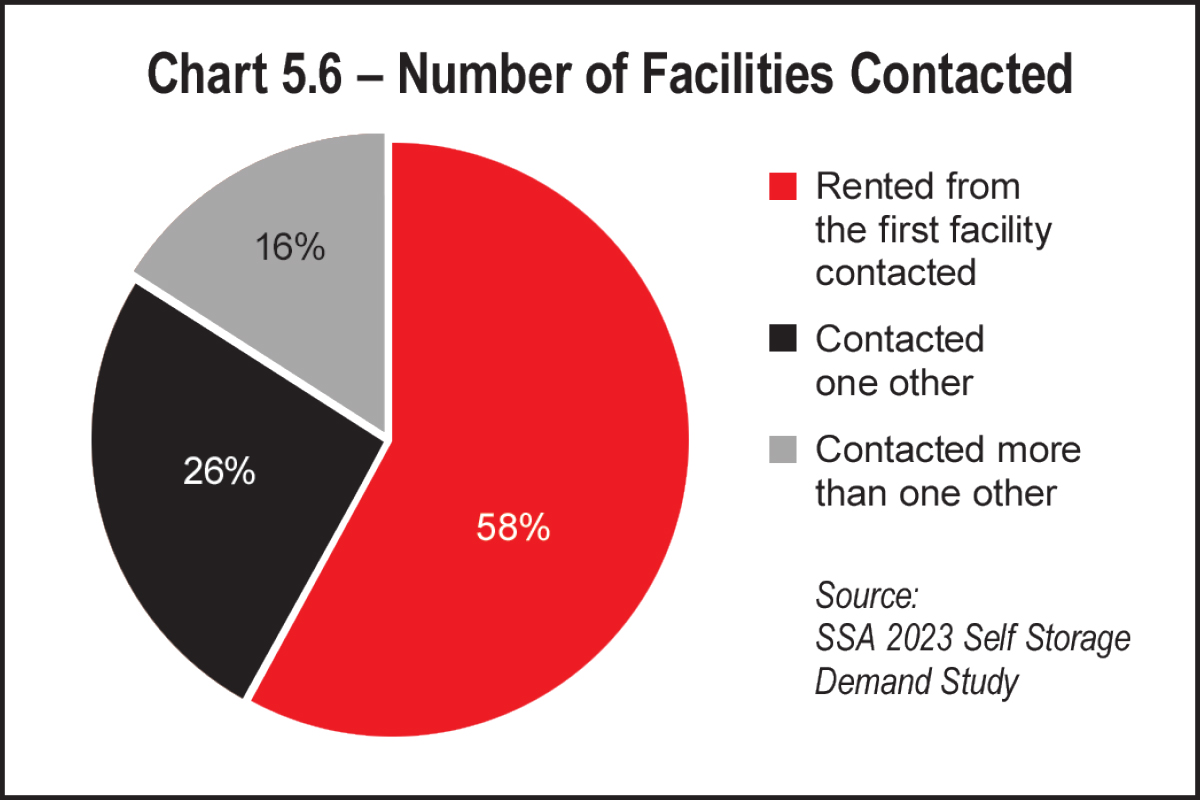
Reflecting further on first contact, there is another customer trait we can’t deny: Self-storage tenants are lazy shoppers, with 58 percent of them renting from the first facility they contact (See Chart 5.6). This statistic lends further credence to the argument that the consumer sees self-storage as a commodity: One space is the same as any other, so why not rent from the facility that answers your phone call. So, answer the phone!
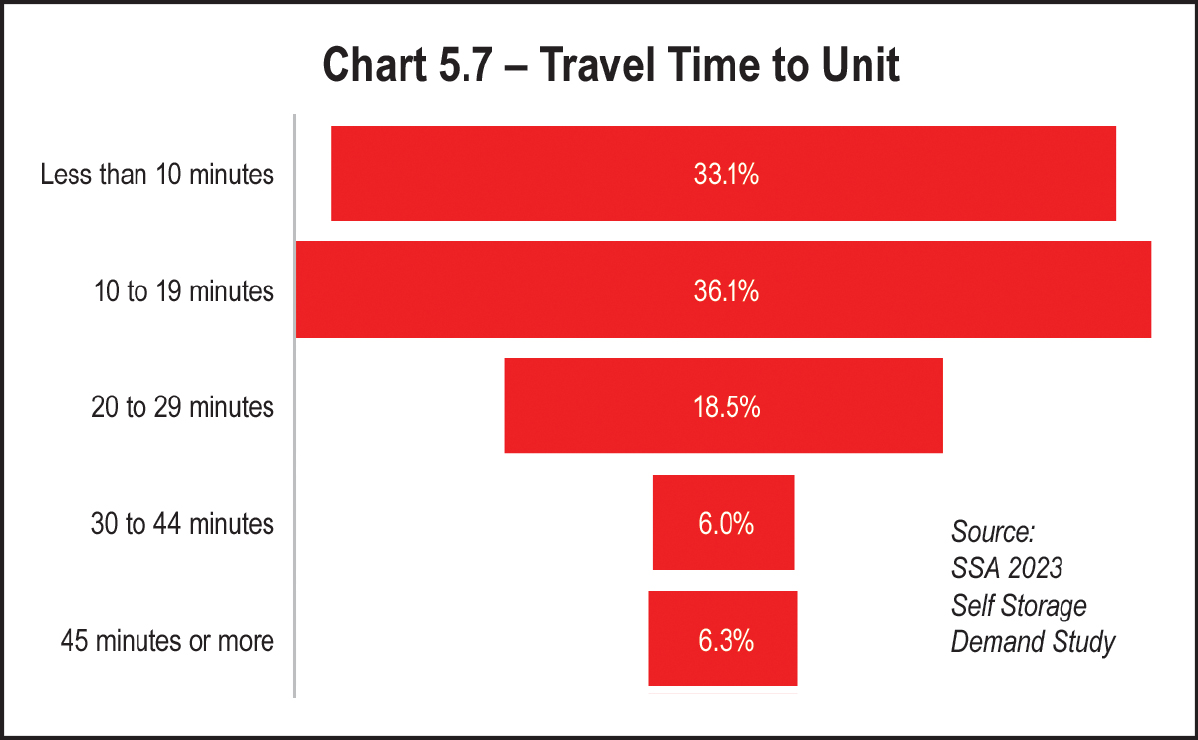
About 36 percent of customers are willing to drive 10 to 19 minutes. While 18.5 percent of customers would drive 20 to 29 minutes, 33.1 percent are only willing to drive less than 10 minutes. A total of 12.3 percent is willing to travel 30 minutes or longer to a storage facility.
As Copper puts it, “We have to completely re-think how we calculate demand and compare rental rates to competitors.” Clearly, people are more willing to drive farther to find a facility that meets their needs.
How do you attract prospective renters who are willing to drive farther? Copper says, “Accommodate these groups (especially younger renters) with competitive pricing, access to units, a strong website ‘storefront,’ and the ability to contact you or a call center within minutes.”
As an owner-operator, your challenge is to meet the Amazon-trained consumer’s demand for convenience while also providing personal touch and superior customer experience. As Copper puts it, “We need to be able to give the ‘on-site’ experience on our websites … (which are) our new retail store front!”
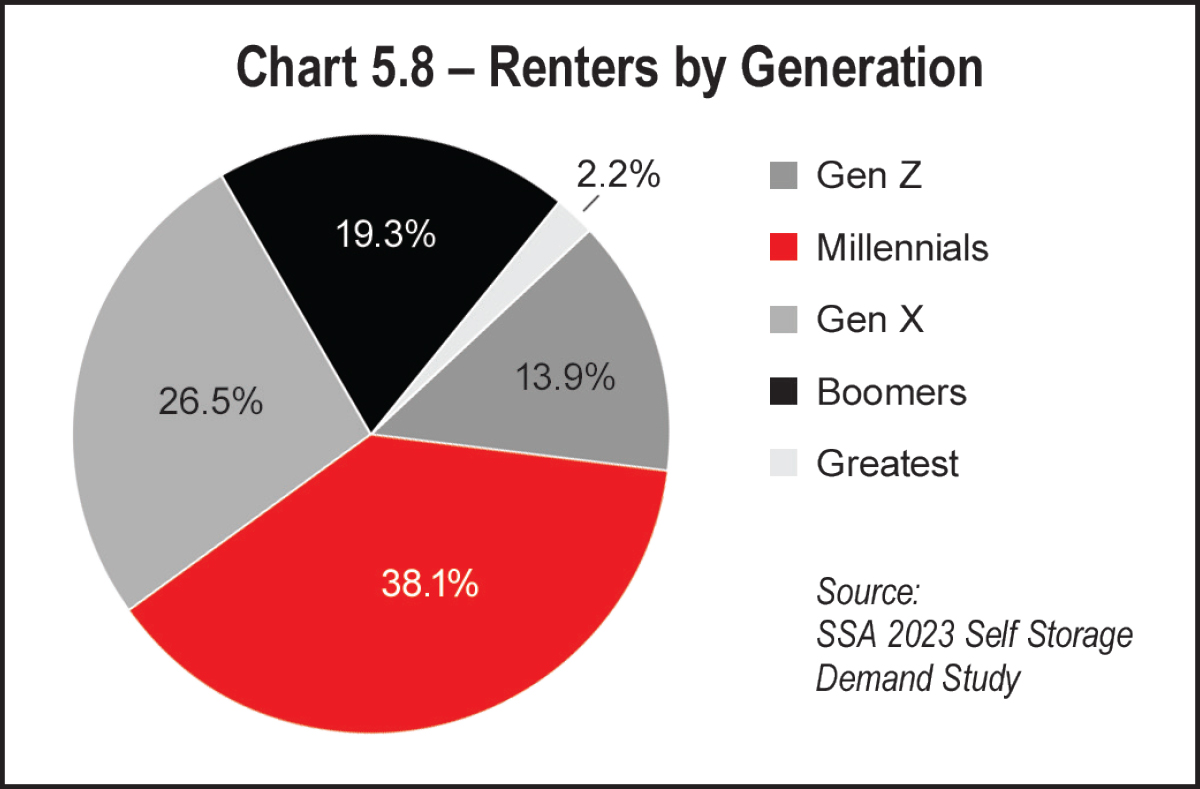
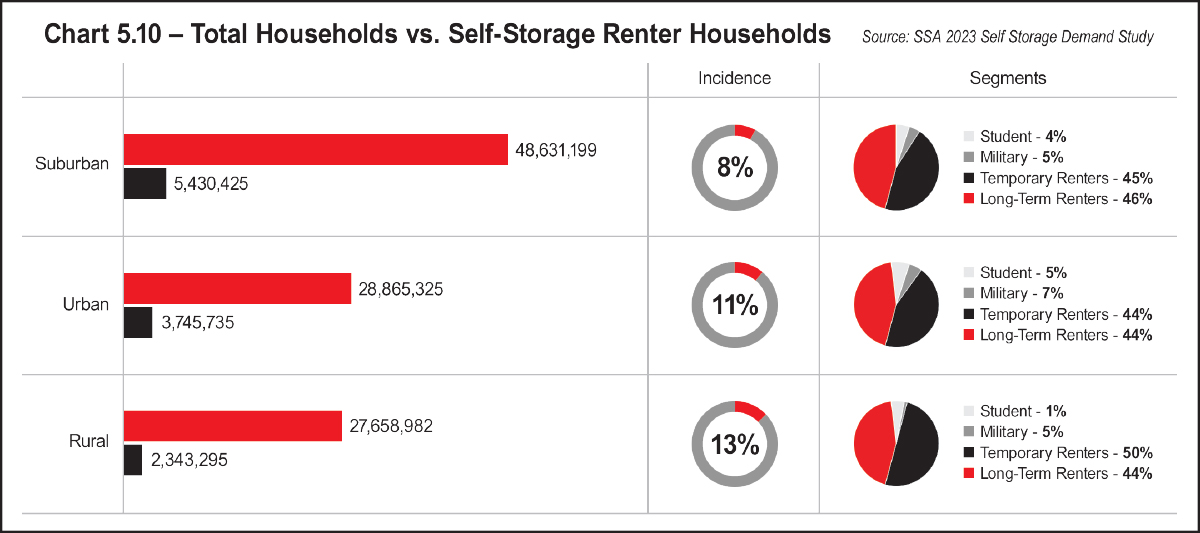
While they may be renting more per number of households than urban renters, rural renters pay lower self-storage rent. Also, facilities tend to be smaller. This means it is all the more important to keep expenses low while serving these customers, so your business is still profitable.
- They only “remember” you when they need space, even though they may have driven by your facility thousands of times.
- They put it on autopay and forget about it, grateful that they don’t have to clean out their garage.
- They have a hard time catching up on payments when they get behind, so maybe it’s better to cut a deal and get them to move out rather than auction their stuff.
- They don’t always leave reliable indicators that they are active-duty military, so be careful.
Our industry continues to be in the midst of a paradigm change regarding how to manage facilities. The traditional on-site staff management model is under ongoing scrutiny. Management is one of the expenses owner-operators can influence, and many are experimenting with remote and hybrid options. Any owner-operator who continues to invest in on-site staff is right to make high demands that their managers and assistant managers provide excellent customer service and pound the pavement to generate leads and referrals from local marketing efforts. (For more on local marketing, see Section 10.)