

any business, success ultimately comes down to one simple equation: the costs of providing your service versus the revenue you can generate. While many self-storage operators already run lean operations, rising customer expectations and growing competition means the need for efficiency is more critical than ever. Small adjustments in your operational processes can have a big impact on your bottom line, whether it’s reducing overhead costs or improving customer satisfaction to ensure you build tenant loyalty over time.
Self-service kiosks, while not a new technology, have proven to be a game-changer for operators looking to streamline their business further. By automating key tasks such as rentals, payments, and access, kiosks reduce the need for constant staffing, allowing you to maintain 24/7 service while keeping labor costs in check. And with recent advancements in kiosk technology that have made these systems more intuitive and customer-centric, with interactive facility maps, secure payment processing, and real-time assistance from remote agents, the self-service experience is not only comparable to human interaction but even more efficient and reliable in many cases.
Self-storage facilities used to rely heavily on on-site staff to facilitate face-to-face customer service—a trend that persisted long after many industries had leveraged self-service tools to enable consumers to complete a transaction or solve issues without human intervention. As early as 2013, Zendesk found that more than two in three customers preferred self-service over speaking to a support agent, as presented in its article “Self-Service: Do Customers Want to Help Themselves.” While the self-storage industry has historically been slower to adopt technology, self-service kiosks have been on the scene since 2003. As the pressure to operate efficiently intensifies in an increasingly competitive market, integrating technology into your facility could be the key to boosting profitability without compromising service quality. Storage kiosks have gained popularity as a critical means to both ends.
In this section, we will explore the essential considerations when integrating kiosks into a self-storage site. From timing and environmental factors to staffing needs and evaluating kiosk vendors, we’ll provide a comprehensive guide to ensure kiosks provide maximum operational value, efficiency, and tenant satisfaction.
Kiosks can increase operational efficiency by automating a wide range of tasks to support new tenants and existing customers, including unit rentals, payments, ID verification, account updates, unit selection, virtual property tours, and lease signings. This automation enables facilities to generate new rentals and allows tenants to obtain service without the need for on-site staff involvement, which is particularly beneficial during off-hours or when staff are unavailable.
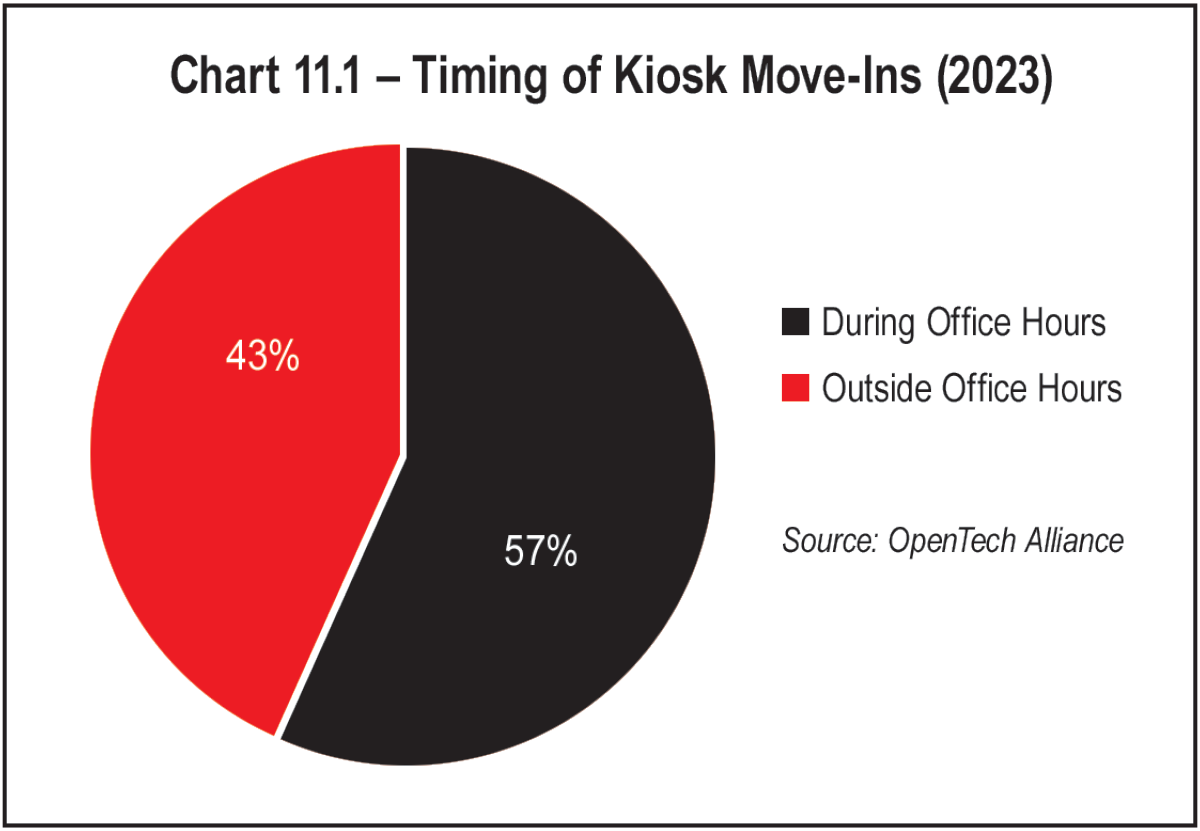
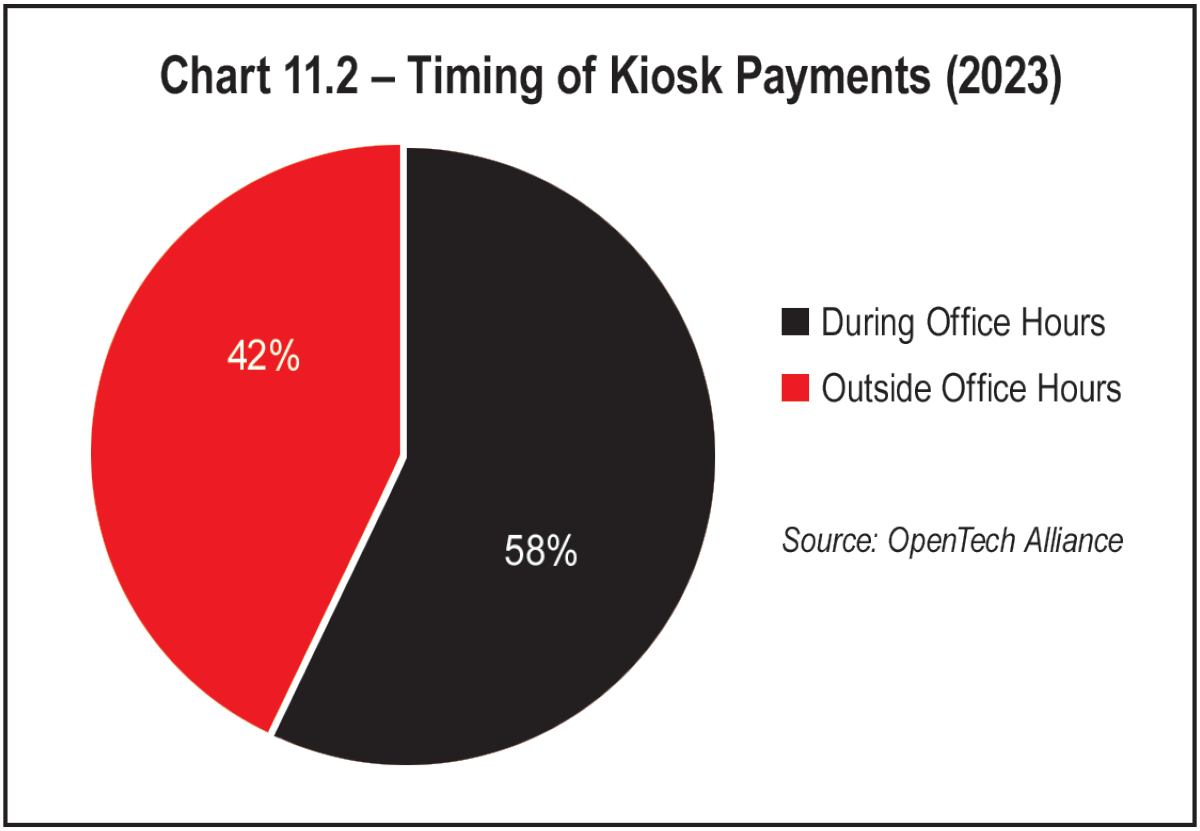
For operators, kiosks provide significant flexibility. Forty-two percent of payments occur outside standard office hours, and 57 percent of move-ins take place during business hours, underscoring the value of offering self-service options around the clock. This flexibility appeals to a broader range of customers, including those with non-traditional schedules, like students, factory workers, and people working long or irregular shifts. Kiosk move-ins outside standard office hours increased 24 percent year over year—a trend that could be indicative of either an increase in operators managing their facilities remotely or an increasing tenant preference for self-service technology. See Chart 11.1 and Chart 11.2.
For smaller operators who may have limited staff or resources, kiosks provide a scalable solution. They reduce the need for full-time, on-site employees while still enabling the facility to serve tenants effectively. This can make managing a facility much more manageable and efficient.
Additionally, tenants can sign leases electronically, scan identification documents, and make payments—all without the need for face-to-face contact with a staff member. This kind of autonomy can create a more positive experience for tech-savvy tenants who prefer managing their tasks independently. It also enhances security by reducing human error, ensuring that important tasks like lease signings and ID verification are properly handled, and creating a digital recording of the new tenant and on-screen transaction.
Timing Of Implementation
The decision to install kiosks should be made early in the development process for a new facility. When designing a self-storage facility, operators should ensure that proper infrastructure (such as electrical power and data connectivity) is included to accommodate kiosks. It’s important to factor the kiosks into your initial capital expenditures, as this will help streamline financing and provide a clearer overall budget.
Kiosks can be especially valuable in the early stages of facility operations, such as during lease-up or when occupancy is low. They provide a cost-effective way to increase occupancy and streamline operations without requiring a full staff presence. For high-occupancy facilities, kiosks can still provide significant benefits by automating tasks such as after-hours unit rentals and payments. A notable number of tenants choose to make their monthly payments at a kiosk outside normal office hours (42 percent in 2023)—a number that increased 7 percent YOY—taking advantage of the expanded business hours that the technology offers.
Environmental And Facility Considerations
When selecting kiosks, operators should evaluate where they will be placed within the facility. Kiosks may be installed indoors or outdoors. The environment can significantly impact the customer experience and what hardware features are required to ensure it attracts traffic and stands the test of time. Outdoor kiosks need to be weatherproof and able to withstand varying conditions. Ensure your kiosk is properly rated for the temperature extremes in your area. For facilities in colder or more remote regions, kiosks may need additional protective elements, such as a vestibule, awning, or other protection from rain or snow. Some kiosks come with built-in lighting, which not only ensures visibility at night but also reduces the need for additional installation costs.
Many operators will construct an indoor vestibule to leverage the best of both worlds. This is an indoor location that doesn’t grant unnecessary access to the building but provides protection from the elements and helps tenants feel safe.
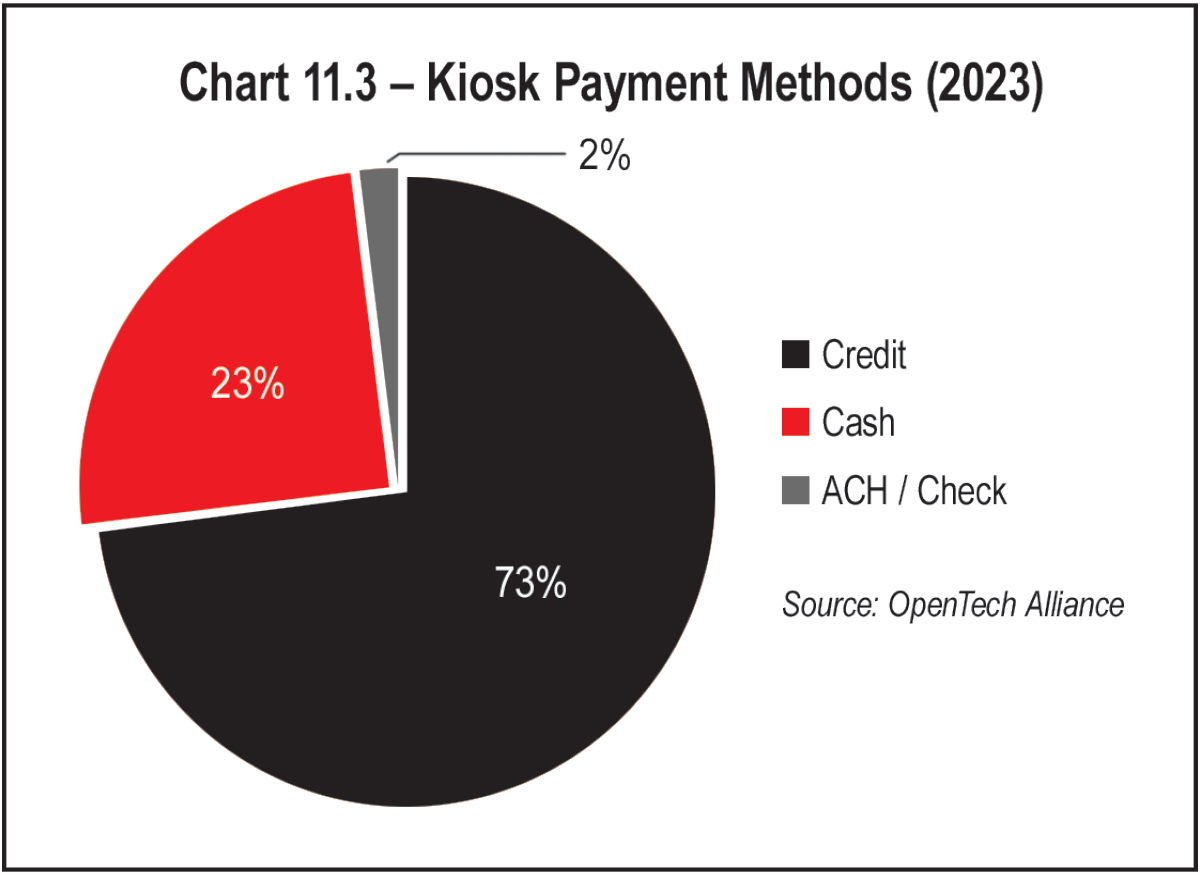
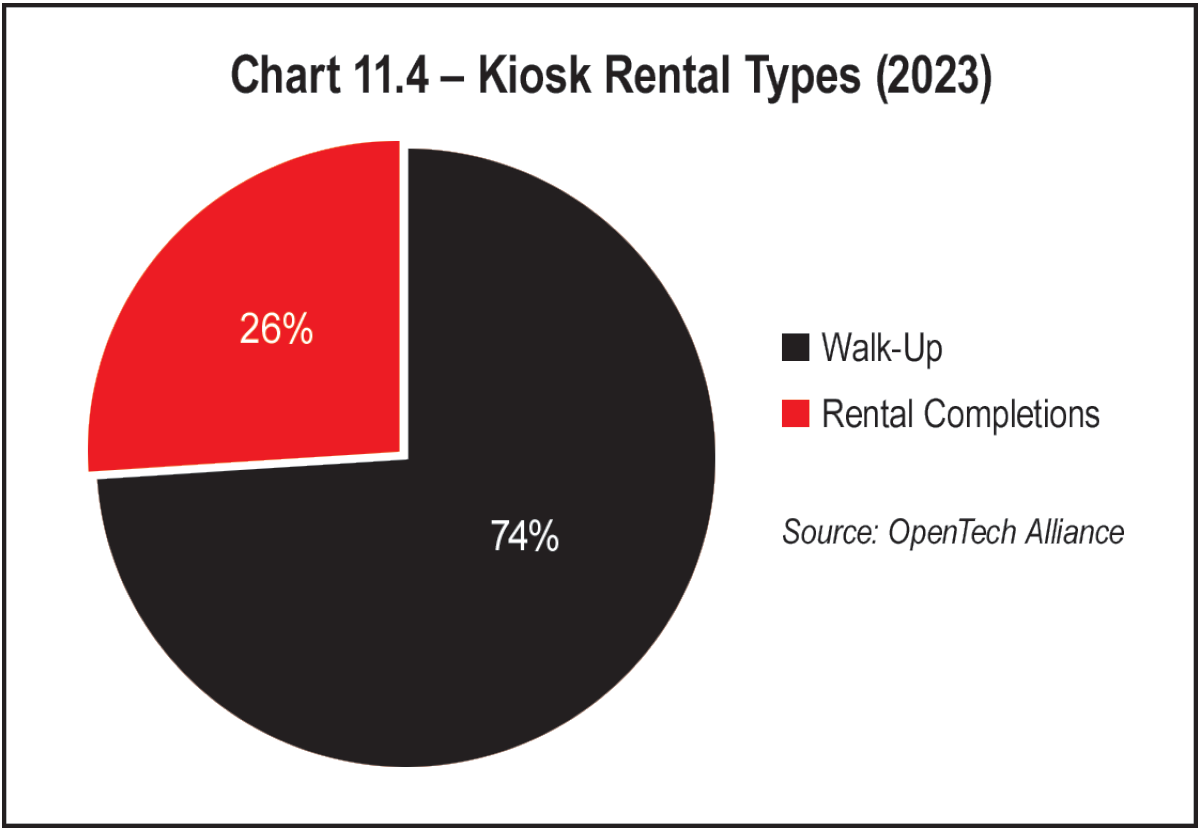
Indoor kiosks should be placed in areas with high foot traffic and adequate lighting to attract tenants. Signage is a key consideration regardless of the location you choose for your kiosk. Signage should be placed prominently around the facility, especially near entrances and parking areas. Tenants should easily spot the kiosk and understand that they can rent or pay for units 24/7 without the need for assistance from on-site staff. If outdoors, signage visible from the street that promotes 24/7 rentals can help capture drive-by and walk-up rental traffic (which we know accounts for a significant ratio of new rentals). Leverage both directional signage throughout your property that alerts tenants to the presence of an on-site kiosk and informational signage that speaks to the services your kiosk can support. If your vendor permits, consider customizing digital signage on the kiosk itself to promote both available services as well as property amenities and specials.
Staffing And Onboarding
While kiosks can significantly reduce the need for on-site staff, they do not eliminate the need for facility staff entirely. People will be needed to conduct routine facility maintenance and essential tasks such as checking locks and performing regular property checks. If the facility operates under a roaming manager or hub-and-spoke model, kiosks can play an essential role by providing a self-service option for tenants when no manager is on site or when they are occupied on the property elsewhere. In this scenario, kiosks become a vital component of the facility’s overall operation, enabling tenants to complete their transactions without relying on the presence of an on-site manager.
Regardless of how you manage your facility, it’s important to consider the kiosk an integral element of your operating model and treat it as such. While the technology may feel “plug-and-play” from a setup standpoint, operators that see the most success from their kiosk work to intentionally integrate it into their rental and operations processes.
Marketing And Rental Integration
Just as it’s important to onboard your staff to the addition of a new rental and service tool in your arsenal, it’s essential to market your kiosk to future and existing tenants. Consider all the places within your customer journey that you should make tenants aware of the convenience provided by a self-service rental and payment machine. Add your kiosk to your on-site amenities and within your online rental flow to capture potential tenants researching online who would prefer to visit your facility before locking themselves into a storage unit. Promoting 24/7 rentals has the added bonus of increasing your presence in Google search listings when your facility may otherwise be closed. Update your voicemail listing to alert missed callers of another way to rent at your property and add a note to your auto-responses on your social channels so prospective tenants know they can still rent at your facility, even after-hours. Finally, be sure to notify new tenants in welcome emails and paperwork that the kiosk is available to take payments and provide service anytime. If you’re implementing the kiosk at an existing facility, be sure to send an announcement to your current tenants too.
Vendor And Solution Evaluation
Choosing the right kiosk vendor is one of the most critical decisions operators will make when integrating kiosks into their facilities. When evaluating kiosk vendors, operators should consider several factors:
- Cost and Financing – The upfront costs of kiosks can vary based on the features and hardware required. Operators should evaluate whether leasing or purchasing kiosks makes more financial sense in the long run. Consider also the recurring costs related to ongoing service and support and if tax incentives are available to reduce the initial burden of purchasing your kiosk. When calculating the potential return on investment, be sure to evaluate potential for increased rentals or incremental revenue, along with anticipated staff savings.
- Features and Functionality – Kiosk functionality is one of the most important considerations. Operators should choose kiosks that have a proven track record of performance and are supported by continuous updates and technology advancements. Some of the more recent advancements include interactive maps, live video help, and motion detection to trigger custom tenant engagement. Additionally, kiosks should have the necessary hardware to enable tenants to scan identification, sign leases, and complete payments in a secure and private manner that ensures that they comply with industry standards for safeguarding customer data (e.g., PCI compliance for payment processing, protection of PII, etc.).
- Remote Troubleshooting and Support – Downtime can negatively impact the customer experience and revenue. Vendors that offer remote troubleshooting support can significantly reduce downtime, ensuring kiosks remain operational. Operators should also look for vendors who provide regular software updates and ongoing system improvements to enhance the overall tenant experience.
- System Integration – Kiosks should seamlessly integrate with the facility’s property management software (PMS), gate access systems, and third-party or in-house call center teams. Ensuring that the kiosk works harmoniously with other operational systems helps create a smooth, efficient experience for tenants and staff alike.
- Robust Experience in Self-Storage – A vendor with extensive experience in the industry, coupled with a vested interest in supporting long-term customer success, can offer invaluable insight and stability, ensuring that the solution not only meets current needs but also evolves with the demands of the industry over time.
- Urban Areas – Kiosks in densely populated urban areas help capture tenants who may not otherwise interact with the facility during regular office hours. These facilities often see a high volume of drive-by and walk-up customers; kiosks provide a self-service solution for these tenants, allowing them to complete rentals or payments without needing staff assistance.
- Rural Areas and Low Occupancy Facilities – In rural areas or during the lease-up phase, kiosks help bridge the gap for facilities with limited staff or low occupancy. They offer a cost-effective solution for managing tenant interactions without requiring full-time staff.
- Hub-and-Spoke and Roaming Manager Models – For facilities managed under a hub-and-spoke or roaming manager model, kiosks provide a self-service solution that allows tenants to manage their rental process without waiting for an on-site manager. This allows operators to manage more facilities with fewer staff and ensure they don’t miss vital rental opportunities or tenant payments in the meantime.
- Factory or Shift-Based Locations – Kiosks are particularly beneficial for self-storage facilities near factories or areas with shift-based workers. Kiosks allow these workers to rent units or make payments outside regular office hours, aligning with their non-traditional work schedules.
Careful planning is essential to ensuring the successful implementation of kiosks. Operators must consider factors such as timing, placement, staffing, marketing, and vendor selection to make the most of this technology. By leveraging kiosks effectively, operators can meet the evolving needs of the self-storage market and provide exceptional service to tenants around the clock.