


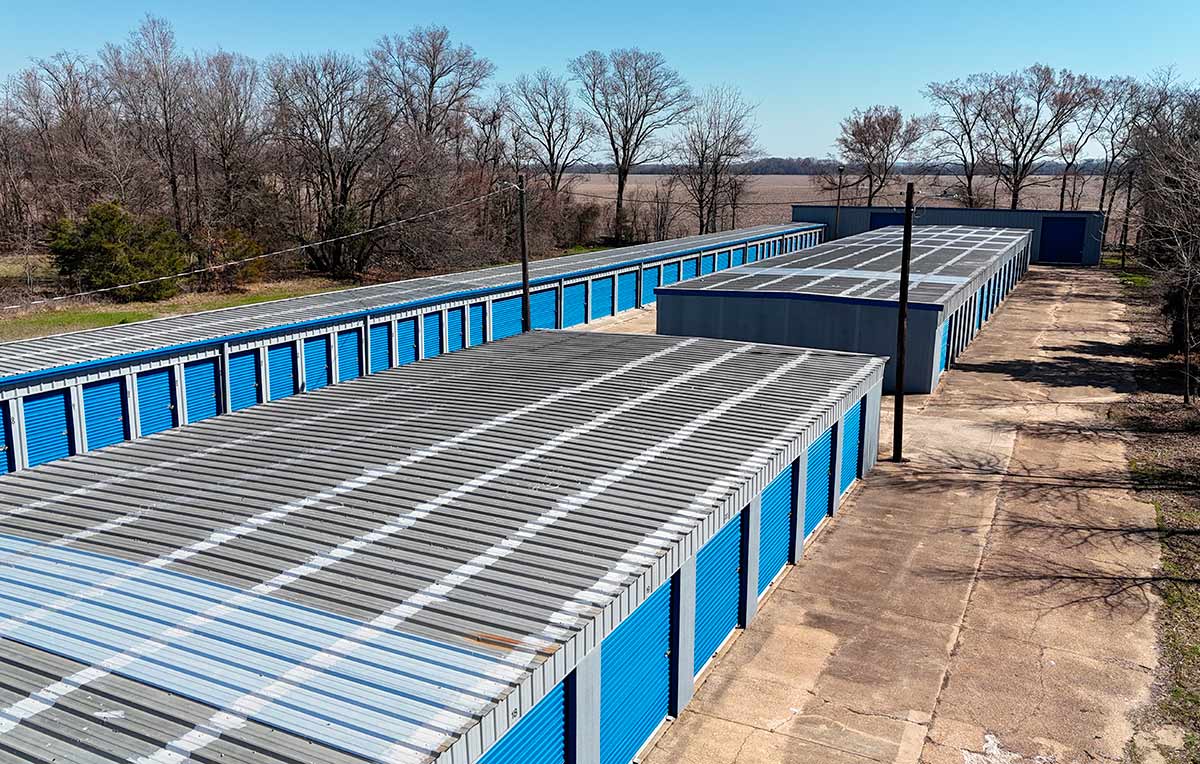
ot long ago, I visited a facility that looked terrific from the street: clean drive lanes, straight doors, tidy landscaping. If you were grading it from the driver’s seat, you would have given it high marks. When I put a drone in the air, the story changed. The roof had several large rot spots where water was unable to drain. From the ground, no one had any idea. From above, it was impossible to miss.
That’s the thing about a self-storage property. The parts that cost you the most when they fail are usually the parts you never actually see. You spend your days at eye level, while your roofs, your gutters, and the far corners of your property sit quietly out of view until something goes wrong. A drone changes that. It shows you your facility the way it really is, not just the way it looks from the driveway.
Hopefully, you’re already thinking about aerial photography for marketing, and the same flight that makes your website look great can double as a property inspection. Companies like mine offer both services on a single visit. Talk to your drone photography provider and make sure you hire someone who does this kind of work, not just someone who shoots a pretty picture.
The maintenance side is the part almost no one takes advantage of. Plenty of owners commission aerial photos for marketing, but very few think to point those same cameras at their roofs, drive lanes, or gutters. The photos get used once for the website and then forgotten. That is the missed opportunity we’re going to talk about.
For most single-facility operators, that means the simplest legal path is hiring a licensed drone photographer rather than becoming a pilot yourself. Don’t think of that as a hurdle. Think of it as the reason to finally get the professional aerial content you have wanted for your website, your Google Business Profile, and your social media.
Those dated images earn their keep another way too. When a storm rolls through and you file an insurance claim, having clear aerial photos from before and after can be the difference between a smooth claim and a fight. The same pictures help you hold a contractor accountable to what a repair actually looked like the day they called it finished. Photos do not forget, and they do not exaggerate. Make sure you check with your contractors to see if they have a staff photographer who can share their aerial photos with you if the timing isn’t right for you to hire your own drone photographer.
Here are some things to keep in mind as you look for the right photographer:
- Hire a pilot who has self-storage experience, because they already know what matters on a property like yours.
- Be specific about what you want covered, and walk through it building by building, roofs and drive lanes included.
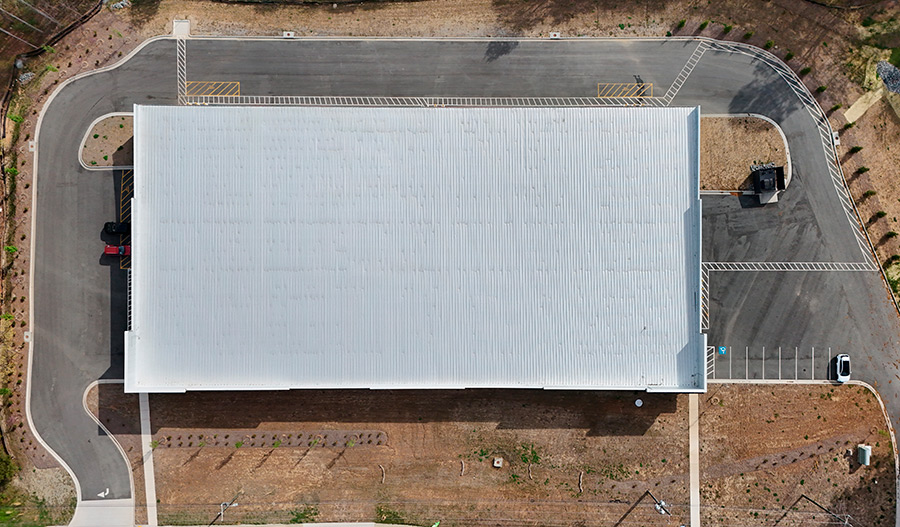
- Ask for high-resolution still shots straight down over the roofs, not only the sweeping angles that look good on a homepage.
- Be flexible on weather and timing so you get bright, clear, usable footage.
- Ask for the raw high-resolution images, not just the edited video, so that months from now you can zoom in on a detail and actually see it.
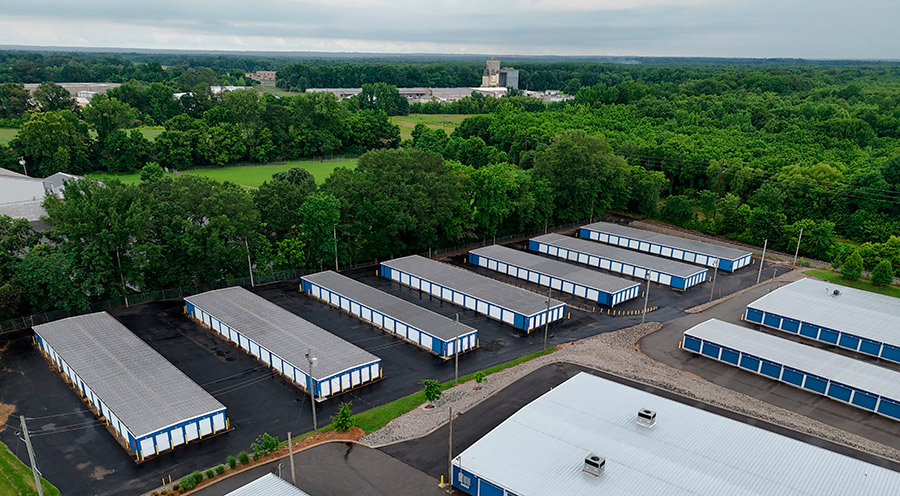
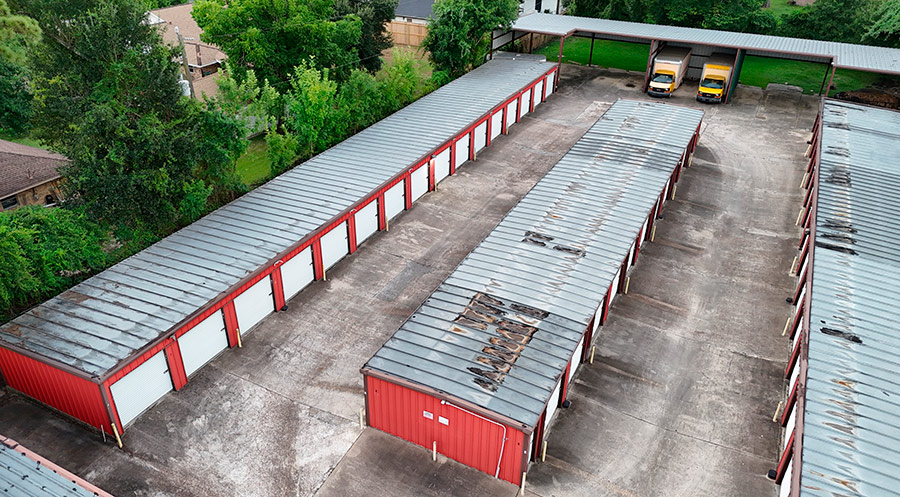
- Roofs – This is the big one. Look for rust spots, physical damage, and standing water where drainage has failed. The facility I mentioned earlier looked perfect from below while quietly holding puddles up top.
- Gutters – From the air you can see whether they are packed with leaves, whether water is draining the way it should or spilling over the side, and whether any sections are sagging or pulling loose.
- Driveways and pavement – Cracks, stains, potholes, and standing water all read clearly from overhead. Pay attention to the cracks in particular. I have seen driveways on their third or fourth round of patch repairs, each one more expensive than the last, all because small cracks were ignored until they were not small anymore.
- Landscaping and the perimeter – Watch for overgrown trees crowding your buildings or blocking sightlines, and check your fence line for leaning posts, damage, or gaps you would never notice from the office window.
Here is a bonus worth remembering: Everything on that list is also what a customer sees when they form a first impression of your property. Your maintenance checklist and your curb-appeal checklist are really the same list.
Go in with your eyes open. You will need the Part 107, which means passing an aeronautical knowledge test that runs around $175 and will require many hours of prep time, clearing a TSA background check, and completing recurrent training every two years. Your aircraft will need Remote ID. And you will want to choose NDAA-compliant equipment, because new DJI models are now blocked from sale in the United States and the government is tightening enforcement on drones it considers a security risk. There is also a time cost. Flying, reviewing footage, and keeping up with the rules is a real commitment, which is why hiring a professional is still the better answer for many operators.