


s of 2025, the U.S. has more than 2 billion square feet of rentable self-storage space, which is roughly 7 square feet per person. More than 290 million square feet has been added in the past five years, and another 56 million is to be completed by end of 2025. In certain urban and suburban markets, the rentable space can exceed 20 square feet per capita. This saturation means fierce competition. Success today means more than having a good location—it means smart, aggressive marketing.
Here we’ll lay out a roadmap for outperforming your competition, starting with confirming your market dynamics and ending with a high-conversion, local-first marketing strategy. These strategies will impact the performance of any facility, but if you’re trying to compete in a saturated market, bringing these tactics to bear on the challenge is essential. We’ll assume you already have the basics (a modern website, SEO, and local directories) and instead focus on ideas beyond these essentials.
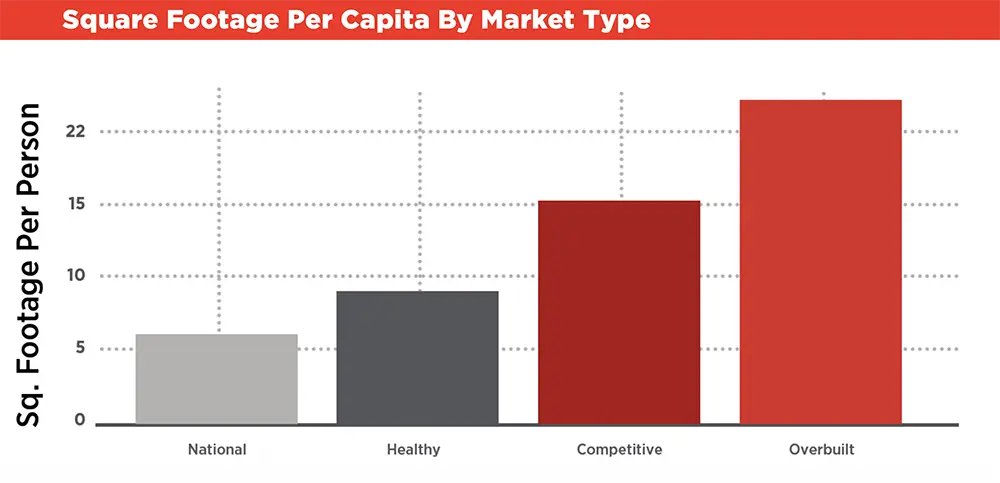
The national average and the state average for Virginia (where we are) is under 8, but our portfolio average across multiple states is closer to 15. If your market is over 20, it’s safe to say you’re in a highly competitive market; if yours is under 10, then most likely you aren’t.
See Square Footage Per Capita By Market Type chart.
Hopefully you’re getting good traffic flow to your website. Unfortunately, there isn’t a universal metric to say how much traffic you should be getting, as this varies by market, season, and more. I’d suggest focusing on year-over-year and month-over-month trends.
If you need to increase traffic quickly, try Google Ads. If you’re already doing that, try Meta Ads; they now make it simple for reaching people through not only Facebook but Instagram and Threads too). There’s no harm in doing both if your marketing budget can handle it.
If your Google budget is low, like $400 or less, you should focus on specific keywords, like “storage units near me” or “self-storage near me;” we are seeing greater than 20 percent click-thru rates on these. Use your competitors’ names as keywords too. Remarketing (retargeting/pixels) is a great tactic to deploy. As potential customers are searching around, you can target ads to those who have previously interacted with your website. The cost per click (CCP) for this is typically a little lower too.
If you’re not already on Sparefoot, it would be worth at least adding your unit types with high availability (lower occupancy) on here. Despite a high cost per rental, the average length of stay remains high for our portfolio for Sparefoot customers (greater than 14 months on average), meaning the return is usually worth it.
Offer aggressive referral incentives. It works. Just make sure your campaigns are consistent, professional, and not overly pushy.
- Offer $100-plus referral incentives (credits to rent, check, or gift cards).
- Send monthly updates with tips, promotions, and referral links.
- Automate it with tools like Mailchimp or Constant Contact. Limit your email campaigns to weekly or monthly to help avoid unsubscribes.
Reviews drive local SEO, trust, and conversions, but don’t pay for them; it’s a bad look and against platform rules. Instead:
- Ask sincerely for feedback.
- Explain how reviews help you improve.
- Aim for consistency (a few reviews every month, not a flood and then silence).
Once they are on your site, remember the goal in this competitive market is to convert more than your fair share to rentals.
- Match or beat the best special in your market. Customers care most about how much it costs them to move in today and how much their monthly rates will be moving forward. You can get too creative or detailed with your specials and actually lose the sale.
- Match or beat the prices, particularly on your units with low occupancy. We use a custom integration between our system (called NOA) and StorTrack to automatically do this for us daily on select units and locations.
- Worry about the rates after the move-in, letting your revenue management strategy do its job, which it can’t do if they don’t move in to begin with.
- Make it easy to rent. Show the lowest price first; highlight the move-in cost, not just monthly rent. Keep in mind that menu overload is a real thing and people will walk away if it is too cluttered or difficult to understand.
- Whether in person or online, always create a sense of urgency and ask for the sale. Consider price matching if they mention a better deal elsewhere, but don’t send them back to the competitor to get it in writing; this gives the competitor another chance to do what you didn’t—close the sale.
To build real relationships through community engagement:
- Host food truck days, car shows, or community yard sales;
- Offer corporate discounts to local apartment complexes or aggressive referral incentives; and
- Share event photos and tag customers on social media.
Some examples seen online include a Texas facility that ran a “Free First Friday” with local coffee vendors, resulting in 31 leads in a week, and a North Carolina facility that reported writing 22 leases in 60 days solely from partnering with local realtors.
These local strategies don’t just boost leads—they build long-term loyalty.
Use these tools and tactics to get more than your fair share and grow your business with confidence. Once you get the rental, then put your revenue management tactics to work and you’ll recoup the incentives over time.
There’s a lot to unpack here, and even more that wasn’t covered. If you’d like to discuss any of these in more detail, or need help applying these tactics, just reach out and continue the conversation; we’d be glad to share what’s working across our portfolio. And be sure to check our free local SEO report on https://getnoa.com.