


he self-storage industry continues to evolve rapidly as more storage operators and vendors enter the market. According to a report from Mordor Intelligence, the estimated value of the global self-storage market was around $48 billion in 2020. The estimated value of the market in 2027 is $64.7 billion.
The growing market size allows us to rethink how we approach critical aspects of self-storage operations, including security hardware, software, and processes. Having only padlocks, fences, and managers nearby is not an adequate security strategy any longer. As storage enterprises have grown and customer expectations have changed, storage operators must think beyond their site’s perimeters when devising a security strategy. Investing in equipment that provides layers of security and numerous fail-safes is critical for any self-storage operation.
- Incorporating keypads at access points to enter buildings or restricted areas, such as boat and RV parking areas near their unit;
- Zone control – Leveraging an access control-enabled elevator or door so tenants can only access the areas near their units;
- Adding motion-sensitive lights and high-resolution cameras to the hallways;
- Offering door alarms and electronic smart locks for individual unit-level security;
- Offering to equip high-value items like boats and RVs with motion-sensitive alarms; and
- Requiring tenants who wish to access a property during unmanned or off hours do so only via Bluetooth-enabled devices and not through a keypad.
Technologies that enable self-storage owners to implement a layered security approach include motion detection, electronic smart locks, and even AI-enabled video surveillance. There are many hardware and software components available to self-storage owners and operators. It can be hard to determine what security solutions work best for your operation when there are so many options available.
One technology in particular that is becoming more mainstream within self-storage as it provides an additional layer of security is Bluetooth. Today’s modern self-storage security devices, including keypads, locks, and latches, are all beginning to embrace the merits offered by Bluetooth, including:
- Bluetooth-enabled smart devices are paired with keypads and locks within a self-storage facility, thereby eliminating the need for keypad codes and keys. By forcing tenants to use Bluetooth, security is elevated, especially during unmanned hours, because only authorized devices can enter a property or unit, eliminating people looking “over the shoulder” while paying guests input a code.
- Because Bluetooth has a range of up to several dozen feet, it can be configured to open a gate whenever a tenant approaches a keypad, allowing tenants to stay secure within their vehicle and not be forced to press a code into a keypad.
- Do you want remote monitoring capabilities for your operation?
- How will you notify your employees and tenants of potential security breaches?
- How do you want your security strategy to influence the customer experience?
- Will you have employees on site?
- Will you offer after-hours access to your tenants?
- What access control processes do you plan to automate?
- How automated do you wish your facility to be?
- What are the expectations of your tenants, or what do competitive facilities offer their tenants?
- How much interaction do you wish your staff to have with new tenants while they are signing up to rent a unit?
Even if the security providers have the technical ability to install the equipment, you should consider the overall value-add experience when selecting your provider. Here are a few factors to consider when choosing your security provider.
- Shared Goals – Does the integrator listen to your security concerns and align with your goals regarding site security?
- Industry Experience – Does the vendor have ample experience in the self-storage industry?
- Integrable Systems – Does the vendor only install specific security components, or do they offer a complete security system? Does the access control software integrate with your property management software?
- Industry-Standard Credentials – Does the integrator have the appropriate training and certifications? Do they follow industry-standard protocols, or are some of their certificates outdated?
- On-Going Relationship – Will the integrator install security components and then disappear? Or have they ensured the system runs well?
- Ready To Scale – Has the individual set the system up so that there is room to scale as your business grows?
After you have determined your security strategy and selected a trusted vendor, you must evaluate the security components your site needs.
In addition to discussing the different materials and types of gates and fencing available, you will want to consult an expert to ensure that your gate operator fits your operation’s needs. There are several gate types, including slide gates, vertical gates, swing gates, and pivot gates. You’ll want to consider your tenants’ needs and expectations when selecting the gate type. For instance, a site housing boats and RVs likely wants a different gate solution than a non-specialty storage site because maneuvering these high-value vehicles can be particularly challenging. You want to minimize the risk of damaging the gate and the vehicle when tenants enter the storage area. Typical weather patterns at your location may also influence your decision. Again, it is important to consult experts in the industry as you evaluate your options.
Your access control system should possess several components, but three major components should come to mind when building your access control system.
1. Keypads
Keypads should be top of mind when you think of access control. You should place keypads at all entry and exit points in your facility. It is also wise to put a keypad on every floor of a multistory facility. If you offer specialty storage options like boat and RV storage, we recommend also putting a keypad at the entrance of the specialty storage area. With recent technological advancements, there are more options available than the standard numeric keypad. Integrating numeric keypads with Bluetooth technology creates a simple but secure way for tenants to enter your property. Encouraging tenants to create longer PIN codes than the minimum four digits also enhances your security protocols.
Moving your facility from desktop-based to cloud-based access control software will also enhance your site’s security. Cloud-based software is built to scale in ways its desktop counterpart cannot support. For example, cloud-based software can integrate with your property management software and unit security devices to automate the overlocking process, saving your operation valuable time. You can monitor the site remotely and get real-time notifications for any security event. Moreover, cloud-based software gives you access to a wealth of reports and analytics that can help you improve your operation. Even if the internet fails, a site controller with cloud-based software capabilities will allow you to perform some actions offline so your business doesn’t come to a screeching halt. As of October 2024, 2,680 facilities used PTI’s cloud-based access control solution, StorLogix Cloud.
3. Mobile Access
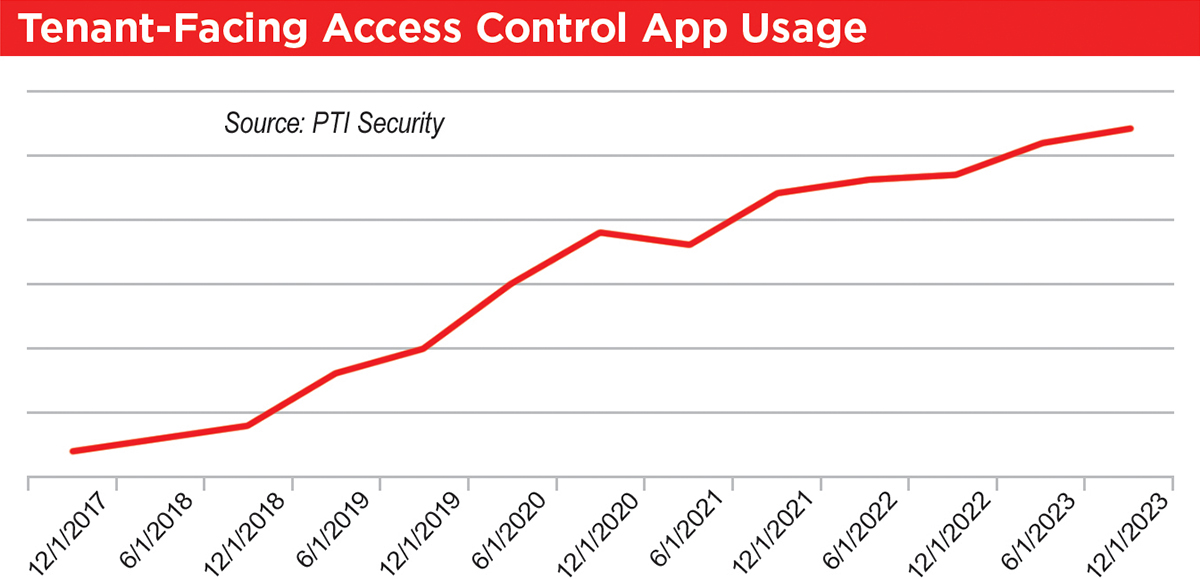
Mobile access apps are now a standard feature in leading self-storage facilities. PTI has seen this type of app usage grow an average of 157 percent every year since launching its first version in 2017. Equipped with an integrated mobile app, authorized tenants can access areas of the property without using a code, key fob, or swipe card. Mobile apps also enable digital key sharing, where a tenant can give a friend a one-time encrypted key to their unit. Of course, site managers can deny the key share if they suspect foul play. Bluetooth technology also enhances the mobile access solution by opening the access points within a certain radius. You don’t have to worry about tenants opening their units when they aren’t on the property. Site managers can also use an operator-facing mobile app like StorLogix Mobile to monitor gate access and check critical reports. Incorporating a mobile app into your access control strategy increases your operation’s security and elevates your customer experience.
See Tenant-Facing Access Control Chart.
You can also employ AI-assisted video cameras. The software can automatically alert operators of security concerns like detecting movement in restricted areas. Some AI-enabled software can even notify the police if needed. Pinhole cameras at various entry points are another option. Moreover, many aspects of video surveillance can be automated; you may also choose to outsource your video monitoring. You don’t need to hire someone to watch the cameras all day to have a secure site. Placing lights near the cameras will provide a clear picture of site activity as well. Bad actors naturally want to avoid well-lit areas. Additionally, having good lighting and cameras is critical for tenants who have permission to access the facility after hours. If tenants wish to retrieve their RVs before sunrise, they expect to feel safe during their visit. Think critically about where you need to place lights and cameras to prevent crime and reassure tenants of their safety.
It may be tempting to skimp on the cameras or not prioritize fixing them when they break in the hope that the visual of the camera is enough to deter crime. However, crime attempts are inevitable at any facility, regardless of how much you invest in your security strategy. Select high-resolution cameras that clearly identify people and license plates so you can quickly resolve security incidents.
Electronic smart locks are an excellent unit security solution. Some examples of electronic smart locks include electronic overlocks and Bluetooth-enabled padlocks. The overlocks can sync with your access control software to engage the moment tenants are late paying their bills. It can also alert management if the lock gets damaged. Moreover, Bluetooth padlocks leverage smartphones and mobile apps to access the unit, eliminating the need to carry a physical key or remember a PIN. Unlike simple latches and padlocks, smart locks also provide valuable data to the operator regarding access times and an audit trail detailing who entered a unit and when. In the near future, the biometric ID technology we are accustomed to using to access smartphones will enter the self-storage market. Biometric-enabled locks are already present in the wine storage market.
Portable Locks
Portable locks (typically padlocks) have remained a constant in self-storage and are often used by operators who need a solution that can be moved from unit to unit. Historically, these locks are used for overlocking units for tenants who are late in payment or for those existing construction where running wires could be cost prohibitive and/or have traditional latches on doors of the facility. Today’s portable locks (like PTI’s Helox Smart Padlock) are now more advanced and provide operators the ability to do contactless rentals through cloud-based access control as well as a more pleasant tenant experience that leverages Bluetooth connectivity, which is rapidly becoming an expectation of tenants.
Door Alarms
Door alarms are another aspect of unit security to consider. Just like electronic smart locks, door alarms can communicate with your access control software so you can know of the security threat instantly. Syncing the alarm with lights and sirens will also deter intruders and alert you to the threat in the office or be paired with sirens, lights, etc., to scare off intruders and alert anyone in the area.
In-Unit Monitors
Theft is a problem for any self-storage operator and can be partially, if not completely, mitigated by combining the above security solutions with an in-unit monitor such as StorageDefender. Such monitoring typically provides both operators and tenants activity alerts sent directly to the owners’ smart devices whenever any activity is detected in the unit. While this additional layer of security may not be for every facility, operators should know it is an option and can typically be an additional source of revenues for tenants that demand additional security.
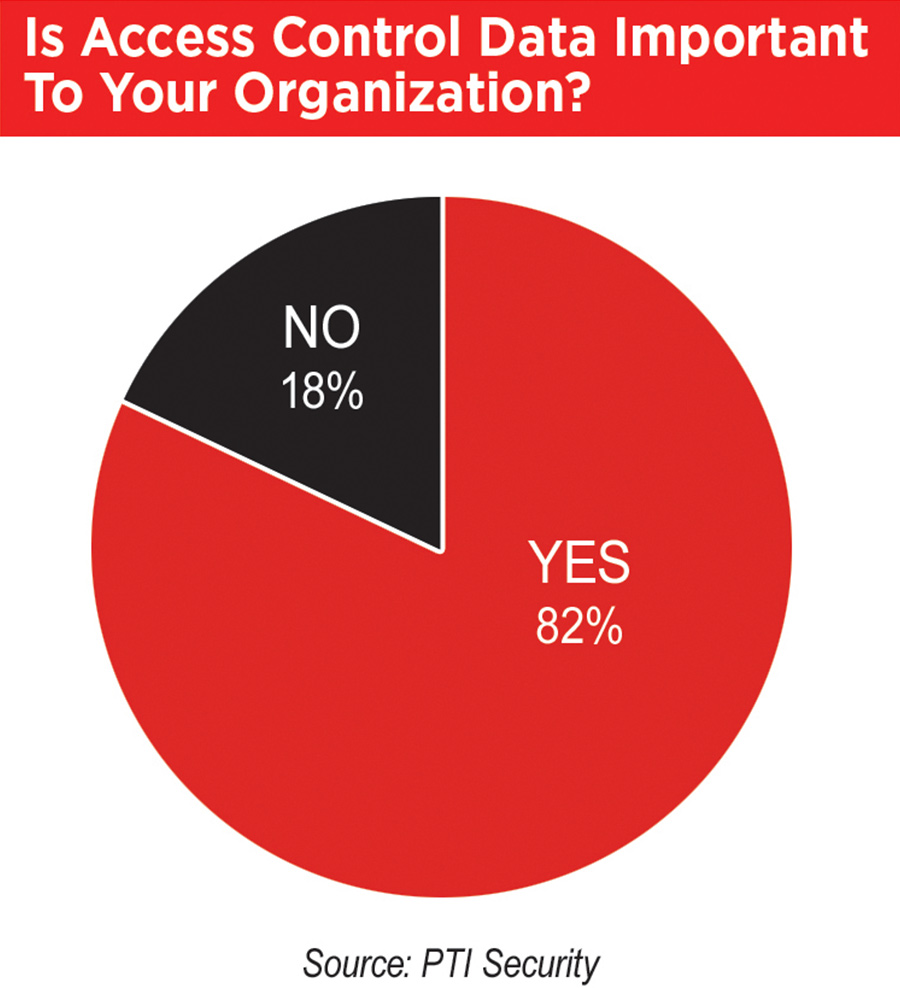
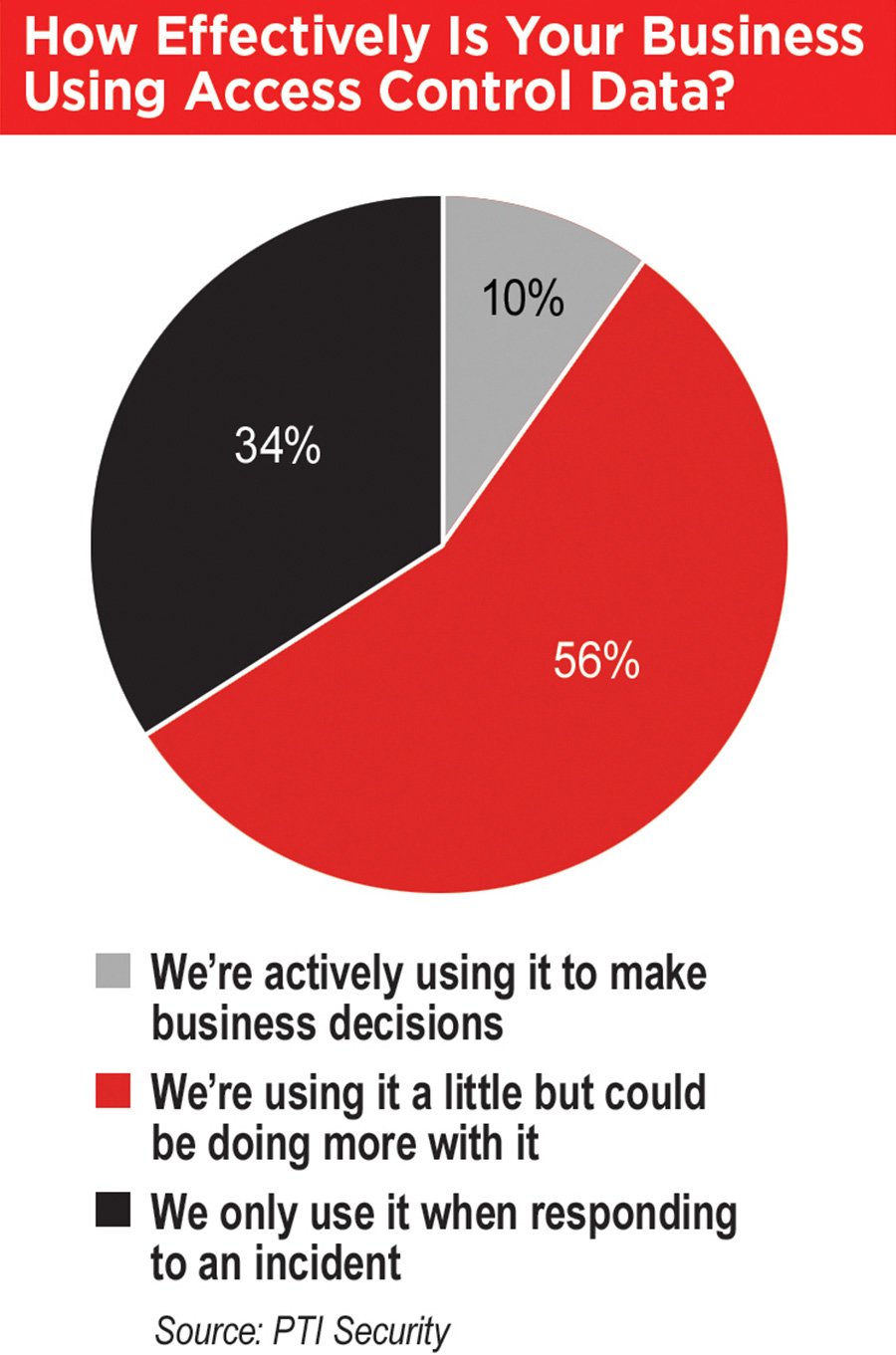
When polled, 82 percent of portfolios shared that access control data was important to them, but only 10 percent felt that they were using access control data effectively. (See the pie charts.)
- At-a-glance intel on site activity and security equipment statues
- Portfolio-wide visibility that allows you to access this data from anywhere for all of your facilities
- Geographic site mapping that visually represents the security health of all your facilities
- Fully customizable reports so you can track the KPIs that matter to your business
- Remotely control your site’s accessways and doors with one click
- Open, lockdown, or hold open access points so you can respond to emergencies quickly
- Identify the notifications you want to receive without getting bogged down by the notifications you don’t need.
- Receive the notifications in the way that works best for you and your team, whether it is via text, email, browser, or push notifications.
- Receive all notifications in real time so you never miss a potential security incident.
- Leverage the notification data to generate granular reports and make better business decisions.
- Mobile access solutions
- Unit security devices
- Property management software
Security technologies such as the CloudController and StorLogix Cloud will continue to advance the analytics capabilities and access control integrations in the future.
- How does automation fit into your business vision and security strategy?
- What kind of experience do you want for your tenants?
- How do you want to position your facility relative to your competition?
- How do you plan to track and analyze data to make better business decisions?
- What are your plans for growth in the next few years? Are the systems you’re putting in place today ready to scale?
Knowing the vision for your business and designing a security strategy that achieves this vision will drive success for your self-storage operation.