



he unfortunate reality is that most things are more expensive now—groceries, gas, insurance, and housing to name a few. As for that last one, it’s not only that the valuation of real estate itself has gone up, but so have the U.S. Treasury’s interest rates. While it has certainly made the cost of acquisitions and development more expensive, it’s not necessarily a dire landscape.

“This is probably the area in our sector that has been affected the most,” says Aaron Swerdlin, vice chairman at Newmark Group, Inc. “It’s really difficult to develop right now because you also have a street rate environment where all the large operators are capturing demand by using discounted pricing as a marketing tool, so it’s difficult for developers to pencil projects.”
While banks aren’t holding borrowers to a higher standard, Hill adds that higher interests may make it harder for some people to qualify for a loan if they are equity constrained. “One of the things banks look at is the Debt Service Coverage Ratio (DSCR)—how much cash flow is available to service the debt,” he says. “Lenders use metrics such as 1.30 times DSCR. Logically, if the debt service is higher, it becomes more difficult to meet the threshold.”
Neal Gussis, executive director of capital markets at SPMI Capital, mentions an additional way the higher rates have impacted construction financing. “Construction loans have the period of time when the property is being constructed, as well as the lease-up period, when there is insufficient cash flow to pay the debt. That projected amount, plus a cushion, is added into the loan as a reserve.”
The borrower should evaluate which terms are most important when seeking financing. “The best interest rate may not be the best loan,” says Gussis. “Each lender has unique features, such as longer amortizations, depository relationships, ongoing covenants, and prepayment penalties, to name a few. There are many qualified loan advisors who can assist in finding the best fit.”
Then there are labor costs, which have also increased. “It makes developing really difficult,” says Swerdlin. “While we work on the demand side, it’s a positive that we also don’t have a huge supply of new projects. It’s not great for the developer, but it also creates a net positive for the industry because it’s not creating a supply and demand imbalance.”
Hill agrees. “While developers are having a harder time finding projects that pencil, it might also be a blessing in disguise because many markets remain oversaturated due to significant new supply that has been added in recent years,” he says. “Self-storage has out-performed for many years, which has attracted a lot of investors and resulted in a proliferation of new projects. A little bit less development right now isn’t necessarily a bad thing.”

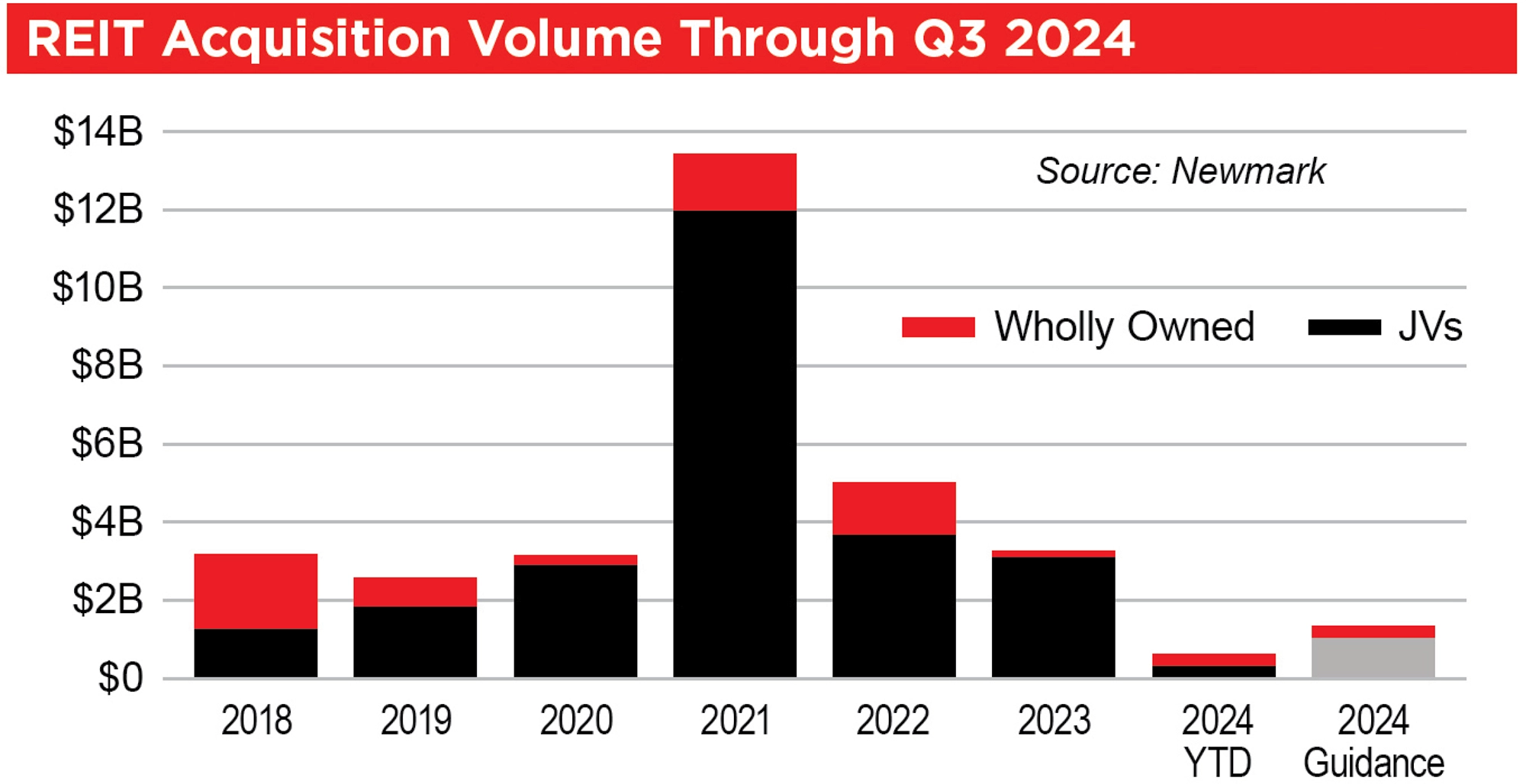
Hill concurs. “There is plenty of money on both the debt and equity side looking for exposure to self-storage,” he says. “The market is functioning and there is plenty of liquidity. It’s just more difficult to pencil deals because everything is expensive to build, buy, and finance. And then there are operational headwinds that make the cash flow underwriting more difficult.”
Gussis subscribes that the spicket is far from dry. “It’s a matter of living with the new reality,” he says. “I can also tell you that we don’t know what we don’t know and nobody can predict market disruption that is caused by factors out of your control. For example, government actions could cause positive or negative results to businesses with little warning.”
Gussis also points to the ability to manage existing customer rates. “Consumers, particularly in the past couple years, are used to increasing prices and seem to be largely OK with the increases in rates,” he says, adding that many properties have had nice growth to offset the increased interests. “To put some numbers to it, if the loan rate increased 2 percent from your current rate, and you were seeking a new loan with a 25-year amortization, your NOI would need to have increased 22.06 percent to achieve the same loan amount.”
For facilities with a decreased NOI, Swerdlin says it’s largely due to the post-pandemic market correction, not higher interests. “Self-storage had the biggest increase in demand in 2020 through 2022. It was something we had never seen before. When you experience something like that, you’re going to have a period where you normalize again,” he says, likening it to driving at 150 miles per hour and braking suddenly to 100 miles per hour. “It was a massive deceleration in investment activity. It’s still a net positive, but due to the magnitude of the change, it feels drastic.”
While such a sudden shift may make some operators feel out of sorts, Swerdlin doesn’t necessarily see it as a negative thing. “The volatility creates opportunity,” he says, “but when you have an unsustainable growth rate, it becomes a lot more difficult to manage capital, operations, and employees.”
Nevertheless, there are still plenty of opportunities in this landscape. “If you were looking to buy a storage facility in ‘21 or ‘22, there would be a bidding war,” Taylor adds. “Now, fewer people are going for the same facility. There’s more room for negotiation with the sellers. And if you’re a developer, there’s probably not another developer looking to deliver storage in the same timeframe, so they don’t have to worry about it during their lease-up. There’s nothing worse to fill up a facility than when there’s someone else doing the same thing across the street.”
This is not to say that demand has come to a standstill. Swerdlin adds that the same way many people are currently unable to afford buying a home, there are existing homeowners who may need more space but are hesitant to sell their home because they purchased it when rates were lower. This means they turn to self-storage for the items they don’t need to have in their homes. “People are finding the utility of storage to solve other problems because they’re trying to stay at their home much longer than planned.”
But it’s not all doom and gloom. Swerdlin believes that the current rates are unsustainable. “Something’s gotta give,” he says. “And when housing returns to normal, it’ll be a net positive for storage.”
For her part, Taylor doesn’t want to make predictions. “I like to pay attention to what the Fed is saying. They met in late January and decided to hold things where they are right now,” she says. “It seems like they’re taking a wait-and-see approach to see further progress in the inflation data before delivering another rate cut.”
Hill explains that self-storage has held up well compared to other property types, such as office space. “Industrial and storage have both done very well,” he says. “Even though there are challenges, self-storage has outperformed most other commercial real estate property types, so it remains a very attractive place for investors to look for deals and to put their capital to work.”
Hill’s confirming like what most people in the industry probably suspected, since it’s unlikely that any of you are getting your arms twisted to remain in self-storage. If there is one thing that remains constant in the industry—in addition to the high caliber people it tends to attract— it’s that it’s profitable.
In the words of Isaac Newton: “What goes up, must come down.” So be patient and carry on.