



orn and raised in Michigan, Cody Hulme, regional sales manager at Trachte Building Systems, is a successful example of someone who was able to climb the corporate ladder of a reputable company instead of taking the much more usual path of attending college after graduating from high school and then entering the workforce with a degree.
Hulme started his professional career path to his current position at a construction company in his early 20s, operating as an installer for prefabricated metal packages—many of which were produced by Trachte. He was first lured by the construction industry, and incidentally the self-storage business, due to his desire to travel across the nation. As he mentions, up until that point, he had never left his hometown. “I wanted to experience something new and travel across the U.S.,” he says. That’s when he approached an acquaintance who owned a company in Michigan that built steel storage buildings. “He said he always needed more people to work on the projects, so I got the job. And while I worked as an installer I got to travel the entire country.”
“I met [Jamie Lindau] in 2013,” he says. “But it was in 2016, when I happened to be building a facility for him in Madison, Wis., at the time, already tired of being on the road all the time, that I approached him and asked if he was hiring.”
This initiative and straight-to-the-point attitude were probably the equivalent of sending a cold email nowadays. However, being in the same facility as Lindau enabled him prove his worth in a unique way, which as an opportunity he did not shy away from. And, after noticing his resourcefulness and communication skills on the job he was currently performing, Lindau went on to offer him a job as a customer service specialist.

Nowadays, the knowledge collected from different parts of the business manifests itself in most, if not all, of his responsibilities. “No one day is ever the same at this function,” Hulme says. “However, my main responsibility is to help the customers as much as I can throughout the entire building process, from site planning to overseeing projects all the way through, including the design of the building and AutoCAD.”
Trachte’s history, evolving from a simple tinsmith and furnace repair shop owned by two brothers to becoming one of the leading modular prefabricated steel structure sellers in North America, resembles Hulme’s own hardworking and resilient trajectory. Besides juggling his ever-growing list of responsibilities and promotions at Trachte, he also added the designation of property manager to his schedule from 2018 to 2023, working at the Lindau family’s Sun Prairie Self Storage facility in Wisconsin, where he performed fundamental functions that made him an integral part of Lindau’s business ecosystem.
“I had to learn how to deal with tenants living in their units,” says Hulme, “which taught me that sometimes you have to weed out the bad ones to get the good ones. But overall, in managing self-storage, there are a lot more positives than there are negatives. The negatives are very far and few between.”

However, he believes companies are not very realistic about the time it takes to get their developments up and running. For that, he recommends setting more sensible expectations, as that’s going to keep the project on track and avoid going over budget. “Setting a realistic timeline from the beginning will help the project run smoothly. Being overly aggressive will end up costing a lot more,” says Hulme. “[It’s important to not] underestimate the overall project timeline, as construction projects need to have room to adjust for delays from approvals, weather, holidays, etc.”
He also mentions that having an open and honest communication line with the construction team is key to avoiding headaches. “Communicate a timeline with all your subcontractors and make sure the subcontractors communicate back to you weekly at a minimum, especially during the construction process.”
Hulme has noticed a new interesting shift since the COVID-19 pandemic, when rentals began to happen mostly online, which is the return of customers going back to facilities to close the deal on units. He highlights this shift brings in an important new focus to businesses. “Your service and management are more important now than ever before. You need a good manager; you have to have a people person and people [at the facility] that are honest with the tenants,” he states. “In 2020, the business did a full 180 from people making appointments to meeting with you to renting online. However, now that we are kind of getting over the COVID era, more people are coming in to meet the people they are dealing with, so management is a key component in your branding.”
With that in mind, he also mentions businesses should refrain from business practices that can be seen as dishonest. “[Refrain from practices such as] offering a huge discount for the first month, then rapidly increasing the rental rate. Many customers have expressed anger over this practice and are upset about the lack of transparency with how much and when prices will increase.”
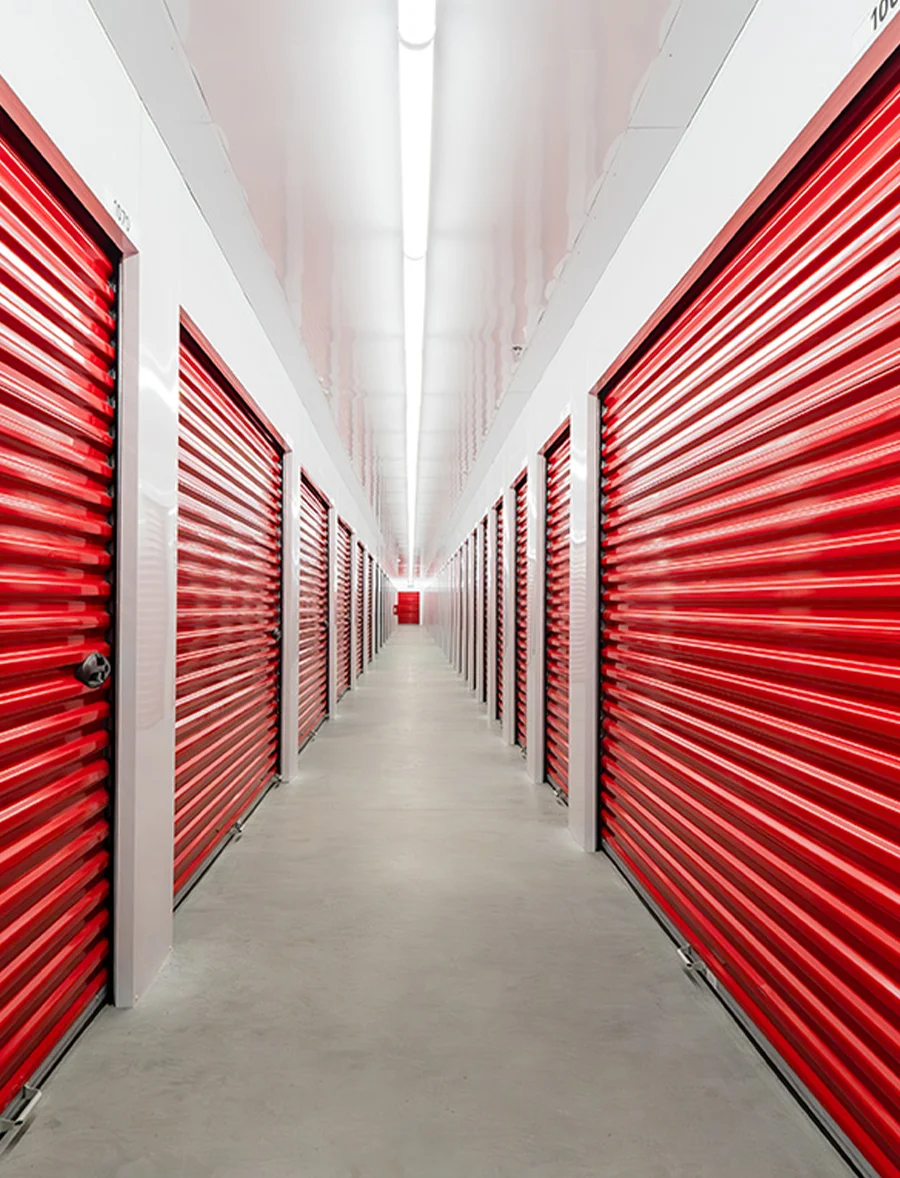
Sharing his time between U.S. and Canadian clients, he has noticed a few differences when it comes to the Canadian self-storage market. “Canada does more heated buildings, like in-floor radiant heating under the slab, while the U.S. doesn’t follow this same concept, usually choosing to do fully climate-controlled buildings with an HVAC system and requiring 48-inch frost walls in lieu of floating slabs with radiant heating under the slab.”
To this day, Hulme believes the experience of juggling different responsibilities was fundamental in his growth as a professional, as the experience made him capable of attending to all areas within the industry. “My experience of being in the field of customer service has helped a lot in my current role, as I’m able to give the best direction I can to our customers,” he says. As for his experience in the construction building, “It made me capable of helping [clients] with the installation process if they are doing their building themselves; I can also look at their site planning and give them feedback on what would work better for their facility on a case-by-case basis.”